
Latest News

The Blog

voip blogs
ivr solution providers

IVR Solution Providers of 2026: Features, Pricing and Expert Picks

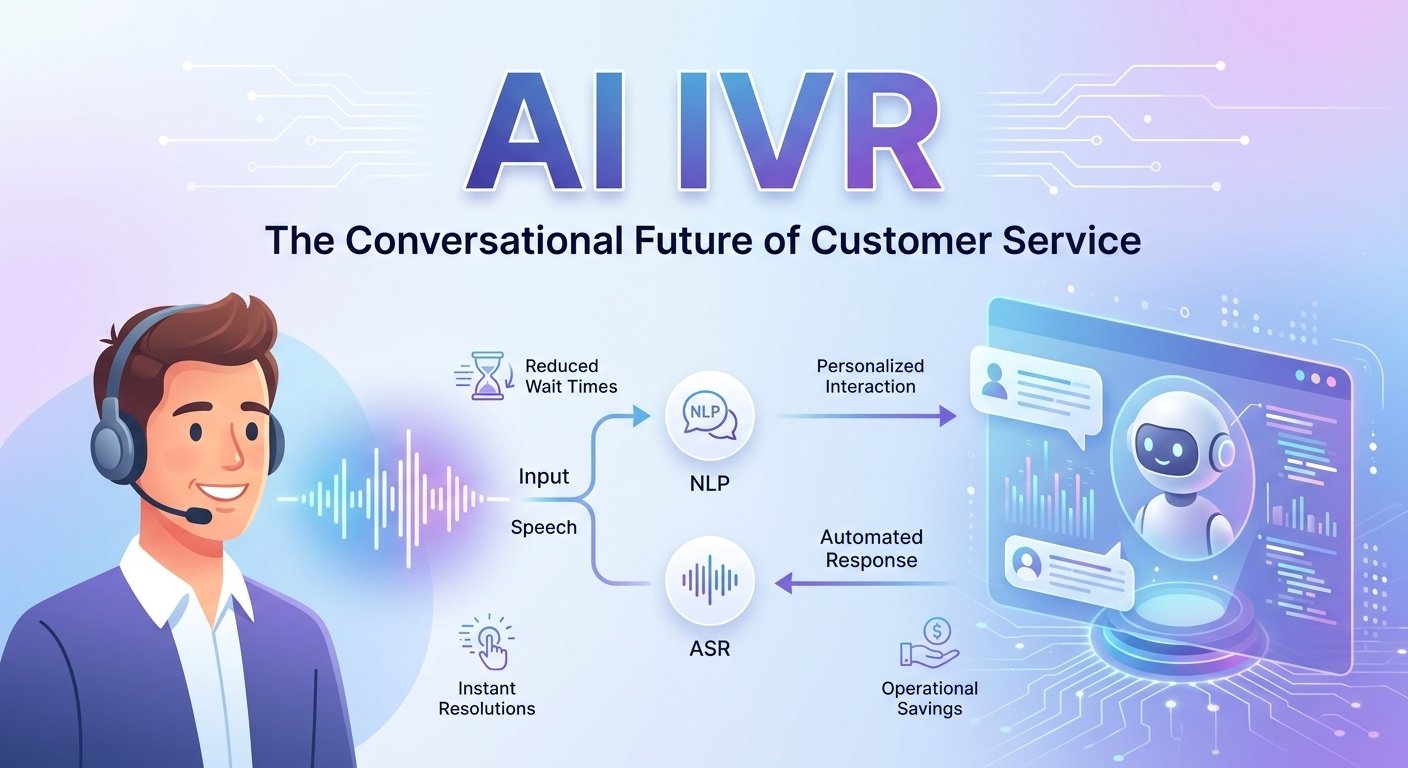
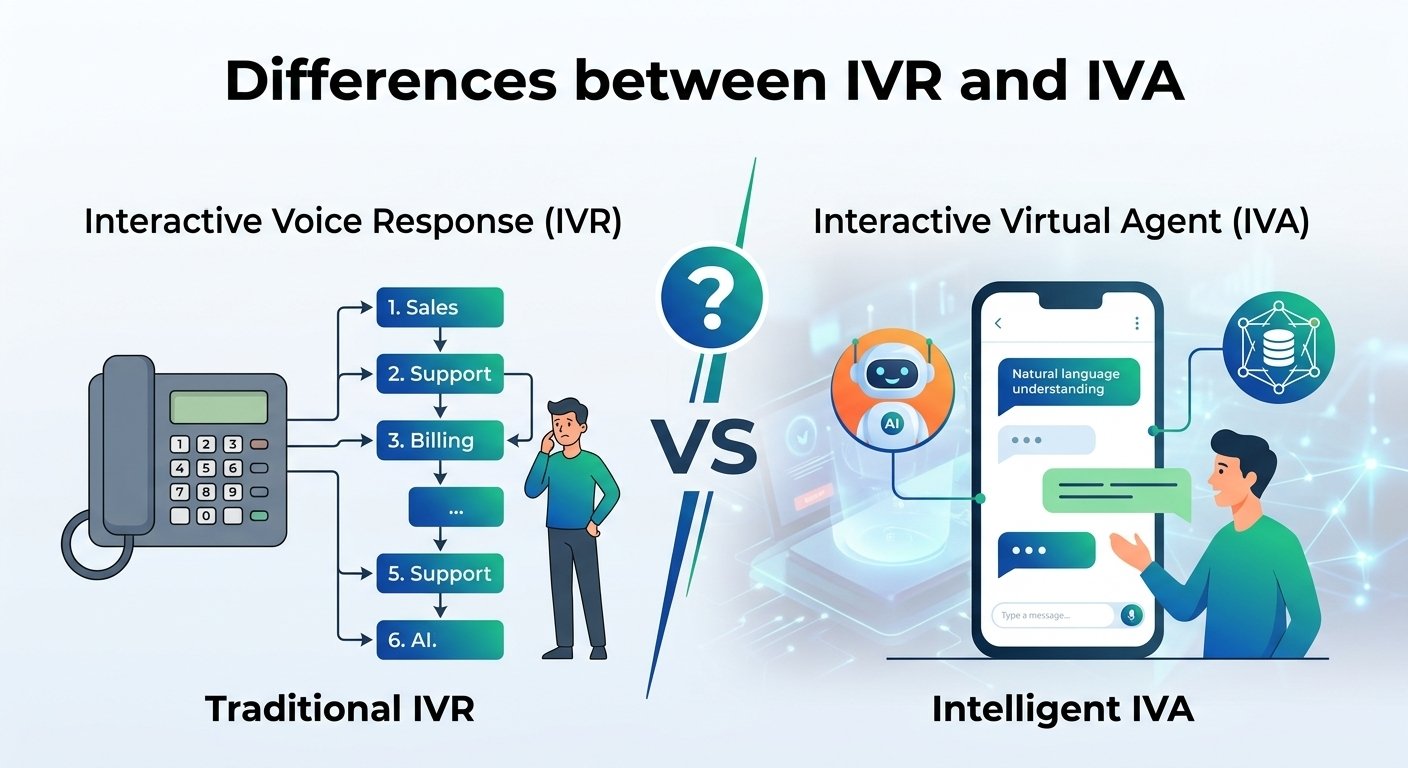
When reaching out to support teams, customers expect immediate help and easy communication. As telecom infrastructures evolve, interactive voice response (IVR) technology is a key enabler in meeting those expectations. The choice of trustworthy ivr solution providers has become more of a strategic decision than a mere upgrade. With the right telephony architecture, organizations can realize fast, personalized, customer-centric service experiences. Better platforms guarantee that callers are directed to the appropriate department in a timely fashion, without delay. This detailed guide covers the top software tools, key features, pricing models, and recommendations to optimize your corporate communication network. What Is IVR Software? Interactive voice response (IVR) software is an automated telephony solution that can interact with callers, gather information, and route calls to the appropriate representative without any human interaction. Modern hosted IVR systems are based on pre-recorded audio and touch-tone keypad signals to accurately understand customer needs. This technology directs people based on their intent, urgency, or specific account details, instead of sending everyone to a generic waiting line, and provides seamless escalation to live agents. The modern-day ivr softwares are much more than a simple phone tree and a fixed menu. These dynamic tools integrate with customer relationship management databases and artificial intelligence analytics, to enable intelligent conversations. They easily recognize their customers, personalize audio greetings, verify identities, process transactions and pass on full context history to staff. When you find an ivr solution provider that is capable, you are ensured seamless integration with the existing corporate software system. How IVR Works in a Cloud Phone System A cloud-based IVR system works completely over internet protocols, with no physical hardware involved in any interactions. The best ivr solution providers handle configurable workflows via web interfaces that can be accessed anywhere in the world, without the need to perform complex maintenance tasks. Caller input and menu navigation Once a connection is made, the interface provides audio feedback and waits for a response (either via dual-tone multi-frequency or natural language processing). Advanced speech recognition allows users to speak their needs rather than pressing digits, greatly speeding up the resolution process. Clear and timeout settings are crucial to navigation logic, which helps to avoid dead ends in the consumer journey. The telecom framework can automatically recognize people who return and avoid unnecessary authentication steps by using caller recognition. Call routing, queues, and self-service When the system detects user intent, it starts intelligent distribution using real-time data streams that legacy on-premise hardware can’t access. Call routing takes into account the menu option and agent availability and priority rules to determine the most efficient call routing path. The best ivr solution providers generally divide distribution into separate channels: Dynamic assignment of the most qualified representative with intelligent tracking that reviews the CRM history. Queue management systems with estimated wait times or automatic call back in periods of high volume. Securely process payments or verify profiles with complete self-service resolution through database syncing. 5 Best IVR System Providers in 2026 1. Nextiva: The best overall IVR provider Nextiva offers an outstanding cloud based ivr solution with multilevel configurations, smart routing, and powerful CRM syncing. Business hour logic and holiday rules can be deployed easily by teams and with minimal IT involvement. Its user-friendly interface and ability to reduce call queuing on platforms like SMS, email, and voice messaging are always highlighted by users. Starting at a very competitive monthly rate, Nextiva provides omnichannel support, extensive analytics and smooth integrations, making it one of the best ivr solution providers. 2. Five9: Strong for contact center integration Five9 offers a visual builder designed for large-scale operations with extensive database connectivity. The drag-and-drop tool enables non-technical users to create intricate customer journeys using live data. This enterprise ivr solution is particularly good at skills-based routing and automated agent assistance mechanisms. These tools are used by administrators to optimize the efficiency of large consumer networks without a problem. 3. Genesys Cloud: Best for NLP-based IVR Genesys Cloud is the leader of the conversational world, with the help of advanced NLP engines. This method uses flexible, audio-based menus instead of hard-coded numbers, and is very natural-sounding and conversational. Recent Gartner research on NLP-powered telephony shows that the average handle time is 22 percent lower in large enterprises. For multinational corporations looking for a premium voice solution provider with highly scalable voice architectures, Genesys is the ideal solution. 4. NICE CXone: Best for traditional IVR NICE CXone offers a very stable environment with a focus on reliable and dependable self-service and automated workflows. Its robust infrastructure is a huge advantage for organizations that depend on typical features such as payment processing and account verification. The software can be used to create multilingual menus and is compatible with older telecom systems. It is also one of the best ivr solution providers for established companies that are making a steady upgrade to their systems, thanks to its simple pricing and guaranteed uptime. 5. RingCentral MVP: Good for smaller business RingCentral MVP integrates the core automation features right into the RingCentral unified communications platform, making it a great start-up solution. The auto attendant seamlessly handles incoming calls and voicemail-to-text features improve everyday use. It’s an established ivr service provider that offers significant value with its easy management and quick deployment cycles. These easy-to-use Ivr solution providers provide affordable monthly subscriptions and easy maintenance, which is a great benefit for small businesses. Key Features to Look for in an IVR System The right features lead to quicker and more intelligent operations on a larger scale. The best cloud-based IVR (interactive voice response) services include certain features that make them more than just a voice channel. Multilevel IVR menus Dynamic conditional menus adapt to service outages or changing hours are necessary for structuring incoming traffic. In a multilevel map, the caller can avoid frustration by being able to bypass options that are not relevant to their call once they are connected. This structural adaptability crafts a tailored journey from the initial greeting. When relevant choices are heard immediately, callers navigate through the architecture with confidence. Speech recognition Verbal comprehension enhances ordinary conversations into conversations without compromising structure. Voice-first navigation significantly minimizes keypad mistakes, and text-to-speech modules provide dynamic information on account balances or delivery statuses. With AI support for transcription, the entire telecom workflow is streamlined. This feature significantly reduces misroute percentages in high volume environments with modern ivr solution providers. CRM integration For personalized customer journeys, continuity is essential in today’s crm-integrated ivr solutions. By integrating telephony data with previous interactions, live representatives never ask redundant questions when transferring calls. Seamless integration with external databases allows for capturing consumer intent at an early stage. This integration provides employees with full visibility of previous support tickets and purchase history on the spot. Omnichannel support When consumers move from one medium to another (voice, email, chat), context carryover is the difference between good and great frameworks. The infrastructure needs to identify the user and understand the user’s current problem, no matter what channel is used. Despite the rise of chatbots, there is still a significant reliance on voice interactions for handling complex issues among different demographics. A unified history ensures seamless issue resolution for clients using top-tier ivr solution providers. Real-time call analytics If the performance is not visible, administrators may end up missing out on important operational issues until it starts to cost them money. Full dashboards include real-time volumes, drop-off locations, and menu efficiency to help with quick iteration. Advanced systems provide proactive alerts for unexpected increases in hang-ups. Keeping track of these metrics gives managers the power to address friction points quickly and before they hurt their brand. Queue callback functionality Allowing individuals to retain their position without staying on hold signals immense respect for their time. Premium architectures permit users to select preferred callback windows aligning with anticipated agent availability. Benefits of Hosted IVR 1. Cost savings The traditional approach requires costly equipment and a team of dedicated engineers to maintain it. These capital expenses are completely eliminated with a hosted ivr system, instead opting for predictable monthly subscription fees. A recent Forrester economic impact study showed that moving to virtual telephony can save up to 30 percent in telecom operational costs per year. Financial predictability gives organisations the freedom to invest in growth projects instead of server maintenance. 2. Scalability Virtual platforms enable managers to grow their operations without having to undergo a full overhaul of their infrastructure. Departments can be added, new tools can be integrated, and traffic surges are dealt with without impacting the system. This flexibility allows for dynamic demand without any hassle. As businesses grow and expand across the globe, business leaders have full control over the capacity limits. 3. Ease of configuration Modern platforms include user-friendly visual builders that allow supervisors to make routing adjustments with easy drag-and-drop actions. This autonomy takes the strain on the IT department when it comes to making minor changes to audio prompts or menus. Operational agility means the communication strategy is always in sync with the evolving consumer expectations. The enterprise is extremely responsive with rapid deployment. 4. AI automation The direct integration of AI into the communication stack elevates the level of interaction from simple to sophisticated problem-solving. Smart, innovative solution providers like ivr offer a solution that allows the machine learning algorithms to continuously improve over time. Advanced automation offers several distinct operational upgrades directly out of the box: Instant response generation for frequently asked inquiries and basic account troubleshooting. Emotional sentiment analysis to prioritize frustrated callers and route them immediately. Automated transcription services for accurate auditing and strict compliance purposes. 5. Better call handling Conversations are distributed according to caller history and exact staff skills, guaranteeing equal and effective workflow management. The key to optimal connection rates is dedicated ivr calling software. When handled properly, dropped connections are minimized and average wait times are shortened. Customers have a more seamless experience from automated greetings to live interactions. How to Choose the Right IVR Provider Selecting an appropriate partner depends entirely on your specific operational gaps and projected expansion goals. Assessing these criteria ensures a successful deployment alongside top-tier ivr solution providers. 1. Assess your call volume and support complexity Start by studying the inbound traffic patterns of the day and being able to identify the seasonal patterns accurately. A small team dealing with small issues has very different needs for infrastructure compared to a large enterprise with thousands of active conversations. Know the subtlety of your usual questions and decide on the level of routing required. Predicting the volume of your operations accurately can avoid premature outgrowths of your system and unnecessary digital migrations. 2. Evaluate core features and self-service capabilities Structural menu mapping, comprehensive recording and robust analytics are essential to baseline functionality. In addition to those basics, look for platforms that provide extensive database integration and secure identity verification via the dial pad. Figure out whether your audience would like to use a rigid numeric menu or a conversational voice command. The underlying intelligence engine determines how natural the response of the system is to open-ended requests. 3. Check integrations with your existing tech stack An isolated telecom setup only provides a small part of its strategic value. Before signing deals with any ivr solution providers, lay out all the connections you need to make with your existing sales and marketing software. Ensure that proprietary internal software that doesn’t natively support API is accessible. Historical data is vital for providing customised client experiences and real-time sync is essential. 4. Compare pricing models and total cost Financial structures can differ significantly between various telecom vendors, and must be analyzed carefully before deployment. A per-minute model may appear cheap at the time of the order, but soon becomes very costly when inbound traffic grows. When calculating overall expenditures with ivr solution providers, strictly factor in these primary expenses: Initial setup fees and professional onboarding services required for deployment. Premium feature add-ons like advanced speech recognition or custom routing rules. Potential overage charges incurred for exceeding monthly minute allocations unexpectedly. 5. Consider ease of setup and ongoing management Some platforms require a high level of coding expertise, while others focus on ease of use for day-to-day managers. Determine who is going to be responsible for day to day administration after the launch and make sure they have the necessary technical skills. Assess the speed of changing audio prompts or pulling performance metrics. Eventually, delayed mod capabilities extend your consumer base’s sub-optimal experience. Read More: Sip Trunking vs Pri: Know the Difference Final Words A strong communications infrastructure is a game-changer for how companies handle inbound traffic and customer interactions. The top ivr solution providers offer unparalleled automation, sound quality, and analytical capabilities. Knowing how to compare your specific volume requirements with the software’s capabilities ensures a long-term growth strategy. These cutting-edge telecom solutions will give your employees the freedom to concentrate on the important things, while the machines take care of the mundane. Faqs Who are the top ivr solution providers for businesses? Top platforms include Nextiva, Five9, Genesys Cloud, NICE CXone, and RingCentral MVP. These telecom providers are equipped with powerful capabilities, automated routing, and remarkable scalability for contemporary businesses seeking to enhance their infrastructure. What is the cost of an IVR system? The pricing varies significantly based on the type of deployment and number of concurrent users. The cost of cloud based subscriptions generally begin at about fifteen dollars per month per user and increase in accordance with the advanced features and premium integrations. How does an IVR work? The technology is pre-recorded prompts and speech recognition, which automatically engages with inbound callers. It collects intent data and directs the person to the relevant department without any human intervention, providing optimal efficiency. What are some IVR business use cases? Typical use cases include safe payments, automated booking, and simple account queries. It’s also used by contact centers to easily distinguish urgent technical support requests from informational requests. Are there certain industries that should use IVR? Healthcare networks, financial institutions, retail chains, and logistics companies benefit massively from automated telephony. Any sector experiencing high inbound caller volume requires these digital receptionists to maintain efficiency and customer satisfaction. What is an AI-powered IVR for cloud contact centers? This advanced implementation utilizes natural language processing to comprehend conversational speech rather than keypad presses. It accurately determines consumer sentiment and handles complex open-ended requests dynamically without requiring physical input. How does conversational IVR improve contact center routing? By understanding complete sentences, the architecture precisely identifies the core issue before initiating a transfer. This accuracy drastically reduces misroutes and ensures callers reach the most qualified representative instantly. Can small companies benefit from IVR hosting? Absolutely, as virtual subscriptions eliminate the need for expensive physical telecom hardware. Startups project a highly professional image while efficiently managing their growing inbound traffic on remarkably tight budgets.
Read More
what is call bridging

What is Call Bridging? Meaning, Benefits, and Uses

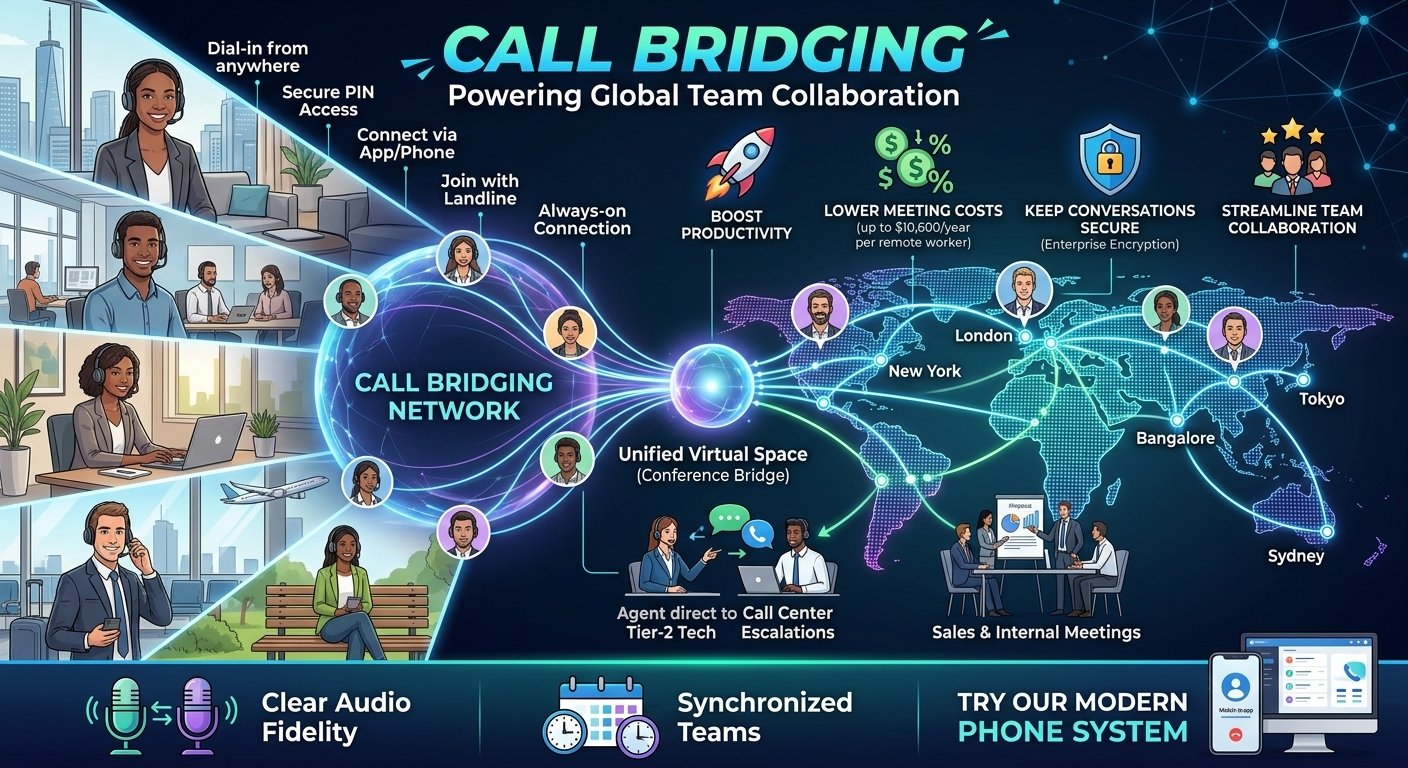
Call bridging is a transformative telecommunications feature merging multiple participants into a unified virtual space regardless of their physical location. Teams operating across different continents rely heavily on this technology to communicate efficiently. Implementing an effective call bridging strategy eliminates the traditional hurdles of booking physical meeting rooms and dealing with complex application integrations. Remote workforce members can dial into a shared telephone number, seamlessly connecting through a centralized network. Exploring this mechanism reveals immense potential for modern enterprises seeking streamlined operations, reduced telecommunication expenses, and superior team collaboration methods across the entire corporate landscape to ensure maximum daily output. What is call bridging? A bridge call serves as a dedicated communication hub where diverse individuals connect simultaneously over a singular telephone connection. Professionals utilize this method to maintain constant contact with clients and internal departments spread across various geographical locations. Setting up a reliable phone bridge provides an accessible avenue for continuous dialogue without requiring specialized hardware installations. Organizations integrate these setups directly into their daily workflows, ensuring flawless bridge communications for critical corporate updates. Advanced telephone conference bridge platforms expand traditional capabilities by accommodating hundreds of participants simultaneously within secure environments. System administrators often assign a permanent bridge phone number acting as an always-on collaboration zone for authorized personnel. Understanding the bridged call appearance feature helps users monitor active connections directly from their desktop interfaces, enhancing overall visibility. This foundational technology anchors numerous enterprise-grade solutions designed specifically to enhance modern digital workplace ecosystems. How Does Call Bridging Work? Dial in: Participants initiate the process by dialing a designated calling bridge number provided by the meeting organizer. Enter a code: Callers input a secure access PIN to ensure only authorized individuals enter the bridge conference call. Join the shared room: The underlying software synchronizes all incoming audio streams, establishing a smooth bridge call conference experience. Use host controls: Moderators manage the session by muting lines, arranging breakout rooms, or adjusting conference bridge settings. Wrap up and review: Organizers save the recorded session for future reference, maximizing the value of the conference call bridge service. Why Are Call Bridging Solutions More Popular Than Ever? Modern enterprises increasingly prioritize decentralized operations, making robust communication tools absolute necessities for daily survival. Seamless bridge conferencing grants unparalleled flexibility for workers who demand consistent connectivity while navigating non-traditional office environments. The corporate landscape is shifting rapidly, requiring instant synchronization between remote agents, specialized technical departments, and international stakeholders. Join a Bridging Call From Anywhere Geographic limitations disappear entirely when organizations deploy a sophisticated call conference bridge for their widespread workforce. Staff members seamlessly connect to important discussions whether they are operating from a home office, a regional branch, or traveling internationally. This exceptional adaptability ensures critical project milestones remain unaffected by individual participant locations or sudden schedule adjustments. Device agnosticism plays a crucial role in modern enterprise mobility, allowing users to leverage landlines, smartphones, or desktop applications effortlessly. Participants experience consistent audio fidelity regardless of their chosen hardware, reinforcing the sheer convenience of a well-maintained phonebridge. Removing hardware restrictions accelerates adoption rates and encourages spontaneous collaboration among previously isolated departmental silos. Lower Your Meeting Costs Significantly Transitioning toward virtual collaborations dramatically reduces overhead expenses associated with maintaining expansive corporate headquarters. Extensive research by the US Career Institute demonstrates that companies can save up to $10,600 annually per remote employee by utilizing remote-friendly telecommunication setups. Eliminating frequent travel obligations, catering requirements, and physical utility bills creates massive financial relief for budget-conscious organizations. Most modern service providers offer flexible subscription tiers based entirely on actual organizational usage rather than flat infrastructure fees. A dedicated concall bridge circumvents exorbitant international dialing tariffs by routing connections through localized network hubs. Allocating these saved financial resources toward employee development or product innovation yields significantly higher returns on overall corporate investment. Keep Private Conversations Secure Protecting sensitive intellectual property remains paramount when executing any high-stakes corporate communication strategy over external networks. A professional conference call bridge incorporates enterprise-grade encryption protocols and strict access controls to prevent unauthorized eavesdropping. Legal firms, healthcare providers, and financial institutions rely heavily on these fortified environments to discuss confidential client information safely. Advanced host parameters allow moderators to lock ongoing sessions, actively monitor the participant roster, and remove uninvited attendees instantly. Adhering to stringent regulatory frameworks becomes significantly easier when utilizing certified platforms featuring mandatory recording consent prompts. Establishing a secure tech bridge ensures complete peace of mind for both internal executives and high-profile external business partners. Boost Overall Team Productivity Eliminating the friction of coordinating physical gatherings accelerates project delivery timelines and enhances overall output quality. Authoritative data highlights this trend, as 79% of professionals confirm that virtual meetings are equally or more productive than traditional in-person alternatives, according to Passport Photo Online research. Instant access to decision-makers prevents minor bottlenecks from escalating into major operational blockages. Centralizing discussions on what is call bridging channel minimizes the chaotic nature of scattered email threads and disjointed messaging apps. Resolving urgent technical glitches or addressing sudden client escalations happens rapidly when all relevant experts occupy the same audio space. Continuous workflow momentum heavily depends on this ability to facilitate immediate, frictionless group conversations. Leverage Advanced Call Bridging Features Automated call recording and breakout rooms maximize the utility of your conference bridge by archiving searchable dialogues and enabling focused group brainstorming. To ensure seamless execution, comprehensive moderator controls maintain pristine audio quality, while live monitoring utilities allow supervisors to whisper quiet guidance to agents. Driven by advanced analytics, these features track attendance and engagement metrics to continuously optimize your corporate communication strategies. Try a Phone System That Just Works Navigating complex software interfaces disrupts daily operations and generates unnecessary frustration among non-technical staff members. Implementing an intuitive call bridging framework allows employees to focus entirely on their primary responsibilities rather than troubleshooting connection errors. Reliable platforms automatically handle background synchronization, delivering pristine audio quality without demanding manual user intervention. Scalability remains a vital component of any successful deployment, ensuring the telecommunications system expands gracefully alongside organizational growth. Adding new regional numbers or increasing maximum participant thresholds takes mere seconds within a properly designed administrative dashboard. Companies ultimately require a dependable phone conference bridge that operates silently in the background, facilitating flawless interactions around the clock. Call Bridging vs Conference Call Differences Industry professionals frequently interchange these terminologies despite referring to two distinctly separate components of the overall communication process. The infrastructure actively merging multiple telephonic signals together represents the fundamental core of a call bridging system. Conversely, the actual scheduled event where individuals congregate to discuss specific agendas defines the broader meeting concept. Feature Area Bridge call Conference call What it is The shared network merging callers together The active meeting where people talk Main focus The technical connection method The specific event and daily agenda Typical format Audio dial-in using a phone number and PIN Audio interactions, often with screen shares System Setup A reusable permanent line or number Scheduled individually per meeting Best used for Recurring team or client interactions One-off meetings and corporate presentations Common Uses for Call Bridging in Call Centers Customer support departments heavily rely on instant collaboration tools to resolve highly complex technical escalations efficiently. Frontline agents quickly pull specialized tier-two technicians into live conversations without forcing the frustrated consumer to endure extended hold times. This seamless transition drastically improves first-call resolution metrics and significantly elevates overall customer satisfaction scores across the department. Sales organizations leverage robust call bridging service capabilities to orchestrate compelling product demonstrations involving multiple stakeholder groups. Executives, procurement officers, and departmental heads can all participate in the negotiation phase simultaneously from their respective global headquarters. Training coordinators also depend on these secure shared environments to instruct remote new hires, ensuring consistent onboarding experiences across the board. Final Thought on Call Bridging Embracing advanced telecommunications infrastructure fundamentally revolutionizes how modern enterprises facilitate internal and external dialogue. The transition from physical boardrooms to dynamic virtual spaces empowers global workforces to maintain peak efficiency regardless of geographic boundaries. Organizations prioritizing a seamless call bridging strategy consistently outperform competitors hindered by outdated, inflexible communication methodologies. Investing in a comprehensive conference bridging solution represents a strategic commitment to operational excellence and employee adaptability. Continuous technological advancements will only further refine these capabilities, introducing deeper system integrations and superior audio fidelity. Companies mastering this essential administrative tool today secure a definitive structural advantage in the increasingly decentralized business landscape of tomorrow. Frequently Asked Questions About Call Bridging What is a bridge call? It is a telecommunications feature that merges multiple telephone lines into one virtual room, allowing geographically dispersed individuals to communicate simultaneously over a single network connection. What is the difference between a bridge call and a conference call? The primary contrast lies in their functional roles; the former is the technological infrastructure connecting the lines, while the latter is the actual scheduled conversational event taking place. How do you join a bridge call? Participants dial a designated public or private phone number and enter a secure PIN or access code provided by the host to authenticate their entry into the shared space. What is a bridge call in Microsoft Teams? This functionality allows external users to dial into a Teams virtual meeting using a standard telephone number rather than joining through the desktop or mobile internet application. What is a bridge call in incident management? Information technology response teams rapidly assemble essential personnel on a centralized, always-on phone line to diagnose and resolve critical system outages or security breaches in real time. What is an audio bridge? This specialized piece of hardware or software acts as the central mixing matrix, taking multiple incoming voice signals and distributing them equally to all connected participants. What does “join the bridge” mean in a meeting? Colleagues use this phrase to instruct others to dial into the pre-established shared telephone line so the collaborative discussion can commence with everyone present. What is a bridged phone line? It represents a specific telecommunications setup where a single extension appears on multiple physical desktop handsets, allowing different receptionists to answer the same incoming number. What is bridge communication in task manager? This relates to a specific background system process managing internal data routing between software applications, entirely separate from telephonic conferencing technologies.

Read More
call center monitoring

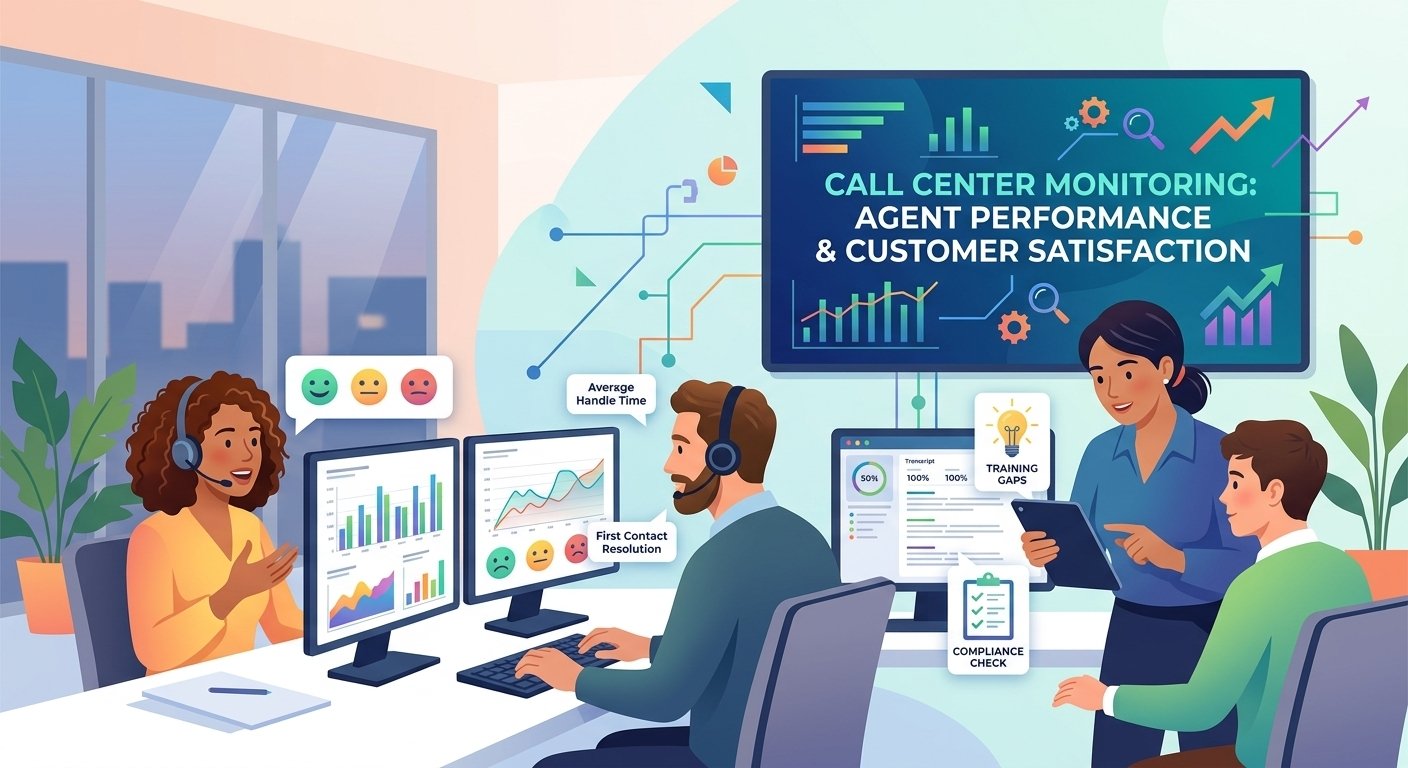
What is Call Center Monitoring?

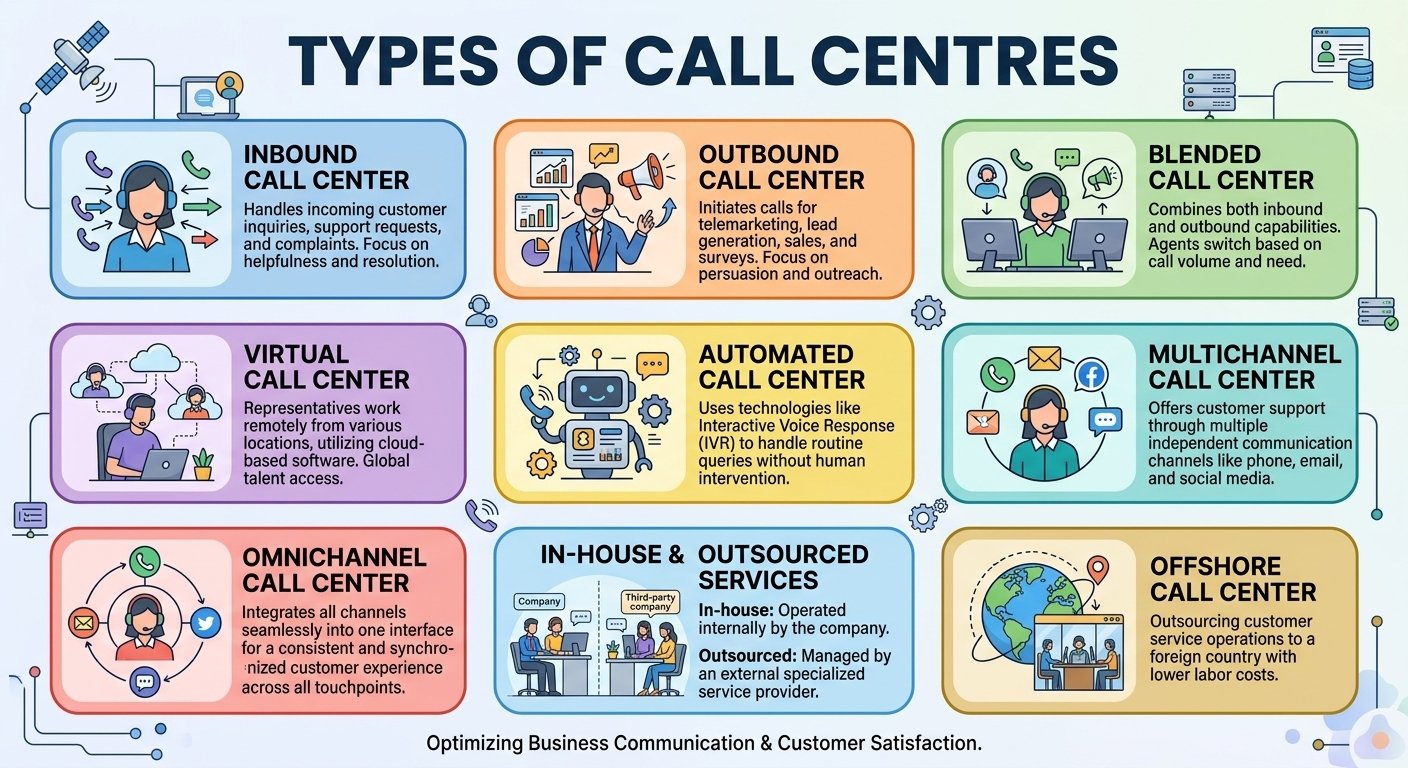
Call center monitoring involves evaluating customer interactions to assess agent performance, enhance service quality, and optimize business operations. This vital practice utilizes specialized software to listen to live conversations or review recorded interactions, turning raw data into actionable insights. Implementing a solid call center monitoring program allows managers to identify training gaps, ensure industry compliance, and elevate overall customer satisfaction. By continuously analyzing these engagements, companies refine communication strategies and establish consistent support standards. A well-structured approach ultimately drives operational efficiency and helps organizations deliver outstanding, customer-centric experiences during every single interaction with their brand. What Is Call Center Monitoring? Contact center monitoring is the systematic observation and analysis of interactions between agents and customers. Supervisors or quality analysts review these engagements to provide immediate assistance, identify training opportunities, and maintain high service standards. Companies leverage advanced analytics tools to extract meaningful information regarding customer sentiment, duration, and efficiency. Evaluating recorded conversations ensures compliance with regulatory standards while highlighting trends in consumer behavior. This proactive approach establishes clear benchmarks for support teams, allowing representatives to deliver consistent, high-quality experiences. Utilizing proper tracking mechanisms transforms standard conversations into strategic assets for continuous organizational improvement. Why Is Call Center Monitoring Important? Implementing a robust evaluation system offers measurable advantages for organizations aiming to boost client satisfaction and operational efficiency. Listening to daily conversations enables leadership to pinpoint operational hurdles, refine communication strategies, and enforce strict compliance protocols. According to a 2023 McKinsey & Company research report, regularly evaluating support conversations can boost agent productivity by 15 percent while increasing retention scores by 20 percent.  Enhances Customer Experience: Listening to calls helps organizations understand customer frustrations, proactively fix product issues, and evaluate support reps to provide better training on empathy and problem-solving. Boosts Agent Performance: It allows managers to give specific, actionable feedback based on real interactions. By sharing the strategies of top performers, companies can effectively coach their staff and build their confidence in handling difficult situations. Ensures Compliance and Security: Regular monitoring guarantees that employees adhere to strict industry regulations regarding secure data handling and consent, which protects sensitive information, helps detect fraud, and prevents costly legal penalties. Drives Data-Driven Decisions: Analyzing conversation data gives leadership valuable insights into market trends and consumer preferences. This concrete data can be used to guide product development, optimize marketing, and drive sustainable business growth. What Call Interactions and Data Do You Monitor? Establishing a comprehensive oversight framework requires tracking various interaction types and performance metrics. Organizations evaluate diverse data points to form a complete picture of operational health. Interaction Type Primary Purpose Key Data Tracked Inbound Resolving active consumer inquiries Issue resolution speed, tone, empathy Outbound Proactive sales and marketing outreach Script adherence, conversion rate Internal Staff collaboration and peer training Protocol updates, department alignment Sentiment Assessing emotional shifts during talks Voice tone, pacing, negative phrasing 1. Inbound calls Consumers initiate inbound engagements to seek technical assistance, resolve billing inquiries, or file complaints. Evaluating these specific interactions helps organizations accurately identify common frustrations and assess overall service effectiveness. Reviewing incoming requests provides direct insight into immediate client needs. This data helps refine knowledge bases and streamline resolution pathways for faster future support. 2. Outbound calls Representatives initiate outbound engagements for proactive marketing, sales outreach, and follow-up surveys. Tracking these conversations measures script adherence, professional demeanor, and overall conversion success. Leadership analyzes outbound interactions to gauge the effectiveness of promotional campaigns. This detailed evaluation highlights areas where representatives require additional training in persuasion or objection handling. 3. Internal calls Staff members generate internal engagements for peer training, departmental meetings, and cross-team collaboration. Assessing these internal communications improves corporate alignment and enhances the effectiveness of operational processes. Tracking internal communication helps eliminate departmental silos and accelerates knowledge sharing. It ensures all team members remain updated on updated protocols and product features. 4. Customer sentiment Sentiment analysis evaluates the emotional state of the consumer by analyzing tone of voice, word choice, and conversation pacing. This specific metric reveals hidden frustrations and highlights moments where representatives successfully de-escalate tense situations. Understanding emotional shifts during an interaction allows managers to refine empathy training. It provides a deeper context beyond standard resolution metrics, focusing on the human element of service. 5. Agent performance metrics Tracking specific performance indicators provides a quantifiable assessment of operational efficiency. Organizations regularly monitor call center performance using the following critical metrics: Average handle time calculates the exact duration required to complete a single interaction successfully. First contact resolution measures the percentage of inquiries resolved during the initial engagement without requiring escalation. Transfer rate indicates the frequency of conversations routed to alternate departments for final resolution. 6. Compliance data Tracking regulatory adherence ensures all required disclosures occur and sensitive information remains secure. This specific data proves that the organization operates within legal boundaries and strictly follows industry mandates. Consistent oversight prevents costly legal infractions and builds trust with consumers. Automated flagging systems instantly alert management to any deviations from approved regulatory scripts. Call Center Monitoring Tools and Solutions To Use Deploying the right technological ecosystem is vital for extracting actionable insights from daily operations. Modern facilities rely on specialized software to track, record, and analyze vast amounts of interaction data efficiently. Call recording software Recording technology provides a secure, permanent archive of all consumer interactions for quality assurance and dispute resolution. These systems feature automated capturing, encrypted storage, and instant retrieval capabilities. Accessing historical recordings allows managers to review complex cases and design targeted training materials. It serves as the foundational element of any comprehensive oversight initiative. Speech analytics Artificial intelligence powers speech analytics to instantly transcribe conversations and detect specific keywords or emotional shifts. This technology provides a macro-level view of emerging market trends and overall workforce performance. Automated transcription eliminates manual listening, allowing analysts to review a higher volume of interactions in less time. It quickly identifies systemic issues affecting the client experience. Quality management (QM) software Dedicated quality platforms offer detailed performance dashboards, coaching workflows, and standardized evaluation templates. Management relies on these robust tools to automate manual administrative tasks and focus entirely on employee development. Standardized grading ensures fair and objective performance reviews across the entire workforce. These platforms simplify the tracking of historical progress and highlight areas needing immediate intervention. Workforce management (WFM) software Resource planning technology ensures the facility maintains adequate staffing levels to handle anticipated interaction volumes. These predictive tools analyze historical trends to optimize schedules and minimize consumer wait times. Proper staffing directly impacts service quality by preventing employee burnout and reducing queue frustration. Forecasting capabilities allow facilities to adapt quickly to seasonal spikes or unexpected volume surges. Real-time monitoring dashboards Live dashboards grant leadership immediate visibility into active queues, staff availability, and ongoing interaction metrics. Supervisors utilize this live perspective to address sudden bottlenecks and reallocate resources dynamically. Visualizing live data prevents minor operational hiccups from escalating into major service disruptions. It ensures the facility operates efficiently during peak business hours. Customer feedback tools Post-interaction surveys, online review aggregators, and social media tracking tools capture unfiltered consumer opinions. These specialized platforms provide structured opportunities for clients to share their direct experiences with the brand. Integrating external feedback with internal performance data highlights critical perception gaps. This dual perspective enables organizations to develop proactive strategies aligned with actual market expectations. How To Conduct Call Center Monitoring Establishing an effective oversight framework requires a structured approach to evaluation and feedback. Facilities utilize multiple methodologies to capture a complete picture of operational effectiveness. Live monitoring Supervisors directly observe active conversations to assess real-time execution and provide instant coaching. Intervening during complex scenarios allows leadership to prevent negative outcomes before they damage the brand reputation. Observing active engagements helps managers identify individual strengths and design personalized development programs. This hands-on approach builds employee confidence and ensures strict adherence to approved protocols. Post-call analysis Methodical reviews of recorded interactions form the foundation of most quality assurance initiatives. Analysts evaluate communication skills, problem-solving abilities, and protocol adherence without the pressure of live intervention. According to a 2024 Gartner study, 89 percent of modern organizations compete primarily based on the quality of their client interactions, making deep historical analysis vital. This thorough evaluation method reveals hidden nuances and long-term behavioral patterns across multiple touchpoints. Automated quality assurance Artificial intelligence systems rapidly evaluate massive volumes of interactions to identify keyword usage and compliance deviations. Automation ensures consistent, unbiased grading while drastically reducing the administrative burden on quality analysts. Deploying predictive analytics flags potential regulatory violations instantly, mitigating risks across thousands of daily engagements. Automated scoring standardizes the evaluation process and seamlessly connects individual execution to overall facility objectives. Call Center Monitoring Best Practices Optimizing operational performance requires adherence to proven strategic methodologies. Implementing these core tactics ensures your oversight program delivers maximum return on investment. Set Clear Objectives: Define specific goals before deploying new technology. Balance efficiency metrics with quality metrics (like first contact resolution), involve frontline staff in setting these goals, and review them quarterly. Use a Multi-Faceted Strategy: Combine live observation, historical review, and automated analysis to get a complete picture of performance. Rotate monitoring schedules and use automated triggers to flag highly emotional calls for manual review. Focus on Constructive Feedback: Frame monitoring as a development tool rather than a critique. Encourage agents to analyze their own calls and host peer-learning sessions where top performers share their successful techniques. Invest in the Right Technology: Provide staff with communication platforms that integrate with existing systems. Involve employees in the software selection process to identify workflow challenges, and ensure you budget for comprehensive training. Adapt Based on Customer Feedback: Regularly review customer surveys and external feedback to see operations from the consumer’s perspective. Create a dedicated committee to track these trends and adjust your evaluation criteria to meet shifting customer expectations. Top Call Center Monitoring Software Selecting the appropriate technological infrastructure is vital for establishing an effective oversight program. Several industry-leading platforms offer unique capabilities tailored to specific operational requirements. Software Name Best Functionality Ideal For Nextiva Omnichannel routing & live coaching Growing businesses needing rapid deployment Five9 AI automation & predictive analytics Enterprises focused on workflow automation Enthu.ai Autonomous sales conversation grading Sales teams wanting automatic insights Gong Revenue intelligence & competitor tracking Organizations strictly focused on revenue Insightful Detailed workforce productivity tracking Managers needing application usage data 1) Nextiva Call Center Nextiva delivers comprehensive omnichannel capabilities optimized for growing enterprises seeking rapid implementation. It seamlessly handles inbound routing across web chat, email, and traditional voice channels. Supervisors leverage intuitive interfaces for live observation, discrete in-interaction coaching, and seamless escalation management. The software features built-in compliance for strict regulatory frameworks, eliminating the need for lengthy security audits. 2) Five9 Contact Center This future-oriented solution focuses heavily on artificial intelligence and workflow automation. Five9 aims to eliminate manual administrative processes, allowing analysts to focus entirely on human value-added activities. Advanced predictive analytics and intelligent chatbots optimize the initial support stages before human intervention occurs. Comprehensive screen recording captures both audio and visual elements to pinpoint specific workflow bottlenecks and software navigation issues. 3) Enthu.ai Operating as a specialized quality automation tool, this platform focuses intensely on driving revenue and optimizing sales conversations. It automatically evaluates multi-channel engagements to highlight missed upselling opportunities and crucial resolution moments. Enthu ai provides clear visual reporting that highlights specific areas for contract renewals and cross-selling. It operates seamlessly in the background, delivering profound insights without requiring constant managerial intervention. 4) Gong As a premier revenue intelligence platform, Gong accurately assesses relationship strength and conversion probability. It captures complex sales conversations to generate precise insights regarding operational execution and market positioning. Artificial intelligence identifies recurring conversational patterns, competitor mentions, and underlying sentiment shifts. These deep insights equip sales leadership with the exact data needed to provide highly targeted, effective coaching. 5) Insightful This specialized solution focuses primarily on workforce analytics and internal productivity tracking. Insightful generates concrete data regarding precise software usage, active time, and overall digital efficiency. Management utilizes intuitive reporting dashboards to compare staff efficiency and identify critical operational bottlenecks. It provides a transparent view of internal resource allocation for organizations prioritizing maximum workflow optimization. How to Choose the Right Call Center Monitoring Software Selecting the perfect oversight platform requires a careful assessment of specific organizational pain points and technical constraints. Leadership must evaluate integration capabilities to prevent the creation of isolated data silos. Prioritize platforms featuring intuitive user interfaces that minimize disruption to daily representative workflows. Determine scalability requirements early to ensure the chosen software can seamlessly accommodate future channel expansion and increased interaction volumes. Final Words Implementing a sophisticated call center monitoring architecture transforms disorganized interaction data into a formidable competitive advantage. Utilizing a blend of human observation and automated analytics ensures representatives consistently deliver exceptional service while maintaining strict regulatory compliance. Organizations prioritizing continuous, data-driven improvement naturally build stronger client relationships and achieve sustainable market growth. Investing the necessary resources into proper quality tracking ultimately creates a highly empowered workforce capable of exceeding modern consumer expectations. What does call center monitoring mean? It means systematically observing and evaluating incoming and outgoing consumer interactions. Supervisors analyze these engagements to grade representative effectiveness, identify knowledge gaps, and ensure strict adherence to corporate protocols. What are the top 5 monitoring tools? The most effective platforms currently leading the market include Nextiva, Five9, Enthu.ai, Gong, and Insightful. Each specialized system provides unique artificial intelligence capabilities, comprehensive analytics, and customized reporting features designed to optimize facility operations. What are the three types of monitoring? The three primary methodologies include live observation, post-interaction historical analysis, and automated quality assurance. Combining these unique approaches provides management with a highly accurate, comprehensive view of operational health. What is the main purpose of monitoring? The primary objective is to elevate the overall consumer experience by continuously refining representative performance. It allows organizations to enforce regulatory compliance, identify systemic operational issues, and make highly informed strategic business decisions. How does real time call monitoring work? Supervisors utilize specialized dashboards to listen to live conversations without the consumer knowing. This immediate oversight allows managers to digitally whisper coaching advice to the representative or completely take over the interaction if necessary. Why is a call center monitoring program necessary for compliance? Strict industry regulations mandate specific data protection protocols and mandatory recording disclosures. Continuous oversight ensures staff members execute these legal requirements flawlessly, heavily mitigating the risk of expensive corporate fines. What is call quality monitoring software? It is a dedicated technological platform that automatically captures, transcribes, and grades consumer interactions based on predefined rubrics. Analysts rely on these sophisticated tools to streamline the entire performance evaluation lifecycle. Can zoom monitoring be used for quality assurance? Yes, video conferencing platforms provide valuable interaction data that quality analysts can review. Assessing virtual body language and screen-sharing execution offers an extra layer of insight into overall representative effectiveness. How often should a business call monitoring evaluation occur? Organizations should evaluate interactions on a continuous, daily basis using automated analytical tools. Managers should also conduct formal, manual reviews of specific engagements at least once a week to provide targeted individual coaching.

Read More
best ivr system for small business

Best IVR System for Small Business in 2026

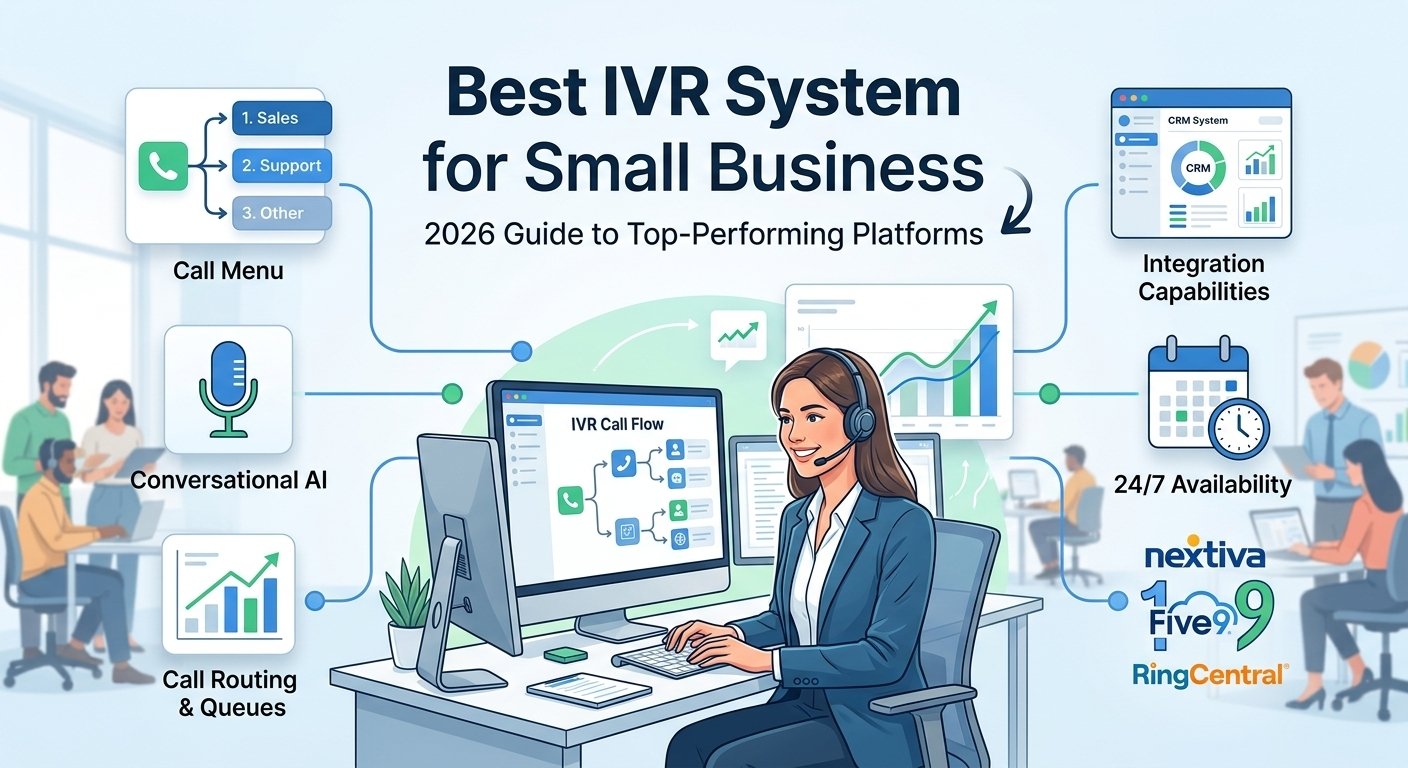
In the era of digital communication, having the most suitable ivr system small business is a must-have for businesses that want to provide top-tier customer service without burning out their internal support resources. A voice response platform that is interactive is able to handle a lot of calls and will provide advanced routing technology for transferring the client to the right department. These automated communication devices enable you to stay available all the time and come across exceedingly expert 24/7. It is important to grasp some of the core features of telecommunication solutions, such as intelligent queuing, scalability, and seamless integration options. This complete guide will help you identify the best platforms to boost your daily workflow efficiency and enhance your client satisfaction. At a Glance: Best IVR Systems for 2026 IVR Software Trustpilot Rating Best For Starting Price Nextiva 4.6 Customer support and office phone systems $15 per user per month, billed annually Five9 2.8 Mobile support $119 per user per month, billed annually GoTo Connect 2.1 Customization Contact GoTo Connect for pricing Aircall 2.9 Remote teams $30 per user per month, three-user minimum, billed annually 8×8 2.9 Cloud-based IVR Contact 8×8 for pricing Zendesk 1.8 Enterprises $19 per agent per month, billed annually LiveAgent 4.6 Live chat $10 per agent per month, billed annually Zoom 1.3 Video conferencing $14.16 per user per month, billed annually RingCentral 1.8 Existing RingCentral phone users $20 per user per month, billed annually CallHippo 2.4 Small businesses $19 per user per month, billed annually 1. Nextiva For small business looking for a powerful communications platform that can streamline complex call routing, Nextiva is the best ivr system. The interface is still very easy to use, allowing admins to easily deploy multiple channels of support, including voice, messaging, and chat. Organizations making the leap from legacy telephony, realizing that they need to know the difference between sip and pri investments, are able to navigate this transition more easily with Nextiva’s cloud reliability, which far exceeds that of traditional telephony investments. Moreover, this provider allows for seamless integration with current customer relationship management software, leading to an information-driven routing system, based on the history of the message sender. Security is a paramount concern throughout the network with robust compliance protocols ensuring sensitive caller information is shielded during each and every call. Features Conversational artificial intelligence that greets callers and gathers necessary contact details efficiently. Intelligent routing software designed to direct incoming queries accurately on the very first attempt. Comprehensive holiday scheduling settings to inform consumers about alternative support options. Pricing With flexible monthly plans that start at $15 per user per month, billed on an annual basis, Nextiva is very affordable for growing teams. Pros and cons Comprehensive unified platform combining multiple communication formats into one dashboard. Highly accessible interface requiring minimal technical proficiency for initial deployment. Primarily tailored for organizations operating within the United States borders. Lacks a complimentary trial period for extensive pre-purchase testing. 2. Five9 Five9 offers a very dynamic best ivr system solution for mobile-heavy small business sites with lots of navigation graphics. The software features app-like menus and wait time estimates, greatly reducing the strain on live representatives. A recent Gartner study shows that companies that have switched to visual menu interfaces save more than two decades of an average handle time, demonstrating the huge potential benefits of modern routing over the old pri pbx. The platform uses advanced automation features to handle real-time transcriptions and sentiment analysis seamlessly in multiple channels. Callers will not encounter frustrating bottlenecks or have to wait a long time to connect to a competent agent when they use unified routing based on consumer intent. Features Visual prompts optimized perfectly for modern mobile device screens and web browsers. Embedded widgets that display accurate wait time information and convenient callback choices. Integrated visual surveys designed to gather actionable consumer feedback immediately after interactions. Pricing Five9 offers various structural tiers beginning with their Digital plan at $119 per seat monthly, catering to diverse operational budgets. Pros and cons Omnichannel support establishing a completely seamless communication experience globally. Visual navigation paths that simplify complex menus and effectively reduce waiting times. Occasional connectivity interruptions reported during peak traffic periods. Limited advanced analytics capabilities compared to other enterprise-level alternatives. 3. GoTo Connect One of the most important features of the best ivr system for small business is the capacity to customize as much as possible, something that is easily achievable with a cloud-based system like GoTo Connect. Users are instantly given access to a self-service administrative portal to help in fast problem solving and real-time audio editing. Initially, it can be confusing to evaluate the possibilities, such as an isdn pri vs sip trunk, but GoTo Connect can help you overcome the limitations of old hardware and give you pure digital flexibility. The intuitive design makes it easy for large businesses to use call handling at professional level without any hidden configuration issues. Features Automatic distribution networks that efficiently route incoming traffic to the most appropriate representative. Auto-queue callbacks granting individuals the freedom to disconnect while retaining their exact queue position. Pre-recorded messaging structures ensuring consistent and highly accurate information delivery constantly. Pricing GoTo Connect utilizes customized pricing models depending entirely on specific organizational requirements, requiring direct consultation for accurate quotes. Pros and cons Exceptionally user-friendly environment even for staff members lacking deep technical expertise. Highly customizable greetings allowing complete personalization aligned precisely with brand identity. Noticeable lack of initial pricing transparency prior to speaking with sales representatives. Basic analytics reporting that might prove insufficient for heavily data-driven enterprises. 4. Aircall Aircall is an excellent small business IVR system for teams that work remotely or across different regions around the world. The dynamic visual editor provides the administrator with absolute control of creating customized multi-level menus with regional accents and text-to-speech options. Conventional pri phone service setups have been surpassed by newer ones, such as Aircall, which are intelligent enough to capture interactions via contact insights and summarize them. A newly integrated Artificial Intelligence voice agent manages initial escalations, freeing up a lot of human bandwidth throughout the network. Features Flexible single-level and multi-level creation modules adapting to both simple and complex navigational requirements. Dedicated number provisioning specifically designed to accommodate expansive automated routing systems. Dynamic visual editors offering a purely intuitive interface for constructing intricate response paths. Pricing Aircall provides flexible subscription tiers starting with the Essentials package at $30 per license monthly when billed annually. Pros and cons Superb international capabilities making the software perfect for globally distributed workforce environments. Real-time monitoring allowing supervisors to oversee live conversations for quality assurance purposes. Confusing billing practices occasionally causing friction during the onboarding phase. Limited self-service capabilities restricting consumers from independently resolving certain basic administrative tasks. 5. 8×8 For organisations that require an extremely intelligent best ivr system for small business, 8×8 is a very capable solution to process routine queries using natural language processing. The Cloud-based infrastructure enables consumers to communicate their requests naturally rather than deal with bulky numeric keypads. Administrative scripting tools help supervisors to make manual changes to caller paths without needing to constantly rely on external technical assistance. 8×8 simplifies the decision for entities considering the difference between pri and sip trunk protocols by running everything from the cloud and adding secure payment modules. Features Advanced reporting mechanisms generating highly valuable insights regarding overall consumer journeys. Speech-enabled response mechanics utilizing sophisticated conversational artificial intelligence technology. Intuitive flow designers allowing completely customized routing adjustments on demand. Pricing 8×8 relies on highly customized pricing structures tailored to individual corporate needs, requiring direct engagement with their sales department. Pros and cons Simple drag-and-drop design builders enabling smarter workflow creation without coding knowledge. Organic speech recognition creating a vastly superior and highly modernized consumer experience. Restricted integration capabilities limiting synchronization with certain third-party software applications. Inconsistent operational experiences documented regarding overall platform stability and customer support. 6. Zendesk Zendesk‘s best ivr system services are incredibly scalable for small business operations, which expect to expand to massive enterprise territories. Supervisors can build complex phone trees on the platform that route routine questions to pre-recorded information messages. New enhancements include automatic speaker labelling and keyword boosting, which continually improve the accuracy of digital transcription. This digital maturation level brings upgrades to setups that were previously digital in name only and relied on an outdated pri circuit to handle incoming communication traffic. Features Sophisticated phone trees efficiently guiding callers through meticulously pre-recorded operational prompts. Comprehensive monitoring frameworks designed to uncover hidden analytical insights effortlessly. Warm transfer protocols securely looping in human agents without dropping the active connection. Pricing Zendesk features multiple pricing tiers beginning with their Support Team package at $19 per agent monthly under annual billing agreements. Pros and cons Robust integration possibilities unifying disparate operational workflows perfectly. Advanced reporting frameworks generating deeply actionable performance intelligence metrics. Expensive premium tiers potentially unsuitable for heavily resource-constrained corporate startups. Lower-rated artificial intelligence functionality compared directly to competing market alternatives. 7. LiveAgent LiveAgent acts as a single solution to take care of small business networks, where live chat integration is a top priority along with traditional voice routing. The integrated functionality ensures that the high-value customers are immediately matched with high-quality representatives according to the given priority configurations. In the event of long wait times, the dashboard automatically prompts consumers for a callback, maintaining the overall goodwill of consumers. This digitalized environment allows agents to have a much more streamlined workflow and be able to handle multiple types of interaction during the same session. Features Automated navigational paths ensuring highly efficient and strictly organized call distribution. Customizable menus explicitly designed to enhance the overall user experience substantially. Priority escalation algorithms routing high-value clients immediately toward specialized support departments. Pricing LiveAgent offers a budget-friendly Small Business tier starting at just $10 per agent monthly when billed on an annual cycle. Pros and cons Extremely straightforward deployment allowing teams to achieve full operational speed rapidly. Rapid administrative support guaranteeing incredibly fast resolution of minor technical issues. Clunky visual layouts occasionally slowing down initial onboarding and daily navigation tasks. Cluttered interface designs feeling slightly overwhelming for newly hired staff members. 8. Zoom Known for its video conferencing capabilities, Zoom also offers an unlimited video conferencing/best ivr system for small business customers that are part of their omnichannel contact center suite. The software has adopted natural language interaction: through the extremely advanced speech recognition, the user can control the multi-level menus effortlessly. Contact numbers can easily be provisioned and engagement modules can be easily orchestrated with a drag & drop digital designer. This agility is a significant improvement over the old pri system architecture, delivering a superb level of reliability during out-of-the-ordinary traffic peaks. Features Unlimited auto attendants provided completely free of charge within the fundamental framework. No-code customization frameworks adapting instantaneously to sudden operational strategy changes. Flawless text-to-speech functionality supporting diverse user accessibility preferences perfectly. Pricing Zoom provides a completely free basic tier, while professional business packages begin at $14.16 per user monthly under annual contracts. Pros and cons Phenomenal high-quality video and audio stability maintained across all geographic locations. Incredible scalability successfully accommodating small, medium, and massive corporate enterprises alike. Primary structural focus remains on video, rendering certain voice features slightly underdeveloped. Outbound calling functionality strictly requires premium upgrades, frustrating highly active sales departments. 9. RingCentral For small businesses that are already using their comprehensive digital communication platform, RingCentral is a leading best ivr system for small businesses. The technology easily integrates skills-based routing, which guarantees clients connect to the absolute most qualified representative in the blink of an eye. The new AI receptionist makes inbound passes seamless and safe and at the same time prepares comprehensive analytical performance reports. RingCentral transcends the constraints of traditional pri trunks with its wide range of digital integration, ensuring seamless desktop-to-mobile communication. Features Self-service modules deliberately designed to significantly reduce overall holding durations. Skills-based distribution sending callers toward representatives possessing specific departmental expertise. Natural language processing empowering clients to speak specific requests rather than pressing keys. Pricing RingCentral features a Core tier starting at $20 per agent monthly when billed annually, alongside more advanced premium packages. Pros and cons Flawless operational synchronization across both desktop computers and portable mobile devices. Extensive synchronization with popular productivity tools and relationship management platforms. Certain critical features remain entirely locked behind heavily expensive premium upgrade tiers. Highly complex menus demanding extensive initial configuration and continuous structural maintenance. 10. CallHippo CallHippo stands out as an excellent small business IVR solution for those small business startups who require basic routing functionality without unnecessary expenses. It is available in several different languages, and provides a seamless working experience across the world thanks to virtual numbers located in various regions. According to a recent Forrester research report, companies that have implemented multilingual routing see a 30% rise in customers overseas retention. It connects to more than a hundred third-party applications, while restricting applications to a restricted pri telephony framework is just as bad as wrapping them in a tin of foil. Features Intelligent distribution algorithms utilizing either manual configuration or automated artificial intelligence. Multilingual support options providing spectacular global service capabilities immediately. Power dialer functionality drastically automating the outbound calling process for sales teams. Pricing CallHippo offers a complimentary Basic tier, whereas fully featured Starter packages cost $19 per user monthly. Pros and cons Exceptionally budget-friendly pricing structures accommodating newly established corporate entities perfectly. User-friendly interface significantly reducing necessary onboarding time for new hires. Intermittent connectivity issues degrading audio quality during high-volume traffic periods. Limited customer support availability occasionally delaying the resolution of urgent technical matters. Other Top IVR System Providers: Honorable Mentions It is essential to investigate all the options for best ivr system for small business to ensure the best one for your operational parameters. While Twilio offers a programmable interface ideal for developers, Genesys serves large enterprises with a need for extremely high density omnichannel synchronizations. While CloudTalk covers superbly for new startups who need basic automation, solutions such as Dialpad and Ooma offer simple digital configurations. When considering substantial purchases, checking out pri vs sip trunking differences can help make the point that the modern cloud solutions prevail in today’s world. Features to Look for When Choosing an IVR Solution Choosing the best ivr system for small business is very dependent on the functionality that perfectly matches the service goal of your business. Getting input recognized smoothly allows clients to express their preferences verbally, significantly enhancing overall first call resolution metrics. Intelligent queue management optimally distributes queues among the different departments, so that no single department suffers from disastrous queueing. With the constant evolution of telecommunications, knowing what it is and what it isn’t is no longer as important as having omnichannel support in the cloud, as well as advanced conversational automation. Dialed Number Identification Service functionality perfectly recognizes specific dialed inputs to segment marketing campaigns precisely. Comprehensive analytics track menu selections meticulously to identify specific areas demanding structural improvement. Callback features strictly permit clients to retain their place in line without staying actively connected. How to Choose the Best IVR System Provider The first step towards choosing the best ivr system for small business is an in-depth analysis of your in-house structural requirements. If you have a capability that is absolutely required such as integration with CRM or AI triage, it will make cutting a lot easier. In a world where interactions with consumers are bound to grow in the long term, your selected platform will likely scale with ease. Switching completely from an legacy Pri lines to a modern digital SIP option delivers significantly increased data security, robustly protecting delicate customer details from possible outsider infringement. Read More: What Does DND Mean? A 2026 Guide Final Words Small business can change how they handle external communications and customer relationships every day by implementing the absolute best ivr system for small business. Your representatives can focus entirely on resolving cases that are very complex and esoteric because they’re able to take care of repetitive customer support questions proactively and route customers in intelligent ways. Make informed and detailed comparisons between the big players in digital vendors to guarantee seamless integration. By adopting these cutting-edge telecommunication innovations, businesses can nearly ensure their resilience and continuous delivery of high-quality customer service across all support channels. Frequently Asked Questions What makes the best ivr system for small business highly effective? The best ivr system for small business provides continuous service availability, minimizes waiting durations, and intelligently routes consumers directly to the appropriate departmental representative. How simple is the management of modern interactive voice response software? Cloud-based solutions feature highly intuitive graphical interfaces allowing administrative personnel to construct and modify structural flows easily without requiring extensive technical training. Can an automated menu integrate with existing digital relationship managers? Leading telecommunications platforms synchronize flawlessly with third-party digital tools through application programming interfaces to accurately share vital interaction history and comprehensive client profiles. What distinguishes a single-level configuration from a multi-level setup? Single-level architectures supply primary menu choices without additional layers, whereas multi-level frameworks offer extensive sub-menus for much deeper organizational navigation. Which mistakes should organizations avoid during the initial implementation phase? Companies must avoid designing excessively complicated navigational menus, deploying highly unprofessional audio recordings, and forcing clients through tedious layers before reaching live assistance. Does transitioning from a pri to sip protocol improve overall communication efficiency? Migrating toward purely digital protocols dramatically enhances network scalability and reduces physical hardware dependence, creating a substantially more agile and cost-effective operational environment. Will artificial intelligence eventually replace standard keypad menu selections entirely? Natural language processing allows callers to vocalize their specific needs organically, which provides a significantly more human-centric experience than interacting constantly with traditional numerical inputs. How does automated callback functionality enhance overall consumer satisfaction rates? This specific feature permits individuals to disconnect their current call while securely retaining their exact queue position, entirely eliminating the severe frustration of passive waiting.

Read More
sip trunking vs pri

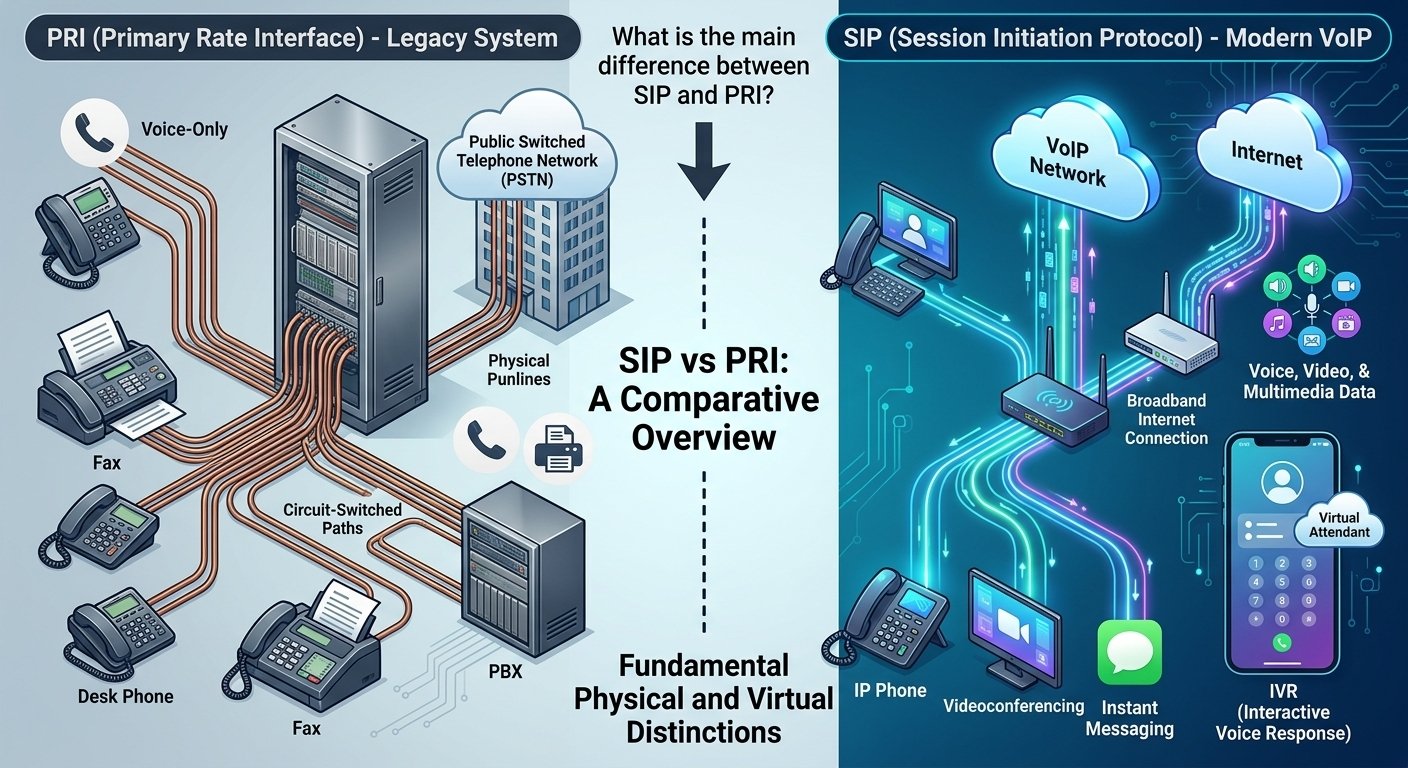
Sip Trunking vs Pri: Know the Difference

Primary Rate Interface uses standard copper technology to connect a private branch exchange with the public switched telephone network, giving a maximum number of channels which can be selected. By contrast, Session Initiation Protocol (SIP) provides virtual phone lines that become immediate while allowing for seamless (and instant) multimedia routing and scalability within a broadband, active Internet connection. To cut down on operating expenses and boost flexibility, organizations upgrading their telecommunications infrastructure are always going for virtual solutions. Switching from legacy physical networks results in state-of-the-art features such as an interactive voice response system software and an automated digital routing system. What is the main difference between SIP and PRI? The main difference in sip trunking vs pri is the way in which these frameworks are physically and virtually linked to the external networks. Legacy configurations require large copper installations, requiring a lot of physical space and maintenance staff with specializations to maintain. Eliminating all these physical requirements, virtual configurations send all voice data packets securely across existing internet broadband connections. The change is a basic one that revolutionizes the way organizations handle their worldwide interactions. When considering sip trunking vs pri, there are significant differences in how bandwidth is allocated, and overall system flexibility. Legacy systems only allow basic voice transmission over pre-defined physical paths, which is limiting organisations in terms of integration possibilities. New Internet-based protocols enable administrators to send voice, high-definition video and Instant Messaging all in one connection. This flexibility is a natural fit for implementing a full-featured voip ivr system to improve customer interactions effortlessly. What Is PRI? It is a legacy telecommunication standard that uses physical copper wires to send voice and digital data between enterprise networks and users. It digitally integrates commercial facilities directly with the large-scale public switched telephone network, bringing together national and regional telephone operators into a single loop for communication. When external customers call, the call is directed to a centralized on-premises PBX, which then routes the call to the party to whom it is intended. These circuits have traditionally been used by large enterprise organisations to handle the volume of communications they needed on a daily basis in a secure manner. These investments in infrastructure and long-term carrier agreements were important to ensure reliable uptime. The technology still proved to be the lifeline of business telephony for many years, despite these challenging requirements. Until the arrival of digital IVRs, businesses relied on a standard telephone IVR to route their callers with efficiency. PRI features Feature Description Fixed number of voice channels A PRI phone supports 23 bearer voice or data transmission channels, which means 23 communications can happen at the same time. These channels allow multiple calls to be made simultaneously and transmit voice, data, and video on the same line. The data transmission occurs at 64 Kbps per channel. It uplifts speed, makes communication reliable, and increases the security of a business voice communication system. Dedicated lines for voice and data A trunk offers a consistent level of service, and voice and data connection lines don’t traverse over the Internet but rely on the PSTN for connectivity. PRI requirements This legacy architecture has to be deployed with exactly compatible equipment and would have to be a specialized gateway or a branch exchange server with dedicated circuit cards. The technician has to physically put these components into place inside a climate controlled server room and set them up so they communicate with other digital lines. This environment requires ongoing monitoring and hardware replacements every so often to avoid catastrophic system failure. The standard system will allow for up to twenty-three concurrent conversations, but more than that will cause a lot of logistical problems for growing companies. When the call volume is above the threshold, administrators need to purchase and install new physical circuits. This rigid structure does not allow agility and it is hard to easily and seamlessly adopt modern solutions such as an intelligent call queuing system or dynamic routing protocols. What Is SIP? It is a modern protocol that will enable you to link your internal communication server straight to the web, letting you have seamless inbound and outbound digital communications. The trunking is used to merge several separate communications channels into one virtual channel that requires far less resources throughout the corporation. The difference between sip trunking vs pri emphasizes the limitations of conventional telephone telephone technology infrastructure are completely overcome with virtualization. According to a Gartner study, by 2025 more than 75% of all enterprise organizations across the globe will have completely replaced legacy physical network connections with virtualized IP-based technologies. This transition make voice communication just as easily accessible as standard email or web browsing activities. An advanced interactive voice response application and automatic menu systems are easily integrated with modernizing your infrastructure. Key features of SIP Doesn’t need separate phone lines: Direct inward dialing numbers route incoming traffic specifically to designated users rather than funneling everyone through a generic auto-attendant queue. Integrates with other IP-based services: Administrators effortlessly integrate virtual trunks with customer relationship management platforms, collaborative messaging applications, and advanced conferencing solutions. Built on dependable network reliability: Top-tier providers maintain redundant global data centers to guarantee exceptional uptime and superior call clarity during peak traffic hours. Offers more flexibility in virtual connections: Virtual routing mechanisms empower organizations to manage phone numbers, user extensions, and diverse endpoints without worrying about physical geographic limitations. SIP trunking requirements Moving to a virtual communication infrastructure involves a fast and stable internet connection, as well as a compatible IP-based branch exchange server. It should be remembered that organizations that are switching from an older configuration will need to purchase special digital adapters to connect the analog desktop phones to the new digital network. Having enough bandwidth is an important factor to guarantee clean audio when conducting high volume outbound campaigns at the same time. A strong digital platform enables the teams to use more robust additional tools that help streamline daily operations. When the virtual network architecture is fully in place, it is extremely simple to use an IVR system in the call center. These digital tools take into account incoming caller information as soon as it is received and direct it to the most suitable person in the department to handle it immediately. Pros and Cons of PRI The traditional telecoms frameworks offer distinct operational benefits but also growing technical drawbacks. Facility managers can make informed decisions in the long run based on these different parameters. When you do know both sides, you understand why some industries are reluctant to get rid of their legacy systems right now. Traditionally, physical circuits were a choice for organizations in out-of-the-way geographical locations that have unreliable, or no, broadband service. Stability and isolation guaranteed communications during localized widespread internet outages, prioritizing over modern digital feature sets. Those facilities that were heavily dependent on a simple standalone ivr system typically favored the consistent service of dedicated copper pathways. PRI advantages Dedicated bandwidth guarantees: Because the system utilizes hardwired physical connections, voice traffic never competes with internal office internet usage, guaranteeing pristine transmission clarity. Security through network isolation: Operating exclusively within closed public networks inherently isolates internal communications from prevalent internet-based cyber threats and malicious digital spoofing attempts. Direct inward dialing capabilities: A single circuit allows administrators to assign dozens of direct extension lines to individual employees without physically installing separate desktop wiring. PRI disadvantages Lack of disaster recovery: Experiencing a physical wire cut outside the facility instantly deadens all internal communications without any automatic failover rerouting capabilities. Rising operational expenses: As major telecommunications carriers actively retire aging copper infrastructure, securing experienced legacy technicians and replacement components becomes prohibitively expensive. Extremely rigid scalability: Expanding capacity requires purchasing expensive supplementary channel blocks, forcing businesses to pay continuously for unused network capacity. Pros and cons of SIP trunking The choice of a highly scalable and low cost digital communications framework must be made with great care, taking into account all the specific benefits and technical risks. By examining the details of sip trunking vs pri, you’ll see why modern enterprises pretty much universally prefer internet-based communications to legacy, landline services. Virtual platforms systematically break down geographic boundaries which have traditionally hindered global expansion by corporations. Digital telephony signifies a new level of operational efficiency as it brings together the disparate connectivity worldwide under one management window. This huge architectural change helps to quickly deploy a completely autonomous (ivr) system for the routing of complex customer logic. Looking at the good and the bad helps technology leaders make sure they put in place sufficient network protection before completing their move. SIP advantages Instant network scalability: Virtual architectures allow administrators to provision new channels instantly through a centralized software dashboard without scheduling disruptive physical hardware installations. Built-in disaster recovery: Advanced virtual trunks automatically detect localized power failures and instantly reroute essential traffic to secondary branch offices or designated mobile devices. Comprehensive multimedia support: Moving beyond basic voice transmissions enables teams to conduct high-definition video conferencing and secure instant messaging across the exact same unified connection. SIP disadvantages Strict internet dependency: Experiencing unstable or degraded broadband bandwidth directly impacts transmission clarity and overall system reliability during critical business hours. Complex security configurations: Connecting internal servers to the open internet mandates rigorous firewall configurations and robust data encryption protocols to prevent unauthorized access. Hardware compatibility challenges: Utilizing exceptionally old analog desktop hardware requires purchasing secondary conversion adapters to function correctly across a modern digital network. PRI vs. SIP Head-to-Head Comparison Feature PRI SIP trunking Connection Type Physical copper wires (T1/E1) Virtual or internet connection Scalability Low: Must add lines in blocks of 23. High: Add 1 channel at a time instantly. Media Type Voice only Multimedia (voice, video, messaging) Hardware Requires on-premise cards/gateways. Minimal (uses existing internet router). Reliability High (dedicated line), but no failover High (with Fiber/SD-WAN) + auto-failover Setup Time Weeks (physical installation required). Minutes (software configuration). Cost Trend Rising (legacy maintenance fees). Dropping (competitive market). Thinking of Migrating From PRI to SIP? To successfully make the switch from the legacy PRI telecommunications system to SIP, there is a need for careful planning. In today’s digital age, where large-scale telecom companies are actively retiring from their physical copper network and transitioning to a virtual network and embracing latest technologies such as mobile IVR, it is an imperative logistical step to remain competitive. 1. Assess and plan First, analyze past usage data, upgrade edge routers, and deploy quality of service technologies to prioritize internal voice traffic. You should make sure to test bandwidth at peak hours, inventory your hardware, review existing carrier contracts, and make sure your primary branch exchange server is digitally compatible to avoid unexpected obstacles. 2. Choose a SIP service provider When choosing a vendor, consider costs, reliability, scalability, and technical support. Make sure that the service provider guarantees high uptime in their SLA, provides crucial security updates, and provides compatibility with user-friendly IVR software to assist your staff in handling customers. 3. Implement In order to get this right, it’s essential to have a well-trained internal tech team, good internal communication, and a strategy to number port without losing client connections. When using temporary call forwarding and automated IVR status messages during the switchover will help control customer expectations and guarantee 100% uptime when the traffic is redirected. 4. Decide on post-migration support Have an external support contract agreed and signed to ensure instant technical support if any unforeseen configuration problems should occur immediately after deployment. You should always look for a vendor that has a large collection of training materials for your staff as well as ongoing analytical monitoring which will detect and correct minor network glitches before they become big network failures. Read More: 0843 Numbers: Meaning, Cost & Benefits in 2026 Final Words In the end, virtual SIP solutions deliver unparalleled operational agility, enabling businesses to quickly expand their communications, reduce recurring maintenance expenses, and add powerful DR capabilities. Implementing these digital protocols and leveraging tools such as an IVR free trial during the migration process will help organizations future-proof their enterprise connectivity and keep their customers happy for years to come. Frequently Asked Questions How does SIP trunking vs PRI impact growing businesses? Transitioning to virtual trunks provides growing companies with instant scalability and significantly lower costs compared to legacy physical circuits. Virtual infrastructure allows administrators to add single channels dynamically, completely avoiding the rigid twenty-three channel blocks required by traditional copper networks. How much does SIP trunking cost? Virtual communication setups dramatically reduce monthly telecommunications expenses by eliminating physical hardware maintenance fees and standardizing long-distance transmission rates. Most modern providers offer predictable per-channel flat-rate pricing structures that scale seamlessly alongside your actual operational consumption. Is SIP trunking reliable? Digital trunks deliver exceptional reliability when paired with high-speed broadband connections and enterprise-grade network routing hardware. Built-in automatic failover protocols instantly reroute critical incoming calls to designated mobile devices if the primary office experiences a sudden internet outage. What is the difference between SIP trunking and VoIP? Voice over Internet Protocol represents the broad overarching technology enabling digital voice transmissions across the internet. Session Initiation Protocol functions as the highly specific underlying technical ruleset used to establish, manage, and seamlessly terminate those digital multimedia connections. How can I convert SIP to PRI? Converting digital signals back to physical circuits requires installing a specialized premise-based media gateway appliance within your server room. This hardware actively translates incoming virtual data packets into traditional digital signals that older legacy branch exchange servers can successfully process. Can I use an enterprise ivr testing system with virtual lines? Modern digital networks integrate flawlessly with enterprise-grade testing software to simulate high-volume caller traffic and evaluate menu routing efficiency. These robust testing frameworks identify hidden logical bottlenecks before they negatively impact actual external customer experiences. Does this technology support advanced ivr phones? Virtual networks natively support modern IP-based desktop handsets equipped with expansive digital displays and programmable routing directories. Users navigate complex automated menus effortlessly using intuitive touchscreen interfaces rather than relying exclusively on traditional numerical keypads. What is the best practice for configuring a voip ivr system? Administrators should strictly limit automated menu options to five distinct choices per tier to prevent overwhelming callers with unnecessary information. Implementing advanced speech recognition capabilities further streamlines the navigation process by allowing users to bypass traditional keypad inputs entirely. Do I need a completely new phone ivr system after migrating? If your current internal server supports native digital integrations, you can seamlessly retain your existing automated routing configurations without purchasing new software. Facilities utilizing exceptionally outdated analog infrastructure must invest in compatible digital gateways to maintain their automated greeting functionalities.

Read More

9 Types of Call Centers for Your Business

The 9 main types of call centers are inbound, outbound, blended, virtual, automated, omnichannel, multichannel, domestic, and offshore call centers. Each type serves a different purpose, from handling customer support and incoming inquiries to making sales calls, generating leads, sending automated messages, and supporting customers across multiple communication channels. Understanding the various types of call centers is crucial for businesses aiming to optimize their customer service operations and sales strategies. A communication facility acts as the central hub for handling telephone interactions, but modern contact hubs now manage multiple digital channels simultaneously. The primary models include inbound, outbound, blended, virtual, automated, multichannel, omnichannel, in-house, outsourced, and offshore structures. Each category serves specific corporate needs, from dedicated technical support to proactive telemarketing campaigns. Selecting the ideal setup ensures efficient resource allocation, enhanced consumer satisfaction, and improved revenue generation. Let us explore these diverse frameworks to find your perfect match. What Is a Call Center? A standard business communication facility designed to handle a massive volume of telephone inquiries is traditionally recognized as a calling center. These centralized hubs function as the primary touchpoint between companies and their consumers, managing everything from basic product support to complex technical troubleshooting. When looking at standard call center definitions, the focus remains heavily on voice communication, though modern facilities have evolved drastically beyond simple phone lines. Dedicated representatives utilize specialized telephone call center systems to route, track, and resolve interactions efficiently while maintaining high satisfaction metrics. The broader calling industry has transformed significantly due to changing consumer expectations and rapid technological advancements. Today, a centralized operation serves as the heartbeat of consumer relationship management, driving brand loyalty and seamless operational efficiency. According to recent industry statistics, the global contact center software market was valued at over USD 30 billion and continues to grow rapidly, proving that efficient communication frameworks remain vital for corporate success. Organizations globally rely heavily on these specialized environments to bridge the gap between their products and the people who use them daily. 9 Types of Call Centers to Know Navigating the contact center industry requires a solid understanding of the different operational models available today. The table below outlines the core categories, highlighting their primary functions and the technology they utilize to streamline daily tasks. Call Center Type Main Focus Tools Typically Used Best For Inbound Call Center Customer support & service ACD, IVR, Skill-Based Routing Businesses with frequent customer inquiries Outbound Call Center Sales & outreach Click-to-Call, CRM Integration, Call Tagging, Outbound IVR SaaS, banking, real estate, or market research teams Blended Call Center Sales & support combo Mix of inbound/outbound tools Companies handling both inbound queries and outbound sales Virtual Call Center Remote, decentralized teams Cloud-based calling, CRM access, VoIP platforms Global businesses or remote-first companies Automated Call Center Self-service & automation IVR, SMS automation, appointment reminders, auto-responders Companies aiming to reduce manual workload Multichannel Call Center Support across many communication channels Phone, SMS, Email, Social Media, CRM tools Businesses wanting cohesive, seamless experiences Omnichannel Call Center Unified multi-platform support Cloud communication suites, Integrated CRM Brands prioritizing a synchronized customer journey In-house & Outsourced Operational control vs. cost savings Cloud platforms, local or third-party tools Companies choosing between control and convenience Offshore Call Center Cost-effective outsourcing abroad Similar to outsourced—often basic VoIP and CRM tools Small businesses with tight budgets 1) Inbound call center Facilities strictly dedicated to receiving incoming communications from clients form the fundamental backbone of consumer care. Representatives manage product inquiries, complex technical support requests, and billing issues, ensuring callers receive immediate, accurate assistance. The different agents for call center environments must possess immense patience and exceptional problem-solving skills to navigate varying degrees of consumer frustration successfully. Businesses experiencing high volumes of incoming traffic benefit immensely from implementing this specific setup. These business call centers utilize intelligent routing technology to connect callers with appropriate contact center specialists quickly, minimizing hold times. By focusing entirely on resolving incoming requests, organizations can dramatically improve their first-call resolution rates and foster long-term brand loyalty. 2) Outbound call center Organizations aiming to generate fresh leads, conduct comprehensive market research, or execute aggressive telemarketing campaigns utilize facilities focused entirely on proactive outreach. Personnel initiate contact with potential or existing buyers to offer exclusive upgrades, perform detailed satisfaction surveys, or secure direct sales. This proactive approach remains a foundational cornerstone of the modern calling sector for driving consistent revenue generation. Successful sales call centers rely heavily on predictive dialers and robust database integrations to maximize active representative talk time. By automating the tedious dialing process, staff members can focus their entire energy on delivering highly persuasive pitches and closing deals efficiently. The technology utilized here filters out disconnected numbers and voicemails, ensuring human representatives only connect with live prospects. 3) Blended call centers Combining the sophisticated capabilities of receiving inquiries and initiating outreach creates a highly versatile and dynamic operational environment. Employees seamlessly switch between resolving incoming support tickets and executing outgoing sales campaigns based entirely on fluctuating daily traffic volumes. This distinct call center business model maximizes workforce utilization and effectively prevents costly idle time during historically slow operational periods. Companies adopting diverse call centers enjoy superior operational flexibility alongside highly improved overall productivity metrics. The management teams can dynamically allocate their human resources on the fly, ensuring that neither service quality nor revenue-generating activities suffer during unexpected peak business hours. This dual-purpose strategy provides a massive competitive advantage in highly saturated commercial markets. 4) Virtual call center The massive global shift toward remote work has heavily popularized decentralized operational models where representatives fulfill their duties from various geographical locations. Cloud-based software enables this distributed call center framework, allowing personnel to securely connect to the central corporate database via a standard internet connection. Companies utilizing this model save substantially on massive overhead expenses like physical office space, electricity, and hardware maintenance. Employing a remote agent call center allows modern organizations to tap directly into a massive global talent pool without any restrictive geographical boundaries. This incredible flexibility naturally facilitates around-the-clock consumer support capabilities, as staff members can be systematically hired across multiple international time zones. Consequently, businesses can offer uninterrupted service without requiring employees to work exhausting overnight shifts. 5) Multichannel call centers Modern consumers universally expect to interact with their favorite brands through their personally preferred mediums, whether that involves standard voice, email, live chat, or social media platforms. These dynamic facilities offer various communication paths, operating alongside traditional telephone call center systems to precisely accommodate highly diverse client preferences. Organizations deploying these specific setups recognize quickly that relying exclusively on voice interactions is no longer sufficient for modern commercial survival. While offering numerous digital touchpoints is heavily advantageous, the separate channels in this specific framework often operate independently of one another. The types of call center services provided ensure consumers have plenty of communication options, though representatives might utilize completely distinct, separate software platforms to manage emails versus standard phone interactions. This sometimes requires consumers to repeat context if they switch platforms mid-resolution. 6) Omnichannel call centers Elevating the multi-platform approach significantly, this advanced model seamlessly integrates every available communication channel into one highly unified digital interface. A buyer might initiate contact via a social media message, naturally transition to a detailed email thread, and conclude with a voice conversation without ever repeating their original issue. This perfect interaction continuity represents the absolute pinnacle of modern contact center customer care. Representatives operating within these highly sophisticated setups gain immediate, unrestricted access to a comprehensive consumer interaction history regardless of the medium previously used. This shared call center visibility deeply empowers staff members to deliver highly personalized, remarkably efficient resolutions that systematically boost overall consumer satisfaction scores. Organizations utilizing this technology frequently see massive improvements in buyer retention metrics. 7) Automated call centers Leveraging powerful artificial intelligence alongside interactive voice response technology allows forward-thinking organizations to effectively manage routine, repetitive inquiries entirely without human intervention. Callers can independently check banking account balances, securely process digital payments, or easily schedule routine appointments through highly intelligent voice prompts. Utilizing these specific types of call center software drastically reduces the exhausting daily workload placed upon human representatives. Implementing comprehensive self-service systems represents a remarkably cost-effective corporate strategy for handling massive-volume, low-complexity interactions. The advanced telecom services for call centers ensure that buyers consistently receive immediate, accurate answers at any time of day or night. This heavy reliance on automation brilliantly enhances consumer convenience while simultaneously minimizing expensive operational labor costs. 8) In-house & outsourced call center services Maintaining an internal communication facility grants organizations absolute, unconditional control over employee training, strict quality assurance, and critical data security protocols. Brands handling highly sensitive medical or financial information typically prefer keeping their consumer operations strictly within their own secure corporate structure. This internal setup guarantees that every representative embodies the exact cultural values of the parent brand. Conversely, partnering directly with a specialized third party call center allows growing businesses to scale their operations rapidly while significantly reducing labor and infrastructure expenses. These external operational agencies specialize specifically in consumer relationship management, providing immediate access to expertly trained personnel and advanced telecommunications technology. This strategic outsourcing eliminates the urgent need for massive, risky upfront capital investments. 9) Offshore call centers Expanding daily operations to foreign nations featuring substantially lower standard labor costs remains a highly popular strategy for commercial companies seeking massive budget reductions. These international call center organizations comfortably handle substantial volumes of basic, repetitive interactions, allowing the primary enterprise to allocate precious funds toward core product development. The financial savings generated through this international strategy can be genuinely staggering. While the immediate financial benefits are undeniably attractive, commercial organizations must carefully navigate potential linguistic barriers and distinct cultural differences. Many successful global brands perfectly balance their operational approach by utilizing offshore teams exclusively for simple administrative tasks. Meanwhile, they retain premium domestic call center services specifically for handling highly complex, deeply sensitive consumer escalations requiring nuanced cultural understanding. How To Choose the Right Call Center for Your Business Selecting the perfect operational framework requires a highly comprehensive evaluation of your specific organizational goals and broader consumer expectations. Making the wrong choice can be disastrous; research indicates that 68% of consumers will completely abandon a brand after just one poor service interaction. Understanding how to select a bpo for contact center operations or deciding to build an internal team dictates your future commercial viability. Here are the crucial factors you must evaluate when making this incredibly vital business decision: Business needs and goals: You must intimately understand your primary operational purpose, whether it involves aggressive sales generation, complex technical support, or basic administrative service. Analyzing this alongside your expected daily interaction volume heavily guides you toward selecting the most appropriate inbound, outbound, blended, virtual, or automated operational framework. In-house vs. outsourced: Operating entirely internally provides maximum organizational quality control but undeniably demands substantial, ongoing financial investment. Alternatively, external outsourcing seamlessly provides highly cost-effective talent and premium infrastructure access at the unavoidable expense of direct, minute-by-minute operational oversight. Location and language requirements: It is critical to thoughtfully evaluate potential financial savings against strict local presence necessities. You must ensure robust, highly accurate multilingual capabilities exist within your chosen virtual or offshore models to serve your diverse international demographic markets effectively and respectfully. Inbound or outbound customer calls: Facilities managing massive incoming traffic strictly require personnel featuring exceptional active listening and rapid problem-solving skills. Conversely, proactive daily outreach demands extraordinarily high commercial persuasion capabilities, while blended operational environments necessitate a highly versatile, adaptable workforce completely capable of executing both functions effortlessly. Technology and infrastructure: Ensure seamless, completely bug-free integration with your existing CRM platforms and internal database tools. You must heavily prioritize advanced digital functionalities like conversational artificial intelligence, unified omnichannel user experiences, robust internal analytics, and highly intelligent call routing capabilities. Agent skill requirements: Perfectly align your employee proficiencies with your specific operational objectives, deliberately demanding strict technical knowledge for support roles and deep emotional empathy for service positions. Virtual setups brilliantly allow corporate management to tap directly into wider, highly specialized talent pools located globally. Cost and budget considerations: Thoughtfully compare massive upfront capital expenditures against the projected ongoing operational costs across all available models. Always remember to carefully factor in necessary physical equipment expenses while accurately projecting the massive return on investment generated through improved buyer retention and increased revenue generation. Read More: 0843 Numbers: Meaning, Cost & Benefits in 2026 Final Words Navigating the incredibly diverse calling industry landscape strictly requires a crystal-clear understanding of your unique corporate objectives and ever-changing consumer demands. Whether you ultimately opt for a fully automated digital self-service portal or a massive international offshore operation, the core goal remains delivering consistently exceptional interactions. Evaluating the numerous types of call centers empowers dedicated management teams to perfectly align their communication strategies with broader financial and operational targets. By investing confidently in the right digital infrastructure, appropriate personnel, and highly scalable technology, organizations can successfully transform their basic support departments into powerful, unstoppable drivers of long-term brand loyalty. Frequently Asked Questions What are the different types of call centers available? The main operational categories include inbound, outbound, blended, virtual, multichannel, omnichannel, automated, in-house, outsourced, and offshore structures designed for specific commercial needs. What is a BPO or call center? Business Process Outsourcing involves strategically contracting specific operational responsibilities, such as technical customer service or proactive telemarketing, directly to a specialized third-party external service provider. What are the four basic categories of call center services? The fundamental core categories generally consist of inbound support resolution, proactive outbound sales, fully automated self-service, and dynamic blended operations handling both incoming and outgoing interactions simultaneously. What are the 12 different types of customers? Standard consumer profiles widely range from the highly potential, brand new, and intensely impulsive buyer directly to the deeply angry, highly demanding, and fiercely loyal brand advocate. What is the 80/20 rule in call centers? This highly standard global industry metric strictly mandates that exactly eighty percent of all incoming telephone communications must be successfully answered by a human representative within twenty seconds. How does a virtual facility operate differently? It utilizes highly advanced cloud-based telecommunications software, allowing trained representatives to work entirely remotely from any global geographic location rather than physically gathering inside a single central office. Why do modern companies heavily prefer omnichannel frameworks? They naturally provide a perfectly synchronized, highly seamless consumer experience across all digital platforms, absolutely ensuring historical context is perfectly preserved regardless of the chosen communication medium. Where are most massive offshore operations geographically located? Developing nations like India, the Philippines, and Mexico proudly host numerous outsourced communication hubs heavily due to their extraordinarily high English proficiency and significantly lower baseline operational costs.

Read More
AI IVR

How AI IVR Improves Customer Experience and Operational Efficiency

AI IVR (Artificial Intelligence Interactive Voice Response) fundamentally changes how businesses handle customer calls. Instead of forcing users through frustrating, rigid phone menus, an AI IVR uses natural language processing to understand spoken requests and resolve issues instantly. This automated voice response technology eliminates long wait times and routes complex inquiries to the right human agent. By seamlessly integrating with your customer database, AI IVR systems offer personalized, conversational experiences that traditional menus simply cannot match. If you want to reduce operational costs while keeping buyers happy, adopting a smart, speech enabled IVR is the ultimate business solution today. What is AI IVR? An automated ivr system replaces static keypad menus with intelligent, conversational interactions. Rather than pushing buttons, callers use natural speech to request help, schedule appointments, or check balances. This modern technology instantly analyzes caller intent to offer prompt self-service resolutions without human intervention. These conversational ivr software setups feel like interacting with a live assistant. They reduce overall wait times and optimize operations by filtering out repetitive inquiries. Live support teams can then dedicate their energy toward complicated troubleshooting tasks. How it works Captures spoken words and converts them into text using advanced speech recognition. Analyzes the core meaning and intent behind the phrase, ignoring background noise. Formulates a logical response or triggers a specific backend workflow. Delivers the reply using human-sounding voice generation. Core advantages Conversations flow naturally, removing the annoyance of navigating fixed menus. Wait times drop significantly since typical requests get handled instantly. Buyers receive round-the-clock assistance without relying on office hours. Companies experience massive cost reductions by minimizing live agent transfers. Typical use cases Managing reservations and booking schedules automatically. Processing secure payments over the phone. Routing callers to the correct department based on intent. Answering frequently asked questions without delay. Key technologies Automatic speech recognition transforms audio into readable text. Natural language processing evaluates context to determine true intent. Machine learning detects patterns to enhance accuracy continuously. Text-to-speech converts digital responses into friendly, spoken audio. AI IVR vs. Traditional IVR Comparing traditional setups with a modern ivr platform ai reveals a stark contrast in capabilities. Older systems provide a frustrating traditional ivr customer experience, whereas intelligent systems adapt dynamically. This distinction heavily influences brand perception and operational speed. Reviewing an ivr vs ai phone agent comparison features benefits table clarifies these differences. Proper ivr testing services reduce customer friction dramatically before launch. Below is a detailed breakdown of how legacy tools stack up against smart voice assistants. Feature Traditional IVR AI IVR Caller interaction Menu navigation via keypad Conversational speech input Learning capability Fixed, no adaptation Learns from every interaction Speech recognition Limited, keyword-based Natural language, accent-tolerant Call routing Rules-based Contextual, based on intent and history Personalization None Pulls from CRM and past behavior Resolution capability Basic questions only Handles complex, multi-step issues Customer experience Slow and rigid Fast, intuitive, and human-like How Conversational AI IVR Works A functional conversational ai ivr relies on an integrated technology stack functioning in real time. Each component plays a vital role in understanding, processing, and responding to human speech accurately. By combining these backend tools, businesses deliver flawless support experiences. Let us examine the technical pillars that make this possible. Automatic speech recognition (ASR) This layer acts as the digital ear, instantly transcribing spoken language into text format. Advanced systems easily process heavy accents, rapid speech, and ambient noise without losing accuracy. Unlike older keyword-based setups, modern ASR models handle diverse acoustic environments. This guarantees a smooth interaction for users calling from busy streets or driving in cars. Natural language processing (NLP) This tool deciphers what the speaker actually means rather than focusing strictly on literal translations. Moving beyond rigid prompts, NLP uncovers underlying context and emotional tone. If someone says they are locked out, the system understands they require account recovery immediately. This intelligence prevents buyers from getting stuck in endless, irrelevant loops. Decision logic and backend integrations Once the intent is clear, the decision engine figures out the best next step. It seamlessly queries external databases, billing software, or ticketing platforms via secure APIs. For a customized journey, utilizing crm-connected ivr solutions for personalized customer journeys is highly effective. If an automated resolution fails, the engine instantly forwards the call to the most qualified human representative. Text-to-speech (TTS) The final step involves converting the generated digital response into lifelike audio. Current generative models replicate natural human intonation, pausing, and emotional resonance flawlessly. Brands can customize the tone and pacing to perfectly match their corporate identity. This capability ensures that an automated voice response never sounds robotic or detached. Benefits of AI-Powered IVR Switching to an intelligent setup elevates the entire support ecosystem across speed, cost, and quality. An ai powered ivr brings massive operational advantages that legacy systems simply cannot match. Here are the primary business gains you can expect after deploying these modern systems. 1. Immediate contextual understanding Returning callers no longer have to explain their situation from scratch. The system instantly recognizes past interactions, recent purchases, and active support tickets to tailor its greeting. This level of insight eliminates redundant steps and shortens the overall handling duration. Buyers feel valued when the technology anticipates their exact needs upon connection. 2. Precise, intelligent call routing Instead of relying on fixed button presses, dynamic routing evaluates urgency, intent, and customer tier. A VIP client experiencing billing trouble will bypass the standard queue entirely. Precision filtering significantly drops escalation rates and boosts first-contact resolution metrics. Customers reach the exact specialist required without bouncing between multiple departments. 3. Seamless conversations across channels Modern platforms maintain interaction memory across various communication mediums effortlessly. A user starting a request via text message can call later without repeating their details. This omnichannel memory mirrors human multitasking capabilities. It establishes a fluid, connected ecosystem that significantly enhances overall buyer satisfaction. 4. Operational intelligence at scale Every single interaction generates high-fidelity data regarding user behavior and system performance. Managers can easily pinpoint exact friction points and adjust staffing models to meet demand spikes. Unlike basic logs, this analytics layer explains the underlying reasons behind drop-offs. It transforms raw call data into actionable strategic insights for the entire organization. 5. Built-in adaptability and improvement These intelligent platforms constantly refine their understanding of phrasing and emotional context. Machine learning algorithms ensure that the software becomes smarter with every incoming query. A previously unrecognized slang term will eventually trigger the correct resolution path automatically. This self-improving nature requires zero manual reprogramming from internal IT staff. 6. Persistent engagement that builds loyalty Following a successful resolution, the voice assistant can offer helpful follow-up suggestions smoothly. Providing proactive tracking details after handling a refund creates a sense of professional closure. Such value-added moments turn basic administrative tasks into excellent relationship-building opportunities. Consequently, businesses enjoy reduced churn rates and stellar brand loyalty scores. Applications of AI in IVR for Businesses These versatile platforms manage diverse operational duties beyond simple call deflection. Departments across the entire corporate structure utilize an inbound ivr system to realize ai-driven ivr complex knowledge-based support advantages effortlessly. From proactive outreach to secure transactions, the use cases remain virtually limitless. Customer support and help desks Intelligent platforms effortlessly manage account lookups, password resets, and typical billing inquiries autonomously. This early intent identification prevents frustrating misrouting scenarios entirely. According to a recent deployment case study by McKinsey, utilizing agentic intelligence for care workflows drives a 24 percent increase in first-contact resolution. The exact same study notes a 30 percent productivity improvement among human agents globally. Outbound communication and proactive engagement Beyond accepting calls, the platform places outbound dials for appointment reminders or targeted surveys. Integrating CRM records ensures that each proactive message feels incredibly relevant. This automated outreach successfully engages consumers without overburdening internal staff members. It guarantees consistent follow-ups while maintaining excellent service standards. Compliance and security assurance Regulated sectors rely heavily on automated systems to standardize scripts and mask sensitive data. The software logs interactions meticulously and triggers instant alerts during compliance breaches. Financial and healthcare institutions maintain strict regulatory adherence by removing human error from critical verification steps. This guarantees complete peace of mind during external audits. Scheduling and transactional automation High-volume environments like medical clinics and hospitality chains utilize voice bots to manage reservations. Callers book, cancel, or modify appointments without ever speaking to a receptionist. This specific automation drastically cuts administrative workload and reduces costly appointment no-shows. Frontline workers can completely focus on physically present visitors. Business continuity and disaster response During unexpected outages or severe weather events, intelligent routing maintains open communication lines. It instantly broadcasts critical updates and provides alternative contact methods dynamically. These platforms easily absorb massive call surges without crashing or degrading audio quality. Companies sustain their reputation for reliability even under extreme crisis conditions. Examples of AI IVR in Action To fully grasp the impact, examining realistic corporate scenarios proves highly beneficial. These practical illustrations demonstrate how a speech ivr resolves everyday industry challenges. From logistics to banking, automated solutions drive immense tangible value. Scenario 1: Reducing missed deliveries in ecommerce Retailers often deal with complaints regarding delayed or missing packages daily. By implementing ivr workflows for rescheduling deliveries by phone, buyers instantly receive real-time tracking updates. The software offers immediate rerouting options without placing the individual on hold. This drastically reduces the volume of repetitive inquiries hitting the main support floor. Scenario 2: Streamlining appointment scheduling in healthcare A busy regional hospital deploys a voice assistant to handle soaring daily call volumes. Patients simply state their preferred doctor and receive immediate availability options. The system confirms insurance eligibility and processes cancellations flawlessly. This drastically lowers administrative friction and optimizes the daily calendar for practitioners. Scenario 3: Improving outage communication in utilities When a severe storm knocks out regional power, utility call centers become instantly overwhelmed. The intelligent platform detects the surge and proactively informs callers regarding expected restoration timelines. It offers text-based updates, keeping anxious residents informed without clogging the queue. Transparency increases significantly while panic-driven repeat calls plummet. Scenario 4: Verifying identity in financial services When a banking client reports suspicious activity, the software steps in to verify their identity securely. Utilizing voice biometrics and recent transaction history, it authenticates the user instantly. The platform then routes the verified caller directly to the fraud department. This eliminates dangerous delays and protects sensitive financial assets perfectly. Measuring the ROI of AI IVR Validating your technological investment requires tracking precise performance metrics before and after launch. True return on investment encompasses direct financial savings alongside massive operational agility improvements. Reviewing a structured metric table clarifies exactly where these systems generate the most value. Metric What It Tells You Typical AI IVR Impact First-call resolution (FCR) Issue solved on the first try Increases by up to 5% over industry benchmarks. Average handle time (AHT) Time spent per interaction Decreases by up to 38% through task automation. Call containment rate % of calls resolved without agents Achieves up to 60% containment successfully. Customer satisfaction (CSAT) Direct feedback on experience Scores frequently exceed 80% due to contextual replies. Agent utilization rate Human team efficiency levels Automates routine tasks, boosting high-value focus. Operational cost per call Cost to serve via voice channel Drops from $7.00 to under $1.00 per resolution. Beyond immediate financial reductions, these setups deliver incredible compounding advantages. A frictionless phone journey builds immense trust and strengthens overall brand perception. Additionally, this technology scales effortlessly during seasonal spikes without requiring massive hiring drives. It guarantees stellar business continuity regardless of external market disruptions. Common Challenges of AI IVR Implementation While the benefits remain outstanding, deploying this technology presents specific operational hurdles. Recognizing these barriers early ensures a smooth, highly successful launch phase. Navigating these obstacles requires solid planning and strict alignment with internal IT personnel. 1. System integration issues Failing to connect the voice platform with internal billing or CRM software cripples its effectiveness. Without proper data access, the assistant cannot deliver personalized, accurate answers. Prioritizing vendors offering open APIs solves this dilemma instantly. Involving database administrators early prevents frustrating launch delays. 2. Incomplete or low-quality data Machine learning models completely rely on the historical data fed into them during training. If customer records remain outdated or highly fragmented, the assistant will generate incorrect responses. Cleansing and unifying internal databases before activation is absolutely crucial. Training the engine on high-quality transcripts guarantees excellent early accuracy rates. 3. Risk of ‘AI hallucinations’ Occasionally, conversational models confidently generate factually incorrect information. This poses severe risks when discussing sensitive legal, medical, or financial matters. Implementing deterministic logic for critical queries easily mitigates this dangerous flaw. Establishing strict confidence thresholds ensures instant human escalation when uncertainty arises. 4. Maintaining consistency across scenarios Highly dynamic voice setups occasionally suffer from uneven pacing or mismatched conversational tones. Users might enjoy a flawless interaction one day and a confusing one the next. Rigorously testing edge cases and negative inputs stabilizes the overall flow. Creating a strict user experience guide aligns phrasing perfectly. 5. Organizational resistance to change Internal staff frequently view automation as a direct threat to their ongoing employment security. Managers might actively distrust algorithmic decision-making during the initial rollout phase. Positioning the technology as an augmentation tool rather than a replacement eliminates this anxiety. Demonstrating how it handles repetitive chores boosts overall morale dramatically. How to Implement AI in IVR: Practical Tips Launching a conversational ivr software requires a highly structured, strategic approach. It spans technology alignment, data preparation, and careful journey mapping. Following an organized framework guarantees a seamless, highly profitable deployment. 1. Define measurable goals Establish clear, quantifiable objectives before selecting any specific software vendor. Determine whether the priority is lowering costs, boosting containment, or reducing handle times. These distinct targets heavily influence design choices and post-launch optimization strategies. 2. Choose a platform that aligns with your tech stack Evaluate vendors based on their native machine learning capabilities and omnichannel features. Ensure they provide seamless, API-driven connections to your existing support platforms. Selecting a visual flow builder allows marketing teams to iterate designs without touching complex code. Modern platforms offer retailers ivr menus order tracking tools no coding required, ensuring rapid deployment. 3. Map out common customer journeys Avoid building generic, uninspired dialogue paths that frustrate callers. Analyze historical logs to identify the most frequent intents and map their ideal resolution routes. Documenting exact user inputs and fallback escalation points ensures a highly contextual, realistic training environment. 4. Integrate deeply with your existing systems An effective voice assistant must take definitive action, not merely recite information. It needs real-time access to transaction histories, knowledge bases, and inventory databases. This deep integration transforms a reactive answering machine into a highly proactive service channel. 5. Test across edge cases and tones Conduct rigorous role-playing sessions to evaluate how the engine handles frustration and heavy accents. Expose the setup to unexpected phrasing and loud background noises deliberately. According to a conversational intelligence deployments in contact centers are projected to reduce agent labor costs by $80 billion globally by 2026. Testing thoroughly ensures you capture your share of those savings without alienating clients. 6. Monitor performance and iterate Following the official launch, meticulously track containment, abandonment, and escalation metrics. Gather user sentiment feedback to identify confusing dialogue branches. Consistently adjusting scripts and retraining models guarantees that the system improves progressively over time. Trends Shaping the Future of AI IVR The landscape of automated voice response systems continuously evolves as generative models advance. Future platforms will adapt seamlessly to nuanced human emotions and complex business environments. Understanding these impending shifts helps corporations future-proof their technological investments. Emotional context is becoming a core signal: Modern engines actively learn to detect underlying stress, extreme urgency, or rising dissatisfaction. This allows the dialogue flow to shift dynamically based entirely on a caller’s mood. Sentiment analysis will soon dictate routing protocols, bypassing menus entirely for deeply frustrated individuals. Generative AI is reshaping scripted interactions: Rigid, pre-written scripts are rapidly fading out in favor of dynamic, brand-aligned generation. The platform formulates unique replies tailored to the exact context of the current conversation. This allows for incredibly flexible, highly human-sounding dialogues that maintain strict regulatory compliance effortlessly. Voice becomes a true omnichannel participant: The modern consumer journey flows fluidly across text, web chat, and traditional phone calls. Next-generation setups maintain conversational context across every single touchpoint simultaneously. A discussion initiated via a mobile app smoothly transitions to voice without losing any previous progress. IVR is expanding beyond support: Corporations utilize an intelligent ivr chatbot for far more than basic troubleshooting. Sales qualification, proactive dispatching, and automated client onboarding now happen entirely over the phone. Embedding voice intelligence into broader sales strategies scales operations massively without sacrificing personal touches. Transparency and control are becoming non-negotiable: As algorithms handle highly critical decisions, executives demand complete operational visibility. Auditable logic trails and strict escalation thresholds have become standard requirements. Must-Have Features in Modern AI IVR Platforms Evaluating a potential automated ivr system requires focusing on flexibility and long-term scalability. The right software must handle immense volume while delivering pristine audio quality. Ensure your chosen vendor supports these non-negotiable technical features. Strong natural language capabilities: The foundational core remains the ability to process ambiguous phrasing and diverse dialects perfectly. Pretrained models tailored to specific industry vocabularies drastically improve baseline accuracy. Omnichannel support with unified context: Your chosen software must integrate completely with digital messaging applications and web portals. True omnichannel capability eliminates the need for callers to repeat their frustrating issues. Visual flow builder with low-code/no-code design: A drag-and-drop interface empowers non-technical staff to build and tweak conversational paths quickly. This agility prevents your support department from waiting on sluggish IT development cycles. Advanced call analytics and real-time reporting: Meticulous analytics identify hidden friction points and highlight exact abandonment locations. Granular reporting remains entirely essential for justifying the initial software investment. Secure, compliant, and auditable: Handling sensitive payments requires strict adherence to GDPR and PCI-DSS regulatory standards. Encrypted transmissions and detailed access logs protect the corporation against catastrophic data breaches. Customizable escalation logic: The setup must instantly recognize when algorithmic confidence drops below acceptable levels. Sentiment-based routing guarantees that angry clients reach human supervisors before canceling their accounts. Multilingual and global-ready: Global brands require software capable of detecting languages automatically and responding fluently. Native localization ensures that the brand voice remains culturally appropriate and highly inclusive. Choosing the Right AI IVR Solution Selecting the optimal setup requires finding a vendor that balances cutting-edge innovation with absolute stability. The platform must blend seamlessly into your existing unified communications ecosystem. Tools like freshdesk voice assistant advanced ivr features or microsoft teams voice ivr ai features competitive advantage demonstrate how deep integration drives success. Prioritize solutions offering robust API access and dedicated deployment engineers. Implementing an ai based ivr is not just an upgrade; it is a fundamental transformation of your customer service strategy. Read More: What Does DND Mean? A 2026 Guide  Final Thoughts Embracing modern conversational tools elevates your brand reputation while dramatically slashing overhead expenses. An ai voice agent vs. traditional ivr systems comparison clearly proves that automation is the undisputed future of communication. By prioritizing intelligent routing and deep backend integration, your organization will deliver unparalleled support experiences. Invest in these transformative solutions today to secure a decisive competitive advantage. Frequently Asked Questions About AI IVR What is an AI IVR? It is an advanced telephony system that utilizes natural language processing to understand spoken requests. Instead of pressing keypad numbers, callers speak normally to resolve their specific issues. What does IVR stand for? It stands for Interactive Voice Response. It is the underlying framework that allows computers to interact with humans through voice and touch-tone inputs. What is IVR? It is an automated telephony technology that gathers information from callers before routing them to appropriate agents. Traditional versions rely heavily on fixed keypad menus. What is an IVR tool? It is a software application utilized by call centers to manage incoming and outgoing communication flows. It handles greeting messages, menu selections, and skill-based agent routing. How does a natural language ivr differ from a standard menu? A natural language setup comprehends entire spoken sentences and extracts underlying intent. Standard menus only recognize rigid keyword commands or numerical keypad presses. Can an inbound ivr system integrate with CRM platforms? Yes, modern systems integrate flawlessly with leading customer relationship management databases. This allows the bot to greet users by name and reference previous purchases. Is conversational ivr software secure for payments? Absolutely, reputable platforms adhere to strict PCI-DSS compliance protocols. They encrypt sensitive credit card details and instantly mask numerical data during recording. What is the average ROI of an automated ivr system? Companies typically witness a 30 to 40 percent drop in operational costs while improving resolution rates. The software pays for itself by severely reducing live agent workloads.

Read More
what is call routing

What is Call Routing? Handling Incoming Calls With Ease

Call routing, vital communication solution, determines the direction of incoming business interactions, effortlessly transferring callers to particular departments. A perfect call center routing system will keep frustration at bay, avoid unnecessary transfers, and significantly reduce wait times. Once the proper phone routing software is in place, operations are very efficient. This cloud telephony call routing technology is used by businesses of all sizes to optimize their support channels. In this guide, we’ll uncover how a well-planned telephone routing system can revolutionize your business and boost customer satisfaction with ease. What Is Call Routing? In the context of call routing meaning, it is a more advanced telephone management function that routes incoming calls to a queue and distributes them according to a set of rules. Automatic call routing is a call path that is seamlessly directed by programmed logic, Interactive Voice Response, or auto-attendants instead of a manual receptionist. The main goal is to match the client with the most qualified person as quickly and painlessly as possible. Call routing for small business setups is particularly important for customer support, as it helps ensure that customers are routed to the right agent who can provide them with the necessary support. If they don’t have strong call routing systems in place, businesses can face high call abandonment rates and a loss of consumer confidence. By grasping what is call routing, executives can optimize workflows, making sure that each call is handled with professionalism and competence from the outset. Benefits of Call Routing For any growing business, a modern business call routing framework is essential to stay competitive. Companies with the best telephone call routing enjoy tremendous improvements in their operations. Benefits for Contact Centers By using a call routing platform, you can reduce administrative hurdles and improve efficiency overall. Virtual call routing brings about significant improvements to a contact center in a number of operational areas: Drastically reduced telecom pricing by minimizing hold times and freeing up digital lines. Improved analytics tracking for predictive call volume management and resource allocation. Enhanced first-contact resolution rates, which ultimately curbs customer churn and builds loyalty. According to SQM Group’s research, for each 1% improvement in first call resolution rate, the operating costs for your contact center reduce by 1%, and customer satisfaction simultaneously increases by 1%. This proves that optimizing incoming call routing is a direct pathway to operational profitability. Benefits for call center agents A good call center call routing protocol will actively help to avoid employee burnout by seamlessly managing workload. A dependable phone routing system distributes tasks efficiently, granting agents the following indispensable perks: Fair and uniform dispersion of routed calls across all available personnel. Automated collection of caller data before the conversation even begins, aiding in preparation. More relaxed interactions since callers are not irritated by prolonged delays. Benefits for customers An intelligent call routing mechanism means a better and memorable consumer experience. A seamless support journey for shoppers and clients is achieved via: Immediate connection to specialized agents trained for specific types of calls. Accelerated access to vital self-service information like store hours or account balances. Significantly lowered wait times and fewer frustrating repeat inquiries. How Does Call Routing Work? Behind the scenes, an efficient inbound call routing structure works to manage telecom traffic. The online call routing infrastructure intercepts the signal when a client initiates contact, presents an auto-attendant menu and immediately evaluates the situation to make an immediate routing decision. This real-time processing ensures that there is no delay and the caller is always engaged. Call routing decisions made by the software can be based on time of day, caller ID routing information, and relationship information stored in your database. Advanced call routing integrations use artificial intelligence to match callers with employees based on past interactions, making sure that the telephone routing system always makes the most logical match. Different Types of Call Routing By utilizing effective call center routing strategies, you can provide a better user experience each and every time. These are the most common approaches to effective calls routing. 1) List-based routing This approach, also known as sequential routing, prioritizes a list of routes to process phone calls. When the first person is busy, the software will ring the second person, and so on down the line until the agent is available. This particular telephone routing configuration is very useful when managers wish to have experienced experts to deal with the majority of the inquiries. The call routing service maintains a high level of quality control by maintaining trainees as backups only. 2) Round robin routing A round robin phone system is an equitable distribution model for large collaborative teams. A round robin call routing system provides equal distribution of daily work to everyone in the queue. Agent A handles the first interaction, agent B handles the second interaction, etc. This phone call routing software is a favorite among many growing organizations as it proactively prevents workload imbalances and staff resentment. 3) Least occupied (or most idle) routing This is an active call routing solution that monitors analytics to see who has been waiting the longest for an assignment. It forwards incoming communications to the representative who has the lowest talk time or longest idle time. With this kind of live call routing, supervisors can distribute their workforce evenly among all internal departments. It is proactive in protecting support teams from burnout by distributing time evenly. 4) Time-based routing Time-based telephone routing is based on geographical time zones and business hours. This setup is often used by organizations that have clients around the world, allowing them to offer support around the clock without having to keep a night shift. In the event of local offices being closed, the voip call routing mechanism easily switches consumers to overseas partners or on call representatives. This ensures uninterrupted service, demonstrating the best of flexible call routing systems. 5) Skills-based routing Skills-based routing routes a caller to the representative who has the exact knowledge they need to solve their specific problem. A phone routing service uses IVR inputs to gauge the necessary expertise level before making a transfer. For example, if it’s a billing issue, you need a finance expert, not a technical support engineer. This personalized call routing method can save a lot of time and effort by avoiding unnecessary internal transfers. 6) AI-assisted routing This advanced call center routing is also known as predictive behavior routing and uses machine learning algorithms. AI studies past behaviors and identifies the most suitable match between consumer and agent to ensure a very positive interaction. According to a recent report by IDC, global telecom service provider investments in AI-powered routing will total $1.375 trillion in 2025. This signifies a major industry shift towards automated proficiency and intelligent call routing. 7) Relationship/VIP routing Sometimes, high-tier customers require immediate and specialized attention in order to keep lucrative contracts. With VIP routing calls logic, you can label high-value customers in your CRM and route them straight to support without having to wait on hold. This smart phone routing puts key contacts in touch with their assigned account managers. In the event that that manager is not available, the phone routing systems arrange a quick callback, making VIPs feel extremely valued. So, what’s the best call routing strategy? If you frequently ask, “provide me with routing best practices for growing businesses,” the ultimate answer is a hybrid approach. The most robust call center routing system is one that combines multiple routing methods at once to fill in any gaps in the system. Consider implementing a skill-based auto-attendant to route the inquiry to the appropriate category, then a least-occupied approach within that category. Comprehensive phone routing systems, when layered, ensure optimal efficiency and maximum consumer satisfaction. Deeper Dive Into How Call Routing Works Incoming call routing is a systematic process with multiple stages to ensure accuracy. Let’s dive into how a sip call routing framework handles these critical steps from beginning to end. Step 1: Call qualifying In the first qualification phase, callers are placed in the telecommunications network, and the provider intercepts the analog or digital signal. The software automatically tries to find the person from caller ID databases and CRM systems. The business call routing protocol does the following to determine the exact nature of the inquiry: The software captures the phone number routing data. The system references CRM records for past interaction history. The platform applies basic analytical logic to segment the user. Step 2: Call queuing After qualifying, the user is placed in a particular holding pattern called a queue, waiting for the next available representative. The telephone routing system puts the person in a line that is categorized, whether it is sales, billing or technical support. The automatic call distributor actively checks the availability of agents in this departmental queue by doing the following: Callers listen to customized holding music or promotional messages. The system calculates and announces estimated wait times. The platform prepares to dispatch the connection based on queue priority. Step 3: Call distribution The last step is distribution, where the phone call routing software finally routes the individual to a live representative. The software follows pre-set guidelines to complete the technical connection seamlessly. When all lines are busy above a reasonable threshold, the routecall protocol activates other actions to maintain the customer experience: The system connects the call path to an open agent. If unavailable, it offers a convenient queue callback option. As a last resort, it directs the individual to a digital voicemail box. Read More: 0843 Numbers: Meaning, Cost & Benefits in 2026 Final thought In conclusion, understanding the complexities of contemporary telephony solutions is crucial for success in today’s competitive landscape. You ensure your teams are optimized to handle inbound interactions, ensuring your support is stellar and your operational excellence is uninterrupted. Always make sure to optimize your settings to meet the changing demands of your customers. FAQs What is routing with an example? In telecommunications, routing is the process of directing a connection through a network to its final destination. An example is when a customer dials a support hotline, inputs a digit for billing, and the system automatically forwards them to the finance department. What is audio call routing? Audio routing refers to the specific management and direction of voice-based signals within a communication network. It ensures that vocal interactions are sent to the correct headset, extension, or digital mailbox without dropping the fragile connection. What is IVR call routing? Interactive Voice Response routing relies on spoken commands or keypad inputs from the caller to determine their intended destination. The software analyzes these prompt responses to accurately forward the individual to the most appropriate representative or self-service menu. How do I route calls to another phone? To forward communications, you access your VoIP provider’s dashboard or mobile settings and input the desired destination number. Once activated, any incoming interaction is seamlessly redirected to the newly designated device, ensuring you never miss a vital inquiry. Does a small business need a routing system? Yes, implementing a dedicated call routing platform is vital for maintaining a credible, professional corporate image. It prevents callers from experiencing endless ringing, organizes departmental inquiries logically, and scales effortlessly as the enterprise expands. What is predictive behavior routing? This is an advanced call routing solution utilizing artificial intelligence and machine learning to analyze historical customer profiles. The algorithm attempts to match the caller with a specific agent whose personality and track record suggest a highly successful resolution. How does skill-based distribution differ from round robin? Skill-based distribution prioritizes the agent’s distinct expertise over their current availability, ensuring complex problems reach qualified technicians. In contrast, round robin focuses purely on equal task distribution, sending tasks sequentially regardless of the specific topic. Can call routing reduce business operational costs? Absolutely, because an optimized setup noticeably lowers average handle times and boosts first-contact resolution rates. By minimizing the time clients spend navigating menus and talking to the wrong departments, companies drastically reduce their monthly telecommunication expenses. What happens if all agents are busy during a routed call? When all staff members are completely occupied, the software typically places the individual in a categorized queue with holding music. If the wait exceeds a defined time limit, the platform can offer an automated callback option or redirect them to an answering service.

Read More
iva vs ivr

IVA vs IVR: What’s the Difference?

Interactive Voice Response (IVR) directs incoming interactions based on keypad choices, while an Intelligent Virtual Agent (IVA) uses artificial intelligence to enable true conversational experiences. The specific technology that best fits your operational needs will largely depend on the volume of interactions you have daily, your budget, and your expectations for user experience. By knowing the iva vs ivr, organizations can choose the best customer service automation solution for their needs without overspending. This complete guide dissects these two leading systems and provides you with practical tips to help you put the best support system in place for your business. What Is Interactive Voice Response? Interactive Voice Response is an automated communication system that enables callers to interact with a phone menu using either dual-tone multi-frequency keypad inputs or simple speech commands. The main use of this technology is to automate appointment scheduling, bill payments, and department routing, significantly reducing the administrative burden on human employees. The platform ensures that consumers are directed to the right place at the right time by analysing incoming selections properly. This standardized framework revolutionizes the way inbound communications are handled in technical support environments, leading to increased efficiency and smoother day-to-day operations. Key features of IVR The basic skill of this routing technology is to understand the customer’s needs as soon as they are connected and send them on their way. Callers use static menus to choose specific digits that represent different departments, enabling organizations to have organized communication channels. Having pre-programmed keypad options that allow consumers to access sales, technical support or billing departments without the need for a human receptionist. Letting consumers say why they are calling, without having to navigate through a numerical menu. Providing pre-recorded information about business hours and basic account information to alleviate pressure on live support staff. The advantages of IVR In environments with a lot of inbound traffic, deploying standard routing technology is very cost effective as consumers are able to navigate to the appropriate resources very quickly. Basic queries are resolved without human involvement, which significantly reduces metrics such as average handle time and abandonment rates. Moreover, this system is a great tool for after hours and not to leave unhelpful voicemails. This reduces the time that live representatives have to spend manually moving people and allows them to focus more on effectively addressing complex technical issues. The limitations of IVR Rigid technological frameworks are strictly predefined and have a lot of friction if the consumer needs some help outside the menu options. The timing and frequency of prompts is critical, and if not designed well, can lead to overwhelming user dissatisfaction. Another major disadvantage is that it lacks the ability to understand intent and nuanced questions, which leads to unnecessary handoffs between departments. Organizations usually start looking into an iva system as a powerful alternative when standard menus don’t capture the intricacies of complex conversational context. What Is an Intelligent Virtual Agent? An Intelligent Virtual Agent is a sophisticated software solution that uses AI to facilitate seamless and authentic conversations with customers. This advanced digital assistant combines natural language processing with voice biometrics, enabling it to accurately understand human speech and respond dynamically. This contact center iva solution is not just about offering hard-coded numerical options; it’s about handling complex requests efficiently and continuously learning from interactions. Staff then move on to higher value activities, which increases the productivity of the workplace and reduces operational burnout. Key features of IVA The backbone of all these smart virtual assistants can do for modern enterprises is their advanced natural language processing capabilities. The software can fully analyze dialogues, identify speech patterns, understand the context of the dialogue, and provide appropriate responses according to the sentiment analysis results. Seamless integration with external customer relationship management databases to deliver highly personalized support based on real-time account information. Implementing omnichannel capabilities on chat, email, and voice channels to ensure consistent support experiences around the world. Dynamically searching internal knowledge bases to provide consumers with accurate contextual information instead of closed yes/no answers. The advantages of IVA By introducing conversational AI to consumers, companies ensure a high-quality personalized experience that goes beyond simple communication routing. These powerful digital assistants work around the clock, without needing to take breaks, which means there are no hold queues and consumer satisfaction metrics are significantly improved. A 2026 research report by Gartner found that conversational AI in enterprise settings can save agents a lot of time and money, and increase operational efficiency by up to 30%. By keeping historical interaction data, you have a continuous stream of training data, which means that the machine learning algorithms continuously improve future performance. The limitations of IVA Highly developed technological systems require significant capital expenditure, intensive start-up setup and ongoing expert maintenance to operate optimally. Before full deployment, organizations need to have absolute trust that their automated frontline support will act exactly as, or better than, a human representative. Without proper monitoring, platforms can fall victim to serious security threats and potentially provide users with inaccurate information, leading to frustration. If there are no regular reviews to monitor negative sentiment and specific keywords, the whole implementation can have a serious impact on brand reputation. Differences between IVR and IVA When it comes to iva vs ivr, artificial intelligence has more capabilities, but sometimes, it may be too much to deploy. Each enterprise has its own unique demographic characteristics and it is important to understand the operational priorities before undertaking a total overhaul of existing telecommunication infrastructures. The choice of the best framework is largely dependent on the balance between the costs of deployment and the long-term automation goals. Knowing these differences allows leadership teams to maximize service efficiency while staying within budget. Interactive Voice Response (IVR) Interactive Virtual Agent (IVA) Menu-driven Conversational Limited options Wide-range of responses Dependent on agent availability Virtual agents available 24/7 Can’t request same agent as previous call Virtual agents retain interaction history Replicates existing call flows Requirements gathering and customer research Set and forget Launch and monitor Optimize for popular options Examine accuracy and helpfulness Instant changes when needed Major updates need planning 1. User experience When users come to any support portal, they are expecting a super smooth and seamless experience that is exactly what they need at the moment. Standard predefined audio prompts lead people through simple activities in a methodical way, with highly structured but sometimes rigid interactions. On the other hand, AI enables a very conversational approach, allowing people to describe their issues in a natural way and not having to go through a complicated keypad tree. This sophisticated method significantly speeds up the resolution of complex issues, creating a much better brand impression. 2. Flexibility When you’re doing a traditional ivr iva comparison, you’ll see that a rigid menu offers absolute certainty when it comes to destination routing, and that’s ideal for simpler organizational structures. Standardized configurations are still much simpler to update locally, without the need for extensive linguistic training modules. Today’s iva telephony systems are very good at adapting to context; they can anticipate what the consumer needs based on past behaviors. Although more difficult to manage at first, this huge flexibility guarantees high accuracy resolutions on various communication channels at once. 3. Implementation and maintenance The inbound routing configuration is still very simple and cheap, as the logical paths are still very linear and predictable. Administrators just give certain keypad numbers to certain departments, and they don’t really consider the emotional context or nuances of conversations. To understand the need for the rigorous initial investment required for training the linguistic algorithm, it is necessary to analyze an extensive iva case study. Nevertheless, the Harvard Business Review notes that the long-term financial value of continuous machine learning integration is extraordinary, as it can autonomously answer more and more complex questions. How Do Businesses Use IVR and IVA? 1. Large enterprises Basic routing is used extensively by multinational companies for large-scale queries such as checking account balances, order statuses, and secure payments. These large-scale systems can be made to function efficiently with voice recognition enhancements, which will not be swamped by a large volume of inbound traffic. At the same time, an iva contact center solution can help large businesses with highly customized solutions to complex technical helpdesk situations. These advanced integrations actively troubleshoot complex software issues with consumers, making a huge impact on enterprise profitability and operational bottlenecks. 2. Medium-sized businesses Standard routing is often used in growing companies to manage moderate volumes of traffic without any problems, particularly if the majority of the questions are repetitive and appear in the daily communication log. By funneling many customer questions to automated messages, you free up precious human resources to address much more complex customer issues. As the goal becomes to deliver high-end brand experiences, an iva call center solution offers an invaluable digital frontline asset. These intelligent digital agents integrate effortlessly with in-house ticketing systems and resolve hardware connectivity issues automatically, without involving human agents. 3. Small businesses In most cases, running an informal support environment is too costly and too much work for smaller teams to deploy complex artificial intelligence. Traditional cloud services can handle simple day-to-day tasks without the need for specialized cloud administration expertise or high monthly licensing fees. While a sophisticated iva phone system may sound like a great idea when staffing is low, the time it takes to configure the system can make it difficult to see a return on investment. The same routing mechanisms provide the same practical value for localized operations, but without complicated machine learning maintenance cycles. Setting Up a Call Flow or Auto Attendant for SMBs Call flows Configurable directory trees direct callers to specific departments, depending on the specific skill needed and the hours of operation. These streamlined mechanisms ensure that interactions are delivered to the right people at the right time, without the need for complex AI systems. Overflow parameters are easily set up by administrators, and should primary representatives be busy, the system seamlessly routes people to secondary available resources. These are not conversational programs, but rather one-way programs that are strictly controlled by the technology and the consumer chooses the exact path to follow. Auto attendant Acting as a completely digital receptionist, this specialized technology greets incoming traffic professionally using highly polished pre-recorded audio messages. When the professionals are busy, they know that each and every interaction is answered promptly and courteously, no matter how chaotic the workplace is. This is a very cost effective approach that improves first call resolution and gives the impression of a much larger corporate entity. The administrative changes can be made quickly without much technical knowledge, which is an excellent alternative to setting up complicated iva ors parameters. When to consider a call flow or auto attendant These are the fundamental routing mechanisms that should be strongly considered by organizations that want to improve the reliability of communication without investing in large capital projects, rather than advanced conversational tools. These practical solutions are effective in traffic management and are successful in catering for consumers who are totally unwilling to use speech-based navigation. Read More: What is PRI? Guide about Primary Rate Interface Choosing the Solution Right for Your Business To make the final decision between iva vs ivr, you need to take into account the size of your organization, budget constraints, and the desired level of support. Basic routing mechanisms handle large volumes of traffic efficiently, and intelligent virtual agents offer the sophistication needed for highly personalized and autonomous resolutions. The right technology can enable your employees to be very productive and effectively close any service gaps you may have securely. Focus on user experience and strong data security measures to ensure that your selected infrastructure enhances the entire consumer experience seamlessly. FAQs How do I choose between iva vs ivr for my company? Selecting the correct infrastructure depends entirely upon your daily interaction volume, budget limitations, and necessity for complex conversational personalization. What does IVA stand for in call centers? It stands for Intelligent Virtual Agent, which represents an advanced artificial intelligence software application designed to handle complex consumer dialogues autonomously. What is IVR and IVP? Interactive Voice Response handles keypad-based departmental routing, whereas IVP typically refers to Interactive Voice Processing, encompassing broader automated audio functionalities. What does IVA stand for in the context of IVR? Within telecommunications, it signifies an Intelligent Virtual Agent acting as a highly sophisticated, conversational upgrade to traditional rigid keypad menus. What is IVR used for? Organizations utilize this technology to automatically sort incoming traffic, schedule basic appointments, and securely process standardized billing transactions without human intervention. Which iva solutions perform best for limited financial resources? Smaller enterprises should avoid expensive artificial intelligence entirely and instead deploy foundational auto attendants to project professionalism without breaking budgets. Does modern iva ai replace human representatives completely? No, these digital assistants merely handle repetitive, mundane inquiries autonomously, thereby allowing human personnel to dedicate their expertise toward complicated emotional escalations. Are sophisticated iva integrations necessary for basic routing? Connecting external databases remains entirely unnecessary if your sole objective involves transferring individuals to designated extensions utilizing standard numerical keypad presses.

Read More
Scroll to Top