
Latest News

The Blog

voip-blog
business communication

Guide to Business Communication: Definition, Importance, and Modern Strategies

In the fast-paced corporate world, the ability to transmit information accurately and efficiently is the cornerstone of success. At its core, business communication is the process of sharing information between people within and outside an organization. High-quality communication ensures that employees are aligned with company goals, customers are satisfied with services, and stakeholders are kept informed of progress. Without a robust framework for what is business communication, even the most innovative companies can struggle with internal friction and external misunderstandings. In this informational guide, we will explore the depths of how professionals connect, the various methods of communication in business, and why mastering these skills is essential for anyone from a fresh graduate to a seasoned executive. By the end of this article, you will have a comprehensive understanding of the business communication meaning and how to implement it effectively in your workplace. What is Business Communication? A Comprehensive Definition When people ask what is business communication, they are often looking for more than a simple dictionary entry. The business communication definition involves the constant flow of information used to promote a product, service, or organization; relay information within the business; or deal with legal and similar issues. It encompasses everything from a simple internal email to a complex multi-million dollar marketing campaign. Unlike casual conversation, communication in business is always goal-oriented and structured. The definition for business communication highlights that it is a two-way street. It is not just about sending a message but also about ensuring the message is received and understood as intended. In a professional setting, business and communication are inseparable; you cannot have a functioning business without a method to convey instructions, feedback, and strategies. This integration is why most corporate training programs focus heavily on explain business communication concepts to new hires. The Vital Connection Between Business and Communication To truly grasp what is communication and business communication, one must look at the synergy between the two. Business and communication work together to create a brand voice and a corporate culture. Every interaction, whether it is a businessman communication with a client or a manager speaking to their team, contributes to the overall perception of the company. In this context, in business communication, the medium is often as important as the message itself. Whether you are using business comms for internal updates or external PR, the clarity of your delivery determines your efficiency. Poorly executed communication in businesses leads to “silos,” where departments fail to share critical data, resulting in wasted resources and missed deadlines. Conversely, strong business communications foster an environment of transparency and trust, which are the hallmarks of a thriving enterprise. Why Business Communication is Important for Growth It is often said that business communication is important because it acts as the “nervous system” of an organization. It allows for the coordination of complex tasks across different geographical locations and time zones. For managers, communication for management and business is the primary tool used to motivate employees and provide clear direction. Without it, leadership becomes invisible, and employees feel disconnected from the company’s mission. Effective communications in business also drive customer loyalty. When a company communicates its values and product benefits clearly, it builds a rapport with its audience. This external communication meaning business success is evident in brands that maintain high levels of engagement on social media and responsive customer support channels. By prioritizing communicating in business, organizations can reduce turnover and increase their market share simultaneously. Exploring Different Methods of Communication in Business Modern organizations use a diverse array of methods of communication in business to reach their objectives. These can be broadly categorized into internal and external channels. Understanding how to navigate these communications for business is a critical skill for any professional. The choice of channel—whether it is a formal report, a quick chat message, or a video conference—depends on the urgency and sensitivity of the information. Verbal Communication: This includes face-to-face meetings, phone calls, and video conferencing. It is best for nuanced discussions where tone and body language are important. Written Communication: Emails, memos, and reports fall into this category. It provides a permanent record of business communication description and is essential for formal documentation. Electronic Communication: This modern facet of business comms includes instant messaging (like Slack or Teams), social media, and web-based collaboration tools. Visual Communication: Using charts, graphs, and presentations to explain business communication data visually, making complex information easier to digest. Internal vs. External Business Communication To master communication in business management, one must distinguish between internal and external flows. Internal business communications happen within the company walls and are further divided into upward, downward, and lateral communication. Downward communication involves instructions from leaders to subordinates, while upward communication consists of feedback and reports from employees to management. Lateral business communication occurs between colleagues at the same hierarchical level. On the other side of the coin, external communications for business involve any interaction with the public, vendors, or customers. This is where business communication services like public relations and marketing agencies come into play. A company’s external business communication meaning is often defined by its ability to resolve customer issues and present a professional image to the world. Both internal and external systems must be synchronized to maintain a cohesive brand identity. What is a Business Communication Class and Why Take One? Given the complexity of modern interactions, many professionals and students ask, what is a business communication class? These courses are designed to teach the specific skills needed to thrive in a corporate environment. Students learn about definition of communication business theory, but they also get hands-on experience in writing professional emails, delivering persuasive presentations, and managing workplace conflict. A business communication class often covers the psychology of persuasion and the ethics of information sharing. It helps students understand that business comunication (often misspelled but vital) is about more than just talking; it’s about strategic listening and adaptive messaging. For those looking to move into leadership, communication for management and business courses are essential for learning how to lead teams through periods of change and uncertainty. Communication in Business Management Strategies Successful leaders know that communication in business management is about creating a feedback loop. It is not enough to issue orders; a manager must also listen to the concerns of their team. This two-way communication services in business ensures that employees feel heard and valued. Management must choose the right business communication tools to ensure that messages aren’t lost in a sea of emails. Strategic communication in business also involves “crisis communication.” When things go wrong, the speed and honesty of a manager’s communications business can mean the difference between a quick recovery and a public relations disaster. By integrating business and communication into the daily routine, managers can identify potential problems before they escalate, saving the company time and reputation. The Role of Business Communication Services In today’s digital landscape, many companies rely on specialized business communication services to manage their interactions. These services include VoIP phone systems, unified communication platforms, and customer relationship management (CRM) software. These tools are designed to streamline business comms, making it easier for remote teams to collaborate and for sales teams to track their conversations with clients. Utilizing professional communications business tools allows an organization to scale without losing the personal touch that customers expect. From automated email marketing to AI-driven chatbots, these business communications technologies are redefining how we interact. However, technology should only be an enhancer of the business communication meaning, not a replacement for genuine human connection and clear, concise messaging. Barriers to Effective Communication in Businesses Even with the best tools, communication in businesses can often fail due to various barriers. Recognizing these obstacles is the first step toward overcoming them. Common barriers include physical distance, language differences, and cultural nuances. In a globalized economy, businessman communication must be culturally sensitive to avoid offending international partners or misinterpreting key business terms. Psychological barriers, such as a lack of trust or “information overload,” also hinder business communication. When employees are bombarded with too many business communications daily, they often start to ignore important updates. To solve this, companies should focus on the quality of their business comms rather than the quantity. Providing a clear business communication description of goals and expectations helps cut through the noise and ensures everyone is on the same page. Improving Your Professional Business Communication Skills If you want to excel in your career, you must constantly work on your business communication skills. This starts with active listening—paying full attention to the speaker rather than just waiting for your turn to talk. Clear and concise writing is another hallmark of effective business comunication. In a world where people are constantly distracted, the ability to get your point across quickly is a massive competitive advantage. Furthermore, being mindful of non-verbal cues is essential in communication and business communication. Your posture, eye contact, and even your digital “tone” in chat messages speak volumes. By attending a business communication class or reading up on definition for business communication, you can refine these soft skills. Remember, in business communication, being professional does not mean being cold; it means being clear, respectful, and purposeful. Modern Trends: The Future of Business Comms As we look toward the future, business communication is becoming increasingly visual and automated. The use of video messaging instead of long emails is a rising trend in communications for business. AI is also playing a larger role, helping to draft business communications definition documents and translating conversations in real-time. This evolution makes what is business communication a moving target that requires constant learning and adaptation. Remote and hybrid work models have made communication services in business even more vital. Teams that don’t see each other in person must rely heavily on digital business comms to maintain a sense of community. Companies that invest in the right business communication services and training will be the ones that thrive in this new landscape. The core of what is communication and business communication remains the same: the human need to connect and share ideas, but the tools are more powerful than ever. Read More: Wireless IP Phones vs. Mobile Apps: Deciding What’s Best for Your Remote Workforce Final Thought on Business Communication In conclusion, business communication is the lifeblood of any professional organization. From the fundamental business communication definition to the complex methods of communication in business used today, it is clear that effective interaction is the key to corporate longevity. Whether you are improving your personal businessman communication or overhauling your company’s business communications, the goal remains the same: clarity, efficiency, and connection. By prioritizing communication in business management and staying curious about what is a business communication class, you position yourself and your organization for a future of limitless growth and collaboration. Frequently Asked Questions (FAQs) What is business communication and why is it important? Business communication is the process of sharing information within and outside a company to achieve organizational goals. It is important because it ensures that everyone in the company is working toward the same objectives, prevents misunderstandings, increases employee engagement, and builds a strong, professional relationship with customers and clients. What are the 4 main types of business communication? The four main types are internal upward (employee to manager), internal downward (manager to employee), internal lateral (between coworkers of the same rank), and external communication (between the company and outside parties like customers, vendors, or the media). What are the common barriers to effective communication in business? Common barriers include physical distance, language and cultural differences, technical issues with communication tools, and psychological factors like a lack of trust or information overload. Overcoming these requires a clear strategy and the right choice of communication channels. What is a business communication class? A business communication class is a course designed to help students and professionals master the art of professional interaction. It covers topics like writing effective business letters, public speaking, conflict resolution, and the strategic use of digital communication tools in a corporate environment. How can a company improve its business communication services? Companies can improve by investing in unified communication platforms, conducting regular training for staff, encouraging open feedback through upward communication channels, and ensuring that all external messages are consistent with the company’s core values and brand identity.  

Read More
customer support

The Future of Business Phone System: How AI is Transforming the Caller Experience

The landscape of business communication is undergoing a seismic shift. Gone are the days when a business phone system was merely a physical handset sitting on a desk with a tangle of copper wires trailing into the wall. Today, the convergence of business telephony and advanced computing has birthed a new era of interaction. In an age where customer experience is the primary brand differentiator, organizations are moving beyond basic business telephone systems toward sophisticated, intelligence-driven platforms. This evolution is driven by AI powered call center technology, which does not just facilitate a conversation but analyzes it in real-time to provide insights that were once impossible to capture. For any modern enterprise, understanding what is a business phone system in the 2020s requires looking at the intersection of cloud connectivity and machine learning. We are no longer just talking about making and receiving calls; we are talking about business telecom systems that can predict customer needs, coach agents during live interactions, and provide a seamless link between a company and its clientele. This comprehensive guide explores how ai call center software and advanced business phone solutions are redefining the caller experience and why your organization needs to adapt to these changes to stay competitive. What is a Business Phone System? Before diving into the complexities of artificial intelligence, it is essential to establish a baseline. When we ask what is business phone technology today, the answer is vastly different than it was a decade ago. A business phone system definition encompasses a multiline telephone network designed to handle the complex communication needs of a professional organization. Unlike a standard residential line, these systems provide features like call routing, automated attendants, and shared lines that allow a business communication with phone number consistency to manage high volumes of traffic effectively. At its core, a phone system for business communication is a centralized hub. Whether you are using a traditional pbx business phone system or a modern online business phone system, the goal remains the same: to provide a professional point of contact for customers. The shift from hardware-centric business telephone service to software-defined business phone systems has allowed companies of all sizes to access enterprise-grade features. From a home business phone system for a solo entrepreneur to phone systems for large business infrastructures, the technology has become more accessible, scalable, and powerful. The Evolution of Business Telephony The journey of business telephony began with simple switchboards and evolved into the Private Branch Exchange (PBX). For years, business pbx systems were the gold standard, requiring significant on-site hardware and maintenance. However, the rise of the internet led to the development of the business internet phone system, commonly known as VoIP (Voice over Internet Protocol). This transition allowed for business phone systems software to take the lead, moving the “brains” of the operation to the cloud. Today, corporate phone systems are no longer tethered to a physical location. An office phone system now lives on laptops, smartphones, and tablets, allowing employees to maintain their business phone line identity from anywhere in the world. This flexibility is what defines a professional phone system in the modern remote-work era. The move to the cloud was the necessary precursor for the integration of artificial intelligence for call centers, as cloud-based data is much easier for AI algorithms to process and analyze than analog signals. Getting Started: How to Secure Your Business Identity For new ventures, the first step in establishing credibility is figuring out how can i get a business phone number. This is often one of the most critical branding decisions an entrepreneur makes. A dedicated business phone number separates personal life from professional obligations and allows for a more organized approach to lead management. Many startups look for ways to get a business phone number free through various trial services or basic digital apps, though most growing companies eventually graduate to a paid business telephone service to ensure reliability and advanced features. The process of how to make a business phone number active involves selecting a provider that offers the right available phone numbers, including local or toll-free options. A 1- business phone (toll-free) number can give a small company the appearance of a national brand, while local numbers help build trust within a specific community. Once you have selected from the available phone numbers provided by your business phone systems company, you can begin configuring the business phone system features that will define your caller experience. Key Components of Modern Business Phone Systems When evaluating new business phone systems, it is helpful to understand the standard features that make these tools effective. A modern phone system in business communication setup usually includes: Auto-Attendants: This feature acts as a virtual receptionist, directing callers to the right department without human intervention, which is a staple in any corporate phone system. Call Queuing: Essential for phone systems businesses that experience high call volumes, ensuring that customers are held in an organized line rather than receiving a busy signal. Unified Communications: Integrating your business phone systems with email, chat, and video conferencing to create a holistic communication environment. Mobile Integration: Ensuring that your business phone small system works just as well on a mobile device as it does on a desk phone, which is vital for the modern entrepreneur phone system. The Rise of the AI Call Center: A New Standard As we move beyond basic connectivity, the focus shifts to call center ai. An ai powered call center is not just about replacing humans with robots; it is about augmenting human capability. Artificial intelligence call center solutions use Natural Language Processing (NLP) and Machine Learning (ML) to understand the context, intent, and emotion behind every word spoken during a call. This technology, often referred to as aicall or call center intelligence, is transforming the traditional contact center artificial intelligence landscape into a proactive powerhouse of data. The integration of ai in call centers has led to the development of the ai call center agent. These are sophisticated virtual assistants capable of handling routine inquiries, such as checking an account balance or updating a shipping address, with human-like fluency. By deploying ai for callcenter operations, businesses can free up their human agents to handle more complex, emotionally sensitive issues. This creates a balanced ai based call center environment where technology handles the repetitive tasks while humans handle the nuance. How AI Call Center Software Works? The “magic” behind ai call center software lies in its ability to process vast amounts of unstructured voice data. When a customer does business communication with phone number powered by AI, the system immediately begins transcribing the call. Tools like ringcentral ai or other ai call center solutions analyze the transcript in real-time. They can detect if a customer is frustrated based on their tone and the specific words they use. This is known as sentiment analysis, and it is a cornerstone of ai in contact centers. Furthermore, ai call center technology provides “agent assist” features. As the agent speaks with the customer, the ai call center solutions monitor the conversation and pull up relevant help articles or suggest the best response based on the customer’s history. This reduces the “hold time” while an agent looks for information, significantly improving the overall business telephone systems experience. For a business phone systems for small businesses, this level of support allows a small team to perform with the efficiency of a much larger enterprise business phone systems department. Voice Analytics: The Heart of the AI Revolution The most significant impact of ai for call centers is found in voice analytics. In a traditional phone system for business communication, once a call ended, the data was largely lost unless someone manually listened to the recording. With ai based contact center technology, every single interaction is automatically analyzed. This allows phone systems business owners to see patterns that were previously invisible. For example, if multiple customers call a business phone line complaining about a specific website bug, the AI can flag this trend instantly, allowing the company to fix the issue before it escalates. Call center ai software also plays a massive role in compliance and quality assurance. Instead of a manager listening to a random 2% of calls to ensure quality, artificial intelligence contact center tools can audit 100% of calls. They can check if the agent used the required greeting, followed legal disclosures, and effectively solved the customer’s problem. This level of oversight is what differentiates professional phone system management from a standard, unmonitored telephone business systems setup. Transforming the Caller Experience with AI What does this mean for the person on the other end of the business telephone service? It means a more personalized, efficient, and less frustrating experience. Reduced Wait Times: Through ai to replace call center bottlenecks, virtual agents handle simple tasks immediately, reducing the queue for everyone else. Intelligent Routing: AI in contact centers can recognize a caller’s phone number and route them to the specific agent they spoke with last time, or to an agent who specializes in their specific problem. Predictive Support: By analyzing historical data, an online business phone systems platform can predict why a customer is calling before they even speak, allowing the agent to start the conversation with a solution in hand. 24/7 Availability: With ai call centers, your business phone systems never truly close. Customers can get support at 3 AM without the company needing to staff a graveyard shift. Choosing the Right Business Phone Solution With so many business phone system options available, selecting the right one can be daunting. Whether you are looking for a new business phone system or upgrading an existing buisness phone system, you must consider both your current needs and future growth. A phone system for small business needs to be cost-effective and easy to set up, while phone systems for large business require deep integrations with CRM software and robust business communication telecom systems infrastructure. For many, the choice comes down to a business internet phone system that offers built-in AI capabilities. Providers like ring central ai have integrated these tools directly into their platforms, making ai call center technology accessible even to those without a massive IT budget. When evaluating a business phone systems company, look for those that offer a clear roadmap for AI integration, as this will be the standard for business telephony moving forward. Comparing Features: PBX vs. Cloud-Based AI Systems While pbx business phone systems offered reliability in the past, they often lack the agility of online business phone system models. A modern buisness phone system based in the cloud allows for instant updates and the easy addition of ai call center features. Here is why the shift is happening: Scalability: A business phone systems software approach allows you to add or remove lines with a few clicks, whereas traditional telephone systems business hardware required physical installations. Integration: Modern business phone solutions connect directly with tools like Salesforce, Zendesk, and Slack, ensuring that your phone business systems are part of your wider tech stack. Data Insights: Only ai based call center platforms can provide the level of deep analytics required to understand the modern customer journey. Cost Management: When you get a business phone number free or through a low-cost subscription, you avoid the heavy upfront capital expenditure of legacy corporate phone systems. The Future: Will AI Replace the Call Center? A common question in the industry is whether we are looking at ai to replace call center workers entirely. While ai call center agent technology is becoming incredibly advanced, the consensus is that the future lies in “augmented intelligence.” The best phone system for business communication will always have a human element for complex problem-solving and empathy. However, the business telephone systems of the future will be “AI-first,” meaning the AI will handle the first layer of interaction, the documentation, and the post-call analysis. As business pbx systems continue to fade into history, the focus will shift toward call center intelligence that can predict customer churn before it happens. Imagine a business phone system that alerts a manager when a high-value client sounds frustrated on a call, allowing for an immediate “save” attempt. This is the level of sophistication that artificial intelligence for call centers brings to the table. For any business with phone number interactions, these tools are no longer a luxury—they are a necessity for survival. Investing in the Right Infrastructure To take advantage of these trends, companies must invest in enterprise business phone systems that are built for the future. This means looking beyond just a business phone line and looking at a platform that offers business phone features like real-time transcription, automated coaching, and advanced sentiment analysis. Whether you are a solo operator using a home business phone system or a global corporation with thousands of lines, the goal is the same: to make every interaction count. The new business phone systems hitting the market today are more than just tools for talking; they are engines for growth. By leveraging ai powered call center capabilities, businesses can turn their phone systems business costs into a source of competitive advantage. The data gathered through ai call center software can inform product development, marketing strategies, and customer retention programs. In this way, your business telephone service becomes a central pillar of your entire business strategy. Read More: Wireless IP Phones vs. Mobile Apps: Deciding What’s Best for Your Remote Workforce Final Thought The transformation of the business phone system from a simple utility to a sophisticated AI-driven platform is one of the most exciting developments in modern commerce. By integrating ai call center solutions with traditional business telephony, companies can provide a level of service that was previously unimaginable. From the way you first get a business phone number to the complex analytics performed by an artificial intelligence contact center, every step of the process is now infused with data-driven insights. As we move forward, the “caller experience” will no longer be defined by how long someone waits on hold, but by how well a company understands and anticipates their needs through the power of ai in call centers. Frequently Asked Questions What is the difference between a traditional business phone and an AI call center? A traditional business phone is primarily used for voice transmission, while an ai call center uses software to analyze those conversations. Traditional systems like pbx business phone systems focus on routing and connectivity, whereas ai call center software focuses on understanding intent, sentiment, and providing real-time assistance to both the agent and the caller. How can I get a business phone number for my new company? You can get a business phone number by signing up with a business phone systems company. Many providers offer a variety of available phone numbers, including local and toll-free options. To start, you can often find basic services that allow you to get a business phone number free for a trial period before committing to a full business telephone service. Is AI going to replace human agents in call centers? While ai to replace call center tasks is a growing trend for routine inquiries, it is unlikely to replace humans entirely. The goal of ai in call centers is to handle repetitive tasks and provide data, allowing human agents to focus on complex, high-value, and emotionally charged interactions that require human empathy and critical thinking. What are the must-have business phone system features for a small business? A business phone small system should at least include an auto-attendant, call forwarding, voicemail-to-email, and mobile app integration. For those looking to grow, adding ai call center agent capabilities can help manage customer inquiries more efficiently without needing to hire additional staff immediately. How does voice analytics improve the caller experience? Voice analytics, a key part of call center intelligence, improves the experience by identifying common customer pain points and reducing wait times. Because the ai powered call center can analyze tone and keywords, it can route callers more effectively and provide agents with the exact information they need to solve a problem quickly, leading to higher customer satisfaction.

Read More
call recording

Is It Illegal to Record a Phone Call? The Call Recording Truth

In an era where every smartphone comes equipped with high-quality microphones and sophisticated apps, the ability to document our daily interactions has never been easier. However, the ease of technology often clashes with the complexities of the legal system. One of the most common questions individuals and business owners ask is: is it illegal to record a phone call? The answer is rarely a simple “yes” or “no,” as it depends heavily on where you are located, whom you are speaking to, and the specific circumstances surrounding the conversation. Navigating the legal landscape of a phone call recording requires a deep understanding of both federal and state statutes. In the United States, these laws are designed to balance an individual’s right to privacy with the practical need for record-keeping in journalism, business, and legal proceedings. Whether you are wondering can you record a phone call for personal protection or managing business call recording for a large corporation, failing to follow the rules can lead to severe consequences, ranging from inadmissible evidence in court to criminal felony charges. This comprehensive guide will break down everything you need to know about the legality of recording. We will explore the differences between one-party and all-party consent, the risks of interstate calls, and the best practices for ensuring that your digital records remain on the right side of the law. The Foundation of Recording Laws: Consent Models To determine if is it illegal to record a phone call without consent, you must first identify which consent model applies to your jurisdiction. The legal framework in the U.S. is generally divided into two main categories: one-party consent and two-party (or all-party) consent. These models dictate how many people involved in the communication must be aware of the recording for it to be considered legal. Understanding these definitions is the first step in answering can you legally record a phone call. 1. One-Party Consent States and Federal Standards Under federal law (18 U.S.C. § 2511), the United States operates on a one-party consent basis. This means that can i legally record a phone call is generally a “yes” at the federal level, provided that you are one of the people participating in the conversation. As long as at least one person—which can be you—consents to the recording, the act is legal. This is often referred to as one way recording states or 1 party consent states. In these jurisdictions, you do not have to notify the other person that they are being recorded. This standard is used by the majority of states across the country. However, there is a major catch: you cannot record a conversation if you are not a participant. If you plant a device to record two other people talking without their knowledge, that is considered illegal wiretapping or eavesdropping, regardless of the state’s consent model. Therefore, while can you record phone calls as a participant is allowed, recording as an outside third party is almost always a crime. 2. Two-Party and All-Party Consent Jurisdictions Several states have adopted stricter privacy protections, often called 2 party consent states or dual consent recording states. In these areas, is it illegal to record a phone call without consent from every single person on the line? Yes. These laws require that every participant in the conversation gives their permission before the recording begins. If you are on a call with three other people in an all-party consent state, you must have the consent of all three to remain compliant with phone call recording laws. These stricter laws are designed to protect a higher “reasonable expectation of privacy.” States like California, Florida, and Illinois are well-known for their rigorous enforcement of these statutes. In these regions, is recording a phone call illegal if even one person is unaware of the recording? The answer is a definitive yes. For anyone asking how record a phone call safely, the best practice is always to assume that all-party consent is required to avoid accidental legal pitfalls. Navigating Recording Laws by State Because the legal landscape is fragmented, you must be aware of the specific recording laws by state. While federal law sets a baseline, state laws can be much more restrictive. If you are a resident of a state with a strict privacy act, those state laws will typically take precedence over the more lenient federal one-party consent rule. This is why it is vital to know which states allow recording without consent and which do not. 1. The All-Party Consent States List Currently, several states require the consent of all parties involved in a phone call. If you are in one of the following states, you must notify everyone on the line: California: One of the strictest states, where unauthorized recording can lead to significant fines and jail time. Florida: Requires all parties to consent specifically when there is a reasonable expectation of privacy. Illinois: After several legal challenges, the state maintains a strict stance on recording private conversations without all-party knowledge. Maryland and Massachusetts: Both have long-standing statutes requiring all participants to agree to the recording. Pennsylvania and Washington: These states also fall under the all-party consent umbrella, particularly for telephonic communications. In these locations, is it illegal to record a conversation secretly? Absolutely. Even if you are a participant in the call, failing to announce the recording is a violation of state law. If you are wondering is it legal to record a phone call without consent in these specific areas, the answer is no, and the penalties can be quite severe. 2. One-Party Consent States for Quick Reference The majority of the U.S. follows the federal standard of one-party consent. This includes large states like New York, Texas, Georgia, and Ohio. In these areas, can you record phone calls as long as you are part of the talk? Yes, you can. These one way recording states provide more freedom for individuals to document their own interactions without needing to ask for permission. However, it is important to remember that these laws only apply if the recording is not being used for criminal or tortious intent, such as extortion or harassment. When people ask can i record a phone conversation in a one-party state, they must also consider the “expectation of privacy.” Even in a one-party state, if the conversation happens in a place where people can reasonably expect they aren’t being recorded (like a private dressing room), other privacy laws might still apply. Therefore, the question of is recording a conversation illegal often extends beyond the simple consent model and into the realm of general privacy rights. The Interstate Call Dilemma: Which Law Wins? One of the most confusing aspects of phone call recording laws occurs when the participants are in different states. Imagine a scenario where a person in New York (a one-party state) calls someone in California (an all-party state). If the person in New York records the call without telling the Californian, is it illegal to record a phone call in this situation? This is known as a “conflict of laws.” Different courts have ruled in various ways, but many legal experts suggest that the stricter law usually prevails. In the New York vs. California example, the California Supreme Court has previously ruled that its all-party consent laws apply even if the person recording is in a different state. Because you cannot always be certain where the person on the other end of the line is physically located, the safest answer to can you record a phone call without consent is to simply not do it across state lines. To avoid being caught in a legal battle, you should always disclose that you are recording if there is any chance the other party is in an all-party consent state. When you ask is it legal to record phone calls across state lines, the only “safe” way to do it is with full transparency. This protects you from being prosecuted in a state you don’t even live in. Business Call Recording and Compliance For organizations, business call recording is a vital tool for training, customer service quality, and legal documentation. However, businesses face much higher scrutiny than individuals. Companies must comply not only with state recording laws but also with industry-specific regulations and international data privacy laws like the GDPR (General Data Protection Regulation). If your business operates globally, the question is it illegal to record a phone call becomes even more complex. Best Practices for Corporate Compliance To ensure that is it legal to record a phone call for your company, most businesses implement an automated disclosure. You have likely heard the phrase, “This call may be recorded for quality and training purposes.” This announcement serves as a legal notice. By staying on the line after hearing this message, the caller is providing “implied consent.” This is generally sufficient to meet the requirements of dual consent recording states and 2 party consent states. Furthermore, businesses must be careful about how they store and use these recordings. Under laws like the CCPA (California Consumer Privacy Act), customers have the right to know if they are being recorded and can even request that those recordings be deleted. If a business asks are you allowed to record phone calls, the answer is yes, but only if you have a clear policy in place, provide proper notification, and store the data securely to prevent breaches. Recording Sensitive Information A major risk in business call recording involves the capture of sensitive personal information, such as credit card numbers, social security numbers, or health data. In many cases, it is actually illegal or a violation of industry standards (like PCI-DSS) to record the audio of a customer speaking their credit card CVV code. Most professional recording software includes “pause and resume” features or automated redaction that silences the recording while sensitive data is being shared. This ensures that while you can record a phone call, you aren’t creating a massive security liability for your company. Consequences of Illegal Recording If you ignore the laws and decide to record anyway, what actually happens? The consequences of is it illegal to record a phone call without consent are categorized into two main areas: criminal penalties and civil liability. These punishments are designed to be a significant deterrent against unauthorized surveillance. 1. Criminal Prosecution and Wiretapping Laws In many states, violating recording laws is classified as a felony. For instance, in California, an unauthorized recording of a confidential communication can lead to a fine of up to $2,500 and a year in state prison. If you have been asking is recording a phone call illegal, you must realize that the government takes “wiretapping” very seriously. Prosecution is not just limited to professional hackers; it can apply to an individual using a simple app on their phone to record a private conversation. 2. Civil Lawsuits and Damages Beyond the threat of jail time, you can also be sued by the person you recorded. The victim can sue for “invasion of privacy” or “violation of the wiretapping act.” In these cases, you may be forced to pay “statutory damages,” which are set amounts of money per violation, even if the person can’t prove they suffered a specific financial loss. When considering is it illegal to record a conversation, you must factor in the potential for tens of thousands of dollars in legal fees and settlements if the other party decides to take you to court. How to Record a Phone Call Legally and Ethically If you have a legitimate need to record, the question becomes how do you record a phone call the right way? Following a few simple steps can protect you from legal trouble and ensure that your recording is actually useful and admissible if you ever need it in a legal setting. Step 1: Obtain Clear Consent The most foolproof way to answer is it legal to record a phone call is to get permission. At the very beginning of the conversation, say something like: “For my records, I would like to record this call. Is that okay with you?” Once the other person says “yes” while the recorder is running, you have permanent proof of their consent. This eliminates any debate about can u record a phone call and makes the recording much more valuable. Step 2: Use Reliable Recording Tools If you are using a smartphone, there are many apps designed for this purpose. However, you should check if your phone’s operating system (iOS or Android) allows for direct recording. Some systems will automatically notify the other party with a loud beep or a voice prompt. This is actually a great feature because it handles the notification for you, ensuring that is it legal to record a phone call without consent is never an issue. For those wondering can i record conversations on my phone, always test your app first to see how it handles notifications. Step 3: Be Mindful of Ethics Even if you are in a one party consent states region where it is technically legal to record in secret, you should ask if it is ethical. Secretly recording a friend, colleague, or family member can destroy trust permanently. If the person finds out later, the social and professional damage often far outweighs whatever benefit you gained from the recording. When you ask can you legally record a conversation, also consider the human element and the impact on your long-term relationships. What to Do if Someone Records You Without Permission It is equally important to know your rights if the roles are reversed. If you find out that someone records you without permission, your first step should be to determine if you were in a state that requires all-party consent. If you were, that person may have committed a crime. You should document how you found out about the recording and, if possible, get a copy of the recording itself. If the recording is being used to threaten or defame you, you should contact law enforcement immediately. When users ask what to do if someone records you without permission, the answer often involves a combination of legal action and privacy protection. You can send a “Cease and Desist” letter through an attorney to demand that the recording be destroyed. Knowing what if someone records you without permission gives you the power to push back against unauthorized surveillance and protect your digital privacy. Modern Technology: VoIP and Video Calls The definition of a phone call has changed with the rise of VoIP (Voice over Internet Protocol) and video conferencing tools like Zoom, Microsoft Teams, and WhatsApp. Do the same laws apply to a video call? Generally, yes. The audio portion of a video call is treated the same way as a traditional phone call under phone call recording laws. However, video calls often have built-in protections. Most professional video conferencing platforms will display a notification to all participants when recording starts. This transparency is designed to help users avoid accidentally violating dual consent recording states laws. If you are using these tools for business, make sure the “Recording Notification” feature is always turned on. This ensures that can phone calls be recorded safely in a digital environment without needing a legal degree to understand the nuances of every participant’s location. Common Misconceptions About Recording There are many myths surrounding is it illegal to record a phone call. One of the most common is the “three-second rule,” where people believe they can record the first few seconds of a call without consent. This is entirely false. Legal consent is required from the moment the recording starts. Another myth is that recording a police officer or government official is always illegal. In fact, in most public settings, you have a First Amendment right to record officials performing their duties, though this is a separate legal area from private phone call recordings. Another misconception is that is recording a conversation illegal only if you use it for something bad. In all-party consent states, the act of recording itself is the crime, regardless of whether you ever share the audio or use it for a malicious purpose. This is why it is so important to stay informed about recording laws and never assume that “good intentions” will protect you from a wiretapping charge. Read More: Wireless IP Phones vs. Mobile Apps: Deciding What’s Best for Your Remote Workforce Final Thought on Phone Call Recording Legality So, is it illegal to record a phone call? As we have explored, the answer is a complex tapestry of federal and state regulations. While one-party consent is the standard for much of the United States, the presence of strict all-party consent laws in several major states means that you are always taking a risk if you record in secret. The digital age has made capturing audio easier than ever, but it has also made the legal consequences of doing so improperly much more significant. The most effective way to protect yourself is to prioritize transparency. By simply asking for permission, you bypass the confusion of interstate recording laws, satisfy the requirements of 2 party consent states, and uphold a higher ethical standard in your communications. Whether for personal or professional reasons, your goal should always be to ensure that your records are both legal and respectful of the privacy of others. Frequently Asked Questions (FAQs) What are the advantages and disadvantages of using VoIP for recording? VoIP systems often offer built-in recording features that are more reliable than mobile apps. The advantage is that they can automatically play a notification to all parties, ensuring legal compliance. The disadvantage is that these recordings are stored in the cloud, which could be a security risk if the provider is hacked. Always ensure your VoIP provider uses encryption to protect your recorded data. Why is everyone switching to VoIP for business call recording? Businesses are switching to VoIP because it simplifies compliance. Instead of relying on individual employees to follow recording laws, the system can be configured at the company level to always provide a disclosure and securely archive calls. This centralization makes it much easier to manage legal requests and ensure that no illegal recordings are taking place within the organization. Do I need a separate app to record a phone call on my smartphone? Depending on your phone and your location, you might. Many modern smartphones have disabled built-in recording to avoid legal liability for the manufacturer. If you choose to download a third-party app, ensure it is from a reputable source and check if it includes a feature to notify the other party, which helps you stay within the bounds of is it legal to record a phone call. What are the risks of recording someone without their permission? The risks are both legal and social. Legally, you could face felony charges for wiretapping and be sued for thousands of dollars in civil damages. Socially, you risk destroying your reputation and losing the trust of your peers. In a professional setting, an illegal recording could also be grounds for immediate termination of employment. What should I do if I think I was recorded illegally? First, stop all communication with the person you suspect of recording you. Second, consult with a legal professional who specializes in privacy or telecommunications law. They can help you determine if your state’s laws were violated and advise you on whether to report the incident to the police or pursue a civil lawsuit for damages.

Read More
voip

VoIP Advantages and Disadvantages

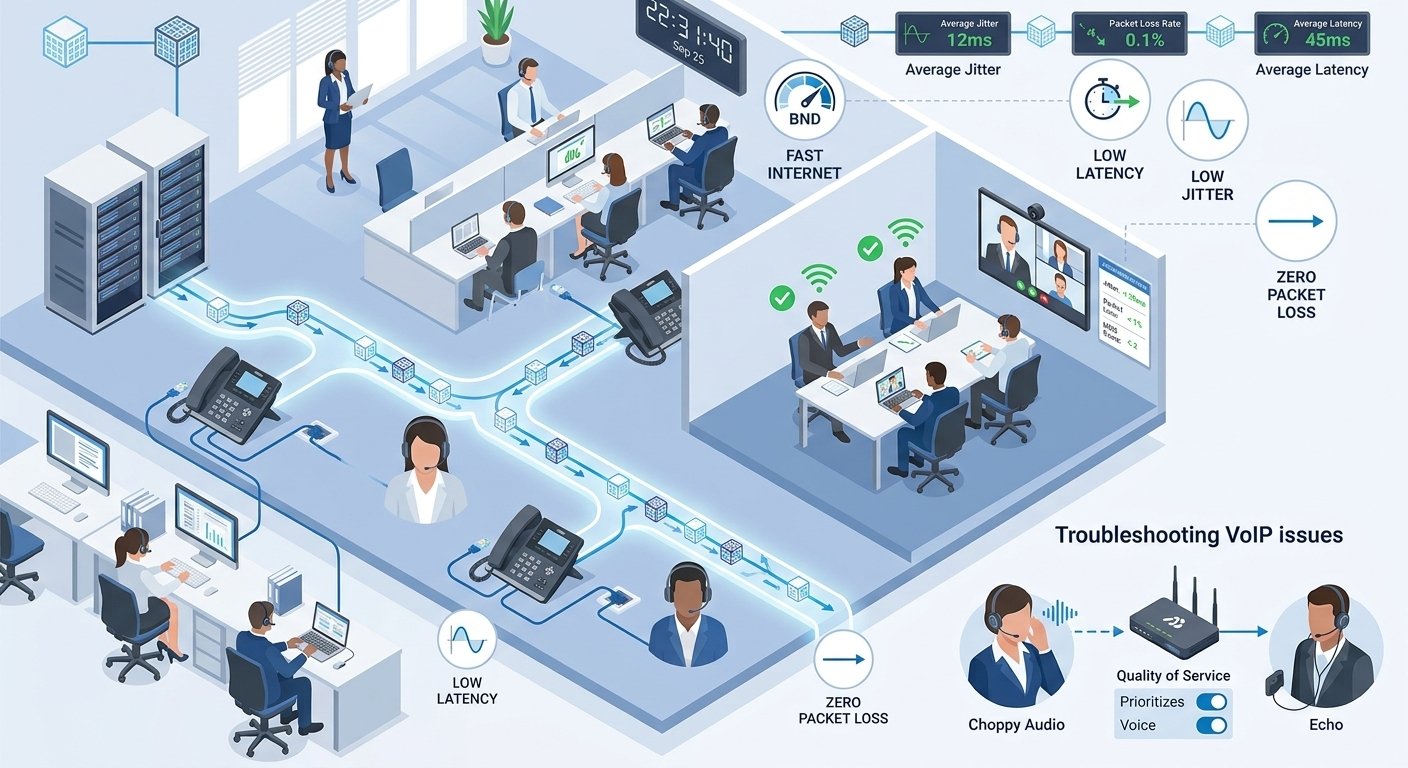
In the modern digital landscape, communication remains the backbone of every successful enterprise. As traditional landlines fade into the background, a more robust and flexible technology has taken center stage: Voice over Internet Protocol, or voip. Understanding the landscape of modern communication requires a deep dive into VoIP advantages and disadvantages to determine how this technology fits into your specific operational needs. Whether you are a small startup or a global corporation, the transition to an internet-based communication system represents a significant shift in how we connect, collaborate, and conduct business. Voice over Internet Protocol is more than just a way to make phone calls over the internet; it is a comprehensive suite of communication tools that integrates voice, video, and data into a single, unified stream. By converting analog voice signals into digital data packets, voip allows for seamless communication across any device with an internet connection. This guide will help you to explain what is voip? its advantages, and the potential voip disadvantages, ensuring you have all the information necessary to make an informed decision for your organization. What is VoIP and How Does It Transform Communication? Before exploring the advantages and disadvantages of voip, it is essential to understand what the technology actually is. A voip phone functions differently than your traditional Public Switched Telephone Network (PSTN). Instead of relying on physical copper wires and circuit switching, VoIP uses packet switching. When you speak into a VoIP-enabled device, your voice is sliced into small digital packets, transmitted over the internet, and reassembled at the destination. The voip network leverages your existing internet infrastructure, meaning you don’t need a separate set of wires for your phone system. This integration is why many refer to it as an internet phone for business. Companies like Nextiva voip service have revolutionized this space by offering cloud-based PBX systems that remove the need for bulky on-site hardware. By utilizing the cloud, businesses can access their phone systems from anywhere in the world, which is a fundamental reason why use voip in an era dominated by remote and hybrid work models. The Primary VoIP Advantages for Modern Enterprises When discussing what are the advantages of voip, the conversation usually starts with cost. However, the benefits of voip extend far beyond the monthly bill. From enhanced mobility to advanced features that were once only available to large corporations, the advantages of using voip are numerous and impactful. 1. Significant Cost Reduction and Financial Efficiency One of the most compelling voip advantages is the immediate reduction in operational costs. Traditional phone systems require expensive hardware installations, maintenance contracts, and high per-minute rates for long-distance calls. In contrast, VoIP typically operates on a subscription-based model with flat monthly fees. Because the system uses the internet, long-distance and international calls are significantly cheaper—often included in the base price. For organizations looking at the benefits of voip for small business, the savings on initial capital expenditure are a game-changer. There is no need to purchase a physical PBX (Private Branch Exchange) system. Instead, the service provider hosts the infrastructure in the cloud. This shift from CapEx to OpEx allows small businesses to allocate their budget toward growth rather than maintaining legacy hardware. 2. Unmatched Scalability and Flexibility The advantages of voip for business include the ability to scale your communication system at the click of a button. In a traditional environment, adding a new employee meant calling a technician to run new wires and install a physical jack. With VoIP, adding a new user is as simple as creating an account in an online dashboard. This flexibility is a primary answer to why switch to voip for rapidly growing companies. Whether you need to add ten lines or five hundred, the voip network accommodates your growth without requiring major infrastructure overhauls. This scalability ensures that your communication tools grow alongside your business, preventing the bottlenecks often associated with physical hardware limits. 3. Mobility and Remote Work Integration The rise of the global workforce has made voip benefits even more apparent. Because VoIP is tied to a user account rather than a physical location, employees can take their business extension with them wherever they go. By using a mobile app or a laptop-based softphone, a team member in London can answer a call directed to their New York office extension seamlessly. This portability is one of the most significant advantages of voice over internet protocol. It empowers a “work from anywhere” culture, ensuring that customer service and internal collaboration remain uninterrupted, regardless of geographical barriers. When considering why use voip for business, the ability to maintain a professional presence from any location is a top priority. Advanced VoIP Features and Benefits A major part of the voip features and benefits package is the access to sophisticated tools that enhance productivity. Traditional phones are limited to basic functions like call waiting and voicemail. VoIP, however, integrates with your digital workflow. Auto-Attendants: Virtual receptionists that direct callers to the correct department without human intervention. Unified Communications: Integration of voice, video conferencing, SMS, and instant messaging in one platform. CRM Integration: The ability to link your phone system with software like Salesforce or HubSpot, allowing call logs and customer data to be updated automatically. Voicemail-to-Email: Transcribing voice messages into text and sending them directly to your inbox for quicker responses. Call Analytics: Detailed reporting on call volume, duration, and peak times to help optimize staffing and sales strategies. These voip benefits for business allow smaller entities to project the professional image of a much larger corporation. When you analyze what are the benefits of voip, the ability to streamline workflows through automation and integration is consistently a highlight. Understanding the Potential VoIP Disadvantages Despite the overwhelming praise for the technology, a balanced view requires looking at voip disadvantages. No technology is perfect, and there are specific scenarios where VoIP might present challenges. Knowing these voip drawbacks allows businesses to prepare and implement solutions to mitigate risks. 1. Dependence on a Stable Internet Connection The most obvious of the 5 disadvantages of voip is its reliance on high-speed internet. If your internet goes down, your phone system goes down. Unlike traditional landlines that carry their own low-voltage power, VoIP is entirely dependent on your data connection. If you are in an area with frequent internet outages or slow bandwidth, the disadvantages of voip will become very apparent very quickly. To counter this, many businesses invest in redundant internet connections or use SD-WAN technology to ensure that if one provider fails, the system automatically switches to a backup. Without a robust voip network and reliable ISP, the quality of your communication will suffer. 2. Latency and Jitter Issues Because voice data is broken into packets, these packets must travel across the internet and arrive in the correct order to be reassembled into clear sound. If there is congestion on the network, you might experience latency (delay) or jitter (packets arriving out of order). This results in “choppy” audio or echoed conversations. This is one of the technical disadvantages of using voip that can frustrate users and customers alike. Ensuring high call quality requires a properly configured router and sufficient bandwidth. Most modern voip advantages and disadvantages discussions emphasize the importance of Quality of Service (QoS) settings on office routers to prioritize voice traffic over less urgent data like large file downloads or video streaming. 3. Emergency Service Limitations (E911) A critical concern in the list of voip disadvantages is how the system handles emergency calls. Traditional phones are linked to a specific physical address, making it easy for emergency services to locate a caller. Since VoIP is portable and IP-based, a user could be anywhere. This makes it difficult for 911 operators to automatically track the location of the caller. While providers have developed E911 (Enhanced 911) services where users can register their location, it is not as foolproof as a hardwired landline. This is a significant factor when evaluating the pros and cons of voip for organizations that prioritize strict safety compliance and physical location tracking. 4. Security Vulnerabilities Like any internet-connected device, VoIP systems are susceptible to cyber threats. This is a major part of the advantages and disadvantages of voip debate. While traditional lines can be tapped, VoIP systems face risks like phishing, “vishing” (voice phishing), and unauthorized access to the network. Hackers might attempt to hijack your system to make fraudulent long-distance calls at your expense. However, these voip drawbacks can be managed with strong security protocols. Using encrypted connections (SRTP), implementing multi-factor authentication, and choosing a reputable provider like Nextiva voip service can significantly reduce these risks. Security should always be a primary consideration when establishing a voip network. VoIP Features Comparison: What to Look For When weighing the voip advantages and disadvantages, it is helpful to see how specific features compare across different service tiers. Not all VoIP providers offer the same tools, and understanding the voip features comparison can help you choose the right partner for your communication needs. The benefit of voip is that you can usually start with a basic tier and upgrade as your requirements become more complex. This modular approach is part of the long-term advantages of using voip for businesses that are currently in a growth phase. Why Use VoIP for Business Growth? If you are still asking why use voip, consider the competitive edge it provides. In a marketplace where customer experience is the primary differentiator, having a communication system that is always available, provides data insights, and integrates with your customer records is invaluable. The benefits of voip for business include the ability to respond to customers faster and more effectively. Furthermore, the benefits of using voip extend to employee satisfaction. Providing tools that work seamlessly from home or the office reduces friction and improves productivity. When employees have the right tools, they perform better. The advantages of voice over internet protocol are not just about the technology itself, but about the human connections it facilitates. For small businesses specifically, the benefits of voip for small businesses often center on professional credibility. Features like “Follow Me” (which rings multiple devices simultaneously) ensure that you never miss a client call, regardless of where you are. This level of responsiveness is vital for building trust with new clients. How to Successfully Implement a VoIP System To maximize the voip advantages and minimize the voip disadvantages, a strategic implementation plan is required. Simply signing up for a service is not enough; you must ensure your infrastructure is prepared for the transition. Audit Your Network: Before switching, check your internet bandwidth and stability. A “ping test” can help determine if your network can handle the low-latency requirements of voice traffic. Choose the Right Hardware: While you can use softphones, many employees prefer physical handsets. Ensure your desk phones are compatible with your chosen provider. Configure Quality of Service (QoS): This is a critical step in the voip network setup. By prioritizing voice data at the router level, you ensure that high-volume data transfers don’t interfere with call quality. Employee Training: Ensure your team knows how to use the advanced voip features and benefits, such as call transferring, video conferencing, and mobile app integration. Test the Emergency System: Make sure every user has correctly registered their location for E911 services. Read More: What is VoIP Adapter: VoIP to POTS Converter Guide Final Thoughts on VoIP Advantages and Disadvantages Navigating the world of modern communication requires a clear understanding of the pros and cons of voip. While the reliance on internet connectivity and the technical nuances of latency represent real challenges, the overwhelming voip advantages—including cost savings, massive scalability, and a rich feature set—make it the superior choice for most organizations. The transition from traditional telephony to an internet phone for business is not just a trend; it is a fundamental shift toward a more connected and efficient world. By carefully selecting a provider, securing your network, and training your staff, you can leverage the benefits of voip to drive your business forward. In the end, the question isn’t just “what is voip phone technology?” but rather how that technology can be harnessed to bridge the gap between your brand and your customers. Frequently Asked Questions (FAQs) What are the advantages and disadvantages of using VoIP? The primary advantages of VoIP include significant cost savings on long-distance and monthly fees, the ability to scale up or down easily, and the mobility to use your business number from anywhere. On the other hand, the disadvantages include a total reliance on a stable internet connection, potential issues with call quality (like jitter or latency) if the network is congested, and the requirement for a power source to keep internet hardware running during outages. Why is everyone switching to VoIP? Most businesses and individuals are switching to VoIP because it offers far more features at a lower cost than traditional landlines. VoIP allows for unified communications, meaning you can handle calls, video meetings, and texts all in one place. Additionally, as telecommunications companies phase out older analog infrastructure, VoIP has become the modern standard for reliability and global connectivity. Do VoIP phones have a monthly fee? Yes, most VoIP services operate on a monthly subscription model. This fee usually covers the hosting of your phone system in the cloud, a certain number of minutes (often unlimited for domestic calls), and access to features like auto-attendants and mobile apps. While there is a monthly cost, it is typically much lower than the combined cost of a traditional business phone line and its associated hardware maintenance. What are the risks of VoIP? The main risks associated with VoIP are security-related, such as potential hacking, eavesdropping, or service interruptions due to cyberattacks like DDoS (Distributed Denial of Service). There is also the risk of not being able to make emergency calls if your internet or power goes out. However, these risks can be largely mitigated by using encrypted connections, robust firewalls, and backup power supplies (UPS). Can I keep my current phone number if I switch to VoIP? In most cases, yes. The process is known as “porting.” Most VoIP providers allow you to transfer your existing landline or mobile numbers over to their service. This ensures that you don’t lose your established business identity when making the switch to a more modern communication platform.  

Read More
call ended

Why Do My Calls Keep Dropping? Solving the Frustration of Dropped Calls

Dropped calls usually happen when your phone cannot maintain a strong, stable connection during a conversation. The most common reasons include weak signal strength, network congestion, software glitches, outdated carrier settings, or moving between towers while traveling. Thick walls, basements, elevators, and remote areas can also block coverage and cause calls to disconnect suddenly. To fix the issue, try moving to an open area, restarting your phone, updating the device software, or enabling Wi-Fi calling if available. You can also reset network settings or replace an old SIM card. If dropped calls continue often, contact your mobile carrier for support or better coverage options. Few things are as frustrating as being in the middle of an important conversation only to hear “call ended” or have your phone cut off without warning. If you’ve ever found yourself asking, “why do my calls keep dropping?”, you’re not alone. This pervasive issue can disrupt work, personal connections, and even emergencies. In today’s hyper-connected world, reliable communication isn’t just a convenience; it’s a necessity. A “call drop” can signify anything from a minor annoyance to a major problem for businesses and individuals alike. This comprehensive guide will delve into the common culprits behind “dropped calls” and, more importantly, equip you with actionable strategies on “how to fix dropped calls” and ensure your conversations stay connected. The Annoyance of “Calls Keep Dropping”: A Universal Problem The phenomenon of dropped calls has been a consistent source of irritation since the advent of mobile phones. Whether it’s your cell phone keeps dropping calls in a specific location or your phone keeps dropping calls randomly throughout the day, the experience is universally frustrating. It interrupts the flow of conversation, requires redialing, and can lead to missed information or opportunities. Imagine discussing critical project details with a client, only for your phone to drop calls mid-sentence. Or trying to coordinate a family emergency, and your call keeps ending repeatedly. These scenarios highlight why understanding what causes dropped calls is crucial. It’s not just about technical glitches; it’s about the impact on our daily lives. What Causes Dropped Calls? Unpacking the Core Issues When you constantly wonder, “why does my phone keep dropping calls?”, it’s important to understand that there isn’t a single answer. Dropped calls can stem from a variety of sources, ranging from network issues to device problems and even environmental factors. Let’s explore the most common reasons why your “phone drops calls” or why your “calls keep dropping.” 1. Weak or Congested Network Signals One of the primary reasons for “phone dropping calls” is a poor or overloaded network signal. Your phone needs a strong connection to a cell tower to maintain a call. Poor Coverage Areas: If you’re in a rural area, basement, or a building with thick walls, the signal strength can be significantly reduced. This makes your “phone call keep dropping” or even leads to “call drops immediately” upon connection. Areas with physical obstructions like mountains or dense buildings can also create dead zones where “my phone keeps dropping calls.” Network Congestion: During peak hours or in crowded places like stadiums or concert venues, too many users trying to access the same cell tower can lead to “network is congested phone call” issues. The tower gets overloaded, and it struggles to handle all the active connections, resulting in “calls dropping” for many users. This is a common reason “why are my calls dropping” in urban environments. Handover Issues: As you move, your phone “hands over” your call from one cell tower to another. If this handover isn’t smooth, perhaps due to a gap in coverage between towers, your “call dropped meaning” becomes clear – the connection was lost during the transition. 2. Device-Related Problems: Is Your Phone the Culprit? Sometimes, the issue isn’t with the network but with your device itself. Your “cell phone dropping calls” might be due to internal problems. Outdated Software: Phone manufacturers regularly release software updates that include bug fixes and performance improvements. If you’re running an old operating system, it could be the reason “why does my phone keep ending calls.” Updates often address connectivity issues that contribute to “my phone is dropping calls.” Damaged Hardware: A damaged antenna, battery issues, or other internal hardware problems can severely impact your phone’s ability to maintain a stable connection. If your phone has recently been dropped or exposed to water, it might be the cause “why my phone calls keep dropping.” SIM Card Issues: A faulty or improperly seated SIM card can lead to intermittent network connection problems, causing your “phone keeps ending calls.” Sometimes, simply reinserting the SIM card can resolve these “calls dropping” issues. App Conflicts: Believe it or not, some third-party applications can interfere with your phone’s cellular functions, leading to “phone keeps dropping calls.” This is particularly true for apps that manage calls or network settings. 3. Environmental and Interference Factors Beyond networks and devices, external factors can also play a significant role in “why do my calls keep dropping.” Physical Obstructions: As mentioned, thick concrete walls, basements, or even certain types of building materials can block cellular signals. If you consistently find “my phone calls keep dropping” in specific indoor locations, this might be the reason. Electromagnetic Interference: Other electronic devices, especially those operating on similar frequencies, can sometimes interfere with your phone’s signal, causing “calls dropping.” While less common for modern smartphones, it’s a possibility. Weather Conditions: Extreme weather can sometimes affect cellular network performance, particularly for older infrastructure. Heavy rain or storms can occasionally contribute to “why are my calls dropping.” 4. Carrier-Specific Issues While less frequent, sometimes the problem lies directly with your mobile carrier. Network Outages: Occasionally, carriers experience localized or widespread network outages due to maintenance, equipment failure, or unexpected events. During an outage, you might find “why can’t I call out on my phone” or experience “phone call drops immediately.” Service Provisioning Errors: In rare cases, there might be an error in how your service is provisioned, leading to “my phone keeps disconnecting calls.” This usually requires contacting your carrier’s customer support. Voiced Over IP (VoIP) Calls: A Different Set of Challenges Many individuals and businesses now rely on Voice over IP (VoIP) for their calls. While offering numerous advantages, VoIP calls can also be prone to “call drop” issues, though the causes are often different from traditional cellular calls. Advantages of VoIP Cost-Effectiveness: VoIP significantly reduces calling costs, especially for long-distance and international calls. Flexibility and Portability: You can make and receive calls from anywhere with an internet connection. Advanced Features: VoIP systems often come with features like call forwarding, voicemail to email, conference calling, and IVR (Interactive Voice Response) systems that traditional phones lack. Scalability: It’s easy to add or remove lines and features as your business grows. Integration with Business Tools: VoIP can integrate with CRM software, email, and other business applications for streamlined workflows. Disadvantages Despite its benefits, VoIP is not without its drawbacks, particularly when it comes to call stability. If you’re using VoIP and asking, “why does my phone keep dropping calls?”, here are some common reasons: Internet Connection Quality: This is the most critical factor. VoIP relies entirely on your internet connection. A slow, unstable, or congested internet connection will inevitably lead to “calls dropping,” poor call quality, or “call drops immediately.” If your bandwidth is insufficient, especially when multiple devices are using the internet simultaneously, your “VoIP calls keep dropping.” Router/Modem Issues: An old, faulty, or improperly configured router or modem can cause network instability, leading to “VoIP calls keep dropping.” Quality of Service (QoS) settings on your router, if not properly configured, can also prioritize other internet traffic over voice data, causing disruptions. Firewall Settings: Overly strict firewall settings can block the ports necessary for VoIP communication, resulting in “why are my calls failing” or “calls dropping.” Jitter and Latency: These are specific internet performance metrics that heavily impact VoIP. Latency (Delay): High latency means there’s a significant delay in transmitting voice data, leading to people talking over each other or unnatural pauses. While not a direct “call drop” cause, high latency can make calls unusable. Jitter: Jitter refers to variations in the delay of data packets. High jitter means voice packets arrive out of order or at inconsistent intervals, causing choppy audio and potentially leading to “call drop.” Hardware and Software Compatibility: Issues with your headset, microphone, or the VoIP software client itself can cause problems. Outdated drivers or software can lead to “my phone keeps disconnecting calls.” Power Outages: Without power to your internet modem and router, your VoIP service will be completely unavailable. This is a significant disadvantage compared to traditional landlines, which often work during power cuts. Emergency Service Limitations: While e911 services have improved, traditional landlines often offer more reliable emergency location data. Understanding these specific VoIP challenges is key if your “phone calls keep dropping” on an internet-based system. How Do I Stop My Phone From Dropping Calls? Solutions and Strategies Now that we’ve explored the various reasons behind “my phone keeps dropping calls,” let’s dive into practical steps you can take to prevent these frustrating interruptions. The goal is to address the underlying cause, whether it’s “why does my phone drop calls all the time” or an occasional “call ended” nuisance. 1. Optimize Your Location and Signal Strength Move to an Open Area: If you’re experiencing “phone dropping calls” indoors, try moving closer to a window or going outside to get a clearer line of sight to a cell tower. Avoid Known Dead Zones: If you consistently find “my phone is dropping calls” in a specific part of your home or office, try to avoid making important calls from that spot. Use Wi-Fi Calling: Most modern smartphones support Wi-Fi calling. This allows your “phone calls keep dropping” over your Wi-Fi network instead of the cellular network. It’s an excellent solution if you have strong Wi-Fi but poor cellular coverage indoors. Activate it in your phone’s settings. 2. Check and Update Your Device Restart Your Phone: The classic tech support advice for a reason! A simple restart can often clear temporary glitches that might be causing “my phone keeps dropping calls.” Update Software: Always keep your phone’s operating system and apps updated. These updates often include critical bug fixes and improvements to cellular connectivity, addressing “why does my phone keep ending calls.” Check Your SIM Card: Power off your phone, remove your SIM card, inspect it for any damage, gently clean the contacts, and reinsert it securely. This can resolve “my phone calls keep dropping” due to a loose connection. Disable or Remove Problematic Apps: If you recently installed an app and started experiencing “phone dropping calls,” try uninstalling it to see if the issue resolves. Reset Network Settings: This will reset all cellular, Wi-Fi, and Bluetooth settings to their defaults. It won’t delete your data but will require you to re-enter Wi-Fi passwords. This can fix underlying network configuration issues. 3. Contact Your Carrier Report Coverage Issues: If you consistently experience “phone dropping calls” in a specific area, especially one where you previously had good service, report it to your mobile carrier. They might be unaware of a new “dead zone” or a problem with a local cell tower. Check for Outages: Before assuming your phone is broken, check your carrier’s website or social media for any reported network outages in your area if you’re experiencing “why can’t I call out on my phone.” Update Carrier Settings: Sometimes, carriers release updates for network settings that are separate from OS updates. Your phone usually prompts you to install these, but you can check manually in your phone’s settings. Consider a Signal Booster: For persistent “cell phone keeps dropping calls” in your home or office due to weak signal, a cellular signal booster (repeater) can amplify the existing signal. 4. Optimize Your VoIP Connection If your “VoIP calls keep dropping,” focus on your internet connection: Upgrade Your Internet Plan: If you frequently experience call drops with VoIP, you might need more bandwidth, especially if multiple users or devices share the connection. Improve Wi-Fi Signal: If using Wi-Fi, ensure your router is in a central location, free from obstructions. Consider a mesh Wi-Fi system for larger homes or offices. Use an Ethernet Connection: Whenever possible, connect your VoIP phone or computer directly to your router via an Ethernet cable. This provides a more stable and faster connection than Wi-Fi, reducing call drop incidents. Configure QoS (Quality of Service): Access your router’s settings and enable QoS. Prioritize VoIP traffic over other data streams (like streaming or gaming) to ensure your phone calls keep dropping less frequently. Check Firewall Settings: Ensure your firewall isn’t blocking necessary VoIP ports. Consult your VoIP provider’s documentation or support for the specific ports required. Reboot Router/Modem: Periodically restarting your internet equipment can clear cached data and resolve temporary connectivity issues that cause calls dropping. Minimize Internet Congestion: Avoid heavy internet usage (large downloads, streaming 4K video) during important VoIP calls to prevent “network is congested phone call” situations. Use a Reliable VoIP Provider: Not all VoIP providers are created equal. Choose a reputable provider with good customer support and a track record of reliable service if you’re frequently asking, “why does my phone drop calls?” “Call Dropped Meaning”: Understanding the Impact When a call drops, it essentially means the established connection between two or more parties has been unexpectedly severed. The “call dropped meaning” can range from a brief interruption requiring a quick redial to a significant breakdown in communication. For businesses, “what is a dropped call” can mean lost sales, damaged customer relationships, and decreased productivity. For individuals, it can be a source of personal frustration and missed opportunities. Understanding “what causes dropped calls” is the first step, but recognizing the full impact of “dropped calls meaning” reinforces the importance of finding a reliable solution. No one wants to be left with the “call ended” screen, wondering “why does my call keep ending” when there’s an urgent message to convey. Read More: VoIP PBX Phone Systems: Difference Between PBX vs VoIP Final Thought: Stay Connected, Stay Productive “Why do my calls keep dropping?” is a question that plagues countless individuals and businesses. From “phone cut off” due to weak signals to “call drops immediately” because of internet issues, the causes are diverse. However, by systematically troubleshooting the potential problems – whether it’s optimizing your physical location, updating your device, fine-tuning your VoIP settings, or engaging with your carrier – you can significantly reduce the incidence of phone dropping calls. Reliable communication is the backbone of personal connection and professional success. By taking proactive steps to understand and address “why does my phone keep dropping calls,” you can ensure clearer conversations, fewer interruptions, and a more connected experience in our increasingly digital world. Don’t let the frustration of “calls keep dropping” dictate your day; empower yourself with these solutions and enjoy seamless communication. FAQs: How Do I Stop My Phone From Dropping Calls? How do I stop my phone from dropping calls? To stop your phone from dropping calls, start by moving to an area with better signal (e.g., outdoors or near a window). Ensure your phone’s software is updated, restart your device, and check your SIM card. For persistent issues, try using Wi-Fi calling, resetting network settings, or contacting your mobile carrier to report coverage problems. What is the reason for dropped calls? Dropped calls can occur due to various reasons, including weak or congested cellular network signals, outdated phone software, damaged phone hardware (like an antenna), a faulty SIM card, or interference from physical obstructions. For VoIP calls, common reasons include poor internet connection quality, insufficient bandwidth, router issues, or firewall settings. Why have so many dropped calls lately? An increase in dropped calls lately could be due to several factors. There might be new network congestion in your area, recent damage to your phone, an outdated software version, or even a temporary outage with your mobile carrier. If you’re using VoIP, a recent change in your internet service, increased internet usage, or router problems could be the cause. Why do my calls cut out so much? Calls cutting out frequently is often a symptom of an unstable or weak connection. This could mean you’re in a poor cellular coverage area, your phone is struggling to “hand over” calls between cell towers, or your internet connection (for VoIP) is experiencing high latency or jitter. Device issues like an old battery or a damaged antenna can also contribute to calls cutting out. What does it mean when a call drops? When a call drops, it means the established connection between you and the other party has been unexpectedly terminated before the conversation was intentionally ended. This results in the “call ended” message appearing on your screen, requiring you to redial to resume the conversation.

Read More
virtual landline

The Complete Guide to a Virtual Landline Setting Up Your Virtual Landline phone

The modern communication landscape is shifting rapidly, moving away from the tangled webs of copper wires and heavy hardware that once defined the telecommunications industry. As we move deeper into a digital-first era, both individuals and enterprises are seeking more flexible, cost-effective, and professional ways to stay connected. This is where the concept of a virtual landline comes into play. It represents the pinnacle of communication technology, blending the professional image of a traditional office number with the high-tech flexibility of the cloud. Understanding how to leverage a virtual landline is no longer just an option for tech-savvy startups; it has become a necessity for anyone looking to maintain a professional presence in a global market. Whether you are a sole trader working from a home office or a growing corporation managing a remote workforce, a virtual landline provides the infrastructure needed to handle calls with precision and reliability. In this guide, we will explore everything from the basic mechanics of how these systems operate to the advanced features that make them superior to legacy phone systems. Defining the Modern Virtual Landline: A Digital Transformation To understand the impact of this technology, we must first address the fundamental question: what is a virtual landline? At its core, it is a telephone number that is not tied to a specific physical location or a dedicated copper wire plugged into a wall. Unlike traditional numbers that require a fixed address and a physical handset, this digital alternative exists in the cloud. When someone dials your virtual landline number, the call is processed via the internet and routed to any device of your choosing. This could be your existing smartphone, a laptop, a tablet, or even a specialized VoIP handset. The beauty of a virtual phone is its ability to detach identity from location. You can have a London area code while sitting in a cafe in Manchester, or a New York area code while working from an office in Singapore. This “landline anywhere” capability is revolutionary for businesses that want to establish a local presence in multiple regions without the overhead of renting physical office space. By using a virtual telephone number, you bridge the gap between geographic limitations and global reach, allowing your brand to appear local to your customers regardless of where your actual operations are based. Furthermore, a virtuallandline operates through Voice over Internet Protocol (VoIP) technology. This means that instead of electrical signals traveling through wires, your voice is converted into digital data packets and transmitted over the internet. This transition to a digital phone number ensures that the audio quality remains crystal clear, often exceeding the clarity of old analog systems. For anyone looking to get a landline number without the hassle of technician visits or long-term hardware contracts, the virtual route is the most efficient path forward. How the Mechanics of a Virtual Landline Work in Real-Time The technical process behind a virtual landline number is both sophisticated and remarkably user-friendly. When a caller dials your number, the request hits a central cloud-based server managed by your virtual number provider. This server acts as a digital traffic controller. It checks your account settings to see where the call should be sent. This is where the flexibility of virtual landlines truly shines, as you can set specific rules for how these calls are handled based on the time of day, the caller’s identity, or the availability of your staff. Once the server identifies the destination, it routes the call through the internet to your virtual landline app or directly to your mobile phone. This process happens in milliseconds, ensuring that there is no perceptible delay for the caller. They hear a standard ringing tone, unaware that the call is being diverted across the country or even across the globe. This seamless integration is what allows a virtual landline number to mobile setup to function so effectively, providing the user with total mobility while maintaining a professional facade. For those concerned about the setup, learning how to get a virtual phone number is simpler than setting up a traditional email account. Most providers offer an online portal or a virtual landline login where you can manage every aspect of your service. From this dashboard, you can change your routing settings, view call analytics, and listen to voicemails that have been converted into audio files or text transcripts. The reliance on an online phone number means that your communication system is as dynamic as your business, capable of being updated in real-time without the need for a physical infrastructure overhaul.   Why a Virtual Number is Better Than a Landline Phone When comparing the two, the question often arises: why is a virtual number better than a landline phone? The answer lies in three main pillars: cost, functionality, and scalability. Traditional landlines are notoriously expensive, involving installation fees, line rental costs, and high rates for international or long-distance calls. In contrast, a virtual phone number typically operates on a subscription model with significantly lower overheads. Because there are no physical lines to maintain, providers can pass these savings directly to the consumer. Functionality is the second area where the virtual numbers outperform legacy systems. A standard landline is limited to making and receiving calls. A virtual phone service, however, comes packed with enterprise-level features even for the smallest users. These include: Customizable Auto-Attendants: You can set up a professional greeting that directs callers to different departments, such as “Press 1 for Sales.” Time-of-Day Routing: Ensure that calls only reach your mobile during office hours, automatically sending them to a professional voicemail during your downtime. Sequential Ringing: If you don’t answer your mobile within three rings, the virtual landline can automatically try your home phone or a colleague’s device. Call Recording and Analytics: Monitor the quality of your interactions and track peak call times to better manage your resources. The third pillar is scalability. If your business grows, adding a new physical landline can take weeks. With a virtual business phone, you can add new lines or extensions in seconds through your virtual landline login. This makes it the ideal virtual landline number for business growth, as it adapts to your needs without friction. Whether you need one number or a hundred, a virtual telephone numbers system can expand with you. Research and Facts: The Decline of PSTN and the VoIP Surge The shift toward virtual communication is not just a trend; it is a global movement backed by infrastructure changes. In the United Kingdom, for instance, BT has announced the “Big Switch-off,” where the traditional Public Switched Telephone Network (PSTN) will be retired by 2025. This means every business and household will eventually need to move to a virtual phone or IP-based system. Research shows that over 70% of businesses have already begun transitioning to virtual phone numbers to avoid being left behind during this mandatory technological migration. Additionally, a study by Global Market Insights indicates that the VoIP market, which powers every virtual landline app, is projected to exceed $100 billion by 2026. This growth is largely attributed to the rise of remote and hybrid work models. Companies have found that providing employees with a virtual business phone number allows them to maintain a unified corporate identity while working from home. This data confirms that the virtual landline is the future of telephony, offering a level of resilience and flexibility that traditional systems simply cannot match. Leveraging a Virtual Landline App for Ultimate Portability The primary tool for managing your modern communication is the virtual landline app. This software transforms your existing smartphone into a dual-purpose device. You no longer need to carry two phones—one for personal use and one for work. The app acts as a separate environment where your virtual landline number resides. When someone calls your business number, the app rings with a distinct notification, allowing you to answer professionally every time. Using a virtual landline app also allows you to make outgoing calls that display your professional landline ID rather than your private mobile number. This is crucial for maintaining privacy and ensuring that clients see a consistent, professional caller ID. Most apps also support instant messaging, team chat, and file sharing, turning your online phone into a comprehensive collaboration suite. If you are looking for a free virtual phone number, some apps offer limited versions that allow you to test the service before committing to a full-scale virtual phone service plan. For power users, the virtual landline login on a desktop provides even more control. You can sync your contacts, integrate with your CRM (Customer Relationship Management) software, and manage your virtual switchboard settings from a larger screen. This multi-device synchronization ensures that you are never out of reach. Whether you are using an online phone number free trial or a premium virtual business phone number, the ability to move between your computer and your mobile phone seamlessly is a hallmark of high-quality virtual numbers. Implementing a Virtual Switchboard for Business Professionalism For many small businesses, the goal is to appear larger and more established than they might currently be. A virtual switchboard is the perfect tool to achieve this. It acts as an automated receptionist, welcoming callers with a bespoke message and guiding them to the right place. This feature, often included with a virtual landline number for business, eliminates the need for a dedicated receptionist, saving the company thousands in annual salary costs. A virtual switchboard handles several critical tasks: Call Queuing: If all your team members are busy, the switchboard can play hold music or informative messages about your products until someone is available. Internal Extensions: Even if your team is spread across different homes or countries, they can have their own extensions (e.g., Ext 101 for Marketing, Ext 102 for Accounts). Voicemail-to-Email: The switchboard can record messages and instantly email them to the relevant staff member as an MP3 file, ensuring fast response times. Blacklisting: You can easily block spam callers or persistent telemarketers through your virtual landline dashboard. By utilizing a virtual switchboard, you create a high-quality “first impression” that builds trust with potential clients. It suggests a level of organization and professionalism that is hard to convey when answering a standard mobile phone. When you create a virtual phone number and pair it with a switchboard, you are essentially building a corporate-grade communication system for a fraction of the traditional cost. Step-by-Step Guide: How to Get a Virtual Phone Number If you are ready to modernize your communication, the process of how to get a virtual phone number is straightforward. Most providers have streamlined the journey to ensure you can be up and running within minutes. Following these steps will help you secure your online phone number efficiently: Select a Virtual Number Provider: Look for a company that offers the features you need, such as call recording, a dedicated virtual landline app, and positive customer reviews. Ensure they support the specific geographic area code you desire. Choose Your Number Type: You can often choose between a local number (e.g., an 020 London number), a national number (0330), or a toll-free number (0800). The right choice depends on whether you want to look local or national. Register Your Account: Provide your basic business details and set up your virtual landline login. This is where you will manage your billing and call settings. Configure Your Routing: Decide where you want your calls to go. You can set it up so that your virtual landline number to mobile routing is immediate, or set up a complex hunt group that rings multiple people at once. Test Your Setup: Before publishing your new number on your website or business cards, place a few test calls to ensure the greeting sounds right and the audio quality is clear. If you are on a tight budget, you might search for a free virtual phone number or a virtual phone number free trial. Many providers offer a 7-day or 14-day trial period, allowing you to experience the benefits of a virtual phone service before making a financial commitment. Once you are satisfied, transitioning to a paid plan is usually a matter of a few clicks in your user portal. Managing Your Virtual Landline: Payment Methods and Best Practices When it comes to maintaining your service, convenience is key. Most providers offer flexible virtual landline payment methods direct debit, which is often the preferred choice for businesses. Direct debit ensures that your subscription remains active without the risk of manually forgetting a payment, which could lead to your virtual telephone number being temporarily disconnected. Consistent uptime is vital for business continuity, so setting up an automated payment system is a best practice. In addition to payment logistics, managing your virtual landline requires some ongoing attention to ensure you are getting the most out of the service. You should periodically review your call logs via your virtual landline login to see if you are missing calls at specific times. If you notice a high volume of missed calls after 6 PM, you might decide to adjust your virtual switchboard settings to offer an alternative contact method or a more detailed voicemail greeting. Security is another factor to consider. Since your virtual phone number for business is managed online, ensure you use a strong, unique password for your account. Many providers offer two-factor authentication (2FA), which adds an extra layer of protection to your online phone number. By treating your virtual business phone with the same security rigor as your bank account, you protect your company’s vital communication lines from unauthorized access. The Versatility of Virtual Numbers: From Local to Global The versatility of a virtual number extends far beyond just receiving calls. It is a tool for strategic market expansion. For example, if you are looking to test a new market in another city, you don’t need to relocate. Simply get virtual phone number credentials for that specific city and place them on a localized version of your website. If the phone starts ringing, you know there is a demand for your services in that area. This “virtual presence” is also incredibly helpful for personal privacy. Many people use a virtual mobile number or a virtual phone number free service for online marketplaces like eBay or Craigslist. This allows them to receive calls and texts from strangers without giving out their private, primary phone number. Once the transaction is complete, they can simply disable the virtual phone or let the number expire. This layer of anonymity is a significant benefit of virtual phone numbers in the modern digital world. Furthermore, an online phone number is an excellent solution for travelers. If you are abroad, you can connect to a local Wi-Fi network and use your virtual landline app to receive calls on your home number without incurring expensive international roaming charges. Your callers won’t even know you’ve left the country. This makes virtual landlines the ultimate tool for the “landline anywhere” philosophy, ensuring that you are reachable regardless of your physical coordinates. Comparing Virtual Landline Providers: What to Look For With so many companies offering virtual telephone numbers, choosing the right one can feel overwhelming. To find the best virtual number provider, you should evaluate several key criteria beyond just the monthly price. The reliability of their infrastructure and the quality of their customer support are paramount. A virtual landline that frequently drops calls or has poor audio quality will do more harm to your business reputation than not having a landline at all. When comparing providers, check for: Network Redundancy: Does the provider have multiple servers? This ensures that if one server goes down, your online phone number stays active. App Compatibility: Ensure their virtual landline app works smoothly on your specific mobile OS (iOS or Android). Transparent Pricing: Look foben fees like “connection charges” or “per-minute surcharges” on incoming calls. Feature Inclusions: Some providers include a virtual switchboard for free, while others charge it as an add-on. Calculate the total cost of the features you actually need. Ease of Cancellation: Avoid long-term contracts. The best virtual phone service providers offer month-to-month flexibility. By doing your due diligence, you can find a virtual business phone number provider that offers a perfect balance of cost and performance. Reading third-party reviews and looking for virtual landline comparisons will give you a clear picture of how a provider performs in real-world scenarios. Read more: On-Premise vs. Cloud VoIP: A Critical Comparison between Phone Systems Final Thought The transition from traditional telephony to the world of virtual landlines represents a significant leap forward in how we connect with one another. By decoupling a phone number from its physical constraints, a virtual landline offers unprecedented freedom to entrepreneurs, remote workers, and growing businesses alike. It provides the professional “anchor” of a landline while maintaining the high-speed, high-flexibility nature of the digital age. Whether you are looking to get a virtual phone number for privacy, to establish a local presence, or to build a complex virtual switchboard for a global team, the technology is ready to support your goals. As we look toward a future where physical lines are phased out, embracing a virtual phone service today ensures that you are not only prepared for tomorrow but also operating with the most efficient tools available in the present. Frequently Asked Questions (FAQs) How does a virtual landline work? A virtual landline works by utilizing the internet to route calls. When someone dials your virtual landline number, the call is sent to a cloud-based server. This server then forwards the call to your chosen device, such as a mobile phone, computer, or tablet, using VoIP (Voice over Internet Protocol) technology. The caller hears a standard ring and has no idea the call is being digitally diverted. How to get virtual landline number? To get virtual landline number access, you simply need to sign up with a virtual number provider. You choose your desired area code, provide your registration details, and set up your virtual landline login. Most services allow you to be active within minutes, and you can manage your settings and routing through a dedicated virtual landline app or an online dashboard. What is a virtual landline? A virtual landline is a telephone number that isn’t connected to a physical phone line or a specific location. It exists in the cloud, allowing you to use a traditional-looking local or national number on your mobile phone or computer. It combines the professional image of a landline with the mobility of a mobile phone, making it ideal for business and personal privacy. Why a virtual number is better than a landline phone? A virtual number is better because it offers significantly more flexibility and lower costs. Unlike a traditional landline phone, a virtual number can follow you anywhere in the world, doesn’t require expensive hardware or installation, and comes with advanced features like a virtual switchboard, call recording, and time-of-day routing that traditional lines cannot match. Is it possible to use a virtual landline on multiple devices? Yes, one of the biggest benefits of a virtual phone service is the ability to use it across multiple devices simultaneously. You can have your online phone number ring on your smartphone app, your desktop computer, and even your home landline at the same time. This ensures you never miss a call, regardless of which device you are currently using.

Read More
Visual Voicemail

What is Visual Voicemail? How to Check Voicemail on Android

Visual voicemail is a technology that allows smartphone users to view a list of their messages and listen to them in any order they choose, without having to call a traditional voicemail system. This interface presents voice messages much like an email inbox, displaying the callers name, the date and time of the call, and the duration of the message. Instead of listening to a series of voice prompts to save or delete messages, users can simply tap on the screen to play, pause, or remove a specific recording. This modern approach to message management has largely replaced the older method of dialing a number and navigating through a menu with a keypad. The primary convenience of this system is its non-linear nature. In traditional systems, you are forced to listen to messages in the order they were received, which can be incredibly time-consuming if you are searching for a specific piece of information. With this visual interface, you can prioritize urgent messages from important contacts while ignoring or deleting spam calls instantly. Many users find that this method significantly improves their daily productivity, as it eliminates the need to sit through long automated instructions just to hear a simple ten-second message from a colleague or friend. For mobile users, understanding what is visual voicemail android is essential because the experience can vary depending on the manufacturer and the service provider. On most modern devices, the feature is integrated directly into the native dialer app, providing a seamless experience. When you receive a new message, a notification appears on the screen, and you can access the recording immediately by tapping the notification. This integration ensures that you do not have to download third-party software to manage your audio communication, though some carriers still offer their own branded applications for more advanced features. Traditional Voicemail vs. Visual Voicemail: Key Differences The evolution from traditional systems to visual interfaces represents a major shift in how we handle missed calls. Traditional voicemail requires the user to dial a specific access number, enter a password, and then follow audio prompts like press one to listen or press seven to delete. This linear process is slow and often frustrating, especially when you need to re-listen to a specific detail like a phone number. In contrast, the visual version allows you to scrub through the audio file using a playback bar, making it easy to find and repeat specific sections of the recording without starting over. Another major difference is the presence of transcription services. Modern systems often include a feature where the audio is automatically converted into text, allowing you to read your messages instead of listening to them. This is particularly useful in loud environments or during meetings where playing audio would be inappropriate. Traditional systems offer no such text-based overview, meaning you have no way of knowing the content of a message until you have the time and privacy to listen to the entire recording. This transcription feature is a hallmark of what does visual voicemail mean in the context of modern professional communication. Storage management is also handled quite differently between the two systems. Traditional setups often have a strict limit on the number of messages you can store, and older messages are automatically deleted after a certain period. With the visual interface, messages are often stored locally on the device or in the cloud, allowing for much larger storage capacities. You can easily archive important messages for years or export them as audio files to other devices. This level of control is simply not possible with the older, server-side systems that were the standard for decades. What is a Visual Voicemail and How Does it Function? To understand what is a visual voicemail, one must look at the underlying technology that bridges the gap between cellular networks and smartphone operating systems. When someone leaves a message, the audio is recorded on the carrier server. Instead of just notifying you that a message exists, the system pushes the audio data to your phone using a protocol called IMAP or specialized carrier-side signaling. This allows your device to download the file in the background, making it available for immediate playback within your visual inbox without requiring an active call to the voicemail server. The functionality relies heavily on a data connection, either through cellular data or Wi-Fi. Because the phone is downloading an actual audio file, the system needs an active internet connection to update the list of messages. This is why you might notice that your messages do not appear immediately if you are in an area with poor reception. Once the message is on your phone, you have full control over the audio file, including the ability to share it via email, messaging apps, or save it to your local storage for future reference. In terms of the user interface, the visual layout is designed to be intuitive. It usually consists of a list of contacts with timestamps next to them. Tapping on a contact expands the message, revealing a play button, a delete icon, and a call-back option. Some advanced versions also include a feature known as video voicemail, which allows users to leave short video clips instead of just audio. This highlights how far the technology has come from the simple tape-based answering machines of the past, turning missed calls into a rich, multimedia experience. What is Visual Voicemail Android and How to Enable It On the Google-developed operating system, what is visual voicemail android typically refers to the implementation found within the Google Phone app or the custom dialers used by manufacturers like Samsung and OnePlus. For many users, the feature is active by default as part of their cellular service plan. However, to ensure it is working, you usually need to open the phone application and look for a tape-recorder icon or a tab labeled as voicemail. If the tab is visible, the system is ready to display your messages visually rather than requiring a dial-in. If the feature is not active, you may need to go into the settings menu of the phone app. Under the voicemail section, there is usually a toggle for visual message management. Enabling this may require a brief synchronization with your service provider. It is important to note that some older Android devices or budget models might not support this feature natively, in which case you might need to use a dedicated visual voicemail app provided by your carrier. These apps serve the same purpose but exist as separate icons on your home screen rather than being integrated into the main dialer. Research suggests that users who utilize visual interfaces on their mobile devices respond to missed calls approximately thirty percent faster than those using traditional systems. This efficiency is a direct result of being able to see who called and reading a brief summary of the message through transcription. For Android users, the ability to integrate these messages with other Google services, such as Google Assistant, adds another layer of utility, allowing for voice-controlled message management and automated spam filtering that identifies and silences unwanted callers before they even leave a message. How to Check Voicemail on Android Using the Visual Interface Learning how to check voicemail on android via the visual interface is a straightforward process that begins with the phone application. Once you open the app, look at the bottom navigation bar where you will typically see options for favorites, recents, contacts, and a final icon for your messages. Tapping this icon will open a list of all your current recordings. The most recent messages appear at the top, and any unread or unlistened messages will usually be highlighted or marked with a blue dot to indicate their status. To listen to a message, simply tap on the entry in the list. This will expand a small control panel with a play button and a progress bar. You can slide your finger along the progress bar to skip forward or backward, which is extremely helpful if you missed a specific detail like a time or location mentioned by the caller. Beneath the playback controls, you will often see buttons to call the person back, send them a text message, or delete the recording entirely. Some devices also allow you to share the audio file directly to other apps like WhatsApp or Slack. In cases where transcription is enabled, the text version of the message will appear directly under the playback controls. You can scan the text to see if the call requires immediate attention or if it can wait until later. If you find that the visual list is not updating, you can often trigger a refresh by swiping down on the screen. This ensures that the phone checks the carrier server for any new messages that might have arrived while you were offline or in a low-signal area. 6 Benefits of Using Visual Voicemail One of the primary benefits of this technology is the ability to screen calls and prioritize your responses. Instead of spending several minutes listening to every message in the order they were received, you can see exactly who called and decide which ones are worth your time. This is particularly useful for professionals who receive a high volume of calls and need to distinguish between urgent client requests and non-essential internal communication. The visual interface allows for rapid message scanning which saves significant time throughout the day compared to audio menus. Transcription features convert audio into text so you can read your messages in environments where listening is not an option. The ability to skip to specific parts of a message makes it easy to retrieve important information like phone numbers or addresses. Messages can be archived indefinitely on your device or in the cloud rather than being deleted by the carrier after a few days. Users can easily share voice messages as audio files with colleagues or family members through standard sharing menus. Advanced spam filtering is often integrated into visual systems allowing you to block and delete junk messages with a single tap. Another significant advantage is the organized nature of the message list. You can see the caller name from your contacts, the exact duration of the message, and the time it was left. This level of detail helps you manage your follow-ups more effectively. Furthermore, for users with hearing impairments, the text transcription feature provides a level of accessibility that traditional audio systems cannot offer. This ensures that everyone can stay informed and connected regardless of their physical abilities or the environment they are in. Top Features of Visual Voicemail Systems Beyond simple playback, modern visual systems offer a suite of features designed to enhance communication. Voicemail transcription is perhaps the most popular, using artificial intelligence to provide a text-based version of the audio. While not always perfect, these transcriptions are usually accurate enough to convey the main point of the message. This feature is a core component of what’s visual voicemail in the modern era, as it bridges the gap between voice and text-based communication. According to research on mobile communication trends, the implementation of visual interfaces for voice messaging can reduce the time spent on message management by up to 50% compared to traditional audio-only systems. Another key feature is the integration with cloud storage. Many systems allow you to automatically back up your recordings to services like Google Drive or iCloud. This means that even if you lose your phone or switch to a new device, your important messages remain accessible. Additionally, some business-grade systems offer a feature called voicemail to email, where the recording and its transcript are sent directly to your email inbox as an attachment. This allows you to manage all your communications from a single interface, whether it started as a phone call or an email. Personalized greetings are also much easier to manage through a visual interface. Instead of recording a greeting over the phone and hoping it sounds right, you can often record multiple versions on your device, listen to them, and select the one you want to use. Some systems even allow you to set different greetings for different callers or specific times of the day. For example, you could have a professional greeting for business hours and a more casual one for evenings and weekends, all managed through the visual voicemail app. What is Visual Voicemail on Android and How it Differs by Carrier When asking what is visual voicemail on android, it is important to realize that carriers like Verizon, T-Mobile, and AT&T often implement the feature differently. While Google provides a standard framework, carriers often layer their own services on top. Some carriers include basic visual message management for free with every plan, while others might charge a monthly fee for premium features like extended storage or high-accuracy transcription. It is always a good idea to check your specific plan details to see what is included. Certain carriers require the use of their own proprietary applications rather than the standard Android phone app. For instance, if you are a customer of a smaller prepaid carrier, you might find that the visual tab in your phone app is empty. In this case, you would need to visit the Google Play Store and download the official app provided by your network. These branded apps often include extra tools, such as the ability to block specific numbers from leaving messages or setting up a virtual voicemail that works across multiple devices. The underlying technology remains consistent, but the user experience can vary. Some carrier apps offer a simplified view, while others provide a more complex dashboard with integrated call logs and data usage statistics. Regardless of the specific app, the goal is always the same: to give the user a visual representation of their audio messages. If you find that the feature is not working as expected, the issue often lies with the carrier settings on your account rather than the hardware of the phone itself. Visual Voicemail Not Working: Common Fixes and Troubleshooting If you find your visual voicemail not working, the first thing to check is your data connection. Because these systems rely on downloading audio files, they will not update over a standard voice signal alone. Ensure that your mobile data is turned on or that you are connected to a stable Wi-Fi network. Sometimes, simply toggling Airplane Mode on and off can reset your connection and trigger the phone to download any pending messages that have been stuck on the carrier server. Another common issue involves outdated software. Ensure that your phone app and your operating system are updated to the latest versions. Manufacturers frequently release patches that fix bugs related to message synchronization. If your software is up to date and the system still fails, you might need to clear the cache of your phone app. Go to your device settings, find the apps section, select the phone app, and choose the option to clear cache and data. This often resolves glitches where the app interface becomes desynchronized from the actual messages. In some cases, the problem is on the carrier side. If you recently switched plans or moved your SIM card to a new phone, the visual service might not have been provisioned correctly. Contacting your service provider and asking them to reset your voicemail settings can often fix this. They can send a specialized signal to your device that re-authenticates the visual interface. This is a common step for users who find that they can still dial in to hear messages but cannot see them in the visual list on their Android device. How Much Does Visual Voicemail Cost? One of the most frequent questions users have is whether this service comes with an additional cost. For the vast majority of modern smartphone plans, basic visual message management is included for free. Carriers recognize that this is now a standard feature that users expect from their devices. However, there are still instances where premium versions of the service carry a monthly fee. These premium tiers usually offer features like unlimited message storage, voice-to-text transcription for very long messages, and the ability to forward messages to multiple email addresses. The cost can vary significantly between carriers. Some might charge a few dollars a month for a premium visual voicemail app that includes enhanced security or transcription features. Others might include these as part of their top-tier data plans. It is important to read the fine print of your service agreement to ensure you are not being charged for a service you do not need. For most people, the basic version included with their phone is more than enough to handle their daily communication needs without any extra expenditure. In the business world, virtual voicemail systems are often part of a larger communication package. These professional systems might have a per-user cost but offer much more robust features than a standard consumer plan. This includes integration with customer relationship management software and the ability to share a single message inbox across an entire team. While there is a cost associated with these professional tools, the increase in efficiency and better customer service usually provides a high return on investment for the company. How Does Visual Voicemail Work for Business Scaling? For growing businesses, the transition to visual systems is a key step in professionalizing their communication. As a company scales, the volume of missed calls can become overwhelming for a single individual to manage. Visual systems allow for a more collaborative approach. For example, a shared visual inbox allows multiple team members to see and respond to messages, ensuring that no client request goes unanswered. This is a far more effective strategy than having messages trapped in a single person’s traditional audio inbox. The transcription feature is also a massive asset for businesses. It allows managers to quickly scan the content of messages left for their team without having to listen to every recording. This can help in identifying trends, such as common customer complaints or frequently asked questions, which can then be addressed through better training or updated website content. Furthermore, the ability to integrate these messages into a CRM means that every voice interaction is logged alongside emails and texts, providing a complete history of the customer relationship. Another way visual systems help businesses scale is through the use of automated routing. Some advanced systems can analyze the content of a transcribed message and automatically route it to the correct department. If a caller mentions technical support, the message and its transcript can be sent directly to the support queue. This level of automation reduces the manual work required to sort through messages and ensures that customers are connected with the right person as quickly as possible, improving overall satisfaction and retention. Set Yourself Up To Scale With Visual Voicemail If you are looking to future-proof your communication, moving toward a visual-centric system is a must. Start by ensuring that everyone in your organization is using a compatible device and has the feature activated. Training your team on how to check voicemail on android and use the transcription features can lead to immediate improvements in response times. It is also worth investigating third-party applications that offer more advanced features than the standard carrier-provided options, especially if you need to integrate your messages with other business tools. A study on professional efficiency found that 85% of office workers prefer reading voicemail transcriptions over listening to audio recordings when in a meeting or a shared workspace environment. Scaling with these tools also means thinking about how you handle data. Because visual systems make it so easy to save and share recordings, you need to have a policy in place for how long messages are kept and who has access to them. This is particularly important for businesses in regulated industries like healthcare or finance, where the privacy of communication is a legal requirement. By setting up these protocols early, you can enjoy the benefits of modern message management while ensuring that your business remains compliant with data protection laws. Ultimately, the goal is to create a communication system that is as flexible as your business. Whether you are a solo entrepreneur or managing a large team, the ability to see and manage your messages visually gives you a level of control that was once only available to large corporations with expensive PBX systems. Today, anyone with a smartphone can leverage these tools to appear more professional, respond more quickly, and stay better organized in an increasingly fast-paced world. How Safe Is Visual Voicemail? Security is a paramount concern when it comes to any digital communication, and visual message management is no exception. Because your messages are stored as digital files, they are technically susceptible to unauthorized access if your device or your carrier account is compromised. However, most modern systems use strong encryption both while the message is being transmitted to your phone and while it is stored on the device. This makes it very difficult for anyone to intercept your messages without your passcode or biometric data. To enhance the safety of your messages, it is highly recommended to use a strong, unique password for your voicemail account. Many people make the mistake of using a simple code like 1234, which can be easily guessed. Additionally, if your phone supports it, you should enable two-factor authentication for your carrier account. This adds an extra layer of protection, requiring a secondary code sent to your phone or email before any changes can be made to your communication settings. Another safety feature to consider is the ability to remotely wipe your messages if your phone is lost or stolen. Most Android and iOS devices have built-in features that allow you to erase all data on the phone from a remote computer. This includes your visual message inbox, ensuring that your private recordings do not fall into the wrong hands. By following these basic security practices, you can enjoy the convenience of visual message management with peace of mind, knowing that your personal and professional communications are well-protected. What Is a Good Voicemail Greeting for Business? A professional greeting is the first impression a caller has of your business when you are unavailable. It should be concise, clear, and informative. A good greeting usually starts with a polite opening, followed by your name and the name of your company. You should then briefly explain why you are unable to take the call and provide an estimate of when the caller can expect a response. For example, a simple yet effective greeting would be: Hello, you have reached the office of Jane Doe at Acme Consulting. I am currently away from my desk or on another call, but your call is important to me. Please leave your name, number, and a brief message, and I will get back to you within two business hours. Using a visual interface makes it much easier to manage these greetings. You can record several different versions for various situations, such as a standard greeting, one for when you are on vacation, and another for busy periods. Being able to listen to the recording before you set it live ensures that your tone is appropriate and that there is no distracting background noise. This level of quality control is essential for maintaining a professional image and ensuring that your callers feel valued even when they cannot reach you directly. According to industry data, businesses that use professional, well-structured greetings see a twenty percent increase in the number of callers who actually leave a message rather than just hanging up. This highlights the importance of making a good first impression. With a visual system, you can also easily change your greeting as often as needed, allowing you to include timely information such as holiday hours or a secondary contact number for urgent matters, keeping your callers informed and engaged. Why is My Visual Voicemail Not Working on a New Phone? When you upgrade to a new device, it is common to experience a period where your visual messages do not appear correctly. This is often because the new hardware needs to be synchronized with the carrier’s network settings. While your phone might be able to make calls and send texts immediately, the specialized data protocol for visual message management can sometimes take a few hours or even a day to fully activate. If you find the feature is still missing after twenty-four hours, you may need to manually trigger the setup process. On Android, this often involves opening the phone app and navigating to the voicemail tab. The app may prompt you to set up your inbox, which involves choosing a PIN and recording a greeting. Even if you already had these set up on your old phone, the new device might require you to go through the steps again to establish a secure connection with the server. Once this setup is complete, your old messages should begin to download and populate the list on your new screen. If the issue persists, check to see if your new phone requires a specific carrier-branded app. While many newer phones have this feature built into the main dialer, some specific models—especially those purchased directly from a carrier—might expect you to use their dedicated software. Downloading the carrier app from the Play Store and signing in can often resolve the issue, as the app will automatically configure the necessary network settings that the generic phone app might be missing. Read More: Why Hosted PBX Phone System is the New Standard for Businesses? Final Thought Visual voicemail has fundamentally changed the landscape of telecommunications by providing a fast, efficient, and highly organized way to manage missed calls. It moves us away from the frustrations of linear audio menus and into a world where we can read, scan, and prioritize our messages with the same ease as we do our emails. Whether you are using it for personal convenience or as a tool to scale your business, the advantages of having a visual interface are undeniable. By understanding how the technology works and how to troubleshoot common issues, you can ensure that you stay connected and responsive in a world that never stops moving. Frequently Asked Questions Is visual voicemail free to use? For most mobile users, basic visual voicemail is included as a free feature in their standard monthly service plan. However, some carriers may offer a premium version for a small monthly fee that includes extra features such as high-accuracy transcription, longer storage times, and the ability to forward messages to email. It is always best to check your specific plan details with your service provider to see what is included. Do I need a data connection for visual voicemail? Yes, a data connection is required for your phone to download the audio files and transcriptions from the carrier’s server. While you can listen to messages that have already been downloaded without a connection, you will not receive new messages or updates to your inbox until your phone is connected to cellular data or Wi-Fi. This is why you might not see new messages in areas with very poor signal. How accurate is the voicemail transcription feature? Voicemail transcription is generally very accurate when the caller speaks clearly and there is minimal background noise. However, accuracy can drop significantly if the caller has a strong accent, uses technical jargon, or is calling from a noisy environment. While it is a great tool for getting the gist of a message, it is always a good idea to listen to the audio for critical information like phone numbers or dates to ensure you have the correct details. Can visual voicemail work on any smartphone? Most modern smartphones running Android or iOS support visual voicemail natively. However, compatibility can sometimes depend on your specific carrier and the plan you are on. If you have an older device or a budget model, you might need to download a separate app from your carrier to access the feature. If you do not see a voicemail tab in your phone app, contact your carrier to see if your device is supported. What is the difference between visual voicemail and voicemail-to-email? Visual voicemail is an interface on your phone where you can see and play your messages directly. Voicemail-to-email is a service that takes your voice messages and sends them to your email inbox as an audio attachment and sometimes a text transcript. Many business phone systems use both, allowing you to manage your messages on your mobile device while also having a backup copy in your email for easy archiving and sharing.

Read More
voip calling

VoIP Caller Meaning: A Comprehensive Guide to Modern VoIP Calling

In the rapidly evolving landscape of digital communication, the traditional telephone line is becoming a relic of the past. As businesses and individuals shift toward more flexible, cost-effective solutions, the term “VoIP caller” has become increasingly common. If you have ever looked at your smartphone screen and wondered about a specific voip caller meaning or why an ip voice caller id is appearing on your display, you are not alone. Understanding what is voip caller technology is essential for navigating modern telecommunications, whether you are a business owner looking to streamline operations or a consumer curious about the “IP voice keeps calling” notifications on your device. The shift toward voip calling represents a fundamental change in how voice data is transmitted. Instead of relying on copper wires and physical switchboards, voip phone calls leverage the power of the internet to connect people globally. This transition has birthed a variety of terms and services, from voip calling services to advanced voip call routing systems used by major corporations. In this guide, we will explore the intricate details of what is voip calling, why it is used, and how to identify a call from voip sources. What is a VoIP Caller? To understand the it, we must first break down the acronym. VoIP stands for Voice over Internet Protocol. Therefore, a voip caller is simply an individual or an automated system making a phone call using an internet connection rather than a traditional Public Switched Telephone Network (PSTN) or a standard cellular signal. When you receive a call from voip, the person on the other end is using a device—be it a computer, a specialized IP phone, or a smartphone app—to convert their voice into digital data packets that travel over the web. When people ask about voip caller, they are often referring to the identity that appears on their caller ID. Because these numbers are tied to an IP address rather than a fixed physical location, a voip caller id might look different from a traditional landline. It might display a business name, a location that doesn’t match the caller’s actual area, or simply “IP Voice.” This flexibility is one of the reasons why voip calling has become the standard for modern customer support and remote work environments. The voip line meaning extends beyond just a simple phone number. It represents a virtualized communication portal. Unlike a standard “wireless caller meaning,” which typically refers to a mobile phone user on a cellular network, a voip caller? could be calling from an office in London using a New York area code. This versatility is a hallmark of voip call means in the professional world, allowing for global presence without the need for physical infrastructure in every city. What Does VoIP Stand For and How Does It Work? Voip is the foundational technology known as Voice over Internet Protocol. But knowing what voip stands for is only half the battle; understanding the mechanics of ip calling is where the real insight lies. In a standard voip phone call, your voice is picked up by a microphone and immediately encoded into digital bits. These bits are organized into “packets” and sent over the internet to the receiver. Once they reach the destination, the packets are reassembled into audio that the listener can hear. The process of voip internet calling is incredibly fast, often occurring in milliseconds to ensure there is no noticeable lag. This is why what is voip calling is often equated with high-quality, high-speed communication. For the end-user, the experience of a phone call voip is almost identical to a traditional call, but the backend “voip call routing” is much more complex and efficient. Systems like dialpad voip or ringcentral voip phone manage these routes to ensure the call takes the most efficient path through the global network. When we look at what does voip mean in a practical sense, it means that your phone service is no longer tied to a wall jack. Because voip what does it mean is essentially “data communication,” you can make voip calls from any location with a stable internet connection. This has led to the rise of voip phone calling as the primary method for remote teams to stay connected. Whether you use a voip phone dialer on your laptop or a dedicated hardware device, the voip mean is always centered on internet-based connectivity. The Evolution of Caller ID: Understanding IP Voice Caller ID One of the most frequent questions users have is regarding ip voice caller id. When you receive a notification that ip voice keeps calling, it usually signifies that the caller is using a VoIP service that hasn’t been specifically mapped to a personal name in the national caller ID database. Instead, the system identifies the “type” of network, which is “IP Voice.” This is a common occurrence with voip calls from large corporations or automated systems. The caller id voip system functions differently than landlines. In traditional telephony, the name and number are linked to a specific physical circuit. With voip calling, the caller can often customize their “display name.” This is why a voip caller id can be highly descriptive or intentionally vague. Businesses use this to ensure that when they call from voip, the recipient sees the company name rather than a random string of numbers. However, this same technology is sometimes used by telemarketers, leading people to ask “what is a voip caller mean” when they see unfamiliar names on their screens. Understanding what is a voip caller? also involves recognizing that these numbers can be “virtual.” A voip caller mean can be a person using a “burnable” number for privacy or a professional using a dedicated voip call number for business. If you see “wireless caller” on your screen, it usually indicates a mobile network, but if you see a specific name alongside an “IP” designation, you are dealing with a viop caller (a common misspelling of VoIP). Why Businesses Prefer VoIP Calling Services There is a reason why voip for call center and voip call center operations have become the industry standard. The scalability of voip calling services is unmatched by traditional hardware. In a call center voip environment, adding a new “line” doesn’t require a technician to come and pull wires through a wall. It simply involves creating a new user in a software dashboard like voip ring central or dialpad voip. Cost Efficiency: One of the biggest drivers for voip phone calling is the reduction in cost. Long-distance and international calls are significantly cheaper because they bypass traditional long-distance carriers. Advanced Features: A voip call service offers features that landlines cannot easily match, such as “find me/follow me” routing, automated attendants, and voicemail-to-email transcription. Mobility: Because what is voip number technology is software-based, employees can take their business extension with them on their mobile phones, making voip calls service ideal for the modern hybrid workforce. Integration: Voip calls meaning in a business context often involves integration with CRM (Customer Relationship Management) software, allowing a voip phone dialer to automatically log calls and pull up customer data. When a company asks “why would someone use a voip number”, the answer is almost always related to efficiency and data. By using voip call routing, a company can ensure that a customer calling from California is automatically routed to a representative who is currently online, regardless of whether that representative is in Florida or India. This level of voip calling sophistication is why voip stands for what? is a question every modern IT manager can answer in detail. Identifying the VoIP Caller: Who is Calling Me? If you are receiving frequent calls and wondering “who uses voip numbers”, the answer is: almost everyone. From your local dentist’s office to major tech giants, voip calling is the norm. However, because what are voip numbers can be easily obtained through various apps, they are also popular for personal privacy. Someone might use a voip number to keep their personal cell phone number private when selling items online or dating. However, the question of “what’s a voip caller” often comes up in the context of spam. Because it is easy to generate many voip phone calls at a low cost, some bad actors use this technology for robocalls. This is why you might see ip voice keeps calling on your log. It is important to distinguish between a legitimate call from voip (like your doctor’s office using a voip call service) and an unsolicited one. Most modern smartphones and voip calling services now include “spam protection” that helps identify whether a voip caller mean is a verified business or a potential scam. To verify a voip caller id, you can often use reverse lookup tools, though they are sometimes less effective with voip mean numbers because they can be reassigned quickly. If you are asking “can you call a voip number”, the answer is yes. A voip number functions just like any other phone number. You can dial it from a landline, a cell phone, or another VoIP app. The technology behind what is a voip call is designed to be “interoperable,” meaning it connects seamlessly with all other types of phone networks. The Technical Side: VoIP Call Routing and VoIP Lines When we discuss the voip line meaning, we are talking about a virtual connection. In the old days, a “line” was a physical pair of wires. Today, a voip phone line is a “session” established over the internet. This leads to the concept of voip call routing, which is the process of directing a call to the correct destination. For example, if you use ringcentral voip, their servers act as a giant switchboard, deciding where to send your digital voice packets based on the number you dialed. A voip caller? could be using several different types of hardware: Analog Telephone Adapters (ATA): These allow you to plug a traditional phone into a computer or internet connection to call voip. IP Phones: These look like standard office phones but connect directly to a router via Ethernet. They are built specifically for voip phone calling. Softphones: This is a “software phone,” an app on your computer or smartphone that allows you to make voip calls without any extra hardware. This flexibility is why what is a voip phone line is a difficult question to answer with a single physical description. It is a service, not a piece of hardware. Whether you are looking at voip caller meaning in a residential or commercial setting, the “line” is simply your subscription to a voip calling provider. This is also what determines what is voip calling quality; a faster internet connection leads to a clearer “line.” Common Terms and Variations: From VoIP to IP Calling In the world of technology, it is common for terms to be misspelled or used interchangeably. You might see voip caller or voip meaning in search results; these are simply typos for VoIP. Similarly, ip calling and voip calling refer to the same thing: using the Internet Protocol to transmit voice data. When someone asks “what does voip mean” or “what is voip caller”, they are seeking the same information regarding internet-based telephony. Other terms like wireless caller meaning can sometimes cause confusion. A wireless caller is typically someone on a cellular network (like Verizon or AT&T), whereas a voip caller is someone using an internet-based service (like Skype, WhatsApp, or ringcentral voip phone). However, since many people use VoIP apps on their wireless smartphones, the lines are blurring. When you use FaceTime Audio or WhatsApp to call a friend, you are performing voip internet calling, even if you are on a “wireless” 5G connection. Understanding what is voip mean or whats voip mean is about recognizing that “Voice” has become “Data.” This is the core of voip call means. It is the reason why what voip means is so revolutionary—it has decoupled your identity (your phone number) from your physical location. Whether you are asking “what is a voip caller mean” or “what’s voip caller”, the answer always points back to this digital transformation of the human voice. Choosing a VoIP Provider: Dialpad, Ring Central, and More If you are looking to move away from traditional lines and want to start voip calling, choosing the right provider is key. Companies like Dialpad voip and RingCentral voip are leaders in the industry. They provide the infrastructure that allows businesses to manage voip calls with ease. When you sign up for a ringcentral voip phone service, you aren’t just getting a dial tone; you are getting a suite of tools including video conferencing, SMS, and voip call routing. For smaller users or individuals, what is voip number services often include free or low-cost apps. However, for a professional voip call center, the requirements are higher. They need a voip phone dialer that can handle hundreds of calls simultaneously and a voip calling system that offers 99.99% uptime. This is where voip call service providers earn their reputation, by ensuring that every call from voip is as clear as a face-to-face conversation. When evaluating voip calling services, consider the following: Call Quality: Does the provider offer HD voice? Security: How do they protect your voip caller id and data? Integration: Will it work with your existing tools? Scalability: Can you easily add more voip phone calling users as you grow? Understanding what is a voip caller? in the context of these providers helps you see the “who” behind the technology. These companies are the gatekeepers of the modern ip calling world, ensuring that when you ask “what is voip mean”, the answer is a reliable, high-tech communication experience. The Security Aspect: Is VoIP Calling Safe? With the rise of voip calling, security has become a paramount concern. Because voip calls travel over the public internet, they can be vulnerable to interception if not properly encrypted. This is why top-tier voip calling services use advanced encryption protocols to protect your conversations. When you see a voip caller id that looks suspicious, it is a reminder that while the technology is powerful, it must be used with caution. The question of “what is a voip caller” often leads to discussions about “spoofing.” Spoofing is when a caller manipulates the caller id voip to display a number other than their own. This is a common tactic used by scammers to make it look like a call from voip is coming from a local government agency or a bank. To combat this, the industry has implemented standards like STIR/SHAKEN, which help verify that a voip caller mean is actually who they claim to be. For the average user, the voip caller meaning in terms of security is simple: be as cautious with your internet calls as you are with your emails. If you receive a phone call voip that asks for personal information, verify the source. Legitimate businesses using voip for call center purposes will never ask for your password over the phone. Understanding what is a voip caller mean in a security context helps you stay one step ahead of digital threats. Identifying VoIP Numbers and Their Users Who exactly is a voip caller? As we’ve established, it can be anyone. However, there are specific groups that heavily rely on voip calling. Global Corporations: They use voip call routing to connect offices in different countries without incurring international fees. Small Businesses: They use voip phone calling to appear more professional with “big company” features like hold music and automated menus. Privacy Seekers: Individuals use voip internet calling apps to keep their “real” number private. Remote Workers: They use voip calls to stay connected to their office phone system while working from home or a coffee shop. If you are trying to figure out “what is a voip number” that keeps appearing on your bill or your phone, it is likely one of these groups. The voip line meaning is that the number is hosted in the cloud. This is why what is a voip phone line is often called a “virtual number.” It can be moved, changed, or deleted with the click of a button, which is a major advantage for those who value flexibility. When you ask “what’s a voip caller” or “what is voip caller”, you are looking at the face of modern communication. It is a world where the physical distance between two people no longer dictates the cost or quality of their conversation. Whether through a voip ringcentral setup or a simple voip phone dialer, the way we talk is forever changed. Final Thought on VoIP Calling The journey from understanding the basic voip caller meaning to exploring the complexities of voip call routing reveals just how much our communication systems have evolved. VoIP calling is no longer a niche technology for tech-savvy early adopters; it is the backbone of global business and personal interaction. By leveraging ip calling, we have broken free from the constraints of physical wires, allowing for a more connected and mobile world. Whether you are a business looking to implement a voip call center or an individual wondering “what is a voip caller?” on your smartphone, the key is to embrace the flexibility and efficiency that voip calls offer. As internet speeds continue to increase and security protocols become more robust, the prevalence of the voip caller will only grow. Understanding what does voip mean is the first step in mastering the tools of the digital age, ensuring that every phone call voip you make or receive is clear, secure, and effective. Read More: What is VoIP Adapter: VoIP to POTS Converter Guide Frequently Asked Questions (FAQs) What is the main difference between a VoIP caller and a regular caller? A regular caller uses a traditional landline or a cellular network to transmit voice signals through physical wires or cell towers. A voip caller, on the other hand, uses an internet connection to send voice data as digital packets. The voip caller meaning is tied to this internet-based transmission, which often allows for more features and lower costs than traditional calling. Why does my phone say “IP Voice” or “VoIP Caller” instead of a name? When your caller ID displays ip voice caller id or “IP Voice,” it means the service provider has identified the incoming call as originating from a Voice over Internet Protocol network but does not have a specific name registered in its database for that number. This is common with voip calls from businesses or automated systems that use large blocks of virtual numbers. Can I call a VoIP number from my regular cell phone? Yes, you can. One of the great things about voip calling is that it is fully integrated with the global telephone network. Whether someone is using a voip phone line, a ringcentral voip phone, or a computer app, you can dial their voip call number from any standard phone, and the call will go through just like any other. Are VoIP calls safe from hackers? Most reputable voip calling services, such as Dialpad voip or RingCentral, use encryption to protect voice data as it travels over the internet. While no technology is 100% foolproof, voip phone calling is generally as secure as traditional phone lines, provided you use a trusted provider and a secure internet connection. Understanding what is voip caller security involves looking for providers that offer end-to-end encryption. What does VoIP stand for in simple terms? If you are asking “what does voip stand for”, the answer is Voice over Internet Protocol. In simple terms, it means “sending your voice over the internet.” Instead of your voice traveling through old-fashioned phone wires, it is turned into data (like an email or a YouTube video) and sent over your Wi-Fi or data connection. This is the core voip mean that powers modern digital communication.

Read More
hosted voip

Why Hosted PBX Phone System is the New Standard for Businesses?

A hosted PBX phone system is becoming the new standard because it delivers enterprise-level communication without expensive on-site hardware. It operates in the cloud, offering scalability, remote access, and easy management. Businesses benefit from lower costs, flexibility, and advanced features like call routing, analytics, and integrations. In the rapidly evolving business landscape, traditional phone systems are becoming a relic of the past. Companies, especially those focused on growth, are increasingly turning to a more dynamic, cost-effective, and feature-rich alternative: hosted VoIP for business. This innovative approach, often referred to as a hosted PBX phone system or hosted IP phone system, leverages the internet to deliver superior communication capabilities. Gone are the days of expensive on-premise hardware, complicated installations, and limited functionality. Today, a hosted VoIP system provides businesses of all sizes with an enterprise-grade communication solution that is both powerful and flexible. If you’re wondering why so many businesses are making the switch, and why a hosted IP PBX is considered the new standard for growth, read on. 10 Reason Why Hosted PBX Phone System is the New Standard for Businesses Here are 10 compelling reasons why adopting a hosted VoIP for business solution will empower your company’s expansion and efficiency. 1. Lower Business Phone Costs One of the most immediate and impactful benefits of VoIP for business is the significant reduction in communication expenses. Traditional landlines come with high installation fees, per-minute charges, and costly maintenance. A hosted VoIP phone system drastically cuts these overheads. Instead of investing in expensive PBX hardware, you pay a predictable monthly fee to your provider. This eliminates capital expenditures, reduces long-distance charges (often free within the VoIP network), and slashes maintenance costs, as the provider manages all the infrastructure. For small businesses, these are critical benefits of VoIP for small business, freeing up capital that can be reinvested into growth initiatives. 2. High Call Quality The misconception that internet-based calls are inherently poor quality is outdated. Modern hosted VoIP solutions deliver exceptionally clear and reliable call quality, often surpassing traditional landlines. This is due to advancements in broadband internet, sophisticated audio codecs, and Quality of Service (QoS) protocols that prioritize voice traffic. With a good internet connection, your hosted IP phone system will provide crystal-clear conversations, ensuring every client interaction and team meeting is productive and professional. High call quality is a non-negotiable for effective business communication, and contemporary VoIP systems excel in this regard. 3. Advanced Call Features Without High Costs This is where a hosted PBX phone system truly shines and offers significant advantages of VoIP over traditional systems. Unlike legacy systems where advanced features came with a hefty price tag, a hosted VoIP system includes a comprehensive suite of sophisticated functionalities as standard. Imagine having access to: Auto-Attendant: Professional greetings and call routing. Call Forwarding & Routing: Direct calls to the right person, anywhere. Voicemail-to-Email: Receive voicemails as audio files in your inbox. Conferencing: Easy setup for multi-party calls. Caller ID, Call Waiting, Do Not Disturb: Essential features for daily operations. Call Recording: For training, quality assurance, or compliance. Presence Indicators: See who is available or busy. These are just a few examples of why use VoIP for business. These features enhance productivity, improve customer service, and project a professional image, all included in your hosted PBX pricing. 4. Better Security with the Right Provider Security is a paramount concern for any business, and hosted VoIP solutions offer robust protection when partnered with a reputable provider. Leading hosted VoIP for business providers implement multi-layered security protocols, including: Encryption: Securing voice data during transmission. Firewalls & Intrusion Detection: Protecting the network from un-authorized access. Regular Software Updates: Patching vulnerabilities promptly. Data Redundancy & Backups: Ensuring service continuity and data integrity. While no system is entirely impervious, the security measures employed by professional hosted IP PBX providers are often far more advanced than what a small or medium-sized business could afford or manage on its own with an on-premise system. Choosing a provider that prioritizes security is key to leveraging these advantages of VoIP. 5. Employees Can Work from Anywhere with VoIP The modern workforce is increasingly remote and mobile. One of the standout advantages of VoIP is its inherent flexibility, allowing employees to connect from any location with an internet connection. Whether working from home, a co-working space, or on the road, your team can use their business phone system seamlessly. This means: Remote Work Support: Enable employees to make and receive calls as if they were in the office. Geographic Flexibility: Easily set up new offices or temporary locations without complex installations. Business Continuity: Operations can continue even if the physical office is inaccessible. This capability is a huge benefit of VoIP for business, particularly for companies looking to expand their talent pool beyond local geographic limits. 6. Digital Calls Are Just the Beginning: Unified Communications A hosted VoIP system goes beyond just voice calls. It forms the foundation for a comprehensive Unified Communications (UC) platform. This means integrating various communication channels into a single, cohesive solution. With a hosted IP phone system, you can consolidate: Voice Calls: The core functionality. Video Conferencing: Face-to-face meetings from anywhere. Instant Messaging/Chat: Quick internal communication. Presence Information: See who is available, in a meeting, or away. Screen Sharing: For collaborative work and presentations. This integration streamlines workflows, enhances team collaboration, and minimizes the need for multiple, disparate communication tools. It’s a key reason why use VoIP for business is synonymous with efficiency. 7. Simplified Scalability for Growing Businesses Growth is exciting, but it often brings infrastructure challenges. Traditional phone systems require significant upgrades and investments every time you add new employees or expand offices. This is not the case with a hosted PBX phone system. Scalability is one of the most compelling advantages of VoIP for a growing business. You can: Add or Remove Users Instantly: Simply log into a web portal to provision new extensions or deactivate old ones. Expand Locations Easily: Connect new offices to the same system with minimal setup. Handle Increased Call Volumes: Hosted solutions are designed to manage fluctuating demands without performance degradation. This “pay-as-you-grow” model means your communication system can effortlessly scale with your business without incurring prohibitive costs or downtime. 8. Seamless Integration with Business Tools Modern businesses rely on a suite of applications to manage their operations, from CRM to helpdesk software. A major benefit of VoIP for business is its ability to integrate seamlessly with these essential tools. Imagine: Click-to-Call: Initiate calls directly from your CRM database. Automatic Call Logging: All call activity recorded within your CRM or helpdesk. Screen Pops: Customer information automatically displayed when they call. Call Analytics: Data from calls integrated with sales and support metrics. These integrations enhance productivity, improve customer relationship management, and provide valuable insights into communication patterns. It’s a powerful aspect of why use VoIP for business makes operational sense. 9. Enhanced Mobility with Mobile VoIP Apps For the ultimate in flexibility, hosted VoIP solutions come with dedicated mobile applications. These apps turn any smartphone into an extension of your business phone system. With a mobile VoIP app, your employees can: Make and receive calls using their business number, even from their personal phone. Access business contacts, voicemails, and call history on the go. Participate in conference calls from anywhere. Keep personal and business communications separate on a single device. This enhanced mobility ensures that your team is always connected and professional, whether they’re in the office, at home, or traveling. It’s a massive advantage of VoIP for any business with a mobile workforce. 10. Robust Disaster Recovery Options Business continuity is vital, and a hosted PBX phone system offers superior disaster recovery capabilities compared to on-premise solutions. Since the system is hosted in the cloud, often across multiple data centers, it’s inherently more resilient. In the event of a local disaster (power outage, office closure): Automatic Call Forwarding: Calls can be rerouted instantly to mobile phones or other locations. Geographic Redundancy: Your service continues uninterrupted from another data center. Remote Accessibility: Employees can continue working from anywhere, using softphones or mobile apps. These robust disaster recovery options minimize downtime and ensure your business can continue communicating, safeguarding your operations and customer relationships. This resilience is a compelling reason why use VoIP for business. Predictable Monthly Costs with Subscription Models One of the significant financial advantages of VoIP for business, particularly for small businesses, is the predictable nature of its costs. Moving to a hosted VoIP system transforms what used to be a capital expenditure (CAPEX) into an operational expenditure (OPEX). With hosted PBX pricing, you typically pay a fixed monthly subscription fee per user. This fee usually includes: Access to all the advanced features. Unlimited local and long-distance calling (within North America, for example). Maintenance and upgrades handled by the provider. Scalability for adding or removing users. This predictability helps with budgeting and cash flow management, removing the unexpected costs associated with traditional phone system repairs or hardware replacements. It’s a huge benefit of VoIP for small business trying to manage their finances effectively. Access to Analytics for Smarter Decision-Making A often-overlooked, yet powerful, advantage of VoIP for business is the wealth of data and analytics it can provide. Unlike traditional systems, hosted VoIP solutions track various call metrics, offering insights that can inform business strategy. You can gain access to: Call Volume Trends: Identify peak calling times and staffing needs. Call Duration: Analyze average conversation lengths. Missed Call Rates: Pinpoint areas for customer service improvement. Agent Performance: Monitor individual or team call metrics (for call centers). Call Routing Efficiency: Optimize how calls are directed. These analytics empower you to make data-driven decisions about staffing, customer service, marketing campaigns, and overall operational efficiency. This level of insight is a clear advantage of voice over internet protocol that traditional systems simply cannot offer without expensive add-ons. Unlock the Full Potential of VoIP Today with Intermedia Choosing the right hosted VoIP for business provider is crucial to unlocking these benefits. Intermedia, a leading provider of cloud communications, offers robust hosted PBX solutions designed for growth. With Intermedia, you gain access to a reliable hosted IP phone system that delivers exceptional call quality, a rich feature set, and seamless integration capabilities, all backed by award-winning support. Make the switch and empower your business communication for the future. Read more: VoIP vs PBX: Which Should You Choose for Your Business? Final Thoughts The decision to adopt a hosted VoIP solution is more than a simple hardware upgrade; it is a foundational shift toward a more agile, cost-efficient, and future-proof communication infrastructure. By migrating to the cloud, organizations liberate themselves from the constraints of traditional copper-wire systems, gaining a dynamic platform that scales effortlessly with their ambitions. From significantly lowering monthly overhead and delivering crystal-clear HD voice quality to enabling a truly borderless workforce, the advantages of VoIP are both clear and compelling. These systems do more than just facilitate calls—they serve as a central nervous system for modern operations, integrating seamlessly with CRM platforms and essential productivity tools to turn every interaction into actionable data. For businesses aiming for sustainable growth in an era of rapid digital transformation, investing in a hosted PBX phone system isn’t just a luxury—it’s a strategic imperative. It ensures that your communication remains uninterrupted, your team remains connected, and your professional image remains polished, regardless of where the day’s work happens. Embrace the power of cloud communications today to bridge the gap between your current operations and your business’s future potential. FAQs What is a hosted PBX phone system? A hosted PBX phone system is a business phone system where the PBX (Private Branch Exchange) functionality is delivered as a service over the internet by a third-party provider, rather than being located on your company’s premises. This allows businesses to access advanced features without needing to buy or maintain complex hardware. Is hosted VoIP reliable? Yes, hosted VoIP for business is highly reliable. Reputable providers use robust data centers, redundant systems, and advanced network management to ensure high uptime and call quality. Reliability largely depends on having a stable and sufficient internet connection at your business location. What is the difference between VoIP and a hosted PBX? VoIP (Voice over Internet Protocol) is the technology that allows voice calls over the internet. A hosted PBX is a specific type of VoIP phone system where the core infrastructure (the PBX) is managed and maintained by a third-party provider, offering a comprehensive suite of features as a service. So, a hosted PBX uses VoIP technology. How much does a hosted PBX phone system cost? Hosted PBX pricing typically follows a per-user, per-month subscription model. Costs can vary widely based on the provider, the number of users, and the specific features included in the plan (e.g., basic, standard, premium). Generally, it is more cost-effective than purchasing and maintaining an on-premise PBX system. Can I keep my existing business phone numbers when switching to a hosted VoIP system? Yes, in almost all cases, you can port your existing business phone numbers to your new hosted VoIP phone system. This ensures continuity for your customers and avoids the need to update all your business collateral with new numbers. Your chosen VoIP provider will guide you through the number porting process.

Read More
Scroll to Top