
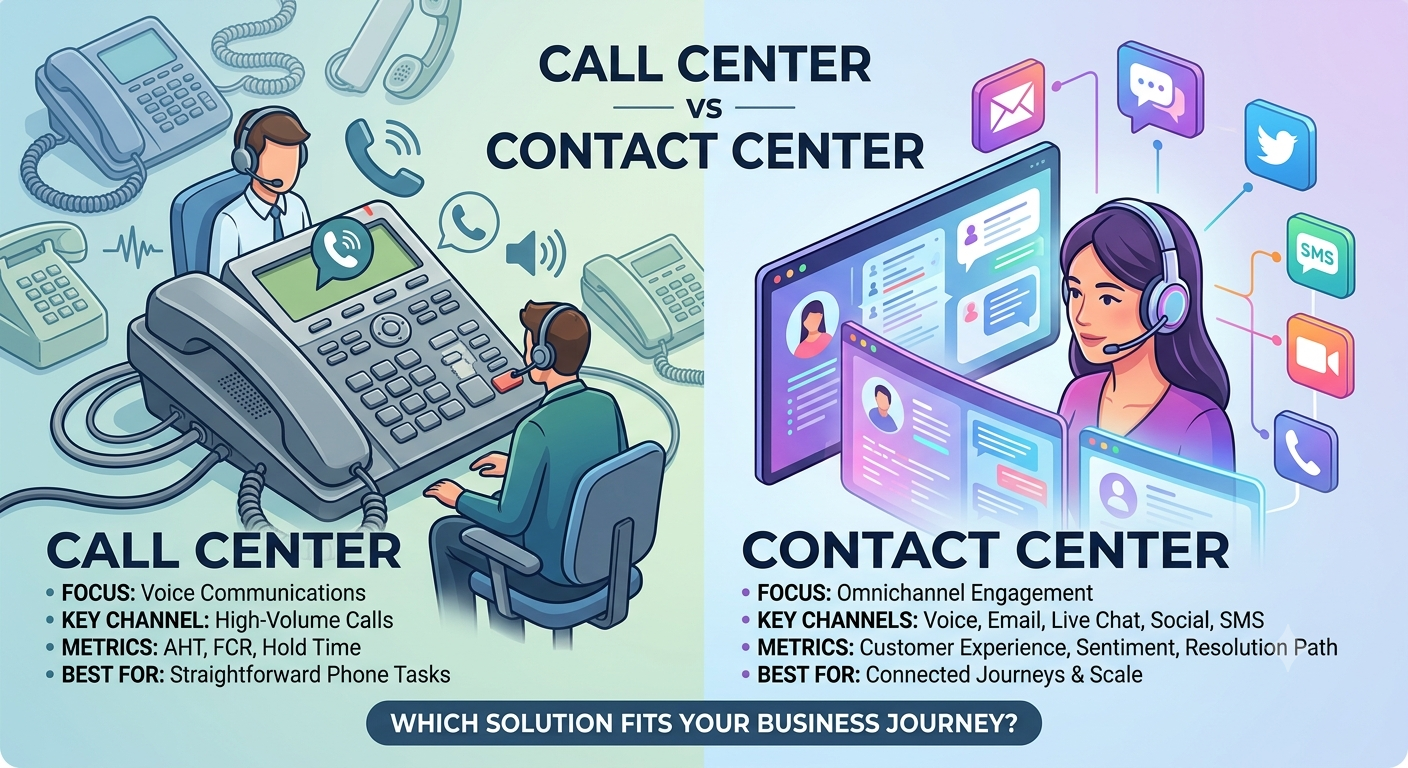
The primary difference between a contact center vs call center lies in the variety of communication channels they support to resolve customer inquiries. While a call center focuses exclusively on voice-based communication, a contact center acts as a central hub for multiple channels, including email, live chat, social media, and SMS. Modern businesses are increasingly shifting toward contact centers to provide a seamless, omnichannel experience. This transition allows agents to have a 360-degree view of the customer journey, ensuring that interactions are consistent across all platforms, whereas call centers remain specialized in handling high volumes of phone calls for support or sales.
What Is a Contact Center?
When we look at the modern landscape of customer service, we often find that a contact center meaning goes far beyond just answering phones. A contact center is a centralized office or department that manages all forms of customer contact, not just calls. We see these platforms integrating various digital channels into a single interface, allowing agents to switch between a chat window and an email thread without losing the context of the conversation. This environment is built to handle the complexities of the digital-first consumer who expects to reach a brand on their preferred platform at any time of the day.
In a contact center environment, the focus is on providing a unified experience. We often describe this as “omnichannel” support. This means that if you start a conversation on a brand’s website through a live chat and later follow up with an email, the agent assisting you has access to your entire history. This system contact center approach reduces friction and prevents the customer from having to repeat their issue multiple times. By utilizing contact center communication tools, companies can ensure that every touchpoint is tracked and analyzed to improve the overall customer experience.
What Is a Call Center?
A call center definition is quite specific: it is a centralized office used for receiving or transmitting a large volume of requests by telephone. We often categorize these into two main types: inbound and outbound. Inbound call centers handle incoming calls from customers who need help or want to place an order, while outbound call centers are typically used for telemarketing, debt collection, or market research. The entire call center functionality is built around the telephone, utilizing technologies like Automatic Call Distributors (ACD) and Interactive Voice Response (IVR) systems to manage the flow of traffic.
Despite the rise of digital channels, many businesses still rely on call center telephony because it offers a direct, human connection that some customers prefer for complex issues. We find that the features of call center operations are highly optimized for speed and volume. Managers in these environments track metrics like Average Handle Time (AHT) and First Call Resolution (FCR) very closely. While it might seem traditional, the call center types we see today often utilize call center web tools to help agents access customer data faster while they are on the phone, bridging the gap between old-school hardware and modern software.
What is the difference between a contact center and a call center?
Understanding the difference between call center and contact center is vital for any business looking to upgrade its customer service strategy. While they share a common goal—helping customers—the methods and technologies they use are vastly different. A call center is a subset of the broader contact center umbrella, focusing strictly on the voice channel. In contrast, a contact center manages a suite of tools that include call center and contact center capabilities combined.
| Feature | Call Center | Contact Center |
| Communication Channels | Voice calls only | Voice, email, live chat, social media, video, SMS |
| Data and Reporting | Call reports only (AHT, FCR) | Multichannel analytics and customer journey mapping |
| Primary Focus | Focus on call metrics and efficiency | Focus on customer engagement and experience |
| Customer Experience | Disjointed customer experience across platforms | Connected customer experience with full history |
| Scalability | Lacks future expansion capabilities | Able to connect future media channels easily |
| Technical Setup | Call center telephony and PBX | Cloud-based contact center environment |
When we analyze the contact vs call center debate, the most striking difference is how data is handled. In a traditional call center, the data is siloed within the phone system. If a customer emails the company later, that email is likely handled by a different department with no record of the previous phone call. This leads to a fragmented experience. However, in a contact center, all interactions are recorded in a single customer profile, allowing for a more holistic approach to service. This ensures that the customer contact centre becomes a source of valuable business intelligence rather than just a cost center.
1) Call centers only support voice calls
The most basic limitation of a call center is its reliance on voice. In our experience, this can be a bottleneck for businesses with a younger demographic who prefer messaging over talking. When you define call center operations, you are essentially looking at a system designed for a one-dimensional communication strategy. While this is effective for certain industries, it lacks the flexibility required in a world where consumers expect instant responses via WhatsApp or Facebook Messenger.
2) If a customer uses an unsupported channel, their experience is disjointed
Imagine a customer tweets a complaint and then calls the support line. In a call center setup, the phone agent will have no idea about the tweet. We call this a disjointed experience because the customer has to start from scratch. A contact center call center hybrid solves this by linking social media handles to phone numbers. Without this integration, your brand risks appearing disorganized and uncaring, which can damage long-term loyalty and brand reputation.
3) Call centers lack expansion capabilities
Technology moves fast, and call centers often struggle to keep up. Because they are built on legacy telephony infrastructure, adding new channels like video chat or AI-driven chatbots can be incredibly expensive and technically difficult. We have seen many companies hit a “ceiling” where their call center can no longer support the growing demands of their customer base. A contact center is designed with expansion in mind, allowing businesses to “plug in” new communication methods as they become popular.
Contact Center and Call Center Similarities
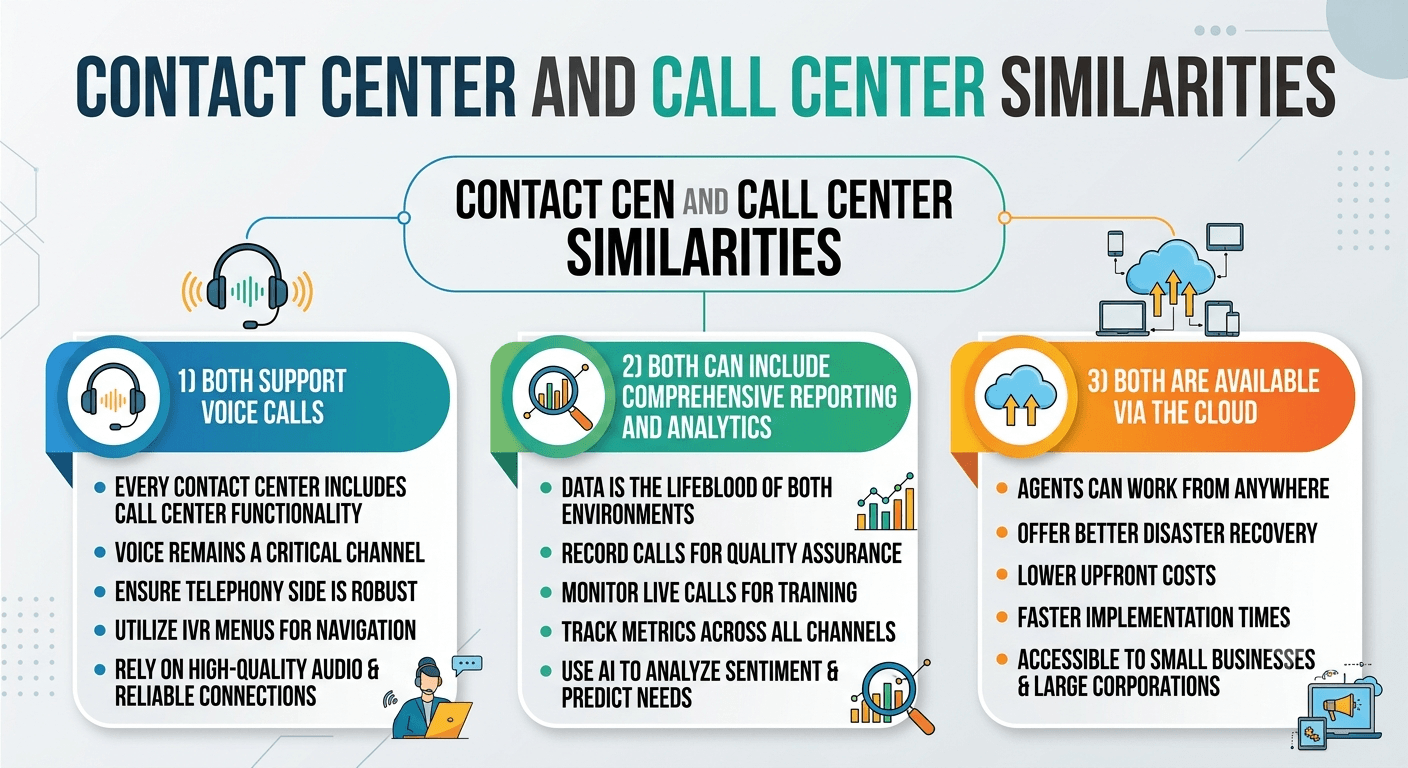
While there are many differences, it is important to recognize that a call and contact centre share some foundational elements. At their core, both are designed to facilitate communication between a business and its customers. They both require a trained workforce, a management structure, and technology that can route inquiries to the right people. Whether you are looking at a con call center or a massive enterprise contact center, the goal of resolving the customer’s problem remains the same.
1) Both support voice calls
Every contact center includes the functionality of a call center. Voice remains a critical channel for high-stakes or emotionally charged situations. When we set up a nextiva contact center or a similar platform, we ensure that the telephony side is just as robust as the digital side. Both systems utilize IVR menus to help customers navigate to the correct department, and both rely on high-quality audio and reliable connections to ensure clear communication.
2) Both can include comprehensive reporting and analytics
Whether you are measuring the duration of a call or the response time on a chat, data is the lifeblood of both environments. Modern call center functionality includes the ability to record calls for quality assurance and monitor live calls for training purposes. Similarly, contact centers track these same metrics across all channels. We find that both systems are increasingly using AI to analyze sentiment and predict customer needs, making the reporting more proactive rather than just reactive.
3) Both are available via the cloud
The shift from on-premise hardware to the cloud has affected both types of centers equally. A cloud-based call center and contact center allow agents to work from anywhere, which has become a standard requirement in the post-pandemic world. We have observed that cloud solutions offer better disaster recovery, lower upfront costs, and faster implementation times for both models. This accessibility means that even small businesses can now afford tools that were previously only available to large corporations.
Call Center vs. Contact Center: Which One to Choose?
Deciding between a contact center vs. call center depends largely on your business model and where your customers spend their time. We suggest starting with a deep dive into your current communication data. If 95% of your interactions are over the phone and your customers show no interest in digital channels, a call center might be the most cost-effective choice. However, if you are seeing an increase in social media mentions or website chat requests, it is likely time to move toward a contact center model.
-
Choose a call center when:
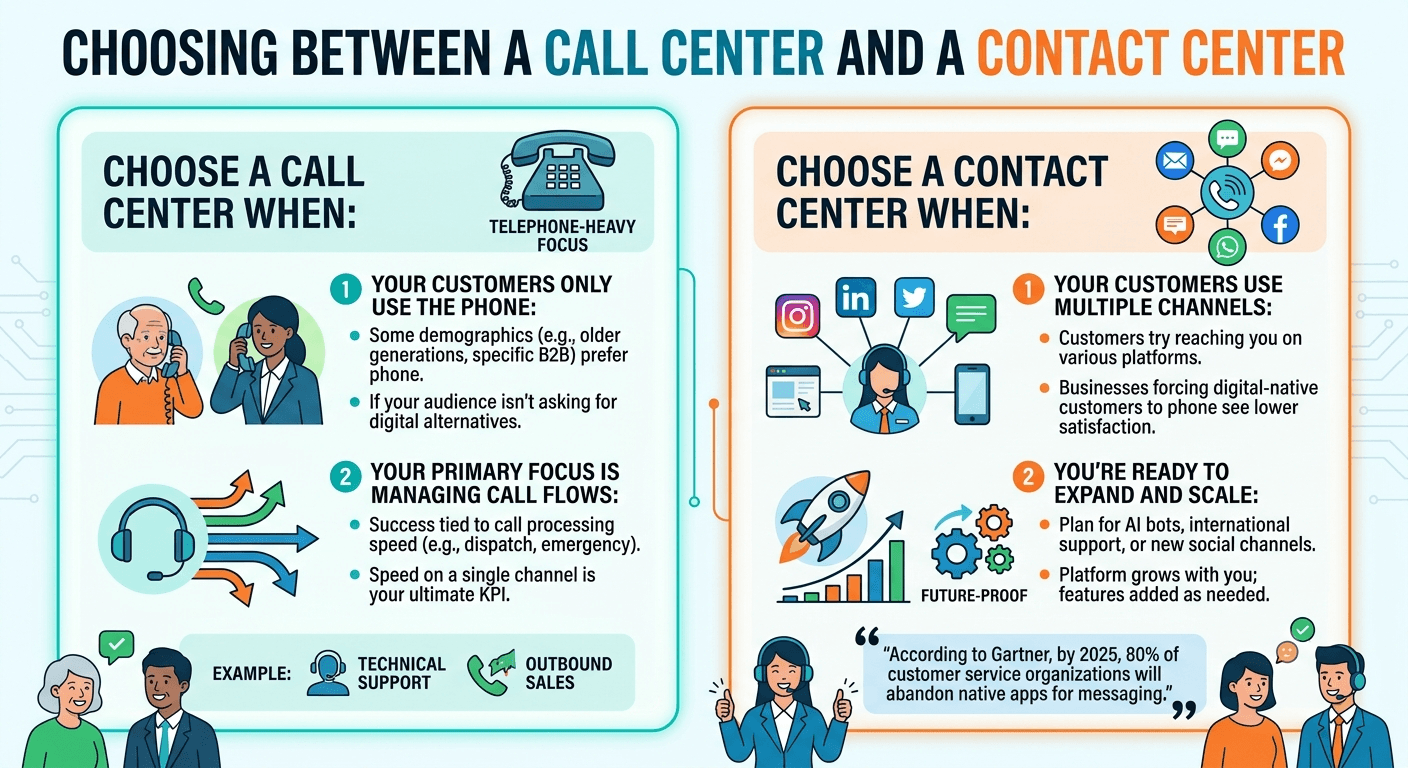
A traditional call center is often the best fit for specific, niche operations. For instance, a technical support line that requires long, detailed verbal explanations might not benefit much from adding a Twitter integration. We also see call centers working well for outbound sales teams that spend their entire day dialing leads. If your workflow is strictly linear and phone-heavy, the simplicity of a call center can actually be an advantage.
1. Your customers only use the phone to reach you.
Some demographics, particularly older generations or specific B2B sectors, still view the phone as the only professional way to conduct business. If your data shows that your “walk-in customer telephone customer differences” are negligible and everyone prefers the phone, why complicate things? We advise staying with a call center if your audience isn’t asking for digital alternatives.
2. Your primary focus area is managing call flows.
If your business success is tied directly to how many calls you can process in an hour—such as a taxi dispatch or an emergency service—then your focus should be on call center optimization. In these cases, adding email or social media might actually distract agents from their primary, time-sensitive task. We recommend sticking to a call center when speed on a single channel is your ultimate KPI.
-
Choose a contact center when:
In most modern scenarios, a contact center is the superior choice for long-term growth. As we move further into the digital age, the “contact center environment” is becoming the standard. According to a research report by Gartner, by 2025, 80% of customer service organizations will have abandoned native mobile apps in favor of messaging for a better customer experience. This shift highlights the need for a platform that can handle multiple streams of data simultaneously.
1.Your customers use multiple channels.
If your customers are trying to reach you on Instagram, LinkedIn, and via your website, you need a contact center. We have found that businesses that force digital-native customers to use the phone often see a drop in customer satisfaction scores. By meeting customers where they are, you demonstrate that you value their time and convenience.
2.You’re ready to expand and scale
A contact center is built for the future. If you plan to add AI bots, international support, or new social channels next year, a contact center platform will grow with you. We often tell our clients that choosing a contact center is an investment in scalability. It allows you to add features as your budget and customer base grow, without having to rip out and replace your entire system every few years.
Reviews
To provide a well-rounded perspective, we have gathered insights from various online communities and review platforms. Understanding the real-world application of contact center vs call center tools helps in making an informed decision for your business.
We have found that while business owners love the data provided by modern systems, the agents on the front lines often have a different perspective on daily operations. These reviews reflect the practical reality of working within these different environments.
-
What users actually say on Reddit
Reddit is home to many communities where professionals share their honest experiences with call & contact center technology. We frequent these subreddits to stay updated on the latest trends and common technical frustrations.
1. Contact Center
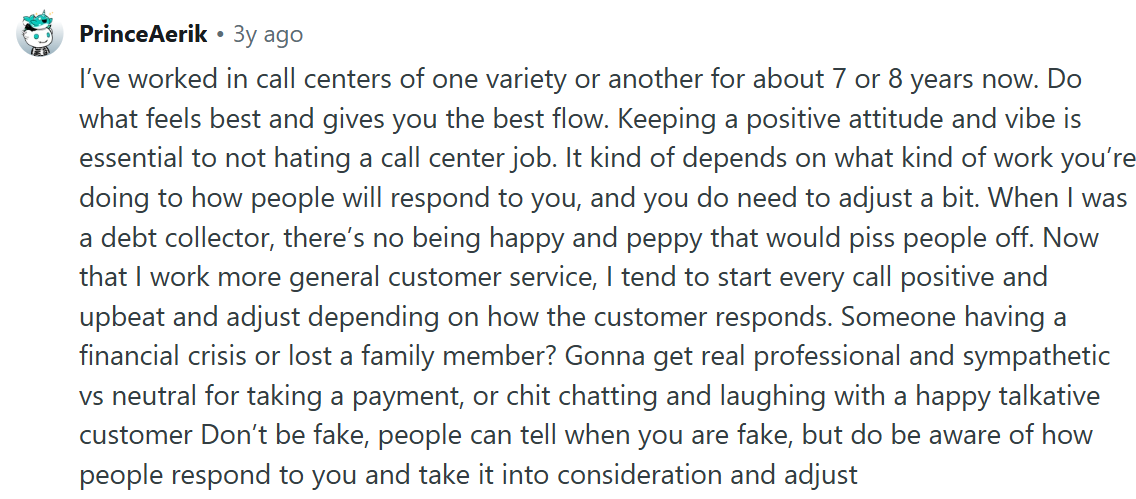
Many users on Reddit highlight the efficiency of a contact center environment when it comes to resolving complex issues. We see praise for how a system contact center allows agents to see a customer’s history across email and chat, which prevents repetitive questions. However, some agents report that managing multiple channels at once can be overwhelming and leads to mental fatigue. We have noted that while the contact center experience is better for the customer, it requires more robust training for the staff.
2. Call Center
In the r/callcentre subreddit, many people discuss the straightforward nature of traditional call center telephony. We find that agents often appreciate the simplicity of focusing on one task at a time, which is usually just answering the phone. The common complaint on Reddit regarding the call center definition is the feeling of being outdated. Users often mention that without contact center messaging tools, they feel limited in how they can actually help a frustrated customer.
-
What users actually say on Quora
Quora provides a platform for industry experts to explain the strategic differences between these two models. We often see discussions here about the long-term ROI of investing in advanced contact center solutions meaning.
1. Contact Center
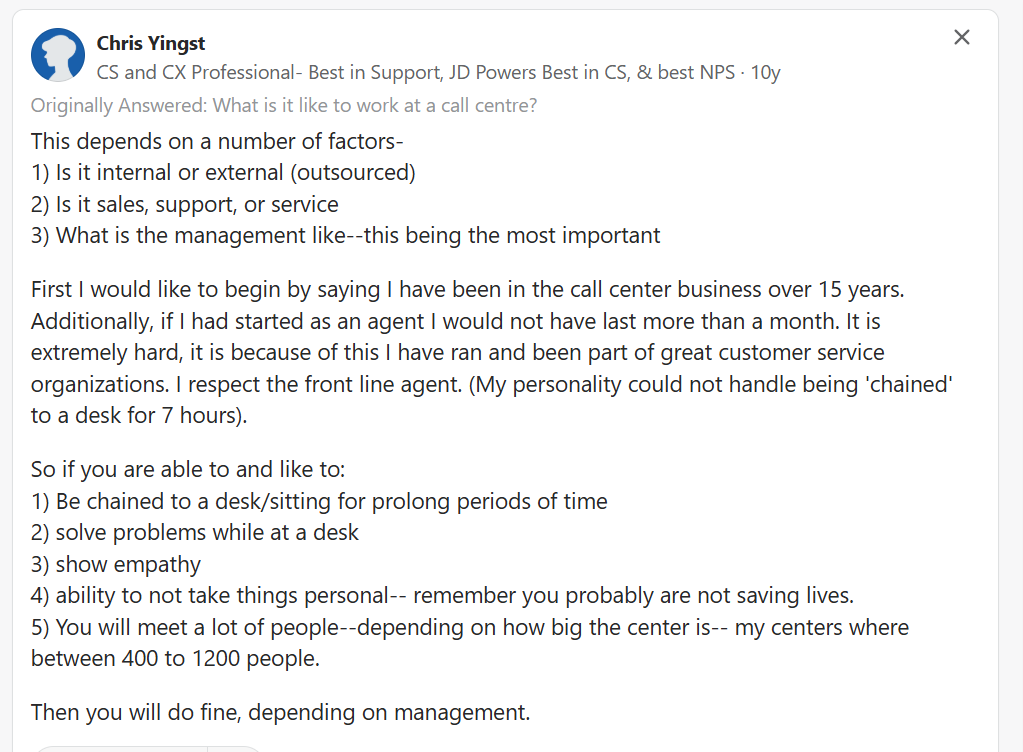
Experts on Quora emphasize that the contact center meaning is tied to customer retention and brand loyalty. They argue that a contact center it setup is a prerequisite for any business that wants to compete in a digital-first economy. We have observed that many contributors see the contact center as a profit center rather than just a cost. By using multichannel analytics, businesses can identify trends and improve their product offerings based on direct feedback.
2. Call Center
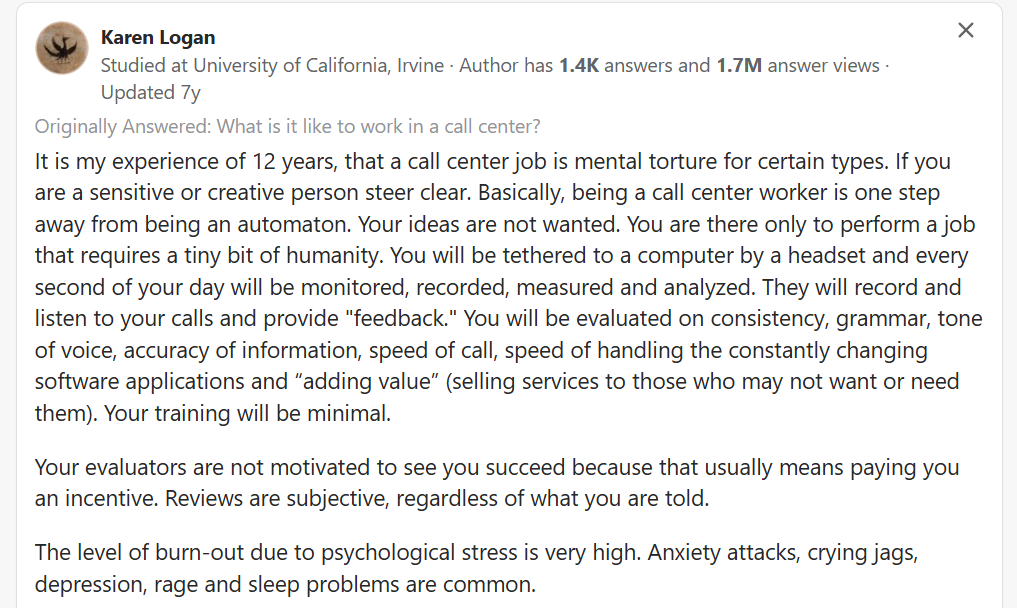
When discussing what is a call center, Quora users often point out its cost-effectiveness for small businesses. We find that for startups with limited budgets, a simple call center or centre setup is often the most practical first step. The consensus on Quora is that while a call center is efficient for volume, it lacks the depth required for modern customer service contact center standards. It is viewed as a specialized tool for voice-heavy industries like debt collection or telemarketing.
Contact Centers Are the Future of Call Centers
As we look toward the future, the line between these two entities will continue to blur until the traditional call center becomes a thing of the past. The demand for a “connected customer experience” is too high for businesses to ignore. We are seeing a massive shift toward “contact center it” integrations that use machine learning to predict why a customer is calling before the agent even picks up the phone. This level of sophistication is only possible in a contact center environment where data from every touchpoint is aggregated and analyzed.
Furthermore, a study by Forrester Research indicates that companies that excel in omnichannel customer experience see a 10% increase in year-over-year growth. This is a clear indicator that the “contact center vs call center” debate is being won by the multichannel approach. While the human voice will always have a place in customer service, it is now just one part of a much larger, more complex puzzle. By embracing the contact center model, we are not just changing how we talk to customers; we are changing how we understand and serve them.
Read More: What Does OPT Mean in Text?
Final Thought
In the end, whether you choose a contact center or a call center, the most important factor is the quality of the interaction. Technology is a tool, but the goal is always to provide value and resolve issues efficiently. If you are a small business starting out, a call center setup might be all you need to get your phones ringing. But if you have your sights set on growth, brand loyalty, and a modern customer experience, the contact center is the only way forward. We encourage you to look at your customer journey and ask yourself: “Am I meeting my customers where they are, or am I making them come to me?” The answer to that question will tell you exactly which platform you need.
Faqs
-
What is the difference between a call center and a contact center?
The main difference is the number of communication channels supported. A call center only handles voice calls, whereas a contact center manages voice, email, chat, social media, and SMS in a single, unified platform. This allows for a more consistent and integrated customer experience across different digital touchpoints.
-
What is another name for a contact center?
A contact center is often referred to as a customer interaction center, an omnichannel support hub, or a customer contact centre. These names reflect the facility’s ability to handle various types of communication beyond just traditional telephone calls.
-
What is the role of a contact center?
The role of a contact center is to manage all customer interactions across multiple channels to ensure high levels of satisfaction and efficient problem resolution. It acts as the central point for customer support, sales, and technical assistance, using data from all channels to provide a personalized experience.
-
What are the four types of call centers?
The four primary types of call centers are inbound call centers (handling incoming requests), outbound call centers (making calls for sales or research), domestic call centers (operating within the same country), and international call centers (handling calls from various countries across different time zones).
-
Which statement best describes a call center?
Call center is best described as a centralized department that handles a high volume of telephone-based communications, focusing on efficiency and specific call-related metrics like wait times and call duration.
-
What are the main features of call center software?
Key features include Automatic Call Distribution (ACD), Interactive Voice Response (IVR), call recording, real-time monitoring, and basic reporting on call volumes and agent performance.
-
How does a contact center environment differ from a call center?
A contact center environment is more complex as it requires agents to be proficient in multiple modes of communication, such as typing for live chat and speaking for phone calls, often simultaneously using a dashboard that integrates all these channels.
-
What is contact center communication?
Contact center communication refers to the various ways a business interacts with its customers, including digital channels like SMS, WhatsApp, and social media, as well as traditional methods like voice and email, all managed through a central system.
-
Why is a contact center experience better for customers?
It is better because it offers “omnichannel” support, meaning a customer can switch from chat to phone without having to repeat their story, as the agent has access to the full history of all previous interactions across all platforms.