
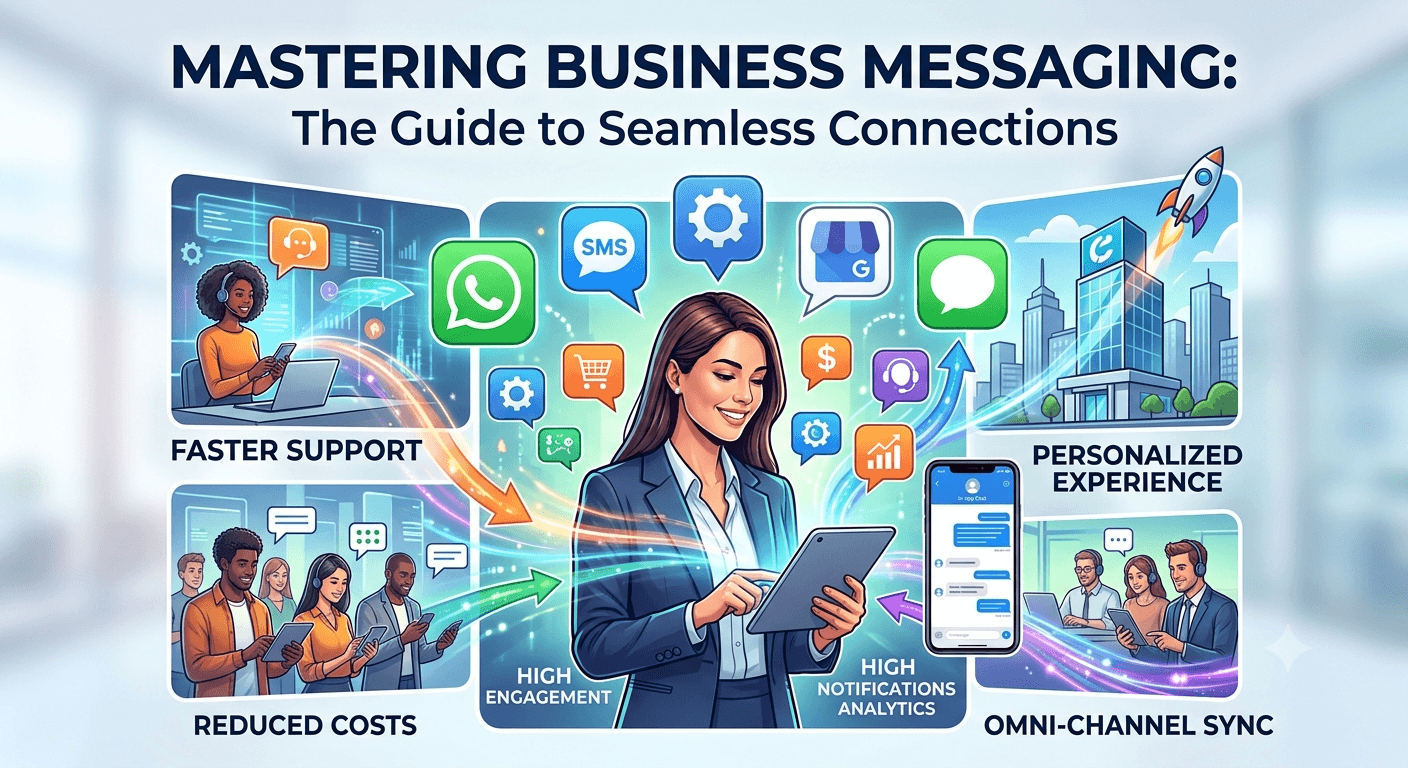
What is business messaging refers to the strategic use of digital chat and text-based platforms to facilitate communication between a company and its customers or internal teams. Unlike traditional methods, this approach leverages various business messaging channels such as SMS, WhatsApp, and specialized apps to provide real-time interaction. It transforms the standard one-way notification into a dynamic conversation that improves the overall customer journey. By integrating a business messaging solution, organizations can offer personalized support, drive sales, and maintain consistent brand messaging across multiple digital touchpoints effectively.
Business Messaging For Value-Driven Customers
Modern consumers prioritize convenience and speed above almost everything else. This shift in behavior has fundamentally changed communication services in business, moving away from long wait times on phone calls toward the immediacy of chat. Value-driven customers expect a professional messaging experience that respects their time and provides instant answers to their inquiries. When a company adopts a corporate messaging system, it signals to the market that it is modern, accessible, and customer-centric.
The rise of mobile technology means that messages for business are now the primafry way people interact with brands. Research conducted by Gartner suggests that by 2025, 80% of customer service organizations will have abandoned native mobile apps in favor of messaging for business to provide a better user experience. This trend highlights how essential it is for companies to understand what is business messaging and how it impacts customer retention and brand loyalty in a competitive landscape.
What is Business Messaging?
To define messaging in communication within a commercial context, one must look at it as an ecosystem of tools and strategies. It is not just about sending a text; it is about managing a business inbox where inquiries from various platforms like Facebook Messenger, Apple Messages for Business, and web-based chat converge. A business messaging system allows for asynchronous communication, meaning the customer can send a message and go about their day, replying only when it is convenient for them.
This flexibility is what separates a business message from a traditional phone call. In a standard corporate message development process, the goal is to create content that is concise, actionable, and formatted for mobile screens. Whether it is small business messaging or large-scale enterprise solutions, the core objective remains the same: to create a seamless link between the service provider and the end user through messaging corporate tools that support rich media, links, and automated triggers.
Top 5 benefits of business messaging for companies
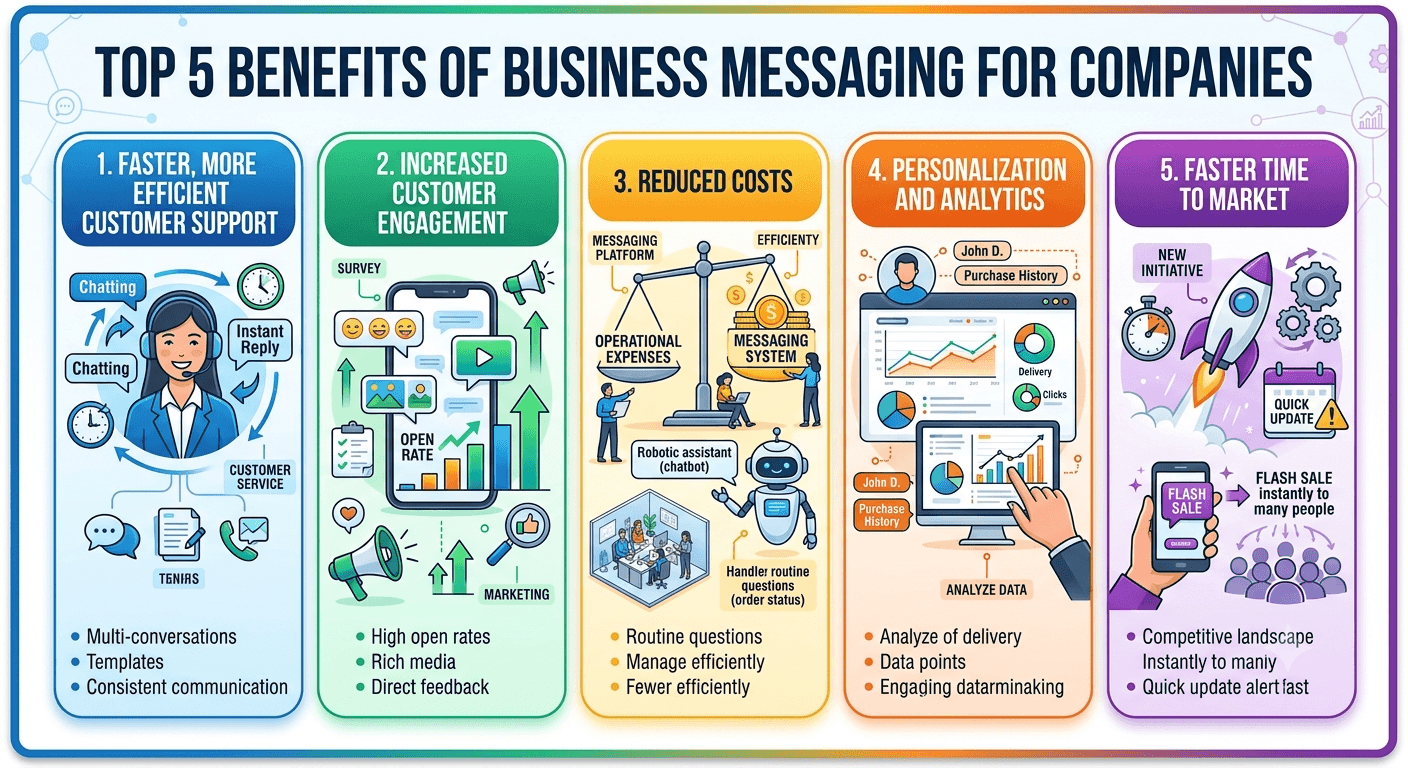
1. Faster, more efficient customer support
Efficiency is the cornerstone of any successful business msg strategy. When a company uses instant messaging for business communication, support agents can handle multiple conversations simultaneously, which is impossible with traditional voice calls. This multitasking capability significantly reduces the average handle time and allows the support team to resolve more tickets in a single shift.
The implementation of a business messaging service also enables the use of quick replies and templates. These tools ensure that the communication and messaging remain consistent across the team while cutting down on the manual labor required to type out repetitive answers. Consequently, the business messaging solution leads to a smoother workflow for employees and a more satisfying experience for the users who receive answers in seconds rather than hours.
2. Increased customer engagement
One of the primary benefits of text messaging for business is the incredibly high open and engagement rates compared to email. People are naturally inclined to check their text notifications immediately. By using business messaging updates, companies can ensure that their promotional content and important alerts are actually seen and interacted with by their target audience.
-
Messaging communications foster a sense of intimacy and directness that other channels lack.
-
Customers are more likely to provide feedback or participate in surveys when they are sent via a business message.
-
The use of rich media, such as images and videos, within these messages makes the interaction more engaging and memorable.
-
High engagement directly correlates with higher conversion rates for marketing campaigns.
3. Reduced costs
Switching to a business messaging system is often a cost-saving measure for many organizations. Maintaining a massive call center is expensive due to the high overhead of hardware and the staffing requirements needed to manage peak call volumes. In contrast, small business communications and enterprise-level solutions alike find that messaging is far more scalable and requires fewer resources to manage effectively.
Automated business messaging solutions can handle the bulk of routine inquiries, such as order tracking or password resets, without any human intervention. This allows the human staff to focus on more complex issues that require empathy and advanced problem-solving. Over time, the investment in a secure instant messaging for business platform pays for itself through reduced operational expenses and increased productivity.
4. Personalization and analytics
In the realm of professional messaging, data is king. Most modern business messaging channels provide deep insights into how customers interact with the content sent to them. From delivery rates to click-through statistics, these analytics allow companies to refine their corporate message development and ensure they are hitting the right notes with their audience.
-
Companies can segment their audience based on previous interactions recorded in the business inbox.
-
Personalization tags allow the system to use the customer’s name and specific account details automatically.
-
Analytics help identify the most common questions, allowing the business to create better help documentation.
-
Tracking the journey from the first message to a final sale helps in calculating the ROI of the messaging strategy.
5. Faster time to market
The agility provided by messaging in communication allows businesses to pivot and launch new initiatives rapidly. Unlike traditional advertising or complex email sequences, a business message can be drafted and sent to thousands of customers in a matter of minutes. This is particularly useful for flash sales, urgent business messaging news, or quick updates regarding service interruptions.
When a company understands what is business messaging and has the infrastructure in place, they can respond to market trends in real-time. For example, if a competitor launches a new product, a business can immediately send out a counter-offer to its loyal customer base via their preferred messaging corporate channel. This speed ensures that the brand remains relevant and top-of-mind for the consumer.
Examples of business messaging
-
Customer loyalty programs
Loyalty programs thrive when they are integrated into a business messaging system. Instead of asking customers to carry a physical card or log into a separate portal, companies can send points updates and reward notifications directly to their phones. This keeps the program active and ensures that customers are constantly reminded of the value they get from staying with the brand.
Using business messaging news today to announce exclusive rewards for top-tier members creates a sense of community and exclusivity. Customers can reply to these messages to redeem points or ask questions about their status, making the loyalty experience interactive. This direct line of communication helps in building long-term relationships that are vital for small business messaging success.
-
Transactional messages
Transactional messages are the backbone of trust in digital commerce. These include order confirmations, shipping updates, and multi-factor authentication codes. When a customer receives a business message confirming their purchase immediately after checkout, it reduces anxiety and builds confidence in the brand’s reliability.
-
Sending real-time shipping alerts via a business messaging solution keeps the customer informed.
-
Appointment reminders sent through text messaging in business communication reduce the rate of no-shows.
-
Payment receipts and billing alerts help customers keep track of their finances effortlessly.
-
Automated password reset links sent via secure channels ensure account safety.
-
Promotional messages
Marketing through business messaging channels is highly effective when done correctly. Instead of broad, generic advertisements, promotional messages can be tailored to the specific interests of the recipient. For instance, if a customer frequently buys shoes, the business messaging service can send them an alert when a new collection arrives.
The key to successful promotional b2b messages or b2c texts is the call to action. Including a direct link to the product page within the message makes it incredibly easy for the customer to make a purchase. This frictionless path from the initial message for business to the final transaction is why many retailers are seeing a significant boost in sales after adopting messaging-first marketing strategies.
-
Operational messages
Operational messaging covers the internal and external logistical updates that keep a business running smoothly. For internal teams, a corporate messaging system can be used to coordinate shifts, share urgent company news, or manage project updates. Externally, it can involve notifying customers about store holiday hours or changes to service terms.
In many cases, what is business messaging in an operational sense involves high-volume, automated alerts. A study by Twilio found that 90% of people prefer to be contacted by a business via messaging rather than a phone call for these types of routine updates. This preference makes it clear that messaging communications are the preferred standard for modern operational transparency.
Business Messaging Challenges
-
Operations and orchestration between multiple groups
One of the biggest hurdles in implementing a business messaging solution is coordinating between different departments. Marketing, sales, and customer support all have different goals, but they often share the same business inbox. Without a clear strategy, there is a risk of sending conflicting messages or overwhelming the customer with too much information from various sources.
To solve this, companies must establish a central protocol for messaging corporate communications. This includes defining which team owns which type of interaction and how data is shared across the organization. Proper orchestration ensures that the total messaging for corporates remains professional and that the customer receives a unified experience regardless of which department they are talking to.
-
Scalability issues
As a company grows, the volume of business messages can become difficult to manage manually. What works for a startup with a few hundred customers will not work for a global enterprise with millions of users. Scalability requires robust software that can handle high traffic without lagging or losing messages in the system.
-
Investing in an API-based business messaging system allows for better growth management.
-
Automation is essential to filter out simple queries so human agents can scale their efforts.
-
Cloud-based communication services in business offer the flexibility to add more seats or features as needed.
-
Ensuring the infrastructure can handle spikes during holiday seasons or promotional events is critical.
-
Privacy and security
When discussing what is business messaging, security must be a top priority. Customers are often sharing sensitive information, such as personal details or payment queries, over these channels. A lack of secure instant messaging for business can lead to data breaches, which damage the brand’s reputation and result in legal penalties.
Companies must ensure that their business messaging channels are encrypted and comply with local regulations like GDPR or CCPA. Using a trusted business messaging solution that prioritizes data protection is not optional in today’s digital age. This also involves training staff on how to handle data within the business msg environment to prevent accidental leaks or mishandling of customer information.
-
Maintaining cross-channel consistency
Customers often switch between different platforms, starting a conversation on a website and wanting to continue it on WhatsApp. Maintaining a consistent voice and keeping the context of the conversation alive across these channels is a significant challenge. If a customer has to repeat their issue every time they switch platforms, the benefits of professional messaging are lost.
An omni-channel business messaging system solves this by syncing the conversation history across all touchpoints. This ensures that the agent always has the full context of the customer’s journey. Consistency also applies to the branding and tone of the messages for business, which should be recognizable whether the customer is reading an SMS or a chat bubble on a mobile app.
-
Integration with existing systems
For many established companies, integrating a new business messaging solution with their old CRM or ERP systems can be technically demanding. If the messaging platform does not talk to the database, agents will have to manually look up information, which slows down the response time.
Seamless integration is necessary to provide the high level of personalization that customers expect. When the business messaging system is connected to the CRM, the agent can see the customer’s purchase history and previous interactions immediately. This data-driven approach is what makes instant messaging for business communication truly powerful and effective for long-term growth.
-
Meeting customer expectations
The convenience of messaging comes with the expectation of speed. When a customer sends a business msg, they are often looking for a response within minutes. If a company takes hours or days to reply, the customer may feel ignored and take their business elsewhere.
Managing these expectations requires a combination of human staffing and smart automation. Using automated “we’ve received your message” replies can help bridge the gap, but the ultimate goal is to provide a real answer as quickly as possible. Setting clear expectations about response times within the business messaging channels can also help in managing the customer’s experience.
4 Steps to Building A Robust Business Messaging Strategy
1. Audience research
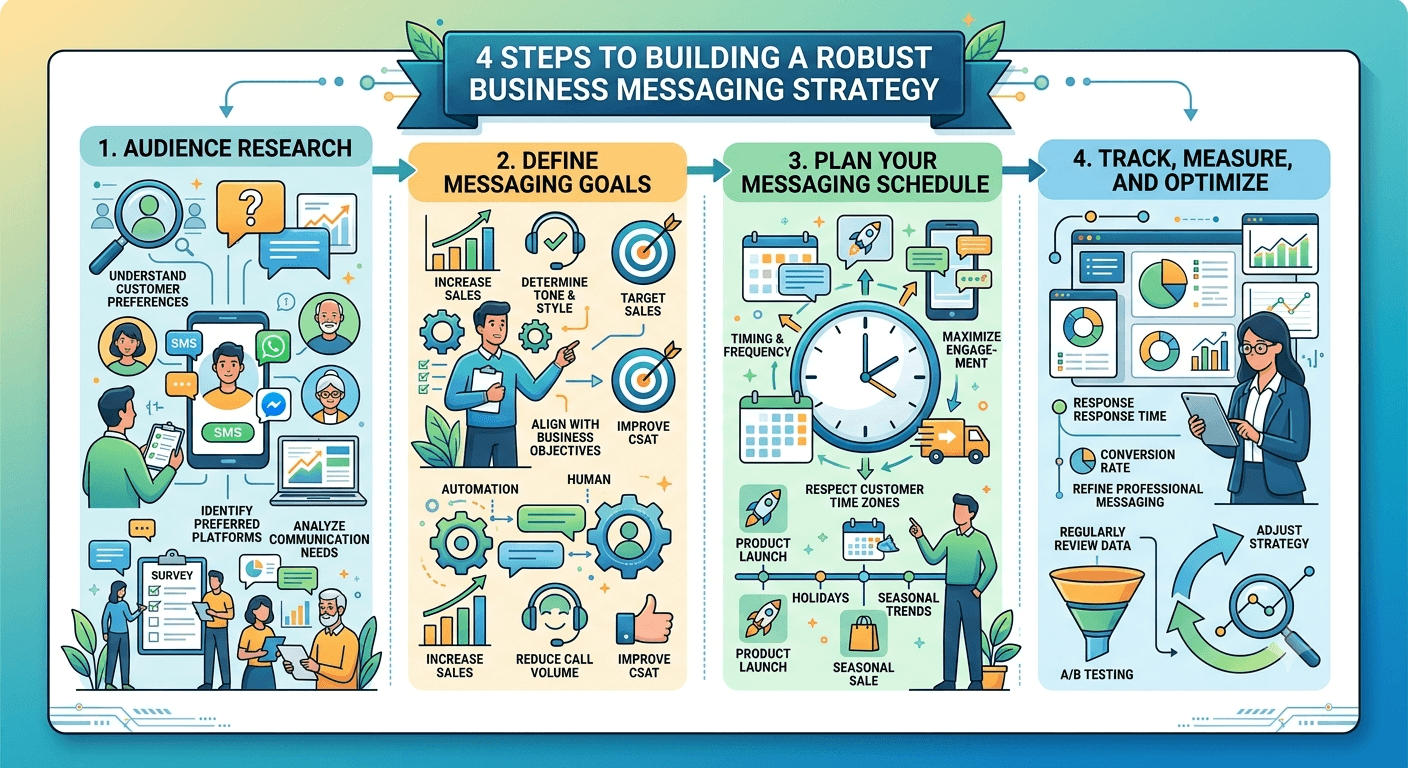
The first step in any messaging communications plan is to understand where your customers spend their time. There is no point in setting up a WhatsApp business messaging system if your target demographic primarily uses SMS or Facebook. Researching customer preferences ensures that you are meeting them on the platforms they are already comfortable using.
Understanding the “why” behind their communication is also vital. Are they looking for quick support, or are they interested in receiving promotional business messaging news? By surveying your existing base or analyzing current communication trends, you can tailor your business message strategy to meet their specific needs and behaviors.
2. Define messaging goals
Without clear objectives, a business messaging solution is just another cost. You must define what you want to achieve, whether it is reducing call center volume by 20%, increasing sales through promotional messages, or improving customer satisfaction scores. These goals will dictate how you set up your business messaging system and what features you prioritize.
-
Set measurable Key Performance Indicators (KPIs) like response time and resolution rate.
-
Determine the tone and style of your corporate message development.
-
Decide which parts of the conversation will be automated and which will be human-led.
-
Align your messaging goals with the overall broader business objectives.
3. Plan your messaging schedule
Timing is everything in messaging in communication. Sending a promotional business message at 3:00 AM is likely to annoy customers rather than convert them. You need to create a schedule that respects the customer’s time zone and habits. This also involves planning the frequency of messages to ensure you are staying top-of-mind without becoming a nuisance.
For transactional messages, the schedule is immediate, but for promotional content, a more strategic approach is needed. Planning your business messaging updates around holidays, product launches, or seasonal trends helps in maximizing engagement. A well-thought-out schedule ensures that your business messaging channels are used as a tool for value rather than just another source of digital noise.
4. Track, measure, and optimize
The final step in a successful small business communications strategy is continuous improvement. You must regularly review the data provided by your business messaging solution to see what is working and what isn’t. If certain types of messages have a high unsubscribe rate, it is a sign that your strategy needs adjustment.
Optimization might involve A/B testing different message formats or changing the automated workflows to be more helpful. By staying focused on the data, you can refine your professional messaging over time, ensuring that it continues to meet the evolving needs of your audience. This iterative process is what allows a company to truly master what is business messaging and stay ahead of the competition.
Top 5 business messaging tools
1. Sendbird
Sendbird is a highly customizable business messaging solution that allows companies to build chat, voice, and video experiences directly into their own applications. It is particularly popular for businesses that want full control over the user experience and data. With its robust API, it supports millions of concurrent users, making it a top choice for large-scale messaging communications.
2. Google Business Messages
Google Business Messages is a mobile conversational channel that allows users to message a company directly from Google Search or Maps. This tool is incredibly powerful for local businesses looking to capture customers at the moment of intent. It integrates easily into an existing business messaging system, allowing for a seamless transition from search to conversation.
3. Apple Messages for Business
For companies targeting iOS users, Apple Messages for Business offers a secure and high-quality way to interact. It allows customers to ask for information, schedule appointments, and even make payments using Apple Pay right within the conversation. This professional messaging tool is known for its high level of security and user trust.
4. WhatsApp Business
WhatsApp is one of the most widely used business messaging channels globally. The business version provides tools to automate, sort, and quickly respond to messages. It is an essential part of any global business messaging service, offering features like verified profiles and product catalogs that help build credibility with a massive international audience.
5. Threema
When security is the absolute top priority, Threema is often the go-to corporate messaging system. It is designed for internal communication and offers end-to-end encryption for all messages and files. For organizations handling highly sensitive data, Threema provides a secure instant messaging for business environment that protects against surveillance and data theft.
Read More: Starttls: How to Secure Your Email?
Final Thought
Understanding what is business messaging is no longer optional for companies that want to thrive in a digital-first economy. By embracing a diverse range of business messaging channels and focusing on providing a fast, personalized, and secure experience, organizations can significantly enhance their relationship with their customers. Whether it is through a sophisticated business messaging solution or a simple SMS strategy, the goal is to make communication as easy and effective as possible. As technology continues to evolve, those who master the art of the business message will be the ones who lead their industries in customer satisfaction and loyalty.
Faqs
-
What is a business message?
A business message is a form of digital communication sent by a company to its customers or employees through platforms like SMS, WhatsApp, or web-based chat apps. Unlike personal messages, these are designed to facilitate specific business goals such as customer support, marketing, or transactional updates. They provide a direct and convenient way for users to interact with a brand in real-time or asynchronously.
-
What are the 4 types of messages?
The four primary types of business messages include transactional messages, promotional messages, operational messages, and support-based messages. Transactional messages confirm actions like orders or payments, while promotional messages are used for marketing and sales. Operational messages provide logistical updates, and support messages focus on resolving customer issues and answering questions.
-
What is the definition of messaging?
In a professional context, the definition of messaging refers to the exchange of short, digital text-based or multimedia content between two or more parties. It encompasses the technology used to send these messages, the strategy behind the content, and the management of the ongoing conversation to ensure clear and effective communication.
-
What are the different types of business messaging?
Business messaging can be categorized by the channel used, such as SMS, OTT apps like WhatsApp or Telegram, and in-app chat. It can also be defined by its purpose, such as B2B messages for professional partnerships or B2C messages for direct consumer engagement. Additionally, it includes both automated messaging through bots and human-to-human interactions via a business inbox.
-
What’s the difference between business messaging and email marketing?
The main difference lies in the nature of the interaction and the speed of communication. Business messaging is designed for two-way, real-time or asynchronous conversations that feel personal and immediate. Email marketing is typically a one-way broadcast used for longer, more detailed content and formal announcements. Messaging usually has significantly higher open and response rates than traditional email.
-
Which business messaging channel should I start with?
The best channel to start with depends on your audience’s location and preferences. For businesses in the United States, SMS is often the most effective starting point due to its universal reach. For companies with an international audience, WhatsApp is usually the better choice. It is often best to start with one primary channel and then expand your business messaging solution as you understand your customers’ needs.
-
How fast do I need to respond to business messages?
Speed is a critical factor in the success of any business messaging service. Research indicates that many customers expect a response within an hour, and some even look for answers in under 15 minutes. To maintain high satisfaction, it is important to use automation for immediate acknowledgment and to staff your team to handle complex queries as quickly as possible.
-
Can I automate business messaging?
Yes, automation is a core component of a modern business messaging system. You can use chatbots and automated workflows to handle routine tasks like answering FAQs, confirming orders, or routing conversations to the correct department. However, it is essential to ensure that a human agent is always available to step in for more complex or sensitive issues.
-
Do I need different messaging strategies for different channels?
While your core brand voice should remain consistent, you must adapt your strategy to the strengths of each channel. For example, SMS requires brevity due to character limits, while platforms like WhatsApp allow for richer media and longer messages. Your approach should be tailored to how people naturally use each specific platform while maintaining the overall goals of your corporate message development.