
Latest News

The Blog

voip blogs
what is pstn

What is PSTN and How Does It Work?

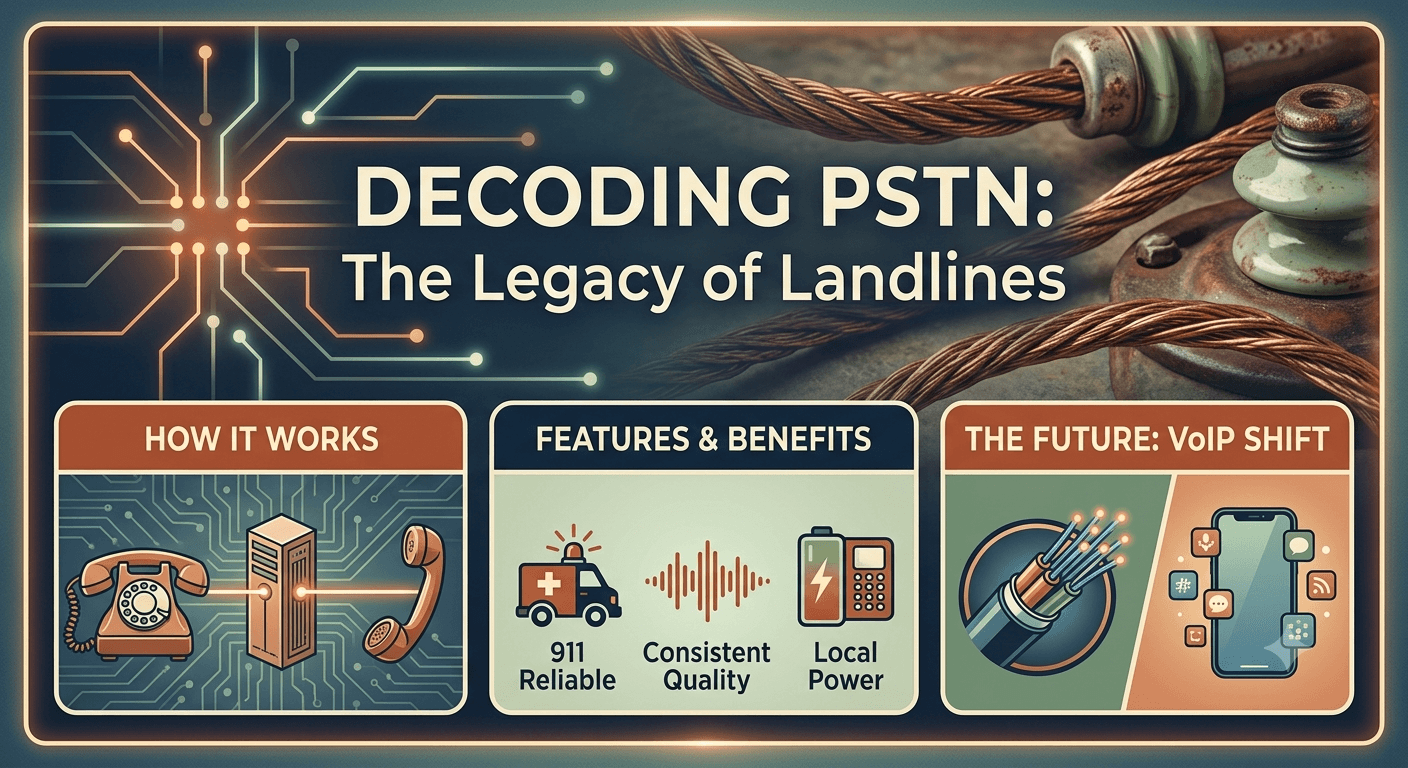
The Public Switched Telephone Network, commonly known as PSTN, is the traditional circuit-switched telephone system that has powered global communication for over a century. What is PSTN? It is the aggregate of the worlds circuit-switched telephone networks that are operated by local, regional, or national telephony operators, providing the infrastructure for public telecommunication. This network relies on copper wires, fiber optic cables, switching centers, and satellites to transmit analog voice data. While modern technology has introduced digital alternatives, the PSTN remains a foundational element of the global communication landscape, offering high reliability and consistent voice quality for landline users. What Is PSTN? The public switched telephone network pstn is the infrastructure behind traditional landline phone services. It started in the late 19th century as a system of manual switchboards where operators physically connected wires to complete a call. Over time, it evolved into an automated system of electronic switches. When people ask what is pstn, they are usually referring to the legacy copper-wire system that connects homes and businesses to a central provider. This system is often called POTS, which stands for Plain Old Telephone Service. It utilizes a dedicated circuit between two points for the duration of a call. Unlike modern internet-based systems that break data into small packets, a pstn phone line establishes a continuous path for the signal. This dedicated path ensures that the connection remains stable, which is why pstn networking has been the gold standard for reliability for decades. In the modern era, the pstn meaning has expanded to include a mix of analog and digital components. While the final link to a residential home might still be an analog pstn line, the core of the network is largely digital. Huge underground cables and undersea fiber optics carry vast amounts of pstn calls across continents, using sophisticated pstn switch technology to route traffic efficiently. How Does PSTN Calling Work? Understanding how pstn calls travel from one point to another requires a look at the physical and logical pathways involved. When you pick up a pstn phone and dial a number, your voice is converted into electrical signals. These signals travel through the pstn telephone network via a series of exchanges. The process is instantaneous, but it involves several layers of technology to ensure the right person answers on the other end. Components of PSTN The architecture of the public switched telephone system relies on several critical components. The most basic element is the local loop, which is the physical wire connecting a subscriber to the nearest central office. This is often the pstn phone line you see running from a telephone pole into a building. From there, the signal enters the larger network. Central offices are connected to tandem offices, which handle calls within a specific metropolitan area. For long-distance communication, the signal moves to a toll office or an international gateway. These gateways act as the bridge for pstn to pstn communication across different countries and regulatory jurisdictions. Every pstn telephone is assigned a unique number based on the E.164 standard, ensuring global compatibility. Call Setup and Routing Process The routing of a pstn call involves a protocol known as Signaling System No. 7. This protocol handles the setup, management, and teardown of calls. When you dial a number, the SS7 protocol looks for the most efficient path through the pstn network to reach the destination. It checks if the receiving line is busy before actually establishing the voice circuit. Once the connection is established, the dedicated circuit remains open until one party hangs up. This is a fundamental characteristic of the public switched telephone network. The signals are transmitted as analog waves over the local loop but are often converted into digital pulses at the central office for long-distance transport. This hybrid nature allows for a pstn gateway to interface between different types of networks. Circuit-Switched Technology Circuit switching is the core technology that defines what is pstn network. In this model, a dedicated physical path is reserved for the entire duration of the conversation. This is different from packet-switched networks used by the internet, where data is broken down and sent via multiple routes. Because the path is dedicated, there is no delay or data loss caused by other users on the network. Research from the International Telecommunication Union indicates that while the number of fixed-line pstn connections is declining, the reliability of circuit-switched technology remains unmatched in remote areas. This is because the dedicated circuit does not fluctuate in quality based on internet bandwidth. Every pstn call receives the full 64 Kbps of bandwidth required for high-quality voice transmission, a standard known as DS0. PSTN Architecture The architecture of the public switch telephone network is hierarchical, designed to handle millions of simultaneous connections. At the bottom of the hierarchy are the individual subscribers using a pstn telephone. These are connected to Class 5 switches, also known as local exchanges. These exchanges provide the dial tone and handle local routing for a specific neighborhood or district. Above the local exchanges are Class 4 switches, which manage traffic between different local offices. If a call is made to a different city, it moves up to the tandem or toll level. The use of a pstn diagram often shows these layers as a pyramid, with the massive international gateways at the top. This structured approach ensures that the pstn telephone network can scale across vast distances while maintaining logical routing paths. Modern architecture also incorporates the pstn gateway to allow for interoperability with digital systems. This gateway converts the analog signals of a pstn line into digital packets that can travel over an IP network. This is crucial for businesses that use a mix of legacy hardware and modern cloud communication tools. The pstn gateway acts as a translator, ensuring that a VoIP PSTN connection is seamless for the user. What Are the Key Features of a PSTN Phone System? A pstn phone system is defined by its simplicity and resilience. One of its primary features is the ability to provide power to the telephone through the copper line itself. This means that during a local power outage, a traditional pstn phone will often still work, provided the telephone exchange has its own backup power. This has made it a vital tool for emergency services and public safety. Another key feature is the geographic nature of pstn calls. Every number is tied to a specific physical location, which makes it incredibly easy for emergency dispatchers to locate a caller. The public switched telephone network pstn is built on a foundation of fixed infrastructure, meaning the voice quality is predictable and consistent. There are no issues with jitter or latency that are sometimes found in early-stage internet calling. Furthermore, the system supports a variety of basic features that have become standard in telecommunications. These include caller ID, call waiting, and three-way calling. While these features are now common in all systems, they were originally developed for the public switched telephone system. The pstn provider manages these services at the switch level, ensuring they work across different hardware brands. Three Benefits of PSTN Despite the rise of digital alternatives, there are still several reasons why many organizations and individuals stick with the the pstn. The longevity of the system is a testament to its robust design and the massive investment made by governments and private companies over the past century. 1. Established Infrastructure The most significant benefit is the sheer scale of the existing pstn network. It is available in almost every corner of the inhabited world. In many rural or developing regions, the pstn telephone network is the only reliable form of communication. Because the infrastructure is already in place, there is no need for new fiber optic installation to get basic voice service. 2. Consistent Call Quality Because of circuit switching, a pstn call does not suffer from the bandwidth fluctuations that can affect internet-based calls. The quality of a pstn to pstn call is remarkably stable. There is a guaranteed amount of bandwidth for every connection, which eliminates the “choppy” audio sometimes heard on poor internet connections. This consistency is a primary reason why some businesses still prefer a pstn line for critical client communication. 3. High Security and Privacy The public switched telephone network is generally considered more secure from remote hacking than internet-based systems. To intercept a call on a pstn phone line, someone would typically need physical access to the wires. In contrast, data traveling over the internet is vulnerable to various cyber threats. This physical security makes the public switched telephone system a preferred choice for high-security government and financial institutions. Common Challenges or Limitations to PSTN As the world moves toward a more data-centric model, the limitations of what is pstn are becoming more apparent. The very things that made it reliable in the 20th century are now holding it back in the 21st. Maintaining a massive web of physical copper wires is becoming increasingly difficult and expensive for any pstn provider. 1. High Operational Costs The cost of maintaining the physical infrastructure of the pstn networking system is staggering. Copper wires degrade over time, and repairing them requires specialized technicians and physical labor. Furthermore, the specialized hardware in old central offices is reaching the end of its life, and finding replacement parts is getting harder. These costs are often passed down to the consumer in the form of higher monthly line rentals. 2. Limited Scalability Scaling a traditional pstn phone system is a slow and expensive process. If a business grows and needs ten more phone lines, a technician must physically come to the location to install new wiring and hardware. This lack of flexibility is a major disadvantage in a fast-paced economy. In contrast, digital systems can add new users with just a few clicks in a software dashboard. 3. Slow Adaptation to Modern Digital Needs The traditional pstn telephone network was designed for voice, not data. While it can carry data via dial-up modems, the speeds are incredibly slow by modern standards. It cannot natively support video conferencing, instant messaging, or integration with customer relationship management software. This makes the pstn meaning less relevant for modern office environments that require unified communications. PSTN vs. PBX: What Is the Difference? To understand the difference, one must look at where the switching happens. PSTN is the global network, while a Private Branch Exchange (PBX) is a private network used within a company. A PBX allows users to share a limited number of external pstn lines. For example, an office might have 50 employees but only 10 actual pstn phone lines. The PBX handles the internal routing between employees and connects them to the external pstn network when needed. The main difference lies in ownership and control. The pstn provider owns the public switches, while the business owns the PBX hardware. Modern PBX systems have evolved into IP-PBX, which uses the internet instead of traditional phone lines, but the core concept of an internal switching system remains the same. The connection from the PBX to the outside world still often involves a pstn gateway. Other PSTN Alternatives As telecommunications technology advances, several alternatives have emerged that offer more features and lower costs than the public switched telephone network. These technologies are slowly replacing the legacy copper lines in many parts of the world, a process known as the PSTN switch-off. PSTN v. ISDN Integrated Services Digital Network (ISDN) was one of the first major upgrades to the traditional telephone system. It allowed for the simultaneous transmission of voice and data over the same copper wires. While it was a significant improvement over standard pstn calls, ISDN is also being phased out in favor of purely internet-based solutions. ISDN provided better digital quality but still relied on the physical infrastructure of the pstn network. PSTN vs. VoIP Voice over Internet Protocol (VoIP) is the most significant competitor to the public switched telephone network. VoIP sends voice data as digital packets over the internet. This eliminates the need for a dedicated circuit, allowing for much more efficient use of network resources. The debate of pstn vs voip often comes down to a trade-off between the extreme reliability of legacy systems and the advanced features and low cost of modern digital systems. How Much Does PSTN Access Cost? The cost of using a pstn phone line varies significantly depending on the region and the provider. Generally, users pay a monthly line rental fee regardless of how many calls they make. This fee covers the maintenance of the physical copper wire. In addition to the line rental, there are often per-minute charges for pstn calls, especially for long-distance or international destinations. For businesses, what are the pstn setup charges connection fees? These can be substantial. Installing a new physical line involves labor costs and equipment fees. If a company needs a high-capacity connection, such as a T1 line, the installation costs can run into thousands of dollars. According to a report by Frost & Sullivan, businesses can save up to 50% on their communication bills by moving away from traditional pstn provider contracts and adopting cloud-based solution. Four Reasons Why VoIP Is Better Than PSTN The transition from the public switched telephone system to VoIP is accelerating. Businesses of all sizes are finding that the benefits of digital communication far outweigh the familiarity of the old landline. 1. Enhanced Cost Efficiency VoIP is significantly cheaper because it uses an existing internet connection rather than requiring a dedicated pstn line. Long-distance and international calls are often included in a flat monthly subscription, which is much cheaper than the per-minute rates of pstn networking. Additionally, there is no need for expensive physical hardware maintenance on the customer’s side. 2. Improved Customer Service Modern VoIP systems offer features that a standard pstn telephone cannot match. These include interactive voice response (IVR) menus, automatic call distribution, and integration with CRM platforms. When a customer calls, the system can automatically pull up their records, allowing for a more personalized experience. This level of automation is difficult and expensive to achieve with a traditional pstn phone system. 3. Increased Productivity With VoIP, a phone number is not tied to a physical pstn line. This means employees can take their business calls on their laptops, tablets, or smartphones from anywhere in the world. This mobility is essential for remote work and global teams. Features like voicemail-to-email and click-to-dial further streamline communication, saving time and increasing overall efficiency. 4. Greater Scalability Scaling a digital system is nearly instantaneous. If a business expands, they can add hundreds of new lines without a single technician visiting the office. This “on-demand” nature of voip pstn services allows companies to grow at their own pace without being held back by physical infrastructure limitations. The ability to quickly scale up or down is a major advantage in fluctuating markets. What Does the Future Hold for PSTN? The future of the public switched telephone network pstn is a gradual sunset. Many countries have already announced dates for the complete decommissioning of their copper networks. In the UK, BT has planned to shut down the PSTN and ISDN by 2025, moving all customers to fiber-based IP networks. This trend is being mirrored across Europe, North America, and parts of Asia. However, the legacy of what is pstn will live on in the standards and protocols that modern systems use. The PSTN will likely remain in use in niche applications and extremely remote areas for another decade or two. Eventually, the world will be fully connected via packet-switched fiber and satellite networks, making the dedicated copper circuit a piece of history. The transition to a post-pstn world promises more features, better integration, and lower costs for everyone. As we move forward, the pstn meaning will shift from a primary communication tool to a historical foundation upon which the modern internet was built. The transition to VoIP is not just about changing the hardware; it is about embracing a more flexible and connected way of communicating. Whether you are a small business owner or a home user, understanding the shift from pstn to digital is crucial for staying connected in the modern world. Read More: How to Secure Your VoIP Calls: The Ultimate 2026 Protection Guide Final thought While the PSTN has served as the backbone of global communication for over a century, its time is drawing to a close. The shift toward digital, internet-based communication is inevitable due to its superior flexibility and cost-effectiveness. Understanding the history and mechanics of the public switched telephone network allows us to appreciate how far we have come and prepare for a future where communication is more integrated and accessible than ever before. Faqs What is PSTN vs VoIP? PSTN uses a physical, circuit-switched network of copper wires and switches to connect calls, while VoIP uses the internet to send voice data as digital packets. PSTN is known for its reliability and dedicated lines, whereas VoIP is more cost-effective and offers advanced digital features like video and integration with other software. Is PSTN the same as landline? Yes, in common terminology, a PSTN connection is often referred to as a traditional landline. It is the service that connects a home or office phone to the public network using physical wires, unlike cellular or satellite phones. What is the PSTN in the UK? In the UK, the PSTN refers to the legacy copper network managed primarily by Openreach (a BT Group business). The UK is currently in the process of phasing out this network, with a planned “switch-off” to move all users to digital, fiber-based services. What is PSTN and how does it work? The Public Switched Telephone Network is a global system of interconnected voice-oriented telephone networks. It works by establishing a dedicated physical circuit between two callers using a series of switches at local and regional exchanges. Do PSTN phones still work with VoIP? Traditional PSTN phones can work with VoIP systems if you use an Analog Telephone Adapter (ATA). This device converts the analog signal from the old phone into digital data that can be transmitted over the internet. Is PSTN analog or digital? The PSTN is a hybrid. The connection from a home to the local exchange (the local loop) is typically analog, but the core of the network that carries calls over long distances is almost entirely digital. What kind of network is the PSTN? The PSTN is a circuit-switched network. This means it reserves a dedicated communication path between two points for the entire duration of a call, ensuring constant bandwidth but utilizing resources less efficiently than packet-switched networks. What is VoIP? VoIP stands for Voice over Internet Protocol. it is a technology that allows you to make voice calls using a broadband internet connection instead of a regular (or analog) phone line. Is VoIP worth it for small businesses? Yes, VoIP is generally highly recommended for small businesses because it eliminates the need for expensive hardware, reduces monthly phone bills, and provides professional features like auto-attendants and mobile apps that were previously only available to large corporations.
Read More
voip technologies

VoIP Technologies: A Comprehensive Guide

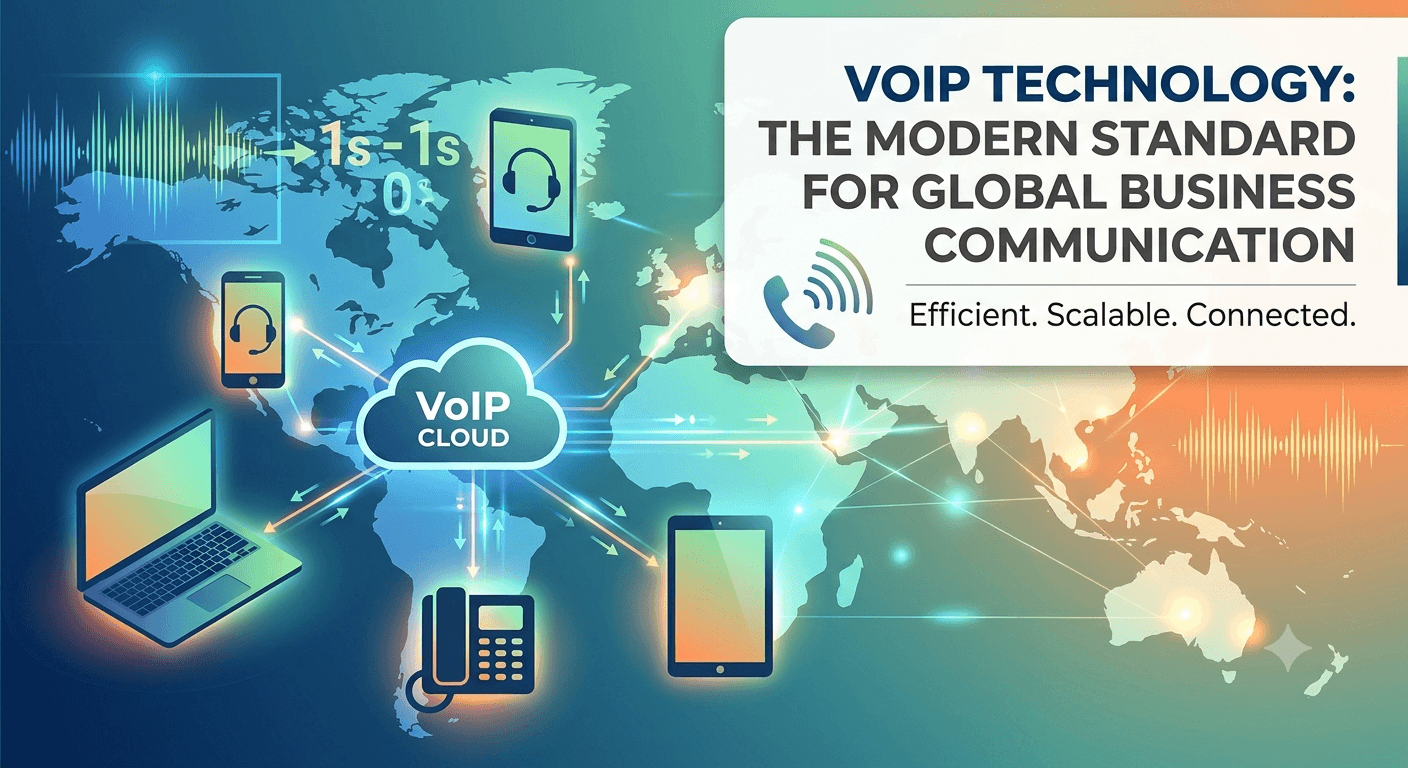
VoIP technologies represent the modern standard for digital communication, allowing users to make phone calls over a high-speed internet connection rather than a traditional analog phone line. By converting voice signals into digital data packets, these systems enable seamless communication across computers, smartphones, and specialized hardware. This innovation has transformed the way global businesses operate, offering significant cost savings, enhanced scalability, and a suite of advanced features that legacy systems cannot match. As companies move toward remote and hybrid work models, understanding these voice over internet protocol solutions becomes vital for maintaining competitive connectivity and operational efficiency in a digital-first world. What is VoIP? To understand the current landscape of digital communication, one must first explore the voip meaning in a broader context. VoIP stands for Voice over Internet Protocol, which is a technology that allows you to make voice calls using a broadband internet connection instead of a regular phone line. Many people ask what is voip in terms of daily utility, and the answer lies in its versatility; it is the engine behind everything from popular messaging apps to enterprise-grade business phone systems. When we look at the definition for voip, it essentially refers to the transmission of voice and multimedia content over internet protocol networks. The term whats voip often comes up when businesses compare their old hardware to new web based voip solutions. In the modern era, viop meaning is often synonymous with flexibility and mobility. Whether you are using a voip platform for gaming, personal use, or professional calls, the underlying technology remains the same. It turns your internet connection into a conduit for high-quality audio and video data. This transition from physical copper wires to digital packets is what allows for the high level of integration we see in today’s communication tools. In the realm of computing, voip meaning in computer terms relates to how software interacts with network cards to send data. A voip computer definition would emphasize the role of software clients in handling the encoding and decoding of voice data. This means that any device with an internet connection and a microphone can potentially become a communication hub. By utilizing an internet telephony system, users are no longer tethered to a specific physical location, which is the primary reason why it has become the gold standard for global enterprises. How Does VoIP Technology Work? Understanding how does voip work requires a look at the process of packet switching. Unlike the traditional public switched telephone network that uses circuit switching to keep a line open, voip networking relies on breaking down voice signals into small digital packets. These packets are sent over the internet and reassembled at the destination. This process is incredibly fast, often happening in milliseconds, which ensures that voip calling remains clear and uninterrupted. The voice over ip protocol governs how these packets are addressed and routed across the vast landscape of the web. The journey of an ip call starts with the conversion of analog audio into digital format using codecs. These codecs compress the data to ensure it travels efficiently across the voice over ip network. Once the data reaches the receiving end, it is decompressed and converted back into audio that the listener can understand. This entire framework is part of what is a voip network, a complex infrastructure that prioritizes voice traffic to ensure low latency and high reliability. How a VoIP system processes a call The step-by-step processing of a call through a voip platform involves several technical layers to ensure quality. The user initiates the call, and the device captures the analog sound waves from the microphone. The analog signal is converted into a digital signal using a specific codec. The digital data is divided into small packets, each labeled with the destination’s voice over ip address. These packets travel over the internet via the most efficient path available through various routers. The receiving device collects the packets and puts them back in the correct order. The digital signal is converted back into an analog sound for the recipient to hear. What Equipment Do You Need for VoIP Technologies? One of the most attractive aspects of voip phone service what is it is the minimal hardware requirement compared to traditional systems. To get started with a voip phone calling setup, you primarily need a stable internet connection and a device capable of processing audio data. Because voip implementation is largely software-driven, many businesses can use their existing hardware, such as laptops and mobile phones, to manage their entire communication stack. 1. Modem The modem serves as the gateway between your local network and the internet service provider. In a voip internet setup, the modem is responsible for receiving the data stream from the outside world. Without a functional modem, your internet calling service cannot reach the external servers required to facilitate calls. 2. Router The router is the brain of your internal network, directing traffic to the correct devices. For high-quality voice over ip calling, a router with Quality of Service (QoS) settings is essential. QoS allows you to prioritize voice traffic over other types of data, such as large file downloads or video streaming, which prevents jitter and dropped calls during busy periods. 3. Internet connection The backbone of all voip technologies is the internet connection itself. Whether you use fiber, cable, or high-speed DSL, the bandwidth must be sufficient to handle multiple concurrent calls. A standard voice over ip call typically requires about 100 kbps of upload and download speed. For businesses with many employees, voip planning involves calculating total bandwidth needs to ensure the voip connections remain stable. 4. Calling devices There are various ways to access a voip line, depending on your specific needs and environment. Computer: Using a voice over ip pc setup, you can make calls directly from a web browser or a dedicated desktop application. Smartphone: Mobile apps allow for voip phone online access, turning your cell phone into a business extension via Wi-Fi or cellular data. Dedicated VoIP phone: These look like traditional desk phones but connect via Ethernet and are specifically designed for voice over internet protocol telephony. ATA adapter: An Analog Telephone Adapter allows you to plug a traditional phone into a digital network, bridging the gap between old and new technology. Features to Look for in a VoIP Phone System When exploring what are voip phones and systems, the feature set is often the deciding factor. Unlike traditional lines, a voip phone system definition includes a wide array of software-based tools that enhance productivity. Modern systems go beyond simple audio, offering integrated solutions that handle everything from text messaging to video conferencing. The versatility of a voip platform is what makes it superior to older technologies. Features like call phone voip integration allow users to click a number on a website and initiate a call instantly. Furthermore, the ability to manage these features via a web dashboard makes voice over ip management much simpler for IT administrators than maintaining physical switchboards. Call forwarding: Automatically send incoming calls to another number or device if the primary line is busy or unanswered. Call routing: Use intelligent logic to direct callers to the right department based on their input or the time of day. Caller ID: Display the caller’s information on your screen, often integrated with CRM data to show customer history. Voicemail to Email: Convert voice messages into audio files or text transcripts and send them directly to your inbox. Multi-device support: Seamlessly switch between your desktop app and mobile device without dropping an active call. Video calling: High-definition video conferencing is often built directly into the same interface used for audio calls. Why VoIP Technology is Essential for Modern Businesses For any growing organization, business voice over internet protocol is no longer an optional luxury but a core necessity. One of the main reasons is the cost-efficiency; since calls travel over the internet, long-distance and international charges are drastically reduced. Research by BlueFace has indicated that businesses transitioning to VoIP technologies can save up to 90% on international call costs and 40% on local call costs compared to traditional landlines. Beyond savings, the scalability of a voip phone line is unmatched. In a traditional setup, adding a new employee meant wiring a new physical line. With an internet protocol phone service, adding a new user is as simple as creating a digital account in an online portal. This agility allows businesses to respond quickly to market changes and seasonal demands without significant capital expenditure. The global nature of modern work also necessitates voip uses that support remote teams. Because a voip line is tied to a user account rather than a physical wire, employees can work from anywhere in the world and still appear as if they are in the main office. This level of connectivity is fundamental to the “work from anywhere” culture that defines the current professional landscape. Improving Communication Efficiency through VoIP Efficiency in a business environment is often measured by how quickly and accurately information flows between stakeholders. A voip calling system improves this flow by integrating with other business tools like CRMs and helpdesk software. When a call comes in, the voip platform can automatically pull up the caller’s record, allowing the agent to provide personalized service instantly. The use of voip call routing ensures that customers never have to wait long to speak with the right person. By using automated attendants and interactive voice response (IVR) systems, businesses can handle high volumes of calls with fewer resources. This type of internet calling service reduces human error and ensures that every inquiry is handled according to company protocols. According to a study conducted by Nemertes Research, companies that fully integrate unified communications through VoIP see a 25% increase in operational efficiency. This is largely due to the reduction in “app switching,” as employees can handle calls, chats, and meetings all from a single interface. By streamlining these channels, teams spend less time managing their tools and more time focused on their core objectives. More than a VoIP Phone System: Unified Communications When we talk about voip and unified communications, we are referring to the convergence of various communication channels into one platform. This is a step above just making an ip phone call; it is about creating a cohesive ecosystem where email, instant messaging, voice, and video live together. This integration is what defines a modern voip platform. Unified communications allow for better data tracking and analytics. Managers can view detailed reports on call duration, wait times, and peak hours across all channels. This data is invaluable for voip planning and resource allocation. By understanding how communication flows through the organization, leaders can make informed decisions to improve customer satisfaction and internal collaboration. The Benefits of Switching from On-Premises to VoIP The transition from an on-premise hardware system to a cloud-based voice over internet setup offers several strategic advantages. Traditional systems are prone to physical damage from weather or hardware failure, often requiring expensive on-site repairs. In contrast, voice over ip voip technology is hosted in redundant data centers, ensuring that your communication remains active even if your local office loses power. Lower Initial Investment: No need to buy expensive PBX hardware or server racks. Automatic Updates: The provider handles all software patches and security updates in the cloud. Disaster Recovery: Calls can be rerouted to mobile devices instantly if the office is inaccessible. Superior Sound Quality: Modern high-definition codecs provide clearer audio than traditional analog lines. Easy Integration: Connect your phone system with tools like Slack, Salesforce, and Microsoft Teams. The flexibility of voip to phone calls also means that you can maintain a local presence in multiple geographic areas without physical offices. You can purchase local numbers in different cities or countries, and those calls will be routed directly to your centralized team. This is a powerful tool for market expansion and customer trust. AI Agents Built on Enterprise-Grade Communications The latest evolution in voip technologies involves the integration of Artificial Intelligence. AI agents are now being built directly into the voice over ip protocol stacks to assist with various tasks. These range from real-time language translation during an ip calling session to automated sentiment analysis that helps supervisors identify frustrated customers during a live call. AI-driven voip usage is also improving the way we handle data. Automated transcription services can turn an hour-long meeting into a searchable text document in seconds. This ensures that no critical information is lost and provides a reliable record for compliance and training purposes. As AI continues to advance, the line between human interaction and automated assistance will continue to blur, making communication more efficient than ever. What Should You Look for When Choosing a VoIP Provider? Selecting the right partner is crucial for a successful voip implementation. You should start by asking what is a voip provider’s track record for uptime and reliability. A system that is frequently down can cost your business more in lost sales than you save in monthly fees. Looking for providers that offer a 99.999% uptime guarantee is a good starting point for any business-grade internet protocol phone service. Another critical factor is the level of voice over ip management tools they offer. A good provider will give you a user-friendly dashboard where you can manage users, view billing, and configure call settings without needing technical expertise. Additionally, check for compatibility with your existing hardware or the ease of transitioning to their dialpad voip or specific software solutions. Security protocols: Ensure the provider uses encryption (like SRTP) to protect your voice data from eavesdropping. Customer support: 24/7 support is vital, especially during the initial setup and migration phase. Pricing structure: Look for transparent pricing without hidden fees for features like call recording or conferencing. Global reach: If you have international clients, ensure the provider has data centers in those regions to minimize latency. Ease of use: The interface should be intuitive for your employees to ensure high adoption rates. Are There Any Challenges or Risks Associated with VoIP Technology? While the benefits of voice over ip calling are numerous, there are some challenges that organizations must address. The most significant is the dependency on a stable internet connection. If your internet goes down, your phone system goes down as well. This is why many businesses invest in a secondary internet line for redundancy. Security is another concern in the world of internet protocol phone service. Because voice data travels over the public internet, it can be susceptible to hacking or “vishing” (voice phishing) if not properly secured. Implementing strong passwords, utilizing firewalls, and ensuring your provider uses end-to-end encryption are essential steps in protecting your voice over ip network. Lastly, voice quality can sometimes be affected by network congestion. This is often referred to as jitter or packet loss, which can make the audio sound robotic or cause parts of the conversation to drop out. However, with proper voip planning and the use of QoS-enabled routers, these issues are mostly a thing of the past for professional setups. Is VoIP the Right Choice for Your Business? Deciding whether to adopt voip technologies depends on your specific business goals and infrastructure. If you have a workforce that is increasingly mobile or remote, the flexibility of a voice over internet protocol voip system is unmatched. It provides the tools necessary to stay connected regardless of physical location, which is a major advantage in the current global economy. For small businesses, the low entry cost and ease of management make it an ideal choice. For large enterprises, the advanced features and integration capabilities offer a level of data-driven insight that traditional systems simply cannot provide. If you currently have a reliable high-speed internet connection, you are already halfway to a successful transition to an internet telephony system. Final considerations should include the total cost of ownership over several years. While there is a monthly subscription fee, the elimination of maintenance costs, hardware upgrades, and expensive long-distance bills usually results in a much lower overall spend. In the end, the move to digital communication is not just about saving money; it is about preparing your business for the future of work. Read More: How AI is Transforming VoIP Calling? AI in VoIP Final Words The transition to VoIP technologies represents one of the most significant shifts in communication history. By moving away from the limitations of physical wires and embracing the power of the internet, businesses can achieve a level of connectivity and efficiency that was once unimaginable. Whether it is through enhanced call routing, AI-driven analytics, or the simple convenience of taking your office phone anywhere, the advantages are clear. As technology continues to evolve, those who embrace these digital solutions will be better positioned to thrive in an increasingly connected world. VoIP FAQ Should my business consider switching to VoIP technologies? Yes, your business should consider switching because these systems offer significant cost savings, better scalability, and a wide range of features like video conferencing and CRM integration that traditional phones lack. The flexibility to work from anywhere makes it especially suitable for the modern professional environment. Furthermore, the ability to centralize your communication channels into one platform simplifies administrative tasks and improves overall team productivity. Does VoIP support remote or hybrid teams? Yes, it is the ideal solution for remote work. Since the service is cloud-based, employees can access their business lines via mobile apps or laptops from any location with an internet connection. This ensures that your staff remains reachable and professional regardless of their physical location, maintaining a consistent business presence for your clients. How do I know if VoIP is right for my current setup? If you have a stable high-speed internet connection and need to reduce communication costs or add more lines without physical wiring, then it is the right choice for you. You should also evaluate your current call volume and whether your team would benefit from advanced digital tools like automated attendants or voicemail-to-email services. What should I look for when choosing a VoIP provider? You should prioritize uptime reliability, security features like encryption, ease of use of their management dashboard, and the quality of their customer support. Additionally, verify if the provider offers seamless integration with the specific software tools your business already uses, such as Salesforce, Slack, or Microsoft Teams. What does total cost of ownership mean for VoIP? It refers to the sum of all costs involved in the system, including subscription fees, internet costs, and any hardware like headsets, weighed against the savings from lower call rates and zero maintenance. By calculating these factors over a multi-year period, you can clearly see how much more economical VoIP is compared to maintaining a traditional landline infrastructure. Do VoIP providers usually include customer support? Most reputable providers offer 24/7 support to help with setup, troubleshooting, and configuring advanced features to ensure your business stays connected. Many top-tier providers also assign a dedicated account manager to assist with the initial onboarding process and ensure a smooth transition for your entire staff. How important is uptime for VoIP systems? Uptime is critical because your phone system relies entirely on the provider’s servers; a high uptime percentage like 99.99% ensures your customers can always reach you. Choosing a provider with geographically redundant data centers further protects your business from outages caused by local hardware failures or regional emergencies. What is the most popular VoIP technology today? SIP (Session Initiation Protocol) is the most widely used standard, as it allows for the seamless integration of voice, video, and messaging across different devices and platforms. Its versatility makes it the backbone of modern Unified Communications (UCaaS), allowing businesses to scale their infrastructure without needing to replace entire hardware systems.

Read More
VoIP for Hybrid Work Models

VoIP for Hybrid Work Models: Strategies and Challenges

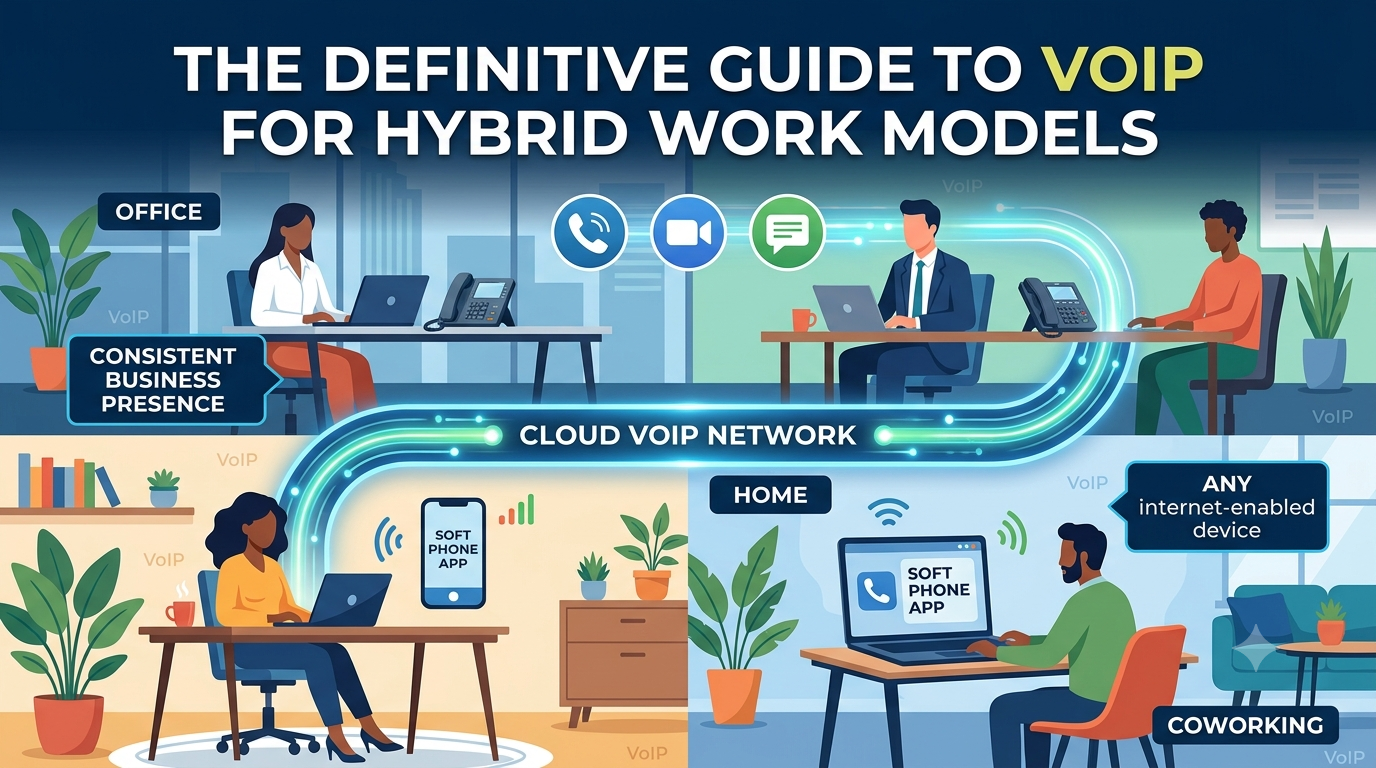
VoIP for Hybrid Work Models represents a transformative shift in how modern businesses communicate by replacing traditional copper-wire telephone systems with flexible, cloud-based technology. By converting voice signals into digital data packets transmitted over the internet, this technology allows employees to maintain a consistent business presence regardless of their physical location. Whether a team member is working from a corporate office, a home setup, or a remote coworking space, they can access their professional extension and collaboration tools through any internet-enabled device. This seamless integration ensures that communication remains fluid, professional, and uninterrupted in a distributed environment. What is VoIP in a Hybrid Work Context? In a modern professional environment, VoIP replaces traditional phone lines with internet-based calling, creating a unified communication layer. For businesses implementing VoIP for Hybrid Work Models, this means employees can use the same business phone number whether they are at the office, at home, or traveling for client meetings. The technology operates on the principle of mobility, allowing calls to be answered on desk phones, laptops, or specialized mobile apps. This versatility gives teams the flexibility to work from anywhere without the client ever knowing the difference in the employee’s physical location. The integration of VoIP for Hybrid Work Models goes beyond simple voice calls; it incorporates video conferencing, instant messaging, and file sharing into a single interface. By centralizing these functions, companies eliminate the need for multiple disparate subscriptions, which often lead to communication silos. When an employee logs into their softphone application on their laptop, they have access to the same directory, call history, and voicemail as they would on their physical desk phone. This level of consistency is the foundation of a successful hybrid strategy, ensuring that operational standards remain high regardless of the workspace. How VoIP is Powering Hybrid Working The shift toward flexible working has accelerated the adoption of cloud-based communications, making VoIP for Hybrid Work Models a central pillar of corporate infrastructure. According to a study by Global Workplace Analytics, nearly 56% of the American workforce holds a job that is compatible, at least partially, with remote work. By leveraging high-speed internet, VoIP systems enable real-time synchronization across various time zones and regions. This capability is essential for companies looking to tap into global talent pools while maintaining a cohesive culture. The ability to route calls intelligently based on staff availability ensures that customer service levels do not drop when employees are working from home. Furthermore, the integration of team messaging and voip allows for a “presence” feature, where colleagues can see if someone is on a call, in a meeting, or available for a quick chat, mimicking the organic interactions of a physical office. Are Fixed Phone Lines the Thing of the Past? As we look toward the future of telecommunications, traditional Public Switched Telephone Network (PSTN) lines are rapidly becoming obsolete. Fixed lines are inherently tied to a specific physical location, which is a major bottleneck for companies adopting VoIP for Hybrid Work Models. If an office closes for the day or an employee is working remotely, a fixed line requires complex and often expensive call forwarding setups that may not always function reliably. In contrast, cloud-based systems are location-independent, meaning the “line” follows the user rather than the building. The maintenance of hardware for traditional lines is also a significant burden for modern IT departments. Legacy systems require on-site PBX hardware that needs regular servicing and manual upgrades. VoIP for Hybrid Work Models removes this physical constraint, as the “brain” of the phone system resides in the cloud and is maintained by the service provider. For businesses, this translates to less downtime and the ability to scale up or down without calling a technician to install new wiring. The flexibility offered by the best voip services for remote and hybrid teams makes the choice to move away from fixed lines almost inevitable for growing companies. How Does VoIP Allow Employees to Work from Home? The primary mechanism that allows VoIP for Hybrid Work Models to function for remote staff is the “softphone” application. This is a software program installed on a computer or smartphone that functions exactly like a physical desk phone. Employees can dial numbers, transfer calls, and host conference calls directly from their work laptops. Because the system is hosted in the cloud, all the settings and preferences for an employee’s extension are stored online. When they log in from their home Wi-Fi, the system recognizes their identity and routes their calls accordingly. Security is another critical aspect of how these systems support home-based work. Modern VoIP solutions often include encrypted signaling and media, ensuring that sensitive business conversations remain private even over residential internet connections. Additionally, many companies utilize the best mdm for hybrid teams with remote workers to manage these communication apps on personal or company-issued devices. This allows IT managers to push updates, ensure security protocols are met, and remotely wipe data if a device is lost, providing a secure environment for remote professional communication. The Benefits of VoIP over Fixed Line Phone Systems for Hybrid Working 1. Provides Employee Flexibility The implementation of VoIP for Hybrid Work Models allows employees to design their workday around their personal lives without sacrificing professional availability. This flexibility is a key driver in employee retention and satisfaction, as it reduces the stress of being tethered to a physical desk. With a cloud-based system, an employee can start their morning answering calls from their home office and transition to the physical office in the afternoon without any disruption to their communication flow. 2. Connect with Multiple Employees Across Multiple Locations VoIP for Hybrid Work Models excels at bridging the geographical gap between distributed team members. Whether a company has five employees in different states or five hundred across different continents, the system treats them as if they are in the same building. Extension-to-extension dialing remains free and instantaneous, which encourages frequent collaboration and helps maintain the social fabric of the organization even when people rarely meet in person. 3. Use Your Business Landline Anywhere One of the most professional benefits of VoIP for Hybrid Work Models is the ability to display a professional business number on caller ID, regardless of the device used. When an employee makes a call from their personal mobile phone using the VoIP app, the client sees the company’s office number. This maintains a high level of brand consistency and protects the employee’s personal privacy by keeping their private cell phone number hidden from the public. 4. Call Recording on any Device In many industries, maintaining records of conversations is a legal or quality control requirement. VoIP for Hybrid Work Models makes call recording simple and centralized. Unlike traditional systems that might require expensive hardware at each location, cloud VoIP allows managers to record and store calls from any device used by the employee. These recordings are typically stored in a secure cloud portal where they can be reviewed for training or compliance purposes at any time. 5. Better Connectivity Reliability is a cornerstone of VoIP for Hybrid Work Models. Most top-tier providers offer 99.999% uptime guarantees, utilizing geographically redundant data centers to ensure service is never interrupted. If one internet connection goes down, calls can be automatically rerouted to a mobile device or another office location. This level of redundancy is far superior to traditional lines, which can be knocked out by local physical damage to a single telephone pole or exchange. 6. Enhanced System Features Legacy phone systems often charge extra for basic features like voicemail-to-email, auto-attendants, or detailed call analytics. With VoIP for Hybrid Work Models, these features are usually included as standard. Advanced functionalities like “find me/follow me” services ensure that a call rings on an office phone first, then a mobile app, and finally a home office phone, making it virtually impossible for an important client call to go unanswered during business hours. 7. VoIP Lowers Costs The financial advantages of moving to VoIP for Hybrid Work Models are significant for both small businesses and large enterprises. By eliminating the need for expensive physical infrastructure and per-minute long-distance charges, companies can reduce their monthly telecommunications bills by up to 50%. Research from Deloitte suggests that businesses transitioning to cloud-based communications can save significantly on operational overhead by moving from a CapEx (capital expenditure) model to an OpEx (operating expenditure) model. Hybrid Work Models: How to Prepare Your Office Preparing a physical office for VoIP for Hybrid Work Models requires a shift in how the local network is managed. Since the phone system now shares the same bandwidth as the company’s data, ensuring a robust and stable internet connection is the first priority. Quality of Service (QoS) settings should be configured on office routers to prioritize voice traffic over less urgent data, like large file downloads or background updates. This prevents “jitter” or dropped calls during peak usage times in the office. Beyond the technical setup, the physical layout of the office may need to change to support a hybrid staff. Since not all employees will be in the office at the same time, companies are moving toward “hot-desking,” where desks are not assigned to specific people. VoIP for Hybrid Work Models supports this by allowing employees to “log in” to any desk phone with their unique credentials. This turns any workstation into their personal office extension instantly, providing a seamless transition between their home and office environments. Keys to Successful Hybrid Work Models Develop a Strategy To successfully implement VoIP for Hybrid Work Models, leadership must look ahead and plan for future growth. A strategy should involve anticipating issues that may impact the business, such as fluctuating staff numbers or changing regional regulations. Forward-looking leadership allows a business to remain agile. When developing your strategy, consider the following points to guide your decisions: Analyze how your employees currently collaborate and where the friction points are in your existing system. Determine how your business handles customer service and whether a cloud transition could speed up resolution times. Evaluate your current hardware to see if it can be repurposed or if a full migration to softphones is more efficient. Assess your team’s readiness for new technology and plan for a phased rollout if necessary to ensure smooth adoption. Create a System of Employee Support The human element is the most important part of any VoIP for Hybrid Work Models rollout. Leaders must act as support pillars, especially when transitioning away from traditional office norms. Fostering a culture of connection is essential when team members are physically separated. This involves more than just providing the tools; it requires active listening and adjustment to employee needs. Establish open communication channels where remote and in-office workers can interact casually, reducing the “out of sight, out of mind” feeling. Ask specific questions regarding workload management and how changing personal circumstances might affect their availability. Listen to feedback about the technology—if an employee is struggling with call quality at home, work with them to troubleshoot their internet setup. Conduct regular “check-ins” that focus on mental well-being and team morale rather than just project deadlines. Utilize Communications Solutions In the current market, having an optimized communications system is a non-negotiable requirement for success. Whether a business is fully remote or utilizes VoIP for Hybrid Work Models, the technology must be dependable. Streamlined solutions help businesses remain competitively relevant by ensuring that no customer query goes unanswered due to technical limitations. Leveraging the best voip services with mobile apps for distributed teams 2026 ensures that your infrastructure is future-proof. These solutions offer integrated video and messaging, which are vital for maintaining team cohesion. By using a single provider for all communication needs, businesses reduce the complexity of their IT stack and make it easier for employees to master the tools they use every day. This holistic approach to technology is what separates successful hybrid companies from those that struggle with the transition. Common Hybrid Work Challenges VoIP Helps Solve 1. Missed Calls In a traditional setup, if an employee isn’t at their desk, the call usually goes to a generic voicemail. VoIP for Hybrid Work Models solves this through smart call forwarding and simultaneous ring features. This ensures that the employee is reachable on their mobile app or home computer at the same time as their office phone. By reducing the number of missed calls, businesses improve customer satisfaction and ensure that time-sensitive opportunities are never lost due to a simple change in location. 2. Fragmented Tools Many businesses suffer from “app fatigue,” where employees have to switch between five different platforms for calling, texting, video, and project management. VoIP for Hybrid Work Models solves this by integrating phone, video, and collaboration into one platform. When team messaging and voip are combined, an employee can transition a text chat into a voice call or a video meeting with a single click. This consolidation saves time and reduces the mental load of managing multiple logins and interfaces. 3. Lack of Visibility One of the biggest concerns for managers in a distributed environment is understanding how work is being handled. VoIP for Hybrid Work Models provides admin dashboards that offer real-time data on call volumes, average wait times, and staff availability. This visibility allows managers to make data-driven decisions about staffing levels. If a manager sees that call wait times are increasing, they can quickly reassign remote staff to help handle the load, ensuring that service levels remain consistent regardless of where the staff is located. 4. Cost Unpredictability Traditional phone bills can vary wildly based on long-distance calls and hardware repairs. VoIP for Hybrid Work Models typically operates on a flat-rate, per-user monthly plan. This provides businesses with financial clarity and makes budgeting for growth much simpler. There are no hidden costs for adding new features or scaling the system to include new hires. This predictability is especially beneficial for small to medium-sized enterprises that need to manage their cash flow tightly while expanding their hybrid operations. Actionable Tips for Implementing VoIP in a Hybrid Model Implementing a new communication system requires more than just a subscription; it requires a thoughtful rollout. Before choosing a provider for VoIP for Hybrid Work Models, it is essential to map out your team’s specific communication needs. Do they need heavy CRM integration? Are they primarily using mobile devices? Answering these questions early will prevent you from paying for features you don’t need or missing out on ones that are critical to your workflow. Once a provider is selected, rigorous testing of the mobile apps is a priority. Ensure that remote staff get the same call quality as office staff by testing the app on various network speeds. Additionally, take full advantage of the built-in analytics to track how calls are being handled. Use this data to refine your call routing strategies. Finally, invest time in training employees on advanced features like call park, hot-desking, and video integration so the business gets the full value of the VoIP for Hybrid Work Models investment. VoIP and the Logistics of Scalability When discussing the growth of a business, we often look at how physical resources are managed. For example, some companies follow best practices for scaling ppe programs hybrid work to ensure that safety and physical gear are distributed correctly as teams grow. VoIP for Hybrid Work Models offers a similar but much more efficient scalability for communications. Adding a new user to a digital phone system takes minutes rather than the days or weeks it would take to install new physical phone lines. This digital scalability is a major competitive advantage. As a company expands into new markets, they can instantly acquire local phone numbers in those regions through their VoIP provider. This gives the business a local presence without the need for a physical office in that city. The ability to scale the communication infrastructure at the same pace as the workforce ensures that the company’s internal and external connectivity never becomes a bottleneck for growth. Read More: Cheap VoIP For Restaurants USA : A Comprehensive Guide Final Thought Adopting VoIP for Hybrid Work Models is no longer an optional upgrade but a fundamental requirement for the modern, agile business. By breaking the tether to the physical office, VoIP empowers employees with flexibility, enhances collaboration across distances, and significantly reduces operational costs. As the landscape of work continues to evolve toward a more distributed and flexible future, the businesses that thrive will be those that embrace these cloud-based solutions to keep their teams connected and their customers satisfied. Frequently Asked Questions What is hybrid-working? Hybrid working is an operational model that allows employees to split their time between working in a central office and working remotely, usually from home. This model focuses on flexibility, allowing teams to leverage the benefits of in-person collaboration while also enjoying the autonomy and reduced commute times associated with remote work. For this model to be successful, businesses must utilize digital tools like VoIP to ensure that communication remains seamless regardless of where the individual is located on any given day. What technology is helpful for hybrid working? The most helpful technology for this model includes cloud-based communication platforms like VoIP, project management software, and secure VPNs or MDM solutions. VoIP for Hybrid Work Models is particularly critical as it handles the primary external and internal voice communication. Additionally, video conferencing tools, collaborative cloud documents, and instant messaging apps are essential for maintaining the real-time flow of information between office-based and remote staff members. What’s the best VoIP phone system? The best system depends on your specific business size and needs, but top-tier providers often include RingCentral, Nextiva, and 8×8. These services are highly rated because they offer robust mobile apps, extensive integrations with other business software, and high reliability. When choosing the best voip services for remote and hybrid teams, look for a provider that offers 24/7 support and a user-friendly interface that requires minimal training for your employees to master. How easy is it to start hybrid working? Starting a hybrid model is relatively simple if you have the right digital infrastructure in place. The first step is transitioning your communication to a cloud-based VoIP system, which can often be done without any downtime. Once the technology is set, establishing clear policies regarding office attendance and communication expectations is key. With the right VoIP for Hybrid Work Models, the technical transition can happen in a few days, allowing the company to focus on the cultural shift of managing a distributed team. Can VoIP work with my existing office hardware? Yes, many VoIP systems are compatible with existing IP phones, and for older analog phones, you can use an Analog Telephone Adapter (ATA). However, to fully leverage VoIP for Hybrid Work Models, many companies prefer to use softphones on laptops or mobile apps. This reduces the need for physical hardware and allows for greater mobility. If you have high-quality IP desks phones already, your new VoIP provider can usually “provision” them to work with the new cloud service. Is VoIP secure for remote employees? Modern VoIP providers use advanced encryption protocols to secure voice data as it travels over the internet. This makes VoIP for Hybrid Work Models highly secure, often more so than traditional phone lines which can be physically tapped. To enhance security further, businesses can use multi-factor authentication for their VoIP apps and ensure that all remote work is conducted over a secure internet connection. Do I need a special internet connection for VoIP? While you don’t need a “special” type of internet, you do need a stable and high-speed connection. For VoIP for Hybrid Work Models to function clearly, the connection should have low latency and sufficient bandwidth to handle voice data alongside other tasks. Most standard fiber or high-speed cable internet connections are more than enough for high-quality VoIP calling, even when multiple people are using the connection simultaneously. How does VoIP handle emergency calls like 911? VoIP systems use a feature called E911 (Enhanced 911) to handle emergency calls. Because VoIP for Hybrid Work Models is location-independent, users must register their physical address with the service provider. When a 911 call is placed, the system automatically sends this registered address to the emergency dispatcher. It is important for hybrid workers to update their location in the system if they move to a different long-term remote work location.

Read More
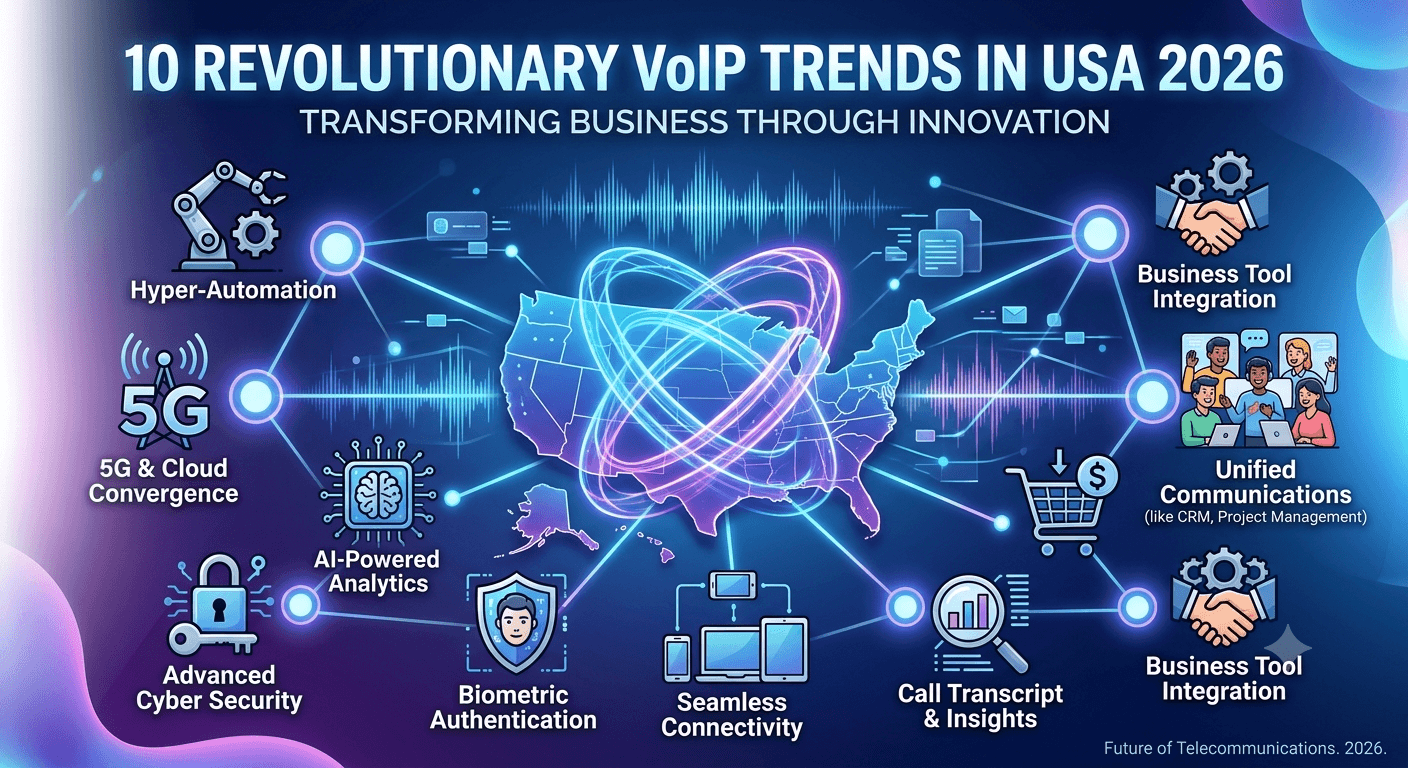
VoIP Trends in USA 2026

VoIP Trends in USA 2026

VoIP trends in USA 2026 indicate a massive shift toward hyper-automation and seamless connectivity across the corporate landscape. As the future of voip industry evolves, businesses are moving away from traditional hardware toward cloud-native ecosystems that prioritize artificial intelligence and 5G integration. By 2026, the adoption of Voice over Internet Protocol will no longer be an option but a necessity for survival in the global market. These developments focus on enhancing audio quality, securing data transmissions, and providing unified communication platforms that allow teams to collaborate from any location with unprecedented efficiency and reduced operational overhead. What are VoIP Services USA? VoIP services in the United States refer to the technology that allows users to make voice calls using a broadband internet connection instead of a regular analog phone line. This technology converts voice signals into digital data packets that travel over the internet. In the current landscape, voip the future of telecommunications is becoming evident as more domestic companies retire their copper-wire landlines in favor of digital infrastructure. These services offer a variety of communication methods including voice calls, video conferencing, and text messaging through a single application. As we look at voip trends, the focus has shifted toward high-definition audio and low-latency connections. This digital transformation allows businesses to maintain a professional presence without being tethered to a physical office location. Why are VoIP Services USA Important? The importance of these services stems from the need for agility in a fast-paced economic environment. As organizations seek more robust ways to stay connected, the future of voip becomes the backbone of modern operations. Modern systems offer reliability that matches or exceeds traditional telephony while providing a suite of digital tools that physical hardware cannot replicate. 1. Reduced communication costs Lowering expenses is a primary driver for many companies switching to digital telephony. By utilizing an existing internet connection, businesses eliminate the need for separate phone bills and expensive maintenance for physical PBX systems. This is particularly beneficial for companies with high volumes of long-distance or international calls, as digital rates are significantly lower. 2. Greater flexibility for business Flexibility is a cornerstone of the modern workplace. Employees can access their business phone lines from laptops, tablets, or smartphones regardless of their geographical location. This mobility ensures that the team remains reachable and productive, whether they are working from home, traveling, or in the office. 3. Advanced calling features Standard features in modern systems go far beyond simple dial tones. Users benefit from automated attendants, call routing, voicemail-to-email transcription, and advanced call analytics. These features allow businesses to manage their communication flow more effectively and gain insights into team performance and customer interaction patterns. 4. Enhanced customer experience Customer satisfaction is greatly improved through more efficient call handling. Features like interactive voice response and smart routing ensure that callers are directed to the right department quickly. According to recent voip statistics, businesses using integrated communication platforms report a significant increase in first-call resolution rates, which directly impacts brand loyalty. 5. Easily scalable Growth is simplified when you do not have to install new physical lines for every new hire. Adding a user to a digital system is often as simple as updating a dashboard setting. This scalability allows businesses to expand or contract their communication capacity based on seasonal demands or rapid growth phases without capital-heavy investments. 6. Business Tool Integration Modern communication systems do not exist in a vacuum. They integrate seamlessly with CRM platforms, email clients, and project management software. This integration ensures that when a client calls, the employee can see their entire history and current projects on the screen, leading to a more personalized and informed conversation. How Do USA VoIP Services Work? Understanding the technical process helps businesses appreciate the reliability of the system. The transition from voice to data and back again happens in milliseconds, ensuring that there is no perceptible lag for either party on the call. 1. Voice Conversion When a user speaks into a handset or microphone, the analog sound waves are captured by the device. The system immediately uses a codec to convert these analog signals into digital data. This process ensures that the nuance of the human voice is preserved while being prepared for transmission over the internet. 2. Transfer Data Once the voice is digitized, it is broken down into small units called packets. These packets are labeled with destination information and sent over the internet using the Internet Protocol. They may take different paths across the web to reach the destination as quickly as possible, bypassing network congestion points. 3. Dealing with Calls A central server or a cloud-based PBX manages the routing of these packets. It determines where the call needs to go, whether it is another digital user or a traditional landline. During this phase, features like call waiting, forwarding, and caller ID are applied to the data stream based on the user’s configuration. 4. Voice-to-Data Conversion At the receiving end, the digital packets are reassembled in the correct order. The system then converts this digital data back into analog sound waves that the receiver can hear through their speaker or headset. This conversion must be incredibly fast to avoid jitter or delays during the conversation. 5. End of the Call Once the conversation concludes and one party hangs up, the session is terminated. The system then logs the call data for analytics and billing purposes. This data includes duration, time of call, and quality metrics, which are essential for future voip industry news reports and internal business audits. Advantages of USA VoIP Services The move toward digital communication offers a competitive edge in several key areas. Businesses that adopt these technologies early find themselves better positioned to handle the challenges of a globalized economy. 1. Savings The most immediate advantage is the reduction in monthly recurring costs. Beyond the monthly subscription, businesses save on infrastructure, as there is no need to purchase or house bulky servers. Furthermore, wholesale voip termination rates have become extremely competitive, allowing for cheap global connectivity. 2. Better Mobility In the era of remote work, mobility is a top priority. Employees are no longer tied to their desks to answer professional calls. A mobile app can turn any smartphone into an extension of the office phone system, maintaining a professional identity even when the worker is on the move. 3. Advanced Business Features Businesses gain access to tools that were previously only available to large corporations with massive budgets. Features like music on hold, call recording for training, and multi-party conferencing are standard. These tools enhance the professional image of even the smallest startup. 4. Improved Customer Support Support teams can use these systems to manage high volumes of inquiries more effectively. With call queuing and specialized routing, customers are never left waiting on a dead line. Integration with helpdesk software allows support agents to track every interaction across multiple channels within a single interface. 5. Scalable The future voip landscape focuses on modularity. If a business opens a new branch in another state, they do not need to install a new hardware system. They simply add the new location to their existing cloud account. This flexibility is essential for businesses planning for long-term expansion in 2026. 6. Greater productivity Productivity increases when communication is streamlined. With features like “Find Me/Follow Me,” calls can ring on multiple devices sequentially, ensuring important calls are never missed. Integration with collaboration tools like Microsoft Teams or Slack further enhances the workflow by keeping all communication in one place. 7. Communications with AI By 2026, AI will be deeply embedded in communication systems. AI-driven sentiment analysis can tell a manager if a customer is becoming frustrated during a call. Automated transcription and summary tools save hours of manual note-taking, allowing employees to focus on solving problems rather than administrative tasks. 8. Dependable Communication Modern cloud infrastructure is built with multiple redundancies. If one server goes down, the traffic is instantly rerouted to another, ensuring 99.99% uptime. This level of reliability is often superior to local landline connections which can be taken down by physical damage to cables or local power outages. VoIP Services for Small Business in the USA Small businesses find unique value in digital communication because it levels the playing field. In 2026, a small company can sound like a major corporation through the use of professional auto-attendants and sophisticated call routing. The low entry cost makes it possible for startups to have a full-featured phone system from day one. Benefits of voip for businesses 2026 include the ability to hire talent from anywhere in the country without worrying about local phone infrastructure. A small business based in New York can have a team member in Texas using a local New York number. This creates a cohesive brand identity and allows for a more flexible hiring strategy that is not limited by geography. How to Choose the Best VoIP Provider in the USA? Selecting the right partner is crucial for long-term success. The market is saturated with options, making it necessary to evaluate providers based on specific criteria that align with business goals. Check for a proven track record of uptime and reliability in the United States. Evaluate the security protocols used, such as end-to-end encryption and compliance with industry standards. Ensure the provider offers 24/7 customer support via multiple channels like phone, chat, and email. Look for a transparent pricing model that does not have hidden fees for essential features. Verify the ease of integration with your existing software stack, such as Salesforce or HubSpot. Test the user interface to ensure it is intuitive for both administrators and end-users. Quality of service is also a major factor. A good provider should offer tools to monitor your network performance and suggest optimizations. Since the voice quality depends on your internet connection, the provider should be able to help you configure your router for priority voice traffic. VoIP Services USA Outlook to 2026 The outlook for the next few years is dominated by the convergence of 5G and cloud communication. As 5G networks become the standard across the USA, the limitations of mobile data will vanish, leading to crystal-clear video and audio calls even on the move. Research by Gartner suggests that by 2026, over 75% of business conversations will be recorded and analyzed for insights, up from less than 20% in 2022. Furthermore, voip trends suggest that security will become the top priority. As cyber threats evolve, providers are implementing biometric authentication and advanced threat detection to protect voice data. We will also see a rise in the use of WebRTC, allowing users to make calls directly from their browsers without any specialized software. The industry is also seeing a shift in wholesale voip termination rates, which are stabilizing as the market matures and efficiency increases. The future of voip industry news will likely focus on how these systems integrate with the Internet of Things. Imagine a scenario where your office security system or smart lights can be controlled via your phone system during an emergency call. This interconnectedness will define the telecommunications landscape as we approach 2026. Read More: VoIP for Nonprofits: Low-Cost Communication Conclusion The evolution of communication is moving at an incredible pace, and VoIP trends in USA 2026 highlight a future where boundaries between different communication forms disappear. For businesses, this means lower costs, higher productivity, and a more professional presence. By embracing these changes, companies can ensure they are ready for the demands of a digital-first economy. The shift toward cloud-based systems is not just a trend but a fundamental change in how the world stays connected. Final thoughts on the matter suggest that the transition to digital telephony is inevitable for those who wish to remain competitive. The integration of AI, the expansion of 5G, and the focus on user experience are creating a robust environment for innovation. Whether you are a small startup or a large enterprise, the benefits of making the switch are clear. The reliability and feature set of modern systems provide a foundation for growth that traditional systems simply cannot match. As we look toward the future, the voice will remain the most powerful tool for human connection, and digital technology is the best way to carry it. FAQs What are VoIP services in the US? VoIP services in the US are communication technologies that allow you to make voice calls, host video meetings, and send messages over the internet. Instead of using traditional telephone lines, these services turn your voice into digital data packets that are sent through your broadband connection to the receiver. This allows for more features and lower costs compared to old-fashioned phone systems. Are VoIP services useful for business? Yes, these services are incredibly useful for businesses because they offer advanced features like auto-attendants, call recording, and CRM integration that help improve efficiency. They also support remote work by allowing employees to use their business numbers on any device, which helps maintain a professional image and ensures that no client calls are missed regardless of where the team is working. What equipment do I need for VoIP? You primarily need a reliable high-speed internet connection and a device to make calls, such as a computer, a smartphone, or a specialized desk phone. If you want to use your existing analog phones, you can use an Analog Telephone Adapter to connect them to your internet network. Most modern businesses prefer using headsets with their computers or mobile apps for the best experience. Is VoIP less expensive than traditional phone systems? In almost every case, digital systems are significantly less expensive because they eliminate the need for dedicated phone lines and expensive on-site hardware. Businesses typically save on long-distance and international call rates, and the monthly subscription costs are generally lower than traditional landline services. Additionally, maintenance and setup costs are minimal since everything is managed in the cloud. Will VoIP help distant workers? Digital communication is the perfect solution for remote and distant workers because it provides them with full access to the office phone system from anywhere in the world. As long as they have an internet connection, they can receive calls, join conferences, and access company directories as if they were sitting at a desk in the main office. This makes managing a distributed team much simpler and more effective. What is the future of the VoIP industry? The future is centered on AI integration, 5G connectivity, and unified communications. We expect to see more automated services, better voice quality on mobile networks, and systems that can automatically transcribe and analyze every call for business intelligence. The industry is moving toward a total communication platform where voice, video, and data are perfectly synchronized. How secure are modern VoIP systems? Modern systems are very secure, utilizing advanced encryption protocols like SRTP and TLS to protect data as it travels across the internet. Providers also use multi-factor authentication and regular security audits to prevent unauthorized access. For businesses in sensitive sectors like healthcare or finance, many providers offer specialized compliance features to meet strict legal requirements. Can I keep my current phone number? Yes, the process called local number portability allows you to move your existing business phone numbers from your current carrier to a new digital provider. This ensures that you do not lose your established brand identity or require your customers to learn a new number. Most providers handle this transition for you during the setup process to ensure there is no downtime for your business. What happens if the internet goes down? While the system requires internet to make calls, most providers have built-in failover features. You can set the system to automatically route incoming calls to a mobile phone or another office location if your primary internet connection fails. This ensures that your business remains reachable even during local service interruptions, providing a level of continuity that traditional phones often lack.

Read More
Top VoIP Trends to Watch in 2026

Top VoIP Trends to Watch in 2026

VoIP trends to watch in 2026 indicate a massive shift toward artificial intelligence integration, hyper-reliable 5G connectivity, and the complete sunsetting of traditional copper-wire systems. Businesses are no longer viewing internet telephony as a simple cost-cutting measure but as a core pillar of their digital transformation strategy. This year represents the moment when voice-over-internet protocol becomes deeply embedded in unified communication platforms, offering unprecedented levels of data analytics and automated customer engagement. Staying ahead of these Top VoIP Trends to Watch in 2026 is essential for any organization looking to maintain a competitive advantage in an increasingly mobile and globalized marketplace. VoIP Trends by the Numbers: Key Market and Industry Insight in 2026 The rapid growth of the digital economy has significantly impacted how we perceive voip the future of telecommunications. According to a report by Market Research Future, the global mobile VoIP market is projected to reach approximately 183 billion dollars by 2027, highlighting the massive scale of adoption across various sectors. This growth is largely supported by the expansion of high-speed fiber networks and the increasing reliability of cloud-based infrastructure. As businesses transition away from legacy hardware, voip statistics show that companies saving up to 50 percent on their monthly telecommunications bills are reinvesting those funds into advanced software integrations. Understanding these numbers helps organizations realize that the future of voip industry is not just about voice calls but about data transmission. Research indicates that nearly 90 percent of enterprises have now moved at least part of their communication stack to the cloud. This shift is driven by the need for better scalability and the reality that wholesale voip termination rates have become more competitive, allowing providers to offer global connectivity at a fraction of the cost of traditional carriers. These figures serve as a wake-up call for companies still using analog systems, as the gap between digital leaders and laggards continues to widen. 1. AI Is Moving From Optional Add-Ons to Platform Standards In 2026, artificial intelligence is no longer a luxury feature but a foundational element of every major communication suite. The Top VoIP Trends to Watch in 2026 show that AI is being used to provide real-time language translation, automated transcription, and predictive call routing. This evolution allows businesses to operate globally without language barriers, as the system can translate speech instantly during a live conversation. This level of automation is a significant part of the future of voip, transforming the phone from a simple receiver into an intelligent assistant that can summarize meetings and assign tasks automatically. Beyond simple transcription, generative AI models are now being integrated to help agents communicate more effectively with customers. These systems can analyze the sentiment of a caller in real-time and provide the agent with suggested responses or relevant data to resolve issues faster. This trend is a cornerstone of future voip developments because it directly impacts the quality of customer service. When you evaluate the telecommunications company get voip on collaboration features, the presence of built-in AI tools is often the deciding factor for modern enterprises looking to boost productivity and reduce manual administrative work. 2. Businesses Are Consolidating Tools Around Unified Communications Platforms One of the most defining Top VoIP Trends to Watch in 2026 is the movement toward tool consolidation. Organizations are tired of managing separate applications for video conferencing, team chat, file sharing, and voice calls. Instead, they are turning to Unified Communications as a Service (UCaaS) to bring all these functions into a single interface. This consolidation simplifies the IT stack and ensures that data flows seamlessly between different communication channels. It allows a team member to start a conversation on chat and transition it into a full video conference with a single click. Centralized management of all communication channels from a single administrative dashboard. Improved data security as all interactions happen within one encrypted ecosystem. Reduction in software subscription costs by eliminating redundant third-party applications. Enhanced employee experience through a consistent and familiar user interface across devices. Better integration with existing CRM and project management tools for streamlined workflows. 3. Legacy Phone Systems Are Running Out of Time As we look at the Top VoIP Trends to Watch in 2026, it is clear that the final countdown for legacy Public Switched Telephone Network (PSTN) systems has begun. Many national carriers have already started decommissioning copper-wire infrastructure, making voip the future of telecommunications by default. For businesses, this means that maintaining old PBX hardware is becoming increasingly expensive and technically difficult. The parts are harder to find, and the specialized knowledge required to fix these systems is disappearing as technicians retire. Transitioning to the cloud is no longer a choice but a requirement for business continuity. The death of legacy systems is actually a major opportunity for innovation within the future of voip industry. Without the constraints of physical wires, businesses can establish local phone numbers in hundreds of different countries without ever opening a physical office there. This global reach is one of the primary benefits of voip for businesses 2026, allowing even small startups to project a global presence. Companies that delay their transition to modern systems risk being left behind in a world where digital agility is the most important currency for success. 4. Businesses Are Exploring Modern Hybrid and On-Premises Deployments While the cloud is the dominant force, some organizations are looking at hybrid models as part of the Top VoIP Trends to Watch in 2026. These modern hybrid deployments allow a company to keep its core voice traffic on-premises for maximum security and local control, while using the cloud for external connectivity and advanced features. This is particularly popular in industries like healthcare and defense, where data sovereignty is a legal requirement. These systems offer the best of both worlds, providing the reliability of local hardware with the flexibility of cloud-based updates and features. The future voip landscape is accommodating these needs by offering more flexible deployment options that don’t force a “cloud-only” approach. Modern on-premises servers are much smaller and more efficient than the bulky systems of the past, often running on standard virtualized hardware. This allows IT departments to manage their voice infrastructure just like any other server in their data center. By maintaining a hybrid setup, businesses can ensure that internal communication remains functional even during an external internet outage, providing a level of resilience that is critical for mission-critical operations. 5. The Impact of 5G Technology and Mobile-First Approach The global expansion of 5G networks is fundamentally changing the Top VoIP Trends to Watch in 2026. With 5G, the latency issues that sometimes plagued early VoIP calls have been virtually eliminated. This technology provides the bandwidth and stability required for high-definition video and crystal-clear audio on mobile devices, even in crowded urban areas. As a result, the mobile-first approach has become the standard for the modern workforce. Employees now expect their business phone system to work perfectly on their smartphones, allowing them to remain productive whether they are in a coffee shop or a boardroom. Prioritize the rollout of 5G-compatible mobile devices for all remote and field staff. Implement mobile-first VoIP applications that offer the same feature set as desktop versions. Utilize 5G network slicing to guarantee bandwidth for critical voice and video traffic. Phase out traditional desk phones in favor of high-quality softphone applications on laptops and mobiles. Ensure that mobile security protocols are updated to protect voice data over public 5G networks. 6. AI-Powered Routing and Personalization Personalization has become a key competitive differentiator, and the Top VoIP Trends to Watch in 2026 highlight how AI is making this possible at scale. AI-powered routing systems can now look at a caller’s history and automatically direct them to the agent they last spoke with or the one best suited to their specific needs. This eliminates the frustration of being transferred multiple times and significantly improves the customer experience. By analyzing data in real-time, the system can even prioritize urgent calls or high-value clients, ensuring they receive immediate attention without any manual intervention. This level of intelligence is a vital part of the future of voip because it turns the phone system into a proactive customer service tool. When a customer calls, the agent’s screen can automatically populate with their entire purchase history, previous support tickets, and even a summary of their recent social media interactions with the brand. This trend is a major focus for those who evaluate the telecommunications company get voip on collaboration and data integration capabilities. In 2026, a call is no longer just a voice connection; it is a data-informed interaction designed to build long-term loyalty and satisfaction. 7. Security and Compliance Are Now Evaluated at the VoIP Layer As cyber threats evolve, security has moved to the forefront of the Top VoIP Trends to Watch in 2026. Modern VoIP systems are now built with “zero trust” architecture, requiring constant verification of every user and device on the network. End-to-end encryption is no longer an optional toggle but a standard requirement for both voice and video data. Additionally, compliance with global regulations like GDPR and HIPAA is being integrated directly into the software, making it easier for businesses to manage data privacy and avoid costly legal penalties. The future of voip industry news often centers on how providers are using AI to detect and prevent fraud in real-time. These systems can identify unusual calling patterns, such as a sudden spike in international calls, and automatically block suspicious activity before it causes financial damage. This proactive stance on security is essential for maintaining the trust of customers and protecting the integrity of business communications. In 2026, the security of a VoIP platform is considered just as important as its call quality, making it a primary factor in the decision-making process for IT leaders worldwide. 8. Call Analytics Has Become a Management Tool, Not Just a Reporting Feature The transition of call analytics into a real-time management tool is one of the most impactful Top VoIP Trends to Watch in 2026. Managers no longer wait for weekly or monthly reports to see how their teams are performing. Instead, they use live dashboards to monitor call volumes, wait times, and even the emotional tone of conversations as they happen. This allows for immediate adjustments, such as moving more staff to the support desk during a sudden surge in calls. These insights are transforming the future of voip industry by making management more agile and data-driven. Real-time sentiment analysis alerts managers to escalating situations in customer calls. Predictive analytics forecast peak call times based on historical data and current marketing campaigns. Agent performance metrics are tracked live, allowing for instant coaching and feedback sessions. Call recordings are automatically categorized and tagged by AI for easy searching and review. Integration with business intelligence tools allows for a holistic view of the customer journey. 9. More Emphasis on Scalability and Customization Along With Costs While saving money is always a goal, the Top VoIP Trends to Watch in 2026 show that scalability and customization are now equally important. Businesses need a system that can grow with them, allowing them to add new users or offices in minutes rather than weeks. This flexibility is one of the greatest benefits of voip for businesses 2026, as it supports the rapid expansion of global teams. Customization is also a high priority, with companies using APIs to build unique communication workflows that fit their specific industry requirements. This shift toward bespoke solutions means that the “one-size-fits-all” approach to telephony is dead. Whether it is a small law firm that needs specialized call recording or a massive retail chain that requires integration with a complex inventory system, modern VoIP can be tailored to meet those needs. The future voip market is defined by this modularity, where businesses only pay for the features they need and can swap out components as their strategy changes. This level of control ensures that the communication system remains an asset rather than a rigid technical constraint. 10. Video Calling Is Standard, Not a Bonus Feature In the current professional landscape, video conferencing has officially become the default mode of communication. The Top VoIP Trends to Watch in 2026 show that video is now so deeply integrated into VoIP platforms that the distinction between a “phone call” and a “video call” is disappearing. Most users now start a meeting with video by default, using it for everything from internal team huddles to external sales presentations. This has led to massive improvements in video quality and features, including AI-driven noise cancellation and background replacement that works flawlessly even on low-bandwidth connections. The future of voip industry is also seeing the rise of WebRTC technology, which allows high-quality video calls to happen directly within a web browser without any software installation. This makes it incredibly easy for businesses to connect with clients, as there are no technical barriers to joining a meeting. As organizations evaluate the telecommunications company get voip on collaboration, they are looking for video features that support high levels of interaction, such as co-annotation, live polling, and breakout rooms. In 2026, video is the heartbeat of the modern office, providing the visual connection necessary for building strong remote relationships. What Do These VoIP Trends Mean For Your Business? Staying informed about the Top VoIP Trends to Watch in 2026 is vital for long-term strategic planning. For most businesses, these trends signify a move toward more intelligent, flexible, and integrated communication. It means that your phone system is no longer a standalone utility but a source of valuable data that can help you understand your customers better. By embracing AI and unified platforms, you can reduce the complexity of your IT environment and empower your employees to work more effectively from any location. Furthermore, these voip trends indicate that the barrier to entry for global competition has never been lower. With a modern VoIP system, a small business can have the same sophisticated communication tools as a Fortune 500 company. This levels the playing field and allows for more innovation across all industries. However, it also means that the expectations for customer service and responsiveness have never been higher. To succeed in 2026, businesses must use these technological advancements to provide a faster, more personalized, and more secure experience for every caller. Emerging VoIP Technologies to Keep an Eye On As we look beyond the Top VoIP Trends to Watch in 2026, several emerging technologies are starting to show promise for the next decade. One of these is the integration of Augmented Reality (AR) into the VoIP experience. Imagine a support call where the technician can “see” what the customer is looking at through their phone camera and overlay digital instructions in their field of vision. This could revolutionize field service and technical support. Another area to watch is the development of 6G technology, which will further push the boundaries of speed and reliability for mobile communications. Internet of Things (IoT) devices that can initiate VoIP calls for emergency or maintenance alerts. Voice biometrics for secure, password-free identity verification during sensitive calls. Blockchain technology for creating decentralized and tamper-proof call logs and records. Quantum-resistant encryption to protect voice data from future advanced computing threats. Holographic conferencing that brings a 3D presence to remote meetings for deeper engagement. Is Your Communication System Future-Proof? To ensure your organization is ready for the Top VoIP Trends to Watch in 2026, you must evaluate the current state of your communication infrastructure. A future-proof system is one that is built on open standards and offers robust API support for easy integration with future technologies. It should be cloud-native to ensure that you always have access to the latest features without needing to perform manual hardware upgrades. If your current system is localized to a single office or lacks basic AI and video features, it is likely time for a modern upgrade. Checking for future-readiness also involves looking at your provider’s roadmap. Do they have a clear plan for incorporating the latest voip industry news and technologies? Are they investing in security and global infrastructure? A partnership with the right telecommunications provider is essential for navigating the complexities of the digital age. By making the right choices today, you can ensure that your business remains reachable, secure, and ready to capitalize on the many opportunities that the future of voip will bring to the global economy. Read More: Best VoIP for Remote Teams in 2026: A Complete Guide Conclusion The Top VoIP Trends to Watch in 2026 represent a clear path toward a more connected and intelligent world. As AI becomes a standard part of the communication stack and 5G provides the backbone for mobile-first strategies, the way we conduct business is being permanently altered for the better. The shift toward unified platforms and the death of legacy systems are not just technical changes; they are cultural shifts that prioritize flexibility, data-driven management, and exceptional customer experiences. Organizations that act now to align themselves with these trends will be the ones that thrive in the years to come. Ultimately, the future of voip is about removing the barriers to human connection. Whether it is through real-time translation that allows two people who speak different languages to collaborate, or video technology that makes a remote team feel like they are in the same room, VoIP is the engine of modern collaboration. By staying focused on scalability, security, and innovation, you can transform your telecommunications from a simple expense into a powerful driver of growth and success. The year 2026 is just the beginning of what is possible when voice and data truly become one. FAQs What are the Top VoIP Trends to Watch in 2026 for small businesses? The Top VoIP Trends to Watch in 2026 for small businesses focus on AI-driven automation and cost-effective unified communication platforms. Small companies are leveraging AI to handle basic customer inquiries and using unified apps to eliminate the need for multiple expensive software subscriptions, allowing them to compete with larger enterprises on a global scale. How does 5G affect the future of the VoIP industry? 5G is the primary driver of high-quality mobile VoIP by providing the ultra-low latency and high speeds required for clear voice and video. This technology allows employees to use their business communication tools anywhere without worrying about jitter or dropped calls, making the mobile-first approach a viable reality for all industries. Why is it important to evaluate the telecommunications company get voip on collaboration features? It is important to evaluate the telecommunications company get voip on collaboration features because modern business success relies on how well teams can communicate across different channels. A provider that offers deep integration between voice, video, and third-party apps like CRMs ensures that information is always accessible and workflows remain efficient. What are the most significant voip statistics for 2026? Significant voip statistics show that the mobile VoIP market is nearing 183 billion dollars and that businesses can save up to 50 percent on communication costs by switching to the cloud. Additionally, over 90 percent of enterprises are expected to have integrated AI into their communication platforms by the end of the year to improve productivity. What are the main benefits of voip for businesses 2026? The main benefits of voip for businesses 2026 include improved scalability, enhanced data security, and the ability to use AI for personalized customer interactions. VoIP platforms also offer significant cost savings over traditional landlines and provide the flexibility needed to support a hybrid or fully remote workforce. Are wholesale voip termination rates getting cheaper? Wholesale voip termination rates are generally becoming more competitive as global internet infrastructure improves and the volume of digital traffic increases. This allows service providers to offer much lower international calling rates to businesses, making global expansion more affordable than ever before. How does AI-powered routing improve the customer experience? AI-powered routing improves the customer experience by using data to direct callers to the most appropriate agent based on their history and needs. This reduces wait times and ensures that customers don’t have to repeat information to multiple people, leading to faster resolution times and higher satisfaction scores. What should I look for to make my VoIP system future-proof? To make your VoIP system future-proof, you should look for cloud-native architecture, robust encryption, and the ability to integrate with other business tools via APIs. It is also essential to choose a provider that has a clear history of regular software updates and a commitment to adopting emerging technologies like 5G and advanced AI. Why is video calling considered a standard feature in 2026? Video calling is standard because the hybrid work model has made visual communication essential for maintaining professional relationships and team cohesion. Modern VoIP platforms include high-definition video as a core part of their service, recognizing that it is often the preferred method for both internal meetings and client interactions.

Read More
Future of VoIP AI Integration

Future of VoIP: AI Integration

The Future of VoIP: AI Integration represents a monumental shift in how global businesses connect, moving beyond simple voice transmission to intelligent, automated communication ecosystems. By embedding artificial intelligence directly into cloud-based phone systems, organizations can now leverage real-time data processing to enhance clarity, security, and efficiency. This evolution positions voip the future of telecommunications, where voice data is no longer static but a dynamic asset used for strategic decision-making. As the future of voip industry unfolds, the focus shifts from hardware to sophisticated software layers that predict user needs and automate complex workflows. How AI is Transforming VoIP? The integration of artificial intelligence into voice networks has moved from a conceptual stage to a functional necessity. Modern voip ai news highlights that systems are no longer passive recipients of audio; they are active participants in the conversation. By utilizing advanced machine learning algorithms, the future of voip technology ensures that every call is optimized for quality and purpose. This transformation is primarily driven by the need for smarter resource management and the desire to extract actionable insights from every interaction. 1. Smarter Call Routing with AI Traditional call routing relied on rigid rules and manual inputs that often frustrated callers. Today, ai voip systems use intelligent routing to analyze caller history, intent, and even the personality profile of the caller to match them with the most suitable agent. This reduces wait times and ensures that queries are resolved in the first interaction, which is a core component of ai-powered call analytics features in cloud voip systems. Dynamic routing uses skill-based matching to connect callers with specialized agents while placing high-value clients into priority queues. It also automatically redirects traffic during high-volume periods and adjusts call distribution based on time-of-day global patterns to balance workload. 2. Real-Time Transcription and Translation One of the most impressive feats in the future of voip is the ability to break language barriers instantly. AI algorithms can transcribe spoken words into text with incredible accuracy, allowing for searchable call logs and easy documentation. Furthermore, real-time translation features allow two people speaking different languages to communicate seamlessly, making voip the future of telecommunications for international trade. The accuracy of these systems has improved significantly due to neural machine translation. Business owners can now hold meetings with global partners without the need for expensive human translators. This technology not only saves time but also ensures that no critical information is lost in translation during high-stakes negotiations. 3. AI-Powered Virtual Assistants Virtual assistants have evolved far beyond simple auto-attendants. In the current landscape of ai news today, we see the rise of agentic ai, which can perform tasks autonomously rather than just following simple commands. These assistants can schedule meetings, take notes, and even follow up with clients via email after a call has concluded. Automated systems handle routine inquiries independently and instantly schedule calendar invites to streamline workflows. During live interactions, they provide agents with real-time suggestions while effortlessly managing out-of-office responses using personalized data. 4. Sentiment Analysis for Customer Experience Understanding the emotional state of a caller is crucial for effective communication. The future of voip industry includes sentiment analysis tools that monitor tone, pitch, and speed of speech to determine if a customer is happy, frustrated, or confused. This allows managers to intervene in difficult calls or provide immediate feedback to agents. Research by Gartner suggests that by 2026, 60% of service organizations will transition from traditional metrics to sentiment-based performance indicators. This shift ensures that businesses focus on the quality of human connection rather than just the duration of the call. 5. Predictive Analytics for Business Communication Predictive analytics allow businesses to anticipate problems before they occur. By analyzing historical call data, ai-powered call analytics features in cloud voip systems can predict peak call times, potential network failures, or even customer churn risks. This foresight allows companies to allocate resources more effectively and maintain a high standard of service. Predictive models forecast contact center staffing needs to optimize scheduling and pinpoint the underlying patterns that lead to dropped calls. They also detect fraudulent activity in real-time while analyzing customer inquiry trends to suggest valuable new service offerings. Benefits of AI-Powered VoIP Systems The adoption of the Future of VoIP: AI Integration brings a multitude of advantages that go beyond simple cost-cutting. These systems provide a competitive edge by making communication more fluid and intelligent. Organizations that embrace these changes find themselves better equipped to handle the demands of a modern, fast-paced market. 1. Efficiency and Productivity Efficiency is the cornerstone of any successful business, and AI-enhanced VoIP systems deliver this in abundance. By automating repetitive tasks like logging calls and updating CRM records, employees can focus on more strategic initiatives. The reduction in manual data entry alone saves hundreds of hours annually for large sales and support teams. Furthermore, the ability to quickly search through transcribed calls for specific keywords means that information retrieval is instantaneous. Instead of listening to a thirty-minute recording, a manager can find the exact moment a specific product was mentioned in seconds. This level of productivity is why many consider voip the future of telecommunications. 2. Cost Savings While the initial setup of advanced AI features might seem like an investment, the long-term savings are substantial. AI reduces the need for a large workforce to handle basic customer service tasks. Additionally, by optimizing network traffic and reducing bandwidth waste, companies can see a marked decrease in their monthly service bills. Implementing specialized technology reduces human labor costs for manual data entry and minimizes financial losses from fraudulent international calls. It also lowers overhead by eliminating the need for physical office hardware while decreasing agent turnover through better support tools. 3. Better Customer Experience The primary goal of any communication system is to provide a positive experience for the end-user. AI-driven systems achieve this by providing faster response times and more personalized interactions. When a system knows exactly who is calling and why, the customer feels valued and understood, which is vital for brand loyalty. Recent studies indicate that nearly 70% of customers prefer self-service options for simple tasks, provided they are accurate. AI-powered IVRs and chatbots fulfill this need, allowing customers to get answers at any time of day or night without waiting on hold for a human representative. 4. Scalability One of the most significant advantages of cloud-based AI systems is their ability to scale effortlessly. As a business grows, its communication needs become more complex. The future of voip technology allows for the instant addition of new lines, features, and AI modules without the need for physical infrastructure upgrades. This flexibility is particularly beneficial for seasonal businesses that may need to triple their capacity for a few months and then scale back. The cloud environment ensures that you only pay for what you use, making it an ideal solution for startups and enterprises alike. 5. Data-Driven Decision Making The wealth of data provided by ai-powered call analytics features in cloud voip systems is a goldmine for business intelligence. Leaders can now see exactly how their teams are performing, which marketing campaigns are driving the most calls, and what common pain points customers are facing. Interactive dashboards visualize real-time call trends and map out the geographical areas with the highest customer engagement. They also track the exact ROI of specific communication strategies while effortlessly comparing agent performance against automated benchmarks. The Future of AI in Business Communication Looking ahead, the Future of VoIP: AI Integration will only become more deeply rooted in the daily operations of global enterprises. We are moving toward a world where communication is proactive rather than reactive. The convergence of voice, data, and intelligence is creating a new standard for how work gets done. 1. Hyper-Personalized Communication Hyper-personalization is the next frontier in the future of voip industry. Instead of generic greetings, AI will use real-time data to craft unique experiences for every caller. This might include referencing a previous purchase, acknowledging a recent support ticket, or even adjusting the conversational style based on the caller’s historical preferences. This level of detail makes the interaction feel more human, despite being powered by algorithms. It bridges the gap between digital efficiency and personal touch, ensuring that technology serves to enhance human relationships rather than replace them. 2. Deeper AI and VoIP Integration The silos between different communication platforms are disappearing. In the future, your VoIP system will be seamlessly integrated with your email, project management tools, and social media channels. AI will act as the glue that binds these systems together, ensuring a consistent flow of information across the entire organization. Unified messaging platforms seamlessly connect communication across all digital channels while providing centralized AI insights for every touchpoint. They keep remote teams aligned by tracking cross-platform presence and automatically syncing call notes directly to project boards. 3. AI-Powered Collaboration Tools As remote work remains a permanent fixture, collaboration tools must become smarter. The future of voip technology includes meeting rooms that can automatically summarize action items and assign tasks to participants. These systems can also identify when a participant is disengaged and suggest ways to bring them back into the conversation. Noise cancellation technology powered by AI is also becoming standard. This ensures that whether an employee is working from a noisy cafe or a busy home environment, their voice remains crystal clear. This focus on audio quality is a key reason why voip the future of telecommunications. 4. Enhanced Cybersecurity with AI Security remains a top priority as cyber threats become more sophisticated. AI is uniquely suited to defend VoIP networks by identifying unusual patterns that might indicate a hack or a phishing attempt. Voice biometrics are also being used to verify identities, replacing insecure passwords and PINs. According to research from the Ponemon Institute, companies using AI for security automation save an average of $1.75 million per data breach compared to those that do not. This makes AI integration not just a convenience, but a critical security requirement for modern business. 5. Voice-First Business Workflows We are entering an era of voice-first business operations. Instead of typing into a computer, employees will interact with their office environment through voice commands managed by the VoIP system. This includes everything from requesting a sales report to initiating a conference call with a simple spoken phrase. Voice-activated database queries grant hands-free access to instant information, keeping warehouse and field workers safer and more efficient on the job. The same speech technology streamlines dictation for legal and medical professionals while offering simplified control over smart office environments. Here are Top Ways AI is Reshaping the VoIP Industry The practical application of AI within the VoIP sector is diverse and rapidly expanding. By examining the top ways these technologies are being deployed, we can see the tangible impact on day-to-day operations. These innovations are setting the stage for the next decade of digital transformation. 1. Interactive Voice Response (IVR) Systems The old-fashioned IVR that forced users through endless menus is being replaced by conversational AI. These new systems understand natural language, allowing users to state their needs in plain English. This shift significantly improves user satisfaction and reduces the likelihood of callers hanging up in frustration. Modern IVRs can also perform complex tasks like processing payments or updating account details without ever involving a human agent. This level of self-service is a hallmark of the future of voip industry, providing 24/7 support without increasing headcount. 2. Contact Center Operations Contact centers are the primary beneficiaries of ai-powered call analytics features in cloud voip systems. AI can monitor every single call in real-time, providing agents with “whisper” coaching or popping up relevant knowledge base articles. This ensures that even new agents can provide expert-level support from day one. Post-call work is also being revolutionized. AI can automatically summarize the conversation, tag it with relevant categories, and update the CRM. This allows agents to move from one call to the next much faster, increasing the overall capacity of the contact center. 3. Conferencing Abilities Video and audio conferencing are being enhanced by AI to make meetings more inclusive and productive. Features like auto-framing cameras and intelligent audio leveling ensure that everyone is seen and heard clearly. Furthermore, AI can provide real-time captions for participants who are hard of hearing or in noisy environments. Automated systems identify key speakers and tracking points to instantly generate accurate meeting minutes and summaries. They also utilize adaptive virtual backgrounds that adjust to changing lighting conditions while translating speech in real-time for global participants. 4. Chatbot Role Chatbots are no longer just for websites; they are now an integral part of the VoIP ecosystem. These bots can handle text-based queries that come through the same system as voice calls, providing a unified experience for the customer. They can also escalate a text chat to a voice call seamlessly if the query becomes too complex. The integration of advanced language models means these chatbots can hold nuanced conversations. They can answer complex questions about products, troubleshoot technical issues, and provide personalized recommendations based on the user’s history. 5. Pattern Identifications AI excels at finding the “needle in the haystack.” By analyzing millions of calls, voip providers ai-powered call analytics 2026 can identify subtle patterns that humans would never notice. This might include a specific phrase that leads to more sales or a recurring technical complaint that points to a product defect. Predictive analytics identifies the best times to reach specific demographics and uses keyword frequency to detect emerging market trends early. It also spots critical correlations between call duration and satisfaction while analyzing vocal cues to recognize early signs of employee burnout. 6. AI Supports IVRs By supporting IVRs with machine learning, the Future of VoIP: AI Integration ensures that the system learns from every interaction. If many customers are struggling with a particular menu option, the AI can suggest a change to the flow. This constant iteration leads to a system that is always improving and adapting to user behavior. This proactive approach to system maintenance is far more effective than traditional methods. It ensures that the communication infrastructure remains aligned with the needs of both the business and its customers, further solidifying the role of AI in the telephony space. Read More: What Does Send As Text Message Mean For Your Privacy? Critical Insights Final Thought The Future of VoIP with AI Integration is not a distant possibility but a current reality that is redefining the landscape of global communication. By combining the flexibility of the cloud with the intelligence of machine learning, businesses can create more meaningful, efficient, and secure connections. As we move deeper into 2026 and beyond, the companies that successfully integrate these technologies will be the ones that lead their respective industries. Embracing ai voip is no longer just about staying current; it is about building a foundation for a more connected and intelligent future. Faqs What does the Future of VoIP: AI Integration mean for small businesses? The Future of VoIP: AI Integration means that small businesses can now access enterprise-level communication tools at an affordable price. AI features like virtual assistants and automated transcriptions allow small teams to appear more professional and handle a higher volume of calls without hiring more staff. This levels the playing field, allowing smaller companies to compete with larger corporations in terms of customer service quality. How does Ai Voip improve the security of business calls? AI VoIP protects business calls by using machine learning and voice biometrics to instantly block toll fraud, spam, and identity spoofing. It also leverages real-time threat intelligence to dynamically optimize call encryption, keeping communications secure from eavesdropping. What is the role of agentic Ai in modern telephony? Agentic AI refers to systems that can take independent action to achieve a goal. In VoIP, this means an AI might not just take a message but actually resolve the customer’s issue by interacting with other software systems. For example, it could reschedule a flight or process a refund entirely on its own after understanding the caller’s request. Can you compare Ai-powered call analytics features in cloud voip systems? Different providers offer various levels of depth. Some focus on sentiment analysis to improve customer service, while others prioritize sales-driven analytics like keyword spotting and lead scoring. The best systems integrate both, providing a holistic view of how communication impacts the bottom line across all departments. Why is Voip the future of telecommunications? VoIP is considered the future because it treats voice as data, allowing it to be integrated with every other digital tool a business uses. Unlike traditional phone lines, VoIP can be enhanced with AI, scaled instantly, and accessed from anywhere in the world. This flexibility and intelligence make it the only logical choice for a modern, digital-first economy. What are the latest updates in Voip Ai news? Recent news highlights the move toward 5G-integrated VoIP and the use of Generative AI to create even more realistic virtual agents. There is also a significant focus on “noise-canceling as a service,” where AI removes background distractions for remote workers, ensuring professional-grade audio regardless of the location. How does the future of Voip industry impact remote work? The future of the industry is heavily focused on making remote work seamless. This includes AI-driven presence tracking, high-definition video conferencing with auto-summaries, and mobile apps that provide the exact same functionality as an office desk phone. These tools ensure that physical location is no longer a barrier to effective collaboration. Are there any downsides to the future of Voip technology? While the benefits are vast, businesses must be mindful of data privacy and the potential for “AI fatigue” among customers. It is important to maintain a balance where AI handles the routine tasks, but human agents are always available for complex or highly emotional situations to ensure the human element of business is not lost. What should businesses look for in Voip providers Ai-powered call analytics 2026? Businesses should look for providers that offer real-time insights rather than just post-call reports. The ability to integrate with existing CRM systems like Salesforce or HubSpot is also crucial. Additionally, look for providers that prioritize security and offer transparent information on how their AI models use and protect your company’s data.

Read More
VoIP for Healthcare Providers

VoIP for Healthcare Providers: Benefits & Challenges

Healthcare communication solutions represent the backbone of modern medical infrastructure, enabling providers to deliver timely and secure care. By transitioning from traditional landlines to Voice over Internet Protocol (VoIP) and cloud-based platforms, medical facilities can streamline patient intake, enhance telehealth capabilities, and ensure strict adherence to privacy regulations. VoIP for Healthcare providers integrates voice, video, and messaging into a single interface, reducing administrative bottlenecks and improving the overall patient experience. As the industry moves toward data-driven care, adopting a robust healthcare communication solution is no longer optional but a necessity for operational excellence and patient safety in a digital-first world. Key Considerations and Features to Look for in a Phone System for Healthcare Selecting the right healthcare communication solutions requires a deep understanding of the unique pressures faced by medical staff. A phone system for medical office environments must be more than just a tool for making calls; it needs to be a comprehensive platform that supports the clinical workflow. Providers should look for systems that offer high-definition voice quality, as clear communication is vital when discussing sensitive medical instructions or dosages. Furthermore, the ability to handle high call volumes during peak hours without dropping connections is a non-negotiable requirement for any phone system for healthcare. The reliability of a medical office phone system also hinges on its ability to support the various ways patients interact with a clinic. Modern healthcare phone systems now include features like SMS appointment reminders, secure file sharing, and virtual waiting rooms. When evaluating these platforms, administrators must ensure the provider offers a Business Associate Agreement (BAA) to guarantee that the technology meets federal standards. This foundation of security and functionality ensures that the medical practice phone system serves as an asset rather than a liability in daily operations. 1. HIPAA Compliance and Data Security In the realm of healthcare communication solutions, security is the primary concern because of the stringent requirements of the Health Insurance Portability and Accountability Act. A medical phone system must encrypt data both at rest and in transit to prevent unauthorized access to sensitive patient information. Providers of a cloud phone system for healthcare must demonstrate that their infrastructure is regularly audited and that they have protocols in place to handle potential breaches. According to the 2024 HIPAA Journal report, healthcare data breaches have reached record highs, making it essential to choose a healthcare phone system that prioritizes advanced encryption and multi-factor authentication. Beyond technical encryption, a phone system for medical office use must include administrative controls that allow managers to track who is accessing the system and when. This audit trail is a critical component of maintaining compliance and ensuring that staff members are using the medical practice phone system appropriately. Features like automatic session timeouts and restricted access based on user roles help minimize the risk of accidental data exposure. Investing in a best hipaa compliant phone system ensures that your practice remains protected from legal repercussions and maintains the trust of your patient base. 2. EHR and EMR System Integration The ability to connect a healthcare phone system with Electronic Health Records (EHR) and Electronic Medical Records (EMR) is a transformative feature for modern clinics. When a patient calls, an integrated medical office phone system can automatically trigger a screen pop-up that displays the patient’s history, recent lab results, and upcoming appointments. This seamless flow of information allows the administrative staff to provide personalized service without having to manually search through multiple databases. High-quality healthcare communication solutions act as a bridge between communication and clinical documentation, reducing the time spent on manual data entry. Integration also helps in maintaining accurate records of patient interactions, as call logs and recordings can be automatically attached to the patient’s file. This is particularly useful for a medical practice phone system in Buffalo NY or other busy urban areas where patient volume is high and efficiency is paramount. By using a phone system for healthcare that speaks the same language as your clinical software, you reduce the likelihood of human error. According to research from HIMSS, integrated communication systems can reduce administrative tasks by up to 30%, allowing providers to focus more on direct patient care. 3. Intelligent Call Routing and Auto-Attendant Features Efficient call routing solutions for medical facilities are essential for managing the complex flow of inquiries that a clinic receives daily. An intelligent auto-attendant can greet callers and offer a menu of options, such as “Press 1 for appointments” or “Press 2 for prescription refills.” This ensures that the caller reaches the appropriate department without the need for a human receptionist to manually transfer every call. For a hospital phone system, these features are critical in directing emergencies to the right triage unit while keeping administrative lines clear for routine business. Advanced healthcare telephony platforms also offer time-of-day routing, which is vital for after-hours care. If a patient calls after the office has closed, the healthcare phone service can automatically redirect the call to an on-call physician or an automated answering service for medical practice. This level of automation ensures that no patient is left without a point of contact, regardless of when they reach out. Implementing a phone system for medical office environments with these routing capabilities significantly reduces wait times and improves the patient’s journey from the first point of contact. 4. Mobile and Remote Access Capabilities The rise of telehealth and remote administrative work has made mobile access a core component of healthcare communication solutions. Modern medical phone systems often come with dedicated mobile applications that allow doctors and nurses to make calls from their personal devices while displaying the office’s caller ID. This protects the provider’s privacy while ensuring they can remain connected to the clinic from any location. A cloud phone system for healthcare provides the flexibility needed to support a hybrid workforce, which is increasingly common in the modern medical landscape. Mobile capabilities also extend to features like secure mobile messaging and video conferencing for virtual consultations. When considering how to do telehealth on phone, having a unified healthcare phone system that supports video within the same app is much more efficient than using third-party software. For a dental office phone system or a specialized surgical center, being able to send a quick, secure photo or message between staff members on the move can expedite decision-making. This mobility ensures that the hospital telephone systems remain functional and accessible, even when key personnel are off-site. 5. Reliability, Redundancy, and Local Survivability Reliability is perhaps the most critical factor when choosing a medical practice phone system, as a loss of communication can have life-threatening consequences. Healthcare communication solutions must offer high uptime guarantees, typically 99.999%, to ensure that the phone system for medical use is always available. Redundancy is achieved through multiple data centers that can take over the load if one site goes down. For facilities in areas prone to natural disasters, local survivability features allow the phone system for medical office use to continue functioning even if the primary internet connection is lost. Local survivability often involves a hybrid approach where some on-site hardware manages local calls if the cloud connection is interrupted. This is a vital consideration for hospital phone systems that manage emergency rooms and intensive care units where every second counts. When evaluating healthcare phone solutions, it is important to ask the provider about their disaster recovery plan and how they maintain connectivity during outages. A robust medical pbx in the US should have a proven track record of maintaining service through various network challenges, ensuring that healthcare phone service remains uninterrupted. 6. Scalability and Multi-Location Support As medical practices grow, their healthcare communication solutions must be able to scale seamlessly to accommodate new staff and locations. A cloud telephony system for healthcare allows administrators to add new users or extensions with just a few clicks in a web portal, eliminating the need for expensive hardware upgrades. This is especially beneficial for healthcare phone systems serving multi-specialty groups that may open new satellite offices frequently. The centralized nature of cloud telephony means that all locations can share a single directory and internal dialing system. Multi-location support also allows for centralized reception, where a single team of agents can handle calls for several different clinics. This optimizes staffing levels and ensures that every medical office phone system in the network provides a consistent caller experience. Whether you are managing a single medical practice phone system or a large network of hospital telephone systems, scalability ensures that your technology investment remains relevant. The best phone system for medical office use is one that can grow from a two-line setup to a hundred-line system without requiring a complete overhaul of the existing infrastructure. 7. Cost and Licensing Model Understanding the cost and licensing model is essential when you compare the pricing of cloud telephony for small medical practices. Most modern healthcare communication solutions operate on a per-user, per-month subscription basis, which provides a predictable recurring expense. This model often includes all maintenance, software updates, and support, reducing the long-term cost of ownership compared to traditional on-premises systems. When looking at cloud telephony pricing for small medical practices 2026, it is important to identify if certain features like call recording or video conferencing are included or require a premium tier. While the initial setup for a phone system for medical office use might be lower with a cloud-based model, practices should also account for the cost of high-speed internet and any necessary hardware, such as IP desk phones or headsets. Some medical phone systems offer “bring your own device” policies, which can further reduce upfront capital expenditure. By analyzing the total cost of ownership over three to five years, healthcare leaders can make an informed decision that balances functionality with budget constraints. Selecting a healthcare phone system with transparent pricing helps avoid hidden fees and ensures the practice stays financially healthy. 8 Great Phone Systems for Medical Offices and Healthcare Needs The market for healthcare communication solutions is filled with diverse providers, each offering unique strengths tailored to different types of medical facilities. Choosing the right medical office phone system depends on the specific size of your practice and the level of integration you require with other clinical tools. Some systems are designed for large hospital phone systems, while others focus on providing the best phone system for dental office use or small private clinics. Below are eight of the most reputable providers currently serving the healthcare industry with specialized features. These providers have adapted their platforms to meet the rigorous demands of the medical field, ensuring that they offer the best medical pbx in US markets. From advanced call routing to HIPAA-compliant messaging, these systems represent the cutting edge of healthcare telephony. When evaluating these options, consider how their specific tools align with your clinic’s daily workflows and patient engagement goals. Whether you need an automated phone system for doctors office or a complex network for a surgical center, these eight providers offer reliable and feature-rich solutions. 1. Nextiva Nextiva is frequently cited as a top choice for healthcare communication solutions because of its highly reliable network and user-friendly interface. It offers a comprehensive suite of tools that includes voice, video, and team collaboration, all within a HIPAA-compliant framework. For a medical practice phone system, Nextiva’s analytics dashboard is particularly useful, allowing managers to see real-time data on call volumes and staff performance. This visibility helps clinics optimize their staffing during busy morning hours when patient inquiries are typically at their peak. 2. RingCentral RingCentral is a global leader in cloud communication and offers a robust phone system for medical office environments of all sizes. Their platform is known for its deep integration capabilities, allowing it to connect with hundreds of popular business and healthcare apps. This makes it an excellent medical office phone system for practices that rely on specific CRM or EHR software. RingCentral also provides dedicated support for healthcare providers, ensuring that their healthcare phone systems are configured correctly for security and compliance from day one. 3. Dialpad Dialpad stands out in the world of healthcare communication solutions due to its heavy use of artificial intelligence to improve the caller experience. Its AI-powered transcription service can provide real-time notes during calls, which is an invaluable feature for doctors conducting telehealth consultations. This medical phone system also offers proactive insights into patient sentiment, helping staff identify and address concerns more effectively. For a modern medical office phone system, Dialpad’s focus on automation and intelligence makes it a forward-thinking choice. 4. 8×8 8×8 offers a unified platform that combines voice, video, chat, and contact center solutions, making it ideal for larger healthcare phone systems and hospital networks. Their global reach and high uptime guarantees make them a reliable partner for organizations with multiple locations across different regions. 8×8 is particularly known for its strong focus on security, providing end-to-end encryption across all its healthcare phone solutions. This ensures that every phone system for healthcare they deploy meets the highest standards of data protection. 5. RingRx RingRx is unique because it was built specifically for the healthcare industry, meaning every feature is designed with clinical workflows in mind. This medical practice phone system focuses heavily on HIPAA compliance and offers specialized tools like an on-call management system. It is often considered the best phone system for medical office use among smaller practices that need a simple but highly secure solution. RingRx’s healthcare telephony services are tailored to the specific needs of doctors, making it a very intuitive platform for medical staff. 6. Net2Phone Net2Phone provides versatile healthcare communication solutions that are particularly popular among mid-sized clinics and dental offices. They offer a range of desk phones and mobile apps that integrate seamlessly to ensure staff can stay connected whether they are at the front desk or in a patient room. For those looking for a phone system for dental office use, Net2Phone’s affordable pricing and robust feature set make it a competitive option. Their healthcare phone service includes unlimited calling and a variety of advanced features at a single price point. 7. Vonage Vonage has a long history in the VoIP space and has developed specific healthcare phone solutions that cater to the needs of modern medical facilities. Their platform is highly customizable, allowing practices to add features like programmable APIs for custom SMS notifications or appointment reminders. This flexibility makes Vonage a strong contender for a medical office phone system that needs to adapt to very specific operational requirements. They also offer strong support for telehealth, providing secure video tools that are easy for both patients and providers to use. 8. Doximity Dialer Doximity Dialer is a specialized tool that has become a staple for many providers when considering how to do telehealth on phone. While it is not a full-service PBX like others on this list, it is an essential component of healthcare communication solutions for millions of doctors. It allows physicians to call patients from their personal cell phones while masking their private number with the office’s caller ID. This medical phone number for providers tool is highly rated for its simplicity and its ability to facilitate quick, secure communication between doctors and their patients. What Are the Benefits of VoIP for Healthcare Providers? The transition to VoIP-based healthcare communication solutions offers a transformative shift in how medical facilities interact with their patients. The main benefit of VoIP for healthcare providers is better patient access combined with more efficient operations. Patients can reach the right team faster through automated menus, and staff can manage high call volumes with digital tools that were difficult or expensive to support on legacy systems. This modernization leads to a more professional image and a smoother administrative process for everyone involved. By moving to a cloud phone system for healthcare, clinics can move away from the limitations of physical phone lines. VoIP allows for a virtually unlimited number of concurrent calls, meaning patients will rarely encounter a busy signal. This is a significant improvement for a medical practice phone system that wants to reduce patient frustration and improve retention. Furthermore, the ability to record calls for quality assurance or training purposes allows medical offices to constantly refine their communication strategies and ensure the highest level of service. Lower infrastructure burden: Reduce reliance on on-site PBX hardware and manual maintenance by moving to a hosted environment. Improved patient experience: Use intelligent routing, queues, reminders, and automation to reduce frustration and wait times. Better staff productivity: Automate repetitive tasks and route calls to the right team the first time without manual intervention. More flexible care delivery: Support remote work, telehealth initiatives, and multi-site communication through a single platform. Stronger visibility: Use real-time analytics to identify missed calls, high-volume periods, and potential staffing gaps in the clinic. Integration potential: Connect voice services with scheduling software, contact centers, EMR, EHR, and patient engagement workflows. For healthcare leaders, the business case for upgrading to modern healthcare communication solutions is usually a mix of patient access and risk reduction. VoIP is not just a telecom purchase; it is a fundamental part of the patient experience infrastructure. When a hospital phone system is integrated with other digital tools, it creates a cohesive ecosystem that supports better clinical outcomes. Ultimately, the flexibility and data insights provided by VoIP systems allow practices to be more agile and responsive to the needs of their community. How to Choose the Best Healthcare Phone System for Your Clinic? Choosing the best healthcare communication solutions for your clinic involves more than just comparing monthly prices. It starts with a clear understanding of your clinic’s day-to-day operations, growth plans, and specific patient communication needs. A medical office phone system that works for a small pediatrics office might not be sufficient for a large multi-specialty surgical center. You must look for a partner that understands the nuances of the medical industry and provides the necessary security guarantees. The process of selecting a phone system for healthcare should be collaborative, involving input from both the administrative staff and the clinical team. This ensures that the chosen platform solves actual pain points, such as long hold times or difficulty reaching on-call doctors. By taking a systematic approach to evaluation, you can find a medical practice phone system that enhances your ability to provide care while staying within your budget. Consider the following steps to guide your decision-making process: Analyze your current needs: Look at your call volume, patient interactions, and current staff workflows to identify where your existing system falls short. Practice size and complexity: Ensure the system supports your specific size, whether you are a solo practitioner or a multi-department hospital. Essential features: Identify must-have capabilities like EHR/EMR integration, secure texting, or auto-attendants that directly improve patient service. IT infrastructure: Evaluate if your clinic is ready for a cloud-based solution or if a hybrid approach is better based on your internet stability. Vendor support: Check the support options each provider offers to ensure you have fast access to help during critical patient hours. Budget and costs: Consider both upfront capital for hardware and ongoing monthly service fees to understand the total cost of ownership. Scalability and future plans: Choose a system that can easily grow with you as you add users, open new locations, or expand your services. A medical office phone system that meets these criteria will not only support your operations today but also help you stay flexible in an evolving market. The right healthcare communication solutions act as a foundation for future innovations, such as advanced AI triaging or expanded telehealth services. Taking the time to perform this due diligence ensures that your clinic remains competitive and provides the high-quality communication that patients expect in the modern era. Medical Phone System Deployment Options: Choose What Fits Your Practice When implementing healthcare communication solutions, you generally have three primary ways to set up your phone system. The first is an on-premises system, which involves installing physical hardware within your facility. On-premises systems give you full control over your data and may be better for clinics with a robust in-house IT support team. However, they often require a higher upfront investment and can be more difficult to scale or update as technology advances. The second and most popular option today is a cloud phone system for healthcare. These systems are hosted by the provider, meaning you don’t need to maintain bulky hardware on-site. Cloud systems are significantly easier to manage and are ideally suited for teams working across multiple locations or those offering telehealth services. They offer the greatest flexibility and are typically updated automatically by the vendor, ensuring you always have access to the latest security patches and features. Finally, hybrid UC systems offer a mix of both on-premises and cloud features, providing a middle ground for facilities with specific needs. These are particularly useful when you want the benefits of the cloud but require a local backup in case of internet issues. Your choice of deployment depends on your clinic’s physical structure, available IT resources, and long-term goals. Each of these healthcare communication solutions has its merits, and the best choice is the one that aligns with your practice’s operational reality and risk tolerance. Read More: VoIP for Law Firms: Key Benefits in 2026 Final Thought Adopting advanced healthcare communication solutions is a vital step toward modernizing patient care and improving clinical efficiency. By choosing a system that prioritizes HIPAA compliance, integration, and reliability, healthcare providers can ensure they are meeting both regulatory demands and patient expectations. Whether you manage a small medical office phone system or a sprawling hospital network, the right communication tools will empower your staff and lead to better health outcomes. As technology continues to evolve, staying informed about the best phone system for medical office use will remain a key priority for successful healthcare administration. Frequently Asked Questions Do hospitals use VoIP phone systems? Yes. Hospitals, health systems, clinics, and specialty practices use VoIP phone systems to manage patient calls, internal communication, telehealth workflows, routing, and multi-location operations. The system must be designed around healthcare privacy, uptime, and workflow requirements. Most modern hospital telephone systems have transitioned to VoIP to leverage its scalability and advanced integration features with hospital information systems. What is VoIP in healthcare? VoIP in healthcare is the use of internet-based voice technology to manage patient and staff communication. It can replace legacy phone systems while adding cloud PBX, call routing, analytics, telehealth support, contact center capabilities, and integration with healthcare systems. This form of healthcare communication solutions allows for more flexible and data-driven management of medical interactions. Is VoIP good for medical practices? VoIP can be a strong fit for medical practices because it supports flexible call routing, after-hours coverage, voicemail management, patient reminders, mobile access, and easier scaling. Practices should choose a provider that understands healthcare compliance and patient communication workflows. Using a medical office phone system based on VoIP technology often results in lower costs and higher patient satisfaction. What is the main disadvantage of VoIP? The main disadvantage of VoIP is its dependence on reliable internet connectivity and proper network configuration. Healthcare organizations should plan redundancy, quality of service, security controls, and uptime requirements before migrating critical communication workflows. If the internet goes down, the healthcare phone service could be interrupted unless a backup or hybrid solution is in place. Can VoIP connect with EMR or EHR systems? Yes, many modern VoIP and cloud communication platforms can connect with EMR, EHR, scheduling, contact center, and patient engagement systems. Integration requirements vary by organization, so healthcare teams should confirm supported systems and workflows before implementation. This integration is a hallmark of the best healthcare communication solutions currently on the market. How does VoIP help with HIPAA compliance? VoIP providers that specialize in healthcare communication solutions offer end-to-end encryption and sign Business Associate Agreements (BAAs). These systems are designed to secure patient data during voice calls, video meetings, and text messaging. This ensures that a medical practice phone system remains compliant with federal privacy laws while still providing modern features. Can I keep my existing medical phone number? Yes, providers of healthcare phone solutions allow you to “port” your existing phone numbers to the new system. This ensures that patients can still reach you at the number they already have in their contacts. Keeping your medical phone number for providers is a standard part of the transition to a new cloud phone system for healthcare. Is a cloud phone system for healthcare expensive? Generally, a cloud phone system for healthcare is more cost-effective than a traditional PBX because it eliminates the need for expensive hardware maintenance and upgrades. Pricing is usually based on a per-user monthly fee, which helps small medical practices manage their budgets more effectively. When you compare the pricing of cloud telephony for small medical practices 2026, you often find significant long-term savings. Does VoIP support telehealth appointments? Yes, many healthcare communication solutions include built-in video conferencing tools specifically designed for telehealth. These tools are secure and often allow doctors to send a simple link to a patient’s phone to start a virtual visit. Knowing how to do telehealth on phone becomes much easier with a unified medical phone system that handles both voice and video.

Read More
VoIP for Remote Teams in USA

VoIP for Remote Teams in USA: Best Phone System

VoIP for remote teams in USA provides a flexible, cloud-based communication solution that replaces traditional landlines with internet-based calling. A reliable VoIP phone system for remote work allows employees to stay connected from any location using their laptops, smartphones, or desk phones. These systems integrate voice, video, and messaging into a single platform, ensuring seamless collaboration. By utilizing internet protocols, us voip providers offer scalable and cost-effective services. For businesses looking to scale, adopting a professional telephony service provider is essential to maintain high-quality communication standards across distributed teams in the competitive american voip market today. Top VoIP Providers in USA to Improve Business Calls The market for voip providers usa is vast, offering various features tailored to different business sizes. Choosing the right telephony service provider ensures that your remote staff can communicate without technical hurdles. Below is a comparison of the top five platforms currently leading the industry in the United States. Platform Starting Price (Per User/Mo) Best AI Feature Ideal For Dialpad Starts at $15 Real-time call coaching and transcripts Native AI users RingCentral Starts at $20+ Advanced conversational AI and CRM sync Enterprise teams Nextiva Starts at $18.95 AI-driven virtual agents 24/7 support needs Zoom Phone Starts at $15 AI Companion summarization Zoom ecosystem users OpenPhone Starts at $15 Automated SMS and call transcripts Fast-growing startups 1. Dialpad Dialpad stands out among voip companies in usa for its heavy emphasis on artificial intelligence. It offers a robust voip phone system for remote work that includes built-in AI for every user level. This platform is particularly useful for sales teams who need real-time feedback during calls to improve their conversion rates. The system provides automated transcriptions which help team members stay focused on the conversation rather than taking notes. As a prominent american voip option, it simplifies how remote teams handle high volumes of calls while maintaining a professional image through custom greetings and intelligent routing. 2. RingCentral RingCentral is often cited as a top telephony service provider due to its extensive integration capabilities. For teams using a complex stack of software, this us voip provider connects with over 300 apps, including Salesforce and Microsoft Teams. It ensures that business voip telephone services are deeply embedded into the daily workflow of every employee. The platform is designed for reliability, offering a 99.999% uptime guarantee which is crucial for voip america operations. Distributed teams benefit from its enterprise-grade security and the ability to sync data across multiple devices instantly, making it a staple for large corporations operating remotely across various states. 3. Nextiva Nextiva focuses on providing a stable and feature-rich business voip phone experience. It is highly regarded among us voip providers for its customer service and ease of use. The platform combines voice, video, and collaboration tools into one interface, reducing the need for multiple subscriptions and lowering overall costs for the business. One of its strongest points is the AI-driven analytics that allow managers to track call performance and customer satisfaction. For remote teams that require constant uptime and expert technical support, Nextiva provides a dependable backbone for all voip united states communications, ensuring that no customer call goes unanswered. 4. Zoom Phone Zoom Phone has quickly become a favorite voip phone for business because of its familiarity. Most remote workers already use Zoom for video conferencing, so transitioning to their business phones voip service is seamless. It offers a simplified pricing structure that makes it accessible for small businesses and large enterprises alike. The addition of the AI Companion helps summarize long calls and identify action items automatically. This tool is perfect for teams that are already comfortable within the Zoom environment and want to centralize their communication tools under a single, reliable usa voip service provider without a steep learning curve. 5. OpenPhone OpenPhone is specifically designed for the modern startup and small business environment. Unlike some traditional voip providers in usa, OpenPhone feels like a consumer app with its clean interface and intuitive design. It allows teams to share phone numbers, so multiple people can respond to texts or calls from the same business line. This transparency is excellent for small remote teams who need to collaborate on customer support or sales inquiries. The platform includes automated SMS drafting and call transcriptions, making it a very efficient voip usa solution for companies that prioritize speed and mobile-first communication strategies. Who’s the best VoIP provider in USA? Determining the best provider depends largely on your specific organizational needs and the size of your remote workforce. Some businesses prioritize cost, while others look for advanced AI features or deep CRM integrations. A telephony service provider that works for a solo entrepreneur might not satisfy the requirements of a multinational corporation with thousands of employees. When evaluating voip companies in usa, it is important to look at the stability of their infrastructure and the quality of their mobile applications. Since remote work relies heavily on mobile devices and home internet connections, the software must be optimized for varying bandwidths. Most top-tier us voip providers now offer trial periods to test their services before committing. Why is Best VoIP Provider in USA Important? 1. Reduced Communication Costs Switching to a modern business voip telephone system can lead to significant financial savings. Traditional landline systems require expensive hardware installations and monthly maintenance fees that can drain a company’s budget. Research by Global Workplace Analytics has shown that businesses can save between $2,000 and $7,000 per employee annually by moving to remote-friendly digital communication tools. Because voip america services run over the internet, long-distance and international call rates are typically much lower than those of traditional carriers. This is especially beneficial for us voip companies that have clients or team members located in different countries, as it removes the barrier of high per-minute calling charges. 2. Enhanced Customer Experience A professional voip phone for business ensures that customers always reach the right person through intelligent call routing. Features like auto-attendants and interactive voice response systems give a small business the professional appearance of a large corporation. This builds trust and ensures that customer inquiries are handled efficiently, even when the team is distributed. Furthermore, integrating your voip united states service with a CRM allows employees to see customer history the moment a call arrives. This personalized approach improves the quality of interaction and increases the likelihood of resolving issues on the first call, which is a key metric for customer satisfaction in the american voip market. 3. Enhanced Communication Skills Using advanced business phones voip tools encourages better communication habits within a team. With features like call recording and AI-driven transcriptions, employees can review their conversations to identify areas for improvement. Managers can also use these tools for coaching, helping remote staff refine their sales pitches or support techniques. The ability to switch seamlessly between voice and video calls also helps in building stronger internal relationships. When remote teams can see each other and share screens easily, they are more likely to collaborate effectively. This environment fosters a culture of transparency and continuous learning across the entire organization. How does the Best VoIP Provider in USA operate? 1. Voice Conversion The fundamental technology behind any voip usa service involves converting analog voice signals into digital data packets. When you speak into your microphone, the software samples your voice at high frequencies and turns the sound waves into a series of ones and zeros. This process happens almost instantaneously, ensuring there is no noticeable lag during the conversation. These digital packets are then prepared for transmission across the internet. By using standardized protocols, us voip providers ensure that the data can be read by any receiving device, whether it is another VoIP phone, a computer, or a traditional landline. This conversion is the first step in making global communication possible over a simple data connection. 2. Data Transfer over Internet Once the voice is digitized, the packets are sent over the internet using the Internet Protocol. Unlike traditional circuit-switched networks that keep a dedicated line open for the duration of a call, VoIP uses packet switching. This means the data takes the most efficient path available to reach its destination, which makes better use of the available network bandwidth. During this stage, a telephony service provider manages the flow of data to prevent jitter or packet loss. High-quality voip providers usa use advanced codecs to compress the data without losing audio quality. This allows for high-definition voice calls even on internet connections that might not be extremely fast, providing a consistent experience for remote workers. 3. Cloud-based processing Most modern voip america services are hosted in the cloud, meaning the “brain” of the phone system lives in a secure data center rather than a physical closet in your office. This cloud-based processing handles all the complex tasks like call routing, voicemail storage, and conference bridging. It allows the system to remain functional even if one specific server goes down. Cloud processing also enables the scalability that voip companies in usa are known for. You can add new users or features with a few clicks in a web dashboard. There is no need to wait for a technician to install new lines, making it the perfect voip phone system for remote work where team members might be added from different locations frequently. 4. Make the Call When a user initiates a call, the software communicates with the us voip provider servers to establish a connection. The system checks the destination number and determines the best route to take. If you are calling another user on the same VoIP network, the connection is direct and often entirely free of charge regardless of the distance. If the call is made to a traditional landline or mobile phone, the telephony service provider uses a gateway to translate the digital signal back into an analog format that the public switched telephone network can understand. This interoperability is what makes business voip phone services so versatile for modern companies operating in the united states. 5. Enable Extra Features Beyond just making calls, the best us voip providers enable a wide range of digital features that enhance productivity. This includes the ability to send and receive text messages, host video meetings, and share files within the same application. These features are enabled by the same data-sharing infrastructure that carries the voice calls. Advanced features like visual voicemail, where messages are transcribed and sent to your email, are also processed at this stage. By centralizing these functions, a business voip telephone becomes a complete communication hub. This integration is why many firms are moving away from single-use tools toward comprehensive american voip solutions. Benefits of the Best VoIP Provider USA 1. Living Frugally Adopting a voip phone system for remote work is one of the best ways for a company to live frugally while maintaining high standards. There is virtually no upfront investment in hardware since employees can use their existing laptops or smartphones. This shift from capital expenditure to a predictable monthly operating expense helps businesses manage their cash flow more effectively. Elimination of expensive hardware maintenance. Lower monthly service fees compared to traditional carriers. Reduced need for dedicated IT staff to manage phone lines. No extra charges for basic features like caller ID or call waiting. 2. Business Calls Quality Modern voip providers usa offer high-definition audio that often surpasses the quality of traditional landlines. As long as there is a stable internet connection, the voice clarity is exceptional. This professional sound quality is vital for maintaining credibility during important sales calls or client consultations where every detail matters. The use of wideband audio codecs allows for a fuller range of sound, making conversations feel more natural. For remote teams, this clarity reduces listener fatigue, which is a common issue when people spend hours on the phone every day. It ensures that communication is effective and that misunderstandings due to poor audio are minimized. 3. Supports work from home The primary benefit of a voip usa service is its inherent support for work-from-home models. Employees can take their business extension with them anywhere in the world. Whether they are working from a home office, a coffee shop, or a co-working space, they remain reachable on their professional business line. Employees stay connected using mobile apps. Presence indicators show who is available or busy. Seamless switching between desktop and mobile devices. One number for all locations simplifies contact management. 4. CRM Integration A top-tier telephony service provider will offer seamless integration with popular CRM platforms. This allows for automatic call logging, which saves employees from manual data entry. When every call is automatically recorded in the customer’s file, the entire team has access to the latest information, improving internal coordination. This integration also enables “click-to-dial” functionality directly from the CRM interface. This small efficiency gain can add up to hours of saved time every month for a busy sales or support team. It turns the business voip phone into a data-driven tool that provides insights into customer behavior and team productivity. 5. Call Management Advanced VoIP systems offer advanced call management features that were previously only available to large corporations with expensive on-premise equipment. These include sophisticated call queues, ring groups, and time-based routing. These tools ensure that every incoming call is handled by the most appropriate person in the shortest possible time. Automated attendants guide callers to the right department. Call whispering allows managers to advise employees during live calls. Call barging enables supervisors to take over difficult calls. Custom hold music and announcements keep callers engaged. 6. Improved Customer Support With a voip america system, customer support teams can operate with greater flexibility. Support agents can be located in different time zones to provide 24/7 coverage without the need for a physical office in every region. Features like call recording are invaluable for training new agents and ensuring that quality standards are consistently met. According to a report by Gartner, by 2025, over 80% of customer service organizations will have abandoned native mobile apps in favor of integrated messaging and voice platforms to improve the customer journey. This highlights the importance of choosing a us voip provider that can handle multiple communication channels within a single interface. 7. Better productivity Productivity increases when employees have all their communication tools in one place. Instead of jumping between different apps for calling, messaging, and video conferencing, a voip united states solution brings everything together. This reduces “context switching,” which is known to decrease focus and efficiency during the workday. Quickly start a video call from a chat window. Share screens instantly to resolve technical issues. Use internal messaging for quick questions without calling. Centralized notifications prevent missed messages. 8. Better Security Reputable us voip providers prioritize security to protect sensitive business conversations. They use encryption protocols like SRTP (Secure Real-time Transport Protocol) to ensure that voice data cannot be intercepted by unauthorized parties. This is a significant upgrade over traditional phone lines, which are relatively easy to tap into. In addition to encryption, these platforms offer multi-factor authentication and regular security audits. For businesses that must comply with strict data protection regulations like HIPAA or GDPR, choosing a certified telephony service provider is essential. This ensures that all communication remains confidential and secure from cyber threats. 9. Simple Business Growth One of the standout features of voip companies in usa is how easily they support business growth. Adding a new line or a new department takes only a few minutes through an online portal. This elasticity allows businesses to scale their communication infrastructure up or down based on seasonal demand or rapid expansion. Because there is no physical wiring involved, expanding to a new location is as simple as sending a laptop to a new employee. This makes usa voip the ideal choice for companies that plan to grow quickly without being held back by the limitations of traditional infrastructure or the need for expensive site visits by technicians. 10. Communication features powered by AI The integration of AI is changing how we use business phones voip. Features like real-time sentiment analysis can alert a manager if a customer call is going poorly. AI can also provide “live battle cards” to sales reps, giving them relevant talking points based on what the customer is saying during the conversation. These AI features help remote teams work smarter, not harder. By automating routine tasks like call logging and summarization, employees can spend more time focusing on high-value activities. The use of AI in voip providers usa is becoming a standard requirement for businesses that want to stay competitive in the digital age. How to pick the best VoIP provider in USA? Choosing the right telephony service provider requires a careful assessment of your current and future needs. Start by listing the essential features your team needs, such as mobile apps, video conferencing, or specific CRM integrations. Consider the technical proficiency of your staff; some systems are more user-friendly than others, while some offer deeper customization for advanced users. Next, evaluate the reputation and reliability of the us voip providers you are considering. Check for uptime guarantees and read reviews regarding their customer support responsiveness. Since your phone system is the lifeblood of your business, you need a partner that will be there to help if things go wrong. Finally, compare the total cost of ownership, including any hidden fees for international calling or additional features. It is also wise to check the voip license in usa status of the provider to ensure they are a legitimate operation compliant with federal regulations. Most established american voip companies will have this information readily available. Taking the time to do thorough research will ensure that you select a platform that grows with your business and supports your remote team effectively for years to come. Read More: What is Spy Dialer: A Comprehensive Guide Conclusion Selecting the right VoIP for remote teams in USA is a strategic decision that impacts productivity, cost, and customer satisfaction. The transition to a modern voip phone system for remote work is no longer just a trend; it is a necessity for businesses looking to remain agile and competitive. By leveraging the power of cloud-based communication, us voip providers offer a level of flexibility and functionality that traditional systems simply cannot match. Whether you choose an AI-heavy platform like Dialpad or a versatile giant like RingCentral, the benefits of moving to a digital telephony service provider are clear. With the right american voip solution, your remote team will be better connected, more efficient, and ready to meet the challenges of the modern business landscape. FAQs What is a VoIP provider? A VoIP provider is a company that offers voice communication services over the internet rather than through traditional copper wires. These us voip providers convert voice into digital data packets and transmit them via the web, allowing users to make calls from computers, specialized VoIP phones, or mobile apps. Is VoIP superior than a traditional phone system? Yes, VoIP is generally considered superior because it offers more features at a lower cost. Unlike traditional systems, voip america services include video conferencing, SMS, and AI tools. They are also much easier to scale and support remote work, which traditional landlines cannot do effectively. Can VoIP be used by small businesses? Absolutely, many voip companies in usa offer plans specifically designed for small businesses. These plans allow smaller teams to access professional features like auto-attendants and call routing without a huge investment, helping them compete with much larger organizations. Is VoIP suitable for remote teams? VoIP is the ideal solution for remote teams because it is not tied to a physical location. A voip phone system for remote work allows employees to use their business number from anywhere with an internet connection, ensuring they stay professional and reachable regardless of where they are working. How Much Does VoIP Service Cost? The cost of voip providers usa services typically ranges from $15 to $50 per user per month. The final price depends on the number of users and the specific features required, such as advanced AI analytics, extensive integrations, or international calling capabilities. Does VoIP require a special phone? No, you do not necessarily need a special phone to use usa voip services. While you can buy dedicated IP phones, most people use “softphones,” which are applications installed on their existing computers or smartphones, making the transition very cost-effective. Is the call quality good on VoIP? Call quality on voip united states systems is excellent and often higher than traditional lines, provided you have a stable internet connection. Most providers use high-definition codecs that ensure clear audio and minimal lag during business conversations. Can I keep my current business number? Yes, most voip providers in usa allow you to “port” your existing phone number to their service. This ensures that you do not have to change your marketing materials or notify all your customers of a new number when you switch to a modern telephony service provider. Is VoIP secure for business calls? VoIP is very secure when you choose a reputable us voip provider that uses encryption. These systems protect your data with advanced security protocols, making it much harder for unauthorized individuals to listen to your calls compared to traditional analog phone lines.

Read More
Why Remote Teams Should Switch to Cloud VoIP

Why Remote Teams Should Switch to Cloud VoIP?

Why Remote Teams Should Switch to Cloud VoIP involves moving from traditional hardware-dependent phone lines to internet-based communication systems that offer superior flexibility and lower costs. This transition allows employees to access their business phone lines from any location, provided they have a stable internet connection. By centralizing communication in the cloud, companies can integrate voice, video, and messaging into a single platform. This modern approach eliminates geographical barriers, enhances professional branding through virtual numbers, and provides advanced features like AI transcription and CRM integration, making it the most effective communication strategy for distributed workforces in 2025 and beyond. What is VoIP and How Does it Work? Voice over Internet Protocol, commonly known as VoIP, is a technology that allows you to make voice calls using a broadband internet connection instead of a regular analog phone line. When you use a remote worker phone system, your voice is converted into digital data packets. These packets travel over the internet to the recipient, where they are reassembled into the original audio. This process happens almost instantaneously, ensuring that high-quality voice communication is maintained regardless of the distance between the callers. Because the system relies on the internet, it bypasses the traditional telecommunications infrastructure, which often results in lower service fees and more versatile features. According to research by Nemertes Research, businesses that migrate to cloud-based communications see an average improvement of 30% in operational efficiency due to the streamlined nature of digital data transmission. The underlying infrastructure of cloud VoIP is managed by a service provider who hosts the servers and handles the technical complexities. This eliminates the need for your business to maintain expensive on-site PBX hardware. Instead, you access a web-based dashboard where you can manage users, set up extensions, and monitor call traffic in real-time. This technological shift is why many organizations consider these the best voip services for remote and hybrid teams, as it places enterprise-level communication tools within reach of even the smallest startups. Key Features of VoIP for Remote Workers Modern communication platforms offer a suite of advanced capabilities that go far beyond simple voice calling. These features are designed to address the specific challenges faced by distributed teams, such as time zone differences and the need for constant accessibility. When considering phone systems for remote working, it is essential to look for features that promote both autonomy and connectivity. 1. Call Forwarding & Intelligent Call Routing Intelligent call routing is a cornerstone of any effective remote work phone system. This feature allows incoming calls to be directed to specific team members based on pre-defined rules, such as the time of day, the caller’s location, or the specific department requested. If a primary contact is unavailable, the system can automatically forward the call to a secondary representative or a mobile device. This ensures that no client inquiry goes unanswered, maintaining a high standard of customer service even when the team is scattered across different regions. Advanced routing can also include “find me/follow me” services. This allows a single business number to ring across multiple devices simultaneously, such as a desk phone, a laptop, and a mobile app. For a remote employee phone, this means they can step away from their home office without missing an important client call. The ability to customize these paths through a simple drag-and-drop interface makes managing a global workforce significantly easier for administrative staff. 2. Virtual Numbers with Global Reach One of the most significant advantages for global teams is the ability to obtain virtual numbers. These are phone numbers that are not tied to a physical location, allowing a company based in London to have a local New York area code. This feature is vital for voip for remote workers because it helps establish a local presence in various markets without the need for physical offices. Clients are more likely to answer calls from a familiar local number than an international one, which can drastically improve outbound sales efforts. Virtual numbers also simplify the internal communication structure. Each remote staff member can have their own direct inward dialing (DID) number, allowing clients to reach them directly. This setup supports a professional image for the business while providing the employee with a dedicated line for work purposes. By using these phone options for remote employees, businesses can expand their reach into new territories with minimal overhead costs. 3. Voicemail Transcription & Email Delivery In a fast-paced remote environment, checking voicemail can often be a tedious task that disrupts the workflow. Cloud VoIP systems solve this by offering voicemail transcription, where audio messages are converted into text and sent directly to the employee’s email or team chat application. This allows staff to quickly read the contents of a message during a meeting or while in a quiet environment where listening to audio is not possible. This feature is a staple of the best cloud-based voip solutions for remote work 2025. It ensures that important information, such as phone numbers or addresses mentioned in a message, is documented in writing, reducing the chance of human error. Furthermore, having a searchable archive of voicemail transcripts in an email inbox makes it much easier to track past communications and maintain a clear audit trail of client interactions. 4. Integration with Business Software & CRMs The true power of a remote worker phone system lies in its ability to connect with the other tools your team uses every day. Leading VoIP providers offer seamless integrations with popular Customer Relationship Management (CRM) platforms like Salesforce, HubSpot, and Zoho. When a call comes in, a “screen pop” can display the caller’s history, notes, and previous interactions, allowing the remote worker to provide personalized service instantly. Automatic call logging saves time by recording every interaction directly into the CRM. Click-to-dial functionality allows employees to make calls directly from their browser or software. Data synchronization ensures that contact information is always up to date across all platforms. Integrated workflows can trigger follow-up emails or tasks automatically after a call ends. These integrations transform the phone system from a standalone tool into a central component of the business ecosystem. By bridging the gap between communication and data management, companies can ensure that their distributed employees have all the information they need to succeed. 5. Real-Time Analytics and Performance Tracking For managers of remote teams, visibility into daily operations can be a challenge. Cloud VoIP addresses this by providing real-time analytics and detailed reporting dashboards. You can monitor metrics such as average call duration, wait times, and call volume patterns. This data is invaluable for making informed decisions about staffing levels and identifying areas where team members may need additional training. Many affordable voip solutions with ai call transcription for global teams now include sentiment analysis. This AI-driven feature scans calls for specific keywords or tones of voice to determine the customer’s satisfaction level. By reviewing these metrics, leadership can proactively address issues before they escalate. Access to such high-level data ensures that the remote workforce business phone systems are contributing directly to the company’s growth and customer retention goals. Benefits of VoIP for Remote Workers Transitioning to an internet-based system offers a range of strategic advantages that go beyond technical features. These benefits impact the bottom line, employee satisfaction, and the overall agility of the organization. Understanding these advantages helps clarify Why Remote Teams Should Switch to Cloud VoIP in an increasingly competitive market. 1. Work from Anywhere, Seamlessly The primary benefit of a remote work phone system is the absolute freedom it provides. Employees are no longer tethered to a specific desk or even a specific city. Whether they are working from a home office, a coffee shop, or a different country, they have access to the exact same communication tools as they would in a physical corporate headquarters. This mobility is essential for maintaining a work-life balance while ensuring that business operations never pause. This “work from anywhere” capability is supported by high-quality mobile applications. The best voip services with mobile apps for distributed teams 2025 allow users to toggle their status, manage three-way calls, and access the company directory from their smartphones. This ensures that the remote employee phone remains a professional tool, keeping personal and business communications separate on a single device. 2. Significant Cost Reductions Switching to cloud-based communication is one of the most effective ways for a business to reduce its operational expenses. Traditional phone systems require heavy upfront investment in hardware, wiring, and professional installation. In contrast, cloud VoIP typically operates on a subscription model with a low monthly fee per user. A study by IT World found that small businesses that switch to VoIP can reduce their local call costs by up to 40% and international call costs by up to 90%. Eliminate the need for expensive on-site server maintenance and IT staff. Reduce monthly recurring costs by bundling voice, video, and messaging. Avoid long-distance charges by using internet-based data transmission. Minimize hardware costs by allowing employees to use their existing laptops and mobile devices. These savings can be reinvested into other areas of the business, such as marketing or product development. For companies managing a distributed workforce, the reduction in overhead is a compelling reason to adopt business phone plans for remote workers. 3. Easily Scalable for Growing Teams Traditional phone systems are notoriously difficult to scale. Adding a new line often involves physical site visits from technicians and the installation of new wiring. With cloud-based phone systems for remote workers, scaling is as simple as clicking a few buttons in an online portal. You can add or remove users in minutes, allowing your communication infrastructure to grow alongside your business. This elasticity is particularly beneficial for companies with seasonal fluctuations in staff or those experiencing rapid growth. You only pay for the licenses you actually use, ensuring that your communication budget remains optimized. Because there are no physical constraints, you can hire the best talent from anywhere in the world and have them integrated into your remote phone system on their very first day. 4. Enhanced Collaboration Across Teams VoIP technology reliability for remote work collaboration is a major factor in team cohesion. Modern platforms often include built-in collaboration tools like video conferencing, file sharing, and team messaging. Instead of jumping between multiple different apps, employees can collaborate within a single unified interface. This reduces “app fatigue” and ensures that information is not lost in fragmented conversations across various platforms. When everyone uses the same phone system for remote employees, it becomes easier to hold impromptu meetings or quick brainstorming sessions. Features like “presence” indicators allow team members to see who is online, on a call, or away from their desk, mimicking the natural visibility of a physical office. This transparency fosters a sense of belonging and ensures that the remote team remains aligned on their goals. 5. Unified Communication Across All Devices A unified communication strategy ensures that the user experience is consistent, whether the employee is using a desktop computer, a tablet, or a smartphone. This consistency is vital for productivity, as it eliminates the learning curve associated with switching between different devices. Cloud VoIP providers ensure that the interface and feature set remain familiar, allowing for a seamless transition throughout the workday. For the IT department, managing a unified system is much simpler than overseeing a patchwork of different communication tools. They can push updates, manage security settings, and provide support from a single administrative console. This holistic approach to communication is a hallmark of the best phone system for remote workers, providing a professional and reliable experience for both the employee and the client. Is VoIP Better than Landline for Remote Workers? When comparing traditional landlines to cloud-based systems, the advantages of the latter are overwhelming for any distributed team. Landlines are built on aging infrastructure that is difficult to maintain and lacks the flexibility required for modern business. They are inherently tied to a physical location, which makes them practically useless for a remote workforce. If an employee is not at their desk, they simply cannot answer the phone, leading to missed opportunities and frustrated customers. Furthermore, landlines offer very few features beyond basic voice calling. To get features like call recording or advanced routing on a landline, businesses often have to purchase expensive add-on equipment. In contrast, even the most basic cloud-based voip solutions for remote work 2025 include a wealth of features as standard. The quality of voice communication on VoIP has also surpassed landlines in many cases, thanks to high-definition voice technology that provides clearer audio and reduces background noise. From a disaster recovery perspective, cloud VoIP is significantly more resilient. If a local office experiences a power outage or a natural disaster, a landline system goes dead. However, a cloud system remains operational because the “brain” of the phone system is hosted in a secure, redundant data center. Employees can simply move to a location with internet access and continue working as if nothing happened. For these reasons, the best voice over ip for home and office use is clearly the cloud-based model. Read More: How to Get Free Venezuela Phone Number For Verification? Final Words Transitioning to a digital communication platform is no longer just an option for modern businesses; it is a necessity for survival in a global economy. Why Remote Teams Should Switch to Cloud VoIP is clearly demonstrated by the significant improvements in flexibility, cost-efficiency, and team collaboration that these systems provide. By integrating advanced features like AI transcription and CRM connectivity, companies can empower their remote employees to deliver exceptional service from any corner of the globe. As we move further into 2025 and 2026, the reliance on internet-based telephony will only grow, making it the perfect time for organizations to modernize their infrastructure and embrace the future of work. FAQs Why Remote Teams Should Switch to Cloud VoIP? Remote teams should switch to cloud VoIP because it removes the physical limitations of traditional phone lines, allowing employees to work from any location with an internet connection. It provides a unified communication platform that includes voice, video, and messaging, which significantly lowers operational costs and improves professional branding. Additionally, cloud systems offer scalability and advanced features like intelligent call routing that are essential for managing a distributed workforce effectively. What are some ways to get US local phone numbers? You can easily obtain US local phone numbers through a cloud VoIP provider. Most services allow you to browse a database of available area codes and select a number that fits your business needs. These virtual numbers can be assigned to remote employees regardless of their actual physical location, allowing them to maintain a local presence for clients in specific American regions. What type of business needs VoIP? Almost any business can benefit from VoIP, but it is particularly crucial for startups, small to medium enterprises (SMEs), and companies with remote or hybrid work models. Businesses that handle high volumes of customer calls, international clients, or those looking to reduce their monthly telecommunications expenses will find that VoIP offers the most robust and cost-effective solution. What are the upcoming trends in Business VoIP? The most prominent upcoming trends include the deep integration of Artificial Intelligence (AI) for real-time call transcription and sentiment analysis. There is also a shift toward 5G optimization to ensure crystal-clear call quality on mobile devices. Furthermore, we are seeing an increase in “omnichannel” communication, where phone systems are perfectly synchronized with social media messaging and live chat tools. Which is the best affordable RingCentral alternative? There are several highly rated and affordable alternatives to RingCentral, including Acefone, Nextiva, and Ooma. These providers often offer similar feature sets—such as unlimited calling, mobile apps, and CRM integrations—at a more competitive price point for smaller teams. It is recommended to compare their specific plan details to find the one that best matches your team’s call volume and feature requirements. How to get a VoIP phone service? To get a VoIP service, you first need to evaluate your business needs and choose a provider that offers the features you require. Once you sign up for a plan, you can download their software or mobile app, choose your business phone numbers, and configure your call routing settings through an online dashboard. Most systems can be up and running in less than an hour without the need for professional installation. Can I use my existing smartphone with a remote worker phone system? Yes, most cloud VoIP providers offer dedicated mobile applications for iOS and Android. Once the app is installed, your smartphone functions as a business extension. You can make and receive calls using your professional business number, ensuring that your personal phone number remains private while you are working from home or on the go. Is the call quality of VoIP reliable enough for professional business use? Absolutely. With modern high-speed internet and advanced audio codecs, VoIP call quality is often superior to traditional landlines. Many providers offer high-definition (HD) voice, which captures a wider range of sound frequencies for a more natural-sounding conversation. As long as you have a stable internet connection, the reliability is more than sufficient for enterprise-level communication.

Read More
Scroll to Top