
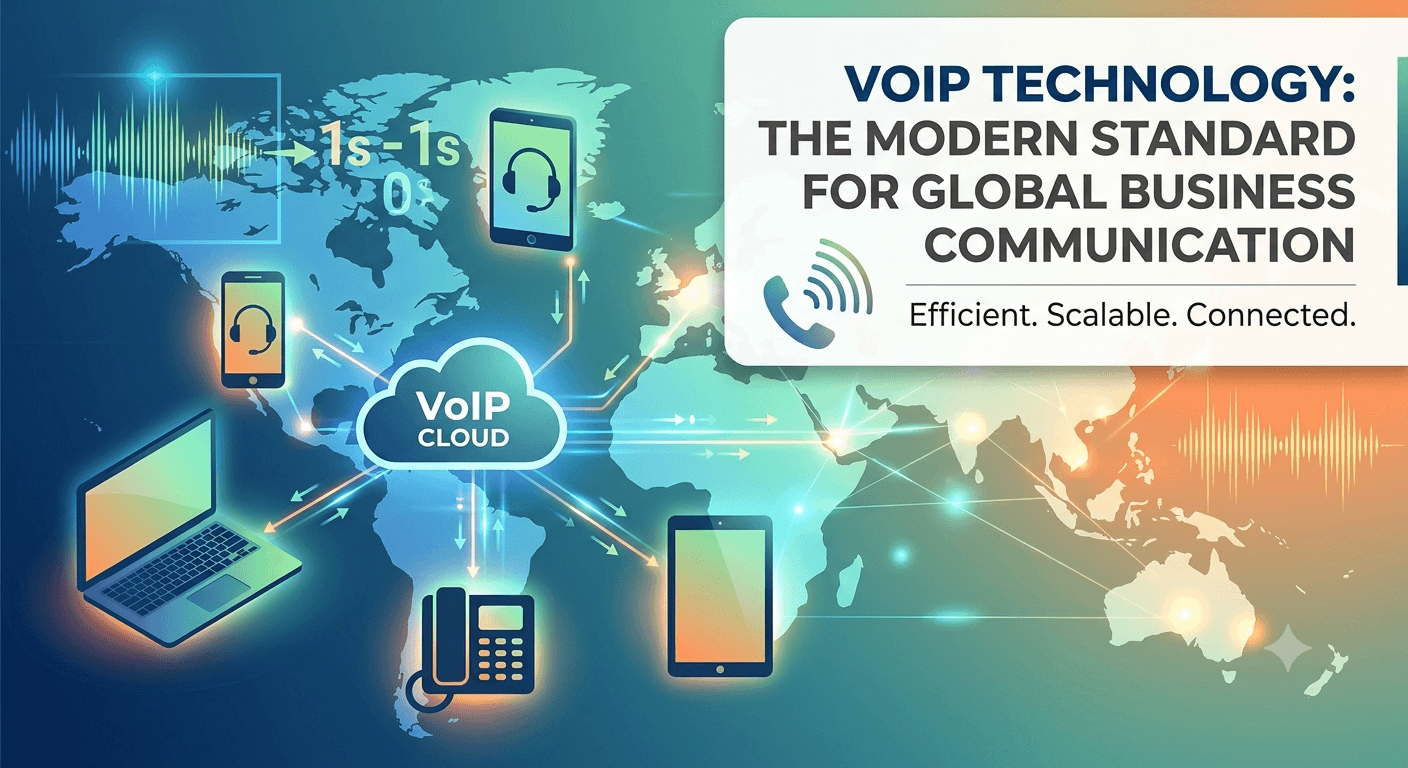
VoIP technologies represent the modern standard for digital communication, allowing users to make phone calls over a high-speed internet connection rather than a traditional analog phone line. By converting voice signals into digital data packets, these systems enable seamless communication across computers, smartphones, and specialized hardware. This innovation has transformed the way global businesses operate, offering significant cost savings, enhanced scalability, and a suite of advanced features that legacy systems cannot match. As companies move toward remote and hybrid work models, understanding these voice over internet protocol solutions becomes vital for maintaining competitive connectivity and operational efficiency in a digital-first world.
What is VoIP?
To understand the current landscape of digital communication, one must first explore the voip meaning in a broader context. VoIP stands for Voice over Internet Protocol, which is a technology that allows you to make voice calls using a broadband internet connection instead of a regular phone line. Many people ask what is voip in terms of daily utility, and the answer lies in its versatility; it is the engine behind everything from popular messaging apps to enterprise-grade business phone systems. When we look at the definition for voip, it essentially refers to the transmission of voice and multimedia content over internet protocol networks.
The term whats voip often comes up when businesses compare their old hardware to new web based voip solutions. In the modern era, viop meaning is often synonymous with flexibility and mobility. Whether you are using a voip platform for gaming, personal use, or professional calls, the underlying technology remains the same. It turns your internet connection into a conduit for high-quality audio and video data. This transition from physical copper wires to digital packets is what allows for the high level of integration we see in today’s communication tools.
In the realm of computing, voip meaning in computer terms relates to how software interacts with network cards to send data. A voip computer definition would emphasize the role of software clients in handling the encoding and decoding of voice data. This means that any device with an internet connection and a microphone can potentially become a communication hub. By utilizing an internet telephony system, users are no longer tethered to a specific physical location, which is the primary reason why it has become the gold standard for global enterprises.
How Does VoIP Technology Work?
Understanding how does voip work requires a look at the process of packet switching. Unlike the traditional public switched telephone network that uses circuit switching to keep a line open, voip networking relies on breaking down voice signals into small digital packets. These packets are sent over the internet and reassembled at the destination. This process is incredibly fast, often happening in milliseconds, which ensures that voip calling remains clear and uninterrupted. The voice over ip protocol governs how these packets are addressed and routed across the vast landscape of the web.
The journey of an ip call starts with the conversion of analog audio into digital format using codecs. These codecs compress the data to ensure it travels efficiently across the voice over ip network. Once the data reaches the receiving end, it is decompressed and converted back into audio that the listener can understand. This entire framework is part of what is a voip network, a complex infrastructure that prioritizes voice traffic to ensure low latency and high reliability.
How a VoIP system processes a call
The step-by-step processing of a call through a voip platform involves several technical layers to ensure quality.
The user initiates the call, and the device captures the analog sound waves from the microphone.
The analog signal is converted into a digital signal using a specific codec.
The digital data is divided into small packets, each labeled with the destination’s voice over ip address.
These packets travel over the internet via the most efficient path available through various routers.
The receiving device collects the packets and puts them back in the correct order.
The digital signal is converted back into an analog sound for the recipient to hear.
What Equipment Do You Need for VoIP Technologies?
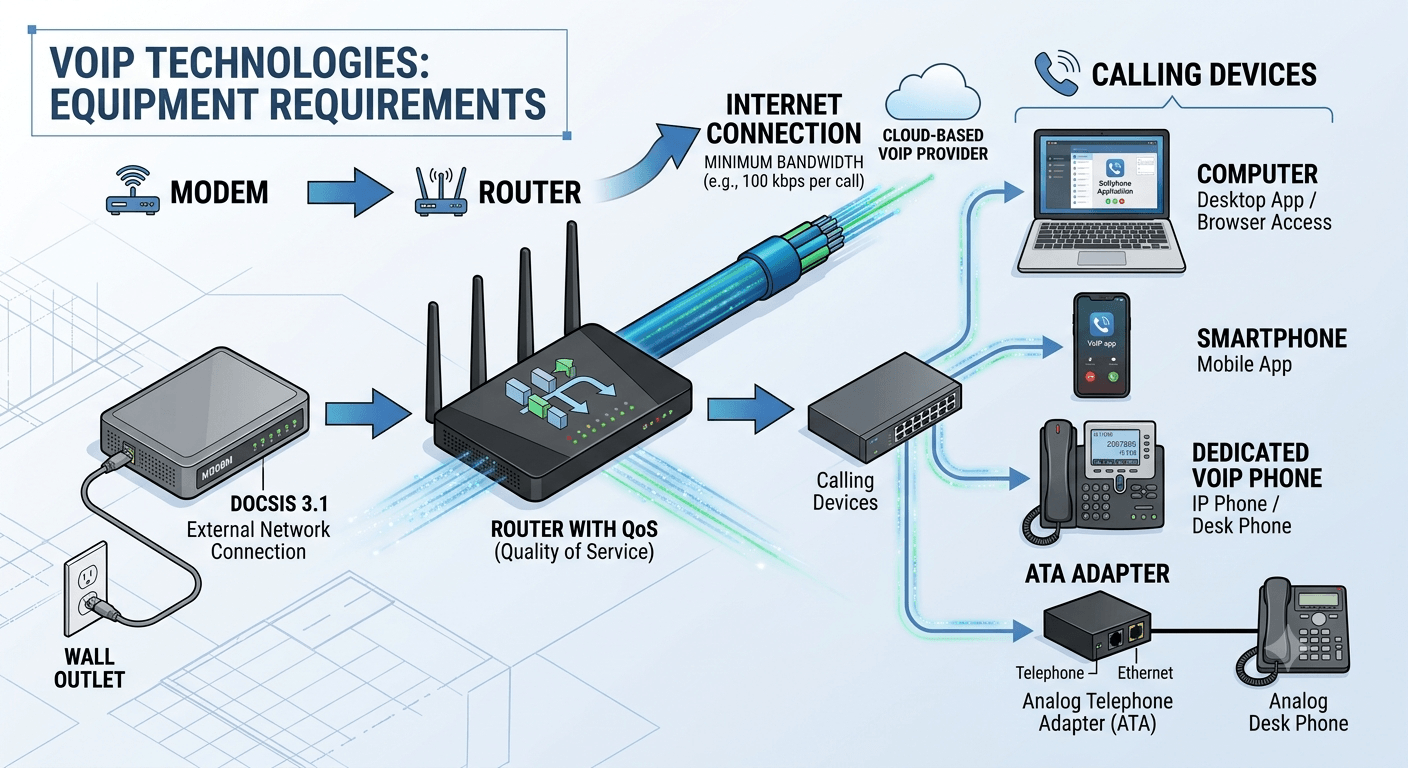
One of the most attractive aspects of voip phone service what is it is the minimal hardware requirement compared to traditional systems. To get started with a voip phone calling setup, you primarily need a stable internet connection and a device capable of processing audio data. Because voip implementation is largely software-driven, many businesses can use their existing hardware, such as laptops and mobile phones, to manage their entire communication stack.
1. Modem
The modem serves as the gateway between your local network and the internet service provider. In a voip internet setup, the modem is responsible for receiving the data stream from the outside world. Without a functional modem, your internet calling service cannot reach the external servers required to facilitate calls.
2. Router
The router is the brain of your internal network, directing traffic to the correct devices. For high-quality voice over ip calling, a router with Quality of Service (QoS) settings is essential. QoS allows you to prioritize voice traffic over other types of data, such as large file downloads or video streaming, which prevents jitter and dropped calls during busy periods.
3. Internet connection
The backbone of all voip technologies is the internet connection itself. Whether you use fiber, cable, or high-speed DSL, the bandwidth must be sufficient to handle multiple concurrent calls. A standard voice over ip call typically requires about 100 kbps of upload and download speed. For businesses with many employees, voip planning involves calculating total bandwidth needs to ensure the voip connections remain stable.
4. Calling devices
There are various ways to access a voip line, depending on your specific needs and environment.
Computer: Using a voice over ip pc setup, you can make calls directly from a web browser or a dedicated desktop application.
Smartphone: Mobile apps allow for voip phone online access, turning your cell phone into a business extension via Wi-Fi or cellular data.
Dedicated VoIP phone: These look like traditional desk phones but connect via Ethernet and are specifically designed for voice over internet protocol telephony.
ATA adapter: An Analog Telephone Adapter allows you to plug a traditional phone into a digital network, bridging the gap between old and new technology.
Features to Look for in a VoIP Phone System
When exploring what are voip phones and systems, the feature set is often the deciding factor. Unlike traditional lines, a voip phone system definition includes a wide array of software-based tools that enhance productivity. Modern systems go beyond simple audio, offering integrated solutions that handle everything from text messaging to video conferencing.
The versatility of a voip platform is what makes it superior to older technologies. Features like call phone voip integration allow users to click a number on a website and initiate a call instantly. Furthermore, the ability to manage these features via a web dashboard makes voice over ip management much simpler for IT administrators than maintaining physical switchboards.
Call forwarding: Automatically send incoming calls to another number or device if the primary line is busy or unanswered.
Call routing: Use intelligent logic to direct callers to the right department based on their input or the time of day.
Caller ID: Display the caller’s information on your screen, often integrated with CRM data to show customer history.
Voicemail to Email: Convert voice messages into audio files or text transcripts and send them directly to your inbox.
Multi-device support: Seamlessly switch between your desktop app and mobile device without dropping an active call.
Video calling: High-definition video conferencing is often built directly into the same interface used for audio calls.
Why VoIP Technology is Essential for Modern Businesses
For any growing organization, business voice over internet protocol is no longer an optional luxury but a core necessity. One of the main reasons is the cost-efficiency; since calls travel over the internet, long-distance and international charges are drastically reduced.
Research by BlueFace has indicated that businesses transitioning to VoIP technologies can save up to 90% on international call costs and 40% on local call costs compared to traditional landlines.
Beyond savings, the scalability of a voip phone line is unmatched. In a traditional setup, adding a new employee meant wiring a new physical line. With an internet protocol phone service, adding a new user is as simple as creating a digital account in an online portal. This agility allows businesses to respond quickly to market changes and seasonal demands without significant capital expenditure.
The global nature of modern work also necessitates voip uses that support remote teams. Because a voip line is tied to a user account rather than a physical wire, employees can work from anywhere in the world and still appear as if they are in the main office. This level of connectivity is fundamental to the “work from anywhere” culture that defines the current professional landscape.
Improving Communication Efficiency through VoIP
Efficiency in a business environment is often measured by how quickly and accurately information flows between stakeholders. A voip calling system improves this flow by integrating with other business tools like CRMs and helpdesk software. When a call comes in, the voip platform can automatically pull up the caller’s record, allowing the agent to provide personalized service instantly.
The use of voip call routing ensures that customers never have to wait long to speak with the right person. By using automated attendants and interactive voice response (IVR) systems, businesses can handle high volumes of calls with fewer resources. This type of internet calling service reduces human error and ensures that every inquiry is handled according to company protocols.
According to a study conducted by Nemertes Research, companies that fully integrate unified communications through VoIP see a 25% increase in operational efficiency.
This is largely due to the reduction in “app switching,” as employees can handle calls, chats, and meetings all from a single interface. By streamlining these channels, teams spend less time managing their tools and more time focused on their core objectives.
More than a VoIP Phone System: Unified Communications
When we talk about voip and unified communications, we are referring to the convergence of various communication channels into one platform. This is a step above just making an ip phone call; it is about creating a cohesive ecosystem where email, instant messaging, voice, and video live together. This integration is what defines a modern voip platform.
Unified communications allow for better data tracking and analytics. Managers can view detailed reports on call duration, wait times, and peak hours across all channels. This data is invaluable for voip planning and resource allocation. By understanding how communication flows through the organization, leaders can make informed decisions to improve customer satisfaction and internal collaboration.
The Benefits of Switching from On-Premises to VoIP
The transition from an on-premise hardware system to a cloud-based voice over internet setup offers several strategic advantages. Traditional systems are prone to physical damage from weather or hardware failure, often requiring expensive on-site repairs. In contrast, voice over ip voip technology is hosted in redundant data centers, ensuring that your communication remains active even if your local office loses power.
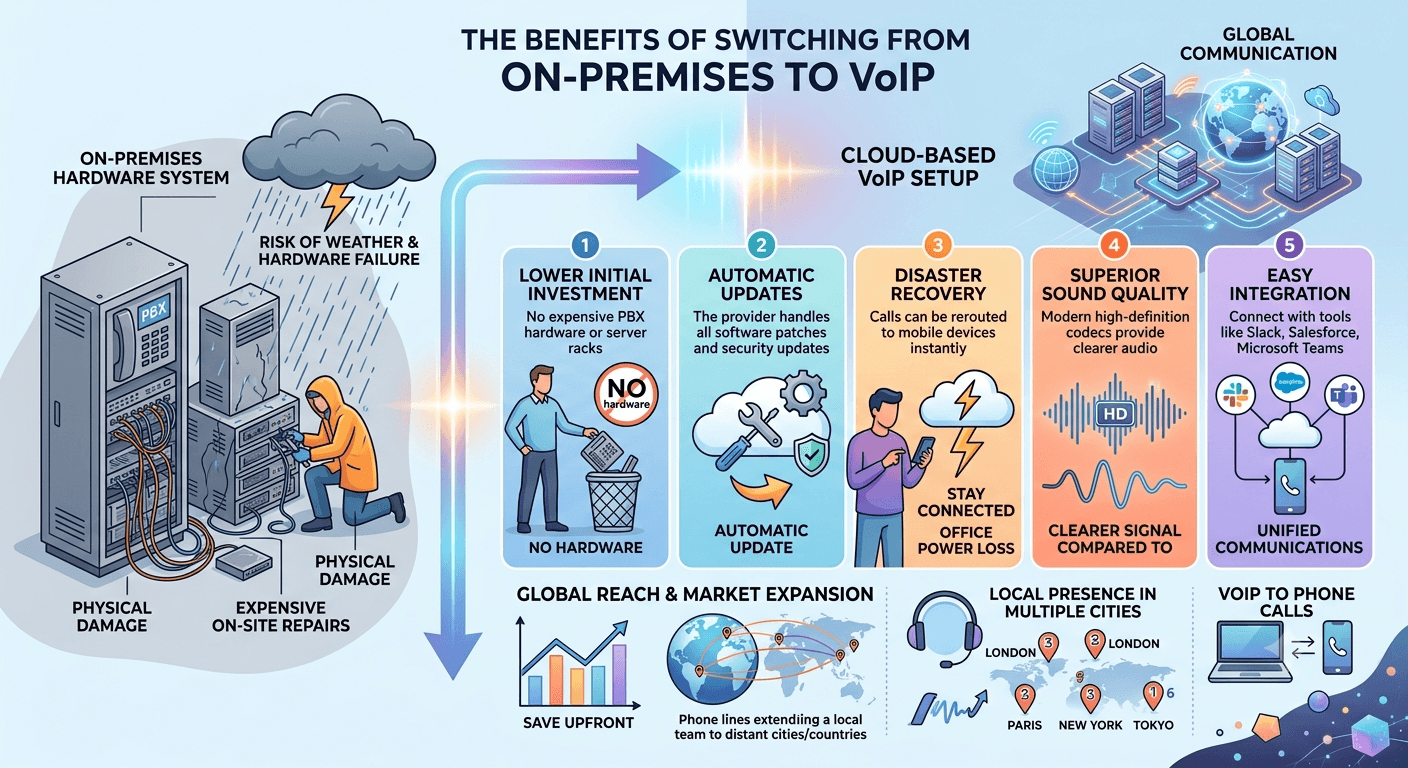
Lower Initial Investment: No need to buy expensive PBX hardware or server racks.
Automatic Updates: The provider handles all software patches and security updates in the cloud.
Disaster Recovery: Calls can be rerouted to mobile devices instantly if the office is inaccessible.
Superior Sound Quality: Modern high-definition codecs provide clearer audio than traditional analog lines.
Easy Integration: Connect your phone system with tools like Slack, Salesforce, and Microsoft Teams.
The flexibility of voip to phone calls also means that you can maintain a local presence in multiple geographic areas without physical offices. You can purchase local numbers in different cities or countries, and those calls will be routed directly to your centralized team. This is a powerful tool for market expansion and customer trust.
AI Agents Built on Enterprise-Grade Communications
The latest evolution in voip technologies involves the integration of Artificial Intelligence. AI agents are now being built directly into the voice over ip protocol stacks to assist with various tasks. These range from real-time language translation during an ip calling session to automated sentiment analysis that helps supervisors identify frustrated customers during a live call.
AI-driven voip usage is also improving the way we handle data. Automated transcription services can turn an hour-long meeting into a searchable text document in seconds. This ensures that no critical information is lost and provides a reliable record for compliance and training purposes. As AI continues to advance, the line between human interaction and automated assistance will continue to blur, making communication more efficient than ever.
What Should You Look for When Choosing a VoIP Provider?
Selecting the right partner is crucial for a successful voip implementation. You should start by asking what is a voip provider’s track record for uptime and reliability. A system that is frequently down can cost your business more in lost sales than you save in monthly fees. Looking for providers that offer a 99.999% uptime guarantee is a good starting point for any business-grade internet protocol phone service.
Another critical factor is the level of voice over ip management tools they offer. A good provider will give you a user-friendly dashboard where you can manage users, view billing, and configure call settings without needing technical expertise. Additionally, check for compatibility with your existing hardware or the ease of transitioning to their dialpad voip or specific software solutions.
Security protocols: Ensure the provider uses encryption (like SRTP) to protect your voice data from eavesdropping.
Customer support: 24/7 support is vital, especially during the initial setup and migration phase.
Pricing structure: Look for transparent pricing without hidden fees for features like call recording or conferencing.
Global reach: If you have international clients, ensure the provider has data centers in those regions to minimize latency.
Ease of use: The interface should be intuitive for your employees to ensure high adoption rates.
Are There Any Challenges or Risks Associated with VoIP Technology?
While the benefits of voice over ip calling are numerous, there are some challenges that organizations must address. The most significant is the dependency on a stable internet connection. If your internet goes down, your phone system goes down as well. This is why many businesses invest in a secondary internet line for redundancy.
Security is another concern in the world of internet protocol phone service. Because voice data travels over the public internet, it can be susceptible to hacking or “vishing” (voice phishing) if not properly secured. Implementing strong passwords, utilizing firewalls, and ensuring your provider uses end-to-end encryption are essential steps in protecting your voice over ip network.
Lastly, voice quality can sometimes be affected by network congestion. This is often referred to as jitter or packet loss, which can make the audio sound robotic or cause parts of the conversation to drop out. However, with proper voip planning and the use of QoS-enabled routers, these issues are mostly a thing of the past for professional setups.
Is VoIP the Right Choice for Your Business?
Deciding whether to adopt voip technologies depends on your specific business goals and infrastructure. If you have a workforce that is increasingly mobile or remote, the flexibility of a voice over internet protocol voip system is unmatched. It provides the tools necessary to stay connected regardless of physical location, which is a major advantage in the current global economy.
For small businesses, the low entry cost and ease of management make it an ideal choice. For large enterprises, the advanced features and integration capabilities offer a level of data-driven insight that traditional systems simply cannot provide. If you currently have a reliable high-speed internet connection, you are already halfway to a successful transition to an internet telephony system.
Final considerations should include the total cost of ownership over several years. While there is a monthly subscription fee, the elimination of maintenance costs, hardware upgrades, and expensive long-distance bills usually results in a much lower overall spend. In the end, the move to digital communication is not just about saving money; it is about preparing your business for the future of work.
Final Words
The transition to VoIP technologies represents one of the most significant shifts in communication history. By moving away from the limitations of physical wires and embracing the power of the internet, businesses can achieve a level of connectivity and efficiency that was once unimaginable. Whether it is through enhanced call routing, AI-driven analytics, or the simple convenience of taking your office phone anywhere, the advantages are clear. As technology continues to evolve, those who embrace these digital solutions will be better positioned to thrive in an increasingly connected world.
VoIP FAQ
Should my business consider switching to VoIP technologies?
Yes, your business should consider switching because these systems offer significant cost savings, better scalability, and a wide range of features like video conferencing and CRM integration that traditional phones lack. The flexibility to work from anywhere makes it especially suitable for the modern professional environment. Furthermore, the ability to centralize your communication channels into one platform simplifies administrative tasks and improves overall team productivity.
Does VoIP support remote or hybrid teams?
Yes, it is the ideal solution for remote work. Since the service is cloud-based, employees can access their business lines via mobile apps or laptops from any location with an internet connection. This ensures that your staff remains reachable and professional regardless of their physical location, maintaining a consistent business presence for your clients.
How do I know if VoIP is right for my current setup?
If you have a stable high-speed internet connection and need to reduce communication costs or add more lines without physical wiring, then it is the right choice for you. You should also evaluate your current call volume and whether your team would benefit from advanced digital tools like automated attendants or voicemail-to-email services.
What should I look for when choosing a VoIP provider?
You should prioritize uptime reliability, security features like encryption, ease of use of their management dashboard, and the quality of their customer support. Additionally, verify if the provider offers seamless integration with the specific software tools your business already uses, such as Salesforce, Slack, or Microsoft Teams.
What does total cost of ownership mean for VoIP?
It refers to the sum of all costs involved in the system, including subscription fees, internet costs, and any hardware like headsets, weighed against the savings from lower call rates and zero maintenance. By calculating these factors over a multi-year period, you can clearly see how much more economical VoIP is compared to maintaining a traditional landline infrastructure.
Do VoIP providers usually include customer support?
Most reputable providers offer 24/7 support to help with setup, troubleshooting, and configuring advanced features to ensure your business stays connected. Many top-tier providers also assign a dedicated account manager to assist with the initial onboarding process and ensure a smooth transition for your entire staff.
How important is uptime for VoIP systems?
Uptime is critical because your phone system relies entirely on the provider’s servers; a high uptime percentage like 99.99% ensures your customers can always reach you. Choosing a provider with geographically redundant data centers further protects your business from outages caused by local hardware failures or regional emergencies.
What is the most popular VoIP technology today?
SIP (Session Initiation Protocol) is the most widely used standard, as it allows for the seamless integration of voice, video, and messaging across different devices and platforms. Its versatility makes it the backbone of modern Unified Communications (UCaaS), allowing businesses to scale their infrastructure without needing to replace entire hardware systems.