Plivo is worth evaluating for programmable voice, SIP connectivity and AI calling workflows when you have the resources to configure and operate the service. Its strengths include developer tools, flexible call handling and published usage rates. The main considerations are product-specific billing, plan limits and commercial access to messaging. Judge it by the complete customer workflow and account offer, rather than a single advertised minute price.
This Plivo review covers features, pricing, pros and cons, customer feedback and the questions to resolve before switching. A company adding calls to software, an office connecting a PBX and a brand buying production messaging need different arrangements. We explain those differences and include a short Signal House option after pricing for readers considering a supported integration.
Plivo currently provisions new SMS access through sales for direct brands, with a monthly spend commitment. Its documentation excludes new reseller, multi-brand ISV and aggregator SMS onboarding. The self-service voice trial does not establish production messaging access. Existing customers should confirm their own agreement.
 The rating uses the named Plivo product profile. It summarizes reported customer experience, not independently measured delivery, voice quality or support response.
Plivo Review: Our Verdict And Best Fit
Plivo is a credible shortlist choice for a technical team with a defined calling requirement. Evaluate its Voice API for application-controlled customer voice calls, its SIP product for compatible telephone software and its AI offering for a configured conversational voice workflow. Each path should be assessed using its own capabilities, rates and deployment responsibilities.
| Provider | Best Fit | Buying Considerations | Pricing & Evaluation |
|---|---|---|---|
|
| Voice API: $0.0115/Min OutSelected US local base; incoming $0.0055/min. Other routes and charges differ. Trial credit is restricted.Review The 3-Week Free Trial |
The strongest buying case starts with a specific task. For example, a support application may need to connect a customer with an available employee while preserving a useful record. A PBX operator may need reliable connectivity and number management. An AI project may need booking tools, a knowledge source and a safe handoff to staff.
Plivo can be relevant to those tasks without being the easiest purchase for every office. A business wanting only a ready-made voice calling app should identify the actual software employees will use. The Plivo carrier connection, programmable logic and daily staff workspace can be separate parts of the proposed solution.
How This Plivo Review Was Prepared
We reviewed official product information, current pricing, plan and onboarding documentation, operational guides and customer feedback. This is a documentation-based assessment. We do not claim to have independently measured production voice call quality, delivery rates, latency or support resolution.
The Plivo examples below are calculations under stated assumptions. They help explain the bill and compare architectures; they are not customer invoices or promises that every account receives identical terms. Use them to prepare a quotation request and a representative pilot.
What Is Plivo And How Does It Work?
Plivo provides communication services that businesses use through applications, APIs and compatible telephone systems. Its offerings include voice, SIP trunking, numbers and AI tools, with additional channels available under the applicable commercial arrangement. The right product depends on how you intend to connect customers and employees.
In a programmable voice application, your software requests an action and handles events from the service. An incoming Plivo call can cause the application to return instructions for a voice greeting, menu, transfer or voice recording. The business still decides what should happen when a department is closed or an employee does not answer.
In a SIP deployment, the business already has the PBX or calling software and connects it to telephone networks. In an AI deployment, the configuration also involves conversational instructions, business knowledge and tools. These are related communication requirements, but they do not carry identical charges or implementation work.
Why Product Names And Plan Access Matter
A feature appearing in Plivo documentation is evidence that a capability exists; it is not proof that a new account can use it on any plan. Start with the proposed account, data region and product. Ask the provider to confirm the entitlement before building a dependency around it.
Apply the same discipline to older tutorials and customer reviews. They can be helpful for understanding a workflow, but current commercial rules determine new access. An existing customer's historical deployment does not automatically establish a permitted route for a different buyer today.
Plivo Features: Voice API, SIP Trunking, Messaging And AI
The useful question is which Plivo feature completes your business task and who will maintain it. A product team may prioritize programmable control. An IT administrator may focus on SIP authentication and destinations. A customer-service manager may care most about the employee handoff and the information available after a call.
| Product / Capability | Business Use | Buying Question |
|---|---|---|
| Voice API and XML | Build custom customer call handling | Can the application recover from a failed transfer? |
| SIP trunking | Connect compatible PBX or calling software | Which routes and increment rules apply? |
| AI agents and builder | Configure conversational tasks and tools | Does each action actually complete in the business system? |
| Messaging APIs | Supported notifications and replies | Does the account qualify for the required product? |
| Numbers and recordings | Manage identity and interaction evidence | What capabilities, permissions and retention apply? |
| Console and subaccounts | Organize authorized configuration and activity | Who maintains access and reconciles billing? |
Voice API And XML Call Instructions
Plivo documents an XML instruction model for handling calls, including an Answer URL that returns the next action. This supports custom voice call flows where your Plivo application controls the customer experience. Relevant requirements include IVR, routing, callback capture and connecting parties through software.
For evaluation, define a complete journey: answer the voice call, identify the requested action, attempt the appropriate connection and recover if that connection fails. Include the caller who presses the wrong key or provides no input. A convincing demonstration should show a useful outcome after those exceptions as well as after the easiest successful path.
Ask your Plivo developer to explain the relationship between the Plivo event and the business record. Staff should be able to identify the customer interaction without comparing several unrelated logs. Clear identifiers and a readable outcome are especially valuable when a transfer is interrupted.
SIP Trunking For Compatible Telephone Software
Plivo's SIP service is a separate evaluation for a PBX, voice contact-center platform or other compatible calling system. Compare the actual trunk configuration, routes, authentication, number support and billing terms. The lowest published route is not automatically the rate for every local destination.
Test incoming and outgoing voice calls independently, including caller identity, transfers and the destinations your team serves. Establish who owns PBX settings and who investigates a carrier-side problem. A completed registration or first call is useful, but it does not establish that the entire office workflow is ready.
AI Agents And The Vibe Builder
Plivo markets AI Agent Studio and its Vibe builder for configuring agent flows from business instructions. It also describes testing tools and integrations. This offers a different starting point from writing every step of a voice application, but the resulting behavior still needs business review.
Ask an agent to complete an action rather than only deliver a fluent greeting. A useful scenario might collect a booking request, check an approved source, attempt the action and confirm its actual outcome. Test interruption, ambiguous information and an unavailable tool.
A human handoff should preserve enough context for the employee to continue. An agent that confidently announces a booking without a successful calendar action creates an operational problem. Define what counts as completion and require evidence from the connected business system.
Business Messaging And Additional Channels
Plivo publishes messaging APIs and rates, but product availability must be read alongside its current onboarding and plan conditions. For an eligible account, evaluate sender setup, callbacks, delivery outcomes and incoming replies. Do not interpret a public rate card as an approval to send.
Keep business actions separate from transmission status. An accepted request, a delivered text and a confirmed appointment are different events. The application must connect the correct reply to the correct record and notify staff when a customer needs assistance.
Numbers, Recordings And Operational Evidence
Plivo offers number management and call-related records, with capability depending on the actual number and service. Before buying inventory, check the business purpose, location and functions needed. A Plivo number at a low price is useful only when it supports the intended deployment.
For recording, decide what staff need to retain and why. Permission, retrieval, deletion and storage costs belong in the design. A recording function being included in a selected rate card does not make every future storage decision free or appropriate.
Plivo Pricing: Plans, Usage Rates And Additional Costs
Plivo pricing combines product-specific consumption with plan and commercial conditions. The selected US figures below are in dollars and exclude applicable carrier, tax and other charges unless stated. Use the official Voice API pricing for the relevant route, and confirm current SMS availability requirements before estimating a messaging deployment.
| Item | Published Component | Important Qualification |
|---|---|---|
| Local outgoing Voice API | $0.0115/minute | Selected network group; destination exceptions apply |
| Local incoming Voice API | $0.0055/minute | Count chargeable legs and applicable rounding |
| Local SIP trunking | From $0.0046/min out; $0.0028/min in | Separate product; confirm rate-sheet increments |
| Local number rental | $0.50/month | Capability and product eligibility remain separate |
| Local SMS, either direction | $0.0077/segment | Qualified production access; carrier fees extra |
| Toll-Free SMS, either direction | $0.0079/segment | Verification, carrier and commercial charges extra |
| Local MMS, either direction | $0.0180/message | Applicable carrier charges and eligibility extra |
| Call transcription | $0.0095/minute | Optional processing; call connectivity separate |
| Recording storage | Free for 90 days; then $0.0004/minute/month | Selected retained-minute basis; confirm account terms |
| AI voice-agent headline | $0.03/minute excluding telephony | Confirm selected configuration and all applicable charges |
| Enterprise plan | From $1,000/month in US region | Custom scope, commitments and eligibility require agreement |
Professional And Enterprise Have Different Boundaries
The US-region Plivo plan comparison lists Professional as pay-as-you-go for voice and SIP, with a published $2,500 monthly usage ceiling. Enterprise starts from $1,000 monthly and provides a different feature and commercial scope. Data-region tables differ, so confirm the account region rather than copying an entitlement from another column.
A usage ceiling, minimum commitment and prepaid balance are different things. A ceiling limits what the account may consume, a commitment sets an agreed commercial floor, and funding pays for applicable charges. None should be silently substituted for an included allowance.
Understand How The Messaging Pricing Commitment Is Applied
The SMS availability documentation describes a minimum monthly commitment across eligible Plivo products, excluding pass-through charges. The public $1,000 and $10,000 tiers have different destination scope. Confirm the exact offer and any approval prerequisites with sales.
Do not automatically add the whole minimum on top of all usage. Ask how eligible spend is credited toward the commitment, what remains outside it and how overage pricing is calculated. The answer can materially change a low-volume forecast, even when the transmission component looks modest.
Separate Local API, SIP And Other Route Prices
Plivo's selected local Voice API rate is $0.0115 per outgoing minute and $0.0055 per incoming minute. Its SIP card lists a local outgoing starting component of $0.0046 and local incoming at $0.0028. These are different products, not interchangeable prices for the same application.
The lower $0.001 outgoing SIP headline corresponds to a different published route category. Select the actual destination and product before calculating a pricing estimate. For connected applications, also identify any browser, endpoint or additional-leg charges that apply to the chosen call path.
Quote Optional Processing And Retention Pricing
The Plivo Voice API card lists call transcription separately at $0.0095 per minute. Its recording-storage qualification gives an initial free period followed by a per-minute monthly storage charge. Request the exact retention and feature arrangement instead of describing all media storage as permanently free.
For an application handling sensitive information, cost is only part of the decision. Decide which recordings or transcripts are necessary, who can retrieve them and when they should be removed. The vendor's feature list does not define your business retention policy.
How Much Could Plivo Cost For Your Business?
The examples below isolate selected public components and are not complete pricing quotations. Voice quantities are chargeable minutes after applicable rounding. Messaging examples describe eligible production usage before contractual minimums are applied. Carrier fees, registration, taxes, support, software and other unlisted items remain outside the subtotals.
| Workload | Selected Calculation | Partial Result |
|---|---|---|
| 1,000 outgoing + 1,000 incoming local API minutes | $11.50 + $5.50 | $17 |
| The smaller calling workload + 5 local numbers | $17 + $2.50 | $19.50 |
| 10,000 outgoing + 10,000 incoming local API minutes | $115 + $55 | $170 |
| The same chargeable minutes at selected local SIP rates | $46 + $28; architecture and rounding can differ | $74 |
| Eligible 50,000 outgoing + 10,000 incoming local SMS segments | 60,000 × $0.0077 | $462 before contractual floor |
| That messaging workload + balanced 10,000-minute API workload + 10 local numbers | $462 + $170 + $5 | $637 before contractual floor |
A Small Voice Application
At the selected local Voice API rates, 1,000 outgoing minutes cost $11.50 and 1,000 incoming minutes cost $5.50. That is $17 in call components. Adding 5 selected local numbers at $0.50 monthly contributes $2.50, producing a partial subtotal of $19.50.
This is a useful pricing example for a voice-led application, provided the proposed account and product support the work. It does not include development, connected software, optional processing or other charges. It should not be advertised as the complete monthly pricing of a finished office phone system.
A Larger Voice Calling Workload
For 10,000 outgoing and 10,000 incoming local API minutes, the selected components are $115 and $55, totaling $170. At the selected SIP pricing components, the same number of chargeable minutes would produce $46 and $28, totaling $74. The $96 difference is an architecture comparison before other costs and increment effects.
A business cannot claim that saving simply by relabeling the existing application as SIP. Confirm how its functions would be delivered in each design and what software or development changes are necessary. Price the complete replacement before concluding that the lower connection component becomes net savings.
An Eligible Messaging And Calling Workload
Assume 50,000 outgoing and 10,000 incoming local SMS segments at $0.0077 each. Those message components total $462. Add $170 for the balanced 10,000-minute calling workload and $5 for 10 selected local numbers. The component subtotal is $637, before the agreement's minimum and excluded charges.
For illustration only, suppose all $637 qualifies toward a $1,000 floor. The eligible-spend charge would be $1,000, not $637 and not $1,637. If qualifying usage instead reaches $1,200 under that simplified arrangement, the eligible-spend charge would be $1,200. The actual agreement determines qualification and billing.
Separately add pass-through charges and other excluded items. Do not count them toward a minimum unless the contract explicitly allows that treatment. This is why a component table and a complete pricing estimate need different labels.
How Message Length Changes The Estimate
Plivo's billing guide explains that SMS length and encoding determine billable segments. A 240-character basic GSM-7 text uses 2 concatenated segments under the documented limits. A displayed conversation bubble can therefore represent more than one transmission charge.
Sending that text 10,000 times creates 20,000 segments. At the selected $0.0077 base, the component is $154 rather than $77 for 10,000 single-segment sends. Check real templates, including copied punctuation and variable fields, rather than estimating from the number of messages employees think they sent.
Voice API Rounding And Separately Billed Legs
The Plivo billing FAQ specifies whole-minute increments for Voice API calls and separate billing for call legs. Under that assumption, 100 answered outgoing calls lasting 23 seconds each produce 100 billable minutes and $1.15 at the selected local outgoing rate. At 65 seconds each, they produce 200 minutes and $2.30.
For a connection-only illustration, 1,000 incoming local minutes plus 1,000 outgoing local minutes total $17. A forwarded or bridged application can involve both directions, plus any other applicable components. Do not multiply one single-leg rate by a customer's conversation duration and assume it describes every voice call flow.
SIP Billing Increments Need Confirmation
The Plivo SIP pricing page describes US/Canada 6/6 increments, while the general billing FAQ describes per-second US Zentrunk billing. These public descriptions differ. Request the applicable product rate sheet and written increment terms before estimating short-call savings.
The API examples above use its documented whole-minute rule. The SIP workload comparison holds chargeable minutes equal to isolate the rates; it is not a calculation from identical elapsed call samples. Keep that distinction when comparing an existing invoice with a proposal.
Storage And Payment Costs Are Easy To Miss
The published recording-storage qualification is free for 90 days, then $0.0004 per stored minute per month. Under that selected post-allowance basis, 10,000 retained minutes contribute $4 monthly. Likewise, 1,000 eligible transcription minutes at $0.0095 contribute $9.50 before connectivity.
Plivo's payment guide also identifies a card-processing fee in its US/rest-of-world payment section. Check the payment method available to your account and the effect on funding. A recharge transfers money into the account; it should not be counted again as a separate consumption charge when reconciling usage.
Plivo Console And Day-To-Day Administration
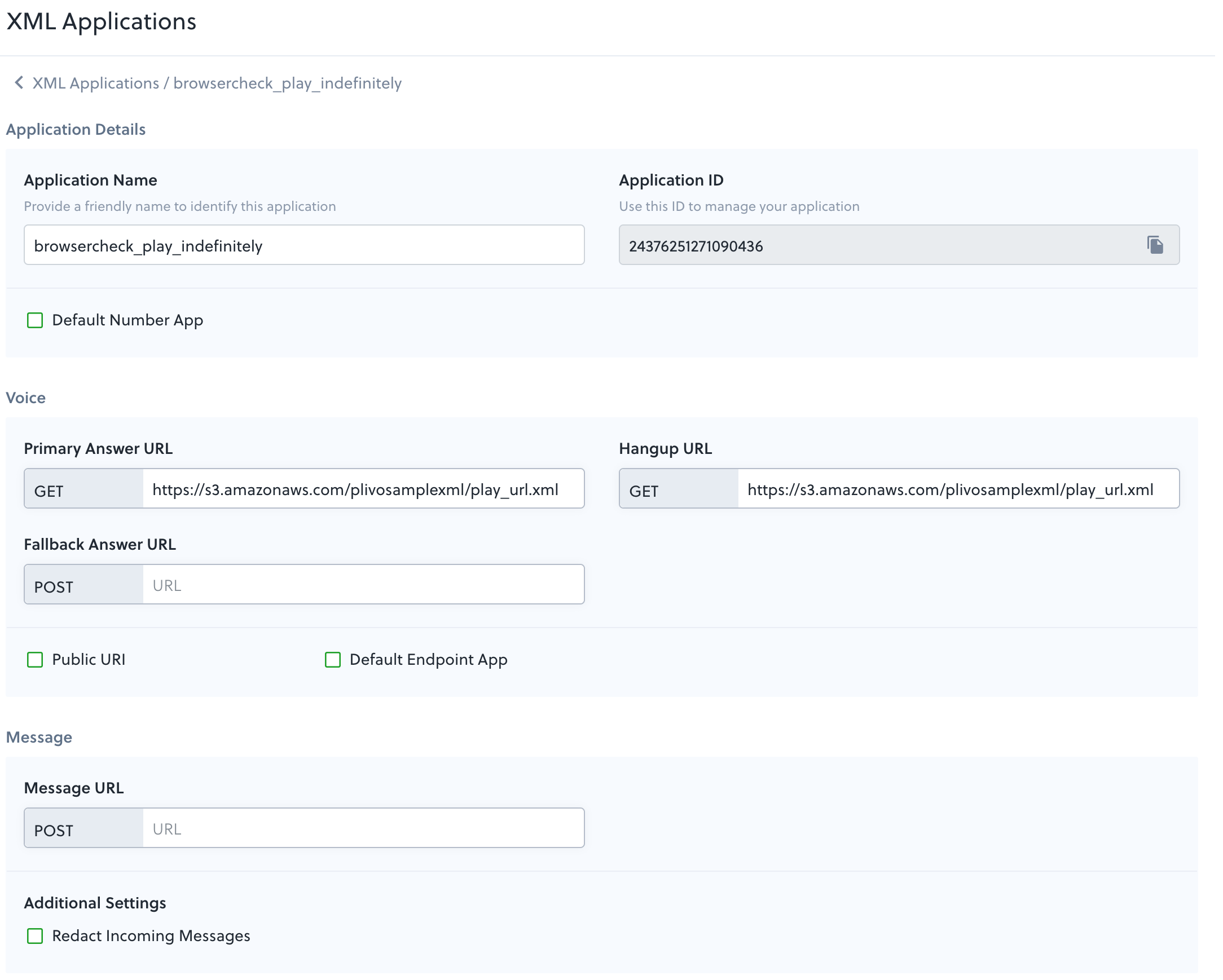
The Plivo console is where administrators configure services and investigate the activity available to their account. Application settings, numbers, logs and account controls are different from the employee-facing voice software that handles a customer conversation. Review both Plivo experiences when evaluating the complete solution.
Voice Application Settings And Number Assignment
For Plivo XML-based calling, Plivo's incoming-call guide describes creating an application with the appropriate Answer URL and assigning a number to it. That relationship is essential: the business number needs to reach the intended application, and the application needs to return the correct instructions.
Use descriptive names and maintain a number inventory showing the business purpose and owner. Record changes to live destinations or event URLs. A routine Plivo configuration edit can affect customer calls even if no code is deployed, so staff should know how to verify and reverse it.
Subaccounts And Usage Separation
Plivo documents subaccounts with separate credentials and activity, while billing rolls up to the parent. This can help organize environments or supported traffic. It does not override the current commercial eligibility for a particular service or authorize a restricted onboarding model.
For your own deployment, decide whether staff should see all traffic or only their assigned operation. Make the accounting boundary understandable to finance as well as developers. Separate technical credentials are useful, but they do not automatically create separate customer invoices or independent payment responsibility.
Logs Should Explain A Customer Problem
A useful log review should identify what happened to a specific voice call or message and what staff should do next. Store the provider identifier alongside the internal booking or customer reference. That makes a support request easier to investigate than a screenshot containing only a phone number.
During the pilot, ask a colleague to investigate an intentional failure. If they cannot distinguish a rejected voice destination, an application error and an unavailable employee, improve the operational view before increasing traffic. The system needs to be maintainable after the person who built it is unavailable.
How To Set Up Plivo For Business Calling
A useful Plivo setup begins with the chosen product and the task it must complete. Confirm the plan, data region, destinations and account permissions. Then configure numbers, the application or trunk, and the operating process that staff will use to manage exceptions.
1. Establish The Account And Commercial Scope
Plivo's account guide describes signup using a work email and phone verification. Check its current requirements and select the appropriate account region. Before development, confirm any feature that requires a different plan, sales approval or a dedicated agreement.
Assign an accountable owner and preserve access through an approved team process. The provider relationship should not depend on a temporary contractor's personal mailbox. Document who can change billing, credentials and live services before the account becomes part of daily operations.
2. Choose The Application Or SIP Path
For programmable voice, define the voice event endpoint and the instructions returned after a call is answered. For SIP, configure the compatible software and the connection settings required by the trunk. Avoid combining unrelated examples without understanding which voice product each assumes.
Write down the expected customer path and a fallback when the preferred destination fails. A greeting, successful transfer and complete callback request are different outcomes. The team should know which outcome is expected during working hours and after hours.
3. Configure Numbers And Credentials
Buy or port the required Plivo voice numbers only after confirming capability and eligibility. Assign each Plivo number to the intended application or connection. Check incoming calling, outgoing presentation and any messaging service separately rather than treating ownership of a number as approval for every use.
Store credentials appropriately and grant only the access staff need. Plan token rotation so applications are updated before old credentials stop working. Keep secrets out of browser-visible code, shared screenshots and ordinary support messages.
4. Validate Callbacks And Recovery Behavior
Plivo documents voice callbacks and signature validation. Implement the relevant validation and response behavior for the chosen interface. Preserve identifiers, event type and timing so a later investigation can connect the provider's record with the application's action.
Handle a repeated callback without repeating a booking or notification. At the same time, avoid discarding every event sharing the same call identifier, because different legitimate events can belong to one call. The business action should follow the event's meaning, not merely the presence of an identifier.
5. Rehearse The Staff Workflow
Ask a normal employee to answer, transfer and follow up using the proposed software. Include an unavailable colleague, a customer who disconnects early and a caller asking for a person. Record what the employee sees and whether it provides enough context to continue.
Agree acceptance criteria before moving the main number. The operations team should confirm the customer outcome while the technical team confirms the events and configuration. A successful API request alone is not a complete launch decision.
Plivo Free Trial: Credit, Duration And Limitations
Plivo advertises $10 in free credits, and its plan FAQ describes credits for the first 3 weeks. That is a limited evaluation, not unlimited service. Trial calling examples require verified destination numbers, and the current production access rules remain separate.
Use the trial to examine the voice workflow, event handling and the relevant application experience. Confirm which features the trial account can exercise and what changes after upgrading. Retest the accepted configuration under the approved production arrangement before placing customer traffic on it.
Check the current trial entitlement and the account's permitted products. Include a failed transfer and a useful voice handoff in the evaluation.
Review Plivo Setup And Trial RequirementsWhere Plivo Can Fit Business Communication Workflows
The best fit depends on what the business will operate. A technical platform team and a small office may share the same customer goal while needing very different software and assistance. Use the scenarios below to identify the right demonstration.
| Intended Users | Relevant Starting Requirement | Evidence To Request |
|---|---|---|
| Product developers | Calls embedded in maintained software | Complete customer journey and recoverable failure |
| PBX and telecom administrators | Compatible SIP connectivity | Required routes, settings and applicable rate sheet |
| Customer-service operations | Configured AI intake and human handoff | Correct information, completed action and staff context |
| Eligible direct brands | Approved production customer messaging | Documented access, sender workflow and complete quote |
Custom Customer-Service Applications
Plivo can be relevant when the business already maintains software and wants calls tied to its process. Show the customer journey from request to employee action, including the case where the preferred person is unavailable. The application should preserve the task rather than leaving staff to reconstruct it.
Measure completion using business evidence: the correct person reached, a callback request captured or a support issue handed over. Keep these outcomes separate from network acceptance. This gives the project team a meaningful result to assess during a pilot.
AI Calling With Human Escalation
An AI voice workflow can help handle routine questions or gather information before a staff member takes over. Test the information source and each connected action. An accurate answer and a successfully executed booking are different requirements, and both deserve explicit checks.
Require a clear fallback for uncertainty. If the assistant cannot verify an appointment, it should not announce completion. Staff should receive enough detail to finish the task without asking the customer to repeat everything.
Existing PBX Or Telecom Operations
A team with compatible calling software can evaluate Plivo SIP connectivity against its voice requirements. Test normal routes and exceptions, then review the actual pricing schedule and billing increments. Account for the software, equipment and administration that remain outside the carrier connection.
For a business that lacks those resources, a packaged phone system may be more manageable. Identify the people who will maintain destinations, investigate failed calls and manage employee changes. An attractive network rate is not a substitute for that operating capacity.
Plivo Support, Reliability And Incident Handling
Plivo's service-level and support document points customers to their order form or console for the package covered by their subscription. Obtain the current support pricing, channels, escalation path and implementation scope for your actual account. An old support article or a positive review is not a current service entitlement.
Ask how a production issue is prioritized and what evidence should accompany a ticket. Include a recent interaction identifier, direction, timestamp with timezone, expected behavior and observed error. Give the provider enough context to distinguish an application problem from a route or account issue.
Availability, first response and resolution are different measures. Test the support process with a legitimate configuration question before launch, and confirm who owns problems in connected software. A customer's report of helpful assistance can be encouraging without guaranteeing your future resolution time.
Evaluate The Entire Voice Path
A voice communications deployment can depend on the application, internet access, PBX, carrier and destination network. A vendor network claim does not cover every part of that path. Examine the applicable service agreement and test the routes and actions your customers use.
Keep an incident plan with current contacts, useful logs and the conditions for temporary rerouting. A fallback is valuable when the team understands it and has authority to use it. Rehearse the process rather than discovering during an outage that no one owns the necessary setting.
Plivo Security, Compliance And International Requirements
Plivo publishes security information and describes additional enterprise compliance features. Verify the specific service, agreement and configuration required for your data. Broad security material should not be treated as automatic approval for every recording, integration or regulated workflow.
In your application, control credentials, staff permissions, stored communication content and access from connected tools. Request the relevant assurance documents and contractual terms where needed. The provider's controls and your operational choices must work together.
Country Coverage Is A Product-Level Question
Ask separately whether Plivo can supply the required number, receive calls, complete outgoing calls and support the intended message type. Account region and plan can also affect availability. A broad global-coverage headline does not establish every capability in every country.
For a business serving several markets, prepare a requirement list by country and product. Include sender identity, local documents, destinations and staff access. Obtain a written scope before committing to a workflow that depends on a specific route.
Plivo Pros And Cons
Pros: Reasons To Consider Plivo
- Programmable voice tools: application-driven call control can fit a maintained business process.
- Separate SIP option: compatible PBX and telecom teams can evaluate the appropriate network product.
- AI building options: a configured agent workflow offers another path alongside custom development.
- Published rate components: selected prices support a transparent quotation and workload discussion.
- Account organization: documented administration and usage separation can help an authorized deployment.
These strengths have the greatest value when someone owns the implementation. A product team may want detailed control, while an office may prefer an application that packages routine work. Evaluate the actual task instead of assigning equal weight to every feature.
Cons: Reasons To Examine The Offer Carefully
- Commercial access matters: an API being documented does not mean every new account can use it.
- Billing differs by product: route, increments, call legs, processing and minimums can change the result.
- Application work remains: the staff experience and business rules need configuration and maintenance.
- Public detail can conflict: obtain contractual clarification where current increment descriptions differ.
- Migration requires testing: similar features do not establish identical application behavior.
A clear proposal can address these points before purchase. Ask what the provider supplies, what your team supplies and what each component's pricing covers. If nobody can explain the complete customer path, the buying decision needs more preparation.
Plivo Alternatives And Competitors To Compare
The best Plivo alternative depends on the product and the work you want to own. Compare APIs with the required programmable capability, SIP with equivalent connectivity and employee phone software with another complete application. Keep implementation and commercial eligibility in the comparison.
Signal House For A Supported Business Integration
Signal House is a relevant competitor to evaluate when its documented integration fits the business and guided setup has practical value. The box after pricing introduces this option. Ask for a demonstration of sending, replies, staff access and the actual pricing arrangement.
Its selected local outgoing SMS component is lower than the Plivo component shown here. That difference is useful, but it is not a complete quotation. Confirm eligible traffic, integration charges, carrier fees and the software used by staff before choosing a service based on pricing.
Other Communications APIs For Custom Software
Use the communications API alternatives and competitors guide to develop a technical shortlist. Then compare the actual commands, callback model, number capabilities and routes the application needs. A competing brand is not automatically a replacement for every product in the portfolio.
Estimate migration work before treating a pricing difference as savings. Your application may depend on particular event timing, identifiers or error handling. Reproduce the important cases in the replacement and include ongoing maintenance in the budget.
Packaged Phone Services For Employees
If the business needs a shared calling app with straightforward administration, compare complete business VoIP phone services. Review the included software, users, numbers, destinations and add-ons. This addresses a different need from purchasing a programmable component.
A useful demonstration lets an employee manage a customer call and an administrator change a routine routing rule. The right purchase should make those tasks manageable for the people assigned to them. Compare complete pricing and operating costs rather than a single infrastructure line.
How To Evaluate And Migrate To Plivo
Start with an inventory of numbers, applications and business responsibilities. Record the current flow and the intended replacement. Check the account pricing and required permissions before scheduling a customer-facing change.
Build A Pilot Around Representative Tasks
Choose a limited workload that includes exceptions. For voice, test an answered call, an unavailable employee and a useful fallback. For an approved messaging workflow, test a reply, an opt-out and a failed delivery. For AI, include a tool failure and an escalation to a person.
Assign a business owner to judge the outcome and a technical owner to retain the evidence. Keep a list of unresolved issues with a clear next step. A successful first Plivo demonstration should begin the evaluation rather than end it.
Prepare Cutover And Number Activation
Confirm Plivo portability and the activation sequence for each number and capability. Keep the current service until the replacement voice service is working. A transfer confirmation does not establish that the connected application, employee devices and follow-up process are all ready.
Choose a cutover window when the responsible staff and vendors can observe traffic. Agree what would trigger a pause or rollback. Preserve access to the previous configuration until the team has enough evidence to proceed confidently.
Review The First Bill And Ongoing Ownership
Compare actual usage with the signed pricing and the expected Plivo account conditions. Separate consumption, rentals, fees and funding movements. Investigate unexplained differences while the implementation team still understands the configuration.
After launch, maintain a routine process for access reviews, credential changes, template updates and monitoring. Assign responsibility for the vendor relationship and connected software. A programmable service needs an operating owner after the initial Plivo project is finished.
Frequently Asked Questions About Plivo
Is Plivo A Good Communications Provider?
Yes, Plivo is worth evaluating for a defined voice, SIP or AI workflow with appropriate implementation resources. Match the product, account offer and complete pricing to your requirements. A representative pilot should establish whether it fits your operation.
How Much Does Plivo Cost?
Selected US local Voice API rates are $0.0115 per outgoing minute and $0.0055 per incoming minute. Other products, numbers, features and commercial terms have separate costs. Use a complete quotation rather than treating a starting component as a bundled monthly plan.
Can I Start Plivo SMS On A Self-Service Plan?
No, not under the current new-onboarding policy. Plivo's SMS documentation specifies sales-led direct-brand access and a minimum monthly commitment. Confirm eligibility and the actual agreement before developing a production messaging workflow.
Does Plivo Offer A Free Trial?
Yes. Plivo advertises $10 in trial credits, and its plan FAQ describes a 3-week credit period. Product and recipient restrictions apply. The trial does not replace the account and service approvals needed for production.
Is Plivo Suitable For A Small Business?
Conditionally. A small business with a suitable application, compatible telephone software or implementation partner can have a clear use case. A nontechnical office should compare complete voice phone services and the work required to operate direct infrastructure.
Does Plivo Provide AI Voice Agents?
Yes. Plivo markets AI agents and a builder for configured workflows. Evaluate the knowledge source, connected actions, transfer and exception handling, and price the selected AI voice product together with telephony and other applicable services.
Are Plivo Voice API And SIP Rates The Same?
No. They are separate products with different published rate cards and potentially different increments. Use the exact product and destination in your estimate, and confirm the applicable rate sheet where public descriptions differ.
Does The Minimum Commitment Get Added To Every Usage Charge?
Not automatically. A commitment can act as a minimum eligible-spend floor, while pass-through and other excluded charges remain separate. The agreement determines what qualifies, how overage pricing works and whether any additional fees apply.
Is Signal House A Plivo Alternative?
Yes, for an eligible communication workflow that fits its capabilities and supported integrations. The offer after pricing is a starting point for evaluation. Compare the complete operating cost and staff experience rather than choosing on one message rate.
Can I Keep My Business Number When Switching?
Potentially, subject to number portability and the applicable service requirements. Confirm authorization, capability and the activation sequence. Keep the existing arrangement active until the replacement workflow has been tested.
Final Verdict: Is Plivo Worth It?
Plivo is worth a focused evaluation when the business has a clear communication requirement and an accountable implementation team. Its voice, SIP and AI options should be compared as distinct products, with costs and operating responsibilities made explicit.
Before committing, confirm access, reproduce the complete pricing and test the customer journey with staff. If a supported integration or finished employee application better matches the team, compare that complete offer as well. The right service is the one your business can operate successfully at an understood total cost.
Plivo Customer Reviews: Reported Strengths And Drawbacks
The named Plivo G2 profile shows a 4.5/5 customer rating. This summarizes reported experiences, not independent testing of every route or product. Historical feedback does not establish current access for a new account.
Pablo N. praised the API documentation and practical assistance while finding parts of administration less intuitive. Yajnesh A. valued setup guidance and calling automation but wanted a better experience for noncoders; that review carried an incentive disclosure. Jeanette A. described helpful account support while criticizing navigation and search filtering.
These individual accounts suggest practical checks: find the settings your team needs, rehearse a support case and test routine log searches. They are not guarantees of future outcomes. Confirm current features and service entitlements through the applicable documentation and agreement.
Affiliate Disclosure: We may earn a commission if you purchase through an affiliate link in this article, at no additional cost to you. Assess recommendations against your requirements and the provider's current terms.