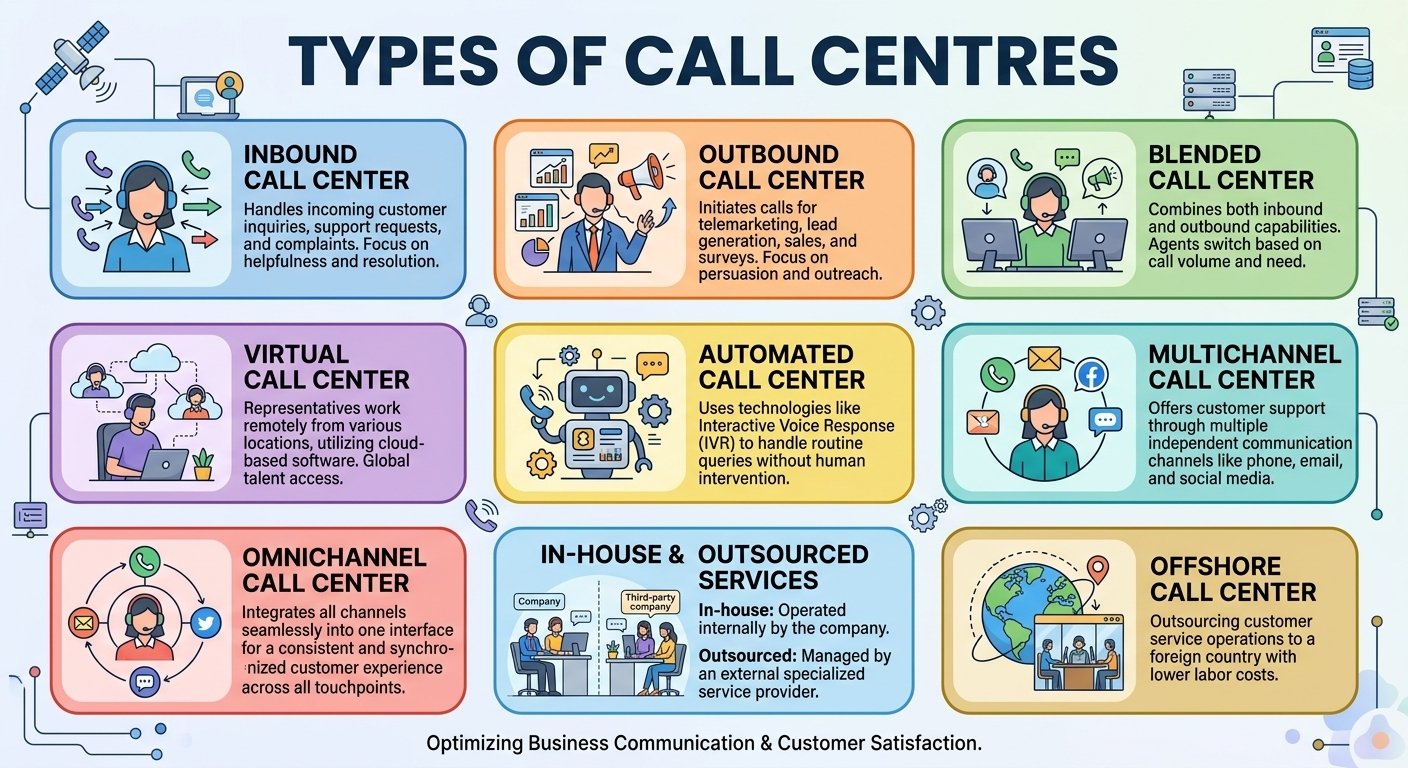
The 9 main types of call centers are inbound, outbound, blended, virtual, automated, omnichannel, multichannel, domestic, and offshore call centers. Each type serves a different purpose, from handling customer support and incoming inquiries to making sales calls, generating leads, sending automated messages, and supporting customers across multiple communication channels.
Understanding the various types of call centers is crucial for businesses aiming to optimize their customer service operations and sales strategies. A communication facility acts as the central hub for handling telephone interactions, but modern contact hubs now manage multiple digital channels simultaneously. The primary models include inbound, outbound, blended, virtual, automated, multichannel, omnichannel, in-house, outsourced, and offshore structures. Each category serves specific corporate needs, from dedicated technical support to proactive telemarketing campaigns. Selecting the ideal setup ensures efficient resource allocation, enhanced consumer satisfaction, and improved revenue generation. Let us explore these diverse frameworks to find your perfect match.
What Is a Call Center?
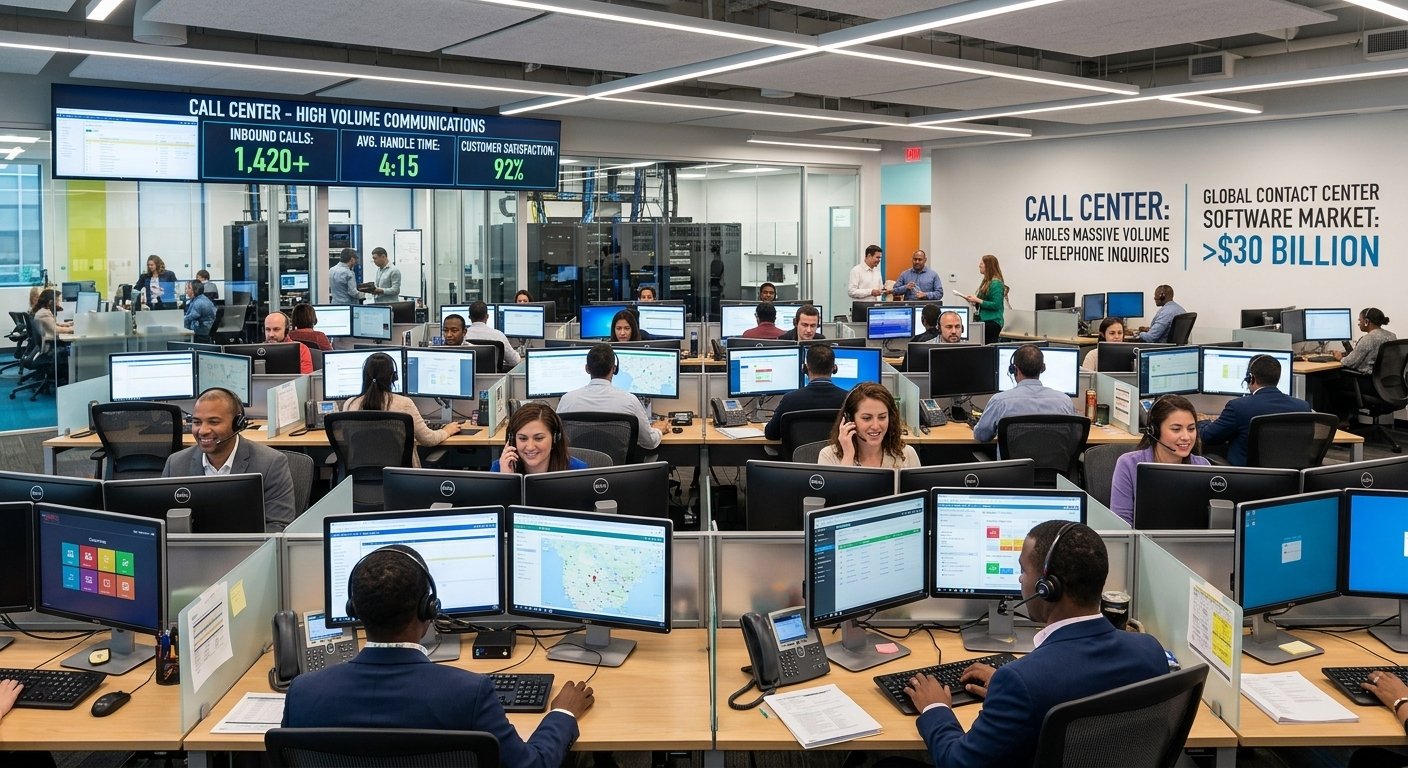
A standard business communication facility designed to handle a massive volume of telephone inquiries is traditionally recognized as a calling center. These centralized hubs function as the primary touchpoint between companies and their consumers, managing everything from basic product support to complex technical troubleshooting. When looking at standard call center definitions, the focus remains heavily on voice communication, though modern facilities have evolved drastically beyond simple phone lines. Dedicated representatives utilize specialized telephone call center systems to route, track, and resolve interactions efficiently while maintaining high satisfaction metrics.
The broader calling industry has transformed significantly due to changing consumer expectations and rapid technological advancements. Today, a centralized operation serves as the heartbeat of consumer relationship management, driving brand loyalty and seamless operational efficiency. According to recent industry statistics, the global contact center software market was valued at over USD 30 billion and continues to grow rapidly, proving that efficient communication frameworks remain vital for corporate success. Organizations globally rely heavily on these specialized environments to bridge the gap between their products and the people who use them daily.
9 Types of Call Centers to Know
Navigating the contact center industry requires a solid understanding of the different operational models available today. The table below outlines the core categories, highlighting their primary functions and the technology they utilize to streamline daily tasks.
| Call Center Type | Main Focus | Tools Typically Used | Best For |
| Inbound Call Center | Customer support & service | ACD, IVR, Skill-Based Routing | Businesses with frequent customer inquiries |
| Outbound Call Center | Sales & outreach | Click-to-Call, CRM Integration, Call Tagging, Outbound IVR | SaaS, banking, real estate, or market research teams |
| Blended Call Center | Sales & support combo | Mix of inbound/outbound tools | Companies handling both inbound queries and outbound sales |
| Virtual Call Center | Remote, decentralized teams | Cloud-based calling, CRM access, VoIP platforms | Global businesses or remote-first companies |
| Automated Call Center | Self-service & automation | IVR, SMS automation, appointment reminders, auto-responders | Companies aiming to reduce manual workload |
| Multichannel Call Center | Support across many communication channels | Phone, SMS, Email, Social Media, CRM tools | Businesses wanting cohesive, seamless experiences |
| Omnichannel Call Center | Unified multi-platform support | Cloud communication suites, Integrated CRM | Brands prioritizing a synchronized customer journey |
| In-house & Outsourced | Operational control vs. cost savings | Cloud platforms, local or third-party tools | Companies choosing between control and convenience |
| Offshore Call Center | Cost-effective outsourcing abroad | Similar to outsourced—often basic VoIP and CRM tools | Small businesses with tight budgets |
1) Inbound call center
Facilities strictly dedicated to receiving incoming communications from clients form the fundamental backbone of consumer care. Representatives manage product inquiries, complex technical support requests, and billing issues, ensuring callers receive immediate, accurate assistance. The different agents for call center environments must possess immense patience and exceptional problem-solving skills to navigate varying degrees of consumer frustration successfully.
Businesses experiencing high volumes of incoming traffic benefit immensely from implementing this specific setup. These business call centers utilize intelligent routing technology to connect callers with appropriate contact center specialists quickly, minimizing hold times. By focusing entirely on resolving incoming requests, organizations can dramatically improve their first-call resolution rates and foster long-term brand loyalty.
2) Outbound call center
Organizations aiming to generate fresh leads, conduct comprehensive market research, or execute aggressive telemarketing campaigns utilize facilities focused entirely on proactive outreach. Personnel initiate contact with potential or existing buyers to offer exclusive upgrades, perform detailed satisfaction surveys, or secure direct sales. This proactive approach remains a foundational cornerstone of the modern calling sector for driving consistent revenue generation.
Successful sales call centers rely heavily on predictive dialers and robust database integrations to maximize active representative talk time. By automating the tedious dialing process, staff members can focus their entire energy on delivering highly persuasive pitches and closing deals efficiently. The technology utilized here filters out disconnected numbers and voicemails, ensuring human representatives only connect with live prospects.
3) Blended call centers
Combining the sophisticated capabilities of receiving inquiries and initiating outreach creates a highly versatile and dynamic operational environment. Employees seamlessly switch between resolving incoming support tickets and executing outgoing sales campaigns based entirely on fluctuating daily traffic volumes. This distinct call center business model maximizes workforce utilization and effectively prevents costly idle time during historically slow operational periods.
Companies adopting diverse call centers enjoy superior operational flexibility alongside highly improved overall productivity metrics. The management teams can dynamically allocate their human resources on the fly, ensuring that neither service quality nor revenue-generating activities suffer during unexpected peak business hours. This dual-purpose strategy provides a massive competitive advantage in highly saturated commercial markets.
4) Virtual call center
The massive global shift toward remote work has heavily popularized decentralized operational models where representatives fulfill their duties from various geographical locations. Cloud-based software enables this distributed call center framework, allowing personnel to securely connect to the central corporate database via a standard internet connection. Companies utilizing this model save substantially on massive overhead expenses like physical office space, electricity, and hardware maintenance.
Employing a remote agent call center allows modern organizations to tap directly into a massive global talent pool without any restrictive geographical boundaries. This incredible flexibility naturally facilitates around-the-clock consumer support capabilities, as staff members can be systematically hired across multiple international time zones. Consequently, businesses can offer uninterrupted service without requiring employees to work exhausting overnight shifts.
5) Multichannel call centers
Modern consumers universally expect to interact with their favorite brands through their personally preferred mediums, whether that involves standard voice, email, live chat, or social media platforms. These dynamic facilities offer various communication paths, operating alongside traditional telephone call center systems to precisely accommodate highly diverse client preferences. Organizations deploying these specific setups recognize quickly that relying exclusively on voice interactions is no longer sufficient for modern commercial survival.
While offering numerous digital touchpoints is heavily advantageous, the separate channels in this specific framework often operate independently of one another. The types of call center services provided ensure consumers have plenty of communication options, though representatives might utilize completely distinct, separate software platforms to manage emails versus standard phone interactions. This sometimes requires consumers to repeat context if they switch platforms mid-resolution.
6) Omnichannel call centers
Elevating the multi-platform approach significantly, this advanced model seamlessly integrates every available communication channel into one highly unified digital interface. A buyer might initiate contact via a social media message, naturally transition to a detailed email thread, and conclude with a voice conversation without ever repeating their original issue. This perfect interaction continuity represents the absolute pinnacle of modern contact center customer care.
Representatives operating within these highly sophisticated setups gain immediate, unrestricted access to a comprehensive consumer interaction history regardless of the medium previously used. This shared call center visibility deeply empowers staff members to deliver highly personalized, remarkably efficient resolutions that systematically boost overall consumer satisfaction scores. Organizations utilizing this technology frequently see massive improvements in buyer retention metrics.
7) Automated call centers
Leveraging powerful artificial intelligence alongside interactive voice response technology allows forward-thinking organizations to effectively manage routine, repetitive inquiries entirely without human intervention. Callers can independently check banking account balances, securely process digital payments, or easily schedule routine appointments through highly intelligent voice prompts. Utilizing these specific types of call center software drastically reduces the exhausting daily workload placed upon human representatives.
Implementing comprehensive self-service systems represents a remarkably cost-effective corporate strategy for handling massive-volume, low-complexity interactions. The advanced telecom services for call centers ensure that buyers consistently receive immediate, accurate answers at any time of day or night. This heavy reliance on automation brilliantly enhances consumer convenience while simultaneously minimizing expensive operational labor costs.
8) In-house & outsourced call center services
Maintaining an internal communication facility grants organizations absolute, unconditional control over employee training, strict quality assurance, and critical data security protocols. Brands handling highly sensitive medical or financial information typically prefer keeping their consumer operations strictly within their own secure corporate structure. This internal setup guarantees that every representative embodies the exact cultural values of the parent brand.
Conversely, partnering directly with a specialized third party call center allows growing businesses to scale their operations rapidly while significantly reducing labor and infrastructure expenses. These external operational agencies specialize specifically in consumer relationship management, providing immediate access to expertly trained personnel and advanced telecommunications technology. This strategic outsourcing eliminates the urgent need for massive, risky upfront capital investments.
9) Offshore call centers
Expanding daily operations to foreign nations featuring substantially lower standard labor costs remains a highly popular strategy for commercial companies seeking massive budget reductions. These international call center organizations comfortably handle substantial volumes of basic, repetitive interactions, allowing the primary enterprise to allocate precious funds toward core product development. The financial savings generated through this international strategy can be genuinely staggering.
While the immediate financial benefits are undeniably attractive, commercial organizations must carefully navigate potential linguistic barriers and distinct cultural differences. Many successful global brands perfectly balance their operational approach by utilizing offshore teams exclusively for simple administrative tasks. Meanwhile, they retain premium domestic call center services specifically for handling highly complex, deeply sensitive consumer escalations requiring nuanced cultural understanding.
How To Choose the Right Call Center for Your Business
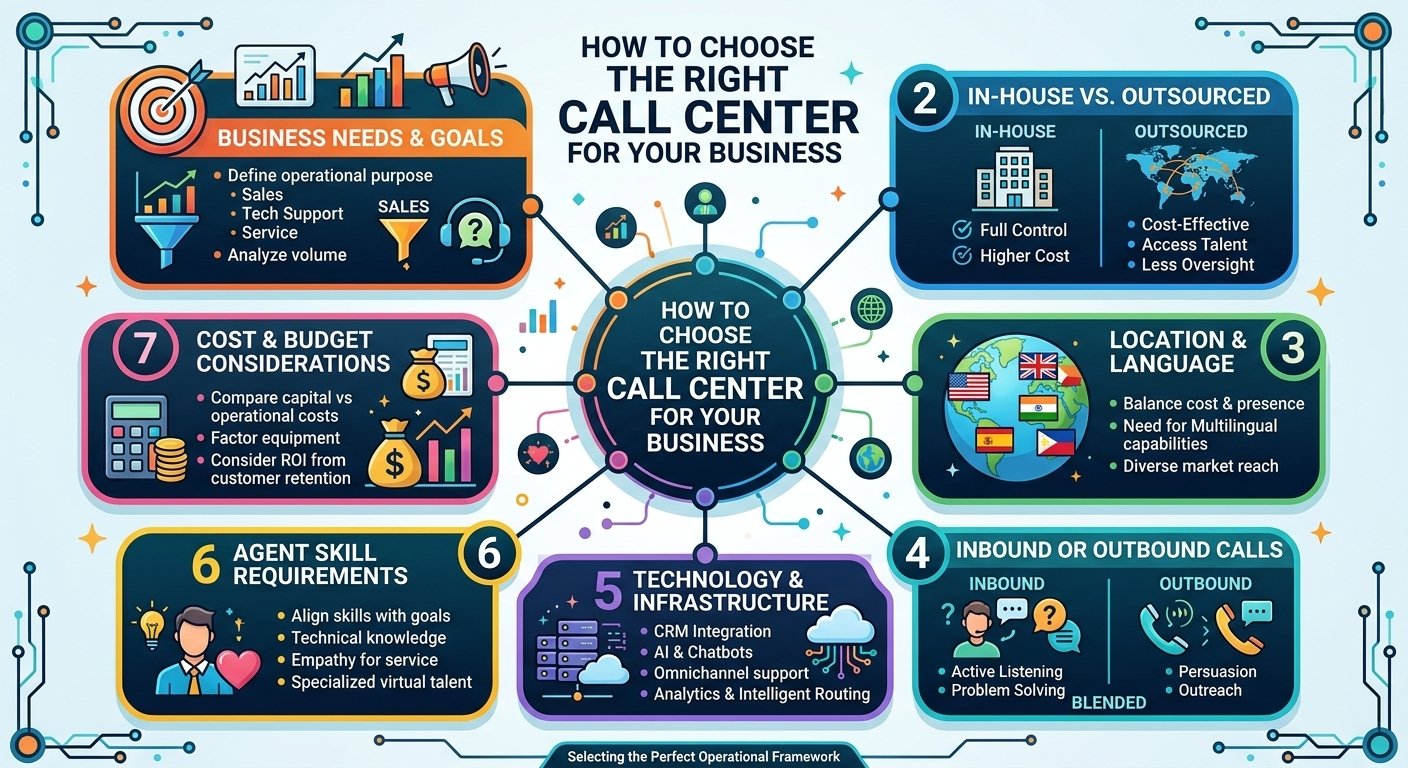
Selecting the perfect operational framework requires a highly comprehensive evaluation of your specific organizational goals and broader consumer expectations. Making the wrong choice can be disastrous; research indicates that 68% of consumers will completely abandon a brand after just one poor service interaction. Understanding how to select a bpo for contact center operations or deciding to build an internal team dictates your future commercial viability. Here are the crucial factors you must evaluate when making this incredibly vital business decision:
-
Business needs and goals: You must intimately understand your primary operational purpose, whether it involves aggressive sales generation, complex technical support, or basic administrative service. Analyzing this alongside your expected daily interaction volume heavily guides you toward selecting the most appropriate inbound, outbound, blended, virtual, or automated operational framework.
-
In-house vs. outsourced: Operating entirely internally provides maximum organizational quality control but undeniably demands substantial, ongoing financial investment. Alternatively, external outsourcing seamlessly provides highly cost-effective talent and premium infrastructure access at the unavoidable expense of direct, minute-by-minute operational oversight.
-
Location and language requirements: It is critical to thoughtfully evaluate potential financial savings against strict local presence necessities. You must ensure robust, highly accurate multilingual capabilities exist within your chosen virtual or offshore models to serve your diverse international demographic markets effectively and respectfully.
-
Inbound or outbound customer calls: Facilities managing massive incoming traffic strictly require personnel featuring exceptional active listening and rapid problem-solving skills. Conversely, proactive daily outreach demands extraordinarily high commercial persuasion capabilities, while blended operational environments necessitate a highly versatile, adaptable workforce completely capable of executing both functions effortlessly.
-
Technology and infrastructure: Ensure seamless, completely bug-free integration with your existing CRM platforms and internal database tools. You must heavily prioritize advanced digital functionalities like conversational artificial intelligence, unified omnichannel user experiences, robust internal analytics, and highly intelligent call routing capabilities.
-
Agent skill requirements: Perfectly align your employee proficiencies with your specific operational objectives, deliberately demanding strict technical knowledge for support roles and deep emotional empathy for service positions. Virtual setups brilliantly allow corporate management to tap directly into wider, highly specialized talent pools located globally.
-
Cost and budget considerations: Thoughtfully compare massive upfront capital expenditures against the projected ongoing operational costs across all available models. Always remember to carefully factor in necessary physical equipment expenses while accurately projecting the massive return on investment generated through improved buyer retention and increased revenue generation.
Final Words
Navigating the incredibly diverse calling industry landscape strictly requires a crystal-clear understanding of your unique corporate objectives and ever-changing consumer demands. Whether you ultimately opt for a fully automated digital self-service portal or a massive international offshore operation, the core goal remains delivering consistently exceptional interactions. Evaluating the numerous types of call centers empowers dedicated management teams to perfectly align their communication strategies with broader financial and operational targets. By investing confidently in the right digital infrastructure, appropriate personnel, and highly scalable technology, organizations can successfully transform their basic support departments into powerful, unstoppable drivers of long-term brand loyalty.
Frequently Asked Questions
-
What are the different types of call centers available?
The main operational categories include inbound, outbound, blended, virtual, multichannel, omnichannel, automated, in-house, outsourced, and offshore structures designed for specific commercial needs.
-
What is a BPO or call center?
Business Process Outsourcing involves strategically contracting specific operational responsibilities, such as technical customer service or proactive telemarketing, directly to a specialized third-party external service provider.
-
What are the four basic categories of call center services?
The fundamental core categories generally consist of inbound support resolution, proactive outbound sales, fully automated self-service, and dynamic blended operations handling both incoming and outgoing interactions simultaneously.
-
What are the 12 different types of customers?
Standard consumer profiles widely range from the highly potential, brand new, and intensely impulsive buyer directly to the deeply angry, highly demanding, and fiercely loyal brand advocate.
-
What is the 80/20 rule in call centers?
This highly standard global industry metric strictly mandates that exactly eighty percent of all incoming telephone communications must be successfully answered by a human representative within twenty seconds.
-
How does a virtual facility operate differently?
It utilizes highly advanced cloud-based telecommunications software, allowing trained representatives to work entirely remotely from any global geographic location rather than physically gathering inside a single central office.
-
Why do modern companies heavily prefer omnichannel frameworks?
They naturally provide a perfectly synchronized, highly seamless consumer experience across all digital platforms, absolutely ensuring historical context is perfectly preserved regardless of the chosen communication medium.
-
Where are most massive offshore operations geographically located?
Developing nations like India, the Philippines, and Mexico proudly host numerous outsourced communication hubs heavily due to their extraordinarily high English proficiency and significantly lower baseline operational costs.