An inbound call center is a specialized hub designed to handle incoming communications from clients seeking assistance, technical support, or product inquiries. Establishing a highly efficient inbound call center is fundamental to delivering exceptional service and ensuring long-term client retention. When buyers reach out, they expect swift, accurate, and empathetic responses.
By optimizing your internal operations and equipping agents with cutting-edge tools, organizations can transform standard interactions into meaningful brand-building opportunities. Mastering these conversations reduces wait times, skyrockets satisfaction rates, and creates a seamless experience. The strategies outlined here will elevate your entire customer care approach effortlessly.
What is an inbound call center?
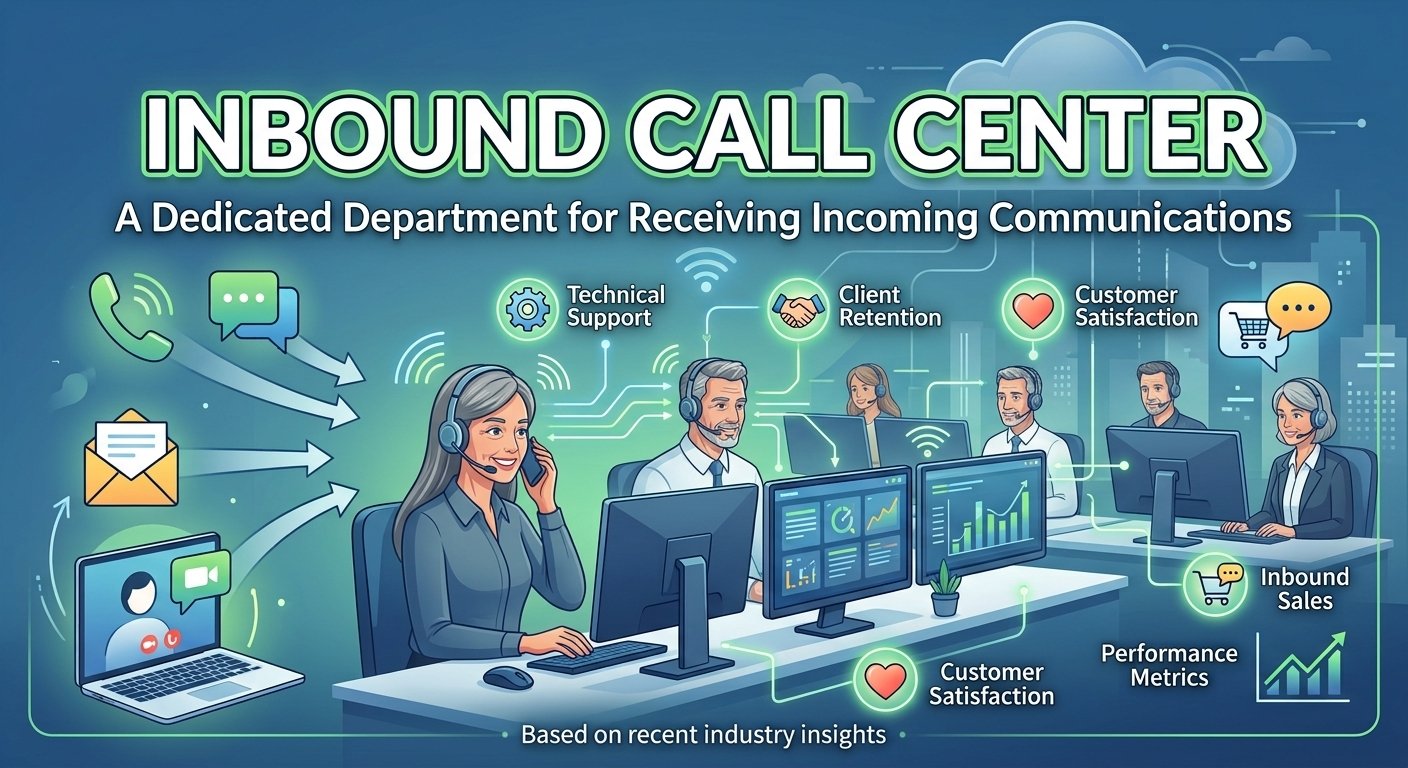
A dedicated department focused strictly on receiving incoming communications defines the core inbound call meaning perfectly. Modern consumer demands require businesses to maintain a highly responsive inbound contact center capable of addressing inquiries across various channels simultaneously. Agents working in this environment act as the primary point of contact for resolving complaints, guiding users through complex software, and providing detailed product information. This ecosystem often relies on robust inbound call center systems to efficiently route incoming traffic to the most qualified representatives available.
According to the Zendesk Customer Experience Trends Report 2026, seventy percent of consumers believe there is a clear gap between companies that leverage intelligent technology effectively in support environments and those that fail to adapt. Utilizing top-tier software call center inbound tools allows your team to meet these rising expectations seamlessly. Integrating advanced routing capabilities ensures that every inbound call service request reaches an expert capable of delivering an immediate resolution.
Inbound vs. outbound call center: What’s the difference?
| Feature / Characteristic | Inbound Call Center | Outbound Call Center |
| Origin of Communication | Initiated directly by the consumer. | Initiated by the call center agent. |
| Approach | Reactive: Agents receive incoming messages and calls to assist. | Proactive: Agents reach out to target prospects and customers. |
| Primary Function | Customer support, answering questions, and problem-solving. | Telemarketing, lead generation, and market research. |
| Main Objectives | Promptly addressing user concerns and ensuring high satisfaction scores. | Driving new revenue streams through aggressive outreach. |
| Business Impact | Focuses on client retention and building brand loyalty. | Focuses on acquiring new customers and expanding sales. |
Inbound call center services: What do businesses use inbound call centers for?
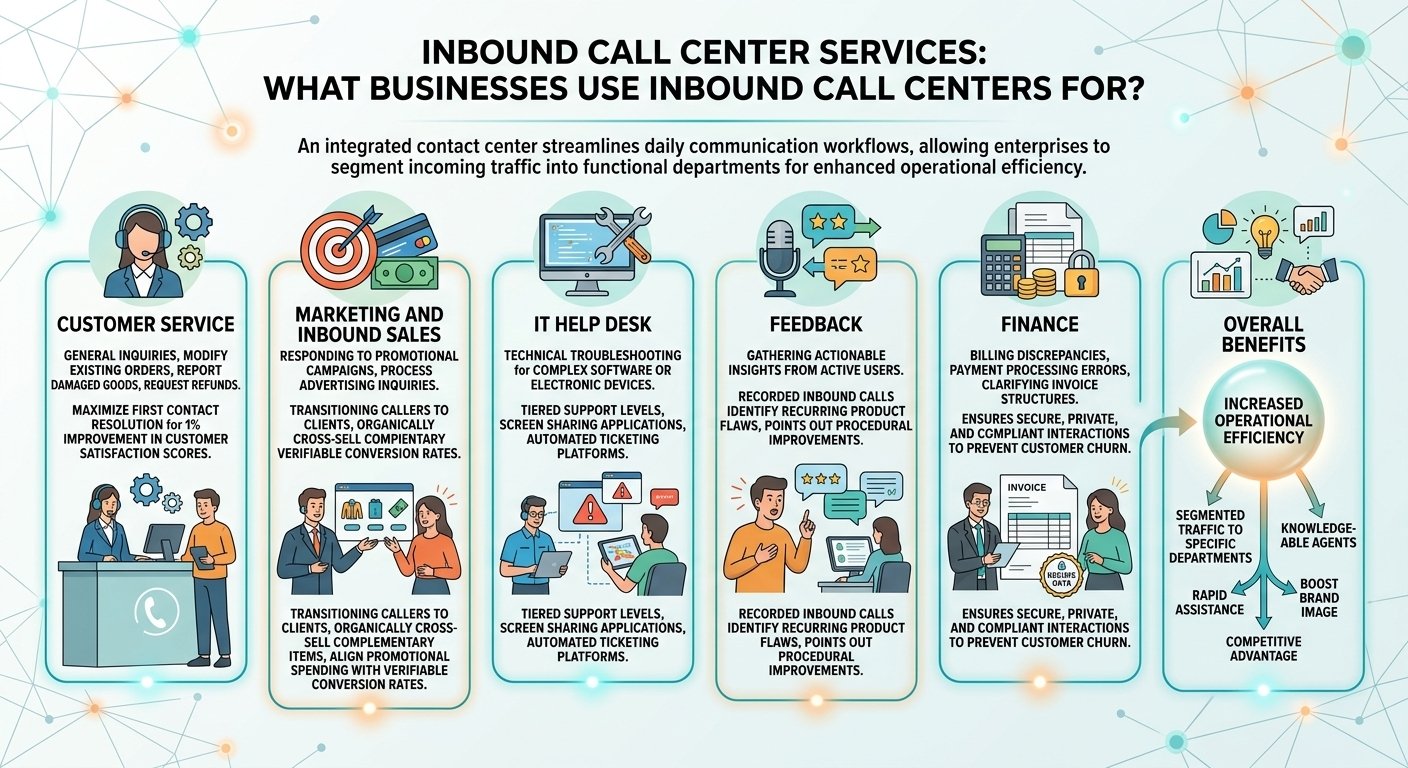
Companies across all industries leverage an integrated contact center to streamline their daily communication workflows efficiently. Deploying an effective inbound call management system allows enterprises to segment incoming traffic into specific functional departments based on the caller’s distinct needs. This logical division of labor significantly enhances overall operational efficiency.
-
Customer service
Handling general inquiries remains the most recognized function of any global inbound service operation today. Buyers expecting rapid assistance frequently dial the customer service inbound hotline to report damaged goods, modify existing orders, or request refunds. A well-equipped inbound customer contact center empowers representatives to resolve these daily challenges swiftly while maintaining a positive brand image.
Industry research emphasizes the importance of resolving issues on the very first attempt to maximize satisfaction. A study by the SQM Group revealed that for every one percent improvement in first contact resolution rates, businesses experience an identical one percent increase in overall client satisfaction scores. Equipping your inbound call center agent with comprehensive knowledge bases directly contributes to achieving these critical performance metrics.
-
Marketing and inbound sales (people responding to your marketing)
Promotional campaigns frequently generate a massive influx of potential buyers eager to learn more about advertised products. Whenever television commercials or online advertisements prompt viewers to contact a business directly, a specialized inbound call solutions team stands ready to process those inquiries. These representatives expertly transition curious callers into paying clients by answering specific product questions.
Organizations utilizing inbound call center services often train their staff to cross-sell complementary items during these interactions organically. By leveraging an intuitive inbound call center platform, marketing directors can seamlessly track which specific advertisements generate the highest volume of profitable incoming traffic. This collaborative approach aligns promotional spending directly with verifiable conversion rates.
-
IT help desk
Technical troubleshooting represents a critical function for companies offering complex software platforms or electronic devices. When users encounter system failures or require assistance configuring new applications, they depend on an inbound customer service call center to provide immediate technical relief.
To deliver superior technical assistance consistently, organizations implement specific structural methodologies:
-
-
Tiered support levels to categorize technical requests based on complexity and required expertise.
-
Screen sharing applications allowing representatives to diagnose software glitches in real time.
-
Automated ticketing platforms that track ongoing issues until a definitive resolution is achieved.
-
-
Feedback
Gathering actionable insights from active users allows companies to continuously refine their operational strategies and product offerings. An established inbound contact centre frequently processes calls from individuals eager to share their recent experiences, whether exceptionally positive or notably negative. Capturing this qualitative data requires agents possessing strong active listening skills and genuine empathy.
Advanced inbound call center technology simplifies the process of cataloging this feedback systematically for future analysis. Supervisors often review these recorded inbound calls to identify recurring product flaws or pinpoint areas requiring immediate procedural improvements. This ongoing feedback loop proves essential for businesses striving to maintain a competitive advantage in crowded consumer markets.
-
Finance
Billing discrepancies and payment processing errors inevitably prompt users to contact the appropriate financial department for clarification. Implementing dedicated call center services inbound guarantees that sensitive monetary inquiries receive the focused attention they demand. Representatives handling these specific channels must strictly adhere to compliance regulations while explaining complex invoice structures clearly.
Clients contacting the finance department typically experience heightened anxiety regarding their personal funds or account statuses. A reliable inbound contact center solution ensures these highly sensitive interactions remain secure, private, and fully compliant with international data protection standards. Resolving financial disputes efficiently prevents minor misunderstandings from escalating into severe customer churn.
How to choose the right inbound call center solution
Selecting the perfect technological infrastructure requires a comprehensive evaluation of your current operational bottlenecks and anticipated future growth. Decision-makers must prioritize software offering exceptional scalability, allowing the communication framework to expand seamlessly alongside the company. A premium inbound cloud contact center eliminates the need for expensive physical hardware while granting staff the flexibility to work remotely.
Evaluating potential vendors demands a structured approach to guarantee maximum return on technological investments: To ensure the chosen platform meets all your operational needs, you must analyze your anticipated traffic volume to prevent crashes during peak seasonal spikes, confirm flawless synchronization with your existing customer relationship management tools, investigate available AI enhancements like conversational analytics and automated transcription, and verify the provider’s technical support guarantees for comprehensive assistance during unexpected outages.
Inbound customer service and sales: Hints and tips to get it right
Optimizing daily performance requires a strategic blend of technological innovation and continuous workforce development. Implementing these refined management techniques will significantly boost your overall productivity levels.
1. Monitor your metrics regularly
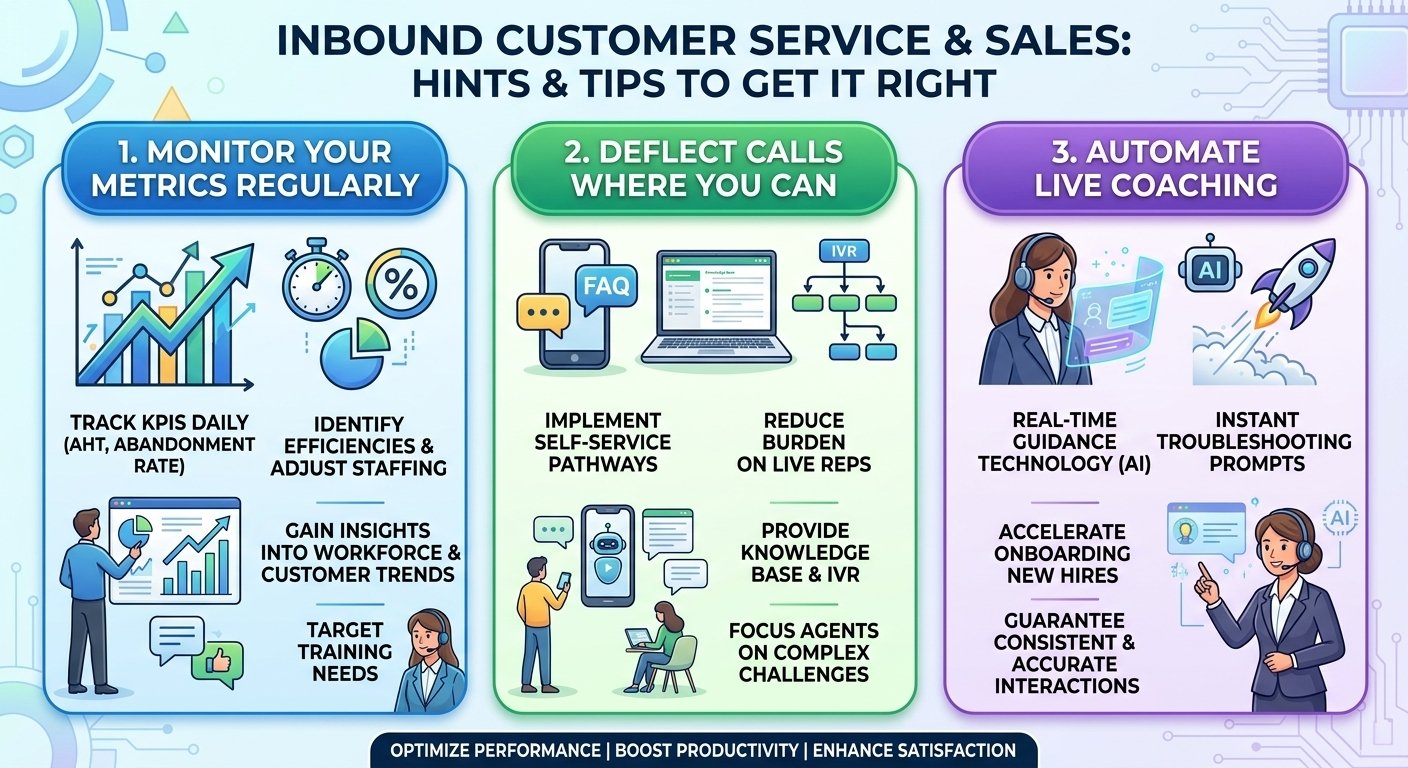
Maintaining absolute visibility over your daily operations is critical for identifying hidden inefficiencies before they escalate. An advanced inbound call center system continuously tracks essential key performance indicators like average handle time and abandonment rates. Leadership teams must review these statistics daily to adjust staffing schedules and optimize internal routing protocols accordingly.
Consistent metric monitoring reveals profound insights into individual workforce performance and broader consumer trends. When supervisors utilize a sophisticated inbound calling solution, they can easily identify which specific team members require additional training resources. This proactive approach to workforce management dramatically improves overall service quality and boosts team morale.
2. Deflect calls where you can
Reducing the burden on live representatives involves implementing intelligent self-service pathways for highly repetitive inquiries. Providing a comprehensive knowledge base or deploying interactive voice response menus allows users to resolve minor issues independently. This strategic deflection significantly lowers the total volume of routine inbound calls flooding your communication channels daily.
Deflection strategies ensure that your highly skilled workforce remains completely focused on resolving complex challenges requiring human empathy. Whenever an organization partners with an outsource inbound call center services provider, implementing these self-service barriers maximizes the efficiency of every billable minute. Empowering clients to find their own answers ultimately yields faster resolutions and higher satisfaction scores.
3. Automate live coaching
Real-time guidance technology revolutionizes how supervisors develop their staff during active client interactions. Artificial intelligence tools monitor ongoing conversations and instantly display relevant troubleshooting steps directly onto the representative’s screen. This immediate support mechanism prevents newly hired personnel from struggling when confronted with unfamiliar product inquiries.
Automated coaching tools dramatically reduce the time required to onboard new team members effectively. Instead of memorizing dense product manuals, agents receive contextual assistance precisely when the conversation demands specific technical knowledge. Leveraging this cutting-edge inbound contact center technology guarantees that every interaction remains professional, accurate, and highly efficient.
Read More: Is Google Phone Number Free? How to Get a Free Google Phone Number with Google Voice
Final Words
Establishing a world-class support environment requires significant dedication, continuous technological investment, and a profound understanding of modern consumer expectations. Optimizing your entire communication infrastructure ensures that every client interaction reinforces long-term brand loyalty and trust. The strategic integration of automated routing, real-time coaching, and comprehensive metric analysis transforms ordinary support departments into powerful revenue-generating assets.
Organizations must continually adapt their operational frameworks to meet the ever-changing demands of the global marketplace. Whether you manage an internal team or utilize specialized inbound call center outsourcing, maintaining a relentless focus on rapid problem resolution remains non-negotiable. Embracing these advanced methodologies guarantees your business will consistently deliver extraordinary experiences that easily outshine industry competitors.
FAQs
-
What makes an inbound call center different from an outbound one?
Handling client-initiated contact defines the primary function of this environment, focusing entirely on resolving active inquiries or technical issues. Conversely, outbound facilities rely on representatives proactively dialing out to generate new leads, conduct extensive market research, or close pending sales.
-
What features are essential for effective inbound call center operations?
Implementing intelligent routing protocols, automated call distribution, and comprehensive analytical dashboards guarantees smooth daily operations. Additionally, seamless integration with existing customer relationship management software ensures representatives possess immediate access to vital historical account data.
-
How should I structure call flows to reduce wait times and improve resolution rates?
Deploying interactive voice response menus allows users to select their specific issue category before speaking with anyone. This preliminary categorization ensures the system routes the individual directly to the most appropriate departmental expert immediately.
-
How can AI help inbound agents provide a better customer experience?
Artificial intelligence analyzes spoken conversations in real time to automatically display relevant product documentation directly on the representative’s monitor. This instant guidance drastically reduces hold times and prevents agents from transferring frustrated users multiple times.
-
What is an inbound call center?
A centralized department specifically configured to receive and process incoming communications from buyers requiring immediate assistance. These facilities manage various digital channels simultaneously to ensure every user receives prompt and accurate support.
-
How to answer an inbound call?
Representatives must consistently greet the individual warmly while immediately stating their name and the company title clearly. Maintaining an empathetic tone while actively listening to the presented issue ensures the interaction begins on a highly positive note.
-
What skills are needed for inbound calls?
Active listening, profound patience, and exceptional problem-solving capabilities remain absolutely vital for anyone working in this demanding field. The ability to navigate complex software swiftly while maintaining a friendly conversational tone also dictates long-term professional success.
-
Why is first contact resolution crucial for inbound operations?
Resolving an issue during the initial interaction prevents frustrated users from repeatedly clogging the communication queue with identical complaints. Achieving high resolution rates drastically lowers operational costs while simultaneously skyrocketing overall brand loyalty.
-
What is incontact?
A cloud-based communication platform designed to streamline incoming traffic routing and enhance overall workforce management capabilities seamlessly. Organizations utilize this specific software to unify their various digital messaging channels into one easily manageable interface.