
Latest News

The Blog

voip blogs
is rcs encrypted

Is RCS Encrypted? RCS Encryption Explained for Businesses

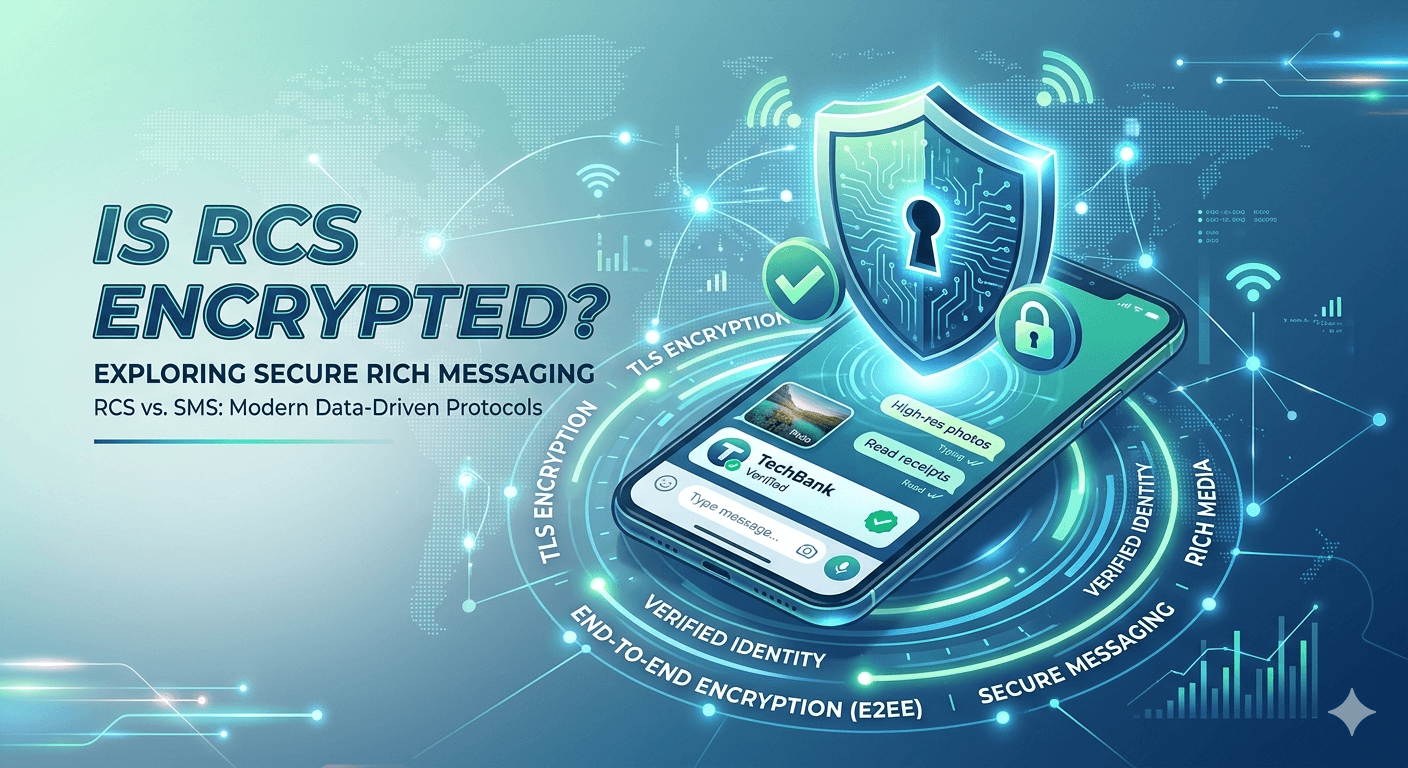
Is RCS encrypted? Rich Communication Services (RCS) is the modern successor to SMS, providing a secure and feature-rich messaging experience for both individuals and enterprises. Unlike traditional SMS, which lacks native encryption, RCS employs robust security protocols to protect data. For person-to-person conversations on Android devices, Google has integrated full end-to-end encryption, ensuring only the sender and receiver can read the content. For business-to-consumer communication, RCS utilizes Transport Layer Security to safeguard messages during transit. This dual-layered approach makes RCS a significantly safer alternative for sharing sensitive information, verified brand interactions, and high-quality media across mobile networks globally. What is RCS Messaging? Rich Communication Services, commonly known as RCS, is a communication protocol designed to replace the aging SMS and MMS standards. While SMS has been the backbone of mobile messaging for decades, it is limited by a 160-character cap and a total lack of security features. RCS brings the functionality of modern messaging apps like WhatsApp or iMessage directly to the native dialer or messaging app of a smartphone. It allows for high-resolution photo sharing, typing indicators, read receipts, and interactive buttons. Because it operates over data networks rather than traditional cellular signaling channels, it provides a much more flexible platform for innovation. The shift toward RCS is driven by the global need for a unified messaging standard that works across different carriers and manufacturers. The GSMA developed the Universal Profile to ensure that RCS features are consistent regardless of the network or device being used. This standardization is crucial for businesses that want to reach a wide audience without worrying about whether the recipient has a specific app installed. By leveraging the native messaging app, RCS ensures high open rates while offering the rich features of an over-the-top application. One of the most significant advantages of this technology is the ability to create branded experiences. Businesses are no longer restricted to plain text from a random short code. Instead, they can present a verified profile with a logo, brand colors, and interactive carousels. This transition not only improves user engagement but also addresses the core question: is rcs encrypted? The infrastructure behind RCS was built with modern security requirements in mind, providing a level of protection that SMS simply cannot match in today’s digital landscape. How RCS compares to SMS and OTT apps When comparing RCS to SMS, the security difference is night and day. SMS messages are sent over the air in plain text, meaning they can be intercepted by sophisticated hardware or through vulnerabilities in the signaling system. Furthermore, SMS does not support sender verification, which is why smishing attacks are so prevalent. RCS addresses these flaws by implementing encryption protocols and a strict verification process for businesses. While SMS is a legacy technology, RCS is a modern data-driven protocol that prioritizes the integrity and confidentiality of the message. Comparing RCS to over-the-top (OTT) apps like WhatsApp or Signal reveals a different set of trade-offs. OTT apps have long championed end-to-end encryption as a standard feature. RCS has been catching up, with Google’s implementation of encryption for one-on-one and group chats. However, the primary difference lies in accessibility. OTT apps require a specific download and account creation, whereas RCS is built into the phone. This makes RCS a more powerful tool for businesses that need to reach customers who may not want to manage multiple messaging applications for every brand they interact with. Another key differentiator is the control over data. OTT apps are often owned by private corporations that may have different data-sharing policies. RCS, being a carrier-supported standard, often falls under stricter telecommunications regulations. This provides an additional layer of oversight and accountability. For businesses looking for a balance between the reach of SMS and the rich features of WhatsApp, RCS provides the perfect middle ground, especially when considering whether is rcs messaging safe for handling customer queries and transactional notifications. Encryption in RCS: Current state The current state of RCS encryption is a dynamic landscape that has seen rapid improvements over the last few years. Initially, the GSMA standard for RCS did not mandate end-to-end encryption, focusing instead on the rich features and interoperability. However, as privacy became a top priority for users and regulators, major players like Google took it upon themselves to enhance the protocol. Today, if you are using Google Messages on an Android device to talk to another user on the same platform, your messages are automatically protected by end-to-end encryption, which answers the concern of are rcs messages encrypted for the majority of users. For business-to-consumer (B2C) messaging, the encryption landscape is slightly different but equally robust in its own way. While personal chats use E2EE, business messages typically rely on Transport Layer Security (TLS). This ensures that while the message is traveling from the business server to the user’s device, it cannot be intercepted or read by unauthorized third parties. This distinction is important because businesses often need to process or store messages for compliance and customer service reasons, which would be impossible if the content was fully encrypted end-to-end between the business and the end-user. According to research by Juniper Research, the number of RCS users is expected to reach nearly 1.2 billion by the end of 2024. This massive growth is pushing carriers and tech giants to standardize security even further. The industry is currently moving toward a more unified approach where encryption becomes the default for all types of RCS traffic. As Apple joins the RCS ecosystem with the release of iOS 18, the conversation around encryption is expanding to include cross-platform security, ensuring that the “green bubble” and “blue bubble” divide no longer implies a compromise in safety. Understanding the two layers of RCS encryption To fully grasp the security of this platform, it is necessary to look at the two primary methods of protection currently in use. Most users want to know is rcs secure, and the answer lies in how the data is handled at different points of its journey. By combining transport security with application-level protection, RCS creates a multi-faceted shield against cyber threats. These layers work together to ensure that whether you are sending a simple hello or a sensitive banking notification, the data remains confidential and unaltered. 1. On-the-wire encryption (TLS) On-the-wire encryption, primarily using Transport Layer Security (TLS), is the standard for almost all RCS communications. This protocol creates a secure tunnel between the user’s device and the service provider’s server. When a business sends a message, TLS ensures that the packet of data is scrambled into an unreadable format as it moves through the internet and carrier networks. This prevents “man-in-the-middle” attacks where a hacker might try to eavesdrop on the data being sent over public Wi-Fi or cellular towers. For enterprises, TLS is a critical component of rcs messaging security. It provides a guarantee that the data delivered to the carrier is the same data that reaches the customer. Because TLS is a well-established standard used in banking and web browsing, it offers a level of reliability that businesses can trust. Even if a message is not end-to-end encrypted, TLS ensures it is never floating around the web in plain text, which is a massive upgrade over the legacy SMS infrastructure. 2. End-to-end encryption (E2EE) End-to-end encryption (E2EE) is the gold standard for digital privacy. It ensures that the message is encrypted on the sender’s device and can only be decrypted on the recipient’s device. No one in between—not the internet service provider, not the carrier, and not even the messaging platform provider—has the keys to read the content. Google implemented E2EE for RCS by using the Signal Protocol, which is widely recognized as one of the most secure encryption methods available today. When users ask does rcs have end to end encryption, the answer is yes for personal Android-to-Android conversations. This feature is indicated by a small padlock icon on the send button. However, for business messaging, E2EE is less common because the business itself needs to be able to “read” the message to respond via an automated bot or a customer service agent. In the B2C context, the security emphasis is placed on the verified identity of the brand rather than the technical impossibility of the service provider seeing the content. What does this mean for businesses For a business, the security architecture of RCS means that they can finally offer a premium, secure communication channel that rivals specialized apps. Knowing is rcs messaging safe allows companies to move sensitive workflows, such as password resets, appointment reminders, and payment confirmations, onto a platform that customers already use. It reduces the risk of phishing because the sender’s identity is cryptographically verified by the carrier or a third-party aggregator. Moreover, the combination of TLS and verified identities allows businesses to build a much deeper level of trust with their audience. When a customer receives a message with a brand’s logo and a checkmark, they are far more likely to engage than if they receive a suspicious-looking text from an unknown number. This high-trust environment is a direct result of the integrated rcs security features that protect both the brand’s reputation and the consumer’s personal data. How GSMA standards shape secure messaging The GSMA acts as the governing body for the mobile industry, and its Universal Profile is what makes RCS a global reality. The standards set by GSMA include specific requirements for how data should be handled, how networks should interact, and how security should be implemented. By creating a unified set of rules, the GSMA ensures that a message sent from a user in London reaches a user in New York with the same level of integrity. These standards are constantly evolving to address new security threats. The GSMA’s role is to facilitate collaboration between carriers like Vodafone and AT&T, and tech giants like Google and Apple. By following these standards, enterprise RCS platforms can guarantee that they are utilizing the most up-to-date security protocols. This collaborative approach is what separates RCS from proprietary apps, creating an ecosystem that is both open and secure for all participants. Privacy and data protection in RCS messaging Privacy is a top concern for modern consumers, and RCS is designed with “privacy by design” principles. Unlike SMS, which can be stored on carrier servers for long periods in an unencrypted state, RCS providers often have much shorter retention periods and more stringent access controls. Because is rcs safe is a primary question for many, the protocol ensures that metadata—the data about the message—is also handled with care. In many jurisdictions, the handling of RCS data is subject to strict telecommunications privacy laws. This means that carriers are legally obligated to protect the confidentiality of the communications they facilitate. For businesses, this adds a layer of legal protection, as they are working within a regulated framework that prioritizes the rights of the individual. Using RCS helps businesses align with the growing global trend toward data sovereignty and user privacy. How RCS handles user data vs. other messaging platforms Different messaging platforms have different business models, which often impacts how they handle user data. Many OTT apps make money by analyzing user behavior or selling data to advertisers. RCS, being tied to the telecommunications industry, typically operates on a more traditional service-based model. This often results in a cleaner data privacy profile for the user. When we look at rcs encryption, we see a focus on protecting the message content rather than harvesting it for secondary purposes. Furthermore, RCS gives users more control over their data. Features like read receipts and typing indicators can usually be toggled off in the settings, allowing for a more private experience. Because RCS is the native messaging solution, it doesn’t require the user to upload their entire contact list to a third-party server in the same way some social media apps do. The data remains within the trusted environment of the mobile OS and the carrier network. Building trust with verified sender identities and branded messages One of the most powerful security features of RCS for businesses is the Verified Sender program. Before a business can send RCS messages, they must undergo a rigorous verification process. This involves proving their identity and their right to represent the brand. Once verified, their messages appear with a verified checkmark, a custom logo, and the brand’s name. This is a massive deterrent for hackers who often use SMS spoofing to trick users into clicking malicious links. This branding does more than just look good; it acts as a visual seal of authenticity. When a user sees a verified brand, they know that the message is rcs secure and that it actually comes from the company it claims to be from. This reduces the cognitive load on the user, who no longer has to scrutinize every digit of a short code to determine if a message is legitimate. For businesses, this translates to higher conversion rates and a significant reduction in fraud-related costs. How enterprise RCS platforms support privacy and compliance Enterprise-grade RCS platforms, provide the infrastructure needed to manage high-volume messaging while maintaining strict privacy standards. These platforms act as a bridge between the business’s internal systems and the global RCS network. They provide advanced tools for managing opt-ins, ensuring that businesses only contact customers who have given explicit permission, which is a cornerstone of privacy regulation. These platforms also offer sophisticated encryption at rest, meaning that any data stored on their servers is protected by high-level cryptographic keys. By using an enterprise platform, companies can ensure that their rcs messaging security meets the highest industry standards. This includes detailed logging for audit trails, secure API endpoints for data transfer, and automated tools to strip sensitive information from logs, ensuring that privacy is maintained at every step of the communication lifecycle. Compliance and enterprise readiness with RCS messaging For large organizations, security is only one part of the puzzle; compliance is the other. Businesses in sectors like finance, healthcare, and insurance must follow strict rules regarding how they communicate with clients. RCS is uniquely positioned for enterprise readiness because it was built to integrate with existing regulatory frameworks. When businesses ask is rcs messaging safe, they are often also asking if it will help them stay on the right side of the law. Why compliance matters in modern messaging In an era of massive data breaches and multi-million dollar fines, compliance is no longer optional. Regulations like GDPR in Europe, CCPA in California, and various financial regulations globally demand that businesses protect customer data. Failure to do so can lead to devastating reputational damage and legal consequences. RCS provides the tools necessary to meet these challenges by offering secure transit, verified identities, and clear opt-out mechanisms. Using a compliant messaging channel also builds long-term loyalty. Customers are increasingly aware of their digital rights and prefer to interact with brands that respect their privacy. By choosing a platform that prioritizes rcs messaging security and regulatory compliance, a business demonstrates that it values its customers’ safety. This proactive approach to compliance can be a significant competitive advantage in a crowded marketplace. Key regulatory frameworks supported by RCS RCS is designed to be compatible with major global privacy and security frameworks. For example, under GDPR, businesses must have a lawful basis for processing personal data and must provide users with the right to be forgotten. RCS supports this by offering automated opt-out keywords and clear sender identification. In the United States, the TCPA (Telephone Consumer Protection Act) regulates how businesses can contact consumers via mobile; RCS platforms provide the tracking and consent management tools needed to adhere to these rules. In the financial sector, regulations often require that all communications be archived and searchable for a certain period. Enterprise RCS solutions allow for the secure logging of messages in a way that satisfies these requirements without compromising the user’s privacy. By providing a clear audit trail, RCS ensures that businesses can prove their compliance to auditors and regulators whenever necessary. Enterprise features that support compliance Standard RCS features are augmented by enterprise-specific tools to ensure total compliance. These include: Consent Management: Systems that automatically track when a user opts in or out of receiving messages, ensuring no one is contacted illegally. Data Anonymization: The ability to mask personal information in logs so that support staff can troubleshoot issues without seeing sensitive customer data. Regional Data Hosting: Many enterprise platforms allow businesses to choose where their data is stored, helping them comply with data residency laws. Advanced Reporting: Detailed analytics that provide insight into delivery rates and user engagement while adhering to privacy-first reporting standards. Top capabilities of RCS for businesses The capabilities of RCS go far beyond simple security. It is a full-featured marketing and customer service tool. Businesses can use rich cards to show product images, suggest replies to guide the conversation, and even integrate payment gateways for seamless in-app purchases. This rich functionality, combined with the assurance that rcs secure protocols are in place, makes it a superior choice for any company looking to modernize its mobile strategy. Another key capability is the use of carousels. A retail brand can send a carousel of the latest products, allowing the user to swipe through options and click a button to “Buy Now” or “Learn More.” Because these interactions happen within a verified and secure environment, the friction of moving from a text message to a browser or a separate app is removed. This leads to a much more cohesive and satisfying customer journey. Use cases of RCS for businesses There are countless ways businesses can leverage the security and richness of RCS. In the travel industry, an airline can send a boarding pass as a rich card with a QR code that is updated in real-time if the gate changes. Because is rich communications safe, the passenger can trust that their flight details are secure. In the banking sector, RCS can be used for fraud alerts where the user can click a “Yes” or “No” button to confirm a transaction, significantly speeding up the resolution process compared to a phone call. Retailers can use RCS for personalized promotions and loyalty program updates. By using verified sender identities, they can ensure their coupons are not mistaken for spam. Healthcare providers can send appointment reminders with an “Add to Calendar” button and a secure link for pre-appointment check-ins. These use cases demonstrate how RCS takes the reliability of SMS and adds the security and functionality of a high-end application. Challenges and future outlook for RCS security While RCS is a massive step forward, it is not without its challenges. The journey toward a fully secure, global messaging standard involves navigating complex technical and political landscapes. However, the momentum behind the protocol suggests that these hurdles are being overcome. Understanding the current challenges is key to understanding the future of rcs security and how it will continue to evolve to meet new threats. 1. Fragmentation across devices, carriers, and networks One of the primary challenges for RCS has been fragmentation. In the early days, different carriers implemented different versions of RCS, leading to interoperability issues. If a user on Carrier A sent an RCS message to a user on Carrier B, it might fall back to SMS if the two networks didn’t “speak” the same version of the protocol. This fragmentation also affected encryption, as security features were not always consistent across all implementations. Fortunately, the industry has rallied around the GSMA Universal Profile, which has largely solved these interoperability issues. Today, the vast majority of carriers and device manufacturers are on the same page. The recent announcement that Apple will support RCS means that the final major piece of the puzzle is falling into place. This will lead to a more unified and secure messaging experience for everyone, regardless of which phone they choose to carry. 2. End-to-end encryption adoption progress While Google has successfully implemented E2EE for a large portion of RCS users, it is not yet a universal feature for all RCS traffic. The next frontier is ensuring that E2EE works across different platforms and for all types of conversations. This requires cooperation between Google, Apple, and the GSMA to define a cross-platform encryption standard. The goal is to reach a state where is rcs encrypted is a resounding “yes” for every single interaction, whether it’s P2P or B2C. There is also the challenge of balancing encryption with the needs of law enforcement and regulatory bodies. Different countries have different views on E2EE, and navigating these legal requirements while protecting user privacy is an ongoing process. However, the trend in the tech industry is clearly moving toward more robust, default encryption as the standard for all digital communication. Read More: Visuwell Telehealth: How to Use Visuwell Platform? Conclusion The question of is rcs encrypted is central to the future of mobile communication. As we have explored, RCS provides a sophisticated, multi-layered security approach that far exceeds the capabilities of traditional SMS. With TLS protecting data in transit and E2EE securing personal conversations, RCS offers a safe and trusted environment for both consumers and businesses. The addition of verified sender identities further strengthens this trust, creating a messaging ecosystem where transparency and safety are the defaults. For businesses, RCS represents an unparalleled opportunity to engage with customers through a rich, interactive, and secure channel. By choosing the right partner and following best practices for privacy and compliance, companies can build deeper relationships and drive better results. As the technology continues to mature and adoption becomes universal, RCS is set to become the global standard for how we connect, share, and conduct business on our mobile devices. FAQs Is RCS encrypted? Does RCS have end-to-end encryption? RCS utilizes different types of encryption depending on the context. For personal chats between Android users using Google Messages, end-to-end encryption (E2EE) is standard, meaning only the sender and receiver can read the messages. For business-to-consumer messages, Transport Layer Security (TLS) is used to encrypt the data while it is in transit between servers and devices. This ensures that while the message is moving through the network, it cannot be intercepted by third parties, providing a high level of security for all types of interactions. What do we know about end-to-end encryption of RCS between Android and iPhones, if anything? Currently, the most common form of E2EE for RCS is through Google’s proprietary implementation in the Google Messages app. As Apple integrates RCS support into iOS, the industry is working toward a standardized cross-platform encryption method. While initial RCS support on iPhone may rely on standard TLS encryption, both Google and Apple have expressed interest in working with the GSMA to bring a unified end-to-end encryption standard to the RCS Universal Profile, which would secure messages between different operating systems. Tell us about “encrypted in transit.” Can you explain encryption when it comes to a business’ RCS messages? Encrypted in transit means that the data is protected while it is traveling from one point to another. For a business, when they send an RCS message, it is encrypted using TLS before it leaves their server or the messaging platform’s server. It remains encrypted as it travels through the internet and the carrier’s network until it reaches the user’s phone. This prevents hackers from “sniffing” the data on the network, ensuring that sensitive information like one-time passwords or personal notifications remains private during delivery. How does a user opt in to receive RCS messages from a business? How do they opt out? Users typically opt in to receive RCS messages by providing their phone number and explicit consent through a website, app, or physical form. In many cases, a user might also initiate the conversation themselves, which acts as a form of consent. To opt out, RCS provides a standardized and easy process. Users can usually reply with keywords like “STOP” or use the built-in “Block & Report Spam” features in their messaging app. This gives the user complete control over who can message them, enhancing the overall safety and quality of the channel. How does RCS help with spam? RCS helps combat spam through its strict Verified Sender program. Unlike SMS, where anyone can send a message from a random number, RCS businesses must be vetted by carriers or aggregators before they can send messages. This makes it much harder for scammers to operate. Furthermore, RCS apps have advanced spam detection algorithms that can identify and filter out suspicious messages. Because businesses are tied to a verified profile, they are less likely to engage in spammy behavior as it would lead to their verified status being revoked. What is the process for a business getting verified to send RCS? Who is involved in the decision-making process? The verification process involves several steps and multiple parties. A business typically works with an RCS provider like, which collects the brand’s details, including their legal name, logo, and website. This information is then submitted to the carriers or a central verification authority. They verify that the business is legitimate and has the right to use the brand assets. Once the background check is complete, the business is granted a verified profile, allowing them to send branded messages with the official checkmark. Who assigns the “verified” status and is it trustworthy? The verified status is typically assigned by the mobile network carriers or authorized third-party aggregators that manage the RCS ecosystem. It is highly trustworthy because it is based on a rigorous vetting process that includes legal and operational checks. This system is much more secure than the open nature of SMS, as it creates a “closed” list of authorized senders. This verification acts as a digital certificate of authenticity, giving consumers the confidence that the message they are seeing is genuine. Is RCS GDPR compliant? Yes, RCS can be fully GDPR compliant when implemented correctly. The protocol supports essential privacy features like clear sender identification, secure data transmission, and easy opt-out mechanisms. Enterprise platforms that facilitate RCS also provide the necessary data handling tools, such as data encryption at rest and logging controls, to help businesses meet their GDPR obligations. Because RCS is a regulated telecommunications service, it often adheres to even stricter privacy standards than many unregulated internet-based messaging apps.

Read More
Visuwell

Visuwell Telehealth: How to Use Visuwell Platform?

The visuwell platform is a premier software-as-a-service solution designed to empower health systems with scalable, patient-centric virtual care capabilities. By facilitating seamless medical interactions, visuwell enables healthcare providers to meet the growing consumer demand for remote consultations while simultaneously reducing operational overhead. The platform is engineered to be browser-based and plugin-free, ensuring that both clinicians and patients can connect instantly from any device. With a strong emphasis on interoperability and security, visuwell integrates directly into existing electronic health records, providing a unified ecosystem that streamlines clinical workflows and enhances the overall quality of modern patient care delivery across diverse medical specialties. Overview of the visuwell platform and its role in modern care The shift toward virtual care has evolved into a foundational pillar of global healthcare, with the Visuwell platform leading as a cloud-native SaaS model designed to eliminate the technical friction of legacy systems for large-scale health organizations. By prioritizing a professional virtual experience that mimics in-person visits, the ecosystem serves as a competitive differentiator that increases patient access and improves clinical outcomes while significantly reducing the total cost of care. For administrators, the platform provides essential analytical insights and centralized controls, allowing for the seamless management of diverse departments or independent organizations through a single interface, making it a versatile choice for everything from community hospitals to academic medical centers. As telehealth utilization remains nearly 40 times higher than pre-pandemic levels, the success of digital health initiatives increasingly depends on easing the burden on clinical staff through intuitive, user-centric design. Visuwell addresses the challenge of clinician burnout by integrating a user experience that mirrors natural clinical workflows, significantly reducing the clicks required to launch sessions and ensuring patient data is readily accessible. By focusing on these streamlined interactions, the platform allows providers to shift their attention away from the technology and back to the patient, ensuring higher adoption rates and sustained operational efficiency in an increasingly digital landscape. How the visuwell platform handles adaptable multi-org workflows Large health systems face the significant challenge of managing the diverse workflow requirements of various clinical departments, from behavioral health to emergency consultations. The Visuwell platform addresses this complexity through an adaptable multi-org workflow engine that allows individual clinics to configure their own intake forms, scheduling protocols, and digital waiting rooms while maintaining a unified organizational posture for security and billing. This granular control, a frequently praised feature in Visuwell reviews, enables medical directors to seamlessly translate their specific physical office protocols into a digital format, supporting both on-demand urgent care and structured specialty service lines. Beyond internal customization, these multi-org capabilities are essential for fostering collaborative care and interoperability between different healthcare entities. By utilizing a hub-and-spoke model, the platform allows specialists at major medical centers to be easily integrated into virtual sessions at remote facilities, effectively bridging geographic gaps in care. This level of connectivity is particularly vital for rural healthcare initiatives, as it ensures that specialized expertise is accessible for critical cases, ultimately improving the timeliness of medical interventions and the overall efficiency of shared healthcare networks. The advantages of cloud-based and browser-deployed visuwell systems The Visuwell platform’s technical architecture is built on a browser-deployed, cloud-based philosophy that eliminates the need for software downloads, plugins, or complex updates. By leveraging WebRTC technology, the system enables high-definition video communication directly within modern web browsers like Chrome and Safari, overcoming the connectivity hurdles and administrative barriers common in legacy telehealth tools. This frictionless approach is a major advantage for IT departments, as it drastically reduces help desk support requests related to installation errors. For patients and providers, the simplicity of joining a session with a single link ensures a successful first-time connection, fostering the trust and satisfaction necessary for long-term engagement with virtual care services. Beyond ease of use, the cloud-native design provides inherent scalability, allowing the platform to automatically handle increased traffic as an organization grows from a handful of providers to a massive enterprise network without requiring additional hardware investments. This flexibility is mirrored in Visuwell’s pricing models, which are structured to evolve alongside organizational usage, enabling health systems to launch focused pilot programs before committing to full-scale deployments. Unlike rigid, on-premise solutions that require significant upfront capital expenditure, this modular growth path allows providers to expand their virtual service lines in a cost-effective manner that aligns directly with their clinical and financial success. Seamless EHR integration within the visuwell environment Visuwell prioritizes seamless interoperability by integrating directly with major Electronic Health Record (EHR) systems such as Epic, Cerner, and Meditech, ensuring that virtual visits are a cohesive part of the continuous patient record rather than isolated data silos. This deep integration allows healthcare providers to launch telehealth sessions directly from their familiar EHR dashboards, which automatically populates relevant patient demographics and clinical history. By eliminating the friction of manual data entry, the platform creates a more efficient clinical environment where medical professionals have immediate access to critical information, establishing a more reliable and unified digital health infrastructure. This integrated approach significantly enhances clinical efficiency, with research from the Journal of the American Medical Informatics Association (JAMIA) indicating that such systems can reduce administrative documentation time by up to 25%. The platform facilitates a bi-directional data flow, ensuring that encounter notes and session data are pushed back into the EHR to streamline billing and support long-term care coordination across the entire medical team. Beyond standard video calls, the platform also supports high-acuity consultations by interfacing with auxiliary clinical tools like digital stethoscopes and otoscopes. This comprehensive diagnostic capability allows providers to perform complex remote assessments, effectively expanding the range of conditions that can be safely and accurately managed through virtual care. Collaborative features of the visuwell platform for clinical teams The Visuwell platform extends beyond simple one-on-one video calls by offering a suite of integrated collaborative tools, such as interactive whiteboards, secure live chat, and multi-party calling capabilities. These features facilitate complex clinical interactions, such as a specialist sharing and annotating diagnostic results in real-time for both a patient and their primary care physician. The platform’s live chat function further enhances communication by allowing clinicians to coordinate privately or share educational resources without disrupting the flow of the visit. By embedding these tools directly into the core interface, the platform ensures that providers can manage multi-disciplinary consultations and educational sessions seamlessly without having to navigate between disparate applications. In addition to real-time communication, the platform’s secure document-sharing capabilities play a vital role in patient education and post-visit compliance. Clinicians can immediately upload discharge instructions, prescriptions, and educational materials, which patients can then download and review on their own devices. This interactive functionality transforms the virtual encounter from a passive consultation into an active, collaborative health session. By providing patients with the digital tools and information they need to manage their recovery at home, the platform fosters a sense of empowerment and encourages individuals to take a more proactive role in their own long-term health journey. White-labeling and the visuwell API toolkit for custom branding For many health systems, maintaining a consistent brand identity is vital for patient loyalty and trust. The visuwell platform offers extensive white-labeling options that allow organizations to brand the entire telehealth experience as their own. From the login screen and the digital waiting room to the automated email notifications, every touchpoint can be customized with the organization’s logos, colors, and tone of voice. This ensures that the patient feels they are interacting with their trusted local healthcare provider rather than a third-party technology vendor. To support deeper customization, the platform provides a comprehensive visuwell api toolkit featuring Single Sign-On capabilities. This allows developers to embed the virtual care functionality directly into an existing patient portal or mobile application. By using the API, an organization can build a completely bespoke user interface that leverages the powerful back-end video and data management capabilities of the platform. This level of flexibility makes the system highly attractive for organizations that have already invested heavily in their own digital patient engagement strategies and are looking for a best-in-class video engine to power their services. The inclusion of SSO is a major security and usability feature that simplifies access for both clinicians and patients. Providers can use their existing corporate credentials to access the visuwell login, eliminating the need to manage another set of usernames and passwords. This reduces the risk of password-related security breaches and ensures that access can be quickly revoked if an employee leaves the organization. For patients, SSO can mean a seamless transition from their medical record portal into a video visit, creating a unified digital front door for all their healthcare needs. Maintaining HIPAA Compliance and Security in the VisuWell Platform Security is a foundational pillar of the VisuWell platform, engineered to exceed the rigorous legal and ethical requirements of the healthcare industry. The system is built from the ground up to be fully HIPAA compliant, ensuring that all Protected Health Information (PHI) is shielded by industry-standard encryption protocols during transit and while at rest. This comprehensive protection extends beyond live video and audio streams to encompass metadata, chat logs, and any documents shared during a session, providing health systems with a robust defense against data breaches and regulatory penalties. To complement these technical shields, VisuWell incorporates sophisticated administrative safeguards designed to maintain total environment control. Administrators have access to detailed audit logs that track every interaction within the system, providing clear visibility into who accessed specific records and when. Furthermore, the platform prevents unauthorized access through uniquely generated session links and strict authorization requirements, effectively eliminating risks like “zoom-bombing.” This dedication to transparency and security, validated through rigorous audits, allows clinical teams to focus entirely on patient care. Consumer Device Compatibility and Mobile-First VisuWell Architecture VisuWell utilizes a mobile-first architecture designed to meet the expectations of modern patients who require healthcare access on their everyday devices. The platform features a fully responsive interface that automatically optimizes its layout for smartphones, tablets, and laptops, ensuring a high-quality user experience regardless of screen size. This approach is particularly vital for reaching younger demographics and underserved populations who may rely on mobile phones as their primary or only gateway to the internet and virtual medical services. A significant advantage of the platform is its browser-based, plugin-free design, which allows patients to join a virtual waiting room in seconds via a simple text link. By removing the need for complex app downloads and installations, VisuWell significantly reduces technical barriers that often lead to high “no-show” rates. Additionally, the technology is optimized to perform reliably even on lower-bandwidth connections, dynamically adjusting video quality in real-time to ensure that the patient-provider conversation remains stable and clear in any environment. Understanding VisuWell Pricing and Implementation Strategies VisuWell offers a transparent and scalable pricing model designed to accommodate the financial and operational needs of diverse healthcare organizations. Rather than a one-size-fits-all approach, the platform provides various service tiers, allowing small private practices and massive health systems alike to align their costs with their actual usage. This flexibility ensures that organizations only pay for the features they need, making enterprise-grade telehealth tools accessible across the entire spectrum of healthcare delivery. The implementation process is managed by a dedicated support team that guides organizations through technical setup and clinical workflow integration. Recognizing that successful adoption requires effective change management, VisuWell provides comprehensive training sessions and tutorials to build clinician confidence before their first live encounter. Prospective clients are encouraged to participate in a platform demo, which serves as a vital opportunity for stakeholders to see the interface in action and evaluate how the system’s deep integration capabilities will fit into their existing infrastructure. Support, Partners, and the Growing VisuWell Ecosystem The VisuWell ecosystem is enhanced by a robust partners program that integrates the core platform with a wide array of third-party clinical and technology services. These partnerships enable advanced functionalities such as integrated language translation, specialized medical hardware, and remote patient monitoring tools, keeping the platform at the forefront of digital health innovation. By collaborating with industry leaders, VisuWell transforms from a simple video tool into a comprehensive clinical hub that can be customized to meet highly specific medical needs. Customer success is further supported by a responsive service team trained to handle the unique challenges of a healthcare environment. Whether addressing simple login issues or complex API integrations, the support staff provides a reliable safety net for both providers and administrators to ensure minimal downtime. Furthermore, the platform’s development roadmap is heavily influenced by its community of users, with many core features being developed in direct response to feedback from the clinical teams who use the system daily. Read More: How to Set Up a VoIP Phone System at Home? 7 Simple Steps Comparing VisuWell to Common Telehealth Competitors In a competitive market, VisuWell distinguishes itself through its deep clinical focus and ease of integration compared to generic video conferencing tools. While some competitors offer basic “healthcare” versions of their software, they often lack the native EHR integrations and specialized medical workflows that define the VisuWell experience. By choosing a purpose-built platform over a generic alternative, organizations can avoid the long-term costs associated with data silos, security gaps, and the frustration of using tools not designed for clinical use. VisuWell also maintains a competitive edge through its browser-based nature and extensive white-labeling options, which allow organizations to maintain a consistent brand identity. Unlike many rival platforms that require burdensome software installations, VisuWell’s “one-click” accessibility ensures a frictionless experience for patients with varying levels of technical expertise. Ultimately, by focusing on interoperability, security, and a patient-centric model, VisuWell provides a scalable and professional environment that enables healthcare providers to deliver high-quality care whenever and wherever it is needed. Frequently Asked Questions What is the visuwell platform and how does it benefit healthcare providers? The visuwell platform is a comprehensive SaaS telehealth solution designed specifically for medical environments. It benefits providers by offering an intuitive, browser-based interface that integrates directly with existing Electronic Health Records (EHR) systems. This reduces administrative burden, simplifies the workflow for virtual consultations, and allows clinicians to reach more patients effectively without the need for complex software installations or technical barriers. What type of security and encryption does the VisuWell Platform provide? The VisuWell Platform is built with enterprise-grade security protocols designed to exceed HIPAA and HITECH requirements. It uses end-to-end encryption for all video and audio communications, ensuring that sensitive patient-provider interactions remain private. Additionally, the platform features robust access controls, unique session IDs, and comprehensive audit logs that track all system activity to maintain the highest standards of data integrity and security. What are the encryption algorithms and strength of the keys being used? The platform utilizes industry-standard AES (Advanced Encryption Standard) with 256-bit keys to protect data at rest and in transit. This level of encryption is recognized by security experts and government agencies worldwide as being highly secure and virtually impossible to crack with current technology. By using these strong cryptographic standards, the platform ensures that even if data were intercepted, it would remain unreadable to unauthorized parties. What keys are being used for the encryption? The system employs a combination of asymmetric and symmetric keys within a secure Key Management System (KMS). For video sessions, ephemeral session keys are generated for each individual encounter, meaning that the security for one session is independent of all others. These keys are managed through secure protocols that ensure they are only accessible to the authorized participants of the call, preventing any middle-man attacks or unauthorized data access. What is Visuwell used for in a clinical setting? Visuwell is used to facilitate a wide range of virtual healthcare services, including routine follow-ups, behavioral health sessions, specialist consultations, and remote patient monitoring. It provides tools for high-definition video communication, secure document sharing, and real-time clinical collaboration. It is also used by health systems to manage multi-departmental workflows and to provide a branded, professional virtual experience for their patient populations. Who is the biggest telemedicine company in the current market? While the market is highly competitive with many major players, Teladoc Health is currently recognized as one of the largest and most prominent telemedicine companies globally in terms of total patient volume and market capitalization. However, many health systems prefer specialized platforms like visuwell because they offer deeper integration with their own internal systems and allow for more customized, brand-specific telehealth service lines rather than a generic third-party service. Is the visuwell app required for patients to join a call? No, the visuwell app is not a requirement for patients. The platform is designed to be plugin-free and browser-based, meaning patients can simply click a link sent via email or SMS to join their appointment through a mobile or desktop web browser. While a native app is available for organizations that want to offer that choice, the browser-based approach is often preferred for its ease of use and immediate accessibility. How does visuwell pricing work for large health systems? Pricing for the platform is typically structured on a subscription basis and is tailored to the specific needs and scale of the organization. Factors that influence the cost include the number of active providers, the level of EHR integration required, and any additional white-labeling or API needs. This scalable approach allows large systems to consolidate their telehealth costs while ensuring they have access to the full suite of enterprise features and dedicated support. Can I request a visuwell demo to see how it integrates with my EHR? Yes, health systems are encouraged to request a visuwell demo to see the platform’s features firsthand. During the demo, technical experts can demonstrate how the visuwell integration works with specific EHR systems like Epic or Cerner. This is an ideal time for clinical and IT stakeholders to evaluate the user interface, discuss their specific workflow requirements, and see how the platform can be customized to fit their organization’s branding and operational goals.

Read More
business sms

What Is Business SMS and How Does It Work?

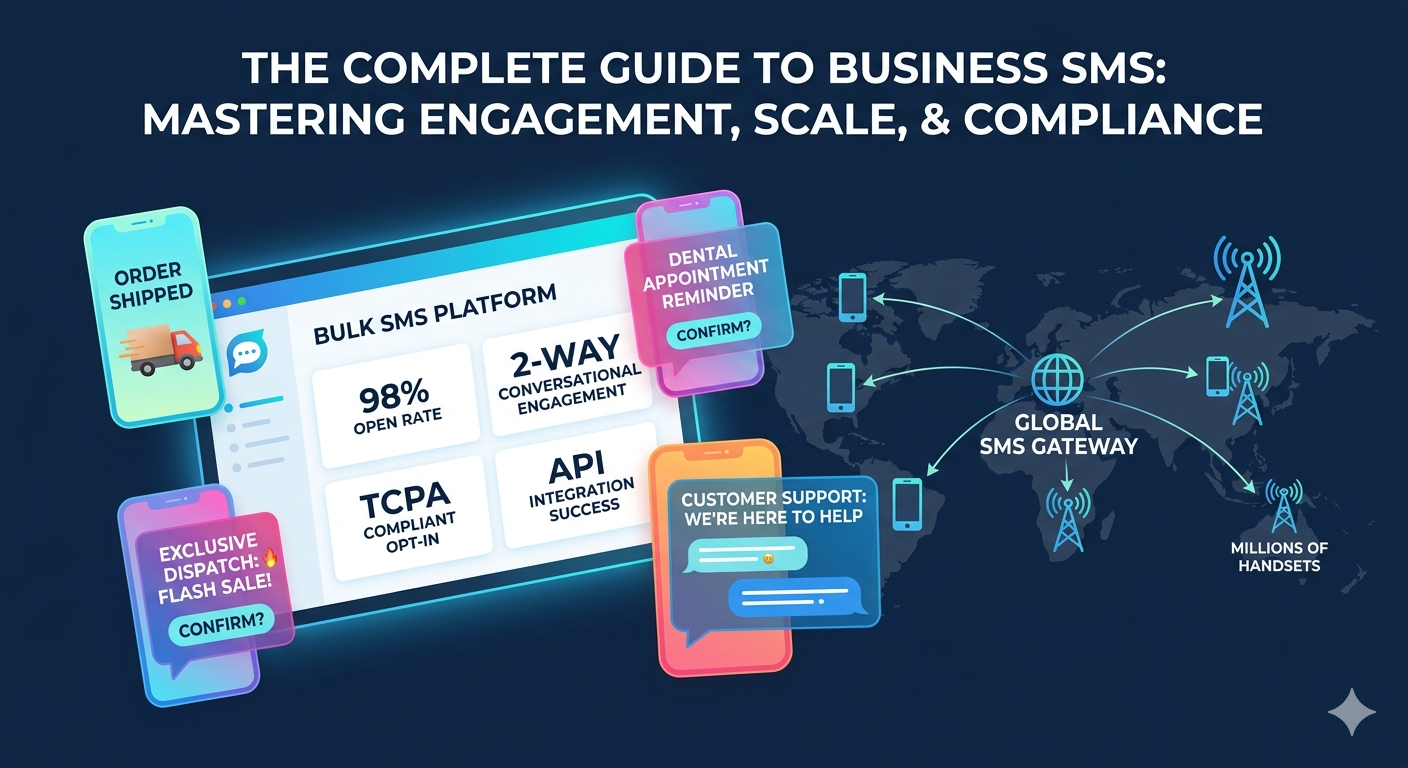
Business sms refers to the strategic use of short message service technology by organizations to communicate with customers, clients, and internal staff for marketing, operational, or support purposes. Unlike personal texting, business sms utilizes professional platforms or application programming interfaces to send messages at scale while maintaining high deliverability and compliance standards. This channel is recognized for its exceptional 98% open rate, making it one of the most effective tools for immediate engagement. By integrating business sms into a broader communication strategy, companies can ensure that critical alerts, promotional offers, and transactional updates reach their audience in real-time, significantly outperforming traditional email marketing. The landscape of modern communication has shifted heavily toward mobile-first interactions, placing business sms at the forefront of customer experience. Statistics from recent industry reports indicate that nearly 75% of consumers actually prefer receiving marketing offers via text rather than through social media ads or emails. This preference stems from the non-intrusive yet immediate nature of a text message, which typically sits in a user’s notification tray until addressed. As companies look to modernize their outreach, adopting a professional business sms strategy allows them to bridge the gap between digital convenience and personal connection, ensuring that no revenue-driving moment is missed due to a crowded email inbox. What Is Business SMS and How Does It Work? To understand what is business sms, one must look at the technical distinction between P2P and A2P messaging. Personal texting is Peer-to-Peer, whereas organizational communication is Application-to-Person. This means that a business message is usually triggered from a software platform or a bulk sms system rather than a handheld mobile device. The message travels from the software to an sms gateway, which then routes it through cellular carriers to the end user’s phone. This infrastructure is designed to handle high volumes, often referred to as bulk sms, which allows a single brand to reach thousands of individuals simultaneously with a consistent and branded message. The functionality of business sms extends beyond just sending simple text. It involves the integration of various technologies that allow for two-way communication, enabling customers to reply directly to a brand. This creates a conversational environment that fosters trust and transparency. A bulk sms solution provides the tools necessary to manage these large-scale conversations, including automated opt-out processing and message scheduling. By leveraging a bulk sms gateway, organizations can ensure that their messages are not flagged as spam by carriers, as professional gateways maintain white-listed routes that prioritize legitimate organizational traffic over unverified sources. Business SMS Messages – Importance When exploring business sms messaging, there are several foundational elements that every brand must secure before launching their first campaign. The essentials include a verified sender identity, a compliant contact list, and a reliable platform that can handle the technical demands of sms in business. Organizations must decide whether they will use a web-based portal for manual message management or an API for automated, event-triggered notifications. These essentials ensure that the communication is professional, reachable, and legally sound, which is vital for maintaining brand reputation in a highly regulated digital ecosystem. 1- What do you need to start with business SMS messages? Starting with business sms requires a combination of hardware-independent software and a clear understanding of your target audience’s preferences. First, you must select a bulk sms services provider that offers a robust bulk sms platform features set, including the ability to acquire dedicated numbers or short codes. You also need a database of contacts who have explicitly consented to receive text messaging for businesses. Without this “opt-in,” your messages could result in legal penalties. Furthermore, having a clear content strategy—knowing exactly what is a business message meant to achieve—will help in crafting concise and actionable copy that fits within the standard 160-character limit. 2- What is an SMS campaign? An SMS campaign is a coordinated series of messages sent to a specific segment of your audience to achieve a particular goal, such as driving sales, announcing a new product, or providing holiday alerts. Unlike a single transactional text, a campaign often involves multiple touchpoints and uses features of bulk sms like scheduling and personalization. For example, a retail brand might launch a campaign that starts with a “coming soon” teaser, followed by a “now live” announcement, and concludes with a “last chance” reminder. Successful campaigns rely on a bulk sms system that can track metrics like click-through rates and conversion values to prove the return on investment for the marketing spend. Types of Business SMS Numbers Selecting the right type of number is a critical decision in any business texting strategy, as it affects both the perception of the brand and the technical capacity for sending volume. In the United States and many other regions, the industry has standardized 10DLC (10-Digit Long Code) for local brand representation. This type of number allows for a high volume of A2P traffic while providing the customer with a familiar local area code. For companies with massive traffic needs, a dedicated short code—a five or six-digit number—is often used, as these are pre-approved by carriers for maximum throughput and are easily memorable for television or radio advertising. Another option is toll-free numbers, which allow businesses to provide a nationwide point of contact that is text-enabled. This is particularly popular for customer support departments that want to offer a consistent number for both calls and texts. Each of these number types serves different sms for business goals. While short codes are excellent for massive marketing blasts, long codes are preferred for personalized, two-way sales outreach where a “human” feel is more effective. Understanding these nuances is essential for any bulk sms services provider to give accurate advice to their clients regarding scalability and carrier compliance. Business Texting Service: Customer Portal and SMS API A professional business sms service usually offers two primary ways to interact with the platform: a user-friendly customer portal and a robust SMS API. The customer portal is a web-based dashboard where users can manually upload contact lists, compose messages, and view analytics without needing any coding knowledge. This is ideal for marketing teams who need to send weekly promotions or for HR departments managing internal alerts. The portal simplifies the complexities of a bulk sms solution, making it accessible for staff across various departments to engage in text messaging for businesses with minimal training. On the other hand, a bulk sms gateway accessed via an API is the preferred choice for developers and tech-driven companies. This allows the business to integrate texting directly into their existing software, such as an e-commerce platform or a CRM. When a customer makes a purchase, the system automatically triggers a text through the API. This level of automation is one of the most powerful benefits of bulk sms, as it ensures that the brand remains in constant, relevant contact with the customer without requiring manual intervention from a staff member at every step of the journey. What is an SMS API? An SMS API, or Application Programming Interface, is a set of protocols that allows different software systems to communicate and exchange data specifically for sending text messages. It acts as a bridge between a company’s internal application and the mobile carrier network. By using an API provided by a bulk sms services provider, a business can programmatically send, receive, and track messages. This is the engine behind many of the features of bulk sms that we see today, such as two-way messaging, real-time delivery reports, and automated keyword responses. It enables a highly scalable bulk sms system that can grow alongside the business’s technical infrastructure. Common Use Cases of Business Texting The versatility of sms in business is reflected in the wide variety of use cases across different industries. From retail and healthcare to logistics and human resources, texting has become the preferred method for high-stakes communication. The immediacy of the medium ensures that important information is seen quickly, which is why it is frequently used for time-sensitive notifications. Whether it is a flash sale or an emergency office closure, the high-performance nature of business sms messaging makes it the most reliable channel for getting a message in front of a pair of eyes within minutes of sending. SMS Marketing Campaigns Marketing campaigns remain one of the most popular uses for a bulk sms platform. By sending personalized offers, discount codes, and product announcements, brands can see immediate spikes in web traffic and sales. The benefits of bulk sms marketing are particularly evident when combined with time-limited offers, as the “ping” of a text message creates a sense of urgency that email simply cannot match. Marketers use segmentation to ensure that the messages are relevant to the recipient, which helps in maintaining high engagement rates and low unsubscribe numbers. Appointment Reminders and Confirmations In service-based industries like healthcare, legal, and beauty, missed appointments can lead to significant revenue loss. Implementing automated appointment reminders via business sms has been shown to reduce “no-show” rates by up to 40% in some sectors. According to a study by the Medical Group Management Association, practices that use automated text reminders see a marked increase in patient adherence and operational efficiency. These texts often include a simple “Reply C to Confirm” option, which allows the business to update their schedule in real-time based on the customer’s response. Order Updates, Delivery Notifications, and Tracking The e-commerce boom has made delivery transparency a top priority for consumers. Using a bulk sms gateway to provide real-time order updates—from “order confirmed” to “out for delivery”—greatly enhances the customer experience. These transactional messages provide peace of mind and reduce the burden on customer support teams, as buyers are kept informed at every stage of the fulfillment process. Providing a direct tracking link within the text message allows the customer to check their package status with a single tap, further streamlining the post-purchase journey. Customer Support and Two-Way Messaging Modern consumers expect to communicate with brands on the same channels they use with friends. Two-way business text messaging allows support agents to handle multiple inquiries simultaneously, which is more efficient than phone-based support. This use case transforms the bulk sms solution from a one-way broadcasting tool into a dynamic service desk. Customers can text in questions about product availability or store hours and receive a quick, personal response. This interaction not only solves the immediate problem but also builds a stronger emotional connection between the consumer and the brand. Fundamentals of Text Message Marketing: Contact Database The success of any sms for business initiative is entirely dependent on the quality of the contact database. A business cannot simply buy a list of numbers and start texting; this is not only ineffective but also illegal in many jurisdictions. The fundamentals of a healthy contact database involve gathering numbers through legitimate opt-in methods, such as website pop-ups, keyword-to-shortcode entries, or at the point of sale. A high-quality bulk sms services provider will emphasize the importance of list hygiene, ensuring that dead numbers are removed and that every recipient has a clear path to opt-out if they no longer wish to receive communication. Managing this database requires a bulk sms system that can handle complex data fields, allowing for advanced segmentation. For example, a business might want to send a specific message only to customers who haven’t made a purchase in the last six months. By leveraging these bulk sms platform features, marketers can move away from generic “blast” messaging and toward a more tailored approach. This level of precision is what defines high-performance business sms messaging, as it respects the user’s personal space by only delivering content that is genuinely useful or interesting to them. How do you use incoming messages to grow your audience? Incoming messages are a goldmine for audience growth and engagement. By encouraging customers to text a specific keyword to your number—such as “JOIN” or “SAVE”—you can automatically add them to your marketing list while simultaneously providing them with an immediate reward like a discount code. This is one of the most effective bulk sms features for building a list from scratch. Furthermore, analyzing the content of incoming messages can provide valuable insights into customer needs and common pain points, allowing the business to refine its messaging and product offerings based on direct, real-time feedback from its most engaged users. What Is SMS Compliance and Why Does It Matter? Compliance is perhaps the most critical aspect of what is sms businesses must understand to avoid severe legal and financial repercussions. In the United States, the Telephone Consumer Protection Act (TCPA) and the Cellular Telecommunications and Internet Association (CTIA) set strict guidelines on how businesses can interact with consumers via text. Compliance requires that businesses obtain explicit written consent before sending any marketing messages and that they provide an easy, automated way for users to opt-out, usually by texting “STOP.” Failure to adhere to these rules can result in fines ranging from $500 to $1,500 per individual message sent. Beyond legal requirements, compliance matters because it protects the integrity of the business sms ecosystem. If carriers detect that a number is sending unsolicited or prohibited content, they will block the number and may even blacklist the entire brand from their network. Using a reputable bulk sms services provider ensures that your campaigns are automatically checked for compliance markers, such as including a mandatory “Stop to opt-out” footer. By prioritizing transparency and respect for consumer privacy, brands can build long-term trust, which is the ultimate goal of any sms in business strategy. Features to Look for in a Business Messaging Platform Choosing the right bulk sms platform features is essential for ensuring that your messaging strategy can scale as your business grows. A basic provider might only offer simple message sending, but a high-performance partner will provide a suite of tools designed to optimize every aspect of your outreach. You should look for a system that offers detailed analytics, allowing you to see exactly how many people received, opened, and clicked on your messages. These insights are vital for refining your strategy and justifying the costs associated with wholesale sms rates and platform subscriptions. Two-way messaging capabilities to allow for interactive customer conversations. Advanced automation and trigger-based workflows for hands-free engagement. Contact segmentation and deep personalization tools to increase relevance. Seamless integrations with existing CRM and marketing automation platforms. Pre-designed templates and scheduling features to save time and maintain consistency. Scalability to handle millions of messages without a drop in delivery speed. 10DLC and short code registration support to ensure carrier compliance. Real-time reporting and conversion tracking to measure marketing success. A comprehensive bulk sms solution should also provide high-level security features, such as two-factor authentication for account access and encrypted data storage for your contact lists. As businesses handle more personal data, the security of their communication platforms becomes a top priority. Furthermore, the ability to manage multiple “sub-accounts” or departments under one main umbrella is a useful feature for larger organizations that need to keep marketing, support, and HR communications separate but centrally managed for billing and oversight purposes. How to Set Up Business SMS for Your Brand Setting up business sms for your brand is a structured process that requires careful planning to ensure both technical and legal success. It begins with defining your objectives and selecting the right partner to help you achieve them. Whether you are focused on customer retention through support or customer acquisition through marketing, the setup phase establishes the foundation for all future interactions. Following a step-by-step guide helps in avoiding common pitfalls, such as failing to register your brand with the Campaign Registry or launching a campaign without a proper opt-in mechanism in place. Choose a reputable bulk sms services provider that aligns with your volume and technical needs. Select the best number type for your use case, such as a 10DLC for local feel or a short code for high volume. Register your brand and campaigns with the relevant regulatory bodies to ensure carrier deliverability. Create your initial sms contact list by migrating existing opted-in customers or launching new opt-in campaigns. Set up automated responses and workflows, such as “welcome” messages or “out of office” replies. Design engaging and concise sms templates that reflect your brand voice and include clear calls to action. Integrate your sms platform with your CRM to ensure that customer data is synchronized across all channels. Conduct thorough testing by sending trial messages to internal devices to check formatting and links. Launch your first campaign and monitor the real-time analytics to measure initial performance and engagement. Once the initial setup is complete, it is important to continuously monitor and optimize your efforts. The benefits of bulk sms marketing are most apparent when the data is used to tweak send times, message frequency, and offer types. For instance, you might find that your audience engages more with texts sent on Tuesday mornings than Friday afternoons. A data-driven approach ensures that your text messaging for businesses remains a high-performance channel that delivers a consistent return on investment while maintaining a positive relationship with your customer base. Read More: How to Reduce VoIP Downtime and Boost Productivity? Conclusion In conclusion, business sms stands as a pinnacle of modern communication efficiency, offering unparalleled reach and engagement in an increasingly distracted world. By understanding the intricacies of bulk sms systems, compliance requirements, and the various features of a professional messaging platform, organizations can unlock a powerful channel for both marketing and operational success. The transition from traditional communication to a mobile-first, sms-centric approach requires a commitment to transparency, consent, and technical excellence. As we look toward the future, the role of business sms messaging will only continue to expand as more industries recognize its value in providing real-time, personal connection at scale. Whether you are a small local business or a global enterprise, the ability to land a message directly in your customer’s pocket is an asset that cannot be ignored. By following the best practices and strategic steps outlined in this guide, you can build a high-performance messaging program that respects your audience’s privacy while delivering significant, measurable results for your brand. FAQs About Business SMS What is SMS? SMS stands for Short Message Service, a standardized communication protocol used to send text-only messages between mobile devices. In the context of an organization, business sms refers to the use of this protocol for professional communication between a brand and its customers or employees. Unlike newer internet-based messaging apps, SMS works on almost every mobile phone in the world without requiring a data plan or a specific application, making it the most universally accessible mobile communication channel available. How can I send SMS to my business contacts? You can send SMS to your business contacts through a dedicated bulk sms platform or a business communication app like VBC. Start by importing your contact list into the platform, ensuring each entry has a valid mobile number and has opted in to receive messages. You can then compose your message in the dashboard, add any necessary links or personalization fields, and select your recipients. Finally, hit send to deliver the message instantly or schedule it for a future date to ensure optimal timing for your audience. What are some general benefits of communicating with customers via business SMS? Communicating with customers via business sms offers numerous benefits, including significantly higher open rates than email and a much faster response time from recipients. It provides a direct and personal way to reach customers where they spend most of their time—on their phones. Additionally, it is highly cost-effective, allows for easy automation of routine tasks like reminders or shipping updates, and improves overall customer satisfaction by providing a convenient, low-friction channel for support and inquiries. Do customers need to opt in first? Yes, in almost all professional and legal contexts, customers must explicitly opt-in before a business can send them any form of marketing or non-essential text messages. This is a core requirement of laws like the TCPA in the US and the GDPR in Europe. Opt-in can be collected via a web form, a text-to-join keyword, or a physical sign-up sheet. Failing to secure this consent can lead to significant legal fines and may result in your business being permanently blocked by major mobile carriers. What industries benefit most from business SMS? While almost any industry can benefit, business sms is particularly transformative for retail, healthcare, real estate, and professional services. Retailers use it to drive immediate sales through flash promotions, while healthcare providers use it to reduce missed appointments. Real estate agents utilize texting for quick lead follow-ups, and service industries like plumbing or HVAC use it for real-time dispatch and delivery updates. Any business that relies on timely communication and customer reminders will find massive value in this channel. What types of content can businesses send through SMS? Businesses can send a wide variety of content through SMS, ranging from marketing promotions and discount codes to transactional alerts like order confirmations and password resets. Other common content types include appointment reminders, customer surveys, internal company alerts for employees, and two-way support conversations. However, it is important to keep the content concise and focused, as standard SMS messages are limited to 160 characters before being broken into multiple segments by the mobile carriers. Which SMS service performs best for business messaging? The best performing SMS service depends on your specific needs, but top-tier providers like SMSAPI, Twilio, and Vonage are highly regarded for their reliability and global reach. A high-performance service is characterized by its high delivery rates, robust API documentation, and strong compliance support. When choosing, look for a provider that offers wholesale sms pricing, detailed real-time analytics, and localized support to ensure that your business sms strategy remains effective and compliant across different international markets.

Read More
paperless fax

What is Paperless Fax? How To Switch to a Paperless Fax System in 2026

A paperless fax is a digital method of sending and receiving documents that replaces traditional physical fax machines with cloud-based technology. Instead of using paper, ink, and a telephone line, this system uses the internet to transmit data securely. Users can manage their documents through email, web portals, or mobile apps, making the process faster and more convenient. By eliminating the need for physical hardware, a paperless fax solution reduces costs, enhances security through encryption, and supports environmental sustainability. It allows businesses to maintain the formal communication standards of faxing while leveraging modern digital efficiency. What Is a Paperless Fax? The concept of a paperless fax revolves around the digital transformation of document transmission. In the past, faxing required a bulky machine, a dedicated landline, and a constant supply of paper and toner. Today, the technology has evolved into a cloud-based service that handles all the heavy lifting on remote servers. When you use a paperless fax service, your documents are converted into digital packets and sent over the internet. These packets are then reassembled at the receiver’s end, whether they are using a traditional machine or another digital system. This modern approach means that documents remain in a digital format throughout most of their journey. You can upload a PDF or a Word document directly from your computer or smartphone. The recipient receives the file as an email attachment or a notification in a secure portal. This method provides a seamless transition for industries that still rely on faxing for legal or medical reasons but want to move away from the clutter and maintenance of old hardware. Furthermore, a paperless fax system offers much more than just the ability to send files. It includes features like digital signatures, automated archiving, and real-time tracking. These tools ensure that you know exactly when a document was sent, received, and opened. Because it operates through the cloud, there is no risk of a busy signal or a paper jam preventing an important transmission from reaching its destination. How Is It Different From a Traditional Fax System? The differences between a paperless fax and a traditional fax system are foundational, affecting everything from cost to daily operations. A traditional system is tied to a physical location and a specific piece of hardware. If you are not in the office, you cannot send or receive a fax. In contrast, paperless faxing is entirely mobile. As long as you have an internet connection, your office is wherever you are. This flexibility is essential for the modern remote and hybrid workforce. Cost is another significant differentiator. Traditional faxing involves numerous hidden expenses, including the purchase of the machine, regular maintenance, electricity, and the cost of a dedicated analog phone line. Over time, these costs add up to thousands of dollars. A paperless fax machine setup, which is essentially a software-based solution, operates on a subscription model that is often much cheaper. You only pay for what you use, and there are no hardware failures to worry about. Security is perhaps the most critical difference. Traditional faxes often sit in an open tray for anyone to see, which can lead to privacy breaches. With a secure paperless fax, the document goes directly to the intended recipient’s digital inbox. Encryption protocols protect the data during transmission, ensuring that sensitive information remains confidential. This level of security is difficult to achieve with standard paper-based systems. What Are the Benefits of Using Paperless Fax? Transitioning to a digital workflow brings a multitude of advantages that go beyond simple convenience. Businesses that adopt a paperless fax system often see immediate improvements in their operational efficiency. The ability to manage all communications from a single digital interface reduces the mental load on employees and ensures that no document is ever lost in a pile of paper. Eco-Friendliness One of the most profound impacts of switching to paperless faxing is the reduction in environmental waste. According to research by the Environmental Protection Agency, the average office worker generates about two pounds of paper products every day. A significant portion of this waste comes from unnecessary printing and faxing. By moving to a digital system, companies can save thousands of pages of paper each year, which translates to fewer trees cut down and less energy used in the paper manufacturing process. Beyond just paper, traditional fax machines contribute to electronic waste and chemical pollution. Toner cartridges and ink ribbons contain chemicals that are harmful to the environment if not disposed of correctly. By eliminating the need for these consumables, a paperless fax solution helps a business lower its total environmental footprint. This commitment to sustainability is increasingly important to modern consumers and investors. Time Savings Efficiency is the backbone of any successful business, and paperless faxing provides a significant boost in this area. In a traditional setup, an employee must print the document, walk to the machine, wait for the line to be free, and then wait for the transmission to complete. If the line is busy, they must return later. This process is a massive drain on productivity. With a paperless cloud fax, sending a document is as simple as sending an email, taking only a few seconds. Retrieving documents is also much faster. Instead of filing through physical folders or scanning old paper faxes into a computer, users can use search functions to find specific documents in seconds. Digital archiving ensures that every fax received is automatically categorized and stored in a searchable database. This immediate access to information allows for faster decision-making and improved customer service. Less Reliance on Hardware The move toward a paperless fax system means that IT departments have fewer devices to manage and repair. Physical fax machines are notorious for breaking down, experiencing paper jams, or requiring specialized parts that are difficult to find. When a machine goes down, communication stops. By using a paperless fax software, the responsibility for hardware maintenance shifts to the service provider. This lack of reliance on hardware also means that businesses can reclaim valuable office space. The area once occupied by bulky machines and filing cabinets can now be used for more productive purposes. Furthermore, because there is no fax machine to plug in, companies no longer need to pay for extra phone lines or specialized wiring. This simplification of the office infrastructure leads to a more streamlined and agile business environment. Reduce IT Overheads and Administration Costs One of the most immediate benefits of a paperless fax system is the reduction in IT workload. There are no drivers to install, no hardware to fix, and no phone lines to troubleshoot. This allows your IT team to focus on more important tasks that drive growth. Additionally, the administrative cost of managing paper—buying it, storing it, and eventually shredding it—is completely eliminated. Improve Security and Compliance with Transmission of Sensitive Information Security is a major concern for any business today. A paperless fax system provides robust security features that traditional machines cannot match. Features like Audit Trails allow you to see a complete history of every document’s journey. This is essential for compliance in sectors like healthcare, where the privacy of patient records is paramount. By using a secure paperless fax, you ensure that your business stays on the right side of the law. Reduce Your Carbon Footprint As mentioned earlier, the environmental benefits are significant. A company that switches to paperless faxing can save a massive amount of energy and resources. This is not just good for the planet; it is also good for your brand. Many modern clients prefer to work with companies that demonstrate a commitment to sustainable practices. Going paperless is a visible and effective way to show that your business cares about its impact on the world. How Can You Get Started Using Paperless Fax? Setting up a digital faxing system is a straightforward process that does not require extensive technical knowledge. Most modern providers have designed their platforms to be user-friendly, allowing businesses to transition in a matter of minutes. The first step is to choose a provider that offers an encrypted paperless fax service to ensure your data remains protected. 1- Add Paperless Fax To begin, you will need to sign up for a service and select a fax number. Many providers allow you to “port” your existing fax number, meaning you can keep the same contact information while moving to a digital system. This is crucial for maintaining continuity with clients and partners who already have your number on file. Once you have your number, you can integrate the service with your existing business tools. Most paperless fax systems integrate seamlessly with popular platforms like Microsoft 365, Google Workspace, and various CRM systems. This integration allows you to send faxes directly from the applications you already use every day. Adding the service usually involves installing a small app or adding a browser extension, making the transition nearly invisible to the end user while providing all the benefits of the new system. 2- Set Up and Manage Paperless Fax Once the service is active, management becomes a centralized task. Administrators can assign fax numbers to specific departments or individuals and set permissions for who can send or receive documents. This level of control is impossible with a physical machine. You can also set up automated notifications, so you receive an email or a text message whenever a new fax arrives. Managing your documents is equally simple. Most services provide a web-based dashboard where you can view your sent and received history. From here, you can download documents, forward them to other team members, or delete them if they are no longer needed. This centralized management ensures that the company’s communication remains organized and compliant with data retention policies. How to Send a Paperless Fax by Email Sending a fax through email is perhaps the most popular feature of a paperless fax solution. It bridges the gap between old-school faxing and modern email communication. To send a document, you simply open your email client and start a new message. In the “To” field, you enter the recipient’s fax number followed by a specific domain provided by your service, such as 1234567890@yourfaxprovider.com. Open your preferred email application like Gmail or Outlook. Attach the document you wish to fax, such as a PDF, DOCX, or JPG file. Type the recipient’s fax number followed by the provider’s domain in the recipient field. If you want to include a cover page, you can often type the details into the body of the email. Click send, and the paperless fax service will convert your email into a fax format and deliver it to the recipient’s machine or digital inbox. This process eliminates the need for any special software or training. Because it uses standard email protocols, you can send faxes from any device that has access to your email account. It is a highly efficient way to handle “no faxes” physical clutter while ensuring that your documents reach people who still use traditional machines. Why Switch to Paperless Fax? The decision to switch to a paperless fax system is often driven by the need for better security and lower costs. In many industries, such as healthcare and legal services, faxing remains a legal requirement because it is considered more secure than standard email. However, traditional fax machines have many vulnerabilities. A paperless fax system provides a higher level of security by using advanced encryption methods that protect data at rest and in transit. Another compelling reason is the shift toward digital record-keeping. Modern businesses are moving away from physical filing systems in favor of digital archives. A paperless fax system automatically creates a digital trail for every document sent or received. This makes it much easier to comply with audits and regulatory requirements. Instead of searching through boxes of paper, you can find exactly what you need with a simple keyword search. Furthermore, the world is moving toward a “no fax” physical machine future. As telecommunications companies phase out analog phone lines (PSTN) in favor of digital fiber-optic networks, traditional fax machines are becoming obsolete. Switching to a paperless fax system now ensures that your business stays ahead of this technological shift. It prepares your infrastructure for a future where all communications are digital, fast, and secure. Why Should I Send via Online Fax, Not Email? A common question is why one should use a paperless fax system instead of just sending an email. The primary reason is compliance and security. Standard email is often sent across the internet in “plain text,” meaning it could potentially be intercepted and read by unauthorized parties. In contrast, an encrypted paperless fax uses secure protocols and point-to-point transmission that meets strict regulatory standards like HIPAA in the United States or GDPR in Europe. Faxes provide a legally binding confirmation of receipt, which is often required in legal disputes. The fax network is separate from the standard email infrastructure, offering an extra layer of security against phishing and malware. Many government agencies and financial institutions still only accept faxes for certain types of official documentation. A paperless fax system allows you to meet these requirements without the drawbacks of physical paper. Research from Gartner indicates that digital transformation in document management can reduce operational costs by up to 30%. This is because digital systems reduce the errors associated with manual data entry and physical document handling. By using a paperless fax, you combine the legal weight of a fax with the speed and efficiency of the digital age. Read More: How to Prevent VoIP Hacking? Types and Strategies Final Thought The transition to a paperless fax system is a logical step for any business looking to modernize its operations. It offers a unique combination of security, efficiency, and cost-effectiveness that traditional methods simply cannot match. By embracing this technology, you can eliminate the headaches of physical hardware, reduce your environmental impact, and ensure that your sensitive documents are handled with the highest level of care. Whether you are a small startup or a large corporation, the move to a paperless cloud fax will provide long-term benefits that far outweigh the initial effort of making the switch. In a world that is moving faster every day, having a streamlined, digital communication system is no longer just an option; it is a necessity for success. Frequently Asked Questions (FAQs) What is paperless faxing? A paperless fax is a digital way of sending and receiving documents without the use of a traditional physical fax machine or paper. It uses an internet connection and cloud-based servers to transmit data, allowing you to manage faxes via email or web portals. How does paperless faxing work? It works by converting digital files into a format that can be sent over the internet or telephone lines. When you send a digital file, the service provider’s server handles the transmission to the recipient’s fax number, whether they have a digital system or a physical machine. Can I send a PDF as a fax? Yes, sending a PDF as a fax is one of the most common uses of a paperless fax system. You simply attach the PDF to an email or upload it to your fax provider’s portal, and the system automatically converts it for the recipient. Which fax is free? There are several “free paperless fax” services available that allow you to send a limited number of pages per day at no cost. However, for business-grade security and a permanent fax number, most users opt for a paid subscription service. Can I send a fax via Gmail? Yes, you can send a fax via Gmail by using a paperless fax service that supports email-to-fax. You simply compose an email, attach your document, and address it to the recipient’s fax number at the provider’s specific domain. Is a paperless fax service secure? A secure paperless fax service is often more secure than traditional faxing. It uses high-level encryption to protect documents during transmission and ensures that faxes are delivered directly to a secure digital inbox rather than sitting on a public paper tray. What is the best paperless fax solution for small businesses? The best paperless fax solution depends on your specific needs, but popular options include services that offer low monthly costs, easy integration with tools like Google Drive, and robust mobile apps for sending faxes on the go. Do I need a phone line for a paperless fax machine setup? No, you do not need a physical phone line for a paperless fax system. The entire process is handled over the internet, allowing you to eliminate the cost and maintenance of traditional analog landlines.

Read More

How To Get a Private SMS Number for Secure Messaging in 2026

A private sms number is a virtual phone number that allows users to send and receive text messages without revealing their actual personal contact details. These numbers function through the internet rather than a physical SIM card, making them an ideal solution for maintaining digital privacy. Using a private sms number helps shield your identity from marketers, prevents spam from reaching your main device, and provides an extra layer of security for two-factor authentication. By utilizing a secondary line, you can communicate freely while ensuring your primary personal data remains confidential and protected from potential data breaches or unwanted tracking. The shift toward digital-first interactions has made the private sms number more than just a luxury; it has become a necessary tool for modern cybersecurity. As online platforms demand more personal information, the risk of data exposure increases exponentially. Using an sms private number acts as a buffer, ensuring that your real phone number is only shared with trusted contacts. This technology relies on sophisticated cloud-based communication systems, meaning you can access your private text message history from any device with an active internet connection. Whether you are signing up for social media or an online marketplace, having a secondary communication channel is a strategic move for safety. The primary motivation for seeking out a private number sms is often the desire to decouple physical identity from digital presence. Traditional mobile numbers are linked to personal names and credit history through billing records. In contrast, a virtual private sms number offers a level of anonymity that is difficult to achieve with standard carrier services. This is particularly useful for professionals who want to separate work and personal lives without carrying two separate mobile devices. By using a dedicated application, you can manage your private texts with the same ease as your standard texting app, with the benefit of discarding the number if it becomes compromised. The Growing Necessity of a Private SMS Number The digital landscape is fraught with risks, and the private sms number has emerged as a frontline defense against various forms of cyber-attacks. According to research conducted by the FBI’s Internet Crime Complaint Center (IC3) in their 2023 report, phishing and smishing (SMS phishing) remain among the top reported cybercrimes globally, costing individuals billions of dollars. By using a private sms number for online registrations, you significantly reduce the risk of your primary number falling into the hands of malicious actors. This proactive approach ensures that even if a platform experiences a data leak, your most sensitive contact information remains unexposed to the dark web. Protection against telemarketing and unsolicited spam calls that disrupt daily life. Enhanced security for online account verifications and 2FA to prevent unauthorized access. Prevention of identity theft by masking personal contact details on public directories. Ability to organize different aspects of life through multiple dedicated virtual lines. Cost-effective communication for international messaging needs without roaming fees. Maintenance of personal boundaries between professional clients and private family life. Reduction in the amount of personal data harvested by big tech advertising algorithms. Another significant benefit of an sms private number is the ability to manage temporary projects efficiently. If you are running a short-term marketing campaign or a temporary service, you don’t want your personal line flooded with inquiries long after the project has ended. A private text message line can be active for as long as you need it and then deactivated instantly. This flexibility is a hallmark of private sms number services, providing a level of control that traditional mobile contracts cannot match. You can effectively “burn” the number once its purpose is served, leaving no trail back to your permanent phone records. Understanding How to Text From a Private Number When learning how to text from a private number, it is essential to distinguish between illegal “spoofing” and using a legitimate virtual service. Spoofing involves faking a caller ID to deceive recipients, which often violates telecommunications regulations. In contrast, using a private SMS number through a verified provider is a legal and ethical way to maintain privacy. These providers assign you a real, functional number capable of two-way communication, allowing you to receive replies just as you would with a standard SIM. Step-by-Step Guide: How to Text from a Private Number To send a message while keeping your personal information secure, follow these steps: Select a Provider: Choose a reputable virtual number provider or a dedicated privacy app. Register and Select Location: Create an account and choose your desired area or country code from the available list. Verify Identity: Complete any identity verification required for regulatory security compliance. Enter Recipient Details: Input the recipient’s phone number into the designated field within the application. Compose and Send: Type your message clearly and click the send button. Monitor Replies: Track incoming messages within the secure application dashboard or inbox. Manage Data: Archive or delete conversations once they are no longer relevant to your tasks. The Business Advantage: Professionalism and Engagement The process of sending texts from a private number is often integrated into larger business communication suites. Companies frequently use APIs to automate messages for appointment reminders or customer support. This approach is highly effective; according to data from the 2023 Gartner Communications Report, businesses utilizing automated SMS solutions see a 40% higher engagement rate compared to email-only strategies. Using a private number allows for professional, direct communication without the privacy risks or informality associated with using a staff member’s personal phone. Practical Applications: Privacy for Students and Travelers The popularity of private SMS numbers has grown across various demographics due to their ease of use: Students: Ideal for joining new clubs or online groups where they may not yet know everyone well. Travelers: Often used to obtain a temporary number for local transport apps in foreign countries. This helps travelers avoid high roaming charges and protects their primary SIM from local tracking or regional scams targeting tourists. Exploring Free SMS Online and Verification Services The provided text discusses the use of virtual and temporary phone numbers for privacy and technical testing. Here is a summary of the key points: The Use of Free Public SMS Services Free online SMS services are popular for non-sensitive tasks, such as obtaining one-time verification codes to bypass giving out personal phone numbers. While convenient for low-risk registrations, these services use public numbers, meaning any incoming messages are visible to everyone using the site. The Advantages of Private and Paid Numbers For sensitive accounts or long-term security, dedicated private SMS numbers are recommended over public ones. Paid services offer exclusivity, ensuring that verification codes and conversations remain private. High-quality providers also offer better reliability, rotating numbers frequently to ensure they work with major platforms like Google and WhatsApp. Professional and Technical Applications Temporary numbers are essential tools for software developers, who use them to simulate international user sign-ups and test SMS gateways. Additionally, many private services support two-way messaging, allowing for full conversational loops that function identically to a standard mobile phone. Key Comparison Public Free SMS: Best for quick, low-risk tasks; messages are visible to the public. Private/Paid SMS: Essential for privacy and sensitive data; offers exclusive access and higher success rates for verification. The Technical Infrastructure of Private SMS The technical infrastructure of private SMS relies on a complex network of cloud servers and telecommunications gateways that route messages through local paths to ensure fast, reliable delivery across different countries. Modern providers invest heavily in redundant systems to guarantee uptime for urgent texts and verification codes, while utilizing encryption protocols to protect message content from interception during transit. This infrastructure supports advanced features like CRM integration, auto-replies, message forwarding, two-way communication, and API-driven bulk messaging, all manageable via user-friendly dashboards. Consequently, this technology has transformed mobile identity; instead of a single number defining an individual, private numbers act as proxies. Accessible through iOS and Android apps, they allow users to switch between multiple numbers with a single tap, managing distinct professional or social personas seamlessly from a single device. Best Practices for Using Private Text Message Services To maximize the security of a private SMS number, it is essential to choose a provider with a transparent privacy policy that does not sell user data to third parties. Even with the identity protection a private number provides, users should remain cautious by never sharing sensitive information like passwords or bank details in plain text. Maintaining good digital hygiene is also critical; this includes regularly updating the messaging app, using a password manager for account credentials, and deactivating any numbers that are no longer in use. From a strategic perspective, selecting a private number with a local area code can build trust and significantly increase response rates, as recipients are more likely to engage with familiar-looking numbers. It is also important to distinguish between free and dedicated numbers; while free numbers are useful for quick sign-ups, they are often recycled among various users. For a truly secure experience, a dedicated private number is superior, as it ensures exclusive access to messages and prevents the security risks associated with shared or reused virtual lines. Comparing Private SMS vs. Traditional Mobile Messaging The difference between a standard personal sms and a private sms number lies primarily in the ownership and the medium of transmission. A standard mobile number is tied to a physical device and a specific location based on cell towers. A private sms number, however, is nomadic. You can send a private message from a laptop in London using a New York number. This geographical flexibility is why many people prefer an sms private number for international travel or remote work. It eliminates the barriers of physical borders and high international texting fees. Physical vs. Virtual: Private numbers don’t require SIM cards or extra hardware. Anonymity: Private SMS effectively masks your permanent identity and location. Cost: Virtual numbers are often significantly cheaper for international use. Flexibility: It is incredibly easy to change or delete a virtual number at will. Accessibility: Manage your texts from any internet-connected device or smartphone. Scalability: Businesses can add hundreds of numbers as their team grows larger. When people ask how to text from private number, they are often looking for ways to maintain a professional image. Using a private number sms for business allows you to set specific “office hours” for that number, ensuring that work-related private texts don’t disturb your personal time. This separation is vital for mental health and work-life balance. By utilizing a private sms number, you can enjoy the benefits of a connected life without the constant intrusion of work-related notifications on your primary personal sms line. Security and Privacy in Private Number SMS To ensure maximum security, users should select private SMS providers that utilize robust end-to-end encryption and undergo regular security audits to protect against hacking. Advanced features like self-destructing messages offer an additional layer of privacy by ensuring that sensitive information is automatically deleted from both devices after a set period. Furthermore, reputable services often implement strict no-log policies and provide comprehensive tools such as two-factor authentication and contact blocking to keep message history and account access entirely within the user’s control. A significant advantage of using a private SMS number is its inherent resistance to SIM swapping, a cyberattack where hackers deceive carriers into transferring a victim’s number to a new SIM card. Since virtual numbers are not tied to a physical SIM card, they are far less vulnerable to this type of social engineering. This makes private texting services a much safer option for receiving critical two-factor authentication codes for financial or cryptocurrency accounts, as it prevents attackers from intercepting sensitive access credentials. Practical Steps to Get Your First Private SMS Number Getting started with a private sms number is a straightforward process. Most modern providers have streamlined their onboarding to make it accessible even for those who are not tech-savvy. Whether you need an sms private number for a single day or a permanent secondary line, the steps remain largely the same. You begin by identifying your needs—do you need to receive codes, or do you need to send bulk messages? This will dictate whether you look for a free sms online service or a professional-grade private sms number provider. Identify the primary purpose of the number, such as verification or business. Research and compare providers based on user reviews and security features. Sign up for an account using a secure email address and password. Choose your number from a list of available regions and international countries. Test the number by sending a message to a friend or another of your devices. Start using your new private sms number for your intended registrations or tasks. Set up notifications to ensure you never miss an important incoming message. Once you have your number, you can begin to transition your online accounts over to it. Start with the platforms that send the most spam or those you trust the least. By moving these to your private sms number, you will quickly notice a decrease in the noise on your primary phone. This organized approach to communication ensures that your personal sms remains a place for friends and family, while your virtual line handles everything else. The peace of mind that comes from knowing you can control who reaches your primary device is one of the greatest benefits of the private sms number. Read More: VoIP Compliance with FCC Regulations: A Complete Guide Final Thoughts The adoption of a private sms number is a powerful step toward reclaiming your digital privacy. As our world becomes increasingly reliant on mobile communication, the risks associated with exposing our primary contact details continue to grow. Whether you are looking for an sms private number to protect your identity, a private text message service for business, or a temporary phone number for verification, the tools available today are more robust and accessible than ever. By understanding how to text from a private number and implementing the best practices discussed, you can navigate the digital landscape with confidence and security. The versatility of the private sms number makes it an essential tool for everyone from the casual internet user to the high-level professional. It offers a unique combination of security, flexibility, and convenience that traditional phone services cannot match. As technology evolves, we can expect private number sms services to become even more integrated into our daily lives, offering even greater protections for our personal data. Embracing these tools now will ensure that you stay ahead of the curve in protecting what matters most—your privacy and your peace of mind in an increasingly connected world. Frequently Asked Questions How does a service like SMS-Activate for receiving SMS to virtual numbers operate? A service like SMS-Activate operates by maintaining a massive pool of virtual numbers that are connected to global telecommunication gateways. When you request a private sms number, the system assigns one to your account temporarily or permanently. When an SMS is sent to that number, the service captures the data at the gateway level and displays it on your user dashboard. This allows you to receive messages from any website or app without needing a physical phone or SIM card associated with that specific number. What is a virtual number? A virtual number is a telephone number that is not directly associated with a physical telephone line or a specific SIM card. Instead, it is hosted in the cloud and routes calls or texts via the internet to a user’s chosen device or application. This allows a private sms number to function anywhere in the world regardless of the user’s actual location, providing a layer of separation between the user’s hardware and their public-facing phone number. Where can I use my virtual mobile numbers? You can use your virtual mobile numbers across a wide array of platforms, including social media registrations, banking verifications, online marketplaces, and dating apps. Essentially, anywhere that requires a phone number for sign-up or 2FA can accept a private sms number. They are also excellent for professional use, allowing you to give a business contact a number that is separate from your personal sms line. Will I be given a SIM card with a virtual number linked to it? No, you will not receive a physical SIM card. The beauty of a private sms number is that it is entirely digital. You manage all incoming and outgoing communications through a web browser or a mobile application. This eliminates the need for extra hardware and allows you to use multiple numbers simultaneously on a single smartphone or computer without any technical hassle. Will someone access my number when I stop renting it? After you stop renting or using a private sms number, the provider typically puts it back into a pool of available numbers after a certain cooling off period. While it is possible for another person to eventually be assigned that number, reputable providers ensure that the previous user’s data is wiped and that the number is clean before it is reissued to someone else for a new private text message service. What is a short-rent mobile number (to receive messages from one website)? A short-rent mobile number is a type of private sms number designed for a single use or a very brief window of time, usually 15 to 20 minutes. This is specifically used for one-time activations or receiving a single verification code from one website. It is a cost-effective solution for those who only need to bypass a single sign-up screen and do not require long-term access to the number. What happens if I cannot receive SMS? If you cannot receive an SMS on your private sms number, it may be due to the specific website blocking virtual numbers or a temporary glitch in the routing gateway. Most providers suggest trying a different number from a different region or checking if your internet connection is stable. In cases where the service is paid, many providers offer a refund or a credit if the verification code is not successfully received. What can I do if I don’t receive a text message? If a text message fails to arrive, the first step is to ensure that the sender has the correct number including the country code. If it still doesn’t appear, you should try refreshing your dashboard or selecting a new private sms number from the provider’s list. Sometimes, certain carriers have filters that might delay messages, so waiting a few minutes or switching to a number from a different mobile carrier often solves the problem. Can I test your service for receiving messages for online activation? Many providers offer a trial or a very low-cost test number to allow users to verify the effectiveness of their private sms number service. This allows you to see how quickly the system delivers the message and how the interface looks. Testing the service with a non-essential account is a great way to ensure the send text from private number functionality meets your needs before committing to a long-term subscription.

Read More
fraud detection in telecom industry

Fraud Detection in Telecom Industry: How To Protect Your Business

Fraud detection in telecom industry protocols is the systematic process of identifying and preventing malicious activities that exploit telecommunication networks for financial gain or data theft. This multi-layered approach combines real-time traffic monitoring, artificial intelligence, and historical data analysis to intercept threats like International Revenue Share Fraud, subscription fraud, and SIM swapping. By implementing a robust fraud detection in telecom industry strategy, service providers can safeguard their infrastructure, protect customer sensitive information, and minimize the multibillion-dollar annual losses attributed to global telecom scams. Effective management involves both automated systems and proactive behavioral analytics to stay ahead of sophisticated cybercriminals. Telecom fraud detection at a glance The landscape of modern communication is evolving rapidly, and with it, the sophistication of digital threats has reached unprecedented levels. Fraud detection in telecom industry frameworks serves as the primary defense mechanism against a variety of exploitative techniques that target both infrastructure and end-users. At its core, this discipline involves the constant scrutiny of network traffic to identify anomalies that deviate from standard usage patterns. Whether it is a sudden spike in international calls or an unusual volume of SMS messages originating from a single node, these indicators are the bread and butter of modern security operations. The global impact of telecommunications fraud is staggering, with industry reports often citing losses that exceed tens of billions of dollars annually. For many organizations, the challenge lies in balancing seamless connectivity for legitimate users with the stringent security measures required to block fraudulent actors. Telecommunication fraud detection is no longer just a technical requirement; it is a fundamental component of business resilience. By leveraging big data and machine learning, companies can now predict potential breaches before they cause significant financial or reputational damage, ensuring that the network remains a safe environment for global commerce and personal interaction. How telecom fraud detection works for businesses and customers Understanding the mechanics of fraud detection in telecom industry systems requires looking at the ecosystem from two distinct perspectives. For the service providers, the focus is on network integrity and revenue assurance. For the end users, the priority is the protection of personal data and the prevention of unauthorized charges on their billing statements. Both sides of this equation are vital for maintaining a healthy telecommunications environment, as a breach on one side often leads to a compromise on the other. For telecom companies Fraud management in the telecom industry relies on sophisticated software that monitors billions of real-time events, such as Call Detail Records and signaling data, to proactively identify and stop known fraud types before financial losses escalate. By utilizing advanced analytics to establish profiles of normal network behavior, these systems can detect subtle deviations and anomalies across interconnect agreements and roaming partnerships where scams are frequently executed. Furthermore, the integration of enterprise-wide fraud management tools ensures that critical threat intelligence is shared across security, billing, and customer support departments, creating a unified and highly sensitive defense against evolving fraudulent activities. For end users For telecom customers, fraud detection often functions quietly in the background, becoming visible only when it successfully thwarts a suspicious transaction or alerts them to potential threats. This layer of security provides critical protection against identity theft, unauthorized account access, and dangerous maneuvers like SIM swapping, while also shielding users from malicious calls and SMS-based phishing attempts. By safeguarding sensitive personal information and protecting vulnerable populations from complex scams, these proactive measures foster significant consumer trust and long-term loyalty, ensuring that subscribers remain with a provider they perceive as a reliable guardian of their digital identity. What is telecommunications fraud? Telecommunications fraud is a broad term that encompasses any activity where a person or entity uses telecommunication services with the intention of avoiding payment or obtaining a financial advantage through deception. It is a global problem that affects landlines, mobile networks, and Voice over IP services. To truly understand what is telecommunications fraud, one must look at it as a form of cybercrime that exploits the complexity of modern networks. Fraudsters often take advantage of the gaps between different service providers or the lag in billing cycles to conduct their operations. In the context of the global economy, telecom fraud is often linked to organized crime syndicates. These groups use the profits from telecom scams to fund other illegal activities, making fraud detection in telecom industry a matter of national and international security. According to research by the Communications Fraud Control Association (CFCA), the telecommunications industry loses an estimated $39.89 billion annually to fraud. This highlights the scale of the issue and why telecommunication fraud detection is a top priority for every major carrier in the world. Common methods used by telecom fraudsters Fraudsters employ a wide range of methods to exploit networks, often combining multiple techniques to maximize their gains. One of the most prevalent methods is the exploitation of weak security protocols in private branch exchange systems. By gaining unauthorized access to a business’s phone system, a criminal can route thousands of expensive international calls through that system, leaving the business with a massive bill. This is a classic example of how telecommunication fraud can devastate a small or medium-sized enterprise in a very short period. Another common method involves the use of social engineering to perform subscription fraud in telecommunication. This occurs when a fraudster uses stolen or synthetic identities to sign up for expensive mobile contracts and high-end devices. Once they have the device, they disappear, and the service provider is left with the loss of the hardware and the unpaid service fees. Additionally, the rise of digital messaging has led to an explosion in SMS-based fraud, where deceptive links are sent to users to steal their credentials or install malware. These methods are constantly evolving, requiring telecom fraud management solutions to be equally dynamic. What is an example of telecom fraud? 12 common types To effectively implement fraud detection in telecom industry measures, it is necessary to categorize the various threats. Each type of fraud has its own unique signature and requires a specific detection strategy. Here are twelve of the most common types of fraud currently plaguing the industry. 1. PBX hacking PBX hacking involves unauthorized access to a business’s internal telephone system. Fraudsters search for systems with default passwords or unpatched software vulnerabilities. Once inside, they use the system to place thousands of international calls to premium numbers they control. This type of telecom fraud can occur over a single weekend, resulting in charges that can bankrupt a small business. 2. SMS phishing Commonly known as smishing, this involves sending deceptive text messages that appear to be from legitimate sources like banks or government agencies. The goal is to trick the recipient into clicking a malicious link or providing sensitive personal information. This is a major component of telecom scams that target the end-user’s digital identity. 3. Wangiri fraud Wangiri is a Japanese term meaning “one ring and cut.” In this scenario, a fraudster calls a large number of random mobile phone numbers and hangs up after just one ring. The hope is that the recipient will see the missed call and call back. The return call is routed to a high-cost international premium rate number, generating revenue for the fraudster. 4. IRSF scams International Revenue Share Fraud (IRSF) is one of the most lucrative forms of telecommunication fraud. It involves routing traffic to specific international numbers that have high termination rates. The fraudster partners with a corrupt carrier or service provider to share the revenue generated by this artificially inflated traffic. 5. SIM swapping This is a highly targeted form of fraud where a criminal convinces a mobile carrier to transfer a victim’s phone number to a new SIM card controlled by the criminal. Once they have control of the number, they can bypass two-factor authentication on the victim’s bank accounts, email, and social media. 6. SIM box fraud SIM box fraud involves the use of hardware that houses hundreds of SIM cards to bypass international call rates. By routing international calls over the internet and then terminating them as local calls through the SIM box, fraudsters avoid paying the correct interconnect fees to the local mobile network operator. 7. Traffic pumping Also known as access stimulation, this involves increasing the volume of calls to a specific service provider in a high-cost area. The fraudster benefits from the high access charges that the originating carrier must pay to the terminating carrier. This is a significant challenge for fraud management in telecom. 8. Deposit fraud This occurs when a fraudster opens a new account using a stolen credit card or a fraudulent check to pay the initial deposit and first month’s bill. They then use the service as much as possible before the payment is flagged as fraudulent and the service is disconnected. 9. Subscription fraud Subscription fraud in telecommunication is a massive problem involving the use of false identities to obtain services. Fraudsters may use “thin file” identities or stolen personal data to pass credit checks. Once the account is active, they may resell the minutes or simply use the high-end hardware for their own gain. 10. Account takeover Similar to SIM swapping but broader in scope, account takeover involves gaining full access to a customer’s carrier account. From there, the criminal can add new lines, purchase expensive devices, or change the contact information to prevent the real owner from regaining control. 11. Call forwarding fraud In this scheme, a fraudster gains access to a user’s account and sets up unconditional call forwarding to an expensive international number. Any calls made to the victim are then forwarded at the victim’s expense, often without them realizing it for an entire billing cycle. 12. Mobile malware hacking The proliferation of smartphones has led to the development of specific malware designed to exploit telecom services. This malware can silently send premium-rate SMS messages in the background or intercept one-time passwords, making it a difficult target for traditional fraud detection in telecom industry tools. How telecom fraud detection works (behind the scenes) The “behind the scenes” operation of fraud detection in telecom industry systems is a feat of modern engineering. It begins with the ingestion of massive amounts of data from various network elements. This data includes call records, signaling logs, and data session details. These logs are processed through a series of rules and algorithms that check for consistency and legitimacy. For example, if a SIM card is used in London and then five minutes later in New York, the system flags a “velocity violation,” as it is physically impossible for the user to have traveled that distance in that time. Advanced systems now use behavioral biometrics and machine learning to create a unique “fingerprint” for every user. This includes analyzing how a person holds their phone, their typing speed, and their common navigation paths within an app. If a session deviates significantly from this fingerprint, the telecom fraud management system can request additional authentication. This layer of security is particularly effective against automated bot attacks and account takeovers, as bots cannot easily replicate human behavioral patterns. Why telecom fraud detection is a strategic advantage Implementing robust fraud detection in telecom industry solutions is not just about stopping theft; it is about building a sustainable and competitive business. In a market where profit margins are often thin, the ability to eliminate unnecessary losses can be the difference between a profitable year and a loss. Furthermore, security is increasingly becoming a brand differentiator. Customers are more aware of digital threats than ever before and are choosing providers that demonstrate a commitment to protecting their data and their wallets. Operational continuity A major fraud event can disrupt network operations and overwhelm customer service teams. By using automated telco fraud prevention tools, companies ensure that their resources are focused on serving legitimate customers rather than dealing with the fallout of a massive IRSF attack. This operational stability allows the company to maintain high service levels even during peak periods. Customer confidence & loyalty Trust is the currency of the digital age. When a provider successfully identifies and blocks a fraudulent attempt before the customer is even aware of it, it reinforces the value of the service. On the other hand, failing to manage fraud in telecom industry leads to high churn rates, as customers who have been victimized often blame their service provider for the security lapse. Future-proof security posture The world of telecommunications is moving toward 5G and IoT, which introduces billions of new connected devices. Each device is a potential entry point for a fraudster. A sophisticated fraud detection in telecom industry framework is designed to scale with these new technologies, ensuring that the network remains secure as it grows more complex. Predictable costs and fewer surprises For the finance department, telecom fraud management provides a level of predictability. Unforeseen losses from fraudulent activities can wreak havoc on quarterly budgets. By implementing a telecom fraud management system, organizations can more accurately forecast their revenue and expenses, leading to better long-term financial planning and investor confidence. How leading telecom providers detect fraud in real time The transition from reactive to proactive security is the hallmark of a leading service provider. Real-time fraud detection in telecom industry protocols requires the ability to analyze data as it flows through the network, rather than waiting for the billing cycle to end. This is achieved through several key technologies and methodologies. Traffic pattern monitoring: Systems continuously look for sudden spikes in traffic to specific destinations or unusual concentrations of calls during off-peak hours. Call Detail Record (CDR) Analysis: CDRs are analyzed in real-time to identify signatures of known fraud types like Wangiri or IRSF. SIM and number intelligence: Utilizing global databases to check the reputation of a phone number before allowing a call or message to proceed. Geo and velocity rules: Blocking transactions that originate from high-risk geographic locations or that violate physical travel limitations. Behavioral biometrics: Analyzing how a user interacts with their device to ensure they are who they claim to be. AI-based anomaly detection: Using machine learning to find new, previously unknown fraud patterns that do not fit traditional rule-based models. Automated escalation and blocking: Immediately disconnecting a call or suspending an account when a high-confidence fraud trigger is met. Key features to look for in a telecom fraud detection platform When selecting a telecom fraud management solution, businesses must ensure the platform is comprehensive enough to handle the modern threat landscape. A siloed approach is no longer effective; the platform must provide a holistic view of the entire network and all communication channels. A top-tier platform should offer real-time traffic monitoring as its foundation. Without real-time capabilities, the system is essentially just an accounting tool rather than a security tool. Additionally, API-based number intelligence is crucial for verifying the status and history of any number interacting with the network. This helps in identifying ported numbers or those associated with known fraud syndicates. Integration is another critical factor. The fraud detection in telecom industry software must work seamlessly with existing billing systems, CRM tools, and network infrastructure. It should also provide omnichannel coverage, protecting not just voice calls but also SMS, data, and IoT connections. Finally, compliance and audit support are essential for meeting regulatory requirements like GDPR or various national telecommunications acts, ensuring that data is handled legally while it is being monitored for fraud. What is telecommunications fraud detection vs. prevention? While often used interchangeably, detection and prevention represent two different stages of the security lifecycle. Fraud detection in telecom industry refers to the process of identifying a fraudulent event as it is happening or after it has occurred. It is about discovery and identification. Detection systems are designed to raise an alarm so that action can be taken. Prevention, on the other hand, is about stopping the fraud from happening in the first place. This involves setting up barriers like multi-factor authentication, robust password policies, and strict identity verification during the onboarding process. Telco fraud prevention is proactive, whereas detection can be both proactive and reactive. An effective strategy requires a balance of both; you need prevention to reduce the volume of attacks and detection to catch the sophisticated threats that manage to bypass your initial defenses. How can telecom fraud be detected and prevented by the customer? While carriers carry most of the responsibility, customers play a vital role in the ecosystem of fraud detection in telecom industry. A vigilant customer is often the first line of defense against social engineering and account-level fraud. There are several steps an individual or a business customer can take to protect themselves. Monitor and understand bills regularly to spot any unauthorized charges or unusual call patterns. Be alert when dealing with unknown numbers and avoid calling back missed calls from international or unfamiliar prefixes. Protect personal information by never sharing OTPs or account passwords over the phone or via suspicious links. Use the do not call registry and other privacy tools provided by the carrier to limit exposure to potential scammers. By staying informed about common telecom scams, customers can significantly reduce their risk profile. For example, knowing that a carrier will never ask for a password via text message can prevent a successful phishing attempt. Four top telecom fraud trends to look out for The landscape of fraud detection in telecom industry is constantly shifting as criminals find new ways to exploit emerging technologies. Currently, there are four major trends that security professionals are watching closely. First is the rise of AI-driven social engineering, where deepfake audio is used to impersonate executives or family members to authorize fraudulent transfers. Second is the targeting of IoT devices, which often lack the robust security found on smartphones. Third, we are seeing an increase in interconnection fraud related to the global rollout of 5G. The increased speed and capacity of 5G allow fraudsters to move larger volumes of traffic more quickly, potentially causing more damage in a shorter window. Finally, there is a growing trend of “fraud-as-a-service,” where specialized criminal groups sell pre-packaged fraud kits and access to compromised networks on the dark web, lowering the barrier to entry for novice criminals. Why is telecom fraud a growing problem? Telecom fraud continues to grow because it is a low-risk, high-reward activity for criminals. Many types of telecommunication fraud can be executed from a different country, making it extremely difficult for local law enforcement to track down and prosecute the offenders. Additionally, the increasing complexity of global networks creates more “blind spots” where fraudulent activity can hide. The transition to IP-based networks has also opened up new vulnerabilities that did not exist in traditional circuit-switched networks. Furthermore, the rapid digitalization of services means that a phone number is no longer just a way to make a call; it is a central key to a person’s entire digital life. This increases the incentive for criminals to engage in activities like SIM swapping and account takeovers. As long as the potential profits remain high and the technical hurdles manageable, fraud detection in telecom industry will remain a critical and growing challenge for the foreseeable future. The hidden costs of failing to manage telecom fraud The financial loss from unpaid bills is only the tip of the iceberg when it comes to the impact of telco fraud. The hidden costs can be far more damaging in the long run. Reputation damage is perhaps the most significant. In an era of social media, a major security breach can go viral in minutes, causing a company’s stock price to tumble and driving customers to competitors. Once a brand is perceived as “unsecure,” it is incredibly difficult to win back consumer trust. 1. Reputation damage and churn When customers feel their privacy has been compromised, they don’t just complain; they leave. High churn rates caused by fraud in telecom industry can lead to a long-term decline in market share. The cost of acquiring a new customer is significantly higher than the cost of retaining an existing one, making fraud-induced churn a major financial burden. 2. Legal and regulatory fallout Governments are increasingly holding telecom providers accountable for protecting consumer data. Failing to implement adequate fraud detection in telecom industry measures can lead to massive fines from regulatory bodies. In some jurisdictions, carriers can be held liable for the financial losses suffered by their customers if it can be proven that the carrier’s security was negligent. 3. Employer brand and team morale Constantly fighting a losing battle against fraudsters can be demoralizing for security and customer support teams. High levels of fraud often lead to increased stress and turnover among staff. Conversely, a company that invests in a top-tier telecom fraud management system empowers its employees with the tools they need to succeed, leading to a better workplace culture and a stronger employer brand. 4. Wasted potential and lost opportunities Every dollar spent on covering the costs of fraud is a dollar that cannot be spent on innovation. Companies that are bogged down by telecommunications fraud are less able to invest in new technologies like 5G expansion or AI-driven customer service. In the long run, this lack of investment can cause a company to fall behind its more secure and efficient competitors. Read More: How to Port Your Number to VoIP: 6 Easy Steps How can telecom fraud solutions help businesses? For a modern business, a telecom fraud management solution is an essential investment in infrastructure. These platforms provide the visibility and control needed to navigate a dangerous digital world. By automating the process of fraud detection in telecom industry, businesses can protect their bottom line without needing to hire an army of manual analysts. These solutions offer a scalable way to monitor global operations, providing a single source of truth for all security-related events. Moreover, these solutions provide valuable data that can be used to improve other areas of the business. For example, the insights gained from analyzing fraud patterns can help the product team design more secure features or help the marketing team identify high-quality leads. In essence, a good fraud management telecom system doesn’t just block the bad guys; it helps the entire organization run more smoothly and securely. The battle against fraud in the telecom industry is an ongoing arms race. As fraudsters become more sophisticated, the tools used for fraud detection in telecom industry must also evolve. By combining advanced technology, behavioral analytics, and a proactive security culture, service providers can protect their revenue and their customers from the ever-present threat of telecom scams. The future of telecommunications depends on our ability to create a secure environment where innovation can thrive without the constant shadow of criminal exploitation. Frequently asked questions What is telecom fraud detection? Fraud detection in telecom industry is the use of specialized software and data analysis to identify and halt unauthorized or malicious use of communication networks. This includes monitoring for spikes in international traffic, identifying known scam numbers, and using machine learning to spot unusual behavioral patterns that suggest a security breach. How does telecom fraud affect businesses? Telecommunications fraud can cause severe financial loss through unpaid charges, damage a company’s reputation, and lead to regulatory fines. It also diverts resources away from legitimate operations and can result in the loss of sensitive corporate data if an account takeover occurs. What are the most common types of telecom fraud? The most prevalent forms include International Revenue Share Fraud (IRSF), PBX hacking, SIM swapping, and subscription fraud. Other common threats are Wangiri (one-ring scams) and SMS phishing, both of which target the end-user to generate illicit revenue. What tools help with telecom fraud detection? Businesses use a variety of tools, including Call Detail Record (CDR) analyzers, real-time traffic monitoring platforms, and AI-based anomaly detection systems. Many also integrate API-based number intelligence to verify the reputation of callers in real-time. How can businesses prevent telecom fraud? Prevention involves implementing strong authentication protocols, regular security audits of PBX systems, and educating employees about social engineering. Using a comprehensive telecom fraud management system that blocks suspicious activity automatically is also a critical preventive measure. Can users help detect or prevent telecom fraud? Yes, users can help by monitoring their bills, using two-factor authentication, and being cautious of unexpected calls or texts from unknown international numbers. Reporting suspicious activity to their service provider immediately is also a key step in stopping fraud. Is telecom fraud detection automated? Modern fraud detection in telecom industry systems are highly automated. They use algorithms to scan millions of events per second, only flagging the most suspicious cases for human review. This automation is necessary to keep up with the speed and volume of modern network traffic. What is the most common type of fraud in the telecom industry? International Revenue Share Fraud (IRSF) remains the most common and costly type of fraud. It involves criminals routing unauthorized traffic to high-cost international numbers, where they take a cut of the termination fees paid by the carrier. What are the 7 types of fraud? In a general sense, the seven common types of fraud include identity theft, credit card fraud, insurance fraud, mail fraud, investment fraud, telemarketing fraud, and wire fraud. In the telecom sector specifically, these manifest as subscription fraud, SIM swapping, and premium-rate service scams.

Read More
silent authentication

Silent Authentication: How Silent Network Authentication Works?

Silent authentication is a powerful security mechanism that verifies a user’s identity without requiring any active input, such as entering passwords or manual one-time codes. By leveraging background processes like browser cookies or mobile network signals, this technology creates a frictionless experience for the silent user. Specifically, silent network authentication utilizes direct communication between a mobile operator and a device’s SIM card to confirm identity. This method eliminates common vulnerabilities like phishing and SMS interception while significantly reducing login abandonment. As businesses prioritize user experience, silent authentication has become a vital tool for balancing high-level security with seamless digital interactions. What is Silent Network Authentication? Silent network authentication represents a major leap forward in the world of cybersecurity and mobile identity. Unlike traditional methods that force a person to wait for a text message or open an authenticator app, this technology works entirely behind the scenes. When we ask what is silent authentication, we are referring to a process where the mobile network verifies the subscriber’s identity using the data already present on the SIM card. Because the verification happens at the carrier level, it is incredibly difficult for hackers to intercept or spoof the credentials. This technology is primarily used to secure mobile applications and web services. For a silent account to be verified, the application communicates with the mobile network operator to confirm that the phone number being used belongs to the device currently attempting to log in. This creates a secure link between the hardware and the digital account. It effectively turns the mobile device into a physical security token that the user does not even have to interact with. The move toward this technology is driven by the increase in the sophistication of cyberattacks. Traditional two-factor authentication (2FA), particularly SMS-based codes, is increasingly vulnerable to “SIM swapping” and phishing. According to a report by the Federal Trade Commission, identity theft reports involving mobile accounts have seen a steady rise, highlighting the need for more secure, automated solutions. Silent network authentication solves this by removing the human element from the verification loop, ensuring that only the legitimate owner of the SIM card can gain access. What is the end user experience with Silent Network Authentication? From the perspective of a silent user, the experience is almost magical. Imagine opening a banking app or a retail site and being logged in instantly without ever seeing a password prompt or an OTP (One-Time Password) screen. This is the hallmark of a high-quality silent authentication implementation. The user simply opens the app, and the system verifies their identity in the background while the loading screen is visible. This seamless flow is crucial for modern businesses because any friction during the login or checkout process leads to “churn.” Churn happens when a customer becomes frustrated by a slow or complicated security check and decides to leave the app. By using silent authentication, companies can keep their users engaged without compromising on safety. It feels like there is no security at all, even though the backend is performing a highly sophisticated cryptographic handshake with a global telecommunications network. In many cases, the user might not even realize that an authentication event has occurred. This is particularly useful for sensitive actions like high-value transactions or updating personal account details. Instead of interrupting the user’s flow with a “Verify your identity” popup, the app silently confirms the network credentials. If the verification is successful, the transaction proceeds; if not, the system can then “step up” to a more traditional verification method like biometric scanning or a secondary password. How does Silent Network Authentication work? Understanding how does silent network authentication work requires looking at the specialized communication between a mobile device and the cellular tower. This process is grounded in the same security principles that allow your phone to connect to a cellular network in the first place. It relies on a series of cryptographic exchanges that ensure both the device and the network are who they claim to be. Step 1: The Unique Authentication Key The process begins long before a user tries to log into an app. When a mobile network carrier activates a SIM card, it assigns a unique authentication key known as the Ki. This key is stored securely on the SIM card and is also kept in the carrier’s protected database. One of the most important aspects of this key is that it is never transmitted over the air. It acts as a shared secret that both the card and the network know, providing a foundation for all future security checks. This ensures that even if someone intercepts the network traffic, they cannot “steal” the Ki. Step 2: The Authentication Challenge When an app requests silent authentication, the mobile network initiates a challenge. It generates a 128-bit random number, known as a RAND. This number is sent over the cellular network to the SIM card in the user’s phone. At this point, both the mobile network and the SIM card have two critical pieces of data: the shared secret (Ki) and the new, temporary random number (RAND). This RAND is unique to this specific session, meaning it cannot be reused by an attacker later. Step 3: The One-Way Function and SRES Once the SIM card receives the RAND, it uses its internal processor to perform a calculation. The SIM takes the Ki and the RAND and runs them through a specialized cryptographic one-way function. This is a mathematical process that is easy to perform in one direction but impossible to reverse. The result of this calculation is called a “signed response” or SRES. Simultaneously, the mobile network operator performs the exact same calculation on its own servers using its copy of the Ki and the same RAND. Step 4: Returning the Response The SIM card then sends its generated SRES back to the mobile network. Because the SRES was created using the Ki (which never leaves the SIM), it serves as proof that the SIM card is genuine. This step is what makes what is silent network authentication so robust; it provides a way to verify identity without ever exposing the actual password or secret key to the internet or the cellular airwaves. Step 5: Final Verification and Match In the final step, the mobile network compares the SRES received from the phone with the SRES it calculated itself. If the two values match perfectly, the user is authenticated, and the app is notified that the login is secure. This form of symmetric key cryptography makes it nearly impossible for an attacker to spoof the SRES. This entire five-step process happens in milliseconds, allowing the user to continue their journey without any manual input. This is a perfect silent authentication example of how backend complexity can create frontend simplicity. What are the benefits of Silent Network Authentication? The adoption of silent authentication provides transformative benefits for both the business and the consumer. By moving away from visible security checks, companies can improve their bottom line while simultaneously hardening their defenses against account takeover attacks. 1. Reduce OTP Related Friction One-time passwords are one of the most significant sources of friction in digital apps. Users often have to leave the app, open their messaging client, copy a code, and return to the original app to paste it. If the code expires or the message is delayed, the user experience is ruined. Silent authentication removes this entire loop. By automating the verification, businesses see a significant increase in successful login rates. A study by Twilio suggests that reducing this type of friction can improve conversion rates for onboarding by as much as 20%, as users are much less likely to abandon the process. 2. Reduce Customer Support Costs Related to Authentication Authentication issues are a leading cause of customer support tickets. Whether it is a forgotten password, a blocked account, or an SMS code that never arrived, these problems cost companies millions of dollars in support labor. When a silent user is verified automatically, these points of failure disappear. There is no password to forget and no SMS delivery to fail. By implementing a silent network authentication system, businesses can drastically lower the volume of support requests, allowing their teams to focus on more complex customer needs. 3. Improve Account Security Posture While it might seem that a “silent” process is less secure, the opposite is true. Silent authentication is immune to many of the most common social engineering attacks. Phishing relies on tricking a user into giving away their code or password. Since there is no code or password involved in a silent account verification, there is nothing for the user to accidentally give away. Furthermore, because the authentication is tied to the physical SIM card and the carrier’s network, it is significantly more secure than software-only solutions. What are the limitations of using Silent Network Authentication? Despite its many advantages, silent authentication is not a universal “silver bullet.” There are specific technical and geographical requirements that must be met for the system to function correctly. Understanding these limitations is essential for any business planning its security strategy. 1. Users Must Be on a Cellular Connected Mobile Device The most significant limitation of silent network authentication is that it requires a direct connection to a mobile network. If a user is on a device that only has Wi-Fi (like some tablets) or if their phone is currently in “Airplane Mode” with Wi-Fi enabled, the system cannot communicate with the SIM card via the carrier. In these scenarios, the application must have a fallback method ready, such as biometric authentication or a traditional password, to ensure the user isn’t locked out. 2. SNA is Only Available in Certain Countries The global telecommunications landscape is fragmented. For silent network authentication to work, the mobile network operator must support the specific protocols required for the cryptographic handshake. While major carriers in the US, UK, and parts of Europe have widely adopted this technology, it is not yet available in every country. Companies with a global user base must carefully map out where SNA is supported and where they need to rely on alternative authentication methods. 3. Phones with Dual SIM Cards Require Additional Configuration The rise of eSIM and dual-SIM phones has added a layer of complexity to the silent authentication process. When a device has two active SIMs, the app needs to know which one is associated with the user’s account. Without proper configuration, the system might attempt to authenticate against the “wrong” SIM, leading to a failed verification. Developers must ensure their apps are “dual-SIM aware” to provide a consistent experience for users who travel frequently or use separate lines for work and personal life. Silent Authentication vs Refresh Token: Key Differences It is common to confuse silent authentication vs refresh token, as both are used to keep a user logged in without requiring constant password entries. However, they serve very different purposes in a security architecture. A refresh token is a piece of data used to obtain a new access token when the current one expires. It is part of the OAuth 2.0 framework and relies on the fact that the user has already logged in once using a traditional method. In contrast, silent authentication is about the initial or recurring identity verification itself. While a refresh token maintains an existing session, silent authentication can create a new session or verify a sensitive action by checking the network status. Silent authentication is a “who are you” check, whereas a refresh token is a “stay logged in” mechanism. Furthermore, refresh tokens are stored in the app’s local storage or a cookie, which can be stolen if the device is compromised. Silent authentication is tied to the network and the SIM, providing an external layer of verification that does not rely solely on stored local data. Real-World Silent Authentication Example and Use Cases The versatility of silent authentication makes it applicable across various industries. In the banking sector, it is used to verify “High-Risk” actions. For instance, if a user attempts to transfer a large sum of money to a new recipient, the bank’s app can perform a silent check to ensure the SIM hasn’t been recently swapped or that the device is indeed on the expected network. Another example is in the world of E-commerce. Retailers use silent network authentication to verify users during the “Guest Checkout” process. By identifying the user via their mobile network, the retailer can offer a personalized experience and prevent fraudulent orders without forcing the user to create a full account with a password. This balance of convenience and security is exactly what a modern silent account needs to flourish. In the gig economy, apps like Uber or DoorDash use silent authentication to verify drivers. This ensures that the person operating the vehicle is the actual owner of the account, preventing account sharing which can lead to safety and tax complications. Because drivers are always on the move and using cellular data, this technology is a perfect fit for their workflow. Why Businesses are Choosing the Silent Path The shift toward silent authentication is not just about technology; it’s about the return on investment (ROI). Frictionless security leads to higher engagement, and higher engagement leads to more revenue. Research indicates that organizations that prioritize user-centric security designs see a 15% higher customer retention rate over three years compared to those that stick to rigid, high-friction models. Moreover, the regulatory environment is changing. With the introduction of Strong Customer Authentication (SCA) requirements in various regions, businesses are legally obligated to provide multi-factor security. Silent authentication allows them to meet these legal requirements without destroying the user experience. It provides the “Possession” factor (the SIM card) and the “Inherence” or “Knowledge” factors can be added if needed, creating a compliant and user-friendly security stack. Read More: Understanding VoIP Encryption for Secure Business Communication Final Thought Silent authentication represents the future of digital identity. By moving the burden of proof from the human user to the mobile network, we can create a digital world that is both more secure and significantly easier to navigate. While limitations like cellular dependency and geographic availability exist, the benefits of reduced friction, lower support costs, and hardened security make it an essential tool for any forward-thinking organization. As we continue to move away from the era of passwords, the silent user will become the standard, enjoying a seamless and protected experience across all their digital touchpoints. Frequently Asked Questions (FAQs) What is silent authentication? Silent authentication is a security process that verifies a user’s identity in the background without requiring active input like passwords or SMS codes. It benefits the user by providing a frictionless, “magical” login experience while maintaining high security by using encrypted network signals or browser tokens to confirm identity. What is silent network authentication? What is silent network authentication? It is a specific type of silent verification that relies on the mobile carrier. It performs a cryptographic handshake with the SIM card on a mobile device. Unlike cookie-based silent auth, it is tied to the physical hardware and the cellular network, making it much more resistant to digital spoofing. How does silent network authentication work? It works through a 5-step process: (1) Using a unique key (Ki) on the SIM, (2) receiving a random challenge (RAND) from the network, (3) calculating a signed response (SRES) using a one-way function, (4) sending that response back to the carrier, and (5) matching the response on the carrier’s server to grant access. What is a silent user? A silent user is a customer or client whose identity is verified by an application without their direct intervention. These users experience fewer interruptions and prompts, as their “silent account” is validated by background processes like device fingerprints, network checks, or existing session tokens. Can silent authentication prevent SIM swapping? Yes, because silent network authentication happens in real-time with the carrier, many providers can detect if a SIM card has been recently replaced or “swapped.” If the carrier sees that the SIM’s unique identifiers have changed recently, the silent check will fail, and the system will alert the user or block the transaction. Does silent authentication work on Wi-Fi? Traditional silent network authentication (SNA) requires a cellular data connection to talk to the carrier’s towers. If a user is on Wi-Fi, the system may need to briefly switch to cellular in the background or use a fallback method like a refresh token or biometric check. What is the difference between silent authentication and a refresh token? Neither is “better,” as they serve different roles. Silent authentication verifies the user’s identity (the “who”), while a refresh token is used to maintain an existing session (the “how long”). Silent authentication is generally more secure as it can involve external network-level verification. Is silent authentication expensive to implement? While there is an initial integration cost, silent authentication usually saves money in the long run. By reducing the number of SMS OTPs sent (which carriers charge for) and lowering customer support tickets related to login issues, the technology often pays for itself within the first year of deployment.

Read More
call whisper

What is Call Whisper? Navigating a win-win feature for Companies, Call Agents, and Clients

Call whisper is a sophisticated telecommunications feature that allows a supervisor or automated system to provide real-time information to a call center agent without the customer hearing the audio. This technology serves as a bridge during live interactions, offering context or coaching that enables agents to handle complex inquiries with greater precision. By using a call whisper service, businesses can ensure that their staff is always prepared, leading to higher conversion rates and improved customer satisfaction. This tool is essential for modern sales teams and support centers looking to maintain high standards of communication and professional service delivery. What is Call Whisper? To understand the core functionality of this technology, we must first look at the call whisper meaning within the context of modern cloud communications. At its heart, it is a feature of Voice over Internet Protocol systems that enables a one-way audio stream. While a three-way call involves all parties hearing each other, this specific tool ensures that only the agent receives the additional audio. This allows for discreet guidance, which is why many organizations refer to it as a silent coach. It functions as a specialized layer of communication that operates behind the scenes of a standard telephone interaction. The technical infrastructure behind a call whisper service involves complex routing protocols that separate audio channels. When a call is initiated, the system identifies the source and the intended recipient. If a supervisor decides to intervene, the software intercepts the audio from the supervisor and injects it into the agent’s headset. This happens instantaneously, ensuring there is no lag that might disrupt the flow of the conversation. For the customer, the experience remains seamless, as they continue to hear only the agent’s voice. This level of sophistication is what makes modern call tracking and whisper system setups so valuable for high-stakes business environments. In many scenarios, this feature is automated rather than manual. For instance, an agent might hear a brief recorded message before the call connects, informing them of which marketing campaign the caller is responding to. This provides immediate context, allowing the agent to tailor their greeting and sales pitch accordingly. This proactive approach eliminates the guesswork often associated with inbound lead management. By providing the agent with the right information at the exact moment they need it, the business minimizes errors and maximizes the potential for a successful outcome. Call Whispering Use Cases The versatility of a whisper call center setup allows it to be applied across numerous industries and business functions. One of the most common use cases is in high-volume sales environments where lead source identification is critical. When a sales representative answers a call, they might hear a brief notification indicating that the caller is interested in a specific product line. This allows the representative to skip the discovery phase and move directly into a relevant sales dialogue. This efficiency is particularly useful for agencies managing multiple clients or diverse product catalogs where context switching is frequent. Another significant application is found in the training of new employees within a call center. Traditionally, training required a supervisor to sit next to an agent and provide feedback after the call. With call whispering, the supervisor can provide live corrections and encouragement while the call is in progress. If a new trainee forgets a specific compliance disclaimer or struggles with a rebuttal, the supervisor can provide the necessary words immediately. This real-time intervention accelerates the learning curve and ensures that the quality of service does not suffer while an employee is still gaining experience. In the realm of customer support, especially for technical or complex troubleshooting, this tool proves invaluable. A senior technician can listen in on a call handled by a junior staff member and offer specific technical advice or diagnostic steps. This prevents the need for putting the customer on hold or transferring them to a different department, which are major pain points in the customer experience journey. By keeping the communication direct and informed, the company builds trust and demonstrates a high level of competency, even when the primary agent might be encountering a new challenge. What is a Call Whisper Message? A whisper message is a short, pre-recorded audio snippet that plays only for the agent right before the live conversation begins. This message is usually triggered by the specific phone number the customer dialed or the marketing channel they used. For example, if a customer clicks an ad for “Summer Discounts,” the agent might hear a voice say, “Summer Discount Campaign.” This brief second of audio provides the representative with the mental frame needed to provide a personalized experience. It acts as an internal caller ID that goes beyond just a name and number, offering intent and context. These messages are highly customizable and can be configured to provide various data points. Some advanced systems integrate with Customer Relationship Management software to provide the agent with the caller’s name or their most recent purchase history. This means before the agent even says “hello,” they are already aware of who is calling and why. This level of preparation is a hallmark of a professional whisper call center, where every second of the interaction is optimized for efficiency. The message acts as a trigger for the agent to pull up the correct script or database entries, reducing the dead air at the start of a call. The psychological impact of these messages on agents should not be underestimated. Knowing exactly what a caller wants before they speak reduces the anxiety associated with inbound calls. It allows the agent to feel more in control of the conversation, which translates to a more confident and persuasive tone. Instead of reacting to a customer’s inquiry, the agent can proactively guide the conversation. This shift from a reactive to a proactive stance is one of the primary reasons businesses invest in a dedicated call tracking and whisper system.   Benefits of a Call Whisper Service Implementing a call whisper service offers a range of advantages that impact both the operational efficiency and the overall profitability of a business. One of the most immediate benefits is the drastic reduction in call handling time. When agents have the necessary context immediately, they spend less time asking clarifying questions and more time solving the customer’s problem or closing a sale. According to a study by the Aberdeen Group, companies that utilize real-time coaching tools like call whispering see a 12% higher customer retention rate compared to those that rely solely on post-call reviews. This demonstrates the tangible link between real-time support and long-term customer loyalty. Furthermore, this technology promotes a culture of continuous improvement without being intrusive. Because the customer is unaware of the supervisor’s presence, the agent can receive guidance without feeling embarrassed or undermined in front of the client. This builds a stronger relationship between management and staff, as the coaching is seen as a supportive measure rather than a disciplinary one. The ability to provide subtle hints or reminders helps maintain a high standard of professional etiquette across the entire team, regardless of individual experience levels. Following are the benefits of a call whisper service organised into key categories: 1. Operational Efficiency & Customer Impact Reduced Call Handling Time: Agents get immediate context, reducing the need for clarifying questions. Higher Customer Retention: Real-time coaching contributes to a 12% higher retention rate compared to post-call reviews. Improved Problem Solving: Agents can focus more on solving issues or closing sales rather than gathering basic information. Professionalism: Helps maintain a high standard of professional etiquette across the entire team. 2. Management & Coaching Real-Time Performance Tracking: Provides a more accurate picture of agent performance than listening to recordings after the fact. Immediate Error Correction: Allows managers to identify and fix systemic issues (like policy misunderstandings) before they become habits. Non-Intrusive Guidance: Agents receive support without feeling embarrassed or undermined, as the customer is unaware of the supervisor’s presence. Scalable Training: Managers can handle more trainees simultaneously by jumping between live calls to provide support where it is most needed. Positive Culture: Shifts the perception of coaching from a disciplinary measure to a supportive one. 3. Sales & Support Team Success Higher Closing Rates: Supervisors can whisper closing techniques or discount codes to help win difficult negotiations. Reduced Stress: Provides a “safety net” for agents handling complex or angry callers. Increased Job Satisfaction: Employees feel more supported, leading to higher morale. Lower Turnover: Improved support and success rates help combat high attrition common in the call center industry. 4. Best Practices for Implementation Keep Messages Concise: Ensure whisper alerts are short to avoid delaying the call or frustrating the customer. Focus on Essential Data: Limit information to vital points like the campaign name or the caller’s primary intent. How Does Call whisper Work? The 5-step process The technical operation of a call whisper system is a streamlined process that integrates seamlessly into existing telephony workflows. Understanding this process is key to maximizing its utility within your organization. Lead Generation and Call Initiation: The process begins when a customer dials a specific tracking phone number associated with a marketing campaign or service department. The system recognizes the incoming call and identifies the metadata associated with that specific number. Inbound Routing and Triggering: As the call is routed through the cloud-based server, the call tracking and whisper system identifies which agent or queue should receive the call. Before the audio paths are fully connected between the caller and the agent, the system prepares the “whisper” component. Whisper Message Delivery: Once the agent picks up the phone, they hear the pre-configured whisper message or the supervisor’s voice. During this brief window, the caller usually hears a standard ringing tone or a brief hold music, completely unaware that the agent is receiving a briefing. Active Conversation and Live Coaching: After the whisper message, the live audio path between the caller and the agent is opened. If a supervisor is monitoring the call, they can continue to provide one-way audio guidance throughout the conversation. The agent can hear the supervisor, but the supervisor’s voice is filtered out of the audio stream sent to the caller. Post-Call Data Integration: Once the call concludes, the system logs the interaction. Advanced platforms will record both the main conversation and the whisper audio for later review. This data is then synced with the company’s CRM, providing a complete record of the lead source, the agent’s performance, and the guidance provided during the call. Call whisper vs. call tracking vs. call monitoring While these terms are often used interchangeably in casual conversation, they represent distinct features within a comprehensive communication suite. Understanding the differences is crucial for any business looking to optimize its call center operations. Each feature serves a specific purpose, and while they work best in tandem, they provide different types of value to the organization.   Call whisper vs. call tracking The primary difference between these two lies in their objective and timing. Call tracking is an analytical tool used to identify how a caller found your business. It involves assigning unique phone numbers to different marketing channels, such as print ads, social media, or website landing pages. The goal is to gather data on which campaigns are driving the most calls. In contrast, call whispering is a functional tool used during the call to improve the interaction itself. While tracking tells you where the caller came from, whispering tells the agent that information so they can react appropriately. Call whisper vs. call monitoring Call monitoring is a broader category that encompasses several different modes of listening. Traditional call monitoring usually refers to a supervisor listening to a call in silence without any interaction. They are simply observers gathering data for performance reviews. Call whispering takes this a step further by allowing the supervisor to speak to the agent. While monitoring is passive, whispering is active and collaborative. Monitoring helps in identifying problems, but whispering is the tool used to fix those problems in the moment, preventing a poor customer experience before it happens. Call recordings Recording calls is a standard practice for compliance and training. When you combine recordings with a call whisper service, you create a powerful library of “best practices.” Managers can save recordings where a whisper intervention successfully turned a difficult situation around. These recordings can then be played back during team meetings to show other agents how to handle similar scenarios. It provides a concrete example of how real-time guidance can be implemented effectively, making the training process much more practical and less theoretical. Call barging Call barging is the next level of intervention beyond whispering. If a call is going poorly and the supervisor’s whispered advice isn’t enough to steer it back on track, they can “barge” into the call. This turns the interaction into a three-way conference where the customer can now hear the supervisor as well. This is usually reserved for extreme situations where a supervisor needs to take over the conversation to resolve a major complaint or a complex legal issue. Having the ability to transition from a whisper to a barge gives the management team total control over the customer experience. Comparison Table: Call Center Features at a Glance Feature Primary Objective Timing Who Can Hear the Supervisor? Primary User Call Tracking Marketing Attribution Pre-call / Start of call No one (Data only) Marketing / Sales Call Monitoring Performance Evaluation During the call No one (Silent) QA / Supervisors Call Whisper Real-time Coaching During the call Agent only Supervisors Call Barging Conflict Resolution During the call Agent and Customer Management Call Recording Compliance & Training Post-call (Review) N/A (Playback) Training Teams How They Work Together In a modern communication suite, these tools create a seamless workflow: Call Tracking identifies the caller’s intent before the agent picks up. The Whisper feature tells the agent that intent (e.g., “This caller is from the Summer Sale ad”). A supervisor uses Monitoring to ensure the call is going well. If the agent falters, the supervisor uses Whisper to guide them. If the call fails, the supervisor uses Barge to save the customer relationship. The entire interaction is saved via Recording to train future agents on how to handle similar situations. Does your business need call whisper? Determining whether your organization requires these tools depends on several factors, including the complexity of your sales cycle and the experience level of your staff. Data from Gartner suggests that by 2025, 80% of customer service organizations will be leveraging some form of real-time AI or supervisor intervention tools to improve agent proficiency and reduce churn. If your business handles a high volume of leads from multiple sources, a call tracking and whisper system is almost a necessity. It ensures that no lead is mishandled due to a lack of context, which directly protects your marketing investment. Businesses that deal with highly regulated industries, such as finance or healthcare, also stand to benefit significantly. In these fields, a single mistake in wording or a missed disclosure can lead to significant legal repercussions. Having a supervisor available to whisper reminders about compliance during a live call acts as a vital insurance policy. It reduces the risk of human error and ensures that every interaction remains within the bounds of the law. For these companies, the cost of the software is far outweighed by the risk mitigation it provides. Finally, if you are a growing company looking to scale your team quickly, call whispering is an essential training tool. It allows you to get new hires onto the phones faster, as they have a “voice in their ear” to guide them through their initial calls. This reduces the time-to-competency for new agents and allows your more experienced staff to manage larger teams effectively. Ultimately, if your goals involve improving customer satisfaction, increasing sales efficiency, and fostering a supportive work environment, then implementing a whisper call center strategy is a logical and highly effective step. Read More: How to Dial a Phone Number with Letters Effortlessly? Final Thought Integrating a call whisper service into your business communication strategy is more than just a technical upgrade; it is a commitment to excellence in customer engagement. By providing agents with the real-time support they need, you empower them to deliver superior service that distinguishes your brand from the competition. Whether it is through automated messages that provide marketing context or live coaching from a seasoned supervisor, this technology ensures that every call is handled with the highest level of professionalism. As the business landscape becomes increasingly competitive, tools that facilitate better communication and faster problem-solving will remain at the forefront of successful organizational growth. FAQs What is a call whisper? Call whisper is a telecommunications feature that allows a third party, such as a supervisor or an automated system, to speak to an agent during a live call without the customer hearing. This is primarily used for providing real-time coaching or giving the agent context about the caller’s needs before the conversation begins. What is a whisper message? A whisper message is a brief, pre-recorded audio notification played for the agent just before a call is connected. It typically identifies the source of the call, such as a specific marketing campaign or a product line, allowing the agent to prepare their response and personalize the greeting for the customer. How to whisper on text? Whispering on text usually refers to “internal notes” or “private comments” within a shared inbox or CRM system. While the customer sees the main chat thread, agents and supervisors can send messages to each other in a separate, hidden panel to collaborate on the response without the customer’s knowledge. What is the whisper tool calling? The whisper tool is often referred to as call whispering, agent coaching, or a whisper-and-barge system. In technical terms, it is a feature of VoIP and PBX systems that enables one-way audio injection into a specific participant’s stream while maintaining privacy from other participants. Can the customer hear the supervisor during a call whisper session? No, the fundamental design of this technology ensures that the customer cannot hear the supervisor. The audio stream from the supervisor is only routed to the agent’s headset. This allows the agent to receive guidance discreetly while maintaining a professional and uninterrupted conversation with the client. When should call whisper be used? It should be used during the onboarding of new agents, when handling high-value sales leads, or during complex support calls that require technical expertise. It is also highly effective for identifying marketing sources when an agency is managing multiple diverse advertising campaigns simultaneously. Does call whisper affect call quality? When implemented through a high-quality cloud provider, it does not affect the audio quality for the customer. Modern VoIP systems are designed to handle multiple audio streams efficiently, ensuring that the primary conversation remains clear and free of lag or interference while the whisper is active. Can call whisper be recorded? Yes, most professional call center platforms allow for the recording of both the agent-customer conversation and the internal whisper audio. Recording these interactions is highly beneficial for later review, quality assurance, and creating training materials for future employees.

Read More
voip troubleshooting

How to Master VoIP Troubleshooting for Clear Calls?

VoIP troubleshooting involves identifying and resolving connectivity and audio issues within an internet-based phone system. Common steps include testing bandwidth, checking hardware, and optimizing router settings for Voice over Internet Protocol. If your system experiences jitter, latency, or dropped calls, systematic voip troubleshooting can restore clarity. Businesses rely on these methods to ensure uninterrupted communication. By addressing network congestion, firewall restrictions, and outdated firmware, organizations maintain professional standards. Effective troubleshooting often begins with a speed test and a review of the Local Area Network configuration to support high-quality voice data packets. Intro to Voice over Internet Protocol (VoIP) Voice over Internet Protocol is a revolutionary technology that allows users to make voice calls using a broadband internet connection instead of a traditional analog phone line. This technology works by converting voice signals into digital data packets and transmitting them over the internet. When these packets reach their destination, they are reassembled into the original audio. This process happens in milliseconds, allowing for real-time conversation. However, because this system relies entirely on internet infrastructure, it is susceptible to various network-related interruptions. This is why understanding the fundamentals of voip troubleshooting is essential for any modern office environment. The transition from traditional landlines to internet-based systems has provided businesses with incredible flexibility and cost savings. Unlike older systems that require extensive physical wiring, internet-based telephony can be deployed quickly and scaled according to the needs of the company. However, the complexity of digital networks means that problems can arise from multiple sources, including local hardware, internet service providers, or the cloud hosting platform itself. Identifying the root cause of an issue requires a logical approach that examines each component of the communication chain, from the physical handset to the global web. Is VoIP reliable? When businesses ask about the reliability of internet-based calling, the answer is generally a resounding yes, provided the underlying network is robust. Modern cloud communication systems offer uptime guarantees that often exceed 99.99%. However, the reliability is directly tied to the quality of your internet connection and the configuration of your internal network. In a professional setting, having a secondary internet line for redundancy is a common strategy to ensure that voice services remain active even if the primary provider experiences an outage. Without a stable foundation, voip troubleshooting becomes a frequent necessity rather than an occasional maintenance task. Research from the International Journal of Engineering and Technology suggests that packet loss should be kept below 1% to maintain professional voice quality. If your network exceeds this threshold, callers will experience choppy audio or dropped connections. Therefore, reliability is not just about the software being up and running; it is about the network’s ability to handle the data load consistently. When managed correctly with proper hardware and enough bandwidth, these systems are significantly more reliable and versatile than legacy analog systems, offering features like video conferencing, call recording, and integration with customer relationship management tools. Troubleshooting Common VoIP Issues When an issue occurs, the first step is to categorize the problem. Is the audio choppy? Are calls dropping entirely? Is the phone failing to register with the network? Categorization allows you to narrow down the potential causes. Most voip troubleshooting efforts start with the simplest variables, such as checking physical connections and power sources. If multiple users are experiencing the same issue, it is likely a network-wide problem. If only one person is affected, the issue is likely isolated to their specific device or cable. Identify the symptoms: Choppy audio, echo, or one-way audio. Scope the problem: Single user versus the entire office. Check the hardware: Inspect cables, headsets, and power supplies. Examine the network: Test internet speed and router settings. Contact the provider: Check for service outages or configuration errors. By following a structured process, you can avoid wasting time on unlikely solutions. For example, if the internet is working fine on all computers but the phones are down, the issue is likely related to the specific ports or protocols used for voice traffic. This distinction is vital for efficient troubleshooting voip call quality issues. Problem #1: Networking and LAN Issues The Local Area Network is where most voice problems originate. Because voice data is extremely sensitive to timing, any congestion or poor configuration on your internal network will immediately affect call quality. The LAN includes your router, switches, ethernet cables, and the devices themselves. Ensuring this environment is optimized for voice traffic is the most effective way to prevent future problems. When voip troubleshooting, you must look at how data moves within your building before blaming external factors. 1) Reset your router and all computers and check the wiring It may sound simple, but a basic power cycle often resolves many voip phone troubleshooting issues. Routers and switches can sometimes experience memory leaks or internal errors that cause them to slow down. By turning them off for thirty seconds and then back on, you clear the cache and force the device to re-establish connections. Additionally, check every physical connection. A slightly loose ethernet cable or a damaged wire can cause intermittent packet loss, leading to static or dropped calls. Ensure that all cables are at least Category 5e or Category 6 to support the necessary data speeds. 2) Ensure you have a router configured for VoIP prioritization Voice traffic must be treated with higher priority than standard web browsing or file downloads. This is achieved through Quality of Service (QoS) settings on your router. Without QoS, a large file download in one part of the office could “choke” the voice packets, leading to jitter. By configuring your router to prioritize voice data, you ensure that even during heavy network usage, your phone calls remain clear. This is a critical step in voip network troubleshooting for any business with more than a few employees. 3) Disable SIP ALG SIP Application Layer Gateway (SIP ALG) is a feature found in many commercial routers that is intended to help voice packets pass through firewalls. However, in many cases, SIP ALG actually corrupts the data packets, leading to issues like one-way audio or calls that fail to connect. One of the first things experts do when voip not working is to disable this feature in the router’s security settings. Disabling SIP ALG allows the voice provider’s software to handle the packet translation more effectively, leading to a much more stable connection. 4) Upgrade your router If you are using a consumer-grade router for a business environment, you will likely encounter voip phone issues frequently. Consumer routers are not designed to handle the high number of simultaneous connections required for business telephony. Upgrading to a professional-grade router with a faster processor and better memory management can instantly resolve chronic problems. Professional routers also offer better security features and more granular control over how your network handles different types of traffic, making them an essential investment for long-term reliability. 5) Adjust the placement of your wireless router If your desk phones or softphones are connected via Wi-Fi, the physical location of the router is paramount. Physical obstructions like concrete walls, metal cabinets, and even large mirrors can degrade the signal. Furthermore, interference from other electronic devices like microwaves or cordless phones can disrupt the 2.4GHz frequency. For the best results during voip troubleshooting, move the router to a central, elevated location. Ideally, business phones should be connected via a hardwired ethernet cable to avoid the inherent instability of wireless signals. 6) Check for VoIP phone system registration issues A registration issue occurs when the phone is powered on but cannot communicate with the service provider’s server. This often manifests as a “No Service” or “Network Error” message on the phone screen. This can be caused by incorrect login credentials, a firewall blocking the necessary ports, or an outdated firmware version. Ensure that your firewall is configured to allow traffic on ports like 5060 and 5061, which are standard for SIP communication. Keeping your phone’s firmware updated is also vital, as manufacturers frequently release patches to fix known connectivity bugs. Problem #2: Phone and Voice Quality Voice quality issues are often the most frustrating because they can be intermittent. Echo, static, and choppy audio are classic symptoms of network instability. If you hear an echo, it is often caused by the volume being too high on the recipient’s end, causing the sound to leak from the earpiece back into the microphone. However, if the echo is delayed, it is likely a latency issue within the network. Troubleshooting voip call quality issues requires listening carefully to the type of sound distortion to determine if the cause is hardware-based or network-based. In some cases, the problem is simply a low-quality headset. Inexpensive or damaged headsets can introduce static and background noise that sounds like a network problem but is actually a physical fault. During voip troubleshooting, try switching the headset or using the phone’s speakerphone to see if the quality improves. If the audio remains poor across different devices, the focus must shift back to the network bandwidth and the internet service provider. Consistent voice quality is the result of a clean signal path from the microphone all the way to the final destination. Problem #3: WAN and Internet Connectivity The Wide Area Network, or your internet connection, is the bridge between your office and the rest of the world. Even if your internal LAN is perfect, a poor connection from your ISP will result in voip problems. Issues in the WAN are often out of your direct control, but identifying them allows you to hold your provider accountable. When voip not working, checking the health of your internet connection is a top priority. Most businesses require a fiber or high-speed cable connection to support multiple simultaneous calls without degradation. 1) Run a bandwidth-speed test A speed test provides a snapshot of your network’s current performance. However, for voice services, upload speed is just as important as download speed. If your upload speed is too low, the person on the other end will hear choppy audio because your voice data isn’t leaving the building fast enough. During voip troubleshooting, run several speed tests throughout the day to see if performance dips during peak hours. If your speeds are consistently lower than what you are paying for, it is time to contact your ISP to investigate potential line issues. 2) Test for packet loss Packet loss occurs when data units fail to reach their destination. In web browsing, this might cause a page to load slowly, but in a voice call, it results in missing words or robotic-sounding voices. You can test for packet loss using a ping command or a specialized network diagnostic tool. According to research by Cisco, a packet loss rate of even 1% can significantly degrade the user experience. If you find consistent packet loss, it usually indicates a faulty cable, a congested network, or an issue with the ISP’s routing. 3) Examine causes for jitter and packet loss Jitter and latency are the two primary enemies of clear digital communication. Understanding these concepts is essential for anyone performing voip troubleshooting. While they are related, they represent different types of network instability and require different solutions. Addressing them often involves a combination of hardware upgrades and network configuration changes to ensure a steady stream of data. Jitter Jitter refers to the variation in the delay of received packets. In a perfect network, packets arrive at steady intervals. However, if the network is congested, some packets might take longer to arrive than others. This variation causes the audio to sound “scrambled” or out of order. To combat this, many systems use a “jitter buffer” which collects packets and reorders them before playing the audio. If the jitter is too high, the buffer cannot keep up, and audio quality drops. High jitter is often a sign of network congestion or a failing router. Latency Latency is the total time it takes for a data packet to travel from the sender to the receiver. High latency results in a noticeable delay between when you speak and when the other person hears you, often leading to people talking over each other. This is frequently referred to as “lag.” For a high-quality call, latency should ideally be under 150 milliseconds. If latency exceeds 250-300 milliseconds, the conversation becomes difficult to maintain. Common causes of latency include geographic distance from the server, slow satellite connections, or an overloaded local router. Problem #4: Security Security is an often-overlooked aspect of voip troubleshooting. Because these systems run on the internet, they are susceptible to various cyber threats, including toll fraud and eavesdropping. If you notice strange activity, such as calls being made to international numbers that your staff didn’t dial, your system may have been compromised. Voip-associated vulnerabilities can lead to significant financial loss if not addressed quickly. Security should be integrated into your initial setup and checked regularly as part of your maintenance routine. 1) Reset your passwords Weak passwords are the most common entry point for hackers. This includes the passwords for your online management portal and the SIP credentials for the individual phones. As part of your voip phone troubleshooting, ensure that every device and user account has a unique, complex password. Avoid using default passwords that come with the hardware. Regularly updating these passwords and using multi-factor authentication where available provides a strong layer of defense against unauthorized access and potential service disruptions. 2) Set security layers and firewalls Your firewall is your first line of defense against external attacks. However, it must be configured correctly to allow voice traffic while blocking malicious actors. Implementing a Session Border Controller (SBC) is a professional way to manage this. An SBC acts as a specialized firewall for voice traffic, protecting the network from Distributed Denial of Service (DDoS) attacks and ensuring that only authorized traffic can enter the system. By creating multiple layers of security, you protect both your company’s data and its communication budget from exploitation. Problem #5: Faxing Issues & Other Devices Despite the rise of digital signatures and email, many businesses still rely on fax machines for legal and medical documentation. Faxing over an internet connection is notoriously difficult because fax machines were designed for the steady, uninterrupted signals of analog lines. The slight timing variations in internet-based systems can cause a fax transmission to fail. If you are experiencing voip problems related to faxing, you may need to look at specialized hardware or protocols designed specifically for this purpose. 1) Install compatibility components To make an analog fax machine work with a digital system, you usually need an Analog Telephone Adapter (ATA). This device converts the analog signal from the fax machine into digital data. However, not all ATAs are created equal. For the best results, use an adapter that supports the T.38 protocol. T.38 is a standard designed specifically for sending faxes over IP networks by adding redundancy to the data stream. This ensures that even if some packets are lost, the fax can still be completed successfully. This is a common solution in voip residential reviews where users still want to use old hardware. 2) Find a compatible security system Many older building security systems and elevator phones rely on analog connections to dial out in an emergency. These systems often struggle with the compression used in internet-based calling. When switching to a modern system, it is vital to test these emergency lines. In many cases, it is safer and more reliable to keep a single traditional analog line for the security system or to upgrade to a cellular-based backup. During voip troubleshooting, never assume that emergency devices will work without dedicated testing and configuration. When You Must Call for Help While many issues can be resolved with local voip troubleshooting, there are times when the problem is beyond your control. Knowing when to stop tinkering and start calling your service provider can save you hours of frustration. If you have exhausted all local checks and the problem persists, the issue likely resides in the provider’s infrastructure or the internet backbone. A professional provider will have diagnostic tools that can see exactly where a packet is being dropped or delayed outside of your office walls. 1- When your internet connection goes offline If your internet connection is down, your phones will be down as well. This is an ISP issue rather than a phone system issue. If your computers cannot reach the web, your voip troubleshooting should focus on the modem and the service provider. Check the provider’s status page for known outages in your area. If the internet is up but the phones are down, check the service status of your specific voice provider. Large-scale outages are rare but do happen, and usually, the provider’s support team is already working on a fix by the time you notice. 2- You have chronic call connectivity issues If you have optimized your network, upgraded your hardware, and configured your firewall, but you still have voip phone issues, it is time for professional intervention. Chronic issues may indicate a deeper problem with how your ISP routes traffic to your voice provider. This is known as a routing peering issue. By contacting your provider’s support team, you can provide them with call logs and timestamps. They can then perform a “trace route” to identify exactly which server along the path is causing the delay or packet loss, allowing them to work with other carriers to resolve the issue. Read More: Best Free Messaging Apps Without Phone Number for Ultimate Privacy Final Thought Effective voip troubleshooting is a combination of having the right tools, following a logical process, and maintaining a high-quality network environment. By understanding how voice data travels across the internet, you can quickly identify whether a problem is caused by a loose cable, a congested router, or an external provider issue. Prioritizing voice traffic through QoS, disabling interfering features like SIP ALG, and keeping hardware updated are the foundations of a reliable system. While internet-based calling offers immense advantages in flexibility and cost, its success depends on the diligence of the team managing the network. With a proactive approach to maintenance and a structured guide to resolving common problems, your business can enjoy the crystal-clear communication that modern technology promises. FAQs What causes echoing in VoIP calls? Echoing is typically caused by acoustic feedback or network latency. Acoustic echo happens when sound from the speaker leaks into the microphone on the other end. Network echo occurs when there is a significant delay in the transmission of data packets, causing the speaker to hear their own voice reflected back after a brief interval. Lowering the volume or using a high-quality headset can often resolve acoustic echo. What are the common VoIP problems that businesses face? Businesses frequently encounter issues such as choppy audio, dropped calls, and one-way audio. These are often rooted in network congestion, insufficient bandwidth, or improper router configurations. Other common problems include “ghost calls” caused by security vulnerabilities and difficulties integrating older hardware like fax machines and security alarms with the digital system. How can I troubleshoot dropped calls in VoIP? To troubleshoot dropped calls, start by checking your internet stability and looking for packet loss. Ensure that your firewall is not prematurely closing inactive sessions and that SIP ALG is disabled on your router. Additionally, check for firmware updates on your phones and ensure that your router’s Quality of Service settings are correctly prioritizing voice traffic over other data. How to troubleshoot a VoIP system? Troubleshooting a system involves a step-by-step check of the hardware, local network, and internet connection. Begin with a power cycle of all devices, then perform a speed and packet loss test. Verify that your router is optimized for voice and that all cables are in good condition. If the issue is widespread, contact your service provider to check for external outages. What is a common issue with VoIP? The most common issue is poor audio quality, which manifests as jitter, latency, or static. This is usually caused by the internet connection being unable to handle the voice data packets consistently. Because voice is real-time, any minor fluctuation in the network speed or stability immediately affects how the participants hear each other during a conversation. What are the technical faults of VoIP? Technical faults include packet loss, which leads to missing audio, and jitter, which causes audio to sound garbled. Other faults include registration failures, where the phone cannot connect to the server, and security flaws that can lead to toll fraud. These faults are inherent to the way data is transmitted over the public internet and require specific network configurations to mitigate. How to fix VoIP not working? If your system is not working, first confirm that your internet connection is active. Next, restart your router and your phone handsets. Check for any loose cables and ensure that your account with the service provider is active and in good standing. If these steps do not work, review your firewall settings to ensure that the necessary ports for voice traffic are open. What is the most important factor in VoIP quality? The most important factor is a stable and sufficient upload speed. While many people focus on download speed, voice calls require a consistent stream of data leaving your building. Without enough upload bandwidth, the person you are calling will experience significant audio distortion, regardless of how fast your download speeds are.

Read More
Scroll to Top