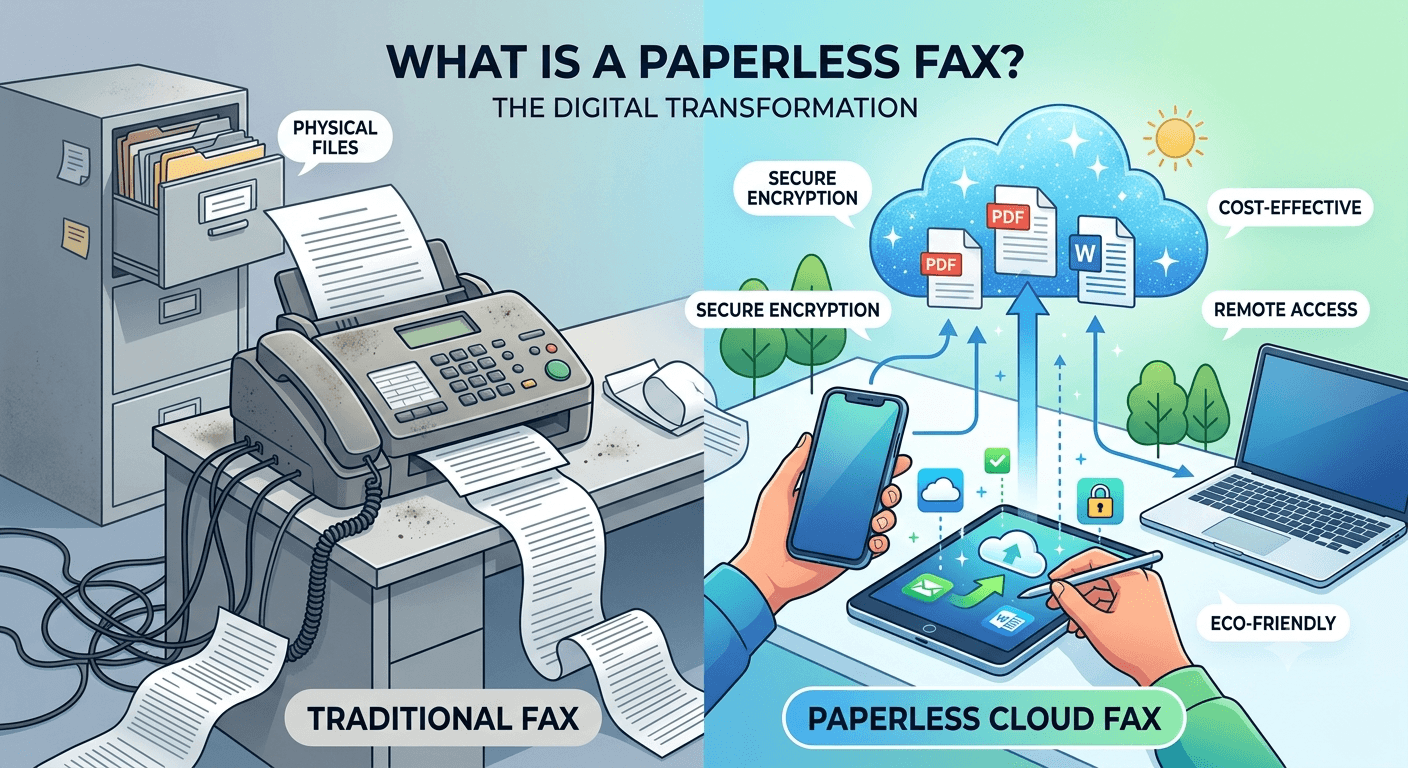
A paperless fax is a digital method of sending and receiving documents that replaces traditional physical fax machines with cloud-based technology. Instead of using paper, ink, and a telephone line, this system uses the internet to transmit data securely. Users can manage their documents through email, web portals, or mobile apps, making the process faster and more convenient. By eliminating the need for physical hardware, a paperless fax solution reduces costs, enhances security through encryption, and supports environmental sustainability. It allows businesses to maintain the formal communication standards of faxing while leveraging modern digital efficiency.
What Is a Paperless Fax?
The concept of a paperless fax revolves around the digital transformation of document transmission. In the past, faxing required a bulky machine, a dedicated landline, and a constant supply of paper and toner. Today, the technology has evolved into a cloud-based service that handles all the heavy lifting on remote servers. When you use a paperless fax service, your documents are converted into digital packets and sent over the internet. These packets are then reassembled at the receiver’s end, whether they are using a traditional machine or another digital system.
This modern approach means that documents remain in a digital format throughout most of their journey. You can upload a PDF or a Word document directly from your computer or smartphone. The recipient receives the file as an email attachment or a notification in a secure portal. This method provides a seamless transition for industries that still rely on faxing for legal or medical reasons but want to move away from the clutter and maintenance of old hardware.
Furthermore, a paperless fax system offers much more than just the ability to send files. It includes features like digital signatures, automated archiving, and real-time tracking. These tools ensure that you know exactly when a document was sent, received, and opened. Because it operates through the cloud, there is no risk of a busy signal or a paper jam preventing an important transmission from reaching its destination.
How Is It Different From a Traditional Fax System?
The differences between a paperless fax and a traditional fax system are foundational, affecting everything from cost to daily operations. A traditional system is tied to a physical location and a specific piece of hardware. If you are not in the office, you cannot send or receive a fax. In contrast, paperless faxing is entirely mobile. As long as you have an internet connection, your office is wherever you are. This flexibility is essential for the modern remote and hybrid workforce.
Cost is another significant differentiator. Traditional faxing involves numerous hidden expenses, including the purchase of the machine, regular maintenance, electricity, and the cost of a dedicated analog phone line. Over time, these costs add up to thousands of dollars. A paperless fax machine setup, which is essentially a software-based solution, operates on a subscription model that is often much cheaper. You only pay for what you use, and there are no hardware failures to worry about.
Security is perhaps the most critical difference. Traditional faxes often sit in an open tray for anyone to see, which can lead to privacy breaches. With a secure paperless fax, the document goes directly to the intended recipient’s digital inbox. Encryption protocols protect the data during transmission, ensuring that sensitive information remains confidential. This level of security is difficult to achieve with standard paper-based systems.
What Are the Benefits of Using Paperless Fax?
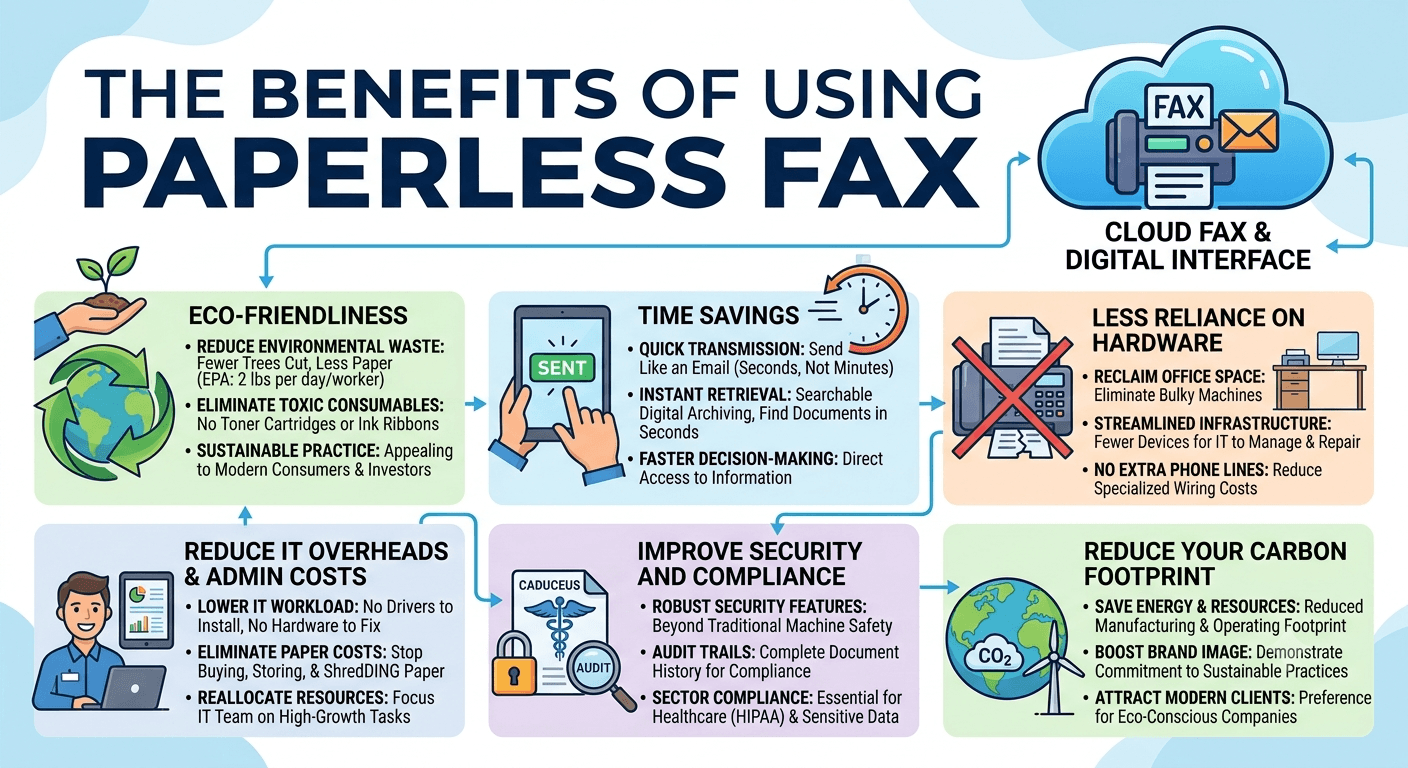
Transitioning to a digital workflow brings a multitude of advantages that go beyond simple convenience. Businesses that adopt a paperless fax system often see immediate improvements in their operational efficiency. The ability to manage all communications from a single digital interface reduces the mental load on employees and ensures that no document is ever lost in a pile of paper.
-
Eco-Friendliness
One of the most profound impacts of switching to paperless faxing is the reduction in environmental waste.
According to research by the Environmental Protection Agency, the average office worker generates about two pounds of paper products every day. A significant portion of this waste comes from unnecessary printing and faxing. By moving to a digital system, companies can save thousands of pages of paper each year, which translates to fewer trees cut down and less energy used in the paper manufacturing process.
Beyond just paper, traditional fax machines contribute to electronic waste and chemical pollution. Toner cartridges and ink ribbons contain chemicals that are harmful to the environment if not disposed of correctly. By eliminating the need for these consumables, a paperless fax solution helps a business lower its total environmental footprint. This commitment to sustainability is increasingly important to modern consumers and investors.
-
Time Savings
Efficiency is the backbone of any successful business, and paperless faxing provides a significant boost in this area. In a traditional setup, an employee must print the document, walk to the machine, wait for the line to be free, and then wait for the transmission to complete. If the line is busy, they must return later. This process is a massive drain on productivity. With a paperless cloud fax, sending a document is as simple as sending an email, taking only a few seconds.
Retrieving documents is also much faster. Instead of filing through physical folders or scanning old paper faxes into a computer, users can use search functions to find specific documents in seconds. Digital archiving ensures that every fax received is automatically categorized and stored in a searchable database. This immediate access to information allows for faster decision-making and improved customer service.
-
Less Reliance on Hardware
The move toward a paperless fax system means that IT departments have fewer devices to manage and repair. Physical fax machines are notorious for breaking down, experiencing paper jams, or requiring specialized parts that are difficult to find. When a machine goes down, communication stops. By using a paperless fax software, the responsibility for hardware maintenance shifts to the service provider.
This lack of reliance on hardware also means that businesses can reclaim valuable office space. The area once occupied by bulky machines and filing cabinets can now be used for more productive purposes. Furthermore, because there is no fax machine to plug in, companies no longer need to pay for extra phone lines or specialized wiring. This simplification of the office infrastructure leads to a more streamlined and agile business environment.
-
Reduce IT Overheads and Administration Costs
One of the most immediate benefits of a paperless fax system is the reduction in IT workload. There are no drivers to install, no hardware to fix, and no phone lines to troubleshoot. This allows your IT team to focus on more important tasks that drive growth. Additionally, the administrative cost of managing paper—buying it, storing it, and eventually shredding it—is completely eliminated.
-
Improve Security and Compliance with Transmission of Sensitive Information
Security is a major concern for any business today. A paperless fax system provides robust security features that traditional machines cannot match. Features like Audit Trails allow you to see a complete history of every document’s journey. This is essential for compliance in sectors like healthcare, where the privacy of patient records is paramount. By using a secure paperless fax, you ensure that your business stays on the right side of the law.
-
Reduce Your Carbon Footprint
As mentioned earlier, the environmental benefits are significant. A company that switches to paperless faxing can save a massive amount of energy and resources. This is not just good for the planet; it is also good for your brand. Many modern clients prefer to work with companies that demonstrate a commitment to sustainable practices. Going paperless is a visible and effective way to show that your business cares about its impact on the world.
How Can You Get Started Using Paperless Fax?
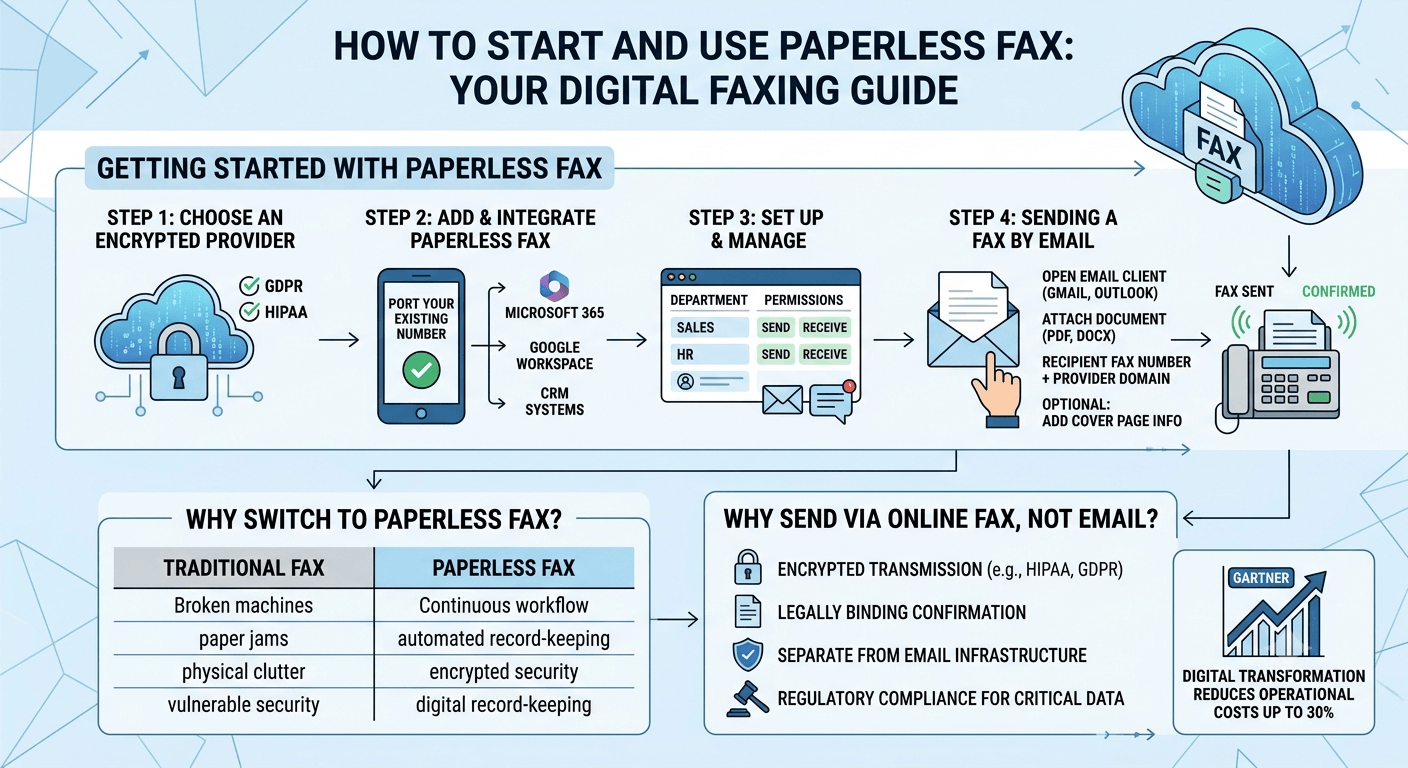
Setting up a digital faxing system is a straightforward process that does not require extensive technical knowledge. Most modern providers have designed their platforms to be user-friendly, allowing businesses to transition in a matter of minutes. The first step is to choose a provider that offers an encrypted paperless fax service to ensure your data remains protected.
1- Add Paperless Fax
To begin, you will need to sign up for a service and select a fax number. Many providers allow you to “port” your existing fax number, meaning you can keep the same contact information while moving to a digital system. This is crucial for maintaining continuity with clients and partners who already have your number on file. Once you have your number, you can integrate the service with your existing business tools.
Most paperless fax systems integrate seamlessly with popular platforms like Microsoft 365, Google Workspace, and various CRM systems. This integration allows you to send faxes directly from the applications you already use every day. Adding the service usually involves installing a small app or adding a browser extension, making the transition nearly invisible to the end user while providing all the benefits of the new system.
2- Set Up and Manage Paperless Fax
Once the service is active, management becomes a centralized task. Administrators can assign fax numbers to specific departments or individuals and set permissions for who can send or receive documents. This level of control is impossible with a physical machine. You can also set up automated notifications, so you receive an email or a text message whenever a new fax arrives.
Managing your documents is equally simple. Most services provide a web-based dashboard where you can view your sent and received history. From here, you can download documents, forward them to other team members, or delete them if they are no longer needed. This centralized management ensures that the company’s communication remains organized and compliant with data retention policies.
How to Send a Paperless Fax by Email
Sending a fax through email is perhaps the most popular feature of a paperless fax solution. It bridges the gap between old-school faxing and modern email communication. To send a document, you simply open your email client and start a new message. In the “To” field, you enter the recipient’s fax number followed by a specific domain provided by your service, such as 1234567890@yourfaxprovider.com.
-
Open your preferred email application like Gmail or Outlook.
-
Attach the document you wish to fax, such as a PDF, DOCX, or JPG file.
-
Type the recipient’s fax number followed by the provider’s domain in the recipient field.
-
If you want to include a cover page, you can often type the details into the body of the email.
-
Click send, and the paperless fax service will convert your email into a fax format and deliver it to the recipient’s machine or digital inbox.
This process eliminates the need for any special software or training. Because it uses standard email protocols, you can send faxes from any device that has access to your email account. It is a highly efficient way to handle “no faxes” physical clutter while ensuring that your documents reach people who still use traditional machines.
Why Switch to Paperless Fax?
The decision to switch to a paperless fax system is often driven by the need for better security and lower costs. In many industries, such as healthcare and legal services, faxing remains a legal requirement because it is considered more secure than standard email. However, traditional fax machines have many vulnerabilities. A paperless fax system provides a higher level of security by using advanced encryption methods that protect data at rest and in transit.
Another compelling reason is the shift toward digital record-keeping. Modern businesses are moving away from physical filing systems in favor of digital archives. A paperless fax system automatically creates a digital trail for every document sent or received. This makes it much easier to comply with audits and regulatory requirements. Instead of searching through boxes of paper, you can find exactly what you need with a simple keyword search.
Furthermore, the world is moving toward a “no fax” physical machine future. As telecommunications companies phase out analog phone lines (PSTN) in favor of digital fiber-optic networks, traditional fax machines are becoming obsolete. Switching to a paperless fax system now ensures that your business stays ahead of this technological shift. It prepares your infrastructure for a future where all communications are digital, fast, and secure.
Why Should I Send via Online Fax, Not Email?
A common question is why one should use a paperless fax system instead of just sending an email. The primary reason is compliance and security. Standard email is often sent across the internet in “plain text,” meaning it could potentially be intercepted and read by unauthorized parties. In contrast, an encrypted paperless fax uses secure protocols and point-to-point transmission that meets strict regulatory standards like HIPAA in the United States or GDPR in Europe.
-
Faxes provide a legally binding confirmation of receipt, which is often required in legal disputes.
-
The fax network is separate from the standard email infrastructure, offering an extra layer of security against phishing and malware.
-
Many government agencies and financial institutions still only accept faxes for certain types of official documentation.
-
A paperless fax system allows you to meet these requirements without the drawbacks of physical paper.
Research from Gartner indicates that digital transformation in document management can reduce operational costs by up to 30%. This is because digital systems reduce the errors associated with manual data entry and physical document handling. By using a paperless fax, you combine the legal weight of a fax with the speed and efficiency of the digital age.
Read More: How to Prevent VoIP Hacking? Types and Strategies
Final Thought
The transition to a paperless fax system is a logical step for any business looking to modernize its operations. It offers a unique combination of security, efficiency, and cost-effectiveness that traditional methods simply cannot match. By embracing this technology, you can eliminate the headaches of physical hardware, reduce your environmental impact, and ensure that your sensitive documents are handled with the highest level of care. Whether you are a small startup or a large corporation, the move to a paperless cloud fax will provide long-term benefits that far outweigh the initial effort of making the switch. In a world that is moving faster every day, having a streamlined, digital communication system is no longer just an option; it is a necessity for success.
Frequently Asked Questions (FAQs)
-
What is paperless faxing?
A paperless fax is a digital way of sending and receiving documents without the use of a traditional physical fax machine or paper. It uses an internet connection and cloud-based servers to transmit data, allowing you to manage faxes via email or web portals.
-
How does paperless faxing work?
It works by converting digital files into a format that can be sent over the internet or telephone lines. When you send a digital file, the service provider’s server handles the transmission to the recipient’s fax number, whether they have a digital system or a physical machine.
-
Can I send a PDF as a fax?
Yes, sending a PDF as a fax is one of the most common uses of a paperless fax system. You simply attach the PDF to an email or upload it to your fax provider’s portal, and the system automatically converts it for the recipient.
-
Which fax is free?
There are several “free paperless fax” services available that allow you to send a limited number of pages per day at no cost. However, for business-grade security and a permanent fax number, most users opt for a paid subscription service.
-
Can I send a fax via Gmail?
Yes, you can send a fax via Gmail by using a paperless fax service that supports email-to-fax. You simply compose an email, attach your document, and address it to the recipient’s fax number at the provider’s specific domain.
-
Is a paperless fax service secure?
A secure paperless fax service is often more secure than traditional faxing. It uses high-level encryption to protect documents during transmission and ensures that faxes are delivered directly to a secure digital inbox rather than sitting on a public paper tray.
-
What is the best paperless fax solution for small businesses?
The best paperless fax solution depends on your specific needs, but popular options include services that offer low monthly costs, easy integration with tools like Google Drive, and robust mobile apps for sending faxes on the go.
-
Do I need a phone line for a paperless fax machine setup?
No, you do not need a physical phone line for a paperless fax system. The entire process is handled over the internet, allowing you to eliminate the cost and maintenance of traditional analog landlines.