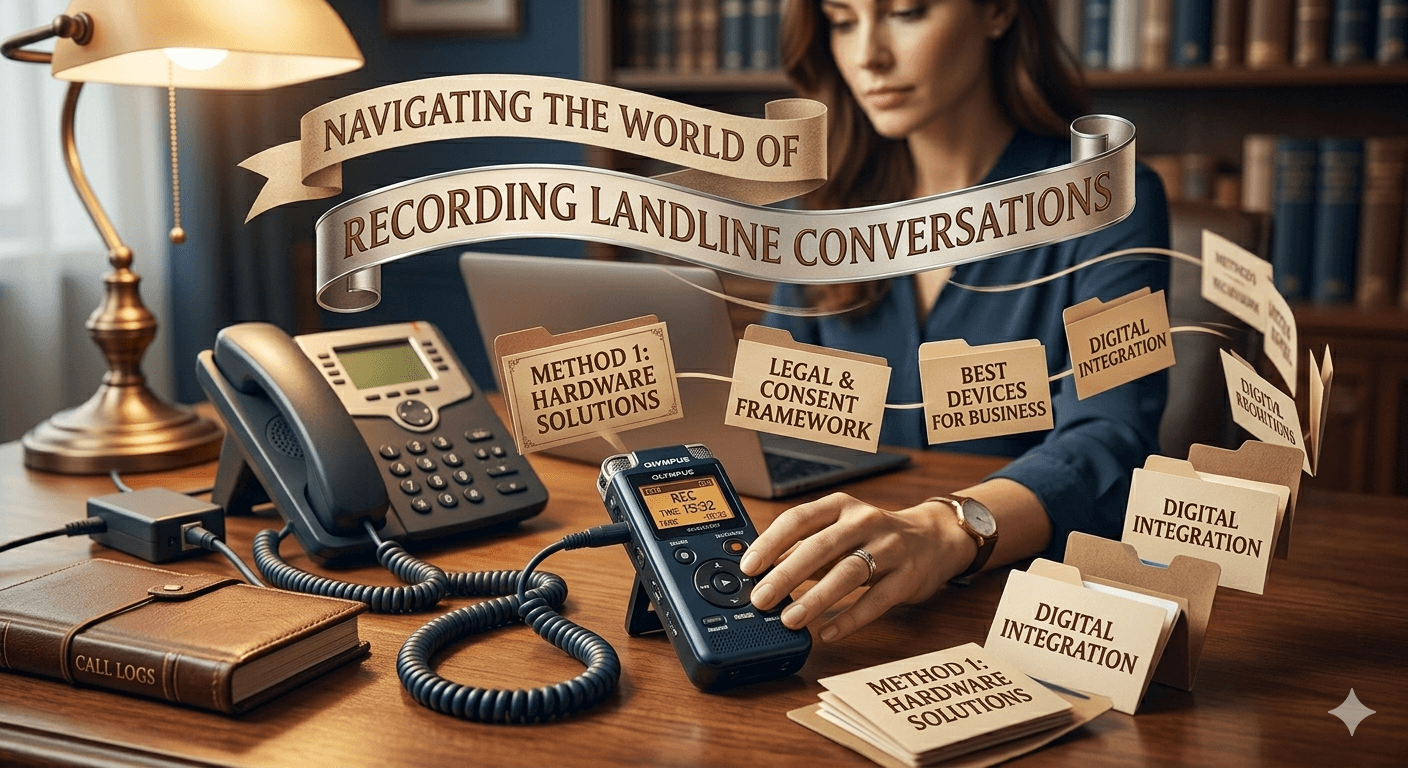
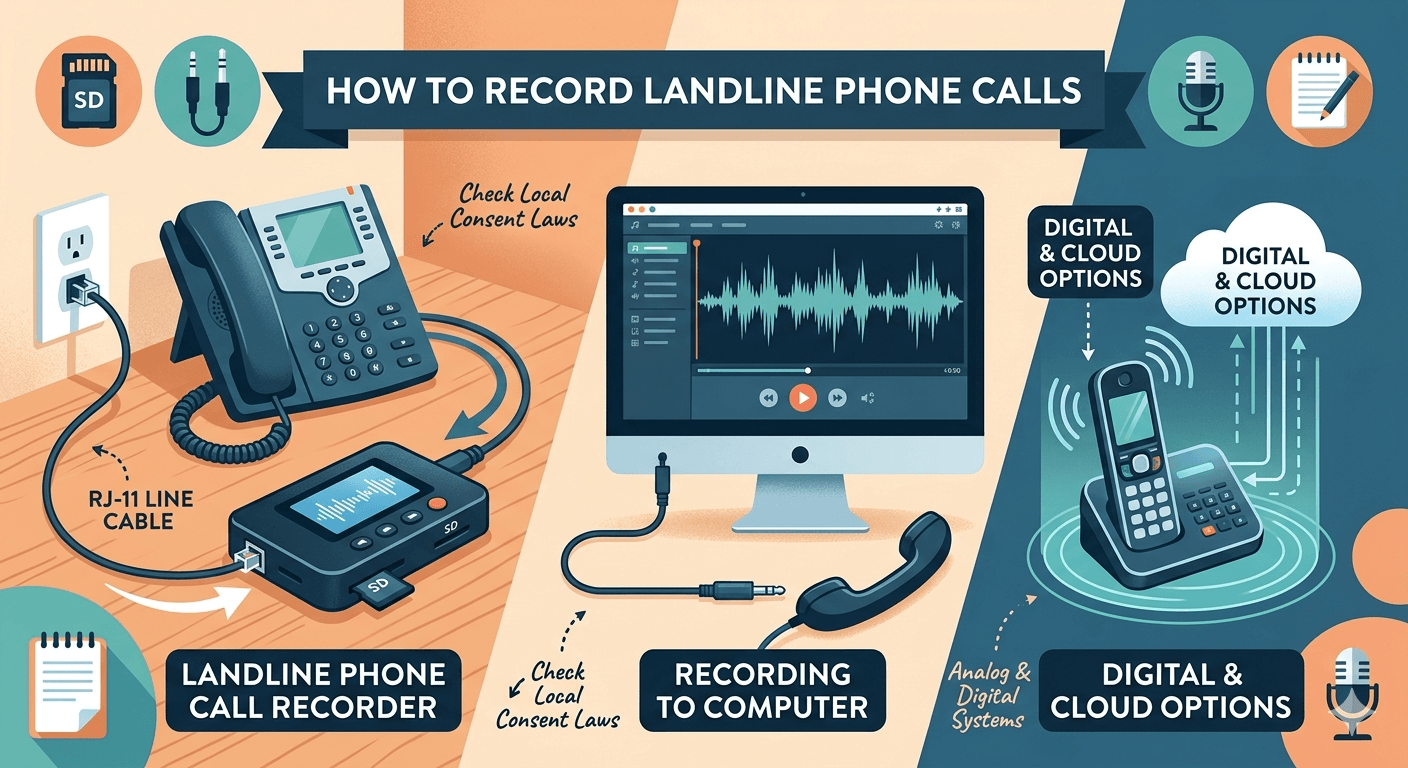
To record landline phone calls, the most common method involves using a dedicated hardware device known as a landline phone call recorder. This device acts as a bridge between your wall jack and the telephone unit, capturing audio signals through the RJ-11 cable connection. You can also utilize an induction coil microphone that attaches to the handset or an adapter that routes the audio to a computer for digital storage. Modern options include digital voice recorders with built-in phone jacks and cloud-based landline services that offer recording features within their interface, providing flexibility for both analog and digital phone systems.
Selecting the best hardware for how to record phone calls on landline systems
Recording audio from a traditional analog line requires hardware that can intercept the signal without causing interference or line noise. Many users opt for a standalone landline phone call recorder because these devices are specifically designed to handle the voltage fluctuations associated with telephone lines. These recorders typically feature an auto-start function that begins the capture process as soon as the handset is lifted. The audio is usually saved to a removable SD card in MP3 or WAV format, making it easy to transfer the files to other devices for review or storage.
When searching for a landline recording device, it is important to consider the storage capacity and the power source. Some units are powered directly by the phone line, while others require a separate power adapter or batteries. A landline telephone voice recorder often includes a built-in speaker and screen, allowing you to listen to recordings directly from the device without needing a computer. This convenience is a primary reason why physical hardware remains the preferred choice for those using traditional copper-wire systems or home office setups that rely on physical handsets.
Industry data suggests that while mobile usage has increased, approximately 30 percent of American households still maintain a landline for security or business purposes. This explains the continued market for high-quality audio capture tools. Using a professional landline phone recorder ensures that the signal remains clear and that both sides of the conversation are balanced in the final audio file. Without a proper balancing circuit, the caller’s voice often sounds much louder than the person on the other end, which makes the recording difficult to use for transcription or legal evidence.
The technical process to record landline phone calls on computer setups
To record landline phone calls on computer workstations, you need an interface that converts the analog telephone signal into a digital format that your sound card can process. This is often achieved using a telephone recording adapter that connects the phone line to the 3.5mm microphone jack on your PC. Once the hardware is connected, you can use various audio software programs to capture the feed. This method is highly effective for businesses that need to store large volumes of data, as the hard drive of a computer offers significantly more space than a standard SD card.
Choosing the right software is just as important as the hardware when you want to record a phone conversation. Free or professional-grade audio editors allow you to adjust the levels in real-time and apply filters to remove background hum or static. This setup is particularly beneficial for those who conduct interviews or research over the telephone and require high-fidelity audio for their archives. By routing the audio through a computer, you can also easily name files with dates and contact information, creating an organized database of communications that can be searched and retrieved in seconds.
Research from telecommunications analysts indicates that digital audio capture is becoming the standard even for analog systems due to the ease of cloud backups. When you record landline phone calls through a desktop interface, you can sync the output folders with services like Google Drive or Dropbox. This ensures that even if your hardware fails, the communication records remain safe. This multi-layered approach to data security is a major advantage for professionals in the legal, medical, and financial sectors who must adhere to strict record-keeping regulations.
Methods for how to secretly record landline phone calls and legal compliance
There are specific tools designed for those who need to know how to secretly record landline phone calls for security or monitoring purposes. These include small, inline recorders that are almost invisible and do not emit any beeps or notification sounds during the call. Some digital recorders are built into standard-looking telephone accessories, allowing them to remain discreet. However, the use of such equipment must be balanced with a clear understanding of the laws in your jurisdiction regarding privacy and consent in telecommunications.
In the United States, federal law generally allows call recording if at least one person in the conversation consents, known as one-party consent. However, many states have stricter two-party consent laws, requiring everyone on the line to be informed that the session is being recorded. When you use a landline telephone voice recorder, you must ensure that your actions align with local statutes to avoid legal repercussions. Ignorance of these laws is not a defense, so it is vital to research whether you reside in a state that requires explicit notification before you record a phone conversation.
Legal experts often recommend playing an automated message or stating at the beginning of the call that the conversation is being recorded for quality or legal purposes. This simple step protects you from privacy claims and ensures that the audio can be used as evidence in a court of law if necessary. While the hardware might allow you to capture audio without the other party knowing, the ethical and legal risks are substantial. Using a landline phone recorder should always be done with a focus on transparency and compliance with the wiretapping laws that govern your specific region.
Steps for how to record a phone conversation using modern adapters
If you are wondering how do you record a phone call on a traditional corded or cordless system, the process usually involves three main steps. First, you must purchase an adapter that fits your specific phone model, such as a handset tap or an RJ-11 bridge. Second, you connect the adapter between the base of the phone and the wall outlet or between the handset and the base. Finally, you connect the output of that adapter to your recording device, which could be a digital voice recorder or a laptop. This physical link ensures that every audio wave passing through the wire is captured accurately.
The quality of the recording depends heavily on the cables used in the setup. Poorly shielded cables can pick up electromagnetic interference from nearby electronics, leading to a loud buzzing sound in the background of your audio files. To achieve a clean result when you record landline phone calls, keep the recording equipment away from routers, microwave ovens, and other wireless transmitters. Using high-quality gold-plated connectors can also improve the signal-to-noise ratio, ensuring that every word of the conversation is audible and distinct.
- Verify the type of phone system you have, whether it is a standard analog POTS line or a digital PBX system found in many offices.
- Select an adapter that is compatible with your specific system to avoid damaging the hardware or the phone line itself.
- Test the recording levels before a critical call to ensure the audio is not clipping or too quiet to understand.
- Establish a consistent file-naming convention to keep your communication archives organized and accessible for future reference.
- Regularly back up your audio files to an external drive to prevent data loss due to hardware failure or accidental deletion.
Exploring digital options for how to record a conversation on my phone line
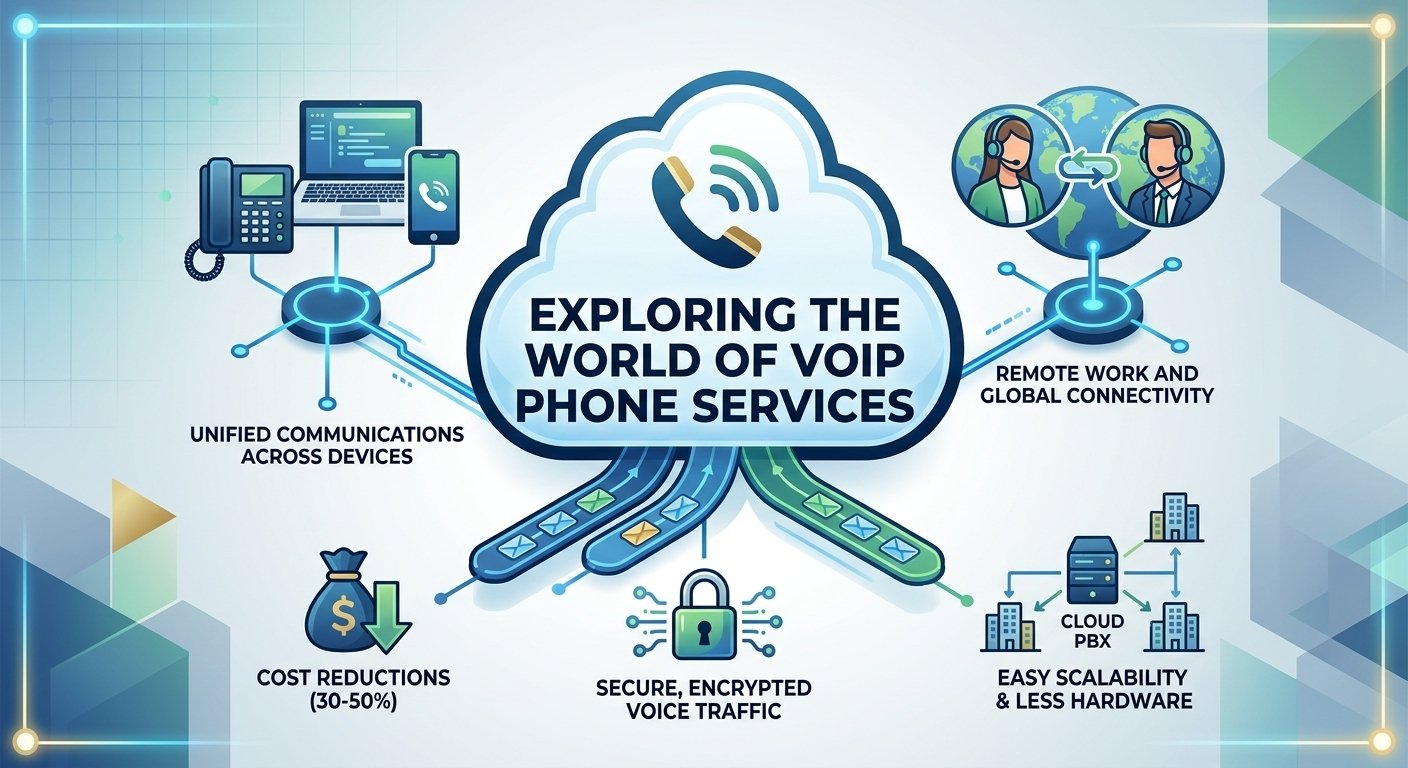
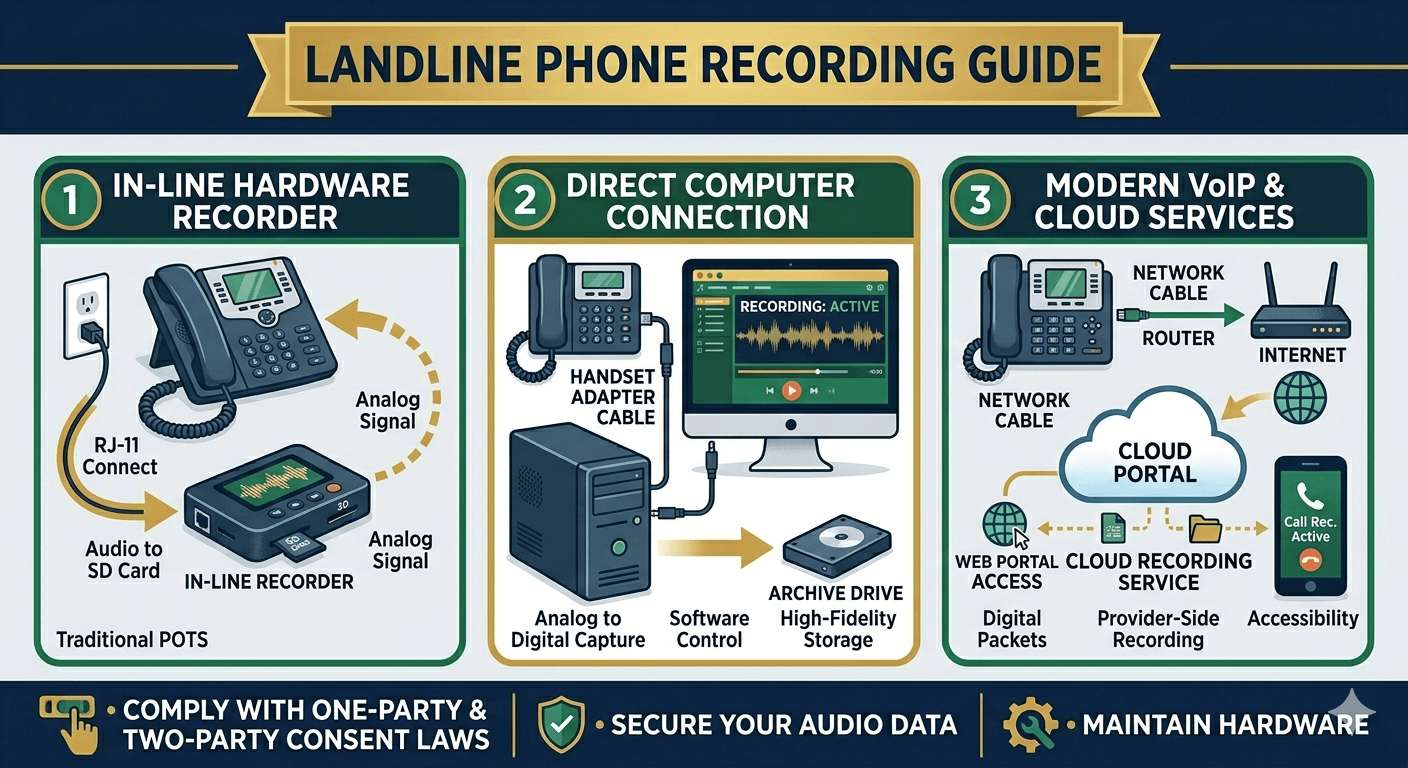
As technology evolves, many traditional landline users are switching to Voice over IP services which change the way you can record a phone conversation. With these digital services, you do not always need physical hardware to capture audio. Instead, you can often log into an online dashboard and enable a recording feature with a single click. This is a highly efficient way to manage communication because the files are stored directly on the provider’s servers, eliminating the need for local storage devices or complex wiring configurations.
If you are using a hybrid system and want to know how can you record a phone call, you might look into software-based recorders that run on your network. These programs monitor the data packets moving through your router and reconstruct the audio files from the digital stream. This is a more technical approach but offers the advantage of being completely non-intrusive. It does not require any physical changes to the phone hardware and can capture multiple lines simultaneously, making it ideal for small businesses with several employees.
Modern consumers often ask how do i record a conversation on my phone when they are referring to a landline that has been bridged to a mobile device. Many landline providers now offer apps that allow you to answer your home or office calls on your smartphone. When using these apps, you can use mobile-based recording tools to capture the audio. This creates a bridge between the reliability of a landline number and the technological convenience of a mobile operating system, giving you more options for how to record a conversation in a professional or personal setting.
Best practices for managing a landline phone call recorder and its data
Maintaining a landline phone call recorder requires periodic checks to ensure that the memory is not full and that the audio quality has not degraded over time. Over months of use, the connections in the phone jack can become oxidized, leading to static. Cleaning the contacts with a bit of isopropyl alcohol can restore the clarity of the line. Furthermore, if you are using an SD card-based landline phone recorder, it is wise to format the card every few months to prevent file system errors that could lead to lost data.
Privacy and security are paramount when you manage recorded communications. If the recordings contain sensitive personal or financial information, you should encrypt the folders where they are stored on your computer. Simply leaving audio files on an unencrypted SD card can lead to data breaches if the card is lost or stolen. When you consider how to record phone conversation logs, you must also consider how to protect them. This is especially true for businesses that must comply with data protection acts like GDPR or HIPAA, which mandate strict controls over how personal voice data is handled.
- Implement a routine to download and archive files from the landline recording device to a secure server at the end of each work week.
- Label every recording with metadata including the names of the participants and the primary topic discussed during the call.
- Ensure that all recording hardware is placed in a secure location where unauthorized personnel cannot access the physical storage media.
- Periodically review your legal notifications to ensure that your verbal consent scripts remain up to date with the latest regulations.
- Train all employees on the proper use of the landline telephone voice recorder to ensure consistent audio quality and legal compliance across the organization.
Read More: What are the Call Recording Benefits and Laws in USA?
Final Thought
Recording landline phone calls remains a vital practice for many, offering a level of documentation and security that is often necessary in professional environments. Whether you choose to use a standalone landline phone call recorder, an adapter for your computer, or integrated digital services, the key to success lies in choosing the right equipment and understanding the legal landscape. By following established steps for hardware setup and data management, you can create a reliable archive of your communications that serves as an invaluable resource for years to come.
FAQS
-
Can you record a call on a landline?
Yes, you can record a call on a landline using several different methods. The most common way is through an inline hardware recorder that connects to the phone line. You can also use induction microphones or computer adapters. The method you choose will depend on whether you have a traditional analog line or a digital office phone system.
-
How do I record a phone call on my telephone?
To record a phone call on a standard telephone, you need to connect a recording device to the line. You can use a handset tap that goes between the curly cord and the phone base, or a line tap that goes between the phone and the wall. Once the device is connected, you simply press the record button or set it to start automatically when the phone is picked up.
-
How do I activate call recording?
Activation depends on the device you are using. For standalone hardware, there is usually a physical switch or a menu setting for “Auto Record.” If you are using a VoIP or digital landline service, you typically activate call recording through the service provider’s web portal or by pressing a specific key combination, such as *1, during an active call.
-
How do I record my husband’s phone calls?
Recording anyone’s phone calls without their knowledge can be a violation of federal and state wiretapping laws. Before attempting to record someone else’s conversation, you must check the consent laws in your state. In many places, recording a conversation that you are not a part of or where the participants have not consented is a criminal offense.
-
How do i record a conversation if I have a cordless phone?
For cordless phones, you cannot easily use a handset tap because there is no cord. Instead, you must use a line-in recorder that connects to the base station’s wall jack. This device will record any conversation that takes place on any handset registered to that base station, as it captures the audio directly from the incoming phone line.