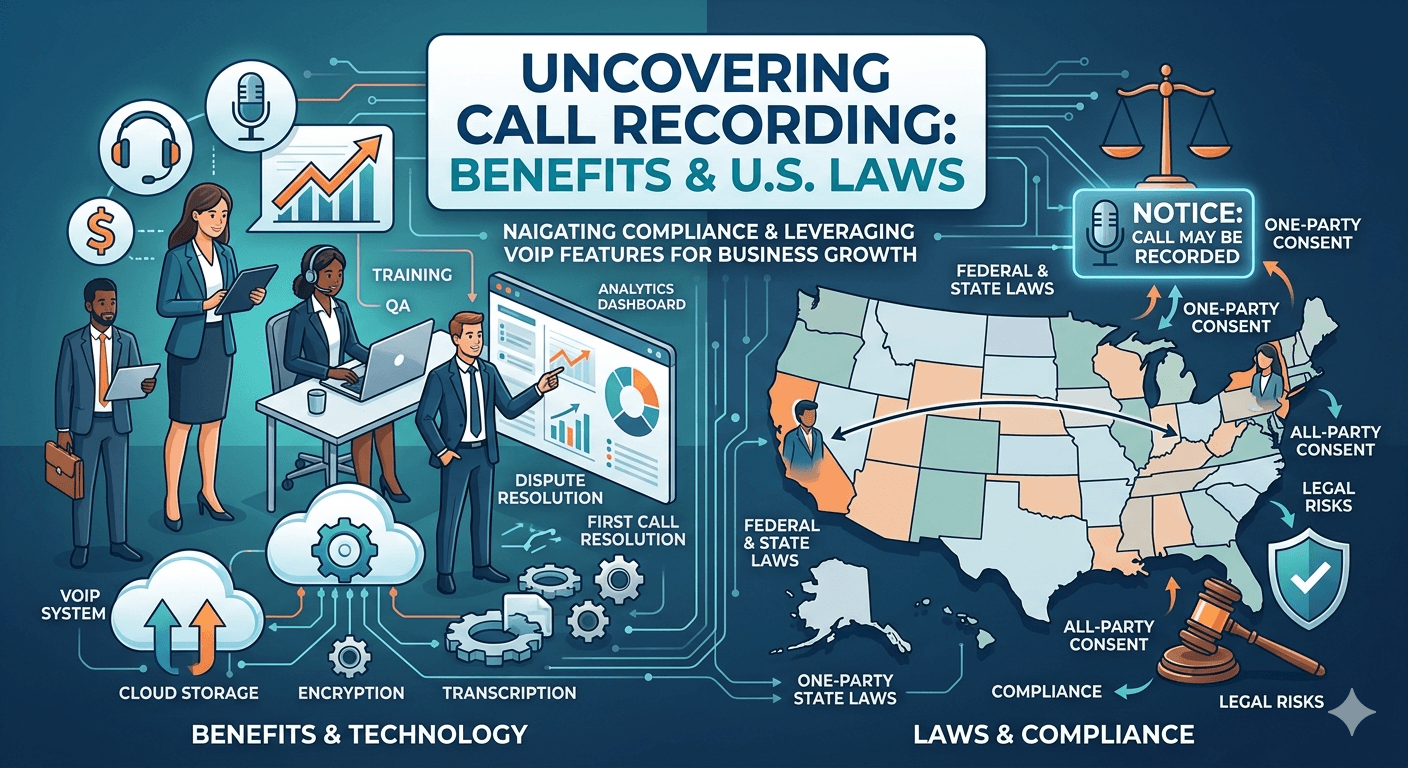
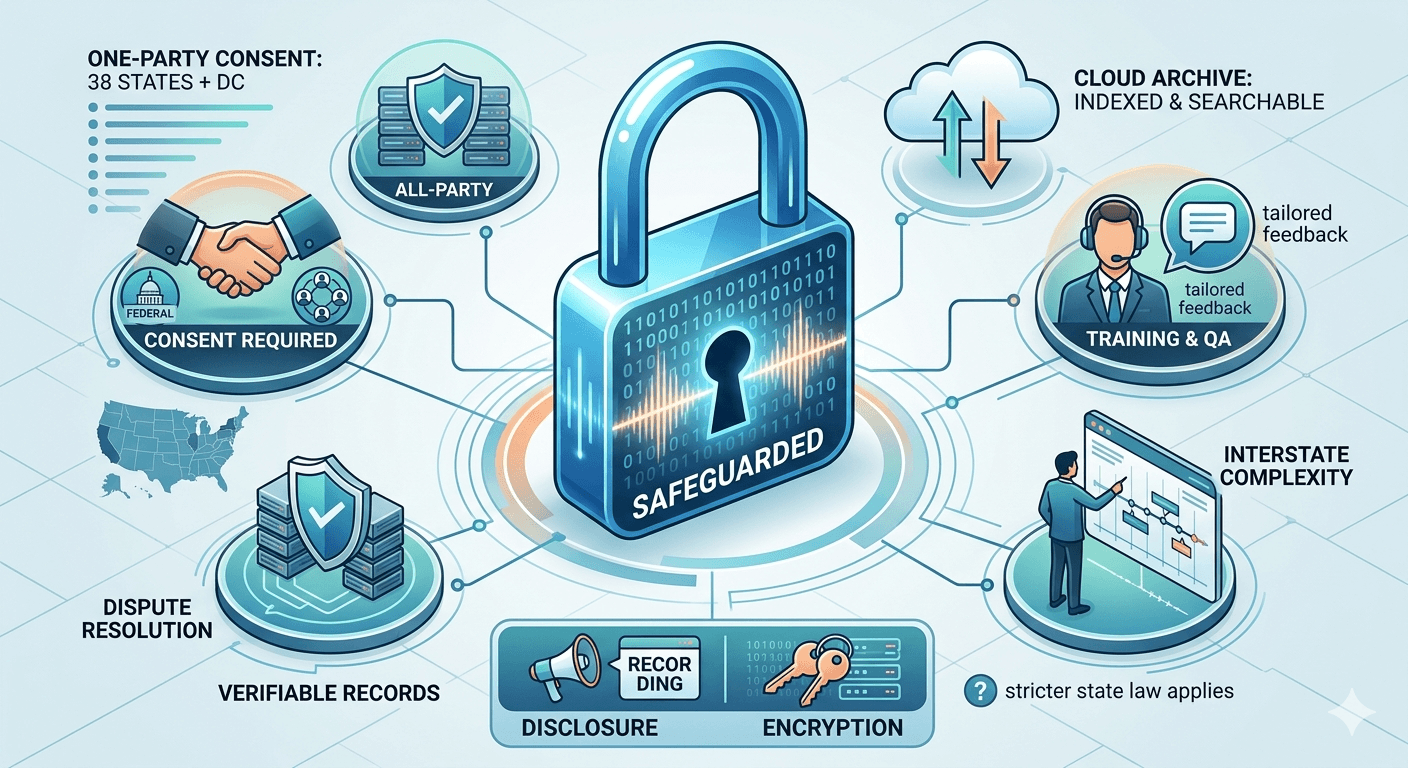
Call recording benefits and laws are a cornerstone of modern business communication, governed by a complex framework of federal and state laws in the United States. While the federal Electronic Communications Privacy Act generally permits recording if one participant consents, several states require the agreement of all parties involved. Understanding these regulations is essential for businesses utilizing advanced voip phone features to ensure they remain compliant while capturing vital customer data. By integrating recording into a broader voip phone system features strategy, organizations can enhance employee training and provide a verifiable record for dispute resolution, provided they navigate the diverse landscape of one-party and two-party consent requirements accurately.
Leveraging voip phone features for Quality Assurance and Training
The integration of recording tools within a corporate environment provides an unparalleled opportunity for professional development and service refinement. By utilizing modern voip phone features, managers can capture real-time interactions between staff and clients to identify specific strengths and weaknesses in communication styles. This data serves as a foundation for evidence-based training programs, replacing generic instruction with tailored feedback derived from actual customer service scenarios. When teams can listen to their own performances, they gain a better understanding of how to handle objections, clarify complex information, and maintain a professional tone under pressure.
Beyond the educational value, these recordings offer a robust layer of protection against liability and misunderstandings. In many industries, verbal agreements and telephonic consultations are common, and having an audio record ensures that both parties are held to the facts of the conversation. These voip phone features allow for the quick resolution of disputes regarding pricing, service promises, or contract terms. Research from the Aberdeen Group indicates that organizations that utilize comprehensive call recording and integrated analytics see a twenty percent improvement in first-call resolution rates, as agents have better access to historical context and management can refine scripts based on successful outcomes.
The technical implementation of these features often involves automated cloud storage, which ensures that recordings are indexed and searchable. This level of organization is vital for large-scale operations where thousands of calls may occur daily. Instead of manually sifting through tapes or local files, supervisors can use filters to find specific interactions based on the agent’s name, the date, or even the customer’s account number. This systematic approach to data management not only saves time but also ensures that the business maintains a high standard of accountability and transparency in all its external communications.
Understanding State and Federal Mandates for voip features
Navigating the legalities of audio capture starts with the fundamental question of whether can you record phone calls within your specific jurisdiction. At the federal level, the United States follows a one-party consent rule under 18 U.S.C. § 2511, which permits the recording of a conversation as long as at least one person participating in the call knows it is happening and agrees to it. This federal baseline allows individuals to record their own conversations without needing further authorization. However, businesses must be cautious because state laws often impose stricter requirements that override the federal standard in many practical scenarios.
When determining is it illegal to record a phone call, one must look closely at the specific state statutes that apply to the parties involved. Currently, thirty-eight states and the District of Columbia are recognized as one party recording states, meaning they generally follow the federal model where only one participant’s consent is necessary. These states include places like New York, Texas, and Georgia. In these regions, businesses have more flexibility in how they deploy their recording tools for internal monitoring or record-keeping, though ethical best practices still suggest providing some form of notice to maintain trust and professional standards.
The landscape changes significantly when dealing with states that require all-party consent. In these areas, every single person on the line must be made aware that the conversation is being recorded. Failure to provide this notice can lead to severe legal consequences, including the possibility of criminal charges or civil lawsuits. Therefore, any business operating across the country must configure their voip features to provide a clear, audible disclosure at the start of every interaction. This proactive measure ensures that the organization meets the highest legal standard, effectively shielding itself from potential litigation regardless of where the caller is located.
Managing the Complexity of Recording Phone Calls Across State Lines
One of the most challenging aspects of modern telecommunications is the act of recording phone calls across state lines. In a globalized economy, it is common for a business in a one-party state to communicate with a customer located in a two-party state. Legal precedents, such as the California Supreme Court case Kearney v. Salomon Smith Barney Inc., have established that the stricter law typically applies in these situations. This means that even if your business is based in a one-party state like Ohio, if you record a call with a person in California without their consent, you could be held liable under California’s stringent privacy laws.
The risk associated with interstate recording makes it critical for businesses to ask themselves are you allowed to record phone calls without a universal disclosure policy. Given the difficulty of knowing exactly where a caller is physically located at any given moment, especially with the prevalence of mobile numbers, a one-size-fits-all approach is the most secure strategy. By implementing an automated message that states the call is being recorded for quality purposes, a business covers its legal obligations across all jurisdictions. This ensures that no matter where the call originates or terminates, the necessary consent has been established through the participant’s decision to remain on the line.
Furthermore, the data generated from these interactions must be stored and handled according to the privacy regulations of the most restrictive state involved. This includes managing how the data is encrypted, who has access to it, and how long it is retained in the company’s archives. Modern voip features often include location-based triggers that can adjust disclosure settings dynamically, but reliance on technology alone is not a substitute for a comprehensive legal policy. Organizations should regularly audit their communication protocols to ensure they are keeping pace with evolving state laws and judicial interpretations regarding digital privacy.
Addressing the Risks of Unauthorized Recording and Victim Rights
Individuals often find themselves concerned about their privacy and wonder what to do if someone records you without permission in a way that violates local laws. If a person discovers they have been recorded in an all-party consent state without being notified, they may have the right to pursue legal action against the recording party. In such cases, the unauthorized recording is often inadmissible as evidence in court and can lead to statutory damages or fines for the offender. Documentation of the incident, including the time of the call and any evidence of the recording, is essential for anyone looking to protect their rights in these circumstances.
For businesses, the question of can you record a phone call without consent is usually met with a firm negative in a professional context. Even if a business is technically within a one-party state, secret recording can lead to a PR nightmare and a total loss of consumer confidence. Ethical communication is built on transparency, and most successful companies choose to lead with honesty by notifying every caller of the recording. This not only satisfies the legal requirements for all-party states but also sets a tone of professionalism and respect for the individual’s privacy, which can actually improve the quality of the interaction.
When an unauthorized recording is suspected, the affected party should first consult with a legal professional to determine the specific statutes that apply to their situation. Many states have specific procedures for filing complaints with telecommunications regulators or consumer protection bureaus. On the other side of the coin, businesses must have clear internal guidelines on the use of their voip phone system features to prevent unauthorized or accidental recordings by employees. Proper administrative controls and user permissions are necessary to ensure that recording tools are used only for their intended business purposes and in full compliance with the law.
The Technical Architecture of a Secure voip phone system features
A robust communication infrastructure relies on well-integrated voip phone system features that prioritize both functionality and security. When a business selects a provider, it must ensure that the call recording module is not just an add-on but a core part of the system’s security framework. This involves the use of end-to-end encryption for both the audio stream and the stored files, preventing unauthorized interception by third parties. Secure access controls, such as multi-factor authentication, should be mandatory for any staff member who needs to review or download recorded conversations for business purposes.
The flexibility of a modern voip phone system features suite also allows for selective recording, where certain departments or specific types of calls are targeted for data collection. For example, a sales team might record every call to ensure lead accuracy, while a human resources department might only record specific interviews or disciplinary meetings with prior written consent. This granular control helps an organization manage its data storage costs while also minimizing the amount of sensitive information it holds. By limiting the scope of recording to what is strictly necessary, a business can reduce its overall risk profile and simplify its compliance efforts.
-
Cloud-based storage solutions offer redundant backups to prevent data loss.
-
Automated transcription services turn audio into searchable text for easier auditing.
-
Integration with Customer Relationship Management software allows for seamless data flow.
-
Advanced reporting tools provide insights into call volumes and agent performance metrics.
-
Customizable retention policies ensure that data is deleted automatically after a set period.
These technical capabilities ensure that the organization can handle vast amounts of data without becoming overwhelmed or falling out of compliance. When the technology is configured correctly, it acts as a silent partner in the business’s success, providing the tools needed for growth while maintaining the high standards of privacy and security that modern consumers expect. Choosing a provider that understands the nuances of United States recording laws and offers features designed to facilitate compliance is a critical step for any forward-thinking management team.
Ethical Standards and Best Practices in voip features Usage
While legal compliance is the minimum requirement, high-performing businesses often go beyond the law to establish ethical standards for their voip features. Transparency is the most important element of an ethical recording policy. This means not just providing a legal disclaimer at the start of a call, but also ensuring that customers understand why their data is being collected and how it will be protected. When customers feel that their information is being used responsibly to improve their experience, they are much more likely to provide consent and engage positively with the brand.
Internal ethics are equally important when managing how voip features are used for employee monitoring. Staff members should be fully informed about when and why their calls are being recorded, and they should have access to the recordings for self-review. Using these tools for punitive measures without clear communication can lead to low morale and a culture of fear. Instead, the focus should always be on growth, development, and the collective improvement of the team. A positive culture around data and recording encourages employees to use the technology as a tool for their own success rather than seeing it as a form of constant surveillance.
Implementing a clear data privacy policy that is accessible to both employees and customers is a hallmark of a responsible organization. This policy should outline the security measures in place, the purpose of the recordings, and the rights of the individuals involved. By being proactive and open about these practices, a business distinguishes itself as a leader in corporate responsibility. In an era where data breaches and privacy scandals are common, a commitment to ethical communication can become a significant competitive advantage that attracts both top talent and loyal customers.
Read More: How to Perfect Your Business Voicemail Greeting for Success?
Final Thought
Successfully navigating the landscape of call recording within the United States requires a balanced approach that considers both the technical power of modern communication systems and the strict requirements of privacy laws. By understanding the differences between federal and state mandates, and by preparing for the complexities of interstate interactions, businesses can leverage their communication tools to drive growth and protect their interests. The key to long-term success lies in transparency and the ethical application of technology. When an organization treats its recording capabilities as a professional asset used for mutual benefit, it creates a secure and productive environment that fosters trust and excellence in every conversation.
FAQs Regarding Call Recording and Legalities
-
Is call recording legal in the USA?
Yes, call recording is legal in the United States, but it is subject to varying state and federal laws. Federal law requires at least one party to consent to the recording, but many states require all participants to agree. It is essential for businesses to know the laws in the jurisdictions where they and their customers are located to ensure full compliance.
-
What are the benefits of call recording?
The primary benefits include improved employee training through the review of real interactions, a clear audio record for resolving customer disputes, and ensuring compliance with industry-specific regulations. Additionally, many voip phone system features allow these recordings to be used for sentiment analysis and transcription, providing valuable data for business intelligence.
-
What are the laws around recording calls?
The laws are divided into “one-party consent” and “two-party consent” categories. In one-party states, only one person on the call needs to know it is being recorded. In two-party states, every person on the line must be notified and give their permission. When a call spans across state lines, the stricter of the two laws usually applies to the interaction.
-
Can I record my husband’s cell phone conversations?
Recording someone else’s private conversations without their knowledge or consent is generally illegal and could be considered a violation of wiretapping laws. Unless you are a participant in the call in a one-party consent state, recording a third party’s conversation without their permission is a serious legal offense that can lead to criminal charges.
-
How do I ensure my business is recording calls legally?
The safest method is to use voip features that play an automated message informing all callers that the interaction may be recorded. This provides transparent disclosure and establishes implied consent for anyone who chooses to stay on the line. Regularly auditing your recording policies and consulting with legal counsel can further protect your organization from liability.