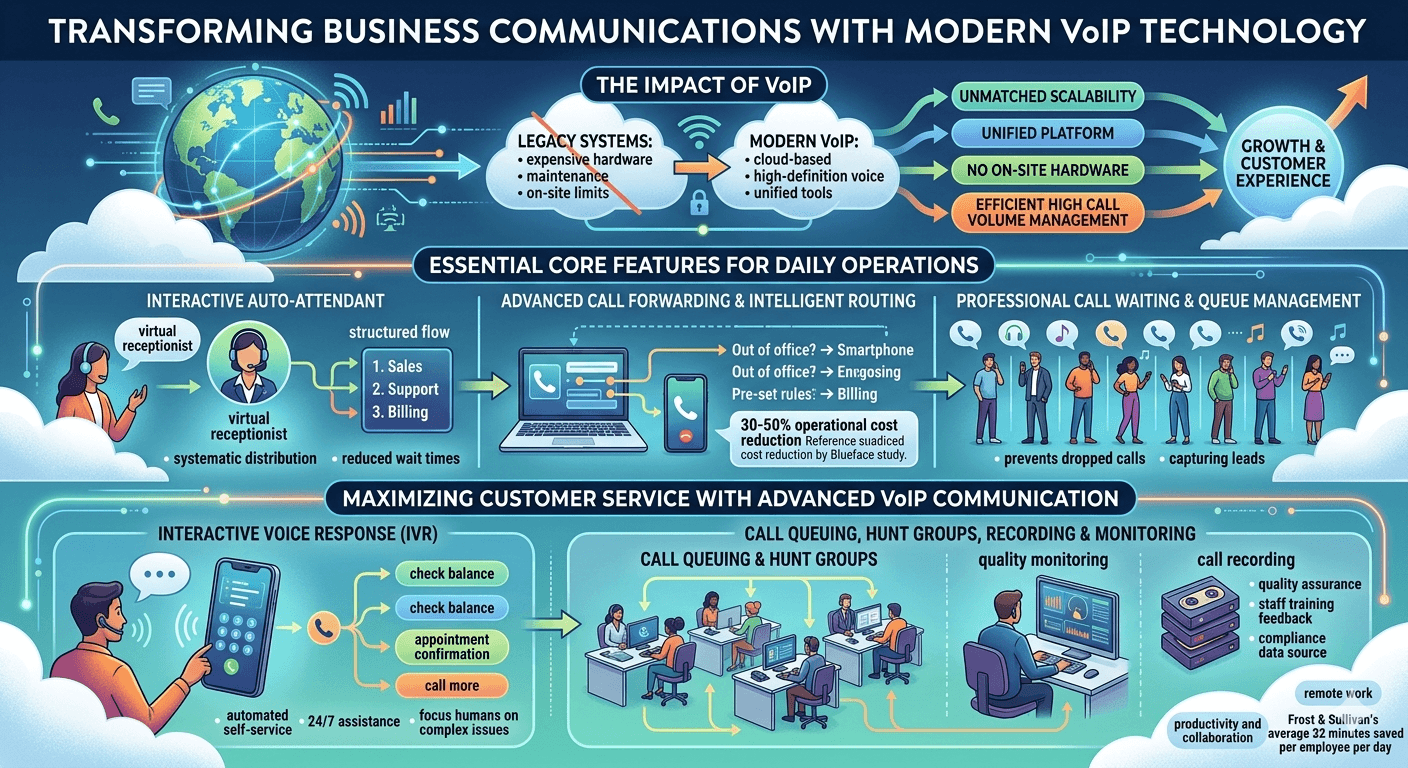
VoIP technology transforms traditional business communications by leveraging high-speed internet connectivity to deliver high-definition voice calls and a suite of advanced digital tools. Unlike legacy copper-wire systems, modern top voip features offer unmatched scalability and flexibility, allowing teams to collaborate effectively from any location with an internet connection. By integrating tools such as auto-attendants, call forwarding, and video conferencing into a single unified platform, a voip phone system features suite eliminates the need for expensive on-site hardware and maintenance. This shift toward cloud-based communication empowers modern businesses to manage high call volumes efficiently while maintaining a professional appearance, ultimately driving growth and enhancing the overall customer experience across various competitive industries.
Essential Core Features of VoIP for Daily Operations
Every modern organization requires a stable foundation for handling daily interactions, and core call handling represents the bedrock of any successful telecommunications strategy. The following list outlines the fundamental voip phone features that ensure your business stays connected and professional at all times:
-
Interactive Auto-Attendant Systems: This tool acts as a virtual receptionist to greet every caller and provide them with a structured menu of options. This ensures that every individual reaching out to the company is directed to the appropriate department without the need for a human operator to manually transfer the call. The systematic distribution of calls reduces wait times and improves the professional image of the organization, regardless of its physical size or the number of employees currently available to answer the phone.
-
Advanced Call Forwarding and Intelligent Routing: This specific set of voip phone features ensures seamless connectivity between physical offices and remote staff. If a primary line is busy or an employee is working out of the office, the call is automatically redirected to a mobile device or a secondary desk phone based on pre-set rules. According to research conducted by Blueface, businesses that transition to internet-based communication systems typically see a reduction in operational costs ranging from thirty to fifty percent. This financial efficiency stems from the elimination of long-distance charges and the reduced need for physical maintenance of complex on-premise wiring.
-
Professional Call Waiting and Queue Management: These functions play a vital role in maintaining a smooth workflow within a busy office environment. When multiple customers attempt to contact a business simultaneously, the system places them in a virtual queue, providing pleasant music or informative messages while they wait for the next available agent. These core voip phone features are specifically designed to prevent dropped calls and ensure that every lead is captured. By utilizing these tools, companies can maintain high levels of accessibility and responsiveness, which is crucial for building trust with a growing client base.
Maximizing Customer Service with Advanced VoIP Communication
The primary advantages of voip become most apparent when examining how digital voice features can drastically improve the quality of customer service. When a business chooses a robust provider for voip communication, they gain access to tools that automate and enhance every interaction.
-
Interactive Voice Response (IVR): This is a sophisticated tool that allows callers to interact with the phone system through voice commands or keypad inputs to resolve simple inquiries. This level of automation streamlines the user journey and allows human agents to focus on more complex issues that require personalized attention. By leveraging these specific top voip features, businesses can provide 24/7 assistance without the overhead costs associated with a round-the-clock manual call center. It creates a self-service environment that many modern customers prefer for quick tasks like balance checks or appointment confirmations.
-
Call Queuing and Hunt Groups: These are equally important for managing high-volume service environments where every second counts. These voip functions work by distributing incoming calls across a specific group of extensions, ensuring that the workload is balanced among available team members. If one person is already on a call, the system hunts for the next available person in the sequence or rings all phones simultaneously to guarantee a fast response. This collaborative approach to call management ensures that customer frustration is kept to a minimum and that internal resources are utilized to their maximum potential throughout the working day.
-
Detailed Call Recording and Quality Monitoring: This represents another layer of functionality that supports quality assurance and training initiatives. Managers can listen to live calls or review recorded sessions to provide feedback to staff, ensuring that brand standards are consistently met during every interaction. These features of voip also provide a digital trail for compliance purposes, which is particularly important in industries such as finance, healthcare, and legal services. When integrated correctly, these tools serve as a powerful data source for identifying trends in customer behavior and improving internal training protocols over the long term.
Implementing voip phone system features for Remote Collaboration
Productivity and collaboration are significantly enhanced when a company adopts a comprehensive voip phone system features package that supports mobile and remote work. As the global workforce shifts toward hybrid models, these tools become indispensable for maintaining team cohesion and operational efficiency.
-
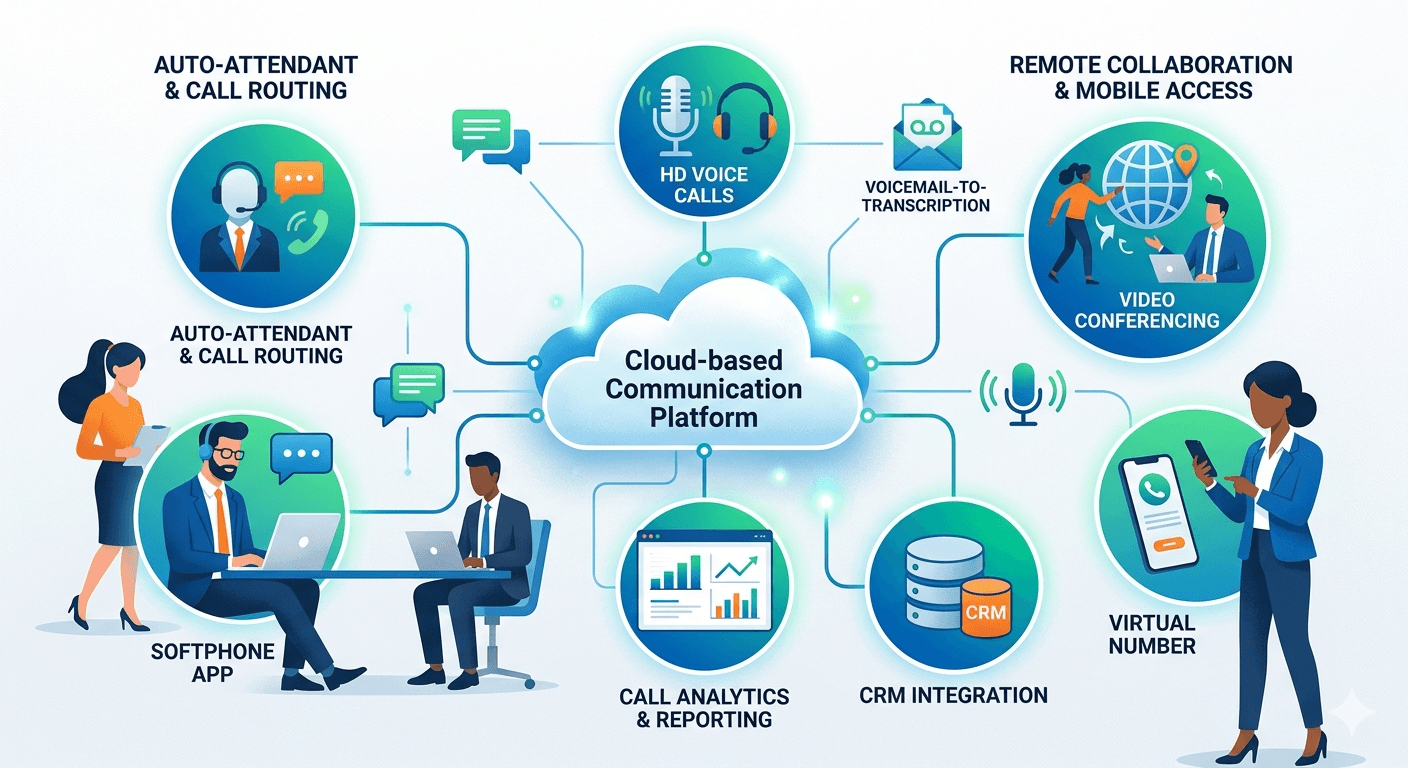
Integrated Softphone Applications: These are software applications that allow employees to use their laptops, tablets, or smartphones as a fully functional business phone extension. This means that your professional voip communication is no longer tethered to a physical desk, allowing staff to remain productive while traveling or working from home. These systems ensure that an employee’s business identity remains consistent, as the recipient of the call sees the company number rather than a personal mobile number on their caller ID, maintaining a boundary between personal and professional life.
-
Video Conferencing and Screen Sharing: These are now standard components of a modern communication suite, bridging the gap between geographically dispersed teams. Instead of relying solely on audio, these voip phone features business tools enable face-to-face interactions that foster better relationships and clearer understanding during complex project discussions. The ability to share a screen in real-time allows for collaborative editing of documents and more effective presentations, mimicking the environment of an in-person meeting. This integrated approach reduces the need for multiple third-party subscriptions, as all collaborative tools are housed within a single platform.
-
Presence Indicators and Internal Instant Messaging: These tools bolster internal efficiency by showing the real-time availability of colleagues. Before attempting to transfer a call or start a meeting, an employee can check if a coworker is busy, away, or available for a quick chat. A study by Frost and Sullivan highlighted that businesses utilizing integrated unified communication tools can save an average of thirty-two minutes per employee every day. This cumulative time saving translates into significant productivity gains over a fiscal year, making the technology a wise investment for growth-oriented firms that value time management.
Technical voip functions and Software Integrations
Advanced call management requires a deep dive into the technical aspects that handle data and integration with other business software. When voip functions are synced with your existing tech stack, the phone system moves from being a simple utility to a powerful business intelligence tool.
-
Customer Relationship Management (CRM) Integration: This is perhaps one of the most powerful voip system features available, as it connects the phone system directly to the company’s database of client information. When a call comes in, the system allows for a screen pop that displays the caller’s history, previous purchases, and open support tickets. This immediate access to context enables the agent to provide a highly personalized experience, greeting the caller by name and resolving issues without asking for repetitive information. It streamlines the workflow by logging calls automatically into the CRM for future reference.
-
Voicemail-to-Email and Text Transcription: These additional features of voip ensure messages are never overlooked or forgotten in an overflowing inbox. When a caller leaves a message, the system automatically transcribes the audio and sends it to the recipient’s email address as a text file or an audio clip. This allows busy professionals to quickly scan the content of a message during a meeting or while on the go, prioritizing urgent responses over routine inquiries. These digital functions eliminate the tedious process of dialing into a central voicemail system and manually navigating through a series of audio prompts.
-
Call Analytics and Comprehensive Reporting: These provide the high-level insights necessary for making informed business decisions regarding staffing and resource allocation. These voip features and benefits include tracking metrics such as average call duration, peak call times, and abandonment rates, giving managers a clear picture of how the communication department is performing. By analyzing this data, leadership can identify if more staff are needed during certain hours or if specific agents require additional training. This data-driven approach ensures that the business remains agile and responsive to the changing needs of its customer base.
Legal Considerations and Call Recording Laws in the USA
While utilizing recording features as part of your voip phone features business strategy, it is critical to understand the legal landscape in the United States. Federal and state laws dictate how and when you can record conversations, and failure to comply can lead to significant legal repercussions.
Federal law, specifically the Electronic Communications Privacy Act, generally follows a one-party consent rule. This means you can record a call if at least one participant consents to the recording. However, many states have implemented stricter “all-party consent” laws. In states like California, Florida, and Illinois, every person on the line must be aware of and agree to the recording. Therefore, a primary question for many managers is: can you record a phone call without consent? In an all-party state, the answer is no, and doing so could be considered a criminal act or lead to civil litigation.
The complexity increases when recording phone calls across state lines. Legal precedents often suggest that the stricter state law applies. If an agent in a one-party state records a customer in a two-party state without notification, they may be violating the laws of the customer’s state. To mitigate this risk, businesses should use their voip system features to play an automated disclosure at the beginning of every call. This ensures that regardless of the location, the caller is notified, and their decision to stay on the line constitutes implied consent. Transparency is the best defense against claims of illegal recording.
If you are an individual wondering what to do if someone records you without permission, you should first determine if you were in an all-party consent state at the time. If so, you may have grounds for a legal complaint. For businesses, the goal is to avoid this entirely by being upfront. Using voice features to announce that “this call may be recorded for quality and training purposes” is a standard industry practice that satisfies most legal requirements. It is also important to note that you should never attempt to record private conversations where you are not a participant, as this almost always violates wiretapping laws.
Advantages of VoIP for Strategic Business Scalability
The primary advantages of voip extend beyond simple cost savings, touching upon the strategic flexibility that modern companies need to survive in a competitive marketplace. Because the system is hosted in the cloud, it is inherently disaster-recovery friendly, ensuring that communication can continue even if a physical office becomes inaccessible.
-
Virtual Local and Toll-Free Numbers: These are excellent examples of how digital systems can help a company establish a presence in new markets. By obtaining a local area code for a city where they do not have a physical office, a business can build trust with local customers who prefer dealing with regional providers. These voip functions allow for global reach while maintaining the intimacy of a local business. It is a significant advantage for companies looking to test the waters in new territories without heavy investment in real estate or local hardware.
-
Business SMS and Multimedia Messaging: This represents a modern evolution of professional communication. Many customers now prefer texting over calling for quick updates, appointment reminders, or simple questions. Modern voip phone system features enable teams to send and receive text messages using their professional business numbers, keeping all client interactions within a secure and monitored environment. This meets the communication preferences of a younger demographic while ensuring that business-related texts are not lost on the personal devices of individual employees.
-
Call Flip and Seamless Call Parking: These specialized features provide flexibility during active conversations. Call flip allows a user to move an ongoing call from one device to another, such as from a desk phone to a mobile phone, without the caller ever knowing a transition took place. Call park allows a user to put a call on a virtual hold that can be picked up by any other person in the organization from a different extension. These voice features ensure that communication remains fluid and that the physical location of staff members does not hinder the ability to handle calls professionally.
Selecting the Right Infrastructure for VoIP Communication
Choosing the right partner for voip communication involves more than just looking at a list of available features; it requires an assessment of reliability, security, and support. A high-quality provider should offer a guaranteed uptime through a Service Level Agreement, ensuring that the business is never left without a way to contact its clients. Security is equally paramount, as voice data traveling over the internet must be encrypted to prevent unauthorized interception or data breaches.
When evaluating your options, look for providers that comply with industry standards such as HIPAA or SOC2, depending on your specific regulatory requirements. The quality of service settings on your local network must also be considered to ensure that voip communication remains clear and free from jitter or latency. This often involves configuring your office router to prioritize voice traffic over other types of data. A reputable service provider will offer guidance on network optimization to ensure that the transition to digital voice is successful and that call quality remains indistinguishable from traditional landlines.
Customer support from the service provider is the final piece of the puzzle when establishing a reliable communication setup. Since the phone system is a mission-critical tool, having access to 24/7 technical assistance is vital for resolving any issues that may arise. Many providers offer extensive online documentation, video tutorials, and live chat support to help users get the most out of their system. By choosing a provider that offers both a rich feature set and exceptional support, a business can ensure that its communication infrastructure remains a pillar of strength and a driver of ongoing success.
Read More: Voicemail to Text: Guide for perfect Voicemail Transcription
Final Thought
Embracing the full spectrum of modern communication tools is no longer an optional upgrade but a necessity for businesses aiming to stay competitive in a digital world. From the foundational reliability of core call handling to the strategic depth of CRM integrations and real-time analytics, these systems offer a level of control and insight that traditional telephony simply cannot match. By carefully selecting the top voip features that align with their specific operational goals, organizations can enhance their professional image, improve employee productivity, and deliver a superior customer experience. As technology continues to evolve, the businesses that leverage these advanced features will be best positioned to navigate the complexities of the modern global market with confidence and efficiency.
FAQs Regarding Business Phone Systems
-
What are the features of a voip phone system?
The primary features include auto-attendants for call routing, voicemail-to-email transcription, and mobile app integration for remote work. Advanced systems also offer video conferencing, call recording, and detailed analytics to track performance and customer interactions.
-
What is the most important VoIP feature for small businesses?
For most small businesses, call routing and the auto-attendant are the most valuable tools. These features ensure that calls are handled professionally and directed to the right person immediately, which helps a small team appear more established and organized.
-
Can I use VoIP features without new hardware?
Yes, one of the main benefits is that most features work on existing devices like laptops, tablets, and smartphones via softphone applications. While physical desk phones are available, they are not a requirement for using the service effectively.
-
How do I know which VoIP features my business needs?
It is best to start with essential tools such as call forwarding, mobile access, and voicemail transcription. As your business grows and your needs become more complex, you can integrate advanced features like CRM connectivity and automated call distribution.
-
Is the quality of internet-based calls reliable for business?
Modern internet-based calls are highly reliable, often providing better clarity than traditional lines. As long as you have a stable internet connection and a provider that offers high uptime guarantees, the communication quality will meet professional standards.