2600Hz KAZOO and Alianza One are the best NetSapiens alternatives to shortlist first for a full white-label UCaaS platform. Choose 2600Hz if deployment control and APIs drive the decision. Choose Alianza One if you want a managed communications platform for a telecom or broadband business. Cisco BroadWorks makes sense for service providers that want to pair hosted calling with Webex. PortaOne is a stronger fit when telecom billing and SIP switching need to move with the PBX.
Thirdlane and Vodia suit providers that want to build and operate a branded multi-tenant PBX service. 3CX is worth comparing for an MSP selling individual business phone systems or a supported shared deployment. The best NetSapiens competitors for your business depend on who needs to own the platform, run the network, handle billing, and support end customers.
Compare the Best NetSapiens Alternatives
NetSapiens sells a service-provider platform. Its public pricing material describes session-based licensing and oversubscription, which allows providers to serve more eligible users than they have simultaneous sessions. When comparing NetSapiens competitors, ask which traffic consumes a session, what happens during a failover, and who pays for hosted infrastructure or platform operations. The same published per-seat or per-call price can lead to a different cost for two resellers with different traffic patterns.
| Provider | Best For | What to Verify | Pricing & Evaluation |
|---|---|---|---|
2600Hz KAZOO | White-label UCaaS with multiple deployment models | Confirm hosting, API permissions, eligible add-ons, and support responsibilities. | Request a Platform QuoteCompare shared hosted, private cloud, and custom infrastructure proposals.Explore 2600Hz KAZOO |
Alianza One  | Managed telecom and broadband communications | Separate One, Core, or Fusion scope and confirm provisioning, carrier, and billing ownership. | Request a Service Provider QuoteQuote the product mix, migration, operations, and recurring commitments.Explore Alianza One |
Cisco BroadWorks  | Provider-hosted voice with Webex collaboration | Confirm hosting, platform prerequisites, customer onboarding, and app branding. | Request a Partner QuoteScope the provider deployment, Webex package, and implementation.See Cisco BroadWorks |
PortaOne PortaSwitch  | Integrated telecom billing, SIP services, and hosted PBX | Reconcile usage with invoices and identify required changes to separate back-office systems. | Request a Deployment QuoteCompare PortaSIP, PortaBilling, hosting, implementation, and relevant usage or capacity.See PortaOne Pricing |
Thirdlane Multi-Tenant PBX  | Brandable PBX with self-hosted or operated deployment | Validate tenant permissions, templates, and the workload of upgrading a shared platform. | Request a Platform QuoteQuote per-user or per-concurrent-call licensing and the selected operating model.Demo AvailableSee Thirdlane Pricing |
Vodia PBX  | Usage-based multi-tenant PBX for MSPs | Scope usage units, delegated administration, branding, and hosting responsibility. | Request a Multi-Tenant QuoteUsage-based multi-tenant terms differ from prepaid single-tenant bundles.Compare Vodia Licensing |
3CX  | Managed business PBXs and eligible shared deployments | Confirm the exact edition, tenant limits, hosting, and SIP trunk configuration. | US$300/year for 8SC BasicPublished USD license price. 8SC Basic is self-managed. Quote trunks and support separately.View the 3CX Price List |
Define What You Need to Replace
Start with the contract and a sample tenant. A provider might license NetSapiens directly, buy hosting and support from a platform partner, or sell a wholesale service that uses another company’s underlying engine. NetSapiens alternatives are easiest to compare once you identify which layer you want to change. Use the following distinctions to decide whether to invite a software vendor, a wholesale partner, or both.
| Buying Decision | What It Changes | What to Ask NetSapiens Competitors |
|---|---|---|
| Move to another UCaaS engine | Subscriber configuration, features, application access, integrations, and operations. | Which elements can be imported, what must be rebuilt, and who owns the production update process? |
| Change the wholesale provider | The partner relationship, support, billing, and possibly carriers or application branding. | Which engine runs the service, which number and account records can transfer, and what happens at contract exit? |
| Replace business PBX deployments | The phone system used by individual companies, often with simpler central administration. | Can you isolate tenants or instances, delegate local administration, and operate upgrades across all customers? |
| Move billing and switching together | Rating, invoicing, service activation, usage records, and reconciliation. | How do orders, service changes, refunds, and partial failures move between the billing and voice systems? |
A provider can change its commercial relationship while keeping a familiar underlying engine. That can be useful if support or pricing was the main problem. If the reason for switching is a limitation in the software, verify the underlying engine before shortlisting NetSapiens alternatives. Give procurement the legal vendor, software product, hosting operator, and carrier for each bid. They can be different companies.
Audit branding across a real customer journey. Ask NetSapiens competitors to show a welcome message, the mobile app, an administrator login, a voicemail notification, a service status page, and a sample invoice. Look for which brand appears at each step and who controls each domain. If the buyer expects customer-facing support under its own name, include that in the contract and demo. A logo on the web portal covers only one part of the experience.
1. 2600Hz KAZOO — Best for a White-Label Platform With Deployment Choice
2600Hz, an Ooma company, offers KAZOO-based communications for service providers. It is among the most comparable NetSapiens alternatives for teams that want a multi-tenant platform, branded customer experience, and a choice of deployment arrangements. 2600Hz lists shared hosted cloud, private cloud, and a custom global infrastructure option. Write down which model the vendor is proposing before comparing it with a managed service or a deployable PBX license.
Who should shortlist it. An established provider with engineering resources and multiple customer accounts may benefit from comparing 2600Hz with other NetSapiens competitors. It is especially relevant if you need to integrate subscriber provisioning with existing systems or choose a dedicated deployment. An MSP that needs minimal infrastructure ownership can also ask about the shared hosted option and request the division of support responsibilities in writing.
What to test. Ask API-focused NetSapiens alternatives to create one test reseller and two customer tenants. Provision a number, add an extension, route an outside call to an auto attendant, and edit an answering rule. Confirm how an interrupted request is reported and whether an integration can retry without creating a duplicate account or service. Check which credentials can operate across tenants and whether the logs provide enough detail to investigate a failed order.
What changes the quote. Ask NetSapiens competitors to separate subscription or capacity charges, hosting, premium capabilities, implementation, and your ongoing operations work. Some 2600Hz marketplace capabilities have deployment eligibility rules. Ask which integrations and add-ons are available in the exact model being quoted, who owns them, and which operations the partner can perform directly. Estimate how many incidents your support team would still handle after go-live.
When to choose a narrower option. If your core service is a collection of independent business PBXs with a few repeatable templates, compare the effort of administering those phones in Vodia, Thirdlane, or a suitable 3CX deployment. A provider with substantial API work or a custom cluster has a different buying case from an MSP that mainly needs a central way to handle customer extensions.

2. Alianza One — Best for a Managed Telecom and Broadband Voice Portfolio
Alianza One is a full-stack cloud communications platform for communications service providers. It is one of the more relevant NetSapiens alternatives for a broadband operator or carrier that wants to add or modernize branded voice services without running the full cloud platform in-house. Alianza also offers Core and Fusion models. Ask which platform, service functions, and off-platform dependencies the proposal actually includes.
Who should shortlist it. Consider Alianza alongside other NetSapiens competitors if you sell voice as part of broadband, business connectivity, or managed communications. A regional provider might have residential customers on simple voice plans and business customers on more complex offerings. Require a product-by-product scope that shows how each subscriber group will buy, activate, use, and get support for the service.
What to test. Provide two common order types and one difficult exception. For example, order a hosted business line, change a business number after activation, and cancel a partially completed order. Ask managed NetSapiens alternatives to show which changes the provider can make, how the customer receives notifications, and what their support staff can see. Test call detail and status exports using the same identifiers your billing team expects to receive.
What changes the quote. Ask NetSapiens competitors to identify one-time migration charges, recurring product charges, support boundaries, access to logs, and what the supplier bills for separately. Confirm how broadband accounts are bundled with voice and whether the quoted deployment includes the number, carrier arrangement, and usage assumptions you modeled. If a branded feature uses another platform or contract, note that dependency in the implementation plan.
When to choose a narrower option. A provider that wants direct control over a custom deployment or its own existing switching and billing might prefer 2600Hz, PortaOne, or an operator-managed architecture. Keep the same list of service outcomes when comparing that design with Alianza. If back-office work moves from your team to a supplier, price both the savings and the work that stays with you.
3. Cisco BroadWorks — Best for Service Provider Hosted Calling With Webex
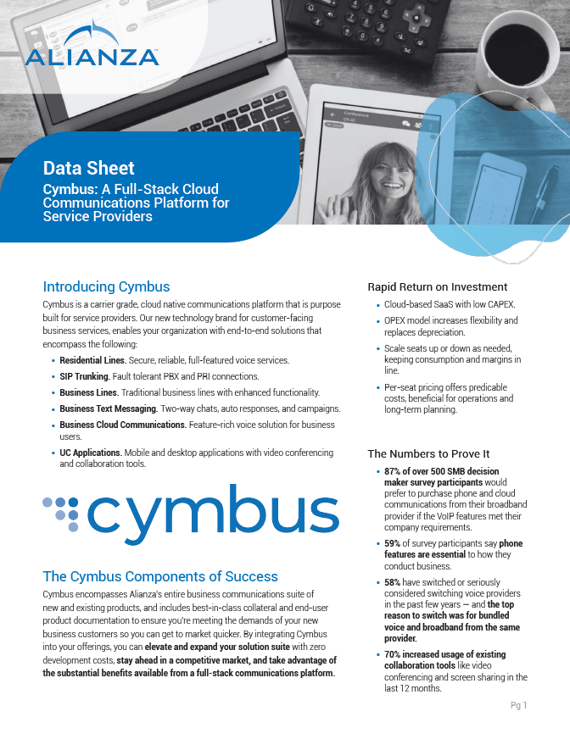
Cisco BroadWorks is one of the NetSapiens alternatives for a service provider that wants to operate hosted business calling and pair it with Cisco’s Webex app. BroadWorks and Webex for Cisco BroadWorks have distinct roles. The provider runs the calling platform, and the Webex integration adds a collaboration experience through the Cisco partner arrangement. Confirm the exact offer and supported versions for the region and application model in your plan.
Who should shortlist it. Cisco belongs among the NetSapiens competitors for established business calling providers with operations teams and customers who already want Webex. A provider could bundle managed WAN, calling, and meetings for customers with distributed branches. Ask what the end user sees on desktop and mobile and what the provider sees in its own provisioning and support systems.
What to test. Ask hosted calling NetSapiens alternatives to create a test organization with an existing identity, a user who moves locations, and a receptionist with shared line duties. Verify the initial number assignment and the end-user self-activation path. Then test how a customer admin adds a user and how the support team diagnoses a user who can sign in but cannot place calls. Keep the trace of each step so the migration team knows where responsibility changes.
What changes the quote. Ask NetSapiens competitors for provider software and hosting, application packages, onboarding assistance, device migration work, and integrations. Cisco publishes platform and integration requirements. Check the supported versions, patches, and provider-side components for the proposed arrangement. If your organization has a separate portal, ask which processes can still begin there and how status is synchronized.
When to choose a narrower option. Webex may be a differentiator for customers who want that product explicitly. If the reseller requires its own name at every touchpoint, review the Webex branding and client experience closely before treating it as a substitute for a fully branded app. Also confirm how mixed fleets of old phones, local numbers, and shared line appearances are supported.
4. PortaOne PortaSwitch — Best for Telecom Billing and SIP Service Creation
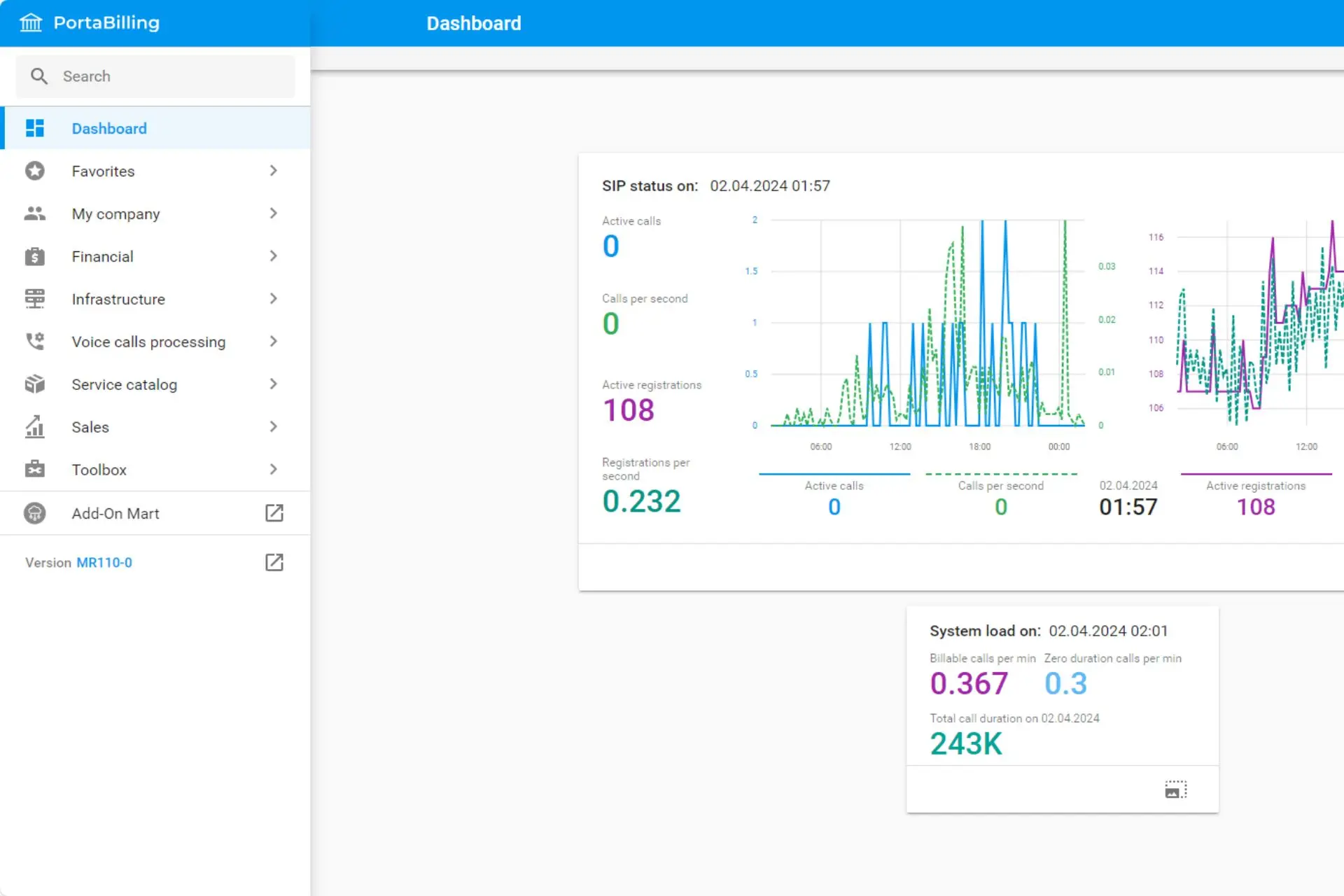
PortaOne combines PortaSIP and PortaBilling in PortaSwitch. That makes it distinct among NetSapiens alternatives for providers that need to provision, route, and rate several kinds of telecom services using one commercial platform. Start with the product catalog, billing rules, and existing subscriber data, then verify whether the proposed deployment covers the PBX experience you sell.
Who should shortlist it. Evaluate PortaOne against other NetSapiens competitors if you sell hosted PBX alongside SIP trunks, usage-based offers, or wholesale services. A reseller with multiple service bundles might need shared number inventories and a consistent way to rate calls. A carrier could want to keep customer account controls close to the routing engine. Bring finance, provisioning, and NOC staff into the demo.
What to test. Give billing-focused NetSapiens alternatives the same anonymized call records and a sample of current price plans. Include a call that goes through multiple legs, a service change halfway through a billing cycle, an international route outside an allowance, and a refunded or corrected item. Trace each charge to the relevant record. Then authorize a new phone number and confirm that a failed activation does not leave the customer with an invoice entry for an unusable service.
What changes the quote. PortaOne publishes different commercial arrangements, and the provider’s own estimate can depend on hosting, active customers or seats for cloud PBX, or service-specific usage. Ask NetSapiens competitors to price one normal month and one busy month with the same dataset. Scope parallel billing, customer migration, API integration, and export of historical data as individual work items. Compare how each product treats retries and duplicate records.
When to choose a narrower option. An MSP might already have a reliable PSA, billing, and tax workflow. If the only required change is the PBX platform, replacing billing adds implementation work and customer communication. List what you expect to retain, and demonstrate how a new number or seat appears in your current billing system before adding a new one to the project.
5. Thirdlane Multi-Tenant PBX — Best for a Brandable PBX With Deployment Control
Thirdlane offers a white-label multi-tenant PBX and UCaaS platform for MSPs and service providers. Its deployment options include customer-operated infrastructure and a vendor-operated arrangement. It is among the NetSapiens alternatives to investigate if you want shared administration for multiple business customers and a choice about who operates the platform. Its pricing page invites buyers to quote per-user or per-concurrent-call licensing.
Who should shortlist it. Thirdlane belongs among the NetSapiens competitors for providers with many similar customers and a relatively standardized voice package. Think of an MSP supporting offices that each need an IVR, day and night routing, shared directories, and central support. Ask whether you can clone a service template and still keep customer configuration and call data isolated.
What to test. Run the same new tenant through Thirdlane and other multi-tenant NetSapiens alternatives. Create the tenant, set up a number, import representative users, and delegate admin privileges to a customer contact. Verify how an update to a shared template affects individual tenants. Ask a support technician who did not build the demo to find an unanswered call, trace the overflow route, and show which user had permission to edit it.
What changes the quote. Ask NetSapiens competitors to price production capacity, license administration, upgrades, support, and the disaster-recovery environment. If the provider runs its own infrastructure, include monitoring, backups, and on-call staffing. If a vendor manages it, ask what access you get to platform metrics and when the vendor schedules updates. Clarify what portions of outbound traffic, forwarding, or internal calls count toward any concurrency allowance.
When to choose a narrower option. A compact PBX environment can be enough for an MSP with straightforward customer routing. If you also operate a carrier network, compare the portion of gateway, interconnect, numbering, and country-specific requirements that are outside the proposed PBX deployment. Assign an owner to those items before comparing total project cost.
6. Vodia PBX — Best for MSPs Managing Multiple Customer Phone Systems
Vodia offers a multi-tenant PBX platform and a partner model for providers delivering branded calling. Its licensing documentation distinguishes prepaid single-tenant bundles from usage-based licensing intended for multi-tenant operation. It is one of the better NetSapiens alternatives for providers that want to model commercial usage around a particular portfolio of customers instead of assuming every tenant needs the same bundle.
Who should shortlist it. Compare Vodia with other NetSapiens competitors if you want to manage many business customers under a central platform and keep control of the service experience. A provider may serve customers with old desk phones, smaller branches, and different support expectations. Ask what onboarding can be standardized, what a tenant administrator sees, and which features require an optional package.
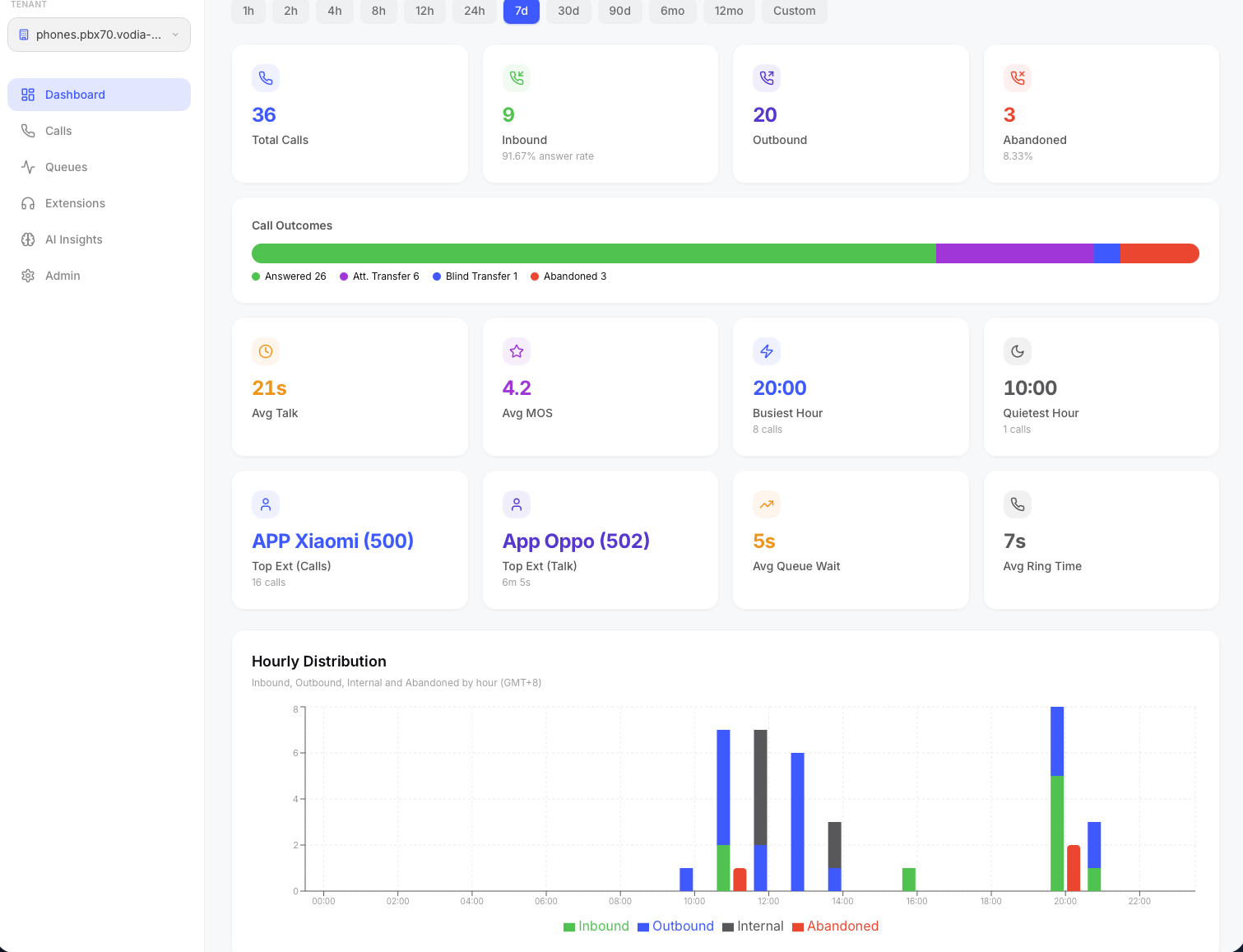
What to test. Give a technician a new domain, two phones, a softphone, and a time-based call flow. Ask them to register each device, move a user between locations, and record how the system logs the change. Include one failed registration and a number attributed to the wrong tenant. When comparing multi-tenant NetSapiens alternatives, test how role limits prevent a helpdesk user from seeing another customer’s call data or changing their routing.
What changes the quote. Ask NetSapiens competitors to explain how they measure billable activity and minimum commitments. Model both a quiet customer and a customer that generates substantial traffic at the same time of day. Verify whether you pay separately for hosting, monitoring, additional channels, endpoint integrations, or after-hours support. Ask what happens to the commercial terms as your mix of customers shifts from dedicated to shared deployments.
When to choose a narrower option. If you operate a few large, bespoke PBXs, dedicated deployments may make it easier to manage separate change windows. If your team runs many very small accounts, central templates and repeatable onboarding may matter more. Have both customer types represented in the pilot. Pick the model that your operators can support every week, including on the busiest release day.
7. 3CX — Best for PBX-Focused MSPs and Dedicated Customer Deployments
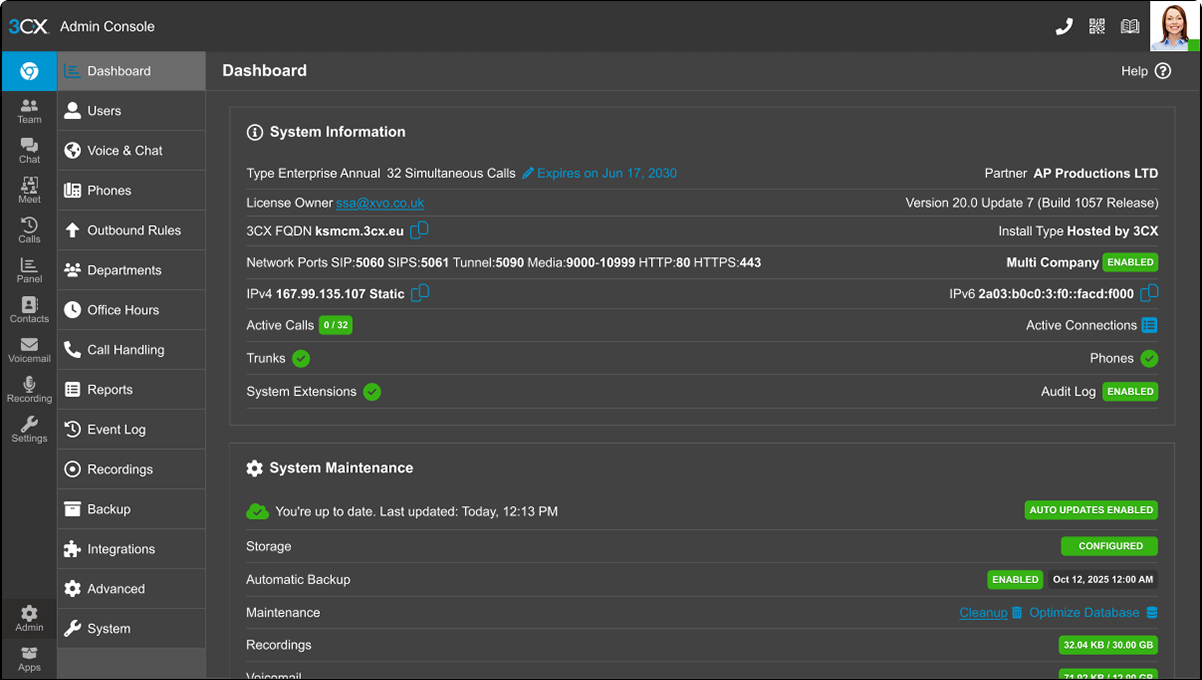
3CX is one of the more narrowly scoped NetSapiens alternatives for a partner deploying and maintaining business phone systems. The vendor documents annual license pricing tied to simultaneous calls for eligible editions, alongside shared and dedicated deployment options. Compare the precise edition and deployment type before assuming every feature is available in every instance.
Who should shortlist it. Compare 3CX with other NetSapiens competitors when you sell managed PBX deployments and your customers do not need a bespoke carrier platform. An MSP might deploy dedicated instances for larger accounts and consider a shared model for smaller businesses. A customer with custom CRM workflows, advanced routing, or separate change controls may warrant its own instance.
What to test. Ask PBX-focused NetSapiens alternatives to take a sample business with business hours, a receptionist, remote phones, and an external SIP trunk. Test backup restoration, device enrollment, and who receives alerts when a trunk or instance goes offline. For shared operation, verify the exact tenant permissions, extension boundaries, supported features, and how you recover one customer after an administrative mistake.
What changes the quote. 3CX publishes a USD annual price list. It shows US$300 for an 8-simultaneous-call Basic license, which is self-managed, and US$395 for 8SC Pro before separate eligible hosting. Price the required edition and simultaneous-call capacity, then add hosting, supported trunks, number service, endpoints, and support when applicable. Ask NetSapiens competitors to itemize the work of managing upgrades across customer instances. An annual license and a provider platform with a pooled allocation use different cost units, so compare both based on the same expected load.
When to choose a narrower option. A dedicated customer PBX can fit an MSP contract without the service creation and wholesale functions a carrier wants. If your buyer needs reseller hierarchies, detailed peer routing, or cross-tenant provisioning APIs, define those requirements before assuming a PBX deployment can replace the existing platform. Use the pilot to verify administrative tasks as well as end-user call features.
How to Compare NetSapiens Competitors on Cost
Start with your current commercial unit and convert each proposal into a cost for the same customer portfolio. Use active endpoints, scheduled calling patterns, simultaneous calls, and actual carrier usage. Then add the work required to provision, monitor, support, and invoice those customers. A vendor can charge for a server, a seat, a call, or a tenant while leaving the provider with much the same retail price. The important number is the cost to keep the service running at the traffic level you actually see.
| Cost Item | What to Measure | What to Ask NetSapiens Alternatives to Quote |
|---|---|---|
| Platform entitlement | Active seats, tenants, simultaneous sessions, or instances, depending on the model. | Document the commercial unit, minimums, overages, permitted pooling, and renewals. |
| Carrier services | Number rental, routes, porting, calling usage, messaging, and optional redundancy. | Break out number and traffic costs, eligible markets, and third-party agreements. |
| Infrastructure and support | Hosting, storage, backups, observability, incident handling, and a failover environment. | Quote the capacity and support hours the production service requires. |
| Migration and integration | Data conversion, provisioning, endpoint staging, parallel support, and customer communication. | Separate one-time work from monthly services and describe what is excluded. |
| Exit and continuity | Exports, historical access, number control, and overlapping subscriptions. | State export formats, transfer assistance, and charges for extending a dual run. |
Consider an illustrative portfolio of 800 active users across 40 customers. If historical measurements show 90 simultaneous calls at peak and you want 25% spare headroom, your planning baseline is 113 whole concurrent calls. A pooled offer can use that as a first capacity reference. A per-user offer starts from the 800 active users covered by the proposed definition. A dedicated PBX model requires a separate estimate for each instance. Spare capacity at one customer may be unavailable to another. Ask NetSapiens competitors to price the same portfolio and explain where capacity can be shared.
Do another pass for an outage or rearranged traffic. If your busiest path normally carries only part of the load, check whether the proposed failover path can take the whole load. Ask how external forwarding, transfers, and bridged calls are counted. Those details affect both capacity and cost. When comparing NetSapiens alternatives, ask for the result of one representative test on your proposed edition and a capacity allowance written into the quote.
Compare Coverage Where Your Customers Operate
Build a region-by-region service matrix for the NetSapiens alternatives you are considering. Include where the software can be hosted, where a partner can supply local numbers, and where you are allowed to use your current carrier. A provider may support a local SIP trunk while offering different number, texting, or support arrangements in that market. Ask NetSapiens competitors for an example from the country with your most demanding requirements. Include your support hours and language needs in the request. If several parties provide the service, establish which party is responsible for each country-specific limitation before putting a retail offer in front of customers.
Model Margin by Tenant
Take two businesses with the same number of users and different call loads. One has scheduled shifts with callers spread through the day. The other runs a high-traffic help line around a small set of opening hours. Put usage, support hours, and the relevant portion of platform cost into each tenant’s model. This can reveal when a retail package is underpriced even though the overall portfolio looks profitable.
Ask NetSapiens competitors to model customer growth and downturns using the same assumptions. An onboarding cohort might move slowly because customers are waiting for port dates, while a peak-season customer may need extra capacity for only a few months. Check how often the contract lets you adjust commitments. Include the lag between when you pay a software vendor and when a subscriber starts paying you.
How to Pilot a Migration From NetSapiens
Inventory Numbers, Users, and Integration Owners
Export the list of tenants, users, numbers, devices, permissions, and call flows you are authorized to access. Then trace the applications that interact with that data. Include customer sign-in, CRM call events, number inventory, voice recordings, CDRs, provisioning tools, and billing. Give NetSapiens alternatives a sanitized example and ask which records can move with tools, which need mapping, and which should remain in an archive.
Identify who controls each number. A reseller can manage the portal and still buy number service through another provider. Ask NetSapiens competitors to verify port support for the actual country and number types. Confirm responsibility for caller ID, SMS capability, and the authorized activation schedule. For emergency calling, confirm local obligations and coordinate approved tests with the responsible carrier and relevant authorities. Include applicable routing and location information in the acceptance criteria.
Duplicate a Real Tenant Before Moving a Number
Pick one repeatable customer and one with exceptions. Provision them on a test number or approved test path before moving production numbers. Ask the shortlisted NetSapiens competitors to recreate office hours, queues, escalation rules, extension-to-extension calling, voicemail, and a desk phone or softphone. Compare the effort needed for two tenants that share a template but have different permissions or routing.
| Pilot Workflow | What to Do | What Counts as a Pass |
|---|---|---|
| Tenant administration | Provision two tenants and assign a provider operator, customer admin, and standard user. | Each role sees only the assigned services and acts within its documented privileges. |
| Real call flow | Test an IVR choice, timed overflow, voicemail, and a transfer across offices. | Calls reach the intended destination, and the support team can explain why. |
| API and billing | Activate a service, interrupt a step, retry it, and compare both systems’ records. | The order can be reconciled without duplicate seats, charges, or number assignments. |
| Customer branding | Walk through invitation, login, mobile use, and an outage notice. | Brand and support contact match the commercial promise at each step. |
| Export and fallback | Take an export, restore or replay an approved configuration, and redirect a test route. | The team can find the evidence it needs and follow an agreed recovery path. |
Test the failure modes the helpdesk handles every week. A device can lose registration, an integration can deliver the same event twice, or a user can leave the company before a number is reassigned. Have operators work from the approved tools and permissions they will have after the migration. NetSapiens alternatives are easier to compare when every finalist shows what happens next using the same test case.
Make Exit and Rollback Part of the Plan
Decide who can stop a cutover and what evidence triggers fallback. If a customer has already placed calls from the new system, record how the new usage reaches the correct bill. If an end user changes an answering rule after the move, decide whether the old configuration must receive that change. Check which pieces of a carrier change can be reversed within the maintenance window. A temporary fallback route and a port reversal can operate on different schedules.
Ask NetSapiens competitors to specify which data can be exported at contract exit and which product terms govern it. Have someone in operations restore a sample into the intended destination. Confirm how voicemail, recordings, historical usage, account identifiers, and phone numbers are treated. The right NetSapiens alternatives let you design a migration from the current platform and explain how you would leave the next one.
Set Up the First Billing and Support Review
Run the first bill for a pilot cohort before expanding the migration. Reconcile account status, billed quantities, agreed rates, and service dates. Ask how the support desk finds a missing or duplicate record. Review the first week of incident volume with the people who will handle it after the implementation team leaves and assign a named owner to each unresolved integration. Ask NetSapiens alternatives for any service limits that will show up only when the portfolio grows.
Schedule a separate review of customer onboarding. Measure whether your team can repeat the process without engineering help and whether a customer can understand the new invitation and app instructions. Use the results to plan the next wave. NetSapiens competitors may offer similar calling features, yet differ in how much work it takes to move the second hundred customers.
Compare Support by Responsibility
Ask each finalist to draw the support boundary for an outage involving a carrier, a cloud host, and the application. Start with one actual incident from your operation, remove customer details, and have the vendor explain who opens each ticket, who has access to the relevant records, and when the reseller receives updates. A vendor-operated deployment can remove infrastructure work while leaving you responsible for customer communications. Record the contact and escalation process for working hours and outside them.
Also walk through a routine maintenance window. Ask who may postpone an update for a customer with a critical event, what preparation is required, and whether a previous configuration can be restored for an individual customer. If your staff manage their own installation, include time for staged upgrades and regression testing in the operating budget. If the platform is managed, ask which customer notifications you can control.
Frequently Asked Questions
Which NetSapiens Alternatives Are Best for White-Label UCaaS?
Start with 2600Hz KAZOO for flexible deployment and API ownership, Alianza One when a managed telecom platform fits, and Thirdlane or Vodia for a branded multi-tenant PBX. Compare which parts of the customer journey carry your brand and who owns support, billing, numbers, and the applications.
Which NetSapiens Competitors Offer Session-Based or Concurrent-Call Pricing?
Thirdlane offers quotes based on users or concurrent calls. Eligible 3CX editions price annual licenses by simultaneous-call capacity. Confirm which call legs count, whether capacity can be pooled across tenants, and how hosting and failover are charged.
Is a Wholesale Reseller Program a Direct NetSapiens Replacement?
It can replace your wholesale relationship. If you want to move off the underlying engine, verify which platform the reseller uses and how the new proposal handles portability, identifiers, and configuration. See our SkySwitch alternatives comparison for a wholesale-focused shortlist.
What Is the Best NetSapiens Alternative for Telecom Billing?
PortaOne PortaSwitch is a strong starting point because it combines PortaSIP with PortaBilling. Estimate the implementation and reconciliation work and verify what remains in your CRM, payment system, or ERP. Make an anonymized invoice and usage dataset part of the demo.
Can 3CX Replace NetSapiens for an MSP?
Yes, for an MSP whose product is managed business PBX. Verify the suitable edition, shared or dedicated configuration, and availability of tenant features. For multi-level wholesale resale or carrier service creation, compare a purpose-built service-provider platform. Our 3CX alternatives guide covers that separate PBX buying decision.
Can I Keep My SIP Carrier When Moving From NetSapiens?
Possibly. It depends on the target deployment, its supported carriers, and whether your organization controls the carrier account. Ask NetSapiens competitors to demonstrate one inbound and outbound trunk with the actual signaling behavior you need, and confirm who handles support and porting.
Should a Business That Uses NetSapiens Through a Reseller Use This Shortlist?
Only if the business plans to run or resell a communications service. A company buying phones for its own staff should compare direct business phone services by user needs, country coverage, porting, and support. It can ask its current reseller which parts of the account and call history can be transferred.
How to Use G2 Reviews and Partner References
The table labels each G2 rating by the listing it covers. Compare reviews against your own scope, particularly when fewer than five users reviewed a product. A score for PortaBilling reflects the billing component, while a 3CX score covers the phone system. Smaller review samples need more context. Look for a reviewer whose deployment resembles your initial scope and treat unrelated Cisco or Alianza listings as reviews of their respective products.
Request a reference from each of the shortlisted NetSapiens alternatives. Ask about the size of the migration, which tasks needed manual work, and how the supplier handled a real support escalation. Ask one customer about commercial outcomes and another about network or integration operations. Those conversations can reveal responsibilities and ongoing work that a generic product rating cannot measure.