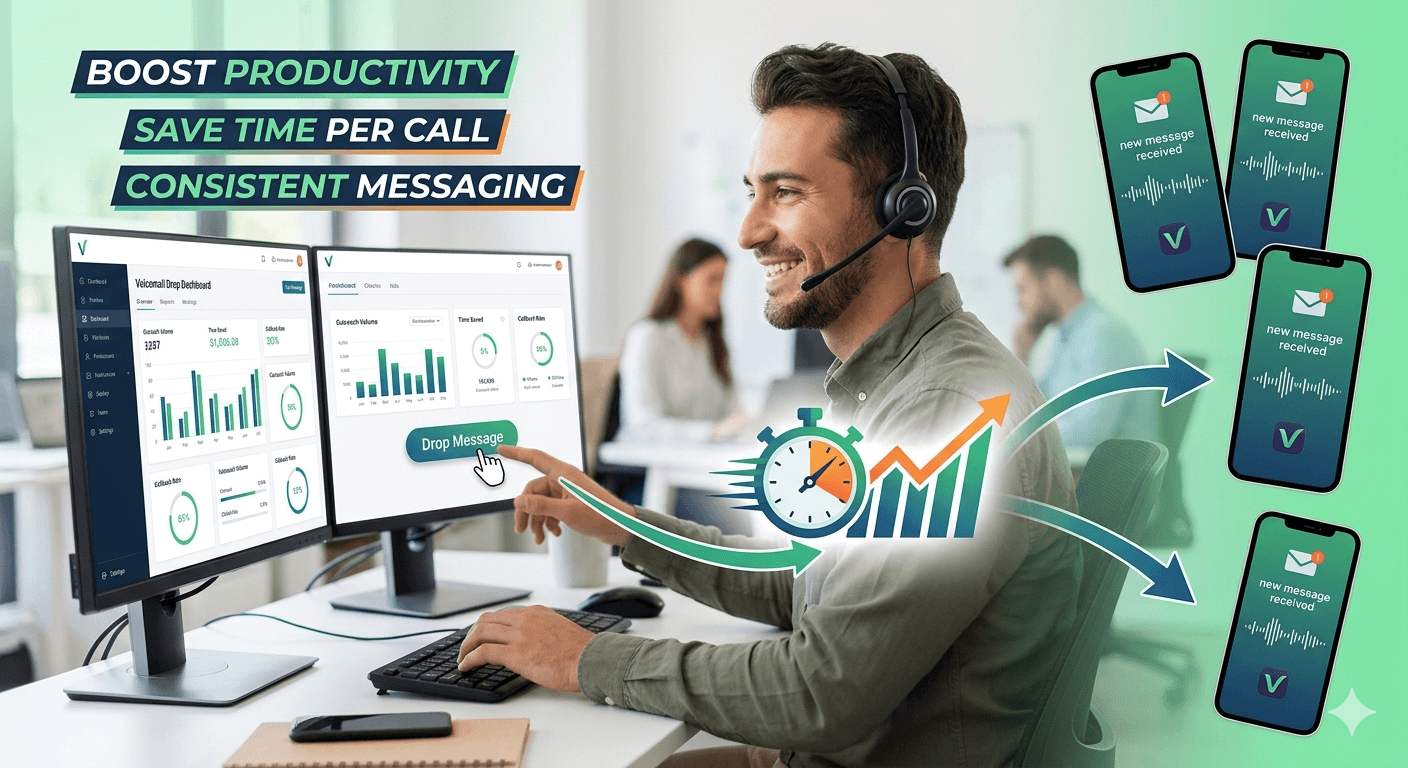
Voicemail drop technology is a powerful automation tool designed to help sales and support teams deliver pre-recorded messages directly to a recipient’s inbox with a single click. Instead of manually repeating the same message hundreds of times a day, professionals use voicemail drop software to detect the tone and instantly leave a high-quality recording. This process allows agents to move on to the next lead immediately, significantly increasing the volume of daily outreach. By integrating a voicemail marketing system, businesses can maintain a consistent brand voice, improve agent morale by removing repetitive tasks, and ensure that every prospect receives a clear and professional communication.
Understanding the Fundamentals of Voicemail Drop Technology
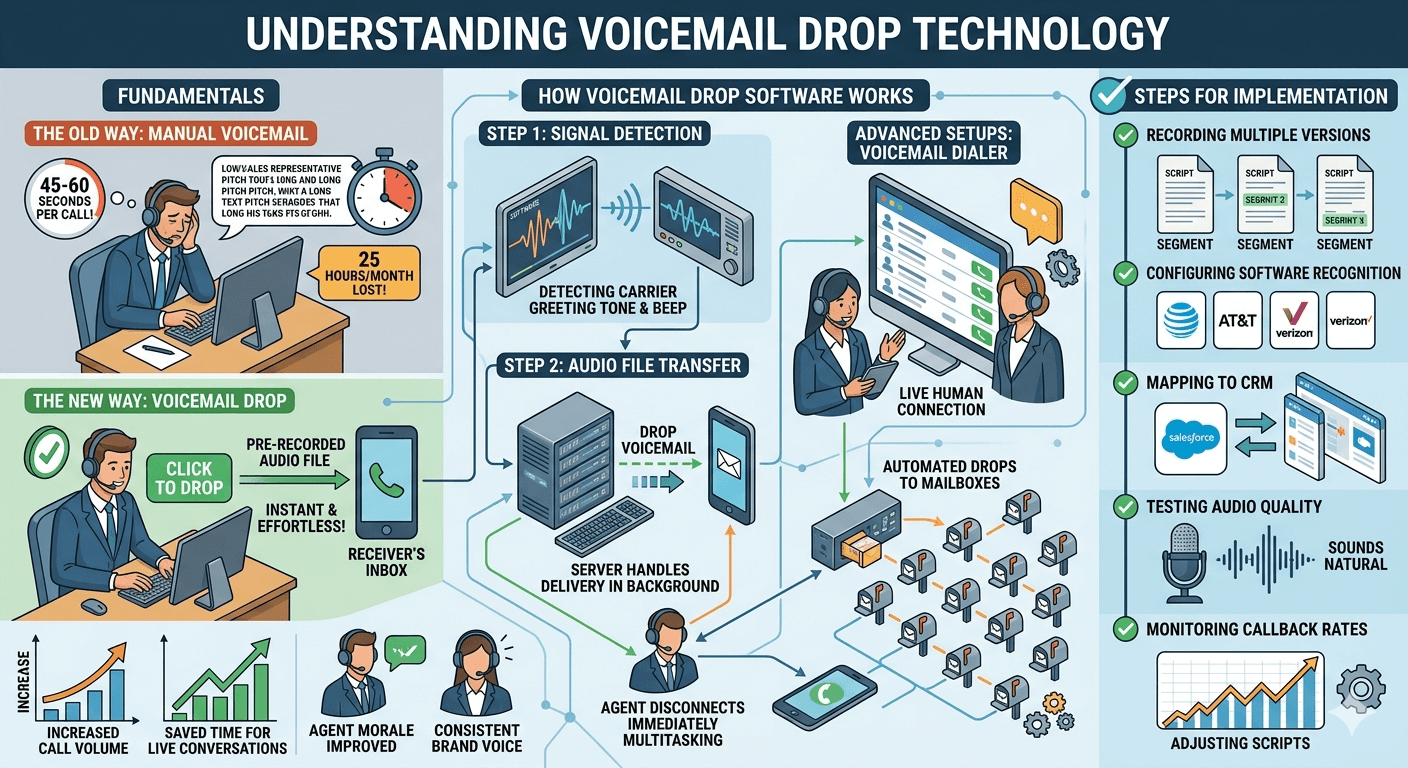
The concept of a voice mail drop revolves around the automation of the most repetitive part of a sales call. When a sales representative places a call that goes to an answering machine, they typically spend forty-five to sixty seconds reciting a standard pitch. This manual process is not only exhausting but also prone to human error and fatigue. Modern technology solves this by allowing users to drop message files into the recipient’s mailbox the moment they hear the beep. The software handles the delivery in the background, freeing up the agent to handle the next live interaction without waiting for the recording to finish on the other end.
A professional voicemail drop service acts as an extension of a company’s communication infrastructure. These services are often integrated directly into a dialer or CRM, providing a seamless experience for the user. When an agent identifies that a call has reached a mailbox, they simply trigger the pre-recorded file. This functionality is essential for high-volume environments where every second saved contributes to the overall success of the campaign. By using these tools, organizations can ensure that their messaging remains consistent and that no lead is left without a professional touchpoint, regardless of how many calls are made in a single shift.
The implementation of such technology has seen a massive surge in the telecommunications industry due to its efficiency. Research from various sales productivity studies suggests that the average sales representative spends approximately twenty-five hours per month just leaving manual voicemails. By shifting to an automated system, that time is reclaimed and can be redirected toward live conversations and closing deals. This shift represents a fundamental change in how outbound sales departments operate, moving from a quantity-focused manual labor model to a high-efficiency automated model that prioritizes the human element where it matters most.
How Voicemail Drop Software Works in Modern Sales Environments
The technical mechanics behind voicemail drop software involve sophisticated signal detection algorithms. When a call is initiated, the software monitors the audio stream for specific frequencies that indicate an answering machine or a carrier-specific greeting. Once the system identifies the end of the greeting and the beginning of the recording window, it initiates the transfer of the audio file. This happens so quickly that the recipient’s system captures a perfectly timed message. The agent on the other end can disconnect their physical line almost immediately after clicking the button, as the server handles the actual data transmission to the destination mailbox.
In many advanced setups, a voicemail dialer is used to manage large lists of contacts simultaneously. The dialer manages the connection phase, and the agent only interacts once a connection is established. If the dialer detects a mailbox instead of a live human, the agent can use the drop voicemail feature to leave a pre-recorded message while the dialer continues to prepare the next call. This multitasking capability is what allows top-performing sales teams to reach thousands of prospects in a fraction of the time it would take using traditional manual methods.
There are several steps involved in setting up these systems for maximum impact:
-
Recording multiple versions of a message to suit different lead segments or times of the day.
-
Configuring the software to recognize different types of automated greetings across various carriers.
-
Mapping the software to the CRM so that every dropped message is automatically logged as an activity.
-
Testing the audio quality to ensure the recording sounds natural and not like a robotic broadcast.
-
Monitoring the callback rates to adjust the script and delivery timing for better engagement.
The Strategic Impact of Voicemail Drops on Sales Productivity
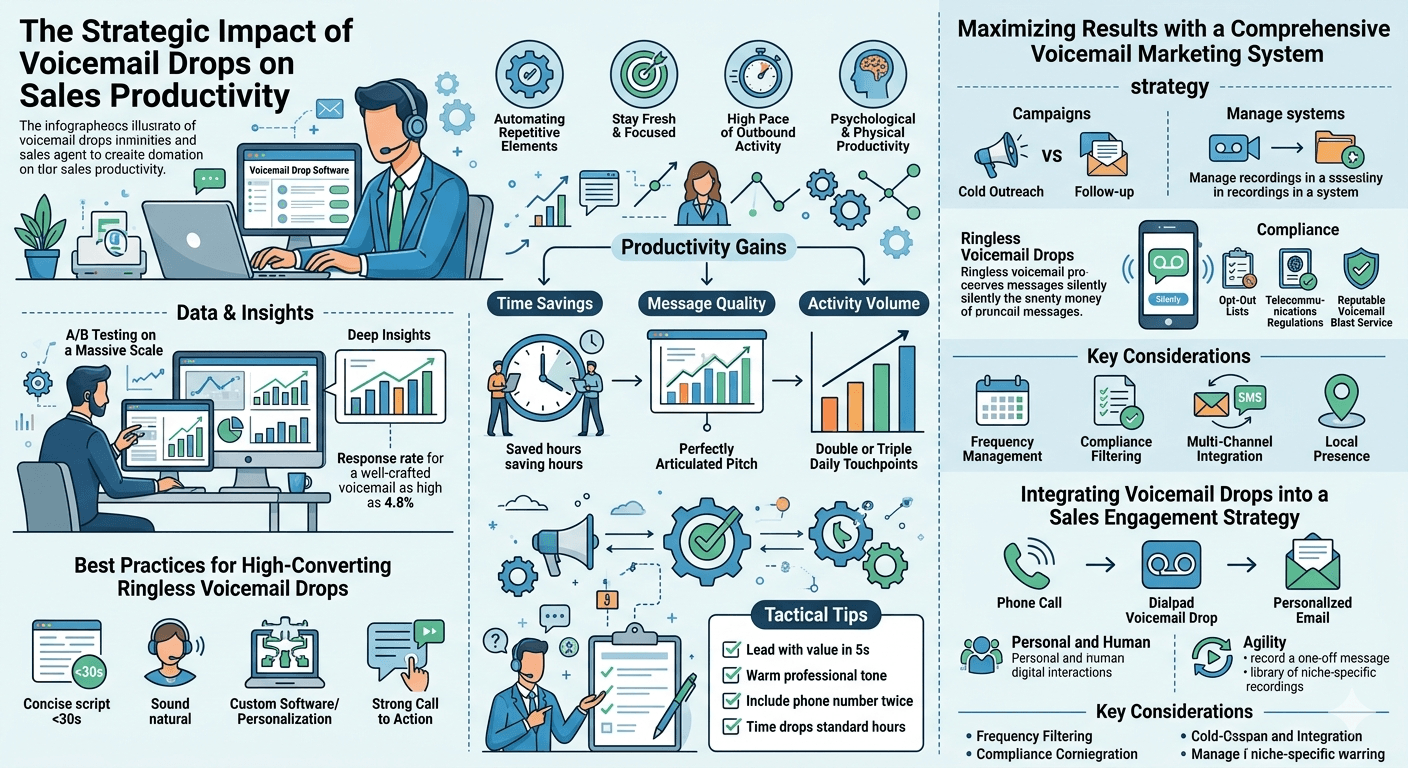
The introduction of voicemail drops into a workflow has a measurable impact on the psychological and physical productivity of a sales team. Manual dialing and recording are mentally taxing activities that often lead to burnout. By automating the repetitive elements of the job, agents can stay fresh and focused for the live conversations that actually require their problem-solving skills and emotional intelligence. When an agent knows they don’t have to dread the “please leave a message” prompt, they are more likely to maintain a high pace of outbound activity throughout the entire workday.
Furthermore, the data generated by a voicemail drop service provides managers with deep insights into the effectiveness of their outreach. Because every drop is tracked, leadership can see which specific messages are generating the most callbacks. This allows for A/B testing on a massive scale, where different scripts are used across different groups to find the highest-converting language. According to data from InsideSales, the response rate for a well-crafted voicemail can be as high as 4.8%, but only if the message is delivered consistently and professionally. Automated tools ensure that this consistency is never compromised by agent exhaustion.
Productivity gains can be categorized into three main areas:
-
Time Savings: Agents save up to a minute per call, which adds up to hours of reclaimed time per week across a team.
-
Message Quality: Every prospect hears a high-energy, perfectly articulated pitch regardless of when the call is placed.
-
Activity Volume: Teams can effectively double or triple their daily touchpoints without increasing their headcount or working hours.
Maximizing Results with a Comprehensive Voicemail Marketing System
To truly see the benefits of this technology, it should be part of a broader voicemail marketing system. This involves more than just the software; it encompasses the strategy of when to call, what to say, and how to follow up. A robust system will allow for the management of various campaigns, each with its own set of recordings. For example, a “cold outreach” campaign might use a different tone than a “follow-up for an existing lead” campaign. Having these pre-organized within a voice mail marketing system allows agents to toggle between scripts effortlessly, ensuring the right message reaches the right audience every time.
Another variation of this technology is the use of ringless voicemail drops. This specific method allows the message to be placed in the recipient’s inbox without the phone ever ringing. While this is a highly efficient way to reach a large audience without interrupting their day, it must be handled with care to comply with various telecommunications regulations. A reputable voicemail blast service will provide the necessary tools to manage opt-out lists and maintain compliance with local laws. This ensures that the marketing efforts remain professional and do not stray into the territory of intrusive or illegal communication practices.
When managing a large-scale voicemail marketing system, businesses should focus on these elements:
-
Frequency Management: Ensuring that prospects are not overwhelmed with too many messages in a short period.
-
Compliance Filtering: Automatically scrubbing lists against Do Not Call registries to prevent legal complications.
-
Multi-Channel Integration: Coordinating voicemails with emails and SMS messages to create a unified brand experience.
-
Local Presence: Using a voicemail dialer that displays a local area code to increase the likelihood of the recipient listening.
Best Practices for High-Converting Ringless Voicemail Drops
The success of ringless voicemail drops depends heavily on the quality of the content and the timing of the delivery. Because the recipient finds the message later rather than being interrupted by a ring, the message needs to be compelling enough to prompt a callback or a website visit. The script should be concise, ideally under thirty seconds, and should clearly state who is calling and why. It is also important to sound natural; the best recordings are those that sound like a person calling a friend or a colleague rather than a scripted advertisement.
Using a custom ringless voicemail drops software allows for a higher degree of personalization. Some systems can even insert the recipient’s name or company into the recording using text-to-speech technology, though this requires a very high level of technical integration. For most businesses, the focus should be on creating a strong call to action. Whether it is asking for a callback at a specific number or directing the user to a landing page, the instruction must be clear and easy to follow. This reduces the friction between hearing the message and taking the next step in the sales funnel.
To improve conversion rates, consider these tactical tips:
-
Lead with value by mentioning a specific problem you can solve within the first five seconds.
-
Use a warm and professional tone that invites a conversation rather than pushing for a hard sale.
-
Include your phone number twice—once in the middle and once at the very end of the message.
-
Time your drops during standard business hours to ensure the recipient is in a professional mindset when they check their messages.
Integrating Voicemail Drops into a Sales Engagement Strategy
A voicemail drop should never be a standalone tactic; it works best as a piece of a larger sales engagement strategy. For instance, many successful sales teams use a cadence that begins with a phone call. If the call goes to voicemail, they use the dialpad voicemail drop to leave a message. This is immediately followed by a personalized email that references the voicemail. This multi-touch approach increases the visibility of the salesperson and demonstrates persistence and professionalism. The voicemail serves as the “voice” of the brand, making the subsequent digital interactions feel more personal and human.
Using dialpad voicemail features specifically allows for a high level of agility. If an agent notices that a particular prospect has a very specific need, they can choose to record a one-off message or select from a library of niche-specific recordings. This flexibility ensures that the efficiency of the automation does not come at the cost of relevance. When a voicemail drop service is correctly integrated into the daily workflow, it becomes a natural extension of the agent’s communication toolkit, allowing them to scale their efforts without losing the personal touch that is required to build long-term business relationships.
Key considerations for strategic integration include:
-
Aligning the voicemail script with the current stage of the customer journey.
-
Using the voicemail as a “pinger” to let the prospect know an important email or physical package is on its way.
-
Training agents on when to use a standard drop versus when to take the time for a manual recording.
-
Reviewing call logs to ensure that the automated drops are being used at the most effective times of the day.
Personalization at Scale Using Voice Drop Software
One of the biggest challenges in outbound sales is maintaining a sense of personalization while handling a high volume of leads. Voice drop software addresses this by allowing for the creation of targeted libraries. Instead of one generic message for everyone, a team can record fifty different messages tailored to specific industries, job titles, or geographic locations. When the agent sees they are calling a marketing director in Chicago, they can select the “Marketing Director – Midwest” recording. This gives the impression of a highly personalized outreach while still taking advantage of the speed provided by the automation.
This level of customization is facilitated by the best voicemail drop service providers who offer easy-to-use interfaces for managing audio assets. If a company is running a holiday special or a limited-time offer, they can quickly upload a new recording and deploy it across the entire team in minutes. This ensures that the messaging is always current and relevant to the market conditions. In the competitive landscape of modern sales, the ability to pivot messaging quickly and deliver it at scale is a significant competitive advantage that can lead to increased market share and higher revenue.
To achieve personalization at scale, follow these guidelines:
-
Segment your contact lists based on shared characteristics before starting the dialing session.
-
Create scripts that mention industry-specific challenges to build immediate credibility with the listener.
-
Keep the “personal” parts of the script near the beginning to capture attention quickly.
-
Regularly update your recording library to reflect new product features, awards, or seasonal trends.
The Tradeoff Between Efficiency and Effectiveness in Voicemail Marketing
While the benefits of using a free voicemail drop or a paid professional service are clear, there is always a balance to be struck between efficiency and effectiveness. The goal is to reach more people, but not at the expense of the relationship. If a prospect feels like they are being spammed by a machine, they are unlikely to respond positively. Therefore, the strategy must prioritize the quality of the lead list and the relevance of the message. Using a voicemail blast service on a low-quality, unvetted list will likely result in low conversion rates and potential damage to the brand’s reputation.
Successful organizations use these tools to enhance their human representatives, not replace them. The automation should handle the “heavy lifting” of repetitive recordings, but the representative must be ready to provide a stellar experience when the prospect calls back. This is where the real value is created. By saving time on the outbound side, the team can invest more time in research and preparation for the actual live interactions. This balance ensures that the business remains highly productive while still delivering the high-touch, personalized service that modern customers expect.
Read More: Voicemail to Text: Guide for perfect Voicemail Transcription
Final Thought
Adopting voicemail drop technology is a transformative step for any business looking to optimize its outbound communication. By leveraging the power of voicemail drops and sophisticated voicemail drop software, companies can reclaim thousands of lost hours, improve the consistency of their messaging, and significantly boost their sales productivity. Whether it is through a ringless voicemail drops approach or a traditional dialer integration, the ability to deliver a perfect pitch every time is an invaluable asset. As long as the technology is used ethically and as part of a well-rounded engagement strategy, it remains one of the most effective ways to scale a sales organization in a crowded and competitive marketplace.
Frequently Asked Questions
-
How does voicemail drop software benefit sales teams?
Voicemail drop software benefits sales teams by automating the process of leaving messages on answering machines, which saves agents significant time. Instead of spending nearly a minute on every call that isn’t answered, agents can leave a pre-recorded, high-quality message with a single click and move immediately to the next prospect. This increases the overall volume of calls an agent can make, reduces vocal strain, and ensures that every message left is professional and consistent with the company’s brand.
-
What are voicemail drops commonly used for?
Voicemail drops are commonly used for outbound sales prospecting, appointment reminders, and follow-up sequences. In a sales context, they allow representatives to maintain a persistent presence with a lead without the manual effort of recording individual messages. They are also used by customer service departments to provide updates on service tickets or by marketing teams to announce special promotions to an existing customer base.
-
How do you drop voicemail messages without calling directly?
You can drop voicemail messages without calling directly by using ringless voicemail technology. This method utilizes a server-to-server communication process that places the audio file directly into the carrier’s voicemail server for a specific number. Because the system bypasses the traditional telecommunications switch that triggers a ring, the recipient receives a notification of a new voicemail without their phone ever ringing, making it a less intrusive form of communication.
-
Is there a free voicemail drop service available?
While there are some providers that offer a free voicemail drop trial or limited free versions of their software, most professional-grade services require a subscription or a per-drop fee. Free versions often come with limitations on the number of recordings you can store or the volume of messages you can send per day. For businesses looking for reliable delivery, CRM integration, and compliance features, investing in a paid professional service is generally recommended.
-
What makes a voicemail drop compliant with regulations?
A compliant voicemail drop must adhere to the Telephone Consumer Protection Act (TCPA) and other local regulations regarding automated dialing and telemarketing. This includes maintaining an accurate Do Not Call (DNC) list, providing a clear way for recipients to opt-out of future messages, and ensuring that the content of the message is not deceptive. Professional voicemail drop service providers typically include built-in tools to help businesses stay within these legal boundaries.