Queue callback is a call center feature that lets customers keep their place in a phone queue without waiting on hold. Instead of staying on the line, customers can request a callback, and the system automatically calls them back when an agent becomes available, reducing wait times and improving the overall customer experience.
Queue callback is a sophisticated telecommunications feature designed to eliminate the need for customers to wait on hold during periods of high call volume. Instead of remaining on the line while listening to hold music, callers are given the option to hang up and receive a call back from an agent when their turn arrives. This system functions by placing the caller in a virtual callback queue that maintains their original position in the line. By utilizing advanced queue callback software, businesses can significantly improve customer satisfaction, reduce abandonment rates, and optimize agent productivity through automated outbound dialing.
Understanding Queue Callback in Call Centers
The integration of queue callback technology has fundamentally transformed the way modern contact centers manage incoming traffic. Traditionally, high call volumes meant that customers were forced to wait in a linear fashion, often leading to frustration and high hang-up rates. With the advent of more sophisticated systems, the traditional waiting line has been replaced by a virtual environment where the customer’s presence is represented by data rather than an open phone line. This shift allows the service provider to respect the caller’s time while still maintaining a structured flow of interactions.
Implementing this technology requires a robust telecommunications infrastructure that can handle both inbound requests and triggered outbound responses. When a caller enters the system, the software calculates the estimated wait time based on current agent availability and average handling times. If the wait exceeds a certain threshold, the system offers the customer an alternative to staying on the line. This interaction is usually managed through an automated voice prompt that guides the user through the process of requesting a callback.
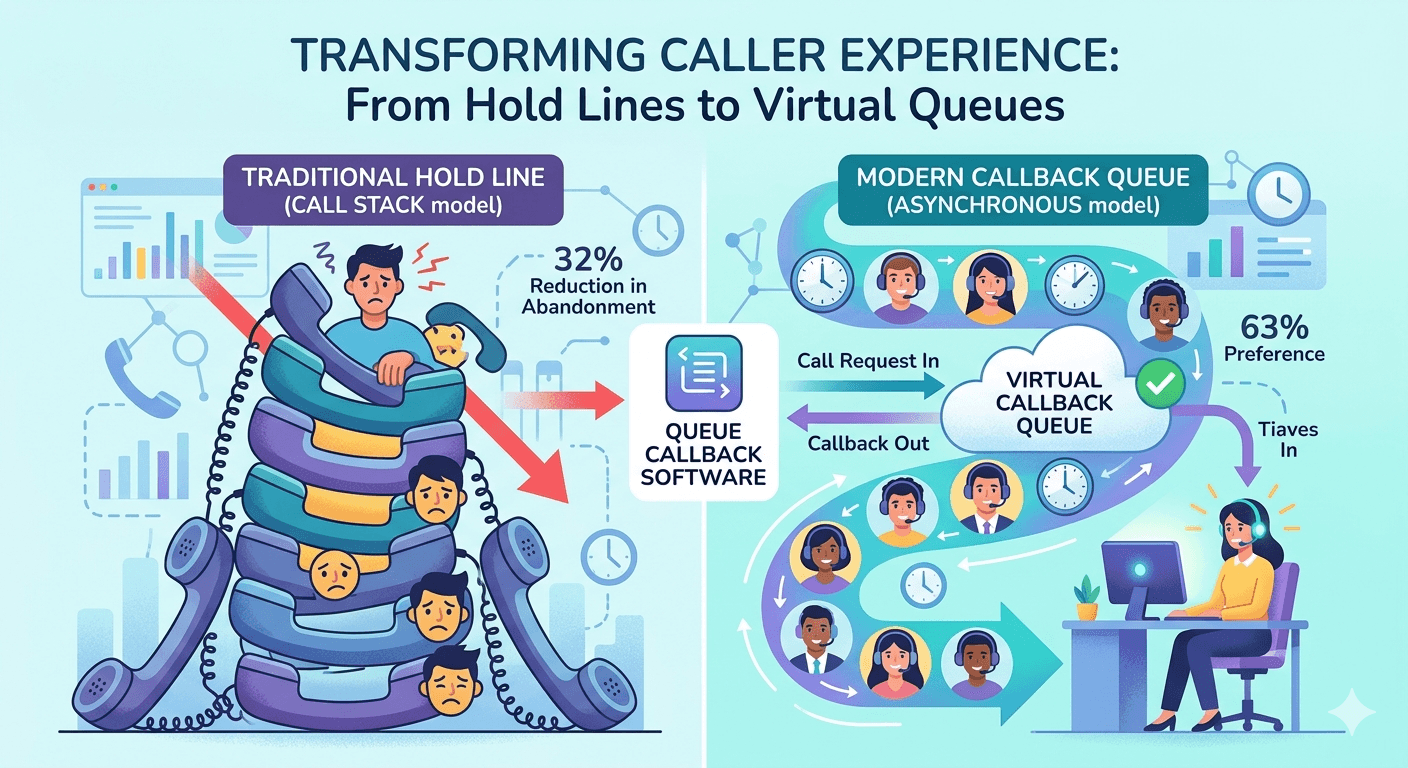
Research indicates that the implementation of these systems has a direct impact on the bottom line of a business. According to a study conducted by Software Advice, approximately sixty-three percent of consumers prefer the option of a callback over waiting on hold for any extended period. This preference highlights a significant shift in consumer expectations, where autonomy and time management are prioritized. By meeting these expectations, companies can foster a more positive brand image and ensure that they do not lose potential leads to long wait times.
How Queue Callback Software Functions for Better Operations
The operational logic behind queue callback software involves several interconnected steps that ensure a seamless transition from an inbound request to a successful outbound connection. The process begins when the system identifies a high-volume scenario where the number of callers exceeds the number of available agents. At this point, the software triggers a pre-recorded message through the interactive voice response system. This message provides the caller with their estimated wait time and offers the choice to receive a call back without losing their spot.
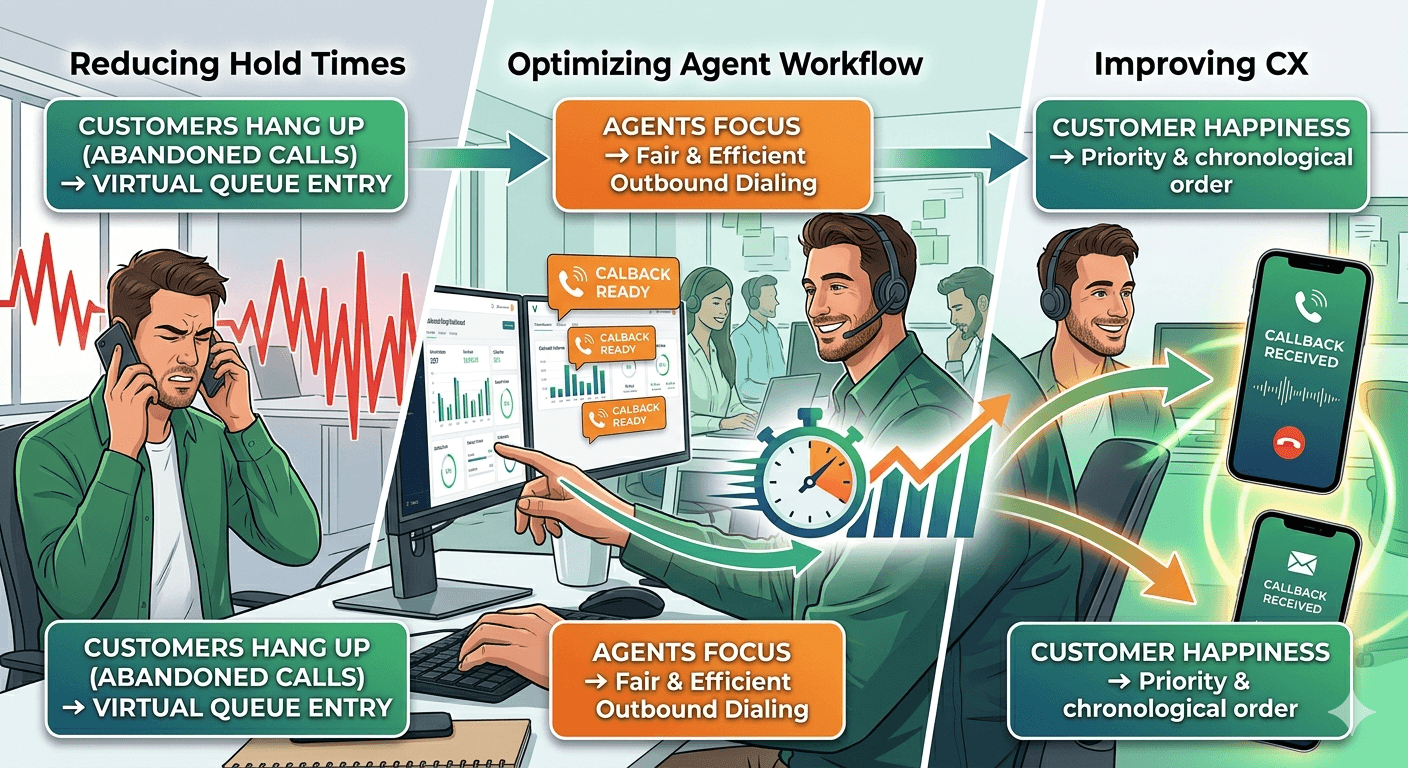
Once the user selects the option to request callback, the software captures the caller’s phone number and stores it within a secure database. This data point is then placed into a virtual sequence that mirrors the physical queue. The software continues to monitor agent activity in real-time. When an agent becomes free and finishes their current task, the system does not immediately route a new inbound call to them. Instead, it prioritizes the oldest request in the virtual line, ensuring that the service is delivered in a fair and chronological order.
One of the major advantages of using a dedicated queue callback software is the automation of the outbound dialing process. In many configurations, the system will first call the agent to ensure they are ready and then automatically dial the customer. This prevents any delay and ensures that the agent has all the necessary customer information displayed on their dashboard before the conversation begins. This streamlined approach minimizes the idle time for agents and maximizes the efficiency of the entire contact center operation.
The Mechanics Behind a Functional Callback Queue System
The internal structure of a callback queue is built upon complex algorithms that balance various metrics to provide accurate wait time predictions. These systems must account for the number of active agents, the average duration of calls, and the frequency of new incoming requests. If the algorithm is inaccurate, it can lead to situations where a customer is called back too early or too late, both of which can negatively affect the user experience. Therefore, high-quality systems use machine learning to constantly refine their predictions based on historical data.
In addition to timing, the system must also manage the queue callback logic across different communication channels. In a multi-channel contact center, a customer might start their journey on a website and then transition to a phone call. Advanced software can synchronize these interactions, ensuring that the customer’s place in line is consistent regardless of how they initiated contact. This creates a unified experience that makes the customer feel valued and understood by the organization.
Another critical component of the system is the retry logic. If the system attempts a queue call back and the customer does not answer, the software must be programmed to handle the situation appropriately. Most professional systems are configured to attempt the call a specific number of times at set intervals before removing the request from the list. This ensures that the business makes every reasonable effort to reconnect with the customer without wasting excessive agent time on unreachable numbers.
Core Benefits of Implementing a Queue Callback Solution
The most immediate benefit of utilizing queue callback technology is the drastic improvement in the overall customer experience. When a company offers to call a customer back, they are effectively giving that person their time back. This reduces the stress and irritation associated with long hold times and repetitive music. Customers can go about their daily tasks, such as working or running errands, while they wait for their turn. This level of convenience often results in a more pleasant interaction once the agent and customer finally connect.
From a management perspective, these systems provide a wealth of data that can be used to improve staffing and resource allocation. By analyzing the frequency of callback requests, managers can identify peak periods where additional staffing might be necessary. This data-driven approach allows for more precise scheduling, which can reduce operational costs over time. Furthermore, the use of this technology helps in leveling out the spikes in call volume, as the outbound calls can be spread more evenly throughout the day depending on agent availability.
Data from industry reports, such as those provided by Contact Center Pipeline, suggest that implementing such technology can lead to a reduction in call abandonment rates by as much as thirty-two percent.
This is a vital statistic for sales-oriented organizations where every abandoned call represents a lost opportunity for revenue. By capturing the caller’s information and promising a return call, the business ensures that they maintain the lead and can eventually convert the interaction into a successful outcome.
Reducing Call Abandonment Rates Through Strategic Callbacks
Call abandonment is a major challenge for any service-oriented business, as it often leads to customer churn and negative reviews. When a caller hangs up due to long wait times, they are likely to seek services from a competitor. However, the introduction of a queue callback option provides an “exit ramp” that keeps the customer engaged with the brand. Instead of feeling neglected, the customer feels that the company is taking proactive steps to address their needs despite the high volume of traffic.
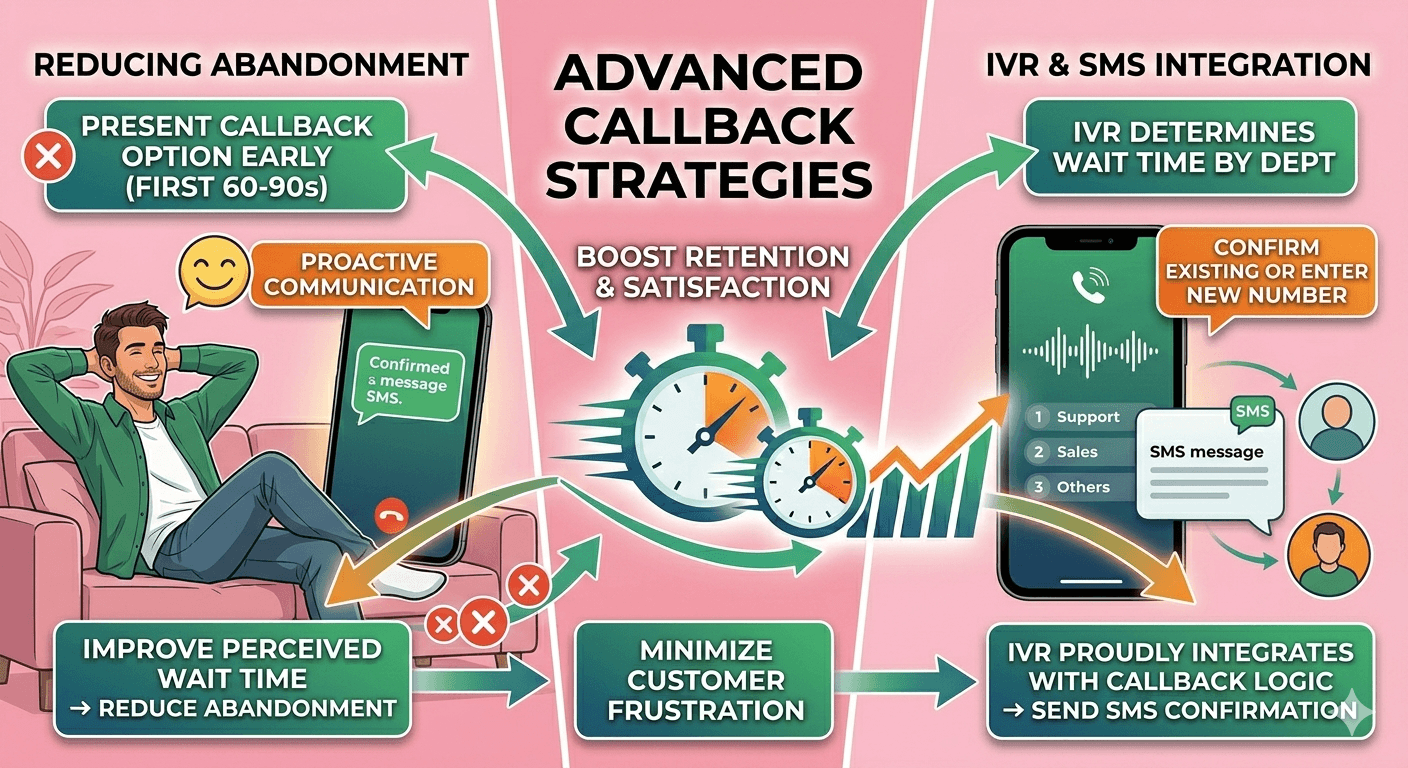
To maximize the effectiveness of this strategy, businesses should ensure that the option to request callback is presented early in the interaction. Waiting until a customer has already been on hold for ten minutes to offer a callback can sometimes be too late, as the frustration has already set in. Best practices suggest offering the service within the first sixty to ninety seconds of the wait. This proactive communication demonstrates transparency and respect for the customer’s schedule, which can significantly lower the likelihood of them abandoning the call entirely.
Additionally, the use of queue call back services helps in managing the psychological aspects of waiting. Known as the “waits and weights” theory in operations management, the perceived wait time is often more important than the actual wait time. When a customer has the option to hang up, the perceived wait is virtually eliminated because they are no longer actively waiting on the phone. This psychological shift makes the customer more cooperative and less likely to be irate when the agent eventually reaches out to them.
Integrating Interactive Voice Response with Callback Systems
The Interactive Voice Response system, commonly known as IVR, serves as the primary interface for any callback queue implementation. It acts as the digital receptionist that gathers initial information and routes the caller to the appropriate department. When the IVR is integrated with callback logic, it becomes a powerful tool for self-service. The system can offer the callback option based on the specific department the caller is trying to reach, allowing for a more customized approach to queue management.
In a well-designed IVR flow, the system will first verify the caller’s intent and then check the current wait times for that specific service category. If the wait time is high, the IVR will present the queue callback technology as a convenient alternative. The caller can then confirm their current number or enter a different one where they would prefer to be reached. This flexibility is highly valued by users who may be calling from a work phone but would prefer to receive the return call on their mobile device later in the day.
Furthermore, the IVR can be used to provide periodic updates if the customer chooses to stay on the line. However, for those who choose the callback, the IVR can send a confirmation SMS once the request is logged. This extra layer of communication provides the customer with peace of mind, knowing that their request has been successfully recorded and that the company will follow through. Such integrations turn a simple phone system into a comprehensive customer relationship management tool that enhances the professional image of the organization.
Comparing Call Stack versus Callback Queue
In the world of technology and system design, there is often a distinction made between a call stack and a callback queue. While these terms are frequently discussed in the context of computer programming—specifically regarding how engines handle asynchronous tasks—they have significant parallels in the telecommunications world. A call stack represents a linear, immediate sequence of events where each task must be completed before the next one begins. In a call center, this would be equivalent to a standard hold line where every caller must wait for the one ahead of them to finish.
Conversely, a callback queue operates on an asynchronous model. Much like how a web browser handles background tasks without freezing the user interface, a callback system allows the “user interface” of the call center to remain open while the actual processing happens in the background. The customer is “pushed” to the queue, and the system continues to function for other users. When the resources become available, the system “pops” the task from the queue and executes the call. This architecture is far more efficient for handling high volumes of data or interactions simultaneously.
Understanding this technical difference is crucial for IT managers who are selecting the right queue callback software for their infrastructure. A system built on a truly asynchronous architecture will be more scalable and less likely to experience crashes during extreme traffic spikes. It allows for a more fluid movement of tasks and ensures that no single long-running interaction can block the entire system. By adopting this modern architectural approach, businesses can ensure that their communication systems are resilient, flexible, and capable of meeting the demands of a global customer base.
Read More: What is Call Flow: Understanding Call Flow Meaning, Benefits and Setup
Final Thought
Implementing a comprehensive strategy around queue callback technology is no longer an optional luxury but a necessity for competitive customer service. By allowing customers to choose how they spend their time, businesses can transform a potentially negative experience into a demonstration of efficiency and respect. The use of advanced queue callback software not only reduces the operational strain on agents but also provides valuable insights into customer behavior and call patterns. As technology continues to evolve, the integration of these virtual queuing systems will remain a cornerstone of effective contact center management, ensuring that every customer feels heard without the frustration of the hold line.
Frequently Asked Questions
-
How does automatic callback work?
Automatic callback is a feature that allows a caller to hang up and receive a call back when an agent becomes available. When a caller chooses this option, the system records their information and maintains their place in the virtual line. Once an agent is free, the software automatically triggers an outbound call to the customer, connecting them to the agent without the need for manual dialing.
-
What is a queue in a call center?
A call queue is essentially a virtual waiting room for incoming calls. When all agents are busy, new callers are placed in a sequence where they wait for the next available representative. Managing these queues efficiently is vital to maintaining high service levels and ensuring that customers are not left waiting for excessive periods, which can lead to frustration and abandoned calls.
-
What is a call center IVR?
An Interactive Voice Response system is an automated telephony technology that interacts with callers through voice prompts or keypad inputs. Its primary role is to gather information and route calls to the correct department. When integrated with callback features, the IVR can offer callers the choice to receive a call back instead of waiting on hold, thereby improving the overall flow of the contact center.
-
What is the difference between callback and asynchronous?
In general terms, a callback is an action where one party returns a call to another after a request has been made. Asynchronous refers to a method of communication or processing where tasks do not happen at the same time or in a constant block. In call centers, callback technology enables asynchronous communication, allowing the customer and the agent to connect at a later time rather than being tied to a simultaneous live hold.
-
What is the difference between the Call Stack and the callback queue?
The call stack is a mechanism for keeping track of the current point in a series of tasks, operating on a Last-In-First-Out basis where tasks are handled immediately. A callback queue is a list of tasks that are waiting to be processed once the main stack is clear. In a call center, the stack represents active live calls, while the callback queue holds the requests of customers who are waiting for an agent to become available.