

Signal House, Telnyx and Twilio are the best Telxi alternatives to evaluate if you want to keep your PBX and change the carrier. Start with Signal House for programmable SIP routing. Compare Telnyx and Twilio when international numbers, destination-specific pricing or multi-region routing are central to the decision. If you want to retire the PBX, start with KrispCall for shared numbers or Calilio for department queues.
What Do You Need To Replace In Telxi?
Telxi sells SIP trunks, direct inward dial numbers, local and international termination, messaging, fax and emergency calling services. A SIP trunk connects your existing phone system to public telephone networks. A direct inward dial number, or DID, is a public number that can route directly to a user, menu or queue. You can change the carrier and keep the PBX when the new trunk supports your equipment and call paths.
Telxi advertises pay-as-you-go service and UK and EU bundles with included minutes and capacity, subject to plan terms and fair use. It publishes a separate numbers pricing page with pay-as-you-go and committed options and different billing increments. Use your invoice and account terms as the baseline. Ask which plan applies to your deployment before comparing an advertised bundle with a metered carrier.
Identify the products you use by number and country. Some businesses buy inbound numbers and route them to a separate platform. Others use Telxi for outbound calls, emergency calling or fax. Replacing an outbound route can be a narrow change. Moving dozens of inbound numbers to a different provider requires eligibility checks, documentation and a sequence that preserves existing customer access.
Compare Telxi Alternatives And Competitors
Signal House is the VoIPCalling partner for a trunk-only pilot. KrispCall, Calilio and RingEX are partners for hosted phone deployments. Telnyx and Twilio provide additional carrier options when the project requires international number and destination-specific quotes. Prices marked US$ are references and depend on market and plan. Suggested team sizes are editorial workflow estimates.
| Provider | Best Fit | Buying Consideration | Pricing & Trial | ||||
|---|---|---|---|---|---|---|---|
| SIP Trunks For A Retained PBX | Confirm PBX interoperability, emergency calling and fax before ordering. | Request A Voice QuoteQuote origination, termination, number rental and billing increments.Demo AvailableRequest A Signal House Demo | |||||
| Shared Calls And Follow-Up | Confirm North American number type, usage and app or device requirements. | US$32/user/monthAdvance, billed annually. US$40 with monthly billing. Up to 50 users. Usage and selected add-ons cost extra.7-Day Free Trial for VoIPCalling CustomersStart a 7-Day KrispCall Free Trial | |||||
| Menus, Business Hours And Live Supervision | Verify which US numbers and call types qualify for the included allowance. | US$28/user/monthPremium, billed annually. US$35 with monthly billing. Number and usage charges can apply.Demo AvailableRequest a Calilio Demo | |||||
| An Employee Platform For Calling, Meetings And Chat | US Core is the phone plan benchmark. Verify Canadian terms, desk phone models and integrations. | US$20/user/monthUS Core on annual billing. Request the applicable country plan and device quote.Free Trial AvailableStart A RingEX Free Trial | |||||
Telnyx  | Metered SIP And Inbound Channel Options | Quote actual destinations and capacity. G2 covers Telnyx CPaaS. | From US$0.005/min outboundUS local starting rate. US local inbound from US$0.0032/min. Numbers cost extra.Verify Pilot TermsCheck Telnyx SIP Rates Twilio Elastic SIP Trunking  Programmable SIP Routing Across Regions | Check number eligibility, regional edges and burst capacity. | US$0.0100/min outboundContiguous US Zone 1 reference. Quote inbound, numbers and capacity separately.Trial With Usage RestrictionsCheck Twilio SIP Rates |




1. Signal House — Best For Programmable SIP Trunking
Suggested Team Size. About 5–100 staff using a retained PBX with a designated telecom administrator. Size the trunk by traffic and capacity.
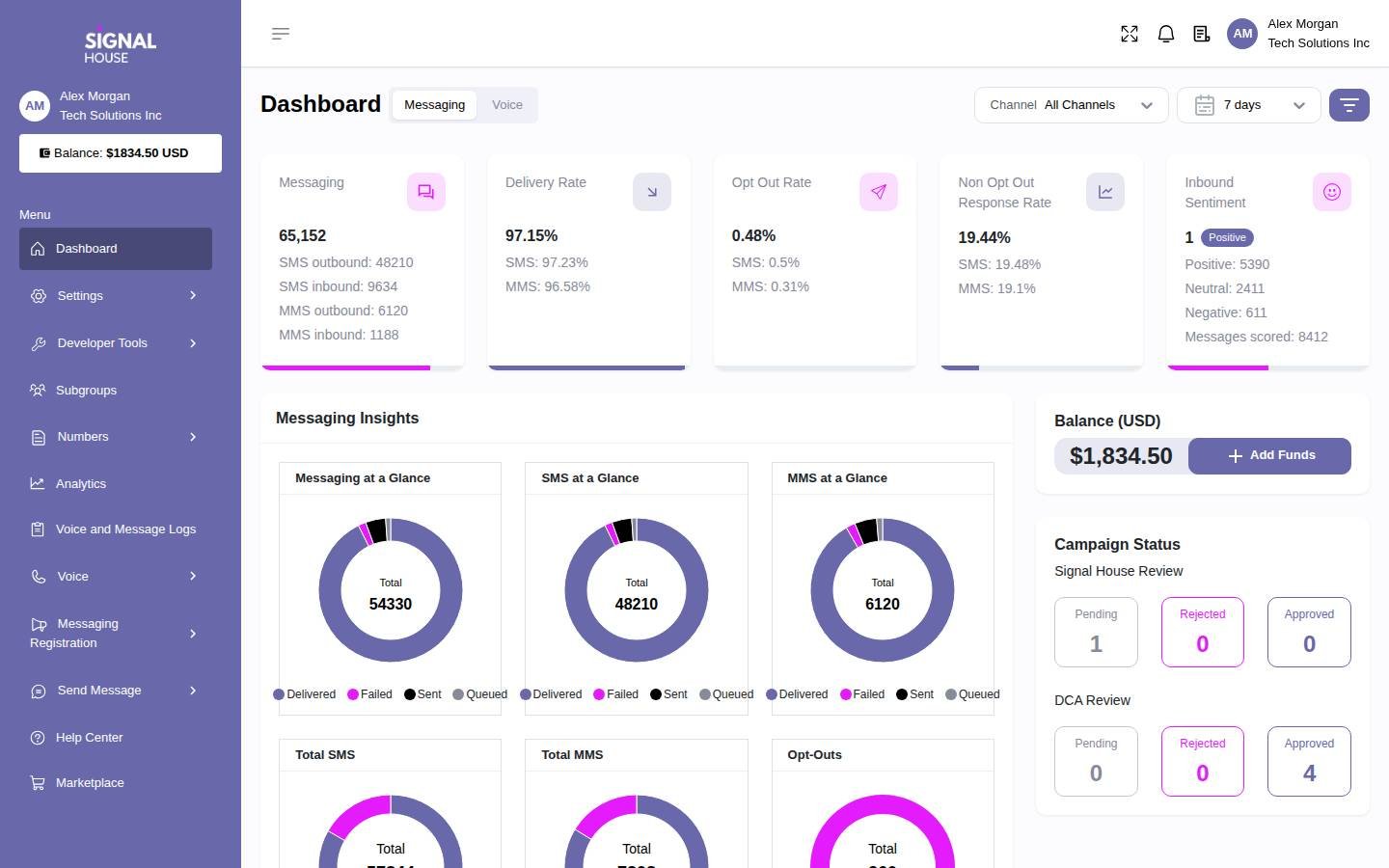
Signal House documents trunks that connect an existing PBX, with static IP or registration authentication. Its programmable voice profiles can deliver inbound calls to a SIP trunk or another configured destination. That makes it worth testing if you want to keep extensions and call menus while changing the way numbers reach them. Bring the PBX version and deployment details to the first technical discussion.
Ask which countries and number types the carrier can supply and which existing Telxi numbers it can port. Request a written answer for any service that must remain attached, such as emergency calling, messaging or fax. Quote number rental and usage separately. Ask whether it can meet the outbound destinations and busy-hour capacity that your current account handles.
Start with a temporary number on a dedicated test route. Check inbound calls, transfers, menu input, outbound identity and what happens when the primary endpoint stops responding. Compare the carrier record with the PBX log. The dashboard below shows the broader Signal House platform. Ask the provider to demonstrate the specific voice settings and support workflow you would use.
2. KrispCall — Best For Shared Business Numbers
Suggested Team Size. About 2–20 people sharing calls, messages or callbacks.
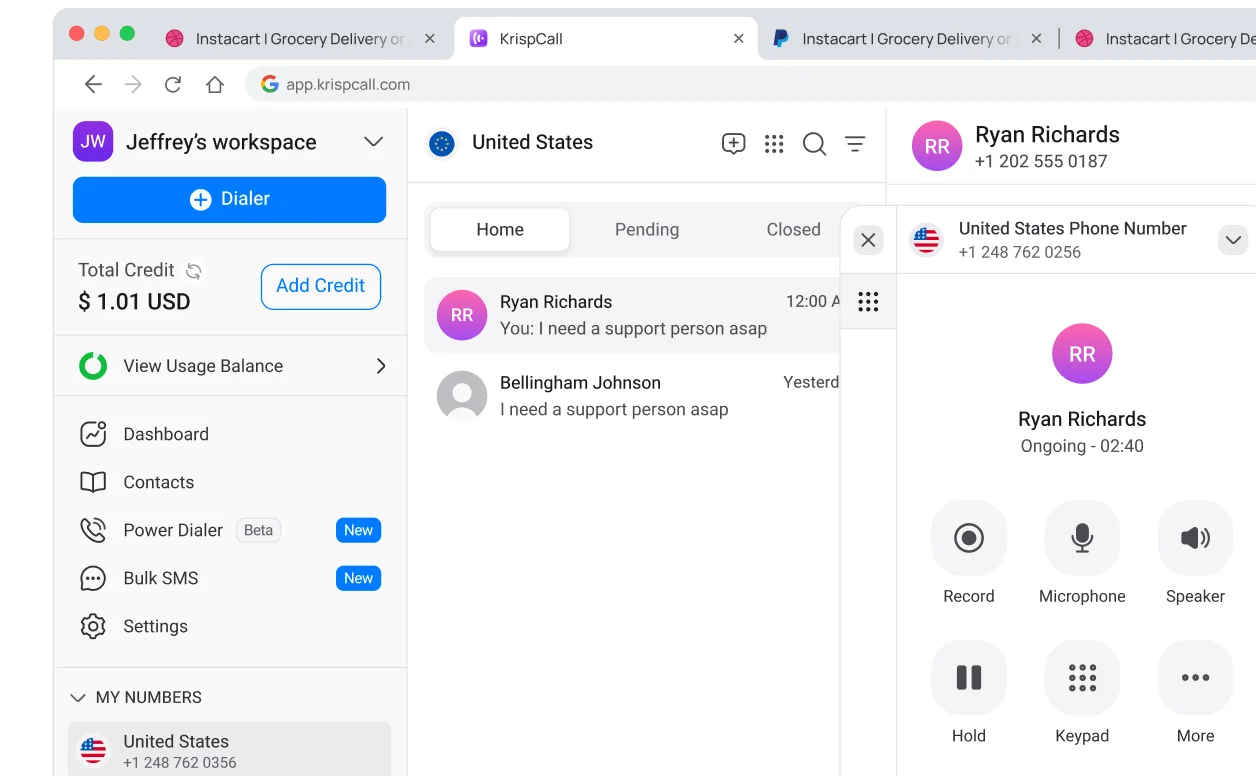
KrispCall is a good starting point when a small team can move from desk extensions to a shared cloud phone workspace. Test a spare number with two employees, one who usually answers calls and another who takes over when the first person is unavailable. Ask the second employee to find the missed call and return it from the business identity without asking a colleague for context.
Advance lists US$32 per user per month on annual billing or US$40 monthly. Ask for the local number type, eligible ports, destination rates and usage fees in the countries you need. A local-looking number may have different documentation requirements from one that can be bought for immediate testing. Confirm what the provider can supply for each location where you do business.
Use the exclusive 7-day VoIPCalling trial to test app-based calling before moving a main number. If your Telxi trunk currently connects phones, queues or an analog device, ask what you would keep, replace or price separately. Demonstrate the after-hours path and verify that a supervisor or business owner can update it without changing the daytime route.
3. Calilio — Best For Department Queues And Supervision
Suggested Team Size. About 5–30 people with separate customer-facing teams and a supervisor.
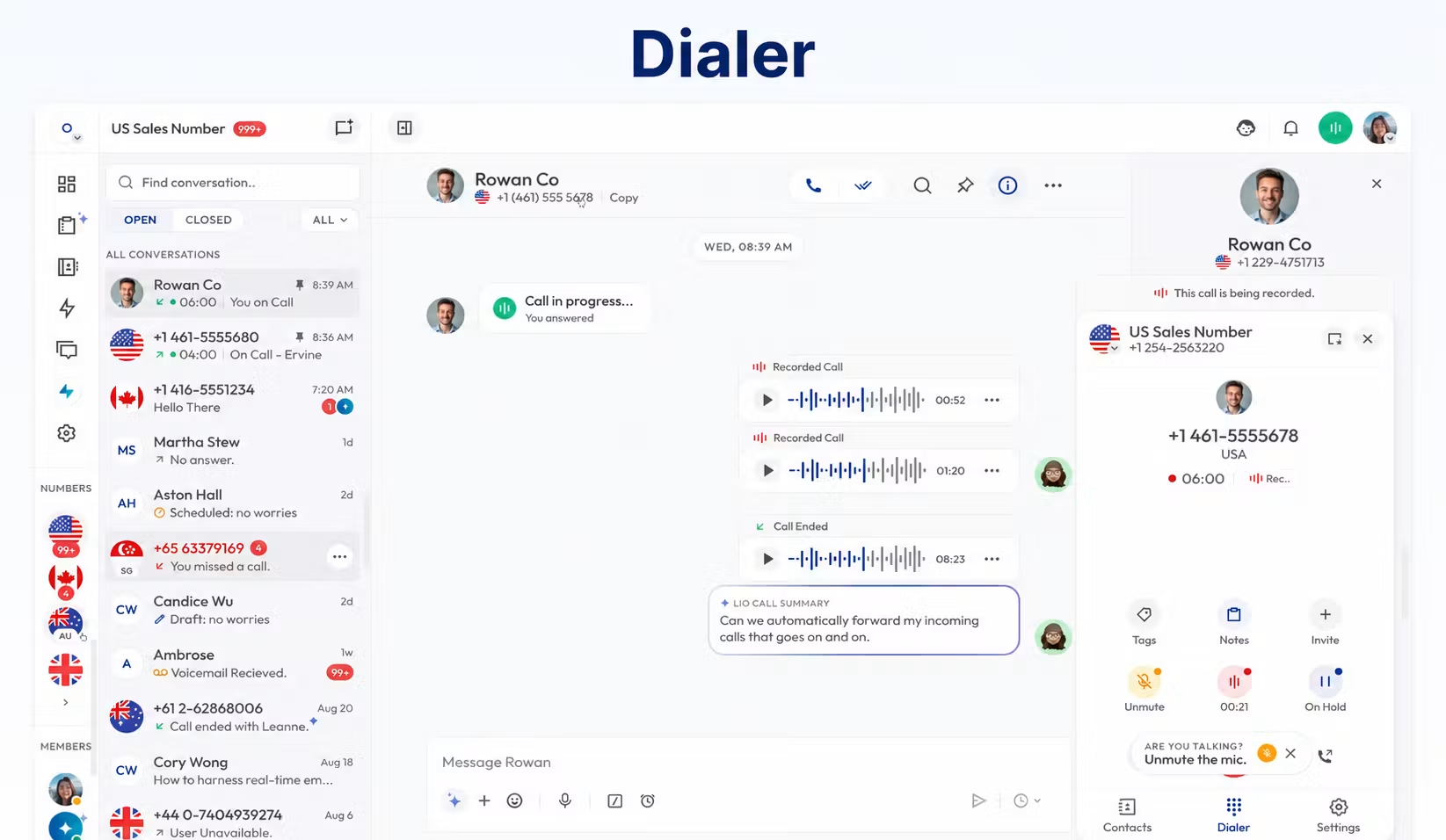
Calilio fits a business that wants to replace the PBX with hosted menus, schedules and queues. Bring one real flow to the demo, such as a customer choosing support and waiting while the only agent is busy. Show what happens when the call is unanswered, who receives the alert and which details the supervisor can see when the customer calls back.
Premium lists US$28 per user per month annually or US$35 monthly. Check which allowances apply to eligible US and Canadian numbers and ask for rates for the countries or mobile destinations you actually call. Verify the tier for supervision and reporting. If overseas staff use a shared number, test outbound identity and business hours for the main office and the people answering calls.
Build a pilot with a real schedule and a representative second language or overflow route if you use one. Let the supervisor reproduce a report based on the test calls. If the current PBX counts a transfer or abandoned call differently, explain that change to the person who uses the report for staffing.
4. RingCentral RingEX — Best For Hosted Reception And Desk Phones
Suggested Team Size. About 10–75 staff replacing a local PBX while keeping a structured reception workflow.
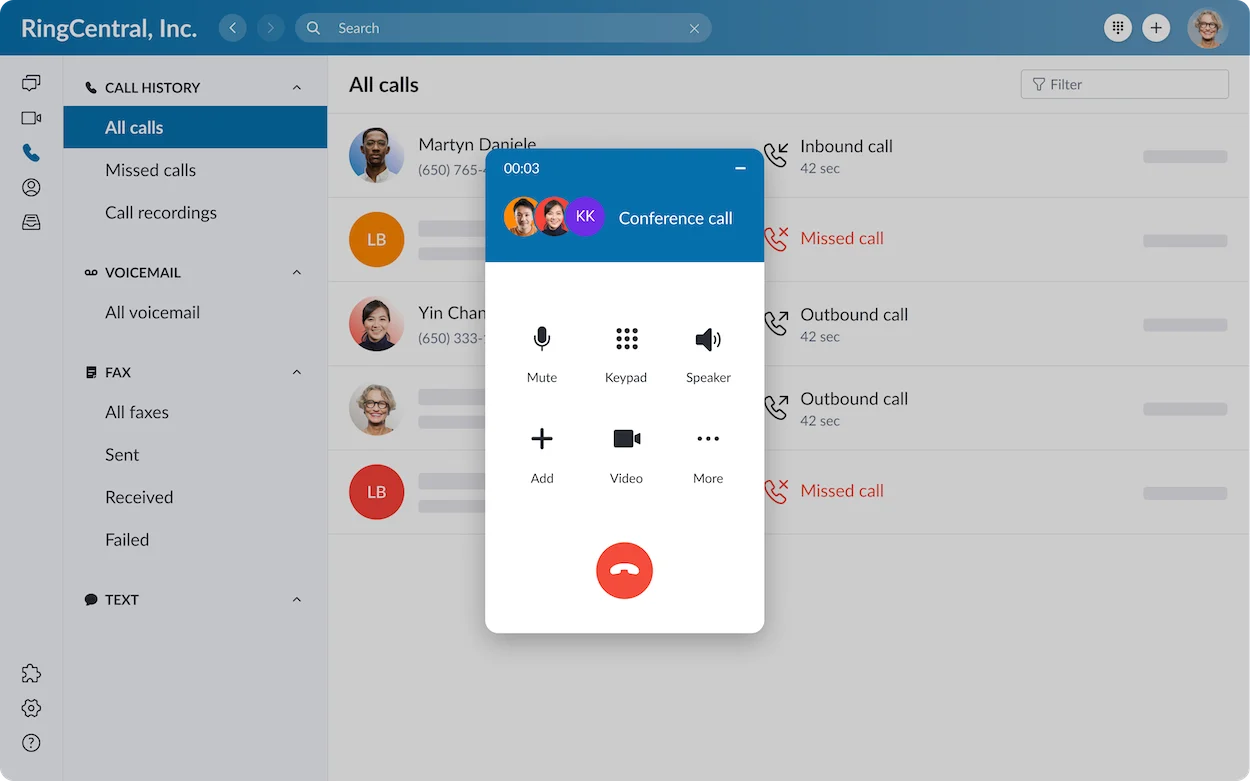
RingEX is a candidate when staff want hosted calling and still need a receptionist to transfer, park and retrieve calls. Build the demo around the phone model you plan to deploy. Test an attended transfer and a failed transfer, then ask the receptionist to identify which location the caller originally dialled. If several branch numbers share reception, test local outbound identity as well.
The US Core reference is US$20 per user per month on annual billing. Ask for the country-specific offer, supported devices, included calling and features required for multiple sites. Budget separately for any fax, paging or analog equipment your office still uses. If you have purchased or leased handsets, confirm whether the new provider can provision the exact model and firmware.
RingEX replaces office phone workflows at the application level. If the business needs to keep its local PBX and simply change the SIP connection, use the carrier shortlist. If the business wants to move staff to the cloud, price the rebuild of menus, queues, schedules and number assignments as part of the project.
5. Telnyx — Best For Metered SIP And Inbound Channel Options
Suggested Team Size. A technical team supporting one or more PBXs and able to monitor carrier traffic.
Telnyx offers metered SIP calling and a separate inbound channel option. Compare the two when predictable inbound volume and bursts matter more than the total number of staff. Its US pricing page lists local outbound from US$0.005 per minute and local inbound from US$0.0032 per minute. The prices are US references. Ask for a route-specific quote, including the numbers and countries you plan to migrate.
Test inbound and outbound independently. Order or obtain a temporary number in a representative market and route it to a test trunk. Measure the traffic you can sustain and ask what happens when many calls start at once. Confirm toll-free pricing, number rental and support terms separately. If you want to automate provisioning, have a second administrator reproduce a change from the audit record. G2 rates the broader Telnyx CPaaS platform.
6. Twilio Elastic SIP Trunking — Best For Programmable Multi-Region Routing
Suggested Team Size. An engineering-led business or integrator that can administer trunk routes and regional settings.
Twilio Elastic SIP Trunking publishes rates by geography and call direction. Its US pricing page lists termination to the contiguous 48 states at US$0.0100 per minute, with different rates for some other US zones. Ask for local number eligibility and the rate for every important country and destination. If the deployment spans regions, verify the available connection locations and how to monitor them from your PBX.
Use a test that covers an ordinary incoming call, a burst of new calls and an unavailable primary destination. Confirm the calls-per-second terms, fallback routing and any charges for diagnostics or recording. A regionally distributed service still needs a tested configuration for your users and numbers. The G2 score applies to Elastic SIP Trunking and is based on a smaller sample than many of the hosted products in the table.
How To Choose A Telxi Replacement
Keep The PBX If The Carrier Is The Problem
Look at the last few issues that triggered the search. If inbound numbers were slow to provision or some international calls failed, isolate those problems before budgeting for a new phone system. Ask the PBX maintainer to identify the routes, call records and devices affected. A carrier pilot can address those specific problems while preserving extension numbers, queue rules, devices and the way staff work.
Find out who controls the system and whether a second carrier can be configured for a test. Record the PBX version, hosting environment and rollback process. Ask whether the carrier authenticates by registration or IP address, what encryption is supported and which media settings you must use. If a support team maintains the PBX, have it approve the configuration and include its migration work in the quote.
Rebuild The Phone System If The Workflow Needs To Change
Move to hosted calling when the project is really about making a phone system easier for staff to use or administer. Start with the customer experience. Map the main number from the greeting to the person who answers, then add after-hours routing, overflow and voicemail. Show those routes to the vendor and ask which can be configured in the proposed plan and which need a different tier or a separate service.
Walk through the office with the people who use the phones. A department may have a shared handset, a page button, a fax line or a front desk console that never appears in a user list. Ask the provider which devices can be retained and what the supported replacement would cost. Include the equipment, installation and time needed to retrain staff in the hosted comparison.
Consider A Narrower Change If Only Some Destinations Fail
A business can compare an alternate carrier for a specific outbound route before moving its numbers. Start by analysing calls that did not connect and check which destination types were affected. Use the alternate carrier for a limited test group and compare completions and caller ID. Keep a record of which route the PBX chose so the engineer can distinguish a carrier issue from an internal dial plan mistake.
Ask how routing rules will choose a carrier if more than one is available. Define which failures should trigger a second attempt and which should stop the call. An unanswered phone and an unreachable route are different conditions. Have the engineer show that the fallback works without sending callers through a loop or placing duplicate calls. Keep the existing configuration available until the new policy has been tested.
Set Up Destination Controls Before Opening Routes
Ask the carrier to demonstrate the controls for outbound destinations, usage limits and alerts. Begin with the countries and number types your business needs every day. Record who can enable a new destination and who should be contacted if an alert appears after hours. If your PBX is shared across branches or customers, ask whether each group can have separate limits and whether your administrators can see the traffic responsible for an alert.
During the pilot, try a number that should be blocked and a legitimate international destination that should connect. Capture what the caller hears and what the administrator sees for each result. If the provider can send alerts, verify who receives them and how the team can reach the carrier. Document how to pause outbound traffic while leaving inbound routes available if the system and carrier support that separation.
Include these controls in the handover for the new carrier. A person who needs to approve occasional international calls should know how to request access, how long the change lasts and who can review the activity afterwards. Ask the provider for a usable usage export and compare it with the PBX records. That gives the team a baseline for checking unexpected destinations, spikes and charges after migration.
Check International DID Coverage And Porting
Verify Coverage By Number Type And City
Build a spreadsheet with the country, city or area code, number type and current provider. Record where the call goes and whether customers see the number on invoices, websites or packaging. Local, national and toll-free numbers can have different availability and ordering rules. A provider’s global coverage claim is a starting point for questions. Ask it to confirm the number type in the exact market where your business needs it.
Separate new-number availability from portability. A carrier may be able to issue a new number in a city even if it cannot take over an existing number. Ask the gaining carrier to review each number, the current account details and any documentation needed. If proof of address or company details is required, confirm what will be accepted before promising a date to the business.
Check The Services Attached To Each Number
Identify whether the number carries voice, texts, fax or more than one service. Ask how the gaining carrier provisions each function and whether it follows the same activation schedule. For a fax line, run a test with documents your team typically sends. For messaging, try a customer reply and verify that it appears in the correct inbox. Ask the provider whether any registration or approval must be completed again.
For emergency calling, ask the provider to confirm availability and supported configuration for the locations and number types involved. Have the responsible administrator follow the provider’s approved setup and test procedure. Keep a record of who updates locations when a site opens or staff move. A port should have an owner for the location settings as well as the inbound route.
Plan For A Number That Cannot Be Ported
If the receiving carrier declines a number, ask why and whether an alternate arrangement is available. Options to evaluate include retaining the number with the current provider, temporary forwarding, or introducing a replacement number with enough time to update customer materials. Check the cost and limitations of forwarding, including how caller ID appears and whether the original number can still receive texts.
Identify which numbers can move later without disrupting the project. A new outbound route can often be validated independently of an inbound port. If a toll-free or specialty number needs more time, mark which other changes can proceed while it stays in place. Ask both providers to confirm dependencies between that number, the account and any bundled products before changing the subscription.
Shortlist Telxi Competitors By Deployment
A Single PBX With A Small Number Inventory
Start with Signal House if an administrator can configure the trunk and wants a direct voice pilot. Ask for a written quote covering your existing numbers, regular destinations and the route used if the PBX is unavailable. Verify that you can see enough detail in both systems to troubleshoot an incoming call. Keep the pilot limited to the equipment and locations the administrator can support.
A Business With Numbers In Several Countries
Compare Telnyx and Twilio with a country matrix rather than a total number of markets. Include the countries that produce the most calls and any number that customers must be able to reach during a migration. Ask about documentation, expected activation, supported call paths and billing in each. Use a sample number in more than one market so the test covers regional differences.
A Small Team Retiring The PBX
Start with KrispCall when staff mainly need a shared business number and a way to coordinate callbacks. Give Calilio a closer look when separate queues and supervisors are important. Choose a representative employee to test each option during a normal shift. Include a missed call, a voicemail and a handoff from one team to another. Check whether staff can repeat the workflow without help from the person who set up the test.
An Office With Reception And Shared Devices
Include RingEX if the project moves reception, office handsets and collaboration to a hosted platform. Bring the hardware list and ask which phones the provider will support. Test parking and transfer with the proposed model, then try a call from a branch with different hours. If a device needs to remain on the old setup, include its support and connectivity in the final cost.
Compare Telxi Pricing With Other SIP Trunks
Separate fixed charges from traffic. Fixed charges can include numbers, channel capacity and committed service. Variable charges can include outbound destinations, incoming toll-free calls, forwarding and recordings. For a UK or EU bundle, list the numbers and channels it includes and check which calls are eligible for the allowance. Compare a replacement quote against those inclusions and the cost of the calls that fall outside the bundle.
Check billing increments with a sample of short calls. For illustration, 1,000 connected calls lasting 20 seconds each represent about 333 minutes and 20 seconds of actual talk time. With a one-minute minimum per call, those same calls produce 1,000 billable minutes. With six-second rounding and a six-second minimum, each 20-second call rounds to 24 seconds, or 400 billable minutes across the sample. Confirm the provider’s treatment of call setup, failed attempts and transferred legs before applying the example to your invoice.
For a US-only benchmark, 10,000 eligible local outbound minutes at the Telnyx starting rate of US$0.005 per minute would total US$50. The same volume at Twilio’s published US Zone 1 rate of US$0.0100 would total US$100. Those figures cover outbound usage only. The rates use different published route descriptions, so verify the applicable destinations and increments. Include inbound service, numbers, capacity and extra features in the actual comparison.
Match the billing currency as well as the destinations. Put taxes and exchange-rate assumptions next to the monthly estimate. Compare a normal month with a busy month and add a one-time column for setup, porting, replacement handsets or training. If you are retiring the PBX, calculate which costs actually disappear and which, such as local network maintenance, still belong in the budget.
Measure Simultaneous Calls And Call Starts Separately
Simultaneous calls measure how many calls are active at once. Calls per second measure how quickly new calls start. A support desk can have many long calls with few new starts, while an automated system can create a short burst of call attempts. Ask the provider to price and test both patterns if they appear in your logs. Confirm how each limit applies by trunk, account and region.
Give finalists a representative busy period, including transfers, forwarded calls and inbound toll-free traffic. Ask what happens when the traffic exceeds a limit and whether there is a warning. Find out how quickly capacity can be increased. A comparison based on monthly minutes alone can miss the condition that matters most during the busiest hour.
What To Ask Telxi Competitors Before Signing
- Number Eligibility. Submit the exact local, national and toll-free numbers. Ask for written porting and ordering requirements by country.
- Rates And Capacity. Ask for the actual destination rate deck, billing increments, peak simultaneous calls and calls-per-second terms.
- PBX Compatibility. Confirm the exact version, authentication, supported transports, media settings, caller ID and menu input.
- Fallback Routing. Simulate an unavailable destination and verify where the call lands, what the customer hears and what your team can change.
- Specialty Services. Confirm fax, messaging and emergency calling by number and location. Ask who owns setup and approved testing.
- Support And Records. Check how to reach support and export call records. Ask for a trace you can match with your PBX or application logs.
Take the list into the demo and write down what the vendor proved and what still needs a written answer. Ask for the final proposal to reference the actual call routes and number list. If a feature requires an add-on, higher tier or separate company, name the owner and include the cost in the same comparison.
Move Telxi Numbers And Test The New Call Paths
- Inventory Numbers And Routes. Record current account details and map each number to its inbound destination and any attached services. Save the existing configuration and relevant call records.
- Pilot With A Temporary Number. Set up the expected PBX route or hosted workflow. Test incoming and outgoing calls, transfers, menu keys, voicemail and failure handling.
- Confirm The Port Schedule. Coordinate dates with the gaining provider and keep the original service active during the move. Group numbers only after the carrier confirms which ones can move together.
- Validate Each Market And Service. Test inbound from several networks, outbound identity and important destination types. Check messaging and fax separately. Follow the provider’s approved emergency calling process where applicable.
- Reconcile Traffic And Billing. Compare the first invoice and call detail records with the agreed rates and increments. Review abandoned calls, failed routes and support tickets before moving another group.
Give the change team a test script with the number dialled, originating network, expected greeting and expected destination. Record the time and result of each call so the carrier can find its trace. Prepare a temporary route for any critical number and identify who can activate it. A clear escalation record reduces the time spent asking different teams for the same information.
FAQs About Telxi Alternatives
What Are The Best Alternatives To Telxi?
Signal House, Telnyx and Twilio are the best starting points for replacing Telxi’s SIP service while keeping your PBX. Consider KrispCall, Calilio or RingEX when the goal is a hosted phone system. Verify coverage and number eligibility before choosing.
Can I Switch From Telxi And Keep My PBX?
Yes, if the new carrier supports your PBX and you can configure its trunk settings. Use a temporary number to test inbound calls, outbound identity, transfers and fallback before moving production numbers.
Can I Port International Phone Numbers Away From Telxi?
Some international numbers are portable, depending on country, number type and carrier eligibility. Ask the gaining provider to check each number and confirm documentation and timing. Keep the existing service active through validation.
Which Telxi Competitors Should I Compare For Global Calling?
Compare Telnyx and Twilio for destination-based SIP rates and international number options. Request coverage, porting and rates for the exact markets you use. Include Signal House if it can confirm the required numbers and routes.
How Much Does A Telxi Replacement Cost?
Cost depends on numbers, call destinations, usage, billing increments and capacity. Compare providers using the same call records and number inventory. For hosted calling, include seats, hardware, training and implementation.
Can I Replace Telxi With A Hosted Phone App?
Yes, if you plan to move the phone workflows from your PBX into the hosted service. Test menus, queues, devices, number eligibility and staff access before moving the main line.
Does A New SIP Trunk Automatically Carry Fax And Texting?
Fax and texting depend on the provider, number type and configuration. Get confirmation for each service and run separate tests before relying on it after the port.
Use Customer Feedback To Set Pilot Tests
Read reviews from businesses with similar numbers, traffic and staffing. A company that bought a domestic business line may have little to say about international porting or regional support. Look for examples of how customers tested coverage, diagnosed a failed call and got a billing question resolved. Check whether the review covers the SIP product or a broader communications platform.
Give one person responsibility for scoring the technical result and another responsibility for checking the quote. Ask them to identify which provider met the mandatory requirements and which questions remain unanswered. If port eligibility is still open for a critical number, treat it as an open condition in the decision and keep the current service available while the carrier investigates.
Affiliate Disclosure. VoIPCalling may earn a commission when you purchase through a partner link.