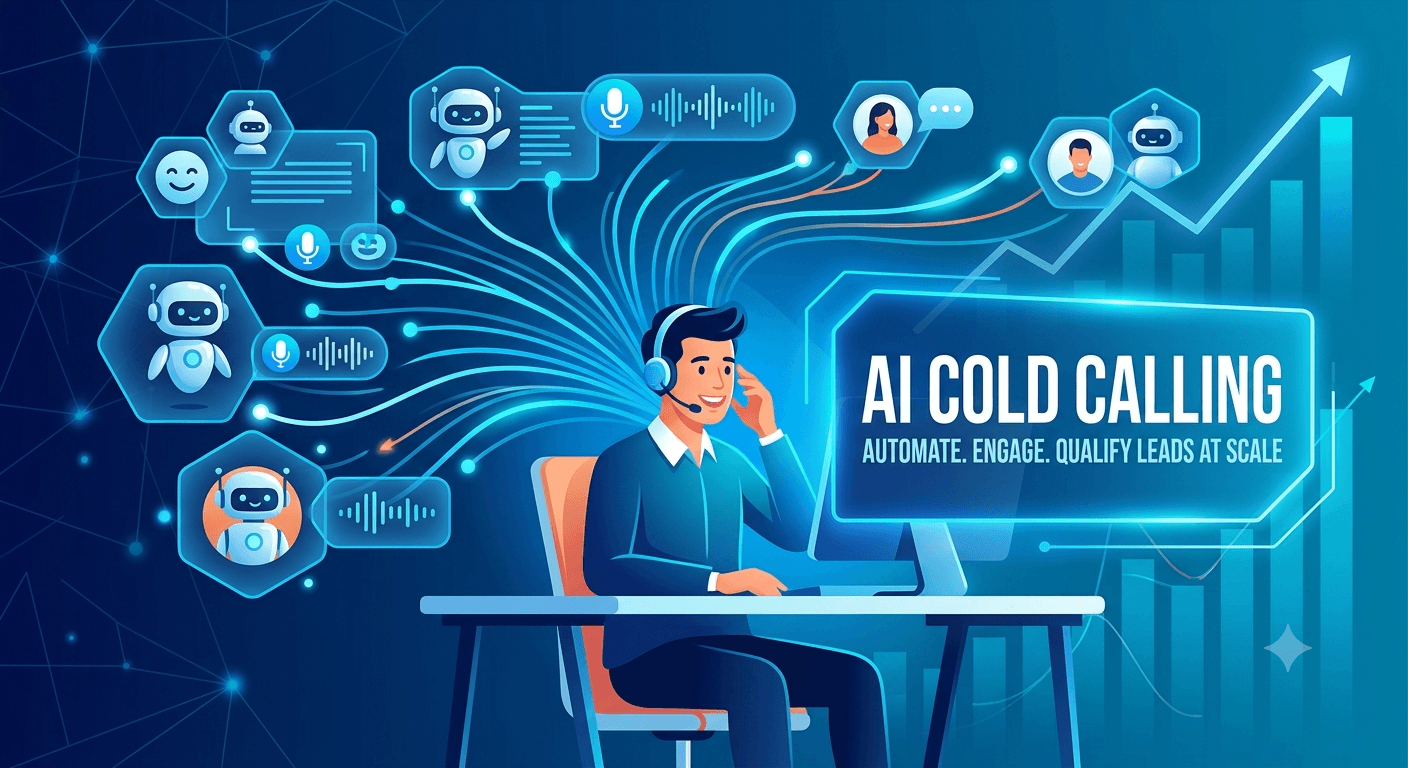
AI cold calling refers to the strategic use of artificial intelligence software to automate and optimize outbound sales calls. By utilizing machine learning, natural language processing, and advanced voice synthesis, an ai cold calling system can engage prospects in real-time, qualify leads, and handle routine inquiries without constant human intervention. This technology enables sales teams to bridge the gap between high-volume outreach and personalized communication. Modern businesses leverage these tools to increase their connection rates, manage large lead databases efficiently, and ensure that human sales representatives focus their energy on high-value negotiations rather than manual dialing and data entry.
What is AI Cold Calling?
AI cold calling is a modern approach to outbound sales that replaces or assists traditional manual dialing with intelligent automation. Instead of a sales representative spending hours dialing numbers and reaching voicemails, ai for cold calling manages the initial contact phase. These systems use sophisticated algorithms to understand human speech and respond appropriately, making the interaction feel natural for the prospect. This technology is designed to handle the heavy lifting of lead qualification, allowing teams to scale their efforts beyond the physical limits of a human workforce.
The core technology behind this movement involves large language models that have been trained specifically for sales environments. These models can recognize intent, handle common objections, and follow a structured sales script while adapting to the unique flow of a conversation. Because cold calling ai can operate 24/7 without fatigue, it ensures that no lead is left untouched. This transition from manual to automated processes represents a significant shift in how companies approach the top-of-the-funnel sales pipeline in an increasingly digital world.
Is AI Cold Calling Legal?
Before diving into AI-powered sales calls, it’s crucial to understand the legal landscape surrounding this technology. AI cold calling is legal in most regions but must comply with key regulations like the TCPA in the USA, which requires consent before using automated dialers for certain types of outreach. Businesses must remain vigilant about these laws to avoid significant penalties and protect their brand reputation while using ai cold calls to reach new markets.
Regional laws such as the GDPR in Europe enforce strict rules on data collection and customer consent during ai outbound sales calls. Furthermore, staying updated on DNC (Do Not Call) Lists is a non-negotiable requirement for any sales organization.
According to research from the Federal Trade Commission, compliance with these lists is one of the most scrutinized areas of outbound marketing, with heavy fines levied against organizations that ignore consumer preferences for privacy.
How to Be Compliant When Using AI
Maintaining compliance while using ai cold calling software requires a proactive approach to data management and ethical communication. You should always keep detailed records of opt-ins and opt-outs for compliance tracking to ensure you have a clear audit trail. Utilizing a virtual ai agent for sales calls can help maintain this consistency by automatically logging every interaction and preference expressed by the prospect.
Effective compliance strategies also involve using technology as a support mechanism rather than a total replacement for human oversight. It is vital to obtain consent before making AI-powered sales calls in jurisdictions where it is required by law. By integrating your sales call automation tools with updated suppression lists, you can ensure that your ai lead caller never contacts a restricted number, thereby maintaining the integrity of your outreach program.
How Does AI Cold Calling Work?
AI cold calling uses machine learning and automation to streamline the calling process significantly. Instead of a rep manually dialing and waiting for an answer, AI handles the connection, identifies human voices, and even analyzes the call in real time. This seamless integration of technology ensures that the initial contact is handled with precision, reducing the time wasted on unanswered calls or navigating complex phone trees.
The process is highly sophisticated and relies on a series of interconnected steps to provide a professional experience. By using ai sales calls, businesses can ensure that every interaction is recorded and processed for maximum insight. This systematic approach allows for a level of consistency that is difficult to achieve with a purely manual sales force.
-
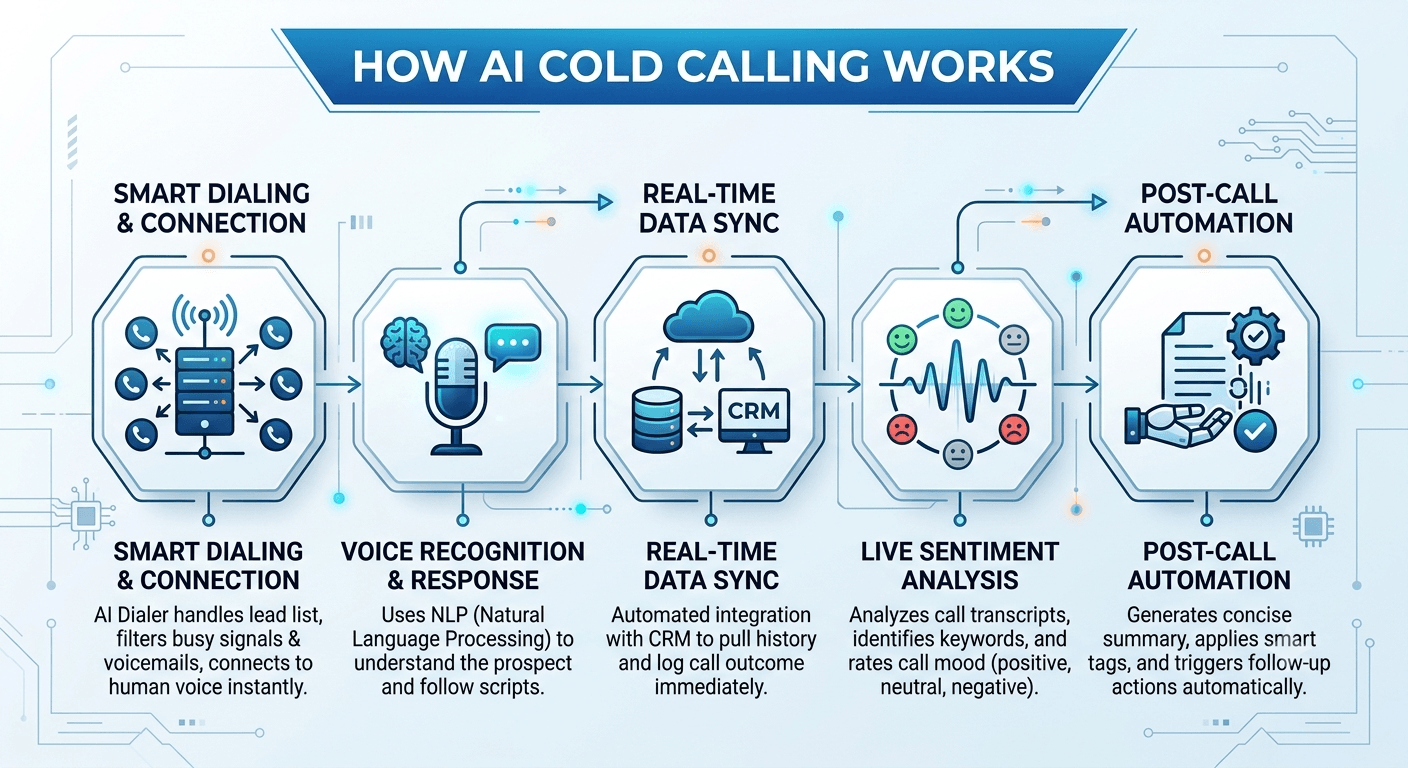
Smart Dialing & Connection: The process begins with an AI dialer that calls through your lead list. AI sensors can detect the difference between a human “hello,” a busy signal, or a voicemail greeting in milliseconds.
-
Voice Recognition & Response: Using Natural Language Processing (NLP), the AI understands what the prospect is saying. If the AI is handling the initial qualification, it can answer basic questions or follow a logical script based on the prospect’s intent.
-
Real-Time Data Sync: As the call happens, the AI communicates with your CRM integration. It automatically pulls up the prospect’s history for the agent or logs the call outcome immediately, ensuring your data is always 100% accurate.
-
Live Sentiment Analysis: AI analyzes live call transcripts to identify specific keywords and intent patterns. The system rates each moment of the conversation—showing you the exact percentage of the call that was positive, neutral, or negative.
-
Post-Call Automation: Once you hang up, it instantly generates a concise summary and applies smart tags based on the call’s topics and sentiment. These insights sync directly to your CRM, automating follow-ups and data entry.
Benefits of AI Cold Calling
The adoption of ai calling benefits for cold outreach has transformed the productivity of modern sales departments. One of the primary advantages is the ability to eliminate the repetitive tasks that often lead to sales rep burnout. By utilizing an ai sales call agent, companies can ensure that their human staff is only brought into conversations that have a genuine potential for conversion.
Furthermore, ai cold calling for real estate and other high-volume industries has proven to be a game-changer in terms of speed to lead.
Research by the Harvard Business Review indicates that companies that contact prospects within an hour of receiving a query are nearly seven times as likely to have a meaningful conversation.
1. Increase Sales Team Efficiency
The use of ai for sales calls allows teams to maximize their daily output without increasing their headcount. By automating the outbound calling process, human agents no longer have to listen to dial tones or navigate through gatekeepers. This results in more time spent on active conversations and less time on administrative hurdles that typically slow down the sales cycle.
2. Know When to Close the Deal
Using ai cold call training and real-time analytics helps representatives identify the perfect moment to ask for the sale. The software monitors the conversation for specific buying signals and intent, providing cues to the agent. This level of support ensures that opportunities are not missed due to human error or a lack of focus during long calling sessions.
3. Prioritize High-Quality Leads
An ai lead caller can quickly sift through massive lists to identify which prospects are most likely to convert. By analyzing the responses and engagement levels during the initial contact, the system tags high-priority leads for immediate human follow-up. This ensures that your best sales talent is always working on the most promising opportunities in the pipeline.
4. Increase Performance with Insights
With ai cold calling practice demand increasing, managers are using data-driven insights to refine their strategies. The software provides a detailed breakdown of which scripts are performing best and where prospects are dropping off. This allows for continuous optimization of the sales message, leading to better overall conversion rates and a more refined outreach approach.
5. Scale Outreach with AI Telemarketing
One of the most significant benefits of ai telemarketing is the ability to scale your operations almost instantly. Whether you need to make a hundred calls or a hundred thousand, the infrastructure can adapt to your needs. This scalability is particularly useful for seasonal campaigns or product launches where a massive amount of outreach is required in a short timeframe.
How to Use AI for Cold Calling: 5 Best Practices and Tips
To successfully implement ai cold calling, personalization must remain at the forefront of your strategy. Even though the process is automated, the content of the conversation should feel tailored to the recipient’s specific needs. AI can analyze past interactions and customer data to customize each call, making the dialogue much more relevant. Addressing specific pain points discovered through data analysis increases the chances of a successful conversion.
Timing is another critical factor when deploying an ai cold caller for your business. AI systems can determine the optimal times to reach prospects based on historical data and regional patterns. Contacting leads when they are most likely to be available and receptive can significantly improve your connection rates. It is best to avoid peak busy hours or late evenings to respect the prospect’s time and increase the likelihood of a positive engagement.
-
Integrate AI with Human Interaction: Ensure that your ai cold call bot is used as a bridge to a human conversation, allowing reps to take over when the lead is qualified.
-
Continuously Refine Scripts: Regularly update your AI scripts based on the performance data collected by the ai outbound calling bot to keep the messaging fresh and effective.
-
Use Sentiment Analysis: Leverage the ai sales caller to monitor the mood of the prospect and adjust the tone of the conversation in real-time to build better rapport.
-
Monitor Compliance Daily: Regularly check that your ai outbound calling system is following all local and international laws to prevent any legal complications.
-
Leverage Training Tools: Use ai tools for cold calling practice to help your human agents stay sharp and learn from the data generated by the AI’s successful interactions.
How to Set Up AI Cold Calling (Step-by-Step)
Setting up an efficient ai cold calling system requires a structured approach to ensure technology and strategy are aligned. The first step involves selecting a platform that fits your specific industry needs and integrates well with your existing tech stack. This foundation is crucial because the quality of your software will directly impact the naturalness of the voice interactions and the accuracy of the data collected during calls.
Once the software is in place, the focus shifts to data management and customization. A well-organized lead list is the lifeblood of any cold call practice ai strategy. Without clean data, even the most advanced AI will struggle to produce meaningful results. Following a step-by-step implementation guide helps in avoiding common pitfalls and ensures that the system is optimized for high performance from day one.
Step 1: Choose the Right AI Cold Calling Software
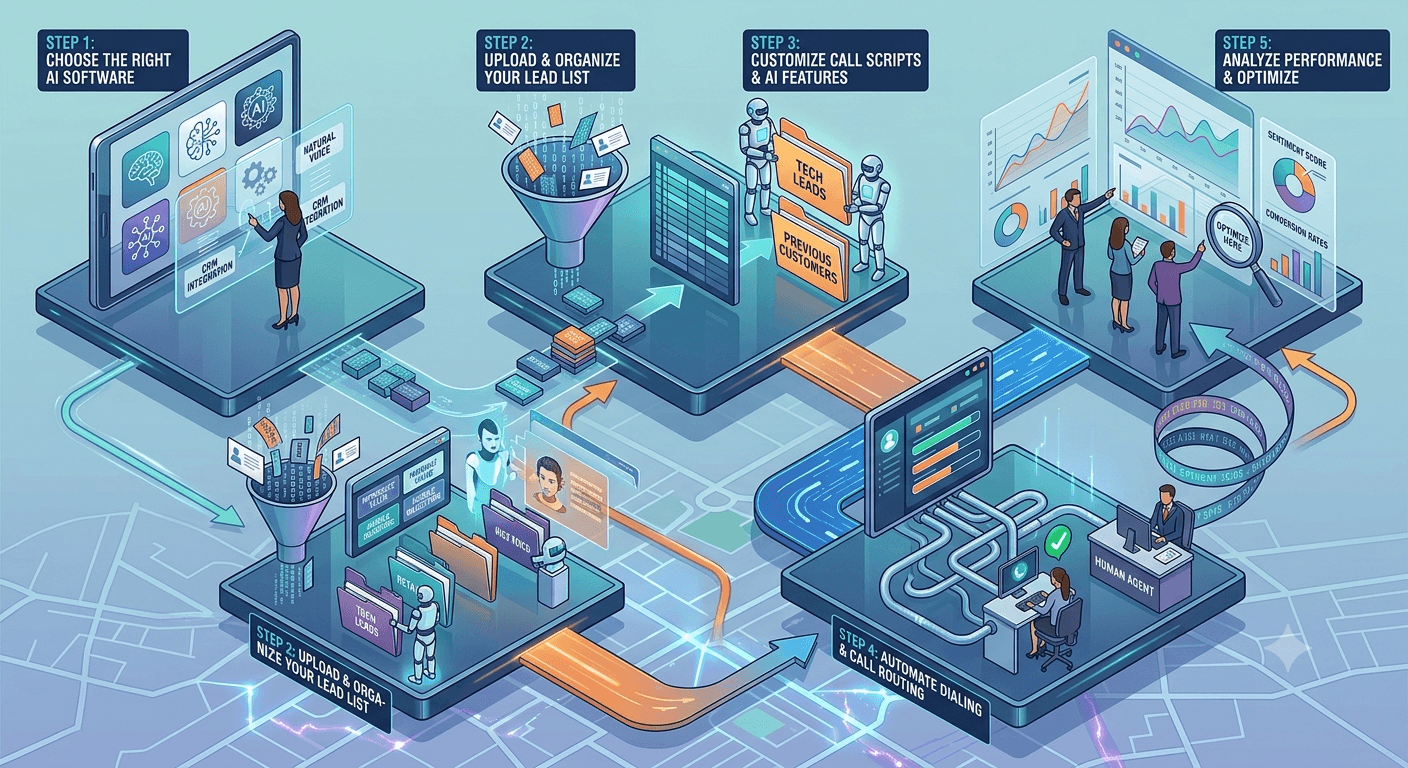
Selecting the best ai cold calling software involves evaluating features like voice quality, integration capabilities, and ease of use. You need a tool that can handle the volume of ai outbound sales calls your business requires while providing clear analytics. Look for platforms that offer robust support and regular updates to keep pace with the evolving AI landscape.
Step 2: Upload and Organize Your Lead List
The success of your ai sales caller depends heavily on the quality of the data you provide. Upload your lead lists into the system and use smart tagging to categorize them by industry, location, or previous engagement. This organization allows the AI to apply the most relevant scripts and persona for each specific group of prospects.
Step 3: Customize Call Scripts and AI Features
Tailor your messaging within the ai cold call bot to reflect your brand voice and specific value proposition. You can set different parameters for how the AI handles objections or when it should escalate a call to a human representative. Customization ensures that the ai for sales calls feels authentic and professional to every person who answers.
Step 4: Automate Dialing & Call Routing
Configure your ai voice agent for cold calling to handle the dialing process automatically based on your preferred schedule. Set up intelligent call routing so that when a prospect is ready to talk to a human, they are instantly connected to the right department. This automation removes the manual effort and ensures a seamless experience for both the rep and the customer.
Step 5: Analyze Performance and Optimize
After your initial campaigns, use the data provided by the ai cold calling real estate or B2B tools to see what worked. Analyze connection rates, call durations, and sentiment scores to identify areas for improvement. Constant optimization of your ai outbound call strategy is necessary to maintain high conversion rates and keep your sales pipeline full.
What Are the Key Features of AI in Cold Calling?
One of the most transformative features of modern sales technology is sentiment analysis, which allows a sales call ai to interpret the emotional tone of a conversation. This feature goes beyond just recognizing words; it understands if a prospect is frustrated, curious, or ready to buy. By providing this feedback in real-time or through post-call reports, managers can understand the hidden dynamics of their sales outreach.
Another essential feature is the use of power dialers and conversational AI. A power dialer automates the dialing process, while conversational AI ensures the interaction is fluid. These features work together in an ai cold call bot to ensure that every lead is contacted promptly and engaged in a meaningful way. This combination of speed and intelligence is what sets AI-driven outreach apart from traditional methods.
-
Sentiment Analysis: Enhances conversations by providing deep insights into the prospect’s emotional state and engagement level throughout the call.
-
Conversational AI: Personalizes outreach by allowing the system to handle complex dialogues and answer questions naturally, mimicking a human sales rep.
-
Power Dialers: Automate the mechanical part of the process, ensuring that agents spend the maximum amount of time talking rather than dialing.
-
CRM Integration: Ensures that every detail of the ai outbound call is recorded instantly, keeping the sales database updated without manual entry.
Top 6 Best AI Tools for Cold Calling
Choosing the best voice ai for outbound sales calls 2026 requires looking at the current leaders in the market. Each tool offers unique features tailored to different business sizes and needs. For instance, some platforms focus heavily on the quality of the ai sales call agent, while others prioritize the backend analytics and CRM synchronization. Selecting the right one can significantly impact your team’s ability to scale and close more deals.
The market for calling with ai is rapidly expanding, offering more choices than ever before. Whether you are a small startup or a large enterprise, there is a solution designed to fit your workflow. These tools have been vetted by industry experts for their reliability, compliance features, and the overall quality of the artificial intelligence they employ.
1. CloudTalk: AI-Powered Cold Calling and Business Phone Solution
CloudTalk is widely recognized for its robust ai cold calling software that integrates seamlessly with major CRM platforms. It offers features like smart dialing and real-time call monitoring, which are essential for high-growth sales teams. The platform is designed to improve the quality of every ai outbound call by providing reps with the data they need at their fingertips.
2. JustCall
JustCall provides a comprehensive suite of tools for sales call automation, including an intelligent ai cold caller. It is particularly known for its ease of setup and the ability to record and transcribe calls automatically for training purposes. This tool is excellent for teams that want to quickly implement ai cold calling without a steep learning curve.
3. Ringover
Ringover offers a powerful solution for ai outbound sales calls, focusing on productivity and simplicity. Its interface allows managers to track the performance of their ai lead caller in real-time, making it easy to adjust strategies on the fly. The platform’s emphasis on high-quality voice synthesis ensures that prospects have a professional experience every time.
4. 8×8
The 8×8 platform is a veteran in the communications space, now offering advanced ai for cold calling capabilities. It provides a highly secure and reliable infrastructure for companies that need to make a high volume of ai sales calls across global markets. Its analytics suite is particularly deep, offering insights into every aspect of the sales interaction.
5. Talkdesk
Talkdesk uses a sophisticated ai sales caller to help businesses automate their customer interactions and outbound sales efforts. The platform is known for its high level of customization, allowing companies to build a cold agent that fits their specific industry needs. Its focus on innovation makes it a top choice for forward-thinking sales organizations.
6. RingCentral
RingCentral is a leader in unified communications and offers powerful ai tools for cold calling practice and execution. Its platform is highly scalable, making it suitable for large enterprises that need to manage complex outbound campaigns. With integrated ai cold calling bot features, it helps teams maintain a consistent presence in the market.
Read More: A Guide to Contact Center Technologies: Definition, Benefits, Examples
Final Words
The integration of ai cold calling into the sales process is no longer a futuristic concept; it is a current necessity for businesses looking to remain competitive. By automating the most tedious aspects of outbound sales, organizations can empower their human representatives to do what they do best: build relationships and close deals. As technology continues to evolve, the distinction between human and AI interactions will become even more seamless, leading to a more efficient and effective sales landscape. Embracing these tools today sets the foundation for a scalable and data-driven future in sales outreach.
Frequently asked questions
-
What is AI Cold Calling?
AI cold calling is the use of automated systems powered by artificial intelligence to make outbound sales calls, qualify leads, and handle prospect interactions. These systems use natural language processing to communicate with humans in a way that mimics a real conversation, allowing sales teams to scale their outreach significantly.
-
Is AI cold-calling illegal?
No, it is not illegal, but it is highly regulated by laws such as the TCPA in the United States and GDPR in Europe. Businesses must ensure they have proper consent where required and that they do not contact individuals on Do Not Call (DNC) lists to remain compliant with the law.
-
What is the 80/20 rule in cold calling?
The 80/20 rule in this context suggests that 80% of your results will come from 20% of your leads or efforts. In AI-enhanced environments, the goal is to use automation to identify that top 20% of high-potential prospects as quickly as possible so human agents can focus their energy there.
-
How to use AI for cold calling?
To use AI for this purpose, you first need to select a compatible software platform and integrate it with your CRM. You then upload your lead lists, develop intelligent scripts, and set the AI to handle the initial dialing and qualification phases of the outreach process.
-
How does AI enhance the cold-calling process for sales teams?
It enhances the process by removing the need for manual dialing, automatically filtering out non-human responses, and providing real-time data on prospect sentiment. This allows sales teams to talk to more people in less time while maintaining a high level of personalization.
-
How does artificial intelligence compare to manual cold calling?
AI is significantly faster and more consistent than manual calling, as it does not suffer from fatigue or emotional burnout. While manual calling allows for deep human nuance, AI can handle the high-volume initial contact, making the overall sales process much more efficient.
-
How to use AI for B2B sales?
In B2B sales, AI can be used to research prospects before a call, automate the initial outreach, and schedule meetings directly into a salesperson’s calendar. It helps in identifying the right decision-makers and reaching out to them with data-backed, relevant messaging.
-
How much does AI cold calling cost?
The cost varies widely depending on the software provider and the volume of calls being made. Most platforms offer a subscription-based model that can range from a few dozen to several hundred dollars per user per month, depending on the advanced features included.
-
What is the 10-20-70 rule for AI?
This rule states that 10% of the effort in AI implementation is the algorithm, 20% is the technology and data, and 70% is the business process and people transformation. It highlights that the most important part of AI success is how people integrate the tool into their daily workflows.