

The best HIPAA compliant VoIP phone service for mental health should make it easier to answer enquiries, return confidential calls and protect appointment time. A clinician should not need to expose a personal number, and reception should be able to coordinate follow-up without receiving more clinical information than its role requires.
Dialpad, RingCentral, Nextiva, Zoom Phone, JustCall Business and Quo Business or Scale are business-calling options for mental health practices to evaluate on eligible healthcare arrangements. Spruce Health and iPlum are additional candidates when patient messaging matters. Choose the covered plan, confirm the BAA and test the practice’s actual calling and messaging workflow.
This guide covers US counseling, psychology, psychiatry and behavioral health practices, from a solo clinician to a multi-location organization. It compares six business-calling providers and two healthcare-focused communication options. Recommendations use published documentation and editorial practice-fit analysis, with plan and channel limits identified throughout.
Best HIPAA Compliant VoIP Phone Services For Mental Health Compared
Compare the eligible service and staff workflow before the headline price. The six options below focus on business calling. Secure patient messages, telehealth visits, recordings and integrations each need their own review; a BAA for calling should not be assumed to cover every available feature.
| Provider | Best Fit | BAA & Channel Limits | Pricing & Trial |
|---|---|---|---|
 1. RingCentral 1. RingCentral |
|
| RingEXRequest Healthcare QuoteConfirm plan and covered services Start 14-Day Free Trial |
 2. Nextiva 2. Nextiva |
|
| Core: General Plan Reference$15/User/Month AnnuallyHealthcare configuration: confirm quote Start 14-Day Free Trial |
 3. Zoom Phone 3. Zoom Phone |
|
| Zoom PhoneRequest Current QuoteConfirm Phone plan and BAA Start Free Trial1–50 Users |
 4. JustCall 4. JustCall |
|
| BusinessCustom Quote10-license minimum Start 14-Day Free Trial |
 5. Dialpad 5. Dialpad |
|
| Connect Standard$15/User/Month Annually$27/user/month on monthly billing Start 14-Day Free Trial |
 6. Quo 6. Quo |
|
| Business$23/User/Month Annually$33/user/month on monthly billing Start 7-Day Free Trial |
Prices are US-dollar references before applicable taxes, usage, equipment and add-ons. Annual figures are monthly equivalents on annual terms. Nextiva Core is a general-plan reference; obtain the eligible healthcare quote. Staff counts describe editorial fit. Trials may differ from the purchased healthcare configuration; use fictional information until the applicable agreement and settings are approved.
Expert Rating Method: These editorial calling-fit scores weight documented BAA/coverage clarity (30%), mental health practice workflow (30%), administration (20%) and price/eligibility accessibility (20%). Each dimension is assessed out of five and combined to one decimal. They are not customer averages, security audits or claims of hands-on testing. Provider order is not a score ranking. Spruce Health and iPlum are reviewed below for their different communication scope.
What Makes VoIP Suitable For A Mental Health Practice?
A suitable service combines the appropriate agreement and safeguards with manageable staff access, approved record destinations and a clear calling process. A provider can support HIPAA requirements, but the practice still needs to configure and use the service appropriately. A phone number alone has no independent compliance status.
Calls, Stored Messages And The BAA
HIPAA applies to covered entities and their business associates; it does not automatically apply to every counseling or wellness business. HHS distinguishes a transmission-only telecommunications conduit from a vendor that stores or processes PHI for a provider. Cloud voicemail, recordings and transcripts can make an app provider more than a conduit, requiring the applicable BAA before patient use.
Keep the agreement with the practice’s vendor records and identify the covered account, product and services. Check any optional feature before adding it to the workflow. Our VoIP And HIPAA Guide explains the broader relationship between cloud communication and healthcare safeguards.
Administration And Clinical Conversations Have Different Needs
An appointment enquiry may only need a callback number and availability. A clinical conversation can contain treatment detail that reception does not need. Decide which channels serve administration, which support clinical contact and where the resulting information belongs.
HHS permits audio-only telehealth when the applicable HIPAA requirements are met. VoIP, stored messages and electronic recordings require appropriate safeguards; the practice should also review the professional and clinical requirements for its proposed use. Buying a business-calling license does not by itself approve every clinical session workflow.
Psychotherapy Notes And Other Mental Health Records
HHS gives special protection to psychotherapy notes that meet its definition and are kept separately from the medical record. Not every progress note, diagnosis, message or call transcript is a psychotherapy note. Do not automatically copy session content into a shared phone history or treat an AI summary as the appropriate clinical record.
Substance Use Disorder Programs Need A Separate Scope Check
Some behavioral health organizations also handle records protected by 42 CFR Part 2. HHS identifies federally assisted programs providing substance use disorder diagnosis, treatment or referral, and certain recipients of Part 2 records. The updated rule’s compliance date was February 16, 2026. A HIPAA BAA alone does not settle those additional record-use requirements.
If this applies to the practice, include consent, access and disclosure workflows in its review of the proposed communication system. Do not treat every mental health practice as a Part 2 program or every vendor’s HIPAA statement as evidence of support for the practice’s complete obligations.
RingCentral — Best For Larger Group Practices And Multiple Locations
RingCentral RingEX is worth comparing when a mental health organization needs calling administration across locations or departments. A shared public number can be useful, but the practice should also define who manages staff identities, reception routes and coverage when a clinician or site is unavailable.
BAA Eligibility And Important Limits
RingCentral documents BAA support for paying covered-entity customers and identifies RingEX in its HIPAA materials. Request the current covered-service schedule, particularly for optional AI, fax or contact-center components.
- Pro: Suitable to compare for location and department administration with mixed office and mobile staff.
- Con: A broad platform can add tier decisions and administration work that a solo practice does not need.
What The Practice Should Test
Pilot an intake call transferred to another location, a therapist marked unavailable during a session and access removal for a departing employee. Ask reception to show only the information needed for its role.
RingEX: Request A Healthcare Quote
Start 14-Day Free TrialRequest the eligible RingEX quote. The advertised 14-day trial helps evaluate ordinary calling; confirm the agreement and settings before real client use.
Nextiva — Best For Reception-Led Therapy Practices
Nextiva merits consideration for a mental health practice with a staffed front desk and a voice-first workflow. Reception can evaluate how the proposed healthcare configuration handles enquiries, clinician callbacks and billing transfers. Begin with the approved functions rather than conveniences shown in a standard account.
BAA Eligibility And Important Limits
Nextiva offers a BAA and publishes healthcare restrictions on visual voicemail, app voicemail playback and voicemail delivery to email/text. Ask for the current matrix for the exact product being quoted.
- Pro: A relevant voice-first option when the practice can work with the approved healthcare configuration.
- Con: Standard-account voicemail conveniences may not be available in that configuration.
What The Practice Should Test
Have reception retrieve an invented message using the approved method, assign its owner and verify that no unapproved email attachment or transcript is generated. Repeat when the usual receptionist is absent.
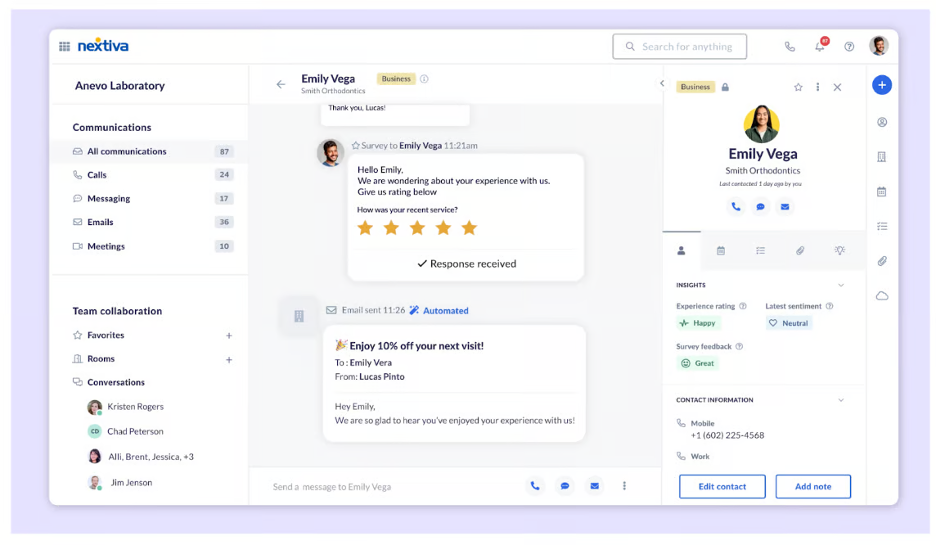
Core Reference: $15/User/Month Annually; Healthcare Configuration: Confirm Quote
Start 14-Day Free TrialCore’s $15 annual-rate reference is not a verified quote for every healthcare deployment. Some packages offer a 14-day trial; verify the proposed package.
Zoom Phone — Best For Therapists Already Using Zoom
Zoom Phone is relevant when staff already use Zoom and want to evaluate calling in a familiar environment. The Phone license and covered arrangement still need review. Compare everyday callbacks and reception handoffs independently from any telehealth meeting workflow.
BAA Eligibility And Important Limits
Zoom documents BAAs for eligible paid accounts. Confirm the Phone service and proposed features in your arrangement. Some AI functions can be available with a BAA while other features may be unavailable.
- Pro: Familiarity may reduce the amount of new software staff need to learn.
- Con: Phone, video and optional tools still require explicit licensing and scope decisions.
What The Practice Should Test
Test a shared reception route, outbound practice caller ID and calls received while a therapist is unavailable. Demonstrate the actual licensed Phone account rather than relying on a Meetings demo.
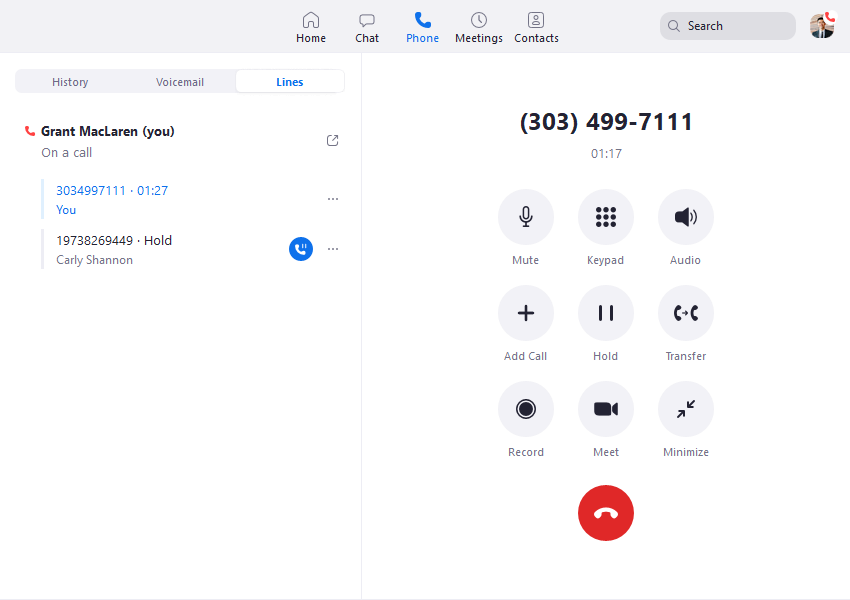
Zoom Phone: Request Current Plan & BAA Pricing
Start Free Trial (1–50 Users)Ask for current Phone pricing and trial eligibility. Confirm duration instead of assuming that the general free Zoom account provides the required service.
For larger groups: Discuss Zoom Phone For More Than 50 Users.
JustCall — Best For Larger Behavioral Health Intake Teams
JustCall Business is a candidate for a larger behavioral health intake operation. Its value depends on whether assigned follow-up and approved contact connections help the intake team work reliably. A ten-license minimum makes it a different buying proposition from a solo clinician’s line.
BAA Eligibility And Important Limits
The published Business plan lists healthcare compliance with custom pricing and a ten-license minimum. Confirm the signed BAA and channel/integration scope for the proposed deployment.
- Pro: A candidate for structured intake teams with enough staff to justify the licensing floor.
- Con: The cheaper Team headline is not the appropriate reference for the Business healthcare comparison.
What The Practice Should Test
Use dummy records to test a reassigned callback. Inspect what is copied to any CRM and whether intake staff can see material intended only for the treating clinician.
Business: Custom Quote; 10-License Minimum
Start 14-Day Free TrialJustCall advertises a 14-day product trial. Confirm the healthcare pilot arrangement; a normal trial does not establish Business-plan BAA coverage.
Dialpad — Best For Solo Therapists Comparing An Accessible Paid Plan
Dialpad Connect offers a clear starting point for solo clinicians and smaller mental health practices comparing a paid calling plan. Evaluate a separate practice identity, voicemail and session-hour availability first. Decide whether capture or AI functions have a defined purpose before adding retained records to the workflow.
BAA Eligibility And Important Limits
Dialpad documents company-admin BAA signing on all paid accounts. Review the exact service and connected tools in your agreement. The paid-account rule should not be assumed to cover an ordinary free-trial account.
- Pro: A clear contractual starting point and published Standard pricing for smaller teams.
- Con: AI transcripts and summaries add records to manage; advanced needs may require a different tier.
What The Practice Should Test
Compare the same fictional callback with automatic capture enabled and disabled. Check the recording/transcription controls, intended storage, deletion options and staff access before deciding which functions to use.
Connect Standard: $15/User/Month Annually Or $27 Monthly
Start 14-Day Free TrialConnect Standard is $15/user/month annually or $27 on monthly billing. The advertised trial is 14 days; evaluate usability with fictional information.
Quo — Best For Small Practices Sharing Responsibility For Calls
Quo, formerly OpenPhone, belongs in a small practice’s shared-calling comparison on Business or Scale. Test who takes responsibility for an unanswered call and what colleagues can see. Its documented SMS/MMS and integration exclusions are important when choosing how staff communicate with clients.
BAA Eligibility And Important Limits
Quo offers its BAA on Business and Scale. SMS/MMS and third-party integrations are excluded from covered services; AI use has additional documented conditions.
- Pro: Worth comparing for a small team that wants shared calling with a defined access process.
- Con: Its BAA does not cover ordinary texting or make a connected CRM a covered service; Starter is not eligible.
What The Practice Should Test
Test an unanswered call, a handoff and access removal. Review the separate texting policy before enabling client messages and check what becomes visible through each connected tool.
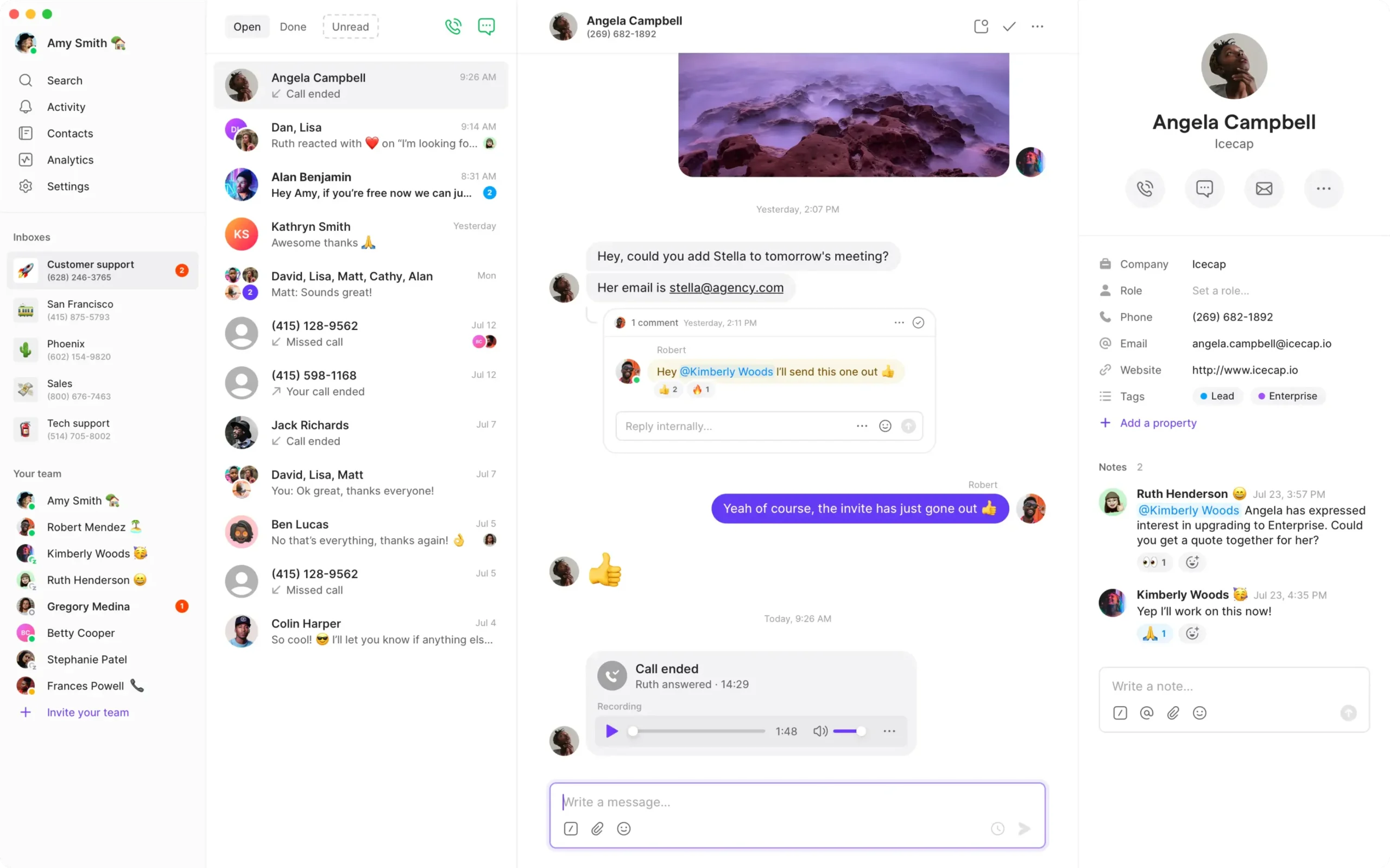
Business: $23/User/Month Annually Or $33 Monthly
Start 7-Day Free TrialBusiness is $23/user/month annually or $33 monthly, with an advertised seven-day trial. Confirm the BAA arrangement before patient information is entered.
Spruce Health — Best To Compare For Combined Practice Communication
Spruce Health is a relevant mental health communication option when the practice wants calls, patient messages, fax and internal coordination in a healthcare-focused workspace. Its Basic listing includes a BAA, shared inbox and several communication channels. Evaluate the patient experience and staff assignment process rather than assuming that a broader feature set is always necessary.
Basic is $24/user/month and Communicator is $49/user/month before taxes and fees. Communicator lists additional call-flow, integration, VoIP and AI capabilities. Spruce advertises a 14-day trial and month-to-month billing. Confirm which plan the demonstration uses and which functions the practice actually needs.
Spruce distinguishes ordinary SMS from secure app-based messaging. Have a client test account open the secure message and show what happens when the preferred patient app is unavailable. A practice should know how it will handle both the routine reply and a request containing sensitive information.
- Pro: A relevant candidate when secure patient communication and staff coordination matter alongside calling.
- Con: Per-user cost and higher-tier capabilities can be more than a simple business line requires.
What The Practice Should Test
Assign a fictional enquiry to reception, transfer responsibility to a clinician and demonstrate absence coverage. Inspect which staff can see the thread and where completed work is recorded. Keep the permission design aligned with actual roles.
Basic: $24/User/Month; Communicator: $49/User/Month
Trial: 14 Days. Confirm the agreement, applicable fees and channel setup for the proposed account.
iPlum — Best To Compare For A Mobile Practice Line And Secure Messaging
iPlum is worth evaluating when clinicians want a separate business number on an existing phone, with secure messaging on an eligible plan. Its current Professional listing includes web calling, shared numbers and secure encrypted texting through a mobile app or app-less online experience. Test the client journey and staff controls on that actual subscription.
Professional is $14.99/user/month on annual billing or $20.99 monthly. Enterprise is $25.99 annually or $30.99 monthly and adds recording and longer archiving. iPlum’s BAA instructions specify Professional or Enterprise; Standard should not be used as the eligible healthcare price benchmark.
- Pro: A focused option to compare for a business identity on existing mobile devices and an eligible secure-messaging workflow.
- Con: The plan, archiving and patient access experience require closer review than the lowest advertised price suggests.
What The Practice Should Test
Make an outbound callback, silence notifications during a session and hand off an enquiry to an authorized colleague. Demonstrate secure message access with a fictional patient, including the app-less route, and inspect the retained information. Test the chosen calling mode under actual working conditions.
Professional: $14.99/User/Month Annually Or $20.99 Monthly
Next Step: Request The Eligible Healthcare Plan. Confirm the BAA, covered channels, billing term and any pilot terms.
Best Mental Health Phone Services By Practice Type
Choose the shortlist around your practice’s daily work. A solo clinician may prioritize mobile callbacks, a group practice may need shared reception and a larger organization may need dedicated intake administration. The plan and channel qualifications above still apply.
Solo Clinicians And Private Practices
Compare Dialpad, iPlum Professional and Spruce Health. Dialpad is a calling-plan candidate; iPlum merits a mobile-line and secure-message pilot; Spruce deserves attention when several patient communication channels matter. Test whether the clinician can manage messages without interrupting appointments or creating unnecessary administration.
Small Group Mental Health Practices
Compare Quo Business, Dialpad and Nextiva. Quo is a shared-calling option with explicit channel exclusions, Dialpad is a paid-account calling comparison, and Nextiva merits a reception-led voice pilot. Require a demonstration of callback ownership and access on the quoted tiers.
Remote Clinicians And Hybrid Teams
Compare Zoom Phone, Dialpad and iPlum Professional. Test actual phones and home-office conditions, including background ringing, private caller identity and switching connections. Device settings and personal voicemail fallbacks can change where information appears, even when the account itself is appropriately configured.
Multi-Location Behavioral Health Organizations
Compare RingCentral, Nextiva and Zoom Phone. Test different staffed hours, transfers between sites and removal of a staff account. Ask who maintains the routes and who monitors unresolved enquiries. A location-based setup should be understandable to the people who operate it.
Larger Intake And Referral Teams
Compare JustCall Business, RingCentral and Nextiva. Define permitted intake information, assignment and escalation to clinical staff. JustCall’s Business licensing floor is ten. Confirm the exact scope of any contact-center tool or connected database instead of treating a marketing integration list as approval.
Practices Prioritizing Secure Patient Messages
Evaluate Spruce Health and iPlum Professional or Enterprise. Demonstrate the actual patient access and staff response journey. Compare secure delivery separately from ordinary SMS and ask how message history is retained. The number of messaging features matters less than a usable approved process.
Affordable Plans: What A Five-Person Practice Might Pay
As base subscription examples, five Dialpad Standard seats equal $75/month in annual-rate equivalents or $135 on monthly billing. Five Quo Business seats equal $115 annually or $165 monthly. Five Spruce Basic seats equal $120 at its published monthly rate. These are not feature-equivalent totals and exclude applicable extras.
Compare the same licensed staff count and billing commitment. Add any required patient-messaging, fax, clinical video or integration subscription before claiming savings. An annual monthly equivalent should not be presented as a cancel-anytime monthly rate. Obtain the healthcare quote when the table provides a general-plan reference.
Three Features To Prioritize In A Mental Health VoIP System
1. Confidential Voicemail And Clear Callback Ownership
Show who can hear a message, who replies and where notifications or copies appear. A shared reception account does not mean every staff member needs every clinical message. The proposed tier must support the actual separation the practice requires; otherwise adjust the design or choose a suitable arrangement.
Assign each callback to a named person and test absence coverage. A received voicemail is not a completed task. If transcripts or voicemail-to-email are enabled, inspect the receiving destination and applicable service scope. Nextiva’s documented healthcare limits show why a normal feature list may differ from the approved configuration.
2. Session-Hour Routing And Accurate Availability
Test what callers experience when a clinician is in an appointment, a receptionist is absent or the office is closed. Availability controls can silence one device without changing the route, or redirect calls elsewhere. Confirm the actual behavior rather than relying on the feature name.
Keep the greeting consistent with the response schedule and the practice’s approved urgent-contact process. Do not promise continuous monitoring when the mailbox is only checked during office hours. Automation can route calls, but it should not be described as making a clinical urgency decision.
3. Access, Record Capture And Integration Controls
A recording or AI summary can create a new record with new access and retention requirements. Start with a defined purpose, appropriate notice or consent and a review process. Do not enable capture merely because a plan includes it, or automatically send clinical content into a shared staff workspace.
Map what moves to an EHR, CRM, mail account or analytics service. Confirm each destination and the actual connector behavior. Quo explicitly excludes third-party integrations from its covered services; other vendors need their own scope review. An integration logo does not prove the proposed clinical use is supported.
Client Contact Preferences And Shared Devices
Ask staff to demonstrate a confidential callback on a shared household phone, a changed contact number and an incoming request through an unapproved channel. Use the practice’s documented contact preferences and identity process. Keep lock-screen previews and unintended notification copies in the device review.
A routine reminder can reveal an association with a mental health practice. Determine what identification and content belong in that reminder and what requires the approved secure destination. A caller’s preferred number and a safe time to speak can matter as much as the availability of a texting button.
HIPAA Compliant Calling, Voicemail And Texting: Review Each Channel
Approve each channel separately. Voice calls, cloud voicemail, ordinary SMS, secure patient messaging and AI-generated records have different destinations and risks. A covered calling plan does not automatically approve everything staff can send or connect.
| Channel | Useful Practice Task | What To Confirm |
|---|---|---|
| Voice Call | A callback or approved clinical conversation | Identity, private surroundings and capture settings |
| Cloud Voicemail | A callback request outside staffed availability | BAA scope, access, notifications and retention |
| Ordinary SMS/MMS | Only the approved routine texting workflow | Vendor exclusions, content, preferences and delivery risks |
| Secure Patient Messaging | Sensitive correspondence in the approved system | Patient access, authorized staff and retained records |
| AI Summary Or Transcript | A specifically approved documentation task | Feature scope, notice, review and receiving destination |
| EHR Or CRM Connection | An approved transfer of selected information | Exact fields, identity matching and destination scope |
Carrier texting registration is an operational requirement, not evidence of HIPAA coverage. Similarly, a secure-looking interface does not establish that every recipient, integration or exported copy is within the approved workflow. Demonstrate an incoming message and a staff reply on the actual account.
When a client sends sensitive information through a channel the practice has not approved for that use, staff need a defined handling process. Training should explain how to move the conversation appropriately without making unnecessary copies or leaving follow-up unassigned.
A Practical Mental Health Practice Call Flow
Route routine enquiries to staffed reception, protect appointment time and assign each callback. Keep clinical information in its approved destination and make after-hours expectations accurate. Test the workflow with fictional callers before launch.
Example: a five-person practice has four clinicians and one receptionist. The main line reaches reception during staffed hours; clinician routes reflect actual availability. A named backup owns pending enquiries when reception is absent. The practice supplies its own approved urgent-contact instructions.
| Caller Situation | Suggested Workflow | What Staff Must Verify |
|---|---|---|
| New Appointment Enquiry | Reception receives a minimal request | A named person owns the follow-up |
| Clinician In A Session | Approved message or staffed fallback | Appointment time remains protected |
| Billing Enquiry | Designated billing destination | Only needed information reaches billing |
| Referral With Clinical Detail | Approved secure destination | The correct authorized recipient receives it |
| Receptionist Absent | Named backup or accurate message route | Pending work is reassigned |
| After Hours | Approved greeting and contact instructions | The stated availability matches actual coverage |
| Connection Failure | Documented alternate route | Access and privacy remain appropriate |
A Routine Voicemail Greeting To Adapt
“Thank you for calling our practice. We may be with a client and unable to answer. Please leave your name, callback number and a suitable time to reach you. Avoid leaving detailed clinical information. Messages are reviewed during our stated office hours. For urgent help, follow the instructions provided by your clinician.”
Adapt the wording to the practice’s actual hours and approved contact process. A request to avoid clinical detail reduces unnecessary collection but does not make the mailbox free of PHI. Staff should still retrieve and handle messages through the approved account.
A Confidential Callback Opening
“Hello, this is [first name] returning your call. Is now a private and convenient time to speak?”
Use the practice’s identity and communication-preference process before discussing treatment or leaving information with another person. The calling workflow should account for shared phones and interruptions rather than assuming that the person answering is the intended client.
How To Set Up A HIPAA-Ready VoIP Service For Mental Health
Document the workflow, select the eligible plan, establish the applicable agreement and test staff access before moving the practice number. Initial demonstrations should use fictional information until the account and services are approved for patient use.
- List administration, clinical-contact and patient-message requirements.
- Map voicemail, recordings, transcripts, exports and connected destinations.
- Confirm eligible licenses, agreements, service scope and current quote.
- Configure authorized staff access and supported devices.
- Set office hours, session availability, callback ownership and absence coverage.
- Approve notifications, message destinations and any capture features.
- Train staff on identity, contact preferences and channel boundaries.
- Pilot actual devices and fictional patient journeys.
- Confirm number and fax transfer requirements separately.
- Keep the old service active until transfer and outside-call verification are complete.
- Check messaging activation and any required registration.
- Review unresolved enquiries and remove old staff or connected access after launch.
Acceptance Tests Before Moving The Main Number
- Confidential callback: The intended business identity appears and staff follow the approved privacy process.
- Unavailable clinician: The caller reaches the actual approved fallback.
- Shared task: A colleague can handle an assigned enquiry without excessive access.
- Message copy: No unapproved transcript or attachment reaches an outside inbox.
- Staff removal: The removed test account loses access, including devices and connections.
- Network failure: The documented alternate route works under actual conditions.
Number transfer does not automatically move message history, attachments or account permissions. Ask what export and migration are supported, and preserve required records in an approved destination. Test incoming calls from outside the practice after cutover; an outgoing call alone does not establish that all old routes work.
Assign an administrator to review staff changes, failed routes and connected tools. The configuration can drift as the practice grows, so repeat the relevant checks when the workflow, product or staff responsibilities change.
Frequently Asked Questions
What Is The Best HIPAA Compliant VoIP Phone Service For Mental Health?
Dialpad is a useful paid-calling starting point for smaller practices. RingCentral, Nextiva and Zoom Phone merit comparison for group calling; JustCall Business fits larger intake teams; Quo Business/Scale merits a shared-call pilot with channel exclusions. Spruce Health and iPlum are additional patient-communication candidates.
Do Mental Health Practices Need A BAA For VoIP?
When a vendor acts as a business associate, such as by storing or processing PHI for a covered practice, the applicable BAA is required. HHS distinguishes that relationship from a transmission-only conduit. Evaluate the actual cloud calling and stored-message arrangement.
Is Every Mental Health Phone Number HIPAA Compliant?
A number itself does not establish compliance. The service, applicable agreement, account settings, devices and practice process determine how information is handled.
Which Plans Are Eligible For Quo’s BAA?
Business and Scale are the eligible comparison. Quo’s published scope excludes SMS/MMS and third-party integrations. Do not describe its ordinary texting as covered by the calling BAA.
Can Mental Health Practices Use iPlum?
Evaluate Professional or Enterprise, which iPlum identifies in its BAA instructions. Test the proposed calling and secure-message workflow and establish the applicable agreement before patient use.
Is Spruce Health Suitable For A Counseling Practice?
It is a relevant candidate when the practice wants multiple patient and staff communication channels. Compare the actual plan, secure message access and staff permissions rather than assuming every channel should be used.
Can We Use A Personal Cell Phone For Practice Calls?
A supported business app can help separate practice identity from a personal number. Confirm the eligible account, device controls and actual caller identity. Test notification privacy, sign-out behavior and personal voicemail fallback.
Is Voicemail To Email Appropriate For Mental Health Messages?
It needs a destination-specific review. A voicemail attachment or transcript can create another PHI copy. Confirm the receiving mail environment and service scope; some healthcare configurations restrict this function.
Can Therapists Text Clients Through VoIP?
The practice needs a channel-specific decision. Ordinary SMS differs from secure patient messaging, and provider exclusions matter. Consider approved content, contact preferences, recipient access and the actual delivery path.
Can VoIP Be Used For Audio-Only Telehealth?
HHS permits audio-only telehealth consistent with the applicable HIPAA requirements. Review the actual service and electronic-record handling, alongside professional requirements for the proposed clinical use. A business phone license alone is not approval for every session workflow.
Should Every Mental Health Call Be Recorded?
No automatic recording policy follows from buying a plan. Start with a defined purpose and review applicable notice or consent, service scope, access and retention. Decide whether capture is needed before enabling it.
Are AI Summaries Appropriate For Clinical Calls?
Review the exact feature and agreement scope, capture conditions, staff access and intended destination. Summaries need an approved accuracy-review process and should not automatically become clinical documentation.
Does A HIPAA BAA Cover 42 CFR Part 2?
A BAA alone does not resolve additional Part 2 record-use requirements. Determine whether the practice or records fall within Part 2 and review the proposed consent, access and disclosure workflows accordingly.
Can We Keep Our Existing Practice Number?
Often, subject to provider and number eligibility. Confirm transfer requirements and keep the old account active through completion. Fax transfer, messaging activation and stored history require separate checks.
Can We Use Free Trials With Real Patient Information?
Do not assume every product trial has the final healthcare arrangement. Use fictional information until the applicable agreement, account scope and settings are approved. Confirm each provider’s current eligibility and activation terms.
How Much Does A Mental Health VoIP Service Cost?
Compare the eligible plan rather than the cheapest entry tier. The table and provider offers show references or quote requirements; the five-person example illustrates base subscription totals. Add required channels, usage, taxes and implementation costs before selecting the lowest suitable total.
What Customer Feedback Suggests A Practice Should Test
iPlum — G2, Christina W., Clinical Psychologist, January 26, 2026, 4.5/5: The reviewer valued straightforward everyday calls and texts and responsive support. She also described a brief outage resolved with clear communication. Test daily usability and the practice’s interruption procedure rather than treating one experience as an uptime guarantee.
Spruce Health — G2, Katelyn S., July 29, 2026, 5/5: The reviewer liked flexible individual patient contact and provider responsibility but found the main message view overwhelming. Have staff demonstrate filtering, assignment and absence coverage before deciding that a shared workspace fits.
These selected experiences are not representative performance results or proof of healthcare compliance. They help frame pilot questions; the provider’s current service scope, agreement and practice configuration still require review.
Affiliate Disclosure: VoIPCalling.com may earn a commission when you sign up through links in this article at no additional cost to you. Recommendations consider published capabilities, limitations and practice fit. Confirm current pricing, covered services and required settings with the provider.