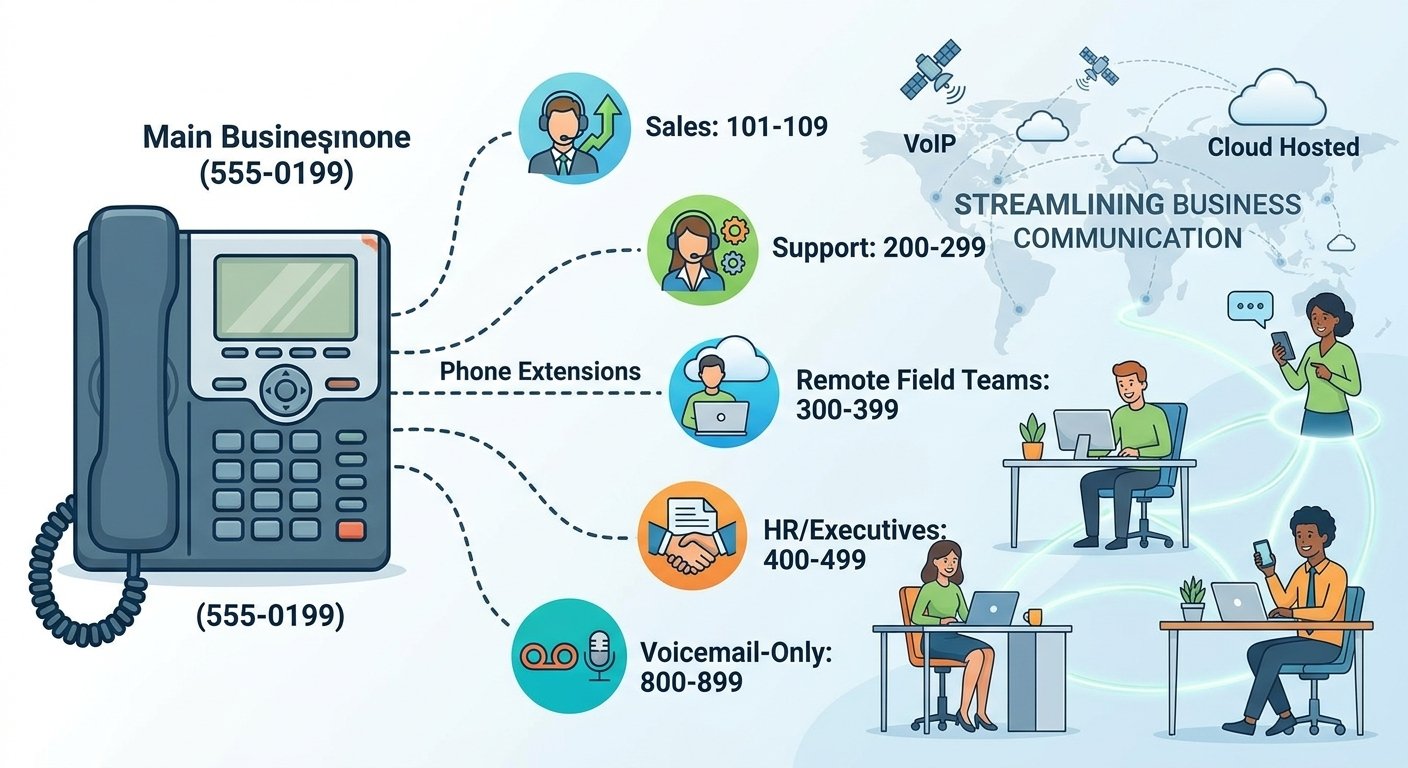
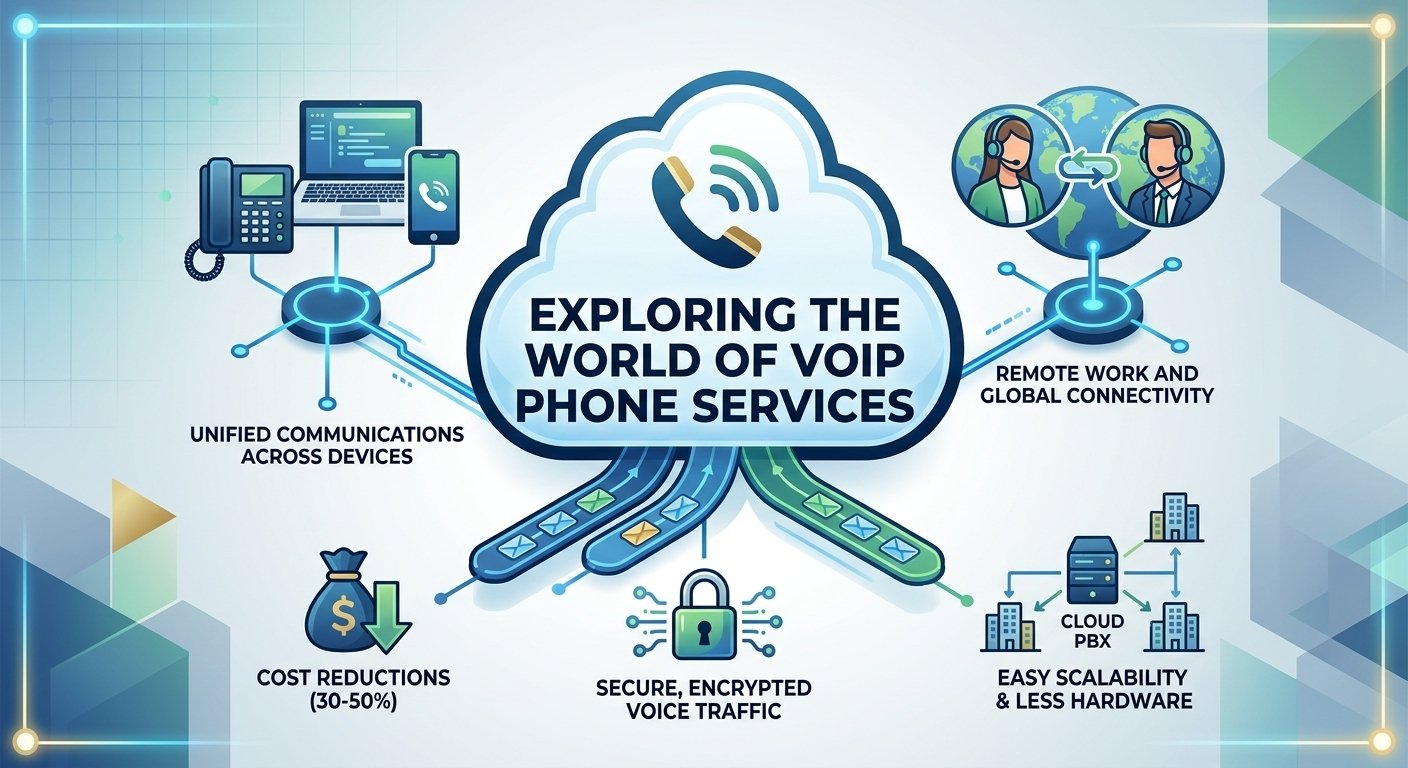
Voice over Internet Protocol (VoIP) allows you to make and receive phone calls using a broadband internet connection instead of a traditional copper landline. A VoIP phone service is the basis of modern telecommunications and uses broadband connections rather than old-fashioned copper wires to deliver a wide range of services.
By upgrading your infrastructure to Internet-based technology, you are able to operate in an agile way and fully equipped to meet future growth requirements, with enterprise level functionality. Experience cloud networks that will take your everyday operations to the next level, securely.
What is online VoIP?
VoIP is the technology that allows people to make their calls through a high-speed broadband Internet connection. This system is able to transform audio signals into digital data packets and send those packets through cyberspace instead of the traditional public switched telephone network (PSTN).
With this modernized infrastructure, it is no longer essential for an organization to have physical geographic locations to have excellent communication standards around the world. Businesses can create a single network that effortlessly connects locations and significantly reduces long-distance calling costs, all optimized for corporate use.
-
What is a VoIP phone service?
VoIP phone service is a comprehensive telecommunications service that uses IP technology to process both incoming and outgoing dial streams online. In addition to basic calling features, modern versions are full-fledged environments that remove the need for costly on-premises private branch exchange equipment.
These platforms bring together a variety of digital channels, including large-scale video conferencing, instant team messaging, and virtual faxing, all in one place, accessible from various smart devices. This architecture streamlines billing processes and enables administrators to manage multiple tools in one place.
How does VoIP work?
The digital system works by converting sound waves to compressed data packets that quickly move through complex pathways in a network to get to a target destination. These small packets are then unpacked at the recipient’s computer terminal into a clear audio format, allowing real time conversations with no noticeable lag.
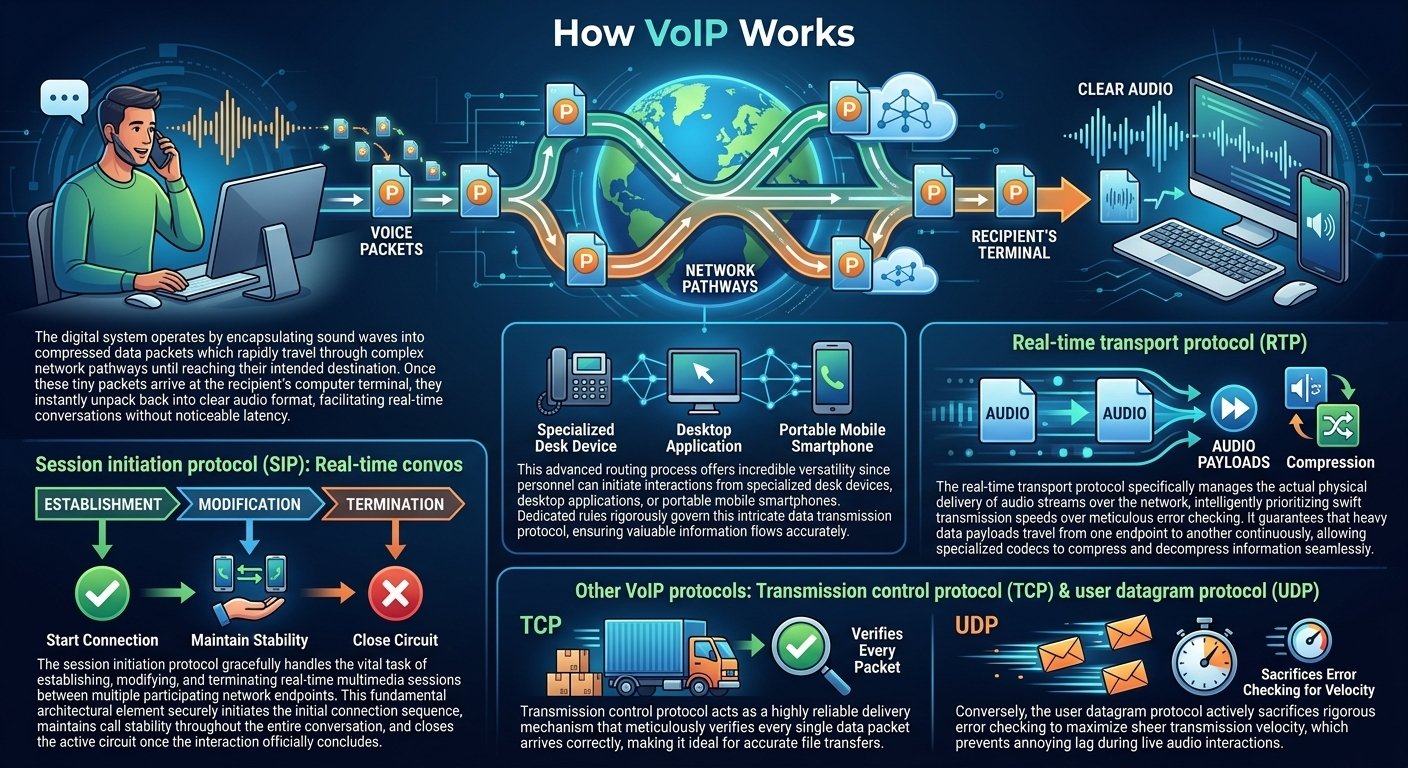
This sophisticated routing means that employees can start interactions from desk based specialist equipment, desktop applications or portable mobile smart phones. Dedicated rules rigorously govern this intricate data transmission protocol, ensuring valuable information flows accurately.
-
Session initiation protocol (SIP): Real-time convos
The session initiation protocol is responsible for the critical function of creating, adapting and ending real-time multimedia sessions involving a number of participating network endpoints. This basic building block correctly initiates the first sequence of calls, keeps the calls stable during the whole conversation and releases the active circuit at the end of the conversation when the call is officially terminated.
-
Real-time transport protocol (RTP)
The real time transport protocol actually handles the physical delivery of the audio streams over the network, intelligently trading off rapid delivery for not so careful checking of errors. It ensures that heavy data payloads are continuously sent from one end to the other and seamlessly compressed and decompressed by specialized codecs.
-
Other VoIP protocols: Transmission control protocol (TCP) & user datagram protocol (UDP)
The TCP is a very reliable delivery mechanism, which checks every single data packet to be sure it is delivered correctly, and it is perfect for accurate file transfer. On the other hand, the user datagram protocol intentionally gives up the extensive error-checking for the sake of sheer transmission speed, avoiding the nuisance of lag time in real-time audio communications.
How does a VoIP phone service work to improve customer service?
These web-based tools are essential to modern call centers, offering quick and easy access to detailed caller histories from integrated customer relationship management databases during real-time interactions. Important background data at an agent’s fingertips helps them to solve complex problems much quicker and improve first contact resolution rates.
Moreover, advanced automatic call distribution systems automatically direct incoming queries to the most relevant available agent according to certain criteria. This smooth transition eliminates hold times altogether, providing clients with highly accurate support in a timely manner and enhancing the overall brand loyalty and satisfaction.
Why choose a business VoIP phone service?
Smart companies choose to use a business voip phone service, as they no longer have to make huge capital investments to implement legacy telecommunication systems. A detailed industry study by Gartner reports that companies that make the switch to these new patterns of communication generally save 30-50 percent on their telecom bills each year.
-
A digital phone system without the huge capital investment
Traditional legacy infrastructures require expensive physical servers, complex copper wiring and specific technician hours to deploy and for mechanical maintenance. A hosted provider takes care of the complicated backend architecture and provides enterprise-level functionality for a growing company at a fixed monthly rate and in a highly secure data center.
-
A VoIP phone service for business wherever you go
Absolute mobility is the key to maintaining productivity when working with teams spread across geographical areas – and cloud telephony provides that by taking employee extensions out of the physical office desk. Important client questions can be answered on the go, from personal smartphones or home laptops, with ease.
-
A VoIP phone service for small business that scales as you grow
When adding new systems onto the legacy infrastructure, it is critical to predict future hardware requirements and to avoid buying unneeded physical lines or running out of capacity. Cloud-based platforms seamlessly enable administrators to add or remove user licenses in real time, via an intuitive online portal, offering limitless scalability that aligns with the needs of any organization.
-
VoIP solutions mean unmatched functionality
Today, platforms are more than just a way to communicate via voice; they also come with a powerful array of collaborative tools, like virtual whiteboards and automated voicemail transcription. These built-in features enable professionals to perform multiple tasks effortlessly during long conferences, boosting overall productivity in a remarkable way without the need for additional third-party software licenses.
-
VoIP phone services make for easier integration
Cloud telephony is basically a flexible software application, so it can easily integrate with crucial enterprise productivity packages such as Salesforce and Microsoft Office. This comprehensive software integration allows for advanced capabilities such as click-to-dial directly from email inboxes, which can save valuable minutes in a salesperson’s day-to-day workflow.
-
Internet phone lines allow business continuity
Traditional copper telephone lines can be disconnected in an instant by a natural disaster or a sudden failure in the power grid and leave your organization completely cut off from panicking clients requesting help. Cloud systems automatically route incoming communications to alternate geographic locations or mobile devices, keeping your enterprise up and running in the event of a crisis and eliminating these physical vulnerabilities.
Further advantages of the best VoIP phone service
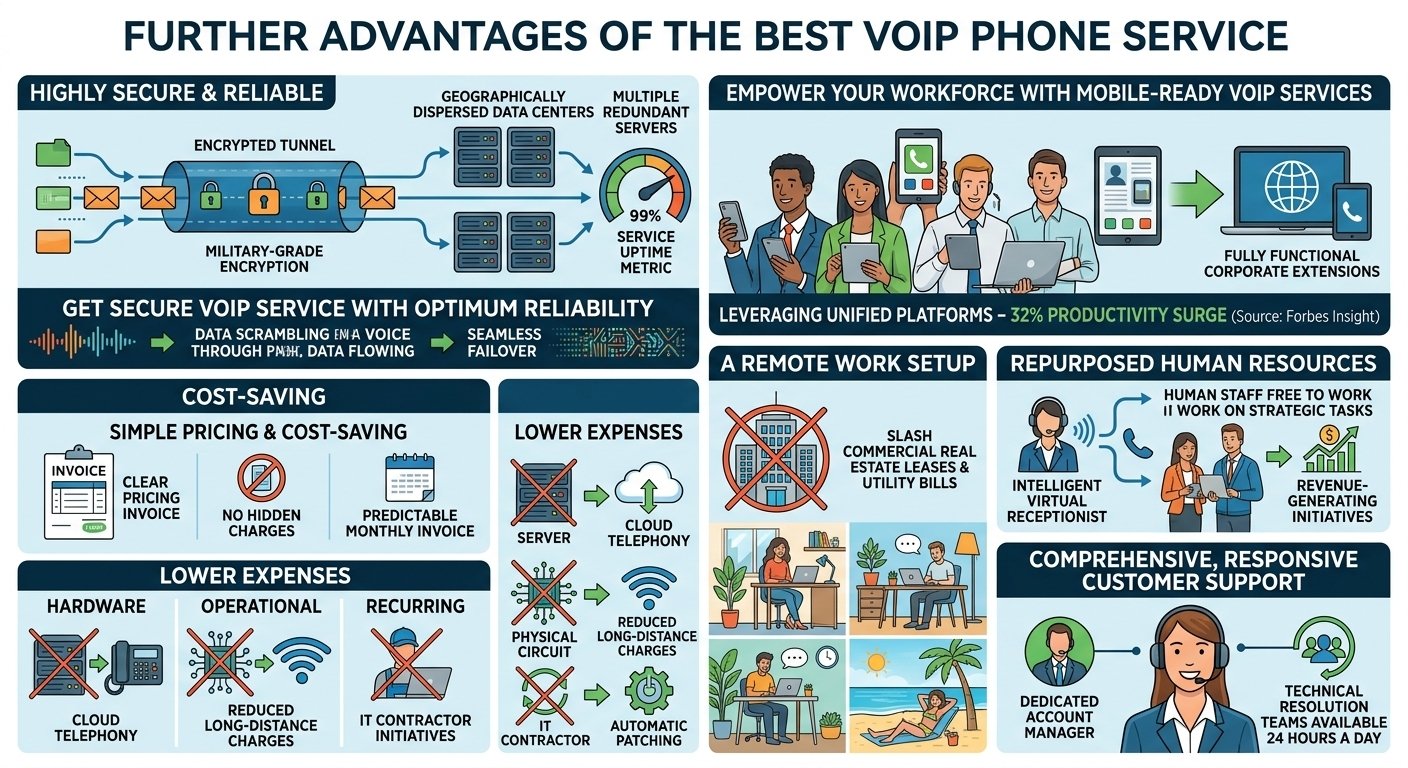
Leading telecom companies effectively provide highly secure digital environments, ensuring sensitive corporate data remains secure from malicious network interceptions, with the use of advanced encryption methodologies. The service uptime is impressive, with trustworthy external vendors having multiple geographically dispersed data centers with multiple redundant servers to ensure flawless operations.
-
Get secure VoIP service with optimum reliability
A good digital vendor will have military grade encryption protocols that are enforced and which actively scramble the voice data packets, making it impossible for any third party to intercept them if they are not authorised to do so. Geographically distributed server farms also ensure that if one particular server farm fails catastrophically, another one steps up to the plate and takes the workload with ease.
-
Empower your workforce with mobile-ready VoIP services
Management teams can directly optimize workforce efficiency by empowering employees with mobile-ready digital applications that transform personal smartphones into fully functional corporate extensions. A detailed analytical study published by Forbes Insight revealed that companies leveraging unified platforms experience a thirty-two percent productivity surge across their distributed remote teams.
-
Enjoy simple pricing that eliminates hidden charges and aids cost-saving
Embracing modern digital telephony introduces transparent subscription models that effectively consolidate various standalone communication expenses into one highly predictable monthly invoice. This unprecedented financial transparency is a huge asset to management in being able to make precise quarterly budget predictions and also to avoid any surprises when it comes to international dial code surcharges.
Lower hardware expenses
Historically, buying separate physical servers and proprietary desk phones was a huge part of quarterly IT budgets, until cloud telephony came along. Organizations can now put in place device-agnostic workplace policies, without having to go through the costly equipment procurement process at all.
Lower operational expenses
Routing calls over public broadband networks drastically reduces the exorbitant per-minute charges historically associated with establishing long-distance or international physical circuits.
Lower recurring expenses
External hosting partners make sure all routine software patching and mechanical server maintenance is done diligently, saving companies a lot of money that was once spent on expensive IT contractors.
A remote work setup
If staff members have reliable virtual communication equipment, there’s no absolute need to have a huge corporate headquarters. Commercial real estate leases and utility costs can be significantly reduced each month by adopting a permanently distributed work model.
Repurposed human resources
Intelligent virtual receptionists flawlessly handle routine inbound routing tasks, freeing human administrative staff to focus on substantially more valuable, revenue-generating corporate initiatives.
-
Access comprehensive, responsive customer support
Top vendors go the extra mile to ensure that their customers have assigned account managers and well-trained technical resolution teams that are on duty around the clock. This guarantees that any complicated setup challenges or unforeseen routing irregularities are promptly resolved, preventing them from disrupting your day-to-day business.
Challenges with VoIP services
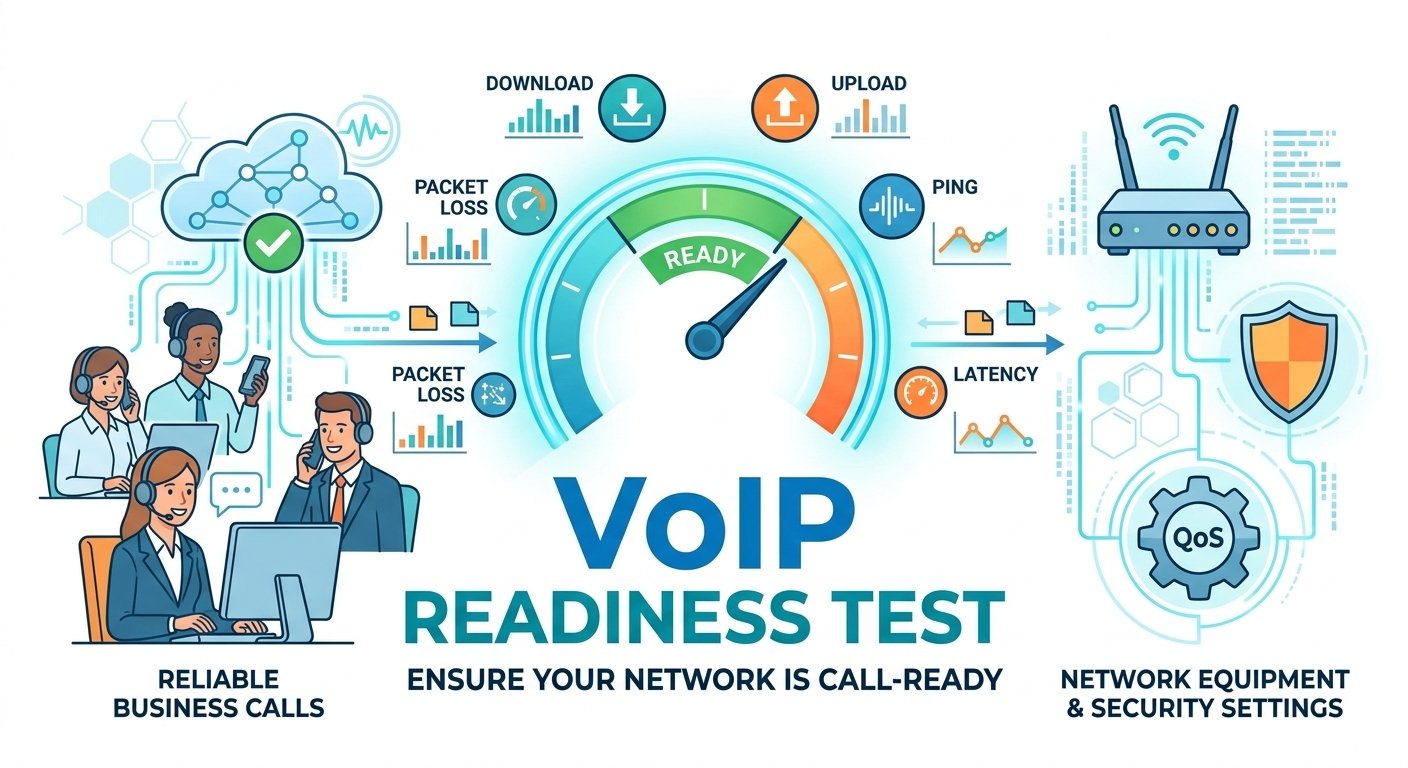
Although the benefits are truly remarkable, a voice over internet protocol network integration essentially involves a few technological infrastructure dependencies. The biggest drawback to using this is that you must have a constant broadband connection, and if the broadband service goes down, you can’t make any client calls.
-
VoIP needs the internet to work
Unfortunately, if you don’t have a solid broadband connection, your complex digital communications system is rendered useless until local network physical access is safely restored. Businesses often address this huge vulnerability by proactively obtaining a separate internet connection solely for their mission-critical voice traffic.
-
VoIP is not always secure
There is always a risk that information will be intercepted when it is transmitted over public cyberspace, and unencrypted audio streams could be vulnerable to advanced cyber espionage techniques. Selecting a reputable vendor that actively enforces mandatory transport layer security effectively neutralizes these specific digital eavesdropping threats entirely.
-
Emergency support
Users log in from any location in the world, and sometimes emergency medical responders can’t determine the precise physical location of a distress call. Leading digital vendors brilliantly solve this geographic ambiguity by requiring administrators to dynamically register a static emergency physical address for each assigned profile.
What are the advantages and disadvantages of VoIP services compared to traditional telephony?
A quick comparison of the two fundamentally different telecommunication architectures reveals stark differences in upfront capital investment, continuous operational flexibility and overall network resilience. The differences in these critical operations are clearly illustrated by examining the detailed comparison matrix below.
| Feature / Aspect | Traditional Phone Services | VoIP Phone Services |
| Initial Hardware Investment | Requires purchasing expensive on-site PBX systems and copper wiring. | No expensive central hardware required; completely cloud-hosted. |
| Call Billing Structure | Expensive per-minute charges for long-distance and international calls. | Flat monthly rates with mostly free international internet routing. |
| Feature Availability | Advanced features require costly physical add-ons and separate licensing. | Standard packages include voicemail, call forwarding, and analytics. |
| System Scalability | Requires manual installation of physical cables to add new extensions. | Add or remove virtual users instantly via a centralized online dashboard. |
| Power Outage Resilience | Can occasionally remain active during local power grid failures. | Strictly requires an active broadband internet connection to function. |
How much does a VoIP phone service cost? Why the cheapest VoIP phone service isn’t always the best
But to truly understand the cost, it’s important to consider the total cost of ownership, not just the monthly subscription fee that’s advertised. New corporate purchasers should take into account the upfront deployment costs, ongoing operational costs, and any equipment upgrades, such as buying special ergonomic headsets.
Although it may be tempting to choose the lowest cost provider, bargain providers are often lacking in solid security measures, customer service or redundant data centers. A small increase in your investment in a higher package guarantees you that your calls will be of a higher quality and that your important business information will be well protected.
Does VoIP require a service provider?
In theory, an in-house, highly skilled IT team could build their own in-house digital voice network with open source software and costly private servers. But the high start-up capital cost and the burdensome maintenance work involved are virtually impossible for nearly all modern commercial enterprises.
A dedicated provider is a third-party specialized technology vendor, which professionally hosts, aggressively secures, and continually updates the complex backend voice infrastructure. They provide these advanced telecommunication features to businesses on a convenient ‘software as a service’ (SaaS) basis, eliminating all in-house maintenance issues.
What are the different kinds of VoIP providers?
Today’s worldwide telecommunications market is comprised of various categories of vendors, each offering something unique to meet widely divergent operational requirements. When you actively pick the right category of vendor, you are sure that you do not pay for the extra software features you don’t need and you will get all the software features that you need on a daily basis.
-
VoIP-only providers
These particular vendors are very aggressive in providing only basic dial-tone service via the Internet, but without adding the heavy features and collaborative software suites. These minimalist packages are incredibly cost-effective and very attractive to organizations which are looking for a simple and very reliable alternative to legacy landlines.
-
VoIP with cloud phone system providers
This middle-tier vendor category is a great combination of the traditional internet calling and advanced virtual private branch exchange features such as intelligent auto-attendants and advanced routing rules. They are the ideal stepping stone for medium-sized companies that require business class call management, but may not require full video conferencing capabilities.
-
VoIP as part of unified communications solution providers
These elite digital platforms flawlessly merge internet calling, video conferencing, instant messaging, and advanced data analytics into a single centralized enterprise application. These comprehensive solutions seamlessly integrate various communication platforms, eliminating the need to navigate between different tools and enabling unprecedented collaboration between departments.
How to choose a VoIP provider
Choosing the right vendor is a very systematic process involving review of your internal processes, expected future growth patterns and technical networking needs. Executive decision-makers must meticulously audit their current call volumes and desired software integration capabilities before formally committing to long-term digital service contracts.
1. Know your business communications needs and how VoIP can solve them
Before you go running about, excitedly looking at digital vendors outside your organization, you have to first define exactly how your own employees are engaging with trusted clients. Completely understanding whether you critically require international dial codes, sophisticated inbound routing digital trees, or seamless customer relationship management integrations forms the bedrock of an intelligent decision.
2. Check different VoIP providers for business (and what their plans include)
Once your internal technical requirements are firmly established, promptly request detailed digital feature matrices and customized pricing proposals from several highly rated industry leaders. Thoroughly review these extensive digital documents, and look for any hidden extra fees for key collaboration tools on the network.
3. Determine the VoIP provider’s reliability and security
Thoroughly investigate a prospective vendor’s historical uptime metrics, actively verifying they maintain multiple geographically independent server facilities to prevent catastrophic regional outages. Also, make sure that they have native multi-factor authentication and adhere to important data privacy laws around the world to keep your clients safe.
4. Look for the leading VoIP provider in business communications
When you work directly with industry leaders, you can be sure that the software you receive will be well refined, the third-party integration libraries will be huge, and the customer support systems will be reliable. To learn more about assessing telecommunication standards, read carefully the authoritative networking guidelines offered by the Federal Communications Commission.
Read More: What Is Zoom Contact Center? 10 Easy Steps to Get Started
Final Words
The move to a very modern digital telephony system is no longer a luxury for the corporate future, it’s a requirement for operation. With thoughtful consideration of your specific operational requirements and careful choice of a trusted vendor, you can significantly cut down on overheads and unlock new levels of collaboration. These extremely advanced internet-based platforms significantly enable your committed staff to communicate effortlessly and ultimately boost your customer satisfaction and company development.
VoIP phone service FAQs
-
What is the best VoIP phone service?
The best platforms are a wonderful fusion of excellent call quality, high level encryption and unified communications capabilities specifically designed for demanding enterprise applications. Industry leaders often score at the top of the list because they have huge redundant data centers and extremely extensive customer support programs.
-
How much does VoIP cost?
Monthly digital subscription rates typically range from roughly fifteen to forty dollars per active user depending heavily on the specific tier. Naturally, a comprehensive package with video conferencing and CRM software integration inbuilt will cost more, but will provide much more value.
-
What is the best VoIP service for home-based and telecommuting employees?
The platforms with strong mobile apps, smooth desktop softphones and integrated video conferencing work flawlessly in remote workforce deployments. These flexible tools make sure that telecommuters are completely connected to in-house corporate directories with no physical desktop equipment.
-
Is there a free VoIP phone service?
There are some consumer applications that allow fully unrestricted peer to peer audio calls, but only when each user is using the same proprietary software interface. Commercial entities, however, need to pay for professional subscription to actually acquire dedicated business lines and send outbound calls to conventional analog landlines.
-
What is VoIP used for?
Smart organizations use this digital technology to manage all their day-to-day voice communications on broadband internet, as opposed to antiquated copper phone lines. These powerful digital platforms are excellent for virtual faxing, team messaging with multimedia and large-scale video conferences around the world, in addition to regular voice communications.
-
Can VoIP be used for Fax?
Yes, today’s digital telephony systems have built-in virtual faxing features that make it a beautiful way to send and receive critical documents safely. This paperless process is efficient, eliminate the need for expensive physical machines, expensive toner cartridges and dedicated analog lines.
-
What is the difference between a VoIP phone system and VoIP phone service?
A digital system is the very complex digital architecture and structural software protocols that enable internet calling to function. Managed service is the actual monthly subscription package that is explicitly offered by an external vendor that securely hosts the backend servers needed.
-
Is VoIP secure?
The top telecom companies apply strict military-grade encryption standards which actively defend against harmful unauthorized interception of sensitive voice data packets. Sensitive corporate conversations are also kept completely private thanks to regular security network audits and mandatory multi-factor authentication logon requirements.