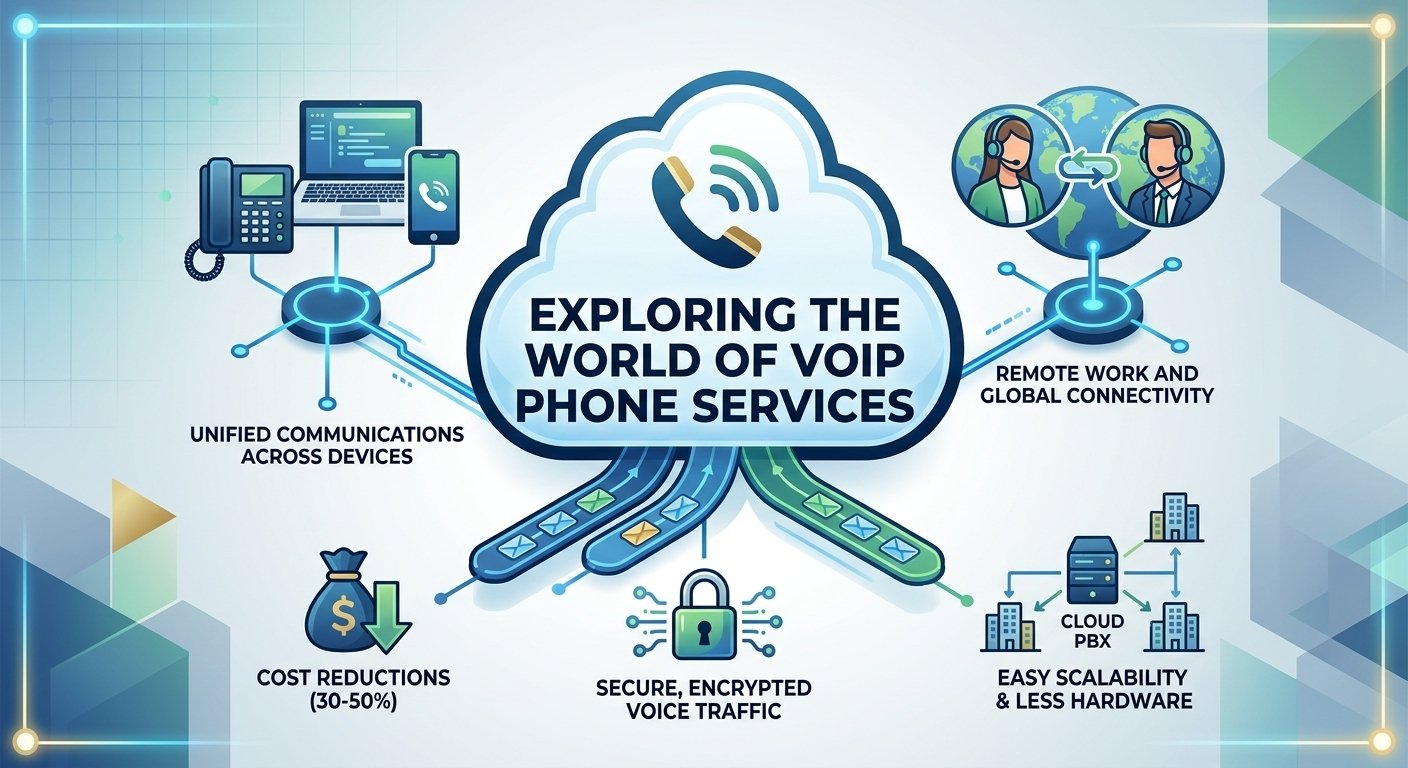
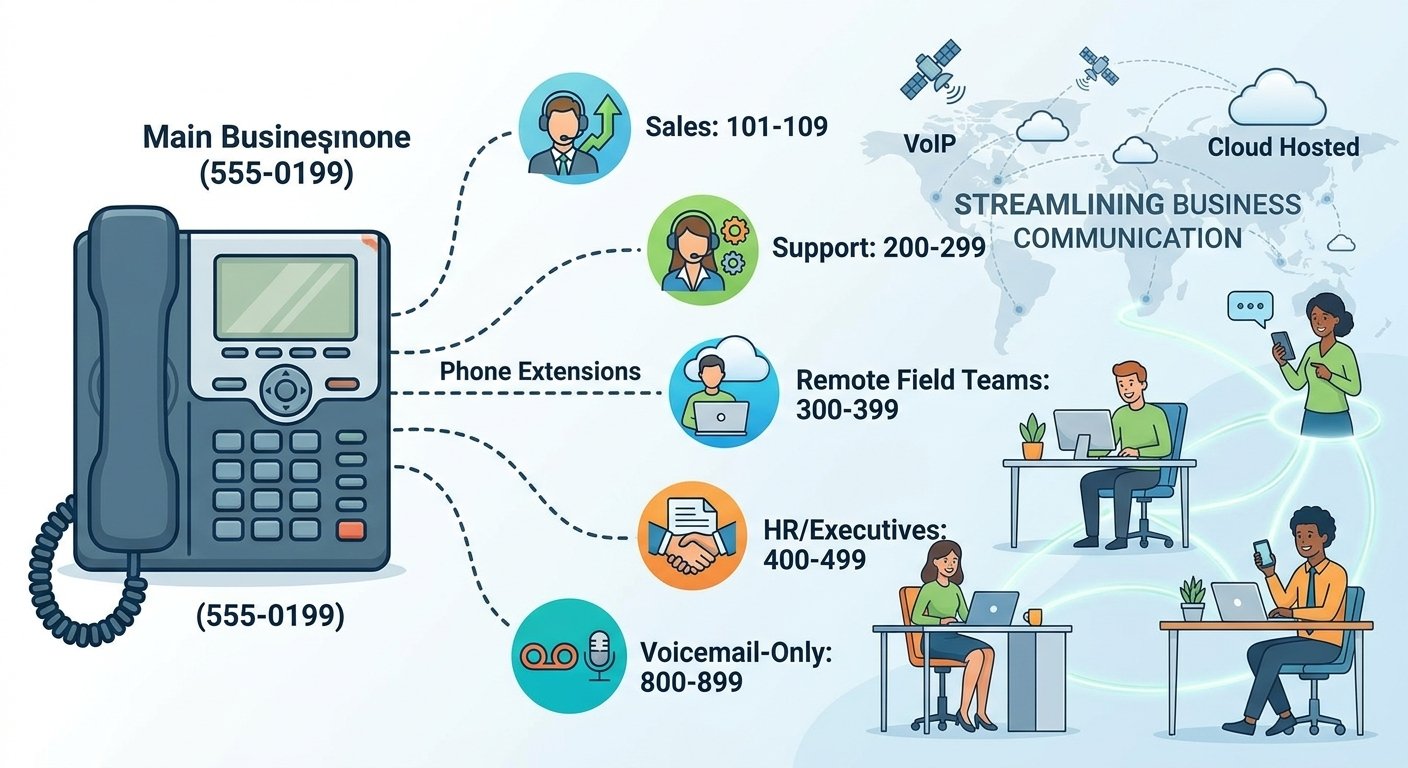
A telephone extension is a short internal code, usually three to five digits long, added to a primary business phone number to route calls directly to specific individuals or departments. By utilizing a phone extension, organizations can bypass the need for multiple physical lines while ensuring callers reach their intended destination without navigating a complex manual switchboard. These virtual addresses function within PBX or VoIP systems, allowing for seamless internal transfers and direct inward dialing. This technology significantly improves operational efficiency and customer satisfaction by reducing wait times and streamlining the overall communication infrastructure for modern enterprises.
What is a telephone extension?
A phone extension serves as a digital sub-address within a corporate network, routing calls to specific desks or departments via a single primary number. By using these shorthand codes, organizations avoid the high cost of individual external lines while streamlining the connection process for callers. Whether through an automated attendant or direct internal dialing, extensions provide a structured hierarchy that makes large organizations more accessible and efficient.
Modern extension systems have transitioned from bulky hardware to cloud-hosted VoIP software, enabling seamless connectivity across various devices and global locations. This evolution allows an extension to remain tied to a specific employee rather than a physical desk, ensuring they are reachable whether in the office or working remotely. Ultimately, these digital identifiers maintain a unified corporate directory that supports the flexibility of the modern mobile workforce.
Key business challenges solved by phone extensions
In the absence of a structured system for an extension phone number, businesses often face significant communication bottlenecks.
| Efficiency & Sales | Extensions end long waits and misrouting. They connect callers to experts fast. This saves sales and improves customer satisfaction. |
| Costs & Logistics | Sharing main lines cuts hardware and IT expenses. It avoids the need for individual copper lines. This makes scaling affordable and manageable. |
| Professionalism | A unified number with extensions builds trust. It provides a cohesive corporate identity to callers. This helps small teams look established and organized. |
Benefits of using phone extensions in a business phone system
The adoption of a sophisticated phone extension system offers a variety of strategic advantages that go beyond simple call routing. These benefits impact everything from the bottom line to the daily productivity of the workforce.
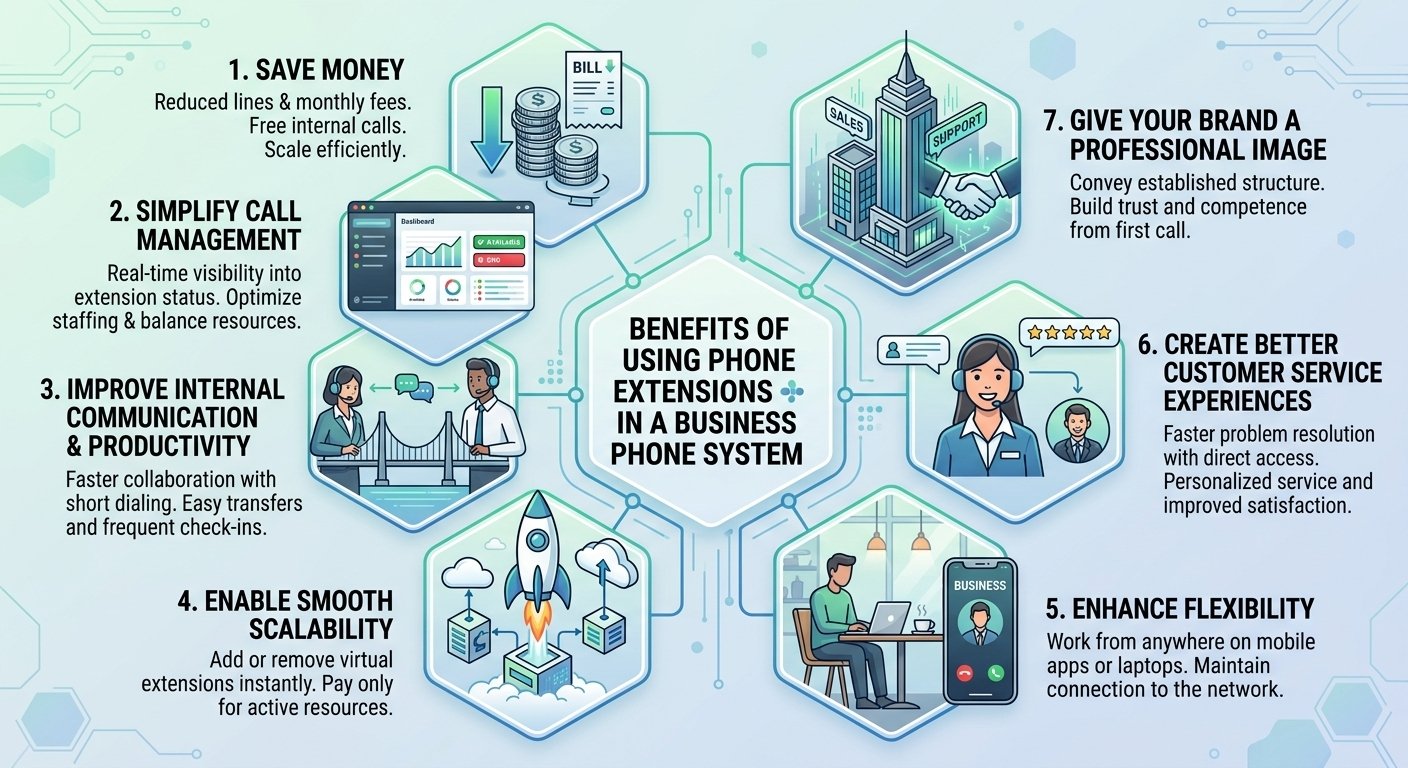
1. Save money
Implementing extensions slashes telecom costs. Traditional setups require dedicated lines with installation fees and monthly costs. Extensions allow multiple staff on one primary line, scaling without linear bill increases. Internal calls on VoIP are usually free, aiding high-volume communication.
2. Simplify call management
Modern platforms offer dashboards for simple extension management. Admins monitor real-time status like availability or “do not disturb.” This visibility helps managers optimize staffing and identify overwhelmed departments. It ensures resources are balanced during peak hours.
3. Improve internal communication and productivity
Speed is essential for collaboration. Dialing a three-digit extension instead of ten digits saves significant time and effort. This shorthand facilitates faster transfers and more frequent check-ins. Reducing friction boosts workplace efficiency, especially in large offices.
4. Enable smooth scalability
Virtual extensions adapt instantly to business growth. You can create or delete them via a software interface without hardware contracts. Assign blocks to seasonal teams and remove them when projects end. This ensures you only pay for resources currently in use.
5. Enhance flexibility
Cloud extensions follow workers anywhere via mobile apps or laptops. Whether traveling or working from home, staff stay connected to the internal network. This mobility is a key factor in improving employee retention and attracting talent from various locations.
6. Create better customer service experiences
Direct extensions solve problems faster and feel more personal. Clients reach dedicated managers instead of waiting in general queues. With 79% of customers prioritizing speed, bypassing long wait times directly improves satisfaction metrics and reduces churn.
7. Give your brand a professional image
Extension systems make small businesses look established and reliable. Greetings for “Sales” or “Support” convey organizational structure. It tells callers that the company has specialists for every need, building trust and competence from the very first interaction.
Use cases where you need to use phone extensions
Understanding how to use extension number settings effectively depends on the specific goals of your organization. Different industries and team structures will utilize these tools in unique ways to maximize their impact.
-
To empower remote workers and distributed teams
Virtual extensions act as the connective tissue for hybrid and remote models, allowing off-site employees to appear as if they are in the main office. Calls can be seamlessly forwarded to mobile devices, ensuring a consistent customer experience while protecting employee privacy by keeping personal cell numbers private.
-
To provide after-hours customer service
Phone extensions can be programmed to route calls based on the time of day, which is essential for emergency support or global operations. After-hours calls are automatically directed to “on-call” extensions or specialized voicemails, ensuring service continuity and prompt responses to urgent matters without requiring a full night staff.
-
To streamline and boost sales
Assigning unique extensions to individual sales representatives improves “speed to lead” by allowing prospects to bypass gatekeepers. By including direct extensions in marketing materials, companies simplify the path to purchase and make reps more accessible, which directly leads to higher conversion rates.
-
To facilitate self-service
By integrating extensions with an IVR system, businesses can provide instant access to recorded information like office hours, directions, or promotions. This meets the consumer demand for fast self-service—valued by over 70% of customers—while freeing up staff to handle more complex inquiries that require a human touch.
Business use cases for phone extensions
The following table illustrates how different departments might utilize a phone extension system to improve their specific workflows.
| Team/Use Case | Example Extension | Benefit |
| Sales Department | 101-109 | Direct lead routing and faster response times for hot prospects. |
| Customer Service | 200-299 | Segmented queues that reduce wait times for specific technical issues. |
| Remote Field Teams | 300-399 | Connectivity for workers on the go via mobile app integration. |
| Executives & HR | 400-499 | Enhanced privacy and direct lines for sensitive internal matters. |
| Auto Attendant | 0-9 | Quick navigation for callers to find the right department menu. |
| Voicemail-Only | 800-899 | Efficient handling of after-hours messages or former employee lines. |
How do phone extensions work in a modern business?
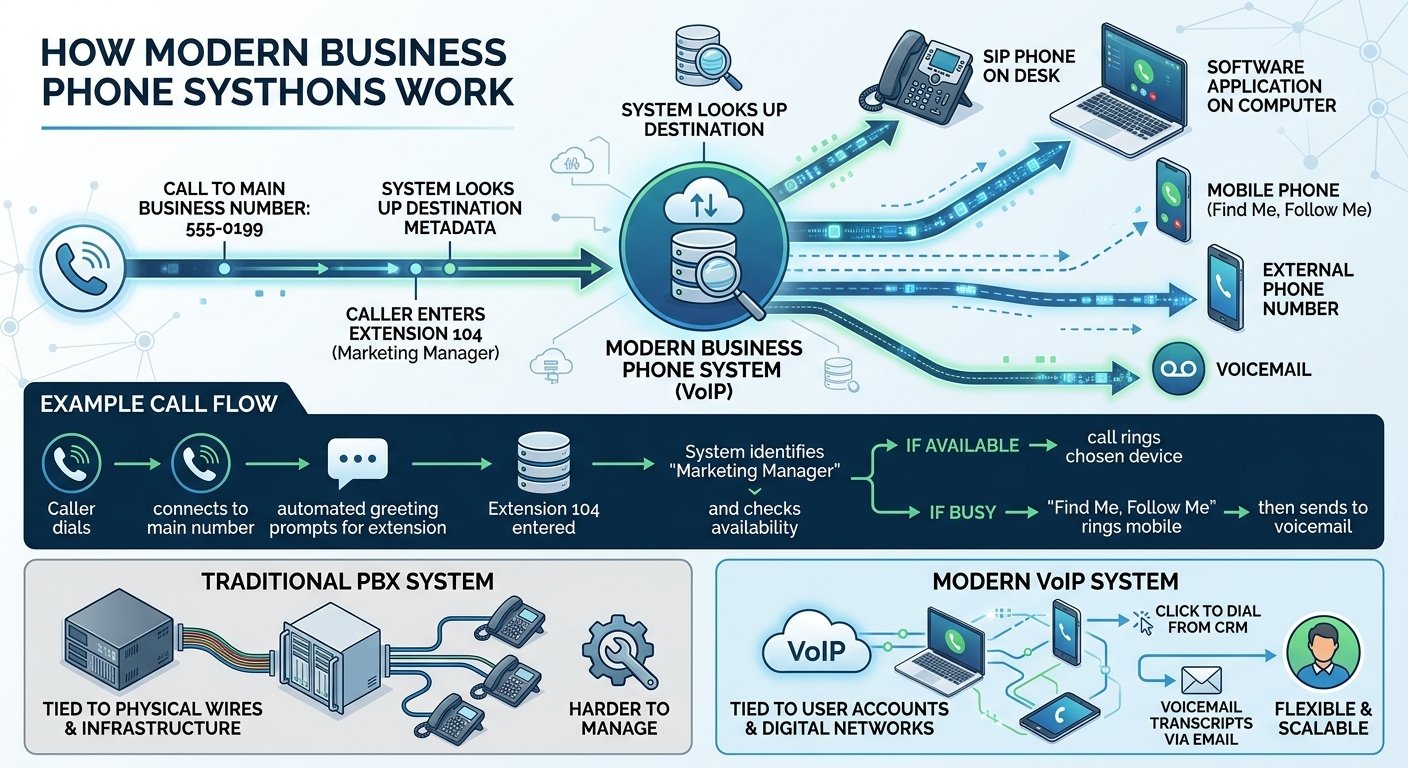
The mechanics of a phone extension have moved from physical wires to digital packets. In a modern setting, an extension is essentially a piece of metadata attached to a phone call that tells the central system where to route the audio data. When a caller dials a main number and enters an extension, the system looks up the destination associated with that code in a digital database. This destination could be a physical SIP phone on a desk, a software application on a computer, or even a different phone number entirely.
-
Example call flow with a phone extension
The process starts when a caller dials the primary business phone number, such as 555-0199. Upon connection, the caller is usually greeted by an automated system that offers options or asks for an extension. If the caller knows the specific extension for a phone number, such as 104, they can enter it immediately. The system then identifies that extension 104 belongs to the Marketing Manager. It checks the manager’s status; if they are available, the call rings their chosen device. If they are busy, the system might follow a “find me, follow me” rule, ringing their mobile phone before finally sending the caller to voicemail.
-
Private Branch Exchange (PBX) phone system
The traditional way to manage a telephone number ext was through a Private Branch Exchange. These systems were often large pieces of hardware installed on-site. In a PBX setup, physical wires ran from the central unit to every individual desk. While reliable, these systems were difficult to change. While modern “IP-PBX” systems exist, they still generally require more hands-on management and physical infrastructure than their cloud-based counterparts.
-
Voice over Internet Protocol (VoIP) phone system
A VoIP system is the contemporary standard for managing what is phone extension technology. In this setup, the entire phone system lives in the cloud. Extensions are not tied to physical wires but to user accounts. A user can log into their VoIP account on a desk phone in New York one day and a laptop in London the next, and their extension will work perfectly in both places. VoIP systems also integrate with other business tools, allowing for features like clicking to dial an extension directly from a CRM or receiving voicemail transcripts via email.
Read More: 09 Numbers: Cost, Meaning & Benefits
Final Thought
Implementing a structured phone extension system is no longer just a luxury for large corporations; it is a vital tool for any business looking to operate efficiently in 2026. By bridging the gap between complexity and accessibility, extensions allow companies to save money, project a professional image, and provide the fast, direct service that modern customers demand. As communication technology continues to move toward the cloud, the flexibility and power of virtual extensions will only become more central to successful business operations.
FAQs about phone extensions
-
What is my telephone extension?
Your telephone extension is the specific shortcode assigned to your individual line or workstation within your company’s phone system. You can typically find this number in your company’s internal directory, on the settings screen of your desk phone, or within the user profile of your business communication app. If you are a new employee, your system administrator or HR department will usually provide this extension during your onboarding process.
-
What is a phone extension example?
A phone extension example would be a three or four-digit number like “102” or “5005.” If a company’s main number is (555) 123-4567, a caller might dial that number and, when prompted, enter “102” to reach the billing department directly. In written form, this is often displayed as (555) 123-4567 ext. 102.
-
Is +1 an extension number?
No, +1 is not an extension number; it is the international country calling code for the United States, Canada, and several Caribbean nations. An extension number is added to the end of a full phone number to reach a specific person, whereas +1 is a prefix used at the very beginning when dialing from another country.
-
What does phone extension mean?
The phone extension meaning refers to a supplemental number that allows one primary phone line to be shared among many different users or departments. It serves as an internal routing address that directs calls to a specific destination once the main business line has been reached.
-
Can customers reach a phone extension directly?
Yes, customers can reach an extension directly if they know the number beforehand. Most modern systems allow callers to enter the extension as soon as the automated greeting begins, which bypasses the need to listen to the entire menu or speak with a live receptionist.
-
How many phone extensions can I have?
The number of extensions you can have depends on your service provider, but most VoIP platforms offer virtually unlimited extensions. Some plans might cap the number at 10,000 or more, which is typically more than enough for even the largest global enterprises.
-
Can I use VoIP extensions on mobile devices?
Absolutely, one of the primary benefits of modern VoIP is that extensions are device-agnostic. You can install a mobile app on your smartphone that allows you to make and receive calls using your professional business extension from any location with an internet connection.
-
What’s the difference between a VoIP extension and a landline extension?
A landline extension is tied to physical copper wiring and a specific location, making it difficult to move. A VoIP extension is cloud-based and virtual, meaning it can be used on any compatible device anywhere in the world, offering much greater flexibility.
-
Do extensions support voicemail or call forwarding?
Yes, every individual extension can be configured with its own unique voicemail greeting and specific call forwarding rules. This ensures that even if a team member is unavailable, the caller can leave a private message or be routed to another available representative.