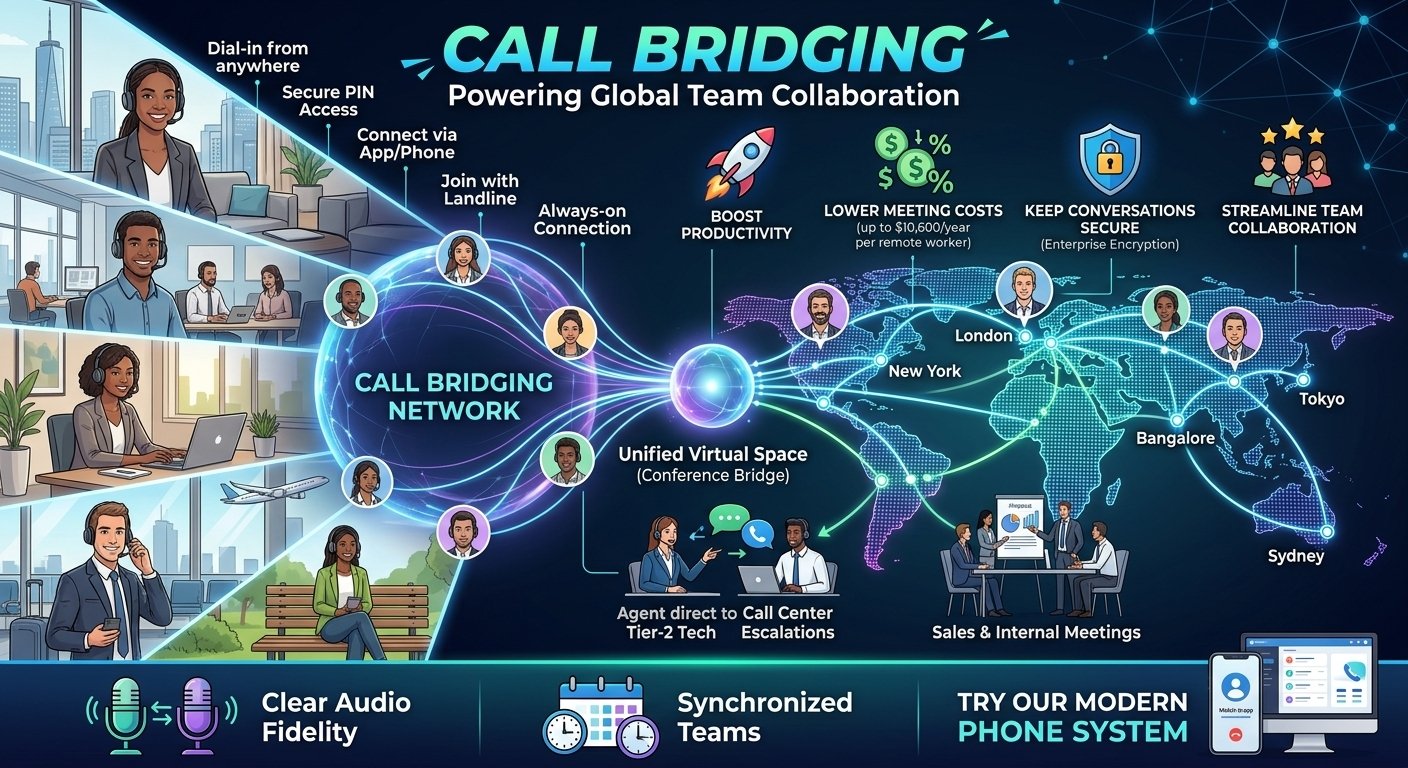
Call bridging is a transformative telecommunications feature merging multiple participants into a unified virtual space regardless of their physical location. Teams operating across different continents rely heavily on this technology to communicate efficiently. Implementing an effective call bridging strategy eliminates the traditional hurdles of booking physical meeting rooms and dealing with complex application integrations.
Remote workforce members can dial into a shared telephone number, seamlessly connecting through a centralized network. Exploring this mechanism reveals immense potential for modern enterprises seeking streamlined operations, reduced telecommunication expenses, and superior team collaboration methods across the entire corporate landscape to ensure maximum daily output.
What is call bridging?
A bridge call serves as a dedicated communication hub where diverse individuals connect simultaneously over a singular telephone connection. Professionals utilize this method to maintain constant contact with clients and internal departments spread across various geographical locations. Setting up a reliable phone bridge provides an accessible avenue for continuous dialogue without requiring specialized hardware installations. Organizations integrate these setups directly into their daily workflows, ensuring flawless bridge communications for critical corporate updates.
Advanced telephone conference bridge platforms expand traditional capabilities by accommodating hundreds of participants simultaneously within secure environments. System administrators often assign a permanent bridge phone number acting as an always-on collaboration zone for authorized personnel. Understanding the bridged call appearance feature helps users monitor active connections directly from their desktop interfaces, enhancing overall visibility. This foundational technology anchors numerous enterprise-grade solutions designed specifically to enhance modern digital workplace ecosystems.
How Does Call Bridging Work?
-
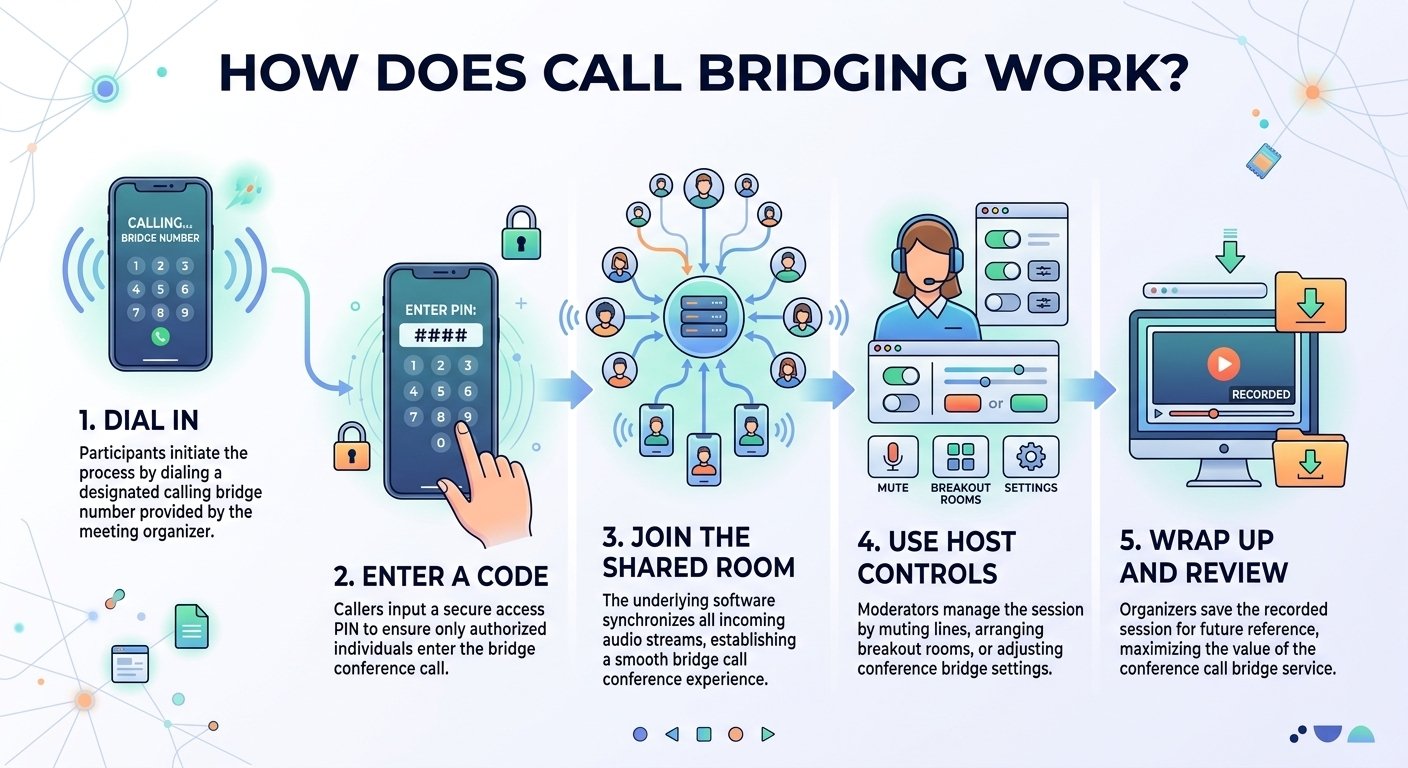
Dial in: Participants initiate the process by dialing a designated calling bridge number provided by the meeting organizer.
-
Enter a code: Callers input a secure access PIN to ensure only authorized individuals enter the bridge conference call.
-
Join the shared room: The underlying software synchronizes all incoming audio streams, establishing a smooth bridge call conference experience.
-
Use host controls: Moderators manage the session by muting lines, arranging breakout rooms, or adjusting conference bridge settings.
-
Wrap up and review: Organizers save the recorded session for future reference, maximizing the value of the conference call bridge service.
Why Are Call Bridging Solutions More Popular Than Ever?
Modern enterprises increasingly prioritize decentralized operations, making robust communication tools absolute necessities for daily survival. Seamless bridge conferencing grants unparalleled flexibility for workers who demand consistent connectivity while navigating non-traditional office environments. The corporate landscape is shifting rapidly, requiring instant synchronization between remote agents, specialized technical departments, and international stakeholders.
-
Join a Bridging Call From Anywhere
Geographic limitations disappear entirely when organizations deploy a sophisticated call conference bridge for their widespread workforce. Staff members seamlessly connect to important discussions whether they are operating from a home office, a regional branch, or traveling internationally. This exceptional adaptability ensures critical project milestones remain unaffected by individual participant locations or sudden schedule adjustments.
Device agnosticism plays a crucial role in modern enterprise mobility, allowing users to leverage landlines, smartphones, or desktop applications effortlessly. Participants experience consistent audio fidelity regardless of their chosen hardware, reinforcing the sheer convenience of a well-maintained phonebridge. Removing hardware restrictions accelerates adoption rates and encourages spontaneous collaboration among previously isolated departmental silos.
-
Lower Your Meeting Costs Significantly
Transitioning toward virtual collaborations dramatically reduces overhead expenses associated with maintaining expansive corporate headquarters. Extensive research by the US Career Institute demonstrates that companies can save up to $10,600 annually per remote employee by utilizing remote-friendly telecommunication setups. Eliminating frequent travel obligations, catering requirements, and physical utility bills creates massive financial relief for budget-conscious organizations.
Most modern service providers offer flexible subscription tiers based entirely on actual organizational usage rather than flat infrastructure fees. A dedicated concall bridge circumvents exorbitant international dialing tariffs by routing connections through localized network hubs. Allocating these saved financial resources toward employee development or product innovation yields significantly higher returns on overall corporate investment.
-
Keep Private Conversations Secure
Protecting sensitive intellectual property remains paramount when executing any high-stakes corporate communication strategy over external networks. A professional conference call bridge incorporates enterprise-grade encryption protocols and strict access controls to prevent unauthorized eavesdropping. Legal firms, healthcare providers, and financial institutions rely heavily on these fortified environments to discuss confidential client information safely.
Advanced host parameters allow moderators to lock ongoing sessions, actively monitor the participant roster, and remove uninvited attendees instantly. Adhering to stringent regulatory frameworks becomes significantly easier when utilizing certified platforms featuring mandatory recording consent prompts. Establishing a secure tech bridge ensures complete peace of mind for both internal executives and high-profile external business partners.
-
Boost Overall Team Productivity
Eliminating the friction of coordinating physical gatherings accelerates project delivery timelines and enhances overall output quality. Authoritative data highlights this trend, as 79% of professionals confirm that virtual meetings are equally or more productive than traditional in-person alternatives, according to Passport Photo Online research. Instant access to decision-makers prevents minor bottlenecks from escalating into major operational blockages.
Centralizing discussions on what is call bridging channel minimizes the chaotic nature of scattered email threads and disjointed messaging apps. Resolving urgent technical glitches or addressing sudden client escalations happens rapidly when all relevant experts occupy the same audio space. Continuous workflow momentum heavily depends on this ability to facilitate immediate, frictionless group conversations.
-
Leverage Advanced Call Bridging Features
Automated call recording and breakout rooms maximize the utility of your conference bridge by archiving searchable dialogues and enabling focused group brainstorming. To ensure seamless execution, comprehensive moderator controls maintain pristine audio quality, while live monitoring utilities allow supervisors to whisper quiet guidance to agents. Driven by advanced analytics, these features track attendance and engagement metrics to continuously optimize your corporate communication strategies.
-
Try a Phone System That Just Works
Navigating complex software interfaces disrupts daily operations and generates unnecessary frustration among non-technical staff members. Implementing an intuitive call bridging framework allows employees to focus entirely on their primary responsibilities rather than troubleshooting connection errors. Reliable platforms automatically handle background synchronization, delivering pristine audio quality without demanding manual user intervention.
Scalability remains a vital component of any successful deployment, ensuring the telecommunications system expands gracefully alongside organizational growth. Adding new regional numbers or increasing maximum participant thresholds takes mere seconds within a properly designed administrative dashboard. Companies ultimately require a dependable phone conference bridge that operates silently in the background, facilitating flawless interactions around the clock.
Call Bridging vs Conference Call Differences
Industry professionals frequently interchange these terminologies despite referring to two distinctly separate components of the overall communication process. The infrastructure actively merging multiple telephonic signals together represents the fundamental core of a call bridging system. Conversely, the actual scheduled event where individuals congregate to discuss specific agendas defines the broader meeting concept.
| Feature Area | Bridge call | Conference call |
| What it is | The shared network merging callers together | The active meeting where people talk |
| Main focus | The technical connection method | The specific event and daily agenda |
| Typical format | Audio dial-in using a phone number and PIN | Audio interactions, often with screen shares |
| System Setup | A reusable permanent line or number | Scheduled individually per meeting |
| Best used for | Recurring team or client interactions | One-off meetings and corporate presentations |
Common Uses for Call Bridging in Call Centers
Customer support departments heavily rely on instant collaboration tools to resolve highly complex technical escalations efficiently. Frontline agents quickly pull specialized tier-two technicians into live conversations without forcing the frustrated consumer to endure extended hold times. This seamless transition drastically improves first-call resolution metrics and significantly elevates overall customer satisfaction scores across the department.
Sales organizations leverage robust call bridging service capabilities to orchestrate compelling product demonstrations involving multiple stakeholder groups. Executives, procurement officers, and departmental heads can all participate in the negotiation phase simultaneously from their respective global headquarters. Training coordinators also depend on these secure shared environments to instruct remote new hires, ensuring consistent onboarding experiences across the board.
Final Thought on Call Bridging
Embracing advanced telecommunications infrastructure fundamentally revolutionizes how modern enterprises facilitate internal and external dialogue. The transition from physical boardrooms to dynamic virtual spaces empowers global workforces to maintain peak efficiency regardless of geographic boundaries. Organizations prioritizing a seamless call bridging strategy consistently outperform competitors hindered by outdated, inflexible communication methodologies.
Investing in a comprehensive conference bridging solution represents a strategic commitment to operational excellence and employee adaptability. Continuous technological advancements will only further refine these capabilities, introducing deeper system integrations and superior audio fidelity. Companies mastering this essential administrative tool today secure a definitive structural advantage in the increasingly decentralized business landscape of tomorrow.
Frequently Asked Questions About Call Bridging
-
What is a bridge call?
It is a telecommunications feature that merges multiple telephone lines into one virtual room, allowing geographically dispersed individuals to communicate simultaneously over a single network connection.
-
What is the difference between a bridge call and a conference call?
The primary contrast lies in their functional roles; the former is the technological infrastructure connecting the lines, while the latter is the actual scheduled conversational event taking place.
-
How do you join a bridge call?
Participants dial a designated public or private phone number and enter a secure PIN or access code provided by the host to authenticate their entry into the shared space.
-
What is a bridge call in Microsoft Teams?
This functionality allows external users to dial into a Teams virtual meeting using a standard telephone number rather than joining through the desktop or mobile internet application.
-
What is a bridge call in incident management?
Information technology response teams rapidly assemble essential personnel on a centralized, always-on phone line to diagnose and resolve critical system outages or security breaches in real time.
-
What is an audio bridge?
This specialized piece of hardware or software acts as the central mixing matrix, taking multiple incoming voice signals and distributing them equally to all connected participants.
-
What does “join the bridge” mean in a meeting?
Colleagues use this phrase to instruct others to dial into the pre-established shared telephone line so the collaborative discussion can commence with everyone present.
-
What is a bridged phone line?
It represents a specific telecommunications setup where a single extension appears on multiple physical desktop handsets, allowing different receptionists to answer the same incoming number.
-
What is bridge communication in task manager?
This relates to a specific background system process managing internal data routing between software applications, entirely separate from telephonic conferencing technologies.