
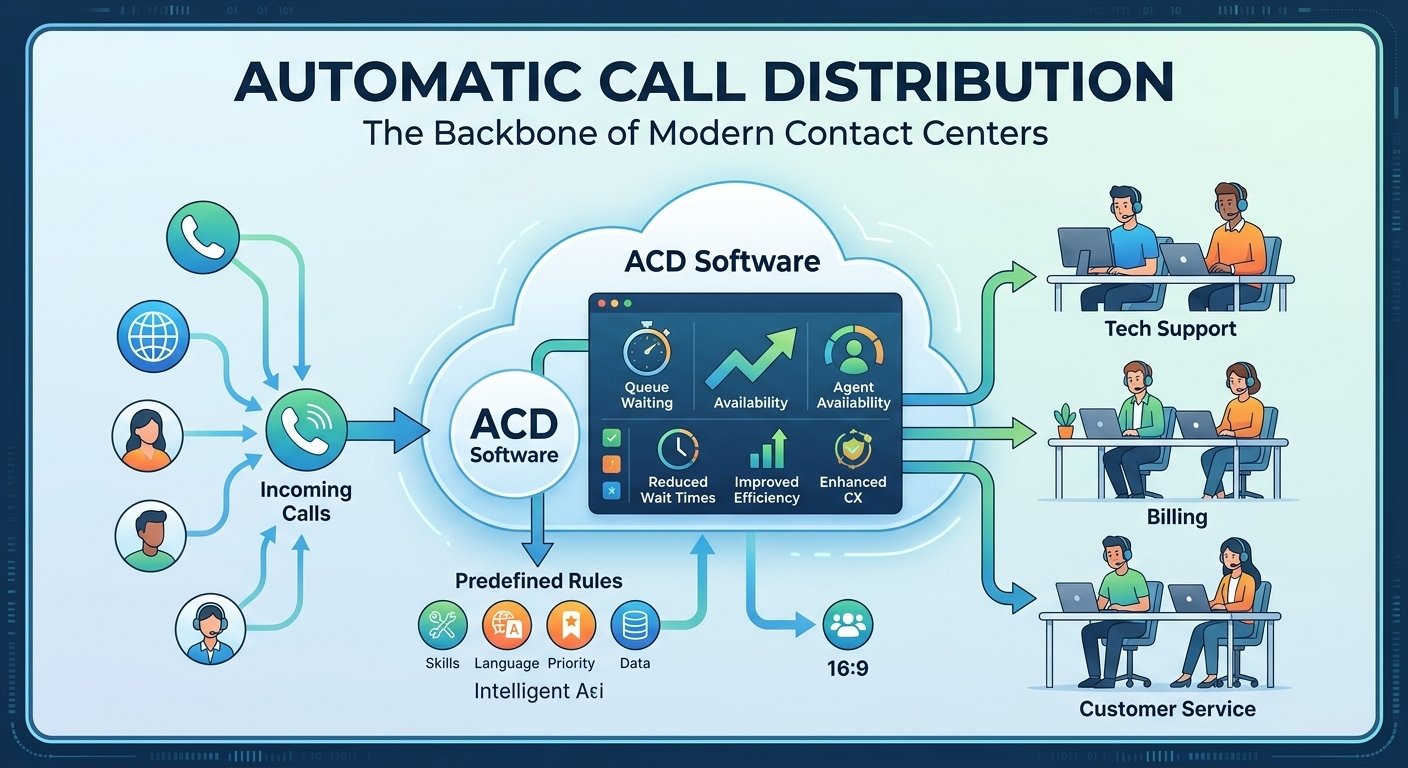
Automatic call distribution software is a specialized telephony technology designed to manage incoming calls by routing them to the most suitable agents based on predefined rules. This system forms the core of modern contact centers, ensuring that callers are connected to the right department without unnecessary delays or manual transfers. By leveraging intelligent algorithms, the software evaluates agent availability, caller intent, and priority levels to streamline communication flows. Implementing an automatic call distributor system helps businesses reduce wait times, enhance agent productivity, and significantly improve the overall customer experience through organized and efficient call handling processes.
What Is Automatic Call Distribution (ACD)?
Automatic call distribution (ACD) is a foundational contact center technology that intelligently routes incoming communications to the most appropriate agents based on specific criteria such as caller ID, time of day, and required expertise. By eliminating the need for manual transfers, ACD prevents queue congestion and ensures that inquiries are handled by professionals with the exact skills needed for a resolution, such as directing technical billing issues straight to a finance specialist. This automated precision not only streamlines the customer experience by reducing wait times but also boosts operational efficiency and job satisfaction by allowing agents to focus on their specific areas of expertise.
According to research by the SQM Group, nearly 90% of customers expect their issues to be resolved during their very first interaction. Failing to meet this expectation results in a 15% drop in customer satisfaction for every subsequent follow-up required. By using an automatic call distributor system, companies can increase their first-call resolution rates by ensuring the most qualified person answers the phone immediately. This immediate matching is what separates a basic phone setup from a high-performing contact center.
What Is the Difference Between IVR and ACD?
| Feature | IVR (Interactive Voice Response) | ACD (Automatic Call Distribution) |
| Primary Role | The “Digital Receptionist”; the initial point of contact. | The “Router”; the engine that executes call delivery. |
| Main Function | Greets callers and gathers information via voice or keypad. | Applies algorithms to determine the best destination for a call. |
| Interaction | Interacts directly with the caller to identify their needs. | Works in the background to manage agent queues and workloads. |
| Analogy | Asks the questions. | Finds the person with the answers. |
| Data Usage | Classifies calls based on language, department, or intent. | Uses the context provided by the IVR to route the call logically. |
| Key Benefit | Understands why the person is calling. | Ensures efficiency and balances agent occupancy. |
| Standalone Limitation | Collects info but cannot balance workloads or manage high-occupancy queues. | Operates on limited data (like phone numbers) without specific caller context. |
How Does ACD Work?
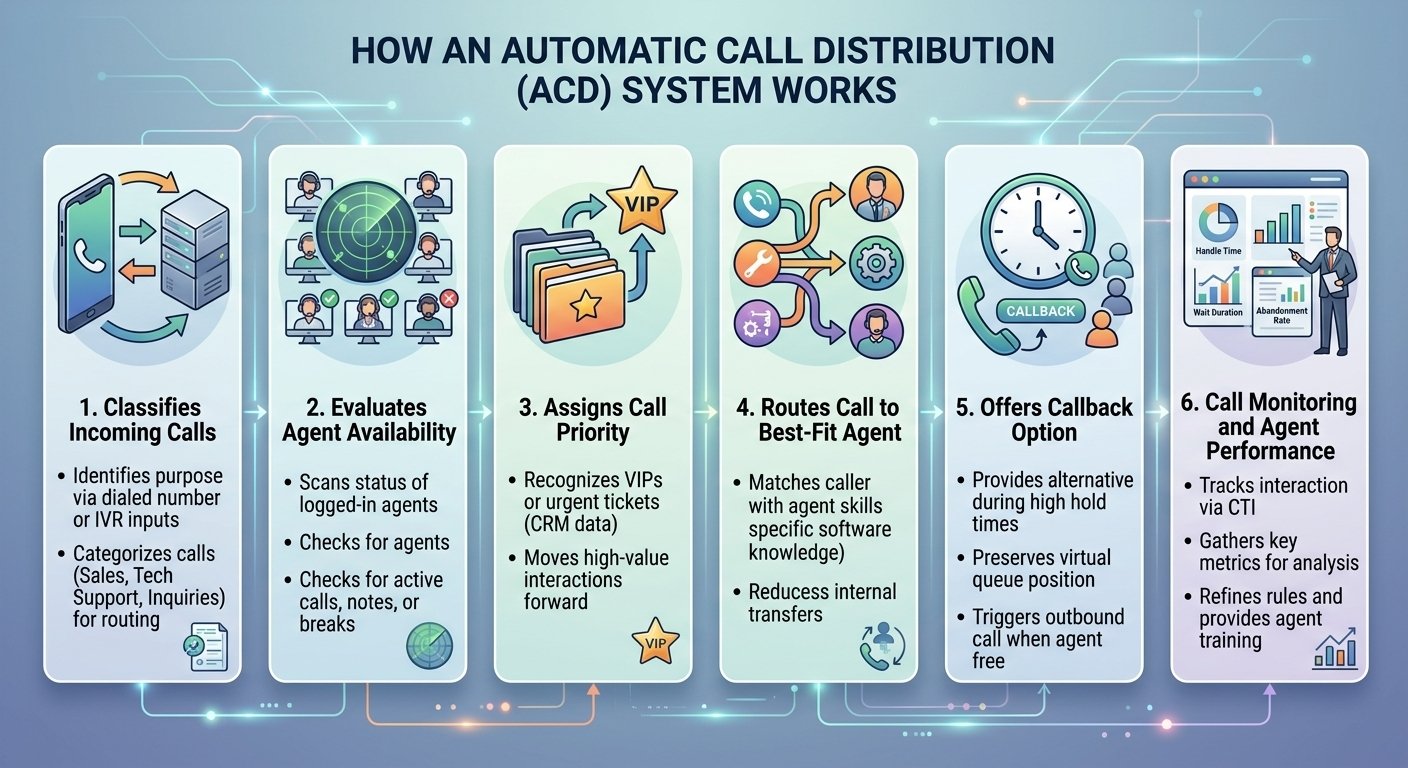
An ACD system processes and directs calls through a six-step workflow:
1. Classifies incoming calls
The system immediately identifies the purpose of the call by looking at the dialed number or the inputs provided through an integrated IVR. By categorizing calls into groups such as sales, technical support, or general inquiries, the software can prepare the routing path before the caller even hears a ring tone. This classification is the foundation of an organized queue system.
2. Evaluates agent availability
After classification, the software scans the current status of all logged-in agents to see who is ready to accept a new task. It looks at various factors, including whether an agent is currently on another call, finishing up notes from a previous session, or scheduled for a break. This real-time visibility ensures that calls are never sent to someone who is unavailable to help.
3. Assigns call priority
Not all calls are treated with the same level of urgency. An automatic call distribution system can recognize VIP customers or urgent support tickets based on CRM data and move them to the front of the line. This ensures that high-value interactions are handled with the speed they require, maintaining loyalty among the most important client segments.
4. Routes call to the best-fit agent
If a caller needs help with a specific software bug, the ACD will target an agent with a high proficiency in that particular product. This targeted routing reduces the need for internal transfers and speeds up the resolution process.
5. Offers callback option if needed
During peak hours when agent availability is low, the system provides callers with the choice to receive a callback instead of waiting on hold. Preserves the caller’s place in line without forcing them to wait on hold. When an agent becomes free, the software automatically triggers an outbound call to reconnect with the customer.
6. Call monitoring and agent performance
The final stage involves tracking the entire interaction through computer telephony integration to gather valuable data. Managers can view metrics such as average handle time, wait durations, and abandonment rates. This information is used to refine routing rules and provide targeted training to agents who may be struggling with specific types of calls.
Six Types of ACD Distribution Methods
Different businesses require different ways of handling their incoming traffic. Choosing the right distribution method depends on your team size, the complexity of your products, and your specific customer service goals.
-
Round-robin: Distributes calls in a continuous loop among all available agents to ensure a perfectly balanced workload for teams with similar skill levels.
-
Talk time-based: Routes the next call to the agent with the least cumulative talk time, ensuring fairness and preventing burnout when call lengths vary significantly.
-
Fixed order: Follows a specific hierarchical sequence, always attempting to reach a primary expert first and only moving to backup staff if the lead is busy.
-
Uniform: Directs calls to the agent who has been idle for the longest period, maintaining a steady rhythm and keeping all team members engaged.
-
Simultaneous: Rings all available agents at once, allowing the first person who answers to take the call; this is ideal for emergency services or high-stakes sales.
-
Weighted: Assigns specific percentages of call volume to agents based on their experience level, allowing for controlled training of new hires while prioritizing top performers.
Benefits of ACD
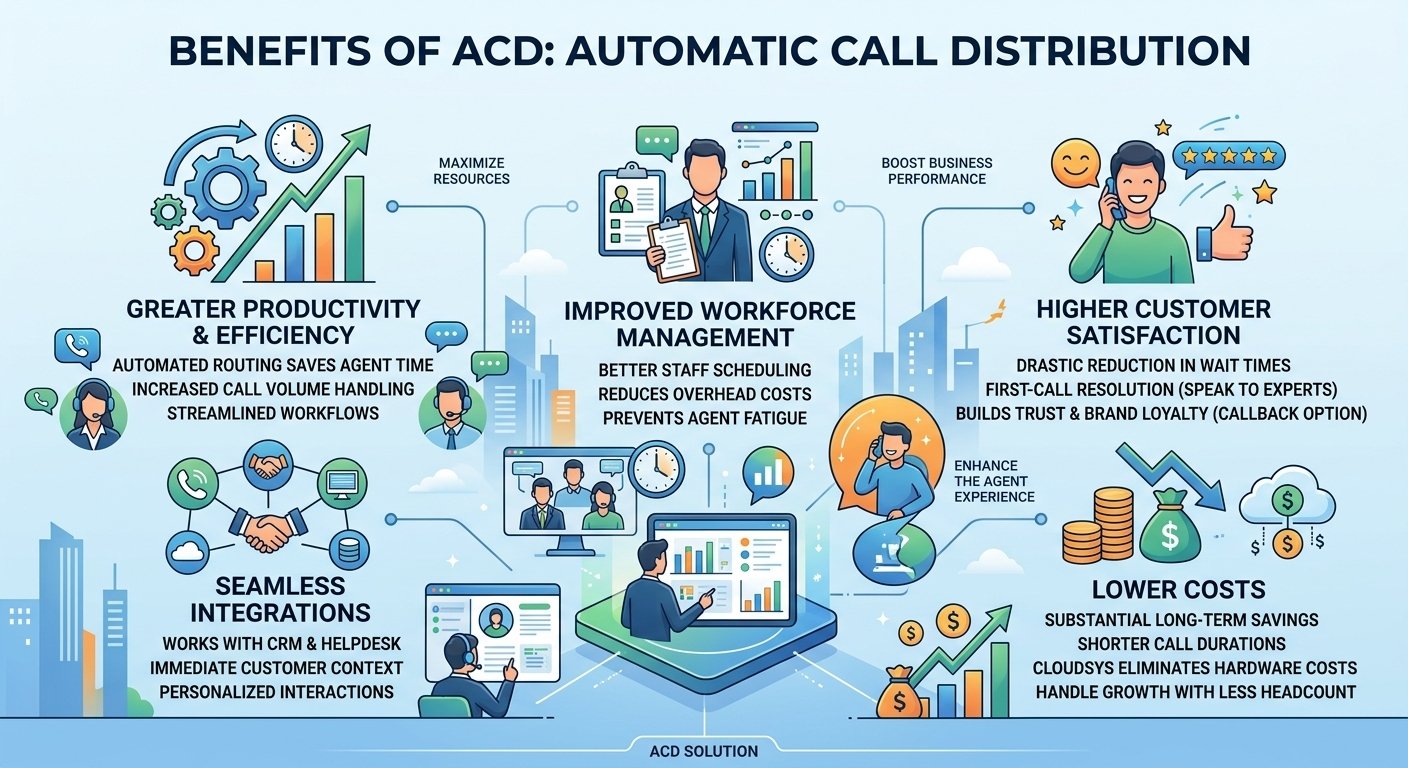
Integrating automatic call distribution software into your business operations offers a wide range of advantages that extend from the front-line agents to the executive boardroom. It transforms a basic communication tool into a strategic asset that drives growth.
1. Greater Productivity and Efficiency
By automating the routing process, your team no longer spends time manually transferring calls or trying to figure out who is available to help. Agents can move frictionless from one interaction to the next, knowing that the system is feeding them calls they are actually qualified to handle. This streamlined workflow allows a smaller team to manage a much larger volume of inquiries without sacrificing quality.
2. Improved Workforce Management
Managers gain a clear overview of how their team is performing and where bottlenecks are occurring. The data provided by an automatic call distribution system allows for better scheduling, ensuring that you have the right number of people on the clock during peak hours. This proactive approach to staffing reduces overhead costs and prevents agent fatigue during busy seasons.
3. Smooth Integrations
Modern ACD solutions are designed to work in tandem with other business tools like Customer Relationship Management (CRM) platforms and helpdesk software. When a call comes in, the agent can see the customer’s entire history on their screen immediately. This context allows for a more personalized conversation, as the agent doesn’t have to ask the customer to repeat basic information or past issues.
4. Higher Customer Satisfaction
The primary benefit for the customer is a clear reduction in wait times and a higher likelihood of speaking to a competent professional on the first try. Features like the callback option show that you value the customer’s time, which builds trust and long-term loyalty. When customers feel heard and helped quickly, they are much more likely to remain vocal advocates for your brand.
5. Lower Costs
While there is an initial investment, the long-term savings are substantial. Efficient routing means shorter call durations and fewer total minutes used on your telephony plan. Additionally, the increase in agent productivity often means you can handle business growth without needing to exponentially increase your headcount. Cloud-based systems further reduce costs by eliminating the need for expensive on-site hardware maintenance.
Implementation Challenges With ACD
While the advantages are clear, transitioning to a new automatic call distribution system requires careful planning to overcome potential hurdles. Recognizing these challenges early allows for a smoother deployment and faster return on investment.
-
-
Upront Cost
-
For small businesses, the upfront price of high-end software and potential hardware upgrades can be significant. However, many modern providers offer subscription-based models that allow you to pay per user, making the technology more accessible. It is vital to view this not as a simple expense but as an investment in your company’s operational scalability.
-
Team Onboarding & Training
Introducing new software requires a dedicated period for agent and manager training. If the team does not understand how to use the features or how the routing rules work, the system could lead to confusion rather than clarity. Providing comprehensive documentation and hands-on workshops is essential to ensure everyone is comfortable with the new interface and workflows.
-
Potential Operational Disruption
The process of switching from an old system to a new one can cause temporary downtime or glitches if not managed correctly. It is often best to conduct a phased rollout, testing the system with a small group of agents before moving the entire department over. This approach allows you to identify and fix any technical issues without impacting your entire customer base at once.
How To Choose the Right ACD System for Your Call Center
Selecting the perfect software for your specific needs requires a thorough evaluation of several key factors. Not all systems are created equal, and the best choice for one company might not be the right fit for another.
- Volume Analysis: Analyze historical data to ensure the system can handle peak traffic while scaling for your expected three-year growth.
- Customized Routing: Match your routing complexity—whether skills-based or round-robin—to your specific industry needs and product diversity.
- Data Insights: Prioritize real-time dashboards and historical reporting to monitor current wait times and inform long-term staffing decisions.
- System Flexibility: Choose cloud-based solutions that allow you to quickly scale agent numbers and modify routing rules as business needs change.
- Long-term Costs: Evaluate the total cost of ownership over five years, accounting for subscriptions, maintenance, and technical support fees.
- Agent Experience: Opt for an intuitive, clean interface to reduce training time and help staff focus entirely on customer service.
- Reliable Support: Prioritize vendors that offer robust technical support and documentation to minimize the impact of potential service outages.
Finding the Right ACD System for Your Business
Modern cloud communication platforms now commonly integrate automatic call distribution (ACD) as a standard feature, providing businesses with a unified, cost-effective alternative to maintaining legacy PBX hardware. By transitioning to these cloud-based solutions, organizations can more easily adopt a distributed call center model, which enhances business continuity and provides access to a global talent pool. Ultimately, moving away from physical infrastructure in favor of integrated cloud tools allows for greater operational flexibility and ensures that remote or decentralized teams remain productive and connected.
Read More: Is Wireless Caller Spam? Meaning & Benefits
Final Words
Automatic call distribution software is more than just a tool for answering phones; it is a vital component of a successful customer service strategy. By intelligently routing calls and providing deep analytical insights, it empowers businesses to deliver the fast, professional service that modern consumers demand. While there are challenges to implementation, the benefits of increased productivity and higher customer loyalty far outweigh the costs. As communication technology continues to evolve, staying ahead with a robust ACD system will ensure your business remains competitive and responsive in an ever-changing marketplace.
FAQs
-
What is automatic call distribution software and why is it used?
Automatic call distribution software is a technology that routes incoming calls to the most appropriate agent or department based on specific rules like agent skill, availability, or caller priority. It is used to eliminate manual transfers, reduce customer wait times, and ensure that every caller is handled by the person best equipped to resolve their issue, thereby increasing operational efficiency.
-
How does ACD differ from a standard business phone system?
A standard phone system typically rings all phones or follows a simple sequence, whereas an ACD uses intelligent logic to manage large volumes of calls. It considers complex factors like the caller’s identity, the purpose of the call, and real-time agent performance data to make routing decisions that a basic phone line cannot handle.
-
Can ACD software integrate with my current CRM?
Yes, most modern automatic call distribution systems are designed to integrate smoothly with popular CRM platforms. This allow agents to see a customer’s history and contact details the moment a call is connected, which facilitates a more personalized and efficient service experience.
-
What is the difference between ACD and IVR?
IVR is the interactive menu that collects caller intent, while ACD is the underlying engine that uses that data to route the call to an available agent.
-
How many calls can an ACD system handle at once?
The capacity of an ACD system depends on your specific software provider and your bandwidth, but cloud-based systems can virtually handle thousands of simultaneous calls. The software manages these calls by placing them in virtual queues until an agent becomes available to take them.
-
What software do most call centers use?
Most modern call centers use cloud-based contact center as a service (CCaaS) platforms such as RingCentral, Nextiva, or Vonage. These platforms provide a suite of tools including ACD, IVR, and advanced analytics in a single package.
-
How many calls do call centers get a day?
The number of calls varies wildly depending on the size of the business, ranging from a few dozen for small local offices to hundreds of thousands for global enterprise support centers. ACD software is essential for managing these fluctuating volumes efficiently.
-
What does ACD mean in an Avaya system?
In an Avaya environment, ACD stands for Automatic Call Distribution and refers to the specific feature within their communication manager software that directs incoming calls to agent hunt groups based on programmed distribution methods.