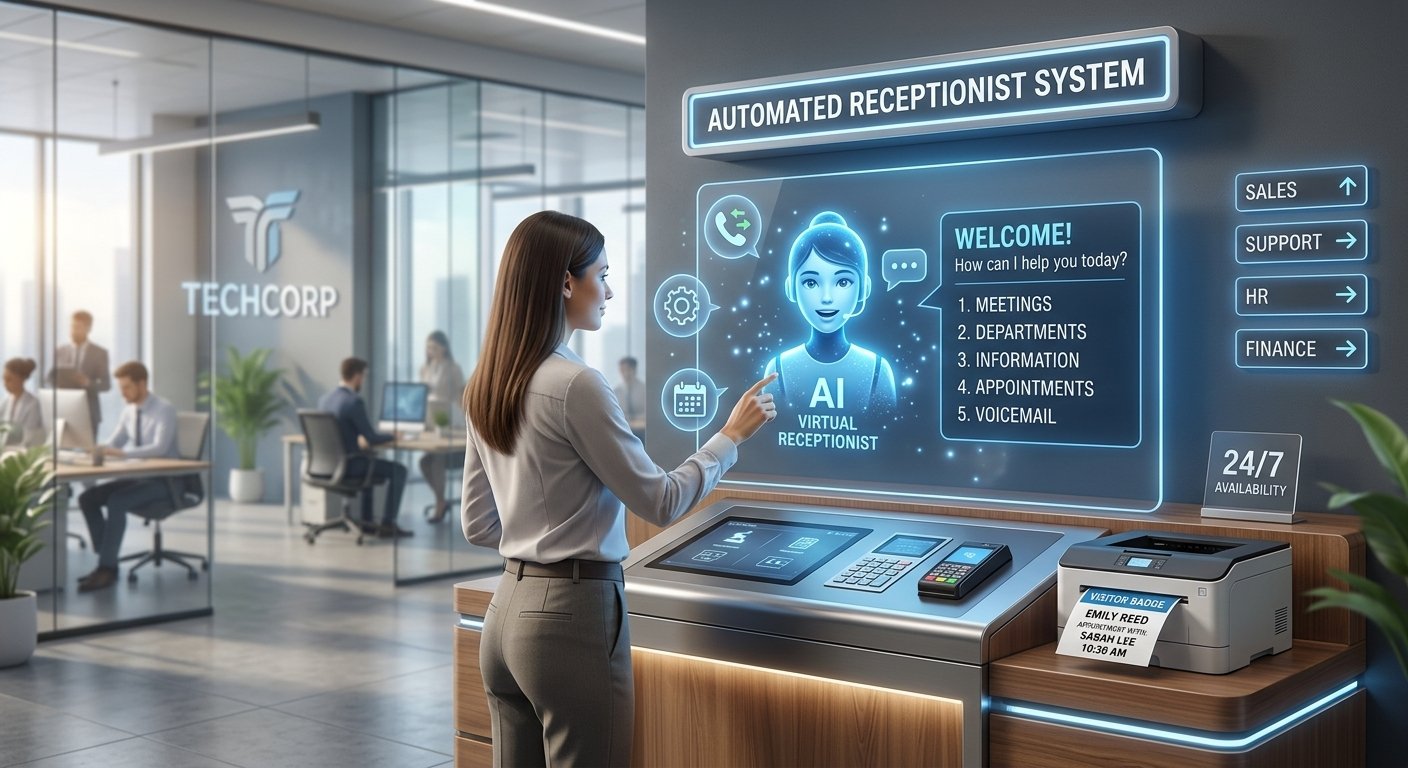
An automated receptionist is a sophisticated telephony solution that manages incoming calls without human intervention. By using it, businesses can greet callers, provide essential information, and route calls to the correct departments or extensions efficiently.
Often referred to as an auto attendant or virtual phone assistant, this technology ensures that no call goes unanswered, even during peak hours or after business hours. Modern systems use advanced AI to provide a seamless experience, allowing companies to maintain a professional image while significantly reducing overhead costs associated with traditional front-desk staffing.
What Is an Automated Receptionist?
An automated receptionist acts as a digital tool that serves as the first point of contact for anyone calling your business. It replaces or assists physical staff members by answering incoming calls, playing recorded greetings, and offering clear menu options. Using Interactive Voice Response (IVR), this technology guides callers to their intended destination through standard keypad inputs or natural voice commands.
Because Superpath reports that 85% of callers will not attempt to contact a business again after a missed first try, having a reliable system in place is critical. A digital receptionist handles diverse tasks—ranging from providing business hours to transferring calls to remote services—ensuring every interaction remains consistent and professional. By utilizing this solution, your business can comfortably manage high call volumes without requiring an expansive on-site staff.
Automated receptionist vs. human receptionist
Comparing a digital system to a live person helps businesses determine which model fits their current needs. While a live receptionist service offers high empathy, a digital solution provides unmatched speed and availability.
| Feature | Automated Receptionist System | Human Receptionist |
| Availability | 24/7/365 | Standard business hours |
| Cost | Low monthly subscription | High salary + benefits |
| Consistency | Uniform greetings every time | Varies by mood or energy |
| Capacity | Multiple simultaneous calls | One call at a time |
| Scalability | Instant and easy | Requires more hiring |
Types of Automated Receptionists
There are several variations of this technology, ranging from basic menus to complex AI integrations. A standard automatic attendant provides a simple “press 1 for sales” menu, which is ideal for small offices needing basic organization. For more advanced needs, an automated solution uses natural language processing to understand spoken requests, creating a more conversational experience for the caller.
Another category is the virtual answering service, which often bridges the gap between automation and live support. Some businesses utilize a virtual receptionist that incorporates on camera features for office lobbies. Whether you need a simple virtual auto attendant or a comprehensive virtual call assistant, the type you choose should align with your call volume and customer service goals.
Key Functions of Automated Receptionists
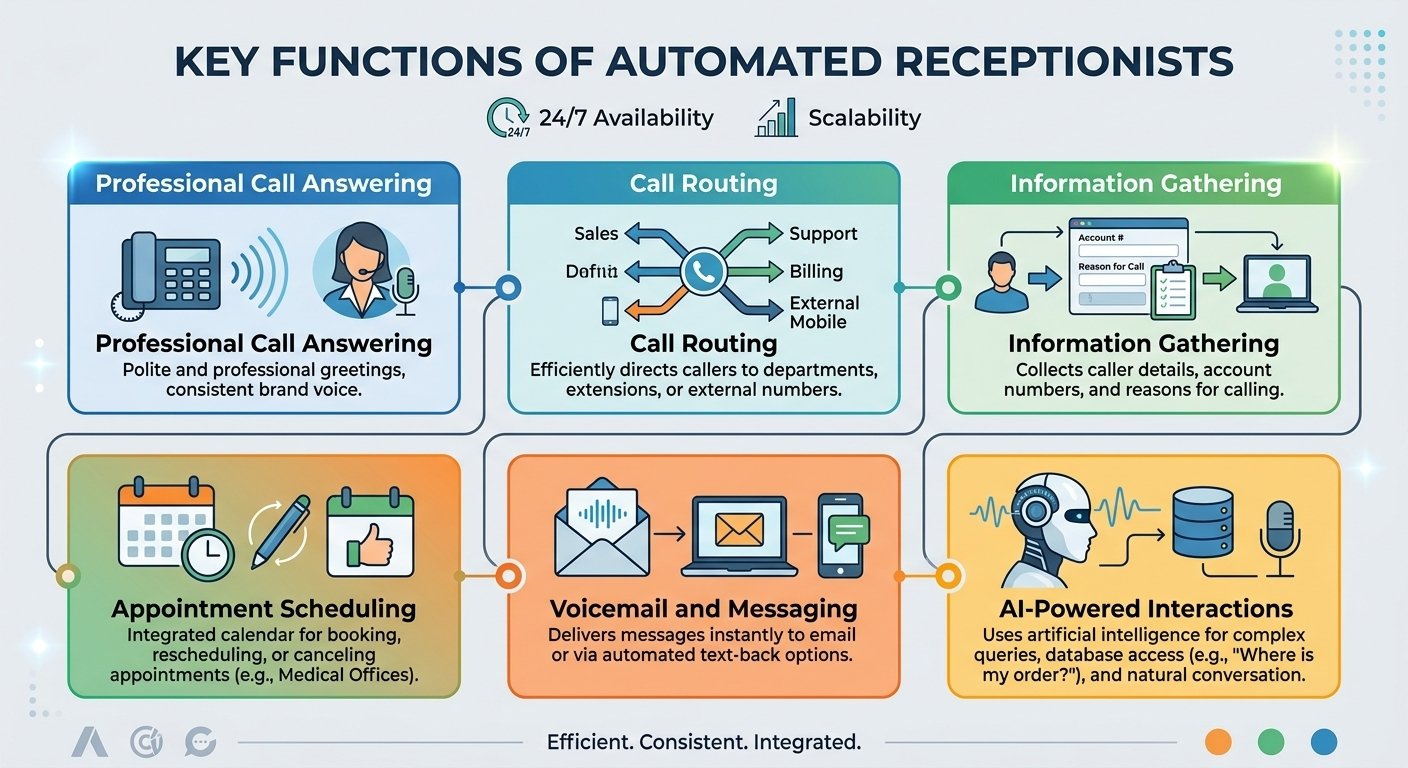
- Professionalism: Ensures a polite first impression and maintains a consistent brand voice by providing immediate acknowledgement for every caller.
- Efficiency: Routes calls directly to the correct department or extension, reducing wait times and allowing for specialized after-hours protocols.
- Preparation: Collects vital caller information and account details upfront, allowing staff to be fully informed before they even pick up the phone.
- Automation: Streamlines scheduling by allowing callers to book, cancel, or reschedule appointments through direct digital calendar integration.
- Reliability: Captures missed connections through voicemail-to-email features and automated text-back options that keep mobile leads engaged.
- Intelligence: Employs AI to understand caller intent and provide natural, conversational self-service for complex queries like order tracking.
Top Use Cases for Automated Receptionists
-
Small businesses
For a small business, a virtual receptionist free or low-cost trial can be a game-changer. It allows a one-person operation to appear as a much larger, more established company. Using a virtual phone receptionist gives the owner time to work on the business rather than just answering the phone all day. Small teams benefit from the receptionist telephone answering service by ensuring professional representation. It provides the infrastructure of a large corporation without the high overhead costs. This allows small players to compete effectively in crowded markets.
-
Healthcare providers
In the medical field, a virtual medical answering service is essential for managing patient inquiries and appointments. It can provide automated answers to common questions about clinic hours, location, and insurance. This allows the medical staff to focus on patient care rather than administrative tasks. These systems also help in emergency situations by providing clear instructions on how to reach an on-call physician. It make sure that patients always have a way to get the information they need, even during busy flu seasons or public health events.
-
Property management
Property managers often deal with a high volume of calls ranging from maintenance requests to leasing inquiries. These digital system can categorize these calls and route them to the appropriate person. Maintenance emergencies can be flagged for immediate attention, while general inquiries go to the leasing office. Using a virtual call receptionist helps manage the diverse needs of tenants and prospective renters. It ensures that no inquiry is lost, which is vital for maintaining high occupancy rates and tenant satisfaction.
-
Professional services
Law firms, accounting practices, and consultants use virtual receptionist services to maintain a high level of professionalism. These businesses often require a confidential virtual receptionist to handle sensitive information properly. An automated system can provide initial screening before transferring a client to a professional. This setup ensures that billable hours are spent on client work rather than administrative screening. A virtual assistant answering service can also help in managing calendars and setting up initial consultations, making the firm more efficient overall.
-
After-hours and holidays
Many businesses only need help when their main office is closed. An after hours virtual receptionist can take over at 5:00 PM and on weekends. This ensures that if a customer has an issue on a Saturday, they can still leave a detailed message or get basic troubleshooting help. Using an electronic receptionist for holiday coverage prevents the need to pay staff overtime for holiday shifts. It provides a consistent experience for the customer, regardless of the date on the calendar. This is a key feature of any remote receptionist service.
-
High-call-volume enterprises
Large corporations use enterprise virtual receptionist solutions to manage the sheer volume of incoming communications. These systems act as a sophisticated gatekeeper, routing thousands of calls to the correct departments across multiple locations. They are often integrated with CRM software to provide a personalized experience. In these environments, an automated operator is not just a convenience; it is a necessity for operational flow. It prevents the telephone system from becoming a bottleneck and ensures that internal communications remain fluid and organized.
How to Choose an Automated Receptionist System
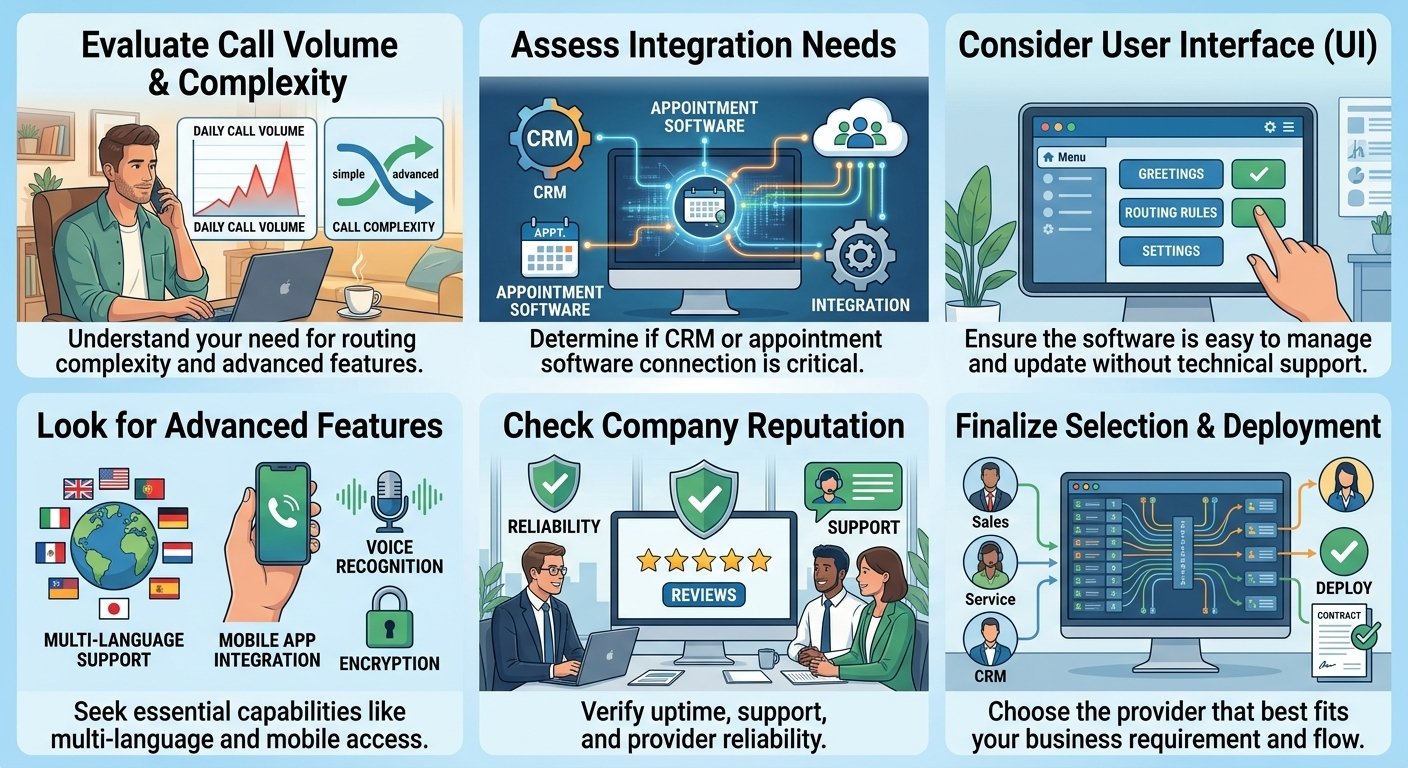
Selecting the right system requires a clear understanding of your specific needs. Start by evaluating your average daily call volume and the complexity of your typical inquiries. If you only need to route calls to three people, a basic auto receptionist will suffice. However, if you need integration with a CRM or appointment software, you will need a more advanced digital receptionist system.
Consider the user interface of the software. It should be easy for you to change greetings and routing rules without needing a technical degree. Also, look for features like multi-language support and mobile app integration, as these are becoming standard in virtual receptionist software. Lastly, check the reputation of the digital receptionist companies you are considering to ensure they offer reliable uptime and good support.
Best Automated Receptionist Tools
1. Nextiva
Nextiva is widely recognized for its robust automated receptionist system. It offers a comprehensive suite of tools that include IVR, call recording, and advanced analytics. Their system is highly reliable and designed to grow with your business, making it a top choice for enterprises.
2. Ooma
Ooma provides an excellent VR for business, specifically targeting small to medium-sized enterprises. Their system is known for its clarity and ease of use. It includes features like a virtual secretary answering service and flexible routing options that are perfect for offices with hybrid work models.
3. Vonage Virtual Receptionist
The vonage virtual receptionist is a part of their unified communications platform. It is highly customizable and integrates seamlessly with other business tools like Salesforce and Microsoft Teams. This makes it an ideal virtual receptionist service for businesses that are already using the Vonage ecosystem.
4. Grasshopper
Grasshopper is a popular choice for entrepreneurs and very small businesses. It focuses on providing a virtual phone receptionist experience through a mobile app. This allows business owners to maintain a professional image while working from their personal smartphones.
5. Goodcall
Goodcall offers an AI-powered receptionist that is specifically designed to handle common customer questions. It uses conversational AI to interact with callers, providing a more modern experience than traditional press-button menus. It is an excellent example of how VR software is evolving.
Final Thoughts
Implementing an automated system is one of the most effective ways to modernize your business communications. By providing 24/7 availability, reducing costs, and ensuring every caller receives a professional greeting, these systems provide a significant return on investment. Whether you are a solo entrepreneur using a virtual phone assistant or a large corporation utilizing an enterprise virtual receptionist solution, the benefits of automation are clear. Choosing the right tool depends on your specific needs, but the shift towards digital reception is a vital step for any business looking to improve efficiency and customer satisfaction.
FAQ’s
-
What tasks can an automated receptionist handle?
An automated solution can manage a wide variety of administrative duties, including answering every incoming call with a professional greeting, routing callers to the appropriate department or individual extension, and providing basic information like business hours or locations. Advanced systems can also handle appointment scheduling, gather customer data before transferring, and even process simple orders or look up status updates via AI.
-
How can Virtual Receptionist improve customer service?
A virtual receptionist improves customer service by ensuring that no call is left unanswered, which significantly reduces caller frustration. It provides an immediate response and quickly directs the customer to the right resource or person, minimizing hold times. By offering 24/7 availability, it also allows customers to get the information they need at any time of day or night.
-
Can Virtual Receptionist handle multiple languages?
Yes, many professional systems virtual receptionist are designed to handle multiple languages. You can set up menus that ask the caller to choose their preferred language, and the system will then play greetings and instructions in that specific language to ensure a better experience for a diverse customer base.
-
How secure is VBC Virtual Receptionist?
Modern virtual receptionist systems are built with high-level security protocols to protect both the business and the caller’s data. They use encrypted connections for call routing and data storage, ensuring that any information gathered during the call remains confidential. Compliance with industry standards like GDPR or HIPAA is often a standard feature for reputable providers.
-
Is an automated receptionist system difficult to set up?
Most modern cloud-based systems are designed for ease of use and do not require extensive technical knowledge to set up. Most providers offer a web-based dashboard where you can simply type in your greetings, select your menu options, and assign extensions with a few clicks. Many companies also provide templates and support to help you get started quickly.
-
What is the difference between an auto attendant and a virtual receptionist?
While the terms are often used interchangeably, an auto attendant usually refers to a simpler system with a numerical menu (press 1 for sales). A virtual receptionist is often a more comprehensive term that includes AI-driven conversational features or even a hybrid service where a live person answers calls remotely.
-
Can I keep my existing business number with an automated system?
Yes, almost all virtual receptionist companies allow you to port your existing business phone number into their system. This ensures that you don’t have to change your marketing materials or notify all your clients of a new number. The transition is usually seamless and happens behind the scenes.
-
Are automated receptionists better than live answering services?
The choice depends on your business priorities. Automated systems are more cost-effective and available 24/7 without extra fees, making them great for high volumes and efficiency. Live answering services offer a more personal touch and empathy, which might be preferred for high-end boutique services or sensitive industries.