
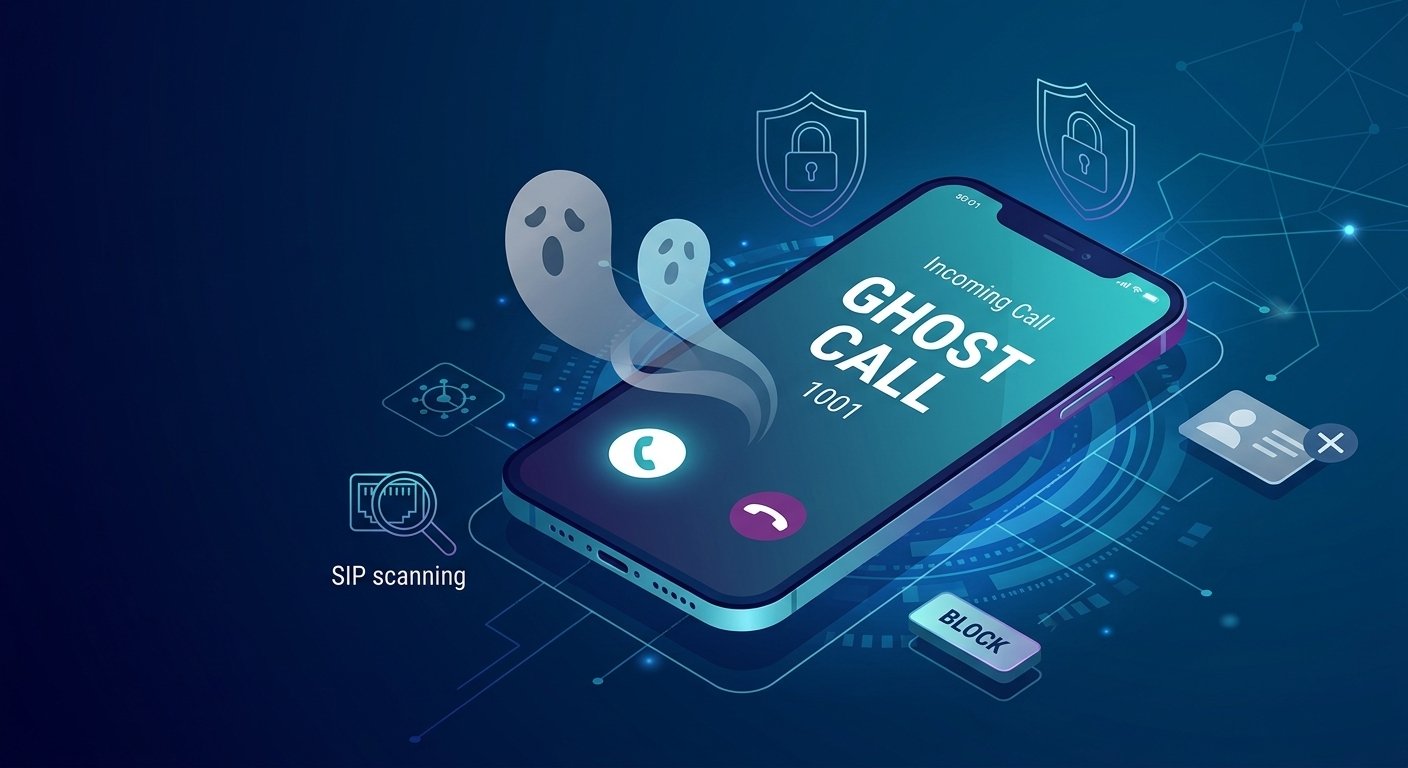
Ghost calls occur when your phone rings, you answer, and there is nothing but absolute silence on the other end. These phantom calls often display unusual caller ID numbers such as 100, 1000, or 1001, which do not exist in any standard telecommunication network.
Unlike typical spam, these interactions rarely leave a voicemail and can happen at any hour, often causing significant annoyance or anxiety for the recipient. While some are accidental, many originate from automated scripts and port scanning software designed to find vulnerabilities in your phone system or network security.
What Are Ghost Calls/Phantom Calls?
In the telecom world, ghost calls are automated silent connections where a bot probes your line for active ports and then vanishes without leaving a trace.
When you pick up the receiver, you are met with dead air, and the line usually disconnects after a few seconds without a message. These occurrences are distinct from silent calls made by telemarketers, where an automated system fails to connect you to a live agent.
The identification of a ghost phone number is often the first clue that you are being targeted by a bot. If you check your caller ID log, you might see a ghost telephone number that looks completely fabricated. These phantom calls frequently use short digit strings that are impossible for a legitimate landline or mobile service to generate, indicating the call is coming from an internet-based source.
What Causes Ghost Calls?
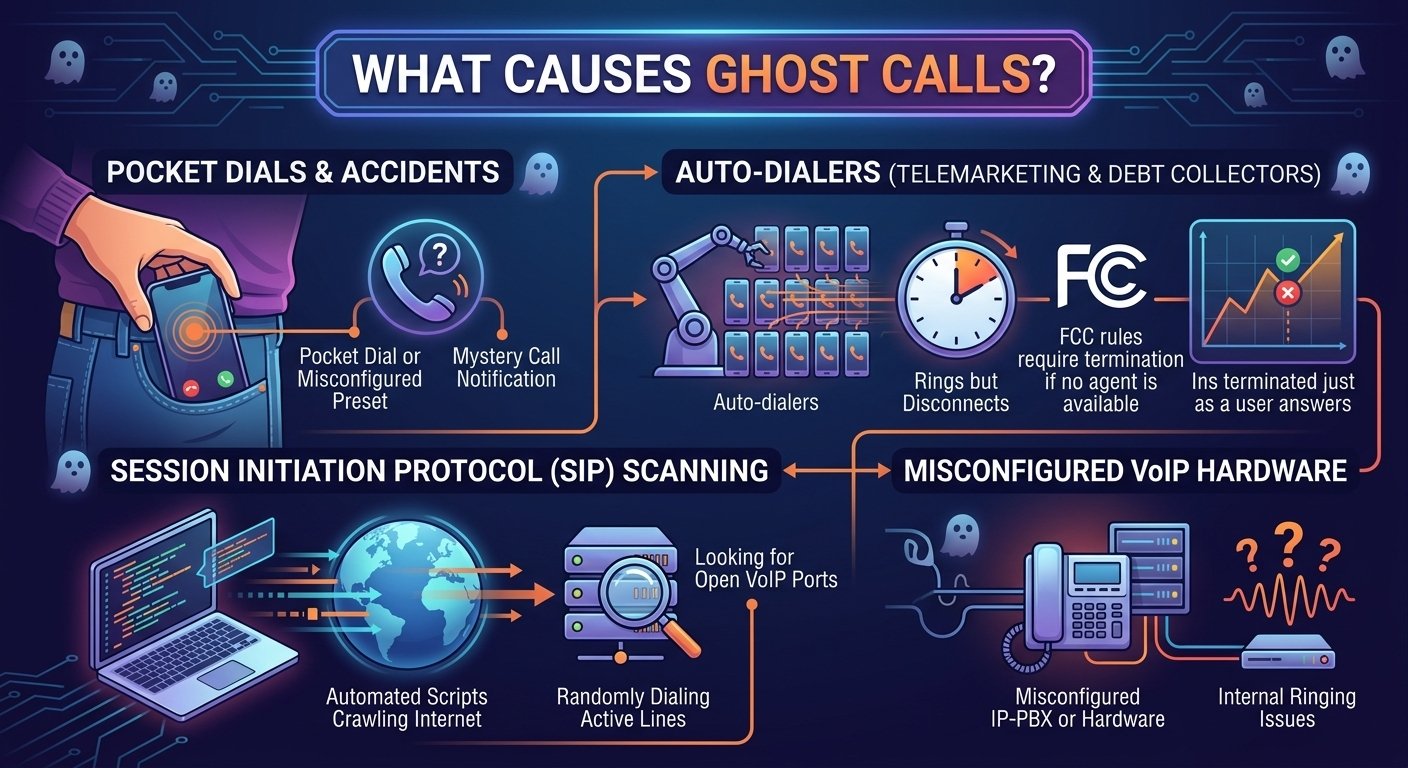
There are several technical and accidental reasons why you might experience ghost phone calls throughout the week. At the simplest level, a pocket dial or a misconfigured preset on a mobile device can trigger a silent connection. If the person on the other end realizes their mistake and hangs up immediately, it leaves you with a mystery calls notification and no explanation.
From a more technical perspective, auto-dialers used by debt collectors and telemarketing firms are a primary source of probing a phone line. Federal law dictates how long these systems can ring before they must disconnect. According to research by the Federal Communications Commission (FCC), if an auto-dialer does not find an available agent within a specific timeframe, the call is terminated, often right as the recipient answers.
-
Session Initiation Protocol (SIP) scanning is a common technical cause.
-
Automated scripts crawl the internet looking for open ports on VoIP systems.
-
Randomly generated numbers are dialed to test if a line is active.
-
Misconfigured hardware can occasionally trigger internal ghost ringing.
Why Should You Be Worried About Phantom Calls?
While a single ghost call might seem like a minor nuisance, a high frequency of these calls can indicate a security risk. The primary concern is port scanning, which is a method hackers use to identify weak points in your digital infrastructure. In 2007, a tool known as SIP Vicious was released to help administrators test their systems, but it is now frequently used by malicious actors to scout for vulnerable phone networks.
If an attacker successfully identifies an open port, they can perform a variety of harmful actions. They might clone your phone system to make expensive international calls at your expense, or they could use the connection to gain access to other devices on your network. This type of ghosting calls activity can lead to massive bills and compromised private data if the system is not properly secured.
How to Identify a Ghost Call
You can usually spot a ghost call by examining the patterns in your incoming call history. Legitimate callers, even telemarketers, typically have a ten-digit number or a “Private Caller” tag. If you see a ghost mumer consisting of only three or four digits, like 100 or 1001, it is almost certainly a phantom caller generated by a computer script.
Another identifying trait is the timing and frequency of the calls. Ghost calling often happens in clusters, where you might receive several silent phone call attempts within a single hour, followed by days of silence. These are often automated “pings” to see if your SIP port is responsive. If you answer and hear a slight click followed by silence, you are likely dealing with an automated port scanner.
Where Do Ghost Calls Come From?
Contrary to popular belief, bot calls do not usually originate from your service provider or a standard telephone exchange. Instead, they come from automated devices that scan the internet for Voice over Internet Protocol (IP) addresses. These devices target the SIP port, which is the gateway your phone uses to communicate with the internet.
Because these calls are routed over the internet rather than traditional copper wires, the caller can remain entirely undetected. This allows them to bypass many traditional caller ID protocols. The objective for many of these callers is to find a system that allows for “toll fraud,” where they use your ghosted number to route their own paid traffic, leaving you with the bill.
How to Stop Ghost Calls From a Landline
Stopping these interruptions on a traditional landline requires a different approach than digital systems. The most effective method is to utilize a dedicated call-blocking device that sits between your wall jack and your telephone. These devices can be programmed to reject any number that does not match a specific format or is not on your allowed list.
Many modern cordless phones now come with built-in technology to handle phantom calling. Some models feature a pre-screening option where the phone silently answers the call and asks the caller to press a specific key or state their name before the phone actually rings in your house. Since automated bots cannot follow these verbal instructions, the bot telephone number is blocked before it ever disturbs you.
-
Invest in a phone with a “Smart Call Blocker” feature.
-
Enable “Announce” mode to force callers to identify themselves.
-
Create a whitelist of known family and friend numbers.
-
Use a standalone blocking box for older corded telephones.
Reporting Ghost and Scam Calls
If you find that you keep getting spam phone calls, it is vital to report the activity to the appropriate authorities and your service provider. Reporting helps carriers identify the IP addresses used by scammers and block them at the network level. Most major providers have dedicated portals where you can submit the time, date, and displayed ghost phone number.
You should also register your number with national “Do Not Call” registries, although this primarily stops legitimate telemarketers rather than illegal probing a phone line. If the calls become harassing or you suspect your identity is at risk, filing a report with the FCC or your local consumer protection agency provides a paper trail for any future fraud claims.
How to Stop Ghost Calls From a Business Cloud or VoIP Line
For businesses using cloud-based communication, automated calls can be more than an annoyance; they can disrupt operations and tie up lines. If your services are hosted by an external vendor, contact them immediately to report the phantom call activity. They can often implement filters at the exchange level to prevent these unauthorized pings from reaching your handsets.
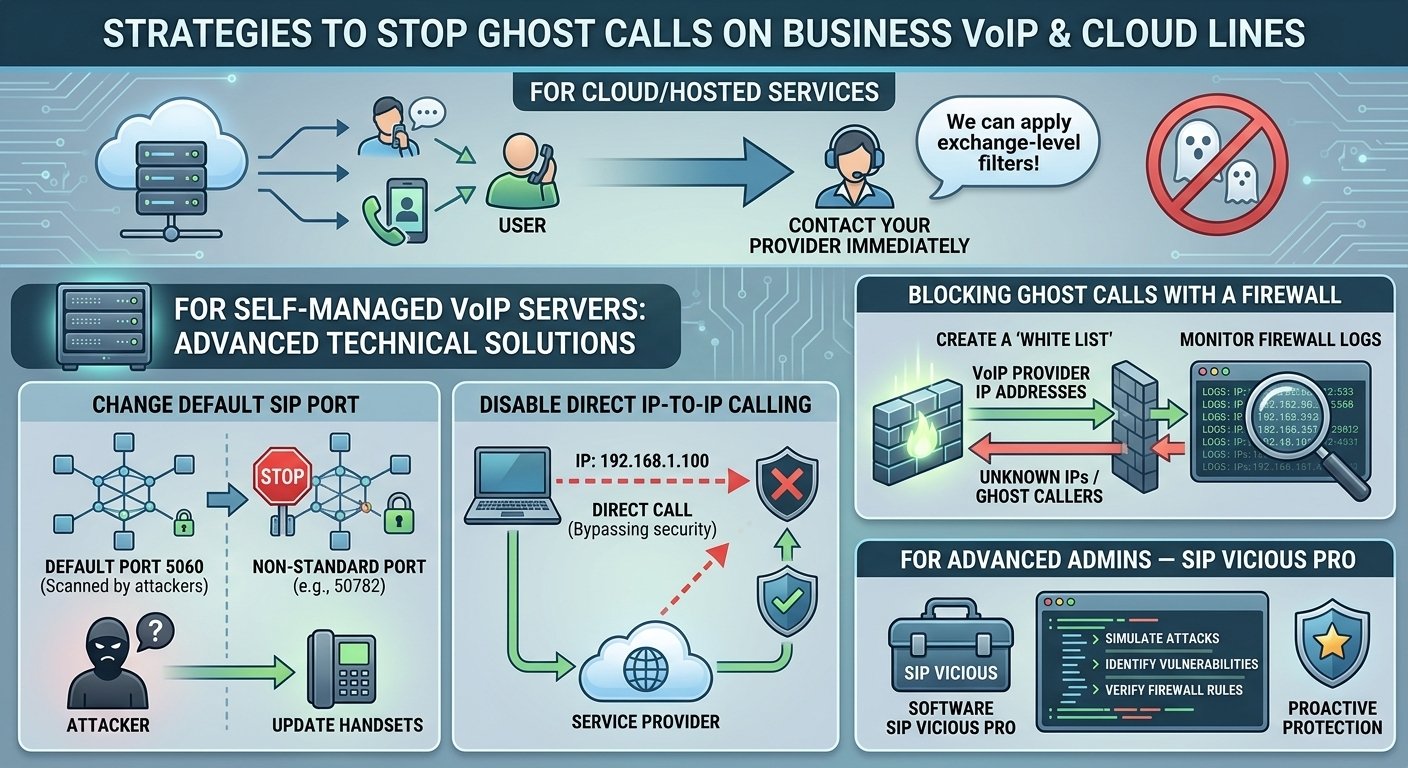
If you manage your own VoIP server, you have more direct control over how to stop ghost calls. Most ghost callers target the default settings of a system, so making small administrative changes can provide a high level of protection. Restrict SIP access exclusively to authenticated accounts and trusted provider IPs.
-
Advanced Technical Solutions for VoIP Admins
Administrators who manage their own infrastructure should look into changing the default SIP port. Most automated tools are programmed to scan port 5060, which is the industry standard. By moving your SIP traffic to a different, non-standard port, you can eliminate a vast majority of automated bot-driven calling phone attempts.
Another critical step is to disable direct IP-to-IP calling. This feature allows a caller to reach your device using only your IP address, bypassing the security of your service provider. Unless your business specifically requires this for internal communication, turning it off will stop a phantom caller from reaching your extensions directly via the internet.
-
Log into your SIP admin panel and navigate to network settings.
-
Change the SIP port from 5060 to a random five-digit number.
-
Toggle the “Allow Direct IP Calls” setting to “Off.”
-
Update all connected handsets to reflect the new port settings.
-
Blocking Ghost Calls by Using a Firewall
A robust firewall is your best defense against call ghosting and unauthorized network entry. You should configure your firewall to only allow traffic from the IP addresses provided by your VoIP service provider. This creates a “white list” environment where any programmatic ringing attempt from an unknown source is automatically dropped before it hits your phone system.
Regularly monitoring your firewall logs can help you identify if a specific IP is repeatedly trying to hit your ports. By proactively blocking these addresses, you prevent the possibility of a successful port scan. A well-configured firewall not only stops ghost calls but also protects your entire business network from broader cyber threats associated with phantom calling.
-
For Advanced SIP/VoIP Admins – SIP Vicious Pro
For those who want to take a proactive stance against ghosting calls, using professional security tools is recommended. SIP Vicious Pro is a specialized toolset that allows administrators to simulate attacks on their own networks. By running these tests, you can find the same vulnerabilities that a ghost caller would exploit.
Using such tools helps you verify if your firewall rules are working and if your SIP ports are truly hidden. It provides a detailed report on how a phantom caller might view your system. Fixing these gaps now is much cheaper than dealing with the aftermath of a cloned phone system or a massive bill resulting from toll fraud.
Strategic Prevention Against Future Attacks
Long-term protection against ghost calls involves a combination of technology and user awareness. Ensure that all employees or family members know not to interact with suspicious numbers. If a phone call ghost occurs, simply hanging up and checking the logs is the best immediate response.
Staying updated on the latest communication trends, such as Unified Communications as a Service (UCaaS), can also provide better security. These modern platforms often have built-in fraud detection and automated call-scoring systems. These tools evaluate the legitimacy of an incoming call in real-time, often blocking the phantom call before your phone even makes a sound.
-
Enable automatic software updates for all VoIP hardware.
-
Use complex passwords for all SIP accounts and admin panels.
-
Monitor monthly billing statements for any unusual international charges.
-
Implement a “no-response” policy for any call from an unknown 100x number.
Read More: What is UCaaS? A Complete Guide to Unified Communications As A Service
Ghost Call vs Silent Call vs One-Ring Scam
| Type | What Happens | Common Causes |
|---|---|---|
| Ghost/phantom call | Phone rings, little/no useful audio | VoIP scans, misconfiguration, robocalls, dialers |
| Silent call | Call connects but no person speaks | Predictive dialer, technical failure, robocall |
| One-ring scam | Phone rings briefly then stops | Designed to encourage callback |
| Spam call | Unwanted promotional/fraudulent call | Telemarketing, robocalling, scams |
| Direct-IP SIP call | SIP endpoint receives unsolicited signaling directly | Exposed VoIP endpoint or PBX |
How to Stop Ghost Calls on VoIP
- Check your PBX/phone logs to confirm whether calls are coming from the provider or directly from unknown IP addresses.
- Disable direct-IP/anonymous SIP calls if your system doesn’t require them.
- Restrict SIP access to trusted sources where supported.
- Use strong, unique SIP and admin credentials.
- Keep phones, PBX software and firewalls updated.
- Use an SBC/firewall or provider-recommended security configuration.
- Apply rate limiting or automated blocking for repeated failed attempts where appropriate.
- Change the default SIP port only as an optional noise-reduction measure, not as primary security.
Final Thought
Securing your SIP configurations and restricting incoming traffic to trusted IPs resolves the vast majority of automated scans. While the silence on the other end can be unsettling, understanding that these are usually just automated port scans can reduce the stress associated with them. By securing your SIP ports, utilizing firewalls, and reporting suspicious activity to your provider, you can effectively silence the phantoms. Remaining proactive and vigilant is the most vital step in ensuring your communication lines remain clear, private, and secure from unwanted interruptions.
Frequently Asked Questions
-
What is a ghost call and why does it happen?
Ghost calls are incoming phone calls where no one is on the other line and no message is left. They primarily happen because of automated port scanners or predictive dialers used by telemarketers. These systems scan the internet for active VoIP connections or wait for an available agent; if no agent is free or the scan is just a test, the call results in silence.
-
Why do ghost calls use numbers like 1001 or 100?
These short numbers are usually the default internal IDs used by automated scanning software like SIP Vicious. Since these calls are made over the internet (VoIP) rather than a traditional phone network, the software can display any digits it wants as the caller ID, often resulting in these non-existent, “impossible” phone numbers.
-
Can a ghost call hack my phone?
Simply answering a ghost call is unlikely to result in a hack of your physical smartphone or landline. However, the call is often a sign that a bot has found your IP address or SIP port. The real danger lies in the bot finding a vulnerability in your phone system that allows them to make unauthorized calls or access your network data.
-
How do I stop ghost calls on my VoIP system?
The most effective way to stop these calls on a VoIP system is to change your SIP port from the default 5060 to a different number. Additionally, you should disable “Direct IP Calling” in your admin settings and set up a firewall to only allow traffic from your specific service provider’s IP addresses.
-
What should I do if I get a call from a number that only rings once?
Do not call the number back under any circumstances. This is frequently a “one-ring scam” intended to trick you into calling a high-cost international number. If the call was important, the person will leave a voicemail or call again; calling back can result in significant charges on your next phone bill.
-
Are ghost calls and silent calls the same thing?
While they are similar, they have different origins. A silent call is usually from a legitimate telemarketer whose automated system failed to connect a human agent to you in time. A ghost call is typically an unrequested “ping” from a bot or script looking for network vulnerabilities rather than trying to sell a product.
-
Can a call blocker stop phantom calls?
Yes, a high-quality call blocker can stop most phantom calls by screening the connection. Many blockers require the caller to press a specific number to prove they are human. Because ghost calls are generated by automated bots, they cannot complete this task, and the blocker prevents the phone from ringing.
-
Who should I contact if ghost calls won’t stop?
You should contact your telephone or VoIP service provider’s fraud or security department. They can often trace the IP address of the source and block it at the network level. You can also file a complaint with the FCC if the calls are persistent and seem to be part of a larger scam or harassment pattern.