
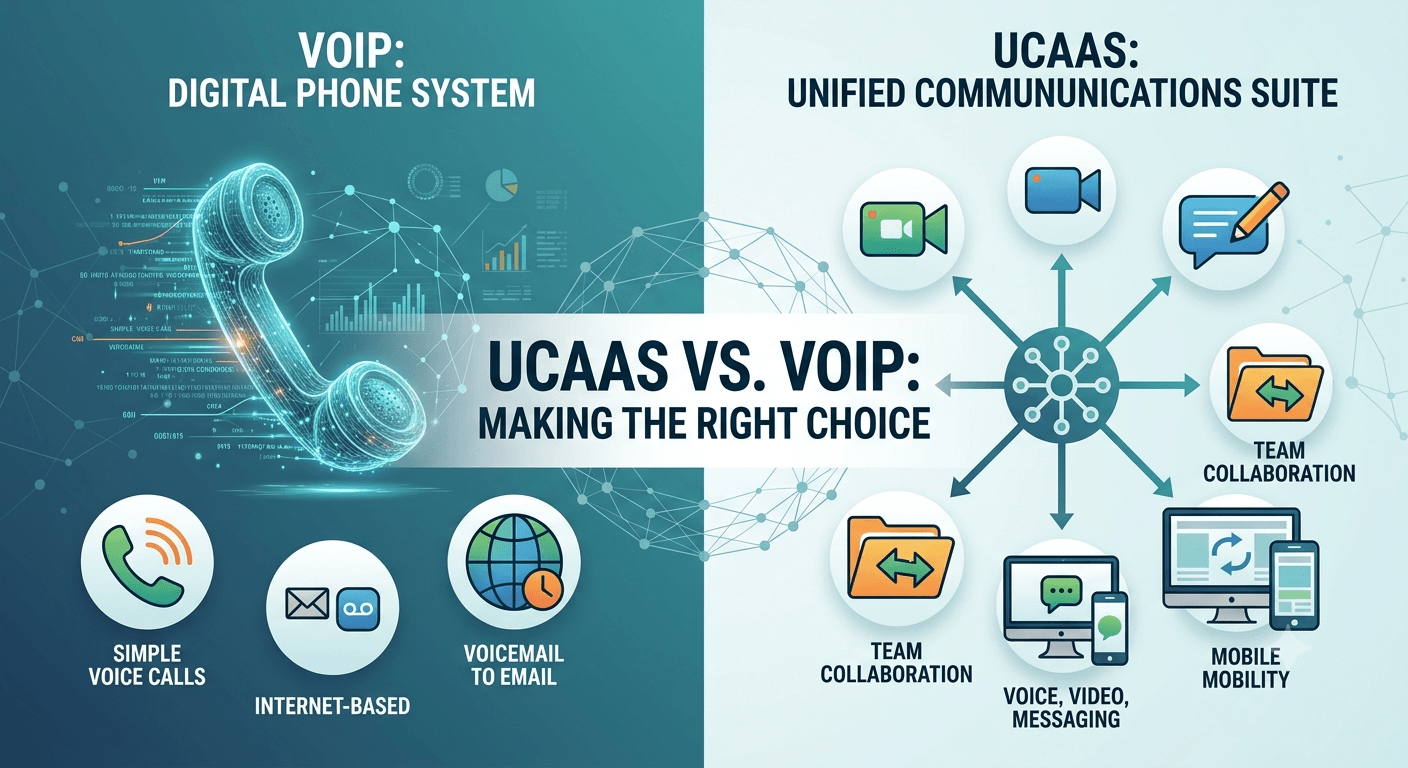
UCaaS vs VoIP represents the fundamental choice between a simple digital phone system and a comprehensive communications suite. VoIP, or Voice over Internet Protocol, focuses primarily on delivering high-quality voice calls over the internet. In contrast, UCaaS stands for Unified Communications as a Service, integrating voice, video, messaging, and collaboration tools into one cloud-hosted platform. Choosing between UCaaS vs VoIP depends on whether your business needs basic, cost-effective calling or a robust, all-in-one digital workspace. While VoIP is a foundational technology, UCaaS leverages that technology to provide a broader range of productivity features for modern, distributed teams.
What Is VoIP?
Voice over Internet Protocol, commonly known as VoIP, is a technology that allows you to make voice calls using a broadband internet connection instead of a regular phone line. We often see it as the digital evolution of the traditional telephone system. Instead of using copper wires and circuit switching, VoIP converts your voice into digital data packets and transmits them over the internet.
This technology has transformed how businesses communicate by removing the physical limitations of office-based hardware. With VoIP, you are no longer tied to a desk phone. As long as you have an internet connection, you can make and receive calls from computers, specialized VoIP phones, or mobile apps. We find that it is the core engine behind most modern business telephony.
For many small businesses, VoIP serves as an entry point into professional communications. It offers essential features like call forwarding, voicemail-to-email, and caller ID. It is highly efficient for organizations that prioritize voice communication but do not yet require the deep integration of video conferencing or team chat within the same billing structure.
What Is UCaaS?
Unified Communications as a Service, or UCaaS, is a cloud-delivered model that brings various communication channels together. We view it as a holistic approach to business connectivity. While it uses VoIP for its voice component, it adds layers of functionality such as video conferencing, instant messaging, file sharing, and task management into a single user interface.
The “as a Service” part of UCaaS means the platform is hosted and managed by a provider in the cloud. This allows businesses to access a high-end communication infrastructure without managing complex servers on-site. When we evaluate the ucaas company microsoft on ucaas platform, we see how tools like Teams embody this model by merging calling with collaborative document editing and project tracking.
UCaaS is designed for the modern workspace where employees are often remote or hybrid. It ensures that regardless of where a team member is located, they have access to the same suite of tools. It bridges the gap between different communication silos, allowing a user to start a conversation in a chat and escalate it to a video call with a single click.
How Does VoIP Work?
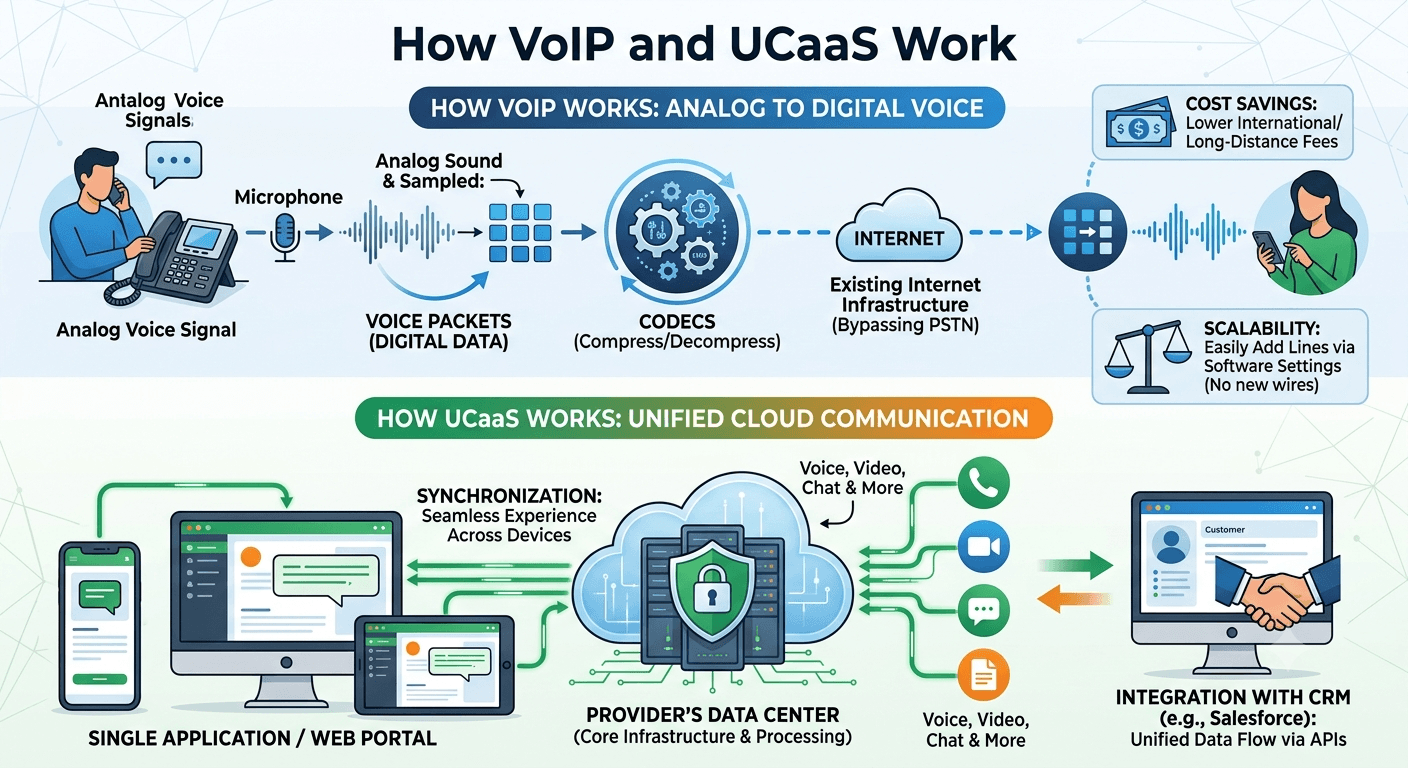
VoIP works by taking your analog voice signals and turning them into digital data. This process involves codecs, which are algorithms that compress and decompress the data to ensure it travels quickly across the web. Once the data reaches its destination, it is converted back into sound that the listener can understand.
The beauty of this system is that it bypasses the traditional telephone network, which often charges higher fees for long-distance or international calls. Instead, it utilizes the existing data infrastructure of the internet. We can see how this leads to significant savings, especially for companies that frequently communicate across borders.
In a business setting, a VoIP service provider manages the routing of these calls. They ensure that when you dial a number, the digital packets find the most efficient path to the recipient. This system is highly scalable, meaning we can add new lines or users by simply updating the software settings rather than installing new physical wires throughout an office building.
How Does UCaaS Work?
UCaaS functions as an integrated cloud ecosystem. While it utilizes the same packet-switching technology as VoIP for voice calls, it also manages diverse data types for video and text. The entire infrastructure is housed in the provider’s data centers, which handle the heavy lifting of processing video streams and syncing chat histories across multiple devices.
Users interact with UCaaS through a single application or web portal. This centralization is what makes the experience “unified.” When a message is sent, the platform ensures it appears on the recipient’s mobile phone, desktop app, and tablet simultaneously. This synchronization is a key part of how the ip telephony ucaas market has grown so rapidly.
The integration with other business software is another way UCaaS works behind the scenes. For example, when a call comes in, the UCaaS platform can pull up the customer’s record from a CRM like Salesforce. This is achieved through APIs that allow different cloud services to talk to each other, creating a seamless flow of information that helps employees work faster and smarter.
What Are Some Benefits of Using VoIP?
VoIP remains a popular choice because it solves the most immediate problems businesses face with traditional telephony. It provides a level of clarity and reliability that was once only available to large corporations with massive budgets. We see it as the most direct way to modernize a business’s voice communication.
One of the primary advantages is the ease of management. Most VoIP systems come with a web-based dashboard where administrators can change settings in real-time. This eliminates the need to wait for a technician to come to the office to fix a line or add a new extension.
1. Less Reliance on Legacy Hardware
Traditional phone systems require a Private Branch Exchange (PBX) box, which is a bulky piece of hardware that lives in a server room. VoIP removes the need for this equipment. Since the system is hosted in the cloud, the only hardware you might need are IP phones, though many businesses choose to use softphones on their existing laptops.
By reducing hardware, we also reduce the maintenance costs associated with it. There are no wires to get damaged and no physical boards to burn out. This transition to a software-based approach allows for a cleaner office environment and lower overhead costs for IT departments.
2. More Flexibility for Business Needs
The inherent scalability of VoIP makes it a perfect fit for growing companies. If we hire ten new employees tomorrow, we don’t need to order new phone lines from the utility company. We simply log into the portal, create ten new accounts, and they are ready to go. This voip scalability is a major selling point for startups and seasonal businesses.
Furthermore, VoIP allows for “geographic flexibility.” You can choose a phone number with an area code in New York even if your office is in London. This helps businesses establish a local presence in different markets without having to open a physical office there, which is a massive strategic advantage.
3. Cheaper International Calling
Because VoIP treats voice as data, the cost of sending that data across the globe is significantly lower than using traditional international phone lines. Most VoIP providers offer competitive rates or even unlimited international calling plans for specific regions.
This is particularly beneficial for companies with global supply chains or international clients. We can stay connected with partners worldwide without worrying about an astronomical phone bill at the end of the month. It levels the playing field, allowing smaller businesses to compete on a global scale.
What Are Some Benefits of Using UCaaS?
UCaaS takes the benefits of VoIP and expands them into every facet of business communication. It is built for the era of digital transformation where voice is just one part of the conversation. The benefits here are centered around productivity, collaboration, and a unified user experience.
According to a study by Grand View Research, the global UCaaS market is expected to grow at a compound annual growth rate of 15% through 2030, highlighting how businesses are increasingly moving toward integrated solutions.
This growth is driven by the need for tools that support a distributed workforce.
1. Full Communications Mobility With Less Disruption
UCaaS provides a consistent experience across all devices. We can start a meeting on a desktop computer in the office and seamlessly transfer it to a mobile phone while walking to the car. This mobility ensures that business operations are never disrupted by physical movement.
The “presence” feature is also a vital part of this mobility. It allows colleagues to see if someone is available, in a meeting, or away from their desk. This reduces the time wasted on trying to reach people who are busy and encourages more efficient communication through the appropriate channel, such as a quick instant message instead of a long phone call.
2. International Reach in Numerous Device Formats
With UCaaS, international collaboration goes beyond just voice. We can host high-definition video conferences with participants from five different continents, all while sharing screens and collaborating on documents in real-time. This depth of interaction is something that standalone VoIP cannot match.
The ability to use various device formats means that your team is not limited by their hardware. Whether an employee prefers a headset, a tablet, or a traditional handset, the UCaaS platform delivers the same high-quality tools. This adaptability is essential for maintaining a high level of engagement in international teams.
3. Less Reliance on Hardware and Less Spending
Like VoIP, UCaaS reduces hardware costs, but it goes a step further by consolidating multiple service subscriptions. Instead of paying one vendor for video conferencing, another for team chat, and a third for phone services, we pay one monthly fee for everything. This consolidation often leads to a lower total cost of ownership.
Additionally, UCaaS providers handle all the security and software updates. We don’t have to worry about patching servers or upgrading software versions. The provider ensures that the latest features and security protocols are always in place, which reduces the burden on our internal IT staff and prevents unexpected repair expenses.
UCaaS vs VoIP: Similarities
While they serve different purposes, UCaaS vs VoIP share several core characteristics. Both technologies rely on a stable internet connection to function. Without a reliable web link, neither system can deliver the high-quality communication that businesses expect.
They also share a common goal: moving communication from the physical world to the cloud. Both offer significant cost savings over traditional landline systems and provide features like automated attendants and call routing that make a small business look like a large enterprise.
| Feature | UCaaS | VoIP |
| Definition | Integrated communication & collaboration tools delivered as a service | Technology for transmitting voice calls over the internet |
| Scope | Encompasses various communication tools such as voice, video calls, messaging, collaboration | Specifically focuses on voice transmission over the internet |
| Functionality | Offers a comprehensive suite beyond voice, including video conferencing and file sharing | Primarily focuses on voice calls and basic phone features |
| Deployment | Delivered as a service through cloud-based platforms | Technology used for voice, can be part of a larger system or standalone |
| Communication Tools | Wide range of tools for internal and external collaboration | Primarily deals with voice communication |
| Integration | Integrates multiple tools into a unified platform | Can be integrated with business systems for enhanced functionality |
| Scalability | Scales to accommodate various communication needs | Scalable for voice call volumes and infrastructure |
| Cost Model | Subscription-based model, often per user | Cost associated with internet usage and service provider |
| Use Cases | Suitable for organizations requiring comprehensive collaboration tools | Best for businesses seeking cost-effective calling solutions |
| Impact on Business | Enhances productivity and collaboration through integrated tools | Provides cost savings and flexibility in voice methods |
UCaaS vs VoIP: Differences
The primary difference lies in the breadth of the service. VoIP is a specific technology, whereas UCaaS is a comprehensive service category. We can think of VoIP as a single tool in a toolbox, while UCaaS is the entire toolbox, containing everything a business needs to communicate.
When we look at the voip ucaas relationship, we see that every UCaaS platform uses VoIP, but not every VoIP system offers the unified features of UCaaS. This distinction is critical when deciding which path to take for your business infrastructure.
-
Capabilities
The capabilities of VoIP are centered on the phone call. It includes features like call waiting, transfer, and voicemail. It is excellent for businesses that do most of their work over the phone, such as call centers or local service providers. It does one thing, and it does it very well.
UCaaS capabilities are much broader. It includes video conferencing, team messaging, and presence indicators. It often includes collaborative features like whiteboarding and screen sharing. For a company that relies on teamwork and project-based communication, the capabilities of UCaaS are far superior to simple voice calling.
-
Integrations
VoIP systems can often integrate with a few key tools, such as an email client to send voicemail recordings. However, the integration is usually limited to voice-related tasks. It serves as a digital version of a phone, and its connections reflect that focused role.
UCaaS is built for deep integration. It is designed to sit at the center of your business workflow. When we evaluate the ucaas company microsoft on user-friendly ucaas platforms, we see how it integrates with Outlook, SharePoint, and a host of third-party apps. This means that your communication tool is directly connected to your files, your calendar, and your customer data.
-
Reports and Analysis
Reporting in a standard VoIP system usually focuses on call logs. You can see how many calls were made, how long they lasted, and which extensions were the busiest. This is useful for tracking phone usage and managing staff levels in a call-focused environment.
UCaaS provides a much more detailed level of analysis. It can track engagement across multiple channels. We can see how often video is used versus chat, analyze the sentiment of messages, and track collaboration patterns across different departments. This data provides a more complete picture of how a company communicates and where productivity might be lagging.
-
Costs
The ucaas pricing model is typically based on a per-user, per-month subscription. While it might seem higher than basic VoIP at first glance, it often replaces several other bills. We have to look at the total value of having video, chat, and phone in one package.
VoIP costs are often more granular. You might pay for the number of lines you have or the minutes you use, depending on the provider. It is usually the more budget-friendly option for businesses that only need a phone system. However, if those businesses later decide they need video conferencing, they will end up paying for multiple separate services, which can become more expensive in the long run.
How to Set Up UCaaS and VoIP
Setting up these systems is remarkably similar and much easier than installing old-fashioned phone lines. The first step is to ensure your internet connection has enough bandwidth to handle the expected traffic. We recommend a dedicated high-speed connection to ensure the highest audio and video quality.
Once the network is ready, you choose a provider and sign up for a plan. For VoIP, you might just need to download a softphone app or plug in some IP phones. For UCaaS, there is usually a more comprehensive onboarding process where you set up user permissions, integrate your existing apps, and configure your virtual meeting rooms.
If you encounter issues during setup, it is important to know how to troubleshoot ucaas calls. Most problems stem from network congestion or firewall settings. By adjusting the Quality of Service (QoS) settings on your router, you can prioritize communication traffic over other types of data, ensuring a smooth experience from day one.
Making the Choice: What is Right for Your Business?
Choosing between UCaaS vs VoIP requires an honest look at how your team works. We suggest mapping out your typical communication flow. Do your employees spend most of their time on the phone with customers, or do they spend more time collaborating with each other on projects?
If your team is primarily in one location and mostly uses the phone for external sales or support, VoIP might be the right fit. However, if you have remote workers, multiple offices, or a need for frequent internal meetings, UCaaS is likely the better investment. It provides the infrastructure for a more modern and flexible way of working.
-
When to Choose VoIP
We recommend choosing VoIP if your primary goal is to lower your phone bill and replace an aging landline system. It is ideal for small businesses with a localized customer base and straightforward communication needs. If you already have a separate video conferencing tool that you love, adding a simple VoIP service can be a cost-effective way to round out your capabilities.
VoIP is also a strong choice for businesses that operate in industries where voice communication is the gold standard. For instance, a local law firm or a medical office may prioritize high-quality voice calls over team chat or video conferencing. In these cases, the simplicity and focus of VoIP are significant advantages.
-
When to Choose UCaaS
You should choose UCaaS if you want to create a unified digital workplace. If your employees are constantly switching between different apps for chat, video, and phone, UCaaS will save them time and reduce “app fatigue.” It is the best choice for companies that are scaling quickly and need a system that can grow with them without becoming a management nightmare.
Furthermore, if you are looking to gain deeper insights into how your team collaborates, UCaaS provides the analytics you need. It is more than just a phone system; it is a platform for business intelligence. When we evaluate the telecommunications company get voip on unified communications, we see that the transition to UCaaS is often driven by a desire for better internal alignment and efficiency.
Reviews
To get a clear picture of how these technologies perform in the real world, we looked at feedback from various online communities. The consensus often highlights the trade-off between simplicity and feature richness. While technical users appreciate the depth of UCaaS, some smaller businesses find the simplicity of VoIP more to their liking.
A notable fact in the industry is that 80% of businesses report an increase in productivity after moving to a unified platform. This statistic, often cited by industry analysts like Gartner, reinforces the value proposition of the UCaaS model for organizations that rely heavily on digital collaboration.
-
What users actually say on Reddit
Reddit is a hub for IT professionals who share their hands-on experiences. The discussions there often dive into the technical reliability and the “bloat” factor of different systems.
VoIP
Users on Reddit generally praise VoIP for its reliability and “set it and forget it” nature. Many small business owners mention that it was the easiest upgrade they ever made. However, some complain that if the internet goes down, their entire business stops, which is a common concern across all cloud-based systems.

UCaaS
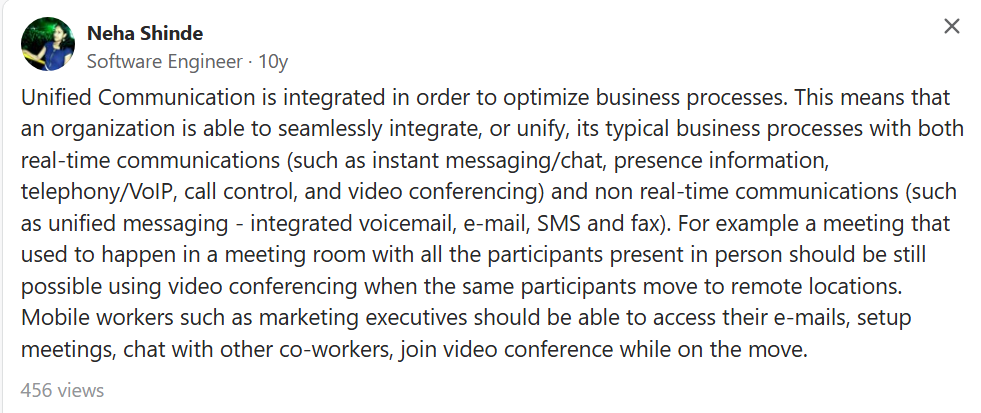
On the UCaaS side, Redditors often discuss the complexity of the initial setup. They mention that while the features are amazing, it takes time to train a team to use all the tools effectively. There are also frequent mentions of how well certain platforms integrate with other software, which is a major factor for tech-savvy teams.
-
What users actually say on Quora
Quora provides a more strategic perspective, with business owners and consultants weighing in on the long-term value of these systems.
VoIP
The conversation on Quora regarding VoIP often centers on cost-benefit analysis. Many contributors point out that for a very small business, the extra features of UCaaS simply aren’t worth the higher price point. They view VoIP as a practical, professional tool that does exactly what it says on the tin.
UCaaS
Quora users often highlight UCaaS as a “future-proof” solution. They argue that as the business world becomes more digital, having a unified platform is no longer optional but a necessity. The feedback often touches on how UCaaS has enabled businesses to hire talent from anywhere in the world, which is a significant strategic win.
-
Reviews from Trustpilot
Trustpilot gives us a look at the customer service and overall satisfaction levels for major providers in the market.
VoIP
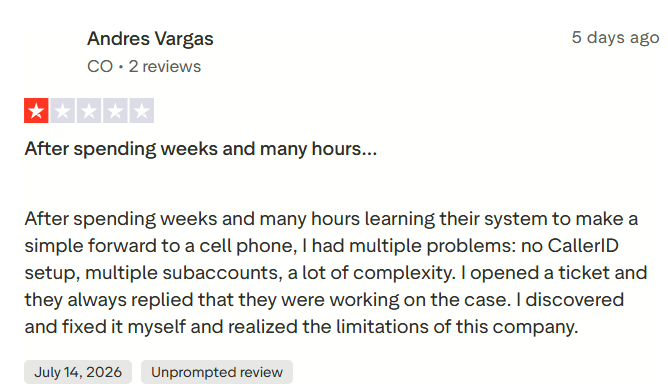
VoIP providers on Trustpilot often receive high marks for call quality and ease of use. Negative reviews frequently focus on billing disputes or difficulties in canceling a contract. It seems that when the technology works, people are very happy, but the administrative side can sometimes be a point of friction.
UCaaS
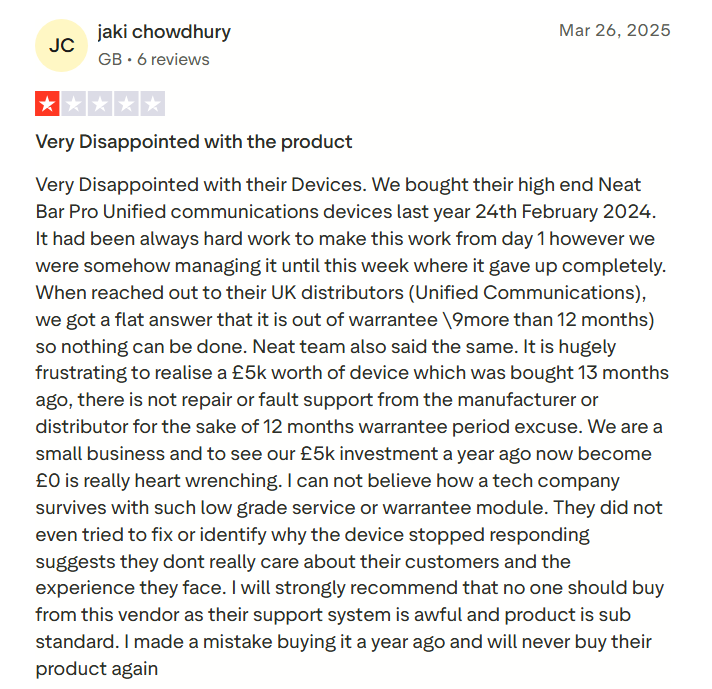
UCaaS providers often see reviews that mention the “all-in-one” convenience. Users love having everything in one place. On the negative side, users sometimes report that the mobile apps can be buggy or that the platform feels sluggish if they have an older computer. The complexity of the software means there are more things that can occasionally go wrong.
Final Words
Deciding between UCaaS vs VoIP is a strategic move that can define how your business communicates for years to come. VoIP offers a clear, cost-effective, and simple way to bring your voice communications into the digital age. It is the perfect solution for businesses that want a better phone system without the bells and whistles.
UCaaS, however, represents the future of work. By unifying all your communication channels, it creates a more cohesive and productive environment for your team. While it may require a higher initial investment and some training, the long-term benefits of improved collaboration and mobility are hard to ignore. We believe that for most growing businesses, the integrated nature of UCaaS makes it the superior choice in the long run.
FAQs
-
Is Vonage UCaaS?
Yes, Vonage offers a comprehensive UCaaS platform known as Vonage Business Communications. While they started as a pioneer in VoIP technology, they have expanded their services to include video, messaging, and advanced integrations, placing them firmly in the UCaaS category.
-
What is the difference between PBX and UCaaS?
PBX (Private Branch Exchange) is a traditional hardware-based phone system that is usually housed on-site. UCaaS is a cloud-based service that replaces physical PBX hardware with a software-driven platform that integrates voice with other communication tools like video and chat.
-
What is the difference between CCaaS and VoIP?
VoIP is the underlying technology for making calls over the internet. CCaaS (Contact Center as a Service) is a specialized type of UCaaS designed specifically for customer service environments, featuring tools like call queuing, interactive voice response (IVR), and detailed agent analytics.
-
Is Zoom Phone UCaaS?
Yes, Zoom Phone is a key component of Zoom’s broader UCaaS offering. When combined with Zoom Meetings and Zoom Chat, it provides a full unified communications experience, allowing users to transition seamlessly between phone calls, video conferences, and instant messaging.
-
Can I use my existing phones with UCaaS?
In many cases, yes. Most UCaaS providers support a wide range of IP-enabled phones. However, to get the most out of the platform’s unified features, many businesses choose to use softphones on their computers or specialized hardware designed for that specific service.
-
Does UCaaS require more bandwidth than VoIP?
Generally, yes. Because UCaaS includes high-definition video conferencing and file sharing, it consumes more data than simple voice-only VoIP. We always recommend checking your network capacity before migrating to a full UCaaS solution.
-
Is VoIP more secure than UCaaS?
Both can be highly secure if implemented correctly. However, UCaaS providers often invest more heavily in advanced security protocols, such as end-to-end encryption for video and chat, as they handle a wider variety of sensitive data types compared to standard VoIP.
-
Can small businesses benefit from UCaaS?
Absolutely. While VoIP is often the cheaper entry point, UCaaS allows small businesses to access professional-grade collaboration tools that were previously only available to large enterprises. This can help a small team appear much more professional and operate more efficiently.
-
How does voip and uc integration work?
Integration occurs when the VoIP calling feature is embedded directly into the unified communications app. This allows you to make a phone call from the same interface where you chat with colleagues or join video meetings, ensuring all your communication data is synced in one place.