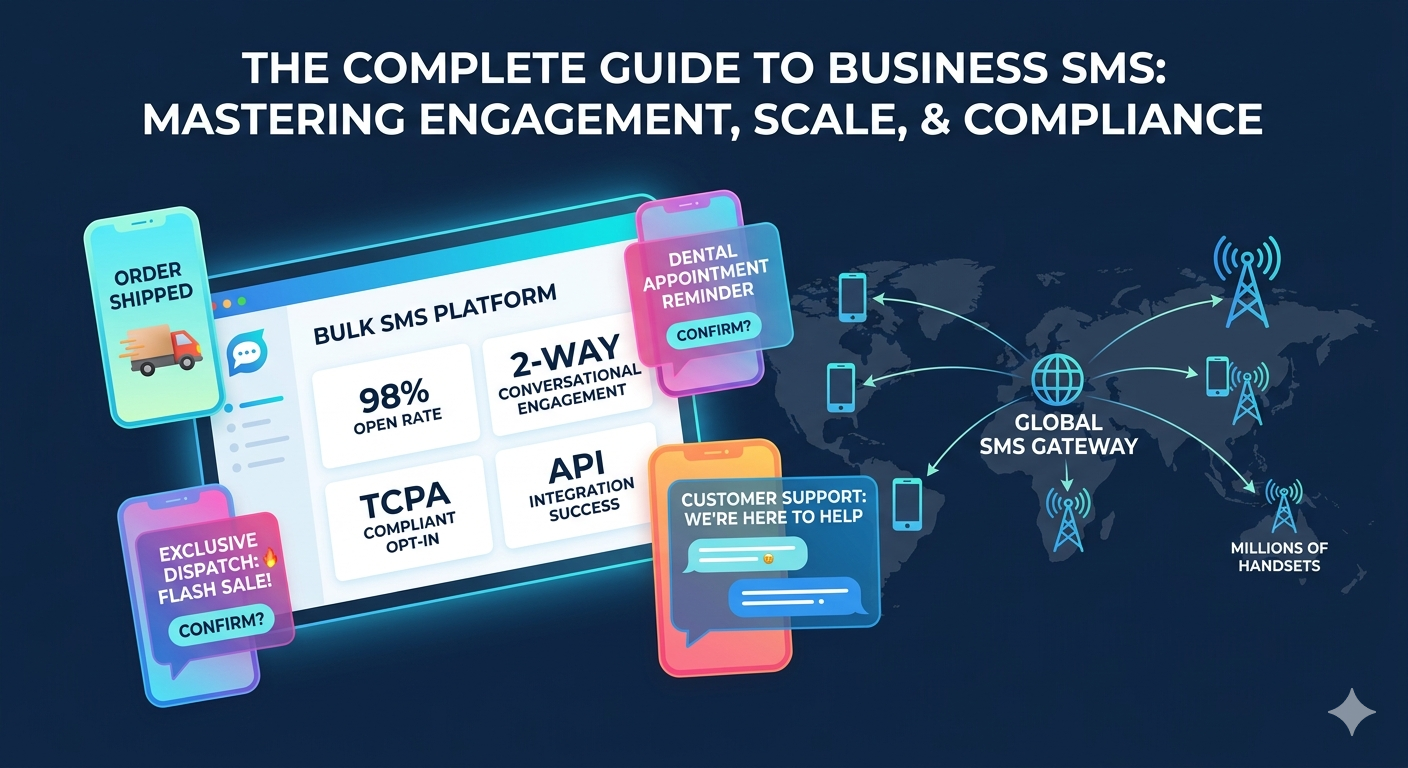
Business sms refers to the strategic use of short message service technology by organizations to communicate with customers, clients, and internal staff for marketing, operational, or support purposes. Unlike personal texting, business sms utilizes professional platforms or application programming interfaces to send messages at scale while maintaining high deliverability and compliance standards. This channel is recognized for its exceptional 98% open rate, making it one of the most effective tools for immediate engagement. By integrating business sms into a broader communication strategy, companies can ensure that critical alerts, promotional offers, and transactional updates reach their audience in real-time, significantly outperforming traditional email marketing.
The landscape of modern communication has shifted heavily toward mobile-first interactions, placing business sms at the forefront of customer experience.
Statistics from recent industry reports indicate that nearly 75% of consumers actually prefer receiving marketing offers via text rather than through social media ads or emails.
This preference stems from the non-intrusive yet immediate nature of a text message, which typically sits in a user’s notification tray until addressed. As companies look to modernize their outreach, adopting a professional business sms strategy allows them to bridge the gap between digital convenience and personal connection, ensuring that no revenue-driving moment is missed due to a crowded email inbox.
What Is Business SMS and How Does It Work?
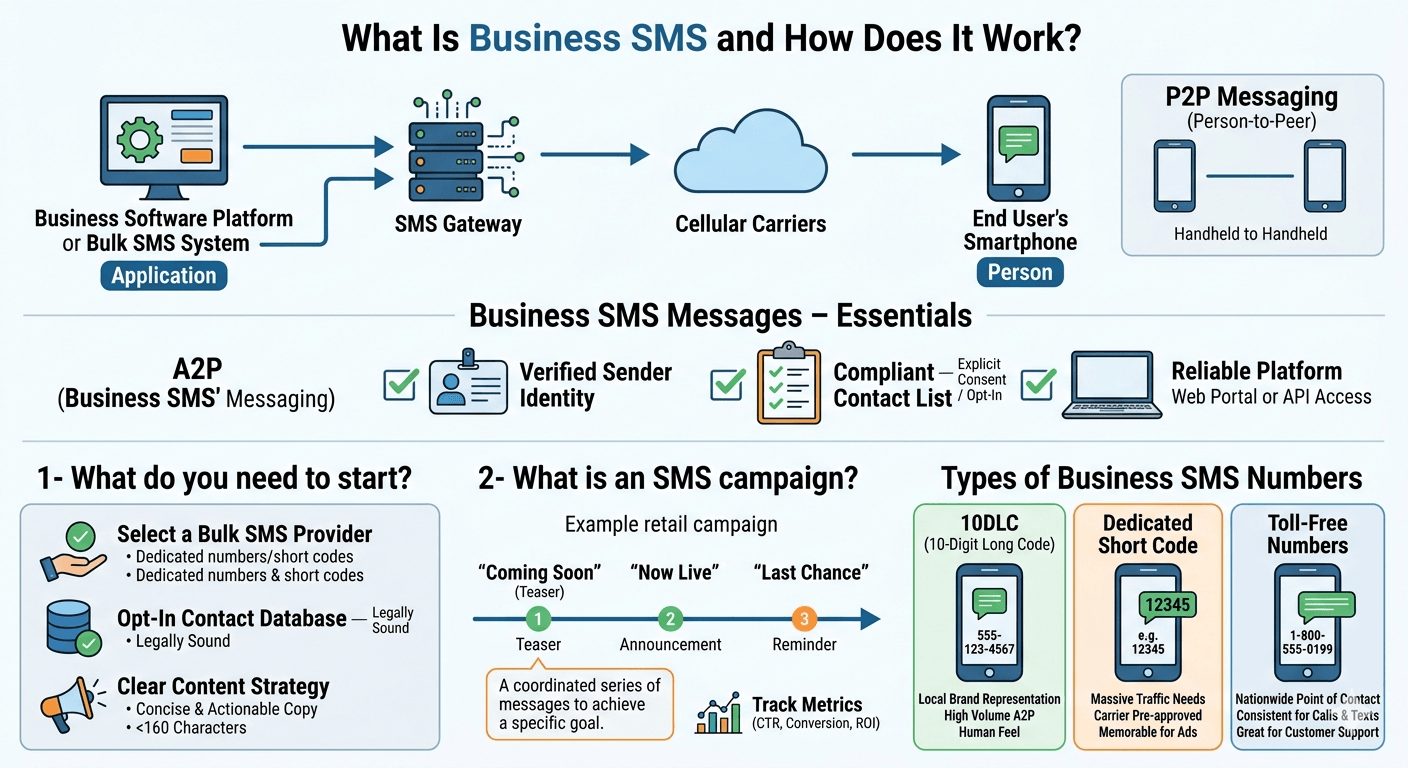
To understand what is business sms, one must look at the technical distinction between P2P and A2P messaging. Personal texting is Peer-to-Peer, whereas organizational communication is Application-to-Person. This means that a business message is usually triggered from a software platform or a bulk sms system rather than a handheld mobile device. The message travels from the software to an sms gateway, which then routes it through cellular carriers to the end user’s phone. This infrastructure is designed to handle high volumes, often referred to as bulk sms, which allows a single brand to reach thousands of individuals simultaneously with a consistent and branded message.
The functionality of business sms extends beyond just sending simple text. It involves the integration of various technologies that allow for two-way communication, enabling customers to reply directly to a brand. This creates a conversational environment that fosters trust and transparency. A bulk sms solution provides the tools necessary to manage these large-scale conversations, including automated opt-out processing and message scheduling. By leveraging a bulk sms gateway, organizations can ensure that their messages are not flagged as spam by carriers, as professional gateways maintain white-listed routes that prioritize legitimate organizational traffic over unverified sources.
Business SMS Messages – Importance
When exploring business sms messaging, there are several foundational elements that every brand must secure before launching their first campaign. The essentials include a verified sender identity, a compliant contact list, and a reliable platform that can handle the technical demands of sms in business. Organizations must decide whether they will use a web-based portal for manual message management or an API for automated, event-triggered notifications. These essentials ensure that the communication is professional, reachable, and legally sound, which is vital for maintaining brand reputation in a highly regulated digital ecosystem.
1- What do you need to start with business SMS messages?
Starting with business sms requires a combination of hardware-independent software and a clear understanding of your target audience’s preferences. First, you must select a bulk sms services provider that offers a robust bulk sms platform features set, including the ability to acquire dedicated numbers or short codes. You also need a database of contacts who have explicitly consented to receive text messaging for businesses. Without this “opt-in,” your messages could result in legal penalties. Furthermore, having a clear content strategy—knowing exactly what is a business message meant to achieve—will help in crafting concise and actionable copy that fits within the standard 160-character limit.
2- What is an SMS campaign?
An SMS campaign is a coordinated series of messages sent to a specific segment of your audience to achieve a particular goal, such as driving sales, announcing a new product, or providing holiday alerts. Unlike a single transactional text, a campaign often involves multiple touchpoints and uses features of bulk sms like scheduling and personalization. For example, a retail brand might launch a campaign that starts with a “coming soon” teaser, followed by a “now live” announcement, and concludes with a “last chance” reminder. Successful campaigns rely on a bulk sms system that can track metrics like click-through rates and conversion values to prove the return on investment for the marketing spend.
Types of Business SMS Numbers
Selecting the right type of number is a critical decision in any business texting strategy, as it affects both the perception of the brand and the technical capacity for sending volume. In the United States and many other regions, the industry has standardized 10DLC (10-Digit Long Code) for local brand representation. This type of number allows for a high volume of A2P traffic while providing the customer with a familiar local area code. For companies with massive traffic needs, a dedicated short code—a five or six-digit number—is often used, as these are pre-approved by carriers for maximum throughput and are easily memorable for television or radio advertising.
Another option is toll-free numbers, which allow businesses to provide a nationwide point of contact that is text-enabled. This is particularly popular for customer support departments that want to offer a consistent number for both calls and texts. Each of these number types serves different sms for business goals. While short codes are excellent for massive marketing blasts, long codes are preferred for personalized, two-way sales outreach where a “human” feel is more effective. Understanding these nuances is essential for any bulk sms services provider to give accurate advice to their clients regarding scalability and carrier compliance.
Business Texting Service: Customer Portal and SMS API
A professional business sms service usually offers two primary ways to interact with the platform: a user-friendly customer portal and a robust SMS API. The customer portal is a web-based dashboard where users can manually upload contact lists, compose messages, and view analytics without needing any coding knowledge. This is ideal for marketing teams who need to send weekly promotions or for HR departments managing internal alerts. The portal simplifies the complexities of a bulk sms solution, making it accessible for staff across various departments to engage in text messaging for businesses with minimal training.
On the other hand, a bulk sms gateway accessed via an API is the preferred choice for developers and tech-driven companies. This allows the business to integrate texting directly into their existing software, such as an e-commerce platform or a CRM. When a customer makes a purchase, the system automatically triggers a text through the API. This level of automation is one of the most powerful benefits of bulk sms, as it ensures that the brand remains in constant, relevant contact with the customer without requiring manual intervention from a staff member at every step of the journey.
What is an SMS API?
An SMS API, or Application Programming Interface, is a set of protocols that allows different software systems to communicate and exchange data specifically for sending text messages. It acts as a bridge between a company’s internal application and the mobile carrier network. By using an API provided by a bulk sms services provider, a business can programmatically send, receive, and track messages. This is the engine behind many of the features of bulk sms that we see today, such as two-way messaging, real-time delivery reports, and automated keyword responses. It enables a highly scalable bulk sms system that can grow alongside the business’s technical infrastructure.
Common Use Cases of Business Texting
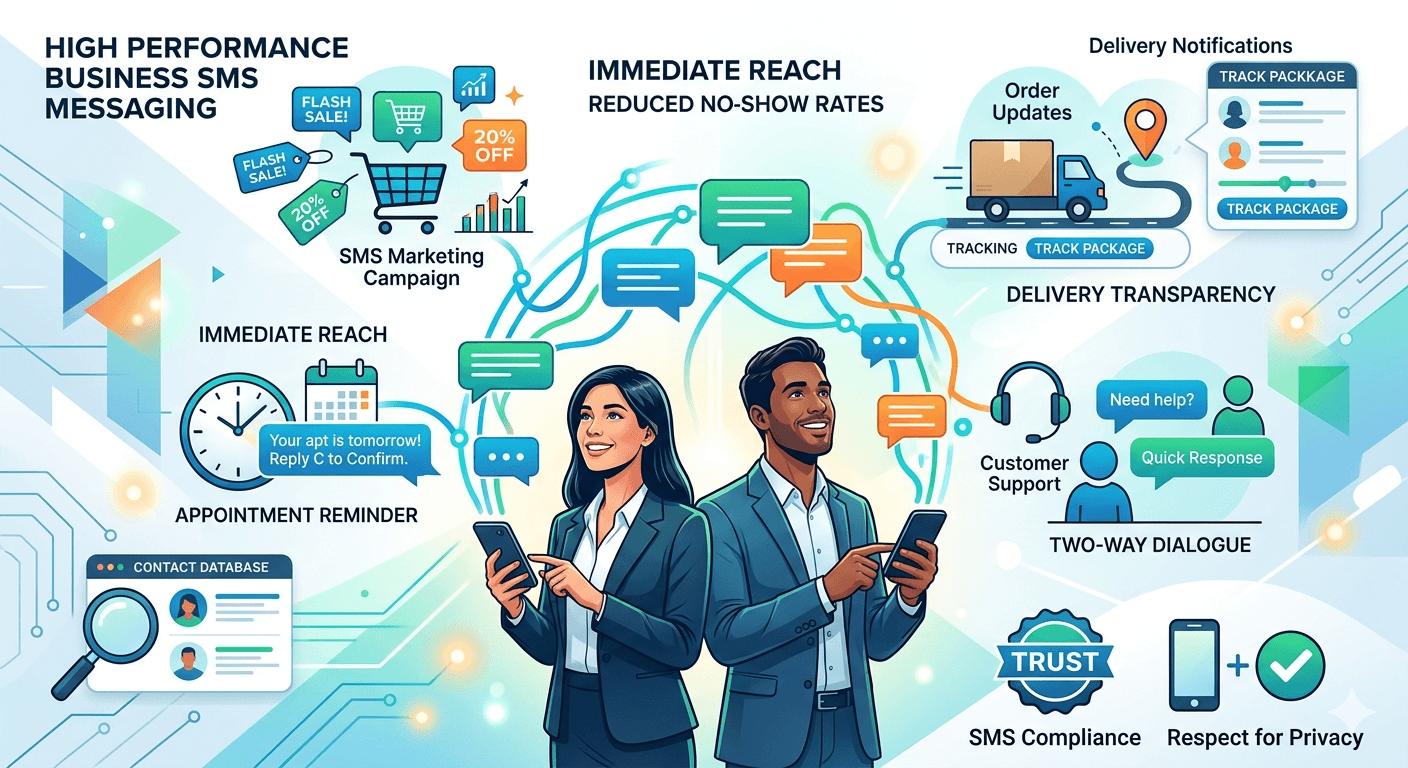
The versatility of sms in business is reflected in the wide variety of use cases across different industries. From retail and healthcare to logistics and human resources, texting has become the preferred method for high-stakes communication. The immediacy of the medium ensures that important information is seen quickly, which is why it is frequently used for time-sensitive notifications. Whether it is a flash sale or an emergency office closure, the high-performance nature of business sms messaging makes it the most reliable channel for getting a message in front of a pair of eyes within minutes of sending.
-
SMS Marketing Campaigns
Marketing campaigns remain one of the most popular uses for a bulk sms platform. By sending personalized offers, discount codes, and product announcements, brands can see immediate spikes in web traffic and sales. The benefits of bulk sms marketing are particularly evident when combined with time-limited offers, as the “ping” of a text message creates a sense of urgency that email simply cannot match. Marketers use segmentation to ensure that the messages are relevant to the recipient, which helps in maintaining high engagement rates and low unsubscribe numbers.
-
Appointment Reminders and Confirmations
In service-based industries like healthcare, legal, and beauty, missed appointments can lead to significant revenue loss. Implementing automated appointment reminders via business sms has been shown to reduce “no-show” rates by up to 40% in some sectors.
According to a study by the Medical Group Management Association, practices that use automated text reminders see a marked increase in patient adherence and operational efficiency.
These texts often include a simple “Reply C to Confirm” option, which allows the business to update their schedule in real-time based on the customer’s response.
-
Order Updates, Delivery Notifications, and Tracking
The e-commerce boom has made delivery transparency a top priority for consumers. Using a bulk sms gateway to provide real-time order updates—from “order confirmed” to “out for delivery”—greatly enhances the customer experience. These transactional messages provide peace of mind and reduce the burden on customer support teams, as buyers are kept informed at every stage of the fulfillment process. Providing a direct tracking link within the text message allows the customer to check their package status with a single tap, further streamlining the post-purchase journey.
-
Customer Support and Two-Way Messaging
Modern consumers expect to communicate with brands on the same channels they use with friends. Two-way business text messaging allows support agents to handle multiple inquiries simultaneously, which is more efficient than phone-based support. This use case transforms the bulk sms solution from a one-way broadcasting tool into a dynamic service desk. Customers can text in questions about product availability or store hours and receive a quick, personal response. This interaction not only solves the immediate problem but also builds a stronger emotional connection between the consumer and the brand.
Fundamentals of Text Message Marketing: Contact Database
The success of any sms for business initiative is entirely dependent on the quality of the contact database. A business cannot simply buy a list of numbers and start texting; this is not only ineffective but also illegal in many jurisdictions. The fundamentals of a healthy contact database involve gathering numbers through legitimate opt-in methods, such as website pop-ups, keyword-to-shortcode entries, or at the point of sale. A high-quality bulk sms services provider will emphasize the importance of list hygiene, ensuring that dead numbers are removed and that every recipient has a clear path to opt-out if they no longer wish to receive communication.
Managing this database requires a bulk sms system that can handle complex data fields, allowing for advanced segmentation. For example, a business might want to send a specific message only to customers who haven’t made a purchase in the last six months. By leveraging these bulk sms platform features, marketers can move away from generic “blast” messaging and toward a more tailored approach. This level of precision is what defines high-performance business sms messaging, as it respects the user’s personal space by only delivering content that is genuinely useful or interesting to them.
How do you use incoming messages to grow your audience?
Incoming messages are a goldmine for audience growth and engagement. By encouraging customers to text a specific keyword to your number—such as “JOIN” or “SAVE”—you can automatically add them to your marketing list while simultaneously providing them with an immediate reward like a discount code. This is one of the most effective bulk sms features for building a list from scratch. Furthermore, analyzing the content of incoming messages can provide valuable insights into customer needs and common pain points, allowing the business to refine its messaging and product offerings based on direct, real-time feedback from its most engaged users.
What Is SMS Compliance and Why Does It Matter?
Compliance is perhaps the most critical aspect of what is sms businesses must understand to avoid severe legal and financial repercussions. In the United States, the Telephone Consumer Protection Act (TCPA) and the Cellular Telecommunications and Internet Association (CTIA) set strict guidelines on how businesses can interact with consumers via text. Compliance requires that businesses obtain explicit written consent before sending any marketing messages and that they provide an easy, automated way for users to opt-out, usually by texting “STOP.” Failure to adhere to these rules can result in fines ranging from $500 to $1,500 per individual message sent.
Beyond legal requirements, compliance matters because it protects the integrity of the business sms ecosystem. If carriers detect that a number is sending unsolicited or prohibited content, they will block the number and may even blacklist the entire brand from their network. Using a reputable bulk sms services provider ensures that your campaigns are automatically checked for compliance markers, such as including a mandatory “Stop to opt-out” footer. By prioritizing transparency and respect for consumer privacy, brands can build long-term trust, which is the ultimate goal of any sms in business strategy.
Features to Look for in a Business Messaging Platform
Choosing the right bulk sms platform features is essential for ensuring that your messaging strategy can scale as your business grows. A basic provider might only offer simple message sending, but a high-performance partner will provide a suite of tools designed to optimize every aspect of your outreach. You should look for a system that offers detailed analytics, allowing you to see exactly how many people received, opened, and clicked on your messages. These insights are vital for refining your strategy and justifying the costs associated with wholesale sms rates and platform subscriptions.
-
Two-way messaging capabilities to allow for interactive customer conversations.
-
Advanced automation and trigger-based workflows for hands-free engagement.
-
Contact segmentation and deep personalization tools to increase relevance.
-
Seamless integrations with existing CRM and marketing automation platforms.
-
Pre-designed templates and scheduling features to save time and maintain consistency.
-
Scalability to handle millions of messages without a drop in delivery speed.
-
10DLC and short code registration support to ensure carrier compliance.
-
Real-time reporting and conversion tracking to measure marketing success.
A comprehensive bulk sms solution should also provide high-level security features, such as two-factor authentication for account access and encrypted data storage for your contact lists. As businesses handle more personal data, the security of their communication platforms becomes a top priority. Furthermore, the ability to manage multiple “sub-accounts” or departments under one main umbrella is a useful feature for larger organizations that need to keep marketing, support, and HR communications separate but centrally managed for billing and oversight purposes.
How to Set Up Business SMS for Your Brand
Setting up business sms for your brand is a structured process that requires careful planning to ensure both technical and legal success. It begins with defining your objectives and selecting the right partner to help you achieve them. Whether you are focused on customer retention through support or customer acquisition through marketing, the setup phase establishes the foundation for all future interactions. Following a step-by-step guide helps in avoiding common pitfalls, such as failing to register your brand with the Campaign Registry or launching a campaign without a proper opt-in mechanism in place.
-
Choose a reputable bulk sms services provider that aligns with your volume and technical needs.
-
Select the best number type for your use case, such as a 10DLC for local feel or a short code for high volume.
-
Register your brand and campaigns with the relevant regulatory bodies to ensure carrier deliverability.
-
Create your initial sms contact list by migrating existing opted-in customers or launching new opt-in campaigns.
-
Set up automated responses and workflows, such as “welcome” messages or “out of office” replies.
-
Design engaging and concise sms templates that reflect your brand voice and include clear calls to action.
-
Integrate your sms platform with your CRM to ensure that customer data is synchronized across all channels.
-
Conduct thorough testing by sending trial messages to internal devices to check formatting and links.
-
Launch your first campaign and monitor the real-time analytics to measure initial performance and engagement.
Once the initial setup is complete, it is important to continuously monitor and optimize your efforts. The benefits of bulk sms marketing are most apparent when the data is used to tweak send times, message frequency, and offer types. For instance, you might find that your audience engages more with texts sent on Tuesday mornings than Friday afternoons. A data-driven approach ensures that your text messaging for businesses remains a high-performance channel that delivers a consistent return on investment while maintaining a positive relationship with your customer base.
Read More: How to Reduce VoIP Downtime and Boost Productivity?
Conclusion
In conclusion, business sms stands as a pinnacle of modern communication efficiency, offering unparalleled reach and engagement in an increasingly distracted world. By understanding the intricacies of bulk sms systems, compliance requirements, and the various features of a professional messaging platform, organizations can unlock a powerful channel for both marketing and operational success. The transition from traditional communication to a mobile-first, sms-centric approach requires a commitment to transparency, consent, and technical excellence.
As we look toward the future, the role of business sms messaging will only continue to expand as more industries recognize its value in providing real-time, personal connection at scale. Whether you are a small local business or a global enterprise, the ability to land a message directly in your customer’s pocket is an asset that cannot be ignored. By following the best practices and strategic steps outlined in this guide, you can build a high-performance messaging program that respects your audience’s privacy while delivering significant, measurable results for your brand.
FAQs About Business SMS
-
What is SMS?
SMS stands for Short Message Service, a standardized communication protocol used to send text-only messages between mobile devices. In the context of an organization, business sms refers to the use of this protocol for professional communication between a brand and its customers or employees. Unlike newer internet-based messaging apps, SMS works on almost every mobile phone in the world without requiring a data plan or a specific application, making it the most universally accessible mobile communication channel available.
-
How can I send SMS to my business contacts?
You can send SMS to your business contacts through a dedicated bulk sms platform or a business communication app like VBC. Start by importing your contact list into the platform, ensuring each entry has a valid mobile number and has opted in to receive messages. You can then compose your message in the dashboard, add any necessary links or personalization fields, and select your recipients. Finally, hit send to deliver the message instantly or schedule it for a future date to ensure optimal timing for your audience.
-
What are some general benefits of communicating with customers via business SMS?
Communicating with customers via business sms offers numerous benefits, including significantly higher open rates than email and a much faster response time from recipients. It provides a direct and personal way to reach customers where they spend most of their time—on their phones. Additionally, it is highly cost-effective, allows for easy automation of routine tasks like reminders or shipping updates, and improves overall customer satisfaction by providing a convenient, low-friction channel for support and inquiries.
-
Do customers need to opt in first?
Yes, in almost all professional and legal contexts, customers must explicitly opt-in before a business can send them any form of marketing or non-essential text messages. This is a core requirement of laws like the TCPA in the US and the GDPR in Europe. Opt-in can be collected via a web form, a text-to-join keyword, or a physical sign-up sheet. Failing to secure this consent can lead to significant legal fines and may result in your business being permanently blocked by major mobile carriers.
-
What industries benefit most from business SMS?
While almost any industry can benefit, business sms is particularly transformative for retail, healthcare, real estate, and professional services. Retailers use it to drive immediate sales through flash promotions, while healthcare providers use it to reduce missed appointments. Real estate agents utilize texting for quick lead follow-ups, and service industries like plumbing or HVAC use it for real-time dispatch and delivery updates. Any business that relies on timely communication and customer reminders will find massive value in this channel.
-
What types of content can businesses send through SMS?
Businesses can send a wide variety of content through SMS, ranging from marketing promotions and discount codes to transactional alerts like order confirmations and password resets. Other common content types include appointment reminders, customer surveys, internal company alerts for employees, and two-way support conversations. However, it is important to keep the content concise and focused, as standard SMS messages are limited to 160 characters before being broken into multiple segments by the mobile carriers.
-
Which SMS service performs best for business messaging?
The best performing SMS service depends on your specific needs, but top-tier providers like SMSAPI, Twilio, and Vonage are highly regarded for their reliability and global reach. A high-performance service is characterized by its high delivery rates, robust API documentation, and strong compliance support. When choosing, look for a provider that offers wholesale sms pricing, detailed real-time analytics, and localized support to ensure that your business sms strategy remains effective and compliant across different international markets.