
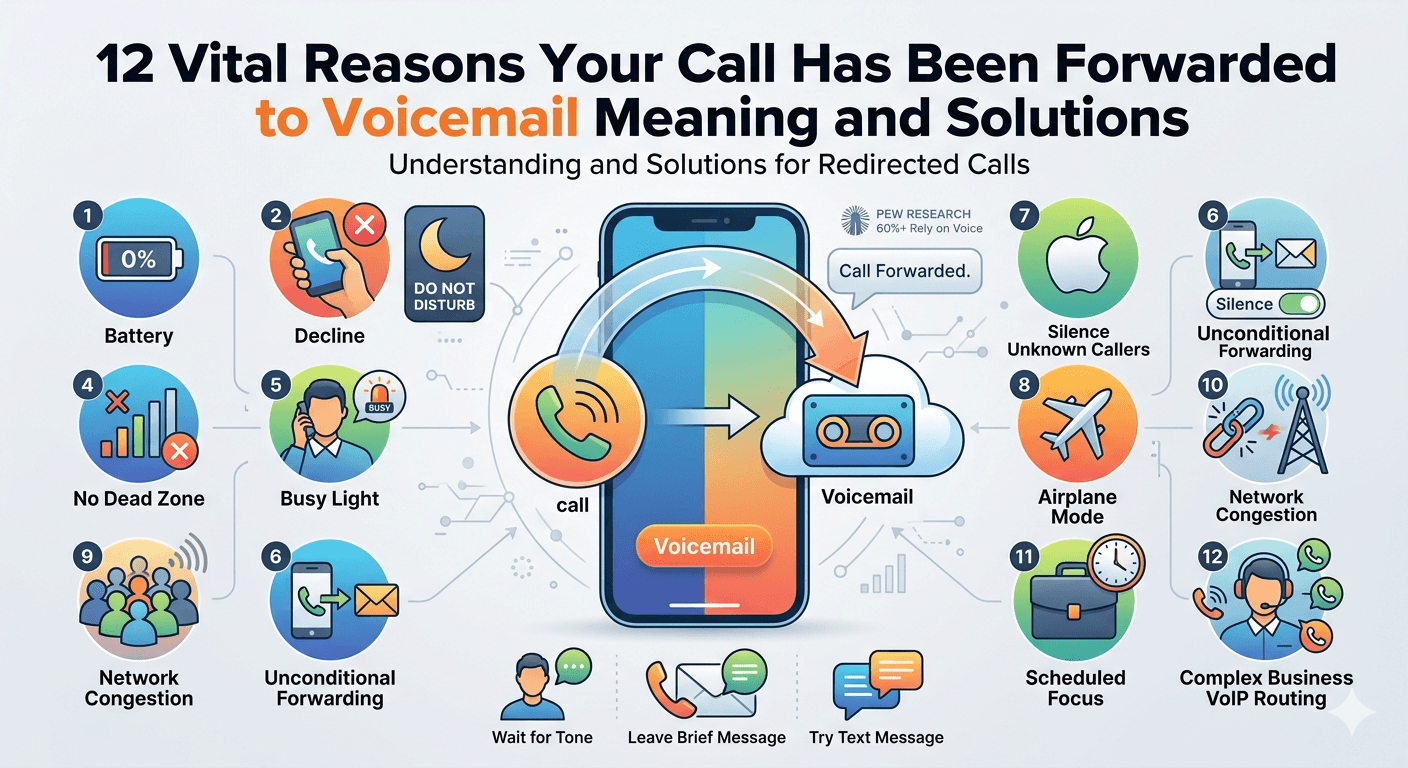
When you dial a contact and immediately hear an automated recording stating your call has been forwarded to voicemail meaning that your connection has been redirected from a live conversation to a digital recording system. This occurrence typically happens when the recipient is unavailable, their phone is powered off, or they have specific network settings enabled that prevent incoming calls from ringing through. Understanding this process helps callers determine whether they are being ignored, if there is a technical glitch, or if the recipient is simply in a location with poor cellular reception or active restrictions.
Understanding Call Forwarding to Voicemail
“Your call has been forwarded to voicemail” means the person you’re calling could not answer the phone, so the call was redirected to their voicemail system. This can happen when the phone is busy, switched off, out of coverage, in Do Not Disturb mode, or when the user manually rejects the call. To fix it, try calling again later, send a text message, or ask the person to check their network signal and call forwarding settings.
The mechanism behind the phrase your call has been forwarded to voicemail meaning involves a complex interaction between your service provider and the recipient’s carrier. In the telecommunications world, call forwarding is a feature that redirects an incoming call to another destination, which in this case is the recipient’s personal mailbox. This process is generally seamless, but for the caller, it can be a source of confusion. The system is designed to ensure that even if a person cannot answer their phone, the caller still has a way to convey their message through an asynchronous communication channel.
When a call is initiated, the network attempts to locate the destination device. If the device does not respond within a specific timeframe or if it sends back a busy signal, the network follows a pre-programmed path to the voicemail server. This redirection is what triggers the automated message. In modern mobile-first communication, this is a standard feature of almost every cellular plan globally, serving as a digital receptionist that handles overflow traffic.
Research by the Pew Research Center suggests that while text messaging has become the dominant form of communication, over 60 percent of adults still rely on voice messages for professional or urgent personal matters, highlighting the continued importance of understanding these automated responses.
Common Reasons for Calls Being Forwarded to Voicemail
There are several technical and personal reasons why a call might be rerouted. Identifying these can help you manage your expectations regarding a callback.
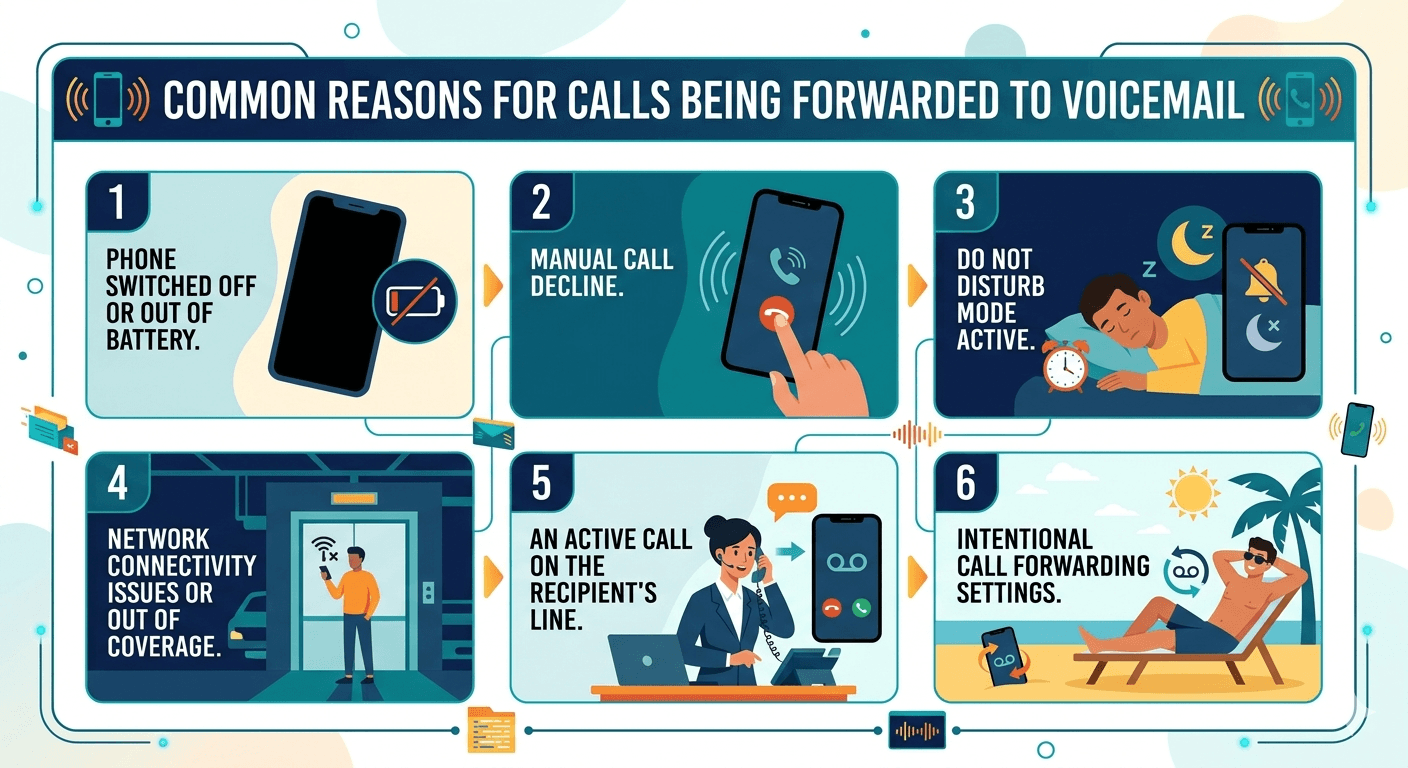
1. Recipient’s Phone is Switched Off or Out of Battery
One of the most frequent reasons your call has been forwarded to voicemail is that the recipient’s device is completely powered down. When a phone is off, it cannot register with the nearest cellular tower. Since the network cannot find an active device to ring, it immediately sends the caller to the voicemail system. This often happens without any ringing sounds on the caller’s end, providing an immediate redirection.
2. Manual Call Decline
If you hear one or two rings followed by the forwarding message, it is highly likely that the recipient manually declined your call. Most smartphones allow users to swipe or press a button to send an incoming call directly to voicemail. This is a common practice when someone is in a meeting, driving, or otherwise occupied and cannot engage in a conversation at that moment.
3. Do Not Disturb Mode is Active
The Do Not Disturb (DND) feature is a powerful tool for managing digital well-being. When this mode is active, the phone will not ring or vibrate for incoming calls. Depending on the user’s settings, the call may be sent to voicemail immediately or after a silent period. On many devices, if you call twice within a few minutes, the second call might break through the DND filter, but the initial attempt will usually result in your call being forwarded.
4. Network Connectivity Issues or Out of Coverage
If a user is in a “dead zone” where signal strength is non-existent, the network treats the phone as if it were turned off. This happens frequently in elevators, underground parking lots, or remote rural areas. The carrier’s infrastructure attempts to ping the device, and when no response is received, it triggers the forwarding sequence to ensure the caller can at least leave a recorded message.
5. An Active Call on the Recipient’s Line
When a person is already on another call and does not have call waiting enabled, or chooses to ignore the second incoming call, the network redirects the new caller. This prevents the line from sounding “busy” in the traditional sense and instead offers a productive alternative. In business environments, this ensures that no potential lead or client is left without a way to reach the company.
6. Intentional Call Forwarding Settings
Some users proactively set up their phones to forward all incoming calls to voicemail. This might be done during a vacation, a dedicated “deep work” session, or when using a secondary line. In these cases, the forwarding is a deliberate choice made within the device settings to manage time and availability effectively.
Understanding Call Forwarding to Voicemail on iPhone
For users within the Apple ecosystem, the your call has been forwarded to voicemail iphone meaning often relates to specific iOS features. The iPhone integrates its software deeply with carrier services, leading to unique behaviors. For instance, the Silence Unknown Callers feature can automatically send any number not in the user’s contact list straight to voicemail. This is a robust defense against spam, but it can be frustrating for legitimate callers using a new or unlisted number.
Furthermore, Apple’s Focus modes allow users to create custom profiles for work, sleep, or personal time. Each profile can be configured to forward calls to voicemail from specific groups of people while allowing others to ring through. If you find your call is being forwarded on an iPhone, it may be due to the recipient having an active Focus filter that excludes your number during certain hours of the day. You can learn more about managing these features on the official Apple Support page.
Types of Call Forwarding Settings: Unconditional vs. Conditional
Call forwarding is not a monolithic feature; it operates under different logic gates depending on the user’s requirements.
Unconditional Call Forwarding: This setting redirects all incoming calls to voicemail or another number without attempting to ring the recipient’s phone first. It is often used when a phone is being repaired or when a user wants a total break from interruptions.
Conditional Call Forwarding: This is the more common setup. It only triggers the forwarding mechanism if certain conditions are met, such as the line being busy, the call going unanswered after a set number of rings, or the device being unreachable.
Understanding these distinctions helps in diagnosing why your call was forwarded. If the call never rings, it is likely unconditional forwarding or the phone is off. If it rings several times, it is conditional forwarding based on no-answer logic.
Does Call Forwarded Mean You’re Being Blocked?
A common anxiety among callers is whether being forwarded to voicemail indicates they have been blocked. While it is a possibility, it is rarely the only explanation. When a number is blocked, the experience varies by carrier, but often the call will ring once and then go to voicemail, or it will go straight to voicemail every single time without fail.
However, many other factors like “Do Not Disturb” or poor signal produce identical symptoms. A key indicator of being blocked is if your calls to that specific person consistently go to voicemail over several days and at different times of the day, while calls from other numbers might get through. It is important to avoid jumping to conclusions, as technical issues are statistically more likely than a deliberate block in most social and professional contexts.
What Does Your Call Has Been Forwarded to an Automatic Voice Message System Mean?
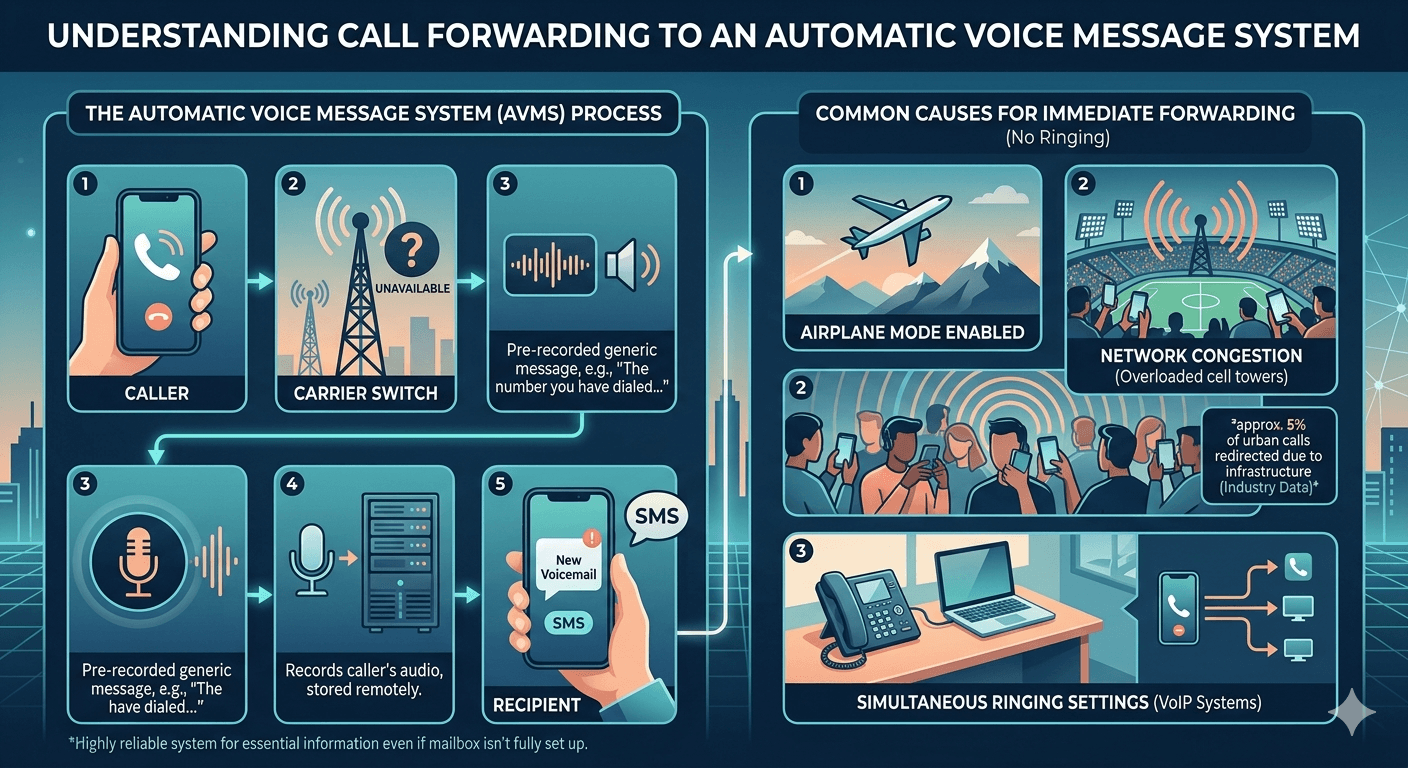
You might occasionally hear a slightly different phrasing: “Your call has been forwarded to an automatic voice message system.” This usually indicates that the recipient has not recorded a personalized greeting. Instead, they are using the default system provided by their carrier (such as Verizon, AT&T, or Vodafone).
How the Automatic Voice Message System Works:
The call hits the carrier’s switch.
The switch identifies that the subscriber is unavailable.
The system plays a pre-recorded generic message, often reciting the phone number.
The system records the caller’s audio and stores it on a remote server.
A notification (like a visual voicemail alert or an SMS) is sent to the recipient to inform them of the new message.
This system is highly reliable and ensures that even if a user hasn’t set up their mailbox fully, callers can still leave essential information.
When Does Your Phone Get Forwarded Without Ringing?
There are specific scenarios where the ringing phase is bypassed entirely. This is often referred to as “immediate forwarding.”
Airplane Mode: If the recipient is traveling and has Airplane Mode enabled, the phone’s transceivers are off, leading to an immediate voicemail redirect.
Network Congestion: In highly crowded areas like stadiums or during emergencies, cellular towers can become overloaded. The network may prioritize emergency calls and push standard voice traffic directly to voicemail systems to conserve bandwidth.
Simultaneous Ringing Settings: Some professional VoIP systems are set to ring multiple devices or go to a central voicemail if the primary line is flagged as away.
Recent industry data suggests that network latency and congestion account for approximately 5% of all calls being redirected to voicemail in urban centers, demonstrating that the issue is frequently infrastructural rather than personal.
Implications of Call Forwarding for Callers and Recipients
For the caller, being forwarded can be a minor inconvenience or a major hurdle, especially in time-sensitive situations. It requires a shift from real-time synchronization to a delayed response model. For the recipient, call forwarding serves as a vital gatekeeping tool. It allows for better time management and ensures that they can review messages at a convenient time.
In a business context, the your call has been forwarded to voicemail meaning can impact customer satisfaction. If a client constantly reaches a voicemail system instead of a live representative, it may signal that the business is understaffed or unresponsive. Therefore, many companies utilize sophisticated “Find Me/Follow Me” services that attempt to ring multiple numbers before finally settling on a voicemail box.
What to Do When Your Call is Forwarded to Voicemail
If you find yourself being redirected, following a few professional steps can ensure your message is heard and acted upon.
Wait for the Tone: Do not hang up immediately. Wait for the beep to ensure the system is recording.
State Your Purpose Clearly: Provide your name, the reason for your call, and your contact information.
Keep it Brief: Most voicemail systems have a time limit (often 2-3 minutes). Aim for a concise message of under 60 seconds.
Verify the Number: If you suspect a technical error, double-check that you dialed the correct digits.
Use Alternative Channels: If the matter is urgent, follow up with a text message or an email, as these are often viewed more quickly than voicemail.
Significance of Voice Messages in Modern Business Communication
Despite the rise of instant messaging, the nuances of a voice message remain unparalleled. A voice carries tone, urgency, and emotion that text often fails to convey. In high-stakes negotiations or sensitive personal matters, the your call has been forwarded to voicemail meaning represents an opportunity to leave a thoughtful, verbal record of your intent.
Effective interaction techniques involve recognizing when to leave a message and when to wait. In professional settings, leaving a voicemail shows persistence and a desire for direct engagement. Furthermore, many modern systems now include “Voicemail to Text” features, which transcribe the audio into a readable format for the recipient. This bridge between audio and text has revitalized the utility of the traditional voicemail system, making it more accessible and easier to manage in a fast-paced work environment.
Read More: What is Voicemail Drop? Maximizing sales
Conclusion
Navigating the nuances of modern telephony requires an understanding of how automated systems handle our connections. Your call has been forwarded to voicemail meaning is essentially a signal that the direct path to your recipient is temporarily closed, but a secondary communication channel is open. Whether the cause is a dead battery, a busy professional in a meeting, or a simple lack of signal, the voicemail system remains a cornerstone of reliable communication. By recognizing the various reasons behind this redirection—from manual declines to network issues—you can better manage your interactions and maintain effective communication regardless of the technical hurdles encountered.
Frequently Asked Questions
What does it mean when a call is forwarded to voicemail?
It indicates that the recipient is unable to take your call at the moment, and the cellular network has redirected your connection to their digital mailbox. This can happen because the phone is off, the line is busy, the user declined the call, or they have a “Do Not Disturb” setting active. It is a standard feature designed to capture messages when live conversation isn’t possible.
How do messaging systems function in the context of call forwarding?
Messaging systems act as a storage hub. When a call is forwarded, the network routes the audio data to a specific server associated with the recipient’s phone number. Once the caller records their message, the server saves the file and sends a notification to the recipient’s device, allowing them to listen to the audio or read a transcription at their convenience.
Why is understanding call forwarding important in today’s mobile-first world?
Understanding this process helps manage expectations and reduces anxiety regarding whether a call was intentionally ignored or if there was a technical problem. In a world where immediate response is often expected, knowing that factors like poor signal or “Do Not Disturb” modes are common reasons for forwarding allows for more patient and effective professional and personal relationships.
How prevalent is the use of voice messages in communication?
While text-based communication is dominant, voice messages remain highly prevalent, particularly in business and among older demographics. Voice messages provide a level of detail and emotional context that text lacks. Many people still prefer leaving a voicemail for complex explanations or urgent matters that require a personal touch.
What is the significance of effective interaction techniques in business communication?
Effective interaction involves choosing the right medium for the message. Knowing when to leave a voicemail versus sending an email can determine the success of a business relationship. A well-placed voicemail can demonstrate professionalism and urgency, while understanding why a call was forwarded allows a businessperson to time their follow-up attempts more strategically.
What does it mean if your call is been forwarded to voicemail?
It means the same as “forwarded to voicemail,” simply using a slightly different grammatical structure in the automated prompt. The core meaning remains that the recipient’s device did not or could not accept the live call, triggering the redirection to the automated recording system.
How do you know when someone declines your call?
You can usually tell a call was declined if it rings only once or twice and then immediately switches to the voicemail greeting. In contrast, a call that goes to voicemail without any ringing typically suggests the phone is off, in airplane mode, or the caller is blocked.
How do you know if someone silenced your calls?
Silenced calls often behave similarly to those where the user is in “Do Not Disturb” mode. The phone might ring on your end for the full duration before being forwarded, but the recipient’s phone will not make any sound. If they have “Silence Unknown Callers” on, your call will go straight to voicemail if you are not in their contacts.
Does forwarded to voicemail mean they declined?
Not necessarily. While manual decline is one reason, it could also mean the phone lost signal exactly when you called, the battery died, or an automated “Do Not Disturb” schedule was active. It is impossible to be 100% certain of a manual decline without confirmation from the recipient.