
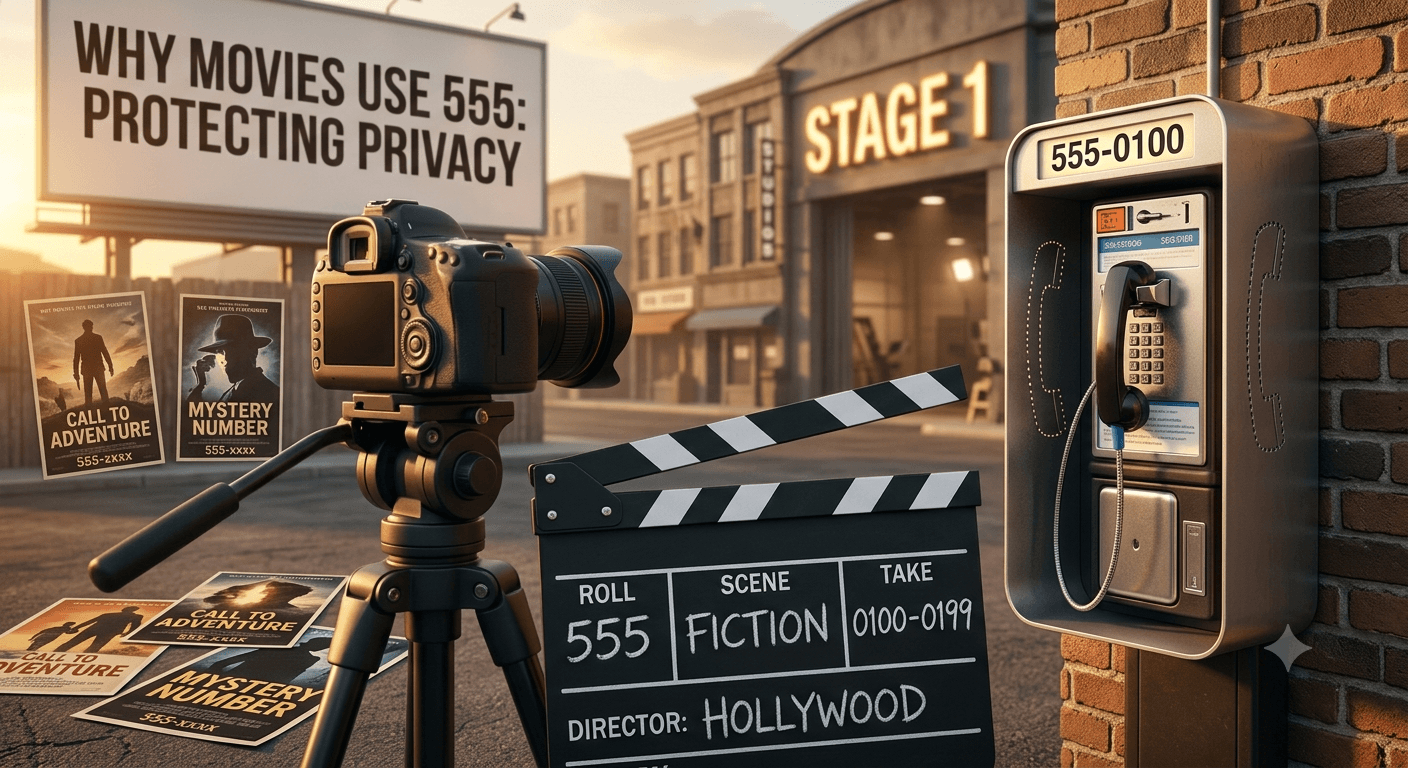
Why movies use “555” is a question that bridges the gap between cinematic immersion and telecommunications logistics. This specific prefix serves as a safety net for filmmakers, ensuring that fictional characters can exchange contact information without inadvertently exposing real individuals to thousands of prank calls. While the practice has become a well-known trope, its origins are rooted in a formal agreement with phone companies to reserve a specific block of numbers for entertainment. By utilizing the 555-0100 through 555-0199 range, Hollywood maintains a boundary between the screen and reality, protecting the privacy of the general public.
The “555” Rule in U.S. Films
The history of why movies use “555” begins with the early days of the North American Numbering Plan. Before the digital age, telephone operators manually connected calls, but as the system moved toward automation, the industry needed a way to handle fictional representations. In the 1960s, the Bell System and other telecommunication giants recognized that viewers often attempted to call the numbers they saw in films or television shows. To prevent this, they designated the 555 prefix as a non-working block, specifically intended for directory assistance and testing. Over time, the entertainment industry adopted it as a standard tool for storytelling.
The transition from alphanumeric dialing to purely numerical systems solidified the use of this prefix. In older films, you might hear characters say “Klondike 5” followed by four digits. “Klondike” corresponds to the numbers 5 and 5 on a standard telephone keypad. This was a clever way to mask the artificiality of the number while adhering to the technical standards of the era. As the “Klondike” phrasing phased out, the simple 555 became the universal signal for a fictional identity, appearing in everything from action blockbusters to low-budget sitcoms.
While the 555 prefix is widely recognized, the North American Numbering Plan (NANPA) has actually narrowed the scope of what filmmakers should use. According to technical standards, only the numbers 555-0100 through 555-0199 are officially reserved for fictional use. This means there are only 100 “safe” numbers available for the thousands of productions created every year. This limitation often leads to the same phone numbers appearing in entirely different movie universes, creating an unintentional connection between unrelated characters and stories across the decades.
How Other Countries Handle It
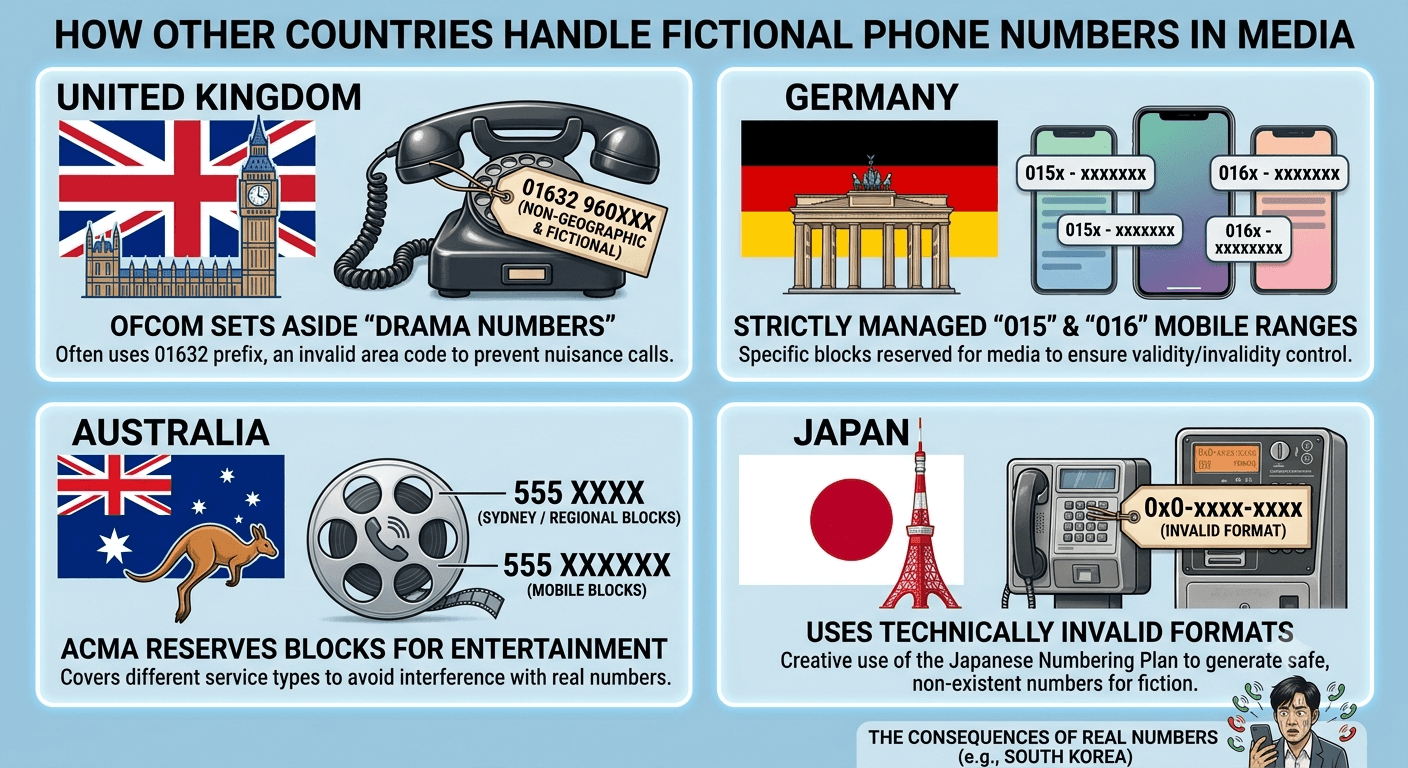
The phenomenon of why movies use “555” is largely a North American convention, but other countries have developed their own systems to address the same problem. In the United Kingdom, the communications regulator Ofcom has set aside specific ranges of numbers for use in television and radio dramas. These are often referred to as “drama numbers” or “fictional numbers.” For example, UK productions often use numbers starting with 01632, which is an area code that does not exist in the real world. This prevents British citizens from being hounded by curious fans of popular soaps or BBC dramas.
The approach in countries like Australia and Canada mirrors the American model but with local variations. In Australia, the Australian Communications and Media Authority provides specific prefixes for different types of services, such as mobile or landline, ensuring that any number seen on screen is disconnected or unassigned. Canada, being part of the North American Numbering Plan, follows the same 555 guidelines as the United States. This international cooperation is essential because media is consumed globally, and a number shown in a Toronto-based production could easily be dialed by someone in Los Angeles.
-
United Kingdom: Uses the 01632 prefix for non-geographic fictional landlines.
-
Germany: Employs various “015” and “016” ranges that are strictly managed for media.
-
Australia: Reserves blocks like 555 for specific entertainment purposes to avoid interference.
-
Japan: Often uses numbers that are technically invalid under their numbering plan.
Research into global telecommunications shows that the lack of a standardized fictional number can lead to significant real-world consequences. A notable example occurred in South Korea with the hit series Squid Game. The production team accidentally used a real eight-digit phone number, leading to the owner receiving thousands of calls and messages daily. This incident highlighted the importance of why movies use “555” or similar regulated blocks, as the individual suffered immense stress and was eventually offered compensation by the production company to resolve the issue.
Why It’s More Complex Than You Think
One of the reasons why movies use “555” is more complex than it appears is that not every 555 number is actually fake. For many years, 555-1212 has been the standard number for long-distance directory assistance across the United States and Canada. If a filmmaker were to use that specific number in a movie, the audience wouldn’t be calling a fictional character; they would be calling a real service provider. This distinction is vital for directors to understand, as using a “real” 555 number can still lead to legal complications or technical disruptions for phone companies.
Furthermore, the digital revolution has changed how we perceive phone numbers in media. With the rise of the internet, viewers can pause, screenshot, and analyze every frame of a film. This heightened scrutiny means that any number shown must be vetted thoroughly. If a production team moves outside the 555-0100 to 0199 range, they risk using a number that belongs to a real person. In the 2003 film Bruce Almighty, the filmmakers used a number without the 555 prefix, which happened to belong to a woman in Florida, a church in North Carolina, and several other people.
The fallout from the Bruce Almighty incident was a landmark case in why movies use “555” as a standard. The woman in Florida received dozens of calls per hour from people asking to speak to God. This resulted in the movie being edited for its home video release, where the number was changed to a 555-0199 prefix. This case serves as a cautionary tale for the industry, proving that even a seemingly random combination of digits can have a devastating impact on a private citizen’s life if it is not properly cleared by legal teams.
-
The 555-0100 to 555-0199 range is the only officially safe zone.
-
555-1212 is a real directory assistance line and should never be used.
-
Numbers outside the reserved range can lead to significant lawsuits and settlements.
-
Digital distribution allows for quick fixes but doesn’t erase the initial harm.
Behind the Scenes: How Productions Avoid Mistakes
To understand why movies use “555,” one must look at the rigorous clearing process used by major studios. Every script undergoes a “legal clearance” phase where researchers check names, addresses, and phone numbers. If a writer includes a phone number, the clearance department will usually insist on the 555 prefix. However, some directors find the 555 prefix to be distracting or “immersion-breaking” because it signals to the audience that they are watching something fake. To combat this, modern productions sometimes purchase real phone numbers.
When a production company purchases a real number, they effectively “own” that line for the duration of the film’s release and beyond. This allows them to show a realistic number on screen without the 555 prefix. Sometimes, they even set up a voicemail for the character. For instance, in the movie Magnolia, a real number was used, and if fans called it, they would hear a recorded message from one of the characters. This type of viral marketing is a creative alternative to the traditional reasons why movies use “555,” providing a deeper layer of engagement for the audience.
-
Step 1: The scriptwriter places a placeholder number in the dialogue or scene.
-
Step 2: The legal department reviews the number against a database of active lines.
-
Step 3: The production team decides between using a 555 number or purchasing a temporary real line.
-
Step 4: If a 555 number is chosen, it must fall within the 555-0100 to 555-0199 range.
-
Step 5: Visual effects or prop masters ensure the number is clearly visible but legally safe.
Another method involves using numbers that are technically impossible within the current telephone architecture. In some cases, filmmakers use a 1 or 0 as the second digit of the prefix, which in certain regions was historically reserved for internal switching purposes. However, as telecommunications technology evolves, these “impossible” numbers become less reliable. This is why movies use “555” most of the time; it is a permanent, federally recognized “safe harbor” that will not change regardless of how the infrastructure around it develops.
Culture Shapes the Numbers Too
The cultural perception of why movies use “555” has shifted from a necessary technicality to a pop-culture joke. Audiences are now so accustomed to the prefix that its presence often elicits a smirk or a “fourth-wall break” feeling. Because of this, some filmmakers go to great lengths to hide the phone number entirely. You might notice characters holding their thumbs over the middle digits of a phone screen or the camera cutting away just as a number is being dialed. These creative choices are direct responses to the ubiquity of the 555 trope.
In some instances, the use of a real number is intentional for marketing purposes. A classic example is the “867-5309/Jenny” song by Tommy Tutone. While not a movie, the song caused a national crisis for people who actually had that phone number. In the film Ghostbusters, the original TV commercial within the movie featured a real 800-number. Fans who called it were treated to a pre-recorded message from Bill Murray and Dan Aykroyd. This shows that while why movies use “555” is about safety, using a real number can be a powerful promotional tool if handled correctly.
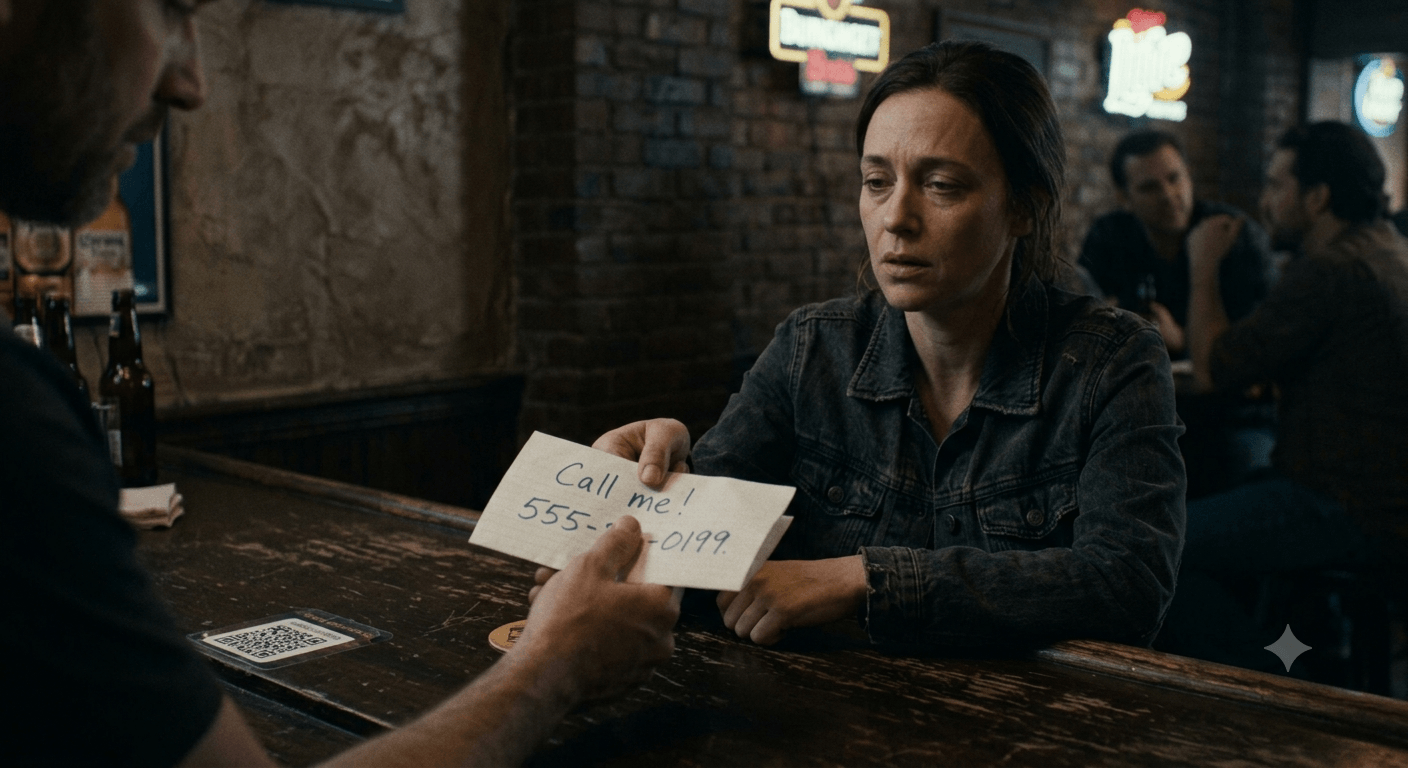
The evolution of social media has further complicated the landscape. Today, a character is more likely to exchange a social media handle or a QR code than a phone number. This shift reduces the reliance on the 555 prefix. However, the legacy of why movies use “555” remains a fascinating study in how industry standards are created to solve practical problems. It represents a rare moment where the technical needs of a utility company dictated the creative output of the world’s largest entertainment industry, creating a standard that has lasted for over half a century.
-
Pop culture references to 555 often appear in comedies like The Simpsons.
-
Modern marketing uses “Easter egg” numbers to drive social media engagement.
-
The “Jenny” number remains the most famous example of a number gone wrong.
-
Directorial choices often attempt to hide numbers to maintain a gritty, realistic tone.
Read More: Guide to AI Cold Calling: Setup, Strategies & Success
The Bottom Line
Understanding why movies use “555” reveals a lot about the intersection of law, technology, and art. What started as a simple solution to prevent the harassment of private citizens has turned into a recognizable cinematic convention. While the 555-0100 to 555-0199 range remains the gold standard for safety, the rise of viral marketing and the demand for realism have pushed filmmakers to find new ways to handle fictional contact information. Whether it is through purchasing real lines or using international “drama numbers,” the goal remains the same: protecting the public while telling a compelling story.
The “555” prefix is a testament to the power of the audience. It exists because people have an innate desire to connect with the stories they see on screen. By calling the numbers they see, fans are trying to reach into the fictional world. Telecommunication companies and filmmakers recognized this human impulse early on and built a system to accommodate it safely. As we move further into a digital-first world, the specific digits might change, but the reason why movies use “555” will always be relevant as long as creators want to keep their fans engaged without causing real-world chaos.
Ultimately, the truth behind fictional phone numbers is a blend of legal necessity and historical happenstance. The next time you see a character dial a 555 number, you aren’t just seeing a fake contact; you are seeing a piece of infrastructure designed to keep the peace. It is a small but essential detail that ensures the magic of the movies doesn’t result in a ringing phone for an unsuspecting person at three in the morning.
FAQs
-
Why do movies use 555 for phone numbers?
Why movies use “555” is primarily to protect private citizens from receiving unwanted calls. When audiences see a phone number on screen, many of them will attempt to dial it out of curiosity. By using the 555 prefix, which is largely unassigned to residential or business lines, filmmakers ensure that these curious viewers do not harass real people. This convention was established in the mid-20th century through an agreement between the film industry and telecommunication providers to create a safe zone for fictional data.
-
Why is 555 used for fake numbers?
The 555 prefix was chosen because it was historically used for directory assistance and internal testing by phone companies, meaning it wasn’t assigned to private individuals. In the North American Numbering Plan, the specific range from 555-0100 to 555-0199 is officially reserved for use in fictional media. This allows the industry to have a standardized “fake” prefix that is recognized across all regions of the United States and Canada, preventing legal liabilities and protecting the privacy of the general public.
-
What is the 555 number in movies?
The 555 number is a placeholder used in cinema to represent a telephone contact. While the 555 prefix itself is the most recognizable part, only a small block of numbers is technically reserved for fiction. These numbers appear in everything from classic films like Ghostbusters and Back to the Future to modern television shows. Because there are only 100 officially safe numbers (555-0100 through 555-0199), you will often see the exact same phone number used in dozens of different movies and TV series.
-
Do movies use real phone numbers?
Yes, some movies choose to use real phone numbers instead of the 555 prefix to enhance realism or for marketing purposes. When this happens, the production company usually purchases the number or obtains legal permission to use it. In some cases, fans who call these real numbers might hear a recorded message from a character or a promotion for the film. However, using a real number without permission can lead to massive lawsuits if that number happens to belong to an actual person or business.
-
Are there 555 numbers that actually work?
Outside of the 555-0100 to 0199 range, some 555 numbers are functional. The most famous example is 555-1212, which is the standard number for directory assistance in many parts of North America. Because some 555 numbers are active, it is crucial for filmmakers to stay within the specifically designated fictional range to avoid connecting viewers to real service operators or utility companies, which could lead to technical disruptions.
-
What happens if a movie uses a real person’s number?
If a movie accidentally uses a real person’s phone number, the consequences can be severe. The individual may receive thousands of calls, leading to emotional distress and the need to change their number. Legally, the production company can be held liable for damages, including negligence and invasion of privacy. This often results in the film being edited for future releases, such as streaming or DVD, to replace the real number with a safe 555 alternative.
-
Do other countries have their own version of 555?
Yes, many other countries have established their own sets of fictional numbers. For example, in the United Kingdom, Ofcom has designated specific prefixes like 01632 for fictional landlines and 07700 for fictional mobile numbers. These ranges are purposefully not assigned to the public, allowing British creators to maintain realism without the risk of fans calling real people. This system mirrors why movies use “555” in the United States but is tailored to the local numbering plan.
-
Is the use of 555 declining in modern films?
The use of 555 is becoming less common in high-budget productions as directors seek more realism. Since the 555 prefix is now a well-known trope, it can break the “suspension of disbelief” for some viewers. To avoid this, filmmakers may hide the number, show only part of the screen, or use a “cleared” real number that they have purchased. Despite this, the 555 prefix remains the standard fallback for most productions due to its legal simplicity and guaranteed safety.
-
Can I register a 555 number for myself?
While most 555 numbers are reserved for special purposes like directory assistance or fictional use, some were historically available for information service providers. However, the general public cannot typically register a 555 number for personal use. The North American Numbering Plan Administrator (NANPA) manages these assignments strictly to ensure that the fictional range remains available for media and that the service ranges remain functional for the telecommunications industry.