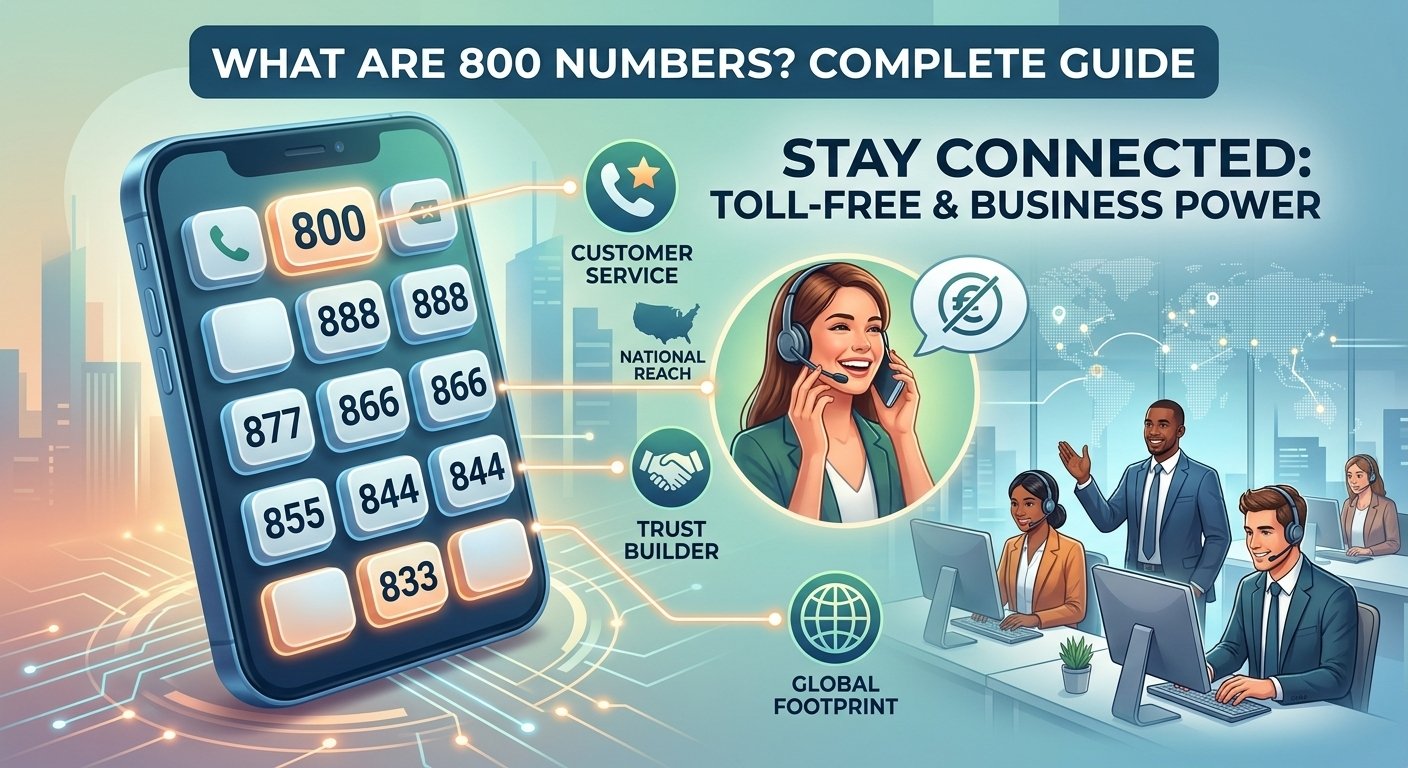
An 800 number commonly known as a toll-free number that allows callers to reach a business without paying any long-distance fees. Instead, the business covers the cost of the call. Instead, the subscriber receiving the call generally pays the associated service charges. In the North American Numbering Plan, toll-free prefixes include 800, 888, 877, 866, 855, 844, and 833.
What are 800 Numbers?
An 800 number is a toll-free telephone line assigned a specific three-digit prefix—such as 800, 888, 877, 866, 855, 844, or 833. Introduced in the 1960s, these numbers have evolved from manual switchboard setups into flexible digital assets managed over cloud network (VoIP) platforms.
Rather than relying on local area codes tied to a specific city, toll-free numbers operate on a nationwide level. Businesses use them to create a unified contact point for customer service, technical support, and sales across entire countries without opening physical regional offices.
You just type in the area code and there’s always a list. I’ve never not been able to get one, and then it’s attached to a phone and done. It’s just super quick to provision a phone. Randy Tanenhaus (IT Manager at ClassPass)
Are 800 numbers free?
For callers, 800 numbers are designed to be toll-free when the call is made from within the service area supported by the number. The business or organization receiving the call generally pays for the toll-free service. However, mobile-plan usage, international access, and availability can vary by carrier and location.
However, it refers strictly to the person making the call:
-
For the Business: The receiver pays the service provider a combination of flat monthly account fees and per-minute usage rates (typically $0.02 to $0.05/min) for all incoming airtime.
-
For Mobile Callers: If a caller uses a cell phone plan without unlimited minutes, their carrier may still deduct standard plan minutes for the duration of the call.
-
For International Callers: Dialing a US 800 number from abroad usually incurs standard international long-distance fees unless the business sets up a dedicated International Toll-Free Service (ITFS).
Who Regulates 800 Numbers?
The FCC oversees seven toll-free prefixes (800, 888, 877, 866, 855, 844, and 833), which are assigned to subscribers by Responsible Organizations (RespOrgs) on a first-come, first-served basis. To make sure fair distribution, the FCC prohibits the warehousing of numbers, while the non-profit entity Somos manages the centralized SMS/800 database used by RespOrgs for searches and reservations. Additionally, Somos administers the Texting and Smart Services (TSS) Registry to support text-enabled these numbers and multimedia routing. This comprehensive regulatory framework confirm that businesses have legal protection over their numbers and the right to port them between different service providers.
How Do 800 Numbers Function?
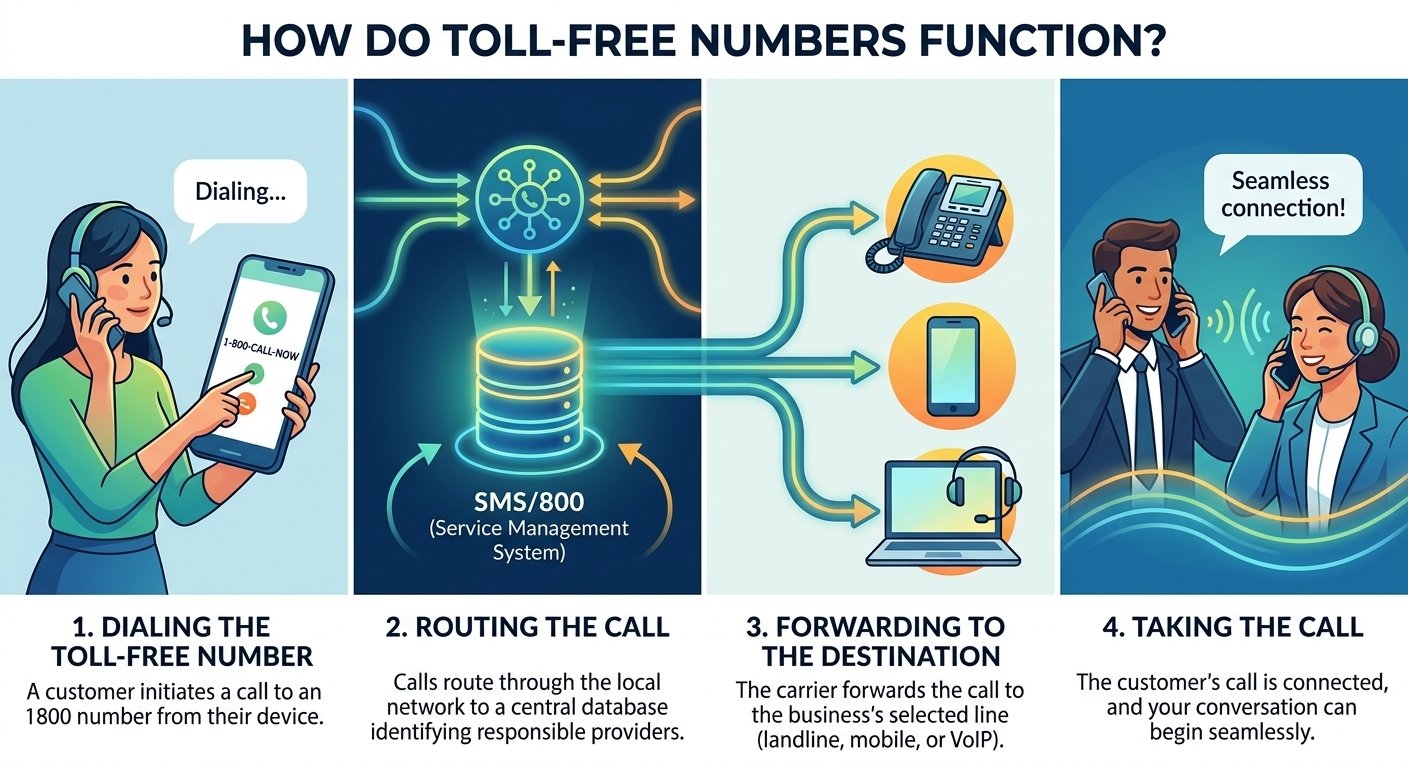
When a customer initiates a call to an 1800 number, the process happens in a fraction of a second. The call doesn’t just go to a local switchboard; it travels through a complex network designed to identify who is responsible for the bill and where the call should land. This invisible infrastructure is what makes the 800 number service so reliable for modern commerce. The process generally follows these four steps:
-
Dialing the 800 number: Just like a regular call, to make a toll-free call, all your customers have to do is dial the number on their phone or device to get started.
-
Routing the call: Calls will be routed through the local telephone network where the SMS/800 (Service Management System) database will identify the responsible toll-free number providers.
-
Forwarding to the destination: Once the carrier has been identified, the system will then forward the call to the relevant phone line provided by the business that owns the 800 number. This can be a landline, mobile phone, or VoIP line, depending on the setup chosen by the business.
-
Taking the call: Your customer’s toll-free call is then connected to you and you can carry out your conversation seamlessly.
Types of Toll-Free Numbers
1. Standard toll-free numbers
A regular 0800 or 800 number assigned by your provider is known as a standard toll-free number. These are the most common and the least expensive to maintain because they consist of a random string of digits following the prefix. They are ideal for internal business lines or situations where the specific digits are not the primary focus of a marketing campaign.
2. Vanity toll-free numbers
Vanity numbers are those that spell out a word or phrase on the phone keypad, such as 1-800-FLOWERS or 1-800-GOT-JUNK. These are highly memorable and effective for marketing, but they often cost more to acquire because popular letter combinations are in high demand. A vanity 1800 phone number can significantly boost brand recognition and recall among potential customers.
3. International toll-free numbers (ITFS)
International toll-free numbers are numbers that are toll-free for callers in a specific foreign country but route to your business located elsewhere. If you have customers in France, you can get a French toll-free number that forwards to your office in Germany or the US. This allows the caller to dial a local-looking number and pay nothing, while your business expands its global footprint without opening a physical office in every country.
Benefits of a 800 number for business
Investing in a business toll-free number may make all the difference for your organization and its customers. These numbers make your company more accessible and help you build a professional image that resonates with a broad audience. By offering a number toll free, you are signaling to your market that you value their time and their business.
-
Lower Customer Effort
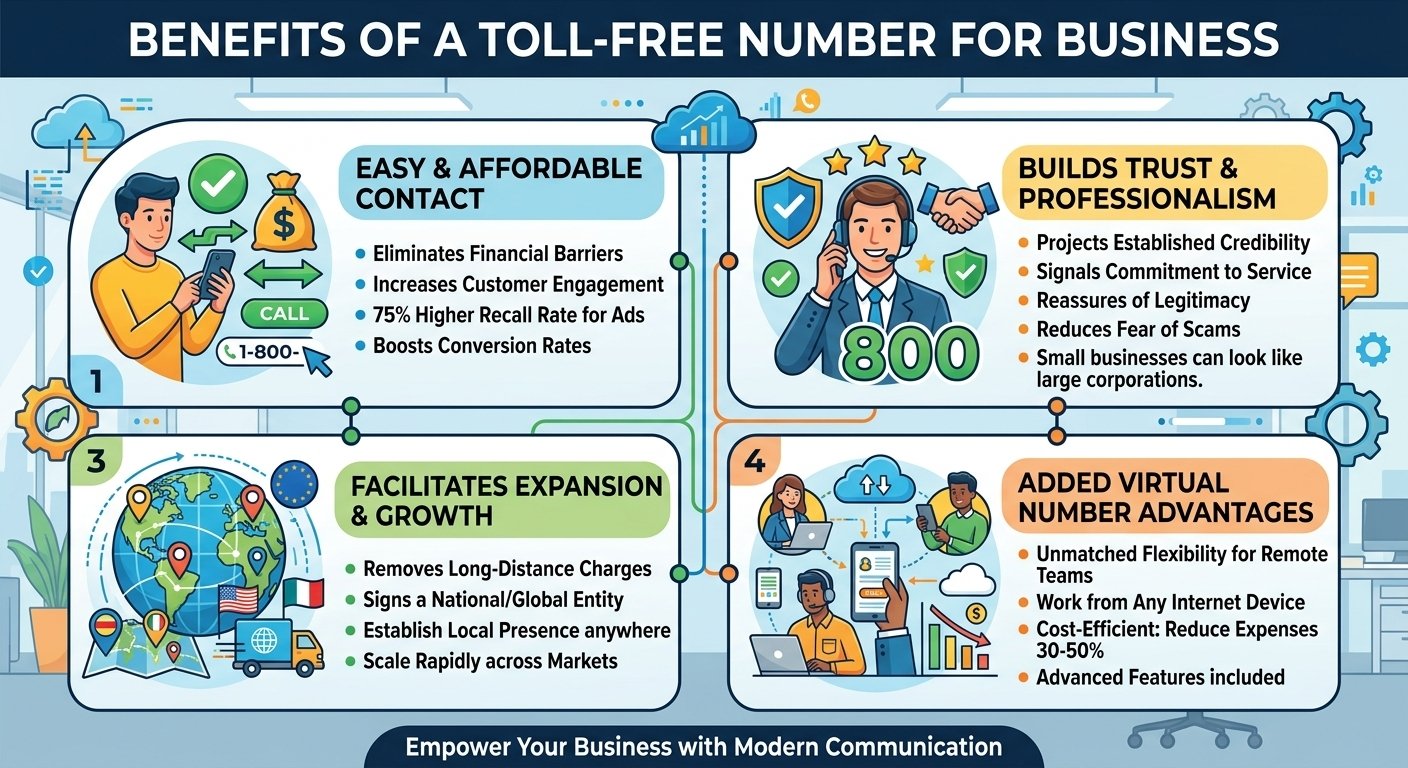
Toll-free numbers eliminate financial barriers for callers, significantly increasing the likelihood of customer engagement and frequent interactions. Because these numbers have a 75% higher recall rate than local ones, they are much easier for potential clients to remember from advertisements. This increased accessibility and memorability translate to better support experiences and higher conversion rates for both sales and customer service departments.
-
Brand Credibility
Providing a free communication channel reassures customers of a company’s legitimacy and commitment to service, reducing the fear of being scammed. Psychologically, toll-free numbers were historically reserved for major corporations, so utilizing one allows small businesses to project a sense of scale and established credibility. This professional image gives customers the confidence they need to invest in a brand, knowing they can reach out for support without incurring costs.
-
National Reach
A toll-free number removes the deterrent of long-distance charges, signaling that a business is a national entity capable of serving clients regardless of their location. When paired with VoIP services, companies can even establish a local presence in new regions without the overhead of physical offices. This flexibility allows organizations to scale rapidly and reach broader audiences while maintaining a consistent, professional identity across various geographic markets.
-
Added benefits of virtual toll-free numbers for business
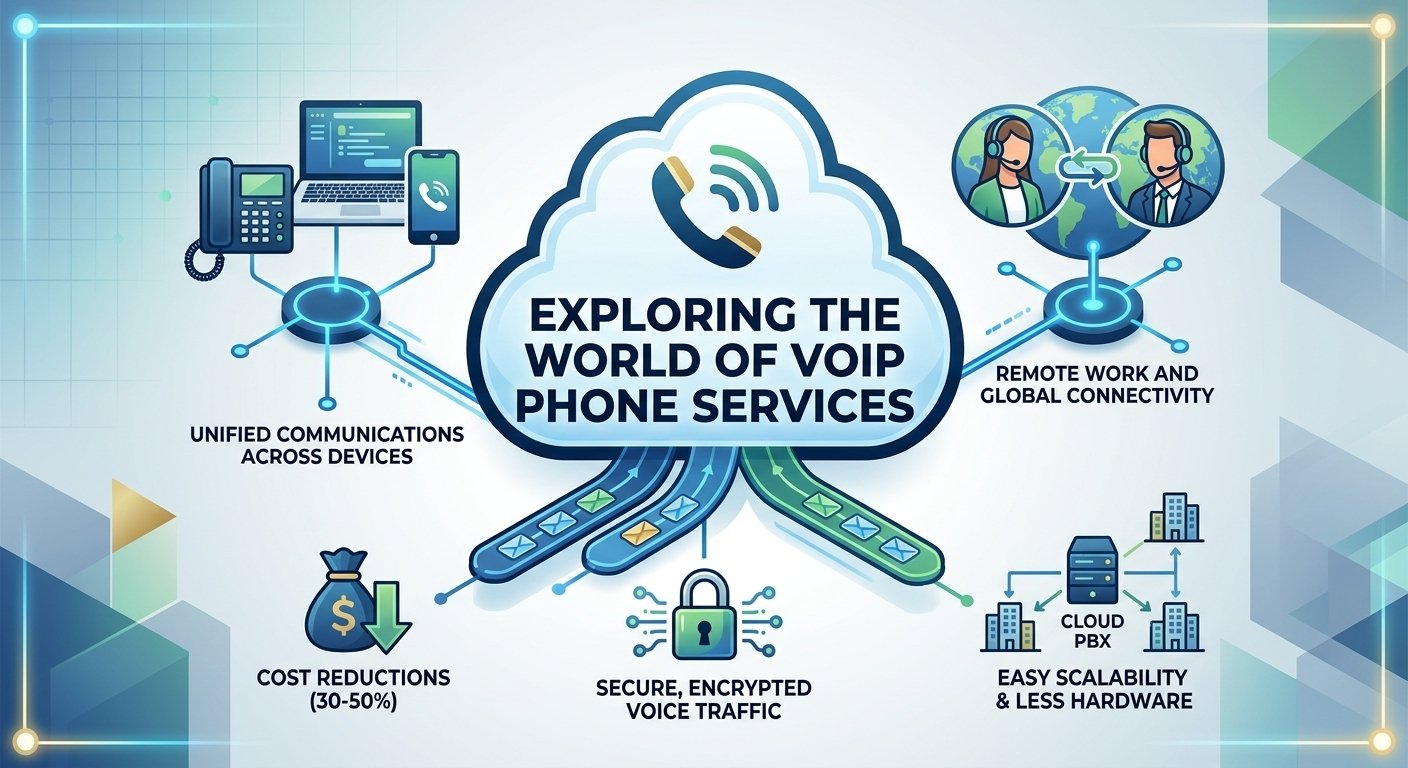
Modern virtual toll-free numbers offered through VoIP providers provide unmatched flexibility, allowing employees to handle calls from any internet-connected device while working remotely or traveling. These systems are also highly cost-efficient, often reducing overall communication expenses by 30% to 50% compared to traditional landline systems. By integrating toll-free minutes into affordable monthly subscriptions, businesses can enjoy advanced connectivity features without the high costs associated with legacy hardware.
How to get a 800 number
There are a few steps involved if you want to get a 800 number for business inquiries. The process is relatively simple but requires choosing the right partner to guarantee your number is managed correctly. Following a structured approach will help you secure the best 1800 number for your brand.
1. Research regulations
Toll-free numbers in the US are regulated by the FCC. This organization oversees the allocation and management of these assets, ensuring that numbers and Responsible Organizations conform to regulations and don’t hoard numbers they’re not using. Understanding these basic rules helps you realize that you don’t “own” the number in a permanent sense, but you have the right to use it as long as you pay for the service.
2. Choose a Responsible Organization
Responsible Organizations manage the assignment, distribution, and routing of toll-free numbers. Research different toll free number providers and ensure they are certified RespOrgs. Look for a provider that offers features like call forwarding, voicemail-to-email, and detailed analytics. They should be able to answer any questions you may have about how to get a toll-free number for your business.
3. Select a 800 number
Now you’re signed up with a Responsible Organization, it’s time to choose your 800 number. Your initial instinct may be that you want an 800 number for business use, but don’t neglect the other prefixes like 888 or 877. They may not be quite as recognizable as the original 800, but there are generally more of them available. You can also work with your provider to find a specific vanity number.
4. Reserve the number
As soon as you’ve found the right number, the Responsible Organization will reserve the selected number with the SMS/800 Number Registry. This step ensures the number can only be used by your business and prevents anyone else from claiming it. This reservation process is usually instantaneous when using a digital platform.
5. Activate and test
Once the Responsible Organization has activated your 800 number, you can start testing. Check that any call routing, transfers, and automated attendants are working correctly. It is vital to call the number from several different types of phones (landline and mobile) to ensure the connection is clear and the routing is accurate.
6. Go live
If everything is working as it should, now is the time to go live and wait for the calls to roll in! Your 800 number provider should help you manage the line long-term by updating call routing as needed. You should also consider porting your number if you ever change providers. FCC rules mean toll-free numbers have to be portable, allowing you to move your number to another Responsible Organization if desired.
800 vs. Local Numbers
Choosing between an 800 number and a local number depends on your business strategy. While a local number builds a neighborhood feel, a toll-free number suggests a broader reach and higher level of service. Many businesses choose to use both to cover all their communication bases.
| Factor | 800 Number | Local Number |
| Caller cost | Free | Standard call rates |
| Business cost | Monthly fee + per-minute | Monthly fee only (usually lower) |
| Geographic association | None (national reach) | Tied to a city or region |
| Trust factor | Pro, established | Local, approachable |
| Marketing value | High (memorable vanity options) | Moderate |
| Best for | National businesses, support lines | Local businesses, regional services |
What is Toll Free Forwarding?
Toll-free forwarding, or call divert, enables businesses to establish a “local” free calling presence in any target market by routing international or domestic toll-free calls to a primary office, mobile device, or landline. This service is particularly valuable for entrepreneurs without a central office, ensuring they never miss a customer call regardless of their physical location. Often bundled with advanced features like time-of-day routing, toll-free forwarding allows for seamless global communication by directing calls to different offices based on their specific operating hours.
Read More: What is Collaboration in the Workplace? Keys to Effective Teamwork
Final words
Acquiring an 800 number is one of the most effective ways to enhance your business’s professional image and improve customer accessibility. By removing the cost of calling, you invite more engagement and build a foundation of trust with your audience. Whether you choose a standard 1800 number or a custom vanity line, the benefits of national reach and credibility are undeniable. In an era where customer experience is a key differentiator, a toll free number remains an essential tool for any growing organization.
FAQs
-
Can I make international calls from my toll-free number?
While toll-free numbers are primarily designed to receive incoming calls, many VoIP providers allow you to use your toll-free number as your outbound caller ID for international calls. However, the “toll-free” nature of the number usually only applies to domestic callers. If you are calling an international customer, you will likely be charged international rates by your service provider, and the person receiving the call may still see your 800 number on their display.
-
Will I be charged if I use a number as my caller ID?
Using your 800 number as a caller ID for outbound calls does not typically incur “toll-free” charges in the same way an incoming call does. Instead, the call is billed according to your standard outbound calling plan. The benefit of using the 800 number as your caller ID is that it maintains a consistent brand image, making it more likely that customers will recognize the number and answer the call.
-
How can I get a vanity toll-free number?
To get a vanity toll-free number, you must work with a Responsible Organization (RespOrg) that has access to the SMS/800 database. You can search for specific word combinations that correspond to the numbers on a keypad. If the number is available, the provider can reserve it for you. Keep in mind that popular vanity numbers are often already taken, so you may need to get creative with your spelling or try different prefixes like 888 or 877.
-
Can I Keep My 800 Number If I Change Providers?
Yes, according to FCC regulations, toll-free numbers are portable. This means you have the legal right to move your 1800 number from one service provider to another. The process, known as porting, involves submitting a request to your new provider, who will then coordinate with your old provider to transfer the number. This ensures that you do not lose your established business identity if you decide to switch to a different phone system.
-
Can I use a toll-free number for texting?
Many modern toll-free numbers are text-enabled, allowing businesses to send and receive SMS and MMS messages. This is managed through the TSS Registry, which coordinates the routing of text data for 800 numbers. Text-enabling your toll-free number allows customers to reach out via their preferred communication method, which can significantly improve engagement and customer satisfaction for support and marketing queries.
-
What does a toll-free number mean for customers?
For customers, a toll-free number means accessibility and convenience. It signals that a business is professional and willing to invest in the customer experience by covering the cost of communication. It removes the hesitation a customer might feel about calling a company located in a different state or region. It also provides a sense of security, as toll-free numbers are traditionally associated with reputable, established organizations.
-
How much does a toll-free number cost?
The cost of a toll-free number varies depending on the provider and the type of number chosen. Generally, you can expect a monthly service fee ranging from $5 to $20 per month, plus a per-minute rate for incoming calls, which often falls between $0.02 and $0.05. Vanity numbers may have a higher upfront acquisition cost. Many VoIP providers include one toll-free number and a set number of minutes for free within their standard business communication packages.
-
Is 800 an Area Code?
800 is a toll-free code within the North American Numbering Plan, not a geographic area code associated with a particular city or state. Unlike codes such as 212 for parts of New York City or 305 for parts of South Florida, an 800 number does not reveal the caller or business’s physical location.
The original 800 code is one of several toll-free prefixes. Other active toll-free codes include 888, 877, 866, 855, 844, and 833. Although these prefixes look similar to geographic area codes, they are used to identify toll-free services rather than geographic regions.
-
800 vs 888 vs 877 vs 866
The prefix doesn’t make one number more toll-free than another. An 888 or 833 number has the same basic toll-free function as an 800 number; the main differences are the prefix itself and number availability.
| Prefix | Type | Geographic? | Caller Toll Charge |
|---|---|---|---|
| 800 | Toll-free | No | Toll-free in supported service area |
| 888 | Toll-free | No | Same general toll-free function |
| 877 | Toll-free | No | Same general toll-free function |
| 866 | Toll-free | No | Same general toll-free function |
| 855 | Toll-free | No | Same general toll-free function |
| 844 | Toll-free | No | Same general toll-free function |
| 833 | Toll-free | No | Same general toll-free function |