In the rapidly evolving landscape of digital communication, the traditional telephone line is becoming a relic of the past. As businesses and individuals shift toward more flexible, cost-effective solutions, the term “VoIP caller” has become increasingly common. If you have ever looked at your smartphone screen and wondered about a specific voip caller meaning or why an ip voice caller id is appearing on your display, you are not alone. Understanding what is voip caller technology is essential for navigating modern telecommunications, whether you are a business owner looking to streamline operations or a consumer curious about the “IP voice keeps calling” notifications on your device.
The shift toward voip calling represents a fundamental change in how voice data is transmitted. Instead of relying on copper wires and physical switchboards, voip phone calls leverage the power of the internet to connect people globally. This transition has birthed a variety of terms and services, from voip calling services to advanced voip call routing systems used by major corporations. In this guide, we will explore the intricate details of what is voip calling, why it is used, and how to identify a call from voip sources.
What is a VoIP Caller?
To understand the it, we must first break down the acronym.
VoIP stands for Voice over Internet Protocol. Therefore, a voip caller is simply an individual or an automated system making a phone call using an internet connection rather than a traditional Public Switched Telephone Network (PSTN) or a standard cellular signal.
When you receive a call from voip, the person on the other end is using a device—be it a computer, a specialized IP phone, or a smartphone app—to convert their voice into digital data packets that travel over the web.
When people ask about voip caller, they are often referring to the identity that appears on their caller ID. Because these numbers are tied to an IP address rather than a fixed physical location, a voip caller id might look different from a traditional landline. It might display a business name, a location that doesn’t match the caller’s actual area, or simply “IP Voice.” This flexibility is one of the reasons why voip calling has become the standard for modern customer support and remote work environments.
The voip line meaning extends beyond just a simple phone number. It represents a virtualized communication portal. Unlike a standard “wireless caller meaning,” which typically refers to a mobile phone user on a cellular network, a voip caller? could be calling from an office in London using a New York area code. This versatility is a hallmark of voip call means in the professional world, allowing for global presence without the need for physical infrastructure in every city.

What Does VoIP Stand For and How Does It Work?
Voip is the foundational technology known as Voice over Internet Protocol. But knowing what voip stands for is only half the battle; understanding the mechanics of ip calling is where the real insight lies. In a standard voip phone call, your voice is picked up by a microphone and immediately encoded into digital bits. These bits are organized into “packets” and sent over the internet to the receiver. Once they reach the destination, the packets are reassembled into audio that the listener can hear.
The process of voip internet calling is incredibly fast, often occurring in milliseconds to ensure there is no noticeable lag. This is why what is voip calling is often equated with high-quality, high-speed communication. For the end-user, the experience of a phone call voip is almost identical to a traditional call, but the backend “voip call routing” is much more complex and efficient. Systems like dialpad voip or ringcentral voip phone manage these routes to ensure the call takes the most efficient path through the global network.
When we look at what does voip mean in a practical sense, it means that your phone service is no longer tied to a wall jack. Because voip what does it mean is essentially “data communication,” you can make voip calls from any location with a stable internet connection. This has led to the rise of voip phone calling as the primary method for remote teams to stay connected. Whether you use a voip phone dialer on your laptop or a dedicated hardware device, the voip mean is always centered on internet-based connectivity.
The Evolution of Caller ID: Understanding IP Voice Caller ID
One of the most frequent questions users have is regarding ip voice caller id. When you receive a notification that ip voice keeps calling, it usually signifies that the caller is using a VoIP service that hasn’t been specifically mapped to a personal name in the national caller ID database. Instead, the system identifies the “type” of network, which is “IP Voice.” This is a common occurrence with voip calls from large corporations or automated systems.
The caller id voip system functions differently than landlines. In traditional telephony, the name and number are linked to a specific physical circuit. With voip calling, the caller can often customize their “display name.” This is why a voip caller id can be highly descriptive or intentionally vague. Businesses use this to ensure that when they call from voip, the recipient sees the company name rather than a random string of numbers. However, this same technology is sometimes used by telemarketers, leading people to ask “what is a voip caller mean” when they see unfamiliar names on their screens.
Understanding what is a voip caller? also involves recognizing that these numbers can be “virtual.” A voip caller mean can be a person using a “burnable” number for privacy or a professional using a dedicated voip call number for business. If you see “wireless caller” on your screen, it usually indicates a mobile network, but if you see a specific name alongside an “IP” designation, you are dealing with a viop caller (a common misspelling of VoIP).
Why Businesses Prefer VoIP Calling Services
There is a reason why voip for call center and voip call center operations have become the industry standard. The scalability of voip calling services is unmatched by traditional hardware. In a call center voip environment, adding a new “line” doesn’t require a technician to come and pull wires through a wall. It simply involves creating a new user in a software dashboard like voip ring central or dialpad voip.
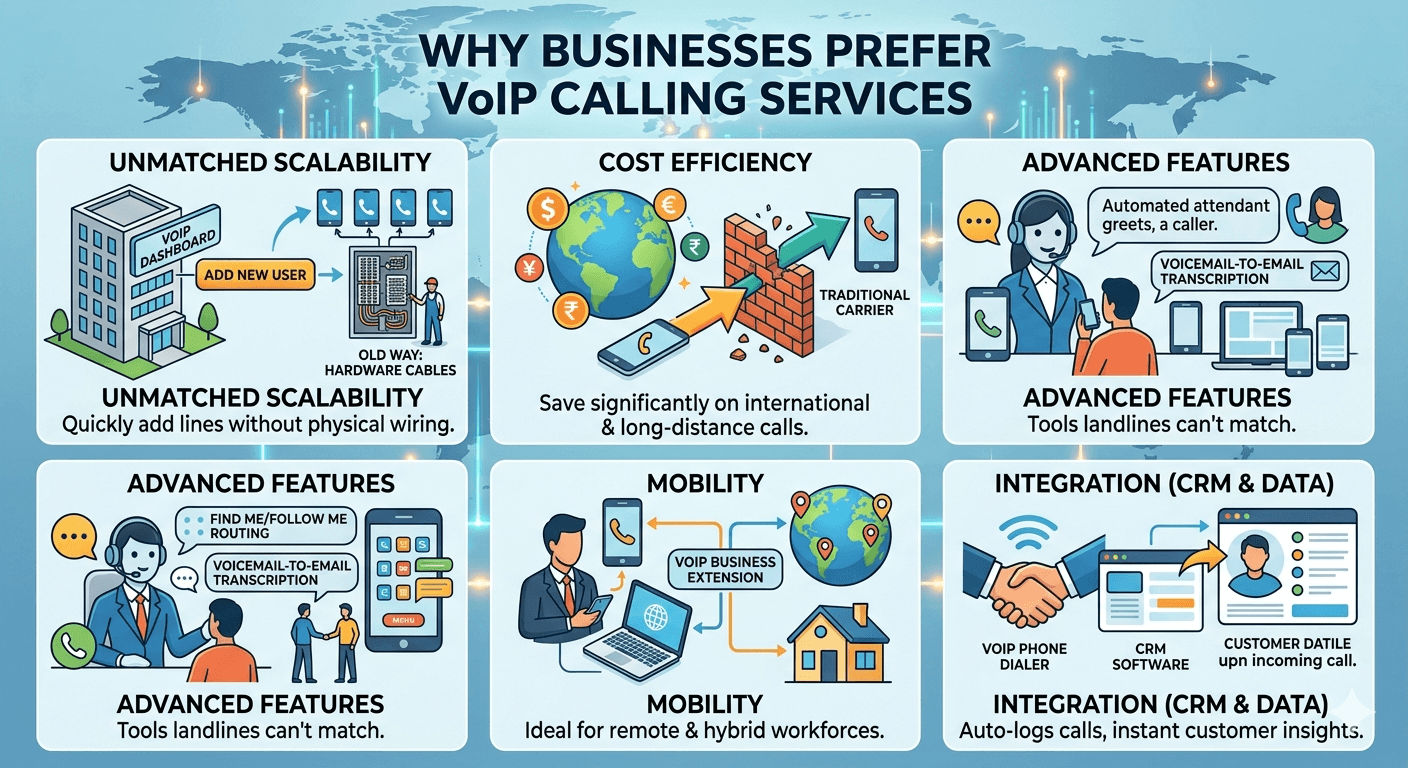
- Cost Efficiency: One of the biggest drivers for voip phone calling is the reduction in cost. Long-distance and international calls are significantly cheaper because they bypass traditional long-distance carriers.
- Advanced Features: A voip call service offers features that landlines cannot easily match, such as “find me/follow me” routing, automated attendants, and voicemail-to-email transcription.
- Mobility: Because what is voip number technology is software-based, employees can take their business extension with them on their mobile phones, making voip calls service ideal for the modern hybrid workforce.
- Integration: Voip calls meaning in a business context often involves integration with CRM (Customer Relationship Management) software, allowing a voip phone dialer to automatically log calls and pull up customer data.
When a company asks “why would someone use a voip number”, the answer is almost always related to efficiency and data. By using voip call routing, a company can ensure that a customer calling from California is automatically routed to a representative who is currently online, regardless of whether that representative is in Florida or India. This level of voip calling sophistication is why voip stands for what? is a question every modern IT manager can answer in detail.
Identifying the VoIP Caller: Who is Calling Me?
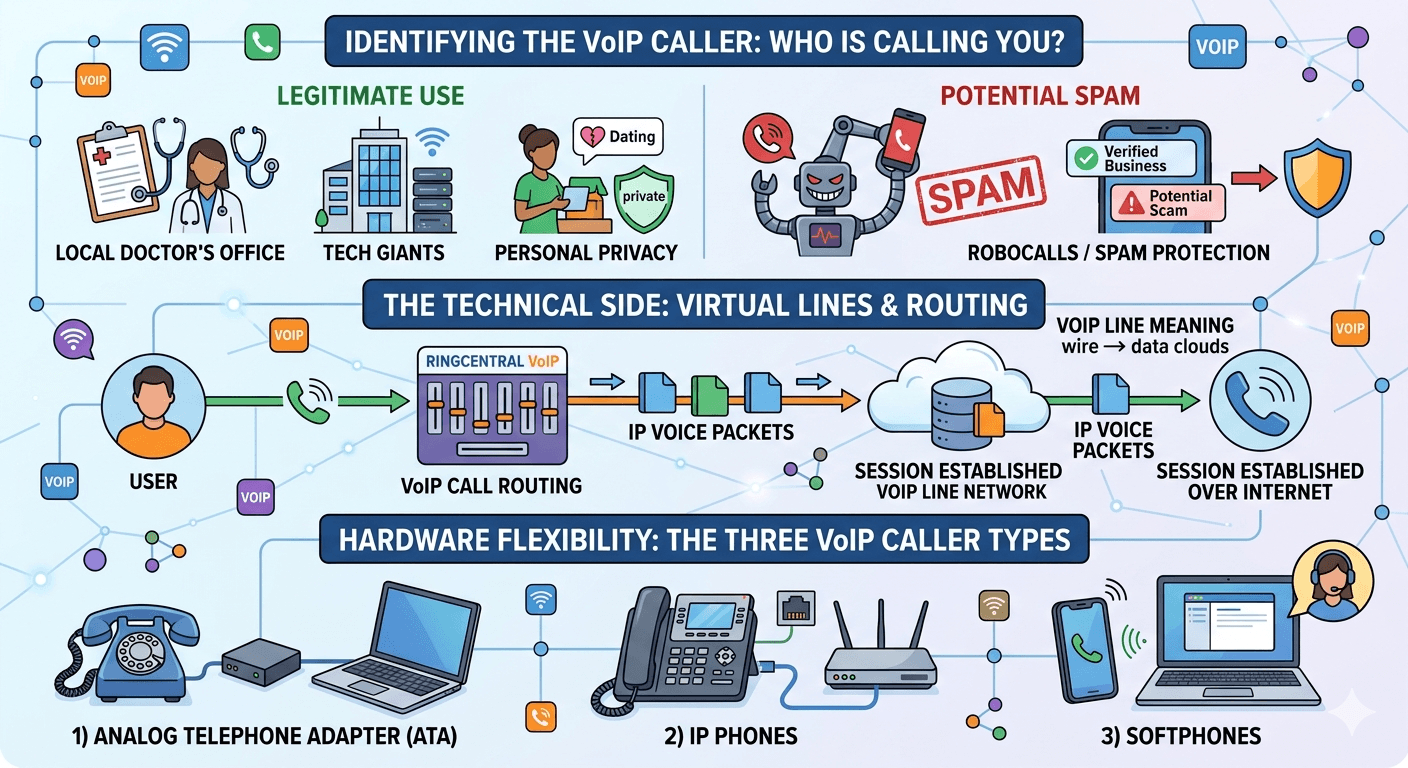
If you are receiving frequent calls and wondering “who uses voip numbers”, the answer is: almost everyone. From your local dentist’s office to major tech giants, voip calling is the norm. However, because what are voip numbers can be easily obtained through various apps, they are also popular for personal privacy. Someone might use a voip number to keep their personal cell phone number private when selling items online or dating.
However, the question of “what’s a voip caller” often comes up in the context of spam. Because it is easy to generate many voip phone calls at a low cost, some bad actors use this technology for robocalls. This is why you might see ip voice keeps calling on your log. It is important to distinguish between a legitimate call from voip (like your doctor’s office using a voip call service) and an unsolicited one. Most modern smartphones and voip calling services now include “spam protection” that helps identify whether a voip caller mean is a verified business or a potential scam.
To verify a voip caller id, you can often use reverse lookup tools, though they are sometimes less effective with voip mean numbers because they can be reassigned quickly. If you are asking “can you call a voip number”, the answer is yes. A voip number functions just like any other phone number. You can dial it from a landline, a cell phone, or another VoIP app. The technology behind what is a voip call is designed to be “interoperable,” meaning it connects seamlessly with all other types of phone networks.
The Technical Side: VoIP Call Routing and VoIP Lines
When we discuss the voip line meaning, we are talking about a virtual connection. In the old days, a “line” was a physical pair of wires. Today, a voip phone line is a “session” established over the internet. This leads to the concept of voip call routing, which is the process of directing a call to the correct destination. For example, if you use ringcentral voip, their servers act as a giant switchboard, deciding where to send your digital voice packets based on the number you dialed.
A voip caller? could be using several different types of hardware:
- Analog Telephone Adapters (ATA): These allow you to plug a traditional phone into a computer or internet connection to call voip.
- IP Phones: These look like standard office phones but connect directly to a router via Ethernet. They are built specifically for voip phone calling.
- Softphones: This is a “software phone,” an app on your computer or smartphone that allows you to make voip calls without any extra hardware.
This flexibility is why what is a voip phone line is a difficult question to answer with a single physical description. It is a service, not a piece of hardware. Whether you are looking at voip caller meaning in a residential or commercial setting, the “line” is simply your subscription to a voip calling provider. This is also what determines what is voip calling quality; a faster internet connection leads to a clearer “line.”
Common Terms and Variations: From VoIP to IP Calling
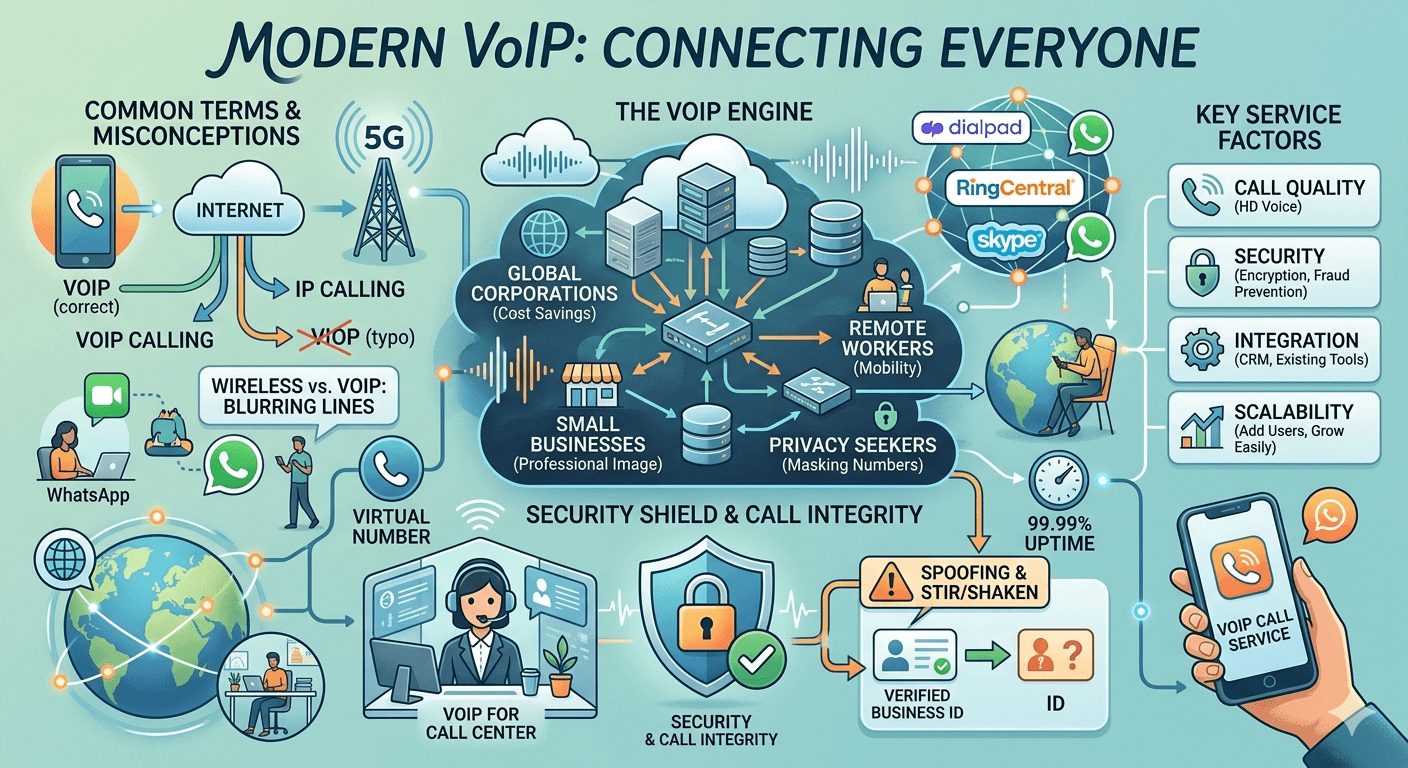
In the world of technology, it is common for terms to be misspelled or used interchangeably. You might see voip caller or voip meaning in search results; these are simply typos for VoIP. Similarly, ip calling and voip calling refer to the same thing: using the Internet Protocol to transmit voice data. When someone asks “what does voip mean” or “what is voip caller”, they are seeking the same information regarding internet-based telephony.
Other terms like wireless caller meaning can sometimes cause confusion. A wireless caller is typically someone on a cellular network (like Verizon or AT&T), whereas a voip caller is someone using an internet-based service (like Skype, WhatsApp, or ringcentral voip phone). However, since many people use VoIP apps on their wireless smartphones, the lines are blurring. When you use FaceTime Audio or WhatsApp to call a friend, you are performing voip internet calling, even if you are on a “wireless” 5G connection.
Understanding what is voip mean or whats voip mean is about recognizing that “Voice” has become “Data.” This is the core of voip call means. It is the reason why what voip means is so revolutionary—it has decoupled your identity (your phone number) from your physical location. Whether you are asking “what is a voip caller mean” or “what’s voip caller”, the answer always points back to this digital transformation of the human voice.
Choosing a VoIP Provider: Dialpad, Ring Central, and More
If you are looking to move away from traditional lines and want to start voip calling, choosing the right provider is key. Companies like Dialpad voip and RingCentral voip are leaders in the industry. They provide the infrastructure that allows businesses to manage voip calls with ease. When you sign up for a ringcentral voip phone service, you aren’t just getting a dial tone; you are getting a suite of tools including video conferencing, SMS, and voip call routing.
For smaller users or individuals, what is voip number services often include free or low-cost apps. However, for a professional voip call center, the requirements are higher. They need a voip phone dialer that can handle hundreds of calls simultaneously and a voip calling system that offers 99.99% uptime. This is where voip call service providers earn their reputation, by ensuring that every call from voip is as clear as a face-to-face conversation.
When evaluating voip calling services, consider the following:
- Call Quality: Does the provider offer HD voice?
- Security: How do they protect your voip caller id and data?
- Integration: Will it work with your existing tools?
- Scalability: Can you easily add more voip phone calling users as you grow?
Understanding what is a voip caller? in the context of these providers helps you see the “who” behind the technology. These companies are the gatekeepers of the modern ip calling world, ensuring that when you ask “what is voip mean”, the answer is a reliable, high-tech communication experience.
The Security Aspect: Is VoIP Calling Safe?
With the rise of voip calling, security has become a paramount concern. Because voip calls travel over the public internet, they can be vulnerable to interception if not properly encrypted. This is why top-tier voip calling services use advanced encryption protocols to protect your conversations. When you see a voip caller id that looks suspicious, it is a reminder that while the technology is powerful, it must be used with caution.
The question of “what is a voip caller” often leads to discussions about “spoofing.” Spoofing is when a caller manipulates the caller id voip to display a number other than their own. This is a common tactic used by scammers to make it look like a call from voip is coming from a local government agency or a bank. To combat this, the industry has implemented standards like STIR/SHAKEN, which help verify that a voip caller mean is actually who they claim to be.
For the average user, the voip caller meaning in terms of security is simple: be as cautious with your internet calls as you are with your emails. If you receive a phone call voip that asks for personal information, verify the source. Legitimate businesses using voip for call center purposes will never ask for your password over the phone. Understanding what is a voip caller mean in a security context helps you stay one step ahead of digital threats.
Identifying VoIP Numbers and Their Users
Who exactly is a voip caller? As we’ve established, it can be anyone. However, there are specific groups that heavily rely on voip calling.
- Global Corporations: They use voip call routing to connect offices in different countries without incurring international fees.
- Small Businesses: They use voip phone calling to appear more professional with “big company” features like hold music and automated menus.
- Privacy Seekers: Individuals use voip internet calling apps to keep their “real” number private.
- Remote Workers: They use voip calls to stay connected to their office phone system while working from home or a coffee shop.
If you are trying to figure out “what is a voip number” that keeps appearing on your bill or your phone, it is likely one of these groups. The voip line meaning is that the number is hosted in the cloud. This is why what is a voip phone line is often called a “virtual number.” It can be moved, changed, or deleted with the click of a button, which is a major advantage for those who value flexibility.
When you ask “what’s a voip caller” or “what is voip caller”, you are looking at the face of modern communication. It is a world where the physical distance between two people no longer dictates the cost or quality of their conversation. Whether through a voip ringcentral setup or a simple voip phone dialer, the way we talk is forever changed.
Final Thought on VoIP Calling
The journey from understanding the basic voip caller meaning to exploring the complexities of voip call routing reveals just how much our communication systems have evolved. VoIP calling is no longer a niche technology for tech-savvy early adopters; it is the backbone of global business and personal interaction. By leveraging ip calling, we have broken free from the constraints of physical wires, allowing for a more connected and mobile world.
Whether you are a business looking to implement a voip call center or an individual wondering “what is a voip caller?” on your smartphone, the key is to embrace the flexibility and efficiency that voip calls offer. As internet speeds continue to increase and security protocols become more robust, the prevalence of the voip caller will only grow. Understanding what does voip mean is the first step in mastering the tools of the digital age, ensuring that every phone call voip you make or receive is clear, secure, and effective.
Read More: What is VoIP Adapter: VoIP to POTS Converter Guide
Frequently Asked Questions (FAQs)
-
What is the main difference between a VoIP caller and a regular caller?
A regular caller uses a traditional landline or a cellular network to transmit voice signals through physical wires or cell towers. A voip caller, on the other hand, uses an internet connection to send voice data as digital packets. The voip caller meaning is tied to this internet-based transmission, which often allows for more features and lower costs than traditional calling.
-
Why does my phone say “IP Voice” or “VoIP Caller” instead of a name?
When your caller ID displays ip voice caller id or “IP Voice,” it means the service provider has identified the incoming call as originating from a Voice over Internet Protocol network but does not have a specific name registered in its database for that number. This is common with voip calls from businesses or automated systems that use large blocks of virtual numbers.
-
Can I call a VoIP number from my regular cell phone?
Yes, you can. One of the great things about voip calling is that it is fully integrated with the global telephone network. Whether someone is using a voip phone line, a ringcentral voip phone, or a computer app, you can dial their voip call number from any standard phone, and the call will go through just like any other.
-
Are VoIP calls safe from hackers?
Most reputable voip calling services, such as Dialpad voip or RingCentral, use encryption to protect voice data as it travels over the internet. While no technology is 100% foolproof, voip phone calling is generally as secure as traditional phone lines, provided you use a trusted provider and a secure internet connection. Understanding what is voip caller security involves looking for providers that offer end-to-end encryption.
-
What does VoIP stand for in simple terms?
If you are asking “what does voip stand for”, the answer is Voice over Internet Protocol. In simple terms, it means “sending your voice over the internet.” Instead of your voice traveling through old-fashioned phone wires, it is turned into data (like an email or a YouTube video) and sent over your Wi-Fi or data connection. This is the core voip mean that powers modern digital communication.