Best Cosmos RPC Providers Compared
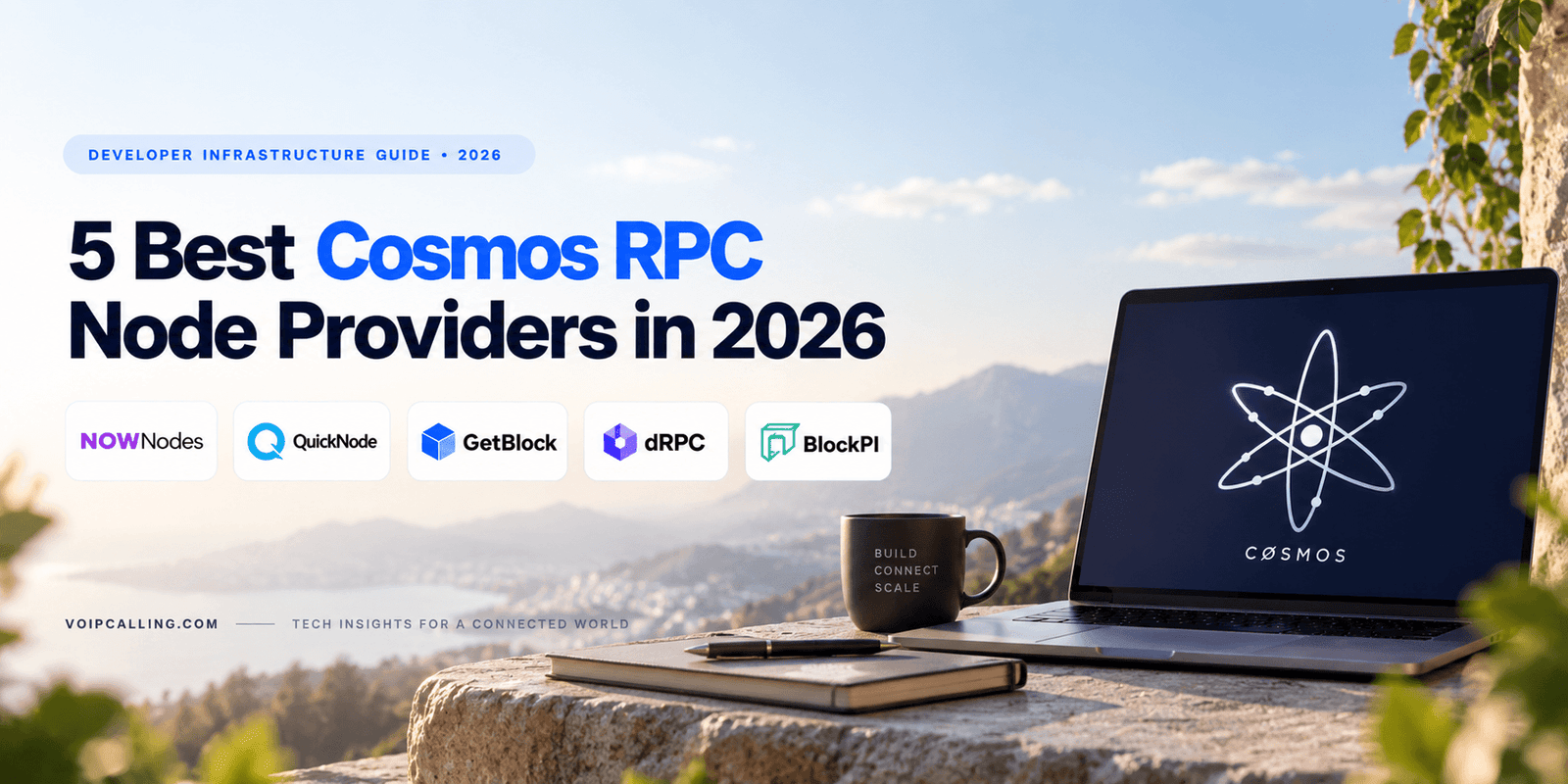
Building on Cosmos does not necessarily mean maintaining your own node. Managed RPC providers give wallets, applications, exchanges and developer tools a practical way to query chain data, broadcast transactions and connect to Cosmos Hub without handling the full node infrastructure themselves. This guide compares five Cosmos RPC providers and the differences developers should check before choosing one.
The important part is not simply finding a provider that lists Cosmos among its supported networks. Developers should look at the actual Cosmos Hub implementation: available APIs, archive depth, WebSocket or gRPC support, rate limits, reliability, pricing and the way requests are routed.
This becomes especially important for production applications. The same infrastructure principles that matter for high-availability cloud services also apply here. Redundancy, monitoring, capacity planning and a sensible failover strategy can matter just as much as headline performance numbers.
How We Compared Cosmos RPC Node Providers
A useful comparison needs to go beyond the number of blockchains shown on a provider's homepage. For this guide, the focus is Cosmos Hub and the infrastructure features that can make a practical difference when an application moves from testing to real traffic.
Network & API Access
We looked at Cosmos Hub availability, HTTP/JSON-RPC, WebSocket, gRPC, archive access and the distinction between shared and dedicated infrastructure where applicable.
Reliability & Limits
Published uptime information, request or compute limits, endpoint architecture and production-oriented features were considered rather than relying on speed claims alone.
Cost & Practical Fit
Free access, paid-plan structure, scaling options and support were considered to understand which type of project each service may suit.
Pricing, quotas and supported features change frequently. Always verify current terms with the provider before making an infrastructure decision.
Cosmos RPC Providers at a Glance
There is no single specification that makes an RPC provider suitable for every application. This comparison provides a quick starting point before looking at each provider in more detail.
| Provider | Access Model | Archive | WebSocket | gRPC | Free Access | Useful For |
|---|---|---|---|---|---|---|
| NOWNodes | Shared / dedicated options | Available | Yes | Yes | Available | Multi-chain applications |
| QuickNode | Managed endpoints | Yes* | Yes | Yes | Trial / entry access | Production developer tooling |
| GetBlock | Shared / dedicated options | Available on applicable plans | Yes | Available | Available | Shared and dedicated access |
| dRPC | Distributed / aggregated RPC | Check current coverage | Yes | Check current support | Available | Distributed RPC / secondary endpoint |
| BlockPI | Public / private RPC | Paid private RPC | Yes | Coming soon* | 50M RUs/month* | Testing and prototyping |
*Provider features shown here reflect information available during this 2026 review. Always check current specifications before deploying.
NOWNodes
NOWNodes is worth considering when Cosmos is only one part of a wider blockchain stack. Rather than maintaining separate infrastructure relationships for every network, a development team can work with multiple chains through one provider.
Its Cosmos Hub documentation includes access to the gRPC API for chain state, accounts, balances, staking, governance, transactions and IBC. That makes the service relevant to applications that need more than a basic block-query endpoint.
For developers researching hosted Cosmos infrastructure, Cosmos RPC access through NOWNodes can be considered alongside the other providers in this guide, particularly when a project also works across several blockchain networks.
QuickNode
QuickNode provides managed Cosmos Hub endpoints and documents support for Tendermint JSON-RPC, Cosmos REST and Cosmos gRPC. Its documentation identifies the production network as cosmoshub-4 and provides HTTP and WebSocket connectivity.
One detail deserves attention if your application performs historical queries. QuickNode documents Cosmos archive availability from block height 5,200,791. Applications that require data from earlier Cosmos Hub chain versions should therefore check historical coverage carefully before development begins.

GetBlock
GetBlock takes a relatively straightforward infrastructure approach. Developers can begin with shared RPC access and evaluate more isolated infrastructure as their requirements increase. This can make it easier to test an application before committing to a larger server arrangement.
That progression can be useful when request volume is still uncertain. A new wallet, analytics application or Web3 product may not know its eventual traffic pattern during development, so starting smaller and monitoring real usage can be more sensible than provisioning around optimistic forecasts.

dRPC
dRPC approaches blockchain infrastructure differently from a conventional single-provider node setup. Its service distributes RPC traffic through a wider provider network, while Cosmos Hub endpoints are available for common blockchain queries.
This model can be interesting for teams designing redundancy into an application. Instead of treating an RPC endpoint as something that can never fail, developers can design the application to tolerate provider or regional problems and route requests appropriately.
The principle is similar to resilient communications architecture. Whether you're designing blockchain RPC access or internet-based communications , relying on one component without monitoring or fallback planning can create an avoidable point of failure.
BlockPI
BlockPI provides both a public Cosmos endpoint and private authenticated RPC access. That separation can be useful during development. A team can experiment with the network first and move toward authenticated access as an application becomes more serious.
At the time of this 2026 review, BlockPI's Cosmos information lists HTTPS and WebSocket support and offers a free monthly request-unit allowance. Cosmos gRPC is currently listed as coming soon, so teams that specifically require gRPC should verify its current status.
Private RPC plans can provide additional functionality for more demanding applications. As with any RPC service, developers should confirm current limits and protocol availability before deploying production workloads.
How to Choose a Cosmos RPC Node Provider
Provider comparisons become much easier once you start with your own workload instead of the provider's feature list. A high RPS limit is not particularly valuable if your application makes only a few requests per second, while a generous free allowance may be irrelevant to an application that needs deep archive data.
Which Cosmos RPC Provider Fits Your Use Case?
Rather than treating the five services as interchangeable, it is more useful to match their infrastructure approach to the type of application you're building.
For business-critical applications, it can make sense to test two providers rather than selecting one from specifications alone. Latency, error rates and request consistency under your own traffic are ultimately more useful than a generic benchmark.
Frequently Asked Questions About Cosmos RPC Providers
What does a Cosmos RPC provider do?
A Cosmos RPC provider gives applications hosted access to Cosmos Hub. Developers can use an endpoint to retrieve blocks, transactions, balances and other chain data and, depending on the API, submit transactions.
Do I need to run my own Cosmos node?
Not necessarily. A managed RPC provider can handle the underlying node infrastructure while your application connects through an endpoint. Running your own node may still make sense when you need greater infrastructure control.
What is the difference between HTTP RPC and WebSocket?
HTTP is commonly used when an application sends an individual request and waits for a response. WebSocket maintains a persistent connection, making it useful when an application needs subscriptions or near-real-time updates.
Why does gRPC support matter for Cosmos?
Cosmos SDK applications expose gRPC services that can be used for structured queries across modules such as accounts, staking, governance and transactions. Whether you need it depends on how your application is built.
What is an archive Cosmos RPC node?
Archive access is useful for applications that need historical blockchain data that may no longer be retained by a pruned node. Providers can differ in how far their historical coverage goes, so archive depth should be checked directly.
Should a production app use more than one RPC provider?
It can be useful when RPC availability is critical. A secondary endpoint gives developers another route when the primary provider becomes unavailable or performs poorly. Appropriate health checks and failover logic are still required.
How should I compare Cosmos RPC pricing?
Compare costs using your actual request pattern. Providers may bill using requests, credits, compute units or request units, so headline prices are not always directly comparable.
Final Thoughts
Choosing a Cosmos RPC provider is less about finding the longest feature list and more about understanding what your application will actually ask the infrastructure to do. A wallet that needs live balances has different requirements from an analytics platform running historical queries, and both differ from a multi-chain application handling traffic across several networks.
Start with the APIs you need, estimate realistic request volume, check historical-data requirements and then test the endpoints with traffic that resembles production. For important applications, think about redundancy from the beginning rather than waiting for the first outage. That makes it easier to choose infrastructure based on real technical requirements instead of marketing numbers.