

Crazytel, MaxoTel and VoIPline Telecom are the closest SipTalk alternatives for businesses replacing Australian SIP or hosted voice. Crazytel is a good starting point for a self-managed, usage-based SIP trunk. MaxoTel suits businesses that want call capacity and local numbers in one plan. VoIPline Telecom offers both channel-based SIP and a hosted phone system with a visual call-flow editor. Compare Aussie Broadband if your voice and business internet are due for renewal together, and Telnyx if your technical team manages voice through software.
The best alternative to SipTalk depends on what you want to keep. If the office phone system already works, a new trunk can connect it to the public telephone network. If you are replacing the SipTalk portal and call flows, compare hosted PBX products. When the problem is the internet circuit, test whether fixing the connection would solve it before changing the phone service or moving your published numbers.
What Are You Replacing In SipTalk?
SipTalk’s Australian service includes a hosted phone system, SIP trunks, local numbers, 1300 and 1800 numbers, virtual mobile numbers and business NBN plans. Its hosted PBX Critical Information Summary lists a minimum of A$3.85 per month including GST, plus calls, for one local number and one extension. Extra numbers, extensions and routing features cost more. This entry figure makes sense for a small setup. For a team, compare a quote from SipTalk alternatives with the cost of your current extensions, queues, numbers and call usage.
Hosted PBX And Endpoints
A hosted private branch exchange (PBX) runs extensions and call routing in the provider’s system. An extension can register a desk phone, softphone or mobile app. Ask SipTalk competitors whether they bill by person, endpoint or feature. A company with six staff might have six mobile apps, four desk phones and a shared handset at dispatch. Some plans let a user run a desk phone and app under one licence, while others price by registration or handle a shared station separately.
Write down what happens to calls from the first ring to the end of the interaction. Start with the main number and include the greeting, menu options, queue, voicemail and any forwarding. Add the route staff use to call back and the caller ID customers should see. For hosted phone system buyers, reproducing this flow is a practical way to compare SipTalk alternatives. Staff may need something as simple as changing the lunch greeting without raising a support ticket.
SIP Trunks And Concurrent Calls
A SIP trunk carries public calls between a compatible phone system and a carrier. SipTalk lists A$2.20 per SIP channel per month on its rates page. Add numbers and calls when comparing that price with a plan that includes both a trunk and local numbers. A channel represents capacity for one call at a time in a channel-based plan. Concurrent calls, phone numbers and registered endpoints are distinct parts of a quote. Ten direct-dial numbers can share a few channels if call volume is low. Conversely, one published number may need several channels when it feeds a busy queue. Ask how each provider counts inbound calls, warm transfers and forwarded calls.
Find the busiest interval in your call logs and check how many calls were active at the same time. Include recorded or forwarded calls and any calls handled by a second branch. Ask the PBX maintainer to verify trunk compatibility, the supported authentication methods and the responsibilities on both sides. This information narrows the set of SipTalk competitors you need to evaluate and helps the carrier quote the right capacity.
Business Numbers And Internet Access
Make a phone number inventory from the carrier account and the phone system. Include local numbers, direct-dial ranges, 13, 1300 and 1800 inbound services where applicable, and mobile or messaging services. Note the route and use of each number. A 1300 number can route to a local number on a different service, so a complete inventory should list both. Check whether any number doubles as a staff callback line, an SMS inbox or a recovery contact for another business service.
Separate voice from business internet in the request, even if you prefer one supplier. Ask providers to confirm whether their SIP or hosted voice can use your existing connection, and ask what support covers when you bring your own router. For an NBN switch, verify service availability by address and check the proposed connection and backup arrangement. Bundled offers from SipTalk alternatives can simplify billing when the supplier also owns the support process for both services.
Compare Five SipTalk Alternatives In Australia
The table compares published plan references and specific quote items for each provider. Fixed dollar figures shown for Australian providers are in Australian dollars. Check GST treatment on the actual offer and use Australia-specific rates if you evaluate Telnyx. The review source and count appear beneath each provider logo. The scores cover different company or product profiles, so use the capability and price columns to build your shortlist.
| Provider | Best Fit | Buying Consideration | Pricing And Evaluation |
|---|---|---|---|
| Usage-Based SIP For An Existing PBX | Confirm number rental, credits, trunk registrations and supported capacity. | A$0.50/Trunk/MonthBusiness PAYG has an A$0 plan fee. Rate includes GST. Usage and numbers are separate.View Crazytel SIP Plans | |
| Australian Numbers And Fixed Call Capacity | Check whether incoming, outgoing and forwarded calls share the same capacity. | A$19.95/MonthPAYG-02 lists two concurrent calls and two Australian numbers. Calls are billed as used.Compare MaxoTel SIP Plans | |
| Visual Hosted Call Routing Or Per-Channel SIP | Price the hosted call-flow design separately from a trunk for your current PBX. | A$1.50/Channel/MonthSIP Line PAYG includes GST. Usage is separate and hosted PBX pricing differs.View VoIPline Pricing | |
| A Coordinated Business Internet And SIP Quote | Confirm service coverage, supported PBX and fault ownership at each site. | Request Business PricingQuote connectivity, channels, numbers and usage. Confirm the support scope.Explore Aussie Broadband SIP | |
| Programmable SIP For Technical Teams | Verify Australian rates, number types, calling requirements and currency. | Usage-Based PricingRates vary by route. Add number rental and any PBX or integration costs.View Telnyx SIP Pricing |





Five SipTalk Competitors For Different Business Needs
1. Crazytel For Pay-As-You-Go SIP Trunking
Crazytel’s Business SIP Trunking is a close comparison for a business already running its own IP PBX. The prepaid PAYG plan has a A$0 monthly plan fee, and the plan’s Critical Information Summary lists A$0.50 per configured SIP trunk per month, including GST. Calls are billed separately, and the cost of numbers can add to the bill. Crazytel also offers CrazyPBX for hosted extensions and call handling. Ask for the hosted pricing separately if you intend to replace SipTalk’s PBX features.
Crazytel is one of the most direct SipTalk alternatives for a technical owner who wants to control an existing phone system and pay by usage. Give the person administering the trunk access to a test number and ask them to verify inbound and outbound calls, displayed caller ID and the destination for overflow. If you consider a bundle with included calls, compare its channel allowances and covered destinations with those of the PAYG plan.
- Best fit. Owner-managed offices or IT teams with an existing SIP-compatible PBX and variable calling volume.
- Check first. Confirm how many trunk registrations you need, which numbers can move and what happens to outbound calling if prepaid credit runs low.
- Plan comparison. List trunk fees, number rental and calls, then model a typical and a busy month. Verify which inbound routes carry charges.
2. MaxoTel For Australian Numbers And Predictable Capacity
MaxoTel sells both Business Voice Line SIP Trunking and Hosted PBX. Its Voice Line PAYG-02 offer lists A$19.95 per month for up to two concurrent calls with two Australian numbers included. Outbound calls on that plan are charged as used. Check which number types qualify for the inclusions, how your existing numbers are treated, and whether a two-call limit suits the business at its busiest.
MaxoTel is a practical SipTalk competitor for a company weighing a local trunk with included numbers against a full hosted installation. If your main number rings at reception and also forwards to an external answering service, ask how each route uses capacity. Request the Hosted PBX quote if the business expects the provider to manage queues, extensions and applications. Include the next channel tier in the quote so you can plan for seasonal peaks or a new branch.
- Best fit. Small and midsize teams that want local number inclusions, clear call capacity or the option to price hosted voice from the same company.
- Check first. Verify treatment of forwarded calls and inbound capacity, plus the conditions for moving local, 1300 or 1800 numbers.
- Plan comparison. Request first-month and ongoing costs for the trunk and for hosted voice, including any extra numbers and porting charges.
3. VoIPline Telecom For Visual Hosted Call Routing
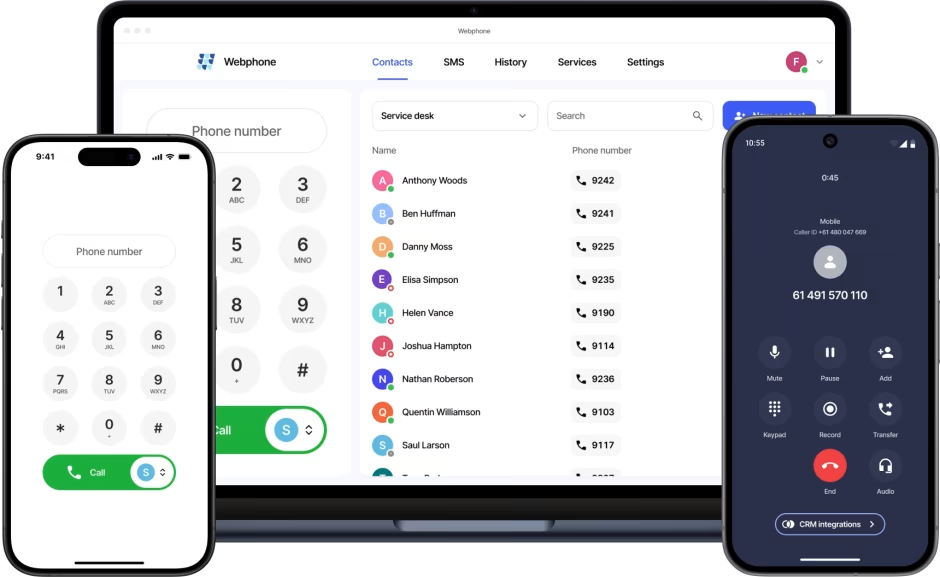
VoIPline Telecom offers a hosted business phone system, a Webphone and separately priced SIP trunks. Its hosted PBX uses a drag-and-drop editor for business hours and call routing. The SIP Line PAYG plan lists A$1.50 per channel per month, including GST, plus calls. Use the channel rate for a retained PBX and the hosted quote for a replacement. If the proposal includes both, ask which users or sites need each service.
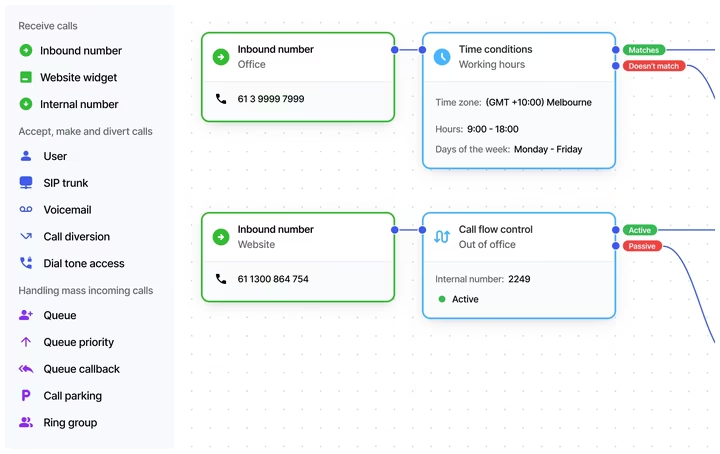
VoIPline Telecom is one of the more relevant SipTalk alternatives for an office manager who needs to see and update a call flow. Have a colleague create a temporary closure greeting in the editor, change the destination for one menu option and confirm the route from an outside phone. Ask whether an administrator can preview or stage changes, and how to restore the last working call flow after an unexpected result.
- Best fit. Offices, service desks and multisite reception teams that want a visual call-routing editor or a locally priced SIP carrier.
- Check first. Quote hosted users, queues and shared extensions separately. For SIP, confirm channel caps, numbers and call forwarding.
- Plan comparison. Price the hosted design and a pay-as-you-go trunk for the same call volumes if keeping the existing PBX is an option.
4. Aussie Broadband For Business Internet And SIP
Aussie Broadband offers business SIP trunking for an existing PBX and can quote business internet separately. Its SIP service page asks businesses to contact its team. This makes it one of the SipTalk competitors to include when your company wants to discuss the connection and voice support together. Provide the site list, the current access type, the network handover location and the number of concurrent calls you expect.
Ask the account team whether it will accept a joint incident when internet is up but calls drop or arrive with one-way audio. Get written confirmation of who owns the router, the trunk, the local network and the PBX support case. A company can still buy both services from one provider while retaining a separate phone-system maintainer. Ask the suppliers to agree how they exchange incident details when each piece works in isolation.
- Best fit. Companies reviewing business connectivity and SIP at the same time, especially where multiple sites or a managed handover are involved.
- Check first. Ask which availability, restoration and escalation commitments cover the connection and the voice service.
- Plan comparison. Quote access, backup, managed hardware, number rental, voice capacity and calling as separate line items.
5. Telnyx For Programmable SIP And Voice Operations
Telnyx’s Elastic SIP Trunking is suitable for technical teams that already manage carrier connections and call routing. Telnyx publishes an Australian porting guide that covers local, national, 1800 and mobile number categories. Share the exact number inventory and verify that the proposed voice service handles each category, including any SMS, emergency calling and caller ID requirements that go with it.
Telnyx gives a software-led team a different way to replace SipTalk. Its published SIP prices depend on the call destination. Pull Australian rates for the routes you expect and confirm the currency, phone number rental, capacity and support before comparing costs. If your team relies on SipTalk to administer front-desk routing, budget for a compatible PBX and someone to own it. A programmable trunk is most useful when you already have the staff or a partner to run those functions.
- Best fit. Developers, managed service providers and IT teams connecting a PBX or an application to an Australian voice carrier service.
- Check first. Confirm support for each number type, Australian destination rates, concurrency, caller ID and the carrier support process.
- Plan comparison. Put the SIP charges and PBX or application costs on separate lines so you can compare the full service with other SipTalk alternatives.
Shortlist SipTalk Alternatives By How You Work
A Small Office With A Main Number And A Few Extensions
For an office with a few staff and low outbound usage, start with the monthly cost of one number, every endpoint and the features people actually use. Compare Crazytel’s hosted offering, MaxoTel Hosted PBX and VoIPline’s hosted service on that basis. If one person handles most inbound calls and another covers breaks, ask how staff can switch between the two without rebuilding the call flow. Include voicemail delivery and the way customers are called back.
Set up a trial or demonstration that uses a normal working day as the script. Ask each of the SipTalk competitors to show inbound calls on the desk phone, an app on mobile data and an attended transfer to a colleague. Add an outside call after closing. If any staff member needs to answer from more than one device, have them sign in and place a call on both. A user and an endpoint can be different billable items, so write down the arrangement that passed the test.
A Business Keeping Its On-Premises Or Hosted PBX
Start with Crazytel, MaxoTel and VoIPline Telecom for a trunk to an existing system. Add Aussie Broadband for a coordinated internet quote or Telnyx if you need programmable routing or a carrier connection for an application. Have the company that supports the PBX review the provider’s supported setup before choosing. Give it the PBX version, connection details, number of concurrent calls and whether you have separate inbound and outbound routes.
Take note of how the provider identifies the trunk, how it expects to see Australian numbers in signalling, and what happens if the main site is offline. Ask where you can see call records and whether the carrier can trace a failed call using its time and dialled number. For teams comparing SipTalk alternatives on an existing PBX, these support details help determine whether the carrier can take ownership when the provider and the phone system disagree about where the fault lies.
A Service Desk With Queues And An Overflow Partner
For a support desk, compare hosted quotes using a specific busiest-hour scenario. Imagine callers queue at lunch and the team needs to send overflow to an answering service after a threshold. Measure whether staff can see who is waiting, pause or join the queue and transfer a caller without placing them in a second queue. Ask how the overflow call is charged and whether the answering service can see which number the customer originally rang.
The same scenario helps compare reporting across SipTalk competitors. Ask providers to define when a missed call, abandonment or answered call is recorded. If management reviews response times each week, request a sample export and check timestamps, caller ID masking and queue grouping. A carrier can record a call as delivered to the PBX even if the caller leaves the queue before an agent answers. Tie acceptance to the metric your team plans to use.
A Company With More Than One Office
Compare separate routes for each location and one common route for the main number. A multi-branch business could want the Adelaide office to answer its own calls first, then let the Brisbane team take overflow when local staff are away. Ask each provider to show how it handles local business hours, time zones and public holidays. For shared reception, check whether a receptionist can see which site the customer called before making a transfer.
As you compare SipTalk alternatives, decide where you need central control and where branches should be able to change their own greetings or forward calls. Ask for cost and support by address if you are also buying connectivity. Agree on a process for adding a branch and transferring a number between locations. If the offices have different providers for internet, include a backup calling procedure for the team that loses its circuit.
How To Compare Pricing And Quotes
Use a representative month from your call records as the starting point. Separate fixed-line calls, mobile minutes, 13 and 1300 calls, other destinations, forwarded calls and chargeable inbound traffic. List how many of each number type you need to rent and whether existing numbers need to port. Give the same data to each supplier. Ask for a total with GST shown separately or clearly included so the quotes use the same basis.
Compare Like-For-Like Hosted Costs
Ask whether the hosted quote includes only extensions or also the features you need on each number. Add the price of queues, menus, voicemail, recording, reporting and storage as they apply. Include setup, provisioning, headsets and handsets if they come from the supplier. Where SipTalk competitors include apps, verify which devices qualify and how shared phones or rotating staff affect the total. Team size alone will miss shared spaces such as reception, dispatch and meeting rooms.
Check who configures the system and whether you will buy training or administer it yourself. A cheaper service with a self-managed portal can work well when someone in the office owns changes and tests them. Ask for the first-week responsibilities in writing. Include the time to build greeting schedules, assign staff, tidy old routes and teach the main users how they should pick up and transfer calls.
Ask How Trunk Billing Units Work
Start by separating capacity, number rental and usage. A trunk may include several channels, and a service sold by channel may price additional numbers separately. Ask whether inbound and outbound calls draw on a shared pool. Have the supplier show what happens when every channel is busy and a customer calls. Some businesses may want the next call to go to a different branch or answering service. Quote that fallback, including extra calls or capacity if the new route stays on the same trunk.
When comparing SipTalk alternatives with inclusive plans, look at destination and usage terms. Separate calls your staff make to 13 and 1300 numbers from calls your customers make to your own inbound service. Compare Australian mobile minutes with fixed-line calls and check what happens when a forwarded leg goes to a mobile. Ask about billing increments for short calls. For a team that makes dozens of brief callback attempts, the way usage rounds can change monthly cost.
Worked Example For A Three-Channel PBX
Assume an Australian office keeps its existing PBX. It needs three concurrent calls, two local numbers and uses 80 chargeable fixed-line calls and 210 mobile minutes in a typical month. It also has 12 chargeable 1300 calls. The hypothetical quotes below use the same capacity, with prices shown before GST.
- Usage-based quote. Three channels at A$2 each and two numbers at A$3 each make the recurring charge A$12. Fixed-line calls at A$0.10, mobiles at A$0.08 per minute and 1300 calls at A$0.25 add A$8.00, A$16.80 and A$3.00. Total monthly cost is A$39.80.
- Included-calls quote. A$55 includes the channels, the two numbers and eligible fixed-line and mobile calls. The same 12 calls to 1300 cost A$3.00 outside the bundle. Total monthly cost is A$58.00.
The usage-based quote costs A$18.20 less that month. If mobile calling grows to 500 minutes with everything else unchanged, the usage-based total rises to A$63.00. The included-calls quote then costs A$5.00 less if all those mobile minutes qualify. Do this calculation with the terms from each provider and repeat it for your own quiet and busy periods. When comparing SipTalk competitors, keep first-year porting, devices and overlap with SipTalk in a separate total.
Include The Costs Of Changing Providers
Ask for the cost of porting each number, setting up the trunk, installing an internet circuit and configuring the phone system. Confirm when billing starts on every service and how much overlap you need to test. In a hosted change, add any training and replacement handsets. In a trunk change, check whether a PBX service visit or a new support agreement is needed. If the switch involves a finance arrangement for equipment, ask who owns the handsets and the remaining payments.
Take renewal and flexibility into account. Find out whether you can change capacity mid-cycle, downsize after a seasonal peak or port a single number away without closing the account. If a provider asks you to move all sites to get a better price, calculate the effect on remaining terms and support. SipTalk alternatives can use different pricing units and service terms, so compare a full-year total using the staff, sites and numbers you expect to keep.
How To Switch From SipTalk And Keep Your Numbers
1. Confirm The Numbers And Linked Services
Make a spreadsheet of each number, the SipTalk account it sits on, and its role in the business. Mark whether it receives local calls, toll-free traffic, text messages or callbacks. For a direct-dial range, list numbers that are active, reserved or forwarded. Ask which items must move together and what will happen to related services. The new carrier should confirm before you submit a move for your main number.
Use ACMA’s guide to keeping or porting your number to understand the process. The receiving provider must accept the request and verify that the account holder has authorised it. Keep your existing number service active until the new provider confirms the port and you can verify that calls reach their new destination. Get a copy of the request and make sure contact staff know who has authority to approve a change or resolve a mismatch.
2. Rebuild The Call Flow And Run A Pilot
For a hosted move, set up the extensions, shared numbers, business hours, queues and voicemail before porting. For a trunk move, ask the carrier for a way to make test calls on the new connection while SipTalk still carries working traffic. Use a temporary or existing test number where available. If you are evaluating multiple SipTalk competitors, use the same queue, reception and forwarding steps so each pilot tests the parts of your business that matter.
Run the pilot at the actual office and from a remote worker’s normal setup. Include a missed call, an attended transfer, an outbound callback with the company number and a voicemail check. Ask a colleague elsewhere to call from a mobile and a fixed line. Verify any fax, lift, alarm or intercom with its responsible maintainer if it relies on the old service. For emergency calling, confirm Triple Zero (000) support and any location requirements with the carrier using its approved verification process. Make sure staff know what to use during a power or internet outage.
3. Agree On The Port Window And The Fallback Route
Ask the gaining provider for the port category, required documents and expected timing for the actual number types. Treat a single local number, a range and a 1300 service as separate items until the provider confirms how it will handle them. Set a window when the phone system administrator and someone at the business can test promptly. If you are changing NBN as well, consider accepting the new connection before porting the live numbers so the team can identify a fault more quickly.
Prepare for a partial transfer. Record which temporary contact number you can share internally or with customers, whether the carriers can change routing and who will make that request. A router can sometimes be switched back to an old internet service during a network problem. If a number has already ported, routing may have to be changed by the receiving carrier. Ask SipTalk alternatives what their teams can do during the window and which problems need a separate escalation.
4. Verify The Port And Reconcile Billing
When the new provider confirms the port, place calls to the main number, direct numbers and any 1300 or 1800 service from more than one network. Confirm the outbound caller ID and check that SMS reaches the expected inbox if it was part of the order. Test the fallback when the main call destination is unavailable. Capture exact times and numbers for any failures when opening a support case. Have an owner from the business confirm service acceptance.
Then check which services are still active on the SipTalk account. Retained numbers, internet access, billing credit and hardware commitments may need separate attention. Ask for confirmation before closing anything that shares an order or account with a number you still use. Compare the old and new invoices with the accepted order and note the dates when charges overlap. Store the updated number inventory and call routing diagram where the provider contact and team leaders can find them.
Frequently Asked Questions
What Are The Best SipTalk Alternatives In Australia?
Crazytel, MaxoTel and VoIPline Telecom are the closest comparisons for most Australian SIP and hosted phone system buyers. Add Aussie Broadband if you are buying business internet and SIP together. Consider Telnyx if a technical team will manage the carrier connection and routing.
Which SipTalk Competitors Offer Pay-As-You-Go SIP?
Crazytel, MaxoTel and VoIPline Telecom publish pay-as-you-go trunk plans. Crazytel lists a configured trunk fee, MaxoTel sells capacity and numbers in bundles, and VoIPline lists a per-channel charge. Compare local number rental, inbound service, outbound usage and concurrent calls on the same customer profile.
Can I Keep My Australian Number When Leaving SipTalk?
Usually, you can ask the new provider to port a number it accepts. Confirm portability for each local number, direct-dial block, 1300 or 1800 service and mobile number you use. Keep the active phone service in place through the transfer and test inbound calls after the provider confirms it.
Can I Keep My PBX And Switch Only The Trunk?
Yes, provided the new carrier supports your phone system and can connect or port the numbers you need. Ask your PBX maintainer to verify the setup, capacity and failover. Test inbound and outbound calls on the new connection before moving production traffic.
What Is The Cheapest Alternative To SipTalk?
The cheapest option depends on numbers, call usage, endpoints and call capacity. Compare Crazytel and VoIPline Telecom for usage-based SIP and check MaxoTel if the included numbers and concurrent call limits match your office. For hosted voice, add the cost of apps, queues and shared phones before comparing.
Does Changing SIP Providers Require New Handsets?
A trunk-only change can usually retain the existing handsets if they still register to the same compatible PBX. For a hosted move, confirm that the new provider can provision your devices and that you can access or reset the settings. Budget for replacements if models are unsupported or locked.
Can I Keep My NBN Service When I Move Voice?
Many hosted voice and SIP services can run over a compatible existing connection. Check the contract, connectivity requirements and support boundary with both suppliers. If you plan to switch internet too, stage and test that connection before changing the live voice route where possible.
Choose The Best SipTalk Replacement For Your Setup
Compare Crazytel, MaxoTel and VoIPline Telecom if your priority is a direct comparison for Australian voice. Shortlist Aussie Broadband if your business wants one discussion about internet and SIP. Keep Telnyx in the running if your technical team can maintain the carrier integration and wants programmable routing. Ask two or three SipTalk alternatives to quote the same number inventory and peak-hour scenario.
Choose the provider that confirms your essential numbers, shows the call flow working and gives you a clear migration plan. If you have a working PBX, check whether upgrading only the trunk delivers the result you need. If you want to change how staff handle calls, price and test the whole hosted phone system before starting a port.
Editorial Disclosure. VoIPCalling reviewed published service information and public review listings. Prices, review counts and plan inclusions can change. The ratings describe their linked company or product profiles.