

The best GTT Communications alternatives depend on the service you need to replace. Lumen belongs on a connectivity shortlist, Aryaka Networks suits a managed global WAN evaluation, and Cato SASE Cloud is relevant when network and security consolidation drives the project. AT&T Business Wireless addresses a narrower US wireless requirement. RingCentral RingEX and Zoom Phone for 50+ users are options when the change concerns employee telephony.
GTT combines internet connectivity, managed networking, security and voice services. Its Envision platform brings those services into a broader managed experience. A replacement decision therefore starts with your existing order forms. Moving an employee phone system, replacing branch internet and redesigning an international WAN involve different suppliers, costs and acceptance tests.
This guide compares six providers by their specific role. It explains how to assess local access, SD-WAN, SASE, cloud connectivity, SIP dependencies and business calling without treating them as interchangeable subscriptions. Recommendations and suggested deployment sizes are editorial starting points, subject to address checks, country coverage and the supplier's proposal. This is research-based buying guidance, rather than a claim of hands-on network testing.
Which GTT Alternative Should You Evaluate First?
- Address-specific business connectivity — start with Lumen and compare the access design at each location.
- A managed international WAN — evaluate Aryaka with your actual branch-to-cloud application flows.
- A common networking and security platform — assess Cato against the security policies and operational responsibilities you need.
- US wireless access or backup — evaluate AT&T Business Wireless with a site test and an eligible plan.
- Employee phone replacement — compare RingEX and Zoom Phone while separately maintaining the connectivity those applications require.
A useful first decision is whether to retain GTT for some services. A staged change can reduce the number of dependencies moved at once. It also creates an overlap period that must appear in the budget.
Identify The GTT Service You Actually Use
Start by gathering the most recent invoice, service schedule, network diagram and renewal calendar. Map each charge to an address, circuit, user population or telephone number. An invoice described broadly as managed networking may include access purchased from another carrier, equipment, monitoring and a security licence. Replacing only one line item can leave the organization paying for a service it thought had ended.
GTT's voice portfolio includes SIP connectivity and cloud calling arrangements, including Cloud Phone Direct. That makes a telephony migration relevant for some customers, but it does not make a cloud phone licence a substitute for a WAN circuit. Write down whether the current voice service feeds an existing PBX, supports Teams, connects another calling platform or provides user-facing software. Each case changes the migration.
- Internet And Local Access — record bandwidth, access type, public addresses, handoff, managed equipment and fault ownership.
- WAN And SD-WAN — record locations, routing, application priorities, tunnels, controllers and responsibility for underlay circuits.
- Security — record inspection policies, identity integration, remote access, logging and licences.
- Cloud Connectivity — identify cloud environments, virtual connections, routing and billing owners.
- Voice — inventory numbers, trunks, concurrent sessions, emergency locations, PBX integration and calling destinations.
For example, a twenty-office business might want better branch incident handling while remaining satisfied with its phone application. Its shortlist should concentrate on managed connectivity. A two-office company might only need a new calling interface. Giving both buyers the same ranked list would obscure their actual requirements.
Compare GTT Communications Alternatives By Service Scope
The first three providers below address core network decisions. The remaining options address a specific part of the service stack. Prices for enterprise connectivity require a scoped proposal because location, access construction, bandwidth, resilience and management change the total. Phone subscription references cannot be compared directly with circuit prices.
| Provider | Best Fit | Buying Consideration | Pricing & Trial |
|---|---|---|---|
Lumen Technologies  | Enterprise Connectivity Procurement | Verify address-specific access, equipment, local carrier and support scope. | Request A Site QuoteQuote addresses, bandwidth, backup, installation and management.Confirm Proof-Of-Concept TermsCheck Lumen Connectivity |
Aryaka Networks  | Managed Global WAN And Unified SASE | Confirm local access, security entitlements and change responsibilities. | Request A Network QuoteQuote sites, bandwidth, cloud connections, security and implementation.Confirm Proof-Of-Concept TermsReview Aryaka Service Scope |
Cato SASE Cloud  | Network And Security Consolidation | Confirm site access, remote users, purchased security and incident ownership. | Request A Scoped QuoteInclude sites, capacity, remote users, equipment and selected security.Confirm Proof-Of-Concept TermsReview Cato Requirements |
| US Wireless Access Or Backup Evaluation | Wireless scope only. Verify eligible service, coverage, device and usage. | Request Eligible Plan PricingQuote the exact wireless use, equipment, allowance and service conditions.Confirm Current Offer TermsExplore AT&T Business Wireless | |
| Employee Calling And Collaboration | Voice application only. Access circuits remain separately required. | US$20/user/monthUS Core reference, paid annually. US$30 with monthly payment. Quote deployment, usage and add-ons.Free Trial Available. New subscribers, up to 5 users and 2 phones. No trial SMS. Hardware-return terms apply.Start A RingEX Free Trial | |
| Employee Calling In Zoom Workplace | Voice application only. Confirm countries, numbering and native or BYOC model. | Request Regional Phone PricingQuote seats, numbers, calling area, devices and the selected carrier model.Confirm Current Evaluation TermsExplore Zoom Phone For 50+ Users |



The table order reflects service fit. Compare network suppliers against a complete design, then evaluate wireless or employee calling separately if those services are also changing. A phone subscription price should never become the price benchmark for a managed WAN.
1. Lumen For Enterprise Connectivity Procurement
Lumen is a candidate when the project begins with business access and a managed connectivity proposal. Its Enterprise Broadband portfolio describes managed wired and wireless access, including services intended to complement SD-WAN or SASE deployments. Buyers can therefore frame a discussion around how each site reaches the wider network and who coordinates an access incident.
Suggested evaluation scope is an organization with several locations, or a single important site whose connection needs formal operational requirements. Site criticality matters more than employee count. A small distribution hub may require more careful circuit engineering than a much larger office that can work remotely during an interruption.
Prepare an address schedule and ask for the proposed local access arrangement at every site. Separate an available service from one that needs construction, a building survey or third-party coordination. Ask which equipment is managed, where the service handoff sits and how an issue crosses from the access provider to the managed service team.
Main advantage to evaluate is whether a consolidated connectivity proposal simplifies your operating model. Main limitation is that a brand-level footprint or rating does not prove delivery at your building. Compare a written access design, implementation dependencies and support responsibilities before scoring the commercial offer.
Pricing approach — request a location-specific quote. Include recurring charges, installation, equipment, backup, bandwidth changes and the requested service term. If voice is also moving, price that separately so a lower access bill does not hide a new calling expense. The displayed 3.8/5 G2 score is for Lumen Technologies as a seller, rather than a dedicated rating of the quoted access product.
2. Aryaka Networks For A Managed Global WAN
Aryaka is relevant when the requirement is to connect distributed sites and cloud resources through a managed network architecture. Its Unified SASE service terms describe a private core, SD-WAN, cloud connectivity, WAN optimization and cloud security capabilities. The specific service bundle and management scope still need to be established in the proposal.
Suggested evaluation scope is a geographically distributed organization with a small central networking team, particularly where international application performance and ongoing operations drive the decision. A useful pilot could span three representative offices and a cloud environment. That is an editorial testing suggestion, rather than a minimum purchase requirement.
Begin with the applications that create business friction. Record the source office, destination, working hours and the effect of delay or packet loss. Ask the supplier to explain the proposed path and where its management responsibility begins. A smooth connection into a provider core still relies on a workable local path from your premises.
Main advantage to evaluate is a managed approach to a complex distributed network. Main limitation is the need to verify the boundaries between access, managed routing and subscribed security functions. Ask which changes your administrators can make, which require a service request and how urgent changes are escalated across time zones.
Pricing approach — request a complete site and service quote. Specify bandwidth, cloud connections, security options and implementation. Include expected branch growth and closures so the proposal addresses changes during the term. Aryaka Networks carries a product-profile G2 score of 4.6/5 from 84 reviews at the research check.
3. Cato SASE Cloud For Network And Security Consolidation
Cato SASE Cloud is a candidate for organizations assessing a common platform for branch connectivity, remote access and network security. Cato describes centrally managed SD-WAN policies and a private backbone reached through its points of presence. The evaluation should establish how your sites connect to that platform and what security services the purchased subscription includes.
Suggested evaluation scope is a business with distributed offices and remote users that wants a more consistent operational model. Start with a representative branch, remote workforce group and cloud application. A security-sensitive business with few offices may have a stronger reason to evaluate the architecture than a larger company with simple traffic flows.
Use your existing firewall rules and identity requirements during the demonstration. Ask an administrator to trace an allowed session, investigate a blocked session and identify the person responsible for a policy change. These tasks reveal whether the daily workflow fits your staff. A feature checklist alone cannot show how quickly they can diagnose a real incident.
Main advantage to evaluate is consistency across the network and security operating model. Main limitation is dependence on the proposed connection into the platform and the exact service scope. Establish who supplies local internet, who replaces failed equipment and who owns the incident when a site cannot reach the nearest service point.
Pricing approach — request site, bandwidth, remote-user and security entitlements in writing. Include equipment, implementation, log handling and support. The 4.5/5 G2 score from 88 reviews belongs to Cato SASE Cloud. It does not predict your application performance. Use the testing checklist below to assess the actual design.
4. AT&T Business Wireless For A Defined US Wireless Need
AT&T Business Wireless belongs in a narrower conversation about US mobile connectivity or a wireless access requirement. AT&T also markets fixed wireless business access, but the available service, device, plan and address eligibility must be checked. Our partner destination is for Business Wireless, so request confirmation that the proposed offer matches the application you intend.
Suggested evaluation scope is one or more US branches with a justified mobile or backup requirement. Wireless can be worth testing where a wired installation is delayed or a business needs a separately designed backup path. Neither use should be assumed from a coverage map alone. Signal quality and congestion at the actual premises matter.
Test the device in its intended location with the applications the branch must keep running. Check calls, authentication, remote support and access to essential business software. Establish whether the plan and equipment support your intended fixed-location or failover use, and whether addressing behavior affects inbound services or VPN operation.
Main advantage to evaluate is the practicality of wireless in the selected location. Main limitation is variability in the radio environment and service conditions. Keep usage allowances, congestion conditions, device charges and installation accessories in the comparison. A phone hotspot test may produce a different result from the planned router installation.
Pricing approach — obtain the eligible plan and hardware quote. Do not assume a promotional price includes the complete backup design. The 3.8/5 G2 figure is the AT&T Inc. seller score across its portfolio, based on 160 reviews. It is not a wireless-specific customer rating.
5. RingCentral RingEX For An Employee Calling Migration
RingCentral RingEX is relevant when the GTT replacement concerns employee calling and collaboration. RingEX combines business phone service, messaging and meetings. Its current US pricing page distinguishes Core, Advanced and Ultra, with additional products and feature bundles priced separately.
Suggested evaluation scope is an office or distributed workforce that needs a managed employee calling application. For example, a fifty-person professional services firm could compare reception, user provisioning and mobile calling while retaining its existing internet contracts. Larger deployments should add country-by-country numbering and rollout requirements.
The published US Core reference is US$20 per user monthly when paid annually, or US$30 with monthly payment. Advanced is US$25 annually billed per user monthly and adds capabilities including CRM integrations and connecting multiple sites. These are US list references, rather than a global deployment quote. Confirm the package, regional service, taxes, usage and add-ons required by your organization.
Main advantage to evaluate is moving employee communication into a common application. Main limitation is that the application still depends on working access and appropriate local configuration. It does not replace GTT's enterprise network. RingCX is a separate contact-center product, so advanced service operations need their own scope.
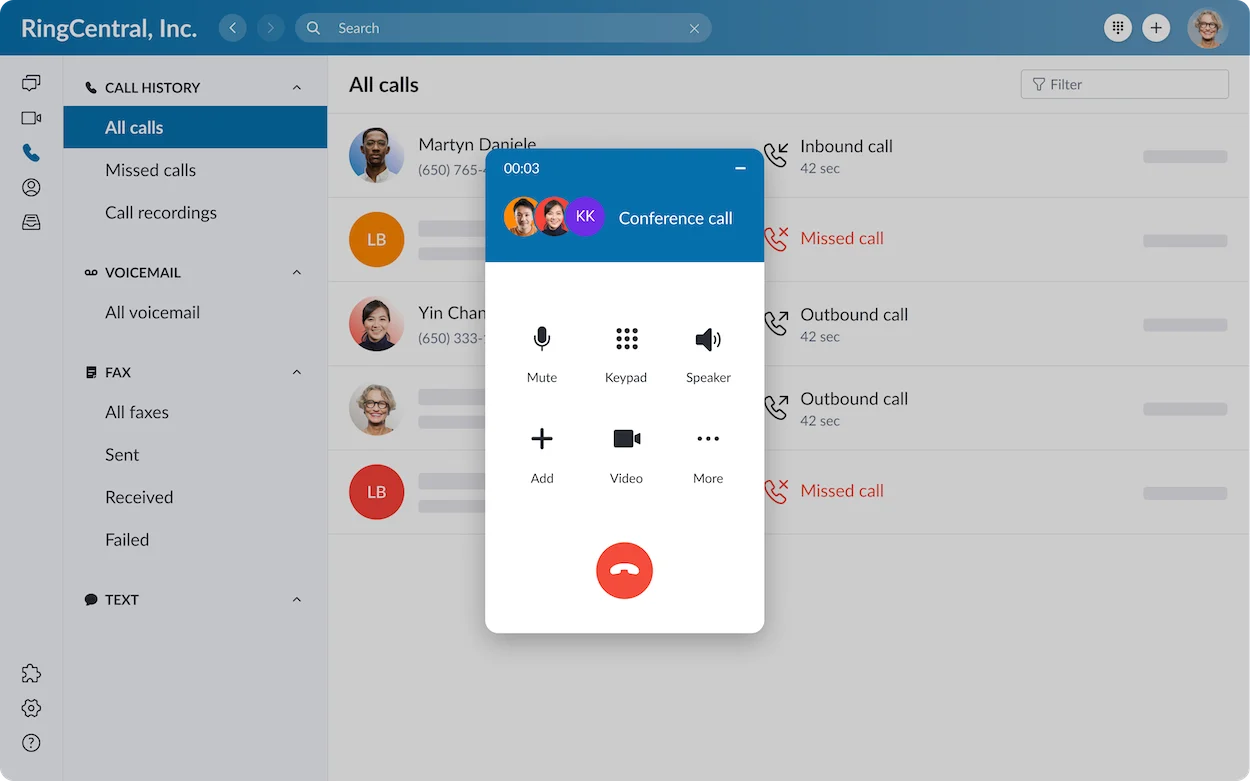
Free Trial Available for new subscribers. The published trial is limited to five users and two desktop phones, excludes SMS, and has hardware-return conditions. A trial of that size can assess a workflow, but it does not establish readiness for an international migration. RingEX is rated 4.2/5 from 1,552 G2 reviews at the check.
6. Zoom Phone For Calling Within Zoom Workplace
Zoom Phone is relevant for an employee telephony project where the organization already uses Zoom or wants to assess that calling environment. It provides phone administration and business calling, with native calling plans and Bring Your Own Carrier options. Confirm the service model for every country rather than assuming one arrangement covers the entire organization.
Suggested evaluation scope is a fifty-plus-user business or multinational team that wants to standardize employee calling. A smaller company can also evaluate the product through the separately labeled small-business route below. These audience labels identify the supplied partner destinations, rather than minimum platform capabilities.
BYOC deserves particular attention if your GTT arrangement already provides voice connectivity. Retaining a carrier while moving the application can be a possible architecture, subject to interoperability and commercial approval. It would also mean that moving the interface has not ended the carrier relationship. Ask both suppliers to document the routing and incident ownership.
Main advantage to evaluate is whether the calling workflow fits employees already using Zoom. Main limitation is the country-specific nature of numbering, calling and deployment choices. Test reception, queues, voicemail and external transfers under the exact plan you would buy. Ordinary meeting access does not establish a Phone calling entitlement.
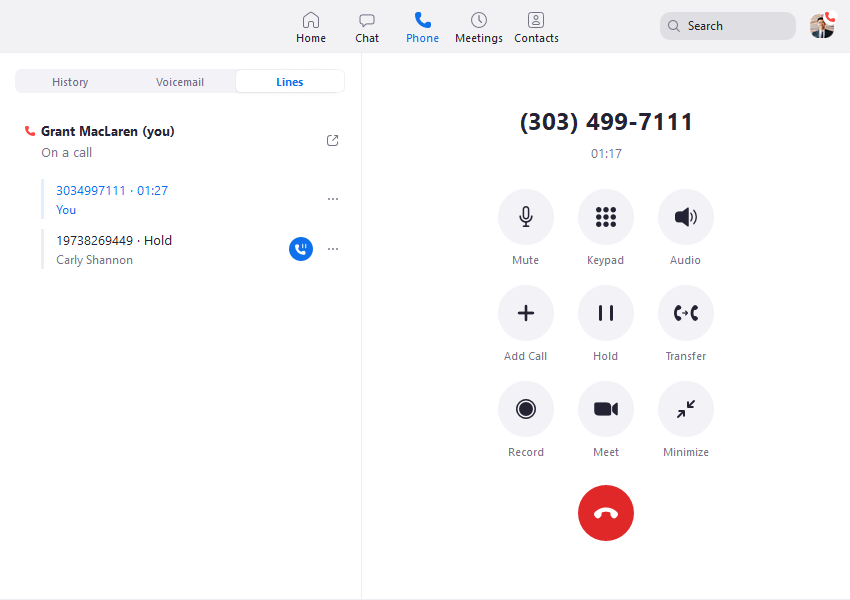
Pricing approach — request a regional proposal for seats, numbers, calling destinations, devices and the selected native or BYOC model. Consult our Zoom Phone review for a broader employee calling checklist. Its G2 product rating is 4.6/5 from 2,692 reviews at the research check.
Choose A Shortlist Around Your Business Scenario
A Multinational Business Replacing Managed Networking
Start with Lumen, Aryaka and Cato, then qualify each against the same locations and requirements. Their proposals may use different delivery models, so normalize the responsibilities before comparing the totals. A useful scorecard separates local access, managed network operation, security, cloud connectivity and implementation. Mark a requirement as included only when the quote or service description establishes it.
For a hypothetical manufacturer with offices in three regions, the important comparison might be how users reach a central ERP application and cloud collaboration services. Include a warehouse with limited local support in the pilot. Its operational needs can expose equipment replacement and access coordination issues that a well-supported headquarters test will miss.
A US Branch Needing Continuity During Access Failure
Focus on the backup design. AT&T Business Wireless can be considered for an eligible wireless requirement, while the primary wired service remains separately evaluated. Decide which applications must operate on backup and what capacity they require. It may be reasonable to preserve payment processing and voice while restricting bulk downloads, but that policy must be configured and tested.
A second subscription alone does not establish resilience. Examine the device, power supply, routing and local coverage. If both connections depend on one powered router, a failed router can interrupt both. If wireless is available only near a window, include the final placement and cabling in the installation plan.
A Business Changing Only Its Phone Platform
Compare RingEX and Zoom Phone around users, telephone numbers and day-to-day routing. Retain the network requirements in the project plan so a phone application trial does not distract from connectivity. A firm using GTT SIP trunks with an existing PBX must decide whether it wants new trunks, a new PBX application or both.
KrispCall and Calilio remain relevant to many smaller business calling searches, but this enterprise networking comparison does not place them on a global WAN shortlist. Adding more phone brands would not resolve the underlying circuit, security or network-management requirement. Expand the phone shortlist only when the specific user workflow calls for it.
Compare Internet Access, SD-WAN And SASE Separately
Internet access connects a site to an upstream network. SD-WAN manages how traffic uses available paths according to the selected design and policies. SASE brings networking and cloud-delivered security functions into a service architecture. These layers are related, but buying one does not establish that the others are included in a particular contract.
When comparing GTT Communications competitors, ask each bidder to draw the service boundary. The diagram should show the premises equipment, local access, provider service points, cloud destinations and remote users. Add the company responsible for each component. This makes the design review useful for operations as well as procurement.
Check The Underlay At Every Address
Build a schedule containing the complete postal address, suite, floor, building contact and required installation date. State the handoff and whether the location has an existing usable circuit. Ask the supplier to distinguish a preliminary availability indication from a confirmed delivery commitment. Include landlord access and any construction dependency in the delivery plan.
Where diverse access is important, ask for evidence of the proposed physical separation. Different invoices or carrier names do not prove different ducts or building entrances. If the supplier cannot confirm a detail, record it as unresolved. That is more useful than granting a resilience score based on a general promise.
Define What Managed Service Means
Write an operational responsibility schedule covering monitoring, configuration, access faults, equipment replacement, software updates and security incidents. Establish whether the supplier opens and follows an access ticket on your behalf. Ask what happens when a managed service appears healthy but an important application remains slow.
For an internal team working across time zones, establish who can approve emergency changes outside local business hours. Include a named escalation path and requirements for incident updates. Support availability, response commitment and restoration commitment should be recorded separately. A person answering the phone does not establish how quickly a circuit will be restored.
Evaluate Security With Your Existing Policies
Give bidders a sanitized set of required rules, identity groups and logging needs. Ask how they would implement the requirements and which purchased capabilities are needed. Include the handling of encrypted traffic, exceptions for sensitive applications and the process for granting temporary access. Security features should be assessed with the security team responsible for the deployment.
Inspect the administrative experience as part of that review. A useful exercise is to trace why a session was blocked, identify a recent change and export the relevant evidence. The result should show whether your team can operate the design within its staffing and authority model. Keep data location, retention and export conditions in the written scope.
Calculate The Full Cost Of A GTT Replacement
A GTT Communications replacement can look cheaper when the proposal covers fewer responsibilities. Compare an agreed service scope and contract period before drawing a savings conclusion. Enterprise network costs may include access, equipment, licences, management, implementation and site-specific installation. Employee calling introduces a different set of seat, number and usage charges.
Use a transparent total-cost model. Add all recurring charges across the planned term, one-time installation and migration expenses, expected usage and a documented overlap budget. Record existing termination exposure separately. Where a future cost is unknown, label the assumption and request clarification rather than inserting an apparently precise saving.
- Recurring Network Costs — primary access, secondary access, managed equipment, service licences, security and monitoring.
- One-Time Costs — surveys, construction, installation, configuration, travel and professional services.
- Voice Costs — users, numbers, concurrent capacity where relevant, destination rates, devices and required add-ons.
- Transition Costs — parallel services, staff time, training, temporary forwarding and planned change windows.
- Contract Changes — price adjustments, site moves, bandwidth upgrades, closures and early termination conditions.
Consider a hypothetical branch with an inexpensive primary circuit and a costly installation requirement. A competing monthly rate may be higher but have a different installation expense. Compare the full term using the actual quotes. Do the same for voice. A lower seat price may omit a required integration or make an important calling destination usage-based.
Do not assume a consumer-style free trial applies to a managed network. Request a written proof-of-concept agreement that defines equipment, access charges, dates, acceptance criteria and what happens after the test. An employee phone trial has its own eligibility and limitations. Treat these as different purchasing processes.
Send Each Supplier A Comparable Request For Proposal
A consistent request makes supplier differences easier to assess. Send a requirements document rather than only the current bill. Explain what works, what is creating a problem and what a successful change must achieve. A supplier can then propose an alternative architecture without quietly dropping a requirement.
- Describe The Estate. List every location, country, user group, cloud environment and business-critical application.
- State The Current Services. Include access, SD-WAN, security, voice, equipment ownership and known contract dates.
- Define Required Outcomes. Specify measurable application behavior, operational responsibilities and rollout constraints.
- Request A Service Design. Ask for the proposed paths, local access arrangements, management boundaries and exceptions.
- Request An Itemized Commercial Schedule. Separate recurring charges, installation, usage, equipment and optional services.
- Agree Acceptance And Exit Terms. Establish how services are accepted, how failures are handled and what happens if a site cannot be delivered.
Require an exceptions register. If a country, number type, integration or delivery date is unsupported, the bidder should say so explicitly. A partially suitable proposal can still be useful if its limits are clear. An apparently complete proposal with unresolved assumptions creates a harder migration later.
For evaluation, use weighted criteria agreed by network operations, security, finance and the business owner. Keep essential requirements as pass-or-fail gates. A supplier with a persuasive dashboard should not compensate for an undeliverable location by scoring well on presentation. Conversely, an acceptable technical design still needs workable support and commercial terms.
Run A Proof Of Concept That Exposes Real Dependencies
Choose sites that represent the difficult parts of your environment. Include a remote office, a location with constrained access and a branch that uses an important cloud application. Define a baseline before changing the path. Record the same tasks under comparable conditions so the outcome can be interpreted rather than attributed to an unusually quiet day.
Test Normal Operations And Planned Failure
Measure application transactions, user-visible delay, packet loss and voice behavior as appropriate to the workload. Agree acceptable results with the application owner. Then test a controlled primary-path failure and recovery. Check whether calls continue, sessions reconnect and operational alerts reach the right people. A green circuit status is only one part of that evidence.
Run the process with the proposed production equipment and policy. A temporary lab router or unrestricted demonstration licence can hide practical limits. Record any differences between the pilot and the final quote, including bandwidth, security processing, user count and log retention. Resolve those differences before using the pilot as a purchase justification.
Test Administration And Escalation
Have your own administrators request a routine change and investigate a simulated incident. Observe the approval requirements, available evidence and support handoff. For a fully managed service, ask the operations team to demonstrate how an access incident is coordinated. For a more self-managed model, confirm that your team has the permissions and training it needs.
Write a short acceptance record with the scenario, expected behavior, observed result, unresolved issue and owner. This becomes a practical rollout reference. It also prevents a successful sales demonstration from being treated as proof of a capability that nobody actually tested.
Plan Circuit And Voice Migration On Separate Tracks
Build a dependency map before scheduling disconnection. Some services may carry private application routes, public addresses, inbound voice or remote-user access. Ask what stops working if a specific circuit or trunk is removed. Have the application, networking and telephony owners sign off on that list.
Prepare And Pilot
Document the current design and export configurations where permitted. Order new access with enough time for surveys and installation dependencies. Prepare routing, security policies and monitoring before the site change. Pilot a location whose business owner can support testing, while still including representative technical requirements.
Move Sites In Controlled Groups
Group locations according to technical dependencies and available support. Set a change window, business contact, acceptance checklist and rollback decision time. During a move, verify application access and external dependencies alongside basic connectivity. Record what changed so later troubleshooting starts from an accurate configuration history.
Handle Numbers And Calling Routes Carefully
For a phone migration, confirm number eligibility, account records and authorization requirements with the receiving provider. Inventory main numbers, direct numbers, toll-free services and any specialist devices or services. Include emergency-location requirements and outbound caller identity in the plan. Number portability is subject to country and number-type conditions.
If changing a PBX application while retaining a carrier, document both the old and new call routes. If moving carrier service as well, coordinate number work with the application cutover. Keep the existing service active until the receiving provider has confirmed the required process and the migration plan permits cancellation.
Accept The New Service Before Closing The Old One
Verify normal operation, failure behavior, support access and billing after the move. Confirm that removed services have been formally ceased and that retained services remain correctly scoped. Review the next invoices against the migration register. The technical cutover and the commercial closure are separate tasks, and both need an accountable owner.
Make The Final Decision By Requirement
The strongest GTT Communications alternatives shortlist is usually smaller than a general telecom directory. For core networking, invite Lumen, Aryaka and Cato to respond to the same service requirements, then reduce the list based on actual coverage and operational fit. For a US wireless need, assess AT&T Business Wireless under its own scope. For employee telephony, compare RingEX and Zoom Phone independently of the WAN decision.
Choose the proposal that can document how it will deliver, operate and support the required service at an acceptable total cost. Keep any unresolved exception visible. If no bidder improves the underlying problem, a revised GTT service design or a narrower change may be worth evaluating. The purpose of the comparison is a workable service outcome.
Frequently Asked Questions
What Are The Best GTT Communications Alternatives?
Lumen, Aryaka Networks and Cato SASE Cloud are relevant options for enterprise connectivity, managed WAN or SASE projects. The right choice depends on locations and responsibilities. RingEX and Zoom Phone address employee calling, while AT&T Business Wireless addresses a narrower US wireless requirement.
Which GTT Competitor Is Best For SD-WAN?
Aryaka and Cato are useful SD-WAN candidates when managed global networking or combined networking and security is the priority. Compare each against the same sites, access circuits, application paths and support requirements. A successful pilot and a complete quote are more useful than a universal ranking.
Can RingCentral Or Zoom Phone Replace GTT?
Yes, for an eligible employee calling project, subject to coverage, number portability and the required calling model. They do not replace GTT's enterprise WAN or internet circuits. If the current arrangement is SIP connectivity to an existing PBX, decide whether you also want to replace that application.
How Much Does A GTT Replacement Cost?
Enterprise network replacement requires an address-specific quote, so there is no reliable universal monthly price. Cost depends on circuits, bandwidth, access construction, security, equipment, management and contract term. For voice only, RingEX Core has a US reference of US$20 per user monthly with annual payment, before deployment-specific charges.
Can I Keep My Numbers When Leaving GTT?
Potentially, if the receiving provider supports the country, number type and portability process. Submit the required account records and obtain confirmation before scheduling the cutover. Coordinate inbound routes, caller identity, specialist lines and emergency-location requirements, and keep service active until the agreed migration permits cancellation.
Is Wireless A Suitable Backup For A GTT Circuit?
Wireless can be suitable when the eligible service, coverage, equipment and capacity meet the site's continuity needs. Test the actual installation during a controlled wired-path failure. Check essential applications, addressing, power and recovery behavior rather than relying only on a coverage indication.
Should I Replace Every GTT Service At Once?
A phased migration is often appropriate when circuits, security and telephony have separate dependencies or contract dates. Pilot representative sites, define acceptance criteria and budget for overlap. A coordinated full change can also be considered when the architecture requires it and the rollback plan is workable.
What Customer Reviews Suggest You Should Test
G2 feedback provides useful buying questions alongside the product scores. These are selected customer opinions, rather than our own test results or a prediction of every deployment. Seller-wide scores for Lumen and AT&T cannot establish the quality of a particular local circuit or wireless installation.
An Aryaka Networks reviewer dated September 2, 2026 rated the product 4/5 and praised the interface and support while describing difficulties integrating it with existing systems. That combination supports asking for an integration workshop and a documented migration design before signing. It does not establish that every organization will have the same difficulty.
A Cato SASE Cloud reviewer dated October 1, 2026 rated the product 4.5/5 and valued straightforward administration and collaborative support. The same reviewer wanted rule-change history to be more visible directly within the rule workflow, while acknowledging that auditing information existed. Ask an administrator to reproduce that investigation during evaluation.
Use customer feedback to refine the demonstration. Ask each finalist to show an incident, a policy change and a site onboarding process with your requirements. Keep the written service obligations and pilot evidence alongside the review scores when making the decision.
Affiliate Disclosure — VoIPCalling may earn a commission when you purchase through our partner links. Recommendations reflect the service scope and buying requirements discussed in this guide.