
This Ringover vs RingCentral guide compares pricing, calling features, integrations, AI, apps and buying considerations in 2026. RingCentral RingEX is the main employee communications product discussed here; RingCX should be evaluated separately for a full contact centre. For readers comparing RingCentral vs Ringover, the focus is total team costs, sales and support workflows, international calling and CRM integrations. Ringover’s entry phone plan is distinct from its advanced customer-contact tools.
Ringover is a strong candidate for sales, recruitment and support teams that want customer calls connected to their CRM or applicant tracking system. RingCentral is a strong candidate for business-wide calling, employee collaboration and administration across departments. Neither is the best choice for every company. The useful comparison is the package that handles your daily work at a sustainable total cost.
Customer Ratings at a Glance

Ringover — G2: 4.6/5 from 497 product reviews.

RingCentral RingEX — TrustRadius: 8.8/10 from 543 reviews and ratings.
These ratings use different platforms and scales. Read the feedback alongside the workflow comparison rather than ranking the two raw numbers directly.
Ringover vs RingCentral: Quick Overview
| Requirement | ||
|---|---|---|
| Entry reference | TALK: $19/user/month with annual billing | Core: $20/user/month with annual billing |
| Customer-contact evaluation | CRM/ATS calling, coaching and outreach workflows | Customer calling within a broader employee communications deployment |
| Key cost check | Seat minimum, contract term and required customer-contact tier | Higher package, specialist AI and contact-centre requirements |
| International evaluation | Included destinations depend on originating number and package | US/Canada calling in the US offering; other destinations use rates or bundles |
| AI evaluation | Basic call records versus Empower conversation intelligence | Employee assistance versus specialist reception and intelligence products |
| Trial | Explore Ringover’s trial | Explore RingCentral’s 14-day trial |
Ringover vs RingCentral Pricing: Compare the Required Package and Minimum Spend

Ringover prices in US dollars
| Plan | Annual reference per user/month | Monthly reference per user/month |
|---|---|---|
| TALK | $19 | $29 |
| BUSINESS | $49 | $69 |
| UNIFIED | $69 | $89 |
The published TALK and BUSINESS cards specify three users minimum and a 12-month commitment. Ask how the selected payment schedule changes the contract: a monthly price is not, by itself, evidence of cancellation at any time. Prices exclude taxes.
At those annual references, the three-seat minimum represents a $57 monthly-equivalent TALK base or $147 BUSINESS base. A ten-user illustration is $190 for TALK or $490 for BUSINESS per month equivalent. Those calculations cover licences only.

RingCentral RingEX pricing
RingCentral publishes a Core starting reference of $20/user/month when paid annually, including one number per user. 10 Core seats represent $200 monthly equivalent, or $2,400 over twelve months before extras. Request a current quote for higher packages and specialist requirements.
Why the entry-price winner can change
TALK has the lower per-seat reference, but buying three licences for one active person changes the practical comparison. A busy customer-facing team must also identify the Ringover tier that preserves its routing, connector and coaching requirements.
For example, a ten-person office choosing between basic phone subscriptions has a different budget from ten recruiters needing embedded ATS activity and supervision. Do not treat TALK, BUSINESS and RingEX Core as interchangeable simply because each can make calls.
Request one written total covering licences, numbers, usage, AI, implementation and equipment. Compare the same billing term, renewal conditions and required workflow before deciding which is cheaper.
Ringover vs RingCentral Cost for 5 or 10 Users
These licence-only calculations use the annual price references above. They are budgeting examples, not equivalent-feature quotations. A sales team should price its CRM, recording and coaching workflow before choosing the lowest base subscription.
| Product and plan | 5 users | 10 users |
|---|---|---|
| Ringover TALK | $95 | $190 |
| Ringover BUSINESS | $245 | $490 |
| Ringover UNIFIED | $345 | $690 |
| RingCentral RingEX Core | $100 | $200 |
Total cost checklist: include extra numbers, international minutes, toll-free usage, SMS registration and usage, AI licences, dialler options, onboarding, taxes and renewal pricing. Ringover vs RingCentral annual pricing should be compared over the same contract period. Ask whether every employee needs each add-on or only selected agents and supervisors.
For 5 sales agents, test a lead list, a call outcome and CRM synchronisation. For 10 support agents, test queues, overflow, transfers and supervisor access. A cheaper plan is poor value if those everyday tasks require a second system.
Ringover vs RingCentral Features: Sales and Support Call Handling
Ringover’s wider platform offers IVR, queues, transfers, time-based routing and outbound dialling tools. RingCentral offers business phone features including IVR menus, forwarding, shared lines, visual voicemail and moving calls between devices. Both merit an inbound-call test as well as an outbound demonstration.
When Ringover deserves a closer look
A sales representative or recruiter may need to call a list, record the result, review the conversation and continue the next action from the customer record. In that situation, the value comes from the complete process rather than only the number of available buttons.
Ringover’s BUSINESS card includes a power dialler, advanced IVR and coaching. Campaigns are listed as an add-on; local presence is listed under ENTERPRISE. Do not assume a power dialler includes a predictive or parallel dialler. Identify those entitlements before assuming the lowest price includes the sales demonstration.
When RingCentral deserves a closer look
A business with reception, accounts, management and customer service needs predictable transfers between roles. RingCentral’s broader communications proposition makes it worth evaluating for that shared office environment.
Build a realistic main-number flow with opening hours, a department menu, no-answer handling and voicemail. Then test a customer who reaches the wrong department. The winning configuration should get that person to the right employee without losing the context or creating unnecessary steps.
Ringover vs RingCentral Integrations: Ringover’s Recruiting Connections Are a Meaningful Difference
Ringover lists connections for Bullhorn, Avionté, JobAdder, Loxo and other recruiting systems, alongside HubSpot, Salesforce, Pipedrive and Zoho. Its integration catalogue also includes support, productivity and communication tools. RingCentral offers an app ecosystem and APIs for business workflows.
Our assessment: Ringover should be high on a recruiting agency’s shortlist when candidate calls and follow-ups need to sit inside the ATS. RingCentral should be high on the shortlist when that customer workflow forms part of a larger employee communications deployment.
Connector availability does not establish identical behaviour. Ask for an incoming caller match, a call from the contact record, a missed call and a completed conversation with a saved outcome. Check where the recording, summary and next action appear.
For recruitment, test an individual stored as both a candidate and a client contact. For sales, test duplicate CRM contacts and reassigned ownership. Those cases expose whether activity reaches the right record and remains visible to the next employee.
Ask who handles failed synchronisation and whether any connector requires an additional product or higher plan. Our guide to integrating VoIP with a CRM provides useful implementation questions.
Ringover vs RingCentral AI Features and Conversation Intelligence
Ringover AI and Empower
Ringover advertises transcription and summaries in its phone offering. Its Empower conversation intelligence product goes further with topic identification, sentiment analysis and coaching insights. Request a separate Empower quote specifying licence scope, analytics, retention and coaching options.
A recruiter may want a summary of candidate availability, while a sales manager may want consistent feedback across several representatives. These are different requirements, so demonstrate each output rather than treating every AI tool as one bundled capability.
RingCentral AI
RingCentral’s AI portfolio includes employee assistance with notes, summaries and actions, alongside specialist reception and conversation intelligence products. Confirm which capabilities belong to the RingEX package and which require a separate purchase.
Use the same sample conversation for both providers, including a person’s name, a date, a price and a promised follow-up. Judge whether the summary preserves those facts and puts the next action where an employee will find it.
For coaching, ask how the system supports a manager’s rubric and explains its conclusions. For an AI receptionist, test an unexpected request, a request for a human and a failed transfer. Reception automation should be assessed separately from post-call analysis.
Mobile and Desktop Apps: Test the Tasks Employees Actually Perform
Ringover provides computer calling through its web interface and PC/Mac software, with mobile access across its offering. RingCentral also provides desktop, mobile and web access. Confirm the app entitlement for the selected plan before deploying the same setup to every user.
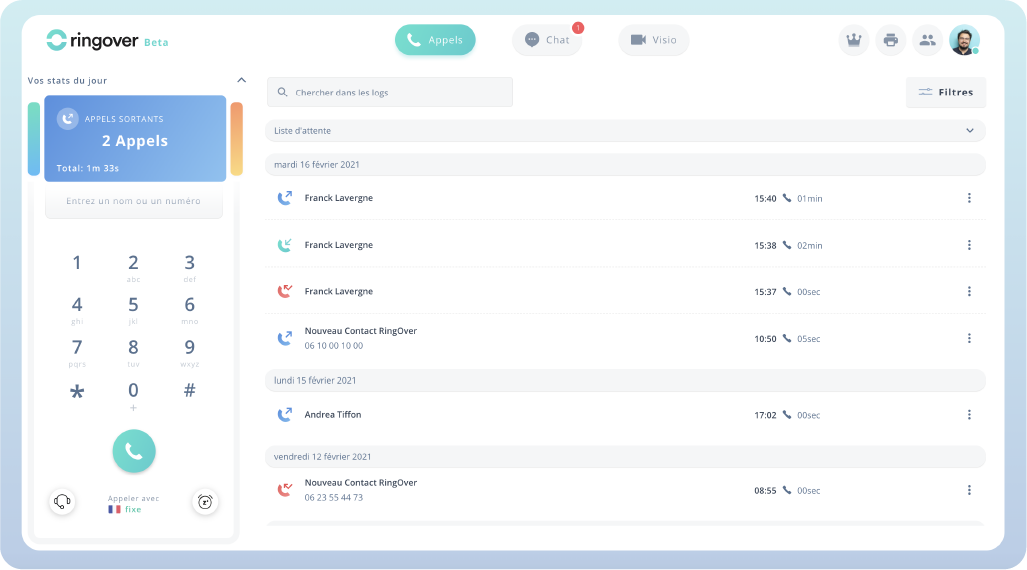
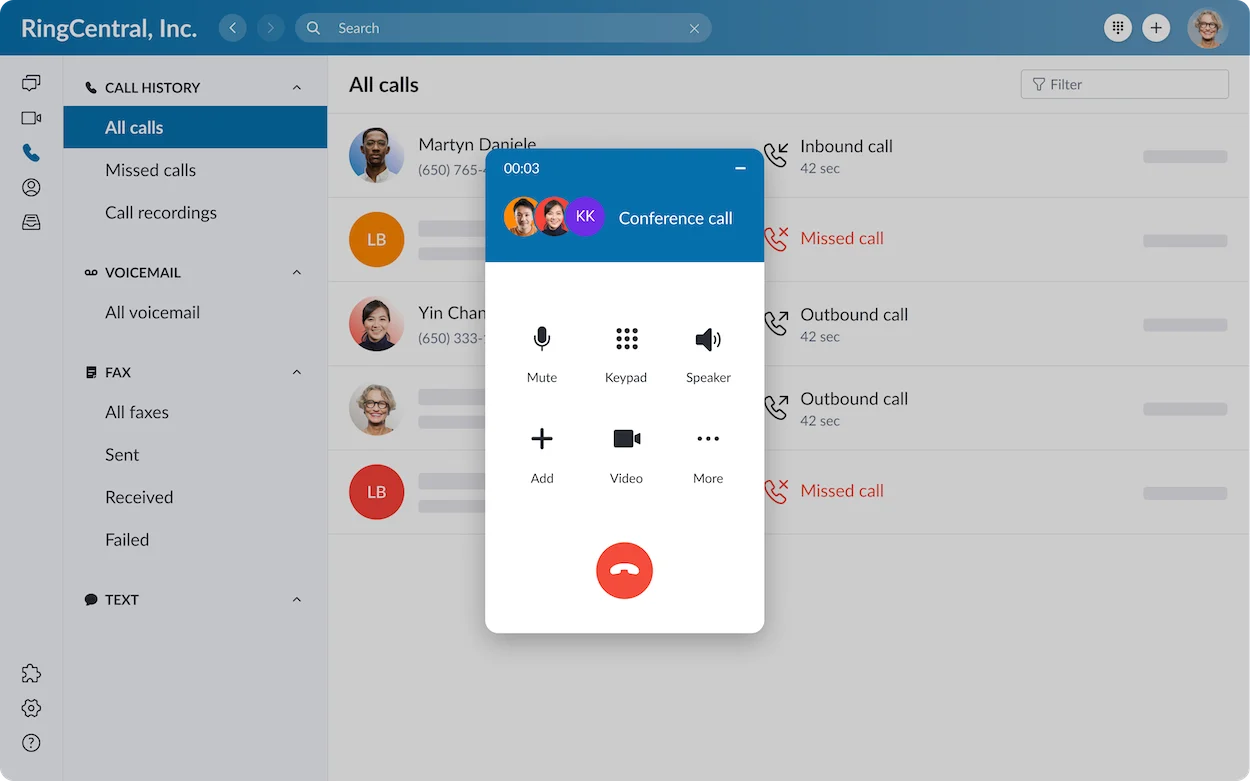
Have a customer-facing employee find the previous conversation, return a missed call and save an outcome. Have a manager review a call and locate its associated record. Have a mobile employee answer with the phone locked and transfer the caller.
Check notification behaviour, headset selection and business caller ID on the network employees normally use. Where a browser extension and desktop app run together, verify which interface owns the call and whether the CRM activity appears once.
A polished desktop demonstration cannot settle mobile usability. Include people who work away from a desk and give them time to test ordinary tasks without a sales representative guiding every action.
Ringover vs RingCentral International Calling: Ringover’s Originating Number Changes the Allowance
Both providers support international calling. Calling a country, obtaining a local number there and deploying local service are separate requirements. Confirm each one rather than treating an international headline as proof of all three.
Ringover’s current US BUSINESS card lists 90 destinations. Obtain the applicable destination list and landline/mobile exclusions for your originating numbers; a country count is not a rate sheet. This is not a blanket promise that every TALK subscriber receives unlimited worldwide calling.
RingCentral’s US offering includes calls within the US and Canada, with rates or bundles for other destinations. That inclusion does not mean RingCentral only works in those countries.
For either provider, prepare a destination list with expected minutes and landline/mobile splits. Ask for a quote using the exact number employees will originate calls from. Include external forwarding, toll-free traffic and automated dialling where applicable.
A team calling France and Germany from a UK number may face a different Ringover allowance from a team originating the same traffic from a US number. The relevant comparison is your actual traffic, rather than the largest country count on a feature page.
Check messaging separately. International voice inclusion does not establish international SMS availability or unlimited messaging. Ask about registration, number eligibility and message charges if texting is part of the workflow.
Ringover vs RingCentral Reliability: Evaluate the Whole Customer Journey
RingCentral advertises 99.999% reliability. Ask for the applicable SLA, coverage and remedies from both providers rather than inferring a Ringover uptime percentage from customer comments or marketing descriptions.
A business depends on more than a connected call. The recording, queue, transfer and CRM update may each be necessary to complete a customer interaction. Include those steps in the pilot and define how failures are reported.
Test during the busiest normal working period using the intended devices and office network. If audio breaks up, distinguish Wi-Fi, headset and browser problems from a provider incident before drawing conclusions.
Agree a fallback for internet loss and a route for urgent incidents. For a shared customer record, also verify access controls, retention and the behaviour of connected AI or CRM services. A usable recovery process can matter as much as a headline uptime claim.
Ringover vs RingCentral Customer Support: Make Migration and Escalation Part of the Comparison
Ask each provider which support channels, hours and response targets apply to the quoted package and customer region. Do not assume an AI receptionist that answers callers around the clock means human technical support is available 24/7.
A practical test is to submit a realistic configuration question during evaluation. Look for an answer that identifies the problem, gives a next step and states who owns the resolution.
For a CRM or ATS connection, establish whether the phone provider or software vendor handles failed activity logging. For number porting, request the required documents, a migration contact and a plan for temporary routing.
A larger business should ask how onboarding hands over to ongoing support. Training reception staff, representatives and administrators requires different material; a general demonstration may leave important role-specific tasks uncovered.
Ringover vs RingCentral Small Businesses: Choose Around the Work, Not Just the Seat Price
Ringover is worth evaluating for a small agency or customer-facing team where CRM or ATS activity drives the working day. A recruiting business can judge it on candidate calling, record visibility and repeatable follow-ups.
RingCentral is worth evaluating for a small business that wants a shared communications system across several roles. A professional services office may prioritise reception transfers, employee collaboration and straightforward administration.
For a solo user, calculate the minimum purchased seats rather than multiplying the advertised per-user rate by one. For a small sales team, calculate the package that includes the required workflow rather than assuming an entry phone plan will preserve every trial feature.
A simple requirement may not justify conversation intelligence or a campaign tool. Conversely, a busy representative may benefit from less manual logging even when the licence costs more. Ask employees which repetitive work the new system would actually remove.
Ringover vs RingCentral Larger Businesses: Compare Administration and Agent Requirements Separately
RingCentral deserves evaluation for calling and collaboration across departments or locations. Ringover deserves evaluation for customer-contact operations where connected recruiting, sales or support activity is central to the specification.
A larger team should demonstrate permissions, reporting ownership and changes to routing. Ask how administrators manage new users, departures, number assignments and access to recordings without exposing more customer data than necessary.
For a full contact centre, compare the appropriate Ringover configuration with RingCentral RingCX. Buying RingEX employee licences alone does not establish equivalent agent supervision, customer channels or outbound campaign management.
Before a broad rollout, pilot a representative team and define the report that managers need to use. Check the path from an agent conversation to the customer record, then the handover to another department. A feature list is less useful than proving that journey works reliably.
Switching Between Ringover and RingCentral: Numbers, Trials and Rollout
Before switching from Ringover to RingCentral—or switching from RingCentral to Ringover—ask the receiving provider to confirm portability for each local, international and toll-free number. Keep the old service active until the port completes and inbound and outbound calls work correctly.
Trial a small remote team on its actual mobile and desktop apps. Check shared call handling, business texting, caller ID, headset behaviour, missed-call alerts and CRM logging. Test team messaging and video meetings separately from customer voice workflows; a feature appearing elsewhere in a provider’s portfolio does not establish inclusion in the chosen phone plan.
Agree a migration date, routing fallback and responsible administrator. Export required records, confirm recording retention and review cancellation notice before ending the old contract. For specialist contact-center requirements, evaluate RingCX separately from RingEX and identify the corresponding Ringover package.
Ringover vs RingCentral: Pros and Cons
| Assessment | Ringover | RingCentral |
|---|---|---|
| Reasons to shortlist | Connected CRM/ATS workflows, recruiting integrations and customer-contact tools | Employee calling, collaboration and business-wide communications |
| Cost limitations | Minimum seats, required workflow tier and optional specialist products | Higher packages, specialist AI and contact-centre products affect the total |
| International check | Originating number and destination eligibility | Actual destination rates or bundle scope |
| Pilot priority | Activity logging, mobile behaviour and supervision | Routing, reporting and administration |
These trade-offs do not establish a universal winner. Price the configuration that meets the requirement and evaluate the tasks employees repeat every day.
Ringover vs RingCentral: Frequently Asked Questions
Is Ringover or RingCentral better for a small business?
Ringover is worth evaluating for sales, recruitment and support workflows built around customer records. RingCentral RingEX is worth evaluating for business-wide calling and collaboration. Choose using the required workflow, team size and complete quote.
How do Ringover and RingCentral compare on pricing?
Compare the same billing term and the plan needed for your work. The pricing tables above separate Ringover subscriptions from RingEX Core; advanced CRM, coaching, AI or contact-center requirements can change the total.
Which costs less for 5 or 10 users?
Using annual licence references, Ringover TALK totals $95 for 5 users or $190 for ten per month equivalent. RingEX Core totals $100 or $200. Ringover BUSINESS totals $245 or $490. Taxes, usage and add-ons are extra; these are not feature-equivalent packages.
Do either provider’s plans require a minimum number of users?
Ringover TALK, BUSINESS and UNIFIED list a three-user minimum and 12-month commitment; ENTERPRISE lists 50 users minimum. Confirm RingEX seat requirements and contract terms on your quote, especially for a promotional or negotiated offer.
Which is better for outbound sales and customer support?
Demo your actual workflow. Sales teams should test list calling, outcomes and CRM updates; support teams should test queues, overflow and escalation. Compare Ringover BUSINESS with the RingCentral product and configuration that delivers those tasks, rather than assuming RingEX Core includes a contact-center stack.
How do their dialers, call recording, and coaching tools compare?
Ringover BUSINESS lists a power dialler and coaching tools. Verify each provider’s recording mode, retention, supervisor permissions and dialler type in the chosen subscription. RingCX and specialist outbound products should be quoted separately from a basic RingEX comparison.
Which international calling destinations are included in each plan?
Use the destination schedule for your package and originating numbers. Check mobile versus landline coverage, premium exclusions, fair-use conditions and forwarding charges. Do not interpret unlimited calling as every country or every type of traffic.
How does international phone number availability compare?
Number availability is separate from calling coverage. Request country-by-country confirmation of local, mobile and toll-free inventory, documentation requirements, activation fees and recurring charges. A supported calling destination does not guarantee a local number can be purchased there.
Which CRM integrations are available on each plan?
Check the exact Salesforce, HubSpot or other connector against the selected plan. Ask both providers to demonstrate caller matching, click-to-call, activity logging and recording access. Include any required CRM licence, higher phone tier or connector fee in the comparison.
What AI features are included, and which cost extra?
Distinguish transcription and summaries from specialist conversation intelligence, coaching and AI reception. Ringover Empower and RingCentral specialist AI products need their own entitlement checks. Obtain a written list of included functions, usage limits and extra charges.
Can I transfer my existing business numbers between providers?
Porting depends on country, number type and eligibility. Ask the receiving provider to check every number and required documents. Keep the existing service active until the transfer and call tests are complete.
Do Ringover and RingCentral offer a free trial or demo?
Both provide ways to evaluate their services. Check current trial duration, eligible plans, user and minute limits, card requirements and cancellation terms. Ask for a guided demo of CRM, dialler and coaching features that are unavailable in a basic trial.
Final Recommendation: Ringover for Connected Customer Work, RingCentral for Shared Business Communications
Choose Ringover for evaluation when its CRM or ATS workflow, customer-contact tools and applicable international allowance match the team’s daily work. Establish the paid tier that preserves the demonstrated capabilities and calculate the minimum licence purchase. Our Ringover review explores the wider product.
Choose RingCentral for evaluation when employee calling, collaboration and consistent department handling are the primary goals. Test the routing and administration, then price any additional contact-centre or specialist AI requirements. See our RingCentral review.
The strongest buying decision is one supported by a successful workflow pilot and a complete written quote. If neither fits, compare other business VoIP providers before committing.
Ringover vs RingCentral Customer Reviews: What to Test Before Buying
Ringover — G2
A staffing and recruiting reviewer gave 4.5/5 on April 9, 2026, valuing straightforward calling and CRM activity in one place. The same reviewer reported occasional mobile notifications and cross-device messaging glitches.
G2’s broader review summary highlights ease of use and helpful support, alongside cost concerns. For a small team, those comments make the minimum purchase, total quote and mobile pilot especially relevant.
RingCentral RingEX — TrustRadius
An incentivized 7/10 review dated October 1, 2026 appreciated queues, administration and helpful support, but described difficulty finding abandoned queue calls and confusion with reporting.
An incentivized 10/10 review dated September 24, 2026 described successful use across 180 dental-support sites with good voice quality on a correctly configured network. It also criticised first-line support and built-in analytics.
These are paraphrases of individual experiences, not results from our own testing. Use them to shape practical checks around notifications, reporting, cost and escalation.
Pricing references checked October 15, 2026: Ringover plans and pricing and RingCentral plans and pricing. Confirm the selected region, billing term and final quote before ordering.
Affiliate disclosure: VoIPCalling.com may earn a commission if you purchase through an affiliate link in this article, at no additional cost to you. Recommendations reflect the product differences and business requirements discussed above.