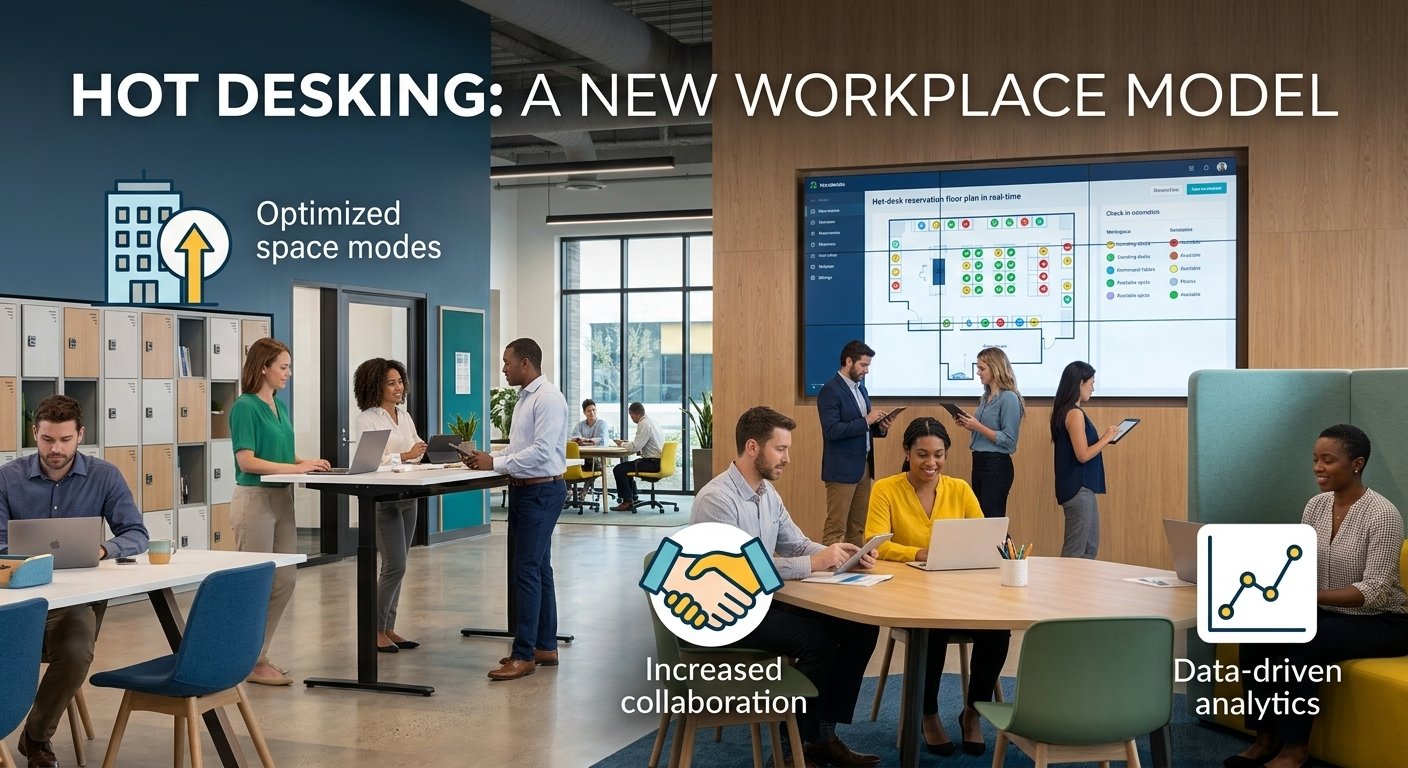
Hot Desking is an innovative working space arrangement that allows flexibility in seating arrangements and does not assign seats to employees. Rather, workers select the workstation that is available when they come to work. This strategy can help businesses make the most of their real estate and eliminate any unused areas. A dynamic environment enables companies to easily adjust to today’s hybrid working policies.
Knowing what is meant by this desking definition can enable organizations to optimize operations and keep their staff productive. The proper office hot desking solutions can save overheads, help remote workers who come into the office and create a culture of collaboration that is vital for today’s business success.
What is Hot Desking?
The hot desking definition is not just about sharing desks, it’s a change in corporate resource management. The hot desk concept was first introduced in the 1990s by organizations such as IBM and has since become a huge craze because of the shift in work schedules. It was soon discovered that it was not economically viable to have permanent seats for employees who rarely worked there, and it was very restrictive in terms of space.
To make the transition to flexible working environments, it is essential to implement appropriate hot desking solutions that will facilitate everyday business operations. As workers log in, they just find an empty seat, connect their devices and get to work without hassle. This fluidity is dependent on the modern technological advancements, which means that every individual has the resources that they need, irrespective of the position they take on any given day.
Hot Desking vs. Hoteling
Hot desk and hoteling are sometimes used interchangeably, but there is a difference between the two that’s important to facility managers. The main difference is in the way the reservation process works and how predictable it is for the work force. A traditional setup is based on a first in, first served principle, while hoteling involves people making reservations for their specific workstation.
For an explanation of these methodologies, please see the comparison below. The right office space hot desk model will depend on your organisation’s needs and your staff’s preferences.
| Feature | Hot Desking | Hoteling |
| Booking Method | First-come, first-served | Advance reservations required |
| Flexibility | Extremely high | Moderate |
| Predictability | Low (availability varies) | High (guaranteed spot) |
| Software Need | Optional (but recommended) | Mandatory |
Benefits of Hot Desking
Having a flexible workspace offers significant benefits to businesses that are balancing remote and on-site work. The benefits of hot desking can be assessed and this can help justify structural change and investment in technology.
If these strategies are used properly, they can reduce wasted space and retain the staff. The next sections discuss the benefits of a shared environment to the bottom line and the corporate culture in general.
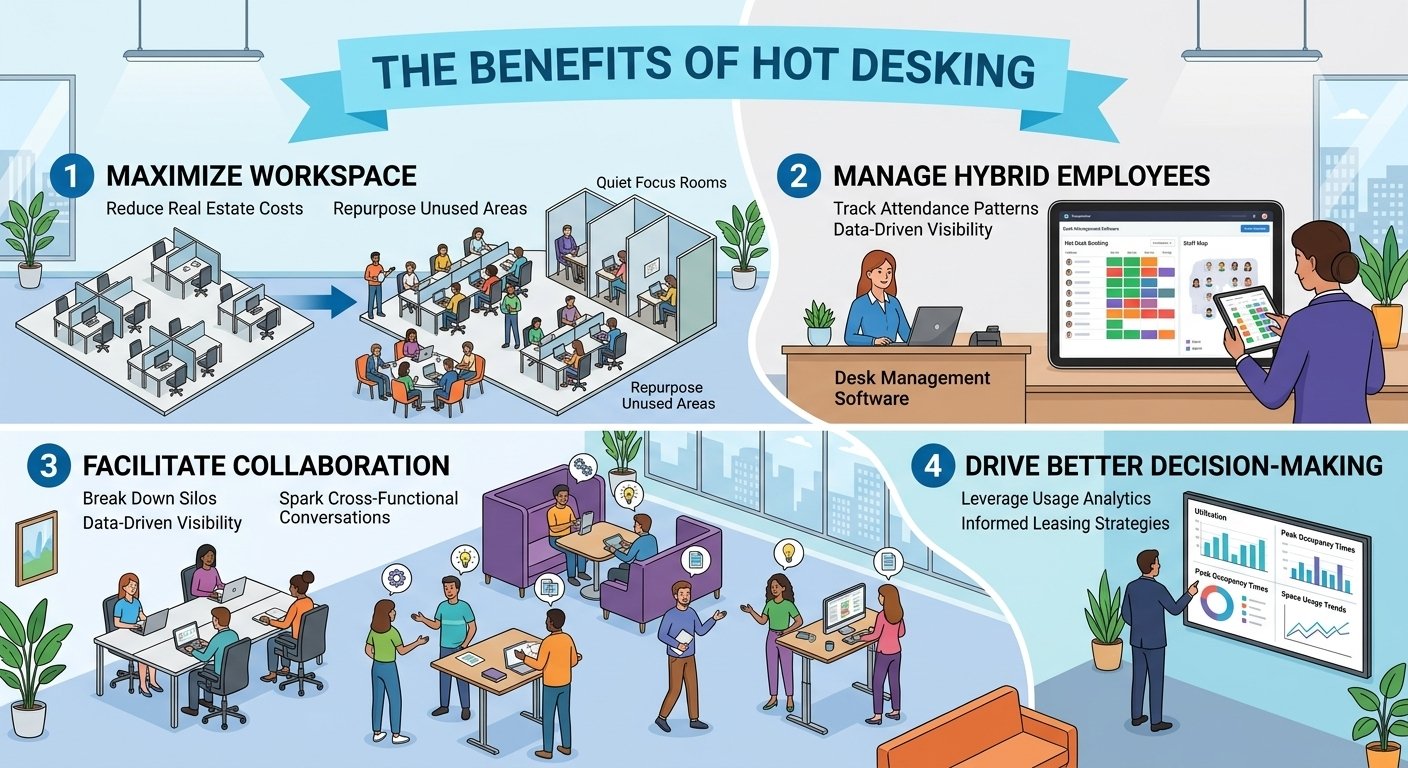
1. It maximizes your workspace
Empty private offices and cubicles are a financial sink hole. Eliminating permanent assignments enables facility managers to reduce the square footage they need and significantly reduce overhead costs per month. This is the definition of efficiency that is hot desking, which makes businesses not pay for the empty spaces.
Previously unused spaces that were once filled with empty cubicles can be converted to collaborative space or focus room. This strategic optimization ensures that each inch of the leased property has a purpose and is used to its fullest.
2. It helps you manage hybrid employees
The Chartered Institute for Personnel and Development (CIPD) May 2023 survey revealed that 83 percent of the organisations surveyed had adopted a hybrid working model. This variable attendance will need a strong desk management software system to keep track of the attendance for the day. Administrators have full visibility of who’s around, and they can ensure that safety protocols and resource allocation are met.
Monitoring attendance helps to avoid overfilling the day on busy days, and identifies underused areas on less busy days. This data-driven approach makes logistics easier with the unpredictable hybrid schedules.
3. It helps facilitate collaboration and teamwork
Traditional seating often creates siloed departments where cross-functional communication rarely occurs naturally. A shared hot desk system forces individuals to sit next to colleagues from different teams, sparking organic conversations and innovative brainstorming sessions.
Overcoming such physical obstacles helps build a cohesive corporate culture. Strategies that come from the interaction between the marketing specialist and the software developer can sometimes yield new and innovative ideas and improved employee relationships throughout the company.
4. It drives better decision-making
A hot desk booking system offers executives actionable insights into facility usage. Full reports provide detailed data on how long people stay, where are the most popular zones and when are they at their busiest.
These insights empower leadership to make informed choices about future lease renewals or downsizing efforts. Instead of relying on guesswork, organizations leverage concrete statistics to align their physical infrastructure with actual workforce behaviors.
What are the Disadvantages of Hot Desking?
While there are many benefits to hot desking, business leaders need to understand the advantages and disadvantages before making a total overhaul. Ignoring potential pitfalls often leads to frustration, decreased morale, and a chaotic transition period.
Understanding these challenges proactively allows administrators to deploy effective countermeasures. The following are some of the more typical challenges that organizations encounter when transitioning from assigned seating to unassigned seating.
1. Increased noise and reduced privacy
Shared environments are always noisy, and that noise level can hinder concentration when performing analytical tasks. Without walls, private phone calls or projects focused are less possible to implement without being distracted.
To mitigate this downside, companies establish designated quiet zones and isolated pods. Providing noise-canceling headphones and acoustic walls can also help ensure a productive environment while keeping the surrounding noise from disrupting your work.
2. Lack of personalization
It’s a natural urge that human beings have to belong to a group, and this can be achieved by decorating a permanent workstation with family photos or personal items. A temporary hot desk does not provide this opportunity, and can sometimes make people feel disconnected from their surroundings.
This can be addressed by offering secure lockers for staff to leave their belongings overnight. It is helpful if you bring a few familiar items to put out each morning, to give a little sense of ownership and comfort.
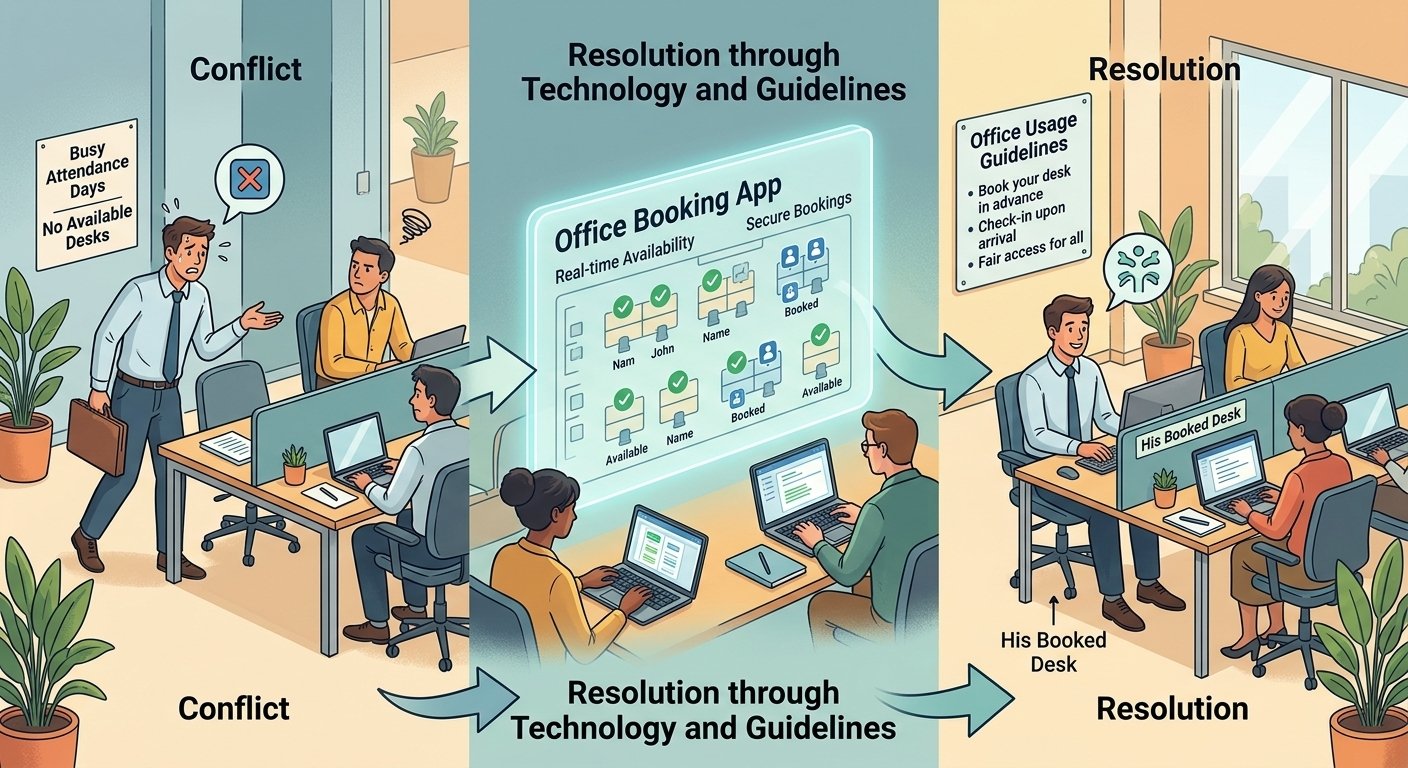
3. Potential for Conflict
When people arrive at the building and find that there are no workstations available, anxiety and interpersonal conflict is immediately felt. This is often the case on days when lots of people attend, and there are more staff than seats.
An effective hotdesk software can save these conflicts by providing visibility of the current availability status. Clear guidelines for use will promote equitable access and balance between colleagues who want to use the same space, such as a window seat or a preferred area.
Hot Desking Infrastructure
Successful transition requires more than just removing nameplates from cubicles. A 2023 Gensler survey of office workers in six U.S. cities found that workers who could enjoy a variety of spaces in the office were much happier. The need for proper infrastructure enhancements is essential for a seamless workforce every day. The following are key components of the infrastructure needed for a successful flexible environment:
-
Secure personal storage smart lockers
-
The universal docking stations and adjustable dual monitors are included.
-
Easy access to electrical outlets and fast Wi-Fi.
-
Confidential video-conferencing pods for private use.
-
Wipe and hand sanitizer stations
How Hot Desk Booking Software Works
Manual spreadsheets for availability tracking are not efficient and are prone to human error. Today’s hot desking software solutions take the entire process of hot desking and make it automatic, connecting physical space with digital scheduling.
These platforms are cloud-based, providing instant access on any internet-connected device. Users just log into the hot desking application, check the visual floor plan and reserve their desired location in seconds.
1. Manage Your Space
The backend of the hot desk reservation system is used by administrators to set parameters and capacity limits. They can isolate certain areas for maintenance or designate specific areas to different departments and maintain control of the organization.
Real-time calendar syncing means meeting rooms and individual seats will never be overbooked. Automated email notifications keep everyone informed about their reservations, ensuring seamless transitions throughout the day.
2. Create the Best Experience for Users
A top-notch hot desking app focuses on user experience, providing sleek mobile interfaces and hassle-free check-in processes. Professionals can make and cancel reservations on the spot when their travel plans suddenly change.
Advanced platforms enable people to search for the amenities they require, including standing desks and dual monitors. This customization helps them to get an environment that fits their daily schedule.
3. Provide Access Across Platforms
Seamless integration with existing corporate technology stacks is vital for widespread adoption. Best of breed applications integrate seamlessly with Microsoft Exchange, Google Workspace, and other popular communication applications such as Slack or Microsoft Teams.
This interoperability allows staff to avoid having to master new processes to book a hot office. Directory data synchronization ensures accurate data analytics and also minimizes the administrative burden for internal IT departments.
Read More: Best IVR System for Small Business in 2026
Final Words
In today’s complex world of facility management, flexible solutions and powerful technology are essential. When it comes to desktops, a knowledge of what is hotdesking can enable forward-thinking businesses to match their physical resources with modern working expectations.
Clear hot desk policies and high-quality booking apps create an engaging and cost-effective corporate environment. By embracing this change, your business will stay competitive, resilient, and prepared for the future of work.
Hot Desking FAQs
-
What is hot desking and how does it transform your office?
Hot desking is a dynamic seating strategy where professionals claim available workstations daily rather than having assigned desks. This approach transforms businesses by eliminating wasted real estate, significantly reducing property costs, and fostering a collaborative, flexible corporate culture.
-
Why is it called hot desking?
The word comes from the nautical world, where sailors slept in bunks in shifts to make the best use of limited space. In the business world, it refers to the sequential, cyclical use of a tangible asset by different users.
-
How does hot desking work?
People come in and choose any empty workstation for the working day. Today’s versions use digital applications which enable users to view interactive floor plans and reserve their preferred seat before travelling.
-
What happens if employees reserve the same desk?
Technological solutions are of premium quality, which will help you to avoid double-booking by updating the availability in real time on all devices connected. In case of a technical conflict, the facility manager can simply switch one person to another workstation nearby that has similar capabilities.
-
What are the downsides of hot desking?
The drawbacks are higher background noise, privacy issues for certain tasks and no personal space customization. It can also cause conflicts regarding seats when there is a high volume of users in the building if there are no hot desk tools in place.
-
Is hot desking good or bad?
It is highly beneficial for organizations heavily utilizing hybrid schedules, as it cuts overhead and maximizes efficiency. However, it can be detrimental if implemented poorly without proper technological infrastructure or adequate quiet zones for focused tasks.
-
Is hot desking good for mental health?
Produces mixed results, depending on the individual. Extroverts will benefit from more socialization and from a more diverse environment, whereas introverts may suffer from a lack of routine and from not having a safe space that is private and predictable.
-
Is hot desking still a thing?
Yes, it is more common than ever, because of the global trend towards flexible working models. This model is continually being adopted by companies to suit employees who only come into work a few times a week.
-
What is hotdesking software?
It is a digital platform which is meant to manage and automate the booking of shared workplaces. These apps give administrators analytical insights, and offer a seamless scheduling experience for the workforce on a day-to-day basis.