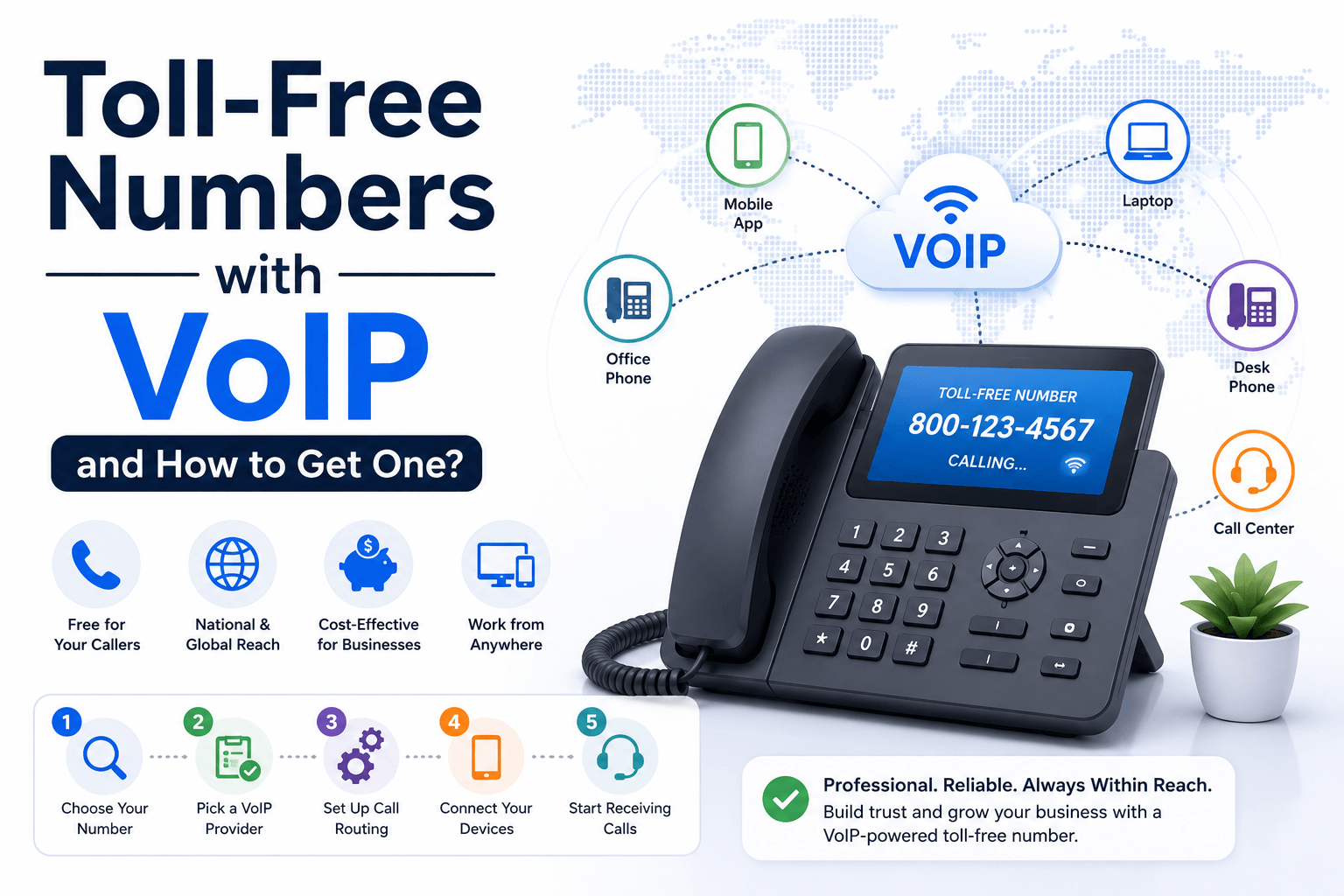
A toll-free VoIP number is a business phone number that allows eligible callers to reach a company without paying the usual toll charges for the call. In North America, toll-free numbers use prefixes such as 800, 888, 877, 866, 855, 844 and 833. With VoIP, incoming toll-free calls can be routed over an IP-based phone system to desk phones, computers, mobile apps or other configured destinations.
This setup eliminates geographical barriers, enabling organizations to establish a national presence while providing a cost-effective communication channel for their global customer base, ultimately fostering better engagement and professional credibility.
What is a Toll-Free Number?
A toll-free number is a professional business phone line that starts with a specific three-digit code, allowing customers to call your company without being charged for the minutes. Common examples of toll-free numbers include those starting with 800, 888, 877, 866, 855, 844, and 833. The primary toll free meaning involves the shifting of call costs from the caller to the recipient, ensuring that price is never a barrier for a customer looking for support or sales information.
In the modern landscape, a toll free number is often hosted on a cloud-based system. This means that instead of being tied to a physical copper wire in a building, the number exists in the digital space. Businesses use these digits to present a unified, national image that transcends local boundaries. Whether a customer is calling from a landline, a mobile device, or a computer, the experience remains seamless and free for them.
How Does a Toll-Free Number Work on a Virtual Call?
When someone calls a toll-free number, the telephone network identifies the number and routes the call according to the toll-free service configuration. If the number terminates on a VoIP platform, the provider delivers the call to the business’s IP-based phone system, which can then route it to users, queues, IVRs, desk phones or apps.
The technical infrastructure behind toll free number services ensures that calls are directed based on pre-set rules. This might include call forwarding to a mobile device or routing to a specific department through an automated attendant. Even if the caller is in another country, the system recognizes the prefix and applies the billing to the business account, maintaining the toll free call meaning of zero cost for the person initiating the contact.
Benefits of Virtual Toll-Free Numbers
Using virtual toll free numbers offers a wide array of advantages that go beyond just saving money for the caller. It transforms how a brand is perceived and how easily it can be reached by a diverse audience.
1. Added Legitimacy
One of the most significant advantages of having a toll free virtual number is the instant credibility it provides. Small businesses and startups can appear as established as Fortune 500 companies by simply offering a professional 800 line. Research indicates that approximately 74.8% of Fortune 500 companies continue to utilize these numbers because they signal stability and a commitment to customer accessibility.
2. Easy to Remember
Many businesses choose to buy toll free number options that are easy to recall, often referred to as vanity lines. These digits often follow a pattern or spell out a word that relates to the industry. When a number is easy to remember, it increases the likelihood of repeat calls and word-of-mouth referrals, as customers do not have to search for the contact information every time they need assistance.
3. Increased Branding
A toll free business phone serves as a powerful branding tool that remains consistent regardless of where the company is physically located. By incorporating the number into marketing materials, advertisements, and social media, a business creates a recognizable touchpoint. This consistency helps in building brand equity and ensures that the company stays top-of-mind for potential leads who see the number frequently.
4. Free for Customers
The most basic benefit is that it is a free number phone toll for the person calling. By removing the financial hurdle of long-distance charges, businesses encourage more frequent interactions. This is particularly vital in sectors like healthcare, where studies have shown that 88% of patients still prefer to schedule their appointments via a voice call rather than using digital forms or apps.
How to Get a Toll-Free Number
Securing a professional line for your business is a straightforward process when working with modern digital service providers. Following a structured approach ensures you get the best prefix and features for your specific needs.
Step 1: Decide on a Toll-Free Number Type and Prefix
To begin, you must identify whether you want a standard prefix like 800 or a newer option such as 833. As you make this choice, decide if a vanity number that spells a specific word would better suit your brand strategy and marketing goals. You should also check the availability of different area codes to see which specific prefix resonates best with your target demographic.
Step 2: Contact Your RespOrg to Claim the Toll-Free Number
The next move is to find a Responsible Organization, or RespOrg, which is an entity authorized by the FCC to manage the national toll-free database. Most modern communication providers act as RespOrgs and can help you search through available digits to find your desired match. Once you have found the right sequence, submit your formal request to reserve those specific numbers for your business.
Step 3: Subscribe to The Toll-Free Number from Your Provider
Once the number is reserved, you must select a service plan that includes the necessary minutes and features to accommodate your expected call volume. It is important to ensure that the provider offers a VoIP 800 number that integrates seamlessly with your existing hardware or software. Additionally, confirm the monthly subscription costs and inquire about any additional fees for advanced features like call recording or automated attendants.
Step 4: Use the Number for Calling and Texting
With your service active, configure your system to properly handle both inbound calls and outbound caller ID displays. If you plan to use the line for customer support texting or appointment reminders, you should enable SMS capabilities at this time. Finally, perform thorough testing of the line from various devices to ensure the routing is correct and the audio quality meets your standards.
Step 5: Return the Toll-Free Number When You Don’t Need It
If your business model changes or you no longer require the service, you can notify your provider to release the number back into the general pool. This process allows the number to be recycled and made available for other businesses after a specific cooling-off period has passed. To maintain a good standing with the RespOrg, ensure that all outstanding billing is fully settled before officially closing the account.
How Are Toll-Free Numbers Assigned?
The Federal Communications Commission (FCC) sets the rules for how these numbers are distributed to the public. They are generally assigned on a first-come, first-served basis through authorized RespOrgs. This system prevents any single entity from hoarding desirable numbers and ensures that new businesses have a fair chance to acquire a professional presence.
It is important to note that while you use the number, you do not technically own it in the way you own physical property. You have the right to use it as long as you maintain your subscription with a provider. If a number is abandoned or the service is canceled, it eventually returns to the general pool for reassignment according to the FCC guidelines.
Types of Toll-Free Numbers
Understanding the different variations of these numbers helps you choose the right one for your specific operational goals. While they all offer free calls to the user, their geographic reach and appearance vary.
-
Standard Toll-Free Numbers
These are the traditional numbers using well-known prefixes such as 800, 888, or 877. They are universally recognized and work across the entire country. Most people are familiar with these sequences, making them a safe choice for businesses that want to appear established and traditional.
-
Vanity Numbers
A vanity number is a customized sequence that spells a word or a memorable phrase, such as 1-800-FLOWERS. These are highly effective for radio and television advertising where the audience only has a few seconds to memorize the contact information. They serve as both a communication channel and a marketing asset.
-
Local Toll-Free Numbers
In some cases, a business might want a number that is free to call but appears to have a local presence. While true toll-free numbers are non-geographic, some providers offer local numbers that are set up so the business pays for the incoming calls. This can be useful for targeting specific cities or regions while still providing a free service to those residents.
-
International Toll-Free Numbers
These numbers allow customers from different countries to call your business without paying international long-distance rates. They are essential for companies with a global customer base. Setting up an international line ensures that your support team is accessible to everyone, regardless of their physical location on the globe.
-
Virtual Toll-Free Numbers
These are modern versions tied to cloud platforms. They do not require any physical hardware installation and can be managed through a computer or smartphone app. They are highly flexible, allowing for easy updates to call routing and features through an online dashboard.
-
Cost of Toll-Free Numbers
The expense associated with maintaining a professional 800 line depends on the provider and the volume of calls you receive. Most services charge a monthly subscription fee that can range from a few dollars to a significant amount for enterprise-level plans. Additionally, you may pay a per-minute rate for every call that is answered by your team.
Some providers offer bundled plans that include a set number of minutes each month, which can help in budgeting. It is also common to see a one-time activation fee, especially if you are looking for a highly desirable vanity number. Since the business covers the cost of the call, it is vital to monitor usage to avoid unexpected expenses during high-traffic periods.
Who Should Use Toll-Free Numbers?
Small businesses and startups find these numbers particularly useful because they help level the playing field against larger corporations. By providing a national number, a small team can operate out of a single office while serving clients across multiple states. This removes the “local-only” stigma that sometimes follows smaller operations.
Marketing agencies also rely heavily on these lines to track the effectiveness of different campaigns. By assigning a unique number to a specific advertisement, they can accurately measure how many leads were generated from that source. Furthermore, any organization that prioritizes customer service will benefit from removing the cost barrier for their clients to reach out for help.
Toll-Free Number Use Cases
Customer support is perhaps the most common use case for these numbers. It provides a dedicated line for troubleshooting and inquiries, ensuring that the customer does not feel penalized for seeking assistance. Many companies also use them for automated notifications, where the system calls or texts a customer with important updates about their account or orders.
Another growing use case is for verification messages and two-factor authentication. Toll-free lines are often used to send secure codes to users to verify their identity during login processes. Additionally, they are excellent for conducting post-call surveys, allowing businesses to gather valuable feedback without any cost or inconvenience to the participant.
Toll-Free Regulations and Compliance Information
Operating these numbers requires adherence to specific rules set by the FCC to protect consumers. For instance, businesses are prohibited from “hoarding” numbers or “warehousing” them without the intent to use them. This ensures that the limited supply of prefixes remains available for active businesses that truly need them.
There are also strict guidelines regarding the use of these numbers for text messaging. Companies must ensure they have proper consent before sending SMS marketing to customers. Furthermore, certain industries, such as those related to gambling or controlled substances, may face additional restrictions on how they can use toll-free lines for outbound communication.
Overview of Top Toll-Free Number Providers
Selecting the right partner for your communication needs involves comparing features and pricing structures. The following table provides a snapshot of some industry leaders and what they offer.
| Provider | Pricing Model | Key Advantage |
| RingCentral | Monthly Subscription | Robust collaboration tools |
| Dialpad | Per User Monthly | AI-driven call insights |
| Grasshopper | Tiered Plans | Ideal for very small teams |
| Nextiva | Monthly Subscription | High-quality IVR systems |
| 800.com | Usage-Based | Dedicated to toll-free lines |
| Phone.com | Per User Monthly | Flexible for basic needs |
Final Thought
Integrating toll-free numbers with VoIP is a strategic move for any business aiming to enhance its professional image and improve customer accessibility. By removing the cost of communication for the caller, you create an inviting environment that encourages engagement and builds long-term loyalty. Whether you choose a memorable vanity number or a standard 800 prefix, the flexibility of a virtual system ensures your business remains connected and credible in an increasingly digital world.
Frequently asked questions about toll-free and virtual phone numbers
-
What is a toll-free number?
A toll-free number is a professional phone line that allows people to call a business without paying any long-distance fees. The business owning the number pays for the incoming call costs instead of the caller. These numbers are easily identified by their three-digit prefixes like 800, 888, or 877 and are widely used to improve customer service and brand recognition.
-
Can I transfer my business number?
Yes, you can typically port or transfer your existing business number to a new VoIP provider. This process involves your new service provider working with your current one to move the number into their system. It is a standard procedure that allows you to keep your established contact information while upgrading your communication technology.
-
Can I use a toll-free number for faxing?
Many modern VoIP providers allow you to use your toll-free line for digital faxing services. Instead of a physical fax machine, the system receives the document and converts it into a PDF file that is sent to your email. This adds another layer of utility to your business line without requiring extra hardware.
-
Who pays for a toll-free number?
The business or individual who subscribes to the number is responsible for all costs associated with it. This includes the monthly subscription fee and the charges for the minutes used by callers. The caller pays nothing for the call, making it an attractive option for customer support lines.
-
What is a toll-free vanity number?
A vanity number is a customized sequence that spells out a word or phrase on the telephone keypad. These are designed to be highly memorable for marketing purposes. Examples include numbers that end in words like “CARE,” “HOME,” or “TAX,” which help customers remember the brand easily.
-
What is a virtual phone number?
A virtual phone number is a line that is not directly tied to a physical telephone wire or a specific location. It operates over the internet using cloud technology, allowing you to answer calls on multiple devices like your laptop, tablet, or smartphone. This provides great flexibility for remote teams and growing businesses.
-
What are the advantages of using toll-free numbers for businesses?
Businesses benefit from these numbers by appearing more professional and established to their audience. They also help in tracking marketing campaign success and ensure that customers are not deterred by long-distance charges. Furthermore, they provide a consistent national presence that is not tied to a single city.
-
What are the benefits of using virtual phone numbers?
Virtual numbers offer unmatched flexibility, allowing team members to work from anywhere while still using a professional business line. They are also much cheaper to set up than traditional landlines because they require no physical installation. Additionally, they come with advanced digital features like automated attendants and call analytics.
-
What are the potential drawbacks of using virtual phone numbers?
The primary drawback is the reliance on a stable internet connection for high-quality audio. If your internet service is slow or unreliable, the call quality may suffer or calls could be dropped. Additionally, some older security systems or specialized hardware may not be fully compatible with purely virtual lines.