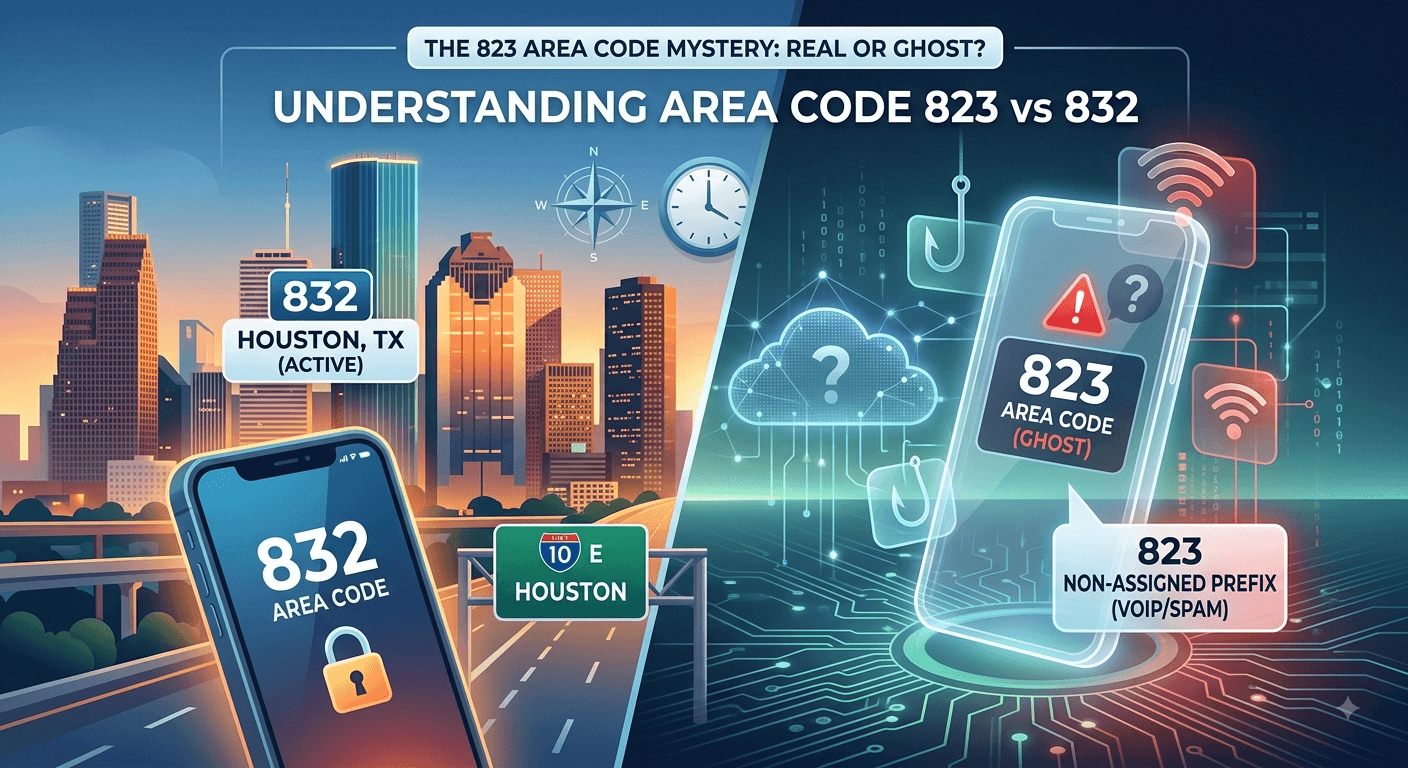
Area code 823 is not currently assigned to a geographic region within the North American Numbering Plan (NANP). Unlike active area codes, it does not officially represent a city, state or province. NANPA lists 823 as a reserved NPA code, meaning it is being held for possible future use rather than currently serving a particular location.
What is 823 area code?
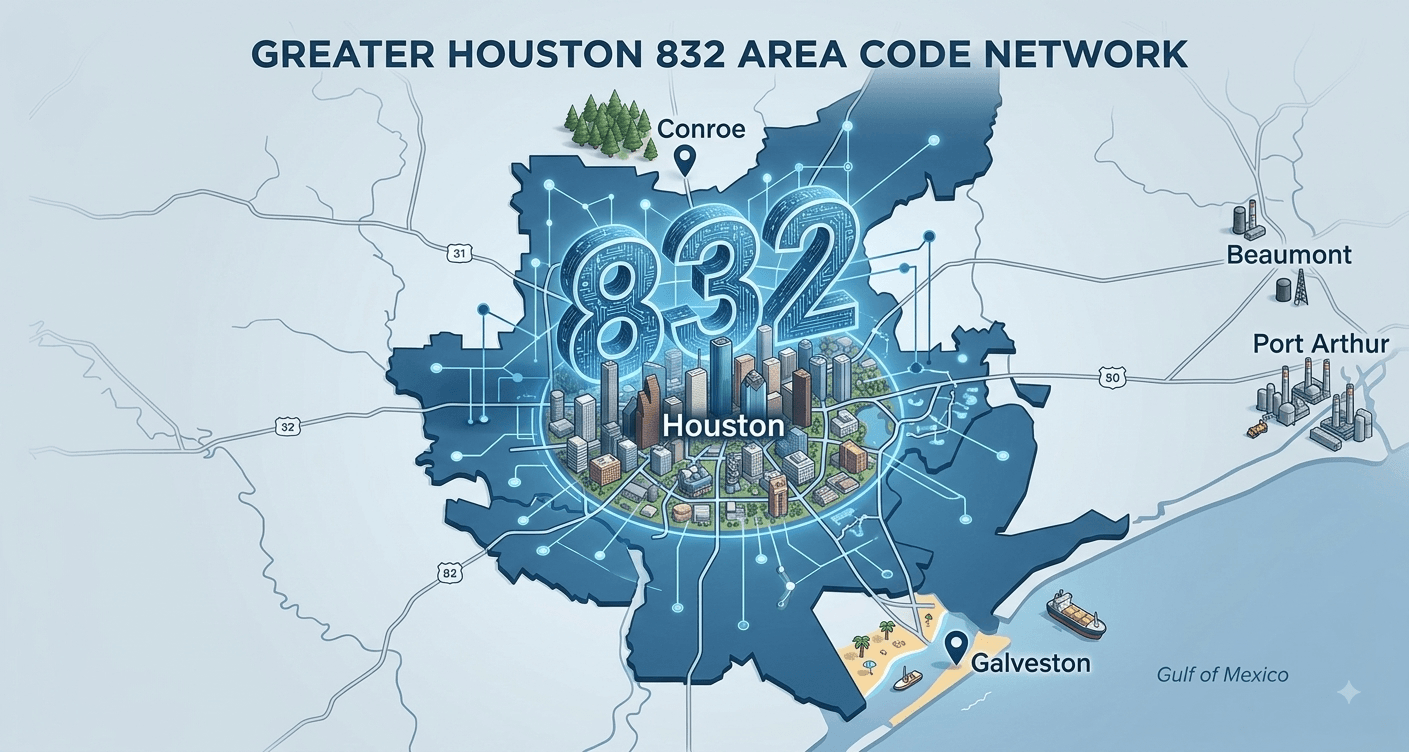
The 823 area code often leaves people questioning its validity because it does not appear on the official map of active geographic codes in the United States or Canada. However, because it is so closely associated with the Houston metropolitan area in digital searches, many people treat it as an extension of the existing Texas telecommunications infrastructure. To understand the context in which these numbers appear, we must look at the regional data for the 832 prefix, which is the actual code used in this part of the country.
| 823 Area Code Fact | Current Status |
|---|---|
| Status | Reserved / not currently in service |
| Official location | None |
| State or province | None |
| Time zone | None |
| NANP region | Not currently assigned |
| Can location be identified from 823? | No |
| Future assignment | Not yet determined |
A Code with a Split Past: The History of the 823 Area Code
NANPA’s older annual reports show 823 among future geographic/reserved codes, not specifically as a Houston overlay. Originally served by the 713 code, the region required more prefixes to accommodate the surge in pagers, fax machines, and local commerce. Although the North American Numbering Plan Administrator considered 823 as a candidate for a new overlay to prevent number exhaustion, the code was never officially activated, leaving it in a state of technical limbo.
Today, 823 is often referred to as a “ghost” code, as it lacks a physical footprint on landline maps despite appearing as a placeholder in various online databases and mobile service centers. While it remains technically unassigned, its presence in technical planning documents and cultural conversations highlights the complex logistical challenges of managing phone resources. Ultimately, the history of this prefix serves as a testament to the intricate balancing act required to keep millions of Texas residents connected in an era of constant expansion.
The Great Merger of 2017: A New Era for the 823 Area Code
In 2017, the Public Utility Commission of Texas implemented a territory-wide overlay that unified the 713, 281, 832, and 346 area codes, effectively removing geographic boundaries within the Houston metropolitan area. This consolidation necessitated the switch to ten-digit dialing for all residents and fostered a public expectation that the 823 prefix would be the next logical addition to the region’s numbering system. Although not officially activated during this transition, the administrative shift increased public interest in the code and solidified its status as a potential candidate for future use.
The 2017 transition also established a blueprint for how future telecommunications growth will be managed, ensuring that the framework for integrating codes like 823 is already in place. By maximizing the efficiency of current number pools through the overlay system, the state has created a more flexible environment for digital expansion. As a result, the 823 area code remains a strategic asset on standby, ready for formal implementation once the increasing volume of mobile devices and internet-connected gadgets finally exhausts existing capacity.
So, Where Does a Call with an 823 Area Code Come From?
BBecause 823 is not currently an active area code, an unexpected caller ID beginning with 823 should not be assumed to represent a legitimate geographic 823 number. Caller ID information can be spoofed or manipulated, so verify an unfamiliar caller independently before providing personal or financial information.
This lack of geographic anchoring makes the 823 prefix a prime target for automated dialing systems and spoofing. According to the Federal Communications Commission (FCC), a significant portion of unwanted calls originate from unassigned or spoofed codes, often mimicking the 832 area code to gain the trust of Houston-area residents.
The Future of the 823 Area Code: Still Relevant in Houston?
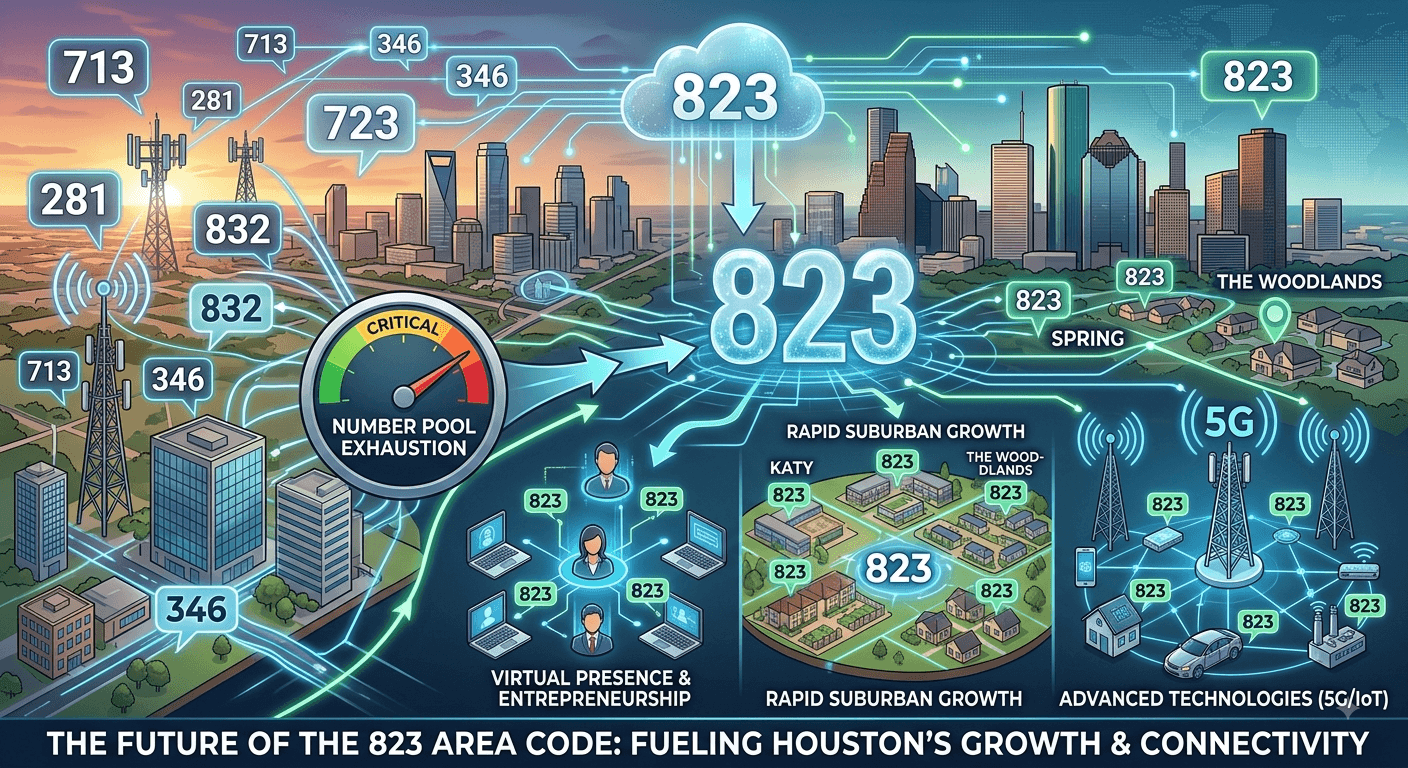
Although the immediate activation of the 823 area code is not guaranteed, it remains the primary “next-in-line”. NANPA is responsible for administering numbering resources, and the available authoritative information establishes 823 as reserved—not as Houston’s confirmed next code
Beyond Houston: Potential Future Uses of the 823 Area Code
While the 823 area code is most frequently associated with the Houston market, the North American Numbering Plan Administrator (NANPA) retains the authority to assign it to any region experiencing an urgent demand for new phone numbers. This inherent flexibility allows the numbering plan to respond rapidly to shifting demographics across the country, meaning 823 could technically be deployed in an entirely different state.
Beyond geographic assignment, the 823 area code could also be repurposed for specialized, non-geographic services such as toll-free lines, government-specific networks, or unified messaging systems. This potential for varied use highlights the fact that the telecommunications infrastructure is a dynamic, living entity that evolves to meet modern communication needs. Whether it continues as a digital placeholder or becomes the primary code for a burgeoning suburb, 823 represents the ongoing adaptation and growth of the global numbering system.
Conclusion: The 823 Area Code – A Story of Change and Adaptation
The main thing to know about area code 823 is that it is not currently assigned to a city, state or province. NANPA lists 823 as a reserved area code, so it should not be confused with 832, which is an active Houston-area code. Because 823 has no official geographic assignment, it also has no official time zone or list of cities. If an unfamiliar caller ID appears to use 823, verify the caller independently rather than assuming the call comes from Houston or another particular location.
Read More: 658 Area Code: A Detail Guide
Frequently Asked Questions
-
What is 823 area code and where is it located?
Area code 823 does not currently have an official geographic location. NANPA lists it as a reserved NPA code, so it isn’t assigned to a city, state, province or territory at this time.
-
Is the 823 area code a scam or a legitimate number?
823 itself is not a “scam area code”; it is a reserved code that is not currently in service as a geographic NPA. However, caller ID can be spoofed, so an unexpected call displaying an unusual or unassigned number should be independently verified before you share personal or financial information.
-
How does 823 relate to the 832 area code?
823 and 832 are different area codes. Area code 832 is active and serves the Houston metropolitan area as part of an overlay complex, while 823 is currently reserved and has no geographic assignment. The codes are sometimes confused because the digits are similar.
-
What time zone is the 823 area code associated with?
Area code 823 has no official time zone because it is not currently assigned to a geographic region. If you meant area code 832 in Houston, Texas, that area observes Central Time.
-
Can I get a phone number with an 823 area code?
Not as a standard active NANP area-code number. Because 823 is currently reserved and not in service, legitimate providers should not be issuing ordinary geographic 823 numbers as they would numbers from an active area code.
-
Why do I see 823 area code on my caller ID?
If caller ID appears to show an 823 area code, don’t assume it identifies the caller’s real location. Caller ID information can be spoofed or displayed incorrectly. If the call is unexpected, verify the caller using a trusted contact method.
-
When will the 823 area code be officially activated?
There is currently no announced activation date or geographic assignment for 823. Its future use will depend on numbering needs and decisions made through the NANP allocation and regulatory process.
-
How should I report a suspicious call from an 823 number?
If you receive a suspicious call, you can report it to the FCC through their online consumer complaint center. You can also block the number on your mobile device to prevent future contact from that specific digital source.