
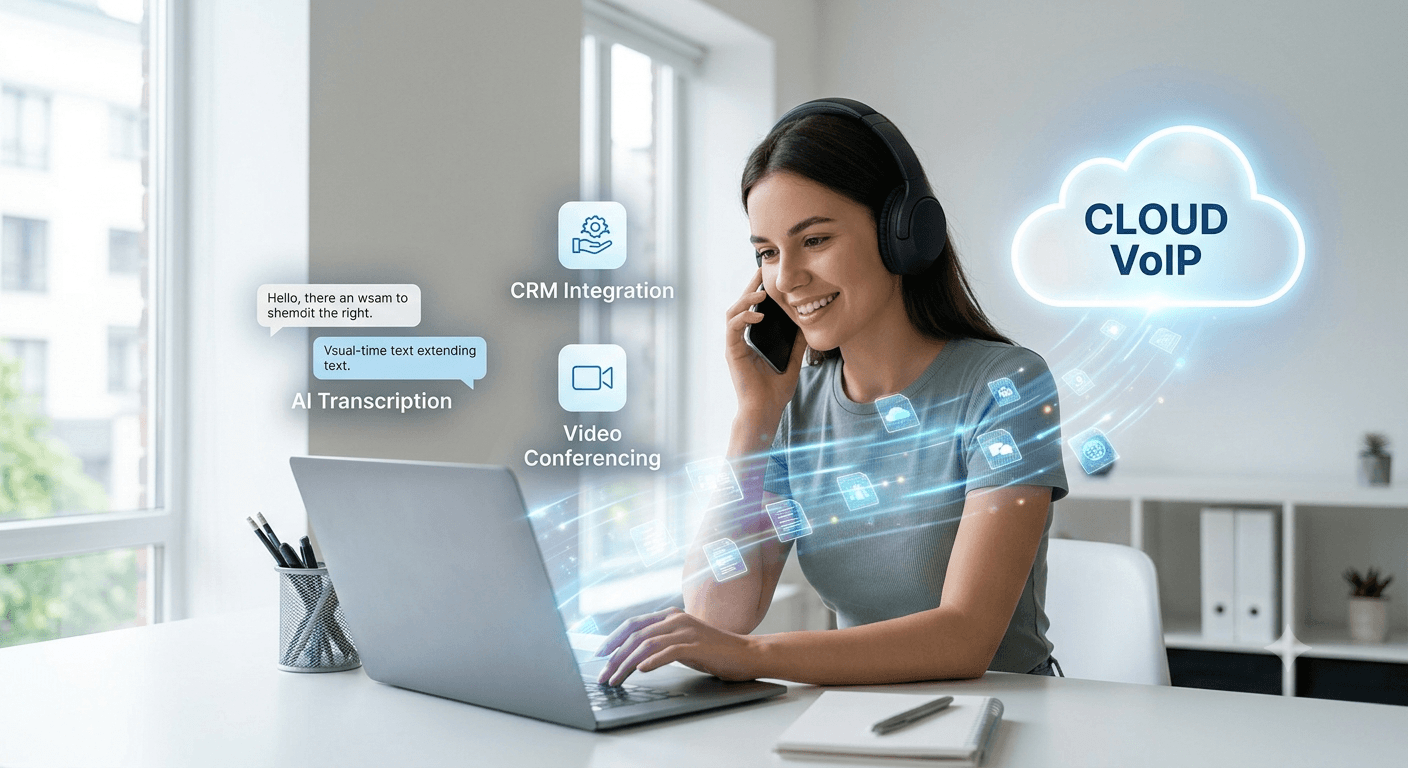
Why Remote Teams Should Switch to Cloud VoIP involves moving from traditional hardware-dependent phone lines to internet-based communication systems that offer superior flexibility and lower costs. This transition allows employees to access their business phone lines from any location, provided they have a stable internet connection. By centralizing communication in the cloud, companies can integrate voice, video, and messaging into a single platform. This modern approach eliminates geographical barriers, enhances professional branding through virtual numbers, and provides advanced features like AI transcription and CRM integration, making it the most effective communication strategy for distributed workforces in 2025 and beyond.
What is VoIP and How Does it Work?
Voice over Internet Protocol, commonly known as VoIP, is a technology that allows you to make voice calls using a broadband internet connection instead of a regular analog phone line. When you use a remote worker phone system, your voice is converted into digital data packets. These packets travel over the internet to the recipient, where they are reassembled into the original audio. This process happens almost instantaneously, ensuring that high-quality voice communication is maintained regardless of the distance between the callers. Because the system relies on the internet, it bypasses the traditional telecommunications infrastructure, which often results in lower service fees and more versatile features.
According to research by Nemertes Research, businesses that migrate to cloud-based communications see an average improvement of 30% in operational efficiency due to the streamlined nature of digital data transmission.
The underlying infrastructure of cloud VoIP is managed by a service provider who hosts the servers and handles the technical complexities. This eliminates the need for your business to maintain expensive on-site PBX hardware. Instead, you access a web-based dashboard where you can manage users, set up extensions, and monitor call traffic in real-time. This technological shift is why many organizations consider these the best voip services for remote and hybrid teams, as it places enterprise-level communication tools within reach of even the smallest startups.

Key Features of VoIP for Remote Workers
Modern communication platforms offer a suite of advanced capabilities that go far beyond simple voice calling. These features are designed to address the specific challenges faced by distributed teams, such as time zone differences and the need for constant accessibility. When considering phone systems for remote working, it is essential to look for features that promote both autonomy and connectivity.
1. Call Forwarding & Intelligent Call Routing
Intelligent call routing is a cornerstone of any effective remote work phone system. This feature allows incoming calls to be directed to specific team members based on pre-defined rules, such as the time of day, the caller’s location, or the specific department requested. If a primary contact is unavailable, the system can automatically forward the call to a secondary representative or a mobile device. This ensures that no client inquiry goes unanswered, maintaining a high standard of customer service even when the team is scattered across different regions.
Advanced routing can also include “find me/follow me” services. This allows a single business number to ring across multiple devices simultaneously, such as a desk phone, a laptop, and a mobile app. For a remote employee phone, this means they can step away from their home office without missing an important client call. The ability to customize these paths through a simple drag-and-drop interface makes managing a global workforce significantly easier for administrative staff.
2. Virtual Numbers with Global Reach
One of the most significant advantages for global teams is the ability to obtain virtual numbers. These are phone numbers that are not tied to a physical location, allowing a company based in London to have a local New York area code. This feature is vital for voip for remote workers because it helps establish a local presence in various markets without the need for physical offices. Clients are more likely to answer calls from a familiar local number than an international one, which can drastically improve outbound sales efforts.
Virtual numbers also simplify the internal communication structure. Each remote staff member can have their own direct inward dialing (DID) number, allowing clients to reach them directly. This setup supports a professional image for the business while providing the employee with a dedicated line for work purposes. By using these phone options for remote employees, businesses can expand their reach into new territories with minimal overhead costs.
3. Voicemail Transcription & Email Delivery
In a fast-paced remote environment, checking voicemail can often be a tedious task that disrupts the workflow. Cloud VoIP systems solve this by offering voicemail transcription, where audio messages are converted into text and sent directly to the employee’s email or team chat application. This allows staff to quickly read the contents of a message during a meeting or while in a quiet environment where listening to audio is not possible.
This feature is a staple of the best cloud-based voip solutions for remote work 2025. It ensures that important information, such as phone numbers or addresses mentioned in a message, is documented in writing, reducing the chance of human error. Furthermore, having a searchable archive of voicemail transcripts in an email inbox makes it much easier to track past communications and maintain a clear audit trail of client interactions.
4. Integration with Business Software & CRMs
The true power of a remote worker phone system lies in its ability to connect with the other tools your team uses every day. Leading VoIP providers offer seamless integrations with popular Customer Relationship Management (CRM) platforms like Salesforce, HubSpot, and Zoho. When a call comes in, a “screen pop” can display the caller’s history, notes, and previous interactions, allowing the remote worker to provide personalized service instantly.
Automatic call logging saves time by recording every interaction directly into the CRM.
Click-to-dial functionality allows employees to make calls directly from their browser or software.
Data synchronization ensures that contact information is always up to date across all platforms.
Integrated workflows can trigger follow-up emails or tasks automatically after a call ends.
These integrations transform the phone system from a standalone tool into a central component of the business ecosystem. By bridging the gap between communication and data management, companies can ensure that their distributed employees have all the information they need to succeed.
5. Real-Time Analytics and Performance Tracking
For managers of remote teams, visibility into daily operations can be a challenge. Cloud VoIP addresses this by providing real-time analytics and detailed reporting dashboards. You can monitor metrics such as average call duration, wait times, and call volume patterns. This data is invaluable for making informed decisions about staffing levels and identifying areas where team members may need additional training.
Many affordable voip solutions with ai call transcription for global teams now include sentiment analysis. This AI-driven feature scans calls for specific keywords or tones of voice to determine the customer’s satisfaction level. By reviewing these metrics, leadership can proactively address issues before they escalate. Access to such high-level data ensures that the remote workforce business phone systems are contributing directly to the company’s growth and customer retention goals.
Benefits of VoIP for Remote Workers
Transitioning to an internet-based system offers a range of strategic advantages that go beyond technical features. These benefits impact the bottom line, employee satisfaction, and the overall agility of the organization. Understanding these advantages helps clarify Why Remote Teams Should Switch to Cloud VoIP in an increasingly competitive market.
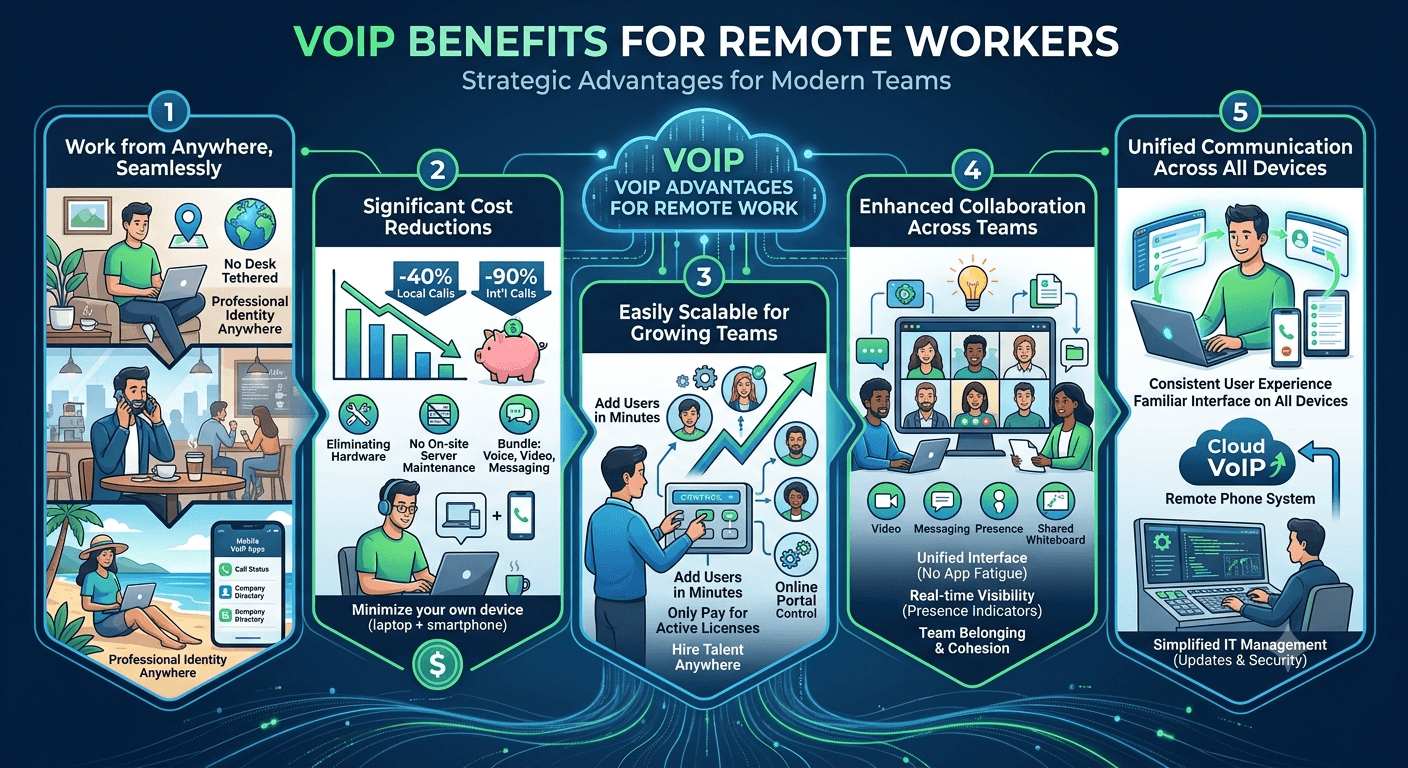
1. Work from Anywhere, Seamlessly
The primary benefit of a remote work phone system is the absolute freedom it provides. Employees are no longer tethered to a specific desk or even a specific city. Whether they are working from a home office, a coffee shop, or a different country, they have access to the exact same communication tools as they would in a physical corporate headquarters. This mobility is essential for maintaining a work-life balance while ensuring that business operations never pause.
This “work from anywhere” capability is supported by high-quality mobile applications. The best voip services with mobile apps for distributed teams 2025 allow users to toggle their status, manage three-way calls, and access the company directory from their smartphones. This ensures that the remote employee phone remains a professional tool, keeping personal and business communications separate on a single device.
2. Significant Cost Reductions
Switching to cloud-based communication is one of the most effective ways for a business to reduce its operational expenses. Traditional phone systems require heavy upfront investment in hardware, wiring, and professional installation. In contrast, cloud VoIP typically operates on a subscription model with a low monthly fee per user.
A study by IT World found that small businesses that switch to VoIP can reduce their local call costs by up to 40% and international call costs by up to 90%.
Eliminate the need for expensive on-site server maintenance and IT staff.
Reduce monthly recurring costs by bundling voice, video, and messaging.
Avoid long-distance charges by using internet-based data transmission.
Minimize hardware costs by allowing employees to use their existing laptops and mobile devices.
These savings can be reinvested into other areas of the business, such as marketing or product development. For companies managing a distributed workforce, the reduction in overhead is a compelling reason to adopt business phone plans for remote workers.
3. Easily Scalable for Growing Teams
Traditional phone systems are notoriously difficult to scale. Adding a new line often involves physical site visits from technicians and the installation of new wiring. With cloud-based phone systems for remote workers, scaling is as simple as clicking a few buttons in an online portal. You can add or remove users in minutes, allowing your communication infrastructure to grow alongside your business.
This elasticity is particularly beneficial for companies with seasonal fluctuations in staff or those experiencing rapid growth. You only pay for the licenses you actually use, ensuring that your communication budget remains optimized. Because there are no physical constraints, you can hire the best talent from anywhere in the world and have them integrated into your remote phone system on their very first day.
4. Enhanced Collaboration Across Teams
VoIP technology reliability for remote work collaboration is a major factor in team cohesion. Modern platforms often include built-in collaboration tools like video conferencing, file sharing, and team messaging. Instead of jumping between multiple different apps, employees can collaborate within a single unified interface. This reduces “app fatigue” and ensures that information is not lost in fragmented conversations across various platforms.
When everyone uses the same phone system for remote employees, it becomes easier to hold impromptu meetings or quick brainstorming sessions. Features like “presence” indicators allow team members to see who is online, on a call, or away from their desk, mimicking the natural visibility of a physical office. This transparency fosters a sense of belonging and ensures that the remote team remains aligned on their goals.
5. Unified Communication Across All Devices
A unified communication strategy ensures that the user experience is consistent, whether the employee is using a desktop computer, a tablet, or a smartphone. This consistency is vital for productivity, as it eliminates the learning curve associated with switching between different devices. Cloud VoIP providers ensure that the interface and feature set remain familiar, allowing for a seamless transition throughout the workday.
For the IT department, managing a unified system is much simpler than overseeing a patchwork of different communication tools. They can push updates, manage security settings, and provide support from a single administrative console. This holistic approach to communication is a hallmark of the best phone system for remote workers, providing a professional and reliable experience for both the employee and the client.
Is VoIP Better than Landline for Remote Workers?
When comparing traditional landlines to cloud-based systems, the advantages of the latter are overwhelming for any distributed team. Landlines are built on aging infrastructure that is difficult to maintain and lacks the flexibility required for modern business. They are inherently tied to a physical location, which makes them practically useless for a remote workforce. If an employee is not at their desk, they simply cannot answer the phone, leading to missed opportunities and frustrated customers.
Furthermore, landlines offer very few features beyond basic voice calling. To get features like call recording or advanced routing on a landline, businesses often have to purchase expensive add-on equipment. In contrast, even the most basic cloud-based voip solutions for remote work 2025 include a wealth of features as standard. The quality of voice communication on VoIP has also surpassed landlines in many cases, thanks to high-definition voice technology that provides clearer audio and reduces background noise.
From a disaster recovery perspective, cloud VoIP is significantly more resilient. If a local office experiences a power outage or a natural disaster, a landline system goes dead. However, a cloud system remains operational because the “brain” of the phone system is hosted in a secure, redundant data center. Employees can simply move to a location with internet access and continue working as if nothing happened. For these reasons, the best voice over ip for home and office use is clearly the cloud-based model.
Read More: How to Get Free Venezuela Phone Number For Verification?
Final Words
Transitioning to a digital communication platform is no longer just an option for modern businesses; it is a necessity for survival in a global economy. Why Remote Teams Should Switch to Cloud VoIP is clearly demonstrated by the significant improvements in flexibility, cost-efficiency, and team collaboration that these systems provide. By integrating advanced features like AI transcription and CRM connectivity, companies can empower their remote employees to deliver exceptional service from any corner of the globe. As we move further into 2025 and 2026, the reliance on internet-based telephony will only grow, making it the perfect time for organizations to modernize their infrastructure and embrace the future of work.
FAQs
Why Remote Teams Should Switch to Cloud VoIP?
Remote teams should switch to cloud VoIP because it removes the physical limitations of traditional phone lines, allowing employees to work from any location with an internet connection. It provides a unified communication platform that includes voice, video, and messaging, which significantly lowers operational costs and improves professional branding. Additionally, cloud systems offer scalability and advanced features like intelligent call routing that are essential for managing a distributed workforce effectively.
What are some ways to get US local phone numbers?
You can easily obtain US local phone numbers through a cloud VoIP provider. Most services allow you to browse a database of available area codes and select a number that fits your business needs. These virtual numbers can be assigned to remote employees regardless of their actual physical location, allowing them to maintain a local presence for clients in specific American regions.
What type of business needs VoIP?
Almost any business can benefit from VoIP, but it is particularly crucial for startups, small to medium enterprises (SMEs), and companies with remote or hybrid work models. Businesses that handle high volumes of customer calls, international clients, or those looking to reduce their monthly telecommunications expenses will find that VoIP offers the most robust and cost-effective solution.
What are the upcoming trends in Business VoIP?
The most prominent upcoming trends include the deep integration of Artificial Intelligence (AI) for real-time call transcription and sentiment analysis. There is also a shift toward 5G optimization to ensure crystal-clear call quality on mobile devices. Furthermore, we are seeing an increase in “omnichannel” communication, where phone systems are perfectly synchronized with social media messaging and live chat tools.
Which is the best affordable RingCentral alternative?
There are several highly rated and affordable alternatives to RingCentral, including Acefone, Nextiva, and Ooma. These providers often offer similar feature sets—such as unlimited calling, mobile apps, and CRM integrations—at a more competitive price point for smaller teams. It is recommended to compare their specific plan details to find the one that best matches your team’s call volume and feature requirements.
How to get a VoIP phone service?
To get a VoIP service, you first need to evaluate your business needs and choose a provider that offers the features you require. Once you sign up for a plan, you can download their software or mobile app, choose your business phone numbers, and configure your call routing settings through an online dashboard. Most systems can be up and running in less than an hour without the need for professional installation.
Can I use my existing smartphone with a remote worker phone system?
Yes, most cloud VoIP providers offer dedicated mobile applications for iOS and Android. Once the app is installed, your smartphone functions as a business extension. You can make and receive calls using your professional business number, ensuring that your personal phone number remains private while you are working from home or on the go.
Is the call quality of VoIP reliable enough for professional business use?
Absolutely. With modern high-speed internet and advanced audio codecs, VoIP call quality is often superior to traditional landlines. Many providers offer high-definition (HD) voice, which captures a wider range of sound frequencies for a more natural-sounding conversation. As long as you have a stable internet connection, the reliability is more than sufficient for enterprise-level communication.