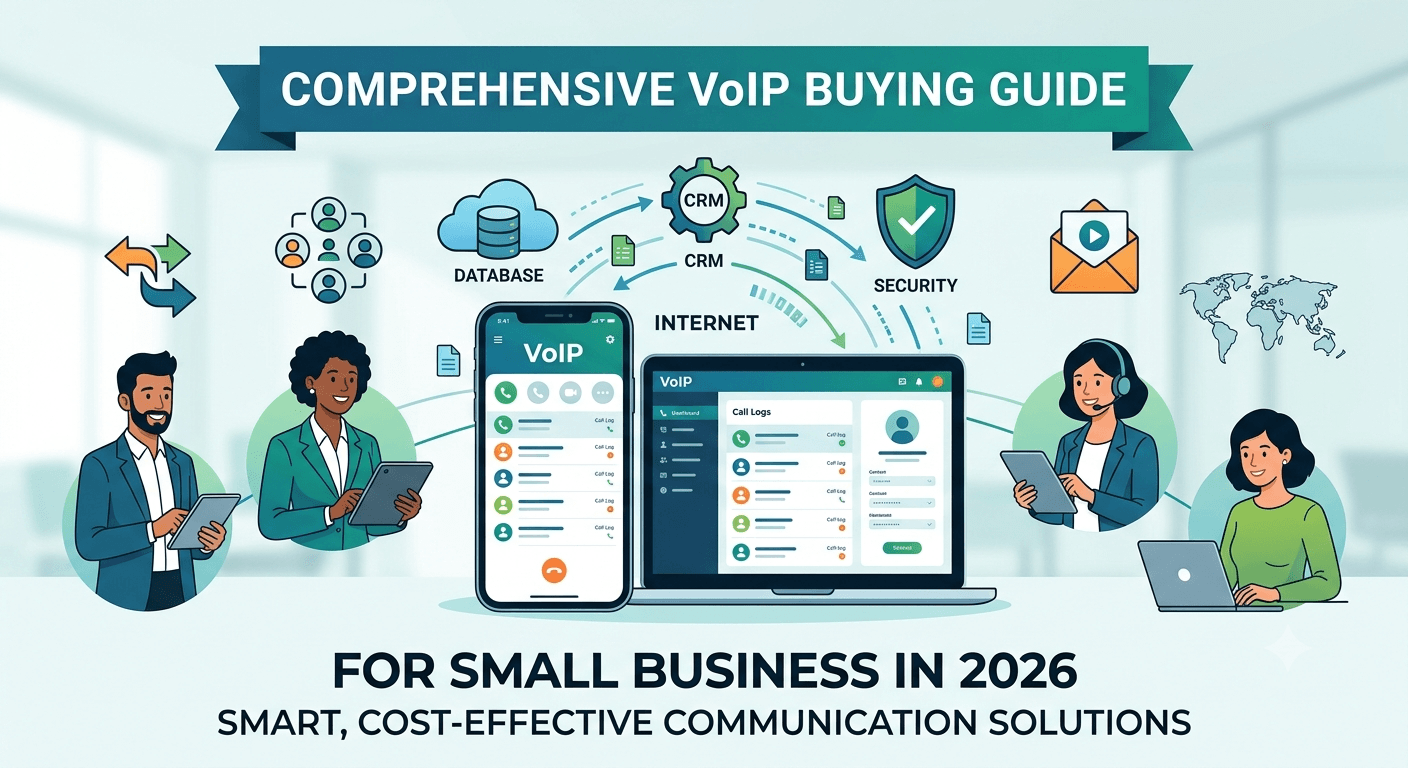
Finding the right communication tools is essential for growth, and a comprehensive VoIP Buying Guide for Small Business helps entrepreneurs navigate the complex landscape of digital telephony. Voice over Internet Protocol technology allows companies to make calls over the internet rather than traditional copper wires, offering flexibility and massive cost savings. In 2026, the best VoIP solutions for small businesses 2026 integrate artificial intelligence, seamless CRM connections, and mobile accessibility to ensure teams stay connected from anywhere. This guide explores the technical requirements, top-rated providers, and strategic considerations necessary to select a communication system that scales alongside your burgeoning commercial enterprise.
How Does VoIP Work?
Understanding the underlying mechanics of modern telephony is the first step in any VoIP Buying Guide for Small Business. Instead of sending analog signals through a physical exchange, voice data is converted into digital packets. These packets travel across the internet and are reassembled at the destination. This process allows for a voip solution for small business that is not tied to a physical location, enabling employees to take calls on laptops, desk phones, or mobile applications.
The technology relies on a stable internet connection and a central server, often managed by a provider through a hosted voip for small business model. Because the infrastructure is maintained off-site, companies do not need to invest in heavy hardware or complex wiring. This transition from hardware-dependent systems to software-driven solutions has revolutionized voip systems for small business, making enterprise-grade features accessible to even the smallest startups. Recent market data from Statista indicates that the global VoIP market is projected to reach over $102 billion by 2026, reflecting a massive shift toward digital communication.
The flexibility of this system means you can manage your entire phone network through a web-based dashboard. When setting up voip for small business, you gain the ability to add new lines in minutes, route calls to different departments automatically, and record conversations for training purposes. This digital nature also supports advanced voip technology cost-effective solution for startups that need to appear professional without the overhead of a traditional office.
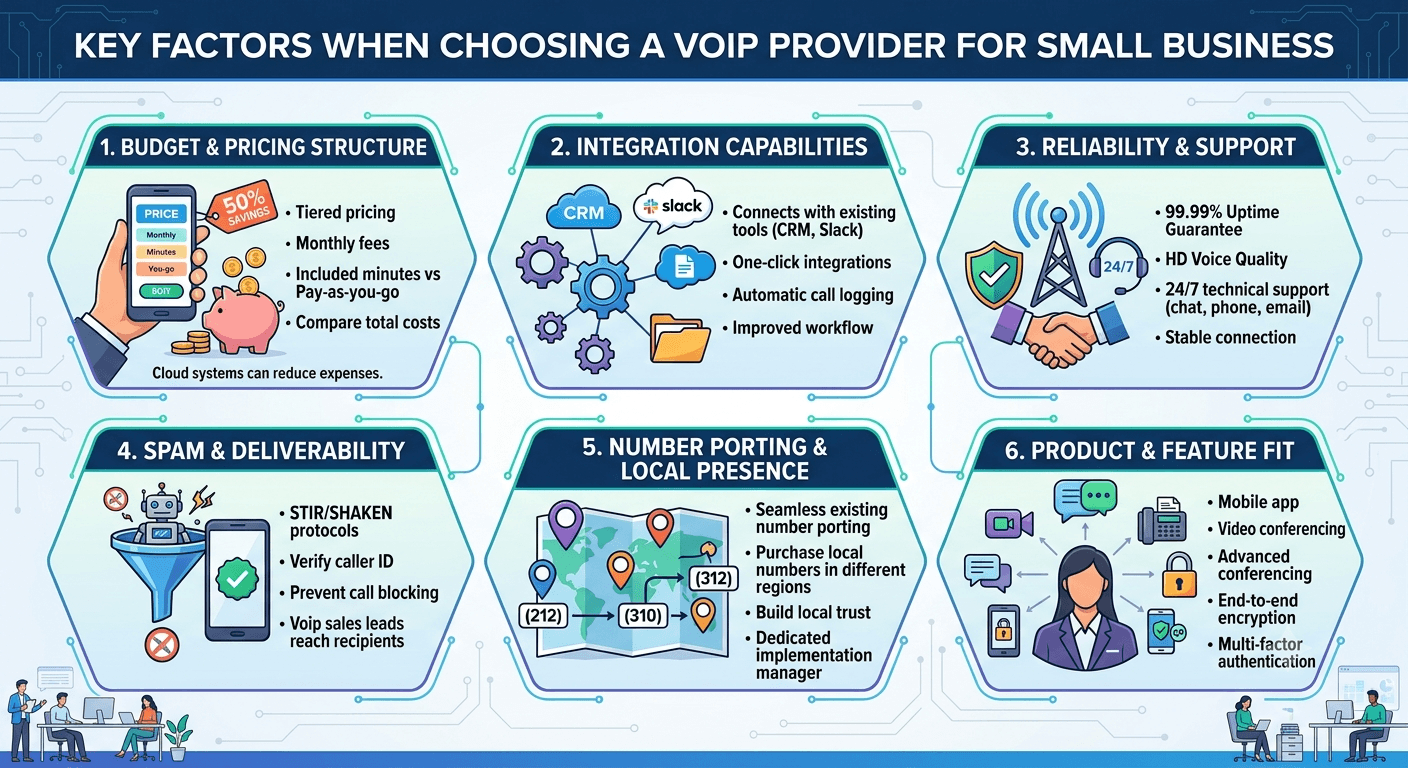
Key Factors to Consider When Choosing a VoIP Provider for Small Business
Selecting the right partner requires a deep dive into your specific operational needs and long-term goals. Not every top voip providers for small business will be a perfect fit for your unique workflow or industry niche. You must evaluate how a specific platform handles your expected call volume and whether it provides the necessary security for your sensitive data.
1. Budget & Pricing Structure
Price is often the primary driver for a voip setup for small business, but the sticker price rarely tells the whole story. Most affordable voip services for small businesses offer tiered pricing based on the number of users or specific feature sets. You might find a cheap voip for small business that looks attractive initially, but costs can escalate if you need to pay extra for call recording or international dialing.
Research by Gartner suggests that small businesses can reduce their overall communication expenses by up to 50% when moving from traditional landlines to a cloud-based system.
To find the cheapest voip for small business, you should compare the monthly per-user fee against the included minutes. Some providers offer unlimited domestic calling, while others use a pay-as-you-go model which might be better for companies with low call volumes.
2. Integration Capabilities
A modern voip services for small business choice should never exist in a vacuum. It must work harmoniously with the tools your team already uses, such as Salesforce, HubSpot, or Slack. When a call comes in, an integrated system can automatically pull up the customer’s record, saving time and improving the quality of the interaction.
For those looking at best voip services for llc businesses 2026, look for providers that offer one-click integrations. This reduces the manual data entry required by your sales and support teams. Leading voip services for medium-sized enterprises often focus heavily on these connections to ensure that every interaction is logged within the central CRM for better data tracking and reporting.
3. Reliability, Call Quality, and Support
The question is voip reliable for business is frequently asked by those transitioning from landlines. Reliability depends on the provider’s network uptime and your own internet stability. Most voice over ip providers for small business offer a 99.99% uptime guarantee, which is the industry standard for professional communication.
You should also investigate the level of customer support provided by voip service providers for small business. If your phones go down, you need a team that is available 24/7 via chat, email, or phone. High-quality audio is non-negotiable, so look for providers that use high-definition voice codecs to ensure clear communication even during peak usage hours.
4. Spam & Deliverability of Calls
In an era of rampant robocalls, your business calls must actually reach the intended recipient. Leading voip service providers for enterprises 2026 have implemented sophisticated protocols like STIR/SHAKEN to verify caller ID. This ensures your voip sales leads are not blocked by carrier filters or marked as potential spam on the recipient’s smartphone.
If you are involved in a voip wholesale business model or high-volume outbound calling, deliverability is your most critical metric. Providers that offer local presence features can help increase answer rates by showing a local area code to the person you are calling. This is a staple feature in any robust voip business plan aimed at sales growth.
5. Number Porting & Local Presence
Most companies want to keep their existing phone numbers when switching to a new voip system for small business. The process of number porting should be seamless and free of charge with reputable providers. A good voip provider leads you through this process with a dedicated implementation manager to prevent any downtime during the transition.
Local presence is another vital tool for voice over ip for small business. It allows you to purchase numbers in different geographic regions, giving your company a local feel even if you operate from a single central location. This helps in building trust with customers who prefer dealing with local entities rather than distant corporate offices.
6. Product & Feature Fit
The specific features you need will depend on your industry. A retail business might prioritize a mobile app for staff on the floor, while a professional services firm might need advanced conferencing and call queuing. When looking for the best virtual phone system for small businesses 2026, consider if you need video conferencing, SMS messaging, or electronic faxing included in the package.
Security is also a major component of product fit. The best secure voip providers for small businesses 2026 offer end-to-end encryption and multi-factor authentication. Evaluating the telecommunications company get voip on retail shows that security is particularly important for businesses handling credit card information or personal customer data over the phone.
Comparing Top VoIP Providers for Small Businesses in 2026
The market for communication tools is crowded, but a few names consistently rise to the top based on performance and value. This VoIP Buying Guide for Small Business highlights the strengths of the most popular platforms currently available.
1. CloudTalk
The cloudtalk small business solution is specifically designed for sales and customer service teams that require deep data insights. It offers over 70 advanced calling features and integrates with a wide range of CRMs. CloudTalk is known for its user-friendly interface and the ability to set up complex call routing workflows without needing a dedicated IT department.
2. Aircall
Aircall focuses on simplicity and integration, making it a favorite for startups. It provides a very clean interface that lives inside your browser or as a standalone app. For those prioritizing voip solutions for small businesses that can be deployed in minutes, Aircall is a top contender due to its intuitive design and robust set of public APIs.
3. JustCall
JustCall is an excellent choice for teams that are heavily focused on outbound calling and managing voip provider leads. It includes features like power dialers and automated SMS follow-ups. It is often cited as a top voip providers for business that want to maximize the efficiency of their sales representatives through automation.
4. RingOver
RingOver offers a comprehensive suite of communication tools including voice, video, and chat. It is particularly strong for companies that have a European presence or need competitive international calling rates. It provides real-time statistics that allow managers to monitor team performance and call quality on the fly.
5. 8×8
As one of the more established names, 8×8 provides a highly reliable voip pbx for small business. They are known for their global reach and high security standards. This makes them a strong choice for best voip services for llc businesses 2026 that plan to expand internationally and need a consistent experience across different countries.
6. Dialpad
Dialpad sets itself apart with built-in artificial intelligence, which they call Voice Intelligence. This feature can transcribe calls in real-time, track action items, and even analyze the sentiment of the conversation. It represents the cutting edge of voip industry insights by turning every call into a searchable data asset.
7. RingCentral
RingCentral is often regarded as the industry benchmark for what is the best voip service for small business. They offer an all-in-one platform that handles everything from phone calls to large-scale video webinars. Their extensive feature list makes them suitable for companies of all sizes, though their pricing can be higher than some budget-focused competitors.
8. Nextiva
Nextiva focuses on the concept of “Amazing Service,” providing high-touch support and a platform that unifies all customer communication. It is a very stable voip services for small business option that consistently wins awards for its reliability and customer satisfaction scores. Their dashboard provides a holistic view of the customer journey beyond just phone calls.
9. Vonage
Vonage has evolved from a residential provider into a powerful business communication platform. They offer a modular approach where you can add specific features as your company grows. This makes it a great voip technology cost-effective solution for startups that want to start small and scale their capabilities over time.
10. Ooma
Ooma is frequently recommended as the best voip providers for small business operating on a tight budget. They offer a low-cost entry point with a hardware-based solution that is very easy to install. While it may lack some of the high-end AI features of competitors, it provides a very solid and cheap voip service for business basics.
The Hidden VoIP Costs You Need to Watch Out For
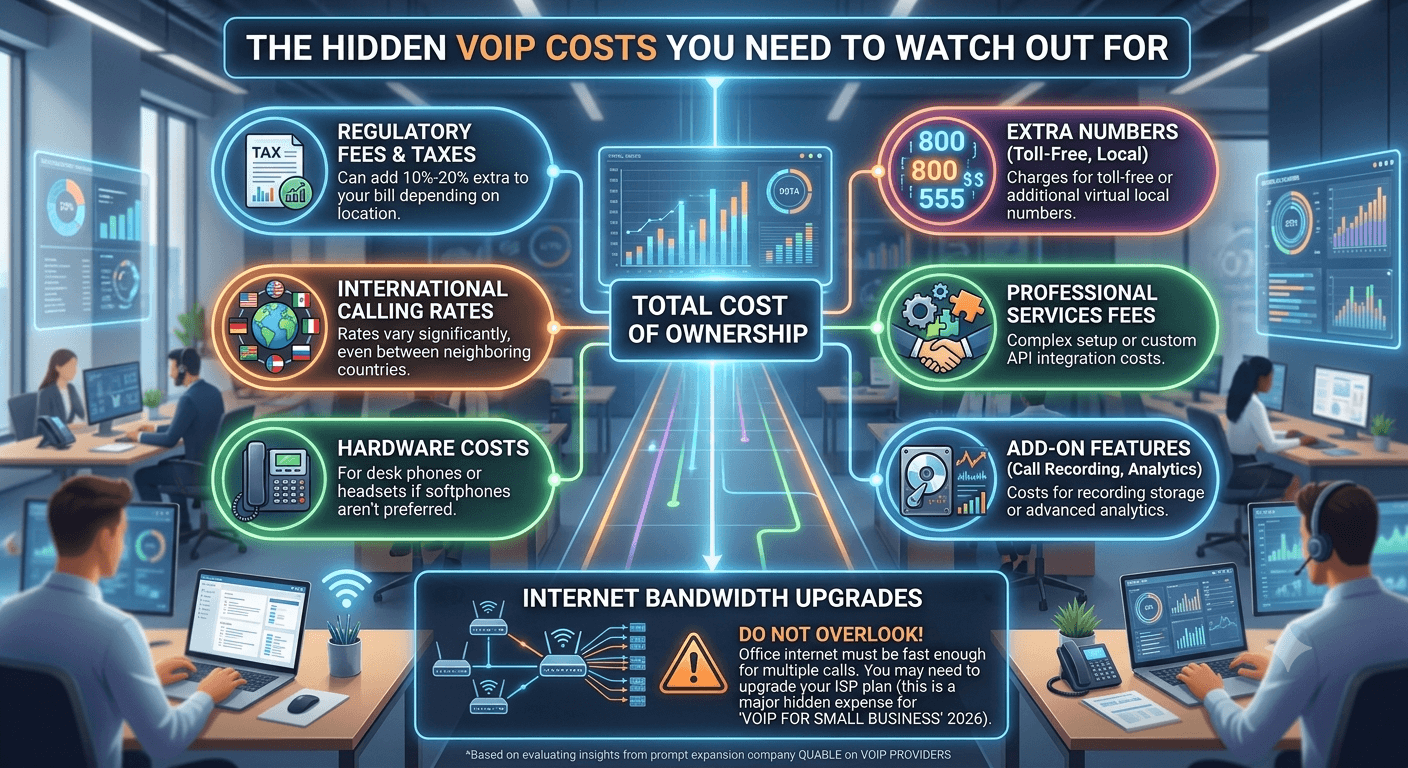
While the benefits of voip for businesses 2026 are numerous, transparency in pricing is not always guaranteed. You must look beyond the monthly subscription fee to understand the total cost of ownership. Some costs are buried in the fine print and can surprise a business owner during the first billing cycle.
-
Regulatory fees and taxes which can add 10% to 20% to your bill depending on your location.
-
International calling rates which vary significantly between providers even for neighboring countries.
-
Hardware costs for physical desk phones or headsets if your team prefers not to use softphones.
-
Extra charges for toll-free numbers or additional local virtual numbers.
-
Professional services fees for complex setup or custom API integrations.
-
Add-on costs for features like call recording storage or advanced analytics.
By evaluating the prompt expansion company quable on voip providers, it becomes clear that businesses often overlook the cost of internet bandwidth. If your office internet is not fast enough to handle multiple simultaneous calls, you may need to upgrade your ISP plan. This is a hidden expense that should be factored into your initial budget when setting up voip for small business.
How to Choose the Best VoIP Provider for Your Business
The final decision should be based on a combination of your current needs and your three-year growth plan. Start by identifying the “must-have” features versus the “nice-to-have” additions. If your team is entirely remote, a provider with a world-class mobile app is more important than one that offers discounted physical hardware.
-
List your required integrations with existing software like CRM or email.
-
Estimate your monthly call volume and the number of users who will need access.
-
Test the mobile and desktop applications of your top three choices using free trials.
-
Check online reviews and evaluate the telecommunications company get voip on small business for independent ratings.
-
Negotiate the contract length to see if you can get a discount for an annual commitment.
-
Verify the security protocols and compliance certifications if you are in a regulated industry.
Selecting a voip solution for small businesses is a significant milestone for any company. It marks a shift toward modern, data-driven communication. For more information on business standards, you can visit the FCC’s guide on VoIP to understand your rights as a consumer and the regulations governing digital voice services.
Taking the time to conduct a thorough evaluation will ensure that you don’t end up with a system that restricts your operations. The right provider will act as a partner in your success, offering the tools you need to provide excellent customer service and maintain high internal productivity.
Final Thought
Choosing the right communication partner through this VoIP Buying Guide for Small Business is an investment in your company’s future connectivity. In 2026, the ability to communicate clearly, securely, and efficiently is a competitive advantage that cannot be overlooked. Whether you opt for a feature-rich platform like CloudTalk or a budget-friendly option like Ooma, ensuring that the system aligns with your specific workflow is the key to a successful transition. As technology continues to evolve, your VoIP system will serve as the backbone of your business interactions, turning every phone call into an opportunity for growth and professional excellence.
Frequently asked questions
-
What is the best VoIP for small business?
The best VoIP for small business depends on your specific needs, but CloudTalk, RingCentral, and Nextiva are consistently top-rated for their reliability and deep feature sets. Small businesses often prefer CloudTalk for its excellent CRM integrations and intuitive interface which makes it easy for non-technical teams to manage.
-
How much does VoIP cost for a small business?
VoIP costs typically range from $15 to $50 per user per month depending on the features included in the plan. Basic plans cover standard calling and voicemail, while premium tiers include video conferencing, AI transcriptions, and advanced analytics. Some providers also offer specialized pricing for high-volume call centers or very small LLCs.
-
How to set up VoIP for small business?
Setting up VoIP for small business is a straightforward process that involves choosing a provider, selecting your phone numbers, and installing the necessary software. You will need to verify that your internet connection has enough bandwidth to support voice traffic and then configure your call routing settings through an online dashboard. Most modern systems can be fully operational within a single business day.
-
Is VoIP worth it for small businesses?
Yes, VoIP is highly worth it for small businesses because it offers a professional image at a much lower cost than traditional phone systems. It provides access to enterprise-level features like auto-attendants and call recording that were previously too expensive for small companies. Additionally, the ability to work from anywhere with a mobile app is essential for modern business flexibility.
-
What is the main disadvantage of VoIP?
The main disadvantage of VoIP is its total dependence on a stable internet connection and a reliable power source. If your internet goes down or you experience a power outage, your phone system will also stop working unless you have a backup plan. Most businesses mitigate this risk by using mobile apps that can run on cellular data during an outage.
-
What’s The Difference Between VoIP and A Virtual Phone System?
While the terms are often used interchangeably, a virtual phone system is typically a software layer that routes calls to existing physical lines, whereas VoIP is a complete replacement for those lines. VoIP uses the internet to transmit the voice data itself, providing a more robust set of features and better control over the entire communication infrastructure.
-
Do I Need To Buy Special Equipment To Use VoIP?
You do not necessarily need special equipment to use VoIP because most providers allow you to make calls through your existing computer or smartphone. However, many businesses choose to purchase IP desk phones or high-quality headsets to improve the user experience and call clarity. If you already have analog phones, you can use an Analog Telephone Adapter to connect them to the digital network.
-
How Much Internet Speed Do I Need For VoIP?
A standard VoIP call requires approximately 100 Kbps of both upload and download bandwidth to maintain high audio quality. For a small office with ten employees calling simultaneously, a connection with at least 1-2 Mbps of dedicated upload speed is recommended. It is always better to have extra headroom to account for other internet activities like file sharing or video streaming.
-
Can I Keep My Existing Business Number?
You can almost always keep your existing business number through a process called number porting which is protected by federal regulations. Your new VoIP provider will handle the communication with your current carrier to move the number to their digital platform. This process usually takes between a few days and two weeks to complete fully.
-
How Long Does It Take To Set Up A VoIP System?
A basic VoIP system can be set up in as little as 15 to 30 minutes if you are using softphones and mobile apps. More complex setups involving physical desk phones and intricate call routing trees might take a few days to perfectly configure and test. Most providers offer guided setup wizards to help speed up the implementation process for new customers.
-
What Happens If My Internet Goes Down?
If your internet goes down, most VoIP systems automatically reroute incoming calls to a designated mobile number or a secondary office location. Since the “brain” of the system lives in the cloud, the service remains active even if your specific physical office is offline. This ensures that you never miss a customer call due to local connectivity issues.
-
Can I transfer my number to VoIP?
Yes, transferring your number to VoIP is a standard practice and is generally a very simple administrative task. You will need to provide your new provider with a recent billing statement and a signed Letter of Agency to authorize the move. Once the transfer is complete, your old service will be cancelled automatically, and calls will start ringing on your new VoIP system.