

The best MaxoTel alternatives depend on what you want to change: the carrier connected to an existing PBX, the employee calling application, or the way customer calls are managed. KrispCall is our first partner option for evaluating shared customer conversations, with Calilio next for departmental routing and supervision. RingCentral RingEX, Zoom Phone and Dialpad Connect offer broader workplace calling approaches. SIPcity is the Australian SIP candidate for a retained-system discussion.
MaxoTel already sells hosted phone systems, SIP trunks and handset-inclusive options. Moving simply to obtain an IVR, a ring group or an Australian number may be unnecessary if your existing plan supplies it. A useful comparison identifies a concrete improvement, such as a different shared workspace, a better integration fit, a clearer cost model or a change in who manages the equipment.
This guide compares six candidates and explains Australian pricing, number portability, handset reuse, call capacity and migration. Suggested team sizes are buying scenarios, rather than unverified supplier limits. Recommendations draw on published service information and customer feedback; we have not independently measured these services' audio quality or completed the migrations described.
Which MaxoTel Replacement Matches Your Requirement?
- Shared Calling For A Small Team: evaluate KrispCall, confirming the paid tier needed for transfers and recording.
- Department Menus And Supervision: demonstrate Calilio Premium with your Australian numbers and destination costs specified.
- Australian Office Calling With A Published Local Plan: compare RingEX's Australian Essentials and higher-tier requirements.
- Calling Within An Existing Zoom Workplace: investigate Zoom Phone's Australia/New Zealand service and number-porting scope.
- Transcription And Follow-Up Work: assess Dialpad Connect and the regional plan supporting your integrations.
- Retain An Existing PBX: qualify SIPcity's trunk configuration and call capacity before comparing it with an employee subscription.
7-Day Free Trial For VoIPCalling Customers: our exclusive KrispCall partner offer provides a starting point for evaluating the application. Confirm Australian number and feature requirements before moving a public business number.
Start A 7-Day KrispCall Free TrialUnderstand What Your Current MaxoTel Plan Includes
Begin with the current invoice and service configuration. A hosted PBX subscription pays for telephone-system functions supplied in the cloud. A SIP trunk connects a separate PBX to the telephone network. A handset plan may add equipment obligations. Replacing one layer does not necessarily replace the others, even when the sales pages describe all of them as business VoIP.
MaxoTel's published hosted plans include Everyday PAYG from A$9.95 per user monthly, with a two-user minimum, and Outright/BYO from A$29.95 per user monthly. Published prices include GST. PAYG calls are charged separately; the BYO offer includes specified Australian calls subject to fair use. These hosted prices should not be treated as quotes for an independently managed SIP trunk.
Its MaxoPhone offer starts from A$29.95 per user monthly with a handset, and the page states a minimum A$728.75 charge over a twenty-four-month contract. It also advertises a thirty-day hosted trial, described as waiving the first monthly plan fee. Equipment, usage and the selected offer still need to be understood. A trial headline does not erase contractual commitments.
List what works before listing frustrations. If desk phones, reception transfers and local support meet your needs, preserve those strengths in the replacement specification. If only one integration or report is missing, compare the cost of resolving that gap with the cost of replacing the whole system.
Ownership can also matter when creating an independent fallback. MaxoTel's October 2025 announcement described the approved acquisition of Vonex and scheduled sole ownership for October 20. Check current ownership and carrier dependencies before assuming that a different trading name provides organisational independence. Brand diversity alone is insufficient evidence of separate infrastructure.
Compare Six MaxoTel Competitors By Service Model
The first five options use supplied partner destinations and assets. SIPcity is included because a business keeping its PBX needs an Australian SIP proposal alongside application subscriptions. This is a fit-based shortlist: the ordering does not establish the cheapest service, the best audio quality or compatibility with every MaxoTel configuration.
| Provider | Best Fit | Buying Consideration | Pricing & Trial |
|---|---|---|---|
| Shared Customer Conversations | Starter up to 5 users. Advance adds transfers and recording; transcripts/summaries are add-ons. | US$12/user/monthStarter US-dollar reference, annual billing; US$15 monthly. Advance US$32 annually billed, US$40 monthly. Confirm Australian numbers, allowances and tax.7-Day Free Trial for VoIPCalling CustomersStart a 7-Day KrispCall Free Trial | |
| Department Routing And Supervision | Premium for transfers, IVR, business hours and live supervision. Country conditions affect bundled usage. | US$28/user/monthPremium US-dollar reference, billed annually. US$35 monthly. Quote Australian numbers, destination rates and tax.Demo AvailableRequest a Calilio Demo | |
| Australian Office Calling And Administration | Essentials entry tier, up to 49 users. Standard adds multi-level IVR and on-demand recording. | A$22.99/user/monthAustralian Essentials displayed annual-payment reference. A$25.99 monthly payment. Published minimum including GST A$303.47 over 12 months. Confirm payable total.Free Trial Available. New subscribers, up to 5 users and 2 phones, 50 domestic minutes/user. Hardware-return conditions apply.Start A RingEX Free Trial | |
| Calling In An Existing Zoom Workplace | Specify Australia/New Zealand calling plan, number types and devices. | Request Current Phone PricingRequest Australian regional pricing for users, numbers, usage, devices, add-ons and GST.Confirm Current Phone Evaluation TermsExplore Zoom Phone For 1–50 Users | |
| Transcription And Follow-Up Work | Pro for key CRM integrations. Connect differs from Dialpad Support and Sell. | Request Australian Connect PricingRegional prices vary. Confirm AUD quote, billing period, users, numbers, usage and GST. Default USD figures are not AUD quotes.14-Day Connect Free Trial. Confirm Regional Eligibility And Paid-Plan Scope.Start A 14-Day Dialpad Connect Trial | |
SIPcity  | Australian SIP With A Retained PBX | Australian business eligibility; 1 concurrent call at the reference price. Resolve conflicting billing/cancellation wording. | A$17.50/monthPublished monthly SIP reference including GST, 1 local number and 1 concurrent call. Confirm current plan terms and exclusions.Confirm Written Billing And Evaluation TermsCheck SIPcity Australian Plans |





Compare the final Australian bill rather than the currency symbols alone. US-dollar platform references remain in US dollars; they are not Australian quotes. For SIPcity, reconcile the monthly plan description with conflicting cancellation wording before purchase. For every candidate, confirm port eligibility for the actual numbers you intend to move.
1. KrispCall For Shared Conversations And Follow-Up
KrispCall deserves an early evaluation when the objective is common visibility of customer calls. Its shared workspace is relevant to colleagues who answer the same business number and need to understand earlier contact before returning an enquiry. That is an application-workflow decision, rather than simply a carrier-price comparison.
Who Should Evaluate It: a two-to-five-person agency, consultancy or service team that wants to coordinate enquiries across locations. Starter supports up to five users. Advance supports up to fifty, but the right plan depends on required functions rather than headcount alone. These limits should not be confused with the number of simultaneous calls.
Starter lists US$12 per user monthly billed annually, or US$15 with monthly billing. Advance lists US$32 annually billed or US$40 monthly and adds transfers and recording; transcription and summaries are listed as add-ons. The included free-number proposition names the US, Canada and UK, so an Australian number needs separate qualification.
The pricing page also publishes calling allowances, while its FAQ retains separate PAYG wording. Ask for written confirmation of the applicable Australia routes, inbound eligibility and overage charges for your purchase. Do not treat an international platform subscription as a guaranteed unlimited Australian calling package.
Where It Can Improve The Workflow: try an unanswered call followed by a callback from another colleague. Check whether the colleague can find the earlier interaction, assign responsibility and record an outcome. Evaluate any CRM connection using the exact record and fields your team needs, rather than accepting the presence of an integration logo.
Important Boundary: do not assume an application account supplies a compatible trunk for an unchanged PBX or inherits existing handset provisioning. A business that only needs a different carrier should qualify that requirement separately. Our KrispCall review provides additional setup and plan context.
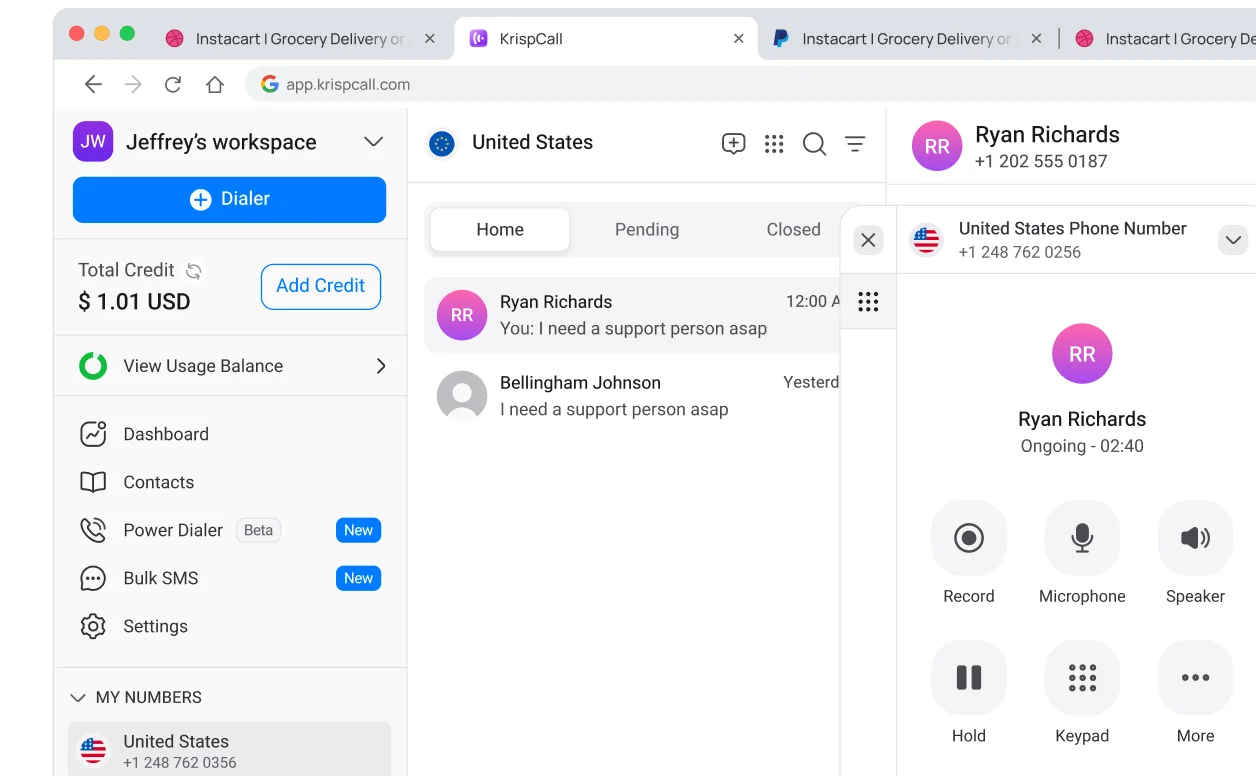
VoIPCalling customers can access an exclusive seven-day KrispCall free trial through our partner link. This is a partner offer; the publicly described refund policy is a separate arrangement.
2. Calilio For Departmental Routing And Live Supervision
Calilio is a relevant alternative for a customer-facing department that wants structured handling within a shared calling application. The practical question is whether enquiries reach the right people and managers can assist when necessary. That requirement should be demonstrated with the proposed Australian service.
Who Should Evaluate It: a five-to-twenty-person sales or support operation with multiple responsibilities, such as new enquiries, existing customers and billing. This is an editorial scenario. A smaller team can still need menus and transfers, while a larger team may require a different level of queue reporting.
Premium costs US$28 per user monthly with annual billing, or US$35 monthly. Its published feature comparison places transfers, IVR, business-hours controls and live listening, whispering and barging in Premium. Standard's lower price therefore should not be used to represent the workflow described here.
Obtain Australian number rental, usage, recording, storage and transcription allowances in the proposal. The published free-number and bundled-usage details have country conditions. A number being available to purchase does not establish that inbound calls, outbound Australian mobiles and text messaging share the same inclusion rules.
Where It Can Improve The Workflow: demonstrate a caller selecting an unavailable department, reaching the intended fallback and receiving a documented callback. Have a supervisor locate the interaction and use the permitted assistance tools. Confirm what remains available after any promotional credit is consumed.
Important Boundary: this is a hosted application candidate. It should not be presented as a drop-in replacement for every existing PBX or handset configuration. Ask about your precise CRM workflow, especially where a feature is labeled as upcoming. Our Calilio review expands the evaluation checklist.
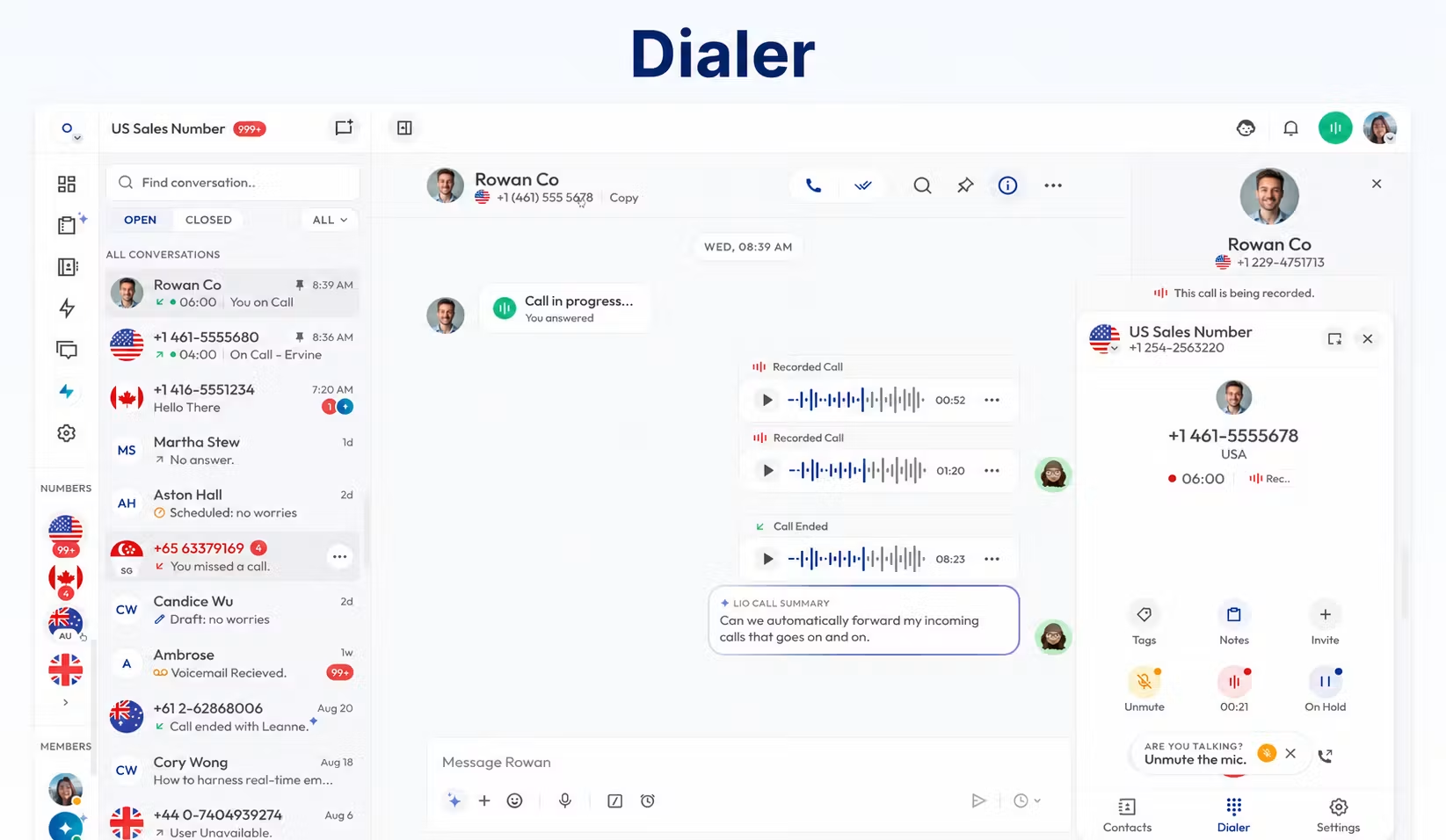
Demo Available: request a demonstration against your actual routing and supervision requirements. A demo or testing credit should not be described as a verified time-limited free trial.
3. RingCentral RingEX For Australian Office Calling
RingCentral RingEX is worth comparing when the purchase extends beyond a shared enquiry inbox to employee calling and broader workplace communication. Its Australian pricing page provides a local plan reference, which makes a country-specific commercial comparison more straightforward than applying US pricing to an Australian office.
Who Should Evaluate It: an office with ten-to-forty employees that wants consistent calling administration across employees and selected devices. This is a suggested evaluation group. The Essentials entry tier is published for up to forty-nine users; a larger organisation should obtain the relevant configuration.
Essentials displays A$22.99 per user monthly with annual payment, or A$25.99 with monthly payment. The page separately states a minimum including GST of A$303.47 over twelve months. Confirm the actual payable total and tax treatment in the order. Essentials includes 250 outbound minutes per user, so the subscription headline should not be described as unrestricted outbound calling.
Where It Can Improve The Workflow: examine how an administrator changes a user's location, handles a departure and supports reception coverage. Ask whether each required function belongs to Essentials, Standard or an additional product. The Australian comparison places multi-level IVR and on-demand recording in Standard.
Important Boundary: employee calling and contact-centre procurement are different scopes. Do not assume advanced queue supervision, workforce planning or every CRM connection is included in the entry subscription. Test a representative desk phone rather than assuming current MaxoTel provisioning transfers with the number.
Free Trial Available: the published Australian offer is for new subscribers, up to five users and two desktop phones, with fifty domestic minutes per user. Trial hardware must be returned within twenty-one days of cancellation to avoid charges. Confirm the selected offer before arranging equipment.
4. Zoom Phone For An Existing Zoom Workplace
Zoom Phone is a logical evaluation when employees already use Zoom and want to assess telephone calling within that workplace environment. Familiarity can reduce training effort, but a meetings subscription should not be assumed to supply the required telephone numbers, calling plan or administrative controls.
Who Should Evaluate It: a ten-to-fifty-person distributed company, or a larger organisation standardising employee calling across offices. The first case can begin with the small-business route below. Larger deployments should use the separate audience route and request a planned rollout rather than treating one test account as a deployment design.
Zoom's published phone pricing describes an Australia/New Zealand regional plan. Obtain a current Australian quote covering users, numbers, destinations, hardware, add-ons and GST. A US/Canada price from a review page does not establish the cost or allowance for an Australian account.
Where It Can Improve The Workflow: assess employee calling alongside the existing collaboration routine. Test reception, shared coverage, voicemail ownership and changes between devices. Confirm whether any required analytics or shared-line behaviour depends on an add-on, and keep Zoom Phone separate from the Zoom Contact Center product.
Important Boundary: Zoom's APAC porting documentation lists Australian local/fixed, mobile, toll-free and 1300 number categories. That establishes a documented process, rather than approval for every individual number. Request eligibility for each number, any associated range and the exact account before setting a cutover date.
No specific Australian Phone trial terms are assumed here. Request the appropriate evaluation and paid configuration, including support during the move.
5. Dialpad Connect For Transcription And Follow-Up Work
Dialpad Connect belongs on the shortlist when the desired improvement concerns what happens after a conversation. Its published Connect proposition includes calling, messaging, meetings, real-time transcription and summaries. Evaluate whether those tools reduce the manual work your employees currently perform.
Who Should Evaluate It: a ten-to-thirty-person consultancy or service company whose employees spend time documenting calls and preparing follow-ups. The team-size example is editorial. Suitability depends on supported Australian numbers, the selected regional plan and integration requirements.
The Australian pricing URL can display USD pricing with a separate AUD selector. Its text explicitly says regional pricing may vary. For that reason, this comparison uses an Australian quote requirement rather than relabeling its default US-dollar figure as Australian dollars. Obtain the billing period, minimum seats, number costs, included routes and GST treatment together.
Where It Can Improve The Workflow: give several employees a representative conversation containing names, dates and a customer commitment. Have them correct the transcript and compare the summary with what was actually agreed. Assess the time saved after corrections, including the steps needed to put information into the customer record.
Important Boundary: Standard and Pro differ, with Pro advertised for key CRM integrations and broader support. Dialpad Support and Dialpad Sell are separate products; their capabilities and review scores should not be attributed automatically to Connect. A sophisticated sales demonstration is insufficient evidence for an employee-calling quote.
Dialpad advertises a fourteen-day Connect trial. Confirm the trial's regional eligibility and the functions included in the eventual Australian order. Our Dialpad review provides broader product and plan context.
6. SIPcity For An Australian SIP Trunk Discussion
SIPcity is the specialist candidate when the business wants to retain a PBX and compare the carrier connection. Its Australian monthly SIP page also describes access to cloud PBX functions. Clarify which architecture is being proposed: retaining your system and using the supplier's hosted functions are different implementation decisions.
Who Should Evaluate It: an Australian business with a maintained PBX and a known number of simultaneous calls, or a small business assessing the associated cloud service. The plan requires an ABN, ARBN or ACN. Do not assume a business-only offer is available for an unrelated household line.
The published monthly reference is A$17.50 including GST, with one local number and one concurrent call. It lists standard local, national and Australian mobile calling under acceptable-use conditions, with 13/1300 calls separately charged at thirty-five cents per call. Additional capacity and special-number requirements need a tailored proposal.
Where It Can Improve The Comparison: use a retained-PBX proposal to examine the carrier layer separately from employee subscriptions. Request the required call capacity, PBX compatibility and division of support responsibility. The one-call reference price is not a quote for a busy reception team handling several simultaneous conversations.
Important Boundary: the page describes monthly payment and a one-month term, but its cancellation section also says annual prepayment. Obtain a consistent written order specifying payment, cancellation and any unused balance. No free-trial period is claimed here.
The G2 profile has only two reviews. It can suggest questions, but the sample is too small to substantiate a broad quality comparison. The verified official plan link appears in the comparison table for readers who need to inspect this non-partner option.
Decide Whether To Keep The PBX Or Replace It
Keep the PBX when its functions meet your needs and another supplier can support the required trunk configuration. Replace the platform when the application, administration or support arrangement is the problem you need to solve. Asking these questions separately prevents a carrier comparison from becoming an accidental system rebuild.
Retaining A PBX Changes The Technical Checklist
Document the PBX product and version, the party maintaining it, trunk authentication, public network configuration, permitted outbound caller IDs and required simultaneous calls. Ask the proposed supplier to confirm the supported configuration. A generic statement that both services use SIP is insufficient evidence of interoperability.
Include reception transfers, voicemail, call recording, conferencing and overflow in testing. Even where the PBX keeps these functions, the carrier change may affect signaling, number presentation or how a failed call is reported. Establish who investigates each layer and who can make configuration changes when a problem crosses supplier boundaries.
Replacing A Hosted System Changes The Operating Model
For hosted PBX replacement, list the work currently handled by MaxoTel or your installer: phone provisioning, menu changes, holiday schedules, recording access and user departures. Ask which tasks the new supplier performs, which require a paid service and which become your administrator's responsibility. A simpler-looking subscription can still transfer substantial operational work to the customer.
Do not compare trunk capacity with employee seats as if they were interchangeable. Twenty employees may need fewer than twenty simultaneous external calls, while a smaller reception team may need several active calls plus queued callers. Request a design based on observed peak activity and explain how inbound, outbound and forwarded legs are counted.
Compare Australian Costs With The Same Workload
The cheapest MaxoTel alternative is the eligible configuration with the lowest complete cost for your actual workload. Per-user charges, included destinations, call capacity, equipment, migration and commitment all affect that result. A lower entry price can become more expensive once mandatory functions are added.
A Low-Usage Two-Person Example
MaxoTel's published two-user PAYG subscription floor is A$19.90 monthly before usage. Consider an illustrative combined monthly workload of one hundred local or national calls, one hundred Australian mobile minutes and twenty outbound 13/1300 calls. At its published PAYG rates, those categories add A$10, A$13 and A$4.40 respectively, giving A$47.30 including the subscription.
For two users, the published Outright/BYO subscription reference is A$59.90 monthly before any extras. This arithmetic does not establish the final bill: verify eligible destinations, fair use, number requirements and current conditions. It does show why a PAYG plan can remain worth considering when call volume is modest.
A Team Application Example
For a five-person team needing KrispCall Advance's transfers and recording, the published annual-billing subscription reference is US$160 monthly equivalent. Five Calilio Premium seats are US$140 monthly equivalent on annual billing. These are platform examples in US dollars, excluding any separately applicable Australian numbers, usage, add-ons and taxes.
They should not be compared directly with an Australian GST-inclusive bill using the printed dollar amounts. Ask how the payment currency is handled, when annual charges are collected and what additional services are required. A team may still justify a higher spend through better follow-up, but that is an operational case to demonstrate rather than a price saving to assume.
Build A Complete Cost Schedule
- Recurring Service: employee licences, trunks, concurrent calls, number rental and required feature tiers.
- Traffic: inbound and outbound destinations, Australian mobiles, 13/1300, toll-free usage and forwarding legs.
- Equipment: phone purchase or rental, headsets, adapters, shipping and replacement obligations.
- Implementation: onboarding, porting, installer time, call-flow rebuilding and parallel service.
- Additional Functions: recording, storage, transcription, AI use, integration services and administrator tools.
- Commitment: annual prepayment, minimum seats, cancellation conditions and remaining hardware liability.
Run the same schedule for a normal month and a busier month. Separate a genuine recurring saving from a first-month promotion. If a quote omits one of your required costs, leave that item unresolved rather than silently treating it as zero.
Check Handsets, Reception And Special Devices
Keeping existing phones can reduce disruption, but an IP handset is not automatically transferable between hosted systems. Record the exact model, firmware, ownership, administrator access and provisioning state. Ask the new supplier whether it supports that combination and whether it will provision the device or only provide limited assistance.
A reception phone deserves a separate evaluation. Test extension visibility, speed-dial keys, attended and blind transfers, pickup and the experience when several callers arrive. A smartphone application that works for a travelling salesperson may still be unsuitable for the person handling the main office number throughout the day.
Check cordless coverage, headsets and shared-area phones with the people using them. Include device restart and account reassignment. A deployment that requires an employee to remain logged into a personal account on a communal handset may conflict with the operating model you intended to buy.
Inventory fax, door entry, alarms, lift phones and other specialised equipment separately. Ask the equipment maintainer to specify the required connectivity and supported replacement path. Do not disconnect a service simply because ordinary voice calls work in the pilot. A general cloud-phone comparison does not establish suitability for every attached device.
Where handset rental or a minimum contract remains, request a written exit statement before making a final saving calculation. The ability to port a number and the ability to terminate equipment payments are separate commercial questions.
Qualify Australian Numbers And Porting Before Signup
Confirm number eligibility before treating any provider as a complete replacement. Buying a new Australian local number, porting an existing number, presenting that number on outbound calls and using it for SMS are different requirements. A country appearing on a coverage page does not resolve all four.
Create an inventory containing each number, its type, current account holder, associated range, destination and business purpose. Distinguish geographic numbers, mobile numbers and 13, 1300 or 1800 services. Ask whether any numbers must move together and whether a partial port affects a remaining service.
Provide a current bill and account details through the receiving provider's approved process. Have that provider confirm the supported number type and documentation. Correct a mismatch in the legal entity or account details before scheduling the move; repeatedly submitting inconsistent information is unlikely to make the transfer simpler.
Request an indicative schedule, a confirmed activation window when available and the escalation route if calls do not arrive as expected. Do not promise customers an exact porting duration based on another business's migration. Category, carrier handling and order complexity can differ.
Keep the current service active while the port is arranged. Forwarding to an evaluation number can help test a workflow, but it does not demonstrate a completed port and may create additional charges. After cutover, test inbound calls from several networks and outbound caller identification before requesting closure of remaining services.
Evaluate Integrations, AI And Customer Ownership
Feature availability matters most at the point an employee performs the task. For CRM integration, define whether a call should create a new lead, attach to an existing customer, open a task or only appear in a log. Specify what happens when several customer records contain the same number.
Test a failed or unanswered interaction as well as a successful call. Check whether the outcome, owner and callback request reach the correct record. If a third-party automation service is required, include its subscription and operational ownership in the proposal. Otherwise a seemingly included integration can become a separate project.
For AI summaries, use calls representative of your business, including Australian names, appointment times and technical terminology. Assess accuracy, correction effort and who can view the results. Distinguish a helpful draft from an approved customer commitment; have an employee review important information before relying on it.
Ask how recordings, transcripts and call records can be exported and retained. Confirm administrator permissions, deletion controls and account handover when an employee leaves. These questions are particularly useful when switching from an installer-managed phone system to a platform that expects your own administrator to manage access.
Compare the paid configuration after the evaluation ends. A demonstration may show a broader product family or optional add-ons. Record the actual licence and allowance for every function you decide to buy, and include usage growth in the cost review.
Run A Pilot That Reflects A Busy Working Day
A useful pilot covers the employee, receptionist, administrator and customer experience. Use an evaluation number first, assign a small representative group and define success before testing. Record problems with timestamps, devices and the call route so suppliers have something concrete to investigate.
- Test Everyday Calling: make and receive representative Australian calls on the intended office and remote networks.
- Exercise Reception: answer concurrent calls, transfer an enquiry, handle an unanswered extension and retrieve voicemail.
- Check Department Routing: use open hours, closed hours, holidays and a team with nobody available.
- Verify Follow-Up: return a missed call, check ownership and inspect the customer record or required report.
- Assess Devices: restart a handset, switch a mobile application between networks and test headset controls.
- Review Administration: add a user, limit recording access and remove a departing colleague.
- Inspect Charges: reconcile representative calls with the quoted allowance and destination rates.
Also test the busiest plausible combination, such as a receptionist transferring a call while colleagues make outbound calls and another enquiry arrives. Normal single-call testing can hide a capacity problem. Agree whether the expected outcome is queueing, overflow, voicemail or a clear busy condition.
Discuss internet and power failure with both the phone supplier and the network maintainer. Obtain the supported fallback arrangement and confirm emergency-calling and location requirements through the provider's approved process. Do not make an unscheduled test call to an emergency number as part of an ordinary product trial.
Separate a local Wi-Fi or headset issue from a platform issue before concluding that the supplier has failed. Equally, do not accept repeated unresolved problems merely because a product has a strong aggregate rating. The pilot should demonstrate the configuration you are actually purchasing.
Plan Support, Cutover And The Final Decision
Migration is easier to assess when every task has an owner. Agree who orders the port, rebuilds menus, provisions phones, trains reception and handles a fault during activation. If you use an installer, involve that person before the order is final rather than asking them to support an unfamiliar design afterward.
Request support hours in Australian time and distinguish general enquiries from urgent faults. Ask which channels are available for the selected plan and how a number-porting problem is escalated. A response-time promise and a restoration commitment describe different things, so establish what the contract actually provides.
Before cutover, export permitted records, document the existing call flow and prepare greetings, schedules, contacts and user assignments. Rebuild them on the evaluation service and have the people responsible approve the result. A copied menu is insufficient if an overflow destination or holiday rule is missing.
Keep a practical fallback for customer contact. Agree what can be changed quickly if the application is unavailable and what depends on the carrier completing a number move. A completed port may require another process to reverse, so a rollback plan should not assume an immediate automatic return to the old service.
After activation, confirm the public numbers, outgoing caller ID, menus, transfers, voicemail and required records. Monitor the first working period and check a subsequent invoice against the quote. Only then reconcile old account closure, remaining equipment payments and any retained services with the previous supplier.
Choose KrispCall or Calilio when the demonstrated shared-customer workflow justifies the move. Compare RingEX, Zoom Phone or Dialpad Connect when workplace administration or follow-up is the main requirement. Qualify SIPcity when retaining the PBX is central. Staying with MaxoTel remains reasonable if its working configuration and complete cost better meet the requirement.
Frequently Asked Questions
What Are The Best MaxoTel Alternatives For Australian Businesses?
KrispCall and Calilio are relevant for shared customer calling, while RingEX, Zoom Phone and Dialpad Connect suit workplace-calling evaluations. SIPcity is a candidate for Australian SIP requirements. The best choice depends on the number types, existing PBX, required devices, paid-plan functions and complete Australian cost.
Which MaxoTel Alternative Is The Cheapest?
There is no verified cheapest option for every configuration. MaxoTel's two-user PAYG subscription starts at A$19.90 monthly before calls. SIPcity publishes a one-number, one-concurrent-call reference of A$17.50 including GST. Those are different service quantities; compare the same capacity, destinations, equipment and commitments before selecting a cheaper replacement.
Can I Keep My Australian Number When Leaving MaxoTel?
Potentially yes, if the receiving provider accepts that number and the port request meets its requirements. Confirm each number type, account details, associated range and documentation before arranging cutover. Keep the existing service active during the porting process and validate inbound calls after activation.
Can I Reuse My Existing MaxoTel Desk Phones?
Sometimes, subject to ownership, model, firmware, administrator access and the new supplier's support. Ask for written compatibility confirmation and test reception functions on an actual device. Porting a number does not transfer device provisioning or remove an outstanding handset contract.
Is KrispCall A Direct Replacement For A MaxoTel SIP Trunk?
Do not assume it is. KrispCall is assessed here as a shared-calling application. If an existing PBX must remain, require an explicitly supported trunk proposal. Evaluate the app separately if the business wants to replace employee workflows as well as its carrier arrangement.
Does Calilio Include Transfers And IVR On Its Cheapest Plan?
Calilio's published comparison places transfers and IVR in Premium, rather than Standard. Premium is US$28 per user monthly with annual billing or US$35 monthly. Australian numbers, usage, storage and other applicable allowances should be confirmed separately.
Which MaxoTel Alternatives Offer A Free Trial?
VoIPCalling customers have an exclusive seven-day KrispCall partner trial; Dialpad advertises a fourteen-day Connect trial, and RingEX publishes a qualified Australian free trial. RingEX limits new-subscriber trials to five users, two desktop phones and fifty domestic minutes per user, with hardware-return conditions. Calilio's demo is a different evaluation format.
Should I Switch From MaxoTel Just To Get AI Features?
Only when the proposed AI workflow demonstrates enough value to justify the complete change. Test summary accuracy, employee correction time, permissions, integrations and paid allowances. Compare that benefit with migration effort and any capability available through your current service before committing.
What Customer Feedback Suggests You Should Test
MaxoTel's company-wide Trustpilot profile displays 2.5/5 from thirty reviews. Treat it separately from the product-specific G2 profiles above. The review dates and service discussed matter when deciding which concerns to investigate.
MaxoTel, Trustpilot, May 16, 2025, 5/5: a reviewer praised quick replies and guidance while setting up a business phone system without prior experience. April 2, 2026, 1/5: another reviewer objected to the relationship between an advertised trial and hardware purchase requirements. These are individual accounts, with the positive example providing older context. Obtain the exact trial and equipment terms yourself.
KrispCall, G2, October 15, 2026, 5/5: a reviewer praised assistance with verification and straightforward team setup, while noting that transcription required an additional add-on. That is a useful prompt to test onboarding and price the final workflow together.
These paraphrased examples do not establish a universal winner or measured performance at an Australian office. Turn the feedback into specific pilot questions: who assists setup, what equipment is required, which functions cost extra and how quickly your own fault can be investigated.
Affiliate Disclosure: VoIPCalling may earn a commission if you purchase through our partner links. Recommendations consider service fit, verified plan boundaries and the requirements discussed in this guide.