
The traditional dial tone is fading into history. As we move through 2026, the global transition to “All-IP” networks has reached a critical tipping point. Businesses are no longer debating whether to switch; they are focused on optimizing their ip telephony system to handle a hybrid workforce and AI-driven customer service.
Research from Archive Market Research (2026) indicates that the ip telephone market is now a $98.6 billion powerhouse, driven by the decommissioning of legacy copper lines worldwide.
Whether you are exploring ip telephony solutions for the first time or looking to upgrade an existing ip based telephone system, understanding the nuances of this technology is vital. This guide provides a deep dive into the ip phone meaning, technical mechanics, and strategic benefits of modern internet protocol telephony.
What is IP Telephony?
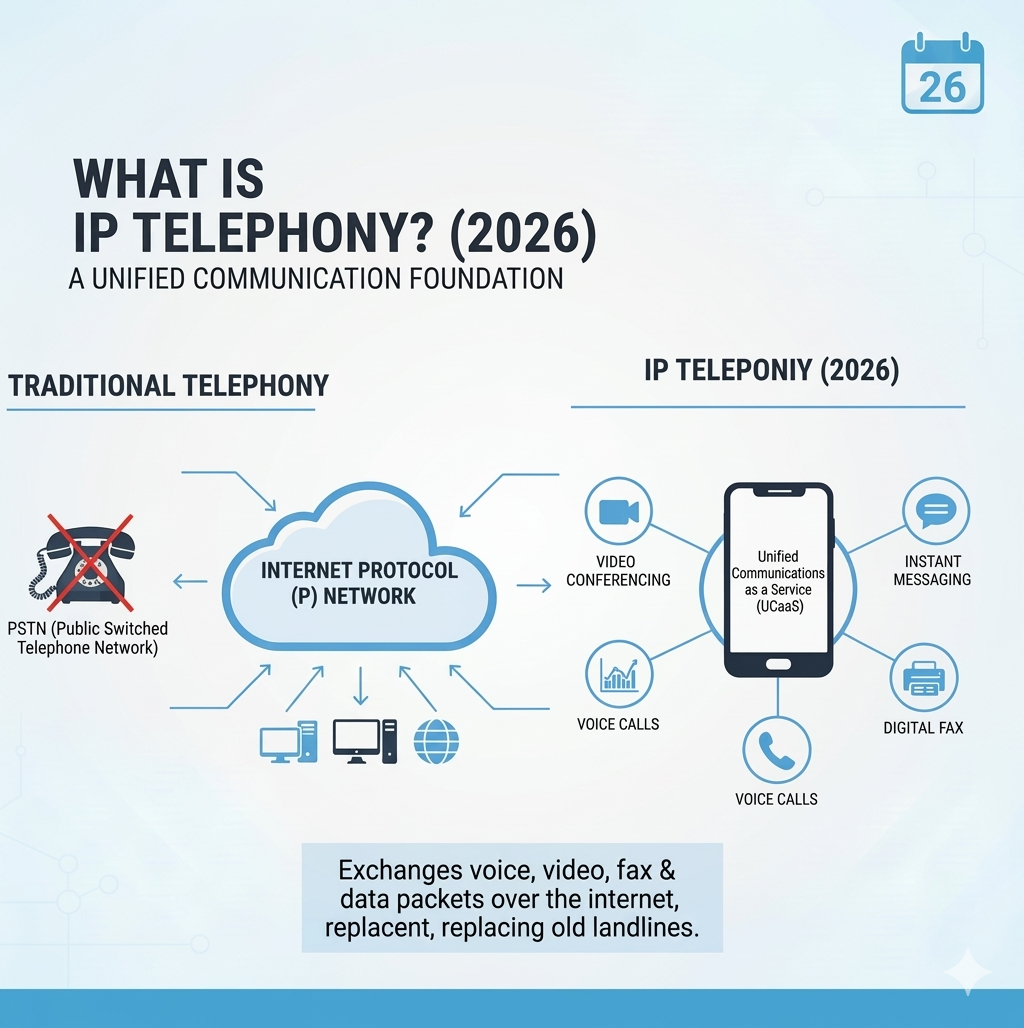
To understand the landscape, we must first define what is ip telephony. It is a general term for the technologies that use the Internet Protocol’s packet-switched connections to exchange voice, fax, and other forms of information. The ip phone full form—Internet Protocol phone—highlights its departure from the old Public Switched Telephone Network (PSTN).
In 2026, ip telephone has evolved beyond simple voice calls. It now serves as the foundation for Unified Communications as a Service (UCaaS), integrating video, instant messaging, and AI-driven analytics into a single ip telephony service.
IP Phone Meaning and Evolution
When we ask what is ip phone, we are referring to a device that looks like a traditional telephone but functions like a high-end computer. An ip phone means your voice is no longer an electrical signal traveling over copper; it is digital data traveling across the same high-speed network as your email and cloud applications. This convergence allows for a telephone ip setup that is more flexible and data-rich than any analog predecessor.
How IP Telephony Works
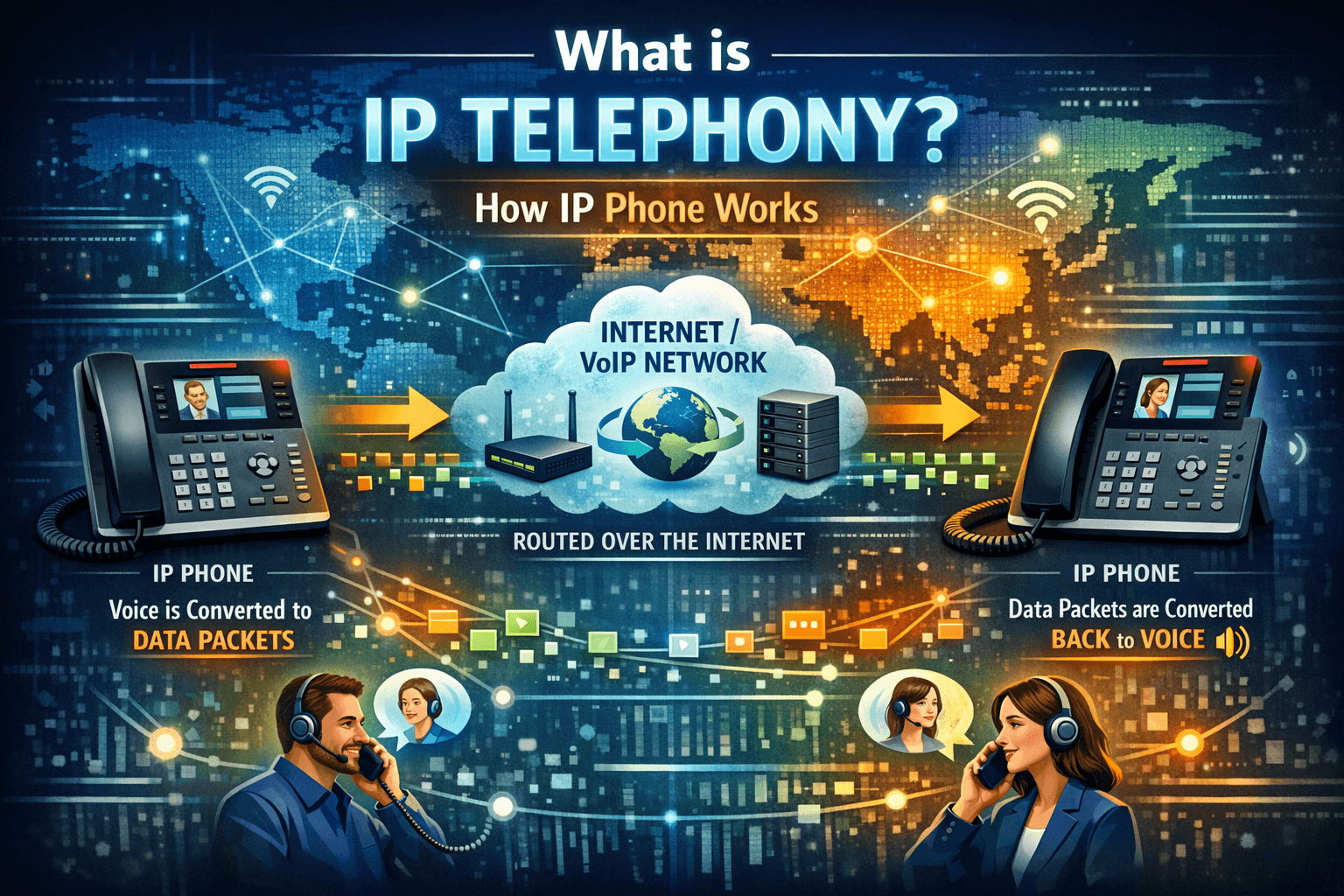
If you’ve ever wondered how do ip phones work or how does an ip phone work, the answer lies in a process called packet switching. Unlike the traditional “circuit-switched” calls that required a dedicated physical line, ip telephony breaks your voice into small digital packets.
The Technical Journey of an IP Phone Call
The process of an ip phone call involves several critical steps:
- Sampling and Digitization: Your voice is captured by the microphone and converted from an analog wave into a digital bitstream.
- Compression via Codecs: In 2026, advanced codecs like G.711 and G.729 use AI to compress this data while maintaining “HD Voice” quality.
- Packetization: The digital data is chopped into small packets. Each packet is stamped with a header containing the destination ip phone number.
- Transmission: These packets travel across the network via routers and switches.
- Reassembly and Playback: At the destination, the packets are reordered and converted back into audio for the listener.
Key IP Telephony Components
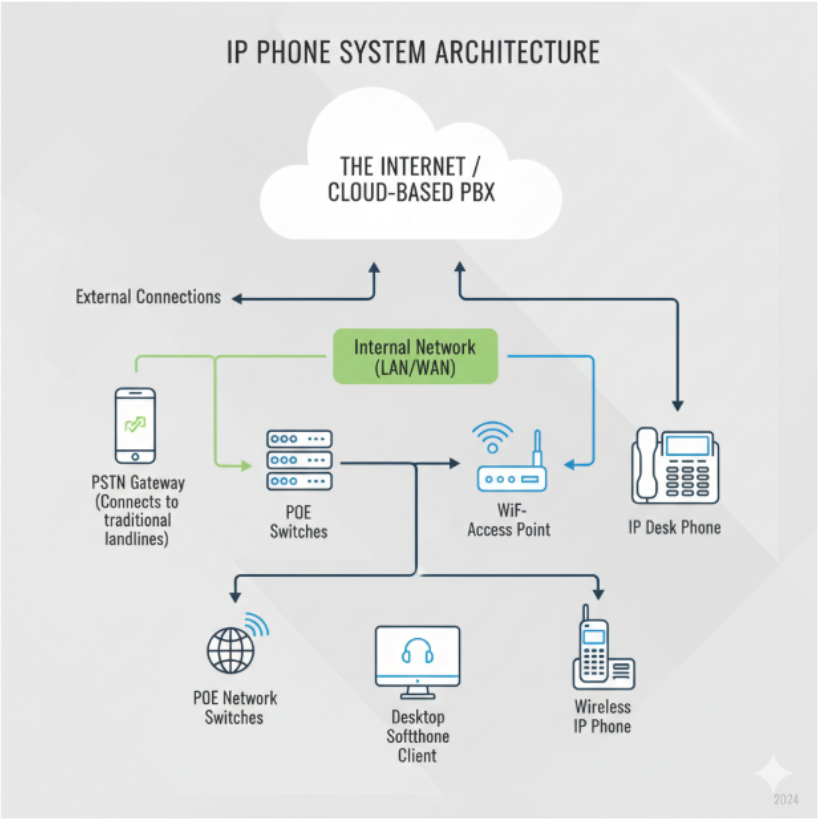
A robust ip telephony solution is composed of several architectural layers:
- IP Phones: These are the physical endpoints, ranging from basic desktop models to executive video phones.
- IP PBX (Private Branch Exchange): This is the ip phone server that acts as the “brain” of the system, managing internal extensions and call routing.
- IP Gateway: A bridge that connects the ip telephone systems to the legacy PSTN, allowing you to call traditional landlines.
- VoIP Service Provider: The entity that provides the connection to the global telephone network via the internet.
Benefits of IP Telephony
The move to ip telephony services offers transformative advantages for organizations of all sizes.
Drastic Cost Savings
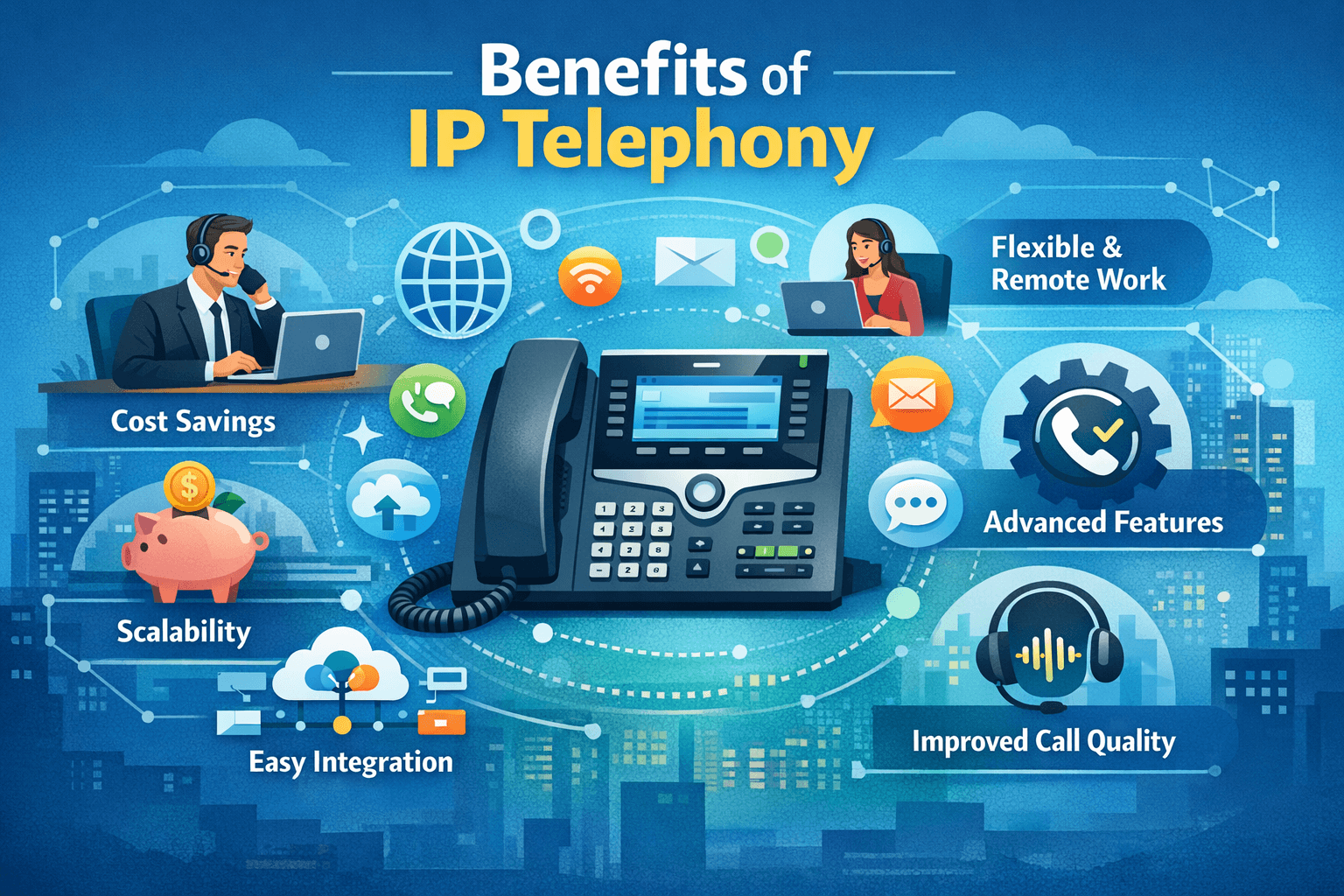
One of the most immediate impacts of ip telephone is the reduction in operational expenses. Businesses report saving up to 75% on communication costs by eliminating long-distance charges and reducing hardware maintenance (ZipDo, 2025). With an ip phone system, the only recurring cost is often your data plan.
Scalability and Flexibility
An ip phone system small business owners deploy today can scale to thousands of users in minutes. Because the system is software-defined, adding a new line is as simple as plugging in a new ip telephone and configuring it through a web dashboard.
Enhanced Mobility
Because ip telephony is location-independent, employees can use their office extension from home, a café, or a different city. This has made ip-telefonie the primary enabler of the hybrid work model that 64% of workplaces now implement (Zoom, 2026).
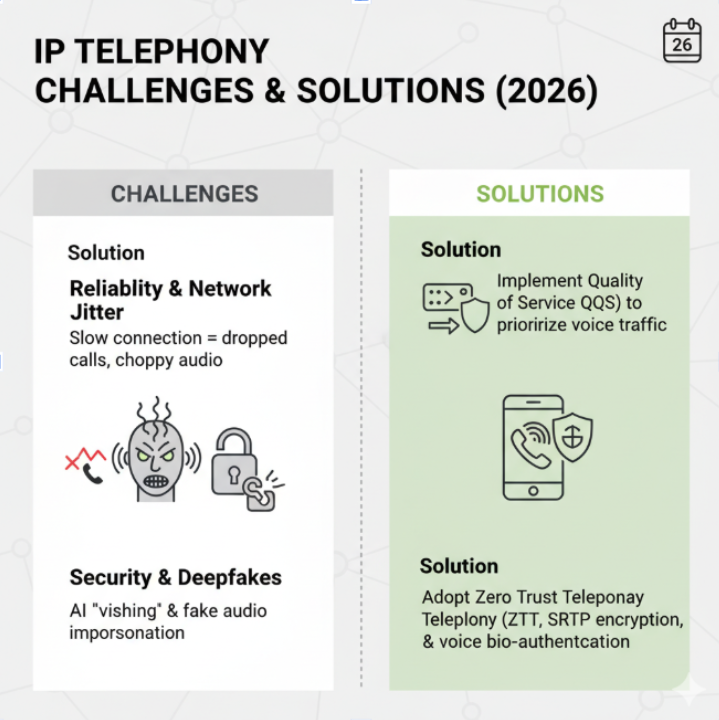
Challenges with IP Telephony and Solutions
While the technology is advanced, ip telephony systems face specific hurdles in 2026.
Reliability and Network Jitter
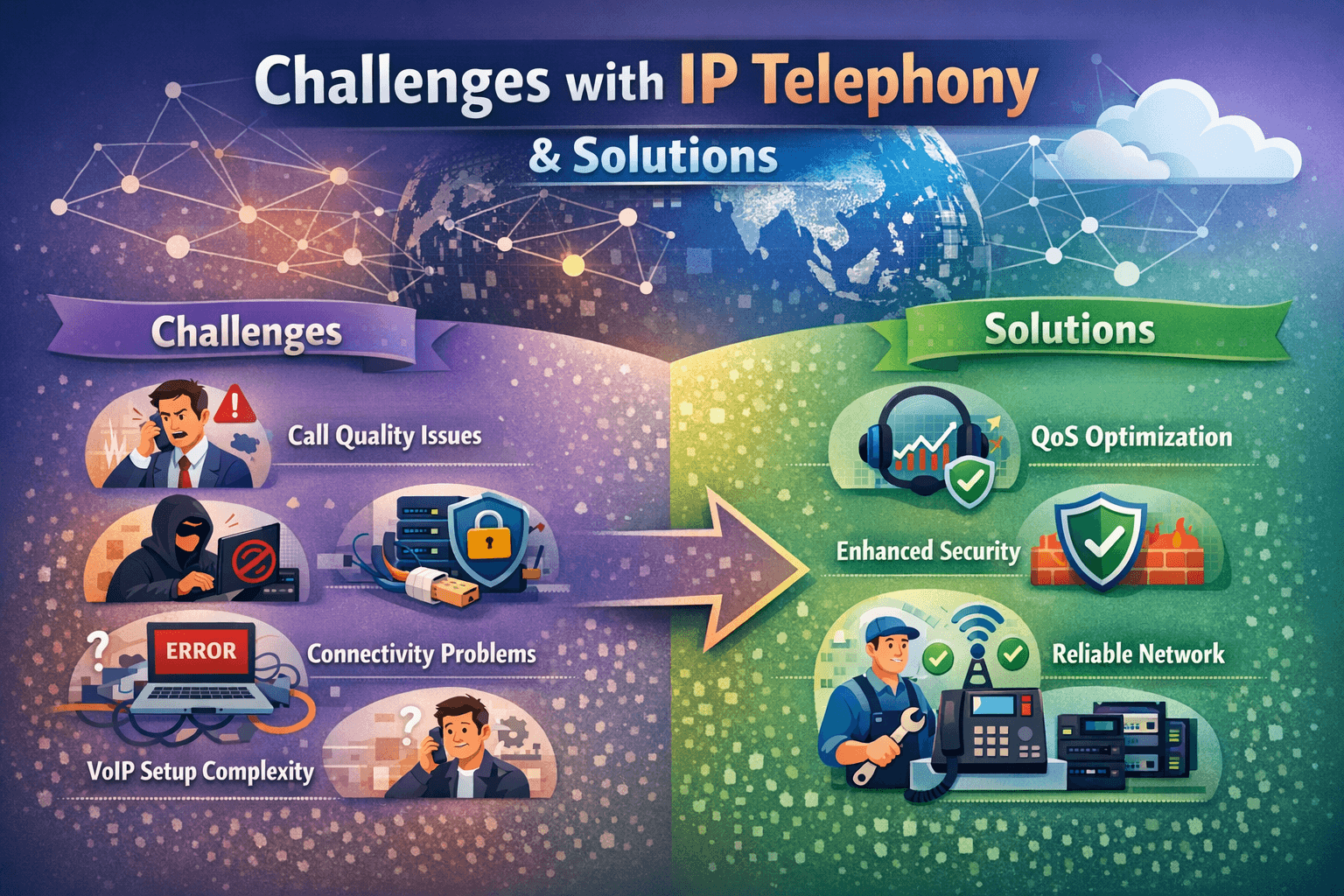
Since calls travel over the internet, a slow connection can lead to “jitter” or dropped packets.
- Solution: Implement Quality of Service (QoS) settings on your network to prioritize ip telephone traffic over standard data like email or web browsing.
Security and Deepfakes
As AI evolves, “vishing” (voice phishing) and deepfake audio have become real threats to ip telephony solutions.
- Solution: Adopt Zero Trust Telephony (ZTT) principles. Use Secure Real-time Transport Protocol (SRTP) for encryption and implement voice bio-authentication to verify caller identity.
What are VoIP Protocols?
For ip telephony to work, devices must use a common “language” or protocol.
- SIP (Session Initiation Protocol): The global standard for signaling and controlling sessions in ip telephone systems.
- RTP (Real-time Transport Protocol): The protocol responsible for the actual delivery of audio and video data.
- H.323: An older, more complex protocol still used in some legacy video conferencing environments.
IP Telephony in Business
Managing ip telephony has become a specialized IT function. Who manages ip telephone? In most firms, it is the IT department or a Managed Service Provider (MSP). They monitor the ip phone server to ensure 99.999% uptime and manage the integration of the phone system with other business tools.
CRM and AI Integration
In 2026, 40% of businesses using CRMs have integrated their ip telephony solutions to automate data entry and provide real-time call transcriptions. This allows a salesperson to see a customer’s entire history as soon as an ip phone call is received.
What is an IP Phone System?
An ip phone system is the entire digital infrastructure used to manage a company’s communications. This includes the hardware, the cloud-based ip telephony service, and the management software. Unlike a traditional system, an ip phone system business unit today is almost entirely virtual.
IP Phone vs. Traditional Phone
The differences between these two technologies are stark:
| Feature | Traditional Phone (PSTN) | IP Telephony (VoIP) |
| Transmission | Analog over copper wires | Digital over IP networks |
| Wiring | Separate phone lines (RJ-11) | Shared Ethernet/Wi-Fi (RJ-45) |
| Cost | High per-minute rates | Low monthly subscription |
| Features | Basic (Hold, Transfer) | Advanced (AI, CRM, Video) |
| Mobility | Tied to a physical outlet | Work from anywhere globally |
Types of IP Business Phones
Businesses have several options when selecting their ip telephony hardware:
- Desk IP Phones: High-quality hardware like the Yealink T-series or Cisco 8800 series, designed for heavy daily use.
- Wireless IP Phones: Devices that use Wi-Fi or DECT to provide mobility within a warehouse or large office.
- Softphones: Software-based ip telephones that run on computers or mobile devices, represented by an ip phone icon on your screen.
VoIP vs. IP Telephony: The Distinction
While often used interchangeably, there is a technical difference. VoIP refers specifically to the method of sending voice over the internet. IP Telephony is the broader system—including the hardware, the ip phone systems, and the overarching communication strategy of the enterprise.
Which is Best: On-Premises vs. Hosted VoIP?
This is a critical decision for any ip telephony solution.
- Hosted IP Telephony (Cloud): The provider manages the ip phone server in their data center. This is ideal for ip phone systems for small business because it requires no on-site maintenance.
- On-Premises IP PBX: You keep the hardware in your own server room. This is preferred by large enterprises that require absolute control over their security and data.
Read More: VoIP vs PBX: Which Should You Choose for Your Business?
VoIP Business Phone System Essential Features
A modern standard téléphonique ip should include:
- Auto-Attendant: A virtual receptionist to route calls.
- Omnichannel Support: Integrating SMS, WhatsApp, and Video.
- AI Transcription: Automated summaries of every ip phone call.
- Voicemail-to-Email: Sending your messages directly to your inbox.
How do I set up a VoIP System?
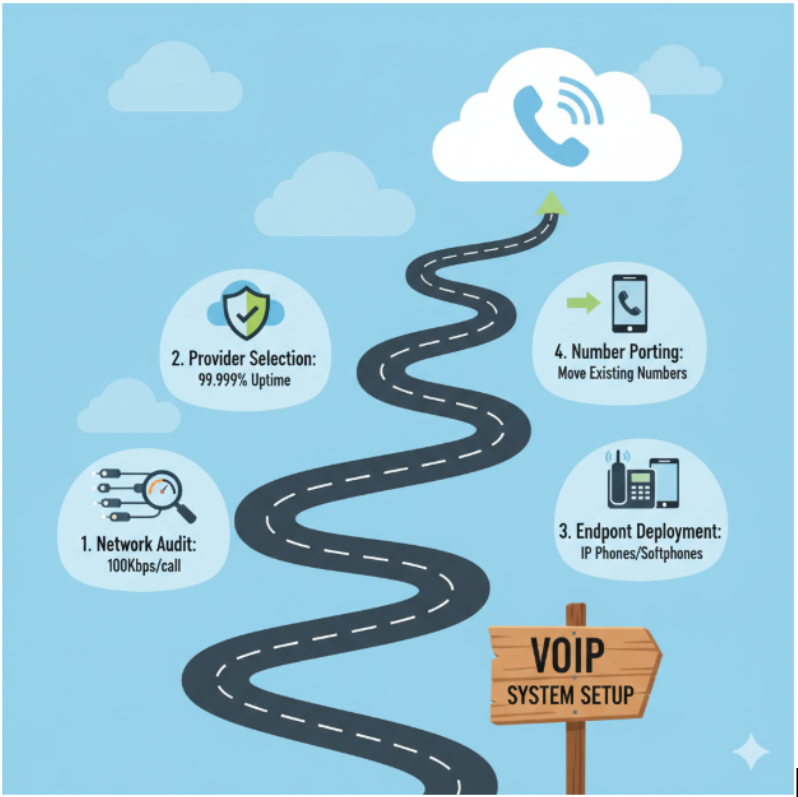
The migration to telephony ip follows a simple roadmap:
- Network Audit: Ensure your internet has enough bandwidth (at least 100Kbps per call).
- Provider Selection: Choose a carrier with a proven 99.999% uptime record.
- Endpoint Deployment: Install your ip phones or softphone apps.
- Number Porting: Move your existing traditional numbers to the new ip telephony service.
Can IP Phones be used at Home?
Absolutely. One of the greatest perks of ip telephone technology is its portability. Since your extension is tied to an account, not a wire, you can plug your ip telephone into any home router and receive calls just as you would at your office desk.
Price of IP Phones
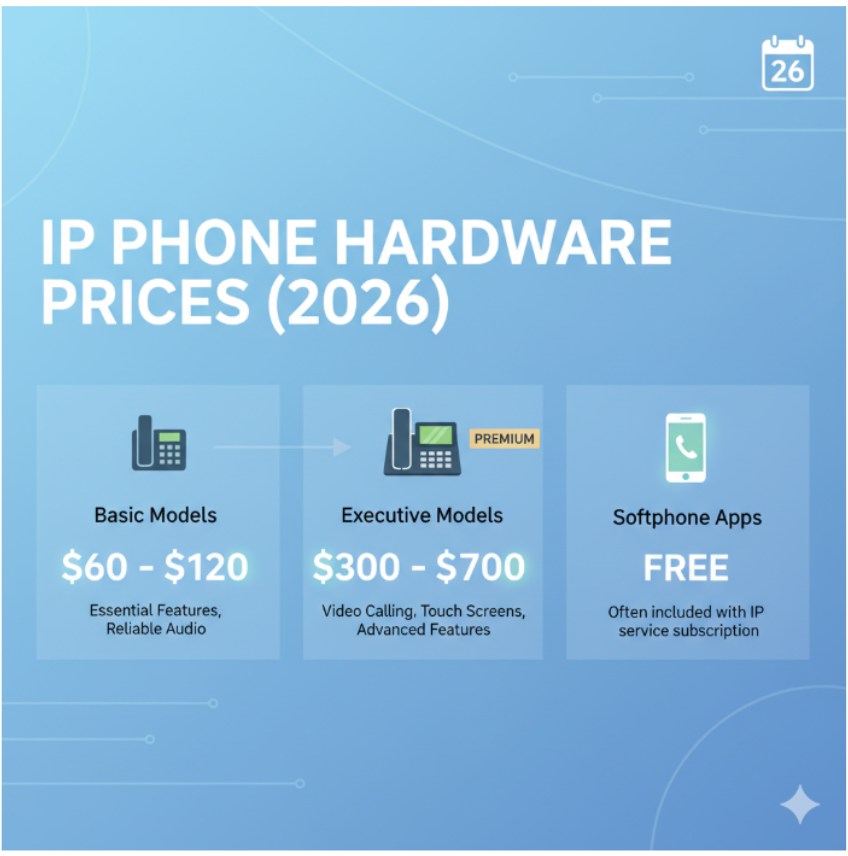
In 2026, the prize of ip phone hardware has stabilized:
- Basic Models: $60 – $120.
- Executive Models (Video/Touch): $300 – $700.
- Softphone Apps: Frequently included for free with your ip telephony solution subscription.
Final Thoughts: The 2026 Outlook
As we look toward the end of the decade, the concept of a “phone” is disappearing. It is being replaced by an ip telephony system that is invisible, ubiquitous, and intelligent. Research from Gartner (2026) and Nextiva highlights that 90% of organizations will have adopted cloud-based ip telephone systems by 2027. The integration of 5G has further improved the reliability of mobile telephony, allowing users to maintain high-definition calls even while traveling. Therefore, In 2026, embracing an ip telephone system is no longer just a technical upgrade—it is a strategic leap into a future where your business communication is as mobile, intelligent, and scalable as the digital world itself.
Frequently Asked Questions (FAQs)
-
What is the ip phone full form?
IP phone stands for Internet Protocol phone, which uses digital networks instead of traditional lines.
-
What is an ip phone system?
IP phone system is a communication network that manages calls using internet data packets rather than analog signals.
-
How do ip phones work?
IP Phones convert sound into data, send it over the internet, and turn it back into sound at the destination.
-
Can I use my current number with ip telephone?
Yes, most ip telephone services allow you to port your existing number to the new system.
-
Is ip telephone safe?
Yes, IP telephone system is safe and provided you use encryption (SRTP) and Zero Trust security protocols.
-
What is the difference between VoIP and IP telephony?
VoIP is the technology that carries the voice, while ip telephony is the complete communication system.