
The best AudioCodes alternatives depend on which product and responsibility you are replacing. Ribbon and Oracle are direct candidates for session border control and enterprise voice interconnection. If the project instead replaces the employee or customer-calling platform, evaluate KrispCall for shared conversations, followed by Calilio for routing and supervision. RingCentral RingEX and Zoom Phone are broader workplace-calling options.
These choices are not interchangeable. An SBC, a media gateway, a managed Teams connection and an employee phone application perform different jobs. Buying a calling subscription does not automatically replace a Mediant device, preserve a SIP trunk or reproduce an existing voice-AI integration.
This guide centres on Mediant and Teams-connectivity decisions, with separate consideration of a full calling-platform change. It also explains what needs a distinct specification when the requirement concerns gateways, AudioCodes Live Hub or VoiceAI Connect. Relevant master-sheet partners are included where their role fits; Ribbon and Oracle supplement them because the infrastructure requirement needs direct competitors.
Recommendations draw on supplier documentation, Microsoft's certification information and customer feedback. Team sizes are evaluation scenarios. We have not independently benchmarked these systems or completed the migrations described. Infrastructure pricing requires a scoped quote; published app subscriptions retain their currency and billing basis.
Choose The Right AudioCodes Replacement Category
- Replace An Enterprise SBC: qualify Ribbon and Oracle against the actual carrier, PBX, cloud platform, capacity and resilience design.
- Keep Teams Direct Routing: verify the exact supported SBC model and software version, then agree the operational owner.
- Replace A Physical Media Gateway: inventory analogue or digital interfaces and device requirements separately from SBC software.
- Change The Customer-Calling Workspace: evaluate KrispCall and Calilio as application options, with a new workflow and service proposal.
- Replace The Workplace Phone Platform: compare RingEX or Zoom Phone, including the remaining carrier and gateway dependencies.
- Replace Voicebot Connectivity Or Orchestration: specify the bot framework, speech services, telephony interface and human handoff before choosing a product.
The first decision is whether to preserve the existing architecture or replace the application around it. Answering that question prevents a lower subscription price from concealing an incomplete infrastructure proposal.
Identify The AudioCodes Product And Its Actual Job
Start with a product and dependency inventory, rather than a generic list of VoIP brands. Record the AudioCodes product, model, software, licences, deployment location, support contract and connected systems. Include who administers it and what would stop working if it were removed.
Mediant Session Border Control
AudioCodes publishes appliance, virtual and cloud SBC options. These sit within a voice architecture, connecting and controlling sessions between networks and services. A replacement needs a supported design for the actual carrier, PBX, Teams or other cloud platform, rather than just another product described as VoIP.
Document simultaneous sessions, media requirements, number routes, recording interfaces, failover and any services sharing the same instance. A device supporting several workloads should not be replaced from a quote that covers only one of them.
Media Gateways And Physical Interfaces
AudioCodes also has a media-gateway portfolio. If the installation connects analogue devices or digital circuits, list the interfaces and attached equipment. Replacing SBC software alone does not establish that those physical connections remain available.
Ask the equipment maintainer to confirm the supported migration path for fax, door entry, alarms and other specialised devices. A successful ordinary voice call is insufficient evidence for every connected system. Treat hardware, conversion and equipment-specific testing as explicit parts of the proposal.
Managed Connectivity And Voice AI
AudioCodes Live Hub describes orchestration between telephony channels, conversational-AI services and business voice applications. VoiceAI Connect addresses connectivity between telephony and bot frameworks. Replacing those functions requires an integration specification, rather than an assumption that an application offering summaries performs the same role.
Identify what must stay: the carrier, phone numbers, Teams interface, contact centre, bot, speech service or management process. A narrower component replacement and a full platform migration can have very different costs and operating consequences.
Compare Direct AudioCodes Competitors And Platform Options
The first two rows are infrastructure candidates. The remaining rows are conditional platform-change options. They are included for projects that change the calling application, not as equivalent SBC licences. Prices and evaluation offers apply to the named product and scope.
| Provider | Project Role | Buying Consideration | Pricing & Evaluation |
|---|---|---|---|
Ribbon SBC Portfolio  | Direct SBC Replacement | Select the exact model, software, capacity and physical interfaces. Rating is historical SBC 7000 context, not SWe Edge. | Request SBC Configuration QuoteInclude licences, media functions, redundancy, infrastructure, support and engineering.30-Day SWe Edge Trial Licence Advertised. Confirm Licence Conditions And Hosting Charges.Request A Ribbon SBC Evaluation |
Oracle Enterprise SBC  | Direct Enterprise SBC Replacement | Qualify deployment, carrier interoperability, media and certified product/software conditions. | Request Enterprise SBC QuoteInclude capacity, functions, redundancy, infrastructure, maintenance and implementation.Confirm Product-Specific Evaluation Terms. No Free-Trial Duration Assumed.Request An Oracle SBC Quote |
| Conditional Customer-Calling Platform Change | Application option, not an SBC or gateway replacement. Advance adds transfers/recording; transcripts and summaries are add-ons. | US$32/user/monthAdvance, billed annually; US$40 monthly. Up to 50 users. Confirm country-specific numbers, usage, add-ons and tax.7-Day Free Trial for VoIPCalling CustomersStart a 7-Day KrispCall Free Trial | |
| Conditional Department Application Change | Premium for routing and live supervision. It does not establish SBC, gateway or bot-bridge equivalence. | US$28/user/monthPremium, billed annually; US$35 monthly. Confirm number countries, usage, recording, storage, transcription and tax.Demo AvailableRequest a Calilio Demo | |
| Conditional Workplace Platform Change | US Core reference; regional plans differ. Confirm required integrations and retained infrastructure. | US$20/user/monthUS Core, paid annually; US$30 monthly. Regional coverage, features, taxes and fees require confirmation.Free Trial Available. New subscribers, up to 5 users and 2 phones. Hardware return conditions; SMS unavailable during trial.Start A RingEX Free Trial | |
| Conditional Zoom Workplace Calling Change | May coexist with AudioCodes infrastructure. Qualify retained carrier, gateway and cloud dependencies. | Request Current Phone PricingObtain regional users, numbers, usage, devices, add-ons and tax in one proposal.Confirm Current Phone Evaluation TermsExplore Zoom Phone For 1–50 Users |




Ribbon's displayed Gartner rating is specifically for Sonus SBC 7000, not a rating of SWe Edge or the whole current portfolio. Oracle's profile has only four ratings. Keep those product boundaries and small samples separate from the larger G2 cloud-phone profiles.
1. Ribbon For SBC And Teams Interconnection Projects
Ribbon is a direct infrastructure candidate when the requirement is to replace an AudioCodes SBC while retaining the surrounding voice architecture. Its portfolio spans different deployment and capacity needs. Select the product from the design rather than treating every Ribbon SBC as the same device.
Who Should Evaluate It: a business, integrator or service provider with an established carrier and UC architecture that needs supported session border control. Employee count alone is a weak sizing measure. The relevant inputs include concurrent sessions, call rate, media processing, connected systems and resilience requirements.
Ribbon's SWe Edge documentation describes virtual and public-cloud deployment, SIP interoperability, media services, recording interfaces and high-availability options. Its Teams materials also distinguish software from hardware options supporting physical interfaces. Ask the supplier to map the proposed edition to your complete inventory.
Reason To Shortlist: evaluate whether the supported configuration preserves the carrier, number routes and existing applications while changing the border-control layer. Have the voice engineer reproduce representative call flows and inspect the resulting diagnostics.
Important Boundary: certification, capacity and physical connectivity belong to the selected model and software. A virtual instance does not automatically replace an appliance's analogue or digital ports. Microsoft's current Direct Routing documentation lists specific Ribbon products and supported software conditions.
Request a quote covering licences, enabled functions, deployment resources, redundancy, support and implementation. Ribbon advertises a thirty-day SWe Edge trial licence. Confirm its cost and conditions, along with any hosting or infrastructure charges; this wording does not establish a completely free deployment.
The available Gartner figure used here covers Sonus SBC 7000 and two ratings with older review evidence. It is historical product context, not proof of the performance of a proposed SWe Edge or other configuration.
2. Oracle For Enterprise Session Border Control
Oracle Enterprise Session Border Controller is another direct service-category candidate. Oracle describes it as interconnecting SIP trunks, existing enterprise telephony, UCaaS, CCaaS and other SIP services, with deployment in enterprise infrastructure or major public clouds.
Who Should Evaluate It: organisations with voice, network, security and operations teams responsible for a defined communications boundary. The fit depends on the architecture and operational capability, rather than a generic employee threshold or an assumption that a large vendor always requires a large installation.
Reason To Shortlist: assess a supported session-control design across existing carriers, PBXs and cloud services. Define which routes, media treatments, security controls, recording relationships and continuity requirements must remain. Have the supplier identify the relevant product, deployment form and licence scope.
Microsoft's Direct Routing list includes named Oracle appliance and virtual entries with version conditions. Verify the exact current entry before approving a Teams design. The existence of a certified Oracle product does not establish that every Oracle appliance or software release meets your intended configuration.
Important Boundary: an enterprise SBC is an infrastructure component, not an employee calling subscription, carrier contract or complete conversational-AI application. Those other layers still need ownership and pricing. Ask who handles configuration, monitoring, upgrades and escalation after deployment.
Obtain the licence, capacity, media functions, redundancy, infrastructure, maintenance and implementation costs together. No product-specific free-trial duration is assumed here. A general cloud account offer should not be represented as an SBC evaluation entitlement.
The Gartner product profile displays 5.0/5 from four ratings. That small sample can provide context but does not establish superiority over another supported configuration or measured performance in your network.
3. KrispCall For A Different Shared Calling Workspace
KrispCall is our first partner option when the project changes the customer-calling application. Evaluate it for shared enquiries, callback ownership and the information available to colleagues. This is a platform decision, rather than a direct Mediant replacement.
Suggested Team: two to five employees sharing a customer number. Starter supports up to five users and Advance up to fifty. A small team can need the higher tier for specific functions before reaching a headcount limit.
Starter lists US$12 per user monthly with annual billing or US$15 monthly. Advance is US$32 annually billed or US$40 monthly and adds transfers and recording; transcription and summaries are add-ons. Country-specific number, documentation, usage and tax requirements need separate confirmation.
Reason To Evaluate: have a colleague return a missed enquiry using the shared context and record the next action. Compare the process with your current application. If the existing SBC also serves a carrier, contact centre or gateway, document what remains in that architecture.
Important Boundary: do not assume an app account supplies certified Direct Routing infrastructure, hardware ports or the same bot-framework integration as AudioCodes. Its public pricing also contains allowance and PAYG wording that should be reconciled in the actual country-specific proposal.
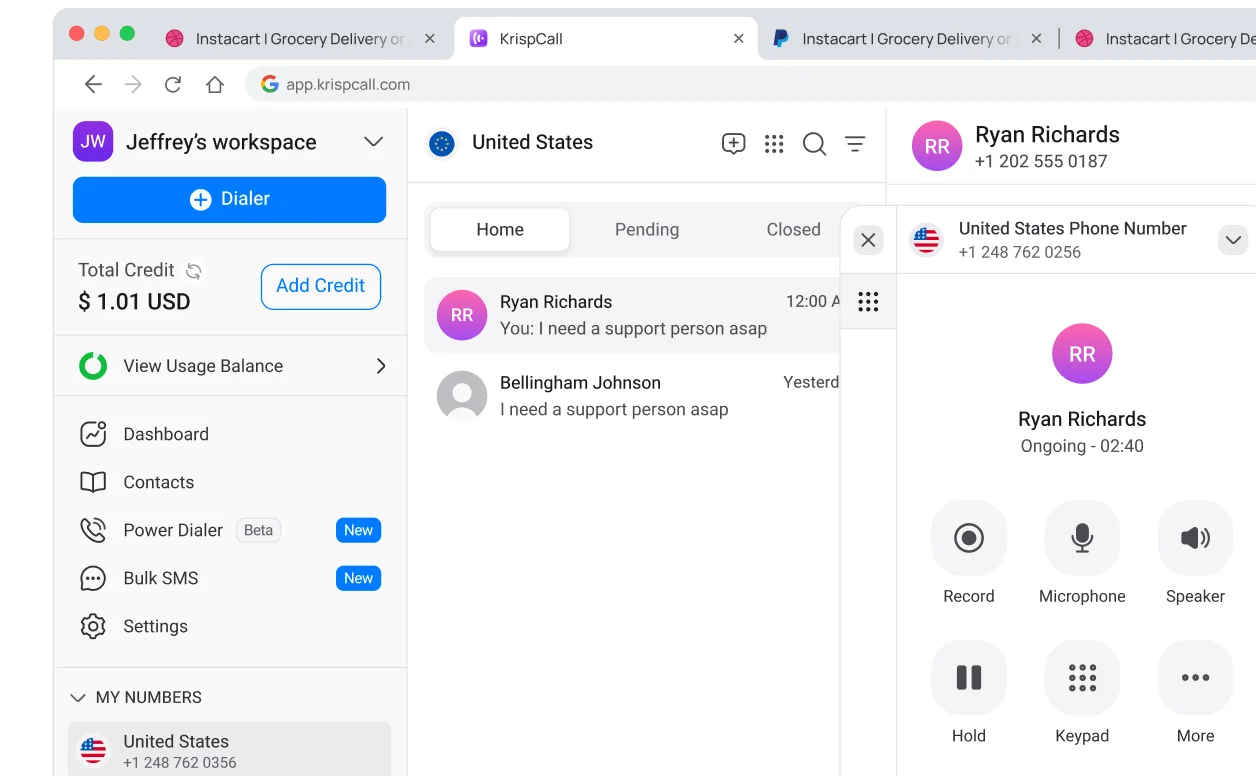
Our KrispCall review expands the application checklist. 7-Day Free Trial For VoIPCalling Customers: this exclusive partner offer is separate from the public subscription-refund policy.
4. Calilio For Department Routing And Supervision
Calilio is relevant when the desired change is a shared sales or support application. Assess the employee workflow, routing and live assistance rather than describing it as another SBC.
Suggested Team: five to twenty customer-facing employees with responsibilities across departments. This is an editorial scenario, not a formal minimum. A specialised contact centre may need a separately scoped product and usage agreement.
Premium is US$28 per user monthly billed annually or US$35 monthly. The published comparison puts transfers, IVR, business-hours routing and live listening, whispering and barging in Premium. Country-specific numbers and usage, recording, storage and transcription allowances require confirmation.
Reason To Evaluate: demonstrate an unavailable department, the fallback route and a supervisor assisting an employee. Verify the customer record and follow-up ownership. Confirm that the workflow remains available on the quoted paid configuration.
Important Boundary: an application demonstration does not establish replacement of a Mediant SBC, physical gateway or VoiceAI Connect bridge. If other workloads remain on AudioCodes, retain or separately replace the infrastructure they use.
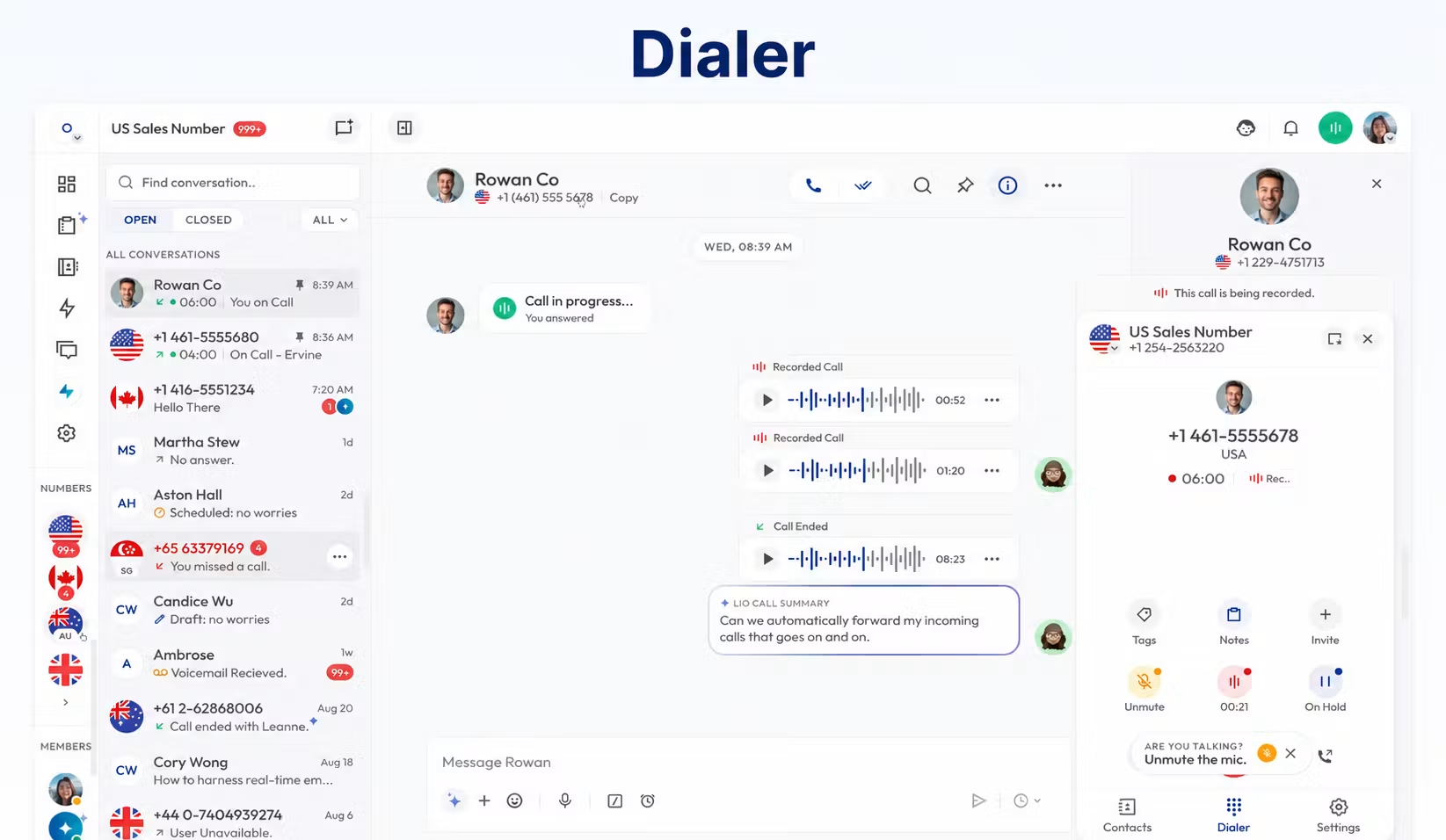
Our Calilio review provides further plan context. Demo Available: a demonstration or testing credit does not establish a time-limited free trial.
5. RingCentral RingEX For A Workplace Platform Change
RingCentral RingEX is a conditional option when the organisation wants to replace the workplace calling platform rather than only an AudioCodes component. Compare the new employee experience and the infrastructure that remains around it.
Suggested Team: ten to fifty employees, or a larger organisation planning consistent calling administration. Include reception, remote employees and an administrator in the evaluation. Company size alone does not establish number coverage or the right deployment architecture.
The US pricing reference for Core is US$20 per user monthly paid annually or US$30 monthly. Regional plans and taxes differ. Core's advertised domestic calling should not be interpreted as an unlimited worldwide service, and additional functions or products can change the bill.
Reason To Evaluate: test onboarding, reception transfers, absence coverage and the process for a departing employee. Map essential integrations and customer handling to the exact tier. Distinguish RingEX employee calling from a separate contact-centre product.
Important Boundary: changing to a cloud calling platform does not establish that every existing SBC, gateway or carrier dependency disappears. Obtain a supported design for the remaining sites and devices.
Free Trial Available: the published US offer is for new subscribers, up to five users and two desktop phones. Hardware must be returned within twenty-one days of trial cancellation to avoid charges, and SMS is not available during the trial. Confirm regional applicability.
6. Zoom Phone For Calling Within An Existing Workplace
Zoom Phone is relevant when employees already use Zoom and the organisation is considering a telephone-platform change. It should not be presented as an SBC product merely because it can participate in a broader carrier design.
Suggested Team: ten to fifty distributed employees, or a larger deployment standardising across offices. Use the separate audience routes below. Qualify number countries, devices, reception and administration alongside headcount.
Request current regional Phone pricing for users, numbers, usage, hardware, add-ons and tax. A meetings subscription does not establish the required telephone service, and an overseas price does not establish availability in every country.
Reason To Evaluate: compare ordinary employee calling, shared coverage, voicemail ownership and device changes. Have an administrator configure the intended service. If the project retains a carrier or SBC, request a supported architecture and responsibility model for that arrangement.
Important Boundary: AudioCodes itself publishes Zoom-related solutions. The two companies can occupy different roles in one architecture. Moving employees into Zoom therefore does not, by itself, prove that AudioCodes infrastructure can be removed.
No specific Phone trial duration is assumed here. Confirm the proposed evaluation, country coverage and final paid scope before scheduling any number move.
Verify Teams Certification And The Complete Support Chain
For Teams Direct Routing, verify the exact supported SBC product and software conditions. Microsoft says it supports Direct Routing with certified devices and establishes an escalation process involving the SBC vendor. A vendor name on a shortlist is insufficient evidence for an arbitrary model or release.
Record the selected model, current software, proposed software and deployment form in the design. Have the integrator confirm the relevant certification entry at approval time. Certification and compatibility with your carrier, PBX, routing and media requirements are related checks, but they are not identical.
Establish the support owner before deployment. Identify who maintains the SBC, who manages the carrier, who administers Teams and who coordinates an incident spanning those systems. Include evidence collection and the supplier escalation route in the operating agreement.
Ask how software updates are tested and approved. A supported configuration can still behave differently after a change to the carrier, PBX or cloud platform. Keep a record of versions, configuration and test results so the team can distinguish a new problem from an existing one.
For an organisation wanting less internal administration, evaluate a managed service proposal as a service responsibility change. State who handles monitoring, certificates, upgrades, capacity, incidents and maintenance windows. A virtual machine subscription alone does not assign those tasks to a provider.
Size Sessions, Media And Resilience Before Comparing Price
Infrastructure sizing should reflect the actual workload. Record concurrent sessions, call attempts, media handling, recording relationships, deployment resources and expected growth. A licence headline cannot establish the supported result for every combination of enabled functions.
Consider an illustrative organisation with five hundred employees but only sixty simultaneous external conversations at its observed peak. Compare the configuration needed for those sessions and growth, rather than automatically buying five hundred SBC sessions or assuming sixty employee subscriptions replace the whole service.
Ask the supplier to validate capacity with the proposed media functions and resilience design. Determine what happens during node failure, resource pressure, a carrier interruption and a site-network problem. A high-availability label does not establish the same outcome for all failure modes.
Distinguish restoring new calling from preserving calls already in progress. Define the acceptable result and test it through the supplier's approved procedure. Include the resources and licences necessary for the redundant design, not only the first active instance.
Check the physical layer separately. If a gateway supports equipment that remains on site, a cloud instance may still need a supported local device or another connectivity path. Include that equipment, power, support and site work in the proposal.
Specify Voice AI And Live Hub Replacement Separately
A voice-AI connectivity requirement needs an integration design, not just a phone application with an AI feature. AudioCodes describes Live Hub as orchestrating telephony channels, conversational-AI services and business voice applications. That scope differs from adding a call summary to an employee workspace.
Record the voice entry point, carrier or numbers, bot framework, speech services, application logic and destination for human escalation. Identify who owns the conversation state, recordings and business-system actions. Preserve the distinction between the AI application and the telephony connection carrying its calls.
Test interruption, silence, incorrect recognition, caller requests for a person and failure of a connected service. Establish what information reaches the human employee and what happens if the handoff cannot complete. A successful scripted demonstration does not establish these outcomes.
Ask about usage dimensions and dependencies. Telephone minutes, speech processing, model use, orchestration and storage can be separate costs. The exact bill depends on the selected stack and offer; do not invent a single combined rate from unrelated price pages.
The SBC candidates in this guide do not automatically replace every Live Hub function, and the four calling applications are not verified drop-in VoiceAI Connect replacements. Use them only when the proposed new application and integration satisfy the documented requirement. Retaining a working integration can be part of a narrower migration.
Compare Infrastructure And Platform Costs On The Same Scope
There is no verified universal cheapest AudioCodes alternative. A complete cost comparison depends on the workload, retained systems, support model and implementation. Quote infrastructure separately from employee access and usage.
Build The SBC Cost Schedule
Include licences, capacity, media functions, redundant instances, cloud or appliance resources, maintenance, support and professional services. Add monitoring, recording dependencies, certificates or other operational work where applicable. Ask the supplier to identify what is included and what your organisation must provide.
Compare the same deployment period and assumptions. A three-year appliance purchase and a monthly virtual deployment can have different resource, support and renewal costs. Include equipment lifecycle and the cost of keeping the existing service available during migration.
Keep Application Subscriptions Separate
For an illustrative five-user application group, KrispCall Advance's annual-billing monthly equivalent is US$160 and Calilio Premium's is US$140. These are platform references before separately applicable numbers, usage, add-ons and tax. They do not price an enterprise SBC or a gateway.
RingEX's US Core reference would be US$100 monthly equivalent for five users paid annually. Confirm the required tier, country, fees and functions. Do not compare that figure with an infrastructure quote unless the supported design explains which existing components are removed and which remain.
Include Migration And Operational Effort
Budget engineering, configuration translation, interoperability tests, temporary capacity, training and service overlap. Determine which old licences and contracts remain in use. A partial platform change may reduce some requirements while leaving the SBC supporting other workloads.
Compare normal operation and a growth scenario. An initially cheaper proposal can change as sessions, users, media processing or countries increase. Request the expansion rules and support implications rather than assuming one unit price applies at every scale.
Run An Interoperability Pilot Before A Production Cutover
Define success with the voice engineer, carrier, application owner and operations team. Use an isolated evaluation configuration and representative routes. Obtain approval for testing that affects live services, and keep the existing production path available until the agreed cutover.
- Basic Calling: test inbound and outbound calls across the carriers, countries and number types actually required.
- Call Control: test transfers, hold, queues, conferences, forwarded legs and approved caller identification.
- Media: validate the proposed media treatments, recording interfaces and any retained gateway connections.
- Failure Handling: exercise approved node, carrier and connectivity-failure procedures and record the result.
- Operations: confirm diagnostics, monitoring, access, backup and the escalation route.
- Applications: test shared follow-up, employee permissions and required customer-record outcomes.
- Commercial Scope: confirm that the licences and resources tested match the final order.
Record timestamps, call paths, versions and configurations for unexpected behaviour. Distinguish a local-network issue from an SBC, carrier or application issue before assigning responsibility. Equally, do not accept unresolved failures solely because a product has certification or a high review score.
Discuss emergency-calling and location requirements with the responsible service providers. Use their approved validation process, rather than placing an unscheduled emergency-number call during an ordinary trial.
Separate An SBC Cutover From A Number Move
An infrastructure replacement can be designed around the existing carrier and numbers, subject to the supported configuration. Ask whether the project changes the carrier service or only the path connecting it to the application. Do not initiate a number port simply because the SBC vendor changes.
Where the carrier remains, agree the routing change, activation window, test calls and conditions for restoring the previous supported path. Identify who can make each change and preserve the configuration needed to investigate a fault. A staged pilot should not leave two systems presenting an unintended production route.
If numbers do move to another service, obtain approval for the actual numbers and ranges. Keep cancellation separate from the port request. Validate both incoming calls and outgoing identification after activation, then reconcile any services that remain on the old account.
A completed port may require another process to reverse, while an infrastructure routing change has its own operational constraints. Design the fallback for the actual migration rather than assuming either operation provides an instant automatic rollback.
Choose The Component And Assign Long-Term Ownership
Shortlist Ribbon and Oracle when the requirement is direct SBC replacement. Preserve the carrier, PBX and cloud interfaces that still meet the business need, and obtain a supported configuration for the new component.
Evaluate KrispCall, Calilio, RingEX or Zoom Phone when a different calling application is the intended change. Document which AudioCodes workloads remain before declaring the infrastructure redundant. A phased application migration can coexist with retained voice infrastructure.
For gateways, managed connectivity or voice-AI orchestration, use the separate inventory and integration requirements described above. Do not remove a working layer merely because another product has a similar marketing category.
Before cutover, assign configuration, carrier coordination, employee training, support and rollback responsibilities. Preserve permitted exports and configuration backups. After activation, validate calls, records and charges, then reconcile old contracts and access separately.
The strongest AudioCodes competitors are the ones that replace the intended function and have an agreed operating model. Staying with a supported AudioCodes configuration remains reasonable when it meets the requirement and a migration offers insufficient benefit.
Frequently Asked Questions
What Are The Best AudioCodes Alternatives For SBCs?
Ribbon and Oracle are direct SBC candidates. Select the exact product and deployment from the carrier, PBX, cloud platform, session capacity, media functions and resilience requirement. Verify current certification and support rather than treating a vendor name as proof of compatibility.
Are KrispCall And Calilio Direct Mediant Replacements?
No. They are evaluated here as customer-calling applications. They can be relevant when changing the employee workflow, but their subscriptions do not automatically replace a Mediant SBC, gateway, certified Teams connection or voice-AI bridge.
Can I Replace AudioCodes And Keep Microsoft Teams?
Potentially yes, with a supported telephony design. For Direct Routing, verify the exact SBC product and software conditions in Microsoft's current certification information. Agree the carrier, licensing, configuration and escalation responsibilities before deployment.
Is Zoom Phone Always An Alternative To AudioCodes?
No. The products can serve different roles in the same architecture. Zoom Phone may replace the employee calling platform while an AudioCodes component continues to support carrier or gateway connectivity. Confirm the complete design before removing infrastructure.
Which Option Replaces AudioCodes Live Hub Or VoiceAI Connect?
The answer depends on the required orchestration and integration. Specify telephony, bot framework, speech services, business application and human escalation. Neither an SBC licence nor a calling app with summaries should be assumed to reproduce that entire stack.
Which AudioCodes Alternatives Offer An Evaluation?
Ribbon advertises a thirty-day SWe Edge trial licence; VoIPCalling customers have an exclusive seven-day KrispCall partner trial; Calilio offers a demo; and RingEX publishes a qualified free trial. Confirm product scope, licence conditions, hosting, usage and equipment charges. No Oracle SBC trial duration is assumed here.
Can A Virtual SBC Replace Analogue Gateway Ports?
Not by itself. Inventory the physical interfaces and connected equipment, then obtain a supported hardware or connectivity path. Virtual session border control and physical media-gateway requirements are different parts of the design.
How Should I Compare AudioCodes Replacement Costs?
Price the same complete architecture over the same period. Include SBC licences, resources, media functions, redundancy, support and engineering, then separately add employee subscriptions, numbers and usage. Identify which existing components and contracts remain.
What Customer Feedback Suggests You Should Verify
Ribbon Sonus SBC 7000, Gartner Peer Insights, March 20, 2018, 5/5: a reviewer praised the support relationship. June 27, 2018, 3/5: another described straightforward implementation but production performance issues that the vendor addressed. These are older accounts for that specific product, not current SWe Edge test results.
Oracle Communications Session Border Controller, Gartner Peer Insights, May 22, 2024, 5/5: a reviewer described long-term use and positive vendor assistance. The accessible excerpt supports that limited summary, rather than a detailed conclusion about every deployment.
KrispCall, G2, September 24, 2026, 5/5: a reviewer valued live monitoring for coaching while noting extra navigation and some delay when joining calls. That feedback concerns application use and should not be compared directly with SBC infrastructure performance.
These paraphrased accounts suggest useful support, performance and usability checks. They do not establish a universal winner. The two- and four-rating infrastructure samples are especially small; use the supported design and your own pilot as the primary evidence for the proposed configuration.
Affiliate Disclosure: VoIPCalling may earn a commission when you purchase through our partner links. Recommendations distinguish direct infrastructure replacements from conditional platform-change options and consider the requirements discussed in this guide.