

TPx, CallTower, Fusion Connect, RingCentral RingEX and Telnyx are the best Telesystem alternatives for different projects. Start with TPx for a managed Webex proposal, CallTower for a Teams Direct Routing or Webex Calling project, and Fusion Connect when voice and branch connectivity need to be quoted together. RingEX fits a move to a new hosted phone system. Telnyx fits a SIP change when a technical team will keep the existing PBX.
This guide covers the U.S. Telesystem that sells TrustUC with Webex, EasyRoute for Microsoft Teams and managed networking. Before shortlisting Telesystem competitors, confirm whether your employees use its Blue or Green hosted voice platform, Teams Phone or a separate PBX. Then check whether security awareness training, business messaging, fax, network access or security services are part of the same order.
A TrustUC user may work in Webex while Telesystem provides the phone service. An EasyRoute user can make external calls from Teams. An administrator should trace a public number to its destination before asking a new provider to quote the move.
Which Telesystem Service Are You Replacing?
Start with the current service order, invoice and an administrator who can show how an incoming call reaches reception. Write down the employee app, the hosted or on-site phone system, and the company responsible for connecting public calls. Use that inventory to assess Telesystem alternatives against the exact service you have.
TrustUC With Webex On The Blue Platform
Telesystem’s downloads page identifies TrustUC with Webex as the application for provisioned Hosted VoIP numbers on the Blue platform. Its TrustUC package matrix lists Essential, Enhanced and Elite with AI levels. The product also includes business messaging and employee security awareness training, with different features and allowances depending on the arrangement. The package matrix and your order together are a better pricing baseline than a generic list of Webex features. Telesystem Voice And UC Solutions
When assessing Telesystem competitors that support Webex, ask the vendor which Webex organization users will sign in to and who manages the phone numbers and handsets. Have a current administrator verify the status of meetings and messaging spaces, then ask the proposed provider what can carry over. Users can keep a familiar app and still need a new calling profile, device setup or organization membership.
MaX UC On The Green Platform
The downloads page points Green platform customers to MaX UC and says it requires a Hosted VoIP number provisioned on that platform. Check the portal and current phone configuration for each branch. If the business uses both platforms, map features and users by location. Quote the Green deployment on its own call flows and equipment, even if the business plans to standardize both groups on the same replacement.
For a Green platform migration to a new hosted application, test it with the busiest reception desk, one remote worker and a shared warehouse phone. Preserve the practical behaviors staff rely on, such as consulting a colleague before transferring a call or letting another handset pick up a parked call.
EasyRoute And Teams Direct Routing
Telesystem markets EasyRoute as a way to deploy Microsoft Teams Direct Routing using its managed session border controllers and a configuration tailored to the customer. Ask your tenant administrator which public numbers and policies are assigned through that service. Telesystem also documents a Teams integration for hosted UCaaS. The exact Teams architecture determines what the replacement needs to reproduce.
Teams-focused Telesystem competitors should identify who supplies and manages the session border controller, who configures number and policy assignments, and who supports resource accounts used by call queues and auto attendants. If the proposed design uses Operator Connect, confirm why it fits your locations and which existing routing or device requirements need additional work.
SIP Trunks, Managed Networking And Other Services
A SIP trunk can connect a retained PBX to the public network. Telesystem describes call-session capacity and an optional bursting feature. Record existing peak capacity and whether inbound or outbound limits apply. If the trunk uses a private network or the site has managed access, ask shortlisted Telesystem competitors for a diagram showing which connections will remain after the move.
Check for separate products such as secure fax, toll-free service, contact center, dedicated internet, managed SD-WAN and security. Telesystem alternatives that supply calling can still require additional services for those functions. Assign the responsibility and cost of every retained product before comparing a seat price with a bundle.
Compare The Best Telesystem Alternatives
Use the table to match each provider to the part of the account you want to change. TPx and Fusion Connect are broad managed-service candidates. CallTower is strongest when Teams or Webex remains central. RingEX supplies a new employee calling platform, while Telnyx is a carrier choice for a compatible PBX. Compare Telesystem competitors within the same project scope when you request pricing.
| Provider | Best Fit | Buying Consideration | Pricing And Evaluation |
|---|---|---|---|
| Managed UCx With Webex | Compare Webex seat entitlements separately from customer texting, security training and connectivity. | Business At US$15.70/User/MonthDisplayed UCx with Webex Business seat rate. Confirm hardware, terms and retained services.Explore TPx UCx Pricing | |
| Teams Direct Routing Or Webex Calling | Identify the calling platform, tenant ownership and scope of the carrier migration. | Request A Deployment QuoteInclude voice licences, numbers, devices, installation and support.Explore CallTower Voice Solutions | |
| Managed Voice And Branch Networks | Price circuits and support by site. Verify network and security responsibilities. | Request A Site-Level QuoteInclude access, hosted voice, equipment, security and management.Explore Fusion Connect Services | |
| A New Hosted Phone System | Pilot the devices, transfer workflow and customer messaging requirements. | Core At US$20/User/MonthDisplayed U.S. annual rate. Trial for new subscribers. SMS is excluded.See The 14-Day RingEX Free Trial | |
| SIP With An Existing PBX | Confirm the PBX handoff, network dependency, capacity and technical support. | Inbound From US$0.0032/MinLocal outbound from US$0.005/min. Check destinations, number fees and equipment.Check Telnyx SIP Pricing |


G2 scores reflect different products and sample sizes. The TPx score covers its general services listing. The Fusion Connect score covers its connectivity and communications suite. The Telnyx score covers its broader CPaaS product, and the RingEX score covers RingCentral’s employee communications application.
1. TPx For Managed UCx With Webex
TPx is one of the closest Telesystem alternatives for a U.S. business replacing TrustUC with a managed calling service that also uses Webex. Its UCx with Webex product combines cloud calling and collaboration, while TPx also sells managed connectivity and security services. Its SmartVoice SIP product is relevant if part of the business will retain a PBX while other sites move to hosted seats.
For a 50-person company with office and warehouse staff, give TPx three user profiles. Include employee calling, staff who host meetings and shared phones that need everyday calling without individual meetings. Ask managed Telesystem competitors to map each profile to a quoted seat. If the project retains Webex, confirm organization access, equipment support and which service provides calling.
Ask Telesystem competitors about the functions that made TrustUC a bundle for your business. Have TPx itemize external business messaging and security awareness training requirements where you use them. If the account uses endpoint or network security, ask who will own those responsibilities and how support is coordinated after the phones move.
Pricing And Limits. TPx displays UCx with Webex Business at US$15.70, Pro at US$20.95 and Elite at US$26.20 per user per month. The same pricing page also shows a separate Webex Softphone option at US$15.70 for calling without the full collaboration features. Verify the exact SKU, meeting entitlements, term, hardware and managed network charges in your quote.
For more context on its managed and voice products, see the TPx Communications comparison.
2. CallTower For Teams Direct Routing And Webex Calling
CallTower fits Telesystem alternatives for organizations that want to keep Microsoft Teams or adopt a supported Webex Calling arrangement. It offers Teams Direct Routing and Operator Connect, as well as Cloud Connect for Webex Calling. Ask it to propose a design once you have confirmed whether the incumbent is EasyRoute, a hosted Teams integration or TrustUC with Webex.
For a 120-user Teams environment, put one direct user number, one auto attendant number and a queue resource account into the pilot. Confirm who creates the configuration and who owns maintenance afterward. If the business has a hybrid PBX requirement, give the vendor a list of affected sites and ask how that equipment is connected and supported in the proposed design.
Among Telesystem competitors, compare collaboration carriers using service-level questions. For example, ask who takes the first call when the queue can place outbound calls but its public number fails inbound. The answer should identify which team can verify the number, routing and Microsoft or Cisco configuration. Have the provider describe how incidents are coordinated with your internal IT team.
Pricing And Limits. Request an implementation and service quote for the proposed carrier model, countries, licences, numbers, devices and support hours. For a former TrustUC deployment, confirm the hosted platform behind Webex before estimating how much configuration can carry over. For managed circuits and network security, request a separate scope or name the provider that will retain them.
3. Fusion Connect For Managed Voice And Branch Networks
Fusion Connect is relevant among Telesystem alternatives for a multi-site organization reviewing voice, internet connectivity and managed networking together. Its services include hosted voice, Teams, Cisco Webex and SIP, alongside network and security services. Ask it to match the circuits, voice architecture and management responsibilities at each address.
Take a retailer with 18 locations. Some sites may need a new connection while others have a circuit they want to keep. Give Fusion Connect the carrier and service identifier for each location, the managed equipment and any backup path. Request an address-by-address answer showing who can monitor each circuit and who opens an escalation with its underlying provider.
Managed Telesystem competitors should also explain the scope of firewall configuration, security policy and support after cutover. Show the provider a branch outage scenario in which public calls reach voicemail while employees have lost site access. Ask who coordinates the network repair, voice fallback and final check that service is working again.
Pricing And Limits. Request a quote that prices access, voice, devices, setup and ongoing management by location. Specify whether it should include managed Wi-Fi, security or a private connection. If you need employee training, contact center reporting or outbound texting as well, ask for written coverage and pricing for those requirements.
4. RingCentral RingEX For A New Hosted Phone System
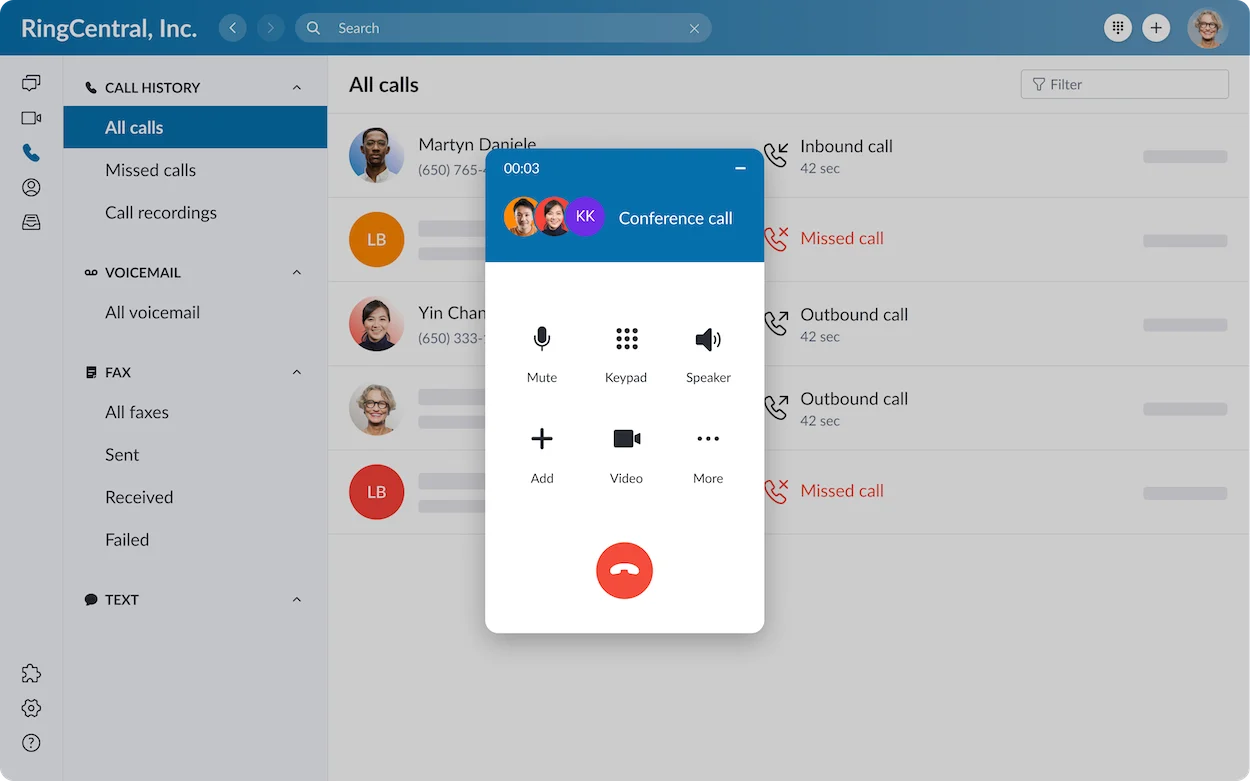
RingCentral RingEX is a fit among Telesystem alternatives when employees are moving from TrustUC or MaX UC to a new calling, meetings and messaging application. Include user extensions, desk phones, reception and branch administration in the evaluation. Ask which capabilities are included in the actual configuration being quoted.
For a 35-person distributor, test the main customer number, a warehouse phone with shared answering and a mobile salesperson. Have the receptionist hold a call, consult the intended recipient and recover the call if the recipient cannot help. Ask an administrator to change branch hours and verify the change from an outside number. This helps establish whether the plan and devices can meet the staff’s most frequent needs.
When comparing hosted Telesystem competitors, map staff messaging, customer texting and agent workflows as separate requirements. RingEX and RingCX are separately sold products. Identify which users need customer-facing channels, supervisor metrics or recorded calls. Price a separate contact-center package if required and check if existing networking or security services can stay in place.
Pricing And Limits. RingCentral’s U.S. pricing view displays Core at US$20 per user per month paid annually and US$30 with monthly billing. Confirm the seat band, feature tier, device terms and implementation costs. The trial is for new subscribers and excludes SMS. Confirm a separate test for business texting before relying on it for customer communication.
5. Telnyx For SIP Trunking With An Existing PBX
Telnyx fits Telesystem alternatives when a company wants a new SIP carrier and will keep a compatible PBX or voice application. A company that already has an integrator for its phones can ask that partner to validate the SIP handoff and configure the new trunk. The retained system still provides the user interface, internal call routes and many reception features.
Consider a two-site company whose existing trunk supports a shared set of simultaneous calls. Give Telnyx the destination mix and give the integrator the inventory of inbound numbers, routing, capacity and physical equipment. Compare the configuration at the point where traffic enters the phone system. If the older service used a private connection or a managed gateway, ask what equipment and support can replace it.
When evaluating SIP-focused Telesystem competitors, compare allowed traffic on peak days, inbound number fees and destination rates. A short period of unusual demand can reveal a capacity or call-attempt limit that is invisible in the monthly usage total. Ask the parties supporting your agreement to describe the escalation path for a failed outbound route or an inbound number that stops reaching its destination.
Pricing And Limits. Telnyx lists local starting rates of US$0.0032 per inbound minute and US$0.005 per outbound minute. Obtain rates for your traffic and add numbers, toll-free calling, applicable fees, support and PBX costs. Budget the technical work needed to connect and monitor the trunk, especially at sites that no longer use the incumbent’s voice network.
Test Calling, Messaging And Training Before You Pick A Provider
Use the same pilot script with Telesystem alternatives that match your project. Begin with a temporary number, the actual devices you expect to deploy and a representative user from each group. Ask the provider to list the packages used in the demo. Save the observed outcomes and the name of the administrator who will own each task afterward.
Rebuild The Caller Journey On Blue And Green
Take one public number from each platform you use and document its path from greeting to employee. Include time schedules, queues, shared extensions and an overflow route. The Blue and Green deployments should have separate records if their routing differs. Tell the receiving provider which branches have unusual hours, where callers must reach a live person, and which handset functions the staff use to accomplish that.
Give hosted Telesystem competitors a task that involves a real receptionist. Have staff handle a call while its intended recipient is busy, check that the transfer destination is the right person and verify the caller’s path when a transfer goes unanswered. Let an administrator change the greeting or closure hours and check the effect from outside the system. Those steps reveal whether ordinary changes can be handled without waiting for support.
Verify Tenant Ownership In Webex And Teams
Before authorizing a platform change with any of the Telesystem alternatives, identify who controls the current Webex organization or Microsoft tenant. Record how users sign in, where the numbers are assigned, and who manages the devices. Check if a shared work email is attached to an organization that users still rely on. Have the administrators agree on the timing of any identity or service changes and handle existing meetings or spaces explicitly.
For Teams-focused Telesystem alternatives, validate a staff user, an auto attendant and one shared device or resource account. Ask the proposed provider to show the carrier arrangement and identify who will maintain tenant configuration, external numbers and routing policies. If Direct Routing and Operator Connect are both proposed, compare the responsibilities and supported locations for each design. Involve the person who maintains the Microsoft licences and emergency calling locations.
Separate Business Texting From Staff Chat
TrustUC business messaging can be available through client add-ons and other interfaces. Start by tracing one customer text from the published business number to the employee who responds. Record whether other staff can pick up the conversation, whether messages reach a CRM, and whether supervisors need exports. Internal chat between employees serves a different purpose from texting customers on public numbers.
Have Telesystem competitors confirm number eligibility, any required messaging registration, shared access and charges on the actual plan. If you use campaigns, automated replies or messaging logs, ask for each capability by name. A voice port and messaging setup can have different dependencies and timelines. Verify both on their own terms in the rollout plan.
Preserve Training, Fax And Contact Center Work
TrustUC customers who use the bundled security awareness tools should list the training audience, schedule and reports they need. Ask how to export completion history and whether access ends if the voice service is removed. A new phone provider can meet the calling requirement while an existing or separately purchased training platform covers the employee program. Include the owner and cost of that choice in every quote.
For secure fax, ask how the service is provisioned and which numbers or devices depend on it. For contact center, list agent tools, supervisor access, reporting, customer channels and recordings that must stay available. When comparing Telesystem alternatives, have the provider demonstrate a specific report or a fax workflow if your purchase depends on it. For simpler requirements, check whether Telesystem alternatives support basic queues and employee voicemail.
Compare Complete Costs Across Seats, Trunks And Sites
Ask Telesystem competitors to quote the same locations, numbers, devices and user roles. Include the monthly service cost, one-time implementation and the first-year total. Use your actual Telesystem service order and current invoice as the baseline. A quote for phone seats may leave several items from that invoice in place, including circuits, security and hardware.
A Mixed-Seat TPx Example
A business that qualifies for the displayed TPx UCx with Webex rates could price 18 Business users at US$15.70 and six Pro users at US$20.95. The illustrative total is US$408.30 per month for 24 seats. Confirm that the provider can mix seats under your order and that the plans meet each user’s meeting and calling needs. The calculation covers only the displayed seat charges.
Ask hosted Telesystem alternatives to quote reception, ordinary staff, meeting hosts and shared phones separately where their pricing allows it. A branch phone may only need basic calling while a supervisor needs settings and reports. Check one-time device fees, usage, surcharges and any paid service that affects the migration. Include business messaging or training if the phone change affects how you buy it today.
A Retained-PBX SIP Example
At Telnyx’s local starting rates, 10,000 inbound minutes at US$0.0032 and 14,000 outbound minutes at US$0.005 add up to US$102 for the illustrated traffic. It assumes every minute qualifies for the listed rate. Add numbers, applicable fees, the actual destination mix, technical support, equipment and the cost of maintaining the PBX.
When comparing SIP-focused Telesystem competitors, estimate both steady traffic and the busiest period of the year. Telesystem’s trunk documentation distinguishes simultaneous sessions from monthly usage and describes optional bursting. Ask providers how the proposed capacity, any burst provision and direction-specific limits are handled commercially. Test a normal calling pattern and an agreed peak pattern on the configuration you intend to use.
Price The Work And Services You Will Retain
Give managed Telesystem alternatives the same service inventory. Identify what happens to access circuits, backup links, managed network appliances, monitoring and security services. Ask for the cost of keeping any of those items on the incumbent’s account. Where two providers will be active at the same time, include the overlap during installation, the pilot and acceptance.
Ask Telesystem competitors to identify work that moves to internal IT or a consultant. A lower carrier bill can still require staff to manage routing changes, device configurations and incidents. Ask the vendors which equipment is rented, who installs replacements, and how a branch gets onsite help if an issue cannot be resolved remotely. Price that work alongside the phones.
Make A Site Plan For Connectivity And Support
Build a record for each site before asking Telesystem alternatives to quote a managed bundle. Include circuits, service addresses, router and firewall ownership, switching for phones, backup connectivity and a contact who can give a technician access. Use that record to compare managed Telesystem competitors. A multi-site proposal should explain what it covers at each address and any local dependencies that affect timing.
Agree On An Outage Scenario
Run a tabletop exercise for a branch that loses internet while other sites continue to receive calls. Ask where the main number routes, what a customer hears and who checks that the fallback is active. Identify who restores connectivity, who changes voice routing and who tells staff that the normal configuration is back. Ask the Telesystem competitors that offer automatic failover to explain how they validate it before service acceptance.
Where Telesystem alternatives use a retained connection, ask both providers to agree on the support boundary. The voice provider should be able to identify whether calls reach the published number and its intended route. The access provider should be able to identify the affected site or circuit. Agree on the information each party will share during an outage and name the person who coordinates the response.
Check Shared Phones And Specialized Lines
Walk the sites and match numbers to hardware. Include reception phones, shared workstations and equipment that may depend on a physical telephone interface. Use the device vendor and qualified installer to verify any fax or equipment-dependent line. Check backup power, connectivity and emergency calling configuration through the provider’s approved process. Some equipment may be better left on a separately supported line during the employee rollout.
Ask Telesystem competitors to state which devices they support by model and proposed configuration. If a handset is leased, confirm who owns it and when it must be returned. Test supported handsets with the people who use them. A receptionist may need reliable transfer and shared-line behavior, while a worker on the floor may need a simple fixed phone and a clearly assigned number.
Move Your Numbers, Services And Records In Order
Ask shortlisted Telesystem alternatives how they group ports by carrier account, number type, platform and site. Record each public number’s purpose, destination, owner and dependencies. Group numbers that share an auto attendant or billing account and confirm the groups with the receiving provider. Include specific fallback steps if one group needs additional validation.
- Confirm Number Ownership And Eligibility — Match service records and ask the receiving provider to assess each number, including toll-free and messaging-enabled lines.
- Build A Representative Pilot — Set up users, public call routes, shared devices and reporting around temporary numbers. Include both Blue and Green workflows if you use both.
- Preserve Historical Records — Export necessary voicemail, recordings, customer messages, reports, greetings and training history. Verify that staff with the right permissions can retrieve the files.
- Schedule The Cutover — Agree on the number groups, providers, staffing, emergency configuration checks and exception handling before making the move.
- Check The Live Customer Experience — Call from outside the organization, confirm outbound identity, transfers, after-hours routing and voicemail. Validate business messaging and connected equipment separately.
- Reconcile The Old And New Orders — Confirm which services have moved and who owns each retained device or circuit. Coordinate account closures after validating the services and number transfers they affect.
Request an escalation contact from the Telesystem competitors you pilot. Ask how a partial port or incorrect outbound identity is handled, and which routing options are available while providers resolve it. Have the parties confirm whether temporary forwarding is possible for numbers still on the original service. Assign someone on your team to accept the port and someone to verify the continuing costs.
Choose A First Site That Represents Your Rollout
If the business has both Blue and Green users, start with a pilot that represents both configurations before moving a large number block. For example, a branch with Webex users, a public reception number and a Green handset at a shared desk can show where the new platform needs different settings or training. Ask the Telesystem alternatives you pilot to record those differences in the deployment plan. Ask shortlisted Telesystem competitors how they price field support for sites with exceptions, and confirm that staff at each site know how to report a routing or equipment problem.
Frequently Asked Questions
Which Telesystem Alternatives Are Closest To TrustUC With Webex?
TPx offers managed UCx with Webex, and CallTower can quote a supported Webex Calling arrangement. Confirm the current organization, phone service and device assignments. Ask how each proposal covers TrustUC features you use, including business messaging and security awareness training.
Which Telesystem Competitors Can Replace EasyRoute?
CallTower offers Teams Direct Routing and Operator Connect. Fusion Connect can quote a managed Teams calling arrangement. Confirm your current routing model, Microsoft licences, emergency locations, numbers and responsibility for the session border controller where Direct Routing applies.
Are Blue And Green The Same Telesystem Platform?
No. Telesystem identifies TrustUC with Webex as its Blue platform application and MaX UC as the Green platform application. Each requires an appropriately provisioned Hosted VoIP number. Confirm which platform serves each site before assessing the migration.
Can I Keep My PBX And Move Only SIP Trunking?
Yes, if the PBX and the proposed carrier support the chosen handoff. Telnyx fits a technical SIP project, while TPx can quote a managed SIP design. Check equipment, peak capacity, number portability and support ownership before switching.
Can I Keep Telesystem Internet And Move Only Voice?
Potentially, if the service terms and technical design support it. Confirm the cost of keeping internet or managed networking after the voice change. Ask the receiving provider how it will operate over the retained connection and who handles incidents that involve both providers.
How Much Do Telesystem Alternatives Cost?
TPx displays UCx with Webex Business at US$15.70 per user per month. RingEX Core displays US$20 per user per month in its U.S. annual billing view. Telnyx lists local inbound SIP from US$0.0032 per minute. Compare the full quote for your equipment, services, traffic and locations.
Will Customer Messages Move With My Phone Number?
Voice portability and messaging need separate checks. Ask the receiving provider whether the number qualifies for messaging, which registration steps apply and how long the process takes. Export any required conversation history while the existing account is available.
What Customer Reviews Suggest Testing
CallTower reviewers on G2 discuss Teams integration and responsiveness, alongside some comments about the billing portal. Ask a member of your team to identify a service change and its charge in the proposed portal. TPx’s 11 reviews represent its broad service listing. Use that feedback to frame questions about support and verify UCx with a pilot on your proposed seat configuration.
For Fusion Connect, discuss how a connectivity issue and a calling issue are handled together. For the hosted Telesystem competitors you shortlist, give reception staff the quoted phones and ask them to run through their normal call flow. RingEX reviewers discuss ease of use, and new administrators should also try the configuration tasks they will own.
Telnyx’s G2 score represents the broader CPaaS platform. A company keeping its PBX can learn more about its specific trunk design by piloting with its actual equipment and traffic. Let the results, written service scope and complete quote determine which provider moves forward.
Affiliate Disclosure. VoIPCalling may earn a commission when you use sponsored links in this article.