What Is the Best App for International Calls?
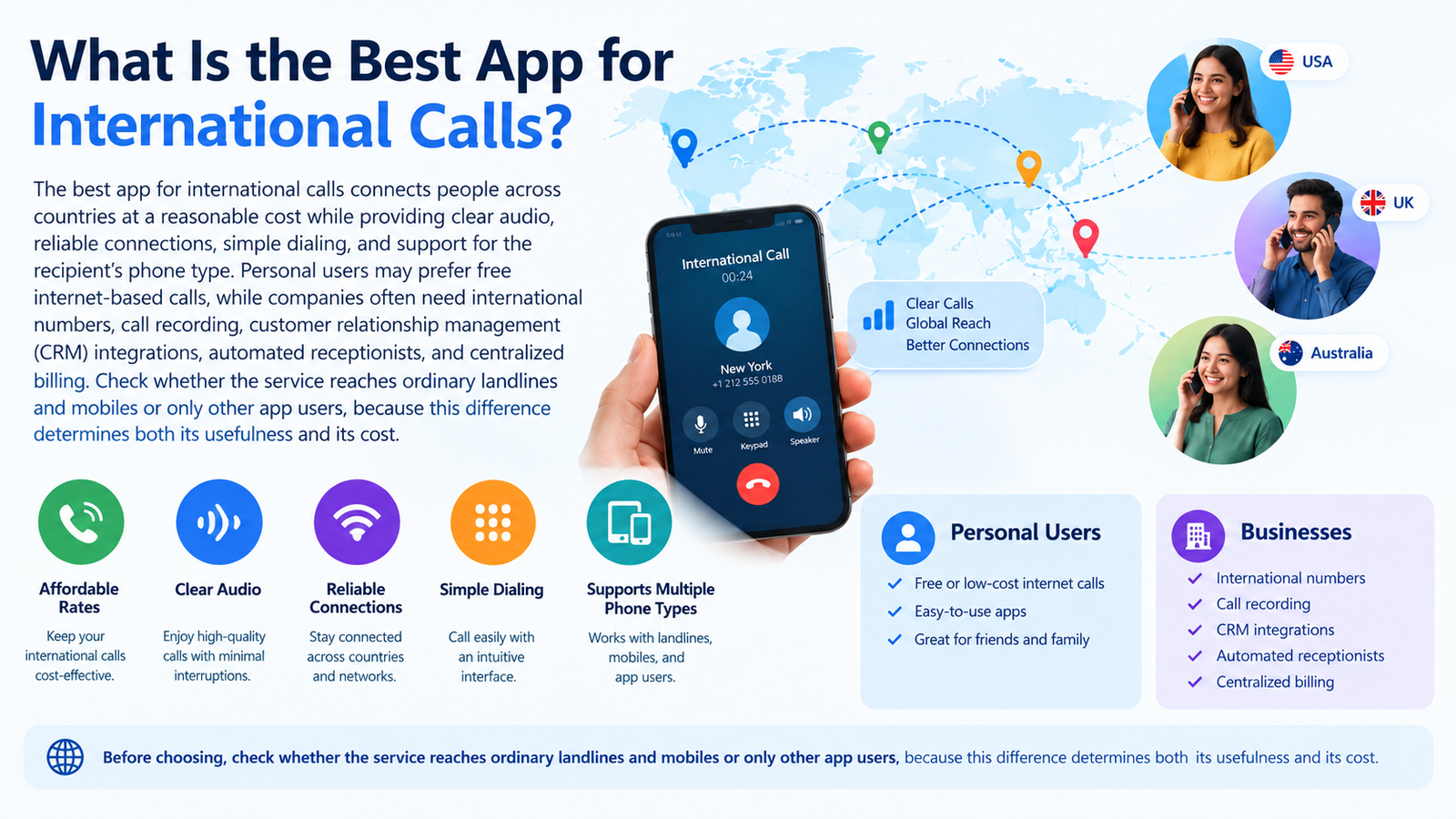
The best app for international calls connects people across countries at a reasonable cost while providing clear audio, reliable connections, simple dialing, and support for the recipient’s phone type. Personal users may prefer free internet-based calls, while companies often need international numbers, call recording, customer relationship management (CRM) integrations, automated receptionists, and centralized billing. Check whether the service reaches ordinary landlines and mobiles or only other app users, because this difference determines both its usefulness and its cost.
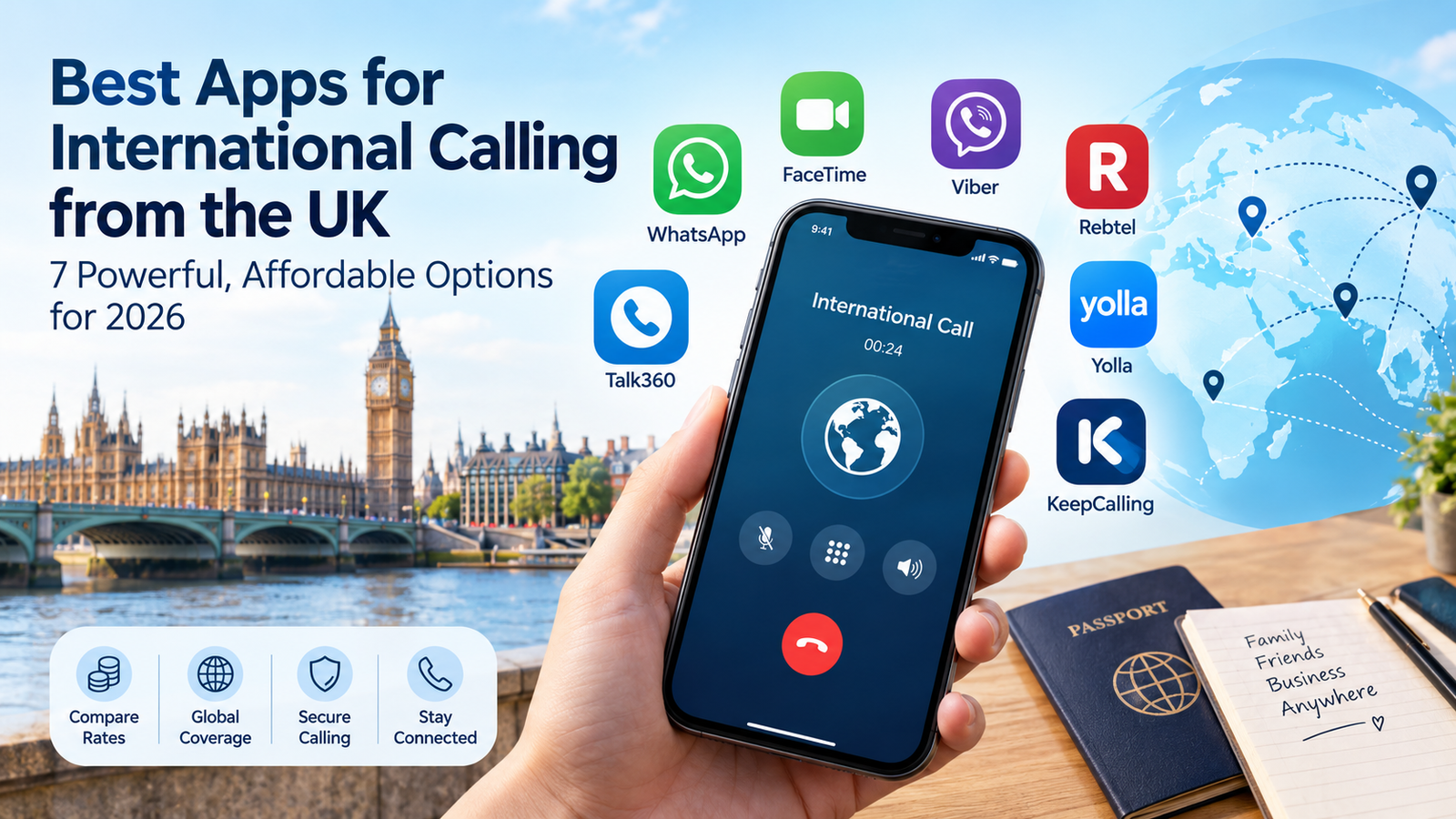
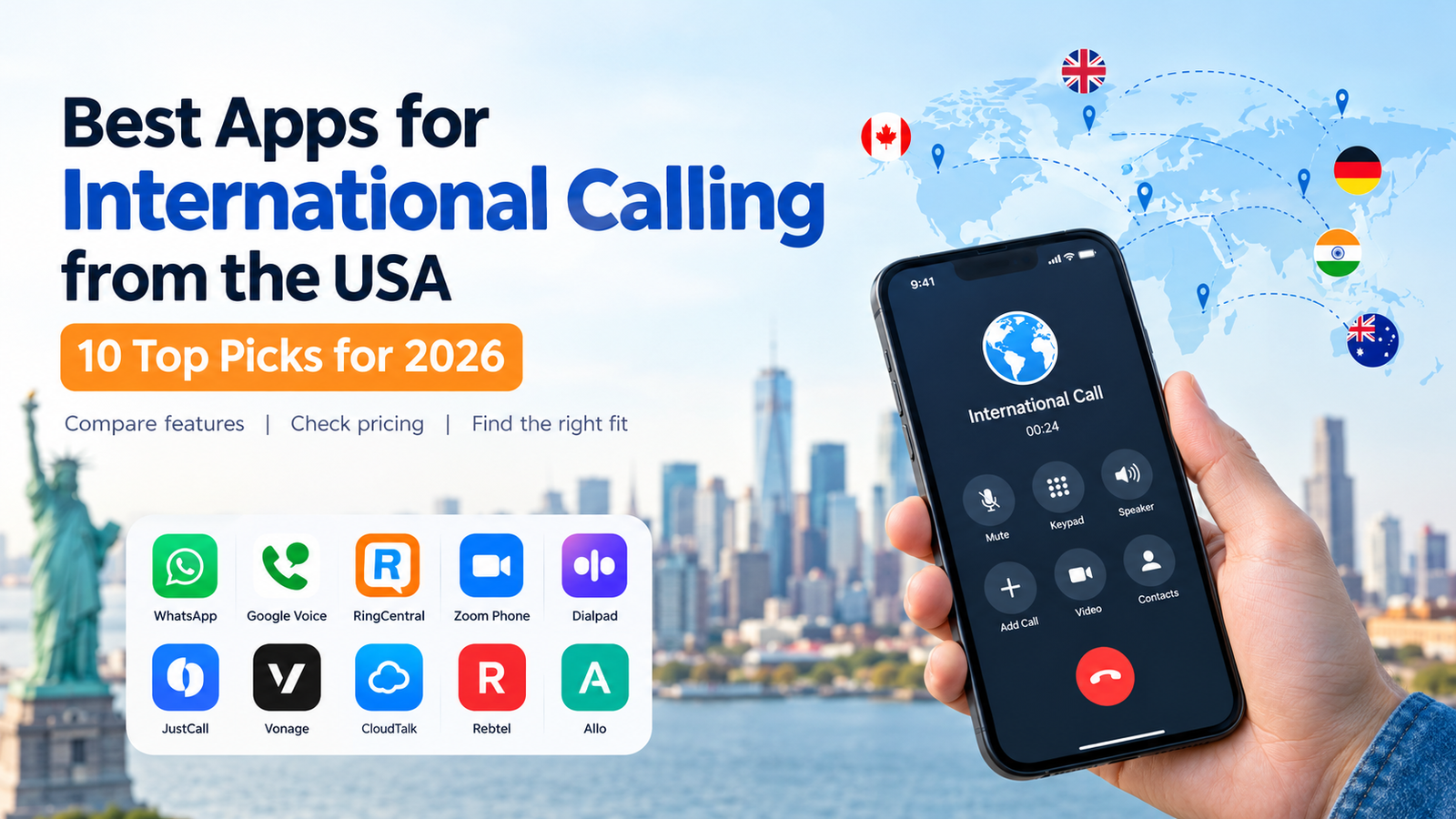
10 Best International Calling Apps Compared
| App | Best for | Main features | International calling model |
|---|---|---|---|
| Allo | Small teams | AI summaries, business numbers, CRM sync | Included destinations plus metered rates |
| Google Voice | Personal use and occasional calls | US number, voicemail, web and mobile access | Destination-based rates |
| RingCentral | Mid-size and global businesses | Routing, business numbers, integrations | Plan and destination dependent |
| Zoom Phone | Existing Zoom users | Cloud telephony, call recording, integrations | Metered or eligible calling bundles |
| Dialpad | AI-driven teams | Transcription, summaries, analytics | Credits or eligible international add-on |
| JustCall | Sales and support | Dialers, CRM logging, local numbers | Plan allowances plus applicable charges |
| Vonage | Custom business communications | Cloud phone systems and programmable voice | Product and destination dependent |
| CloudTalk | International sales teams | Global numbers, routing, analytics | Bundles and destination-based charges |
| Friends and family | Voice and video over the internet | App-to-app calls; data charges may apply | |
| Rebtel | Frequent personal callers | International phone-number dialing | Country-specific plans or rates |
Features and pricing models checked against available provider information in October 2026. Exact availability depends on your country, plan, and destination.
1. Allo: Best for Small Teams
Allo is a mobile-first business phone system for smaller companies that want calling, messaging, and AI-assisted workflows in one place. Its Business plan is listed at $32 per seat monthly with annual billing, while the Solo plan costs $10 per seat monthly on the same billing basis. International calls are pay-as-you-go except where a qualifying destination is covered by a specific allowance.
Key features
-
Business numbers and mobile, desktop, and web apps.
-
AI-generated call transcriptions and summaries.
-
Native CRM synchronization with supported platforms.
-
AI receptionist available as a paid add-on.
- International dialing with destination-dependent rates.
Pros and Cons
| Pros | Cons |
|---|---|
| Combines everyday calling with useful AI tools. | International calls are not universally unlimited. |
| Suitable for small teams that communicate across borders. | Advanced enterprise administration and complex call-center controls may require another platform. |
| Straightforward per-seat pricing. |
2. Google Voice: Best for Personal Use and Occasional International Calls
Google Voice suits eligible US users who want a separate telephone number for personal or business communication. Most calls from the US to Canada are free, but international calls to other destinations generally use published rates or purchased credit. Google also warns that calls may incur carrier charges if they are not routed through its service.
Key features
-
US telephone number for eligible accounts.
-
Web and mobile calling.
-
Voicemail and call management.
-
International calling credit and destination-based rates.
Pros and Cons
| Pros | Cons |
|---|---|
| Useful for occasional overseas calls. | Not available in every country or account type. |
| Familiar interface for people using Google services. | International calling is not automatically free. |
| Lets users check rates before dialing. | Business requirements may need a separate eligible Google Voice subscription. |
3. RingCentral: Best for Mid-Size Companies
RingCentral is a cloud communications platform designed for organizations that need more than a basic international dialer. Its suitability depends on the selected product, country availability, telephone-number requirements, and calling package. Businesses should confirm which international destinations and features their specific contract includes before purchasing.
Key features
-
Business calling across supported devices.
-
Call routing, queues, and administrative controls.
-
Integrations with selected business applications.
-
International number options in supported markets.
Pros and Cons
| Pros | Cons |
|---|---|
| Supports structured business communications. | Costs can rise with additional users and features. |
| Useful for distributed teams with shared calling workflows. | International coverage and included minutes depend on the plan. |
| Offers more administrative controls than consumer calling apps. | May be excessive for someone making only occasional overseas calls. |
4. Zoom Phone: Best for Companies Already Using Zoom Meetings
Zoom Phone adds cloud-based business telephony to Zoom’s communications environment. Its published product information includes domestic calling options, metered international calling, call recording, supported integrations, and management through a central portal.
Key features
-
Calls from supported desktop and mobile applications.
-
Metered international calling and eligible plans.
-
Call recording and centralized administration.
-
Integrations with selected business tools.
Pros and Cons
| Pros | Cons |
|---|---|
| Convenient for organizations already using Zoom. | International calls may cost extra. |
| Brings meetings and telephone workflows into one environment. | Some plans require a separate subscription or add-on. |
| Supports different calling requirements through plan options. | Country coverage and number availability must be checked. |
5. Dialpad: Best for AI-Driven Teams That Need Insights From Every Call
Dialpad combines business telephony with AI-assisted conversation tools. Its documentation says administrators must enable international services and add calling credits; an optional Global Unlimited Calling add-on covers up to 65 countries, subject to its terms.
Key features
-
AI-generated transcripts and call summaries.
-
Desktop, browser, mobile, and desk-phone calling.
-
Call analytics and supported CRM integrations.
-
International calling credits and an eligible global add-on.
Pros and Cons
| Pros | Cons |
|---|---|
| Useful for teams that review customer conversations. | Rates vary by destination and plan. |
| Helps reduce manual call-note writing. | International services may need administrator activation. |
| Gives administrators control over international access. | AI features and add-ons differ by subscription. |
6. JustCall: Best for Sales and Support Teams
JustCall focuses on customer-facing teams that need telephone workflows connected to sales and support tools. Its published annual US pricing lists Team at $29, Pro at $49, and Pro Plus at $89 per user monthly, with custom pricing for Business. International calls and certain destinations are excluded from standard included calling allowances, so check the relevant rate before dialing.
Key features
-
Outbound calling and supported CRM integrations.
-
Call logging and sales-dialing tools.
-
Local and international number options, subject to availability.
-
Different plans for growing sales and support teams.
Pros and Cons
| Pros | Cons |
|---|---|
| Built around customer conversations and follow-ups. | International charges may be separate from included allowances. |
| Connects calling activity with business workflows. | Additional numbers can cost extra. |
| Offers multiple subscription levels. | Some features require higher plans or custom pricing. |
7. Vonage: Best for Businesses Needing Flexible Voice Solutions
Vonage provides business communication products and programmable voice services. The best fit depends on whether a company needs a complete phone system or voice capabilities integrated into its own software. Check the chosen product’s international rates, number coverage, and contract conditions rather than assuming all Vonage services share identical features.
Key features
-
Cloud-based business calling options.
-
Programmable voice capabilities for supported applications.
-
Integration possibilities for custom communication workflows.
-
International calling subject to product and destination.
Pros and Cons
| Pros | Cons |
|---|---|
| Offers options for standard business use and development teams. | Product choices may be confusing for first-time buyers. |
| Can support tailored communication workflows. | Programmable services can require technical setup. |
| Useful when a business needs more than a consumer dialer. | Coverage and prices differ between products. |
8. CloudTalk: Best for International Sales Teams
CloudTalk focuses on business calling, sales operations, and contact-center workflows. Its pricing page lists a Lite plan at €19 per user monthly with annual billing and an Expert plan at €49, with a three-license minimum for Expert. Global number availability and calling bundles vary; the provider lists local numbers in more than 160 countries.
Key features
-
International business numbers in supported countries.
-
Call routing, analytics, and sales integrations.
-
Selected international calling bundles.
-
Number porting in supported markets.
Pros and Cons
| Pros | Cons |
|---|---|
| Suitable for teams contacting customers in several regions. | Some international bundles require contacting sales. |
| Helps centralize calling and reporting. | Minimum seat requirements apply to certain plans. |
| Offers a broad range of international number options. | Not every country or number type is available. |
9. WhatsApp: Best for Free App-to-App Calls
WhatsApp is a practical choice for friends and relatives who already use the app. Voice calls travel over an internet connection, so there is usually no separate international per-minute fee. Both parties need WhatsApp and suitable internet access; calling an ordinary landline or mobile number that is not using WhatsApp is not the same service.
Key features
-
Voice and video calls between app users.
-
Mobile and desktop access on supported devices.
-
Group communication.
-
Internet-based calling.
Pros and Cons
| Pros | Cons |
|---|---|
| Simple for everyday personal conversations. | Cannot replace a conventional international dialer for every phone number. |
| No separate international voice tariff for app-to-app calls. | Call quality depends on internet conditions. |
| Useful when both people already use the service. | Mobile data charges may apply. |
10. Rebtel: Best for Frequent Personal Callers
Rebtel is designed for people who regularly call ordinary international telephone numbers. Depending on the destination and available offer, users can choose a plan or pay according to the applicable rate. Compare the exact country, landline or mobile destination, and subscription conditions before adding credit.
Key features
-
International calls to supported mobile and landline numbers.
-
Destination-specific calling options.
-
Plans for selected countries and usage patterns.
-
Designed for personal international communication.
Pros and Cons
| Pros | Cons |
|---|---|
| Useful when recipients do not use messaging apps. | Pricing and plan coverage vary by destination. |
| May suit people who call the same country frequently. | Not every country has the same offers. |
| Offers an alternative to standard carrier international rates. | A subscription may be poor value for infrequent callers. |
Personal vs. Business: Know What You Need
The right international calling service depends on whether you are contacting friends and family or managing customer conversations. Consumer apps focus on easy communication, while business platforms add administration, reporting, and integrations.
| Requirement | Personal calling | Business communication |
|---|---|---|
| Main purpose | Family, friends, travel | Customers, sales, support |
| Best options | WhatsApp, Rebtel, Google Voice | Allo, RingCentral, Dialpad |
| International numbers | Usually unnecessary | Useful for local market presence |
| AI call summaries | Rarely needed | Helpful for follow-ups |
| CRM integration | Not usually required | Valuable for sales and support |
| Billing | Free app calls or prepaid credit | Per-user fees, bundles, and usage charges |
For example, a traveler making occasional calls may prefer a prepaid international calling app. A company contacting customers in several countries should evaluate business VoIP providers with global coverage, local number availability, access controls, and clear international rates.
What Makes a Great International VoIP System
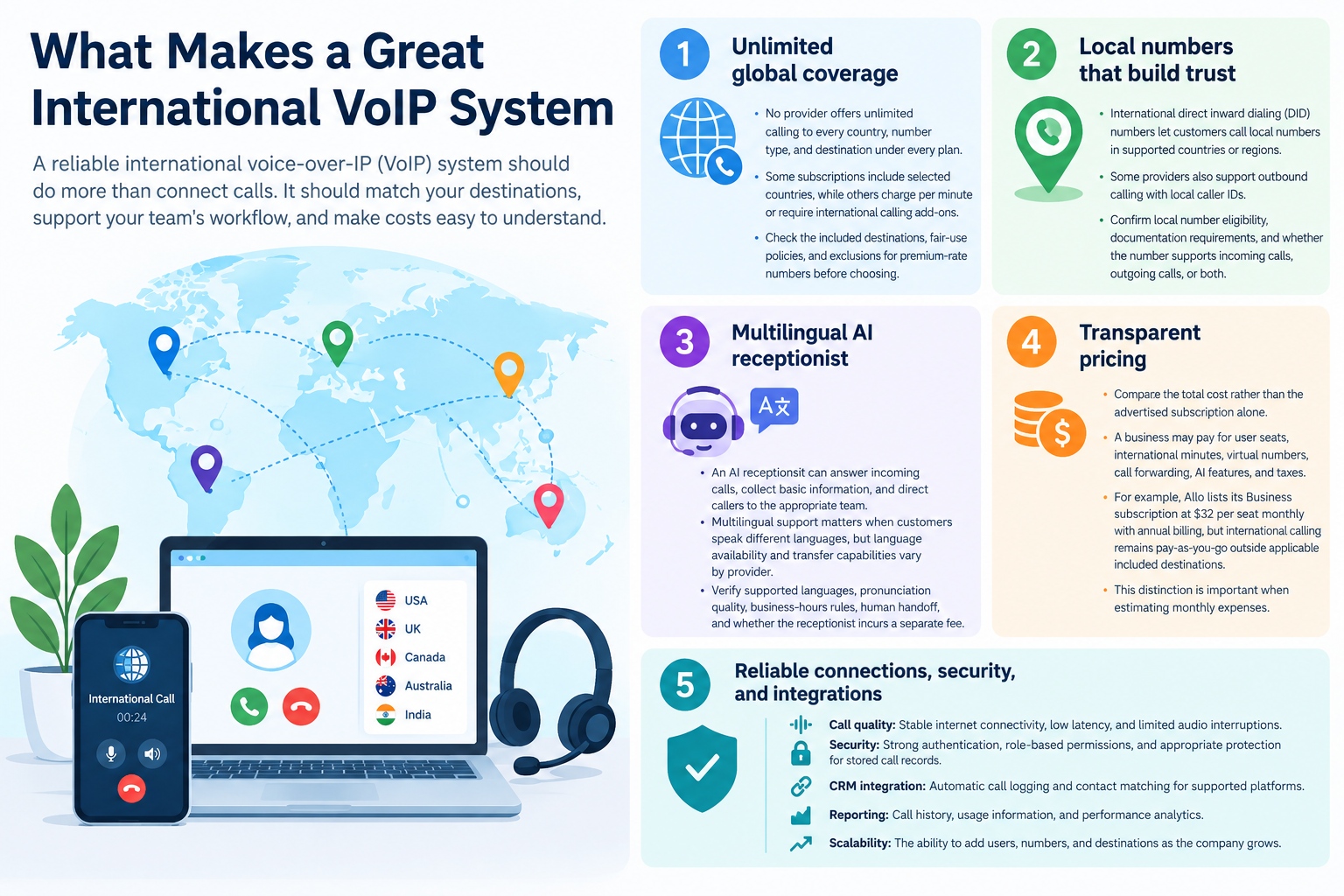
A reliable international voice-over-IP (VoIP) system should do more than connect calls. It should match your destinations, support your team’s workflow, and make costs easy to understand.
1. Unlimited global coverage
No provider offers unlimited calling to every country, number type, and destination under every plan. Some subscriptions include selected countries, while others charge per minute or require international calling add-ons.
Check the included destinations, fair-use policies, and exclusions for premium-rate numbers before choosing a supposedly unlimited international calling service.
2. Local numbers that build trust
International direct inward dialing (DID) numbers allow businesses to obtain telephone numbers associated with supported countries or regions. Customers can call those numbers, and some providers also support outbound calling with local caller IDs. CloudTalk, for example, advertises local numbers in more than 160 countries, although availability depends on its coverage rules and number requirements. Confirm local number eligibility, documentation requirements, and whether the number supports incoming calls, outgoing calls, or both.
3. Multilingual AI receptionist
An AI receptionist can answer incoming calls, collect basic information, and direct callers to the appropriate team. Multilingual support matters when customers speak different languages, but language availability and transfer capabilities vary by provider.
Before purchasing, verify supported languages, pronunciation quality, business-hours rules, human handoff, and whether the receptionist incurs a separate fee. Do not assume every international VoIP service includes this feature.
4. Transparent pricing
Compare the total cost rather than the advertised subscription alone. A business may pay for user seats, international minutes, virtual numbers, call forwarding, AI features, and taxes. For example, Allo lists its Business subscription at $32 per seat monthly with annual billing, but international calling remains pay-as-you-go outside applicable included destinations. This distinction is important when estimating monthly expenses.
5. Reliable connections, security, and integrations
A good international calling system should maintain consistent audio quality, protect account access, and connect with the software your team already uses. Prioritize these capabilities:
-
Call quality: Stable internet connectivity, low latency, and limited audio interruptions.
-
Security: Strong authentication, role-based permissions, and appropriate protection for stored call records.
-
CRM integration: Automatic call logging and contact matching for supported platforms.
-
Reporting: Call history, usage information, and performance analytics.
-
Scalability: The ability to add users, numbers, and destinations as the company grows.
How to Choose and Set Up an International Calling App
Follow these steps to avoid unexpected costs and setup problems.
-
List your destinations. Identify the countries you call most often and whether recipients use mobiles, landlines, or messaging apps.
-
Estimate monthly usage. Calculate expected minutes and compare subscription allowances with pay-as-you-go rates.
-
Confirm technical requirements. Check device support, internet requirements, number availability, and any business verification documents.
-
Configure calling access. Install the app, verify your account, enable international dialing if required, and add credit or select a suitable plan.
-
Test before relying on it. Call a mobile and landline where possible, check audio quality, verify caller ID, and review the resulting charges.
For companies, also test call transfers, voicemail, business-hour routing, CRM logging, and any recording or retention policies. International calling rules differ between countries, so check applicable requirements before recording conversations or sending messages.
Read More: Cheapest Way To Make International Calls From USA: Rates and Best Options (2026)
Final Thoughts
The best international calling app balances cost, destination coverage, connection quality, and ease of use. Personal users can start with free app-to-app calls or compare prepaid services for ordinary telephone numbers. Businesses should assess international rates, local numbers, CRM integrations, and administrative features before committing to a subscription. Always verify current country coverage and applicable charges before making international calls.
FAQs
-
What is the best app for international calls from the USA in 2026?
WhatsApp is a strong choice for free internet calls when both people use the app. Google Voice, Rebtel, and other paid dialers can be more suitable for ordinary international phone numbers, while businesses may prefer Allo, RingCentral, or Zoom Phone.
-
Can I make international calls for free?
Yes, when both participants use a compatible internet-calling app and have internet access. Calling an ordinary international mobile or landline usually requires a paid service or a qualifying calling allowance.
-
Which app lets me call international landlines and mobiles?
Google Voice, Rebtel, and supported paid international dialers can connect to ordinary telephone numbers. Confirm destination availability and the rate for the specific mobile or landline before calling.
-
Is VoIP cheaper than traditional international calling?
VoIP can cost less, especially for frequent international calls, but savings depend on destination rates, subscriptions, internet access, and extra fees. Compare the total cost for your actual calling pattern rather than assuming every internet-based call is cheaper.
-
Do international calling apps require Wi-Fi?
Most internet-based calling apps work over Wi-Fi or mobile data. Some services also offer alternative routing methods in supported markets, so their requirements differ. Mobile data usage and roaming charges may affect the final cost.
-
Can I use a business VoIP number while traveling abroad?
Often, yes, if your provider supports the location and your account can connect through the internet. However, emergency calling, number registration, local regulations, and roaming conditions can affect availability.
-
Are international calling subscriptions truly unlimited?
Not always. Unlimited plans commonly apply only to selected countries and eligible number types, subject to fair-use rules. Premium-rate numbers, special services, and destinations outside the included list may incur extra charges.
-
What is an international DID number?
An international DID is a telephone number associated with a particular country or numbering region that routes calls to a business or user. Availability, required documents, and permitted uses depend on the provider and local regulations.
-
Is Skype still a good option for international calls?
No. Microsoft retired its consumer Skype service on May 5, 2025, so it should not be recommended as an active consumer calling option in a current 2026 guide. Consider Google Voice, Rebtel, or another supported alternative based on your needs.