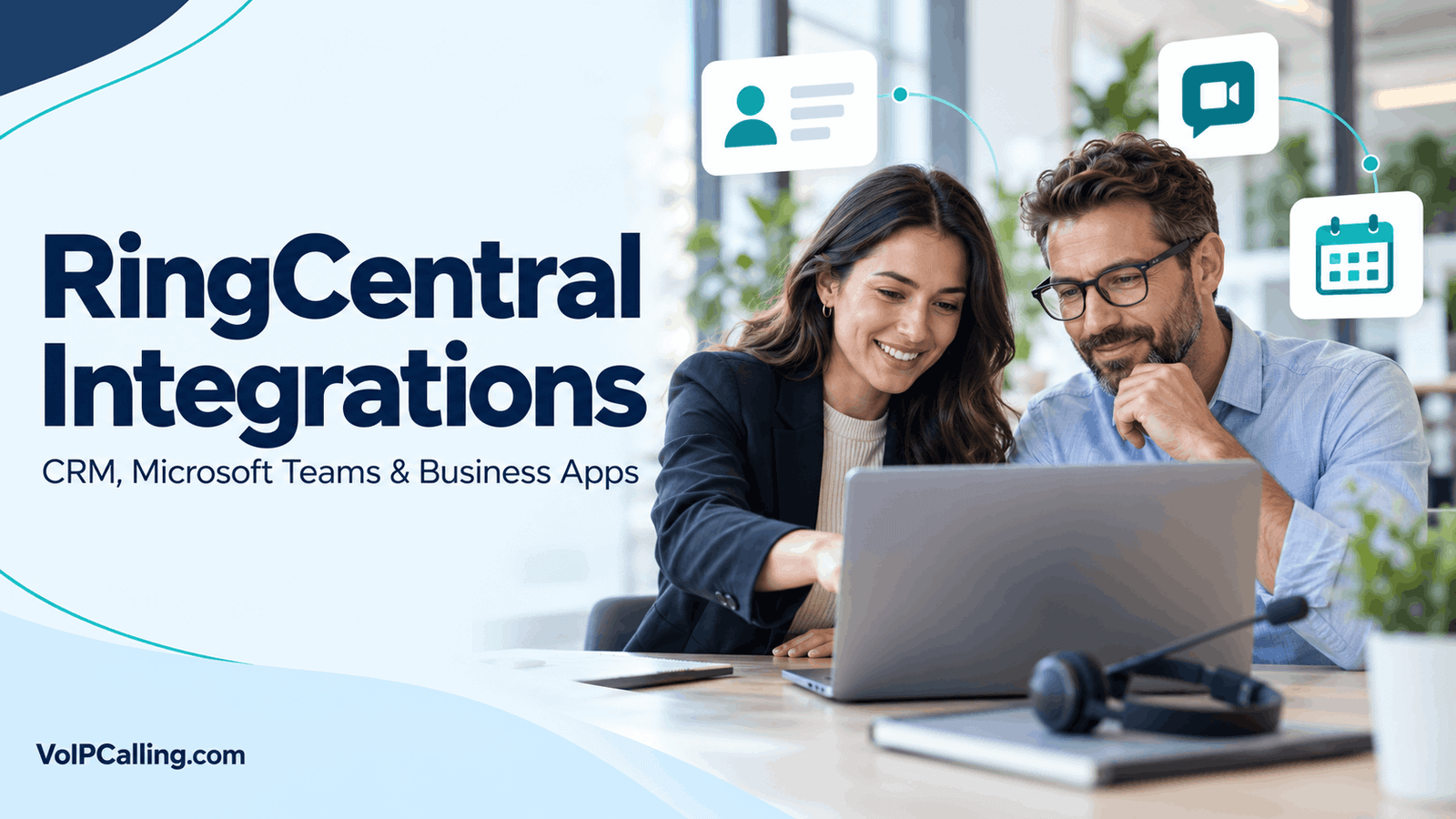
RingCentral integrations connect communications with tools such as Salesforce, HubSpot, Microsoft Teams and Google Workspace. The useful question is whether the exact integration supports your workflow, not simply whether the application name appears in a directory.
RingCentral app integrations include several connection types. An embedded dialer, calendar add-on, ticket-notification bot and custom API connection do different jobs. Their licensing, permissions, support and data handling can also differ.
This guide explains practical integration choices and checks for RingEX users, with separate attention to RingCX compatibility. Listings and requirements were reviewed for this October 2026 update; confirm the current order-form entitlement before installation. Examples are illustrative; this article does not claim firsthand integration testing.
What Can a RingCentral Integration Do?
Depending on the connector, an integration may place communication controls inside another application, associate activity with a customer record or help employees schedule meetings. Confirm the supported action rather than assuming every connector provides all three.
| Integration Type | Task to Evaluate | Important Check |
|---|---|---|
| CRM calling | Contact a customer from their record. | Calling endpoint, supported client and user permissions. |
| Activity logging | Associate a communication with the correct record. | Matching rules, supported events and duplicate handling. |
| Teams integration | Use the chosen business calling arrangement in Teams. | Deployment model and licensing. |
| Email or calendar | Communicate or arrange a meeting in the normal work context. | Add-on scope and calendar behavior. |
| Support add-in | Notify colleagues or work on a customer ticket. | Whether it handles tickets, calling or both. |
| Custom connection | Support a workflow without a suitable packaged connector. | Development, maintenance and error handling. |
RingCentral’s App Gallery organizes listings by products and categories. A listing can be published by RingCentral, a partner or a Labs contributor. Those labels help you identify the scope, but do not replace a working demonstration.
How to Find Apps in the RingCentral App Marketplace
The App Gallery is RingCentral’s integration directory. Search by application name, then filter by the RingCentral product and task. Apps that integrate with RingCentral may support RingEX, RingCX, Video or another product; a shared brand name does not establish compatibility.
For each listing, record the publisher, connection method, supported clients, required subscriptions and support contact. RingCentral supported integrations, partner connectors and Labs projects can have different support arrangements. Also check whether a listing describes a browser extension, native application, notification bot or an API-based service.
Use the app’s current setup documentation alongside its marketplace description. Older listings sometimes retain legacy plan names or browser versions; obtain written confirmation when they do not match your current package.
RingCentral CRM Integrations
RingCentral Salesforce Integration
RingCentral’s Salesforce listing describes embedded calling and messaging, activity logging, caller context and meeting scheduling. The listing identifies Advanced and Ultra eligibility and Salesforce edition requirements; reconfirm the current conditions before installation.
Salesforce administrative privileges are required for the installation described in the listing. Use an appropriate test environment before a broad production rollout.
Example: A salesperson calls from a customer record, then a colleague reviews the resulting activity. Test whether it belongs to the right record and whether notes and access behave as expected.
The listing includes some historical operating-system and browser references. This guide does not present those old version numbers as current compatibility advice. Use the current release documentation for the selected integration.
RingCentral HubSpot Integration
RingCentral describes a HubSpot connection with embedded calling and activity logging. The exact logging behavior and available functions must be checked against the selected integration and configuration.
Example: A sales team needs the outcome of a call associated with the correct contact or deal. Demonstrate a known contact, an unknown number and two records sharing a number.
Ask whether calls made outside the embedded interface are captured, which settings enable that behavior and whether additional capabilities need separate entitlement. Automatic logging is not a universal promise covering every device, event and record association.
RingCentral CRM Integration Setup: Salesforce and HubSpot
To connect RingCentral to Salesforce, have an authorized Salesforce administrator install the chosen package, assign the required users and permissions, and connect a pilot RingCentral account. Configure the supported calling interface and test RingCentral Salesforce call logging against a unique contact before wider rollout.
To connect RingCentral to HubSpot, select the RingEX connector rather than assuming a RingCX listing is interchangeable. Authorize both accounts, review logging and matching settings, and test RingCentral HubSpot call logging from every calling interface your staff use. The exact installation steps depend on the connector release and account permissions.
RingCentral Pipedrive Integration
App Connect for RingEX documents a Pipedrive connector. Its browser-extension setup includes selecting Pipedrive and connecting the relevant account. Pilot the supported calling and activity workflows, and confirm who supports the connector and whether any additional services are needed.
RingCentral Zoho CRM Integration
Zoho has multiple possible connection routes, including App Connect documentation and a separate video-oriented listing. Choose the route that supports your actual RingEX calling or meeting workflow. Confirm the publisher, Zoho edition and any partner charges rather than treating all Zoho listings as the same integration.
RingCentral Dynamics 365 Integration
The RingEX Dynamics 365 listing names Advanced or Ultra editions and Dynamics 365 online requirements. Since legacy package names remain in some documentation, confirm the equivalent current entitlement. Installation uses the supported Dynamics integration framework; check the current administrator guide and quote for licensing and implementation costs.
Other CRMs Through App Connect
RingCentral’s App Connect documentation lists connectors for systems including Pipedrive, Zoho, Clio and others. It separates connector documentation from features marked beta or experimental.
The best CRM for RingCentral is the one that fits your sales process and supports the required connection reliably. Changing CRMs solely to obtain a dialer can create more work than it saves.
Confirm the supported actions for your specific connector. A supported CRM name does not establish that every field, workflow or advanced capability is available.
Example: An operations team may need a call entry on an existing record but not permission to create new records automatically. Demonstrate the intended behavior and identify who maintains the connector.
RingCentral Microsoft Teams Integration
The Embedded RingCentral App
RingCentral’s Teams listing describes an embedded calling experience with options such as SMS, fax, contact search and presence synchronization. Availability depends on the configured service.
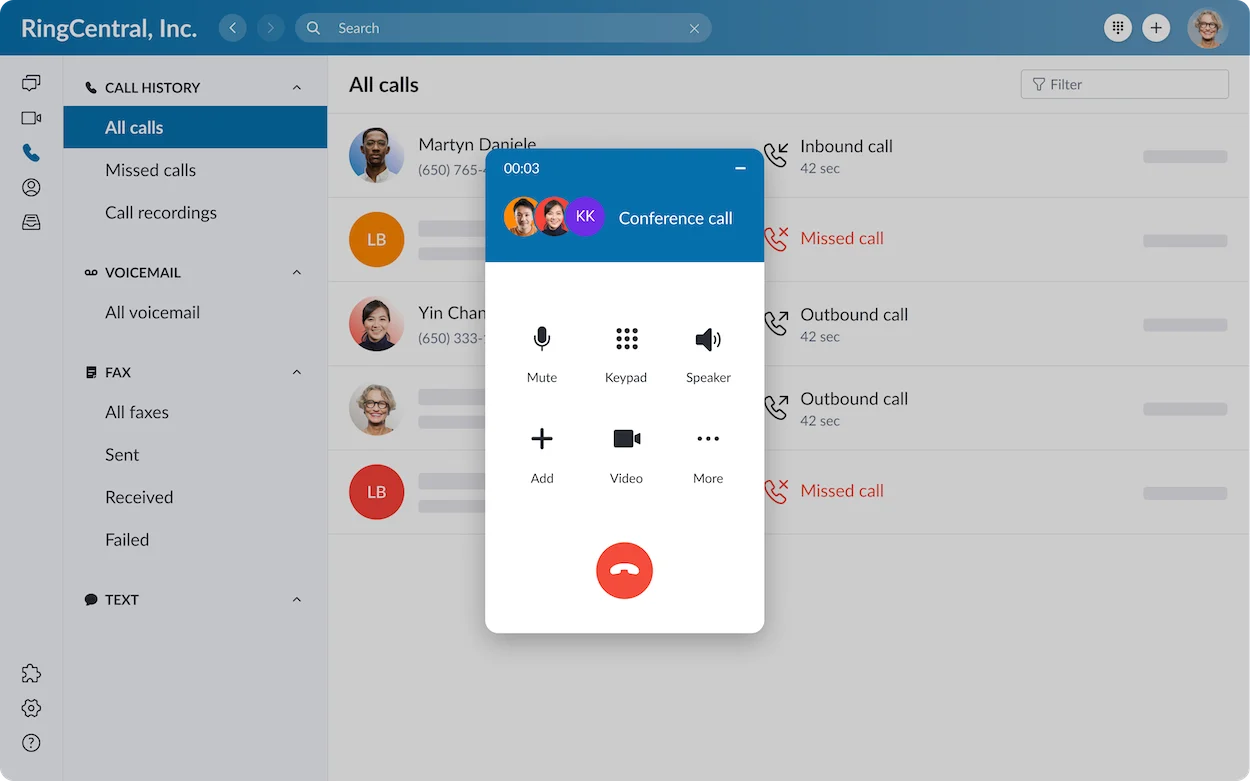
The purpose is to make RingCentral communication functions accessible within the Teams working environment. Employees should demonstrate the actual client and devices they intend to use.
Example: A user working in Teams needs to call a customer and then reach an internal colleague. Test contact lookup, calling controls, availability and any required handover.
Direct Routing Is a Different Deployment
RingCentral documentation distinguishes the embedded app from Direct Routing. Microsoft’s Direct Routing planning documentation addresses Teams telephony requirements; obtain a proposal for the specific model rather than assuming the same license rules apply to both.
Ask sales to name the deployment explicitly and identify the required Microsoft licenses, RingCentral service, administration and calling experience. Do not carry an embedded-app “no Teams Phone license” statement over to a different telephony arrangement.
What to Verify in a Teams Pilot
- The exact installation and sign-in process.
- Calling from the Teams clients used by employees.
- Number assignment and outbound caller ID.
- Transfers and unavailable destinations.
- Presence behavior and contact visibility.
- Emergency calling arrangements and user guidance.
These checks should be performed on the proposed deployment, not inferred from a generic Teams demonstration.
Productivity: Google Workspace, Gmail and Calendar
The Google Workspace add-on listing describes access from Gmail and Google Calendar, including calling or messaging in email context and scheduling or joining meetings.
Example: A consultant receives an email and wants to arrange a meeting without rebuilding the invitation in another application. Test creation, recipient experience and changes to the event.
For Outlook or other calendar workflows, confirm the exact currently supported add-in and installation requirements. An email integration is not automatically a complete CRM logging solution.
Test time zones, rescheduling and permissions before deploying a calendar workflow across the company.
Microsoft 365, Outlook and Slack Integrations
RingCentral Microsoft 365 and Outlook Integration
Microsoft productivity connections include Outlook-related tools and the RingCentral Scheduler Outlook add-in. Choose the component for the task: scheduling a meeting is different from placing a phone call or maintaining an address book.
For RingCentral Outlook contacts sync, confirm whether your chosen connection offers contact lookup, import or actual synchronization. Ask about direction, update frequency and duplicate handling. An Outlook scheduling add-in alone is not evidence of two-way contact sync.
RingCentral Slack Integration
RingCentral documents a Slack integration for RingEX. Confirm its current calling and meeting actions, Slack workspace approval and user entitlements. If the goal is RingCentral notifications in Slack, a separately configured automation may be more appropriate than a calling shortcut.
For example, a missed-call alert can be useful in a support channel, but posting customer numbers or recording links to a widely accessible channel may expose unnecessary information. Choose the destination and shared fields deliberately.
RingCentral Help Desk Integrations: Zendesk and Freshdesk
The Zendesk Add-in for RingCentral listing describes ticket notifications, ticket creation and private notes in a messaging environment. It identifies the add-in as a Labs project, with support limitations that differ from an official supported product.
RingCentral Zendesk Integration: Notifications vs Telephony
That listing should not be treated as evidence of every possible Zendesk telephony workflow. If you need calling controls and call-to-ticket association, identify and evaluate the specific integration that provides them.
Example: A support team may want only notifications about new tickets. Another team may need every call linked to a ticket. Those requirements need different demonstrations and may require different tools.
RingCentral Freshdesk Integration
App Connect for RingEX documents Freshdesk support through Premium Partner Loyally. Treat this as a partner-supported route: confirm the RingCentral entitlement, Freshdesk edition, installation method, partner subscription and support agreement. A separate RingCX connector requires its own checks.
RingCentral Workflow Automation, APIs and Custom Integrations
RingCentral Zapier Integration
A RingCentral Zapier integration can automate supported triggers and actions between applications. It requires an active Zapier account and the appropriate RingCentral access. Zapier plan limits, task consumption, premium applications and multi-step workflows can introduce additional costs.
To automate RingCentral tasks, select a supported trigger, authorize the accounts, map only the necessary fields and test the destination record. For missed-call follow-up, verify the current trigger availability, duplicate handling and error reporting before enabling the workflow. Notification-only connections do not provide every phone-system action.
RingCentral API Integration, Webhooks and SDKs
Custom RingCentral integrations use the supported APIs and development tools for the selected product. A RingCentral SDK can simplify authentication and requests, while RingCentral webhooks deliver supported event notifications to your application. Confirm event coverage, rate limits, permission scopes and production approval requirements.
RingCentral offers developer resources for communications and account-related integrations. A custom connection can be relevant when a packaged integration does not support the required workflow.
Define the trigger, intended action, permissions and failure behavior before commissioning development. Identify the person responsible for maintaining it when either platform changes.
Example: A business wants a missed call to create a follow-up task in another system. Check duplicate prevention, ownership and retries. A working normal case is not enough if failures create repeated tasks or lose the enquiry.
Compare development and ongoing maintenance costs with the benefit. Avoid buying custom work merely to reproduce an existing supported connector.
Calling, SMS, Recording and Contact Workflows
Click-to-Call, Automatic Call Logging and CRM Screen Pop
A RingCentral click-to-call integration starts a call from a record or supported interface. Automatic call logging stores activity, and a CRM screen pop opens caller context. Verify each separately, including how unknown numbers, shared numbers and duplicate contacts are handled.
RingCentral SMS CRM Integration
RingCentral SMS integration depends on the connector, eligible phone numbers, account permissions and messaging plan. Check whether texts can be sent, received and logged in the CRM, and whether the workflow supports shared ownership. RingCentral messaging automation can add usage charges; an integration does not remove messaging registration or allowance requirements.
Recording and Transcription Integration
Before you sync RingCentral recordings to a CRM, determine whether the connector copies audio, inserts an access-controlled link or only records that a call occurred. A RingCentral call recording integration does not automatically include a RingCentral transcription integration. Confirm AI entitlements, processing delays, access permissions and retention in both systems.
Contact Synchronization
Contact lookup and screen pop do not establish two-way synchronization. Specify the source of truth, supported fields, update direction and deletion behavior. Test changes in both applications before allowing bulk updates.
RingCentral Integrations Pricing: Are Connections Free?
There is no universal answer. A listing may require an eligible RingCentral tier, another application’s subscription, an additional vendor payment or implementation work.
- RingCentral entitlement: Confirm the product and package.
- Connected application: Check edition, user licenses and access requirements.
- Integration charges: Ask the publisher about subscription and usage costs.
- Optional features: Verify AI, reporting and other specialized capabilities separately.
- Administration: Budget configuration, training and maintenance.
Our RingCentral review covers the wider purchasing decision. Use the full required package when comparing providers.
How to Set Up a RingCentral Integration
- Name the workflow: Define the task and expected final record.
- Identify the listing: Confirm the publisher and compatible RingCentral product.
- Check requirements: Review licenses, clients, permissions and support.
- Pilot installation: Use an appropriate test environment or a small approved user group.
- Authorize access: Review the requested permissions and organizational approval.
- Configure behavior: Establish matching, logging and ownership rules.
- Test exceptions: Include missing records, duplicates and failed authorization.
- Roll out: Train users and document the support owner.
Follow the selected connector’s instructions rather than assuming one installation sequence applies to all integrations.
RingCentral Integration Troubleshooting: Logging and CRM Sync Issues
| Symptom | Check | Useful Test |
|---|---|---|
| No call activity appears | Logging settings, supported call source and authorization. | Compare a known interaction from the supported interface. |
| Activity reaches the wrong record | Number formatting, matching and duplicate records. | Use a record with one unique verified number. |
| Calling control is missing | Installation, entitlement and client compatibility. | Compare the approved pilot configuration. |
| Repeated entries appear | Multiple connectors or overlapping logging processes. | Isolate one approved logging path. |
| Only some users are affected | Individual permissions, licenses and account connection. | Compare affected and working users’ configurations. |
Record the connector version, affected user, time and intended action for support. Change one variable at a time and verify the resulting data before rolling out a fix.
RingCentral Integration Permissions and OAuth
Review RingCentral OAuth authorization scopes before connecting an app. Permissions determine which data or account actions a connector can access; approve only what the workflow needs. Keep credentials and access tokens out of shared documents and support screenshots.
Assign an administrator to manage RingCentral connected apps, review unused connections and remove access when staff leave. Check whether an integration runs under one employee’s identity and what happens when that account is disabled. Revoking a connection does not necessarily delete records already exported to the other application.
Choosing Integrations for Sales, Support and Small Business
- Sales teams: Start with CRM calling, accurate contact matching and useful call outcomes.
- Customer support: Prioritize call-to-ticket association, clear ownership and accessible customer context.
- Small businesses: Choose one frequently used connection with manageable licensing and a named support owner before adding more automation.
For RingCentral software integrations, the practical measure is whether the connection reduces repeated work without creating inaccurate records or another maintenance burden.
RingEX vs RingCX Compatibility
A RingEX integration listing does not automatically establish RingCX support. Use the product classification and current documentation for the actual customer-facing deployment.
Confirm agent workflow, supported events and reporting if evaluating a contact centre connector. The intended record may differ from an ordinary employee call log.
Our contact centre guide explains the broader workflow, while the RingCentral alternatives guide can help build a comparison shortlist.
Frequently Asked Questions
What apps integrate with RingCentral?
Options include Salesforce, HubSpot, Microsoft Teams, Google Workspace, Outlook, Slack and supported CRM or help desk connectors. Check the specific product, publisher and connection method; a RingEX listing does not automatically support RingCX.
How do I find integrations in the RingCentral app marketplace?
Search the App Gallery by app name, then filter by product and category. Review the publisher, supported workflow, requirements, support arrangements and current setup documentation before authorizing access.
Are RingCentral integrations free?
Some connectors may have no separate installation charge, but eligible RingCentral and connected-app subscriptions are still required. Partner fees, automation usage, specialized features and implementation can add costs.
Which RingCentral plans support CRM integrations?
Requirements vary by connector. Salesforce and Dynamics listings name Advanced or Ultra, while current packages may use different names. Confirm the exact entitlement on your order form; do not assume every CRM connector works on Core.
How do I connect RingCentral to Salesforce?
An authorized administrator installs the selected package, assigns users and permissions, connects a RingCentral account and configures supported calling and logging. Follow the current connector guide and test record matching with a pilot user before rollout.
Does RingCentral integrate with HubSpot?
Yes. RingEX for HubSpot supports embedded communication workflows, with behavior determined by configuration. Select the correct product connector and test call logging, record associations and calls made outside the embedded interface.
How does RingCentral work with Microsoft Teams?
Options include an embedded RingCentral application and different telephony deployment models such as Direct Routing. Confirm the client experience, required Microsoft and RingCentral licenses and implementation scope for the chosen route.
Can RingCentral automatically log calls in a CRM?
Supported connectors can log calls, but coverage depends on settings, call source, permissions and record-matching rules. Test inbound, outbound, missed and transferred calls rather than assuming all activity is captured.
Can I sync contacts between RingCentral and other apps?
Some connections support contact-related functions, but lookup, import and synchronization are different. Verify supported fields, direction, frequency and duplicate handling for your exact connector.
Can I automate RingCentral workflows with Zapier?
Yes, using supported triggers and actions with authorized accounts. Check RingCentral access, Zapier task limits and any paid-plan requirements. Test duplicates, failures and ownership before activating the workflow.
Does RingCentral offer an API for custom integrations?
Yes. Its developer platform provides product-specific APIs, SDKs and event notification options. Custom implementations need appropriate permissions, rate-limit handling, secure authentication and ongoing maintenance.
Why is my RingCentral integration not working?
Check product and plan eligibility, expired authorization, user permissions, connector version and supported call source. For CRM sync issues, inspect number formatting, duplicate records and overlapping connectors. Record timestamps and reproduce the issue with a single test record.
Our Recommendation
Choose RingCentral integrations around a specific task, then demonstrate the result in the connected application. Confirm licensing, permissions, support and exception handling before expanding the rollout.
The best connection is the one your team can use consistently and maintain, with accurate records and clear ownership.
Affiliate disclosure: VoIPCalling may earn a commission when you purchase through provider links on this page. Our recommendations consider product fit and business requirements.