
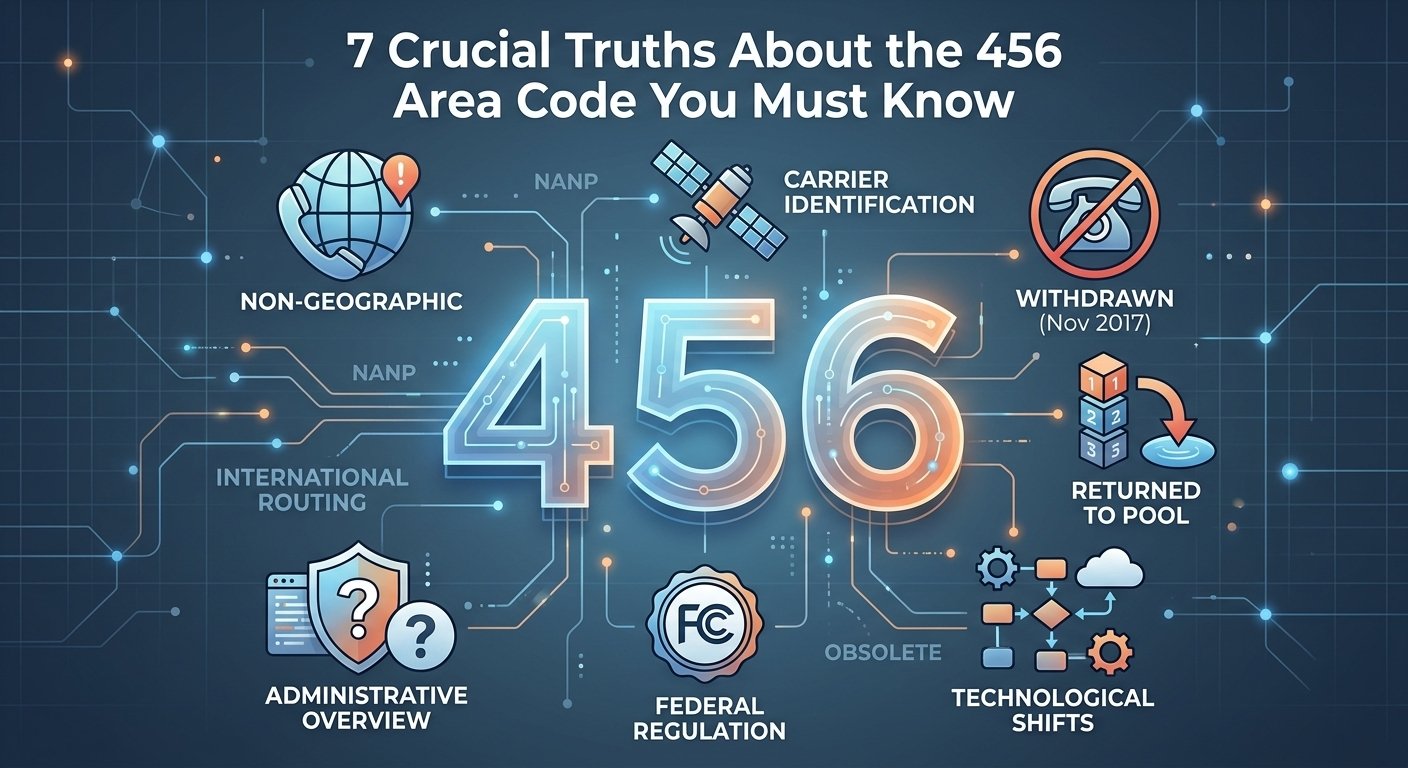
The 456 area code is a non-geographic telephone sequence that was created in the North American Numbering Plan (NANP) for the specific purpose of identifying international carriers. This number sequence is not the typical regional phone number code that is applied to cities or physical states, but rather a unique sequence that was well managed to route incoming calls from overseas to domestic telecommunication networks.
This important network identifier was originally set up in 1993 by telecommunication authorities to effectively streamline complex communication exchanges around the world. As technology has evolved and carrier demand has sharply declined over the years, administrators have officially retired the 456 area code in November 2017. At the moment, these digits are still safely kept in the unassigned digits pool, far from any geographical area.
Decoding the 456 Area Code Location and Purpose
This different number assignment is completely different from the regional contact numbers used by residential consumers on a daily basis. The 456 area code was specifically designed to help telecommunication administrators to route large numbers of incoming voice calls from overseas to the appropriate domestic carriers for service. The digits were never assigned to any actual municipality on the ground and thus citizens were never legally able to buy or register these lines for private use at home for communication. The primary function was always tightly guarded behind complex, wholesale gateway switches across huge continental telecom networks.
It is highly useful to examine the administrative database registration of this special routing sequence to fully understand its structure. The following table is a detailed listing of the technical details of this network identifier that is currently inactive.
| Structural Feature | Administrative Specification |
| Assigned Regional Authority | North America |
| Provincial or State Affiliation | Non-Geographic |
| Primary Structural Function | NANP Inbound Call Routing |
| Current Operational Status | Officially Withdrawn (November 2017) |
| Central Directory Reference | areacode.org/456 |
The Historical Timeline of the 456 Area Code
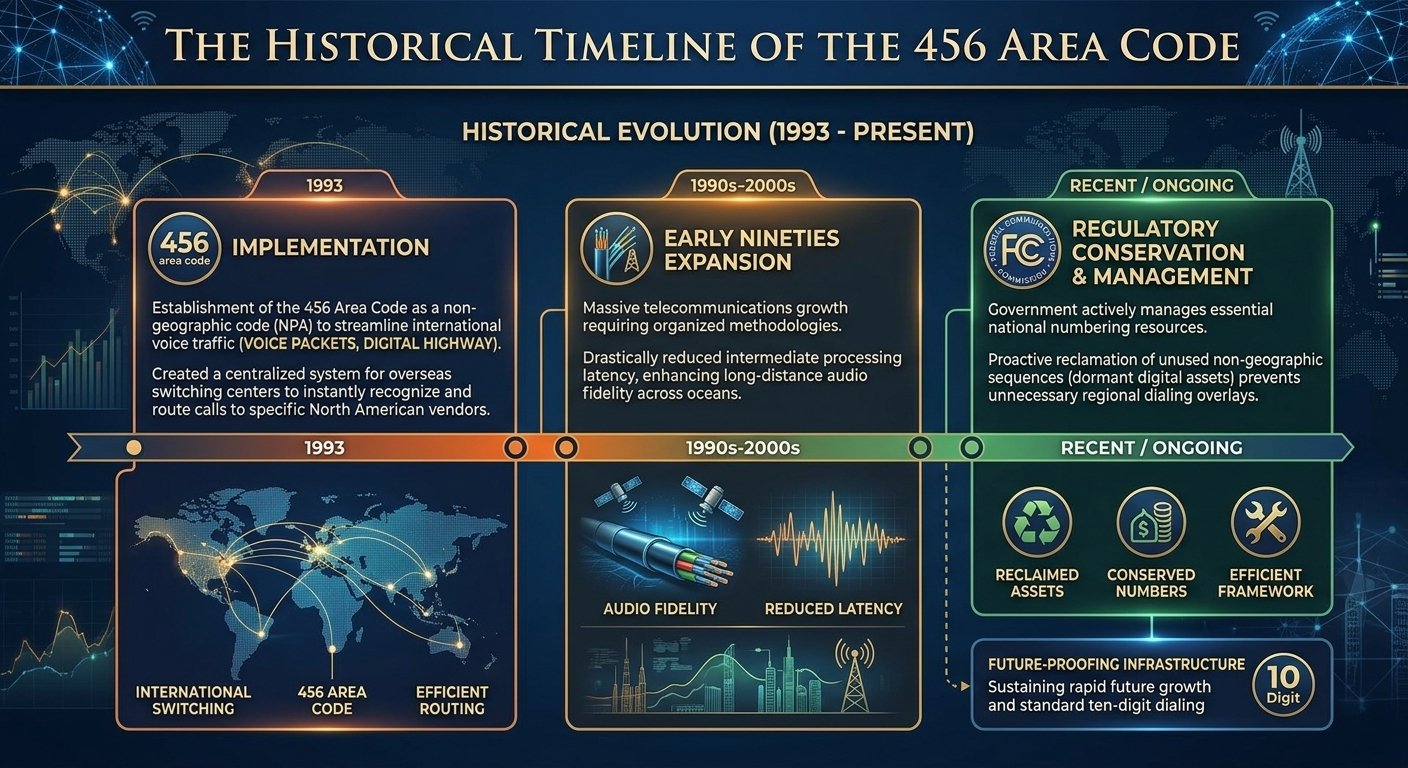
However, with the large-scale growth of the telecommunications industry in the early 1990s, worldwide network operators were in dire need of simplified methods to reliably move international voice packets seamlessly. When the 456 area code was introduced in 1993, it offered a very structured digital highway for overseas switching centres to immediately recognise and deliver the communications to the appropriate North American vendors. This ingenious architectural implementation significantly cut down on the intermediate processing delays, thus improving the overall fidelity of audio transmissions over great distances, particularly over the ocean.
The Federal Communications Commission has extensive administrative records that show that government regulatory agencies have been actively managing and conserving key national numbering resources to ensure the sustainability of the use of standard ten-digit dialing. Ultimately, the chaotic forced implementation of unnecessary regional dialing overlays will be avoided if digital assets are proactively claimed as they are entirely unused. Federal officials have been able to systematically remove dormant non-geographic sequences to ensure a strong, highly efficient telecommunications infrastructure that can support the nation’s rapid expansion of telecommunications infrastructure.
Primary Benefits of Specialized Carrier Identification
-
Optimized Global Transmission Pathways: Utilizing dedicated digital identifiers allowed massive international communication conglomerates to bypass congested local municipal exchanges, ensuring direct and uninterrupted data packet delivery across borders.
-
Precise Wholesale Financial Settlement: Specialized non-geographic routing combinations allowed infrastructure providers to accurately track, verify and correctly bill international partners for vast amounts of wholesale voice traffic.
-
Enhanced Network Capacity Management: Massive clusters of incoming foreign communications and regular domestic terrestrial traffic were separated, which meant that equipment overloads were not a problem during peak commercial operational hours.
-
Streamlined Administrative Oversight: Federal regulatory agencies had a better structure of control over intercontinental gateways, separating particular routing functions into specific numerical boundaries from public consumption.
Essential Steps to Manage Unassigned Number Routing
-
Diligently Verify the International Country Prefix: Always meticulously inspect the initial digits of any suspicious incoming connection to properly identify whether the transmission originates from a recognized domestic infrastructure or a potentially deceptive overseas gateway.
-
Actively Consult Regional Telecom Directories: Intelligently utilize reputable administrative databases to accurately ascertain if the mysterious numerical sequence belongs to a legally registered physical municipality or a formally retired operational pool.
-
Proactively Implement Automated Carrier Filtering: Immediately activate the advanced spam interception software features generously provided by your primary mobile network provider to automatically block unauthorized transmissions originating from deactivated routing channels.
-
Promptly Report Dormant Asset Exploitation: If you continuously experience disruptive unsolicited communications from officially decommissioned telecommunication resources, rapidly submit a highly detailed formal grievance directly to federal regulatory oversight committees.
Why Telecommunication Authorities Retired the 456 Area Code
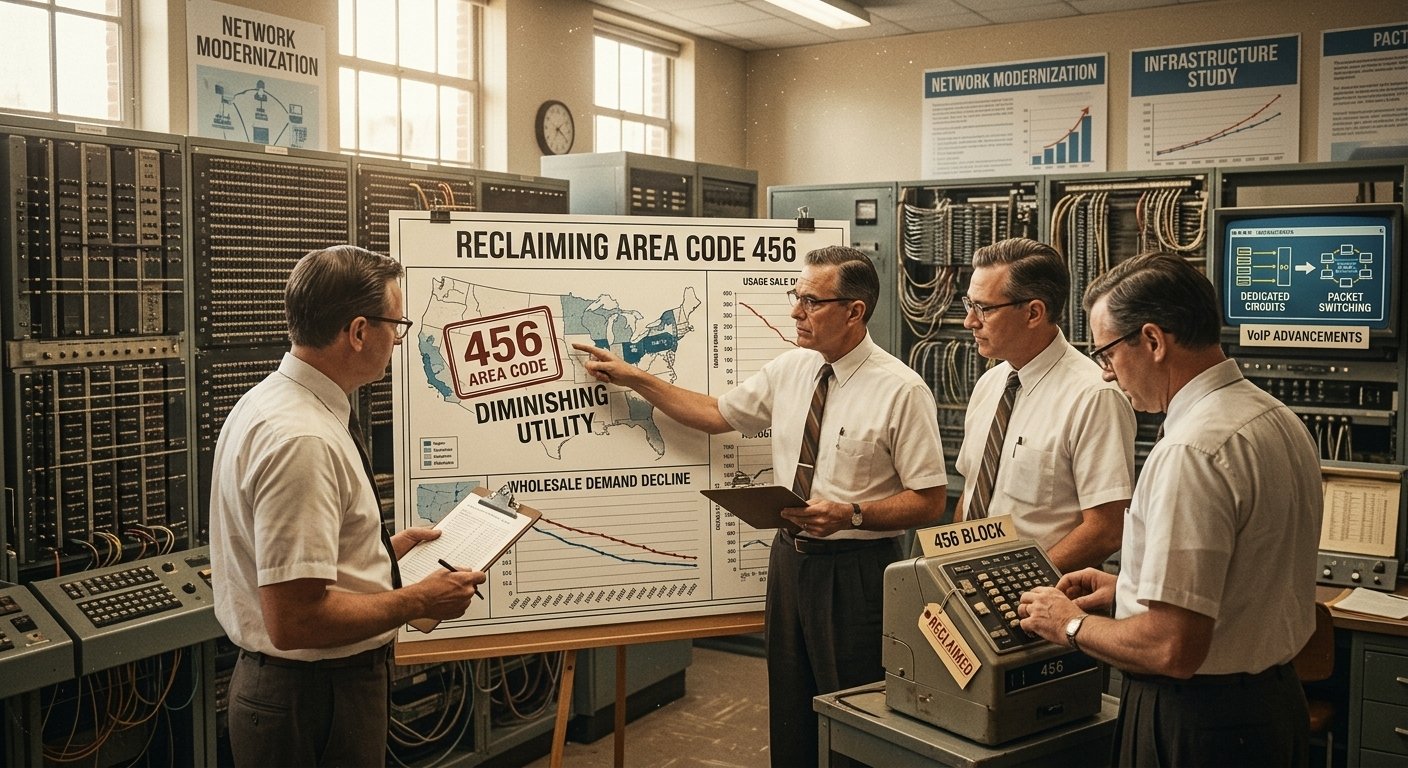
Despite its remarkably successful early implementation, the practical operational utility of the 456 area code slowly diminished over two consecutive decades of relentless industry modernization. Global network operators gradually transitioned away from relying heavily upon dedicated physical numbering combinations for standard carrier matching purposes. This undeniable lack of wholesale commercial demand eventually prompted federal administrators to systematically reclaim the entire numbering block, officially returning the digits to the national unassigned reserve by November 2017.
The North American Numbering Plan Administration (NANPA) released a detailed report on an infrastructure study that found almost half of the highly specialized non-geographic routing protocols were completely obsolete because of Voice over Internet Protocol (VoIP) technology. Modern digital signaling systems can easily include large amounts of instructional metadata in the actual communications packet itself, and therefore no need for special physical inbound carrier prefixes. This monumental architectural leap has forever changed the way huge wholesale vendors handle and process complicated intercontinental telecom traffic.
Understanding Carrier Identification in North America
The entire administrative control tower that manages the 456 area code is able to perfectly coordinate telecommunications standardization in the 20 participating countries in the region. This single international registration agreement guarantees that all registered combinations of the terrestrial and non-geographic type are rigorously applied in a very uniform mathematical logic. Network operators are very mindful of the need for traditional municipal identifiers and their constant availability, while at the same time the need for specialized digital wholesale routing tools is rapidly diminishing.
As soon as intelligent network engineers have definitively established that certain numerical sequences no longer have any commercial use, the governing bodies quickly start formal legal reclamation procedures. This strict government attention helps to avoid bloat in the systems’ infrastructure, while maintaining the underlying telecom architecture’s agility. A regular review of the extensive historical data can enable regulators to continually fine-tune their domestic resources without needlessly overloading the everyday household consumer.
Read More: Calilio Review: Pricing, Features, Pros and Cons 2026
Final Thoughts
The interesting technical history of the 456 area code is a fine example of the extraordinary pace of progress in today’s global telecommunications. While this very specific numeric sequence is no longer actively used to process huge volumes of inbound international carrier traffic, its early implementation was very successful, and set the groundwork for smooth international connectivity. Ordinary domestic users can be confident that the massive continental numbering system will be significantly more structurally resource efficient in the future thanks to the constant intelligent improvement and thorough optimization of the system by authoritative federal regulatory bodies.
Frequently Asked Questions (FAQs)
-
What are the excellent secrets about the 456 area code?
It was used only as a completely non-geographic telecom sequence formally established for critical inbound international carrier identification, but was completely removed from active network service by administrative authorities in 2017.
-
Is there a 456 area code?
No, this particular numerical routing sequence is not an active numbering asset anywhere in North America – it has been officially deactivated across the board for conservation reasons by federal administrators.
-
What is the 465 area code?
This sequence is a formally proposed future numbering sequence, intelligently designed for the large North American telecommunications network, but is historically safely unassigned and kept in reserve.
-
Which code is +436?
The precise +43 international country identifier strictly legally belongs to the magnificent nation of Austria, and when immediately subsequently followed by a six, it typically denotes a commercial domestic mobile network.
-
Where is +1 450 from?
This highly specific telecom sequence formally originates from beautiful Canada, specifically dutifully serving the sprawling heavily populated off-island suburban residential communities surrounding Montreal, Quebec with exceptional localized terrestrial connectivity.
-
When did authorities officially withdraw this specific prefix?
In November 2017, after a huge demonstrable decline in wholesale international commercial demand, this entire non-geographic routing sequence was formally permanently decommissioned by the telecommunications administrators.
-
Can consumers purchase this non-geographic number today?
No ordinary residential consumer or massive corporate enterprise can successfully legally purchase this retired sequence today because regulatory authorities thoroughly permanently reclaimed it completely from public commercial accessibility.
-
How do modern international routing digits function?
Rather, modern telecommunications conglomerates actively employ an amazingly complex set of digital signaling protocols and an incredibly dynamic set of instructional metadata that is stored in the cloud, and which can direct enormous amounts of voice traffic globally instantly and intelligently without relying on an outdated physical prefix.
-
Are withdrawn telecom assets completely safe from spam?
Although the retired sequences are indeed not associated with a currently available consumer product, the retired digits are sometimes artificially spoofed by extremely malicious international actors, and vigilant citizens need to use sophisticated, automated filtering applications.