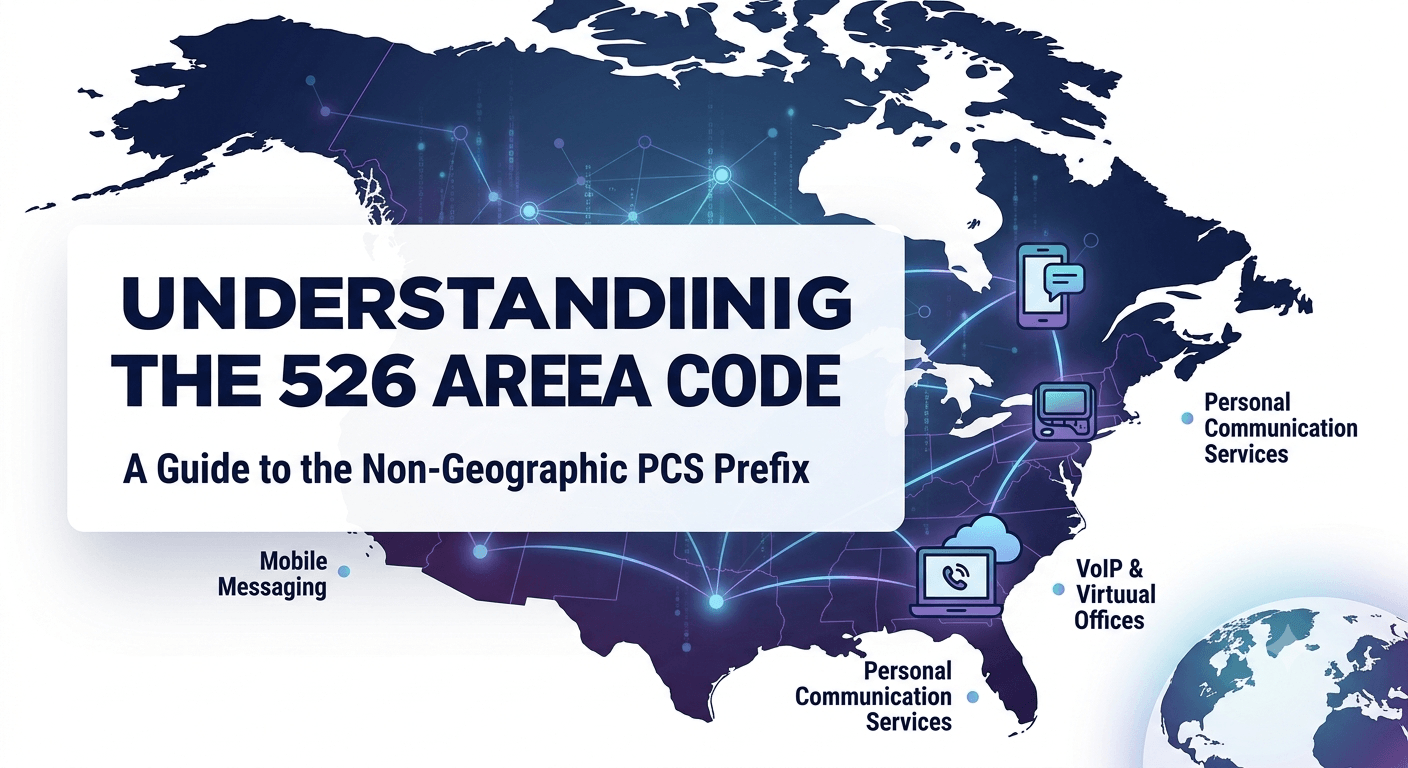
The 526 area code is a non-geographic code within the North American Numbering Plan (NANP). Unlike regular area codes, it isn’t assigned to a particular city or state. Instead, numbers in this range are reserved for specific non-geographic services, so seeing 526 on a phone number doesn’t tell you where the caller is physically located.
As 526 area code is part of North America that introduced to accommodate the growing demand for specialized communication services, the 526 area code operates as a non-geographic number, meaning it is not anchored to a specific city or state. Unlike traditional codes like the 522 area code or the 526 phone number structures of the past, this prefix is reserved for Personal Communication Services (PCS). This designation allows users to keep the same number across various digital platforms, including pagers and messaging services.
What are Non-Geographic Area Codes?
Non-geographic area codes are specialized prefixes within the North American Numbering Plan that do not have a physical location associated with them. While a standard code might tell you a caller is in Los Angeles or New York, a non-geographic code indicates the type of service being used rather than the location of the person. This system was developed to provide a practical way for the shortage of traditional numbers. Because these numbers aren’t tied to a location, they can be used for services that don’t need a traditional local area code.
The evolution of these codes is a response to the growth in connected devices. According to reports from the North American Numbering Plan Administration (NANPA), the volume of available numbers in popular regions is dwindling, necessitating the use of specialized codes like the 526 area code. These codes are often utilized for services that require high mobility or automated functions, such as data transmission and automated notification systems. By decoupling the number from a map, telecom providers can offer more flexible packages to global businesses and mobile professionals who do not want their brand tied to a single local region.
How is the 526 Area Code Used?
The primary application of the 526 area code is within the area of Personal Communication Services (PCS). This category encompasses a wide range of wireless technologies that allow for personal mobility. In the early days, this might have been limited to paging services, but today it includes a variety of mobile-to-mobile text messaging services and specialized data lines. Because it is non-geographic, it provides a layer of privacy and consistent business number for users who travel frequently or operate virtual offices across various time zones.
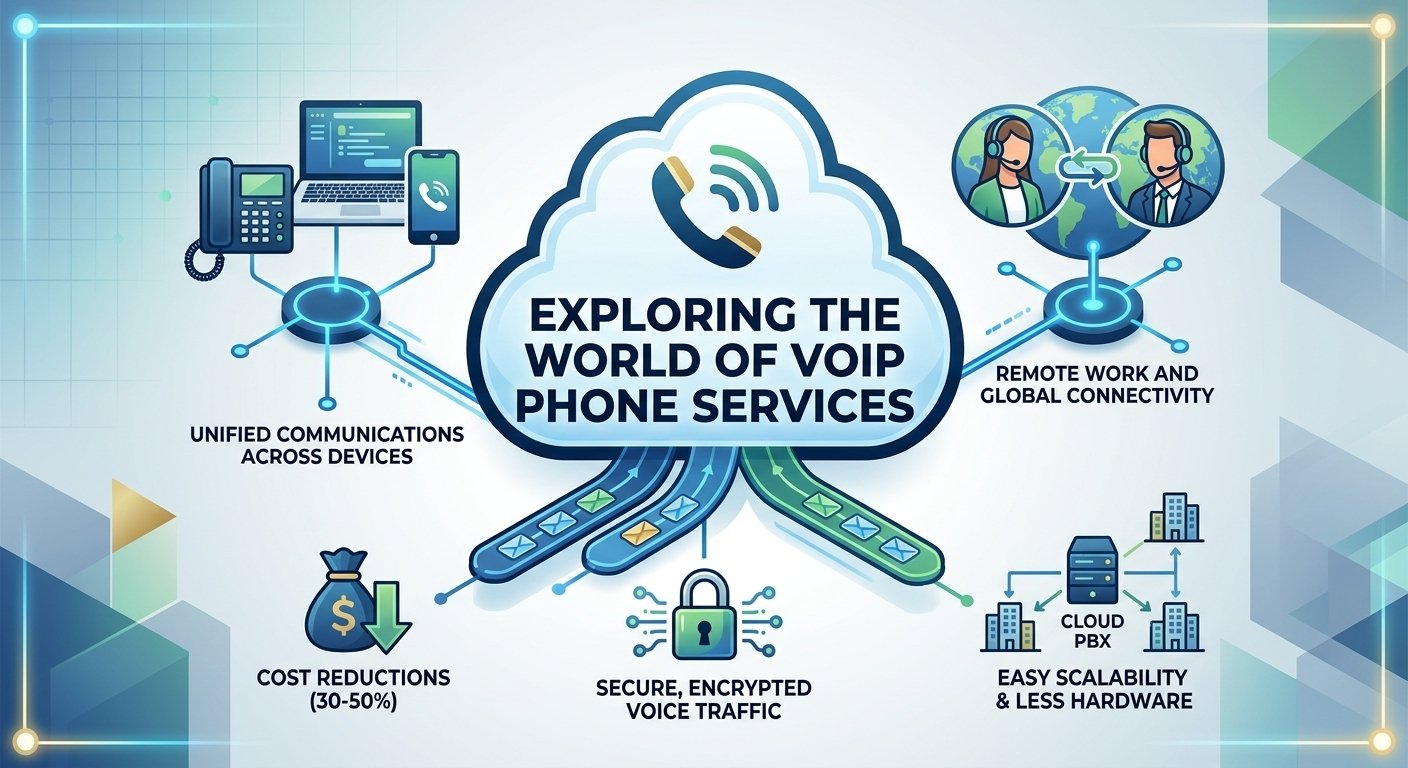
Beyond personal use, many Voice over Internet Protocol (VoIP) providers and corporate entities utilize these numbers to manage their calls. For instance:
-
Virtual receptionists use these prefixes to manage incoming calls from various regions without needing multiple local numbers.
-
Automated SMS systems for two-factor authentication or shipping alerts often deploy non-geographic numbers to ensure high delivery rates.
-
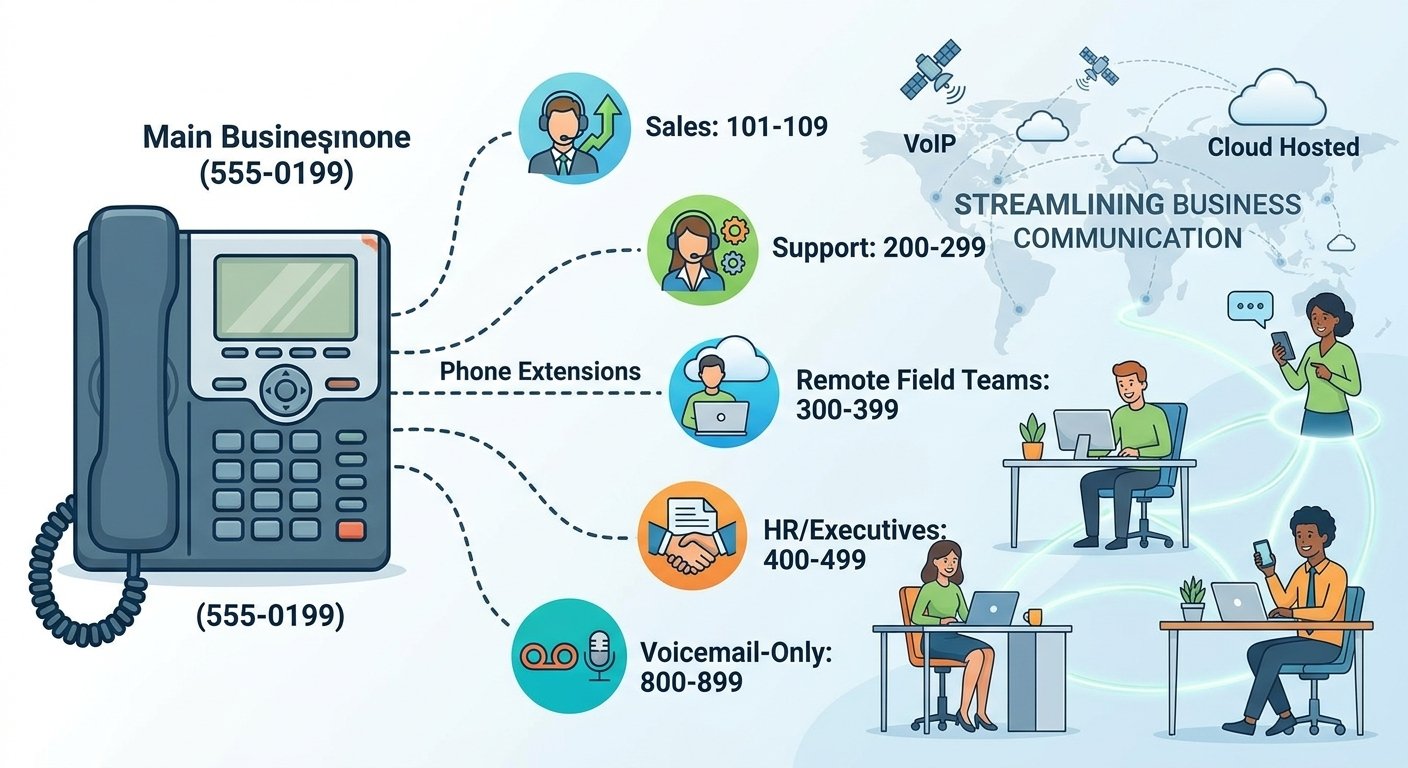
Personal numbering services allow a single number to ring multiple devices simultaneously, ensuring that the user never misses a call regardless of their physical proximity to a specific landline.
-
Specialized data sensors and IoT devices use these codes to communicate status updates back to a central server without occupying local residential number blocks.
The Significance of the 526 Area Code
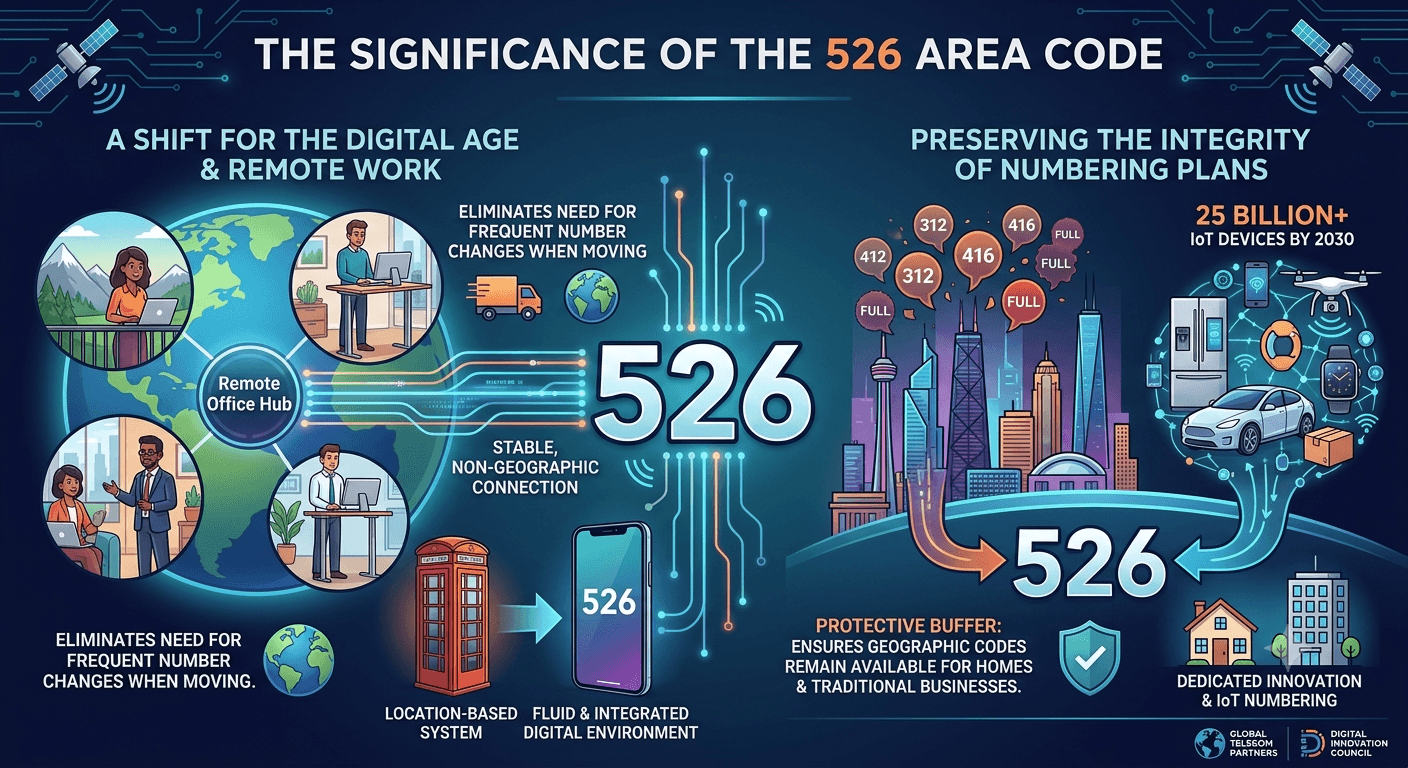
Non-geographic codes give the numbering system additional capacity without assigning another area code to a particular city or state. This makes them useful for services that aren’t based in one geographic area.
Furthermore, the introduction of this code help manage of the numbering plan. If every new digital service took a local area code, we would see a much faster exhaustion of numbers in cities like Chicago or Toronto. Research indicates that the growth in IoT devices is expected to reach over 25 billion connections by 2030, a fact that highlights the growing need for dedicated numbering spaces that do not encroach on residential lines. The 526 area code serves as a separate numbering range, ensuring that geographic codes remain available for traditional homes and businesses while digital innovations have their own dedicated space.
Where is 526 area code?
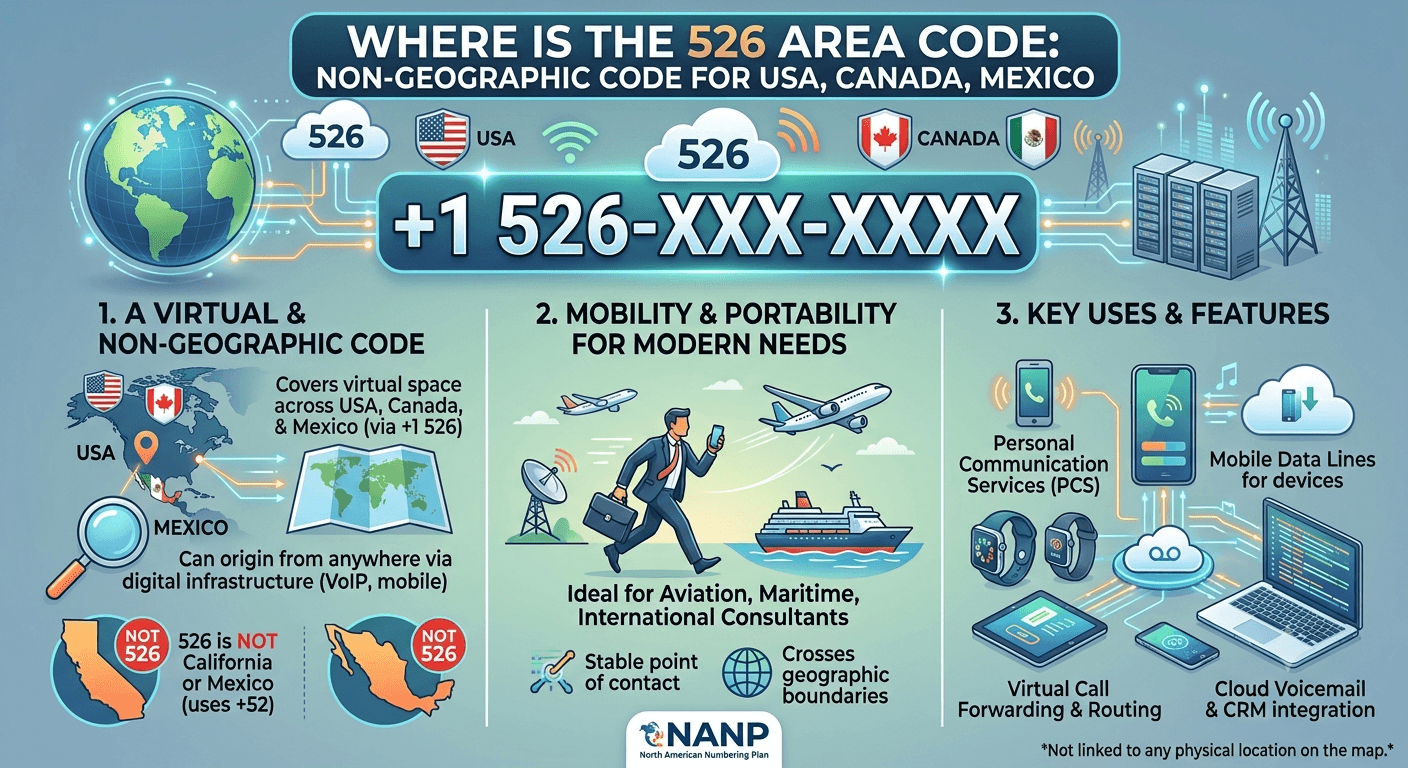
When people search for where is area code 526, they are often looking for a city or a state to identify a caller. However, the 526 area code location is not found on any physical map of the United States or Canada. It is a virtual space within the North American Numbering Plan. If you receive a call from this prefix, the caller could be located anywhere in the world, using a service that routes through the North American digital infrastructure. This can be confusing for those used to the 522 phone code or the location of 626 area code, which are tied to specific regions.
The lack of a geographic anchor is a deliberate design choice. It allows for the 526 phone number to be portable across different service providers and geographic boundaries. In the past, moving your business to a new state meant leaving your phone number behind. With non-geographic codes, your digital identity travels with you. This makes the 526 prefix particularly popular for maritime communications, aviation services, and international consultants who require a stable point of contact while they move between different jurisdictions.
526 area code USA
In the context of the United States, the 526 area code is managed as part of the broader North American Numbering Plan. While it is used across the country, it is not assigned to any specific American territory. This distinguishes it from the 522 area code or the area code 976 us designations which have specific historical or geographic contexts. In the US, the Federal Communications Commission (FCC) and NANPA oversee the allocation of these numbers to ensure they are used for their intended purpose of personal and mobile communication services.
The use of 526 within the USA is primarily focused on supporting the infrastructure of modern mobile carriers. Many of the major telecommunications companies utilize these blocks of numbers to provide specialized features to their subscribers. For example, if you have a secondary data line for a tablet or a smartwatch, it might be assigned a non-geographic number. This allows the carrier to manage the network more efficiently without depleting the pool of local numbers needed for standard smartphone voice lines in high-density urban areas.
+526 area code
Seeing a +526 area code on a caller ID can be particularly misleading because the plus sign usually indicates an international country code. However, in the North American system, the +1 is the country code, followed by the area code. Therefore, +1 526 is the correct international format for these numbers. It is important to note that 526 is not a standalone country code like +52 for Mexico or +44 for the UK. Instead, it is a specialized internal code within the +1 zone that covers the US, Canada, and several Caribbean nations.
Understanding this distinction is vital for international callers. If you are trying to reach a 526 phone number from outside North America, you would dial your international exit code, then 1, and then the 526 prefix. Because these numbers are often used for VoIP or roaming services, the costs associated with calling them can vary. Users should check with their service providers to understand the billing structure for non-geographic numbers, as they are sometimes treated differently than standard local calls due to the specialized routing involved in completing the connection.
526 phone number
Every 526 phone number is part of a 10-digit string that follows the standard (NPA) NXX-XXXX format. While the 526 part tells us it is a personal communication service, the subsequent digits help route the call to the specific provider and the individual subscriber.
When managing a 526 phone number, users often benefit from advanced features that are standard for digital lines. These include:
-
Enhanced call forwarding that can direct calls to different numbers based on the time of day.
-
Cloud-based voicemail that transcribes messages and sends them directly to an email inbox.
-
Integration with CRM software, allowing businesses to track interactions with clients automatically.
-
The ability to send and receive high-speed data and multimedia messages without the limitations of older cellular protocols.
526 area code California
While California is the most populous state in the US and has dozens of area codes, the 526 area code california link is a myth. California does not use 526 for any of its cities, from San Francisco to San Diego. If you are in California and see a 526 number, it is not a local call originating from within the state. It is a non-geographic call that could be coming from someone using a personal communication service who happens to be in California, or someone located thousands of miles away.
The confusion often stems from the fact that California frequently adds new area codes to meet demand. However, the state typically uses “overlays” where a new geographic code is added to the same area as an old one. For instance, the 626 area code location map shows it serves the San Gabriel Valley. If you are looking for what is a 626 area code, you will find a clear map, but you will never find a map for 526 because it simply does not have one.
Area code 526 Mexico
There is no area code 526 Mexico designation either. Mexico’s phone system is separate from the North American Numbering Plan, although they share the same physical continent. Mexico uses a different structure for its internal area codes, and its international country code is 52. Someone seeing 52 on their caller ID might assume the next digit is 6 and search for a 526 Mexican code. In reality, Mexican area codes are usually two or three digits long, such as 55 for Mexico City or 33 for Guadalajara.
Don’t confuse 526 with Mexico’s +52 country code. A number displayed as +52 6… is a Mexican number beginning with the country code +52; it isn’t a +526 country code.
526 area code Canada
Similarly, the 526 area code Canada association is not based on geographic territory. Canada participates in the North American Numbering Plan, and therefore, 526 numbers can be issued to Canadian citizens and businesses. However, these numbers are not assigned to Ontario, Quebec, or any other province. They are used for the same specialized services in Canada as they are in the US, such as pagers and mobile data services. This allows Canadian users to have a number that works across the entire North American region without being tied to a specific Canadian city.
In Canada, the management of numbers is overseen by the Canadian Radio-television and Telecommunications Commission (CRTC). They ensure that the rollout of non-geographic codes like 526 or the start-526 series aligns with national communication goals. For a Canadian business that operates on both sides of the border, having a 526 number can be a strategic advantage. More importantly, claims about Canadian businesses strategically obtaining 526 numbers need verification.
Area code 526 spam
One of the downsides of the 526 area code being non-geographic is its potential for misuse. Because these numbers are not tied to a physical address, they can be more difficult to trace back to a specific person. Like numbers from other area codes, a 526 number can potentially be spoofed or used in unwanted calls. Scammers often use VoIP technology to “spoof” these numbers, making it look like they are calling from a specialized service or a personal communication line to gain the victim’s trust. They may claim to be from a government agency or a technical support center.
To protect yourself from 526-related scams, it is important to follow standard digital safety practices:
-
Never provide personal or financial information to an unsolicited caller, even if the number looks professional.
-
Use call-blocking apps that can identify and filter out known spam numbers associated with non-geographic prefixes.
-
If you receive a text from a 526 number asking you to click a link, treat it with extreme caution as it could be a phishing attempt.
-
Report suspicious 526 activity to the FTC or your national telecommunications regulator to help them track and shut down fraudulent networks.
-
Remember that while the 526 area code itself is legitimate but it also used for those looking to hide their true identity.
Read More: 0333 Numbers: Are 0333 Numbers Free?
Final Thought
The main thing to remember about the 526 area code is that it isn’t linked to a specific city or state. It is a non-geographic code within the North American Numbering Plan, so you can’t determine someone’s location simply from a 526 number. If you receive an unexpected call from one, treat it as you would any unfamiliar number: verify the caller before sharing personal or financial information.
FAQ’s
-
Where is area code 526 in the USA?
The 526 area code is not located in any specific city or state within the USA. It is a non-geographic area code used for Personal Communication Services (PCS). This means it is tied to specific types of technology, such as pagers and certain mobile messaging services, rather than a physical location. You could receive a call from a 526 number from any part of the country where these digital services are active.
-
Which country has the country code 52?
The country code 52 belongs to Mexico. When dialing an international call to Mexico, you must use +52 before the local area code and phone number. It is often confused with the 526 area code because of the similar digits, but they are entirely different parts of the global phone system. The 526 prefix is a North American area code, while 52 is the national identifier for Mexico.
-
What area code is 526?
The 526 area code is a specialized prefix reserved for Personal Communication Services (PCS) in North America. It is used for devices and services that require a number not tied to a specific geographic region, such as mobile-to-mobile data or pagers. It was introduced to help prevent the exhaustion of traditional geographic area codes.
-
What is the difference between a 526 and a 522 area code?
Both 526 and 522 are non-geographic area codes used for specialized services. While 526 is primarily for Personal Communication Services, the 522 area code has historically been associated with different types of digital services or reserved for future expansion within the numbering plan. Neither of these codes represents a physical city or state.
-
Is a 526 phone number safe to answer?
A 526 phone number is a legitimate part of the North American phone system, but like any number, it can be used by scammers. If you are not expecting a call from a personal communication service or a VoIP user, you should be cautious. Always verify the identity of the caller before sharing any private information.
-
Can I get a 526 area code for my business?
Yes, many VoIP and digital service providers offer the ability to choose non-geographic numbers, including the 526 area code. This can be a great option for businesses that want a professional, location-neutral presence. It allows your company to appear national or even international rather than being tied to a specific local neighborhood.
-
Does the 526 area code work in Canada?
Yes, the 526 area code is part of the North American Numbering Plan, which includes Canada. While it is not assigned to a specific Canadian province, it can be used by Canadian service providers for personal communication devices and data services that operate across the country.