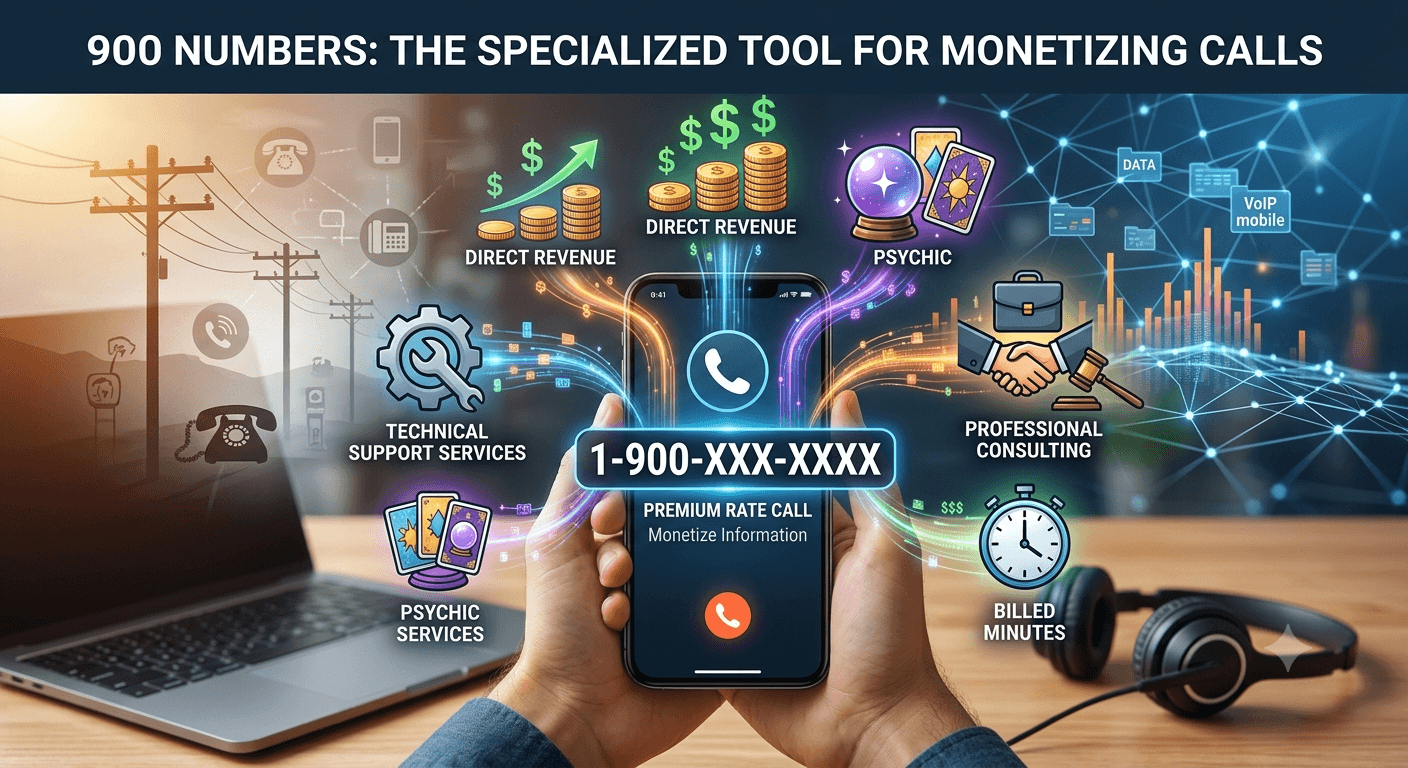
900 numbers are premium rate telephone numbers where the caller is charged a higher rate than a standard call, with a portion of the fee going to the service provider. These numbers are widely used for technical support, psychic hotlines, and professional consulting. While their popularity peaked in the late 20th century, they remain a specialized tool for monetization. Understanding how to get a 1 900 number involves navigating specific regulations and finding regional providers, as availability varies significantly between the United States, Canada, and Europe today.
What are 900 numbers?
900 numbers function as a unique communication tool designed to facilitate paid information services. Unlike standard local or toll-free lines, these prefixes indicate that the caller will be billed a premium fee. This fee is typically split between the telephone carrier and the company providing the service. In many regions, the prefix serves as a clear indicator to consumers that they are entering a pay-per-call arrangement.
900 numbers are premium-rate telephone numbers that charge callers for specialized services, such as technical support, entertainment, information hotlines, or consulting. Except of the business paying for the call, the caller pays a per-minute or flat fee, and the service provider receives a portion of the revenue.
The structure of these lines allows businesses to provide specialized content without requiring a credit card upfront. Instead, the charge appears directly on the telephone bill of the caller. This convenience led to a massive surge in their use during the 1980s and 1990s. Today, while the landscape has shifted toward digital payments, these lines still represent a significant niche in the telecommunications sector for specific professional and entertainment industries.
Origin and Evolution of 1-900 numbers
The history of these lines dates back to the early 1980s. Initially, they were utilized for simple applications, such as national polling or high-volume call-in shows. One of the earliest famous uses was during a presidential debate, where viewers could call to vote for a candidate. As the infrastructure improved, the variety of services expanded rapidly into more complex consulting and entertainment realms.
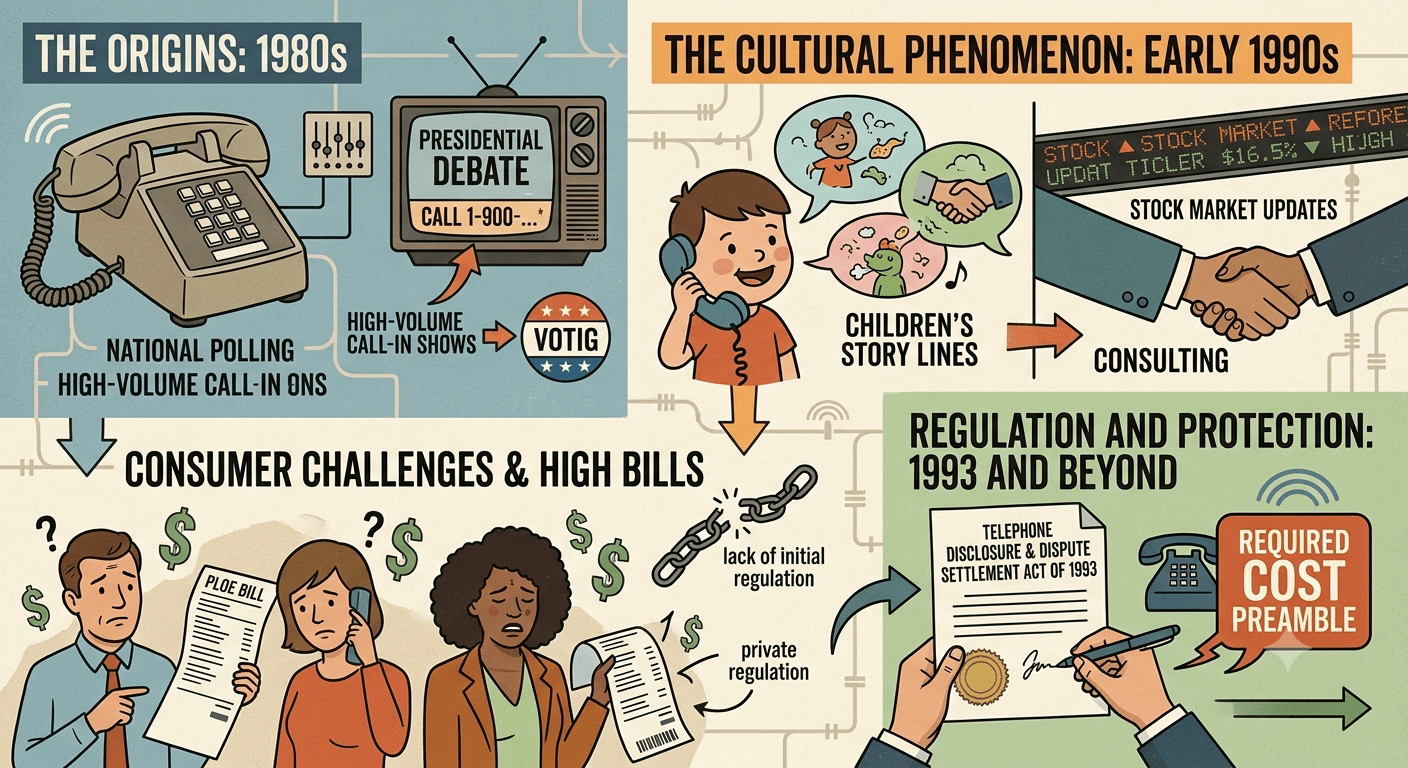
By the early 1990s, 1-900 phone numbers became a cultural phenomenon. They were used for everything from children’s story lines to stock market updates. However, the lack of initial regulation led to significant consumer complaints regarding unexpected high bills. This prompted the introduction of the Telephone Disclosure and Dispute Settlement Act of 1993. This research-backed legislative move required providers to include a preamble explaining costs, which fundamentally changed how the industry operated and protected consumers.
Business Use and Customer Service
From a corporate perspective, these lines serve as a direct revenue stream. Many software companies originally used them to provide technical support. Instead of charging a flat subscription fee, they used a 900 phone number to bill customers only when they needed help. This model ensured that the cost of support was covered by the individuals utilizing the service rather than being subsidized by all customers.
In addition to technical help, various professional services like legal advice or medical consultations have utilized this format. It allows experts to monetize their time spent on the phone without managing a complex billing system. The ease of use for both the business and the caller remains one of the primary reasons these lines are still considered in specific markets. Even today, some government agencies in different countries use similar premium prefixes to manage high-volume information requests efficiently.
Benefits and Challenges
The primary benefit of using these premium lines is the immediate monetization of information. Businesses can turn a standard phone call into a profitable transaction without the friction of asking for credit card details over the air. It provides a level of anonymity for the caller and a guaranteed payment method for the provider through the carrier’s billing system. This setup is particularly beneficial for small businesses or independent consultants who lack the resources for a full-scale accounting department.
However, there are notable challenges. The reputation of 900 numbers was tarnished in the past by unethical actors, leading to a general skepticism among some consumer groups. Furthermore, the high cost of calls can sometimes lead to bill shock if the caller is not paying attention to the duration. For the business owner, the setup fees and the percentage taken by the telecommunications provider can be quite high, sometimes reaching up to 30 or 40 percent of the total call revenue.
| Feature | Traditional 900 Numbers | Modern Digital Alternatives |
| Billing Method | Phone Bill | Credit Card / Digital Wallet |
| Accessibility | Landline / Specific Carriers | Universal (Web/App) |
| Setup Speed | Moderate to Slow | Fast |
| Trust Level | Variable | Generally High |
| Regulation | High (FCC/FTC) | Platform Specific |
Regulations and Transparency
To maintain a fair marketplace, several regulatory bodies have established strict rules for anyone wanting to know how to get a premium number. In the United States, the Federal Trade Commission (FTC) mandates that any call costing more than a standard rate must start with a preamble. This preamble must disclose the price, the name of the company, and the fact that the caller can hang up within a specific timeframe without being charged.
Transparency is the cornerstone of modern premium rate telephone numbers. Providers must ensure that all advertising clearly states the cost per minute or the flat rate fee.
According to data from the FCC, these regulations significantly reduced the number of billing disputes reported by consumers in the late 1990s.
Businesses that fail to comply with these transparency rules face heavy fines and the potential termination of their lines by the carrier.
Relevance Today
Many people ask, do 900 numbers still exist in the age of the internet? The answer depends heavily on geography. In the United States, major carriers have largely moved away from supporting these lines for mobile users, making them much less common than they once were. However, in Canada and several European countries like Spain or the United Kingdom, premium rate numbers remain a thriving part of the telecommunications ecosystem.
The shift toward VoIP technology has allowed these services to evolve. While traditional landline usage is declining, premium voice services are moving toward integrated web platforms.
According to a report by Statista, the global VoIP market is expected to grow significantly through 2026, which includes the integration of specialized billing for voice and video consultations.
This suggests that while the 900 prefix itself might be less visible, the concept of paying for a call remains highly relevant.
How to Get a 1 900 Number?
To get a 900 number, choose a telecom provider that offers premium-rate services, apply for a 900 number, set your pricing (per-minute or per-call), configure call routing, and comply with your country’s telecommunications regulations. Once you are approved, your provider activates the number so you can start accepting paid calls.
If you are looking for how to get a 900 number, you must first identify a specialized service provider. Since most major consumer carriers do not offer these directly to small businesses anymore, you will likely need to work with a third-party aggregator or a VoIP provider that specializes in premium billing. These companies act as the bridge between your business and the telephone network, handling the billing and technical routing of calls.
The process usually involves several steps:
-
Research and select a provider that operates in your target country.
-
Choose your billing structure, such as a flat rate per call or a per-minute fee.
-
Submit your business documentation for a compliance review.
-
Set up your routing, where calls to your premium number are forwarded to your actual phone line.
-
Create and record your mandatory preamble that callers will hear first.
Technical Setup and Maintenance
Once you have secured your line, the technical configuration is vital. Most modern providers offer a dashboard where you can track call volume, duration, and earnings in real-time. You will need to decide whether the calls will be answered by a live person or if you will provide pre-recorded information. If you are answering live, you must ensure your staff is trained to provide the service efficiently to maximize the value for the caller.
Maintenance involves more than just answering the phone. You must stay updated on changing regulations in the jurisdictions where you operate. For example, if you are using 1900 numbers in Canada, you must follow the rules set by the CRTC. Regular testing of your preamble and billing system is also necessary to ensure that you are not losing revenue due to technical glitches or dropped calls during the transfer process.
Marketing Your Premium Line
Simply having a 900 phone code is not enough to generate revenue; you need a robust marketing strategy. In the past, television commercials and late-night advertisements were the primary drivers of traffic. Today, digital marketing is much more effective. Using targeted ads on search engines and social media can help you find the specific audience looking for your expertise.
When marketing 1 900 numbers, it is essential to emphasize the value of the information provided. Whether it is specialized legal consulting or technical support for a specific software, the benefit must outweigh the cost of the call. Including testimonials and clear pricing in your ads helps build trust. Since these numbers are often associated with high costs, being upfront about the value proposition can help convert hesitant callers into paying customers.
Alternatives to Traditional 900 Numbers
If you find that 1-900 numbers are not available or too expensive in your region, there are several modern alternatives. One popular method is the use of toll-free numbers paired with a credit card processing system. The caller dials an 800 number, enters their payment details via an automated prompt, and is then connected to the service. This often feels more secure for modern consumers who are used to online shopping.
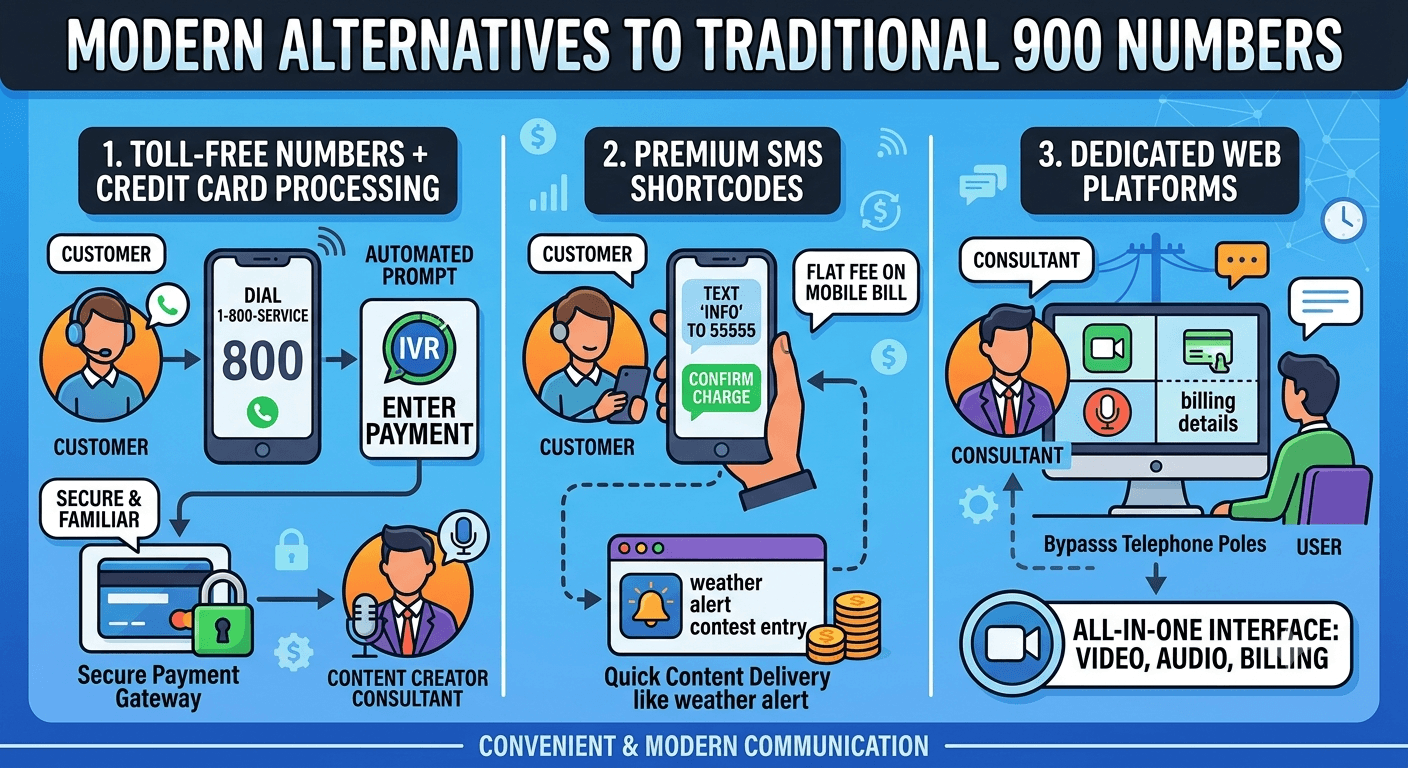
Another growing alternative is the use of premium SMS shortcodes. Instead of calling, the customer sends a text message to a 5 or 6-digit number and is charged a flat fee on their mobile bill. This is highly effective for quick information, such as weather alerts, sports scores, or entries into a contest. Additionally, many consultants now use dedicated web platforms that handle video, audio, and billing all in one interface, bypassing the traditional telephone network entirely.
Managing Billing and Revenue
Understanding the payout structure is critical for any business using 1-900 phone numbers. You do not receive the full amount charged to the caller. The revenue is split between the long-distance carrier, the local exchange carrier, and the 900-number service provider. Typically, the business owner receives between 60% and 80% of the total call value, depending on the volume of calls and the specific contract terms.
It is also important to account for uncollectible debt. Sometimes, callers dispute the charges on their phone bill, or the bill goes unpaid. Most providers have a “chargeback” or “bad debt” reserve that they deduct from your earnings. When calculating your potential profit, always factor in these deductions to ensure your business model remains sustainable over the long term.
Safety and Consumer Protection
For those operating a premium rate number, maintaining a high standard of ethics is essential for long-term success. Consumer protection laws are designed to prevent fraudulent practices, and violating these can lead to the immediate termination of your service. Ensure that your service does not target minors and that your advertising is never misleading about the nature of the costs involved.
Providing a high-quality service also reduces the number of billing disputes. If callers feel they received the value they were promised, they are much less likely to complain to their phone company. This positive feedback loop helps maintain the integrity of your business and ensures a steady stream of revenue. Transparency is not just a legal requirement; it is a fundamental part of a healthy business relationship in the premium call industry.
Global Variations in Premium Numbers
The usage of 1 900 numbers varies significantly across the globe. In Australia, 1900 numbers are still widely used for various recorded and live services. In the United Kingdom, the 09 prefix serves a similar purpose and is heavily regulated by Phone-paid Services Authority (PSA). Each country has its own specific prefix and regulatory body that governs how these calls are handled and billed.
For a business looking to expand internationally, it is important to realize that a number from one country usually cannot be dialed from another. If you want to offer services in multiple countries, you will likely need to secure a specific premium rate number for each region. This requires dealing with different providers and adhering to a variety of local laws, making international expansion a complex but potentially lucrative endeavor.
The Future of Pay-Per-Call Services
As we look toward the future, the traditional 900 number meaning is evolving. The integration of artificial intelligence and automated voice recognition is making it easier for businesses to provide 24/7 service without the need for a massive call center. AI can handle basic inquiries on a premium line, only transferring to a live expert for more complex issues, which optimizes the cost-to-revenue ratio for the provider.
While the specific 900 prefix may eventually be replaced by purely digital solutions, the desire for on-demand, paid expert advice is only increasing. The convenience of a pay-per-call model remains a powerful tool in the service economy. Whether through a traditional phone line or a modern VoIP application, the principle of monetizing specialized communication will continue to adapt to the technological landscape of the 21st century.
Read More: Why Your Sales Calls Get Ignored in Europe? The “Who Called Me” Effect
Final Thought
900 numbers have undergone a significant transformation from their early days of unregulated growth to the highly structured and transparent systems we see today. While they may not be as ubiquitous as they once were, they still offer a unique and effective way for businesses to monetize their expertise and services. By understanding the regulations, choosing the right providers, and focusing on delivering genuine value, entrepreneurs can still leverage these premium lines for significant business growth. Whether you choose a traditional 1-900 number or a modern digital alternative, the key to success lies in transparency and quality service.
Frequently Asked Questions
-
How do I buy a 900 number?
To get a 900 number, you must contact a specialized service provider or a VoIP aggregator that offers premium rate billing. Since major carriers like AT&T or Verizon typically do not sell these directly to individuals anymore, you will need to find a third-party company that handles the routing and billing. You will be required to provide business documentation, choose a billing rate, and set up a compliant preamble before the line becomes active.
-
Are there 900 numbers anymore?
Yes, 900 numbers still exist, although their availability depends on your location. In the United States, they are much less common because mobile carriers often block them by default, and many landline providers have discontinued the service. However, they are still very active in Canada, parts of Europe, and Australia. In regions where they have declined, businesses have often switched to toll-free numbers with credit card billing or premium SMS services.
-
What does the 900 number mean?
The 900 number meaning refers to a telephone prefix used for premium rate services where the caller is charged a higher-than-normal fee. This fee is used to pay for the information or service provided during the call, such as technical support or professional advice. The charges are added directly to the caller’s telephone bill, and the revenue is shared between the service provider and the telephone company.
-
How do you write 900 in numbers?
In the context of telecommunications, 900 is written as a three-digit prefix followed by a seven-digit number, often formatted as 1-900-XXX-XXXX. When writing the number 900 itself in standard cardinal form, it is simply the digit nine followed by two zeros. In the phone industry, it is specifically recognized as the North American Numbering Plan area code for premium services.
-
Can I call a 900 number from a cell phone?
Most mobile service providers in the United States and other countries block calls to 900 numbers by default to prevent customers from incurring unexpected charges. To call one of these numbers from a mobile phone, you often have to contact your carrier to specifically request that the block be removed. Even then, some prepaid mobile plans may not support these types of calls at all.
-
Is a 900 number the same as a toll-free number?
No, they are the opposite of toll-free numbers. A toll-free number (like 800 or 888) is free for the caller because the business pays for the call. A 900 number charges the caller a premium fee for the service or information provided. While both are “special” numbers, the billing direction is completely reversed between the two.
-
What is a preamble in a 1-900 call?
A preamble is a mandatory recorded message at the beginning of a premium rate call. It must inform the caller of the price of the call, the name of the service provider, and a warning that they will be charged if they stay on the line. Federal law usually requires that callers be given a few seconds to hang up after the preamble without being charged any fees.
-
Why did 900 numbers lose popularity?
The decline in popularity was largely due to the rise of the internet, which provided much of the same information for free. Additionally, strict regulations introduced in the 1990s to stop “phone bill fraud” made it more expensive and complicated for businesses to run these lines. The shift from landlines to mobile phones, which often block these numbers, also contributed significantly to their decreased usage.